Drugs, Health Technologies, Health Systems
Reimbursement Review
Empagliflozin
Requester: Public drug programs
Therapeutic area: Kidney disease, nephrology
Summary
What Is Chronic Kidney Disease?
Chronic kidney disease (CKD) is a heterogeneous group of disorders that can progress to end-stage kidney disease (ESKD) and result in poor health-related quality of life (HRQoL), high morbidity, and premature mortality.
From 2010 to 2015, the prevalence of CKD was 71.9 per 1,000 people in Canada. In 2021, more than 6,000 people received kidney replacement therapy (dialysis or pre-emptive kidney transplant) in Canada.
What Are the Treatment Goals and Current Treatment Options for CKD?
Core outcomes identified by patients, caregivers, and health professionals were mortality, kidney function, life participation, and cardiovascular disease. Clinicians advocate for patients with CKD to have access to treatments that halt or delay disease progression, prevent kidney failure, reduce mortality, and improve HRQoL, while minimizing side effects.
Dapagliflozin and canagliflozin were considered relevant treatments to compare with empagliflozin.
What Is Empagliflozin and Why Did Canada’s Drug Agency Conduct This Review?
Empagliflozin is a drug that is available as an oral tablet. Health Canada has approved empagliflozin to reduce the risk of sustained estimated glomerular filtration rate (eGFR) decline, ESKD, and cardiovascular and renal death in adults with CKD.
At the request of the participating public drug programs, Canada’s Drug Agency (CDA-AMC) reviewed empagliflozin to inform a recommendation on whether it should be reimbursed for CKD in adults with or without type 2 diabetes mellitus (T2DM).
How Did CDA-AMC Evaluate Empagliflozin?
CDA-AMC reviewed the clinical evidence on the beneficial and harmful effects and compared costs of empagliflozin versus other treatments used in Canada for CKD in adults with or without T2DM. Dapagliflozin and canagliflozin were considered relevant treatments to compare with empagliflozin.
The clinical evidence was identified through systematic searches for available studies.
There were no submissions from patient groups, clinician groups, or industry in response to our call for input. The review was informed by input from the participating public drug programs around issues that may impact their ability to implement a recommendation.
Two nephrologists, 1 from Alberta and 1 from Ontario, were consulted as part of the review process.
What Were the Findings?
Clinical Evidence
CDA-AMC reviewed the following clinical evidence:
One randomized controlled phase III trial (the EMPA-KIDNEY study) comparing empagliflozin 10 mg with placebo in 6,609 adult patients with CKD.
One randomized controlled phase III trial (the EMPA-REG RENAL study) comparing empagliflozin 10 mg with placebo in 193 adult patients with stage 2 CKD and T2DM.
Three randomized controlled phase III trials that enrolled subgroups of adults with CKD: the EMPA-REG OUTCOME study comparing empagliflozin 10 mg and 25 mg with placebo in up to 2,250 patients with prevalent kidney disease, the EMPEROR-Preserved study comparing empagliflozin 10 mg with placebo in 3,198 patients with CKD, and the EMPEROR-Reduced study comparing empagliflozin 10 mg with placebo in 1,978 patients with CKD.
Three network meta-analyses (NMAs) of empagliflozin versus dapagliflozin and canagliflozin in adult patients with CKD and T2DM.
For the comparison of empagliflozin 10 mg versus placebo at a median of 2.0 years (interquartile range, 1.5 to 2.4) follow-up:
Empagliflozin delayed time to progression of kidney disease or death from cardiovascular causes (composite outcome), and time to hospitalization for any cause.
Empagliflozin was associated with delayed time to progression of kidney disease (composite), time to progression of kidney disease or death from any cause (composite), time to ESKD or death from cardiovascular casuses (composite), and time to ESKD or death from any cause (composite).
Empagliflozin was associated with a slower rate of eGFR decline at approximately 2 years. Results for eGFR and urine albumin-creatinine ratio from the EMPA-REG RENAL study after 52 weeks of treatment was supportive of this finding.
There was insufficient evidence to show that empagliflozin has an effect on time to hospitalization for heart failure or death from cardiovascular causes (composite), components of composite outcomes (time to death due to renal causes and time to death due to cardiovascular causes), time to a major cardiovascular event, and time to death from any cause.
The clinical experts believed that the observed benefits were clinically important, but there was an absence of absolute effects to ascertain the magnitude of the effects. There was some potential for bias due to limited description of missing data, but the loss to follow-up from the trial was low. There is a lack of information on long-term efficacy.
Results from randomized controlled trials where adults with CKD were a subgroup of a broader population were consistent with findings in the randomized controlled trials of adults with CKD.
For the comparison of empagliflozin 10 mg versus dapagliflozin 10 mg or canagliflozin 100 mg, NMAs provided evidence on the composite renal outcome, kidney function (eGFR and urine albumin-creatinine ratio), adverse events, severe adverse events, or treatment discontinuations.
The results from the NMAs were very uncertain due to methodological limitations that included a lack of direct evidence, risk of bias in the included studies, and likely violation of the transitivity assumption. Additionally, all estimates were imprecise with confidence intervals spanning both sides of the null, suggesting a potential for either drug to be favoured.
Clinical experts conveyed that the 3 drugs would be used interchangeably in clinical practice, and that there is consensus in the clinical community that SLGT2 inhibitors exhibit a class effect.
The safety profile of empagliflozin was aligned with that of other SGLT2 inhibitors and there were no new safety signals in adults with CKD.
There was no evidence to inform how empagliflozin impacts patients’ HRQoL.
Economic Evidence
Empagliflozin is associated with increased drug acquisition costs and similar clinical benefit to its comparators.
Abbreviations
ADA
American Diabetes Association
AE
adverse event
AKI
acute kidney injury
ARB
angiotensin II receptor blocker
CDA-AMC
Canada’s Drug Agency
CI
confidence interval
CKD
chronic kidney disease
eGFR
estimated glomerular filtration rate
ESKD
end-stage kidney disease
GLP-1
glucagon-like peptide-1
GLP-1 RA
glucagon-like peptide-1 receptor agonist
HRQoL
health-related quality of life
IQR
interquartile range
ITC
indirect treatment comparison
KDIGO
Kidney Disease: Improving Global Outcomes
MACE
major adverse cardiovascular event
MI
myocardial infarction
MRA
mineralocorticoid receptor agonist
NMA
network meta-analyses
RAS
renin-angiotensin system
RCT
randomized controlled trial
SAE
serious adverse event
T2DM
type 2 diabetes mellitus
UACR
urine albumin-creatinine ratio
Background
Introduction
The objective of the clinical review is to review and critically appraise the evidence on the beneficial and harmful effects of empagliflozin 10 mg oral tablets in the treatment of chronic kidney disease (CKD) in adults with or without type 2 diabetes mellitus (T2DM). The focus will be placed on comparing empagliflozin to relevant comparators in clinical practice in Canada and identifying gaps in the current evidence. The economic review consists of a cost comparison for empagliflozin compared with relevant comparators for the same population. The comparators considered relevant to the reviews were canagliflozin and dapagliflozin.
Table 1: Information on the Drug Under Review and on the CDA-AMC Review
Item | Description |
|---|---|
Information on the drug under review | |
Drug | Empagliflozin, 10 mg and 25 mg, oral tablets |
Relevant Health Canada indication | Empagliflozin is indicated to reduce the risk of sustained eGFR decline, end-stage kidney disease and cardiovascular and renal death in adults with chronic kidney disease. |
Mechanism of action | Empagliflozin is an inhibitor of SGLT2. In patients with T2DM, by inhibiting SGLT2, empagliflozin improves both fasting and postprandial plasma glucose levels by reducing renal reabsorption of filtered glucose and lowering the renal threshold for glucose, thereby increasing urinary glucose excretion. Empagliflozin also reduces sodium reabsorption and increases the delivery of sodium to the distal tubule. This may influence several physiological functions including, but not restricted to, increasing tubuloglomerular feedback and reducing intraglomerular pressure, lowering preload and afterload of the heart, improving cardiac remodelling, improving diastolic function, and reducing left ventricular wall stress as evidenced by lower NT-proBNP values. Some of these mechanisms may preserve kidney function and structure. The cardiovascular and renal benefits of empagliflozin are not solely dependent on the blood glucose lowering effect and are not limited to patients with diabetes. |
Recommended dosage | 10 mg taken orally once daily |
Data protection status | July 23, 2023 |
Status of generic drugs or biosimilars | 16 generic drug submissions listed as accepted into review with Health Canadaa |
Information on the CDA-AMC review | |
Requester | Formulary Working Group |
Indication under consideration for reimbursement | For the treatment of CKD in adult patients |
CDA-AMC = Canada’s Drug Agency; CKD = chronic kidney disease; eGFR = estimated glomerular filtration rate; T2DM = type 2 diabetes mellitus.
aValid as of January 21, 2026.
Context for the Review
A review of the evidence for empagliflozin in the treatment of adult patients with CKD, with or without T2DM, was requested by the Formulary Working Group. Empagliflozin is indicated by Health Canada to reduce the risk of sustained estimated glomerular filtration rate (eGFR) decline, end-stage kidney disease (ESKD), and cardiovascular and renal death in adults with CKD. The indication aligns with the request for the Reimbursement Review of empagliflozin in the treatment of CKD in adult patients.
Submission History for the Drug Under Review
Canada’s Drug Agency (CDA-AMC) previously reviewed empagliflozin for the treatment of:
T2DM with high cardiovascular risk (final recommendation to reimburse with clinical criteria and/or conditions as an adjunct to diet, exercise, and standard care therapy, issued on October 26, 2016).
Chronic heart failure (final recommendation to reimburse with clinical criteria and/or conditions in adult patients as an adjunct to standard of care therapy, issued on October 14, 2022).
T2DM (final recommendation to prioritize SGLT2 inhibitors over sulfonylureas, DPP-4 inhibitors and glucagon-like peptide-1 [GLP-1] agonists in adults with T2DM following inadequate control with metformin or a contraindication or intolerance to metformin, issued on March 7, 2024).
Sources of Information
The contents of the clinical review are informed by studies identified through systematic literature searches, input received from interested parties (patient groups, clinician groups, drug programs, and industry), and input from clinical experts consulted for this review.
Calls for patient group, clinician group, and industry input are issued for each Non-Sponsored Reimbursement Review. Input from patient and clinician groups is considered throughout the review. It is summarized in the Disease Background, Current Management, and Unmet Needs and Existing Challenges sections; and considered in the selection of outcomes to include in the clinical review and in the interpretation of the clinical evidence. No submissions from patient, clinician, or industry groups were received for this review.
The drug programs provide input on each drug being reviewed through the Reimbursement Review process by identifying issues that may impact their ability to implement a recommendation. The implementation questions and corresponding responses from the clinical experts consulted for this review are summarized and provided in Appendix 1 of the Supplemental Material document (available on the project landing page).
Each review team includes at least 1 clinical expert with expertise regarding the diagnosis and management of the condition for which the drug is indicated. Clinical experts are a critical part of the review team and are involved in all phases of the review process. Two nephrologists with expertise in the diagnosis and management of CKD participated as part of the review team, with representation from the Prairies and Ontario.
Disease Background
CKD is a heterogeneous group of disorders characterized by alterations in kidney structure and function.1 CKD is defined by Kidney Disease: Improving Global Outcomes (KDIGO) as abnormalities of kidney structure or function, present for a minimum of 3 months, with implications for health.2 The CKD “CGA” classification is based on cause (C), glomerular filtration rate (GFR) category (G), and albuminuria category (A).2 Establishing the cause of CKD considers clinical context, personal and family history, social and environmental factors, medications, physical examination, laboratory measures, imaging, and genetic and pathologic diagnosis.2 The GFR categories range from G1 (normal or high; GFR of ≥ 90 mL/min/1.73 m2) to G5 (kidney failure; GFR of < 15 mL/min/1.73 m2).2 The albuminuria categories range from A1 (normal to mildly increased; < 30 mg/g or < 3 mg/mmol) to A3 (severely increased; > 300 mg/g or > 30 mg/mmol).2 The tempo of kidney function decline is assessed by the increase in serum creatinine and corresponding decrease in eGFR over time.3 Risk factors for CKD are highly interrelated and include genetic or sociodemographic predisposition or the presence of diseases that initiate and propagate kidney disease (e.g., diabetes mellitus, hypertension and vascular disease, glomerulonephritis, and polycystic kidney disease).2,3 Any cause of severe or repeated acute kidney injury (AKI) may also lead to persistently abnormal kidney function.3
Patients with CKD may or may not present with clinical symptoms.3 In patients who are asymptomatic, evidence of kidney disease may be detected incidentally from tests conducted as part of routine evaluations or for an unrelated disorder; these can include laboratory findings (e.g., elevated serum creatinine, reduced eGFR, abnormal urinalysis) and/or radiographic findings suggesting chronic damage.3 Manifestations of CKD include symptoms and clinical or laboratory abnormalities associated with the disease such as increased blood pressure, anemia, dyslipidemia, bone mineral metabolism disorder, potassium disorders, acidosis, decreased fertility, and increased risk of pregnancy complications.2 Depending on the duration and severity of CKD, patients may experience symptoms such as fatigue, poor mobility, bone or joint pain, drowsiness, poor sleep, sexual dysfunction, pruritus, decreased appetite, and shortness of breath;2 encephalopathy or seizures may occur in very advanced stages of disease.3
Individuals with CKD are at risk of progressing to kidney failure and CKD-associated morbidity and mortality (e.g., cardiovascular disease, hospitalization, infections, and gout).2 Kidney failure is defined as severely reduced kidney function or treatment with dialysis.1 The most serious consequence of CKD is progression to ESKD that results in poor health-related quality of life (HRQoL), high morbidity, and premature mortality. ESKD generally refers to chronic kidney failure that may be treated with dialysis, transplant, or conservative care.1
An estimated 4.1 million people in Canada have or are at risk of kidney disease.4 From 2010 to 2015, the prevalence of CKD was 71.9 per 1,000 people in Canada.5 During the same time frame, CKD was highly prevalent in individuals with 3 or more other chronic disease (281.7 per 1,000) and in rural settings compared with urban settings (86.2 versus 68.4 per 1,000).5 In 2021, more than 6,000 people received kidney replacement therapy (dialysis or pre-emptive kidney transplant) in Canada.6
Current Management
Treatment Goals
According to the global Standardized Outcomes in Nephrology – Chronic Kidney Disease (SONG-CKD) initiative, the following were agreed upon by patients, caregivers, and health professionals to reflect core outcomes for trials in CKD: mortality, kidney function including the need for dialysis or transplant, life participation, and cardiovascular disease.7
The clinical experts identified goals of treatment are to halt or slow disease progression, prevent kidney failure, reduce mortality, and improve HRQoL, while minimizing side effects.
Current Treatment Options
The goal of early identification of CKD is to slow or halt disease progression and reduce risk of associated complications. Identification of CKD includes assessment of patient risk factors and measurements of kidney function (e.g., eGFR) and albuminuria (e.g., urine albumin-creatinine ratio [UACR]). The treatment approach is a comprehensive strategy that includes lifestyle management (e.g., physical activity, optimized body weight, tobacco cessation, low-sodium diet, adequate fluid intake, blood pressure control, and glycemic control) and pharmacologic treatments (e.g., renin-angiotensin system [RAS] inhibitors, SGLT2 inhibitors, mineralocorticoid receptor agonists [MRAs], and GLP-1 receptor agonists [GLP-1 RAs]).2
Current treatment guidelines for CKD include the American Diabetes Association (ADA) and the Kidney Disease: Improving Global Outcomes (KDIGO).2,8 For patients with CKD, with or without diabetes, who have moderately to severely increased albuminuria (G1 to G4, A2 and A3), it is recommended that treatment start with RAS inhibitors (ACE inhibitor or angiotensin II receptor blocker [ARB]).2 It is recommended that treatment includes an SGLT2 inhibitor for the following patients with CKD; T2DM; an eGFR of 20 mL/min/1.73 m2 or greater; eGFR of 20 mL/min/1.73 m2 or greater with UACR of 200 mg/g or greater; heart failure, irrespective of albuminuria level; and an eGFR of 20 mL/min/1.73 m2 to 45 mL/min/1.73 m2 with UACR of lower than 200 mg/g.2 For patients with CKD in general, additional antihypertensive drugs may be used to target blood pressure levels. For adults with CKD and T2DM, a nonsteroidal MRA may be added to a RAS inhibitor and an SGLT2 inhibitor; in those who have not achieved individualized glycemic targets despite metformin and SGLT2 inhibitor treatment (or who are unable to use these drugs), a long-acting GLP-1 RA (e.g., semaglutide) is recommended. There is emerging evidence (short-duration studies using surrogate outcomes) of benefit for GLP-1 RAs in CKD without diabetes with reduction in albuminuria compared with placebo.9
SGLT2 inhibitors improve fasting and postprandial plasma glucose levels by reducing renal reabsorption of filtered glucose and lowering the threshold for glucose, thereby increasing urinary glucose excretion.10 Empagliflozin is an SGLT2 inhibitor with higher selectivity for SGLT2 compared with SGLT1.11 Initially developed for patients with T2DM, SGLT2 inhibitors demonstrated benefits in glycemic control.12-14 Subsequently, they showed broader cardiovascular and kidney benefits that were not limited to patients with diabetes.15
Unmet Needs and Existing Challenges
The clinical experts reported that despite available treatments (e.g., RAS inhibitors), patients with CKD experience disease progression that results in worsening kidney function (including kidney failure), reduced quality of life, increased mortality, increased risk of kidney and cardiovascular complications, and high health care costs. For example, patients with diabetic kidney disease who were treated with RAS inhibitors continued to have high residual risk of morbidity and mortality (approximately 50%) at 4 years.16,17 The experts indicated that while the emergence and adoption of SGLT2 inhibitors and other classes of drugs (e.g., GLP-1 RAs and MRAs for patients with CKD and diabetes) have improved outcomes for patients with CKD, early disease identification and diagnosis with optimized treatment are important in slowing progression to advanced disease.
Considerations for Using the Drug Under Review
Contents within this section have been informed by input from the clinical experts consulted for the purpose of this review and from clinician groups. The implementation questions from the public drug programs and corresponding responses from the clinical experts consulted for this review are summarized in the Summary of Drug Program Input and Clinical Expert Responses table in Appendix 1 in the Supplemental Material document. The following has been summarized by the review team.
Place in Therapy
According to the clinical experts, an SGLT2 inhibitor should be used as first-line therapy in combination with existing treatment (e.g., ACE inhibitors or ARBs, medication for blood pressure control, and lifestyle modification) for patients with CKD. The experts noted that SGLT2 inhibitors as a drug class, have shown to slow CKD progression, prevent kidney failure, and reduce mortality when added to standard of care. Additionally, the experts indicated that there is evidence of reduced cardiovascular death and heart failure, including hospitalization due to heart failure, with SGLT2 inhibitors. Based on evidence from large trials with clinically important outcomes, the clinical guidelines strongly recommend SGLT2 inhibitors (ADA; A-level recommendation; focus on diabetes and CKD; KDIGO, 1A recommendation for all patients regardless of diabetes status).2,8 Therefore, the experts consider the treatment paradigm for CKD to have already shifted to include SGLT2 inhibitors. The experts noted that it would not be appropriate to use an SGLT2 inhibitor as second-line therapy because they have demonstrated effectiveness, tolerability with favourable serious adverse event (SAE) profile, and are cost-effective (with availability of generics).
Patient Population
The clinical experts consider all patients with CKD who are at risk of disease progression to be eligible for treatment with an SGLT2 inhibitor. According to the experts, diagnosis of CKD and assessment of progression risk is straightforward through easily accessible laboratory tests (i.e., serum creatinine to determine eGFR and spot UACR). An eGFR of less than 60 mL/min/1.73 m2 and/or a UACR of 3 mg/mmol or greater establishes the diagnosis of CKD.2 The experts indicated that misdiagnoses are not typical; however, further investigations and treatment may be required in patients who may have intrinsic kidney disease (e.g., glomerulonephritis with a specific diagnosis as a cause of impaired kidney function or albuminuria). The experts emphasized that underdiagnosis is a concern, mainly arising from lack of appropriate testing (especially for UACR) for patients at risk. For example, 1 expert reported that in Ontario, UACR was measured in approximately 60% of patients with diabetic kidney disease compared with fewer than 40% of patients with nondiabetic kidney disease. According to the experts, there is an absence of robust data to inform the use of SGLT2 inhibitors in patients requiring dialysis or recipients of a kidney transplant, although clinical trials are ongoing. The experts mentioned that there is emerging evidence of reductions in surrogate markers (e.g., blood pressure, albuminuria, and blood sugar) in recipients of a kidney transplant with use of SGLT2 inhibitors in this population.9
The clinical experts agreed that criteria for determining suitability of treatment with an SGLT2 inhibitor have often been guided by the inclusion and exclusion criteria of clinical trials. They noted that clinical trials usually adopt an eGFR threshold (e.g., eGFR < 20 or < 30 mL/min/1.73 m2) that precludes some patient populations for eligibility for study enrolment. A meta-analysis published in 2026 found that the SGLT2 inhibitor class of drugs appear to reduce CKD progression regardless of baseline eGFR or degree of albuminuria based on evidence of consistent benefit across trials enrolling patients with varying degrees of albuminuria.18 Observational studies of patients with eGFR of less than 15 mL/min/1.73 m2 and diabetes showing reduced risk of dialysis and cardiac events (e.g., hospitalization for heart failure and myocardial infarction [MI]) suggests that treatment with an SGLT2 inhibitor could benefit those with more advanced kidney disease.19 The experts noted that benefits of SGLT2 inhibitor treatment are also observed in individuals with minimal albuminuria (e.g., UACR < 30 mg/mmol) and in those considered at low risk of CKD progression. Evidence-based guidelines support the use of SGLT2 inhibitors in a wide breadth of patients.2
Assessing the Response to Treatment
The clinical experts acknowledged that while a reduction in UACR generally reflects response to treatment with SGLT2 inhibitors and reduced risk of CKD progression, the use of short-term surrogate markers such as albuminuria are not recommended to guide the use of SGLT2 inhibitors. The experts explained that although UACR is considered a surrogate marker of change in slope in eGFR (i.e., rate of CKD progression) and kidney failure, benefits of treatment with an SGLT2 inhibitor extend beyond albuminuria. The experts specified that SGLT2 inhibitors also reduce intraglomerular pressure which may result in a decrease in kidney function at initiation of therapy. Finally, the experts indicated that because SGLT2 inhibitors are used as preventive and long-term therapy, there are not well-defined criteria to identify individuals who may not respond to treatment; “responder” and “nonresponder” designation is not used.
Discontinuing Treatment
The experts agreed that a decrease in eGFR upon initiation of treatment is generally not indicative of the need to discontinue treatment, the reduction of intraglomerular pressure at treatment initiation may confer long-term renal protection. It was noted that trial protocols usually specified continued treatment with an SGLT2 inhibitor in the event eGFR drops to less than 20 mL/min/1.73 m2; ADA and KDIGO guidelines recommend treatment with an SGLT2 inhibitor continue when eGFR levels fall to less than 20 mL/min/1.73 m2. According to the experts, treatment with an SGLT2 inhibitor should be discontinued in the event of large eGFR decreases (> 25% to 30%) that may be due to hypovolemia, with subsequent adjustment of diuretic dose and assessment of blood pressure medication. One expert indicated that treatment with an SGLT2 inhibitor may be discontinued when kidney replacement therapy (dialysis or transplant) is initiated because there is a lack of high-quality evidence indicating net benefit in this patient population. The other expert noted that treatment (with dapagliflozin or placebo) was continued in the DAPA-CKD study when dialysis was started.12 Some studies specified persistent cardiac benefits after initiation of dialysis and without safety concerns (e.g., hypoglycemia, ketoacidosis, or infection).20,21 Finally, the experts agreed that treatment with an SGLT2 inhibitor may be discontinued in the event of the following clinically significant adverse events (AEs): genital mycotic infections (recurrent or refractory), volume depletion symptoms (refractory) and polyuria, recurrent urinary tract infections, diabetic ketoacidosis, limb amputation, and AKI. The experts added that treatment may be discontinued temporarily for prolonged fasting, surgery, or critical illness (e.g., to reduce risk of ketosis).
Prescribing Considerations
The clinical experts agreed that SGLT2 inhibitors can be prescribed and monitored by primary care teams in a community setting.
Additional Considerations
According to the clinical experts, SGLT2 inhibitors were initially introduced as antidiabetic drugs with similar benefits in hemoglobin A1C (a surrogate outcome in diabetes) as other commonly used antidiabetic medications. Due to their comparatively high costs, restrictions were recommended for their use (e.g., second-line or third-line therapy, special authorization with specified criteria) by health technology assessment organizations and public drug plans. The experts mentioned that subsequently, SGLT2 inhibitors demonstrated substantial improvements in important patient outcomes including kidney and cardiovascular benefits. However, continued restrictions on their use (for specific patient populations based on earlier studies) despite emerging evidence (for expanded patient populations based on large randomized controlled trials [RCTs] showing clinically important benefits) may have contributed, at least in part, to their slow adoption in a broader population. There is consensus in the clinical community that SGLT2 inhibitors exhibit an overall class effect based on the available evidence base.
Clinical Review
Methods
The review team conducted a systematic review to identify evidence for empagliflozin for the treatment of CKD in adults with or without T2DM. Studies were selected according to the eligibility criteria in Table 2. Long-term extension studies of included RCTs, indirect treatment comparisons (ITCs) that adhered to the eligibility criteria (except for the study design criteria), and studies addressing gaps that did not meet the eligibility criteria but were considered to address important gaps in the systematic review evidence were included. Because direct evidence was lacking versus relevant comparators, a search for ITCs was also conducted.
Relevant comparators included treatments used in clinical practice in Canada in the patient population under review. Clinical expert input was considered when selecting outcomes (and follow-up times) for review. Selected outcomes are those considered relevant to expert committee deliberations. Detailed methods for the literature searches, study selection, data extraction, and risk of bias appraisal are in Appendix 2 in the Supplemental Material document.
Table 2: Systematic Review Eligibility Criteria
Criteria | Description |
|---|---|
Population | Adult patients with CKD, with or without T2DM |
Intervention | Empagliflozin 10 mga oral tablets, in addition to background treatments (e.g., RAS inhibitor such as an ACE inhibitor and/or ARB) |
Comparator | Any of the following in addition to background treatments:
|
Outcomes | Efficacy outcomes:
Harms outcomes:
|
Study design | Published phase III and IV RCTs |
AE = adverse event; ARB = angiotensin receptor blocker; CKD = chronic kidney disease; GFR = glomerular filtration rate; RAS = renin-angiotensin system; RCT = randomized controlled trial; SAE = serious adverse events; T2DM = type 2 diabetes mellitus; TEAE = treatment-emergent adverse event.
aThe review focused on empagliflozin 10 mg as the dose that is primarily relevant for patients with CKD, based on the recommended dose for CKD in the Health Canada product monograph and input from clinical experts consulted for the review.
Clinical Evidence
From the search for primary studies, the review team identified 822 unique records via the searches of databases and registers, of which 726 were excluded by title and abstract. The review team screened 96 records by full text. Two potentially relevant records were identified via other sources. In total, 3 reports of 2 studies were included in the systematic review: 2 reports22,23 of the EMPA-KIDNEY study and 1 report24 of the EMPA-REG RENAL study. No reports of long-term extensions of the included studies were identified.
From the search for ITCs, the review team identified 294 unique records via the searches of databases and registers, of which 242 were excluded by title and abstract. No potentially relevant records were identified from other sources. The review team screened 52 records by full text, a selection of articles excluded at full text can be found in the Supplemental Material document. A total of 8 ITCs met the inclusion criteria. Among these, 4 were later excluded (Table 2 and Appendix 2 in the Supplemental Material document) because the information relevant to the analyses of interest were minimally available.25-28 The remaining 4 relevant ITCs29-32 evaluating a range of outcomes, overlapped in the primary studies included within the evidence networks. To avoid primary study overlap, 1 ITC was selected for each outcome of interest. Where more than 1 ITC reported on the same outcome, the ITC that was higher quality and/or more comprehensive in the number of relevant outcomes and/or was more direct for the question of interest, given the narrower scope, was selected. The only outcomes for which more than 1 ITC was available was eGFR and AEs. On this basis, Guo et al. (2025),29 which reportedly compared eGFR and AE outcomes in SGLT2 inhibitors, GLP-1 RAs, and finerenone was excluded and Lin et al. (2022),30 which was more comprehensive in terms of relevant outcomes (eGFR, UACR, AE, SAE, and treatment discontinuation), was more direct for the question of interest (within-SGLT2 inhibitor class comparisons only) was selected. In total, 3 reports30-32 of 3 ITCs were included in the systematic review.
We identified studies where the full trial population did not meet our predefined population, intervention, comparator, outcome (PICO) criteria, but subgroup-level data for at least 1 outcome of interest among patients with CKD were available. Relevant information from these studies, which were considered to provide supportive evidence, is presented within the Studies Addressing Gaps section. A total of 5 reports of 3 studies were included: 3 reports33-35 from the EMPA-REG OUTCOME study, 1 report36 from the EMPEROR-Preserved study, and 1 report37 from the EMPEROR-Reduced study.
A list of excluded studies, including reasons for exclusion, is in Appendix 2 in the Supplemental Material document.
Systematic Review
Description of Studies
Study Characteristics
The EMPA-KIDNEY study22,23 (NCT03594110)38 and the EMPA-REG RENAL study24 (NCT01164501)39 were multicentre, phase III, double-blind, parallel-group RCTs that enrolled adults aged 18 years or older with CKD. Sources of funding for the trials included the manufacturers of empagliflozin (Boehringer Ingelheim and Eli Lilly). There were key differences between the studies in their eligibility criteria, interventions, and outcomes. Whereas patients with CKD irrespective of their T2DM status were eligible for inclusion in the EMPA-KIDNEY study, the EMPA-REG RENAL study enrolled patients with both CKD and T2DM. The EMPA-REG RENAL study was conducted in 2014 with a focus on diabetes-related and cardiovascular outcomes. The relevant dose groups included a small sample of patients (n = 193) with stage 2 CKD (defined as eGFR between 60 and < 90 mL/min/1.73m2), and the only relevant end points were exploratory surrogates (i.e., eGFR and UACR) that were presented descriptively without formal hypothesis testing. Therefore, the focus of the report will be placed on the EMPA-KIDNEY study, with the EMPA-REG RENAL study discussed to a more limited degree as supportive information, reflecting its minimal contribution to the body of evidence.
Characteristics of the EMPA-KIDNEY study are summarized in Table 3. Details regarding the EMPA-REG RENAL study, study assessments, and relevant outcome measures are in Appendix 3 in the Supplemental Material document.
Table 3: Characteristics of Studies Included in the Systematic Review
Study characteristic | EMPA-KIDNEY study |
|---|---|
Study design | Multicentre (241 centres across 8 countries; 20 centres in Canada [488 patients randomized]), phase III, parallel-group, double-blind, placebo-controlled RCT |
Enrolment dates; total sample size | February 2019 to April 2021 N = 6,609 |
Key inclusion criteria |
|
Key exclusion criteria |
|
Run-in period (before randomization) | 8 to 12 weeks with single-blind placebo tablets The aim of the run-in period was to identify and exclude patients who were unlikely to adhere to long-term study treatment and follow-up. |
Intervention (sample size) | Empagliflozin 10 mg orally once daily (n = 3,304) |
Comparator (sample size) | Placebo (n = 3,305) |
Relevant end points | Primary end point:
Key secondary end points:
Additional non-key secondary end points:
Tertiary end points:
Exploratory end points:
Safety:
|
Follow-up duration | Median 2.0 years (IQR, 1.5 to 2.4); data cut-off on July 5, 2022 |
Clinical trial registry; Publication(s) | NCT03594110 Herrington et al. (2023)22 Haynes et al. (2024)23 |
AE = adverse event; ARB = angiotensin receptor blocker; CKD = chronic kidney disease; eGFR = estimated glomerular filtration rate; ESKD = end-stage kidney disease; IQR = interquartile range; RAS = renin-angiotensin system; RCT = randomized controlled trial; SAE = serious adverse event; T1DM = type 1 diabetes mellitus; T2DM = type 2 diabetes mellitus; UACR = urinary albumin to creatinine ratio.
aEvidence of progressive CKD at risk of progression of kidney disease was defined based on local laboratory results obtained at least 3 months before and at time of screening with the 2021 CKD-EPI equation eGFR ≥ 20 to < 45 mL/min/1.73 m2 or the 2021 CKD-EPI equation eGFR ≥ 45 to < 90 mL/min/1.73 m2 with UACR ≥ 200 mg/g (or protein to creatinine ratio of 300 mg/g or greater). Progression of kidney disease was defined as ESKD, sustained eGFR of less than 10 mL/min/1.73 m2, renal death, or a sustained decline in eGFR of 40% or greater from randomization. “Sustained” referred to measured at 2 consecutive scheduled study follow-up visits at least 30 days apart, or measured at the last scheduled study follow-up visit or the last scheduled visit before death (or withdrawal of consent or loss to follow-up).
bRace-adjusted eGFR was calculated using the Chronic Kidney Disease Epidemiology Collaboration formula.40
cESKD was defined as the initiation of maintenance dialysis or receipt of a kidney transplant.
dMajor cardiovascular event was defined as the composite of death from cardiovascular causes, myocardial infarction, stroke, or hospitalization for heart failure.
Sources: Herrington et al. (2023) and Haynes et al. (2024).22,23
Statistical Testing and Analysis Populations
The EMPA-KIDNEY study planned to accrue 6,000 patients and continue until there were at least 1,070 primary outcome events, which would provide 90% power at a 2-sided 0.05 alpha to detect an 18% reduction in the risk of a primary outcome event. A single interim analysis was planned when 150 patients had a first occurrence of an ESKD event. Multiplicity across interim and final analyses was controlled using the Hwang-Shih-DeCani alpha spending function. At the time of this analysis there were 624 primary outcome events, and conditions for early stopping for benefit were met, the key secondary outcomes were formally assessed, with the family-wise type I error rate controlled at 3.0% via the Hochberg procedure. Testing of the remaining end points was not adjusted for multiple comparisons. All patients enrolled in the study were included in the intention-to-treat analysis for efficacy end points. Patients who received at least 1 dose of study treatment were included in the safety analysis, and all data were analyzed according to the treatment received.
In the EMPA-REG RENAL study, analyses of end points relevant to the review (eGFR and UACR) were done without sample size or multiplicity consideration. Descriptive statistics for eGFR, UACR, and harms were assessed in the treated set, which included patients treated with 1 or more doses of study drug.
Patient Disposition
In the EMPA-KIDNEY study, of 8,544 patients screened, 8,184 were eligible and entered the prerandomization run-in period. Of these,1,476 were excluded after the run-in period and a further 99 patients were excluded at the randomization visit. A total of 6,609 patients were randomized to once daily treatment with empagliflozin 10 mg (n = 3,304) or placebo (n = 3,305). The number of patients who discontinued randomized treatment was 557 (16.9%) in the empagliflozin group and 640 (19.4%) in the placebo group. The most common reasons for treatment discontinuations in the empagliflozin and placebo groups were “other” (6.8% and 8.1%, respectively), and “unknown” (6.5% and 7.7%, respectively). The number of patients who withdrew consent or were lost to follow-up was 31 (0.9%) in the empagliflozin group and 26 (0.8%) in the placebo group.
In the EMPA-REG RENAL study, a total of 1,317 patients were screened and 576 were ineligible. A total of 741 patients were randomized to once daily treatment with empagliflozin 10 mg (n = 98), empagliflozin 25 mg (n = 322), or placebo (n = 321). The number of patients who discontinued treatment was not reported. The most common reason for treatment discontinuations in the empagliflozin 10 mg group and placebo group was premature discontinuation (10.2% and 12.2%, respectively). Of the 738 patients who were treated, a total of 646 patients (87.4%) completed the 52-week treatment comprising 88 patients (89.8%) in the empagliflozin 10 mg group and 278 patients (86.6%) in the placebo group. The number of patients with CKD stage 2 who completed 52-weeks of treatment was 88 (89.8%) in the empagliflozin 10 mg group and 87 (89.7%) in the placebo group.
Patients’ disposition in the studies is detailed in Appendix 4 in the Supplemental Material document.
Baseline Characteristics
In the EMPA-KIDNEY study, patients’ mean age was 63.8 years, with 33% identified as female and 67% as male. At baseline, nearly one-half of patients (46%) had a history of T2DM and almost one-third of patients (27%) had a history of cardiovascular disease. Baseline characteristics of patients were balanced between treatment groups on demographics, disease history, and disease characteristics. Baseline characteristics of patients in the EMPA-KIDNEY study are in Table 4.
In the EMPA-REG RENAL study, patients’ mean age was approximately 63 years. A lower proportion of patients were female (range, 39% to 41%) than male (range, 59% to 61%). All patients had T2DM. Patients’ mean eGFR ranged from 70.8 mL/min/1.73m2 to 71.8 mL/min/1.73m2. Baseline characteristics of patients in the EMPA-REG RENAL study are in Appendix 4 in the Supplemental Material document.
Table 4: Summary of Baseline Characteristics From Studies Included in the Systematic Review
Characteristic | EMPA-KIDNEY study | |
|---|---|---|
Empagliflozin 10 mg (N = 3,304) | Placebo (N = 3,305) | |
Age, years, mean (SD) | 63.9 (13.9) | 63.8 (13.9) |
Sex, n (%) | ||
Female | 1,097 (33.2) | 1,095 (33.1) |
Male | 2,207 (66.8) | 2,210 (66.9) |
Race, n (%) | ||
Asian | 1,194 (36.1) | 1,199 (36.3) |
Black | 128 (3.9) | 134 (4.1) |
White | 1,939 (58.7) | 1,920 (58.1) |
Multiple | 14 (0.4) | 7 (0.2) |
Other | 29 (0.9) | 45 (1.4) |
Region, n (%) | ||
China and Malaysia | 812 (24.6) | 820 (24.8) |
Europe (Germany, Italy, UK) | 1,344 (40.7) | 1,304 (39.5) |
Japan | 304 (9.2) | 308 (9.3) |
North America (Canada, US) | 844 (25.5) | 873 (26.4) |
Positive history of diabetes,a n (%) | 1,525 (46.2) | 1,515 (45.8) |
Type 1 | 34 of 1,525 (2.2) | 34 of 1,515 (2.2) |
Type 2 | 1,470 of 1,525 (96.4) | 1,466 of 1,515 (96.8) |
Other or unknown | 21 of 1,525 (1.4) | 15 of 1,515 (1.0) |
Positive history of cardiovascular disease,b n (%) | 861 (26.1) | 904 (27.4) |
Blood pressure, mm Hg, mean (SD) | ||
Systolic | 136.4 (18.1) | 136.7 (18.4) |
Diastolic | 78.1 (11.7) | 78.1 (11.9) |
BMI, kg/m2, mean (SD) | 29.7 (6.7) | 29.8 (6.8) |
KDIGO risk category, n (%) | ||
Low, moderate, or high | 839 (25.4) | 833 (25.2) |
Very high | 2,465 (74.6) | 2,472 (74.8) |
eGFR (mL/min/1.73m2) and UACR (mg/g) distribution, n (%) | ||
eGFR < 45 and UACR < 200 | 1,182 (35.8) | 1,203 (36.4) |
eGFR < 45 and UACR ≥ 200 | 1,416 (42.9) | 1,409 (42.6) |
eGFR ≥ 45 | 706 (21.4) | 693 (21.0) |
eGFRc, mL/min/1.73m2, mean (SD) | 37.4 (14.5) | 37.3 (14.4) |
eGFRc distribution, mL/min/1.73m2, n (%) | ||
< 30 | 1,131 (34.2) | 1,151 (34.8) |
≥ 30 to < 45 | 1,467 (44.4) | 1,461 (44.2) |
≥ 45 | 706 (21.4) | 693 (21.0) |
UACRc, mg/g, median (IQR) | ||
Median (IQR) | 331 (46 to 1,061) | 327 (54 to 1,074) |
UACRc distribution, mg/g, n (%) | ||
< 30 | 665 (20.1) | 663 (20.1) |
≥ 30 to ≤ 300 | 927 (28.1) | 937 (28.4) |
> 300 | 1,712 (51.8) | 1,705 (51.6) |
NT-proBNP, ng/L, median (IQR) | 162 (70 to 421) | 159 (68 to 417) |
Cause of kidney disease, n (%) | ||
Diabetic kidney disease | 1,032 (31.2) | 1,025 (31.0) |
Hypertensive or renovascular disease | 706 (21.4) | 739 (22.4) |
Glomerular disease | 853 (25.8) | 816 (24.7) |
Other | 387 (11.7) | 421 (12.7) |
Unknown | 326 (9.9) | 304 (9.2) |
BMI = body mass index; eGFR = estimated glomerular filtration rate; KDIGO = Kidney Disease: Improving Global Outcomes; IQR = interquartile range; SD = standard deviation; UACR = urinary albumin to creatinine ratio.
Note: Racial categories used in the table are as reported in the source and may not align with Canada's Drug Agency inclusive language guidelines.
aIn the EMPA-KIDNEY study, a history of diabetes was defined as a patient-reported history of diabetes of any type, use of glucose lowering medication, or a glycated hemoglobin level of at least 48 mmol/mol (6.5%) at the randomization visit.
bIn the EMPA-KIDNEY study, a history of cardiovascular disease was defined as a patient-reported history of myocardial infarction, heart failure, stroke, transient ischemic attack, or peripheral arterial disease.
cIn the EMPA-KIDNEY study, eGFR and UACR values were measured at the randomization visit or the most recent laboratory result recorded before randomization. eGFR and UACR were based on central measurement (or local measurement if the value from central measurement was unavailable).
Source: Herrington et al. (2023).23
Treatment Exposure, Concomitant Medications, and Subsequent Treatments
In the EMPA-KIDNEY study, the duration of treatment was not reported.23 At 12 months of follow-up, 2,909 of 3,245 patients (89.6%) in the empagliflozin group and 2,924 of 3,239 patients (90.3%) in the placebo group reported that they had taken 80% or more of their assigned treatment. The most common concomitant medications (> 20% of patients) were RAS inhibitors (85.2%), lipid-lowering drugs (66.2%), beta blockers (41.8%), diuretics (42.6%), antiplatelet therapy (33.9%), and insulin (25.2%). The proportion of patients with concomitant medications was similar between treatment groups.
In the EMPA-REG RENAL study, median duration of treatment was not reported in the primary publication.24 More patients in the empagliflozin 10 mg group (N = 98) compared to the placebo group (N = 95) received metformin plus insulin (23.5% versus 12.9%, respectively). Conversely, fewer patients with stage 2 CKD in the empagliflozin 10 mg group than the placebo group received other antidiabetic drugs (25.5% versus 35.8%, respectively). The proportion of patients with other concomitant medications were similar between treatment groups.
Details of concomitant medications in the studies are in Appendix 4 in the Supplemental Material document.
Critical Appraisal
Internal Validity
Table 5: Critical Appraisal – Internal Validity
Domain | Outcome | Risk of bias | Reason |
|---|---|---|---|
Randomization process | All | Low | EMPA-KIDNEY study:
EMPA-REG RENALa study:
|
Deviations from the intended interventions | All | Low | EMPA-KIDNEY study:
EMPA-REG RENALa study:
|
Missing outcome data | All | Low | EMPA-KIDNEY study:
EMPA-REG RENALa study:
|
Measurement of the outcome | All | Low | EMPA-KIDNEY study:
EMPA-REG RENALa study:
|
Selection of the reported result | All | Low | EMPA-KIDNEY study: All results for outcomes relevant to the review that were prespecified in the study protocol were reported. |
Kidney function | Some concerns | EMPA-REG RENALa study: No protocol. Values for eGFR and UACR were presented descriptively. ANCOVA analysis for change in eGFR and change in UACR over 52 weeks were conducted post hoc. | |
Harms | Low | EMPA-REG RENALa study: AEs, SAEs, and treatment discontinuations were reported. | |
Other concerns (not contributing to risk of bias) | EMPA-KIDNEY study:
EMPA-REG RENALa study:
| ||
AE = adverse event; ANCOVA = analysis of covariance; CKD = chronic kidney disease; eGFR = estimated glomerular filtration rate; HR = hazard ratio; HRQoL = health-related quality of life; MAR = missing at random; MNAR = missing not at random; RAS = renin-angiotensin system; SAE = serious adverse event; UACR = urine albumin to creatinine ratio.
aRisk of bias was assessed for eGFR, UACR, and/or AEs in the EMPA-REG RENAL study.
Sources: Herrington et al. (2023), Haynes et al. (2024), and Barnett et al. (2014).22-24
External Validity
Table 6: Critical Appraisal – External Validity
Appraisal issue | Strengths | Limitations |
|---|---|---|
Population | According to clinical experts consulted by the review team, patients in the EMPA-KIDNEY study included a broad population who are representative of patients with CKD who are at risk for disease progression in clinical practice. |
|
Intervention |
|
|
Comparator | None identified. | There was no evidence vs. relevant comparators, dapagliflozin and canagliflozin. |
Outcome | All outcomes were objective and robust clinical end points that are widely accepted and used in current clinical practice. All outcomes are important to patients and their caregivers. |
|
Time frame | The EMPA-KIDNEY study (2019 to 2021) and EMPA-REG RENAL study (2010 to 2012) were conducted when standard of care is aligned with current clinical practice (e.g., RAS inhibitors have been widely adopted to prevent or slow disease in kidney disease), although there is greater adoption of GLP-1 agonists in patients with CKD. | None identified. |
Setting | Patients were recruited from 20 centres in Canada and represented 7.4% of those randomized in the EMPA-KIDNEY study. | Patients were recruited from 9 centres in Canada in the EMPA-REG RENAL study. The number of patients enrolled in the study from Canada was not available in the publication. |
Other issues | None identified. | None identified. |
CKD = chronic kidney disease; eGFR = estimated glomerular filtration rate; GLP-1 RA = glucagon-like peptide-1 receptor agonist; RAS = renin-angiotensin system; T2DM = type 2 diabetes mellitus; vs. = versus.
Results
Efficacy
Results for outcomes important to this review are presented for the EMPA-KIDNEY study in Table 7. Results for the EMPA-REG RENAL study are in Appendix 4 in the Supplemental Material document.
Key results at a median follow-up of 2.0 years (interquartile range [IQR], 1.5 years to 2.4 years) in the EMPA-KIDNEY study and for the 52-week EMPA-REG RENAL study include the following for empagliflozin 10 mg compared with placebo.
Disease Progression
In the EMPA-KIDNEY study:
Empagliflozin was favoured over placebo for the composite primary end point of time to progression of kidney disease or death from cardiovascular causes (components of the composite were consistent with the primary analysis, except for death from cardiovascular causes where the point estimate favoured empagliflozin but there was a small number of events and the confidence interval [CI] was wide and crossed the null). Results of similar composite end points were consistent with the composite primary end point (time to progression of kidney disease or death from cardiovascular causes) for:
time to progression of kidney disease or death from any cause
time to progression of kidney disease
time to ESKD or death from cardiovascular causes
time to ESKD or death from any cause.
Median time to progression of kidney disease was not reached in either the empagliflozin or placebo group. Absolute between-group differences in the probability of disease progression composite outcomes (progression of kidney disease; progression of kidney disease or death from cardiovascular causes) and probability of the component outcomes at clinically relevant follow-up time points were not reported.
In the EMPA-REG RENAL study, disease progression was not assessed.
Major Adverse Cardiovascular Events
In the EMPA-KIDNEY study, the point estimate for time to a major cardiovascular event was close to the null and the CI was wide on either side of the null. Absolute between-group differences in the probability of a major cardiovascular event at clinically relevant follow-up time points were not reported.
In the EMPA-REG RENAL study, major adverse cardiovascular event (MACE) was not assessed.
Deaths
In the EMPA-KIDNEY study:
The point estimate for time to death from cardiovascular causes favoured empagliflozin but there was a small number of events and the CI was wide on either side of the null.
The point estimate for time to death from any cause favoured empagliflozin but there was a small number of events and the CI was wide on either side of the null.
Between-group differences in the probability of deaths at clinically relevant follow-up time points were not reported. Absolute between-group differences with CIs for deaths were also not reported.
In the EMPA-REG RENAL study, death was not included as an efficacy end point.
Kidney Function
In the EMPA-KIDNEY study:
Empagliflozin was favoured over placebo for change in eGFR from baseline to final follow-up visit (i.e., total slope).
In the EMPA-REG RENAL study, the change from baseline in eGFR appeared larger in the empagliflozin group than the placebo group, but the between-group difference was not reported. The point estimate for the mean difference in change from baseline in UACR favoured empagliflozin but the CI was wide and crossing the null.
Hospitalizations
In the EMPA-KIDNEY study:
Empagliflozin was favoured over placebo for the composite end point of time to hospitalization for heart failure or death from cardiovascular causes but there was a small number of events and the CI was wide and crossed the null.
Empagliflozin was favoured over placebo for time to hospitalization for any cause.
Median time to hospitalization was not reached. Absolute between-group differences in the probability of deaths at clinically relevant follow-up time points were not reported.
In the EMPA-REG RENAL study, hospitalizations were not assessed.
Health-Related Quality of Life
Results were not available in the EMPA-KIDNEY study and HRQoL was not assessed in the EMPA-REG RENAL study.
Table 7: Summary of Key Efficacy Results – EMPA-KIDNEY Study
Variable | EMPA-KIDNEY study | |
|---|---|---|
Empagliflozin N = 3,304 | Placebo N = 3,305 | |
Time to progression of kidney disease or death from cardiovascular causes | ||
Patients with progression of kidney disease or death from cardiovascular causes, n (%) | 432 (13.1) | 558 (16.9) |
HR (95% CI)a | 0.72 (0.64 to 0.82) | Reference |
P valueb | < 0.001 | Reference |
Patients with ESKD, n (%) | 108 (3.3) | 158 (4.8) |
HR (95% CI)a | 0.67 (0.52 to 0.85) | Reference |
Patients with sustained eGFR < 10 mL/min/1.73 m2, n (%) | 116 (3.5) | 167 (5.1) |
HR (95% CI)a | 0.69 (0.54 to 0.87) | Reference |
Patients who died from renal causes, n (%) | 4 (0.1) | 4 (0.1) |
HR (95% CI)a | 0.90 (0.22 to 3.66) | Reference |
Patients who died from cardiovascular causes, n (%) | 59 (1.8) | 69 (2.1) |
HR (95% CI)a | 0.84 (0.60 to 1.19) | Reference |
Time to major cardiovascular event | ||
Patients with major cardiovascular event, n (%) | 200 (6.1) | 213 (6.4) |
HR (95% CI)a | 0.93 (0.76 to 1.12) | Reference |
Time to death from any cause | ||
Patients who died from any causeb, n (%) | 148 (4.5) | 167 (5.1) |
HR (95% CI)a | 0.87 (0.70 to 1.08) | Reference |
P valueb | 0.21 | Reference |
Kidney function, eGFR | ||
Baseline eGFR, mL/min/1.73 m2, mean (SD) | NR | NR |
Change in eGFR, mL/min/1.73 m2, mean (SE) | ||
From baseline to final follow-up visit (total slope)c | – 2.16 (0.08) | – 2.92 (0.08) |
Difference in annual rate of change in eGFR from baseline to final follow-up, mean (95% CI)d | 0.75 (0.54 to 0.96) | Reference |
Relative difference in in annual rate of change in eGFR from baseline to final follow-up, % (95% CI) | –26 (–33 to –19) | Reference |
Time to hospitalization for heart failure or death from cardiovascular causes | ||
Hospitalization for heart failure or cardiovascular causesb,e, n (%) | 131 (4.0) | 152 (4.6) |
HR (95% CI)a | 0.84 (0.67 to 1.07) | Reference |
P valueb | 0.15 | Reference |
Time to hospitalization | ||
Hospitalization for any causeb,f, n (%) | 960 (29.1) | 1,035 (31.3) |
HR (95% CI)a | 0.86 (0.78 to 0.95) | Reference |
P valueb | 0.003 | Reference |
CI = confidence interval; eGFR = estimated glomerular filtration rate; ESKD = end-stage kidney disease; HR = hazard ratio; SD = standard deviation; SE = standard error; UACR = urine albumin-creatinine ratio.
Note: For time to event outcomes, the median time to event and number of patients who were censored were not reported.
aThe distribution of time to event end points was estimated using the Kaplan-Meier method. HRs with CIs were estimated with Cox proportional hazards regression models with adjustment for age, sex, history of diabetes, eGFR, UACR, and geographic region.
bP value was adjusted for multiple comparisons.
cMean eGFR at scheduled visits were estimated using a linear mixed model of repeated measures with adjustment for baseline eGFR, age, sex, prior diabetes, UACR, geographic region, treatment allocation, follow-up time points, and the interaction between treatment allocation and follow-up time point conditional on the other factors in the model. The models assumed that missing eGFR values were missing at random.
dAnnual rate of change in eGFR across the whole study (total eGFR slope) was compared between treatment groups using a shared parameter model that jointly modelled the annual rate of change in eGFR using a linear mixed model with random effects for each patient’s slope and intercept and the time to event for ESKD or death using a Weibull survival model in which the scale parameter is assumed to be linearly related to the random effects from the linear mixed model.
eRecurrent event end points (e.g., all-cause hospitalizations, hospitalization for heart failure) were estimated using a semiparametric joint frailty model that jointly modelled the hazard function for recurrent all-cause hospitalizations conditional on the patient-specific random frailty and the hazard function for time to death conditional on the patient-specific random frailty.
fThe analysis of hospitalizations for any cause includes the first and all subsequent events; 1,611 hospitalizations occurred among 960 patients in the empagliflozin group and 1,895 hospitalizations occurred in 1,035 patients in the placebo group.
Sources: Herrington et al. (2023) and Haynes et al. (2024).22,23
Harms
Detailed harms data are available in Appendix 4 in the Supplemental Material document.
Key results for harms after a median follow-up of 2.0 years (IQR, 1.5 years to 2.4 years) in the EMPA-KIDNEY study and for the 52-week treatment in the EMPA-REG RENAL study include the following for empagliflozin 10 mg compared with placebo.
Adverse Events
In the EMPA-KIDNEY study, AEs were reported according to the Medical Dictionary for Regulatory Activities (MedDRA) primary system organ class and the number of patients with AEs overall were not reported. Non-SAEs occurred in 228 of 3,304 patients (6.9%) in the empagliflozin group and 262 of 3,305 patients (7.9%) in the placebo group.
In the EMPA-REG RENAL study, AEs occurred in 86 of 98 patients (87.8%) in the empagliflozin group and 270 of 319 patients (84.6%) in the placebo group. AEs occurring in at least 10% of patients in the empagliflozin group or the placebo group were hypoglycemia (27.6% and 28.8%), urinary tract infection (14.3% and 12.9%), upper respiratory tract infection (14.3% and 7.8%), and hyperglycemia (4.1% and 12.9%).
Serious Adverse Events
In the EMPA-KIDNEY study, SAEs occurred in 1,164 of 3,304 patients (35.2%) in the empagliflozin group and 1,245 of 3,305 patients (37.7%) in the placebo group. SAEs occurring in at least 2% of patients in the empagliflozin group or the placebo group were AKI (3.2% and 4.1%), hyperkalemia (2.8% and 3.3%), and increased potassium in the blood (2.3% and 2.6%).
In the EMPA-REG RENAL study, SAEs occurred in 6 of 98 patients (6.1%) in the empagliflozin group and 44 of 319 patients (13.8%) in the placebo group. Information on the specific SAEs were not reported.
Discontinuations Due to AEs
In the EMPA-KIDNEY study, treatment discontinuations occurred in 557 of 3,304 patients (16.9%) in the empagliflozin group and 640 of 3,305 patients (19.4%) in the placebo group. Reasons for treatment discontinuations in the empagliflozin group or the placebo group were any SAE (1.8% and 2.3%), any non-SAE (1.8% and 1.3%), other reasons (6.8% and 8.1%), and unknown (6.5% and 7.7%).
In the EMPA-REG RENAL study, treatment discontinuations occurred in 4 of 98 patients (4.1%) in the empagliflozin group and 17 of 319 patients (5.3%) in the placebo group. Reasons for treatment discontinuations were not reported.
Adverse Events of Special Interest
In the EMPA-KIDNEY study, ketoacidosis occurred in 6 patients (0.2%) in the empagliflozin group and in 1 patient (0.1%) in the placebo group. Of these, 5 patients in the empagliflozin group and the single patient in the placebo group had prior diabetes.
Ketoacidosis was not reported in the EMPA-REG RENAL study.
Indirect Evidence
Because direct comparisons are only available for empagliflozin versus placebo, there is a gap in the evidence regarding the efficacy and safety of empagliflozin relative to the comparators used to treat CKD in clinical practice in Canada.
Description of ITCs
All 3 network meta-analyses (NMAs) identified studies using a systematic literature review and performed frequentist NMAs to make indirect comparisons between treatments. Eligible treatments and outcomes varied between the 3 NMAs; specific details of ITC treatment arms and outcomes are described in Appendix 5 in the Supplemental Material document.
Main differences between the aims of included NMAs were that Lin et al. (2026)31 analyzed kidney outcomes (i.e., renal composite outcome) across SGLT2 inhibitors and other drug classes such as DPP-4 inhibitors and GLP-1 RAs. Lin et al. (2022)30 assessed both kidney function and safety outcomes across SGLT2 inhibitors specifically. Malik et al. (2020)32 reviewed cardiovascular outcomes across SGLT2 inhibitors. All 3 NMAs included patients with T2DM and CKD; the Malik et al. (2020)32 NMA was specific to stage 3 to 4 CKD, rather than CKD broadly.
Study Selection and Review Methods
Detailed selection criteria and systematic review methods of the 3 included ITCs are presented in the Supplemental Material document. All 3 NMAs selected RCTs in CKD with T2DM. Lin et al. (2026)31 evaluated SGLT2 inhibitors, DPP-4 inhibitors and GLP-1 RAs, and kidney outcomes (i.e., renal composite outcome). Lin et al. (2022)30 assessed SGLT2 inhibitors and surrogate kidney function and harms outcomes. Malik et al. (2020)32 evaluated SGLT2 inhibitors in the context of cardiovascular outcomes.
Lin et al. (2026)31 and Lin et al. (2022)30 screened and extracted data from included studies with at least 2 independent reviewers. Malik et al. (2020)32 did not report methodology used to screen and extract data. Lin et al. (2026)31 assessed risk of bias with the Cochrane Risk of Bias Tool version 2.0 and applied Grading of Recommendations Assessment, Development and Evaluation (GRADE) to rate the certainty of evidence. Lin et al. (2022)30 assessed risk of bias with Cochrane Risk of Bias Tool version 1. Malik et al. (2020)32 evaluated included trials using the Jadad scale for RCTs. All 3 NMAs assessed publication bias through visual inspection of funnel plots, Lin et al. (2026)31 additionally assessed publication bias through the Egger’s test.
ITC Analysis Methods
For additional details on the analysis methods for the ITC, refer to Appendix 5 in the Supplemental Material document. All 3 performed frequentist random-effect NMAs. Lin et al. (2026)31 summarized the geometry of the network for the analysis using a network diagram, with individual nodes for each dose of a treatment, there were closed loops for drugs with more than 1 dose. Lin et al. (2022)30 constructed the network with individual nodes for each dose of a treatment; closed loops were formed when more than 1 dose was available. Malik et al. (2020)32 did not include a network diagram but noted a lack of closed loops in text, the network was star shaped with each node being 1 treatment. Where more than 1 dose of an SGLT2 inhibitor were available, Malik et al. (2020)32 pooled observations into a single node. Transitivity was assessed by Lin et al. (2026);31 consistency was assessed by Lin et al. (2026)31 and Lin et al. (2022),30 either through a symmetric side-splitting model or through node splitting. Malik et al. (2020)32 did not assess consistency due to a lack of closed loops in the ITCs and did not assess transitivity. Lin et al. (2026)31 did not assess heterogeneity, Lin et al. (2022)30 evaluated heterogeneity using the I2 statistic; Malik et al. (2020)32 assessed heterogeneity using tau2 and I2 and visually assessed heterogeneity using Baujat plots. Sensitivity and subgroup analyses were not reported for all 3 NMAs.
Summary of Included Studies
Lin et al. (2026): This NMA included clinical trials with differing inclusion criteria. Some trials including patients with eGFR between 25 mL/min/1.73m2 to 75 mL/min/1.73m2, UACR between 30 mg/g to 3,500 mg/g, and hemoglobin A1C of between 7% to 11%; other trials included those with eGFR between 20 mL/min/1.73m2 to 90 mL/min/1.73m2, UACR greater than 200 mg/g; or eGFR between 30 mL/min/1.73m2 to 50 mL/min/1.73m2 with no UACR cut-off and hemoglobin A1C between 7% to 10.5%. The empagliflozin node was informed by Herrington et al. (2023)23 (EMPA-KIDNEY) which also included patients with CKD without T2DM. The relevant ITC analysis included 8 studies published between 2018 to 2023 using empagliflozin, canagliflozin, or dapagliflozin in 16,266 patients. The length of follow-up for relevant ITC outcomes was 24 weeks to 137 weeks. The authors rated 2 of the 4 canagliflozin studies41,42 and 2 of the 3 dapagliflozin studies43,44 as “some concerns” for risk of bias. For studies of other treatments, which contributes to the placebo node, 2 trials evaluating sotagliflozin were rated by the authors as overall high risk of bias, specifically with high risk of bias in the selection of reported outcomes. There were some concerns for risk of bias in trials evaluating DPP-4 inhibitors and GLP-1 RAs, but none had domains that were rated as high risk of bias.
Lin et al. (2022): This NMA included patients with T2DM and CKD; the 2 empagliflozin nodes were informed by Barnett et al. (2014)24 (EMPA-REG RENAL) and Wanner et al. (2018)35 (EMPA-REG OUTCOME). The relevant ITC analysis aggregated 9 studies using empagliflozin, canagliflozin, or dapagliflozin in 8,253 patients published between 2014 to 2019. The NMA included trials with variable inclusion criteria. Some trials were conducted only in stage 3 CKD, others included patients with eGFR between 15 mL/min/1.73m2 to 90 mL/min/1.73m2, or narrower cut-offs of eGFR between 45 mL/min/1.73m2 to 59 mL/min/1.73m2, and 2 studies had lower limits but no upper limits for eGFR. Authors chose to extract outcomes from the last available follow-up visit; follow-up duration for the relevant studies ranged from 23 to 52 weeks with 1 dapagliflozin study45 (n = 252) that included follow-up data to 104 weeks. Authors rated comparisons of empagliflozin to placebo as low risk of bias for all domains except for other bias, which was rated as “unclear risk.” They also noted unclear risk of bias and high risk of bias for 1 dapagliflozin45 study and 1 canagliflozin41 study due to lack of detail on randomization sequence, allocation concealment and blinding. High risk of bias was not flagged in other domains of the remaining included studies, which contributed data to the placebo node.
Malik et al. (2022): This study included patients with T2DM and CKD stage 3 to 4, and the trials were conducted in patients with T2DM with hemoglobin A1C inclusion criteria between 7% to 10% or 11%. The relevant ITC analysis was performed as the secondary analysis, and included 6 studies using empagliflozin, canagliflozin, or dapagliflozin in 6,382 patients published between 2013 to 2018. The follow-up duration ranged from 12 months to 50 months (48 weeks to 200 weeks). The mean age of participants ranged from 63.9 years to 68.5 years, with 57.5% to 69.7% being male. The authors rated the 2 studies informing the empagliflozin arm, Barnett et al. (2014)24 (EMPA-REG RENAL) and Wanner et al. (2018)34,35 (EMPA-REG OUTCOME), and 1 study each in the canagliflozin and 1 canagliflozin42 and dapagliflozin46 arms as high quality. They rated 1 dapagliflozin45 study as low quality. One study assessing luseogliflozin was rated as low quality and contributes to the placebo node in the relevant NMA analysis. The authors did not assess violations of the transitivity assumption for NMAs. Additional trial methodology such as follow-up timelines and dosing differed between studies.
Critical Appraisal of ITCs
The 3 NMAs are low quality, having at least 1 critical flaw in their systematic review literature search methodology based on AMSTAR 2,47 and thus may not provide an accurate and comprehensive summary of the available studies evaluating kidney, cardiovascular, and harms outcomes related to empagliflozin use in CKD. There was a lack of direct evidence for comparisons of empagliflozin to canagliflozin and dapagliflozin, and closed loops in network construction of 2 of the 3 NMAs are limited to different doses of the same SGLT2 inhibitor, some of which were not relevant to our selected comparators. Closed loops were formed from within-study comparisons. One NMA had no closed loops. Concerns with transitivity assumption violations were present for all 3 NMAs. Wide 95% CIs were present for ITCs of all outcomes, suggesting that either of the treatments being compared could be favoured. While clinical experts agree that the disease population included in all 3 NMAs were broadly representatively of CKD in a clinical landscape in Canada, T2DM was an inclusion criterion across all 3 NMAs, limiting the generalizability of these results to CKD with T2DM. Malik et al. (2020)32 was specific to stage 3 to 4 CKD, which further narrowed the scope and generalizability of results.
Study by Lin et al. (2026)
A systematic review was used to identify studies for the NMA. The eligibility criteria were clearly defined but included only placebo-controlled trials (head to head comparisons excluded); it was not clear whether this may have resulted in bias due to the exclusion of relevant studies from the network. The systematic literature search was comprehensive and the methods of study selection and data extraction methods were adequate. Risk of bias in the included studies was appraised with an appropriate tool at the study level. However, risk of bias can vary by outcome; therefore, the appraisals may not equally apply to all reported outcomes. Several of the included studies were appraised as having at least some concern for risk of bias which was unaccounted for in the synthesis. There was no indication of publication bias.
Clinical practice guidelines48 suggest that not all treatments in the network would be used among similar groups of patients (e.g., insulin versus GLP-1 RAs versus SGLT2 inhibitors), and eligibility criteria differed to an extent across studies. When not all treatments in the network are jointly randomizable, the underlying transitivity assumption will be violated, introducing high risk of bias in the NMA. Additionally, there was variation in patient characteristics across studies that may further undermine the transitivity assumption. For example, baseline hemoglobin A1C ranged from 7.6% to 8.9%, eGFR ranged from 42.0 mL/min/1.73 m2 to 56.1 mL/min/1.73 m2, and UACR ranged from 28.3 mg/g to 115,900 mg/g (as reported by NMA authors). Although not stated explicitly by the NMA authors, some studies (e.g., EMPA-KIDNEY) appear to have been included, even when some patients in the study did not have T2DM. It was not clear how these decisions were made, nor whether they were applied uniformly across the available evidence base. This introduces potential for bias in the selection of studies for the NMA and could further contribute to heterogeneity in the network. There was large variation in the length of follow-up from 24 weeks to 282 weeks, and it was not stated whether all studies used the same definition of the composite renal outcome. The network was star shaped and weakly connected, with few studies per treatment or dose node centred around placebo as the common comparator. Therefore, it would not have been feasible to address the heterogeneity across studies, for example via metaregression.
The NMA was informed by some prespecified methods (i.e., a PROSPERO registration); however, there were changes in the analysis plans (e.g., switch from Bayesian to frequentist model) which were not adequately explained. This increases the risk that the analysis method was chosen or altered based on preliminary results. The choice of a random-effects model was appropriate, given the aforementioned clinical and methodological heterogeneity across studies. There were some additional concerns regarding the analysis. It appears that subgroups from some studies were used without reassurance provided by study authors that there was stratification by relevant participant characteristics (e.g., CKD status) to ensure that randomization would hold in those groups. Additionally, the renal composite was defined as a time to event end point within the EMPA-KIDNEY study, while the NMA analyzed this as a binary outcome. This is unlikely to be appropriate, as the timing of the outcome is an important measure of efficacy. There were no relevant closed loops within which to test the consistency assumption (statistical manifestation of transitivity). As a result of network sparsity and heterogeneity, all comparative estimates were imprecise, with 95% CIs suggesting that either treatment could be favoured. There were no absolute between-group differences to further inform the clinical interpretation nor the extent of imprecision.
Study by Lin et al. (2022)
A systematic review was used to identify studies for the NMA; eligibility criteria were clearly defined but included only placebo-controlled trials, no head to head comparisons were included. The literature search was conducted in 2021 and did not include clinical trial registries. The lack of comprehensive literature search increases the risk of missing relevant studies. Study selection process and data extraction methods did not raise major concerns. Risk of bias was assessed with an appropriate tool but not for each outcome reported in the NMA. Given that risk of bias can vary by outcome, the appraisals may not equally apply to all reported outcomes. Authors noted that 1 dapagliflozin trial45 had “unclear risk” for selection bias, and that all studies had some risk of bias. The authors reported asymmetry in funnel plots, suggesting the risk of publication bias. However, none of the various risks of bias were accounted for in the synthesis.
There are concerns with violations of the transitivity assumption. The authors did not assess transitivity assumptions for NMAs. A range of eGFR values, albuminuria status, and cut-off measures for glycemic control were described in the included studies. Some trials were conducted only in stage 3 CKD, others included stage 2 to 4 CKD; 2 studies had lower limits but no upper limits for eGFR. While clinical experts consider SLGT2 inhibitors to be an appropriate treatment for a range of CKD severities, higher doses of SLGT2 inhibitors are applicable to T2DM control and not to CKD broadly. In this context, CDA-AMC was unable to comprehensively appraise the nuanced transitivity assumption underlying the NMA. Patient characteristics that are potential effect modifiers (e.g., mean baseline measures of disease severity [eGFR and degree of albuminuria]) were not reported, and full appraisal of whether transitivity assumptions were violated was not feasible. There was large variation in the length of follow-up, with all but 1 study including 23 weeks to 52 weeks of follow-up data; 1 dapagliflozin study45 (n = 252) included follow-up data to 104 weeks. The heterogeneity in follow-up time points was not accounted for in the synthesis. Additionally, clinical experts noted that 52 weeks of follow-up is not adequate for evaluating change in eGFR (a longer follow-up would be needed), limiting the conclusions that can be drawn for this outcome. Closed loops were solely informed by within-study comparisons; therefore, the consistency assumption could not be tested. The network was sparse and weakly connected, leading to comparative estimates that were imprecise, with 95% CIs suggesting that either treatment could be favoured.
Deviations from the protocol (statistical plan and planned outcomes) were not explained. The registered protocol included relevant outcomes (renal composite of creatinine doubling, ESKD, or death from kidney disease; cardiovascular mortality) which were omitted from the final publication. The final publication also adopted fixed-effect models using cut-offs based on the I2 statistic, which deviated from the random-effect models planned in the registered protocol. This increases the risk that the analysis method was chosen or altered based on preliminary results. While kidney function outcomes – change in eGFR and change in UACR – are surrogate outcomes, clinical experts agree that they are measured in practice. Authors did not specify the list of primary studies that were used to calculate pooled estimates for SAEs and treatment discontinuation, limiting the ability to fully appraise these outcomes. The authors chose fixed-effect NMAs for outcomes with low I2, model selection should be chosen based on underlying assumptions and not as a post-hoc decision. The authors did not provide additional reasoning for choosing fixed-effect models and it was unclear based on the published results which outcomes were analyzed with fixed-effect models, this adds uncertainty to the appraisal of ITC outcomes in this NMA.
Study by Malik et al. (2020)
The authors did not register a systematic review protocol, the literature search did not include clinical trial registries, and the authors did not report their methodology for study screening and data extraction. The literature search occurred in 2018 and predated the large-scale EMPA-KIDNEY trial, which was designed for empagliflozin in CKD broadly. Overall, the lack of comprehensive literature search and the lack of details reported for systematic review methodology suggests a high risk of missing relevant studies and potential errors in extraction of key data. The authors used an older tool to assess the quality of included trials, which does not include appraisal of allocation concealment; therefore, this may not fully capture risk of bias concerns. One trial of canagliflozin42 and 1 trial of dapagliflozin45 were rated as poor quality. While the authors described a “reasonable spread of the studies indicating a lack of small-study effects and publication bias,” funnel plots provided in the supplementary figures were sparse and visually asymmetric. The authors did not account for risk of bias, nor for publication bias in studies in the NMA.
The included trials were conducted in patients with T2DM with hemoglobin A1C inclusion that were between 7% to 10% or 11% and the authors included only those with stage 3 and 4 CKD, extracting subgroups when larger trials included patients with milder CKD. Thus, included patient populations appear to be aligned in some characteristics, such as CKD stage, age, and proportion of male patients. However, the authors did not fully report characteristics that may be effect modifiers (e.g., concomitant medications), which limited the ability to assess the transitivity assumption. Unlike Lin et al. (2026)31 and Lin et al. (2022),30 Malik et al. (2020)32 pooled estimates for different doses of the same drug. Clinical experts consider the benefit of SGLT2 inhibitors on cardiovascular outcomes to be similar across clinically relevant doses, but that lower doses (i.e., dapagliflozin 5 mg) may not be as effective for some cardiovascular outcomes (e.g., heart failure).49 Thus, from a clinical practice perspective, while pooling doses in the empagliflozin arm may be appropriate, pooling dapagliflozin 5 mg and 10 mg raises some concerns. Though the authors noted low heterogeneity in their meta-analysis, this assessment was based on the I2 statistic which was reliant on the sample size of the included studies.
The authors did not register a protocol for their statistical plan and planned outcomes. The authors chose random-effect models for their NMA, which was appropriate given the underlying assumption of this method. In the publications, authors’ stated the aim was to summarize cardiovascular outcomes from RCTs associated with SGLT2 inhibitors in patients with T2DM and CKD, without specifying disease stage. Data extraction and analysis included only stage 3 to 4 CKD. It was unclear whether the choice to focus on stage 3 to 4 CKD was preplanned, which increases the risk that the analysis method was chosen or altered based on preliminary results.
Efficacy Results
The network diagram (where available) for each included NMA is presented in Appendix 6 in the Supplemental Material document. There were a wide range of follow-up durations for the primary studies included in the 3 NMAs: Lin et al. (2026),31 24 to 137 weeks; Lin et al. (2022),30 23 to 104 weeks; and Malik et al. (2020),32 48 to 200 weeks. All 3 NMAs provided information for characteristics of the study (sample size and treatment groups), patient demographic characteristics (age, sex) but had minimal to no information extracted for duration of disease, clinical trial registration, and concomitant medications.
Detailed kidney outcomes and cardiovascular outcomes were summarized in Table 8 and Table 9. ITC estimates were imprecise due to wide 95% CIs and crossed the null for all outcomes, indicating uncertainty about which treatments may be favoured and in which direction.
Table 8: Summary of ITC Results for Efficacy in Kidney Outcomes, Empagliflozin and Relevant Comparators
Comparator | Renal composite OR (95% CI)a | eGFR MD (95% CI)b | UACR MD (95% CI)b |
|---|---|---|---|
Canagliflozin 100 mg | 1.02 (0.75 to 1.39) | −3.16 (−7.14 to 0.83) | 97.83 (−113.40 to 309.06) |
Dapagliflozin 10 mg | 1.19 (0.85 to 1.64) | 1.05 (- 2.97 to 5.06) | −1.27 (−195.03 to 192.50) |
CI = confidence interval; eGFR = estimated glomerular filtration rate; GFR = glomerular filtration rate; ITC = indirect treatment comparison; MD = mean difference; OR = odds ratio; UACR = urine albumin-creatinine ratio.
aRenal composite defined as doubling of creatinine levels, 30% reduction in GFR, acute kidney injury, progression to end-stage kidney disease, or renal death. OR > 1 favours empagliflozin.
bMD > 0 is a positive difference for empagliflozin, a higher value of eGFR and lower UACR indicates better kidney function
Sources: Lin et al. (2026),31 Lin et al. (2022)30
Table 9: Summary of ITC Results for Efficacy in Cardiovascular Outcomes, Empagliflozin vs. Relevant Comparators
Comparator | Time to hospitalization due to heart failure, HR (95% CI)b | Time to cardiovascular mortality, HR (95% CI)b | Time to MACE-3c, HR (95% CI)b |
|---|---|---|---|
Canagliflozin (100 mg) | 0.98 (0.55 to 1.75) | 0.79 (0.48 to 1.3) | 1.23 (0.87 to 1.74) |
Dapagliflozin (5 mg and 10 mg) | 0.78 (0.42 to 1.43) | 0.85 (0.47 to 1.52) | 0.96 (0.66 to 1.41) |
CI = confidence interval; HR = hazard ratio; ITC = indirect treatment comparison; MACE = major adverse cardiac event; vs. = versus.
aPooled estimates for empagliflozin 10 mg and 25 mg.
bHR < 1 favours empagliflozin
cMACE-3 defined as a composite of myocardial infarction, stroke, and cardiovascular mortality.
Source: Malik et al. (2020)32
Harms Results
The network diagram for each included NMA is presented in Appendix 6 in the Supplemental Material document,. Key results of the ITCs for harms outcomes are presented in Table 10.
ITC estimates were imprecise due to wide 95% CIs, and spanned null for comparisons between empagliflozin 10 mg with dapagliflozin 10 mg or canagliflozin 100 mg for the incidence of any AE, SAE, and treatment discontinuation, indicating uncertainty about which treatments may be favoured.
Table 10: Summary of ITC Results for Harms Outcomes, Empagliflozin 10 mg vs. Relevant Comparators
Comparator | Adverse events (any) OR (95% CI)a | Serious adverse events OR (95% CI)a | Treatment discontinuation OR (95% CI)a |
|---|---|---|---|
Dapagliflozin 100mg | 1.02 (0.78 to 1.32) | 0.60 (0.24 to 1.50) | 0.76 (0.16 to 3.70) |
Dapagliflozin 10mg | 0.86 (0.60 to 1.24) | 0.65 (0.24 to 1.76) | 1.54 (0.43 to 5.56) |
CI = confidence interval; ITC = indirect treatment comparison; OR = odds ratio; vs. = versus.
aOR < 1 favours empagliflozin.
Source: Lin et al. (2022)30
Studies Addressing Gaps
This section provides a brief overview of other relevant evidence. Three trials (5 publications33-37) are included that did not focus on patients with CKD but provide subgroup-level data for patients with CKD (defined as patients having eGFR < 60 mL/min/1.73 m2 or UACR > 300 mg/g). These trials include:
The EMPA-REG OUTCOME study, which was specific to patients with T2DM and established cardiovascular disease: 3 publications.33-35
The EMPEROR-Preserved study, which was specific to patients with chronic heart failure with preserved ejection fraction: 1 publication.36
The EMPEROR-Reduced study, which was specific to patients with chronic heart failure with reduced ejection fraction: 1 publication.37
Description of Studies
Characteristics of the 3 included studies are summarized in Table 11.
Table 11: Characteristics of Studies Addressing Gaps
Trial name, first author(s) (year), design, country, sample size | Patient population, baseline characteristics | Intervention and comparator | Relevant end points for the subgroup of interest, follow-up |
|---|---|---|---|
EMPA-REG OUTCOME Wanner et al. (2018),35 Wanner et al. (2018),34 Hadjadj et al. (2024)33 Multicentre (590 sites, 42 countries), phase III, parallel-group, double-blind, placebo‑controlled RCT Total N = 7,020 (subgroups of 1,841 to 2,250 with prevalent kidney disease, depending on the publication) | T2DM, established CV disease, and eGFR ≥ 30 mL/min/1.73 m2 Baseline characteristics of the subgroup of interest (patients with CKD):
| Intervention: Empagliflozin 10 mg or 25 mg orally (once per day) Comparator: Placebo | Efficacy:
Harms:
Median follow-up: 3.1 years |
EMPEROR-Preserved Sharma et al. (2023)36 Multicentre (622 sites, 23 countries), phase III, parallel-group, double-blind, placebo‑controlled RCT Total N (who could be classified into CKD or no CKD) = 5,976; N with CKD = 3,198 | Chronic HF with preserved ejection fraction, with eGFR ≥ 20 mL/min/1.73 m2. Patients with diabetes could be included. Baseline characteristics of the subgroup of interest (patients with CKD):
| Intervention: Empagliflozin 10 mg orally (once per day) Comparator: Placebo | Efficacy:
Harms:
Median follow-up: 26.2 months (IQR: 18.1 months to 33.1 months); data cut-off: April 26, 2021. |
EMPEROR-Reduced Zannad et al. (2021)37 Multicentre (520 sites, 20 countries), phase III, parallel-group, double-blind, placebo-controlled RCT Total N = 3,730; patients with CKD = 1,978 | Chronic HF with reduced ejection fraction, with eGFR ≥ 20 mL/min/1.73 m2. Patients with diabetes could be included. Baseline characteristics of the subgroup of interest (patients with CKD):
| Intervention: Empagliflozin 10 mg orally (once per day) Comparator: Placebo | Efficacy:
Harms:
Median follow-up: 16 months; data cut-off: April 29, 2020. |
AE = adverse event; CKD = chronic kidney disease; CV = cardiovascular; eGFR = estimated glomerular filtration rate; HF = heart failure; IQR = interquartile range; MACE = major adverse cardiovascular event; RCT = randomized controlled trial; SAE = serious adverse event; SD = standard deviation; T2DM = type 2 diabetes mellitus; UACR = urine albumin-creatinine ratio.
Note: All trials used the same definition for CKD or prevalent kidney disease: eGFR ≤ 60 mL/min/1.73 m2 or UACR > 300 mg/g.
aComposite kidney end point: chronic dialysis or renal transplant or sustained reduction of ≥ 40% in eGFR or sustained eGFR < 15 mL/min/1.73 m2 (for patients with baseline eGFR ≥ 30 mL/min/1.73 m2) or sustained eGFR < 10 mL/min/1.73 m2 (for patients with baseline eGFR < 30 mL/min/1.73 m2).
Sources: Wanner et al. (2018),35 Wanner et al. (2018),34 Hadjadj et al. (2024),33 Sharma et al. (2023),36 Anker et al. (2021),50 Zannad et al. (2021),37 Packer et al. (2020).51
Critical Appraisal
The 3 RCTs in this section were all informed by a priori protocols, double-blinded, had all evaluations performed in a blinded fashion, and used objective efficacy outcomes. All RCTs36,37,52 reported that randomization was stratified according to renal function (eGFR) at screening. Among patients with prevalent kidney disease at baseline, baseline characteristics between treatment groups were similar. The EMPEROR-Preserved and EMPEROR-Reduced studies reported that among patients with prevalent CKD, approximately 20% to 22% discontinued treatment due to AEs. None of the publications reported losses to follow-up or missing data for the subgroup. Given that all relevant results were from subgroup analyses, these analyses were done without sample size consideration (increasing risk of type II error) nor adjustments for multiplicity (increasing risk of type I error). The patients, interventions, and outcomes appeared relevant to clinical practice, particularly those with CKD and other comorbidities (T2DM and established cardiovascular disease for the EMPA-REG OUTCOME study, chronic heart failure with preserved ejection fraction for the EMPEROR-Preserved study, and chronic heart failure with reduced ejection fraction for the EMPEROR-Reduced study). However, they may not be generalizable to patients with lower eGFR: the EMPA-REG OUTCOME study restricted to patients with an eGFR of at least 30 mL/min/1.73 m2, while the EMPEROR trials restricted to patients with an eGFR of at least 20 mL/min/1.73 m2. Outcomes of importance to patients like HRQoL and functional status were not reported.
Results
Efficacy
Results for efficacy outcomes important to this review from the subgroup analyses are presented in Table 12 and Table 13. Results are for the subgroup of patients with CKD unless otherwise specified.
Key results at a median follow-up of 3.1 years in the EMPA-REG OUTCOME study, 26.2 months in the EMPEROR-Preserved study, and 16 months in the EMPEROR-Reduced study, include the following for empagliflozin 10 mg compared with placebo:
Time to progression of kidney disease: Time to progression of kidney disease was reported in the 2 chronic heart failure trials (EMPEROR-Preserved and EMPEROR-Reduced) for the subgroup of patients with CKD.
Both EMPEROR trials reported that point estimates favoured empagliflozin but the CI was wide and crossed the null for:
time to AKI
time to sustained eGFR reduction of at least 40% or ESKD or kidney death.
The EMPEROR-Reduced trial reported empagliflozin was favoured over placebo in time to composite kidney outcome. For the same outcome, the EMPEROR-Preserved trial reported that the point estimate favoured empagliflozin but was near the null and the CI was wide, suggesting neither empagliflozin nor placebo could be favoured.
The EMPEROR-Reduced trial reported:
for time to composite kidney outcome, cardiovascular death, or hospitalization for heart failure; empagliflozin was favoured over placebo
for time to composite kidney outcome or all-cause mortality, the point estimate favoured empagliflozin, but the CI crossed the null.
In the EMPEROR-Preserved trial, the point estimate for time to progression to macroalbuminuria favoured empagliflozin but the CI crossed the null.
Time to MACE: The EMPA-REG OUTCOME study reported time to MACE outcomes (including 3-point MACE [cardiovascular death, nonfatal MI, or nonfatal stroke], fatal or nonfatal MI, and fatal or nonfatal stroke). For patients with a baseline eGFR of less than 60 mL/min/1.73 m2, across all 3 outcomes, point estimates tended to favour empagliflozin but was near the null.
Deaths: For both cardiovascular death and all-cause mortality:
In the EMPA-REG OUTCOME trial, empagliflozin was favoured.
In the EMPEROR trials, point estimates tended to favour empagliflozin but was near the null.
Kidney function: All 3 trials reported on change in eGFR slope during treatment for patients, and all reported empagliflozin was favoured over placebo.
Time to hospitalizations: In the EMPA-REG OUTCOME study, empagliflozin was favoured over placebo for time to hospitalizations for any cause.
In both EMPEROR trials:
Point estimates favoured empagliflozin over placebo for time to hospitalizations for any cause, but the CI crossed the null.
Empagliflozin was favoured over placebo for:
time to hospitalization for heart failure or death from cardiovascular causes
time to first hospitalization for heart failure
first and recurrent hospitalization for heart failure.
Table 12: Efficacy Results Among Subgroups of Patients With CKD – Kidney, Cardiovascular, and Mortality
Outcome by study and population subgroup | Empagliflozin, n of N (%) | Placebo, n of N (%) | Relative effect, HR (95% CI) |
|---|---|---|---|
Time to progression of kidney disease | |||
Time to acute kidney injury | |||
EMPEROR-Preserved study, CKDa | 76 of 1,615 (4.7) | 98 of 1,583 (6.2) | 0.76 (0.56 to 1.02) |
EMPEROR-Reduced study, CKDa | 33 of 981 (3.4) | 45 of 997 (4.5) | 0.73 (0.47 to 1.15) |
Time to sustained eGFR reduction ≥ 40% or ESRD | |||
EMPEROR-Preserved study, CKDa | 75 of 1,615 (4.6) | 74 of 1,583 (4.7) | 0.97 (0.71 to 1.34) |
Time to sustained eGFR reduction ≥ 40% or ESRD or renal death | |||
EMPEROR-Preserved study, CKDa | 77 of 1,615 (4.8) | 81 of 1,583 (5.1) | 0.92 (0.67 to 1.25) |
Time to sustained eGFR reduction ≥ 50% or ESRD | |||
EMPEROR-Preserved study, CKDa | 36 of 1,615 (2.2) | 40 of 1,583 (2.5) | 0.85 (0.54 to 1.34) |
Time to sustained eGFR reduction ≥ 50% or ESRD or renal death | |||
EMPEROR-Preserved study, CKDa | 38 of 1,615 (2.4) | 48 of 1,583 (3.0) | 0.76 (0.50 to 1.17) |
Time to sustained eGFR reduction ≥ 57% or ESRD | |||
EMPEROR-Preserved study, CKDa | 27 of 1,615 (1.7) | 24 of 1,583 (1.5) | NR |
Time to sustained eGFR reduction ≥ 57% or ESRD or renal death | |||
EMPEROR-Preserved study, CKDa | 29 of 1,615 (1.8) | 32 of 1,583 (2.0) | NR |
Time to composite renal outcomeb | |||
EMPEROR-Preserved study, CKDa | 75 of 1,615 (4.6) | 74 of 1,583 (4.7) | 0.97 (0.71 to 1.34) |
EMPEROR-Reduced study, CKDa | 20 of 981 (2.0) | 38 of 997 (3.8) | 0.53 (0.31 to 0.91) |
Composite renal cardiovascular outcomes | |||
Time to composite renal outcome,b cardiovascular death, or hospitalization for heart failure | |||
EMPEROR-Reduced study, CKDa | 223 of 981 (22.7) | 292 of 997 (29.3) | 0.73 (0.62 to 0.87) |
Time to composite renal outcomeb or all‑cause mortality | |||
EMPEROR-Reduced study, CKDa | 163 of 981 (16.6) | 194 of 997 (19.5) | 0.84 (0.68 to 1.03) |
Time to MACEc | |||
Time to 3-point MACE (cardiovascular death, nonfatal MI, or nonfatal stroke) | |||
EMPA-REG OUTCOME study, eGFR < 60 mL/min/1.73m2a | 176 of 1,212 (14.5) | 99 of 607 (16.3) | 0.88 (0.69 to 1.13) |
Time to fatal or nonfatal MI | |||
EMPA-REG OUTCOME study, eGFR < 60 mL/min/1.73m2a | 83 of 1,212 (6.8) | 43 of 607 (7.1) | 0.97 (0.67 to 1.41) |
Time to fatal or nonfatal stroke | |||
EMPA-REG OUTCOME study, eGFR < 60 mL/min/1.73m2a | 50 of 1,212 (4.1) | 27 of 607 (4.4) | 0.92 (0.58 to 1.48) |
Deaths | |||
Time to death from cardiovascular causes | |||
EMPA-REG OUTCOME study, CKDa | 94 of 1,498 (6.3) | 65 of 752 (8.6) | 0.71 (0.52 to 0.98) |
EMPEROR-Preserved study, CKDa | 151 of 1,615 (9.3) | 152 of 1,583 (9.6) | 0.99 (0.79 to 1.25) |
EMPEROR-Reduced study, CKDa | 106 of 981 (10.8) | 121 of 997 (12.1) | 0.88 (0.68 to 1.14) |
Time to death from any cause | |||
EMPA-REG OUTCOME study, CKDa | 143 of 1,498 (9.5) | 92 of 752 (12.2) | 0.76 (0.59 to 0.99) |
EMPEROR-Preserved study, CKDa | 281 of 1,615 (17.4) | 273 of 1,583 (17.2) | 1.03 (0.87 to 1.21) |
EMPEROR-Reduced study, CKDa | 153 of 981 (15.6) | 168 of 997 (16.9) | 0.91 (0.73 to 1.14) |
Kidney function | |||
Time to progression to macroalbuminuriad | |||
EMPEROR-Preserved study, CKDa | 121 of 1,288 (9.4) | 148 of 1,267 (11.7) | 0.80 (0.63 to 1.01) |
Time to hospitalizations | |||
Time to hospitalization for heart failure or death from cardiovascular causes | |||
EMPEROR-Preserved study, CKDa | 292 of 1,615 (18.1) | 344 of 1,583 (21.7) | 0.80 (0.69 to 0.94) |
EMPEROR-Reduced study, CKDa | 219 of 981 (22.3) | 273 of 997 (27.4) | 0.78 (0.65 to 0.93) |
Time to first hospitalization for heart failuree | |||
EMPA-REG OUTCOME study, CKDa | 66 of 1,498 (4.4) | 53 of 752 (7.0) | 0.61 (0.42 to 0.87) |
EMPEROR-Preserved study, CKDa | 189 of 1,615 (11.7) | 254 of 1,583 (16.0) | 0.70 (0.58 to 0.84) |
Time to first and recurrent hospitalization for heart failuree | |||
EMPEROR-Preserved study, CKDa | 284 of NR | 395 of NR | 0.68 (0.54 to 0.86) |
EMPEROR-Reduced study, CKDa | 245 of NR | 349 of NR | 0.73 (0.57 to 0.94) |
Time to hospitalization for any cause | |||
EMPA-REG OUTCOME study, CKDa | 663 of 1,498 (44.3) | 375 of 752 (49.9) | 0.81 (0.72 to 0.92) |
EMPEROR-Preserved study, CKDa | 795 of 1,615 (49.2) | 807 of 1,583 (51.0) | 0.93 (0.84 to 1.03) |
EMPEROR-Reduced study, CKDa | 422 of 981 (43.0) | 464 of 997 (46.5) | 0.87 (0.77 to 1.00) |
CI = confidence interval; CKD = chronic kidney disease; eGFR = estimated glomerular filtration rate; ESRD = end-stage renal disease; HR = hazard ratio; MACE = major adverse cardiovascular events; MI = myocardial infarction; NR = not reported.
Note: Results are for the 10 mg dosage unless otherwise denoted.
aResults from the subgroup of patients with CKD were prioritized; if unavailable, results for the subgroup(s) of patients with eGFR < 60 mL/min/1.73m2 were extracted.
bComposite kidney outcome: chronic dialysis or kidney transplant or sustained reduction of ≥ 40% in eGFR or sustained eGFR (based on Chronic Kidney Disease Epidemiology Collaboration equation) < 15 mL/min/1.73m2 (for patients with baseline eGFR ≥ 30 mL/min/1.73m2) or sustained eGFR < 10 mL/min/1.73m2 (for patients with baseline eGFR < 30 mL/min/1.73m2)
cMACE outcomes were presented for pooled empagliflozin group (i.e., including both 10 mg and 25 mg dosages, as findings specific to the 10 mg dosage were not presented).
dMicroalbuminuria defined as urine albumin to creatinine ratio (UACR) > 300 mg/g; total patients analyzed only includes patients with baseline UACR ≤ 300 mg/g. The denominator is patients with normoalbuminuria or microalbuminuria at baseline.
eFirst and recurrent hospitalizations were the total number of events and were evaluated using a joint frailty model with cardiovascular death.
Sources: Wanner et al. (2018),35 Sharma et al. (2023),36 Zannad et al. (2021).37
Table 13: Efficacy Results Among Subgroups of Patients With CKD – Changes in eGFR Slope
Outcome by study and population subgroup | eGFR slope (mL/min/1.73m2), mean | Absolute effect, difference in rate of change (95% CI) | P value | |
|---|---|---|---|---|
Empagliflozin | Placebo | |||
Change per year from week 4 to last value on treatment | ||||
EMPA-REG OUTCOME, CKDa | 0.3 (95% CI, 0.0 to 0.6) | –1.9 (95% CI, –2.5 to –1.4) | 2.241 (1.598 to 2.883) | NR |
Change per year based on treatment data | ||||
EMPEROR-Preserved, CKD | –0.70 (SE = 0.15) | –2.13 (SE = 0.15) | 1.43 (1.01 to 1.85) | < 0.0001b |
EMPEROR-Reduced, CKD | –0.22 (SE = 0.32) | –1.33 (SE = 0.32) | 1.11 (0.23 to 1.98) | 0.013b |
CI = confidence interval; CKD = chronic kidney disease; eGFR = estimated glomerular filtration rate; NR = not reported.
Note: Results are for the 10 mg dosage unless otherwise denoted.
aThis outcome is for the pooled empagliflozin group (i.e., including both 10 mg and 25 mg dosages, as findings specific to the 10 mg dosage were not presented).
bUnadjusted for multiple comparisons.
Sources: Wanner et al. (2018),34 Hadjadj et al. (2024),33 Sharma et al. (2023),36 Zannad et al. (2021).37
Harms
Detailed results for harms outcomes important to this review from the subgroup analyses are presented in Appendix 4 in the Supplemental Material document.
In the EMPEROR trials, 80% to 90% of patients experienced at least 1 AE, and approximately one-half (47% to 59%) experienced an SAE; incidence was similar between the empagliflozin and placebo groups. About 20% to 22% of patients discontinued treatments due to an AE, and incidence was similar between groups. No studies reported the number of patients who died due to AEs or the incidence of the AE of special interest (ketoacidosis).
Most AEs were balanced across treatment groups. The EMPEROR-Preserved trial reported some differences between treatment groups on AEs, including hyperkalemia (empagliflozin: 8.1%; placebo: 10.4%), volume depletion (empagliflozin: 14.4%; placebo: 10.9%), symptomatic hypotension (empagliflozin: 8.1%; placebo: 5.7%), and urinary tract infections (empagliflozin: 11.0%; placebo: 9.7%). The EMPEROR-Reduced trial also reported volume depletion and urinary tract infections but reported smaller differences (less than 1%) between treatment groups.
Discussion
Efficacy
The systematic review included 2 multicentre, phase III, double-blind RCTs. The EMPA-KIDNEY study enrolled 6,609 adults with CKD of whom nearly 50% also had T2DM. The EMPA-REG RENAL study enrolled 193 adults with CKD stage 2 and coexisting T2DM. The review focused on the EMPA-KIDNEY study because it is representative of the broader population relevant to the review, enrolled a larger sample, and is more closely aligned with current standard of care for patients with CKD than the EMPA-REG RENAL study. Most outcomes relevant to the review were captured by the EMPA-KIDNEY study, whereas outcomes available from the EMPA-REG RENAL study were surrogate end points based on underpowered and exploratory analyses that provided supportive evidence. Therefore, the overall conclusions of the review were based on the EMPA-KIDNEY study.
In EMPA-KIDNEY, compared with placebo, treatment with empagliflozin reduced time to progression of kidney disease or death from cardiovascular causes (composite outcome), and time to hospitalization for any cause. The clinical experts considered the observed benefits to be clinically meaningful. However, the exact magnitude of the treatment effect is unknown in the absence of data for absolute between-group differences. Empagliflozin was also associated with improvement over placebo in time to progression of kidney disease (composite), time to progression of kidney disease or death from any cause (composite), time to ESKD or death from cardiovascular causes (composite), and time to ESKD or death from any cause (composite). There was a greater reduction in eGFR slope from baseline to final follow-up in the empagliflozin group than the placebo group. There was insufficient evidence to show that empagliflozin had an effect on time to hospitalization for heart failure or death from cardiovascular causes (composite), components of composite outcomes (time to death due to renal causes and time to death due to cardiovascular causes), time to a major cardiovascular event, and time to death from any cause. While point estimates for these outcomes favoured empagliflozin, the CIs were wide and spanned both sides of the null. However, as with the primary and key secondary end points, the interpretation of time to event non-key secondary and tertiary outcomes was hampered by the absence of information on median time to event, and absolute between-group differences (95% CI) in the probability of events at clinically relevant follow-up time points. Overall, there was a low risk of bias in domains of internal validity across outcomes. There was no information on the number of patients contributing eGFR data at relevant time points either overall or in each treatment group, so the magnitude of missingness on treatment effects is unknown. Results for eGFR and UACR from the EMPA-REG RENAL study was supportive of the findings from the EMPA-KIDNEY study.
Median duration of follow-up was 2 years in the EMPA-KIDNEY trial. Since the clinical experts indicated that response to treatment with SGLT2 inhibitors is dependent on baseline risk and patients’ treatment would be lifelong, long-term effects of treatment with empagliflozin are uncertain based on the available data. Nevertheless, the experts felt that benefits observed at 2 years could reasonably be expected to continue with ongoing treatment. Although composite outcomes are widely used and have been adopted more recently in nephrology trials, benefits (e.g., reduced sample size, study duration, and study costs) have been weighed against potential pitfalls (e.g., unequal importance can complicate interpretation).53 The experts acknowledged the challenge faced by clinical trials in assessing outcomes that require extended follow-up (e.g., ESKD, death) and felt that the composite end points in the trial included component variables that were appropriate for capturing the intended outcome. Findings were similar across composite end points and their components.
Equations for estimating GFR have historically incorporated demographics (e.g., age, sex, and race) aimed at minimizing errors in subgroups defined by these variables and any systematic differences between groups.2 The clinical experts indicated that eGFR is calculated using the 2021 CKD-EPI equation and no longer includes race.54 Therefore, the use of race-adjusted eGFR in the EMPA-KIDNEY and EMPA-REG RENAL studies is not applicable to modern practice. Despite the use of different equations that may result in slightly different eGFR values, the experts agreed that the estimation of GFR over time (e.g., change in eGFR, eGFR slope), and the interpretation of the eGFR value as a clinically important outcome, would be unaffected by the specific equation used.
In the absence of direct evidence comparing empagliflozin to dapagliflozin or canagliflozin in patients with CKD, 3 NMAs were included. The review team’s confidence in results of the NMA were very low due to several methodological concerns which included the lack of direct evidence, risk of bias in the included studies, and likely violation of the transitivity assumption. In addition, for all efficacy and harms outcomes, the effect estimates comparing empagliflozin to canagliflozin and dapagliflozin had wide CIs, which included the potential that either treatment could be favoured. Though the NMAs were of insufficient quality to inform meaningful conclusions regarding the comparative efficacy of empagliflozin versus relevant comparators, the clinical experts consulted by the review team conveyed that these drugs are used interchangeably in clinical practice and that there is consensus in the clinical community that SGLT2 inhibitors exhibit an overall class effect based on the available evidence base. There was limited ability to interpret ITC estimates for kidney function surrogate outcomes, as published reference values for meaningful change in change in eGFR and UACR were lacking, and estimates were derived from pooling studies with highly variable follow-up times.
Three multicentre, phase III, double-blind RCTs enrolled a subgroup of patients with CKD. The EMPA-REG OUTCOME study focused on adults with T2DM and established cardiovascular disease. Two studies focused on adults with heart failure; this included patients with preserved ejection fraction (EMPEROR-Preserved study) and reduced ejection fraction (EMPEROR-Reduced study). Results of the subgroup analyses of the EMPA-REG OUTCOME, EMPEROR-Preserved, and EMPEROR-Reduced studies were consistent (in direction of the point estimates) with the findings from the pivotal trials. The CIs often crossed the null as the studies were not powered for subgroup comparisons.
According to the clinical experts, treatment with empagliflozin demonstrated kidney and cardiovascular benefits in a broad patient population. This includes those with and without T2DM (the EMPA-KIDNEY study contributed evidence from a large sample size that included 54% of patients without T2DM), and those with or without cardiovascular disease (EMPA-REG RENAL study). All outcomes were meaningful to the clinical experts. Measures of kidney function were tertiary (EMPA-KIDNEY study) and exploratory end points (EMPA-KIDNEY and EMPA-REG RENAL studies) in the studies. Given that clinicians incorporate eGFR, UACR, and potentially other surrogate measures of kidney function (e.g., reduction in blood pressure) in the management of patients in real-world practice, the experts felt that these outcomes are pragmatic measures of disease course and reflect contemporary CKD management. They noted that the absolute difference in eGFR or UACR change should consider patients’ baseline level and risk of progression (i.e., patients with lower albuminuria at baseline are more likely to progress slower). Given the heterogeneity of the patient population with CKD and that they are generally at elevated risk of cardiovascular disease, the experts agreed that the inclusion of cardiovascular outcomes is important in addition to kidney outcomes. Relative to other comorbid conditions, patients with heart failure are frequently hospitalized and therefore, are more likely to experience an event earlier during treatment. They added that there may be some nuances in observed treatment effects. For example, there is a consistent cardiovascular benefit of treatment with empagliflozin in patients with diabetes independent of baseline albuminuria.55 There was a very small number of patients with no albuminuria (T2DM) who had events at the end of the EMPA-KIDNEY study; however, there is evidence that SGLT2 inhibitors reduced CKD progression with no effect modification by baseline albuminuria in populations with and without diabetes.18 According to the clinical experts, there is scarce evidence of treatment benefits in patients with kidney failure, acknowledging at least 1 ongoing trial of SGLT2 inhibitors in patients with ESKD.
According to the clinical experts, the advent of SGLT2 inhibitors have caused a paradigm shift in CKD treatment and offers a substantial opportunity to reduce burden of disease and prevent or delay progression to kidney failure. The experts noted there is no known dose-response effect with SGLT2 inhibitors when used at clinically recommended doses. Whereas 2 doses of dapagliflozin (5 mg and 10 mg) and canagliflozin (100 mg and 300 mg) were included in the ITC studies, the product monographs recommend dapagliflozin 10 mg and canagliflozin 100 mg. The experts reported that empagliflozin 10 mg, dapagliflozin 10 mg, and canagliflozin 100 mg are standard doses used in clinical practice for diabetic and nondiabetic CKD, and that the higher doses are used for patients requiring improved glycemic control. The clinical experts indicated that there was no evidence of treatment effect modification by drug for diabetic or nondiabetic CKD.18 Overall, the experts consider SGLT2 inhibitors to have a drug class effect with no known superiority of any single SGLT2 inhibitor over another. Therefore, the experts may favour an SGLT2 inhibitor over another SGLT2 inhibitor based on other factors, such as being less costly and/or easier to access. The clinical experts further expressed that the totality of evidence supports a drug class effect of SGLT2 inhibitors in a broader patient population than that included in earlier studies (e.g., patients with lower eGFR values than included in clinical trials, spectrum of albuminuria levels).
The impact of empagliflozin on HRQoL is unknown due to the absence of information on patient-reported outcomes in the evidence base. Other gaps identified in the evidence includes the comparative efficacy of empagliflozin with dapagliflozin or canagliflozin on nonheart failure hospitalizations and HRQoL. The clinical experts expressed that because CKD, kidney failure, and other clinical events (e.g., cardiovascular events, heart failure) have been shown to have substantial negative impact on HRQoL, preventing the occurrence of these events is likely to positively impact patients’ HRQoL.
Harms
The proportion of patients with SAEs was similar between the empagliflozin group and the placebo group. In the EMPA-KIDNEY study, there was a low proportion of patients who had treatment discontinuations due to AEs (< 2%) with similar between-group proportions. The occurrence of ketoacidosis was rare with empagliflozin.
The subgroup analyses had similar findings to the EMPA-KIDNEY trial with similar proportion of AEs between groups. Compared to EMPA-KIDNEY, a larger proportion of patients in the EMPEROR studies discontinued treatment due to AEs (approximately 20% to 22%) but was similar between groups. Results from 1 NMA comparing empagliflozin 10 mg with dapagliflozin 10 mg and canagliflozin 100 mg were inconclusive for AEs, SAEs, and treatment discontinuations due to methodological limitations and imprecise effect estimates.
Given initial concerns of AKI due to the eGFR dip early during treatment, the clinical experts reported that regulatory agencies previously included black box warnings of AKI which have since been removed from the drug product monographs. According to the experts, there is awareness of increased risk of urinary tract infections and genital mycotic infections among populations with diabetes that are treated with SGLT2 inhibitors. Overall, the clinical experts considered the safety profile of empagliflozin as expected for SGLT2 inhibitors.
Conclusion
Patients, caregivers, and health professionals agreed that core outcomes for trials in CKD are mortality, kidney function, life participation, and cardiovascular disease. Clinicians advocate for patients with CKD to have access to treatments that halt or delay disease progression, prevent kidney failure, reduce mortality, and improve HRQoL, while minimizing side effects. Evidence from 1 RCT (EMPA-KIDNEY) that included 6,609 adults with CKD with and without T2DM demonstrated that compared with placebo, empagliflozin delayed time to progression of kidney disease or death from cardiovascular causes (composite outcome), and time to hospitalization for any cause. Empagliflozin was associated with delayed time to progression of kidney disease (composite), time to progression of kidney disease or death from any cause (composite), time to ESKD or death from cardiovascular causes (composite), and time to ESKD or death from any cause (composite) compared to placebo. There was insufficient evidence to show that empagliflozin has an effect on time to hospitalization for heart failure or death from cardiovascular causes (composite), components of composite outcomes (time to death due to renal causes and time to death due to cardiovascular causes), time to a major cardiovascular event, and time to death from any cause. Compared to placebo, treatment with empagliflozin was associated with a slower rate of eGFR decline at approximately 2 years. Evidence from 1 RCT (EMPA-REG RENAL) that included 193 adults with CKD and T2DM showed that results for eGFR decline after 52 weeks of treatment with empagliflozin were consistent with findings from the EMPA-KIDNEY study. Although the review team assessed the magnitude of treatment effects to be uncertain, the clinical experts believed that the benefits observed were clinically important. There was some potential for risk of bias due to a lack of complete information on missing outcome data. There is a lack of information on long-term efficacy and harms beyond the median 2 years of follow-up. Evidence from 3 NMAs of adults with CKD and T2DM did not identify clear differences in comparative efficacy or harms with empagliflozin 10 mg and dapagliflozin 10 mg or canagliflozin 100 mg. There was uncertainty in the NMA findings comparing empagliflozin to dapagliflozin and canagliflozin due to methodological limitations and imprecise effect estimates. However, clinical experts consulted for the review indicated that the drugs would be used interchangeably in clinical practice and they consider SGLT2 inhibitors to exhibit a drug class effect. Results for efficacy and harms from 3 studies of CKD as a subgroup were consistent with findings in the RCTs of patients with CKD. Results for harms did not signal new safety concerns. No evidence was identified for HRQoL so the effect of empagliflozin on outcomes important to patients is unknown.
Economic Review
CDA-AMC Assessment of Costs
The economic review consisted of a cost comparison for empagliflozin compared with dapagliflozin and canagliflozin for CKD in adults with or without T2DM.
Based on public list prices, empagliflozin is expected to have a per patient cost of $1,054 per year (refer to Appendix 7 in the Supplemental Material document). Dapagliflozin and canagliflozin are expected to have per patient costs of $191 and $528 per year, respectively (Figure 1). Therefore, the incremental cost of empagliflozin is $864 and $526 per patient per year compared to dapagliflozin and canagliflozin, respectively. As such, the reimbursement of empagliflozin for the treatment of CKD in adults with or without T2DM is expected to increase overall drug acquisition costs.
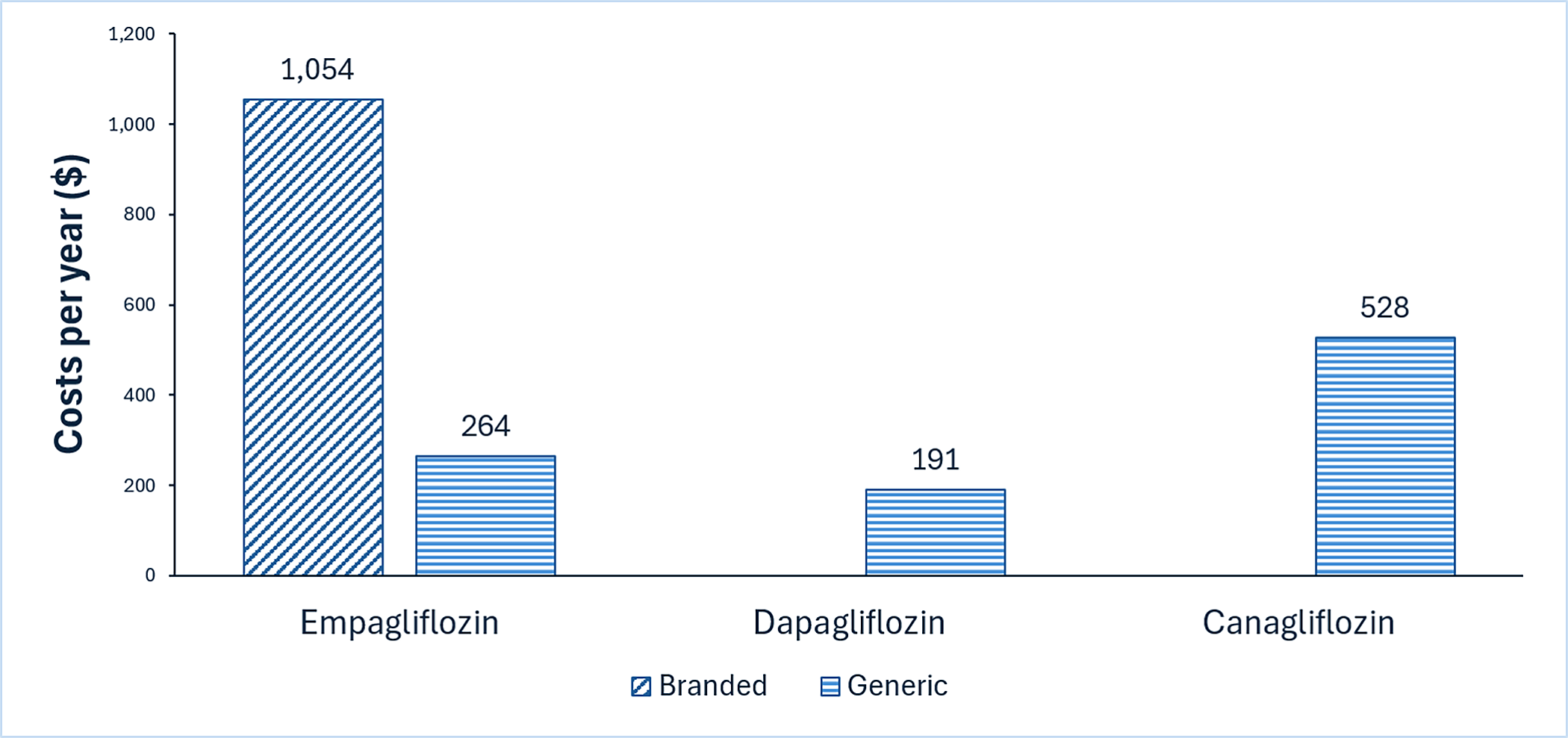
Additional items for consideration are provided in the following bullets:
According to the clinical review, evidence from 5 RCTs and 3 NMAs suggests that empagliflozin improved clinical outcomes when compared to placebo and is expected to have similar outcomes when compared to dapagliflozin and canagliflozin. Results of the NMAs were uncertain due to methodological limitations.
As of April 2026, empagliflozin is only available as a brand name product in Canada (Jardiance). There are 16 generic versions currently under review at Health Canada. As such, 1 or more generic versions of empagliflozin may become available. According to the pan-Canadian Pharmaceutical Alliance Tiered Pricing Framework, the availability of 3 or more oral solid generic products on the Canadian market would set the price of generic empagliflozin to 25% of the brand reference price.56 Assuming a price consistent with 25% of the price of the reference brand, the cost of generic empagliflozin would be $264 per year, which would be more costly than dapagliflozin and less costly than canagliflozin at list prices (Figure 1).
According to the clinical experts consulted for this review, empagliflozin is expected to have similar treatment-related health care resource use relative to its comparators available in Canada.
As of April 2026, there were no drugs under review for CKD. Empagliflozin was previously reviewed by CDA-AMC on multiple occasions with positive recommendations for reimbursement (refer to the Background section of the clinical review). CDA-AMC previously reviewed dapagliflozin on multiple occasions and for multiple indications including CKD, for which it received a positive recommendation for reimbursement. Canagliflozin was previously reviewed by CDA-AMC but not for the indication of this review.
No studies conducted in Canada assessing the cost-effectiveness of empagliflozin for CKD in adults with or without T2DM were identified based on a literature search conducted on December 18, 2025, with alerts maintained until the Formulary Management Expert Committee (FMEC) meeting on June 5, 2026.
Conclusion
The reimbursement of empagliflozin for the treatment of CKD in adults with or without T2DM is expected to increase overall drug acquisition costs. Based on the clinical review conclusions, empagliflozin is expected to have similar clinical effectiveness compared to canagliflozin and dapagliflozin.
Given that empagliflozin is associated with increased drug acquisition costs and similar clinical benefit, there is insufficient evidence to support a price premium for empagliflozin over dapagliflozin and canagliflozin.
References
1.Levery AS, Inker LA. Definition and staging of chronic kidney disease in adults. UpToDate; 2025. Accessed December 9, 2025. https://www.uptodate.com
2.Kidney Disease: Improving Global Outcomes CKDWG. KDIGO 2024 Clinical Practice Guideline for the Evaluation and Management of Chronic Kidney Disease. Kidney Int. 2024;105(4S):S117-S314. doi:10.1016/j.kint.2023.10.018 PubMed
3.Fatehi P, Hsu C-y. Chronic kidney disease (newly identified): Clinical presentation and diagnostic approach in adults. UpToDate; 2024. Accessed December 9, 2025. https://www.uptodate.com
4.The Kidney Foundation of Canada. Impacts and Outcomes of Kidney Research in Canada: 2024 Report - Advancing Kidney Health, Driving Change. The Kidney Foundation of Canada; 2024. Accessed April 24, 2026. https://heyzine.com/flip-book/e0e121661d.html#page/1
5.Bello AK, Ronksley PE, Tangri N, et al. Prevalence and Demographics of CKD in Canadian Primary Care Practices: A Cross-sectional Study. Kidney Int Rep. 2019;4(4):561-570. doi:10.1016/j.ekir.2019.01.005 PubMed
6.Canadian Institute for Health Information. Annual statistics on organ replacement in Canada, 2012 to 2021. Accessed March 15, 2026. https://www.cihi.ca/en/annual-statistics-on-organ-replacement-in-canada-2012-to-2021#organ-donation
7.Matus Gonzalez A, Cazzolli R, Madero M, et al. A Core Outcome Set for Trials in CKD: Report of the Standardized Outcomes in Nephrology-Chronic Kidney Disease (SONG-CKD) Stakeholder Workshops. Am J Kidney Dis. 2025;85(6):745-753. doi:10.1053/j.ajkd.2024.10.013 PubMed
8.American Diabetes Association Professional Practice C. 11. Chronic Kidney Disease and Risk Management: Standards of Care in Diabetes-2025. Diabetes Care. 2025;48(1 Suppl 1):S239-S251. doi:10.2337/dc25-S011
9.Apperloo EM, Gorriz JL, Soler MJ, et al. Semaglutide in patients with overweight or obesity and chronic kidney disease without diabetes: a randomized double-blind placebo-controlled clinical trial. Nat Med. 2025;31(1):278-285. doi:10.1038/s41591-024-03327-6 PubMed
10.Boehringer Ingelheim (Canada) Ltd. Jardiance (empagliflozin): 10 mg and 25 mg oral tablets [product monograph]. July 23, 2015. Updated July 31, 2025. Accessed March 15, 2026. https://pdf.hres.ca/dpd_pm/00081256.PDF
11.Colbert GB, Madariaga HM, Gaddy A, Elrggal ME, Lerma EV. Empagliflozin in Adults with Chronic Kidney Disease (CKD): Current Evidence and Place in Therapy. Ther Clin Risk Manag. 2023;19:133-142. doi:10.2147/TCRM.S398163 PubMed
12.Heerspink HJL, Stefansson BV, Correa-Rotter R, et al. Dapagliflozin in Patients with Chronic Kidney Disease. N Engl J Med. 2020;383(15):1436-1446. doi:10.1056/NEJMoa2024816 PubMed
13.Perkovic V, Jardine MJ, Neal B, et al. Canagliflozin and Renal Outcomes in Type 2 Diabetes and Nephropathy. N Engl J Med. 2019;380(24):2295-2306. doi:10.1056/NEJMoa1811744 PubMed
14.Zinman B, Wanner C, Lachin JM, et al. Empagliflozin, Cardiovascular Outcomes, and Mortality in Type 2 Diabetes. N Engl J Med. 2015;373(22):2117-28. doi:10.1056/NEJMoa1504720 PubMed
15.Staplin N, Roddick AJ, Neuen BL, et al. Effects of Sodium Glucose Cotransporter 2 Inhibitors by Diabetes Status and Level of Albuminuria: A Meta-Analysis. JAMA. 2026;335(3):220-232. doi:10.1001/jama.2025.20835 PubMed
16.Brenner BM, Cooper ME, de Zeeuw D, et al. Effects of losartan on renal and cardiovascular outcomes in patients with type 2 diabetes and nephropathy. N Engl J Med. 2001;345(12):861-9. doi:10.1056/NEJMoa011161 PubMed
17.Lewis EJ, Hunsicker LG, Clarke WR, et al. Renoprotective effect of the angiotensin-receptor antagonist irbesartan in patients with nephropathy due to type 2 diabetes. N Engl J Med. 2001;345(12):851-60. doi:10.1056/NEJMoa011303 PubMed
18.Neuen BL, Fletcher RA, Anker SD, et al. SGLT2 Inhibitors and Kidney Outcomes by Glomerular Filtration Rate and Albuminuria: A Meta-Analysis. JAMA. 2026;335(3):233-244. doi:10.1001/jama.2025.20834 PubMed
19.Yen FS, Hwu CM, Liu JS, Wu YL, Chong K, Hsu CC. Sodium-Glucose Cotransporter-2 Inhibitors and the Risk for Dialysis and Cardiovascular Disease in Patients With Stage 5 Chronic Kidney Disease. Ann Intern Med. 2024;177(6):693-700. doi:10.7326/M23-1874 PubMed
20.Bakker WM, Heerspink HJL, Berger SP, et al. Rationale and design of the Renal Lifecycle trial assessing the effect of dapagliflozin on cardiorenal outcomes in severe chronic kidney disease. Nephrol Dial Transplant. 2025;40(9):1746-1755. doi:10.1093/ndt/gfaf046 PubMed
21.Wang CA, Lin LC, Chen JY, Wang WJ, Wu VC. Exploring the mortality and cardiovascular outcomes with SGLT-2 inhibitors in patients with T2DM at dialysis commencement: a health global federated network analysis. Cardiovasc Diabetol. 2024;23(1):327. doi:10.1186/s12933-024-02424-7 PubMed
22.Empa-Kidney Collaborative Group. Effects of empagliflozin on progression of chronic kidney disease: a prespecified secondary analysis from the empa-kidney trial. Lancet Diabetes Endocrinol. 2024;12(1):39-50. doi:10.1016/S2213-8587(23)00321-2 PubMed
23.The Empa-Kidney Collaborative Group, Herrington WG, Staplin N, et al. Empagliflozin in Patients with Chronic Kidney Disease. N Engl J Med. 2023;388(2):117-127. doi:10.1056/NEJMoa2204233 PubMed
24.Barnett AH, Mithal A, Manassie J, et al. Efficacy and safety of empagliflozin added to existing antidiabetes treatment in patients with type 2 diabetes and chronic kidney disease: a randomised, double-blind, placebo-controlled trial. Lancet Diabetes Endocrinol. 2014;2(5):369-84. doi:10.1016/S2213-8587(13)70208-0 PubMed
25.Ameri P, De Marzo V, Zoccai GB, et al. Efficacy of new medical therapies in patients with heart failure, reduced ejection fraction, and chronic kidney disease already receiving neurohormonal inhibitors: a network meta-analysis. Eur Heart J Cardiovasc Pharmacother. 2022;8(8):768-776. doi:10.1093/ehjcvp/pvab088 PubMed
26.Chen JY, Pan HC, Shiao CC, et al. Impact of SGLT2 inhibitors on patient outcomes: a network meta-analysis. Cardiovasc Diabetol. 2023;22(1):290. doi:10.1186/s12933-023-02035-8 PubMed
27.Nguyen BN, Nguyen L, Mital S, Bugden S, Nguyen HV. Comparative efficacy of sodium-glucose co-transporter-2 inhibitors, glucagon-like peptide-1 receptor agonists and non-steroidal mineralocorticoid receptor antagonists in chronic kidney disease and type 2 diabetes: A systematic review and network meta-analysis. Diabetes Obes Metab. 2023;25(6):1614-1623. doi:10.1111/dom.15009 PubMed
28.Qiu M, Ding LL, Wei XB, Liu SY, Zhou HR. Comparative Efficacy of Glucagon-like Peptide 1 Receptor Agonists and Sodium Glucose Cotransporter 2 Inhibitors for Prevention of Major Adverse Cardiovascular Events in Type 2 Diabetes: A Network Meta-analysis. J Cardiovasc Pharmacol. 2021;77(1):34-37. doi:10.1097/FJC.0000000000000916 PubMed
29.Guo J, Wei M, Zhang W, et al. Clinical efficacy and safety of sodium-glucose cotransporter protein-2 (SGLT-2) inhibitor, glucagon-like peptide-1 (GLP-1) receptor agonist, and Finerenone in type 2 diabetes mellitus with non-dialysis chronic kidney disease: a network meta-analysis of randomized clinical trials. Front Pharmacol. 2025;16:1517272. doi:10.3389/fphar.2025.1517272 PubMed
30.Lin J, Wang S, Wen T, Zhang X. Renal protective effect and safety of sodium-glucose cotransporter-2 inhibitors in patients with chronic kidney disease and type 2 diabetes mellitus: a network meta-analysis and systematic review. Int Urol Nephrol. 2022;54(9):2305-2316. doi:10.1007/s11255-022-03117-4 PubMed
31.Lin R, Hsu CL, Shih MC, Chien KL, Wu HY. Comparison of the renal outcomes of novel antidiabetic agents in patients with type 2 diabetes with chronic kidney disease: A systematic review and network meta-analysis of randomized controlled trials. Diabetes Obes Metab. 2026;28(1):518-528. doi:10.1111/dom.70224 PubMed
32.Malik AH, Yandrapalli S, Goldberg M, Jain D, Frishman WH, Aronow WS. Cardiovascular Outcomes With the Use of Sodium-Glucose Cotransporter-2 Inhibitors in Patients With Type 2 Diabetes and Chronic Kidney Disease: An Updated Meta-Analysis of Randomized Controlled Trials. Cardiol Rev. 2020;28(3):116-124. doi:10.1097/CRD.0000000000000265 PubMed
33.Hadjadj S, Cooper ME, Steubl D, et al. Empagliflozin and Rapid Kidney Function Decline Incidence in Type 2 Diabetes: An Exploratory Analysis From the EMPA-REG OUTCOME Trial. Kidney Med. 2023;6(3):100783. doi:10.1016/j.xkme.2023.100783 PubMed
34.Wanner C, Heerspink HJL, Zinman B, et al. Empagliflozin and Kidney Function Decline in Patients with Type 2 Diabetes: A Slope Analysis from the EMPA-REG OUTCOME Trial. J Am Soc Nephrol. 2018;29(11):2755-2769. doi:10.1681/ASN.2018010103 PubMed
35.Wanner C, Lachin JM, Inzucchi SE, et al. Empagliflozin and Clinical Outcomes in Patients With Type 2 Diabetes Mellitus, Established Cardiovascular Disease, and Chronic Kidney Disease. Circulation. 2018;137(2):119-129. doi:10.1161/CIRCULATIONAHA.117.028268 PubMed
36.Sharma A, Ferreira JP, Zannad F, et al. Cardiac and kidney benefits of empagliflozin in heart failure across the spectrum of kidney function: Insights from the EMPEROR-Preserved trial. Eur J Heart Fail. 2023;25(8):1337-1348. doi:10.1002/ejhf.2857 PubMed
37.Zannad F, Ferreira JP, Pocock SJ, et al. Cardiac and Kidney Benefits of Empagliflozin in Heart Failure Across the Spectrum of Kidney Function: Insights From EMPEROR-Reduced. Circulation. 2021;143(4):310-321. doi:10.1161/CIRCULATIONAHA.120.051685 PubMed
38.Boehringer Ingelheim. ClinicalTrials.gov, ed. NCT03594110: EMPA-KIDNEY (The Study of Heart and Kidney Protection With Empagliflozin). U.S. National Library of Medicine; July 20, 2025. Accessed April 24, 2026. https://clinicaltrials.gov/study/NCT03594110?term=NCT03594110&rank=1
39.Boehringer Ingelheim. NCT01164501: Efficacy and Safety of Empagliflozin (BI 10773) in Patients With Type 2 Diabetes and Renal Impairment. U.S. National Library of Medicine; June 16, 2014. Accessed April 24, 2026. https://clinicaltrials.gov/study/NCT01164501
40.Levey AS, Stevens LA, Schmid CH, et al. A new equation to estimate glomerular filtration rate. Ann Intern Med. 2009;150(9):604-12. doi:10.7326/0003-4819-150-9-200905050-00006 PubMed
41.Takashima H, Yoshida Y, Nagura C, et al. Renoprotective effects of canagliflozin, a sodium glucose cotransporter 2 inhibitor, in type 2 diabetes patients with chronic kidney disease: A randomized open-label prospective trial. Diab Vasc Dis Res. 2018;15(5):469-472. doi:10.1177/1479164118782872 PubMed
42.Yale JF, Bakris G, Cariou B, et al. Efficacy and safety of canagliflozin over 52 weeks in patients with type 2 diabetes mellitus and chronic kidney disease. Diabetes Obes Metab. 2014;16(10):1016-27. doi:10.1111/dom.12348 PubMed
43.Pollock C, Stefansson B, Reyner D, et al. Albuminuria-lowering effect of dapagliflozin alone and in combination with saxagliptin and effect of dapagliflozin and saxagliptin on glycaemic control in patients with type 2 diabetes and chronic kidney disease (DELIGHT): a randomised, double-blind, placebo-controlled trial. Lancet Diabetes Endocrinol. 2019;7(6):429-441. doi:10.1016/S2213-8587(19)30086-5 PubMed
44.Fioretto P, Del Prato S, Buse JB, et al. Efficacy and safety of dapagliflozin in patients with type 2 diabetes and moderate renal impairment (chronic kidney disease stage 3A): The DERIVE Study. Diabetes Obes Metab. 2018;20(11):2532-2540. doi:10.1111/dom.13413 PubMed
45.Kohan DE, Fioretto P, Tang W, List JF. Long-term study of patients with type 2 diabetes and moderate renal impairment shows that dapagliflozin reduces weight and blood pressure but does not improve glycemic control. Kidney Int. 2014;85(4):962-71. doi:10.1038/ki.2013.356 PubMed
46.Wiviott SD, Raz I, Bonaca MP, et al. Dapagliflozin and Cardiovascular Outcomes in Type 2 Diabetes. N Engl J Med. 2019;380(4):347-357. doi:10.1056/NEJMoa1812389 PubMed
47.Shea BJ, Reeves BC, Wells G, et al. AMSTAR 2: a critical appraisal tool for systematic reviews that include randomised or non-randomised studies of healthcare interventions, or both. BMJ. 2017;358:j4008. doi:10.1136/bmj.j4008 PubMed
48.Diabetes Canada Clinical Practice Guidelines Expert Working G, Shah BR, Bajaj HS, et al. Pharmacologic Glycemic Management of Type 2 Diabetes in Adults—2024 Update. Can J Diabetes. 2024;48(7):415-424. doi:10.1016/j.jcjd.2024.08.002 PubMed
49.Shin H, Paik JM, Everett BM, et al. Comparative Effectiveness of Individual Sodium-Glucose Cotransporter 2 Inhibitors. JAMA Intern Med. 2025;185(3):302-313. doi:10.1001/jamainternmed.2024.7357 PubMed
50.Anker SD, Butler J, Filippatos G, et al. Empagliflozin in Heart Failure with a Preserved Ejection Fraction. N Engl J Med. 2021;385(16):1451-1461. doi:10.1056/NEJMoa2107038 PubMed
51.Packer M, Anker SD, Butler J, et al. Cardiovascular and Renal Outcomes with Empagliflozin in Heart Failure. N Engl J Med. 2020;383(15):1413-1424. doi:10.1056/NEJMoa2022190 PubMed
52.Zinman B, Wanner C, Lachin JM, et al. Empagliflozin, Cardiovascular Outcomes, and Mortality in Type 2 Diabetes. N Engl J Med. 2015;373(22):2117-28. doi:10.1056/NEJMoa1504720 PubMed
53.Fishbane S, Upadrista P, Shah HH. Composite Primary Outcomes in Nephrology Clinical Trials. Kidney Med. 2026;8(3):101231. doi:10.1016/j.xkme.2025.101231 PubMed
54.Inker LA, Eneanya ND, Coresh J, et al. New Creatinine- and Cystatin C-Based Equations to Estimate GFR without Race. N Engl J Med. 2021;385(19):1737-1749. doi:10.1056/NEJMoa2102953 PubMed
55.Rangaswami J, Bhalla V, de Boer IH, et al. Cardiorenal Protection With the Newer Antidiabetic Agents in Patients With Diabetes and Chronic Kidney Disease: A Scientific Statement From the American Heart Association. Circulation. 2020;142(17):e265-e286. doi:doi:10.1161/CIR.0000000000000920 PubMed
56.pan-Canadian Pharmaceutical Alliance. Generic drugs. 2026. Accessed March 30, 2026. https://www.pcpacanada.ca/generic-drug-framework
ISSN: 2563-6596
Canada’s Drug Agency (CDA-AMC) is a pan-Canadian health organization. Created and funded by Canada’s federal, provincial, and territorial governments, we’re responsible for driving better coordination, alignment, and public value within Canada’s drug and health technology landscape. We provide Canada’s health system leaders with independent evidence and advice so they can make informed drug, health technology, and health system decisions, and we collaborate with national and international partners to enhance our collective impact.
Disclaimer: CDA-AMC has taken care to ensure that the information in this document was accurate, complete, and up to date when it was published, but does not make any guarantee to that effect. Your use of this information is subject to this disclaimer and the Terms of Use at cda-amc.ca.
The information in this document is made available for informational and educational purposes only and should not be used as a substitute for professional medical advice, the application of clinical judgment in respect of the care of a particular patient, or other professional judgments in any decision-making process. You assume full responsibility for the use of the information and rely on it at your own risk.
CDA-AMC does not endorse any information, drugs, therapies, treatments, products, processes, or services. The views and opinions of third parties published in this document do not necessarily reflect those of CDA-AMC. The copyright and other intellectual property rights in this document are owned by the Canadian Agency for Drugs and Technologies in Health (operating as CDA-AMC) and its licensors.
Questions or requests for information about this report can be directed to Requests@cda-amc.ca.