Drugs, Health Technologies, Health Systems
Reimbursement Recommendation
Ruxolitinib (Opzelura)
Indication: Topical treatment of mild to moderate atopic dermatitis in adult and pediatric patients 2 years of age and older whose disease is not adequately controlled with conventional topical prescription therapies (topical corticosteroids, topical calcineurin inhibitors) or when those therapies are not advisable
Sponsor: Incyte Biosciences Canada Corporation
Final Recommendation: Reimburse with conditions
Summary
What Is the Reimbursement Recommendation for Opzelura?
Canada’s Drug Agency (CDA-AMC) recommends that Opzelura be reimbursed by public drug plans for the topical treatment of moderate atopic dermatitis (AD) in adults aged 18 years and older who have had an inadequate response to, are intolerant of, or have a contraindication to topical corticosteroids (TCS) and topical calcineurin inhibitors (TCI), if certain conditions are met.
Why Did CDA-AMC Recommend Reimbursement?
The Canadian Drug Expert Committee (CDEC) determined that Opzelura demonstrates acceptable clinical value for adults with moderate AD who have had an inadequate response to, cannot tolerate, or cannot use TCS and TCI. Opzelura is expected to provide an additional topical treatment option before patients move on to systemic treatments. Therefore, acceptable clinical value refers to added value compared with vehicle cream.
Evidence from the TRuE-AD4 clinical trial showed that Opzelura improved the severity and extent of AD, itch, and quality of life compared with vehicle cream. Opzelura may also provide a nonsteroidal topical treatment option for patients whose disease can still be managed with topical therapy before moving to systemic treatment.
There is more uncertainty about how Opzelura compares with treatments that patients would otherwise receive in clinical practice in Canada. Vehicle cream is not an active treatment, and there were no direct trials comparing Opzelura with phototherapy, conventional systemic immunosuppressants, biologic drugs, or oral Janus kinase (JAK) inhibitors. Indirect evidence comparing Opzelura with selected systemic treatments was also uncertain and did not establish whether Opzelura provides more, less, or similar benefit compared with these treatments. Despite this uncertainty, CDEC concluded that the benefits of Opzelura compared with vehicle cream, together with its short-term safety profile and potential to provide another nonsteroidal topical treatment option before systemic therapy, were sufficient to support reimbursement.
CDA-AMC previously reviewed Opzelura for the topical treatment of mild to moderate AD in patients aged 12 years and older and issued a recommendation not to reimburse in May 2025. This resubmission focuses on a narrower patient population and includes new evidence from the TRuE-AD4 clinical trial in adults with moderate AD who have had an inadequate response to, are intolerant of, or cannot use TCS and TCI. The resubmission also includes updated indirect evidence comparing Opzelura with selected systemic treatments.
Which Patients Are Eligible for Coverage?
Opzelura should only be reimbursed for adults aged 18 years and older with moderate AD. Patients must have an Investigator’s Global Assessment (IGA) score of 3 and an Eczema Area and Severity Index (EASI) score greater than 7. They must also have a documented inadequate response to, intolerance to, or contraindication to TCS and TCI.
What Are the Conditions for Reimbursement?
Opzelura should only be reimbursed if patients have a 75% improvement in their EASI score within 6 months of starting treatment. Opzelura should be prescribed by a clinician with experience diagnosing and managing AD. The price of Opzelura must also be reduced, and the economic feasibility of adopting Opzelura must be addressed.
Review Background
Disease background: AD is a chronic, relapsing inflammatory skin condition characterized by itch, inflamed and dry skin, and recurrent eczematous lesions that can substantially impair sleep, daily functioning, mental well-being, and quality of life. International survey data estimated the prevalence of AD in Canada at approximately 4% among adults in 2016; approximately half of adults with AD may have moderate to severe disease.
Indication and reimbursement request: Ruxolitinib (Opzelura) has been approved by Health Canada for the topical treatment of mild to moderate AD in adult and pediatric patients 2 years of age and older whose disease is not adequately controlled with conventional topical prescription therapies (TCS and TCI) or when those therapies are not advisable. The sponsor is seeking reimbursement for the topical treatment of moderate AD in adults 18 years of age and older with an inadequate response to, intolerance to, or contraindication to both TCS and TCI.
Drug under review: Ruxolitinib is a JAK inhibitor. It is available as a 1.5% topical cream. The dosage recommended in the product monograph is a thin layer applied twice daily to affected skin areas, up to a maximum of 20% of body surface area for each application.
Treatment costs: At the submitted price of $1,075.97 per 100 g tube, the annual per patient cost of Opzelura 1.5% cream is expected to be $11,836 to $15,064 (if 11 to 14 tubes are used) in the first year and $2,152 to $8,608 (if 2 to 8 tubes are used) in subsequent years of therapy. The actual number of tubes used annually will depend on patient body surface area (BSA), percentage of BSA affected with AD, amount of cream per application, duration of use, and wastage.
Submission history: Ruxolitinib was previously reviewed by CDA-AMC and received a recommendation not to reimburse from CDEC in May 2025 for the topical treatment of mild to moderate AD in patients 12 years of age and older whose disease was not adequately controlled with TCS and/or TCI or when those therapies were not advisable. The original review included 2 phase III, double-masked, randomized, vehicle-controlled trials (TRuE-AD1 [N = 631] and TRuE-AD2 [N = 618]) in adolescents and adults with mild to moderate AD. Although ruxolitinib improved clinical outcomes compared with vehicle cream, the trial populations were not considered sufficiently representative of the population expected to receive ruxolitinib in clinical practice because eligibility was not based on inadequate response to or inability to use TCS and/or TCI. There was also no direct comparative evidence versus relevant active treatments, and the submitted indirect evidence was associated with methodological limitations and imprecision. Consequently, CDEC was unable to determine the comparative clinical benefit of ruxolitinib relative to available treatments in clinical practice in Canada.
Basis of resubmission: This resubmission focuses on a narrower reimbursement population and includes new evidence from the TRuE-AD4 study, a phase IIIb randomized, double-blind, vehicle-controlled trial specifically conducted in adults with moderate AD and an inadequate response to, intolerance to, or contraindication to both TCS and TCI. The resubmission also includes updated indirect evidence comparing ruxolitinib with selected systemic therapies.
Highlights of Input From Interested Parties
The patient groups (Canadian Skin Patient Alliance and Eczema Society of Canada) noted the following regarding impacts of the disease, unmet needs, and important outcomes:
AD can have a substantial impact on patients’ physical and psychosocial well-being, including persistent itch, painful skin symptoms, sleep disruption, impaired daily functioning and social participation, and reduced quality of life. The burden may also extend to caregivers and families.
Existing treatments can be associated with inadequate symptom control, tolerability concerns, treatment burden, and access barriers. Patients highlighted a need for additional effective, well-tolerated, nonsteroidal topical treatment options.
Important treatment goals included rapid and sustained relief of itch and other skin symptoms, fewer flares, improved sleep and quality of life, fewer adverse effects, and treatments that are convenient to use, including for sensitive or difficult-to-treat areas.
The clinician groups (Canadian Dermatology Association, Dermatology Association of Ontario, and Atlantic Dermatology Specialist Group) and the clinical experts consulted by CDA-AMC noted the following regarding unmet needs and the anticipated place in therapy for ruxolitinib:
Despite multiple available treatments, some patients’ disease remains inadequately controlled with existing topical therapies. Limitations include inadequate symptom control, local tolerability issues, concerns with prolonged corticosteroid use, and the treatment burden and potential harms associated with phototherapy and systemic therapies.
An additional effective nonsteroidal topical therapy may help address the treatment gap for patients whose disease can still be managed topically and who may otherwise require escalation to systemic treatment.
Ruxolitinib would generally be used after inadequate response to, intolerance to, or contraindication to TCS and TCI, as an additional topical treatment option before escalation to systemic therapy. Clinicians noted that it may be used intermittently or as needed after disease control is achieved.
The participating public drug programs provided input regarding considerations for initiation, renewal, discontinuation, and prescribing of therapy; relevant comparators; drug administration considerations; and other system and economic considerations.
Recommendation
With a vote of 13 in favour to 0 against, CDEC recommends that ruxolitinib be reimbursed for the topical treatment of moderate AD in adult patients aged 18 years and older with an inadequate response to, intolerance to, or contraindication to TCS and TCI, only if the conditions listed in Table 1 are met.
The CDEC “Do Not Reimburse” recommendation for ruxolitinib for the topical treatment of mild to moderate AD in patients aged 12 years and older, dated May 6, 2025, continues to apply to patients who are not included in the population evaluated in this resubmission. These comprise children and adolescents, patients with mild AD, and patients who can receive TCS or TCI.
Table 1: Reimbursement Conditions and Reasons
Reimbursement condition | Reason | Implementation guidance |
|---|---|---|
Initiation | ||
1. Ruxolitinib should be reimbursed if all the following conditions are met: 1.1. aged 18 years and older 1.2. moderate AD with an IGA score of 3 1.3. EASI score of greater than 7. | The reimbursement request and the direct evidence from the TRuE-AD4 study are restricted to adults with moderate AD. The TRuE-AD4 study included adults within these ranges. | Clinical experts indicated that moderate AD can generally be diagnosed in routine practice, including by primary care clinicians experienced in managing AD. Some increased awareness of scoring systems may be needed. For condition 1.3, CDEC intended this recommendation to apply to patients with moderate AD, consistent with the population enrolled in the TRuE-AD4 study. In the trial, moderate AD was defined by both an IGA score of 3 and an EASI score greater than 7. Recognizing that definitions of moderate disease may vary across jurisdictions, CDEC supports flexibility in establishing the EASI threshold used to identify eligible patients. Jurisdictions may consider the severity of disease represented by an IGA score of 3, the characteristics of their patient populations, and alignment with reimbursement criteria for other therapies used in moderate to severe AD. CDEC noted that EASI scores of more than 21 are commonly categorized as severe disease. Accordingly, EASI scores should be interpreted in conjunction with clinical assessment when determining patient eligibility. |
2. Patients must have had a documented inadequate response to, intolerance to, or contraindication to TCS and TCI. | The TRuE-AD4 study enrolled adults with moderate AD who had a documented inadequate response to, intolerance to, or contraindication to TCS and TCI. In this population, ruxolitinib 1.5% cream resulted in clinically important improvements in disease severity, itch, extent of disease, and quality of life compared with vehicle cream. | An inadequate response should be based on an adequate trial of an appropriate TCS and TCI in which TCS potency is selected according to the affected area and clinical context. Prior phototherapy or systemic therapy may be considered evidence that prior topical therapy was inadequate or unsuitable. Clinical experts did not support a rigid definition of treatment failure; assessment may incorporate clinician judgment and patient-reported disease control, itch, sleep, quality of life, and treatment satisfaction. |
Renewal | ||
3. For continued reimbursement, the patient must demonstrate a 75% improvement in EASI score within 6 months of treatment initiation. Assessments at subsequent renewals are not required. | Although formal disease scales are not routinely used in all clinical settings, EASI-75 was a clinically meaningful outcome in the TRuE-AD4 study and provides an objective measure of response for reimbursement purposes. | Jurisdictions may opt to renew based on a reduction of IGA to 0 (clear) or 1 (almost clear). Clinical experts noted that ruxolitinib may be used intermittently when moderate AD is present. As a result, the timing of subsequent renewals depends on how frequently moderate disease recurs. Given this variability, the frequency or need for subsequent renewals cannot be explicitly defined. |
Prescribing | ||
4. Ruxolitinib cream may be prescribed by clinicians with experience in the diagnosis and management of AD. | Clinical experts did not consider specialist restriction necessary. Family physicians, dermatologists, allergists, and other clinicians experienced in managing AD were considered able to diagnose and manage patients receiving ruxolitinib cream. Restricting prescribing to dermatologists could create unnecessary access barriers, particularly for patients in rural and remote communities. | Jurisdictions have the flexibility to align prescribing criteria with other advanced therapies for AD. |
Pricing | ||
5. A reduction in price. | Using the CDA-AMC base-case analysis, the ICER for ruxolitinib cream was $384,072 per QALY gained when compared with vehicle cream in the indicated population. A band 4a price reduction would be required to achieve cost-effectiveness at either a $50,000 or $100,000 per QALY gained threshold. Exact price reductions at any given willingness-to-pay threshold can be found in the CDA-AMC main report and Supplemental Material document. | The CDA-AMC analysis is based on public list prices for all treatments. Further price reductions may be required if there are price arrangements (discounts) currently in place for any treatment included in the economic analysis. |
Feasibility of adoption | ||
6. The economic feasibility of adoption of ruxolitinib 1.5% cream must be addressed. | At the submitted price, the magnitude of uncertainty in the budget impact must be addressed to ensure the feasibility of adoption, given the difference between the sponsor’s estimate and the CDA-AMC estimate(s). | — |
AD = atopic dermatitis; CDA-AMC = Canada’s Drug Agency; CUA = cost-utility analysis; EASI = Eczema Area and Severity Index; ICER = incremental cost-effectiveness ratio; IGA = Investigator's Global Assessment; QALY = quality-adjusted life-year; TCI = topical calcineurin inhibitors; TCS = topical corticosteroids.
aFor the statement regarding the size of the price reduction required, band 1 = 1% to 24%, band 2 = 25% to 49%, band 3 = 50% to 74%, and band 4 = 75% or greater.
Rationale for the Recommendation
Clinical Value
Based on the totality of the clinical evidence, CDEC concluded that ruxolitinib demonstrates acceptable clinical value for adults with moderate AD and an inadequate response to, intolerance to, or contraindication to TCS and TCI. Because ruxolitinib represents a new line of topical therapy following TCI and TCS, but before systemic treatments, acceptable clinical value refers to added value versus vehicle cream.
Evidence from 1 phase IIIb randomized controlled trial (TRuE-AD4) demonstrated that 8 weeks of treatment with ruxolitinib cream resulted in clinically important improvements compared with vehicle cream in disease severity, itch, extent of disease, and health-related quality of life (HRQoL). At week 8, 61.3% of patients treated with ruxolitinib achieved IGA treatment success compared with 13.6% with vehicle cream, and 70.0% achieved at least a 75% improvement in EASI score compared with 18.5% with vehicle cream. Improvements were also observed in itch, BSA affected by AD, and Dermatology Life Quality Index (DLQI) score. The short-term safety profile was generally acceptable, with no new safety signals identified during the randomized period.
The TRuE-AD4 study directly enrolled the population for whom reimbursement is requested and therefore addresses an important limitation identified in the previous review of ruxolitinib. However, vehicle cream is not an active treatment used in clinical practice, and no direct comparative trials against phototherapy, conventional systemic immunosuppressants, biologics, or oral JAK inhibitors were identified.
One sponsor-submitted indirect treatment comparison evaluated ruxolitinib relative to selected systemic therapies. For most relevant comparisons, the estimates were compatible, with no difference between treatments, but the evidence was insufficient to establish whether ruxolitinib provides greater or lower efficacy than the active comparators. Confidence in the indirect evidence was limited by differences in trial populations and outcome assessment time points, sparse network structures, and imprecision. Comparative evidence for harms and HRQoL was not available.
CDEC considered that ruxolitinib provides an effective topical treatment option for patients whose disease is inadequately controlled with, or who cannot tolerate or use, TCS and TCI. In particular, ruxolitinib demonstrated benefit in itch and quality of life, which were identified as important unmet needs by patients and clinicians.
Further information on the committee’s discussion around clinical value is provided in the Summary of Deliberation section.
Developing the Recommendation
The determination of acceptable clinical value was sufficient for CDEC to recommend reimbursement of ruxolitinib. As part of the deliberation on whether to recommend reimbursement, the committee also considered unmet clinical need, unmet nonclinical need, and health inequity. Information on this discussion is provided in the Unmet Clinical Need and Distinct Social and Ethical Considerations domains in the Summary of Deliberation section.
Because CDEC recommended that ruxolitinib be reimbursed, the committee also deliberated on whether reimbursement conditions should be added to address important economic considerations, health system impacts, or social and ethical considerations, or to ensure clinical value is realized. The resulting reimbursement conditions, with accompanying reasons and implementation guidance, are stated in Table 1.
Summary of Deliberation
CDEC considered all domains of value of the deliberative framework before developing its recommendation: clinical value, unmet clinical need, distinct social and ethical considerations, economic considerations, and impacts on health systems. For further information on the domains of value, refer to Expert Committee Deliberation at Canada’s Drug Agency.
The committee considered the following key discussion points, organized by the 5 domains of value.
Clinical Value
Appropriate comparators: For adults with moderate AD who have an inadequate response to, intolerance to, or contraindication to TCS and TCI, CDEC considered active treatments that would otherwise be used at this stage of the treatment pathway to be appropriate comparators. In most jurisdictions, conventional systemic immunosuppressants (e.g., methotrexate and cyclosporine) are used before advanced systemic therapies and were therefore considered more relevant comparators. Other relevant options include alternative nonsteroidal topical therapies, phototherapy, biologics, and oral JAK inhibitors. Vehicle cream is not an active treatment used in clinical practice. However, given that ruxolitinib represents a new line of topical therapy and no other topical treatments exist, and given that many patients may not be able to access more advanced systemic therapies, CDEC agreed that an inactive control-like vehicle cream can be considered a relevant comparator from a decision-making perspective.
Efficacy versus vehicle: One phase IIIb, double-blind, randomized controlled trial (TRuE-AD4; N = 241) evaluated ruxolitinib 1.5% cream versus vehicle cream in adults with moderate AD and an inadequate response to, intolerance to, or contraindication to TCS and TCI. At week 8, ruxolitinib increased the proportion of patients achieving EASI-75 (70.0% versus 18.5%; absolute difference = 51.4%; 95% CI, 40.5% to 62.2%), IGA treatment success (61.3% versus 13.6%; absolute difference = 47.6%; 95% CI, 37.0% to 58.2%), and a 4-point or greater improvement on the Itch Numeric Rating Scale (62.5% versus 19.8%; absolute difference = 42.8%; 95% CI, 31.4% to 54.2%). Ruxolitinib also resulted in greater improvement in BSA affected by AD and DLQI compared with vehicle.
Longer-term evidence: Following the 8-week randomized period, patients with an adequate response could continue blinded treatment on an as-needed basis through week 24, whereas patients with inadequate response or loss of response could enter an open-label escape arm and receive ruxolitinib. Improvements appeared to be maintained in many patients through week 24, providing supportive evidence for intermittent, as-needed treatment after disease control. However, these findings do not provide robust comparative evidence of the magnitude or durability of longer-term benefit because the primary longer-term analysis included only patients who achieved EASI-50 at week 8, open-label escape, and changes in treatment according to response.
Clinical importance of treatment effects: CDEC considered the improvements in disease severity, itch, affected BSA, and HRQoL with ruxolitinib compared with vehicle to be clinically meaningful. These outcomes reflect treatment goals identified as important by patients and clinicians, particularly relief of itch, improvement in visible skin disease, disease control, and quality of life. The observed effects exceeded thresholds of clinical importance considered in the review. Ruxolitinib also provides an additional nonsteroidal topical treatment option for patients whose AD remains inadequately controlled with TCS and TCI and whose disease may otherwise require treatment escalation.
Certainty of the evidence: There was high-certainty evidence that ruxolitinib improves EASI-75 response, IGA treatment success, itch response, affected BSA, and DLQI compared with vehicle at 8 weeks. Although differential discontinuation between treatment groups and potential functional unblinding were noted, these concerns were not considered sufficient to reduce certainty in the observed short-term efficacy effects. Certainty regarding harms was lower because of the relatively small sample size, few events, and short randomized follow-up. Long-term effectiveness and safety remain uncertain.
Efficacy versus active systemic therapies: The sponsor-submitted fixed-effect Bayesian network meta-analyses comparing ruxolitinib with dupilumab, upadacitinib, abrocitinib, and lebrikizumab for IGA treatment success, EASI-75, and itch response. Conventional immunomodulators were not included in the network. Although some point estimates favoured ruxolitinib, the comparative estimates were generally imprecise and did not establish superiority, inferiority, or similar efficacy relative to most active comparators. Confidence in the indirect evidence was limited by differences across trials in disease severity, age, concomitant therapy, and timing of outcome assessment; use of subgroups with moderate disease; sparse networks connected primarily through placebo or vehicle cream; and the use of fixed-effect models despite between-study heterogeneity. There was no comparative evidence for harms or HRQoL. CDEC therefore could not draw firm conclusions regarding the comparative efficacy or safety of ruxolitinib versus advanced systemic therapies.
Evidence gaps: No direct or indirect evidence compared ruxolitinib with conventional systemic immunosuppressants, despite these being important next-line treatments in the reimbursement population. There was also no direct comparative evidence versus other active topical therapies or phototherapy. Consequently, although the TRuE-AD4 study establishes clinically meaningful short-term benefit compared with vehicle cream in the reimbursement population, the relative clinical benefit of ruxolitinib compared with treatments patients would otherwise receive in practice in Canada remains uncertain.
Harms: The short-term safety profile of ruxolitinib was considered manageable. During the 8-week randomized period, AEs occurred in 35.0% of patients receiving ruxolitinib and 35.8% receiving vehicle cream, and serious adverse events were infrequent (1.9% versus 1.2%). No serious infections, malignancies, major adverse cardiovascular events, or thrombotic events were reported, and no new safety signals were identified through week 24. However, the TRuE-AD4 study was not sufficiently large or long to characterize uncommon or delayed harms associated with JAK inhibition.
Clinical value: Based on the clinically important and high-certainty short-term benefits demonstrated versus vehicle cream in the reimbursement population, together with the manageable short-term safety profile and the relevance of the outcomes to patients and clinicians, CDEC concluded that ruxolitinib demonstrates acceptable clinical value. CDEC acknowledged that the magnitude of benefit relative to active treatments used in clinical practice in Canada remains uncertain.
Unmet Clinical Need
Input on unmet clinical need: Patients identified persistent itch, visible and painful skin lesions, sleep disruption, reduced quality of life, and the burden of repeatedly trying treatments that provide inadequate or temporary disease control as important unmet needs. Patients also reported concerns related to adverse effects of TCS and local irritation with TCI. Clinicians identified a treatment gap for patients whose disease is inadequately controlled with TCS and TCI but who may not yet require, or may wish to avoid, systemic therapy. A need for additional safe and effective nonsteroidal topical treatments, particularly for sensitive or cosmetically important areas, was also identified.
Severity of the disease: CDEC considered AD to be a chronic and potentially seriously debilitating condition, although it is not inherently life-threatening. Persistent itch and recurrent skin lesions can substantially affect sleep, daily functioning, work productivity, mental well-being, social participation, and quality of life.
Availability of treatment options: Multiple treatments are available for moderate AD, including TCS, TCI, other nonsteroidal topical therapies, phototherapy, conventional systemic immunosuppressants, biologics, and oral JAK inhibitors. However, these treatments do not provide adequate disease control or acceptable tolerability for all patients, and some patients may not be eligible for these therapies due to less extensive disease presentation. Phototherapy may also be difficult to access, particularly for patients living outside urban centres, whereas systemic therapies may involve greater treatment burden, monitoring requirements, injections, or important safety considerations. CDEC acknowledged that ruxolitinib may fill a treatment gap between conventional topical therapy and escalation to systemic treatment for some patients.
Distinct Social and Ethical Considerations
Input on unmet nonclinical need: Patients described substantial treatment burden related to daily skin care, repeated topical applications, specialist appointments, phototherapy visits, and the financial costs of prescription and nonprescription skin-care products. A topical treatment that can be self-administered at home may reduce some of the practical burden associated with phototherapy or systemic treatments that require injections, monitoring, or frequent health care visits.
Equity considerations: Patient and clinical input identified potential disparities in access to AD care for people living in rural or remote communities, those without private drug coverage, and individuals with lower incomes. Limited access to dermatology services and phototherapy may particularly affect patients outside urban centres. Patient groups also highlighted that racialized populations may experience under-recognition or delayed diagnosis because AD can present differently in darker skin tones. Public reimbursement of a topical therapy that does not require specialist administration or laboratory monitoring may reduce some access barriers, although equitable access would continue to depend on reimbursement criteria and availability of prescribers.
Sensitive or visible areas: AD affecting the face, hands, neck, genital area, or other visible or sensitive areas may have disproportionate effects on self-image, social interactions, employment, intimacy, and dignity. Clinical experts identified a particular need for steroid-sparing topical treatment options in these areas. Ruxolitinib may address some of these needs by providing an additional nonsteroidal topical option, although the evidence did not establish differential benefit according to disease location.
Ethical implications: CDEC considered the importance of avoiding reimbursement criteria that could unnecessarily restrict access, particularly requirements for specialist prescribing or routine use of research-based severity instruments that are not commonly used for topical therapy in clinical practice. Such requirements could disproportionately affect patients with limited access to specialist care.
Economic Considerations
Health impacts of ruxolitinib 1.5% cream versus relevant comparators: Key clinical efficacy in the economic analysis (i.e., treatment response as a 75% improvement in the EASI score [EASI 75 response]) was derived from a sponsor-submitted network meta-analysis. Although direct evidence from the TRuE-AD4 trial demonstrated that ruxolitinib cream improved EASI 75 response compared to vehicle cream, the CDA-AMC clinical review concluded that the comparative efficacy and safety of ruxolitinib cream compared to dupilumab, abrocitinib, and upadacitinib were too uncertain to determine among patients with moderate to severe AD who have had an inadequate response to, are intolerant of, or have contraindications to TCS and TCI.
Cost of ruxolitinib 1.5% cream versus relevant comparators: At the submitted price of $1,075.97 per 100 g tube, annual treatment with ruxolitinib 1.5% cream is less costly than dupilumab, abrocitinib, upadacitinib, nemolizumab, and lebrikizumab. The drug acquisition costs of systemic immunosuppressants are lower than those of ruxolitinib 1.5% cream, ranging from $0.11 to $10.14 per day. Additionally, the drug acquisition cost of ruxolitinib 1.5% cream is uncertain because the amount of cream used in clinical practice is unknown and may vary according to disease severity, BSA affected by AD, flares, and drug wastage.
Key findings of the economic evaluation: Based on the evidence reviewed for this submission, there is no robust evidence to suggest that ruxolitinib 1.5% cream provides greater health benefits than dupilumab, abrocitinib, or upadacitinib. If decision-makers determine there are no meaningful differences in health outcomes between ruxolitinib cream and these comparators, then the total cost of ruxolitinib cream to the health system should not exceed that of the least costly advanced treatment available for the indicated population.
Based on the submitted evidence using the sponsor’s cost-utility analysis (CUA), the CDA-AMC base-case analysis estimated that the incremental cost-effectiveness ratio (ICER) for ruxolitinib 1.5% cream in patients with moderate to severe AD with an inadequate response to, or intolerance to, or contraindication to TCS and TCI was $384,072 per quality-adjusted life-year (QALY) gained when compared with vehicle cream (Figure 1). Clinical experts indicated that most patients with moderate AD who are inadequately controlled with TCS or TCI would receive some form of active therapy in clinical practice rather than care equivalent to vehicle cream alone. It is therefore challenging to interpret the ICER versus vehicle cream, because vehicle cream does not represent standard of care.
The submitted CUA assessed the cost-effectiveness of ruxolitinib 1.5% cream compared to dupilumab and JAK inhibitors that are reimbursed after trial of systemic immunosuppressants. The effectiveness and cost-effectiveness of ruxolitinib 1.5% cream compared to systemic immunosuppressants is unknown because these were not included in the sponsor’s analysis.
Figure 1: Estimate of the ICER Used by CDEC to Inform the Price Condition
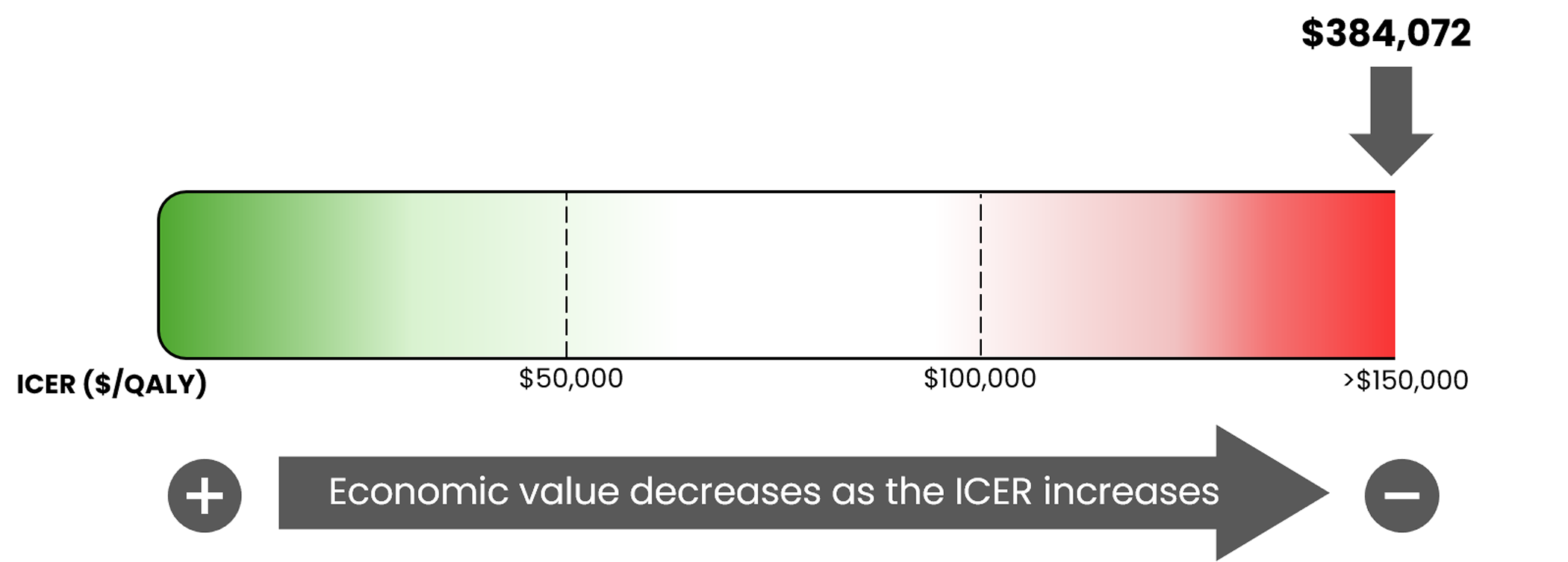
CDEC = Canadian Drug Expert Committee; ICER = incremental cost-effectiveness ratio; QALY = quality-adjusted life-year.
Certainty of the evidence: The sponsor-conducted network meta-analysis did not provide robust evidence of differences in efficacy and safety between ruxolitinib 1.5% cream, dupilumab, upadacitinib, and abrocitinib. The effectiveness and cost-effectiveness of ruxolitinib 1.5% cream compared to systemic immunosuppressants is unknown.
Other considerations: The submitted CUA assessed the cost-effectiveness of ruxolitinib 1.5% cream compared to dupilumab and JAK inhibitors that are reimbursed after a trial of systemic immunosuppressants. The effectiveness and cost-effectiveness of ruxolitinib 1.5% cream compared to systemic immunosuppressants is unknown because these were not included in the sponsor’s analysis. Lebrikizumab and nemolizumab also represent additional treatment options in the evolving AD treatment landscape; however, their comparative cost-effectiveness relative to ruxolitinib was not assessed.
Challenges to interpreting the price reduction condition: Due to a lack of long-term response evidence and methodological concerns in the sponsor’s submitted economic model, CDA-AMC shortened the time horizon of the evaluation versus vehicle cream to 1 year. CDEC heard from clinical experts that 1 of the key features of ruxolitinib cream is its long-term tolerability, but that its efficacy is uncertain. The ICER compared to vehicle cream is sensitive to the duration of benefit, adding complication to the interpretation of the price reduction needed to achieve cost-effectiveness. This complication is compounded by the absence of clearly defined comparators for moderate AD. CDEC’s deliberation suggested that although there is insufficient evidence against which to anchor a straightforward price reduction, the appropriate price likely lies between the price of immunosuppressive therapies and the price of dupilumab, abrocitinib, upadacitinib, nemolizumab, or lebrikizumab. CDEC therefore noted that interpretation of the price reduction condition is complicated by uncertainty regarding the most appropriate comparator and the absence of direct comparative evidence against treatments that would otherwise be used in clinical practice.
Impacts on Health Systems
Anticipated budget impact: CDA-AMC estimates that the budget impact of reimbursing ruxolitinib 1.5% cream for the topical treatment of moderate AD in adult patients aged 18 years and older who have had an inadequate response to, are intolerant of, or have contraindications to TCS and TCI will be a savings of approximately $126 million over the first 3 years of reimbursement compared to the amount currently spent on comparators, with an estimated expenditure of $160 million on ruxolitinib 1.5% cream over this period. The actual budget impact of reimbursing ruxolitinib 1.5% cream will depend on the treatments from which market share of ruxolitinib cream would be captured, as well as the amount of cream used by patients in clinical practice. The magnitude of uncertainty in the budget impact must be addressed to ensure the feasibility of adoption, given the difference between the sponsor’s estimate and the CDA-AMC estimate.
Organizational implications: Ruxolitinib cream is self-administered and does not require specialized administration infrastructure or routine laboratory monitoring. Clinical experts indicated that prescribing does not need to be restricted to dermatologists and that patients with moderate AD can be diagnosed and managed in primary care or specialty practice. CDEC considered that avoiding unnecessary requirements for specialist prescribing or formal EASI or IGA assessments would support feasible implementation and reduce administrative burden. Ruxolitinib may also provide an alternative for some patients who would otherwise proceed to phototherapy or systemic treatment, which may require greater health care resource use, monitoring, injections, or repeated clinic visits.
Equity considerations: Implementation requirements that depend on access to dermatologists, specialized assessment tools, or phototherapy could disproportionately affect patients living in rural or remote areas and others with limited access to specialty care. Allowing prescribing by clinicians experienced in the diagnosis and management of AD and using clinically based assessments of treatment response may help reduce these barriers. Public reimbursement may also improve access for patients who currently lack private drug coverage, although equitable access will depend on how reimbursement criteria are implemented across jurisdictions.
Sources of Information Used by the Committee
To make its recommendation, CDEC considered the following information (links to the full documents for the review can be found on the project web page.
the CDA-AMC review of the clinical and pharmacoeconomic evidence submitted by the sponsor, as well as relevant ethical issues related to ruxolitinib (refer to the Main Report and Supplemental Material document)
the sponsor’s comments on the draft report and the CDA-AMC responses
patients’ perspectives gathered by 2 patient groups, the Canadian Skin Patient Alliance and Eczema Society of Canada (refer to the Patient and Clinician Group Input document)
input from 3 clinician groups, the Canadian Dermatology Association, Dermatology Association of Ontario, and Atlantic Dermatology Specialist Group (refer to the Patient and Clinician Group Input document)
input from public drug programs that participate in the reimbursement review process (refer to the Supplemental Material document)
input from 2 clinical experts with expertise in the management of AD consulted by CDA-AMC.
All feedback received in response to the draft recommendation is available on the CDA-AMC project web page.
CDEC Information
Members of the Committee
Dr. Peter Jamieson (Chair), Dr. Kerry Mansell (Vice-Chair), Sally Bean, Daryl Bell, Dan Dunsky, Dr. Ran Goldman, Dr. Trudy Huyghebaert, Dr. Dennis Ko, Dr. Christine Leong, Alicia McCallum, Dr. Srinivas Murthy, Dr. Nicholas Myers, Dr. Krishnan Ramanathan, Dr. Marco Solmi, Carla Velastegui, Dr. Edward Xie, and Dr. Peter Zed.
Regrets: Three expert committee members did not attend.
Conflicts of interest: None
ISSN: 2563-6596
Canada’s Drug Agency (CDA-AMC) is a pan-Canadian health organization. Created and funded by Canada’s federal, provincial, and territorial governments, we’re responsible for driving better coordination, alignment, and public value within Canada’s drug and health technology landscape. We provide Canada’s health system leaders with independent evidence and advice so they can make informed drug, health technology, and health system decisions, and we collaborate with national and international partners to enhance our collective impact.
Disclaimer: CDA-AMC has taken care to ensure that the information in this document was accurate, complete, and up to date when it was published, but does not make any guarantee to that effect. Your use of this information is subject to this disclaimer and the Terms of Use at cda-amc.ca.
The information in this document is made available for informational and educational purposes only and should not be used as a substitute for professional medical advice, the application of clinical judgment in respect of the care of a particular patient, or other professional judgments in any decision-making process. You assume full responsibility for the use of the information and rely on it at your own risk.
CDA-AMC does not endorse any information, drugs, therapies, treatments, products, processes, or services. The views and opinions of third parties published in this document do not necessarily reflect those of CDA-AMC. The copyright and other intellectual property rights in this document are owned by the Canadian Agency for Drugs and Technologies in Health (operating as CDA-AMC) and its licensors.
Questions or requests for information about this report can be directed to Requests@CDA-AMC.ca