Drugs, Health Technologies, Health Systems
Reimbursement Recommendation
Pegzilarginase (Loargys)
Indication: Treatment of hyperargininemia in adults and pediatric patients aged 2 years and older with arginase 1 deficiency, in conjunction with dietary protein restriction
Sponsor: Immedica Pharma AB
Final Recommendation: Reimburse with conditions
Summary
What Is the Reimbursement Recommendation for Loargys?
Canada’s Drug Agency (CDA-AMC) recommends that Loargys be reimbursed by public drug plans for the treatment of hyperargininemia in adults and pediatric patients aged 2 years or older with arginase 1 deficiency (ARG1-D), in conjunction with dietary protein restriction, if certain conditions are met.
Why Did CDA-AMC Recommend Reimbursement?
The Canadian Drug Expert Committee (CDEC) determined that it is uncertain whether Loargys demonstrates acceptable clinical value compared with placebo plus individualized disease management in adults and pediatric patients aged 2 years or older with ARG1-D, in conjunction with dietary protein restriction.
Evidence from 1 clinical trial showed that 24 weeks of treatment with Loargys resulted in a clinically meaningful reduction in plasma arginine levels compared with placebo in adults and pediatric patients aged 2 years or older with ARG1-D who were receiving stable, individualized disease management. Although there is uncertainty in whether arginine reduction translates into improved clinical outcomes, CDEC indicated that arginine levels may be an acceptable measure of treatment benefit, given the potential challenges with evidence generation in rare diseases. The trial also suggested that Loargys likely results in a clinically important improvement in health-related quality of life (HRQoL) but may result in little to no difference in clinical outcomes, including neurologic, motor, and cognitive functioning, as well as adaptive behaviour, when compared with placebo. Results from the long-term extension phase of the trial suggested potential benefits in clinical outcomes over time with Loargys treatment; however, the evidence is uncertain because the extension study did not include a comparison group.
CDEC established that there was a significant unmet clinical need due to the rarity and severity of hyperargininemia. Patients and caregivers highlighted a significant need for disease-modifying therapies that prevent neurologic deterioration; stabilize or improve mobility, cognitive function, and overall daily functioning; reduce symptoms; and lessen reliance on restrictive dietary management. CDEC concluded that treatment with Loargys may address a significant unmet clinical need with an acceptable level of certainty in the clinical value.
Based on the preceding considerations, CDEC recommended that Loargys be reimbursed.
Which Patients Are Eligible for Coverage?
Loargys should only be covered for adult and pediatric patients aged 2 years or older with a confirmed diagnosis of ARG1-D and plasma arginine levels of 250 µmol/L or above.
What Are the Conditions for Reimbursement?
Loargys should only be reimbursed if it is prescribed by a specialist with experience managing ARG1-D or managing patients with inherited metabolic diseases, and if the cost of Loargys is reduced. The duration of initial authorization is 24 weeks. For the first renewal after initial authorization, the physician must provide proof of clinical response, defined as a reduction of plasma arginine concentrations within the normal range. Subsequent renewals may be conducted every 12 months, and the clinical response achieved after the initial authorization must be maintained as assessed by the treating physician.
Review Background
Disease background: Arginase 1 deficiency (ARG1-D) is a rare, inherited, progressive metabolic disease in which a defective enzyme leads to the accumulation of neurotoxic metabolites. ARG1-D is associated with severe clinical manifestations and premature mortality. Patients are increasingly impacted by neurologic complications and have challenges caring for themselves due to deteriorating mobility (including needing to use a wheelchair) and increasing intellectual disability. The estimated prevalence of ARG1-D in Canada is approximately 1 per million; input from clinical experts suggested that there are approximately 20 patients currently living with ARG1-D throughout the country.
Indication and reimbursement request: Pegzilarginase (Loargys) has been approved by Health Canada for the treatment of hyperargininemia in adults and pediatric patients aged 2 years and older with ARG1-D, in conjunction with dietary protein restriction. The sponsor is seeking reimbursement for this patient population.
Drug under review: Pegzilarginase is a recombinant human arginase 1 enzyme intended to substitute for the deficient enzyme activity in patients with ARG1-D. It is available for IV infusion or subcutaneous injection. The recommended starting dosage is 0.1 mg/kg once weekly; the dose may be increased or decreased to achieve therapeutic goals.
Treatment costs: At the submitted price of $7,271.55 per 0.4 mL vial, the annual cost of pegzilarginase is expected to range from $379,419 to $758,838 for pediatric patients (based on a weight of 13 kg), depending on the dose (0.1 mg/kg to 0.2 mg/kg). The annual cost of pegzilarginase is expected to range from $1,897,095 to $3,414,772 for adult patients (based on a weight of 85 kg), depending on the dose (0.1 mg/kg to 0.2 mg/kg).
Highlights of Input From Interested Parties
The patient group (the Canadian Organization for Rare Disorders) noted the following regarding impacts of the disease, unmet needs, and important outcomes:
Patients and caregivers emphasized the substantial impact of ARG1-D on daily functioning and quality of life, with early-onset neurologic and physical symptoms — including muscle stiffness, impaired mobility, developmental delays, seizures, and cognitive difficulties — and metabolic crisis with hospitalization.
The disease and its treatment impose a substantial, ongoing burden on both patients and caregivers, including burdens related to mobility limitations, strict dietary restrictions, and frequent medical monitoring, all of which often lead to social isolation and intensive caregiving needs.
Input from patients and caregivers identified the need for treatments that prevent neurologic deterioration; improve or stabilize the decline in mobility, cognitive function, and overall daily functioning; reduce symptoms such as spasticity, seizures, and fatigue; and decrease reliance on strict dietary restrictions.
The clinician group (the Garrod Association) and the clinical experts consulted by Canada’s Drug Agency (CDA-AMC) noted the following regarding unmet needs arising from the disease and place in therapy for the drug under review:
The treatment landscape for ARG1-D in Canada is insufficient. Supportive therapies that are currently used do not address the underlying disease mechanism and do not prevent the accumulation of neurologic and cognitive impairments. There is significant unmet need for therapies that effectively reduce plasma arginine levels and that have meaningful impacts on disease manifestations and the burden experienced by patients and caregivers.
Pegzilarginase may cause a paradigm shift as a first-line therapy and potentially a new standard of care, offering arginase 1 enzyme replacement that directly targets the underlying disease mechanism. In clinical practice, it is expected that pegzilarginase will be used alongside dietary management strategies, with nitrogen scavengers considered in patients at risk of hyperammonemia.
The participating public drug programs raised potential implementation issues related to considerations for initiation, renewal, discontinuation, and prescribing of therapy; generalizability of trial populations to broader populations; and system and economic issues.

Note: The perspectives shared by people with lived experience who present to the committee reflect their individual experiences and are not necessarily representative of all people with the same condition or course of treatment. Their insights provide valuable context about what a patient, support person, or caregiver might go through with this condition or treatment, helping to inform the committee’s deliberations. These narratives complement other forms of evidence and input, and should be considered as 1 element contributing to a broader understanding of the condition and treatment under review.
Recommendation
With a vote of 13 in favour to 0 against, the Canadian Drug Expert Committee (CDEC) recommends that pegzilarginase be reimbursed for the treatment of hyperargininemia in adults and pediatric patients aged 2 years or older with ARG1-D, in conjunction with dietary protein restriction, only if the conditions listed in Table 1 are met.
Table 1: Reimbursement Conditions and Reasons
Reimbursement condition | Reason | Implementation guidance |
|---|---|---|
Initiation | ||
1. Pegzilarginase should be reimbursed for the treatment of ARG1-D if all the following conditions are met: 1.1. adult and pediatric patients aged 2 years or older 1.2. confirmed diagnosis of ARG1-D 1.3. plasma arginine levels ≥ 250 µmol/L. | In the PEACE trial, pegzilarginase demonstrated clinically meaningful benefits in adults and pediatric patients aged 2 years or older with ARG1-D. These clinically important benefits included a reduction in plasma arginine levels, an increase in the proportion of patients with arginine levels within the normal range, and an increase in HRQoL as measured by the Pediatric Quality of Life Inventory overall score at 24 weeks compared with placebo. The effect of pegzilarginase on improvement in neurologic, neuromotor, and neurocognitive function, as well as in adaptive behaviour over the course of the trial, was uncertain. Eligible patients in the PEACE trial were aged ≥ 2 years and needed to have average plasma arginine levels ≥ 250 µmol during the screening period for inclusion. | Based on clinical expert input, CDEC noted that confirmation of ARG1-D should involve 2 of the following: elevated plasma arginine levels, markedly decreased arginase 1 enzyme activity, or genetic assessment of biallelic mutation of the ARG1 gene, as determined by the treating physician. Clinicians noted the increasing accessibility of genetic testing, while measurement of arginase 1 enzyme activity may not be readily accessible. CDEC noted, based on clinical expert input, that patients with ARG1-D are in high need of intervention and may benefit from treatment with pegzilarginase, regardless of the severity of symptoms or the disease stage, including patients with extreme mobility deficits. Pegzilarginase should be given in conjunction with dietary protein restriction, and may also be given with any other individualized disease management strategies, such as amino acid supplements or pharmacological treatment including nitrogen scavengers, at the discretion of the treating physician. |
2. The duration of initial authorization is 24 weeks. | The PEACE trial assessed the primary and secondary end points at 24 weeks during the randomized controlled phase. | — |
Renewal | ||
3. For renewal after initial authorization, the physician must provide proof of clinical response to pegzilarginase, defined as a reduction of plasma arginine concentrations within the normal range (i.e., equal or inferior to the upper limit of normal, as set by local laboratory). | In the PEACE trial, reduction in plasma arginine was the primary efficacy end point. In clinical practice, plasma arginine is a surrogate outcome that is indicative of treatment response. Based on clinical expert input, normalization of arginine levels was considered a target for clinically meaningful improvement in the treatment of ARG1-D. | CDEC recognized that normalization of arginine levels may not be completely achieved in a small number of patients, who may nevertheless still derive clinical benefits from treatment, as assessed by the treating physician. Input from clinical experts, which was based on experience from clinical practice and on the literature, suggested that plasma arginine levels below 250 µmol/L are usually not associated with increased morbidity. Because ARG1-D is driven by a toxic accumulation of arginine and its neurotoxic metabolites, normalization of arginine levels is expected to halt disease progression and prevent further neurologic deterioration. Based on clinical expert input, CDEC noted that meaningful improvement in clinical outcomes, including neurologic, neuromotor, and neurocognitive function, as well as adaptative behaviour, may require at least 12 to 24 months of treatment. CDEC also noted that slowing disease progression is a treatment goal in itself, as ARG1-D is known to cause progressive and irreversible neuromotor and neurocognitive damage. Evidence for slowing or halting disease progression may include improving quality of life; reducing daily burden of the condition; halting further neurologic or cognitive decline; preserving mobility; maintaining communication; participating in school, community, and family life; or improving or maintaining functioning. |
4. For subsequent renewal, the clinical response achieved after the initial authorization must be maintained as assessed by the treating physician. | This is meant to ensure that the clinical response achieved after the initial authorization is sustained over time. | Given the chronic and progressive nature of ARG1-D, clinical expert input suggested that a temporary increase in arginine levels alone should not be interpreted as evidence of treatment inefficacy, provided the treating physician judges that the overall disease trajectory is stable on treatment. Multiple clinical factors can lead to a temporary increase in arginine levels, including illness or infection, physiological stress, catabolism, puberty, pregnancy, and postpartum status. Testing of arginine levels may be repeated after 6 months to assess maintenance of clinical response. |
5. Assessment of treatment response for subsequent renewal may be conducted every 12 months. | The PEACE trial assessed the primary and secondary end points at 24 weeks during the randomized controlled phase and at 150 weeks during the open-label phase of the study. | — |
Prescribing | ||
6. Pegzilarginase should be prescribed by a specialist with experience managing ARG1-D or managing patients with inherited metabolic diseases. | Accurate diagnosis and management of patients with ARG1-D is important to ensure that pegzilarginase is prescribed to appropriate patients. | — |
Pricing | ||
7. A reduction in price. | Using the sponsor’s base-case analysis, the ICER for pegzilarginase plus best supportive care was $2,805,316 per QALY gained when compared with best supportive care alone in the indicated population. A band 4 price reductiona would be required to achieve cost-effectiveness at a $50,000 per QALY threshold. A band 4 price reductiona would be required to achieve cost-effectiveness at a $100,000 per QALY threshold. Price reductions for any given willingness-to-pay threshold are available in the CDA-AMC Main Report and Supplemental Material document. | The CDA-AMC analysis is based on public list prices for all treatments. Further price reductions may be required if there are price arrangements (discounts) currently in place for any treatment included in the economic analysis. |
ARG1-D = arginase 1 deficiency; CDA-AMC = Canada’s Drug Agency; CDEC = Canadian Drug Expert Committee; HRQoL = health-related quality of life; ICER = incremental cost-effectiveness ratio; QALY = quality-adjusted life-year.
aFor the statement regarding the size of the price reduction required, band 1 = 1% to 24%, band 2 = 25% to 49%, band 3 = 50% to 74%, and band 4 = 75% or greater.
Rationale for the Recommendation
Clinical Value
Based on the totality of the clinical evidence, CDEC concluded that it is uncertain whether pegzilarginase demonstrates acceptable clinical value compared with placebo plus individualized disease management in adults and pediatric patients aged 2 years or older with ARG1-D, in conjunction with dietary protein restriction.
Evidence from 1 phase III, double-blind, placebo-controlled trial (the PEACE trial; N = 32) showed that pegzilarginase reduced plasma arginine levels compared with placebo after 24 weeks of treatment in adults and pediatric patients aged 2 years or older with ARG1-D who were receiving stable, individualized disease management. Arginine levels were reduced to within normal range in 19 out of 21 patients who received pegzilarginase, while no patient in the placebo group achieved this level of response. The level of reduction was considered clinically meaningful and a marked improvement from the natural disease trajectory of ARG1-D, although CDEC noted that the sample size of the PEACE trial was small. Uncertainty was introduced by the absence of a formally validated relationship between arginine levels and clinical outcomes. Although it remains an evidence gap, CDEC acknowledged that reliance on surrogate measures in rare diseases reflects feasibility challenges in generating evidence.
Pegzilarginase likely results in a clinically important increase in health-related quality of life (HRQoL) when compared with placebo, which aligns with patient-identified priorities. In contrast, pegzilarginase may result in little to no difference in neurologic, neuromotor, and neurocognitive function, as well as in adaptive behaviour, when compared with placebo after 24 weeks of treatment. Based on clinical expert input, CDEC noted that meaningful improvements in development, cognitive function, mobility, and spasticity may require several years to be observed. Results from the long-term extension (LTE) phase of the PEACE trial suggest signals of potential benefits with regard to these clinical outcomes; however, the absence of a comparative design does not support causal interpretation of the results, and uncertainty limits the robustness of these findings.
With respect to safety, there was uncertainty regarding the effect of pegzilarginase on the incidence of hyperammonemic episodes and hypersensitivity reactions. CDEC also noted that no evidence was submitted regarding antidrug antibodies. Results from the LTE phase of the PEACE trial support a consistent safety profile for pegzilarginase during extended follow-up. Overall, pegzilarginase is considered to have an acceptable and tolerable safety profile that is consistent with the product monograph and clinical expert input.
Further information on the committee’s discussion around clinical value is provided in the Summary of Deliberation section.
Considering Significant Unmet Clinical Need
CDEC established that there is significant unmet clinical need due to the rarity and severity of hyperargininemia. Patients and caregivers highlighted a significant need for disease-modifying therapies that prevent neurologic deterioration; stabilize or improve mobility, cognitive function, and overall daily functioning; reduce symptoms such as spasticity, seizures, and fatigue; and lessen reliance on restrictive dietary management.
CDEC concluded that treatment with pegzilarginase may address a significant unmet clinical need to a degree that justifies a positive recommendation despite the uncertainty in the clinical value.
Further information on the committee’s discussion around unmet clinical need is provided in the Summary of Deliberation section.
Developing the Recommendation
Due to uncertainty in the evidence regarding pegzilarginase, CDEC was unable to base its recommendation solely on clinical value. Therefore, the committee also considered whether pegzilarginase addresses a significant unmet clinical need. CDEC concluded that pegzilarginase fulfills this unmet need with an acceptable level of certainty, considering the rarity and severity of the disease despite available treatments. Based on the preceding considerations, CDEC recommended that pegzilarginase be reimbursed. As part of the deliberation on whether to recommend reimbursement or not, the committee also considered unmet nonclinical need and health inequity. Information on this discussion is provided in the Distinct Social and Ethical Considerations domain in the Summary of Deliberation section.
Because CDEC recommended that pegzilarginase be reimbursed, the committee also deliberated on whether reimbursement conditions should be added to address important economic considerations, health system impacts, or social and ethical considerations, or to ensure clinical value is realized. The resulting reimbursement conditions, with accompanying reasons and implementation guidance, are stated in Table 1.
Summary of Deliberation
CDEC considered all domains of value of the deliberative framework before developing its recommendation: clinical value, unmet clinical need, distinct social and ethical considerations, economic considerations, and impacts on health systems. For further information on the domains of value, refer to Expert Committee Deliberation at Canada’s Drug Agency.
The committee considered the following key discussion points, organized by the 5 domains of value.
Clinical Value
Appropriate comparators: The committee considered placebo added to individualized disease management to be an appropriate comparator for the drug under review. In the absence of disease-targeted therapies, the current management of ARG1-D primarily involves best supportive care (BSC), including nitrogen scavenger therapy (e.g., sodium benzoate, sodium phenylbutyrate, and/or glycerol phenylbutyrate), protein (arginine)–restricted diets, supplementation with specialized metabolic formulas (e.g., essential amino acids), and pharmacological symptomatic treatments targeting disease manifestations, such as antiepileptic and antispasmodic medications. Based on clinical expert input, CDEC noted that these treatments do not modify the underlying disease mechanism, and thus were not viewed as relevant comparators.
Efficacy versus placebo: One phase III, double-blind, placebo-controlled trial (the PEACE trial; N = 32) showed that in adult and pediatric patients aged 2 years or older with ARG1-D, pegzilarginase results in a clinically important reduction in plasma arginine levels at week 24 compared with placebo. The relative reduction was 76.7% (95% confidence interval [CI], −67.1% to −83.5%) with pegzilarginase compared to placebo. Additionally, pegzilarginase results in a clinically important increase in the proportion of patients with arginine levels within normal range (between-group difference = 84.5%; 95% CI, 67% to 100%) and likely results in a clinically important increase in the Pediatric Quality of Life Inventory overall score (between-group difference = 17.23 points; 95% CI, 4.13 to 30.33). However, pegzilarginase may result in little to no difference in neurologic, neuromotor, and neurocognitive function, as measured by the 2-metre walk test (2MWT) (between-group difference = 5.5 m; 95% CI, −15.6 to 26.7), Gross Motor Function Measure – Dimension E (GMFM-E) (between-group difference = 4.6 points; 95% CI, −1.1 to 10.2), and GMFM – Dimension D (GMFM-D) (between-group difference = 2.2 points; 95% CI, −0.4 to 4.9), as well as in adaptive behaviour, as measured by the Vineland Adaptive Behavior Scale, Second Edition (VABS-II) (between-group difference = 4.9 points; 95% CI, −3.8 to 13.7) after 24 weeks of treatment compared with placebo. Results from the LTE phase of the PEACE trial suggest potential for sustained efficacy beyond 24 weeks, but causal interpretations could not be made due to the single-arm design and substantial reductions in the sample size over time.
Clinical importance of treatment effects: Patient input emphasized the need for treatments that prevent neurologic deterioration and improve or stabilize the decline in mobility, cognitive function, and overall daily functioning, which includes participating in school and/or work and social activities. Patients and caregivers also desire a reduction of symptoms such as spasticity, seizures, and fatigue, and a decreased reliance on strict dietary restrictions, which would lessen the overall disease burden. In the PEACE trial, outcomes related to plasma arginine levels, neurologic and neuromotor function, adaptive behaviour, and HRQoL addressed some, but not all, of these priorities. Based on clinicial expert input and observational evidence, normalization of arginine levels is expected to halt disease progression and prevent further neurologic deterioration; however, this has not been formally validated. In the absence of literature-based minimal important difference estimates, thresholds for between-group differences were informed by expert opinion to support interpretation of the evidence. For the 2MWT, GMFM-D, GMFM-E, and hyperammonemic episodes, the treatment effects were evaluated in the presence of a non-null effect. Pegzilarginase showed clinically meaningful benefits compared with placebo in reducing plasma arginine levels to within a normal range and showed potential clinically meaningful benefits in improving HRQoL; however, its effect on neurologic, neuromotor, and neurocognitive function and adaptive behaviour was uncertain. Overall, CDEC concluded that the availability of a treatment option providing such benefits was important to patients with ARG1-D; however, CDEC noted uncertainty surrounding the findings, especially regarding the relationship between change in arginine levels and improvements in clinical outcomes.
Certainty of the evidence: Evidence from the assessment of plasma arginine and proportion of responders with arginine levels within a normal range was rated as having high certainty (compared to placebo) using the Grading of Recommendations Assessment, Development and Evaluation (GRADE) approach. Evidence from the assessments of the 2MWT and hyperammonemic episodes was rated as having low certainty due to very serious imprecision. Evidence from assessments of the GMFM-E, GMFM-D, and VABS-II was rated as having low certainty due to serious imprecision and serious indirectness. Evidence from the assessment of the Pediatric Quality of Life Inventory in overall score was rated having moderate certainty due to serious imprecision.
Use of surrogate end points: CDEC noted that the PEACE trial relied on the surrogate end point of plasma arginine level reduction, which is indicative of treatment response in clinical practice rather than a direct clinical outcome. Reduction in plasma arginine level is expected to halt disease progression and prevent further neurologic deterioration based on clinical expert input and observational evidence, but its use represents an evidence gap because it remains uncertain how changes in this surrogate end point translates into true clinical benefit. However, CDEC acknowledged that reliance on surrogate markers reflects feasibility constraints, given that evaluating outcomes such as neurologic, neuromotor, and neurocognitive function would require long-term follow-up and a much larger sample size, which are difficult to achieve given the rarity of the condition.
Harms: Pegzilarginase may result in little to no difference in hyperammonemic episodes compared with placebo (between-group difference in the PEACE trial = −22.1%; 95% CI, −54.2% to 10%). No notable safety concerns were identified with pegzilarginase during the LTE phase of the PEACE trial, in Study 101A, in Study 102A, or in the French Early Access Program study.
Clinical value: Based on all of the preceding considerations, the committee determined that it is uncertain whether pegzilarginase plus individualized disease management demonstrates acceptable clinical value compared with placebo plus individualized disease management.
Unmet Clinical Need
Input on unmet clinical need: Based on patient and clinician input, CDEC noted several unmet needs in the management of ARG1-D. Patients reported substantial impacts on patients’ daily functioning and quality of life, with early-onset neurologic and physical symptoms. Patients and caregivers face significant ongoing burdens related to mobility limitations, strict dietary restrictions, and frequent medical monitoring, often leading to social isolation and intensive caregiving needs. Input from patients and caregivers identified the need for treatments that prevent neurologic deterioration and improve or stabilize the decline in mobility, cognitive function, and overall daily functioning, which includes participating in school and/or work and social activities. In addition, they emphasized the importance of treatments that reduce symptoms such as spasticity, seizures, and fatigue, and decrease reliance on strict dietary restrictions, which would lessen the overall disease burden. Clinical experts noted that the treatment landscape for ARG1-D in Canada is insufficient. Supportive therapies that are currently used do not address the underlying disease mechanism and do not prevent the accumulation of neurologic and cognitive impairments. There is high unmet need for therapies that effectively reduce plasma arginine levels and that have meaningful impacts on disease manifestations and patient and caregiver burden.
Severity of the disease: CDEC acknowledged that ARG1-D is a rare, progressive, and serious autosomal recessive metabolic disorder characterized by deficient arginase 1 enzyme activity. This deficiency results in the accumulation of arginine and neurotoxic metabolites, leading to progressive functional and cognitive impairment. ARG1-D is associated with premature mortality. Patients who survive into adulthood are increasingly impacted by neurologic complications and have challenges caring for themselves due to deteriorating mobility (including needing to use a wheelchair) and increasing intellectual disability. Patient and clinician input highlighted the substantial symptom burden, early onset, and substantial impact on daily functioning and well-being, underscoring the severity of these and the need for more effective treatment options.
Availability of treatment options: CDEC noted that current treatments used off-label do not address the underlying disease mechanism that drives disease progression. These include nitrogen scavenger therapy (e.g., sodium benzoate, sodium phenylbutyrate, and/or glycerol phenylbutyrate), protein (arginine)–restricted diets, supplementation with specialized metabolic formulas (e.g., essential amino acids), and pharmacological symptomatic treatments targeting disease manifestations, such as antiepileptic and antispasmodic medications. Strict control of dietary arginine and other amino acids is an approach that is burdensome for patients and caregivers and that is associated with modest reductions in arginine levels and limited impact on disease manifestations. According to the clinical experts consulted by CDA-AMC, only liver transplant addresses the pathophysiology of the disease, as arginase 1 is predominantly expressed in periportal hepatocytes. Nonetheless, they indicated that this intervention is associated with significant risks and morbidity and may not be accessible to all patients. Patients and clinicians emphasized the lack of therapies that are both effective and tolerable, and have meaningful impacts on reducing plasma arginine levels and burden of the disease.
Significant unmet clinical need: Due to challenges with evidence generation associated with the rarity of ARG1-D and the severity of the disease despite available treatment options, CDEC considered there to be significant unmet need as described in the recommendation framework in the Procedures for Reimbursement Reviews. CDEC concluded that treatment with pegzilarginase may address a significant unmet clinical need to a degree that justifies a positive recommendation despite the uncertainty in the clinical value.
Distinct Social and Ethical Considerations
Input on unmet nonclinical need: CDEC noted several unmet nonclinical needs, including treatment burden due to the rarity of the disease. CDEC acknowledged that patients with ARG1-D and their family and caregivers face multiple types of treatment burdens, and that their HRQoL may be significantly compromised. As such, in the input received by CDA-AMC, patients and caregivers highlighted the numerous, substantial burdens that come with the condition. The input specifically noted the markedly reduced patient autonomy caused by persistent symptoms, as well as the burden of intensive caregiving needs, resulting in time away from work, income loss, stress, and social isolation. Moreover, patients who live far from specialized centres face substantial travel and time burdens, and may not consistently have the opportunity to access adequate health care, such as visiting a specialist and receiving treatments for ARG1-D.
Significant unmet nonclinical need or health inequity: The most important ethical issues and equity considerations stem from the rarity of ARG1-D. CDEC noted several unmet nonclinical needs, including limited access to metabolic centres and specialized care for people in rural and remote regions, which may delay diagnosis for some patients. CDEC also discussed that the possibility of subcutaneous administration with pegzilarginase may be meaningful for patients with ARG1-D, as it would not necessitate travelling to a hospital or infusion centre. However, pegzilarginase must be administered by a health care professional for at least the first 8 weeks due to the increased risk of hypersensitivity reactions, including anaphylaxis. The at-home subcutaneous administration of pegzilarginase may address travel and time burdens, but it requires monitoring and additional support for those unable to self-administer. Overall, there is a need for more accessible treatment options and supportive services that help maintain continuity of care, particularly for patients in remote areas.
Economic Considerations
Health impacts of pegzilarginase plus BSC versus relevant comparators: Using the sponsor’s submitted analysis, pegzilarginase plus BSC is estimated to result in 25.56 incremental quality-adjusted life-years (QALYs) compared to BSC alone over a lifetime horizon. Health benefits were driven by a substantial reduction in mortality (approximately 28 life-years gained over a lifetime). The predicted benefits are based on the assumption that stabilizing plasma arginine will impact functional and cognitive outcomes for patients by completely stopping disease progression in the economic model.
Cost of pegzilarginase plus BSC versus relevant comparators: Using the sponsor’s submitted analysis, pegzilarginase plus BSC is predicted to result in $71,697,531 in incremental costs compared to treatment with BSC alone. In this analysis, costs were driven by treatment acquisition costs for people treated with pegzilarginase (approximately $72 million in additional treatment costs per patient over a lifetime).
Key findings of the economic evaluation: Based on the submitted evidence, the sponsor’s base-case analysis estimated that the incremental cost-effectiveness ratio (ICER) for pegzilarginase plus BSC in the indicated population was $2,805,316 per QALY gained when compared with BSC alone (Figure 1).
Figure 1: Estimate of the ICER Used by CDEC to Inform the Price Condition
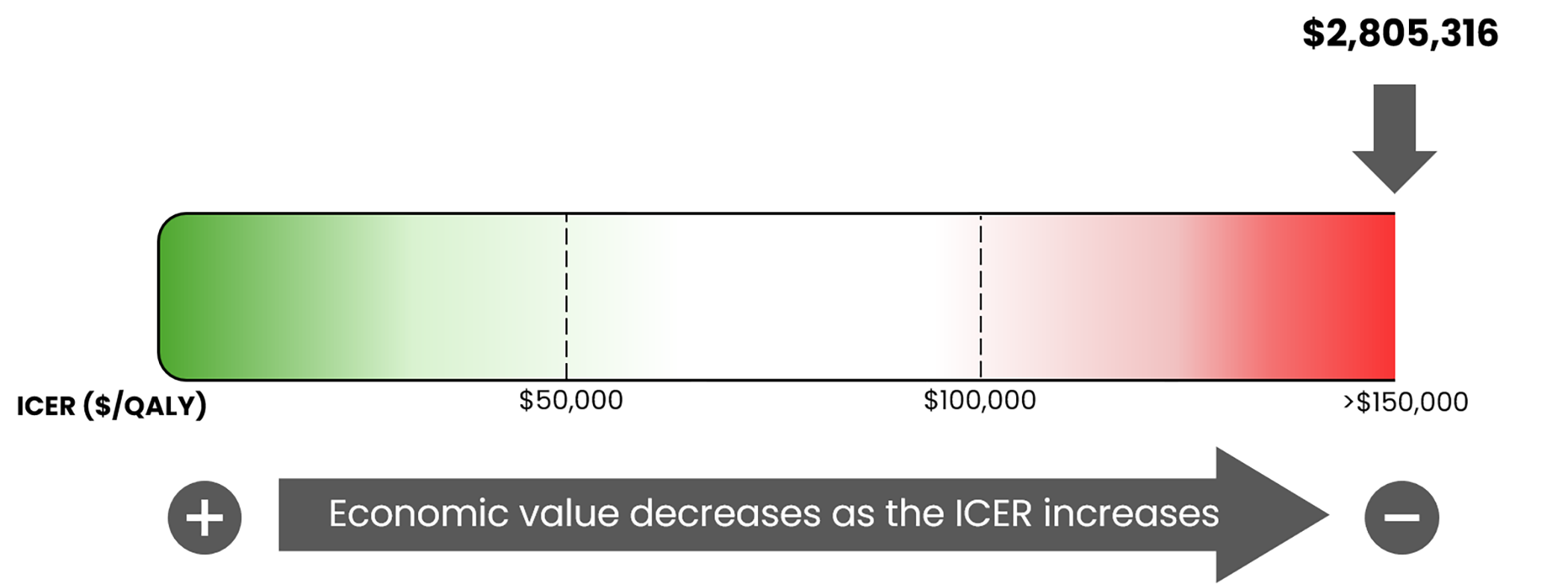
CDEC = Canadian Drug Expert Committee; ICER = incremental cost-effectiveness ratio; QALY = quality-adjusted life-year.
Certainty of the evidence: The evidence informing the economic evaluation is highly uncertain. It is particularly uncertain due to the lack of robust evidence linking treatment to sustained improvements in key modelled outcomes such as motor function and neurocognitive outcomes, and the absence of long-term comparative data to support durability of effect and impact on survival. As a result, the magnitude of the modelled long-term clinical benefit is highly uncertain. Additionally, treatment costs are highly uncertain and driven by assumptions on dosing, patient weight distribution, adherence, and vial wastage.
Other considerations: The sponsor submitted an additional cost-effectiveness analysis adopting a societal perspective. In this analysis, the sponsor’s approach to estimating indirect costs and informal caregiver utilities was uncertain due to the modelling approach and a lack of robust evidence to inform the economic model. In a scenario analysis from the societal perspective, cost-effectiveness results were similar to those from the analysis using a health care payer perspective.
Impacts on Health Systems
Anticipated budget impact: The sponsor estimates that the budget impact of reimbursing pegzilarginase for the indicated population will be approximately $22 million over the first 3 years of reimbursement compared to the amount currently spent on BSC, with an estimated expenditure of $25 million. The actual budget impact of reimbursing pegzilarginase is uncertain and will depend on the number of patients with ARG1-D in Canada.
Organizational implications: CDEC noted that, as per the product monograph, the monitoring of plasma arginine levels in patients receiving pegzilarginase requires alternative, validated sampling procedures for accurate measurements. Because pegzilarginase continues to degrade arginine in a blood collection tube, any routine arginine laboratory analysis would result in erroneous low measurements. As such, the testing laboratory should be informed that the patient is receiving treatment with a medicinal product that metabolizes and reduces arginine levels, and blood collection should be done in tubes containing the enzyme blocker nor-NOHA.
Sources of Information Used by the Committee
To make its recommendation, the committee considered the following information (links to the full documents for the review can be found on the project webpage):
the CDA-AMC review of the clinical and pharmacoeconomic evidence submitted by the sponsor, as well as relevant ethical issues related to pegzilarginase (refer to the Main Report and the Supplemental Material document)
the sponsor’s comments on the draft report and the CDA-AMC responses
patients' perspectives gathered by 1 patient group, the Canadian Organization for Rare Disorders (refer to the Patient and Clinician Group Input document)
input from a person with lived experience who delivered a brief presentation and answered questions from the committee (refer to the Person With Lived Experience section earlier in this document)
input from 1 clinician group, the Garrod Association (refer to the Patient and Clinician Group Input document)
input from public drug programs that participate in the Reimbursement Review process (refer to the Supplemental Material document)
input from 3 clinical experts consulted by CDA-AMC with expertise in the management of ARG1-D.
Special thanks: CDA-AMC extends our special thanks to the individual who presented directly to CDEC on behalf of his family, Shafqat Hussain.
General note: CDA-AMC makes every attempt to engage with people with lived experience as closely to the indication under review as possible; however, at times, CDA-AMC is unable to do so and instead engages with individuals with similar treatment journeys to ensure lived experience perspectives are included and considered in Reimbursement Reviews. CDA-AMC is fortunate to be able to engage with individuals who are willing to share their treatment journeys with CDEC.
CDEC Information
Members of the Committee
Dr. Peter Jamieson (Chair), Dr. Kerry Mansell (Vice-Chair), Sally Bean, Daryl Bell, Dan Dunsky, Dr. Ran Goldman, Dr. Trudy Huyghebaert, Dr. Dennis Ko, Dr. Christine Leong, Alicia McCallum, Dr. Srinivas Murthy, Dr. Nicholas Myers, Dr. Krishnan Ramanathan, Dr. Marco Solmi, Carla Velastegui, Dr. Edward Xie, and Dr. Peter Zed
Meeting date: June 24, 2026
Regrets: Three expert committee members did not attend.
Conflicts of interest: None
ISSN: 2563-6596
Canada’s Drug Agency (CDA-AMC) is a pan-Canadian health organization. Created and funded by Canada’s federal, provincial, and territorial governments, we’re responsible for driving better coordination, alignment, and public value within Canada’s drug and health technology landscape. We provide Canada’s health system leaders with independent evidence and advice so they can make informed drug, health technology, and health system decisions, and we collaborate with national and international partners to enhance our collective impact.
Disclaimer: CDA-AMC has taken care to ensure that the information in this document was accurate, complete, and up to date when it was published, but does not make any guarantee to that effect. Your use of this information is subject to this disclaimer and the Terms of Use at cda-amc.ca.
The information in this document is made available for informational and educational purposes only and should not be used as a substitute for professional medical advice, the application of clinical judgment in respect of the care of a particular patient, or other professional judgments in any decision-making process. You assume full responsibility for the use of the information and rely on it at your own risk.
CDA-AMC does not endorse any information, drugs, therapies, treatments, products, processes, or services. The views and opinions of third parties published in this document do not necessarily reflect those of CDA-AMC. The copyright and other intellectual property rights in this document are owned by the Canadian Agency for Drugs and Technologies in Health (operating as CDA-AMC) and its licensors.
Questions or requests for information about this report can be directed to Requests@CDA-AMC.ca.