Drugs, Health Technologies, Health Systems
Reimbursement Review
Plozasiran (Redemplo)
Sponsor: Arrowhead Pharmaceuticals, Inc.
Therapeutic area: Familial chylomicronemia syndrome
Summary
What Is Familial Chylomicronemia Syndrome?
Familial chylomicronemia syndrome (FCS) is a rare, serious, recessively inherited metabolic disorder in which the body’s metabolism does not break down fats correctly due to a deficiency in lipoprotein lipase function. Patients with FCS have severely elevated levels of triglycerides in the blood, causing a high risk of acute pancreatitis episodes, which can be painful, typically require hospitalization, and are potentially life-threatening.
FCS is a rare disease with an estimated global prevalence of approximately 1 to 10 per million people, although it is more common in some regions of Quebec due to a genetic founder effect.
Genetic testing for FCS comprises assessing mutations in the LPL gene and other genes involved in triglyceride metabolism. However, due to limited availability of testing and because the test is not comprehensive for all genetic causes of FCS, genetic testing is not the standard of care as part of diagnosis across Canada.
What Are the Treatment Goals and Current Treatment Options for FCS?
An ideal treatment for FCS would safely and effectively reduce triglyceride levels, prevent pancreatitis, reduce FCS-related symptoms (such as reduce abdominal pain, improve quality of life, and ease dietary restrictions), and reduce caregiver and health care burden.
There are currently no treatments accessible in Canada that are indicated for the treatment or management of FCS. Patients must eat a strict diet containing extremely low levels of fat, but most will still experience impactful symptoms. Adherence to the diet is also very difficult. Fibrates and omega-3 fatty acids (including icosapent ethyl) are frequently used off-label but are not supported by strong evidence in FCS and may be generally ineffective.
Olezarsen (Tryngolza) is a drug indicated for the treatment of FCS by Health Canada, but at the time of this review, it was not considered a comparator because this review was initiated before the Canadian Drug Expert Committee issued its final recommendation for olezarsen.
Therapies commonly used to lower low-density lipoproteins in the general population, such as fibrates and statins, are generally ineffective in patients with FCS due to the underlying cause of the disease.
What Is Redemplo and Why Did Canada’s Drug Agency Conduct This Review?
Redemplo is a drug that is administered by a subcutaneous injection. Health Canada has approved Redemplo as an adjunct to diet to reduce triglyceride levels for adult patients with FCS for whom standard triglyceride-lowering therapies have been inadequate.
Canada’s Drug Agency (CDA-AMC) reviewed Redemplo to inform a recommendation to the participating public drug programs on whether it should be reimbursed for the Health Canada−approved indication.
How Did CDA-AMC Evaluate Redemplo?
CDA-AMC reviewed the clinical evidence on the beneficial and harmful effects, as well as the economic evidence, of Redemplo versus other treatments used in Canada for FCS. Because there were no other treatments indicated and positively recommended by the Canadian Drug Expert Committee for FCS in Canada at the time of the initiation of this review, standard of care (e.g., restricted low-fat diet, management of symptoms) was the only comparator considered relevant when reviewing the evidence.
CDA-AMC identified equity and ethical considerations relevant to Redemplo and FCS.
CDA-AMC considered the potential impacts of clinical diagnosis and/or genetic testing to determine eligibility for Redemplo and FCS, including those related to health systems, patients (including families and caregivers), and costs.
The review was informed by materials submitted by the sponsor, which included clinical and economic evidence.
The review was also informed by 1 patient group submission in response to the CDA-AMC call for input, and by input from the participating public drug programs around issues that may impact their ability to implement a recommendation.
Three clinicians with specialties in endocrinology and metabolism and/or internal medicine were consulted as part of the review process (2 as experts and 1 as a panellist).
What Were the Findings?
Clinical Evidence
CDA-AMC reviewed the following clinical evidence:
1 randomized, controlled, phase III trial (the PALISADE trial) comparing plozasiran (Redemplo) with placebo in 75 patients with FCS
1 single-group, long-term extension of the PALISADE study.
For the comparison of Redemplo versus placebo (in combination with low-fat diet):
Treatment with Redemplo 25 mg likely reduces fasting triglyceride levels to a clinically meaningful degree relative to placebo as measured at 10 months and when averaging 10 months and 12 months, but there was some uncertainty due to imprecision.
Treatment with Redemplo 25 mg likely reduces the proportion of patients who experience acute pancreatitis events when compared to placebo as measured at 12 months, but there was uncertainty due to imprecision.
Treatment with Redemplo 25 mg may result in an improvement in health-related quality of life (HRQoL) as measured by the altered bowel habit domain and the health care satisfaction domain of the European Organisation for Research and Treatment of Cancer Quality of Life Questionnaire Pancreatic Cancer Module (EORTC QLQ-PAN26) at 12 months when compared to placebo, although there was uncertainty due to imprecision and indirectness.
Treatment with Redemplo 25 mg may result in little to no difference in HRQoL as measured by the digestive domain and the pancreatic pain domain of the EORTC QLQ-PAN26 at 12 months when compared to placebo, although there was uncertainty due to imprecision and indirectness.
Treatment with Redemplo 25 mg may result in little to no difference in the proportion of patients who experience at least 1 serious adverse event when compared to placebo over a 12-month treatment duration, although there was uncertainty due to imprecision.
Subgroup results for the primary end point (change in fasting triglycerides from baseline to 10 months) were reported for several potentially important subgroups, including triglyceride categories at screening (< 2,000 mg/dL versus ≥ 2,000 mg/dL); the body mass index category at screening (< 25 kg/m2 versus ≥ 25 kg/m2); background triglyceride-lowering therapy (yes versus no); and genetic confirmation of FCS (yes versus no). Due to the small sample size of the study and lack of power to detect differences in these subgroups (which ranged in size from 5 patients to 21 patients), comparative conclusions are difficult to draw. However, there was evidence of clinically meaningful beneficial treatment effect with plozasiran 25 mg across all subgroups based on the reduction in fasting triglycerides.
Based on evidence without a comparison:
Long-term follow-up data from the long-term extension study were limited due to the small sample size and interim data cut-off available at the time of this review. Based on the interim data, no new safety signals were identified.
There is no evidence to inform how Redemplo compares with olezarsen (Tryngolza). If olezarsen and plozasiran are both marketed in Canada in the future, there is currently a gap in the evidence regarding the comparative efficacy and safety between them.
Economic Evidence
Redemplo is available as a prefilled syringe containing 25 mg Redemplo in a 0.5 mL solution for subcutaneous use. At the submitted price of $135,549.38 per 0.5 mL single-use prefilled syringe, the annual cost of Redemplo is expected to be $542,198 per patient, based on the Health Canada–recommended dosage.
The CDA-AMC clinical review of evidence from the PALISADE study found that relative to placebo, Redemplo 25 mg likely results in a clinically meaningful reduction in fasting triglyceride levels up to month 12 and likely also reduces the proportion of patients experiencing acute pancreatitis events. However, there was uncertainty in the magnitude of effect due to imprecision. The impact of Redemplo on HRQoL was highly uncertain and varied across different domains. Harms data were generally comparable between groups, and few patients discontinued from treatment due to adverse events. Key comparative efficacy inputs used to inform the economic model were based on different post hoc analyses and assumptions than those informing the clinical conclusions. Transition probabilities for the first 12 months were taken from a multistate model from the Redemplo plus best supportive care (BSC) group, while the BSC group was assumed to remain in high-risk triglyceride health states. The sponsor also assumed a direct protective effect on acute pancreatitis independent of changes in triglyceride states, derived from a binomial generalized linear model pooling the 25 mg and 50 mg PALISADE study groups (relative risk = 0.3) with improper characterization of its uncertainty. A protective effect was applied to further reduce excess mortality in the Redemplo plus BSC group, despite no evidence of a direct survival benefit. The CDA-AMC clinical review identified several methodological limitations with the post hoc analyses used to inform the model (refer to Appendix 8 of the Supplemental Material document); these created substantial uncertainty about the reliability and usability of this evidence. When the limitations of the underlying data and model assumptions are considered together, they may have overstated Redemplo’s treatment effect and understated the true uncertainty around the average effect. Consequently, the model’s estimates for triglyceride state transitions, acute pancreatitis risk reduction, and mortality remain uncertain.
The results of the CDA-AMC base case suggest:
Redemplo is predicted to be associated with higher costs to the health care system than BSC (incremental costs = $3,489,795) over a lifetime (54-year) horizon, primarily driven by increased costs associated with drug acquisition of Redemplo.
Redemplo is predicted to be associated with a gain of 0.57 life-years compared to BSC and may result in a gain of 1.93 quality-adjusted life-years (QALYs) compared to BSC over a lifetime (54-year) horizon.
The incremental cost-effectiveness ratio of Redemplo plus BSC compared to BSC was $1,813,089 per QALY gained in the CDA-AMC base case. The estimated incremental cost-effectiveness ratio was highly sensitive to the uncertainty around the direct protective treatment effect on acute pancreatitis risk by Redemplo. Approximately 93% of the incremental QALYs benefit was predicted to be accrued after the observation period of the PALISADE trial (12 months). Remaining uncertainty in the clinical data informing the cost-utility analysis and the lack of long-term data indicates that further price reductions may be warranted.
CDA-AMC could not address the limitations related to productivity loss and caregiver HRQoL in the sponsor’s base case adopting a societal perspective because of constraints in the model structure and the lack of supporting evidence. As a result, CDA-AMC did not present a base case adopting the societal perspective.
CDA-AMC estimates that the budget impact of reimbursing Redemplo plus BSC for the indicated population will be approximately $24 million over the first 3 years of reimbursement compared to the amount currently spent on BSC, with an estimated expenditure of $24 million on Redemplo over this period. The actual budget impact of reimbursing Redemplo will depend on market uptake and the negotiated price of Redemplo.
Abbreviations
AE
adverse event
AESI
adverse event of special interest
BMI
body mass index
BSC
best supportive care
CDA-AMC
Canada’s Drug Agency
CI
confidence interval
CSR
Clinical Study Report
EORTC QLQ-C30
European Organisation for Research and Treatment of Cancer Quality of Life Questionnaire Core 30
EORTC QLQ-PAN26
European Organisation for Research and Treatment of Cancer Quality of Life Questionnaire Pancreatic Cancer Module
FAS
full analysis set
FCS
familial chylomicronemia syndrome
GRADE
Grading of Recommendations Assessment, Development and Evaluation
HRQoL
health-related quality of life
ICER
incremental cost-effectiveness ratio
IQR
interquartile range
ITC
indirect treatment comparison
LPL
lipoprotein lipase
LSM
least squares mean
LTE
long-term extension
MID
minimal important difference
NAFCS
North American Familial Chylomicronemia Score
NICE
National Institute for Health and Care Excellence
OLE
open-label extension
PRO
patient-reported outcome
QALY
quality-adjusted life-year
RCT
randomized controlled trial
RNA
ribonucleic acid
SAE
serious adverse event
SD
standard deviation
siRNA
small interfering ribonucleic acid
TEAE
treatment-emergent adverse event
Background
Introduction
Context for the Review
The objectives of this report are as follows:
Review and critically appraise the evidence submitted by the sponsor on the beneficial and harmful effects of plozasiran (Redemplo) injection 25 mg/0.5 mL for subcutaneous use in the treatment of familial chylomicronemia syndrome (FCS) in adults for whom standard triglyceride-lowering therapies have been inadequate. The focus has been placed on comparing Redemplo to relevant comparators in clinical practice in Canada and identifying gaps in the current evidence; this focus is outlined in Table 1.
Consider the potential impacts of clinical diagnosis and/or genetic testing to ascertain eligibility for plozasiran and FCS, including the impacts on health systems, patients (including families and caregivers), and costs.
Review and critically appraise the economic information submitted by the sponsor, including a cost-effectiveness analysis and budget impact analysis. The focus of the Economic Review is aligned with the scope of the Clinical Review, unless otherwise stated. For most reviews, a Canada’s Drug Agency (CDA-AMC) base case is developed, informed by clinical expert input, the available clinical evidence, and the best interpretation of the economic evidence based on the information provided by the sponsor.
Identify and describe ethical considerations associated with the use of plozasiran in the treatment of FCS in adults.
Table 1: Information on the Application Submitted for Review and on the CDA-AMC Review
Item | Description |
|---|---|
Information on the application submitted for review | |
Drug | Plozasiran injection (Redemplo), 25 mg/0.5 mL, sterile solution for subcutaneous use |
Sponsor | Arrowhead Pharmaceuticals, Inc. |
Health Canada indication | As an adjunct to diet to reduce triglyceride levels for adult patients with FCS for whom standard triglyceride-lowering therapies have been inadequate |
Health Canada approval status | NOC |
Health Canada review pathway | Priority review |
NOC date | January 2, 2026 |
Mechanism of action | Double-stranded small interfering RNA conjugated with N-acetylgalactosamine that degrades the mRNA for APOC3 |
Recommended dosage | 25 mg administered as a single subcutaneous injection every 3 months |
Submission type | Initial |
Sponsor’s reimbursement request | Per indication |
Submitted price | $135,549.38 per 0.5 mL prefilled syringe |
Information on the CDA-AMC review | |
Review type | Complex |
Clinical review focusa | Population: As defined in the Health Canada indication Intervention: Per recommended dosage, as add-on to standard of care (low-fat diet [≤ 20 g daily]) Comparators: Placebo, as add-on to standard of care (low-fat diet [≤ 20 g daily]) Outcomes:
|
CDA-AMC = Canada’s Drug Agency; EORTC QLQ-PAN26 = European Organisation for Research and Treatment of Cancer Quality of Life Questionnaire Pancreatic Cancer Module; FCS = familial chylomicronemia syndrome; mRNA = messenger ribonucleic acid; NOC = Notice of Compliance; RNA = ribonucleic acid; SAE = serious adverse event.
aThe Economic Review aligns with the scope of the Clinical Review, unless otherwise stated.
Submission History for the Drug Under Review
CDA-AMC has not previously reviewed plozasiran through the Reimbursement Review process.
Sources of Information
The contents of the Reimbursement Review report are informed by materials submitted by the sponsor, input received from interested parties (patient groups, clinician groups, and drug programs), and input from clinical experts consulted for this review.
Calls for patient group and clinician group input are issued for each Reimbursement Review. One patient group submission from the Canadian Organization for Rare Disorders was received, while no clinician group submissions were received. The Canadian Organization for Rare Disorders interviewed 10 patients and 1 caregiver for its submission. The full submissions received are available on the project landing page in the consolidated input document. The drug programs provide input on each drug being reviewed through the Reimbursement Review process by identifying issues that may impact their ability to implement a recommendation.
Input from patient groups is considered throughout the review, including in the selection of outcomes to include in the Clinical Review and in the interpretation of the clinical and economic evidence. Relevant patient group input is summarized in the Disease Background, Current Management, and Unmet Needs and Existing Challenges sections.
Each review team includes at least 1 clinical expert with expertise regarding the diagnosis and management of the condition for which the drug is indicated. Clinical experts are a critical part of the review team and are involved in all phases of the review process. Two clinicians with specialties in endocrinology and metabolism, and with expertise in the diagnosis and management of FCS, participated as part of the review team. One additional clinician with a similar specialty and expertise participated as a panellist.
Disease Background
FCS, also sometimes described as “monogenic chylomicronemia,” is a rare, genetic, autosomal, recessive, metabolic disease characterized by deficiency of lipoprotein lipase (LPL) function that causes severely elevated circulating triglycerides (hypertriglyceridemia) and chylomicrons (hyperchylomicronemia).1 Chylomicrons are large lipid-rich molecules that transport dietary fat from the intestines to other areas of the body.1 Normally, the function of LPL is to hydrolyze triglycerides in chylomicrons and very low-density lipoproteins, promoting the clearance of triglycerides. Symptomatic presentation of FCS can be heterogeneous and nonspecific, and varies in severity.1 Classic symptoms of FCS include eruptive xanthomas (fatty deposits under the skin), fatigue, a variety of gastrointestinal complaints (nausea, vomiting, failure to thrive, and abdominal pain), transient brain fog, enlargement of the spleen and liver (hepatosplenomegaly) or the spleen alone (splenomegaly), and fatty discoloration of the retinal blood vessels (lipemia retinalis).1 Because of their persistent hypertriglyceridemia, patients with FCS are also at a high risk of relapsing acute pancreatitis episodes, which typically require hospitalization, can be life-threatening, and may progress to chronic pancreatitis, pancreatic insufficiency, or pancreatic diabetes.1 Episodes of acute pancreatitis associated with hypertriglyceridemia, as in the case of FCS, have a poorer prognosis and higher risk of death than acute pancreatitis from other causes.2,3 Further discussion on the relationship between triglyceride levels, acute pancreatitis, and mortality can be found in Appendix 3 of the Supplemental Material document.
The majority of patients (80% to 90%) with FCS have a homozygous mutation in the LPL gene. Mutations in other causal genes include those that encode cofactors and proteins related to the activity of LPL, such as APOC2, GPIHBP1, APOA5, and LMF1.1 FCS-causing mutations can be homozygous, compound heterozygous, or double heterozygous, and can be loss-of-function, null mutations, or nonsense mutations.4-6 Genetic tests exist for the 5 canonical FCS-causing mutations previously listed,1 but expert input informed CDA-AMC that there is limited access to the tests in Canada. There are also rare cases (approximately 3%) of patients with autoimmune FCS-causing autoantibodies against LPL or GPIHBP1 that test negative on the genetic panel for FCS,1 and there are likely yet-uncharacterized mutations that the existing genetic tests do not encompass.1 The clinical experts consulted by CDA-AMC estimated that approximately 20% to 50% of patients with definite FCS would have negative or inconclusive results on the existing genetic testing, and for this reason and due to the lack of equitable access to the test in Canada, they further stated that diagnosis is typically based on clinical presentation and ruling out other more common pathologies.
The prevalence of FCS is estimated to be between 1 and 10 per million people globally,2 equating to approximately 40 to 400 persons across Canada. Due to a genetic founder effect, the prevalence of FCS is higher in some localized regions of Quebec,7 and is estimated to be approximately 20 to 40 per million in regions such as Saguenay–Lac-Saint-Jean, Charlevoix, and the Québec City area.
Patient group input: Interviews with patients with FCS and their caregivers highlighted that severe dietary restrictions, life-threatening complications, and acute pancreatitis and its associated severe pain and hospitalizations all contribute to a profound burden of illness on their quality of life. Some patients expressed feeling very isolated due to not being able to share meals with family, friends, or work colleagues, as well as complications in their home and work lives as a result of disease-related flareups and highly restrictive lifestyle-based management. Some patients interviewed who reside in Quebec were diagnosed at birth or in infancy (due to the higher prevalence and knowledge of FCS there), but the age at diagnosis for patients outside Quebec was into adulthood and middle age for several patients interviewed. Patients with late diagnoses described dismissal by medical professionals of their nonspecific symptoms like fatigue and stomach aches throughout life, ineffective treatments, and stigma from doctors due to being mistaken for a person with alcohol dependency and/or due to a lack of knowledge about this rare condition.
Current Management
Treatment Goals
The primary goal of treatment in FCS is to prevent the risk of acute pancreatitis by reducing plasma triglyceride levels to less than 10 mmol/L (approximately 880 mg/dL), while some guidelines advocate for a more aggressive target of less than 5.6 mmol/L (less than 500 mg/dL).8
High plasma triglyceride levels (or hypertriglyceridemia) are a well-established cause of acute pancreatitis.3 Hypertriglyceridemia is often defined as plasma triglycerides of at least 1.7 mmol/L (150 mg/dL) in the fasting state,3 and it is further subclassified into categories of “mild to moderate” (1.7 mmol/L to 5.6 mmol/L or 150 mg/dL to 500 mg/dL), “severe” (5.6 mmol/L to 10 mmol/L or 500 mg/dL to 880 mg/dL), and “extreme” (greater than 10 mmol/L or 880 mg/dL).3 Unlike many other causes of pancreatitis where inflammation is multifactorial, the etiology of hypertriglyceridemia-associated acute pancreatitis in FCS is directly linked to the pancreatic lipase-mediated breakdown of extremely high levels of triglycerides, leading to the release of toxic fatty acids.9 Several meta-analyses and observational studies indicate that lowering triglycerides to these levels (< 10 mmol/L or < 5.6 mmol/L) reduces the risk of acute pancreatitis,10 as confirmed by recent clinical trials of new therapies that inhibit APOC3.11,12 Epidemiologic evidence supports a clear dose-response relationship between triglyceride levels and the risk of acute pancreatitis, with progressively higher triglyceride concentrations associated with the increasing incidence of pancreatitis.2,3,13-16 Therefore, maintaining triglyceride levels below a certain threshold is the explicit clinical goal to prevent acute pancreatitis in patients with FCS,8 which was confirmed by the clinical experts consulted by CDA-AMC. Further details on the relationship between triglyceride levels and acute pancreatitis risk and prognosis are discussed in the Supplemental Material document, Appendix 3.
Guidelines and expert consensus statements — including those of the National Lipid Association,8 the American College of Cardiology,17 the Endocrine Society,18 and the American Association of Clinical Endocrinologists and American College of Endocrinology19 — advocate for the reduction of triglyceride levels to reduce the risk of acute pancreatitis. Reduction in triglyceride levels is also accepted by the FDA and by National Institute for Health and Care Excellence (NICE) as a surrogate end point to support drug approvals in the disease areas of FCS and severe hypertriglyceridemia.
Patient group input: Based on the interviews with patients and caregivers, the patient group input detailed that all patients with FCS would like a therapy that would maintain their triglyceride levels at a very low (normal) level with no, few, or tolerable side effects, and that would prevent future pancreatitis attacks. They also expressed the need for a therapy with a minimally disruptive administration schedule that does not require travel to treatment centres that may place a disproportionate burden on patients who live far from specialty centres. Ideally, patients would like a therapy that would allow them to relax their restricted diet such that they could partake in social events without the anxiety of severe medical consequences.
Clinician input: The clinical experts consulted by CDA-AMC outlined that the primary treatment goals in FCS are the prevention of acute pancreatitis, the sustained reduction of triglyceride levels to safer ranges, a reduction in hospitalizations and emergency care, and improvement in quality of life, including dietary burden and psychosocial stress.
Current Treatment Options
At the time of the initiation of this review, there were no treatments indicated in Canada with positive Canadian Drug Expert Committee recommendations for the treatment or management of FCS. The patient group input described that patients must eat a strict diet containing extremely low fat (up to 20 g of dietary fat per day, which is equivalent to 1 tablespoon of olive oil), but despite the diet, most will still experience impactful symptoms and elevated triglyceride levels beyond 10 mmol/L, and may experience events of acute pancreatitis, which can be painful and/or traumatic, typically require hospitalization, and carry a risk of mortality. Moreover, adherence to the diet is extremely difficult and limits the patient’s ability to participate in social activities of daily living. This may be particularly challenging for some patients whose cultural dietary practices include a higher fat content, and for patients with financial, physical, or other barriers that make it difficult to cook every meal (including sauces and so forth) from scratch. The clinical experts consulted by CDA-AMC described that statins, fibrates, and omega-3 fatty acids are frequently used off-label but are not supported by strong evidence in FCS and are generally poorly effective or ineffective in patients with FCS, as a consequence of the underlying deficiency in LPL activity that characterizes the condition.
In the context of this review, the only comparator is standard of care alone (i.e., a low-fat diet consisting of up to 20 g per day in dietary fat). However, volanesorsen and olezarsen are 2 other pharmacotherapies in the treatment landscape in FCS that will be discussed here briefly. Volanesorsen, olezarsen, and plozasiran are all therapeutics that target and modify the genetic material (i.e., messenger ribonucleic acid [RNA]) that produces APOC3. Volanesorsen and olezarsen are both antisense oligonucleotide inhibitors, while plozasiran is a small interfering ribonucleic acid (siRNA). The reduction of APOC3 expression reduces serum APOC3 protein, which is a protein that inhibits the breakdown of serum triglycerides. Ultimately, the goal of treating with any of volanesorsen, olezarsen, or plozasiran is to reduce serum triglyceride levels in patients with FCS.
Volanesorsen was the first drug developed to treat patients with FCS, but due to safety and tolerability concerns, it received a Notice of Non-Compliance from Health Canada. Volanesorsen is available for the treatment of patients with FCS in some countries globally, but it is not marketed in Canada and therefore, not considered a relevant comparator for this review.
Olezarsen has received a Notice of Compliance from Health Canada, but the CDA-AMC review of olezarsen was ongoing when the present plozasiran review was under way. As such, olezarsen will be discussed where relevant in this report because of its positive recommendation from CDA-AMC in early 2026.
Plozasiran is a hepatocyte-targeted double-stranded siRNA therapeutic that targets the messenger RNA of APOC3. Like olezarsen, plozasiran includes a conjugate that facilitates targeted delivery to the liver and thereby reduces the necessary dose for therapeutic effect.
Unmet Needs and Existing Challenges
Patient group input: Patients interviewed described a lack of effective therapy for their disease, life-limiting lifestyle restrictions due to the difficult low-fat diet required, and continuing pain, fatigue, and emergency medical events (i.e., acute pancreatitis) despite adherence to the diet. Additionally, many patients experienced delayed diagnosis, and stigma or lack of understanding from friends, family, employers, and medical professionals, in addition to disruptions to their activities of daily living. The patients who had experience with volanesorsen described the weekly administration schedule as onerous and noted that they experienced substantial side effects. The input reflected that there are challenges related to geographical access to specialty centres.
Clinician input: The clinical experts consulted by CDA-AMC concurred with the patient group input. The clinical experts also described that because of the rarity of the disease, many patients are diagnosed late, receive misdiagnoses with more common conditions that share some clinical features, and/or face dismissal by medical professionals regarding nonspecific symptoms (e.g., fatigue, stomach aches). The input highlighted that, outside clinical trials, there are no therapies currently available in Canada for treating FCS that are safe and effective for lowering triglycerides and preventing acute pancreatitis.
Considerations for Using the Drug Under Review
Contents within this section have been informed by input from the clinical experts and panellists consulted for the purpose of this review and from patient groups, as well as the reimbursement conditions proposed by the sponsor (refer to Table 1 in Appendix 1 of the Supplemental Material document). The implementation questions from the public drug programs and corresponding responses from the clinical experts consulted for this review are summarized in the Supplemental Material document, in Table 2 in Appendix 1. The following has been summarized by the review team.
Place in Therapy
All sources of input described that many patients experience delayed diagnosis, misdiagnosis with similar but distinct conditions that are more common (e.g., multifactorial familial chylomicronemia, hypertriglyceridemia), and inappropriate treatment, due to the rare nature of the disease and the nonspecific symptoms. At the time of this review, olezarsen had not yet received a positive recommendation from the Canadian Drug Expert Committee. Plozasiran, like olezarsen, is expected to cause a paradigm shift in the treatment of FCS given that typical management strategies related to high triglycerides (e.g., statins, diet, exercise) are largely ineffective at improving symptoms in patients with FCS due to the underlying pathophysiology of the condition.
The clinical experts consulted by CDA-AMC noted that plozasiran would be taken in combination with standard of care, which is a restrictive low-fat diet (up to 20 g per day). The clinical experts stated that patients with FCS who are being treated with plozasiran may (or may not) be managed with comedications such as fibrates, omega-3 fatty acids, icosapent ethyl, and/or statins, although this is not an exhaustive list; these therapies are typically poorly effective in patients with FCS, but the clinical experts noted that some patients may have a small response that could improve if taken alongside a therapy targeting APOC3 such as plozasiran or olezarsen. Those who have developed exocrine or endocrine pancreatic dysfunction from prior pancreatitis attacks may be on pancreatic enzymes and/or insulin treatment, and patients with diabetes would be receiving antihyperglycemic therapy. Events of acute pancreatitis may require hospitalization. Plasmapheresis may be used in acute settings, but not as a long-term or preventive treatment.
At the time of this review, the CDA-AMC recommendation regarding olezarsen had not yet been published. However, the place in therapy of plozasiran is expected to be similar to that of olezarsen. The clinical experts consulted by CDA-AMC described that patients are generally expected to respond similarly to either therapy, and that the place in therapy of plozasiran and olezarsen would be the same because they are indicated for similar populations and their pivotal studies recruited similar patients. The choice of therapy would therefore vary case by case, including the consideration of patient preference, differences in side effects, and the treating clinician’s opinion based on the patient’s health status and risk factors. Additionally, because olezarsen is an antisense oligonucleotide molecule and plozasiran is an siRNA, patients who have previously had negative reactions to 1 of those types of therapies might choose the other. The monthly dosing schedule of olezarsen may be preferable for patients who plan to become pregnant, given that there may be less residual effect due to the shorter half-life compared to plozasiran, which is administered every 3 months. On the other hand, some patients may prefer the quarterly (every 3 months) dosing schedule of plozasiran due to convenience, needle phobia, adverse reactions to injections, and/or the fact they need to travel to receive the therapy.
The clinical experts also noted they would consider switching from 1 therapy to the other in the event of side effects, intolerance, inadequate disease response, safety concerns, or changes in patient preference. The experts noted that given the rarity of FCS, such decisions would be individualized and specialist-driven.
Olezarsen and plozasiran would not be used in combination to treat a single patient. The clinical experts described that it is not clinically plausible that combining these 2 therapeutics would result in an improved effect.
Patient Population
FCS is a rare disease with an estimated global prevalence of approximately 1 to 10 per million people,20 although it is more common in some regions of Quebec due to a genetic founder effect.21 The clinical experts stated that patients most likely to benefit from plozasiran are any diagnosed with FCS, whether clinically diagnosed or confirmed by genetic diagnosis; they also mentioned that the genetic diagnostic tools are not exhaustive (i.e., not all patients with FCS will have mutations captured by the existing genetic tests) and there are barriers to access to genetic testing in many parts of Canada. Clinical experts estimated that approximately 20% to 50% of patients with FCS may have mutations that are not included in the genetic testing for FCS, including FCS-causing mutations that have not yet been characterized.
A diagnosis of FCS, according to the clinical experts, is typically based on the clinical presentation of patients and laboratory parameters, including persistently elevated triglyceride levels (i.e., triglyceride levels of at least 10 mmol/L) that are refractory to standard triglyceride-lowering medications (e.g., fibrates, statins) and clinical features that are typical of FCS (which may include symptoms like recurrent abdominal pain, a history of pancreatitis, and a young age at the onset of symptoms, among others). For most patients, more common causes for elevated serum triglycerides must be ruled out — most importantly, multifactorial familial chylomicronemia, which is not a monogenetic condition but shares similar clinical phenotypes with FCS. Underdiagnosis, late diagnosis, and misdiagnosis (with more common conditions) are common issues faced by patients with FCS, especially outside Quebec.
Validated scales for diagnosing FCS, such as the North American Familial Chylomicronemia Score (NAFCS), have been recently created. A recent post hoc analysis of the BALANCE trial (a phase III study of olezarsen versus placebo in patients with genetically confirmed FCS) reported that 95.5% of patients had an NAFCS score of 45 or more (“definite or likely” FCS), which suggests that there is a strong concordance between an NAFCS score of 45 or more and genetically confirmed FCS.22 The clinical experts noted that the NAFCS is not commonly used in clinical practice at this time because it is new, but it does align with the typical diagnostic approach for FCS and is being increasingly adopted. Clinical experts also stated that they do not observe different clinical presentations or outcomes between patients with genetically confirmed FCS and those who meet the clinical criteria of FCS but do not have genetic confirmation.
The indication of plozasiran only includes adult patients. Because this is a genetic disease and symptoms typically onset early in life, pediatric patients will continue to have an unmet need in that there are no effective pharmacotherapies available to manage their condition. The clinical experts highlighted that it is likely that pediatric patients, their caregivers, and their medical providers would advocate for pediatric access to plozasiran.
The clinical experts noted that patients with FCS who have a history of acute pancreatitis are at greater risk for repeated episodes and therefore have the highest unmet need. However, due to the potential severity, morbidity, mortality, and long-term sequelae associated with attacks of acute pancreatitis, the prevention of even a first episode and/or any reduction in the rate or risk of attack are all of high clinical importance.
The sponsor proposed reimbursement initiation criteria as follows: patients be aged 18 years or older with a diagnosis of FCS based on a documented history of triglyceride levels of greater than 880 mg/dL (> 10 mmol/L), patient disease be refractory to standard triglyceride-lowering therapies, and patients have at least 1 of the following:
a supportive genetic test
a history of recurrent episodes of acute pancreatitis not caused by alcohol or cholelithiasis
a history of recurrent hospitalizations for severe abdominal pain without other explainable cause
a history of childhood pancreatitis
a known LPL deficiency
a family history of high triglyceride-induced pancreatitis.
The clinical experts consulted by CDA-AMC agreed with these criteria, with the caveat that it was their expert opinion that requiring a trial standard triglyceride-lowering therapy (e.g., fibrates, statins) in a patient diagnosed with FCS is inappropriate because these therapies are known to be ineffective. However, given that the majority of patients with FCS are initially misdiagnosed and management of their hypertriglyceridemia is often attempted using these therapies before the diagnosis of FCS is made, the experts anticipated that it would be rare that a patient diagnosed with FCS has not ever tried a standard triglyceride-lowering therapy.
Testing Procedure Considerations
Genetic testing for FCS is based on next-generation sequencing panel testing that characterizes mutations in the LPL gene and at least 4 other cofactors of LPL associated with triglyceride metabolism (GPIHBP1, APOA5, APOC2, and LMF1).8 Although most patients with FCS (based on clinical assessment) have identifiable mutations in these genes, there can be a subset of patients who have unidentified pathogenic variants or mutations in other genes not included in standard panels, leading to negative or inconclusive test results.8,23 Clinical experts consulted for this review reported that between 20% and 50% of patients with FCS can present with negative or inconclusive genetic testing results. Due to these limitations, guidelines (such as from the National Lipid Association) and clinical experts indicate genetic testing is not required for diagnosis, but is an informative adjunct to clinical diagnosis.8 Input received from patients also expressed concerns about exclusively relying on genetic testing to confirm diagnosis due to the possibility of inconclusive results. Clinical experts reported that access to genetic testing is highly limited across Canada with only 10% to 20% of patients suspected of FCS receiving testing. Patients access testing through research programs, through out-of-country testing approved through ministerial requests, or through private access (paid for out-of-pocket or through private insurance). Clinical experts stated that turnaround times for testing results are typically between 8 weeks and 16 weeks but can take as long as 6 months. They anticipated that should plozasiran be reimbursed by public drug plans, there will be likely an increase in demand for testing. However, it is unlikely to have major health system impacts because the number of potential patients who would be considered for testing would remain small.
CDA-AMC considered the potential impacts of genetic testing to inform the eligibility of plozasiran for FCS, including those to health systems, patients (including families and caregivers), and costs. No major impacts are anticipated given that genetic testing is not required for diagnosis and patient numbers are expected to remain small. Key considerations and relevant information available from materials submitted by the sponsor, input from patients, input from the clinical experts consulted by the review team, and sources from the literature were validated by the review team when possible and are summarized in Appendix 1 of the Supplemental Material document.
Assessing the Response to Treatment
The clinical experts consulted by CDA-AMC stated that, in FCS, the primary goal of treatment is the reduction in triglyceride levels given the clear association of this biomarker with pancreatitis and other complications. They also indicated that there should be no arbitrary thresholds in the reimbursement criteria associated with triglyceride levels.
The clinical experts highlighted that attacks of acute pancreatitis are the biggest cause of morbidity and mortality in patients with FCS, and repeated pancreatic attacks are prognostic of a higher risk of FCS-related sequelae (such as pancreatic insufficiency and pancreatic insufficiency–related diabetes). In light of this, the experts noted that any amount of reduction in the event rate of pancreatitis is also clinically significant.
The sponsor proposed reimbursement renewal criteria as follows: a reduction in triglyceride levels to less than 10 mmol/L or at least 15% from baseline after 6 months of treatment. The clinical experts consulted by CDA-AMC agreed that this is a reasonable threshold to demonstrate treatment efficacy but advocated for allowing clinical discretion in circumstances where a patient has reduced pancreatitis risk despite a modest percentage of triglyceride changes. The experts also noted that triglyceride levels can be highly variable within a single patient (e.g., due to a single missed dose or single deviation from the restrictive diet), and so 1 elevated measure may not necessarily signify a lack of or loss of response.
Discontinuing Treatment
The clinical experts and sponsor each proposed no particular discontinuation criteria, aside from unmanageable and intolerable side effects, the absence of clinical benefit, or a patient or clinician decision. FCS is a lifelong condition and the beneficial effect of therapy with plozasiran is not curative; therefore, it is expected that the continuation of active therapy will be required to maintain the beneficial effects of treatment.
The development of new or worsening comorbidities, such as diabetes, may warrant adjustment in treatment approach (i.e., a reassessment of risk-benefit and/or the addition of other therapies to manage the new or worsening comorbidity); however, the clinical experts stated that patients could continue to receive plozasiran under the guidance of a specialist.
Prescribing Considerations
The clinical experts consulted by CDA-AMC concurred with the sponsor’s suggestion that plozasiran should be prescribed by specialists with qualifications and experience in the diagnosis and management of FCS (e.g., lipidologists, endocrinologists, cardiologists, medical biochemists, internists). However, this requirement would cause or exacerbate barriers to access because such specialists are typically concentrated in larger metropolitan areas and academic centres. The clinical experts highlighted that virtual care could alleviate (although not eliminate) this barrier. Additionally, the experts consulted by CDA-AMC noted that after the prescription and initiation of plozasiran have been completed by a specialist, ongoing care could be transitioned back to local or family physicians, with specialist involvement.
Clinical Review
Methods
The review team considered studies in the sponsor’s systematic review (pivotal studies and randomized controlled trials [RCTs]), sponsor-submitted long-term extensions (LTEs), indirect treatment comparisons (ITCs), and studies addressing gaps in the evidence for inclusion. Eligible studies for the systematic review included published and unpublished pivotal studies and phase III RCTs. Relevant patients and interventions were defined by the indication and the recommended dosage in the product monograph. Placebo as an adjunct to diet was the only relevant comparator. LTEs of included pivotal studies and RCTs were included, regardless of whether there was a comparison group. Studies addressing gaps submitted by the sponsor were included when they filled an identified gap in the systematic review evidence; however, none of the submitted studies was considered relevant to the review. There were no ITCs evaluated due to the lack of comparators available in Canada at the time of the submission.
The review team selected outcomes (and follow-up times) for review considering the sponsor’s Summary of Clinical Evidence,25 clinical expert input, and patient group input. Included outcomes are those considered relevant to expert committee deliberations, and they were selected in consultation with committee members. Evidence from the systematic review for the most important outcomes was assessed using the Grading of Recommendations Assessment, Development and Evaluation (GRADE) approach. The following outcomes were included in the GRADE assessment because they are considered important to patients and/or clinicians who provided input to CDA-AMC:
change from baseline in fasting triglyceride levels (at month 12; and at month 10 and month 12, averaged)
proportion of patients with events of acute pancreatitis (through the randomized period [i.e., 12 months])
change from baseline in health-related quality of life (HRQoL) as measured by the European Organisation for Research and Treatment of Cancer Quality of Life Questionnaire Pancreatic Cancer Module (EORTC QLQ-PAN26) (at 12 months)
the proportion of patients who experienced any serious adverse event (SAE) through 12 months.
In addition to the outcomes assessed using GRADE, other metrics related to triglyceride concentration, adjudicated events of acute pancreatitis, and safety outcomes are discussed in the Results section to provide additional context as needed.
Methods for data extraction, risk of bias appraisal, and certainty of evidence assessment are in the Supplemental Material document in Appendix 2. Additional details on the results of these outcomes, as well as results pertaining to health care resource utilization, are reported in the Supplemental Material document, Appendix 4.
Clinical Evidence
In this report, the following sources of evidence submitted by the sponsor were reviewed and appraised:
1 RCT included in the systematic review, the PALISADE study
1 LTE, the PALISADE trial’s open-label extension (OLE) study.
Systematic Review
Description of Studies
Study Characteristics
Characteristics of the included study, the PALISADE study, are summarized in Table 2. Details pertaining to the eligibility criteria, interventions and comparators, and relevant outcome measures are in the Supplemental Material document in Appendix 3.
The PALISADE study was a randomized, double-blind, placebo-controlled, phase III clinical trial conducted in 75 adult patients with genetically confirmed or clinical FCS. It was conducted at 54 clinical sites, including 5 in Canada. Eligible participants with genetically or clinically defined FCS first initiated a treatment stabilization screening period of up to 4 weeks, during which diet, lifestyle, and medication regimen were stabilized at the investigator’s discretion and in accordance with the local standard of care. In the 12-month randomized period, patients who successfully passed eligibility requirements at screening were enrolled in the study. All dose cohorts enrolled in parallel with patients randomly assigned 2:1:2:1 to the dose cohorts (plozasiran 25 mg, volume-matched placebo, plozasiran 50 mg, and volume-matched placebo, respectively). Randomization was stratified by level of triglycerides at screening (≥ 2,000 mg/dL versus < 2,000 mg/dL, wherein 2,000 mg/dL is equivalent to approximately 22.6 mmol/L in SI units). After month 12, patients were eligible to continue in an OLE study, where all patients received the active drug. After a protocol amendment, patients who had events of acute pancreatitis could also withdraw from the PALISADE study to roll over into the OLE.
Key inclusion criteria required adults (aged ≥ 18 years) with fasting triglyceride levels of 10 mmol/L or greater (≥ 880 mg/dL) that were refractory to standard triglyceride-lowering therapy, with a documented history of fasting triglyceride levels of greater than 1,000 mg/dL on repeated testing, and at least 1 clinical feature consistent with FCS, such as generic confirmation, recurrent pancreatitis, severe abdominal pain without another explainable cause, or known LPL deficiency. Exclusion criteria included active pancreatitis within 12 weeks, uncontrolled diabetes (hemoglobin A1C ≥ 9.0%), substantial liver or kidney dysfunction, and the recent use of hepatocyte-targeted RNA-based therapies.
Patients and clinicians were blinded to the study drug (i.e, plozasiran versus placebo) but dose group assignment was not blinded due to required injection volume differences dictated by the respective dose group. Patients received an injection of either active or placebo (normal saline of 0.9%) volume-matched to the assigned dose group (25 mg or 50 mg). To mask for slight colour differences between active and placebo, syringes were blinded in the pharmacy with translucent wrapping to mask the blinded staff and participants to the treatment assignment. Each dose was administered as a single subcutaneous injection by appropriately trained employees of the clinical study site every 3 months.
Table 2: Characteristics of Studies Included in the Systematic Review
Study name, design, and sample size | Key inclusion criteriaa | Key exclusion criteriaa | Intervention and comparator | Relevant end pointsa |
|---|---|---|---|---|
The PALISADE study Multicentre, phase III, double-blind, placebo-controlled RCT Total N = 75 |
|
| Placebo (n = 25) Plozasiran 25 mg (n = 26)b Plozasiran 50 mg (n = 24)b All study drugs were administered as subcutaneous injection on day 1, then every 3 months for 52 weeks |
|
EORTC QLQ-PAN26 = European Organisation for Research and Treatment of Cancer Quality of Life Questionnaire Pancreatic Cancer Module; FCS = familial chylomicronemia syndrome; HTG = high triglyceride; LPL = lipoprotein lipase; RCT = randomized controlled trial; siRNA = small interfering ribonucleic acid.
aThis is not an exhaustive list of all eligibility criteria or end points in the study, only those determined to be highly relevant in the context of this review.
bOnly the 25 mg dose is relevant to the Health Canada indication. Information pertaining to the 50 mg dose is presented here only for completeness and context.
cPresented in the units of mg/dL by the sponsor and Clinical Study Report. The values of < 500 mg/dL and < 880 mg/dL are equivalent to approximately < 5.6 mmol/L and < 10 mmol/L, respectively.
Sources: PALISADE Clinical Study Report24 and the sponsor’s Summary of Clinical Evidence.25
Statistical Testing and Analysis Populations
A total of 72 patients were planned to be enrolled and randomly assigned 2:1:2:1 to dose cohorts plozasiran 25 mg, volume-matched placebo, plozasiran 50 mg, and volume-matched placebo. The study had about 99% power to detect a statistically significant global or conjunctive difference in percentage change from baseline in triglycerides between any active treatment group and pooled placebo using a 2-sided test and Holm’s step-down multiple comparison procedure, with a 2.5% level of significance for each test between plozasiran dose level and placebo. Additional details on the sample size, power calculation, relevant assumptions, and rationale for the selection of the key statistical tests and models are discussed in the Supplemental Material document, Appendix 3.
Missing data were imputed for primary and key continuous secondary end points in the efficacy analyses, and for patient-reported outcomes (PROs) (i.e., the HRQoL assessments). Details of these methods are described in the Supplemental Material document, Appendix 3.
Familywise type I error was controlled at a 0.05 level using a fixed sequential testing procedure, implemented in a hierarchical manner, starting with the primary efficacy end point (the percentage change from baseline in fasting triglycerides at month 10), followed by key secondary end points (percentage changes from baseline in: fasting triglycerides at month 10 and month 12, averaged; fasting APOC3 at month 10; fasting APOC3 at month 12; and the incidence of positively adjudicated events of acute pancreatitis during the randomized period).
The analysis populations included the following:
The full analysis set (FAS) included all patients who were randomized regardless of adherence to treatment, which was applied for all efficacy analyses.
The safety analysis set (SAS) included all patients who were randomized and received at least 1 dose of the study drug; all safety and tolerability analyses were performed using this set, according to the treatment actually received.
The per-protocol analysis set included all patients who were randomized and completed the study period without major protocol deviations; demographics and results for end points were also reported using this set in addition to the FAS.
The PRO analysis set included all patients who were randomized and had at least 1 nonmissing PRO assessment; this set was used for analysis of PRO-related end points.
Subgroup analyses: Several subgroup analyses were prespecified in the analysis plan for the PALISADE study. Based on consultation with the clinical experts, the following are reported in this review: triglyceride category (< 2,000 mg/dL versus ≥ 2,000 mg/dL), body mass index (BMI) category (< 25 kg/m2 versus ≥ 25 kg/m2), background triglyceride-lowering therapy (yes versus no), and genetic confirmation of FCS (yes versus no).
Patient Disposition
Patient disposition for the included study is summarized in the Supplemental Material document, Appendix 4.
Among the 123 individuals who were screened, 75 patients met the eligibility criteria and were randomized 1:1:1 to receive placebo (n = 25), plozasiran 25 mg (n = 26), or plozasiran 50 mg (n = 24). Reasons occurring in more than 5% of those who did not advance past screening were the inclusion criterion for triglyceride levels of 10 mmol/L or greater (14.6%) and the inclusion criterion for FCS diagnosis (10.6%).
Of the 75 randomized patients, 64 (85.3%) completed 12 months of randomized study treatment. In the placebo group, 3 patients (12.0%) discontinued the blinded phase due to a treatment-emergent adverse event (TEAE) of acute pancreatitis and entered the extension study, and 3 patients (12.0%) withdrew from the study. In the plozasiran 25 mg group, 2 patients (7.7%) discontinued the study due to a TEAE and 1 patient (3.8%) discontinued due to pregnancy. In the plozasiran 50 mg group, 1 patient (4.2%) discontinued the study due to a TEAE and 1 patient (4.2%) for “other” reasons. Overall, 4 patients also discontinued the study for nonsafety reasons such as work-related barriers, anticipated pregnancy planning, or moving away from the treatment centre for personal reasons.
Deviations were reportable in the Clinical Study Report (CSR) for 24 patients (32.0%): 12 patients (48.0%) in the placebo group, 6 patients (23.1%) in the plozasiran 25 mg group, and 6 patients (25.0%) in the plozasiran 50 mg group. Most of these deviations were not considered major or important. Eleven patients did not receive all 4 study drug injections, which was considered a major protocol deviation. Six patients completed a study visit outside the visit window or missed a study visit due to the COVID-19 pandemic. Of the CSR-reportable protocol deviations, the majority were related to study procedures (10 patients [13.0%] of the total study population), followed by restricted concomitant medication change (7 patients [9.3%] of the total study population) and informed consent (6 patients [8.0%] of the total study population). CSR-reportable protocol violations related to investigator oversight or SAE reporting each occurred in 3 patients (4.0% of the total study population) and finally, unblinding occurred in 1 patient assigned to the placebo group (1.3% of the total study population).
Baseline Characteristics
Patient baseline characteristics are summarized in Table 3. Specific FCS-related genotypes of the included patients are summarized in the Supplemental Material document, Appendix 4.
Table 3: Summary of Baseline Characteristics in the PALISADE Study (FAS)
Category | Plozasiran 25 mg (N = 26) | Plozasiran 50 mg (N = 24) | Placebo (N = 25) |
|---|---|---|---|
Age | |||
Mean (SD), years | 47.9 (14.41) | 42.6 (10.85) | 47.4 (13.93) |
Median (range), years | 46.5 (22 to 76) | 40.5 (24 to 68) | 44.0 (26 to 71) |
Sex at birth | |||
Female, n (%) | 14 (53.8) | 13 (54.2) | 11 (44.0) |
Male, n (%) | 12 (46.2) | 11 (45.8) | 14 (56.0) |
Race | |||
American Indian or Alaska Native, n (%) | 0 | 1 (4.2) | 0 |
Asian, n (%) | 7 (26.9) | 5 (20.8) | 4 (16.0) |
Black or African American, n (%) | 0 | 0 | 0 |
Native Hawaiian or other Pacific Islander, n (%) | 0 | 0 | 0 |
White, n (%) | 19 (73.1) | 17 (70.8) | 19 (76.0) |
Other, n (%) | 0 | 1 (4.2) | 2 (8.0) |
Region | |||
North America, n (%) | 9 (34.6) | 7 (29.2) | 11 (44.0) |
Europe, n (%) | 8 (30.8) | 9 (37.5) | 6 (24.0) |
Other, n (%) | 9 (34.6) | 8 (33.3) | 8 (32.0) |
Genetic confirmation of FCS | |||
Genetically confirmed FCS, n | 12 | 15 | 14 |
Clinical FCS per enrolment criteria with genotypes not defined as genetically confirmed FCS, n | 14 | 9 | 11 |
BMI | |||
Mean (SD), kg/m2 | 26.09 (3.923) | 25.43 (4.763) | 24.95 (4.098) |
< 25 kg/m2, n of patients (%) | 11 (42.3) | 12 (50.0) | 12 (48.0) |
≥ 25 kg/m2, n of patients (%) | 15 (57.7) | 12 (50.0) | 13 (52.0) |
Triglyceridesa | |||
Mean (SD), mg/dL | 2,327.2 (1,610.35) | 2,761.5 (1,750.46) | 2,587.0 (1,242.05) |
Median (range), mg/dL | 1,701.0 (663 to 7,483) | 2,199.5 (962 to 7,002) | 2,605.0 (903 to 4,661) |
< 2,000 mg/dL, n of patients (%) | 14 (53.8) | 12 (50.0) | 12 (48.0) |
≥ 2,000 mg/dL, n of patients (%) | 12 (46.2) | 12 (50.0) | 13 (52.0) |
Hemoglobin A1C category at baseline | |||
< 5.7% (normoglycemia), n (%) | 16 (61.5) | 17 (70.8) | 14 (56.0) |
5.7% to < 6.5% (prediabetes), n (%) | 6 (23.1) | 3 (12.5) | 3 (12.0) |
≥ 6.5% (diabetes), n (%) | 4 (15.4) | 4 (16.7) | 8 (32.0) |
Pancreatitis history | |||
Patients who have ever experienced an episode of pancreatitis, n (%) | 23 (88.5) | 22 (91.7) | 22 (88.0) |
Most recent pancreatitis event | |||
< 1 year, n (%) | 4 (15.4) | 8 (33.3) | 9 (36.0) |
1 year to 5 years, n (%) | 10 (38.5) | 10 (41.7) | 8 (32.0) |
> 5 years, n (%) | 9 (34.6) | 4 (16.7) | 5 (20.0) |
Never, n (%) | 3 (11.5) | 2 (8.3) | 3 (12.0) |
BMI = body mass index; FAS = full analysis set; FCS = familial chylomicronemia syndrome; SD = standard deviation.
Note: Racial categories used in the table are as reported in the source and may not align with Canada's Drug Agency inclusive language guidelines.
aThe triglyceride categories of ≤ 2,000 mg/dL and > 2,000 mg/dL were stratifications for randomization in the study. An amount of 2,000 mg/dL triglycerides is approximately equal to 22.6 mmol/L.
Sources: PALISADE Clinical Study Report24 and the sponsor’s Summary of Clinical Evidence.25
Treatment Exposure and Concomitant Medications
Treatment Exposure
The mean (standard deviation [SD]) duration of study treatment exposure during the randomized period was 11.2 months (SD = 0.3 month) overall: 10.5 months (SD = 0.6 month) in the placebo group, 11.8 months (SD = 0.1 month) in the plozasiran 25 mg group, and 11.4 months (SD = 0.5 month) in the plozasiran 50 mg group.
Overall study compliance was 92.0% and the mean total number of injections received (of the 4 planned) was 3.7 across all enrolled patients; 5 patients (6.7%) received 1 injection, 3 patients (4.0%) received 2 injections, 3 patients (4.0%) received 3 injections, and 64 patients (85.3%) received 4 injections. Diet was stable and maintained for all patients at most evaluations throughout the study period, with few isolated exceptions.
Concomitant Medications
Details of patients’ use of background and concomitant medications for triglyceride-lowering or diabetes management in the PALISADE study are in the Supplemental Material document, Appendix 4.
Background triglyceride-lowering therapy at study entry included fibrates (66.7% of patients), statins (45.3% of patients), and oils (omega-3 fatty acid or fish oil; 29.3% of patients), and 26.7% of patients received no background triglyceride-lowering therapy at study entry. In total, 4 patients experienced an addition or change in lipid-lowering therapy during the study.
During the randomized period, concomitant triglyceride-lowering therapies similarly included fibrates (76.9% of patients in the plozasiran 25 mg group and 64% of patients in the placebo group), statins (38.5% of patients in the plozasiran 25 mg group and 44.0% of patients in the placebo group), and other lipid modifying drugs (50.0% of patients in the plozasiran 25 mg group and 40.0% of patients in the placebo group). The statins (HMG-CoA reductase inhibitors) included rosuvastatin, atorvastatin, rosuvastatin calcium, atorvastatin calcium, and pitavastatin calcium. The “other” lipid modifying drugs were most commonly ezetimibe, fish oil, or omega-3-acid ethyl ester; the remaining “other” types of lipid modifying drugs (eicosatetraenoic acid ethyl ester, bempedoic acid, evolocumab, omega-9 fatty acids, and omega-3 not otherwise specified) were only taken in 1 to 2 patients during the randomized period of the study.
There were 8 patients in the placebo group, 4 patients in the plozasiran 25 mg group, and 4 patients in the plozasiran 50 mg group who were considered to have diabetes at baseline based on a hemoglobin A1C of 6.5% or greater. All patients with diabetes were treated with diabetes medications at baseline, most commonly metformin and combinations (n = 15 [93.8% of those with diabetes]) or insulin (n = 13 [81.3% of those with diabetes]). New diabetes medications were added for a total of 15 patients, of whom 6 were in the placebo group, 4 were in the plozasiran 25 mg group, and 5 were in the plozasiran 50 mg group.
Emergent apheresis was not reported for any patient.
Critical Appraisal
Internal Validity
The PALISADE study was randomized, double-blind, and placebo-controlled. The methods of randomization, allocation concealment, and blinding were all considered appropriate. During screening, patients entered a minimum 4-week stabilization period during which diet, lifestyle, and the medication regimen were stabilized at the treating physician’s discretion according to local standard of care. The nonparametric statistical analyses methods chosen for the primary efficacy analyses were appropriate given the sample size of the study.
The sample size of 75, although relatively small in detecting the clinically and statistically significant between-group differences in the in-pancreatitis incidence, was considered appropriate for estimating treatment efficacy in the change from baseline in triglyceride levels in the context of this rare disease.
The patient baseline characteristics were generally well balanced between treatment groups across most demographic characteristics, pancreatitis history, and the prior use of relevant nonstudy medications (e.g., fibrates and other lipid-lowering therapies). Baseline triglyceride levels and the proportion of patients with diabetes (as defined by hemoglobin A1C of at least 6.5%) were higher in the placebo group than the plozasiran groups. In the plozasiran 25 mg group, the mean triglycerides at baseline were 2,327.2 mg/dL (median = 1,701.0 mg/dL; range, 663 mg/dL to 7,483 mg/dL). In the placebo group, the mean triglycerides at baseline were 2,587.0 mg/dL (median = 2,605.0 mg/dL; range, 903 mg/dL to 4,661 mg/dL). The clinical experts consulted by CDA-AMC did not consider the differences observed in these means or medians to be substantial, but given the small patient population, there is still some uncertainty about whether these differences could cause a risk of bias in favour of plozasiran 25 mg. Notably, the range in the plozasiran 25 mg group appears to be skewed, with a very high maximum value. It is unknown whether this might reflect an issue with the randomization procedure. Diabetes was observed in 4 patients (15.4%) in the plozasiran 25 mg group and 8 patients (32.0%) in the placebo group, which also may contribute to the risk of bias given that the patients in the placebo group may have more common and/or more severe metabolic conditions. If triglyceride levels are predictive of clinical end points and/or symptoms, patients in the placebo group may also therefore have more common and/or more severe manifestations (e.g., symptoms, negative health outcomes) associated with FCS.
During the study, the proportions of patients using propionic acid derivatives (e.g., ibuprofen, naproxen, others) and other analgesics and antipyretics were similar between the treatment groups, except that the proportion using natural opium alkaloids (e.g., morphine, oxycodone, others) was considerably higher in the placebo group (n = 6 [24.0%]) than in the plozasiran 25 mg group (n = 2 [7.7%]). Uncontrolled triglycerides in the placebo group could be associated with more frequent and severe abdominal pain, which in turn led to a higher proportion of patients who used the pain control medications during the trial. This could impact the assessment of HRQoL by mitigating the potential difference in components related to pain and other relevant symptoms, which could cause bias in favour of placebo for this outcome.
Protocol deviations occurred in a total of 24 patients (32.0%): 12 patients (48.0%) in the placebo group and 6 patients (23.1%) in the plozasiran 25 mg group, while the remainder were in the 50 mg group. A summary of protocol deviations was not reported by study treatment group, so it is unknown if there were imbalances in protocol deviations between the groups. However, given the nature of the deviations, this is unlikely to be a concern in terms of bias for the results.
The primary end point of the study was the change in triglyceride levels from baseline to 10 months. Triglyceride levels are accepted by the FDA and NICE as a valid surrogate end point to support drug approvals in FCS and severe hypertriglyceridemia. The clinical experts consulted by CDA-AMC validated that their primary treatment goal in managing patients with FCS is the reduction in triglyceride levels and the prevention or reduction in events of acute pancreatitis and its associated sequelae. For GRADE, the clinical experts suggested a threshold of 30% for the between-group minimum clinically important difference. However, there is no consensus or published literature establishing a minimal important difference (MID) for change in triglyceride levels, and estimates from various experts ranged from 10% to 30%. Based on the GRADE assessment, the magnitude of the results for triglycerides were of moderate certainty because the small sample size raises concern for the potential overestimation of the true effect. Some patients had missing observations at month 10, which may not have been random (2 patients in the plozasiran 25 mg group and 6 patients in the placebo group), but several sensitivity analyses investigating alternative imputation methods, assumptions, and analysis sets were consistent with the primary analysis and supported its robustness. Data were included in analyses regardless of intercurrent events, but similarly, sensitivity analyses (e.g., using the per-protocol set, which only included patients who received all planned doses) were consistent with the primary analyses, which mitigates concerns.
For the end point of acute pancreatitis, given that this is an uncommon event occurring in a rare population, the prespecified end point included pooling of the 2 plozasiran doses (25 mg and 50 mg). However, because only the 25 mg dose is relevant to the Health Canada indication, this introduced a risk of bias given that only patients in the plozasiran 25 mg group, not the plozasiran 50 mg group, had events of acute pancreatitis during the study, which would therefore bias the results in favour of plozasiran. To explore this further, the sponsor provided an ad hoc reanalysis upon the CDA-AMC request that excluded the plozasiran 50 mg group from the analysis. The between-group difference in acute pancreatitis events was smaller, suggesting the magnitude of difference versus placebo was inflated in the pooled analysis, though the results were still in favour of plozasiran. The prespecified analysis that pooled the 2 doses was controlled for multiplicity per the hierarchical testing procedure, and the ad hoc analysis requested by CDA-AMC was not. However, the results of the ad hoc analysis are supported by the similar results of the prespecified analysis.
The level of certainty for the acute pancreatitis end point was moderate based on the GRADE assessment for several reasons: there was no established MID identified, so the target for certainty assessment was null; the 95% confidence interval (CI) of the between-group difference in relative risk overlapped null, suggesting imprecision; there were few events in a small population; and finally, there was a protocol amendment that allowed patients to withdraw and enter the OLE after an event of acute pancreatitis. Although ethically appropriate, this introduces a challenge in interpreting comparative data between the groups because only patients in the placebo group withdrew to enter the OLE for this reason (n = 3). As a result, this could potentially underestimate the benefit of treatment with plozasiran because the missing data were not at random and any recurrent events would not be captured in patients who left the study to begin the OLE (e.g., in the hypothetical situation that these 3 placebo-assigned patients remained on placebo and may have had additional events, instead of switching to the OLE to receive plozasiran). The clinical experts consulted by CDA-AMC considered the observed difference between groups to likely be a true, clinically meaningful difference, but with substantial uncertainty due to the low numbers of events. Additionally, the clinical experts noted that repeated acute pancreatitis events are prognostic of downstream sequelae and so any reduction in the incidence of acute pancreatitis is expected to have downstream benefits on a scale that cannot be captured in the duration of a standard controlled clinical trial.
In the base-case analysis of primary and key secondary end points, there was imputation of data assuming missing at random, but sensitivity analyses of alternative approaches (without imputation, an analysis of covariance, analysis of heterogeneous covariance, a mixed model of repeated measures, or a tipping point analysis) all had similar results, which mitigates some concern about this potential bias. Because the risk of bias would be in favour of placebo instead of in favour of the study drug in this circumstance, it is less concerning for the interpretation of there being a potential benefit associated with the study drug. Additionally, the study duration of 12 months may be a limitation in the context of this end point because it is an uncommon event, so the results from this trial may also underestimate the benefit of effect for that reason. The clinical experts consulted by CDA-AMC considered the observed difference between groups to likely be a true, clinically meaningful between-group difference in the number of patients who experience acute pancreatitis events, but with substantial uncertainty in the magnitude of effect for all the reasons previously described. The experts stated that they expect to see more benefit over a longer duration of time in clinical practice given the intermittent and self-propagating nature of acute pancreatitis. The clinical experts also described that they expect to see benefits associated with treatment with plozasiran in long-term downstream sequelae that are known to be caused by the recurrence of acute pancreatitis.
The PALISADE study evaluated HRQoL using 2 generic scales (the European Organisation for Research and Treatment of Cancer Quality of Life Questionnaire Core 30 [EORTC QLQ-C30] and the EQ-5D-5L) and 1 scale that was developed for the assessment of HRQoL in patients with pancreatic cancer (the EORTC QLQ-PAN26). No FCS-specific scale was used, such as the FCS Symptoms and Impacts Scale. The EORTC QLQ-PAN26 was assessed in this report because both the EORTC QLQ-C30 and EQ-5D-5L are generic scales that may not capture the effects of treatment of FCS on HRQoL, particularly pertaining to uncommon episodic events like acute pancreatitis. The EORTC QLQ-PAN26 has not been validated specifically in FCS or acute pancreatitis, but has been validated in chronic pancreatitis, pancreatic cancer, and pancreatic surgery related to cancer. As such, the evaluations included in the EORTC QLQ-PAN26 are more specific to symptoms of organ system dysfunction that are relevant to patients with FCS, and it was therefore the most relevant scale available for assessing HRQoL of those reported in the study. The EORTC QLQ-PAN26 evaluates several domains, and no summary score was reported in the study. Domains of interest were selected based on clinical expert guidance: the altered bowel habit domain, the digestive domain, the health care satisfaction domain, and the pancreatic pain domain. Using an MID of 10 points based on clinical expert opinion and supported by literature in other disease areas (e.g., pancreatic cancer), the certainty of the results across the 4 evaluated domains was low. It is possible that the true MID in FCS differs from the MID in other disease areas, and also that different domains might have different true MIDs; this is a limitation of the analysis. For 2 of the 4 domains (the altered bowel habit domain and the health care satisfaction domain), it was determined that the 95% CIs included the possibility of benefit based on the selected MID. However, in all cases, the point estimates fell below the MID of 10 points. Additionally, there was unbalanced missingness in the HRQoL results, which CDA-AMC considered could be potentially nonrandom, due to higher missingness in the placebo group. However, the sponsor conducted several different analyses using different imputation methods (observed cases, primary imputation, and multiple imputation), and the results were consistent across the methods, which raises confidence in the results.
The impact of FCS on quality of life is related in part to uncommon but potentially severe health events (i.e., acute pancreatitis), which are generally challenging to assess quantitatively in the context of HRQoL. But it is also related to the restrictive dietary limitations, which are not expected to be substantially relaxed with treatment (whether with plozasiran or other APOC3 inhibitors). For these reasons and because the EORTC QLQ-PAN26 has not been validated in the context of patients with FCS or with acute pancreatitis, it is unknown whether this scale can adequately capture between-group differences in HRQoL that might arise from treatment in patients with FCS.
Related to HRQoL, the patient group input submitted to CDA-AMC in support of this review included 5 patients who had experience with plozasiran through clinical trials in Quebec, Ontario, or British Columbia for a period of 1 year to more than 4 years. The 5 patients reported very positive impacts with regard to their triglyceride levels, lack of pancreatitis episodes, level of energy, and minimal injection site effects. Notably, some of the patients did describe feeling certain that they were receiving the drug despite the blinded nature of the trial because they were aware of their lipid levels; it is unknown whether this refers to the PALISADE study, but this may imply a risk of bias inherent in subjective PROs in that patients could hypothetically guess their treatment assignment due to observing the effects of the treatment as compared to placebo.
External Validity
The PALISADE study was generally appropriately designed to reflect the Canadian treatment landscape and patient population in patients with FCS. According to the clinical experts consulted by CDA-AMC, the characteristics of the patients enrolled in the PALISADE study were mostly reflective of those in clinical practice in Canada, although the proportion of white patients was high. The limited inclusion of racialized patients reduces confidence in generalizing the results of the study to these populations. There is a lack of data regarding whether patients of different races or other demographic factors have differences in treatment response or prognosis, although the clinical experts consulted for this review stated that they expect there are no substantial differences.
Patients were limited to those aged 18 years or older, which reflects the Health Canada indication; however, there is still an unmet need for patients aged younger than 18 years, and the clinical experts consulted for this review indicated that parents or guardians of pediatric patients may advocate for off-label access for their child or ward with FCS.
In the clinical trial setting, there may be a higher degree of monitoring, higher accessibility to counselling (e.g., genetic counselling, dietary counselling), and more frequent in-person appointments than in typical real-world practice. The comparator (i.e., placebo plus low-fat diet), concomitant medications, and clinical end points were consistent with the standard of care for FCS. As previously discussed, at the time of this review, no other therapy was accessible in Canada that was indicated for the treatment of FCS, so the selection of placebo as the comparator was appropriate according to CDA-AMC protocol. There is currently a lack of direct or indirect data comparing the efficacy and safety of plozasiran and olezarsen, which are expected to occupy the same place in therapy for the management of FCS, should both become available in the future.
The quantified HRQoL scales are not typically used in clinical practice but were considered appropriate for the purpose of a clinical trial. However, a metric developed for and/or validated in FCS may have provided more valid results than the generic scales or the EORTC QLQ-PAN26 tool, which was developed for and validated in disease populations with some overlapping but not identical characteristics relative to FCS. The duration of the study and the primary and key secondary end points were reasonable considering that lipid patients may be seen every 6 months to every 12 months.
Adherence to the restrictive diet was reported to be very high. The experts noted that they did not expect a large difference in diet adherence in real-world practice compared to the clinical trial setting due to the severe potential consequences of dietary deviations (i.e., attacks of pancreatitis). Nonetheless, the higher degree of monitoring and access to dietary counselling may represent a difference in the trial setting versus nontrial clinical practice.
Notably, the PALISADE study included patients with and without genetic confirmation of FCS at baseline and reported subgroup results comparing these populations, which were generally consistent with the results from the general population. Small within-group differences in the subgroups as compared to the general population may be a result of very small sample size, given that the study was not powered to evaluate between-group effects in subgroups. Nonetheless, the inclusion of these results is encouraging and aligned with the opinions shared by the clinical experts that there are no expected major differences in prognosis or treatment response between patients with FCS who have or do not have genetic confirmation of diagnosis. This is important and appropriate for generalizability given that the existing genetic testing is not comprehensive of all known or unknown causes of FCS, genetic results are not required for diagnosis, the genetic test is not equitably accessible across Canada, and it is currently not accessed as standard of care for suspected FCS in most of the country.
Results
The key efficacy and harms results and findings from the GRADE assessment are presented in this section. Detailed efficacy and harms results can be found in Appendix 4 in the Supplemental Material document.
Efficacy
Key results include the following:
Change From Baseline in Fasting Triglycerides
From baseline to 10 months:
The percentage change from baseline (least squares mean [LSM]) was −80.1% (interquartile range [IQR], −89.9% to −61.0%) in the plozasiran group and −17.1% (IQR, −49.1% to 47.0%) in the placebo group in the FAS.
The between-group difference in LSM change in fasting triglycerides was −58.7% (95% CI, −89.6% to −27.9%; P < 0.0001) favouring plozasiran.
Averaging the change from baseline to 10 months and 12 months, the between-group difference in the LSM change in fasting triglycerides was −59.6% (95% CI, −91.6% to −27.5%; P < 0.0001) favouring plozasiran.
Subgroup analyses were conducted for the primary end point of the change from baseline to month 10 in fasting triglycerides for several subgroups, including the triglyceride category at screening (< 2,000 mg/dL versus ≥ 2,000 mg/dL), the BMI category at screening (< 25 kg/m2 versus ≥ 25 kg/m2), the background triglyceride-lowering therapy (yes versus no), and genetic confirmation of FCS (yes versus no). No between-group differences were reported, only within-group change from baseline. For full details, refer to the Supplemental Material document, Appendix 4. The subgroups by treatment group were very small (ranging from 5 patients to 21 patients) and the study was not powered to detect differences in these subgroups. For these 2 reasons, it is difficult to draw strong conclusions. However, it can be generally observed that, based on the within-group changes, there was a beneficial effect of plozasiran 25 mg that appeared to be meaningfully greater than that in the placebo group, across all subgroups. There were some differences in the magnitude of change observed in both the plozasiran 25 mg group and placebo group for several subgroups, but given the small sample sizes and very wide CIs, it is difficult to state whether these differences from the primary analysis are meaningful or by chance.
Proportion of Patients who Achieved Triglyceride Thresholds
The proportion of patients who achieved at least a 40% reduction in fasting triglycerides from baseline to month 10 was 95.8% in the plozasiran 25 mg group and 26.3% in the placebo group, with an odds ratio of 65.0 (95% CI, 6.79 to 622.54; P = 0.0003 not alpha-controlled).
The proportion of patients who achieved at least a 70% reduction in fasting triglycerides from baseline to month 10 was 66.7% in the plozasiran 25 mg group and 10.5% in the placebo group, with an odds ratio of 18.3 (95% CI, 3.30 to 100.99; P = 0.0009 not alpha-controlled).
The proportion of patients who achieved triglyceride levels of less than 880 mg/dL (< 9.9 mmol/L) at month 10 was 75% in the plozasiran 25 mg group and 21.1% in the placebo group, with an odds ratio of 15.45 (95% CI, 3.28 to 72.76; P = 0.0005 not alpha-controlled).
The results at month 12 were similar: 75% of patients in the plozasiran group and 26.3% of patients in the placebo group, with an odds ratio of 11.20 (95% CI, 2.55 to 49.10; P = 0.0014 not alpha-controlled).
The proportion of patients who achieved triglyceride levels of less than 500 mg/dL (< 5.6 mmol/L) at month 10 was 50.0% in the plozasiran 25 mg group and 5.3% in the placebo group, with an odds ratio of 21.1 (95% CI, 2.34 to 190.41; P = 0.0066 not alpha-controlled).
The results at month 12 were similar: 45.8% of patients in the plozasiran group and 10.5% of patients in the placebo group, with an odds ratio of 9.10 (95% CI, 1.59 to 52.07; P = 0.00131 not alpha-controlled).
Acute Pancreatitis
The prespecified analysis for acute pancreatitis pooled the 25 mg and 50 mg plozasiran groups, and during the randomized period, 2 patients (4.0%) of the pooled plozasiran patients (N = 50) had positively adjudicated events of acute pancreatitis. During the randomized period, 5 of 25 patients (20.0%) in the placebo group had positively adjudicated events of acute pancreatitis. The odds ratio for acute pancreatitis in the pooled plozasiran group versus the placebo group was 0.17 (95% CI, 0.03 to 0.94; P = 0.0292).
CDA-AMC requested an ad hoc analysis considering the plozasiran 25 mg dose group alone, not pooled with the 50 mg dose that is irrelevant to the Health Canada indication. Positively adjudicated events of acute pancreatitis occurred in 2 patients (7.7%) in the plozasiran 25 mg group (N = 26) and 5 patients (20.0%) in the placebo group (N = 25). The odds ratio was ████ ████ ███ ████ ██ █████ and the relative risk was ████ ████ ███ ████ ██ █████.
During the 12-month randomized period, the mean time to the first positively adjudicated case of acute pancreatitis was 110 days in the pooled plozasiran group (N = 50, pooled 25 mg and 50 mg dose groups) and 115 days in the placebo group (N = 25), and the hazard ratio was 0.18 (P = 0.0198 not alpha-controlled). The number of patients censored was 48 patients (96.0%) in the pooled plozasiran group and 20 patients (80.0%) in the placebo group.
In an exploratory analysis with broader criteria considering all “positively, probably, and possibly” adjudicated cases of acute pancreatitis, the results were the same as those previously mentioned for all analyses.
In exploratory analyses of health care resource utilization, hospitalization for abdominal pain was reported for 1 patient (3.8%) in the plozasiran 25 mg group and 5 patients (20.0%) in the placebo group. Abdominal pain consistent with potential acute pancreatitis was reported for 1 patient (3.8%) in the plozasiran 25 mg group and 6 patients (24.0%) in the placebo group.
Health-Related Quality of Life
The between-group differences in the EORTC QLQ-PAN26 are reported as follows for the change from baseline to month 12, based on the multiple imputation analysis, in 4 domains: altered bowel habit, digestive, health care satisfaction, and pancreatic pain. The other 3 domains (body image, hepatic, and sexuality) are also reported in Appendix 4 in the Supplemental Material document. Results were consistent across this and other analysis methods for the observed cases and primary imputation methods (data not reported here).
The LSM difference for the altered bowel habit domain was 8.64 points (95% CI, −3.48 points to 20.76 points).
The LSM difference for the digestive domain was −6.06 points (95% CI, −24.59 points to 12.47 points).
The LSM difference for the health care satisfaction domain was 8.408 points (95% CI, −12.36 points to 29.17 points).
The LSM difference for the pancreatic pain domain was 0.33 points (95% CI, −8.63 points to 9.30 points).
The between-group difference in change from baseline on the EQ-5D-5L utility score and EQ visual analogue scale are reported as follows at month 12, based on the multiple imputation method. Results (not displayed here) were similar for the observed cases and primary imputation methods.
The LSM difference in utility score was 0.002 (95% CI, −0.07 to 0.07).
The LSM difference on the EQ visual analogue scale was 5.05 (95% CI, −2.248 to 12.35).
Harms
Key results include the following:
Treatment-Emergent Adverse Events
The proportion of patients who experienced any adverse event (AE) was 23 of 26 patients (88.5%) in the plozasiran 25 mg group and 20 of 25 patients (80.0%) in the placebo group.
The most commonly reported TEAEs (any reported in at least 5 patients overall) were as follows:
abdominal pain (26.9% in the plozasiran 25 mg group and 20.0% in the placebo group)
COVID-19 (19.2% in the plozasiran 25 mg group and 0% in the placebo group)
headache (11.5% in the plozasiran 25 mg group and 8.0% in the placebo group)
nasopharyngitis (19.2% in the plozasiran 25 mg group and 12.0% in the placebo group)
nausea (15.4% in the plozasiran 25 mg group and 8.0% in the placebo group)
back pain (11.5% in the plozasiran 25 mg group and 8.0% in the placebo group)
diarrhea (3.8% in the plozasiran 25 mg group and 8.0% in the placebo group)
upper respiratory tract infection (11.5% in the plozasiran 25 mg group and 8.0% in the placebo group)
acute pancreatitis (7.7% in the plozasiran 25 mg group and 12.0% in the placebo group)
fatigue (3.8% in the plozasiran 25 mg group and 8.0% in the placebo group)
increased glycated hemoglobin (11.5% in the plozasiran 25 mg group and 0% in the placebo group).
Serious Adverse Events
The proportion of patients who experienced any SAE was 5 of 26 patients (19.2%) in the plozasiran group and 7 of 25 patients (28.0%) in the placebo group.
The most commonly reported SAEs were related to pancreatitis, including events of serious “pancreatitis acute” (7.7% in the plozasiran 25 mg group and 12.0% in the placebo group), serious “pancreatitis relapsing” (0.0% in the plozasiran 25 mg group and 12.0% in the placebo group), and serious “pancreatitis” (0.0% in the plozasiran 25 mg group and 4.0% in the placebo group).
No other SAEs were reported in more than 1 patient, and no clear patterns related to treatment group were observed.
Withdrawals Due to Adverse Events
TEAEs leading to study drug discontinuation (and study termination in the same patients) occurred in 2 of 26 patients (7.7%) in the plozasiran 25 mg group. The TEAEs were diabetes mellitus and urticaria, each in 1 patient. No TEAEs leading to study drug discontinuation or study termination occurred in the placebo group.
After a protocol amendment, patients were allowed to be unblinded and transition to the OLE following events of acute pancreatitis per the investigator’s assessment; 3 patients in the placebo group discontinued the blinded study drug for this reason to transition to plozasiran treatment in the OLE.
Mortality
There were no deaths and no TEAEs with the outcome of death reported during the study.
Adverse Events of Special Interest
Adverse events of special interest (AESIs) included hypersensitivity or anaphylaxis, injection site reactions, potential hepatotoxicity events, and the worsening of glycemic control. Although this report is focused on the 25 mg dose of plozasiran given its relevance to the Health Canada indication, the 50 mg dose group is mentioned here briefly where AESIs occurred for full context.
There were no TEAEs categorized as hypersensitivity or anaphylaxis.
Local injection site reactions occurred in 4 patients (15.4%) in the plozasiran 25 mg group and 1 patient (4.0%) in the placebo group. The events were either injection site pain or injection site reaction, and all were mild.
Potential hepatotoxicity events did not occur in the plozasiran 25 mg group or placebo group. One event occurred (increased alanine aminotransferase) in 1 patient in the plozasiran 50 mg group, which was not serious and did not lead to discontinuation.
TEAEs consistent with the worsening of glycemic control (e.g., increased hemoglobin A1C, increased blood glucose, diabetes mellitus) occurred in 19.2% of patients in the plozasiran 25 mg group, 20.8% of patients in the plozasiran 50 mg group, and 8.0% of patients in the placebo group.
Among the 47 enrolled patients with normoglycemia at baseline (hemoglobin A1C < 5.7% on day 1) and 12 patients with prediabetes at baseline (hemoglobin A1C ≥ 5.7% and < 6.5% on day 1), incidences of TEAEs indicating the worsening of diabetes and other evidence of worsening glycemic control (excursions to hemoglobin A1C ≥ 6.5% and new onset diabetes) were similar for the placebo and plozasiran treatment groups. However, mean hemoglobin A1C increases were noted in all 3 categories of baseline glycemia in the plozasiran-treated groups.
Summary of Findings and Certainty of the Evidence
Literature-based MID estimates were used as the thresholds for the following outcomes: change from baseline in domain scores for the EORTC QLQ-PAN26 (MID = 10 points, based on studies in patients with pancreatic cancer or chronic pancreatitis because no estimate was available in FCS or acute pancreatitis specifically). In the absence of literature-based MID estimates, thresholds suggested by the clinical experts were used for the following outcomes: the percentage change from baseline in fasting triglyceride levels at month 10 and month 12, averaged (MID = 30%). In the absence of a known threshold, the certainty in the presence of a non-null effect was rated for the proportion of patients with events of acute pancreatitis and the proportion of patients with any SAE. Refer to the summary of outcome measures in Appendix 3 of the Supplemental Material document for more details.
Table 4: Summary of Findings for Plozasiran 25 mg vs. Placebo for Patients With FCS
Outcome and follow-up | Patients (studies), N | Relative effect (95% CI) | Absolute effects | Certainty | What happens | ||
|---|---|---|---|---|---|---|---|
Placebo | Plozasiran 25 mg | Difference (95% CI) | |||||
Triglycerides | |||||||
Percentage change from baseline in fasting triglyceridesa Follow-up: 10 months (primary end point of PALISADE study) | 43 (1 RCT) | NA | −17.1% (95% CI, NR; IQR, −49.1% to 47.0%) | −80.1% (95% CI, NR; IQR, −89.9% to −61.0%) | −58.7% (−89.6% to −27.9%) | Moderate (serious uncertainty)b | In patients with FCS, treatment with plozasiran plus low-fat diet likely results in a clinically important reduction in fasting triglycerides when compared to placebo plus low-fat diet. |
Percentage change from baseline in fasting triglyceridesa Follow-up: Month 10 and month 12, averaged | 43 (1 RCT) | NA | −2.6% (95% CI, NR; IQR, −45.0% to 33.3%) | −77.7% (95% CI, NR; IQR, −89.0% to −59.2%) | −59.6% (−91.6% to −27.5%) | Moderate (serious uncertainty)b | In patients with FCS, treatment with plozasiran plus low-fat diet likely results in a clinically important reduction in fasting triglycerides when compared to placebo plus low-fat diet. |
Acute pancreatitis | |||||||
Proportion of patients with positively adjudicated events of acute pancreatitisc Follow-up: 12 months | 51 (1 RCT) | █████ | 5 of 25 patients (20.0%) had events (95% CI, NR) | 2 of 26 patients (7.7%) had events (95% CI, NR) | █████ | Moderate (serious uncertainty)d | In patients with FCS, treatment with plozasiran plus low-fat diet likely results in a reduction in the proportion of patients who experience acute pancreatitis events when compared to placebo plus low-fat diet. The clinical importance of the reduction is unclear. |
HRQoL: EORTC QLQ-PAN26 | |||||||
Altered bowel habit domain, LSM change from baselinee Follow-up: 12 months Score range: 0 to 100, where larger values indicate greater symptom severity or impact | 51 (1 RCT) | NA | −4.282 (95% CI, −13.181 to 4.618) | 4.360 (95% CI, −3.869 to 12.589) | 8.641 (−3.482 to 20.764) | Low (very serious uncertainty)f | In patients with FCS, treatment with plozasiran plus low-fat diet may result in an improvement in HRQoL as measured by the altered bowel habit domain of the EORTC QLQ-PAN26 when compared to placebo plus low-fat diet. |
Digestive domain, LSM change from baselinee Follow-up: 12 months Score range: 0 to 100, where larger values indicate greater symptom severity or impact | 51 (1 RCT) | NA | −11.205 (95% CI, −24.939 to 2.530) | −17.265 (95% CI, −29.593 to −4.937) | −6.060 (−24.594 to 12.474) | Low (very serious uncertainty)f | In patients with FCS, treatment with plozasiran plus low-fat diet may result in little to no difference in HRQoL as measured by the digestive domain of the EORTC QLQ-PAN26 when compared to placebo plus low-fat diet. |
Health care satisfaction domain, LSM change from baselinee Follow-up: 12 months Score range: 0 to 100, where larger values indicate greater symptom severity or impact | 51 (1 RCT) | NA | −8.138 (95% CI, −23.404 to 7.128) | 0.270 (95% CI, −13.762 to 14.302) | 8.408 (−12.355 to 29.171) | Low (very serious uncertainty)f | In patients with FCS, treatment with plozasiran plus low-fat diet may result in an improvement in the health care satisfaction domain of the EORTC QLQ-PAN26 when compared to placebo plus low-fat diet. |
Pancreatic pain domain, LSM change from baselinee Follow-up: 12 months Score range: 0 to 100, where larger values indicate greater symptom severity or impact | 51 (1 RCT) | NA | 3.463 (95% CI, −3.147 to 10.073) | 3.794 (95% CI, −2.191 to 9.779) | 0.331 (−8.634 to 9.295) | Low (very serious uncertainty)f | In patients with FCS, treatment with plozasiran plus low-fat diet may result in little to no difference in HRQoL as measured by the pancreatic pain domain of the EORTC QLQ-PAN26 when compared to placebo plus low-fat diet. |
Harms | |||||||
Proportion of patients who experienced any SAEg Follow-up: 12 months | 51 (1 RCT) | NA | 7 of 25 patients (28.0%) had events (95% CI, 10.4% to 45.6%) g | 5 of 26 patients (19.2%) had events (95% CI, 4.1% to 34.4%) g | █████g | Low (very serious uncertainty)h | In patients with FCS, treatment with plozasiran plus low-fat diet may result in little to no difference in the proportion of patients who experience SAEs when compared to placebo plus low-fat diet. |
CDA-AMC = Canada’s Drug Agency; CI = confidence interval; EORTC QLQ-PAN26 = European Organisation for the Research and Treatment of Cancer Quality of Life Questionnaire Pancreatic Cancer Module; FCS = familial chylomicronemia syndrome; GRADE = Grading of Recommendations Assessment, Development and Evaluation; HRQoL = health-related quality of life; IQR = interquartile range; LSM = least squares mean; MID = minimal important difference; NA = not applicable; NR = not reported; RCT = randomized controlled trial; SAE = serious adverse event; vs. = versus.
Note: Study limitations (which refer to internal validity or risk of bias), inconsistency across studies, indirectness, imprecision of effects, and publication bias were considered when assessing the certainty of the evidence. All serious concerns in these domains that led to the rating down of the level of certainty are documented in the table footnotes.
aThis end point was controlled for multiplicity.
bThe level of certainty was rated down 1 level for serious imprecision because the small sample size raises concern for potential overestimation of the true effect. The clinical experts consulted by CDA-AMC considered a 30% between-group difference as clinically meaningful, and the point estimate and lower bound of the 95% CI suggests beneficial effect. Although the upper bound of the 95% CI is a smaller difference than the 30% threshold, the value was very close to the threshold and CDA-AMC subjectively concluded that this does not disagree with potential clinically important benefit and does not additionally contribute to uncertainty. CDA-AMC considered that missing data may not have been missing at random; however, the sponsor conducted several sensitivity analyses that demonstrated the robustness of the analysis to changes in this assumption, so it was also not considered to contribute to additional uncertainty.
cThis analysis was not part of the statistical analysis plan and was requested from the sponsor by CDA-AMC to facilitate the GRADE assessment.26 The prespecified analysis in the PALISADE study pooled the 25 mg and 50 mg doses (not presented here), while the requested ad hoc analysis presented here compared plozasiran 25 mg alone to placebo. The prespecified pooled analysis was controlled for multiplicity per the hierarchical testing procedure. The requested ad hoc analysis was not controlled for multiplicity, but the results are supported by the alpha-controlled prespecified analysis, for which the results were similar.
dThe level of certainty was rated down 1 level for serious imprecision. There are a very small number of events captured. There was no established MID, so the target of the certainty of evidence assessment was the presence or absence of any (non-null) effect. The 95% CI of the between-group relative risk overlaps null. Patients with events of acute pancreatitis could discontinue the study to transition to the open-label extension after a protocol amendment, and therefore recurrent events were not captured and missingness was not random; however, because only patients assigned to placebo transitioned to the open-label extension as a result of acute pancreatitis events, the direction of potential bias is expected to favour placebo (i.e., potentially underestimating the difference in effect). The clinical experts consulted by CDA-AMC considered the observed difference between groups to likely be a true, clinically meaningful difference, but with substantial uncertainty due to the low numbers of events.
eThe HRQoL results presented here are based on the multiple imputation method approach. The sponsor also assessed this outcome using the primary imputation method and the observed cases method (not presented here), the results of which were similar to the multiple imputation method approach. Note that the values for “n” are after imputation, and that there was some missingness in the same quantities as reported for other end points in this table (e.g., change in triglycerides). The HRQoL assessments were not controlled for multiplicity.
fThe level of certainty was rated down 2 levels for serious indirectness and imprecision. This HRQoL metric is not validated in patients with FCS or acute pancreatitis and was developed to assess HRQoL in patients with pancreatic cancer. The 10-point threshold suggested by the sponsor and supported by the clinical experts was also not established or validated in patients with FCS or acute pancreatitis, and some sources report domain-specific, within-group minimum important differences of 5 points to 9 points in patients with chronic pancreatitis or pancreatic cancer. There is therefore uncertainty in what a true minimum clinically important difference is using this HRQoL measure in patients with FCS, and if this measure can adequately detect differences between treatments for this patient population. The suggested MID by the sponsor was 10 points, which was supported based on input from the clinical experts consulted by CDA-AMC. Across the 4 domains of the EORTC QLQ-PAN26 tool that were assessed using GRADE, the point estimates for the difference from placebo were all smaller than the threshold of 10 points, but the upper boundaries of the 95% CIs either exceeded this threshold (in the domains of altered bowel habit, digestive, and health care satisfaction) or were less than 1 point lower than the threshold (in the domain of pancreatic pain). The point estimates for 2 of the domains (altered bowel habit and health care satisfaction) were subjectively considered to be close to the 10-point threshold (each approximately 8.5 points to 8.6 points), which was considered to signal a potential of some beneficial effect when considered together with the upper bound of the 95% CI. The point estimates for the other 2 domains (digestive and pancreatic pain) were considered to imply little to no difference between treatments.
gThis end point was not controlled for multiplicity. The between-group difference presented here is from additional information provided by the sponsor at the request of CDA-AMC,27 and is presented as a risk difference. The 95% CIs for the within-group differences are also from additional information provided by the sponsor on request.
hThe level of certainty was rated down 2 levels for very serious imprecision. The 95% CI was wide and included the possibility of benefit, harm, or no difference. The number of events was small. There was no established MID, so the target of the certainty of evidence assessment was the presence or absence of any (non-null) effect.
Sources: PALISADE Clinical Study Report,24 the sponsor’s Summary of Clinical Evidence,25 and the sponsor response to CDA-AMC requests for additional information, received January 09, 2026,27 and January 29, 2026.26
LTE Study
Description of Study
One ongoing OLE study, the PALISADE study’s OLE (N = 65), has been summarized to provide evidence regarding the durability of the efficacy and long-term safety of plozasiran in the indicated patient population. Adult patients with genetically confirmed or clinically diagnosed FCS who completed the randomized, double-blind phase of the PALISADE study were eligible to enrol. This report summarizes results from an interim analysis of the OLE, with a database cut-off date of November 1, 2024. Efficacy and safety outcomes assessed were consistent with those evaluated in the PALISADE study.
In part A of the OLE, patients received open-label plozasiran according to their original PALISADE study assignment: those on plozasiran continued with 25 mg or 50 mg subcutaneously every 3 months (hereafter referred to as the PALISADE study-plozasiran group), while those previously on 25 mg or 50 mg of placebo switched to their assigned dose of plozasiran (hereafter referred to as the PALISADE study-placebo group). Part B started after the randomized phase and primary analysis. Based on results, all patients transitioned to plozasiran 25 mg every 3 months from vials, regardless of prior dosing. Following a subsequent protocol amendment, patients were expected to receive plozasiran via prefilled syringe for the remainder of the study once available at their study site.
AEs were summarized by the most recent plozasiran dose received before AE onset (25 mg or 50 mg) and for the overall OLE population. As a result, a patient could be included in both dose groups, but only once in the overall population. For the purpose of this report, only AEs reported among patients who received plozasiran 25 mg are presented to align with the Health Canada–approved dosage.
Patient Disposition
Of the 64 patients who completed 12 months of randomized study treatment in the PALISADE study, 62 patients (97%) entered the OLE period. In addition, 3 patients in the placebo group in the PALISADE study were unblinded after having a pancreatitis event and prematurely entered the OLE period. This resulted in a total of 65 patients enrolled in the OLE with 21 patients (32.3%) in the PALISADE study-placebo group and 44 patients (67.7%) in the PALISADE study-plozasiran group. A total of 60 patients (92.3%) were ongoing in the study as of the data cut-off date (21 patients [35%] in the PALISADE study-placebo group and 39 patients [65%] in the PALISADE study-plozasiran group).
In the OLE study, as of the database cut-off date, there were no treatment discontinuations in the PALISADE study-placebo group, while 5 patients (11.4%) in the PALISADE study-plozasiran group discontinued treatment. Among these, 2 patients (4.5%) discontinued due to pregnancy, and 1 patient each (2.3%) discontinued due to loss to follow-up, physician decision, or patient withdrawal. No patients in the PALISADE study-placebo group and 5 patients (11.4%) in the PALISADE study-plozasiran group discontinued the OLE study. Of these, 2 patients (4.5%) discontinued for reasons categorized as “other” and 1 patient each (2.3%) discontinued due to an AE, loss to follow-up, or patient withdrawal.
Baseline Characteristics
In the OLE study, patient demographics and baseline characteristics were similar across treatment groups and were generally aligned with those in the PALISADE study. Noted differences included mean serum triglyceride levels at OLE baseline, which were lower in patients at the baseline of the extension study who had previously received plozasiran (25 mg or 50 mg) in the PALISADE study.
Exposure to Study Treatments
As of the data cut-off of November 1, 2024, about 55.4% of patients (36 of 65) had an exposure duration of more than 10 months. The median exposure was 390 days in the PALISADE study-placebo group (range, 194 days to 642 days) and 306 days in the PALISADE study-plozasiran group (range, 29 days to 660 days).
During the OLE, fibrates were the most commonly initiated lipid-lowering therapy, started in 1 patient (4.8%) in the PALISADE study-placebo group and 4 patients (9.1%) in the PALISADE study-plozasiran group.
During the OLE, 8 patients (12.3%) began antidiabetic treatments. Two patients (4.5%) initiated long-acting insulin in the PALISADE study-plozasiran group. Fast-acting insulin was started by 1 patient in each group (4.8% in the PALISADE study-placebo group and 2.3% in the PALISADE study-plozasiran group). Metformin was started by 2 patients in both groups (9.5% in the PALISADE study-placebo group and 4.5% in the PALISADE study-plozasiran group).
Critical Appraisal
The OLE has several limitations that affect interpretation of the results. The open-label design introduces potential bias, particularly in the assessment of subjective outcomes such as self-reported AEs. Limiting eligibility to patients who completed the PALISADE study may have introduced selection bias. Because there is no control or comparison group, and the study does not use randomization, blinding, or formal statistical analysis, it is difficult to estimate the exact magnitude of treatment benefits or draw a causal inference on harms. Additionally, because the findings are based on 18-month interim data, CDA-AMC cannot yet assess the sustainability of treatment effect beyond the current scope. The external validity of the OLE is otherwise generally consistent with that of the parent study.
Results
Efficacy
Detailed results for outcomes relevant to this review are in Appendix 5 in the Supplemental Material document.
Key results include the following:
The median percentage change in fasting triglycerides from the baseline of the OLE study to month 13 was −87.96% (IQR, −93.75% to −68.07% to) in the PALISADE study-placebo group and −75.23% (IQR, −88.78% to −43.16%) in the PALISADE study-plozasiran group.
The mean percentage change in fasting triglycerides from baseline of the OLE study to month 18 was −72.25% (IQR, −82.28% to −56.31%) in the PALISADE study-placebo group and −75.97% (IQR, −87.68% to −48.96% ) in the PALISADE study-plozasiran group.
At month 18 in the OLE, fasting triglyceride levels of less than 5.65 mmol/L were observed in 8 patients (38.1%) in the PALISADE study-placebo group and 17 patients (38.6%) in the PALISADE study-plozasiran group.
Harms
Detailed results for harms are presented in Appendix 5 in the Supplemental Material document.
Key results as of the interim analysis in the plozasiran 25 mg group include the following:
A total of 49.2% of patients experienced at least 1 AE. The types of AEs reported were generally consistent with those observed in the PALISADE study. In the OLE, cough was reported by 2 patients (3.2%) in the plozasiran 25 mg group, whereas this AE was not documented in the PALISADE study.
Three patients (4.8%) reported SAEs. Each of the following conditions was reported by 1 patient (1.6%): relapsing pancreatitis, stent-graft endoleak, extradural hematoma, syncope, and aortic aneurysm.
Two patients (3.2%) experienced AEs that led to permanent study drug discontinuation, including 1 patient (1.6%) due to pregnancy and 1 patient (1.6%) due to a hemoglobin A1C increase.
One patient (1.6%) was hospitalized for severe abdominal pain consistent with possible pancreatitis. No events in the plozasiran 25 mg group were adjudicated as definite acute pancreatitis.
No deaths occurred during the OLE study as of the database cut-off date.
Indirect Evidence
No ITCs were included in the review.
Studies Addressing Gaps in the Systematic Review Evidence
The sponsor submitted a bioequivalence study evaluating plozasiran 25 mg and 50 mg in both vial and prefilled syringe formulations. This study was excluded from the clinical review because it falls outside the scope of CDA-AMC and was conducted in healthy adults, not the indicated patient population.
The sponsor also submitted pooled long-term safety data from the PALISADE trial’s OLE study and the 2003 OLE study. The 2003 OLE study is a phase II OLE of the 2001 study (severe hypertriglyceridemia) and the 2002 study (hypertriglyceridemia or mixed hyperlipidemia), which enrolled patient populations outside the Health Canada assessed indication. Results from the PALISADE study’s OLE are presented in the LTE section of this report. The pooled analysis was therefore not included in the clinical review.
Discussion
Efficacy
FCS is a rare, life-limiting, genetic disease associated with substantial morbidity and mortality for which there were no safe and effective therapies currently available in Canada at the time of this review. Patients with FCS have highly elevated serum triglyceride levels that are typically not responsive to standard lipid-lowering therapies, diet, or lifestyle adjustments due to the underlying deficiency in LPL activity that characterizes the disease. Chronically elevated triglyceride levels put patients with FCS at a high risk of attacks of acute pancreatitis, which typically require hospitalization, can be life-threatening, and may progress to chronic pancreatitis, pancreatic insufficiency, or pancreatic diabetes as a consequence of recurring events causing cumulative organ damage.1 Acute pancreatitis in patients with FCS is associated with a mortality rate of approximately 5% to 6%, although it may be as high as 30% in patients with severe additional complications.28 Episodes of acute pancreatitis associated with hypertriglyceridemia, as in the case of FCS, have poorer prognosis and a higher risk of death than acute pancreatitis from other causes.2,3,29 Patient and clinician groups indicated that there is a high unmet need for safe and effective therapies that can lower triglyceride levels and thereby reduce the related risks for patients with FCS in Canada.
The evidence appraisal was based primarily on results from 1 phase III, double-blind, placebo-controlled study (the PALISADE study, N = 75), and the interim results of its associated LTE are also reported.
The primary end point of the pivotal PALISADE study was the percentage change from baseline in fasting triglyceride levels at 10 months. This reflects the primary treatment goal in managing FCS according to the patient group input and clinical experts consulted by CDA-AMC, which is because triglyceride levels are typically extremely elevated in patients with FCS and do not adequately respond to conventional lifestyle and therapeutic-based approaches to lowering serum triglycerides as a result of the underlying pathophysiology of FCS (i.e., insufficient low-density lipoprotein activity). A key reason for reducing triglyceride levels is to reduce or prevent the occurrence of acute pancreatitis attacks, which are the largest source of morbidity and mortality in patients with FCS. Unlike many other causes of pancreatitis where inflammation is multifactorial, the etiology of hypertriglyceridemia-associated acute pancreatitis in FCS is directly linked to the pancreatic lipase-mediated breakdown of extremely high levels of triglycerides, leading to the release of toxic fatty acids, although not all steps of the pathophysiology are fully understood.3,9 Despite this, epidemiologic evidence supports a clear dose-response relationship between triglyceride levels and the risk of acute pancreatitis, with progressively higher triglyceride concentrations associated with the increasing incidence of pancreatitis.2,3,13-16 Guidelines and expert consensus statements — including those of the National Lipid Association,8 the American College of Cardiology,17 the Endocrine Society,18 and the American Association of Clinical Endocrinologists and American College of Endocrinology19 — advocate for the reduction of triglyceride levels to reduce the risk of acute pancreatitis. A reduction in triglyceride levels is also accepted by the FDA and by NICE as a surrogate end point to support drug approvals in the disease areas of FCS and severe hypertriglyceridemia. Therefore, maintaining triglyceride levels below a certain threshold is the explicit clinical goal to prevent acute pancreatitis,8 which was confirmed by the clinical experts and the patient group consulted by CDA-AMC.
Results of the PALISADE study demonstrated that treatment with plozasiran likely results in a clinically meaningful reduction in fasting triglyceride levels when compared to placebo at 10 months (the primary end point) and when averaging the 10-month and 12-month results (a key secondary end point). The magnitude of the observed difference exceeded the 30% MID that was suggested by the clinical experts, but there was some uncertainty in the evidence due to imprecision. This threshold of 30% was suggested for the purpose of assessing certainty in health technology assessment, but in clinical practice, the experts noted that any reduction in triglyceride levels is considered a meaningful clinical effect. The clinical experts highlighted that treatment decisions with regard to evaluating efficacy should be left to the discretion of the treating clinician. Some patients had missing observations at month 10, which may not have been random (2 patients in the plozasiran 25 mg group and 6 patients in the placebo group), but several sensitivity analyses investigating alternative imputation methods, assumptions, and analysis sets were consistent with the primary analysis and supported its robustness.
Throughout the duration of the PALISADE study, the proportion of patients who had events of acute pancreatitis was lower in the plozasiran 25 mg group than in the placebo group. In the analysis of the prespecified key secondary end point, the 25 mg dose and 50 mg dose were pooled. Because only the 25 mg dose is relevant to the Health Canada indication, and no patients in the 50 mg group had any events of acute pancreatitis, the sponsor provided an ad hoc analysis upon the request of CDA-AMC that evaluated the 25 mg group compared with the placebo group.26 Although the magnitude of effect was lower than in the prespecified analysis, this was expected and the overall conclusion of the results was similar. Given that acute pancreatitis is generally an uncommon event, the relatively small sample size, study protocol, and 12-month duration of the study were insufficient to estimate the true benefits associated with plozasiran. The clinical experts consulted by CDA-AMC expect to see additional benefit over a longer duration of treatment in the reduction of acute pancreatitis events, and of downstream sequelae that are known to be the consequences of recurrent acute pancreatitis (e.g., chronic pancreatitis, pancreatic insufficiency). It could be concluded that treatment with plozasiran 25 mg likely results in a reduction in acute pancreatitis, but with uncertainty as to the exact magnitude of effect.
Improvement in HRQoL is a secondary treatment goal in patients with FCS. The PALISADE study quantified HRQoL using the EQ-5D-5L, the EORTC QLQ-C30, and the EORTC QLQ-PAN26. No FCS-specific HRQoL metric, such as the FCS Symptoms and Impacts Scale, was reported. Although the EORTC QLQ-PAN26 is not specific to FCS and has not been validated in FCS, it was considered the most relevant tool because it was designed for and validated in disease areas such as pancreatic cancer, pancreatic surgery, and chronic pancreatitis. Although these conditions are not identical to FCS, there are overlapping features. In contrast, the EQ-5D-5L and the EORTC QLQ-C30 are generic scales that may not be valid or adequately sensitive to assess changes in HRQoL in patients with FCS. Because no summary score was reported for the EORTC QLQ-PAN26, 4 of the domains were selected for GRADE assessment by CDA-AMC in consultation with clinical experts. A single fixed threshold for MIDs was applied based on advice from the clinical experts and based on studies conducted in patients with chronic pancreatitis or pancreatic cancer. For 2 of the domains (altered bowel habit and health care satisfaction), the 95% CIs for the between-group differences included the potential for clinically meaningful benefit; for the remaining 2 domains (digestive and pancreatic pain), it was concluded that there may be little to no difference between treatment with plozasiran and placebo. However, input from the patient group reported based on patient interviews that those who had experience being treated with plozasiran had “life changing” impacts as a result of the drug.
Standardized quantification of HRQoL is an important end point in clinical trials but is particularly difficult in the measurement of HRQoL impacts in diseases characterized by intermittent severe events — in this case, acute pancreatitis. In consultation with clinical experts, CDA-AMC understood that HRQoL impacts of FCS are disproportionately associated with attacks of acute pancreatitis, but are also related to the highly restrictive diet required for the management of FCS, which severely limits typical social activities related to meals, food, and alcohol. Additionally, the rarity and lack of knowledge of FCS in both the general population and by medical professionals contribute to stigma and dismissal experienced by patients in their home, work, and social lives as well as in medical settings. Based on current evidence, treatment with plozasiran is not expected to fully alleviate some of these unmet needs and burdens, such as the impact of the restrictive diet on the patient’s activities of daily living. However, CDA-AMC also considered that the EORTC QLQ-PAN26 and the generic scales may not be adequately sensitive to the types of improvements experienced by patients with FCS when receiving treatment that reduces their triglyceride levels and reduces the risk of acute pancreatitis. Potentially, the change in HRQoL might be more easily identified over a longer duration of time because not many of the patients in the study had at least 1 event of acute pancreatitis in a year, and so the HRQoL benefits associated with the reduction of that risk may not be fully realized during the 1-year treatment period. Overall, the clinical experts indicated that although HRQoL is important, improvements in triglyceride levels and acute pancreatitis are prioritized outcomes due to the high morbidity and mortality associated with them.
Notably, the PALISADE study included patients with and without genetic confirmation of FCS at baseline and reported subgroup results comparing these populations. A beneficial treatment effect in terms of meaningful reduction in triglycerides was observed in both subgroups receiving plozasiran 25 mg. In the plozasiran 25 mg group, 12 of the 26 patients had genetic confirmation of FCS, while in the placebo group, 14 of the 26 patients did. Inclusion of these patients is appropriate regarding generalizability to the real-world target population. This is important given that the existing genetic testing is not comprehensive of all known or unknown causes of FCS, genetic results are not required for diagnosis, the genetic test is not equitably accessible across Canada, and it is currently not accessed as standard of care for suspected FCS in most of the country. All patients enrolled in the PALISADE study did receive genetic testing, and genotypes that were considered to be “not defined as genetically confirmed” included pathogenic gene variants in 1 copy (heterozygous) and single or biallelic variants of unknown significance or nonpathogenic variants (including homozygous variants that were intronic or of unclear clinical significance) in genes associated with FCS. While most patients with FCS have a mutation in the LPL gene, and the majority of the remainder have mutations in 1 of the other 4 canonical mutations (APOC3, GPIHBP1, LMF1, and/or GPD1), the clinical experts consulted by CDA-AMC estimated that they would expect approximately 20% to 50% of patients with definite FCS to receive a negative, inconclusive, or uncertain result on the existing genetic testing, if it were accessible to all patients. The study was not powered for the analysis of these subgroups, and the very small sample sizes preclude drawing firm conclusions on whether there is a meaningful difference in treatment effect or prognosis between patients with and without genetically confirmed FCS (or other subgroups) because the observed differences could be due to chance. The clinical experts consulted by CDA-AMC felt that the results were supportive of a similar beneficial treatment effect between the overall population and these subgroups.
Interim results from the PALISADE study’s extension study were likely supportive of sustained clinical benefit (e.g., triglyceride levels) beyond the 1-year period of the index study up to an additional 18 months of treatment. However, because this is a small, ongoing, noncomparative study with limited interim data available, further conclusions related to this extension study could not be drawn at this time. Longer-term data are needed to quantify the potential reduction in mortality, other long-term FCS-related sequalae (e.g., chronic pancreatitis, pancreatic insufficiency, triglyceride-related cardiovascular diseases), and longer-term durability of the reduction in fasting triglyceride levels in this lifelong, chronic disease.
The efficacy of plozasiran compared to olezarsen is unknown. It is acceptable that olezarsen was not considered a comparator at the time of this review because it had not yet received a positive recommendation from CDA-AMC. However, in the hypothetical situation that olezarsen and plozasiran are both available for the treatment of FCS in Canada in the near future, there is a gap in knowledge regarding the relative efficacy of these therapies.
Harms
In general, AEs were very common across all treatment groups in the PALISADE study. The numbers of patients who had any AE and any SAE were similar between the plozasiran 25 mg group and the placebo group. The most common AEs were reflective of the symptoms of FCS (e.g., abdominal pain, nausea, back pain, diarrhea, acute pancreatitis, fatigue) or COVID-19. Most types of the commonly observed AEs were similar in frequency between the treatment groups, except that 5 of 26 patients (19.2%) in the plozasiran 25 mg group had COVID-19 compared to none in the placebo group. Additionally, hemoglobin A1C increases were seen in 3 patients (11.5%) in the plozasiran 25 mg group but in no patients in the placebo group. Treatment with plozasiran appeared to be associated with a risk of worsening glycemic control, which was confirmed to be expected by the experts consulted by CDA-AMC. The experts noted that patients with signs of worsening glycemic control would be managed through anti–diabetes-related treatment pathways, and that this would be a reason to avoid or stop treatment with plozasiran for FCS in most cases. In the PALISADE study, few patients stopped treatment due to AEs (2 patients in the plozasiran 25 mg group, 1 patient in the plozasiran 50 mg group, and 0 patients in the placebo group) and no patients died during the study. Injection site reactions were prespecified as AESIs and were experienced by a small number of patients: 4 patients (15.4%) in the plozasiran group and 1 patient (4.0%) in the placebo group. Because of the small numbers, it is difficult to conclude whether this represents a meaningful difference between groups. The proportion of patients who experienced any SAE was assessed using GRADE, and it was concluded with low certainty that there may be little to no difference between treatment groups.
No new safety signals were identified in the interim data cut-off of the PALISADE study’s extension study.
The safety of plozasiran compared to olezarsen is unknown; as previously described, olezarsen was not considered a comparator due to the timing of this review, but it is anticipated that plozasiran and olezarsen will occupy similar places in the treatment of FCS. The experts consulted by CDA-AMC noted that if both therapies were available and accessible to a given patient with FCS, the choice between therapies would depend in part on their different safety-related profiles. Postmarketing experience with tolerability and efficacy, in combination with patient and clinician preference (e.g., with regard to the different dosing schedules), are all expected to factor into decision-making between these 2 therapies on a patient-by-patient basis and led by specialists.
The safety of plozasiran has also not been directly or indirectly quantified with respect to volanesorsen, which was the first drug with a similar mechanism (i.e., targeting APOC3) to be developed for the treatment of FCS. Given that volanesorsen was issued a Notice of Non-Compliance by Health Canada due to the unpredictable events of severe thrombocytopenia, volanesorsen is not an appropriate comparator because it is not used in clinical practice. However, it is of interest in the context of the development and approval of plozasiran, as well as olezarsen. With this context in mind, it is encouraging that no TEAEs of severe or serious thrombocytopenia were reported in the PALISADE study, and only 1 mild TEAE of thrombocytopenia was reported.
Ethics and Equity Considerations
FCS is a rare, genetic, incurable, life-limiting disease associated with elevated morbidity and mortality. At the time of this review, there were no therapies available in Canada with an indication for the treatment of FCS. The only standard of care for FCS is currently the maintenance of a strict low-fat diet, which was indicated by the clinical experts to be very difficult to adhere to. Clinical experts and the patient group that provided input for this review described that the low-fat diet can limit an individual’s ability to participate in social activities and contributes to anxiety and isolation. Some cultural dietary practices may also be more difficult to modify than others due to inherently higher fat content, and patients experiencing financial, physical or other challenges may face particularly difficult barriers given that adherence to the diet requires cooking all food from scratch, without, for example, store-bought sauces and dressings. Input from clinicians and patient group inputs indicated that plozasiran is anticipated to help address the high burden of unmet need by effectively and safely lowering serum triglyceride levels and reducing the rate of acute pancreatitis in patients.
The diagnosis of FCS is typically based on clinical gestalt (including clinical history, symptoms, biomarkers, previous treatment experience and response, and so forth), although validated diagnostic algorithms such as the NAFCS have been recently developed. Patient and clinician group input highlighted that many patients experience late diagnosis, misdiagnosis, and stigma from medical professionals due to the medical professionals’ lack of familiarity with this rare condition. A genetic test exists that comprises 5 canonical FCS-causing mutations, but approximately 20% to 50% of patients with definite FCS will get a negative result from this test, according to input from the clinical experts consulted by CDA-AMC. Access to the test is inconsistent and inequitable across Canada and in some cases, it can only be accessed as an out-of-country, out-of-pocket test. Additionally, some patients may be uncomfortable with genetic testing and may not consent to it for personal, privacy, practical (e.g., life insurance concerns), or family-related reasons. While it is possible that some patients will undergo molecular testing before treatment initiation, clinical experts and clinician group input indicated that it would not be appropriate to require genetic confirmation of FCS to access plozasiran because they did not expect treatment effect differences based on genetic subtype. Given the rarity of FCS, the initiation and management of treatment may have a disproportionate burden or impact on those who face challenges in accessing specialist treatment centres that may be limited in some geographical areas of Canada. The clinical experts consulted for this review indicated that knowledge of FCS among medical providers is not uniform across the country; for example, given the founder effect in Quebec, more medical professionals in Quebec are aware of FCS and patients are more likely to be appropriately diagnosed at a younger age (e.g., due to a known family history, newborn screening, symptoms). There are no known disparities in FCS prevalence or disproportionate diagnostic barriers due to other demographic factors.
The indication and body of evidence are only for patients aged at least 18 years. Given that FCS is a genetic, lifelong disease known to become symptomatic at a young age relative to other causes of high triglyceride levels, pediatric patients with FCS may still have an unmet need because there are no Health Canada–approved therapies that can safely and effectively lower their triglyceride levels and manage disease symptoms. In the absence of other treatment options, caregivers may ask providers to prescribe plozasiran to their child off-label. This could pose a challenge for providers who may experience moral distress when trying to balance the uncertain risk-benefit profile in this population against the potential harm of waiting to treat in the context of this early-onset and progressive disease.
Conclusion
Evidence from 1 phase III, placebo-controlled, double-blind RCT (the PALISADE study, N = 75) informed this review of the efficacy and safety of plozasiran 25 mg, as an adjunct to a low-fat diet, administered subcutaneously for a total of 4 doses once every 3 months for 12 months for the treatment of adult patients with FCS, with or without genetic confirmation of FCS diagnosis. The interim results of the ongoing PALISADE trial’s extension study were also reviewed. Patient and clinician groups highlighted an unmet need for any therapy that effectively lowers triglyceride levels in patients with FCS because standard lipid-lowering therapies and lifestyle changes are ineffective in the management of this disease. High serum triglycerides are an established risk factor for acute pancreatitis with a clear dose-response relationship. Acute pancreatitis is the largest source of morbidity and mortality in patients with FCS and is, itself, a risk factor for subsequent events of acute pancreatitis and other downstream sequelae of the disease, including chronic pancreatitis and pancreatic insufficiency.
Results of the PALISADE study demonstrated that treatment with plozasiran 25 mg likely results in a clinically important reduction in fasting triglyceride levels at month 10, and at month 10 and month 12, averaged, compared to placebo. Treatment with plozasiran likely also results in a clinically meaningful decrease in the proportion of patients who experience events of acute pancreatitis over a 12-month period. The certainty of evidence for these outcomes was moderate due to limitations inherent to the study of a rare disease (e.g., a small sample size and limited duration of follow-up for an uncommon event) and imprecision in the results. Compared to placebo over 12 months, treatment with plozasiran 25 mg may improve HRQoL as measured by the altered bowel habit and health care satisfaction domains of the EORTC QLQ-PAN26, but may result in little to no difference in the digestive and pancreatic pain domains. However, the EORTC QLQ-PAN26 was not developed for and has not been validated in a population with FCS, so it is unknown if the scale is adequately valid and sensitive in this population, and all of the results were of low certainty. Based on the change from baseline in fasting triglycerides at month 10, clinically meaningful benefits of plozasiran 25 mg were observed across subgroups (with and without genetic confirmation of FCS, baseline triglyceride categories, baseline BMI categories, and the presence or absence of background triglyceride-lowering therapy). However, the study was not powered to compare subgroup results and the sample sizes of the subgroups ranged from 5 patients to 21 patients, which preclude drawing conclusions on the magnitude of the efficacy of plozasiran 25 mg between these subgroups; the subgroup CIs were wide and observed differences may be a result of chance due to the very small sample sizes. The harms results of the PALISADE study reported that patients in the plozasiran 25 mg group had a similar overall incidence of AEs and SAEs compared to patients in the placebo group. Treatment with plozasiran may be associated with some risk of local injection site reactions and worsening glycemic control. Although these AESIs and the worsening of diabetes warrant careful monitoring in patients treated with plozasiran, the side effect profile of plozasiran was considered tolerable and manageable according to the clinical experts consulted by CDA-AMC, and few patients discontinued from treatment. Longer-term follow-up data from the LTE were limited due to the small sample size and interim data cut-off available at the time of this review, but the data suggested durability of the efficacy results for up to 18 months of treatment, during which time no new safety signals were identified. At the time of the review, olezarsen was not a valid comparator. However, if both plozasiran and olezarsen are accessible for the treatment of FCS in Canada in the future, there is presently a gap in the evidence regarding comparative efficacy and safety of the 2 treatments.
Economic Review
Methods
The review team appraised the pharmacoeconomic evidence submitted by the sponsor on the cost-effectiveness and budget impact of plozasiran as an adjunct to best supportive care (BSC) compared to BSC alone for adult patients with FCS for whom standard triglyceride-lowering therapies have been inadequate. Plozasiran is being reviewed by CDA-AMC through the complex review pathway; as such, CDA-AMC has appraised 2 cost-effectiveness analyses submitted by the sponsor, 1 adopting a publicly funded health care payer perspective and 1 adopting a societal perspective.
Summary of the Submitted Economic Evaluation
The sponsor submitted a cost-utility analysis to estimate the cost-effectiveness of plozasiran plus BSC from the perspective of a public health care payer in Canada and from a societal perspective over a lifetime horizon (54 years).30 The modelled population comprised adult patients with FCS for whom standard triglyceride-lowering therapies have been inadequate, which is aligned with the Health Canada indication and was based on the participants in the PALISADE trial. The sponsor’s base-case analysis included costs related to drug acquisition, administration, health resource use per health states, acute pancreatitis events, chronic pancreatitis events, diabetes, monitoring, and AEs. The sponsor’s societal base case included additional costs associated with productivity loss and caregiver disutilities.30
In the sponsor’s base case, which adopted a health care payer perspective, plozasiran plus BSC was associated with incremental costs of $3,681,589 and 2.54 incremental quality-adjusted life-years (QALYs) relative to BSC. This resulted in an incremental cost-effectiveness ratio (ICER) of $1,452,695 per QALY gained. Approximately 94% of the incremental QALY benefit compared to BSC was predicted to be accrued after the observation period of the PALISADE trial (12 months). From a societal perspective, the ICER was $1,366,873 per QALY gained. Additional information about the sponsor’s submission is summarized in the Supplemental Material document, Appendix 11.
CDA-AMC identified several key issues with the sponsor’s analysis (refer to Table 5; full details are provided in the Supplemental Material document, Appendix 12).
Table 5: Key Issues With the Sponsor’s Economic Submission
Issue | What evidence is there to inform this issue? | How was this issue addressed by CDA-AMC? | Did CDA-AMC explore uncertainty in a scenario analysis? |
|---|---|---|---|
Baseline characteristics in the economic model are not aligned with the trial data. | The assumptions used to determine the proportion of patients with diabetes and patients in each TG category result in misalignment with the baseline characteristics of the patients in the PALISADE trial. The analysis overestimated the proportion of patients in the low-risk TG category (33% vs. 3.85%) and underestimated the proportion of patients with diabetes (3% vs. 21%) at baseline. | CDA-AMC conducted a reanalysis realigning the baseline characteristics with observed data from the PALISADE trial. | No scenario analysis was conducted. |
The comparative treatment effects of plozasiran plus BSC on TG-state transitions and direct acute pancreatitis risk reduction are uncertain in both the short term and long term due to limitations in the underlying clinical evidence and the modelling assumptions. | TG-state transitions were derived from a post hoc model applied only to the plozasiran group while assuming no change in the BSC group. The model also applied a highly uncertain direct acute pancreatitis risk reduction independent of TG-state changes, based on a pooled post hoc analysis of the PALISADE trial’s 25 mg and 50 mg groups — with a poor characterization of its uncertainty (20% variation) despite extremely wide CIs. This likely understates the true uncertainty in the treatment effect and drove 87% of the modelled reduction in acute pancreatitis events at 12 months. Short-term trial data (12 months) were extrapolated over a lifetime (54 years) with no treatment waning and no change in TG states after 12 months. However, there is no clinical evidence to support these assumptions and approximately 94% of the incremental QALYs were accrued during the extrapolated period. | CDA-AMC conducted a reanalysis that used the crude relative risk and 95% CI for acute pancreatitis from the 25 mg plozasiran group of the PALISADE trial. This approach was intended to appropriately characterize the uncertainty in the treatment effect for the indicated dose. CDA-AMC also extrapolated transition probabilities beyond the trial period using an average of the baseline to month 12 transition probabilities. This was done to capture expected fluctuations in TG levels. | CDA-AMC conducted a scenario analysis by removing the direct treatment effect on acute pancreatitis risk. |
The impact on mortality by plozasiran is uncertain. | The sponsor applied an additional directive protective effect on the excess mortality risk to plozasiran plus BSC group — besides the protection mediated by changes in TG states and acute pancreatitis risk reduction — despite no evidence. | CDA-AMC conducted a reanalysis removing the direct treatment effect on mortality by plozasiran. | No scenario analysis was conducted. |
The stopping rule applied in the model is uncertain. | The stopping rule was applied at month 6, whereby plozasiran was discontinued in patients who achieved less than a 25% reduction in TG levels or who did not achieve a TG level below 22.6 mmol/L. This stopping rule is not aligned with the trial, proposed reimbursement renewal criteria by the sponsor, or clinical input, which suggested more lenient rules may be used in clinical practice. | CDA-AMC was unable to address this limitation due to the lack of the flexibility of the model. | No scenario analysis was conducted. |
The disutility for caregivers was inappropriately modelled. | The sponsor applied a disutility intended to reflect the burden on informal caregivers as a treatment-specific utility decrement for patients receiving BSC — based on data from the impact of volanesorsen, not plozasiran. The impact of plozasiran on caregiver quality of life is unknown. | CDA-AMC was unable to address these issues and did not present a base-case analysis from the societal perspective. | No scenario analysis was conducted. |
The estimation of productivity loss is uncertain. | The relative reduction in employment across the 9 health states modelled (i.e., 3 TG categories each with 3 acute pancreatitis categories) was derived from clinical expert opinions, and there is no clinical evidence to inform these data. | CDA-AMC was unable to address the limitation of productivity loss estimation. | No scenario analysis was conducted. |
BSC = best supportive care; CDA-AMC = Canada’s Drug Agency; CI = confidence interval; QALY = quality-adjusted life-year; TG = triglyceride; vs. = versus.
Note: Full details of the issues identified by CDA-AMC are provided in the Supplemental Material document, Appendix 12.
CDA-AMC Assessment of Cost-Effectiveness
The CDA-AMC base case was derived by making changes to model parameter values and assumptions (refer to the Supplemental Material document, Appendix 12), in consultation with clinical experts. Detailed information about the CDA-AMC base case is provided in the Supplemental Material document, Appendix 12.
Impact on Health Care Costs
Plozasiran plus BSC is predicted to be associated with additional health care costs compared to BSC (incremental costs = $3,489,795). This increase in health care spending results from drug acquisition costs associated with plozasiran. Costs associated with diabetes and chronic pancreatitis were predicted to be slightly higher for those receiving BSC alone (refer to Figure 1).
Figure 1: Impact of Plozasiran Plus BSC vs. BSC on Health Care Costs
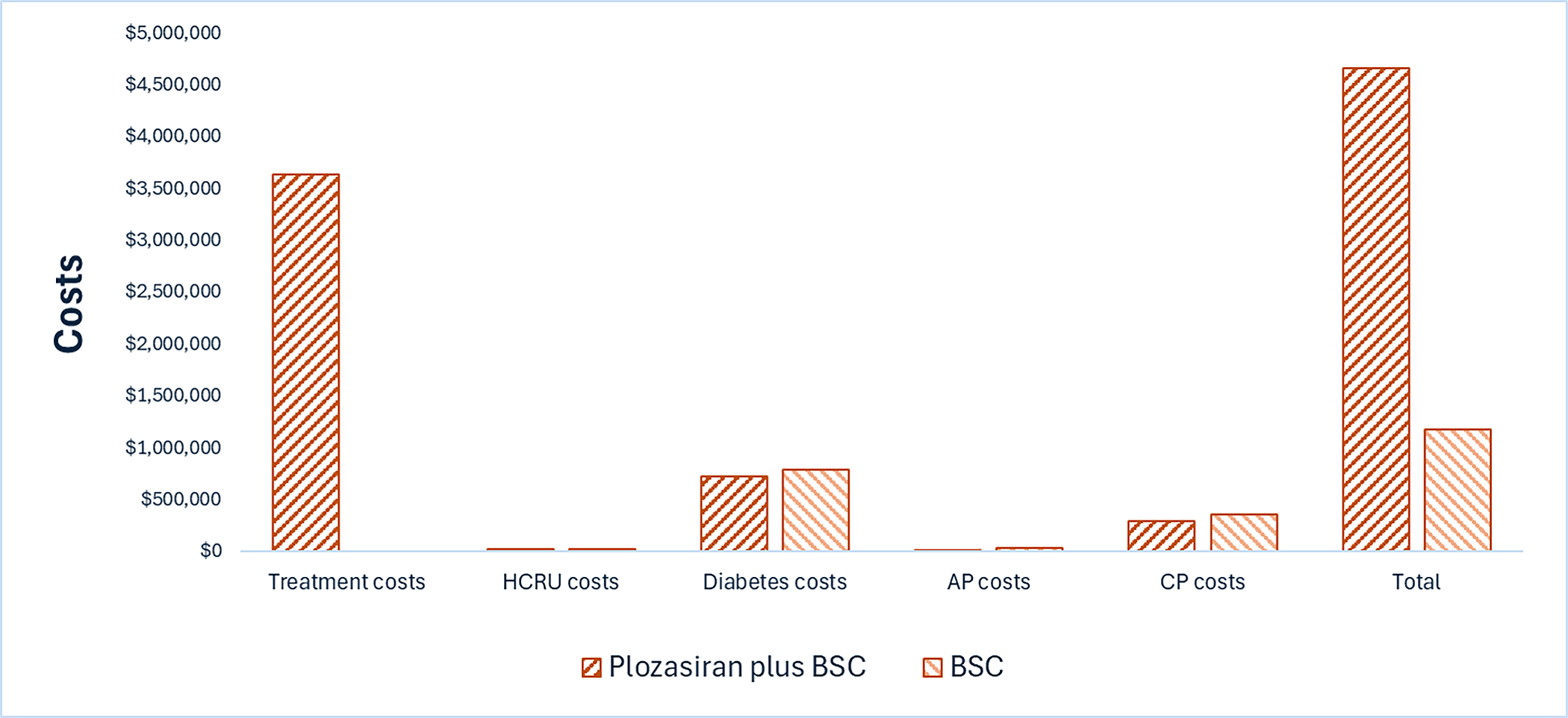
AP = acute pancreatitis; BSC = best supportive care; CP = chronic pancreatitis; HCRU = health care resource utilization; vs. = versus.
Impact on Health
Relative to BSC alone, plozasiran plus BSC is predicted to increase the amount of time a patient remains in the low-risk triglyceride and medium-risk triglyceride health states by approximately 0.57 years. Considering the impact of treatment on both quality and length of life, plozasiran plus BSC is predicted to result in 1.93 QALYs per patient gained compared to BSC alone (refer to Figure 2). Approximately 93% of the predicted incremental benefit was accrued on the basis of extrapolation.
Figure 2: Impact of Plozasiran Plus BSC vs. BSC on Patient Health
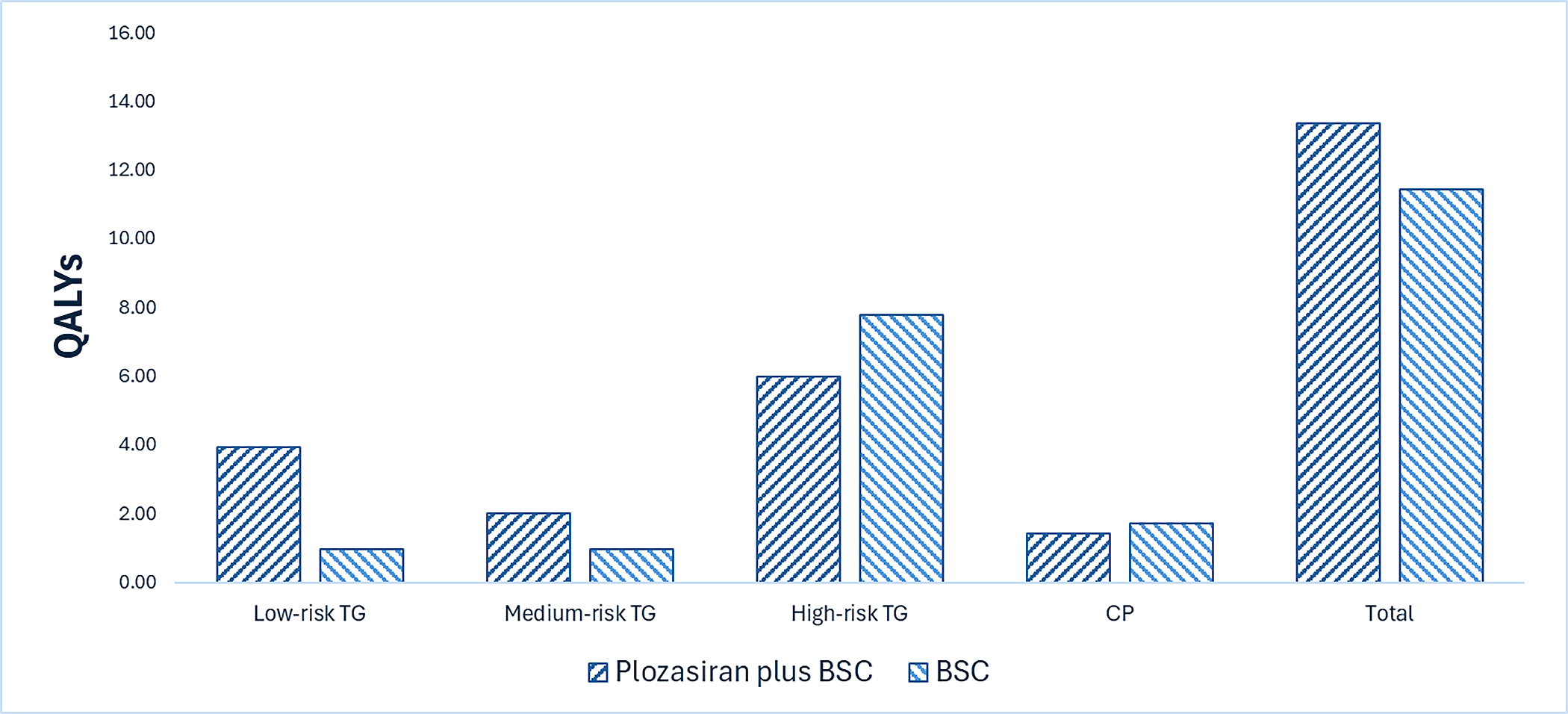
BSC = best supportive care; CP = chronic pancreatitis; QALY = quality-adjusted life-year; TG = triglyceride; vs. = versus.
Note: Low-risk TG level is < 10 mmol/L, medium-risk TG level is 10 mmol/L to 22.6 mmol/L, and high-risk TG level is ≥ 22.6 mmol/L.
Overall Results
The results of the CDA-AMC base case suggest an ICER of $1,813,089 per QALY gained for plozasiran plus BSC compared to BSC alone (refer to Table 6). Additional details on the CDA-AMC base case are available in the Supplemental Material document, Appendix 12.
Table 6: Summary of CDA-AMC Economic Evaluation Results
Drug | Total costs ($) | Total QALYs | ICER vs. BSC ($/QALY) |
|---|---|---|---|
BSC alone | 1,169,131 | 11.43 | Reference |
Plozasiran plus BSC | 4,658,926 | 13.35 | 1,813,089 |
BSC = best supportive care; CDA-AMC = Canada’s Drug Agency; ICER = incremental cost-effectiveness ratio; QALY = quality-adjusted life-year; vs. = versus.
Uncertainty and Sensitivity
Due to limitations inherent to the PALISADE trial of a rare disease (i.e., a small sample size and limited duration of follow-up for an uncommon event) and imprecision in the results, the treatment effect on the direct reduction of acute pancreatitis by plozasiran remains uncertain. This uncertainty was explored in the scenario analysis outlined in Table 5 showing the maximum impact of this assumption on conclusions. Based on the results of this analysis, the ICER of plozasiran plus BSC increased to $2,275,409 per QALY gained when the direct protective effect on acute pancreatitis was removed.
Summary of the Budget Impact
The sponsor submitted a budget impact analysis to estimate the 3-year (2027 to 2029) budget impact of reimbursing plozasiran plus BSC for use in the adult patients with FCS for whom standard triglyceride-lowering therapies have been inadequate.31 The sponsor assumed that the payer would be CDA-AMC–participating public drug plans and derived the size of the eligible population using an epidemiologic approach. The price of plozasiran was aligned with the price included in the sponsor’s economic evaluation, and no drug costs with comparators (BSC) were assumed to currently apply. Additional information pertaining to the sponsor’s submission is provided in the Supplemental Material document, Appendix 13.
CDA-AMC identified a number of issues with the sponsor’s estimated budget impact and made changes to model parameters and assumptions in consultation with the clinical experts to derive the CDA-AMC base case (refer to the Supplemental Material document, Appendix 13). CDA-AMC estimated that by year 3 of reimbursement, 62 patients would be eligible for plozasiran plus BSC; of these, 44 patients are expected to receive plozasiran plus BSC. The estimated incremental budget impact of reimbursing plozasiran plus BSC is predicted to be approximately $24 million over the first 3 years. Because BSC costs are assumed to be $0, the entire incremental budget impact reflects expenditures on plozasiran (i.e., $24 million). The actual budget impact will depend on the prevalence of the condition, public coverage for rare disease treatments, and the market uptake of plozasiran and its negotiated price.
Conclusion
Based on the CDA-AMC base case, plozasiran plus BSC would be considered cost-effective at the submitted price if the public health care system was willing to pay at least $1,813,089 for each additional QALY gained. If the public health care system is not willing to pay that amount, a price reduction should be considered (refer to Figure 3; full details of the impact of price reductions on cost-effectiveness are presented in the Supplemental Material document, Appendix 12).
The budget impact of reimbursing plozasiran plus BSC to the public drug plans in the first 3 years is estimated to be approximately $24 million. The 3-year expenditure on plozasiran (i.e., not accounting for current expenditure on comparators) is estimated to be $24 million given that the BSC costs are assumed to be $0.
Figure 3: Summary of the CDA-AMC Economic Analysis and Price Reduction

BSC = best supportive care; CDA-AMC = Canada’s Drug Agency; ICER = incremental cost-effectiveness ratio; QALY = quality-adjusted life-year.
Note: Expenditure includes only the drug cost of plozasiran. The term dominant indicates that a drug costs less and provides more QALYs than the comparator.
References
1.Baass A, Paquette M, Bernard S, Hegele RA. Familial chylomicronemia syndrome: an under-recognized cause of severe hypertriglyceridaemia. J Intern Med. 2020;287(4):340-348. doi:10.1111/joim.13016 PubMed
2.Adiamah A, Psaltis E, Crook M, Lobo DN. A systematic review of the epidemiology, pathophysiology and current management of hyperlipidaemic pancreatitis. Clin Nutr. 2018;37(6 Pt A):1810-1822. doi:10.1016/j.clnu.2017.09.028PubMed
3.Hansen SEJ, Varbo A, Nordestgaard BG, Langsted A. Hypertriglyceridemia-Associated Pancreatitis: New Concepts and Potential Mechanisms. Clin Chem. 2023;69(10):1132-1144. doi:10.1093/clinchem/hvad094 PubMed
4.Blom DJ, O'Dea L, Digenio A, et al. Characterizing familial chylomicronemia syndrome: Baseline data of the APPROACH study. J Clin Lipidol. 2018;12(5):1234-1243 e5. doi:10.1016/j.jacl.2018.05.013 PubMed
5.Hegele RA, Boren J, Ginsberg HN, et al. Rare dyslipidaemias, from phenotype to genotype to management: a European Atherosclerosis Society task force consensus statement. Lancet Diabetes Endocrinol. 2020;8(1):50-67. doi:10.1016/S2213-8587(19)30264-5 PubMed
6.Surendran RP, Visser ME, Heemelaar S, et al. Mutations in LPL, APOC2, APOA5, GPIHBP1 and LMF1 in patients with severe hypertriglyceridaemia. J Intern Med. 2012;272(2):185-96. doi:10.1111/j.1365-2796.2012.02516.x PubMed
7.Gagné C, Gaudet D. [Dyslipoproteinemias in Quebec: primary deficit in lipoprotein lipase and familial hypercholesterolemia]. Union Med Can. 1995;124(2):61-7.PubMed
8.Javed F, Hegele RA, Garg A, et al. Familial chylomicronemia syndrome: An expert clinical review from the National Lipid Association. J Clin Lipidol. 2025;19(3):382-403. doi:10.1016/j.jacl.2025.03.013 PubMed
9.Qiu M, Zhou X, Zippi M, et al. Comprehensive review on the pathogenesis of hypertriglyceridaemia-associated acute pancreatitis. Ann Med. 2023;55(2):2265939. doi:10.1080/07853890.2023.2265939PubMed
10.Gaudet D, Signorovitch J, Swallow E, et al. Medical resource use and costs associated with chylomicronemia. Journal of Medical Economics. 2013;16(5):657-666. doi:10.3111/13696998.2013.779277 PubMed
11.Watts GF, Rosenson RS, Hegele RA, et al. Plozasiran for Managing Persistent Chylomicronemia and Pancreatitis Risk. N Engl J Med. 2025;392(2):127-137. doi:10.1056/NEJMoa2409368 PubMed
12.Stroes ESG, Alexander VJ, Karwatowska-Prokopczuk E, et al. Olezarsen, Acute Pancreatitis, and Familial Chylomicronemia Syndrome. N Engl J Med. 2024;390(19):1781-1792. doi:10.1056/NEJMoa2400201 PubMed
13.Hansen SEJ, Madsen CM, Varbo A, Tybjærg-Hansen A, Nordestgaard BG. Genetic Variants Associated With Increased Plasma Levels of Triglycerides, via Effects on the Lipoprotein Lipase Pathway, Increase Risk of Acute Pancreatitis. Clin Gastroenterol Hepatol. 2021;19(8):1652-1660.e6. doi:10.1016/j.cgh.2020.08.016 PubMed
14.Hansen SEJ, Madsen CM, Varbo A, Nordestgaard BG. Low-Grade Inflammation in the Association between Mild-to-Moderate Hypertriglyceridemia and Risk of Acute Pancreatitis: A Study of More Than 115000 Individuals from the General Population. Clin Chem. 2019;65(2):321-332. doi:10.1373/clinchem.2018.294926PubMed
15.Toth PP, Granowitz C, Hull M, Liassou D, Anderson A, Philip S. High Triglycerides Are Associated With Increased Cardiovascular Events, Medical Costs, and Resource Use: A Real-World Administrative Claims Analysis of Statin-Treated Patients With High Residual Cardiovascular Risk. J Am Heart Assoc. 2018;7(15):e008740. doi:10.1161/JAHA.118.008740 PubMed
16.Patel RS, Pasea L, Soran H, et al. Elevated plasma triglyceride concentration and risk of adverse clinical outcomes in 1.5 million people: a CALIBER linked electronic health record study. Cardiovasc Diabetol. 2022;21(1):102. doi:10.1186/s12933-022-01525-5PubMed
17.Virani SS, Morris PB, Agarwala A, et al. 2021 ACC Expert Consensus Decision Pathway on the Management of ASCVD Risk Reduction in Patients With Persistent Hypertriglyceridemia: A Report of the American College of Cardiology Solution Set Oversight Committee. J Am Coll Cardiol. 2021;78(9):960-993. doi:10.1016/j.jacc.2021.06.011 PubMed
18.Newman CB, Blaha MJ, Boord JB, et al. Lipid Management in Patients with Endocrine Disorders: An Endocrine Society Clinical Practice Guideline. J Clin Endocrinol Metab. 2020;105(12)doi:10.1210/clinem/dgaa674 PubMed
19.Handelsman Y, Jellinger PS, Guerin CK, et al. Consensus Statement by the American Association of Clinical Endocrinologists and American College of Endocrinology on the Management of Dyslipidemia and Prevention of Cardiovascular Disease Algorithm - 2020 Executive Summary. Endocr Pract. 2020;26(10):1196-1224. doi:10.4158/CS-2020-0490 PubMed
20.Dron JS, Hegele RA. Genetics of Hypertriglyceridemia. Front Endocrinol (Lausanne). 2020;11:455. doi:10.3389/fendo.2020.00455PubMed
21.Bchetnia M, Bouchard L, Mathieu J, et al. Genetic burden linked to founder effects in Saguenay-Lac-Saint-Jean illustrates the importance of genetic screening test availability. J Med Genet. 2021;58(10):653-665. doi:10.1136/jmedgenet-2021-107809 PubMed
22.Brown A MP, Dibble A, et al. Brief Communication: Strong Concordance of the North American Familial Chylomicronemia Syndrome Score with a Positive Genetic Diagnosis in Patients from the Balance Study. Journal of Clinical Lipidology. 2025; PubMed
23.Hegele RA, Ahmad Z, Ashraf A, et al. Development and validation of clinical criteria to identify familial chylomicronemia syndrome (FCS) in North America. J Clin Lipidol. 2025;19(1):83-94. doi:10.1016/j.jacl.2024.09.008 PubMed
24.Arrowhead Pharmaceuticals Inc. Clinical Study Report: AROAPOC3-3001. A phase 3 study to evaluate the efficacy and safety of ARO-APOC3 in adults with familial chylomicronemia syndrome (PALISADE) [internal sponsor's report]. October 29, 2024.
25.Arrowhead Pharmaceuticals Inc. Reimbursement Review: Sponsor Summary of Clinical Evidence Template [internal sponsor's report]. In: Drug Reimbursement Review sponsor submission: Redemplo (plozasiran injection), 25 mg / 0.5 mL sterile solution for subcutaneous use. December 2025.
26.Arrowhead Pharmaceuticals Inc. Arrowhead Pharmaceuticals Inc. response to Canada's Drug Agency request for additional information regarding plozasiran review on January 22, 2026 [internal additional sponsor's information]. January 29, 2026.
27.Arrowhead Pharmaceuticals Inc. Arrowhead Pharmaceuticals Inc. response to Canada's Drug Agency request for additional information regarding plozasiran review on January 06, 2026 [internal additional sponsor's information]. January 09, 2026.
28.Davidson M, Stevenson M, Hsieh A, et al. The burden of familial chylomicronemia syndrome: Results from the global IN-FOCUS study. J Clin Lipidol. 2018;12(4):898-907 e2. doi:10.1016/j.jacl.2018.04.009 PubMed
29.Nawaz H, Koutroumpakis E, Easler J, et al. Elevated serum triglycerides are independently associated with persistent organ failure in acute pancreatitis. Am J Gastroenterol. 2015;110(10):1497-503. doi:10.1038/ajg.2015.261 PubMed
30.Arrowhead Pharmaceuticals Inc. Pharmacoeconomic evaluation [internal sponsor's report]. In: Drug Reimbursement Review sponsor submission: Redemplo (plozasiran injection), 25 mg / 0.5 mL sterile solution for subcutaneous use. December 19, 2025.
31.Arrowhead Pharmaceuticals Inc. Budget Impact Analysis [internal sponsor's report]. In: Drug Reimbursement Review sponsor submission: Redemplo (plozasiran injection), 25 mg / 0.5 mL sterile solution for subcutaneous use. December 19, 2025.
ISSN: 2563-6596
Canada’s Drug Agency (CDA-AMC) is a pan-Canadian health organization. Created and funded by Canada’s federal, provincial, and territorial governments, we’re responsible for driving better coordination, alignment, and public value within Canada’s drug and health technology landscape. We provide Canada’s health system leaders with independent evidence and advice so they can make informed drug, health technology, and health system decisions, and we collaborate with national and international partners to enhance our collective impact.
Disclaimer: CDA-AMC has taken care to ensure that the information in this document was accurate, complete, and up to date when it was published, but does not make any guarantee to that effect. Your use of this information is subject to this disclaimer and the Terms of Use at cda-amc.ca.
The information in this document is made available for informational and educational purposes only and should not be used as a substitute for professional medical advice, the application of clinical judgment in respect of the care of a particular patient, or other professional judgments in any decision-making process. You assume full responsibility for the use of the information and rely on it at your own risk.
CDA-AMC does not endorse any information, drugs, therapies, treatments, products, processes, or services. The views and opinions of third parties published in this document do not necessarily reflect those of CDA-AMC. The copyright and other intellectual property rights in this document are owned by the Canadian Agency for Drugs and Technologies in Health (operating as CDA-AMC) and its licensors.
Questions or requests for information about this report can be directed to Requests@CDA-AMC.ca.