Drugs, Health Technologies, Health Systems
Reimbursement Recommendation
Pegcetacoplan (Empaveli)
Indication: For the treatment of adult and pediatric patients aged 12 years and older with C3 glomerulopathy or primary immune-complex membranoproliferative glomerulonephritis to reduce proteinuria.
Sponsor: Swedish Orphan Biovitrum (Sobi) Canada, Inc.
Final recommendation: Reimburse with conditions
Summary
What Is the Reimbursement Recommendation for Empaveli?
Canada’s Drug Agency (CDA-AMC) recommends that Empaveli be reimbursed by public drug plans for patients aged 12 years and older with C3 glomerulopathy (C3G) or primary immune complex membranoproliferative glomerulonephritis (IC-MPGN) to reduce proteinuria if certain conditions are met.
Why Did CDA-AMC Recommend Reimbursement?
The Canadian Drug Expert Committee (CDEC) determined that it is uncertain whether Empaveli demonstrates acceptable clinical value versus placebo in patients aged 12 years and older with C3G or primary IC-MPGN to reduce proteinuria. Evidence from a clinical trial showed that 26 weeks of treatment with Empaveli, when added to supportive care, reduced protein in the urine and may help slow worsening kidney function compared with supportive care alone. However, the evidence for Empaveli is uncertain because the study was small and did not show whether the treatment improves important long-term outcomes like kidney failure, heart problems, or survival.
C3G and primary IC-MPGN are rare, serious kidney diseases that can lead to kidney failure, with limited and often ineffective treatment options. Patients and caregivers report a substantial impact on quality of life, including physical symptoms, emotional burden, and daily life disruptions, while current therapies do not adequately address the underlying disease and may cause substantial side effects. Empaveli is a treatment option for patients with C3G or primary IC-MPGN that targets the underlying complement dysregulation. CDEC concluded Empaveli addresses a substantial unmet clinical need with an acceptable level of certainty in clinical value.
Which Patients Are Eligible for Coverage?
Empaveli should only be covered for patients aged 12 years and older with a confirmed diagnosis of C3G or primary IC-MPGN based on kidney biopsy, who have an estimated glomerular filtration rate (eGFR) of at least 30 mL/min/1.73 m2, and substantial proteinuria. Empaveli should not be used in patients with transplant rejection, disease caused by another condition, or severe kidney scarring (greater than 50% global glomerulosclerosis or interstitial fibrosis on kidney biopsy).
What Are the Conditions for Reimbursement?
Empaveli should only be reimbursed if prescribed by a kidney specialist experienced in managing C3G or primary IC-MPGN and the cost of Empaveli is reduced. Empaveli should be initially covered for 6 months and may be continued if the patient shows a meaningful response (such as reduced protein in the urine with stable kidney function, or clear removal of C3 build-up in the kidneys, as seen on a follow-up kidney biopsy), with reassessment at least every year.
Important budget impact considerations must be addressed for health systems to be able to adopt Empaveli.
Review Background
Disease background: C3G and primary IC-MPGN are rare, progressive kidney diseases caused by complement system dysregulation. This leads to progressive glomerular damage, proteinuria, and hematuria. One-half of patients will experience kidney failure within 10 years, a condition which requires dialysis or kidney transplant. Disease onset typically occurs in childhood or young adulthood, and the combined prevalence is estimated at approximately 3 per 100,000 in Canada.
Indication and reimbursement request: Pegcetacoplan (Empaveli) has been approved by Health Canada for the treatment of adult and pediatric patients aged 12 years and older with C3G or primary IC-MPGN to reduce proteinuria. The sponsor is seeking reimbursement for this patient population. The application was submitted by the sponsor before receiving a Notice of Compliance (NOC) from Health Canada and the CDA-AMC review reflects the anticipated indication for pegcetacoplan at the time the review was conducted. The final NOC is aligned with the anticipated NOC and the review by CDA-AMC.
Drug under review: Pegcetacoplan is a complement inhibitor that binds and inhibits complement protein C3. It is available as a solution (1,080 mg/20 mL) administered by subcutaneous infusion.
Treatment costs: At the submitted price of $4,970.00 per 20 mL single-dose vial (total dose of 1,080 mg per vial), the annual cost of pegcetacoplan is expected to be $518,655 per patient, based on the Health Canada–recommended dosage.
Highlights of Input From Interested Parties
The patient group (The Kidney Foundation of Canada) noted the following regarding impacts of the disease, unmet needs, and important outcomes:
Patients emphasized experiencing difficult to manage symptoms including fatigue and lethargy, as well as a range of physical symptoms that disrupt daily routines, social activities, emotional well-being, and overall quality of life. C3G and primary IC-MPGN often progress to kidney failure requiring dialysis or transplant.
The disease and its treatment impose substantial burden on both patients and caregivers, including the emotional toll of stress, time off work associated with managing daily treatments and symptoms, and financial burden stemming from out-of-pocket medical expenses and loss of employment, which can affect financial stability and access to care.
There is a need for treatments that preserve kidney function, are well-tolerated, and improve quality of life by reducing the physical symptoms, as well as the emotional and mental burden. Patients valued support for emotional and mental well-being to help them maintain stability and remain engaged in meaningful daily activities. Patients also emphasized the importance of therapies that are accessible, offer convenient modes of administration, are affordable, and minimize out-of-pocket expenses.
The clinician group (The Canadian C3G and IC-MPGN Physician Network) and the clinical experts consulted by CDA-AMC noted the following regarding unmet needs arising from the disease and place in therapy for the drug under review:
There is a substantial need for effective therapies with meaningful benefits on preserving kidney function in the long term and on overall patient well-being. Currently, there are no disease-specific therapies that target complement dysregulation, and that have a meaningful impact on preventing progression to end-stage kidney disease or recurrence after transplant.
Supportive therapies that are currently used are associated with substantial and burdensome toxicities. The harms profiles pose substantial challenges, including broad immunosuppression, and were reported to have substantial negative impacts on patients’ quality of life. Access to advanced therapies is restricted, and specialized care is limited by geographic and systemic barriers, currently resulting in inequities in treatment availability and outcomes.
Pegcetacoplan may cause a paradigm shift as a first-line therapy and potentially a new standard of care (SOC), offering targeted complement inhibition.
The participating public drug programs raised potential implementation issues related to considerations for relevant comparators, initiation, renewal, discontinuation, and prescribing of therapy; generalizability of trial populations to broader populations; care provision issues; as well as system and economic issues.

Note: The perspectives shared by people with lived experience who present to the committee reflect their individual experiences and are not necessarily representative of all people with the same condition or course of treatment. Their insights provide valuable context about what a patient, support person, or caregiver might go through with this condition or treatment, helping to inform the committee’s deliberations. These narratives complement other forms of evidence and input and should be considered as 1 element contributing to a broader understanding of the condition and treatment under review.
Recommendation
With a vote of 13 in favour to 1 against, CDEC recommends that pegcetacoplan be reimbursed for the treatment of adult and pediatric patients aged 12 years and older with C3G or primary IC-MPGN to reduce proteinuria only if the conditions listed in Table 1 are met.
Table 1: Reimbursement Conditions and Reasons
Reimbursement condition | Reason | Implementation guidance |
|---|---|---|
Initiation | ||
1. Pegcetacoplan may be initiated for the treatment of C3G or primary IC-MPGN if all of the following conditions are met: 1.1. Patients aged 12 years of age and older with or without previous kidney transplant 1.2. Confirmed diagnosis of C3G or primary IC-MPGN based on kidney biopsy 1.3. eGFR ≥ 30 mL/min/1.73 m2 1.4. Greater than or equal to 1 g/day of proteinuria on a 24-hour urine collection or random spot urine and/or a uPCR of ≥ 1 g/g in at least 2 FMU samples. | In the VALIANT trial, pegcetacoplan demonstrated clinically meaningful benefits in adult and pediatric patients aged 12 years or older with C3G or primary IC-MPGN. These clinically important benefits included a reduction in proteinuria, an increase in the proportion of patients achieving the composite renal end point, and a reduction in the eGFR decline at week 26 compared with placebo. Eligible patients in the VALIANT trial had at least 1 g/day of proteinuria on a screening 24-hour urine collection and a uPCR of at least 1 g/g in at least 2 FMU samples collected during screening. Patients also needed to have an eGFR ≥ 30 mL/min/1.73 m2 for inclusion. | CDEC noted that in the VALIANT trial, diagnosis of C3G or primary IC-MPGN was confirmed by kidney biopsy showing at least 2+ C3c staining within the 28 weeks before enrolment. Patients in the VALIANT trial were receiving SOC supportive treatments (e.g., ACE inhibitors, ARB therapy, and/or SGLT2 inhibitors) and immunosuppressive therapy (e.g., steroids, MMF, and/or other allowed immunosuppressants) and continued with those treatments throughout the trial, provided they were receiving a stable, optimized regimen. CDEC agreed with the clinical experts that prior or current use of supportive care medications should not determine eligibility for pegcetacoplan. |
2. Treatment with pegcetacoplan should not be used in patients with any of the following: 2.1. Evidence of transplant rejection 2.2. Diagnosis of secondary C3G or IC-MPGN 2.3. More than 50% global glomerulosclerosis or interstitial fibrosis on kidney biopsy. | The VALIANT trial excluded such patients, and there is no evidence regarding the efficacy and safety of treatment with pegcetacoplan in patients with these characteristics. | — |
3. The duration of initial authorization is 6 months. | The VALIANT trial assessed the primary and secondary end points at week 26 during the randomized controlled phase. | CDEC agreed with the clinical experts that although follow-up occurs every 3 to 6 months in clinical practice, meaningful changes for response assessment requires at least 6 to 12 months. |
Renewal | ||
4. For renewal after initial authorization, the physician must provide proof of maintained clinical response to therapy, defined as either of the following: 4.1. A reduction in proteinuria or uPCR, and no more than 15% decline in eGFR 4.2. Clearance of C3 deposits on repeat biopsy, if available. | In the VALIANT trial, proteinuria reduction was the primary efficacy end point and change in eGFR and C3c staining on kidney biopsy were secondary end points. | Assessment of treatment response should be based on clinical expert practice. CDEC relied on clinician input to define clinical response to therapy. |
5. For subsequent renewal, the clinical response achieved after the initial authorization must be maintained, as assessed by the treating nephrologist. | This is meant to ensure that the clinical response achieved after the initial authorization is sustained over time, given the chronic and progressive nature of C3G and IC-MPGN. | — |
6. Assessment of treatment response for subsequent renewal may be conducted every 12 months. | The VALIANT trial assessed the primary and secondary end points at week 26 during the randomized controlled phase and at week 52 during the open-label phase of the study. | — |
Prescribing | ||
7. Pegcetacoplan should be prescribed by a glomerulonephritis specialist, a nephrologist with experience in managing C3G and primary IC-MPGN, or a nephrologist in consultation with a glomerulonephritis specialist. | This is meant to ensure that pegcetacoplan is prescribed for appropriate patients. | CDEC noted that in rural or remote areas with limited access to specialists, pegcetacoplan may be prescribed by an internal medicine or pediatric physician with experience in C3G and IC-MPGN, ideally within a shared-care model. |
Pricing | ||
8. A reduction in price. | Using the CDA-AMC base-case analysis, the ICER for pegcetacoplan plus SOC was $2,165,155 per QALY gained when compared with SOC alone in the indicated population. A band 4a price reduction would be required to achieve cost-effectiveness at a $50,000 per QALY gained threshold. A band 4a price reduction would be required to achieve cost-effectiveness at a $100,000 per QALY gained threshold. Exact price reductions at any given willingness-to-pay threshold can be found in the CDA-AMC main report and Supplemental Material document. | The CDA-AMC analysis is based on public list prices for all treatments. Further price reductions may be required if there are price arrangements (discounts) currently in place for any treatment included in the economic analysis. |
Feasibility of adoption | ||
9. The economic feasibility of adoption of pegcetacoplan plus SOC must be addressed. | At the submitted price, the incremental budget impact of pegcetacoplan plus SOC is expected to be greater than $40 million in years 1, 2, and 3. Additionally, the magnitude of uncertainty in the budget impact must be addressed to ensure the feasibility of adoption, given the difference between the sponsor’s estimate and the CDA-AMC estimate. | — |
2+ = at least two orders of magnitude greater intensity; ACE = angiotensin-converting enzyme, ARB = angiotensin II receptor blocker; C3G = C3 glomerulopathy; CDA-AMC = Canada’s Drug Agency; CDEC = Canadian Drug Expert Committee; eGFR = estimated glomerular filtration rate; FMU = first-morning spot urine; ICER = incremental cost-effectiveness ratio; IC-MPGN = immune complex membranoproliferative glomerulonephritis; MMF = mycophenolate mofetil; QALY = quality-adjusted life-year; SOC = standard of care; uPCR = urine protein to creatinine ratio.
aFor the statement regarding the size of the price reduction required, band 1 = 1% to 24%, band 2 = 25% to 49%, band 3 = 50% to 74%, and band 4 = 75% or greater.
Rationale for the Recommendation
Due to uncertainty in the evidence regarding pegcetacoplan, CDEC was unable to base its recommendation solely on clinical value. Therefore, the committee also considered whether pegcetacoplan addresses a substantial unmet clinical need. CDEC concluded that pegcetacoplan fulfills this unmet need with an acceptable level of certainty, considering the rarity and severity of the disease despite available treatments.
Clinical Value
Based on the totality of the clinical evidence, CDEC concluded that it is uncertain whether pegcetacoplan demonstrates acceptable clinical value compared with appropriate comparator (placebo plus supportive therapies) in patients with C3G or primary IC-MPGN.
Evidence from 1 phase III, double-blind, placebo-controlled trial (VALIANT; N = 124) demonstrated that 26 weeks of treatment with pegcetacoplan in combination with supportive therapies resulted in a clinically meaningful reduction in proteinuria in adult and pediatric patients aged 12 years and older with C3G or primary IC-MPGN compared with placebo in combination with supportive therapies. The lowering of proteinuria was not achieved at the expense of kidney function, as pegcetacoplan also likely increased the proportion of patients who met the composite renal end point and likely reduced the decline in eGFR compared with placebo. In addition, pegcetacoplan may increase the proportion of patients with decreased C3c staining on kidney biopsy at week 26, demonstrating a tissue-level improvement in adults with available biopsy samples that is typically not observed in the natural disease trajectory. However, uncertainty surrounds the findings; due to the small sample size of the VALIANT trial, effect estimates are likely to be unstable. In addition, the evidence for pegcetacoplan relies on surrogate end points, without information about its effect on long-term clinical outcomes such as progression to end-stage kidney disease (ESKD), initiation of dialysis, kidney transplant, cardiovascular events, and mortality. Surrogate measures are commonly used in rare kidney diseases and reflect feasibility constraints in generating evidence; however, reliance on surrogate outcomes remains an evidence gap. Pegcetacoplan may have little to no clinically meaningful effect on health-related quality of life (HRQoL) compared with placebo. Results from the single-arm, long-term extension study (VALE) suggested potential for sustained efficacy beyond 52 weeks; however, causal interpretation is limited by the single-arm study design and substantial reductions in sample size over time.
With respect to safety, pegcetacoplan may result in little to no difference in infusion site reactions compared with placebo and may increase the incidence of hypersensitivity, although the clinical importance of this finding is unclear. The evidence is very uncertain regarding the effect of pegcetacoplan on severe infections at week 26. Overall, no new safety signals were identified across the VALIANT and VALE studies, and the observed safety profile is consistent with the product monograph and clinical expert input.
Further information on the committee’s discussion around clinical value is provided in the Summary of Deliberation section.
Considering Substantial Unmet Clinical Need
C3G and primary IC-MPGN are rare, progressive kidney diseases that begin early in life and lead to kidney failure in approximately one-half of patients, despite available supportive care. Current treatments, including angiotensin-converting enzyme (ACE) inhibitors, angiotensin II receptor blocker (ARB) therapy, SGLT2 inhibitors, immunosuppressive therapies, and other off-label rescue options, do not target the complement dysregulation that drives disease progression, have limited and inconsistent effectiveness on kidney function and overall patient well-being, and are associated with substantial toxicities and challenges with access. Kidney transplant does not correct the underlying disease mechanism and recurrence rates remain high, leading to kidney allograft loss, and limiting the possibility of repeated transplant, especially for younger patients. Input from patients and caregivers highlighted major impacts on daily functioning, emotional well-being, and financial stability, emphasizing the need for treatments that preserve kidney function while being safe and accessible.
CDEC concluded pegcetacoplan addresses a substantial unmet clinical need with an acceptable level of certainty in clinical value.
Further information on the committee’s discussion around unmet clinical need is provided in the Summary of Deliberation section.
Developing the Recommendation
Based on the preceding considerations, CDEC recommended that pegcetacoplan be reimbursed. As part of the deliberation on whether to recommend reimbursement or not, the committee also considered unmet nonclinical need and health inequity. Information on this discussion is provided in the Distinct Social and Ethical Considerations domain in the Summary of Deliberation section.
Because CDEC recommended that pegcetacoplan be reimbursed, the committee also deliberated on whether reimbursement conditions should be added to address important economic considerations, health system impacts, or social and ethical considerations, or to ensure clinical value is realized. The resulting reimbursement conditions, with accompanying reasons and implementation guidance, are stated in Table 1.
Summary of Deliberation
CDEC considered all domains of value of the deliberative framework before developing its recommendation: clinical value, unmet clinical need, distinct social and ethical considerations, economic considerations, and impacts on health systems. For further information on the domains of value, refer to Expert Committee Deliberation at Canada’s Drug Agency.
The committee considered the following key discussion points, organized by the 5 domains of value.
Clinical Value
Appropriate comparators: The committee considered placebo added to stable supportive therapy (e.g., ACE inhibitors, ARB therapy, and SGLT2 inhibitors) to be an appropriate comparator for the drug under review. In the absence of disease-targeted therapies, ACE inhibitors, ARB therapy, and SGLT2 inhibitors remain the SOC for C3G and IC-MPGN. Immunosuppressive drugs and other rescue therapies were not viewed as relevant comparators due to limited evidence, inconsistent access, and tolerability issues.
Efficacy versus placebo: One phase III, double-blind, placebo-controlled trial (VALIANT, N = 124) suggested that in adult and pediatric patients aged 12 years and older with C3G or primary IC-MPGN, pegcetacoplan results in a clinically meaningful reduction in proteinuria at week 26 compared with placebo. The between-group difference was −1.14 (95% confidence interval [CI], −1.48 to −0.85; P < 0.0001), corresponding to a relative reduction of 68.1% (95% CI, 57.3% to 76.2%) with pegcetacoplan compared to placebo. Additionally, compared with placebo, pegcetacoplan likely resulted in a clinically important increase in the proportion of patients achieving the composite renal end point (between-group difference: 45.6%; 95% CI, 21.2% to 70.0%), and a clinically important reduction of the decline in eGFR (between-group difference: 6.3 mL/min/1.73 m2; 95% CI, 0.5 to 12.1). Pegcetacoplan may also result in a clinically important increase in the proportion of adult patients with decreases in C3c staining on kidney biopsy at week 26 (between-group difference of 64.3%; 95% CI, 41.4% to 87.2%). Pegcetacoplan may have little to no clinically meaningful impact on patients’ HRQoL compared to placebo. Results from the VALE long-term extension study suggested potential for sustained efficacy beyond 52 weeks, but causal interpretations could not be made due to single-arm design and substantial reductions in sample size over time. No notable safety concerns were identified with pegcetacoplan during the VALIANT and VALE study period.
Clinical importance of treatment effects: Patient input emphasized the need for treatments that preserve kidney function and prevent progression to dialysis, are well-tolerated, and improve daily functioning by reducing the physical symptoms, as well as the emotional and mental burden of progressive kidney disease. In the VALIANT trial, outcomes related to proteinuria, kidney function (i.e., eGFR), and C3c staining addressed several of these priorities. Observational evidence from the literature suggests that reductions in proteinuria and stabilization of eGFR may each be associated with longer term patient-important clinical outcomes such as delayed progression to ESKD and reduced mortality. However, the absence of evidence on important long-term outcomes, such as the need for future dialysis and long-term morbidity and mortality, remains an evidence gap. In the absence of literature-based minimal important difference (MID) estimates, thresholds for between-group differences were informed by expert opinion to support interpretation of the evidence. An MID threshold of 50% was applied for reduction in proteinuria, 20% for the composite renal end point, and 3-points for the Kidney Disease Quality of Life (KDQOL-36) summary score. For change in eGFR and harms, treatment effect was evaluated in the presence of a non-null effect, while the review team assessed whether the point estimates and corresponding 95% CI bounds for C3c staining reflected a clinically meaningful effect with the input of the clinical expert. Using these MIDs, pegcetacoplan suggested clinically meaningful benefits compared with placebo in reducing proteinuria, achieving the composite renal end point, decreasing C3c staining on kidney biopsy, and stabilizing eGFR. Overall, CDEC concluded that the availability of an additional treatment option providing such benefits was important to patients with C3G and IC-MPGN; however, CDEC noted substantial uncertainty surrounding the findings, and that effect estimates are likely to be unstable.
Certainty of the evidence: The assessment of proteinuria (i.e., urine protein to creatinine ratio [uPCR]) was rated as high certainty (compared to placebo) using the Grading of Recommendations Assessment, Development and Evaluation (GRADE) approach. The assessment of composite renal end point and eGFR was rated as moderate certainty due to serious risk of imprecision and low for C3c staining, HRQoL, incidence of infusion site reactions, and incidence of hypersensitivity due to risk of bias and imprecision. The assessment of the incidence of severe infection was very low due to extremely serious imprecision.
Use of surrogate end points: CDEC noted that the VALIANT trial relied on surrogate end points such as uPCR and eGFR. Although these measures are commonly used in rare kidney disease trials and are considered prognostic of long-term clinical outcomes based on observational evidence, their use represents an evidence gap because it remains uncertain how changes in these surrogates translate into true clinical benefit. However, CDEC acknowledged that reliance on surrogate markers reflects feasibility constraints, as evaluating outcomes such as progression to ESKD would require long-term follow-up and a much larger sample size, which are difficult to achieve given the rarity of the condition.
Studies addressing gaps: The NOBLE study provided limited supportive evidence of potential efficacy of pegcetacoplan in patients with recurrence of C3G or primary IC-MPGN after transplant.
Clinical value: Based on all of the preceding considerations, the committee determined that it is uncertain whether pegcetacoplan plus supportive therapies demonstrates acceptable clinical value compared with appropriate comparator (placebo plus supportive therapies).
Unmet Clinical Need
Input on unmet clinical need: Based on patient and clinician input, CDEC noted several unmet needs in the management of C3G and primary IC-MPGN. Patients reported substantial impacts on quality of life due to fatigue, low energy, and a range of additional physical symptoms, along with disruptions to daily routines, social activities, emotional well-being, and financial stability. Caregivers also described substantial stress and difficulties to maintain work-life balance. Patients identified a need for treatments that preserve kidney function, are accessible, convenient to administer, and reduce both physical and emotional burden. Clinical experts highlighted that many patients are refractory to available therapies, which offer limited benefit and are associated with numerous and considerable toxicities, including the risk of serious infections, and growth concerns in pediatric patients. Experts also noted high rates of recurrence after transplant. CDEC noted these challenges underscore the need for safer, more effective, and more tolerable treatments for C3G and IC-MPGN.
Severity of the disease: CDEC acknowledged that C3G and primary IC-MPGN are rare, progressive, and serious chronic kidney diseases due to ongoing complement dysregulation that drives glomerular inflammation, proteinuria, hematuria, and steady loss of kidney function. Approximately one-half of patients progress to kidney failure within 10 years, a condition that requires dialysis or kidney transplant. Even with transplant, high rates of disease recurrence limit long-term outcomes. Patient and clinician input highlighted the substantial symptom burden, early onset, and substantial impact on daily functioning and well-being, underscoring the severity of these conditions and the need for more effective treatment options.
Availability of treatment options: CDEC noted that currently there are no approved targeted therapies for C3G or primary IC-MPGN, and that many patients ultimately progress to kidney failure. Treatments currently used are considered supportive therapies (e.g., ACE inhibitors, ARB therapy, and SGLT2 inhibitors), as they may reduce proteinuria but do not target the complement dysregulation that drives disease progression. They have limited and inconsistent effectiveness on kidney function, and are associated with substantial toxicities, particularly for pediatric patients. Based on patient and clinical expert input, immunosuppressive therapies such as glucocorticoids and mycophenolate mofetil are used in severe cases but have inconsistent benefit and substantial toxicities, while other drugs used off label (e.g., rituximab, cyclophosphamide, calcineurin inhibitors, eculizumab, and avacopan) offer limited evidence of effectiveness and inconsistent access. Patients and clinicians emphasized the lack of effective, well-tolerated, disease-specific therapies that target complement dysregulation, prevent progression to ESKD, and reduce recurrence after transplant.
Substantial unmet clinical need: Due to challenges with evidence generation associated with the rarity of C3G or primary IC-MPGN and the severity of the disease despite available treatment options, CDEC considered there to be substantial unmet need for pegcetacoplan as a treatment option for patients with C3G or IC-MPGN that targets the underlying complement dysregulation.
Distinct Social and Ethical Considerations
Input on unmet nonclinical need: CDEC noted several unmet nonclinical needs, including diagnostic inequities due to limited access to kidney biopsy in rural or remote regions and inconsistent availability of C3c-specific staining across Canada. Patients who live far from specialized centres face substantial travel and time burdens, and although at-home subcutaneous administration could help, it requires monitoring and additional supports for those unable to self-administer. Caregiver burden related to time away from work, income loss, and stress was also highlighted, along with reduced patient autonomy caused by persistent symptoms and frequent medical visits. Overall, there is a need for more accessible treatment options and supportive services that help maintain continuity of care particularly for patients in remote areas.
Ethical implications: CDEC noted that at-home administration of pegcetacoplan would require structured training and support, particularly for individuals who are blind or have low vision, or for those living with disabilities. At-home administration would also require clear pathways for regular safety and efficacy monitoring for patients in remote regions. The clinical experts indicated that self-administration training and ongoing support are typically provided through patient support programs at no cost to patients. They also noted that the injections are not complex and can be taught by pharmacists, so that additional costs are not expected.
Economic Considerations
Health impacts of pegcetacoplan plus SOC versus relevant comparators: Relative to SOC alone, pegcetacoplan plus SOC is predicted to result in 2.60 additional quality-adjusted life-years (QALYs) per patient over the lifetime time horizon. The model estimates that patients who receive pegcetacoplan plus SOC spend more time in chronic kidney disease stages 1 to 3 and less time in chronic kidney disease stages 4 to 5, dialysis, and transplant relative to SOC. Approximately 99% of the predicted incremental benefit was accrued on the basis of extrapolation.
Cost of pegcetacoplan plus SOC versus relevant comparators: Pegcetacoplan plus SOC is predicted to be associated with additional health care costs compared to SOC alone (incremental costs = $5,623,370). This increase in health care spending results from drug acquisition costs associated with pegcetacoplan plus SOC. Health care costs associated with SOC ($2,282,000) are driven by costs accrued in chronic kidney disease stages, transplant, and dialysis.
Key findings of the economic evaluation: Based on the submitted evidence using the sponsor’s cost-utility analysis, the CDA-AMC base-case analysis estimated that the incremental cost-effectiveness ratio for pegcetacoplan plus SOC in adult and pediatric patients aged 12 years and older with C3G or primary IC-MPGN was $2,165,155 per QALY gained when compared with SOC alone (Figure 1).
Figure 1: Estimate of the ICER Used by CDEC to Inform the Price Condition
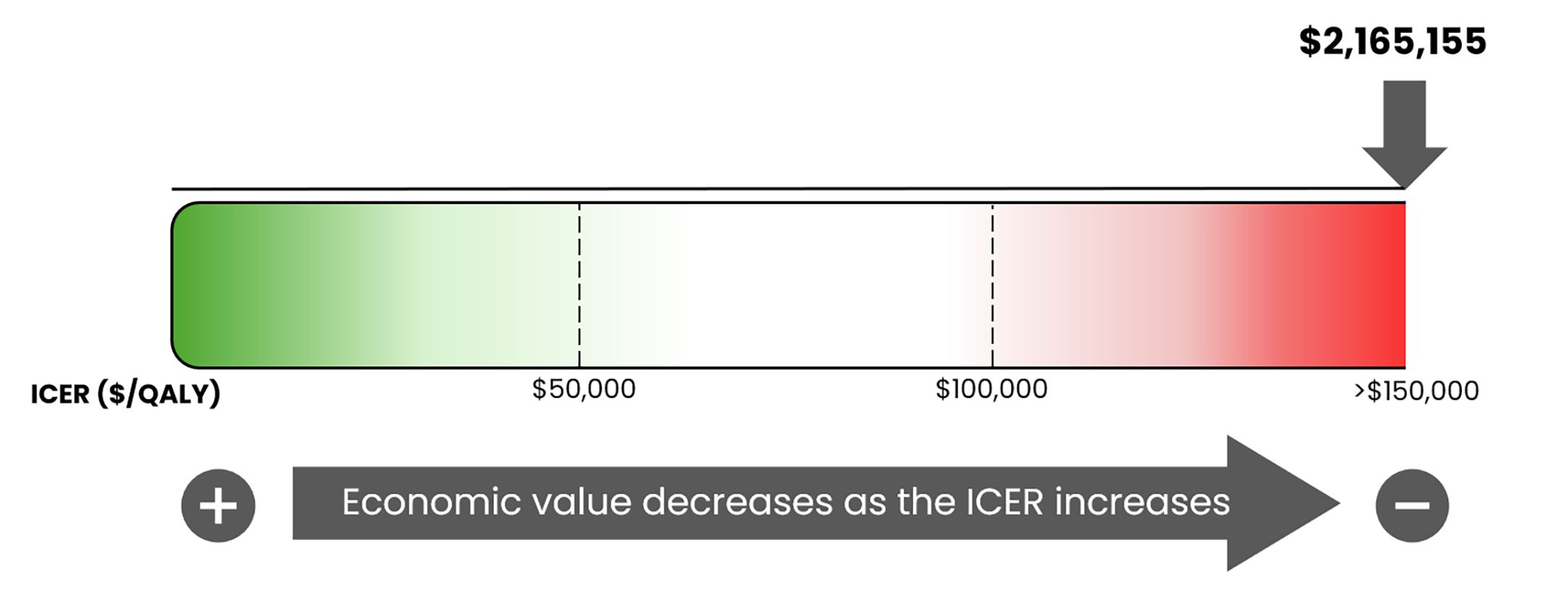
CDEC = Canadian Drug Expert Committee; ICER = incremental cost-effectiveness ratio; QALY = quality-adjusted life-year.
Certainty of the evidence: CDEC noted that the certainty of the evidence supporting reimbursement of pegcetacoplan is limited because the cost-effectiveness results hinge on assumptions that are not well supported by available data, most notably, the reliance on surrogate end points to estimate the effect of pegcetacoplan on kidney outcomes over the long term, the durability of benefit, and the extrapolation of outcomes beyond the observed evidence base. At the submitted price, pegcetacoplan plus SOC was associated with a very high incremental cost ($5.6 million per patient) for a relatively modest incremental benefit (2.6 QALYs and 1.2 life-years), yielding an incremental cost-effectiveness ratio of approximately $2.2 million per QALY gained. However, these results are highly uncertain because the economic analysis translates short-term improvements in uPCR and eGFR into lifetime reductions in ESKD and mortality without pegcetacoplan-specific or C3G and IC-MPGN–specific evidence to quantify the magnitude of risk reduction. Uncertainty is further magnified by assuming the 52-week VALIANT trial effect persists unchanged over a lifetime, and by assumptions about disease stability and whether patients would discontinue and restart treatment in clinical practice, which jointly drive both the projected benefits and costs. This is particularly important given the projected financial impact, with an estimated budget impact of approximately $473 million over 3 years under moderate uptake expectations (45% market capture by year 3) and $747 million over 3 years under high uptake expectations (75% market capture by year 3).
Impacts on Health Systems
Anticipated budget impact: CDA-AMC estimated that by year 3 of reimbursement, 973 patients would be eligible for pegcetacoplan plus SOC; among these, 438 patients are expected to receive pegcetacoplan plus SOC. The estimated incremental budget impact of reimbursing pegcetacoplan plus SOC is predicted to be approximately $473 million for the first 3 years, with an expected expenditure of $473 million on pegcetacoplan plus SOC. The actual budget impact of reimbursing pegcetacoplan plus SOC for patients with C3G or primary IC-MPGN will depend on the proportion of patients eligible for treatment and the market share of pegcetacoplan.
Organizational implications: Clinical experts noted that in Ontario, patients receiving anticomplement therapy typically obtain required vaccinations, such as meningococcal, pneumococcal, and Haemophilus influenzae vaccines, through community health programs rather than drug plans. However, if comparable programs are not available in a given province, the experts suggested that drug plans may need to cover these vaccination costs to ensure safe treatment, while acknowledging that this issue is outside their direct expertise.
Sources of Information Used by the Committee
To make its recommendation, the committee considered the following information (links to the full documents for the review can be found on the project webpage):
the sponsor’s comments on the draft report and the responses by CDA-AMC
patients' perspectives gathered by 1 patient group, The Kidney Foundation of Canada (refer to the Patient and Clinician Group Input document)
input from a person with lived experience who delivered a brief presentation and answered questions from the committee
input from 1 clinician group, The Canadian C3G and IC-MPGN Physician Network (refer to the Patient and Clinician Group Input document)
input from public drug programs that participate in the reimbursement review process (refer to the Supplemental Material document)
input from 3 clinical experts with expertise in the management of C3G and IC-MPGN consulted by CDA-AMC.
Special thanks: CDA-AMC extends our special thanks to the individual who presented directly to CDEC, and to the patient organizations supporting the community of those living with C3G, including The Kidney Foundation of Canada and Monica Beltran-Espitia.
Note: CDA-AMC makes every attempt to engage with people with lived experience as closely to the indication under review as possible; however, at times, CDA-AMC is unable to do so and instead engages with individuals with similar treatment journeys to ensure lived experience perspectives are included and considered in Reimbursement Reviews. CDA-AMC is fortunate to be able to engage with individuals who are willing to share their treatment journeys with CDEC and the pan-Canadian Oncology Drug Review Expert Review Committee (pERC).
CDEC Information
Members of the Committee
Dr. Peter Jamieson (Chair), Dr. Kerry Mansell (Vice-Chair), Sally Bean, Daryl Bell, Dan Dunsky, Dr. Ran Goldman, Dr. Trudy Huyghebaert, Dr. Dennis Ko, Dr. Christine Leong, Dr. Alicia McCallum, Dr. Srinivas Murthy, Dr. Nicholas Myers, Dr. Krishnan Ramanathan, Dr. Marco Solmi, Carla Velastegui, Dr. Edward Xie, and Dr. Peter Zed.
Meeting date: February 25, 2026
Regrets: 2 expert committee members did not attend.
Conflicts of interest: None
ISSN: 2563-6596
Canada’s Drug Agency (CDA-AMC) is a pan-Canadian health organization. Created and funded by Canada’s federal, provincial, and territorial governments, we’re responsible for driving better coordination, alignment, and public value within Canada’s drug and health technology landscape. We provide Canada’s health system leaders with independent evidence and advice so they can make informed drug, health technology, and health system decisions, and we collaborate with national and international partners to enhance our collective impact.
Disclaimer: CDA-AMC has taken care to ensure that the information in this document was accurate, complete, and up to date when it was published, but does not make any guarantee to that effect. Your use of this information is subject to this disclaimer and the Terms of Use at cda-amc.ca.
The information in this document is made available for informational and educational purposes only and should not be used as a substitute for professional medical advice, the application of clinical judgment in respect of the care of a particular patient, or other professional judgments in any decision-making process. You assume full responsibility for the use of the information and rely on it at your own risk.
CDA-AMC does not endorse any information, drugs, therapies, treatments, products, processes, or services. The views and opinions of third parties published in this document do not necessarily reflect those of CDA-AMC. The copyright and other intellectual property rights in this document are owned by the Canadian Agency for Drugs and Technologies in Health (operating as CDA-AMC) and its licensors.
Questions or requests for information about this report can be directed to Requests@CDA-AMC.ca