Drugs, Health Technologies, Health Systems
Reimbursement Review
Inebilizumab (Uplizna)
Sponsor: Amgen Canada Inc.
Therapeutic area: Immunoglobulin G4-related disease
Summary
What Is Immunoglobulin G4-Related Disease?
Immunoglobulin G4-related disease (IgG4-RD) is a rare, complex, immune-mediated fibroinflammatory disease that can affect multiple organs. It was formally recognized as a disease in 2003. There are no global or Canada-specific estimates of its prevalence. In the US, the point prevalence was estimated to be 5.3 per 100,000 persons in 2019.
IgG4-RD can affect any organ system, may occur in multiple organs at once, and location may vary over a patient’s lifetime. Commonly affected organs include the pancreas, kidneys, eyes, salivary glands, and retroperitoneum. Signs and symptoms are, therefore, highly variable, and may include tumour-like inflammatory masses, tissue fibrosis, organ enlargement, and symptoms related to specific organ dysfunction. IgG4-RD may ultimately result in life-threatening, irreversible end-stage organ damage.
IgG4-RD is a chronic condition with periods of relapse and remission. Each relapse or flare causes organ and tissue damage that may be irreversible and cumulative. In the early stages, the progression is typically slow and cryptic. Irreversible organ damage may, therefore, have already accumulated before the patient recognizes that there is a health problem. Diagnosis is complicated by the variability in signs and symptoms, and because IgG4-RD is a rare and newly recognized condition.
Flares are typically characterized by disabling symptoms, including severe fatigue, pain, cognitive challenges, and loss of stamina. IgG4-RD may have a major impact on patients’ day-to-day lives, mainly because of the functional loss, persistent uncertainty, and anxiety related to the risk of disease relapse, silent organ damage, and increased mortality.
What Are the Treatment Goals and Current Treatment Options for IgG4-RD?
There are no therapies indicated for the treatment of IgG4-RD. All therapies are currently used off label and are not supported by robust evidence from randomized controlled trials.
The goals of treatment for IgG4-RD are to induce and maintain remission, to prevent or reduce disease flares, to resolve reductions in organ function and prevent long-term or permanent organ damage, and to reduce exposure to glucocorticoids. Specific treatment goals for each patient vary, according to which organs or systems are affected by IgG4-RD.
High-dose glucocorticoid (e.g., prednisone) tapers are used to induce remission. Because patients typically have many disease flares, they are likely to be exposed to a high total dose of glucocorticoids over their lifetimes. This results in a high side-effect burden and a heightened risk of steroid-related downstream complications, which can be serious or life threatening.
Drugs commonly used to prevent or reduce disease flares in Canada are all used off label, and include nonsteroidal immunosuppressants (e.g., azathioprine, mycophenolate mofetil, methotrexate), low-dose prednisone, and rituximab when it is accessible. These may be initiated at the same time as a glucocorticoid taper.
According to clinical expert input, B-cell depleting therapies such as off-label rituximab are the most appropriate treatment option for patients with IgG4-RD who have moderate to severe disease or who are highly dependent on or intolerant to glucocorticoids. Currently, patients in Canada have poor and inconsistent access to rituximab, which is a critical barrier to appropriate treatment. Rituximab may be reimbursed off label in some provinces after treatment failure with multiple less effective therapies on an exceptional, case-by-case basis; however, rituximab is not funded for use in patients with IgG4-RD at all in most provinces or by most public drug plans. Health care inequities also arise from the fact that patients with private insurance more commonly have access to off-label rituximab for IgG4-RD.
What Is Uplizna and Why Did Canada’s Drug Agency Conduct This Review?
Uplizna is a B-cell (anti-CD19+) depleting drug that is administered by IV infusion. Health Canada has approved Uplizna for the treatment of IgG4-RD in adult patients to reduce the frequency of flares.
Canada's Drug Agency (CDA-AMC) reviewed Uplizna to inform a recommendation to the participating public drug programs on whether it should be reimbursed for the Health Canada–approved indication.
How Did CDA-AMC Evaluate Uplizna?
CDA-AMC reviewed the clinical evidence on the beneficial and harmful effects, as well as the economic evidence, of Uplizna versus other treatments used in Canada for IgG4-RD. Although off-label rituximab, nonsteroidal immunosuppressants, and low-dose prednisone are clinically relevant comparators, there is no robust clinical trial evidence to support their use in the treatment of IgG4-RD; therefore, these comparators could not be evaluated in indirect comparisons or cost-effectiveness analyses in the economic evidence. As a result, placebo was considered the only relevant treatment to compare with Uplizna when reviewing the cost-effectiveness evidence.
CDA-AMC identified equity and ethical considerations relevant to Uplizna and IgG4-RD.
The review was informed by materials submitted by the sponsor, which included clinical and economic evidence.
The review was also informed by 4 patient group submissions and 3 clinician group submissions in response to the CDA-AMC call for input, and by input from the participating public drug programs around issues that may impact their ability to implement a recommendation.
Three clinical experts were consulted as part of the review process.
What Were the Findings?
Clinical Evidence
CDA-AMC reviewed the following clinical evidence:
One phase III randomized controlled trial (the MITIGATE trial) that compared Uplizna with placebo in 135 adult patients with a clinical diagnosis of IgG4-RD who had recent or ongoing active disease (i.e., new onset or disease relapse) that required glucocorticoid treatment and who were at high risk of further disease flare.
One long-term extension of the MITIGATE trial, a single-group, noncomparative extension study for which interim data were available at the time of this review.
For the comparison of Uplizna versus placebo at week 52, results from the MITIGATE trial showed that:
Uplizna results in a clinically important reduction in the risk of first disease flare requiring treatment.
Uplizna results in a clinically important reduction in the annualized flare rate.
Uplizna results in a clinically important increase in the proportion of patients achieving flare-free, glucocorticoid-free complete remission.
Uplizna results in a clinically important decrease in the mean total dose of glucocorticoids per patient for the treatment of IgG4-RD flares.
Uplizna may result in little to no difference in the Short Form (36) Health Survey (SF-36) physical component score, in the SF-36 mental component score, and in the Functional Assessment of Chronic Illness Therapy–Fatigue score. There was very serious uncertainty in each of these results because of imprecision and a lack of disease-specific validation in the scales used.
Uplizna may result in an increase in the proportion of patients who experience serious adverse events, but there was uncertainty because of imprecision and a low event count.
The side effects observed most commonly in patients who received Uplizna were mostly various types of infections, including serious or opportunistic infections, which is expected, given the immunosuppressive nature of the drug. Among patients who received Uplizna, 17 (25.0%) experienced cytopenia (versus 11 patients [16.4%] who received placebo), and 1 patient (1.5%) experienced anaphylaxis (versus no events in patients who received placebo). There were no deaths during the study.
No notable safety concerns were identified during the study period, although Uplizna requires careful monitoring for potential side effects. Treatment with Uplizna was considered generally tolerable and consistent with what is expected for this drug class.
There is no evidence to inform how Uplizna compares with off-label therapies used in the treatment of patients with IgG4-RD in Canada, including rituximab, azathioprine, mycophenolate mofetil, methotrexate, and low-dose prednisone maintenance.
Economic Evidence
Uplizna is available as a 10 mL vial for infusion (10 mg/mL). At the submitted price of $25,623.00 per 10 mL vial, the annual cost of Uplizna is expected to be $230,607 per patient in the first year of treatment and $153,738 in subsequent years, based on the Health Canada–recommended dosage.
Key clinical efficacy data (i.e., annualized flare rate and glucocorticoid use for IgG4-RD flares) used to inform the economic model were derived from the MITIGATE trial, which compared Uplizna with placebo. Health state utilities, based on SF-36 scores, were also derived from the MITIGATE trial. In both trial arms, patients received background glucocorticoid therapy to control flares, representing best supportive care (BSC). Evidence submitted by the sponsor indicates that Uplizna plus BSC results in a clinically important reduction in the annualized flare rate compared with placebo (i.e., BSC alone) among patients with IgG4-RD, and results in a lower mean total dose of glucocorticoids for the treatment of IgG4-RD flares. Uplizna plus BSC may result in little to no difference in SF-36 physical or mental component scores compared with BSC alone. There is a lack of robust clinical trial evidence to inform the comparative efficacy of Uplizna plus BSC versus current therapies used in Canada for the treatment of patients with IgG4-RD in current clinical practice, including rituximab, immunosuppressant therapies, and low-dose prednisone.
The cost-effectiveness of Uplizna plus BSC versus BSC alone is highly uncertain because of limitations in the structure of the sponsor’s pharmacoeconomic model, its representation of current clinical practice in Canada, and the availability of long-term evidence. Scenario analyses suggest that the incremental cost-effectiveness ratio of Uplizna plus BSC versus BSC alone falls between $1,938,171 to $2,585,721 per quality-adjusted life-year, depending on whether there are differences between modelled treatment arms in access to off-label therapies, glucocorticoid-related events, and mortality. The cost-effectiveness of Uplizna plus BSC versus current therapies used in Canada for the treatment of patients with IgG4-RD is unknown.
CDA-AMC estimates that the budget impact of reimbursing Uplizna for the treatment of IgG4-RD in adult patients to reduce the frequency of flares will be approximately $128 million over the first 3 years of reimbursement. compared to the amount currently spent on prednisone, rituximab, and immunosuppressant therapies, with an estimated expenditure of $129 million on Uplizna over this period. The actual budget impact of reimbursing Uplizna will depend on the reimbursement criteria for Uplizna, and on the prevalence and diagnosis of IgG4-RD. The economic feasibility must be addressed, given that the incremental budget impact of reimbursing Uplizna in year 2 and year 3, combined, is predicted to be greater than $40 million, and given the magnitude of uncertainty in the estimated budget impact.
Abbreviations
ACE
Arthritis Consumer Experts
ACR
American College of Rheumatology
AE
adverse event
AESI
adverse event of special interest
BSC
best supportive care
CDA-AMC
Canada's Drug Agency
CI
confidence interval
EUALR
European League Against Rheumatism
FACIT-Fatigue
Functional Assessment of Chronic Illness Therapy–Fatigue
GRADE
Grading of Recommendations, Assessment, Development and Evaluation
HR
hazard ratio
HRQoL
health-related quality of life
ICER
incremental cost-effectiveness ratio
IgG4-RD
immunoglobulin G4-related disease
LS
least squares
LTE
long-term extension
MID
minimal important difference
OLP
open-label period
QALY
quality-adjusted life-year
RCP
randomized controlled period
RCT
randomized controlled trial
SAE
serious adverse event
SD
standard deviation
SF-36
Short Form (36) Health Survey
TEAE
treatment-emergent adverse event
Background
Introduction
Context for the Review
The objectives of this report are as follows:
Review and critically appraise the evidence submitted by the sponsor on the beneficial and harmful effects of inebilizumab (Uplizna) IV infusion in the treatment of adult patients with immunoglobulin (Ig) G4-related disease (IgG4-RD) to reduce the frequency of flares. The focus will be placed on comparing inebilizumab to relevant comparators used in clinical practice in Canada and identifying gaps in the current evidence; this focus is outlined in Table 1.
Review and critically appraise the economic information submitted by the sponsor, including a cost-effectiveness analysis and budget impact analysis. The focus of the Economic Review is aligned with the scope of the Clinical Review, unless otherwise stated. For most reviews, a Canada's Drug Agency (CDA-AMC) base case is developed based on the assessment of clinical expert input, the available clinical evidence, and the best interpretation of the economic evidence based on the information provided by the sponsor.
Table 1: Information on the Application Submitted for Review and on the CDA-AMC Review
Item | Description |
|---|---|
Information on the application submitted for review | |
Drug | Inebilizumab (Uplizna), 10 mg/mL, single-dose vials containing 100 mg inebilizumab in 10 mL solution, IV infusion |
Sponsor | Amgen Canada Inc. |
Health Canada indication | Inebilizumab for injection is indicated for the treatment of IgG4-RD in adult patients to reduce the frequency of flares |
Health Canada approval status | NOC |
Health Canada review pathway | Priority review |
NOC date | June 13, 2025 |
Mechanism of action | B-cell depletion (anti-CD19+) |
Recommended dosage | Inebilizumab is administered as an IV infusion (with recommended premedications) to adults. Health Canada has not authorized an indication for pediatric use. The recommended dosage is:
Glucocorticoids may be given concomitantly with inebilizumab, if needed, to treat IgG4-RD flares. Disease activity and treatment response should be considered when treating IgG4-RD with inebilizumab beyond 52 weeks. |
Submission type | Initial |
Sponsor’s reimbursement request | Per indication |
Submitted price | $25,623.00 per 10 mL vial |
Information on the CDA-AMC review | |
Review type | Complex |
Clinical review focusa | Population: As defined in the Health Canada indication Intervention: Per recommended dosage Comparators: Placebo, rituximab,b mycophenolate mofetil,b azathioprine,b methotrexate,b low-dose prednisoneb Outcomes:
|
AC = adjudication committee; AE = adverse event; AESI = adverse event of special interest; CDA-AMC = Canada's Drug Agency; IgG4-RD = immunoglobulin G4-related disease; FACIT-Fatigue = Functional Assessment of Chronic Illness Therapy–Fatigue Scale; NOC = Notice of Compliance; SAE = serious adverse event.
aA request for deviation was submitted by the sponsor and accepted by CDA-AMC for the Economic Review. Because of a lack of data on off-label therapies (rituximab, mycophenolate mofetil, azathioprine, methotrexate, and low-dose prednisone), the cost-effectiveness of inebilizumab vs. these therapies for the treatment of IgG4-RD could not be determined because robust, methodologically sound indirect comparisons were not feasible to conduct.
bUsed off label in Canada for the treatment of patients with IgG4-RD, but not indicated by Health Canada for this treatment. Accessibility and reimbursement for this indication may vary.
Submission History for the Drug Under Review
Inebilizumab was previously reviewed by CDA-AMC through the reimbursement review process as a monotherapy for the treatment of adult patients with neuromyelitis optica spectrum disorders who are antiaquaporin-4 IgG seropositive. For this indication, CDA-AMC recommended that inebilizumab be reimbursed with clinical conditions.
At the time of the present review, inebilizumab was being concurrently reviewed by CDA-AMC through the reimbursement review process for the treatment of generalized myasthenia gravis in adult patients (a pre–Notice of Compliance indication).
Sources of Information
The contents of the Reimbursement Review report are informed by materials submitted by the sponsor, input received from interested parties (patient groups, clinician groups, and drug programs), and input from clinical experts consulted for this review.
Calls for patient group input and clinician group input are issued for each Reimbursement Review. Input from patient and clinician groups is considered throughout the review, including in the selection of outcomes to include in the Clinical Review and in the interpretation of the clinical and economic evidence. Relevant patient group and clinician group input is summarized in the Disease Background, Current Management, and Unmet Needs and Existing Challenges sections. The full submissions received are available on the project landing page in the consolidated input document.
CDA-AMC received 5 submissions from 4 patient groups: 1 joint submission from Vasculitis Foundation Canada and the Colorectal Cancer Resource & Action Network, 2 submissions (an initial submission and its update) from Arthritis Consumer Experts (ACE), 1 submission from The Sumaira Foundation, and 1 submission from the Canadian Organization for Rare Disorders. The Vasculitis Foundation Canada and Colorectal Cancer Resource & Action Network collected information from 2 patients (1 from Canada, 1 from the UK) through interviews and 7 patients (6 from Canada, 1 from the US) through an online survey. The Sumaira Foundation gathered information from several avenues: 10 (all from the US) written patient narratives and video-based interviews from patient advocacy organizations and disease-specific awareness initiatives published from 2022 to 2025; 2 reports from the US-based national nonprofit Alliance for Patient Access, which synthesizes findings from virtual focus groups conducted with 18 patients in 2021 and 2022; engagement with IgG4-RD advocates through cross-disease advisory boards; insights from publicly accessible forums, blogs, and advocacy platforms; and published literature from a 2013 Canadian retrospective cohort study of IgG4-RD. ACE did not receive patient input from anyone living with IgG4-RD; its input is based on an interview with a rheumatologist. The Canadian Organization for Rare Disorders gathered information through individual interviews with 3 patients living with IgG4-RD and with 1 caregiver who was the spouse of one of the interviewed patients. All interviewees lived in the US and had experience using inebilizumab, as well as other treatments, for IgG4-RD. These interviews were facilitated with the support of the IgG4ward! Foundation, which is a US-based patient support organization.
CDA-AMC received 3 clinician group submissions: 1 from the Canadian Rheumatology Association; 1 from the Autoimmune and Rare Liver Disease Programme at the Toronto General Hospital; and 1 from CanVasc and Canadian MD colleagues with an interest in IgG4-RD. The Canadian Rheumatology Association collected information from 2 clinicians, 1 of whom was also interviewed for the ACE patient group input. The Autoimmune and Rare Liver Disease Programme at the Toronto General Hospital collected information from 2 clinicians. CanVasc and Canadian MD colleagues with an interest in IgG4-RD gathered information from 5 clinicians.
The drug programs provide input on each drug being reviewed through the reimbursement review process by identifying issues that may impact their ability to implement a recommendation. The implementation questions from the public drug programs and corresponding responses from the clinical experts consulted for this review are summarized in the Supplemental Material document, Appendix 1, Table 3.
Each review team includes at least 1 clinical expert with expertise in the diagnosis and management of the condition for which the drug is indicated. Clinical experts are a critical part of the review team and are involved in all phases of the review process. A hematologist, a neurologist, and a hepatologist, each with expertise in the diagnosis and management of IgG4-RD, participated as part of the review team.
Disease Background
IgG4-RD is a heterogeneous, chronic, fibroinflammatory immune-mediated rare disease that can affect virtually any organ system, and can manifest in multiple organ systems at once in a patient.1 Fibrotic organ damage can accumulate with the recurrence of disease flares over time and permanently reduce organ function, the symptoms of which are highly variable, depending on which organs are affected.1 IgG4-RD was first formally defined in 20032,3 and its diagnosis is highly complex; therefore, estimates of its incidence and prevalence are uncertain and likely to evolve. The incidence in the US was estimated to be between 0.78 and 1.39 per 100,000 person-years from 2015 to 2019, with a point prevalence of 5.3 per 100,000 persons in 2019.4 The disease predominantly affects patients aged 40 to 79 years, but patients of all ages can be affected. The prevalence is higher in males.5
The diagnosis of IgG4-RD is complex and based on several clinical, serologic, radiologic, and pathologic evaluations.6 Diagnosis cannot be made on the basis of serum IgG4 alone (insufficient specificity and sensitivity),6 and it can take up to several years of numerous medical assessments to rule out conditions with similar presentations.6 This drawn-out, complex process causes patients substantial uncertainty and fear,7 and contributes to a substantial clinical and health care system burden.8 Patients often experience misdiagnosis, referral delays, and dismissal from health care providers who are unaware of this condition.7 At the time IgG4-RD is diagnosed, irreversible organ damage has often already occurred.7
The natural history of IgG4-RD is characterized by a slow, insidious onset that eventually leads to an unpredictable cycle of disease flares, remission, and relapsing flares.9 The signs and symptoms of IgG4-RD vary substantially, depending on the organs involved and disease severity.9 The most commonly affected organ systems include the major salivary glands (i.e., submandibular, parotid, and sublingual), orbits and lacrimal glands, meninges, thyroid gland, lungs, pancreas and biliary tree, aorta, retroperitoneum, and kidneys.9 Patients often develop new sites of involvement over time.9 The impact of the condition can be substantial because of the cumulative effect on organ function, the impact of disease symptoms, and adverse events (AEs) related to treatments, especially glucocorticoids.10 Organ damage can lead to accumulating fibrosis that might ultimately threaten organ function or the patient’s life.9,11 A study from the US reported a mortality rate of 3.42 per 100 person-years among individuals with IgG4-RD, compared to 1.46 per 100 person-years in the general population (i.e., a 2.51-fold increased risk of death).4
Patient group input: The patient group inputs highlighted the major impact IgG4-RD has on patients’ day-to-day lives and quality of life. IgG4-RD affects the ability to work and/or perform normal activities of daily and family life, relationships, independence, confidence, mental health, and emotional well-being. During flares, patients described severe fatigue, joint pain, muscle pain, abdominal pain, brain fog, trouble finding words, and loss of stamina. The symptoms described were often unpredictable and disabling. Over time, patients experience functional loss, persistent uncertainty, and anxiety related to the risk of disease relapse and silent organ damage.
Patients living with IgG4-RD consistently mentioned the issue of prolonged and uncertain path to diagnosis, which creates major fear and distress for patients and their families. Because IgG4-RD often mimics cancer, many patients reported that they underwent oncologist consultations, scans, biopsies, and surgeries before receiving the correct diagnosis. Patients described years or decades of undiagnosed illness, during which organ damage accumulated. Additionally, patients reported the challenges they faced when navigating fragmented and poorly coordinated care pathways across multiple specialties.
Current Management
Treatment Goals
The main goals of treatment are to resolve the patient’s current flare and to prevent future disease flares.11 The prevention of future disease flares is expected to reduce downstream, irreversible fibrotic organ damage, which in turn may prevent the reduction or failure in organ function (e.g., renal insufficiency and blindness). Based on input from patients and clinicians consulted for this review, another high-priority goal is to reduce glucocorticoid dependency, which is associated with a high side-effect burden and toxicity because of repeated and/or prolonged exposure to steroid-based therapies.
Patient group input: The most important treatment goals reported by patients are to prevent flares and maintain remission; preserve organ function; reduce steroid burden; avoid irreversible fibrotic damage; reduce fatigue, pain, and brain fog; restore functional independence and the ability to participate in everyday life; and reduce the fear of recurrence and deterioration.
Clinician input: The clinical experts consulted by CDA-AMC noted that because the disease has such a heterogeneous presentation, treatment goals for each patient may vary substantially, depending on the impact that IgG4-RD has on their affected organ system(s). Broadly, a complete clinical response to treatment with the resolution of organ-specific dysfunction and symptoms is the primary goal, ideally without exposure to significant treatment risks or the long-term use of steroids.
Current Treatment Options
All of the therapies currently used in clinical practice in Canada for the treatment of patients with IgG4-RD are done so off label, and their use is not supported by robust evidence from randomized controlled trials (RCTs).
The treatment pathway can be broadly categorized as inducing remission or maintaining remission.5,12-14 Remission is induced by controlling a flare of disease activity and reducing inflammation, typically with intensive treatment. Maintaining remission is done by preventing new flares, with as little side-effect burden as possible, to preserve organ function. However, there is a high degree of overlap between these phases because many drugs have utility in both stages, and drugs used for maintenance can be initiated during the remission-induction phase. The ideal duration of each phase of this treatment pathway has not been established and is expected to be tailored to each patient’s specific needs.
Induction is most often achieved using glucocorticoids and is most often maintained using nonsteroidal immunosuppressants or low-dose prednisone. B-cell depleting therapies such as off-label rituximab can be used for induction and continued in the long term as a treatment to maintain remission. According to the clinical experts, the clinically appropriate treatment pathway for patients with moderate to severe IgG4-RD is as follows:
inducing remission with B-cell depleting therapy (i.e., rituximab or inebilizumab), with or without concomitant glucocorticoids
maintaining remission with either low doses of nonsteroidal immunosuppressants or B-cell depleting therapies, used preventively for a long duration, or indefinitely, if nonsteroidal immunosuppressants are insufficiently effective, contraindicated, or intolerable.
Key characteristics of inebilizumab are summarized with other treatments in the Supplemental Material document, Appendix 1, Table 1 (available on the project landing page).
Glucocorticoids
Glucocorticoids such as prednisone are widely accepted as effective for inducing remission in active flares of IgG4-RD, according to international consensus guidelines on the treatment of IgG4-RD.12,15 Glucocorticoids are tapered down over a period of weeks or months until they are discontinued; however, the clinical experts noted that patients with more active disease may quickly have another flare without additional maintenance therapy. Low-dose glucocorticoids are also sometimes used over the longer term for remission maintenance. Glucocorticoids are associated with a high side-effect burden and an increased risk of downstream steroid-related complications, especially with repeated and/or prolonged exposure. Input from patient groups detailed very difficult to tolerate side effects associated with glucocorticoids and a lack of durability of remission.
B-Cell Depleting Therapies
Although the exact disease mechanisms driving IgG4-RD are unproven, the adaptive immune system is implicated in the pathologic processes, especially cells of the B-lymphocyte lineage.11 CD19 and CD20 are proteins expressed on the surface of B-cells and are each distinct but related therapeutic targets for B-cell depleting therapies in the treatment of patients with IgG4-RD. CD19 expression occurs earlier in the development of B-cells than CD20 expression, and persists later, including during the late differentiation stage of B-cells into plasmocytes.16
Several small, retrospective studies of rituximab suggest that B-cell depletion is an effective treatment for IgG4-RD.11 Rituximab targets and depletes B-cells expressing CD20 and is used off label for the treatment of patients with IgG4-RD. One small noncomparative study of rituximab in the treatment of IgG4-RD (N = 33) suggests, however, that incomplete depletion of CD19+ B-cells is correlated with a risk of IgG4-RD relapse after treatment with rituximab.17 Incomplete depletion of other cells that were downstream in the B-lymphocyte development pathway (plasmablasts, naive B-cells, and memory B-cells) was also shown to be correlated with posttreatment relapse.17
The clinical experts consulted by CDA-AMC stated that off-label rituximab is the only available therapy that targets the underlying disease pathology through B-cell depletion. However, patients in Canada currently have poor and inconsistent access. Rituximab may be reimbursed off label in some provinces after treatment failure with multiple less effective therapies, but it is not funded for use in patients with IgG4-RD in most provinces. The clinical experts and clinician groups noted that patients with private insurance are a minority, based on the demographics of this condition, but these patients sometimes have easier access to rituximab biosimilars than patients who are relying on public provincial drug plans in Canada. The clinical experts consulted by CDA-AMC, as well as input from patient groups and clinician groups, emphasized that the lack of access to rituximab or other B-cell depleting therapy is currently the most critical barrier to appropriate IgG4-RD treatment. Clinician input suggests that in clinical practice, rituximab is considered the most disease-specific, least toxic, and most effective therapy, especially in terms of durability of remission, that is currently available for the treatment of patients with IgG4-RD.
No RCTs of rituximab have been conducted in patients with IgG4-RD; however, a recent systematic review15 suggests that there may be observational evidence to support its use.
Other Nonsteroidal Immunosuppressants
Because off-label rituximab is typically inaccessible, most patients whose disease has relapsed or who are at a high risk of disease relapse are currently treated with a combination of glucocorticoids and an additional immunosuppressive drug that is continued after the steroid taper for maintenance of remission. The nonsteroidal immunosuppressants used in Canada for this include azathioprine, mycophenolate mofetil, and, less commonly, methotrexate, each as a monotherapy other than the initial steroid taper. These therapies are also associated with a potential side-effect burden and toxicity over the long term.18-20
Unmet Needs and Existing Challenges
Patient group input: Patients described insufficient disease control and a high side-effect burden from current management strategies. Glucocorticoids were highlighted as particularly difficult to tolerate and burdensome because of side effects and the long-term impacts of repeated or prolonged exposure. Patients expressed frustration with having to tolerate such a high burden to avoid living with an active disease that causes progressive organ damage and limits organ function. In addition, patients reported that the currently available treatments do not adequately address the ongoing fatigue, pain, cognitive difficulties, and emotional burden that continue when disease control is incomplete.
Patients also described a substantial burden associated with navigating care and accessing treatment. Common themes included needing to advocate for themselves to get diagnostic testing and to have their concerns taken seriously, coordinating care among multiple health care providers in a fragmented system, and navigating administrative barriers to access treatment, which may present additional challenges for individuals with fewer resources or lower health system literacy. Patients who live in rural, remote, or otherwise underserved communities may, therefore, face greater barriers to timely diagnosis and appropriate treatment. When initial therapies failed, patients described the challenges they faced accessing alternative treatments, including coverage denials, case-by-case approvals, travel to specialized centres, and the burden of ongoing coordination across health care providers and payers. Many patients were impacted by out-of-pocket costs, productivity loss, long-term financial impacts, and a reduced ability to participate in family and home life.
Clinician input: The clinician group input was largely aligned with that of the clinical experts. The input highlighted significant unmet needs in the treatment of patients with IgG4-RD in Canada, particularly the need for therapies that are targeted to the disease pathology, have meaningful impacts on disease control (especially glucocorticoid-free maintenance of remission), and are tolerable. The clinician group inputs stated that, currently, only off-label rituximab has a mechanism of action (i.e., B-lymphocyte depletion) that is targeted to the disease pathology, but there are no RCTs of rituximab in patients with IgG4-RD, and access to it is limited and inconsistent across Canada.
Considerations for Using the Drug Under Review
Contents within this section have been informed by input from the clinical experts consulted for the purpose of this review and from clinician groups, as well as the reimbursement conditions proposed by the sponsor (refer to the Supplemental Material document, Appendix 1, Table 2, available on the project landing page.) The implementation questions from public drug programs and the corresponding responses from the clinical experts consulted for this review are summarized in the Supplemental Material document, Appendix 1, Table 3. The following has been summarized by the review team.
Place in Therapy
Inebilizumab is the first therapy with a Health Canada–approved indication for the treatment of IgG4-RD.
The clinical experts consulted by CDA-AMC reported that the ideal place in therapy for inebilizumab is similar to that for off-label rituximab, as they are both B-cell depleting therapies; inebilizumab targets CD19 and rituximab targets CD20 on the surface of B lymphocytes. Based on consultation with clinical experts and the clinician groups that provided input for this review, B-cell depletion is expected to be used as a first-line treatment strategy in patients with moderate to severe disease to induce a more durable remission. The clinical experts and clinician groups also agreed that patients who have symptomatic, active, relapsing disease should not be required to try less effective and more toxic therapies before accessing a B-cell depleting therapy. However, there is a lack of robust clinical trial data evaluating the use of rituximab in patients with IgG4-RD, and it is unknown whether the difference in B-cell targets between inebilizumab (CD19) and rituximab (CD20) would result in differences in efficacy or safety when used in the treatment of patients with IgG4-RD. Existing studies of rituximab in the treatment of patients with IgG4-RD are limited to small, noncomparative studies.17
The clinical experts emphasized that the current lack of access to B-cell depleting therapies is a major barrier to the appropriate treatment of patients with IgG4-RD in Canada. Off-label reimbursement for rituximab in the treatment of patients with IgG4-RD is inconsistent across provincial drug programs. If access to off-label rituximab is improved, then both inebilizumab and rituximab would be considered appropriate first-line options, according to the clinical experts, for the majority of patients with active or recent flares and moderate to severe disease.
The clinical experts noted that most patients do not need to receive B-cell depleting therapy indefinitely, and that the duration of B-cell depleting therapy would vary by patient, according to disease severity and response to treatment. The experts indicated that patients could transition to low-dose nonsteroidal immunosuppressants for long-term maintenance, and restart B-cell depleting therapy in the case of a flare. The experts also noted that early treatment with B-cell depleting therapy is expected to result in a more durable remission and reduce dependency on, and exposure to, glucocorticoids. These statements are based on current clinical practice, which is continually evolving. The currently available standard of care relies exclusively on off-label therapies. Although there is no evidence to support indefinite, life-long treatment with B-cell depleting therapy in patients with IgG4-RD, there is similarly no robust published evidence to support the discontinuation and restarting of treatment with B-cell depleting therapy after a flare.
Patient Population
The sponsor suggested that initiation criteria for inebilizumab should include adult patients with a confirmed clinical diagnosis of IgG4-RD who are experiencing or recently experienced an IgG4-RD flare that affects 1 critical organ or site or 2 or more organs or sites. Critical disease threatens the organ or the patient’s life. The sponsor noted that inebilizumab is expected to be used in patients with moderate to severe disease and advanced progression of IgG4-RD, which was supported by the clinical experts consulted by CDA-AMC. However, there are no established diagnostic criteria that define moderate to severe disease.
According to the clinical experts, patients with an active or recent flare would benefit from immediate management with B-cell depleting therapy such as rituximab (off label) or inebilizumab, with or without concurrent glucocorticoids, if they had any of the following: visceral organ involvement; critical organ systems affected; symptomatic with multiple organ systems affected; dependence on or poor tolerance to glucocorticoids; multiple prior disease relapses; progressive fibrotic or otherwise irreversible organ damage; reduced organ function; threat to organ or life; and/or a high risk of disease relapse based on disease presentation and history.
To avoid overprescription to inappropriate patients, the clinical experts suggested that initiation of inebilizumab be limited to patients who have biopsy-proven IgG4-RD. However, not all sites of IgG4-RD can be biopsied safely, and patients with IgG4-RD who cannot undergo diagnostic biopsy also need access to therapy. If the affected organ(s) and/or site(s) cannot be safely biopsied, organ-specific criteria (e.g., in cases of autoimmune pancreatitis, potentially the HISORt criteria21) could be considered for the purpose of clinical diagnosis, but because IgG4-RD can affect almost any organ system, specifying the most appropriate criteria for every system is difficult, and there is no expert consensus on the matter. The experts noted that the 2019 American College of Rheumatology (ACR) and European League Against Rheumatism (EULAR)6 classification criteria (which were used in the MITIGATE pivotal study) are extremely rigorous and would be a challenge to implement in clinical practice because of practical resource limitations. Ultimately, some patients may not be able to satisfy the ACR-EULAR classification criteria or the HISORt criteria (e.g., due to geographical barriers), may not be able to access the diagnostic procedures, or may also be unable to undergo biopsy, but may have definite IgG4-RD based on clinical expert diagnosis.
One of the clinician input groups suggested that inebilizumab be reserved for patients with a diagnosis of progressing IgG4-RD, and for patients who are either glucocorticoid-dependent at an unacceptable level (i.e., greater than 5 mg/day prednisone or equivalent and/or with glucocorticoid-related side effects calling for discontinuation regardless of dose) or who have more severe forms of the disease.
Another clinician group submission noted that patients should qualify for the best proven treatment in the presence of disease relapse risk factors, such as an IgG4-Responder Index score of greater than 9, elevated IgG4, elevated IgE, eosinophilia, multiple affected organs or sites, and localized involvement with potential severity (e.g., pachymeninges, pancreas, aorta).
Assessing the Response to Treatment
The sponsor proposed no renewal criteria, which means that patients who qualify for initiation would have indefinite approval, regardless of their level of response to the treatment.
The clinical experts consulted by CDA-AMC disagreed, and stated that it is reasonable to require demonstrated clinical benefit during the assessment of response to treatment and renewal after initial authorization. The experts noted that there is uncertainty about the optimal treatment duration of inebilizumab for patients with IgG4-RD and whether long-term treatment is necessary. The duration of treatment is likely to be decided on a case-by-case basis, depending on the severity of disease presentation and the response to treatment, with life-long courses of inebilizumab unlikely to be clinically appropriate in most patients.
However, the clinical experts noted that it is not feasible to define universally applicable criteria for treatment response, given the heterogeneity of disease presentation. Any given patient may have a different set of organ systems affected, with markedly different clinical signs and symptoms, health impacts, and radiologic findings. Nonetheless, an assessment of response conducted by a specialist in clinical practice may be documented based on clinical, radiological, and serologic improvements, and is expected to be objective and relatively consistent among health care providers. For example, if a patient’s disease manifestation is related to the pancreas, then the resolution of jaundice, biliary structures, and/or pancreatic inflammation could be objective markers of treatment response; however, not all patients have pancreatic involvement and, among those who do, not all are affected the same.
The clinical experts consulted by CDA-AMC noted that the IgG4-RD Responder Index22 is not currently used in clinical practice and is somewhat arduous to use. However, they noted that the tool could be integrated into clinical practice for assessing treatment response for renewal after initial authorization, as long as clinicians have proper training and a thorough understanding of the clinical breadth of IgG4-RD. Patients with disease relapse will be assessed 3 months to 6 months after treatment intensification to confirm an improvement in their condition. Subsequent renewals would ideally be made on an annual basis, with treatment response defined as achieving stable, controlled disease.
Discontinuing Treatment
The sponsor proposed no discontinuation conditions.
According to the clinical experts and clinician group input, discontinuation would be considered in clinical practice if the patient experiences objective progression or disease relapse while being treated with inebilizumab (e.g., requiring additional steroid therapy of greater than 20 mg/day of prednisone or equivalent to resolve a flare, besides the initial taper, during treatment with inebilizumab).
The clinical experts also suggested that they might discontinue inebilizumab, based on clinical judgment, if patients achieve stable remission for an extended period of time and are perceived to not require further preventive therapies. However, this is based on expert opinion. Practices related to the treatment pathway for IgG4-RD are currently evolving, and are expected to evolve further, given the Health Canada approval of therapies indicated for IgG4-RD.
Prescribing Considerations
The sponsor stated that inebilizumab should be prescribed by a physician experienced in the diagnosis and/or treatment of IgG4-RD because this is a rare, complex disease with a complicated diagnostic pathway that typically requires consultation with multiple specialists. Prescribing should not be limited to certain types of specialists, as the clinical presentation and subsequent diagnosis and treatment of IgG4-RD is broadly distributed across specialties, including but not limited to rheumatologists, gastroenterologists, immunologists, and/or neurologists. The clinical experts and the clinician group input agreed with these considerations.
The input received was consistent with the sponsor’s suggestion that inebilizumab not be used in combination with rituximab. Inebilizumab targets CD19 and rituximab targets CD20, both of which result in B-cell depletion, and there is no evidence to support the effectiveness and safety of this combination. However, patients receiving inebilizumab might concurrently receive steroids or nonsteroidal immunosuppressants and other therapies or procedures that are relevant to their organ-specific health impacts.
Clinical Review
Methods
The CDA-AMC review considered studies in the sponsor’s systematic review (pivotal studies and RCTs), sponsor-submitted long-term extensions (LTEs), indirect treatment comparisons, and studies addressing gaps in the evidence for inclusion. Eligible studies in the sponsor-submitted systematic review included published and unpublished pivotal studies and phase III RCTs. Relevant patients and interventions were defined by the indication and the recommended dosage in the product monograph. Relevant comparators were treatments used as the standard of care in clinical practice in Canada to treat patients described in the indication under review. These included off-label rituximab, nonsteroidal immunosuppressants (azathioprine, mycophenolate mofetil, or methotrexate), and low-dose prednisone. The LTEs of included pivotal studies and RCTs were included in the systematic review, regardless of whether there was a comparison group. No studies addressing identified gaps in the systematic review evidence and no indirect treatment comparisons were included in the review.
The review team selected outcomes (and follow-up times) for review that took into consideration the sponsor’s Summary of Clinical Evidence, clinical expert input, and patient group and clinician group input. Included outcomes are those considered to be relevant to expert committee deliberations, and they were selected in consultation with committee members. Evidence from the systematic review for the most important outcomes was assessed using the Grading of Recommendations Assessment, Development and Evaluation (GRADE) approach, as the outcomes address important treatment goals for patients with IgG4-RD, are considered important to patients and clinicians, according to patient group input and clinician input, and/or provide the source for a key input in the sponsor’s pharmacoeconomic model.
The following outcomes were assessed using GRADE:
time to first treated disease flare, which was the primary end point of the study and reflects the important treatment goal of preventing flares
annualized flare rate, which is considered to be the most clinically relevant end point based on clinical expert input and reflects the important treatment goal of preventing flares
proportion of patients achieving flare-free, glucocorticoid-free complete remission at week 52, which reflects a reduction in glucocorticoid exposure and is a high-priority treatment goal, according to clinical experts and patient group inputs, because of the high side-effect burden and risks of repeated and long-term steroid exposure
glucocorticoid use for IgG4-RD flares, which reflects a reduction in glucocorticoid exposure and is a high-priority treatment goal
change in the Short Form (36) Health Survey (SF-36) Version 2 questionnaire score, which is a generic health-related quality of life (HRQoL) metric an important outcome cited by patient groups
change in Functional Assessment of Chronic Illness Therapy–Fatigue (FACIT-Fatigue) score, which is a generic metric that captures fatigue, a common symptom experienced by patients with IgG4-RD
proportion of patients with any serious adverse event (SAE), which addresses safety outcomes of importance to clinician groups and the clinical experts consulted for this review.
Methods for data extraction, risk of bias appraisal, and certainty of evidence assessment are presented in the Supplemental Material document, Appendix 2. Details of how outcomes were assessed in the study are presented in the Supplemental Material document, Appendix 3, and detailed results are presented in the Supplemental Material document, Appendix 4.
Additional outcomes not assessed using GRADE but pertinent to the review also appear in this report. Results for these outcomes were considered less critical to decision-making but were nevertheless included as supportive outcomes for contextual interpretation and/or pharmacoeconomic modelling. These include the following:
proportion of patients achieving flare-free, treatment-free complete remission (a more stringent outcome than glucocorticoid-free complete remission and less specific to the goal of sparing glucocorticoid exposure; however, the outcome is of interest to clinicians and patients because it reflects complete remission)
Physician’s Global Assessment of Disease Activity (which may reflect treatment effect as perceived by the clinician)
Patient Global Assessment of Disease Activity (which may reflect treatment effect as perceived by the patient)
health care resource use outcomes (i.e., the of inpatient hospitalizations and emergency department visits).
The results for these outcomes can be found in the Supplemental Material document, Appendix 4.
Clinical Evidence
In this report, the following sources of evidence submitted by the sponsor are reviewed and appraised:
1 pivotal RCT — the MITIGATE study — which was included in the systematic review
1 LTE of the MITIGATE study.
Systematic Review
Description of Studies
Study Characteristics
Characteristics of the included study are summarized in Table 2. Details pertaining to the eligibility criteria, interventions and comparators, and relevant outcome measures are in the Supplemental Material document, Appendix 3.
The MITIGATE study was a multicentre, randomized, double-blind, placebo-controlled, parallel-cohort study that evaluated the efficacy and safety of inebilizumab for the treatment of IgG4-RD in adults with active disease who were at high risk of a new onset or recurrent flare, based on a history of disease, in at least 2 organ systems or sites. The trial used a predefined set of flare criteria and an independent adjudication committee to ensure consistent evaluations of flares. Patients were randomized in a 1:1 ratio to receive either receive IV inebilizumab 300 mg (68 patients) or IV matched placebo (67 patients) on day 1, day 15, and week 26 of the 52-week randomized controlled period (RCP). Randomization was conducted using an interactive web response and stratified by IgG4-RD manifestation: first flare or subsequent flares. Patients were randomized at 46 participating sites in 16 countries, including 2 patients who were enrolled at 1 site in Canada.
Before undergoing randomization, all patients received 3 weeks to 8 weeks of glucocorticoid treatment for their recent flare, which could be newly initiated or an increase from a prior maintenance dosing regimen (≤ 10 mg/day prednisone or equivalent). The glucocorticoid treatment for the recent flare must have not exceeded 60 mg/day prednisone or equivalent and must not have exceeded 4 weeks in duration. All patients were normalized to a dose of 20 mg/day of prednisone or equivalent, whether newly initiated or tapered from a higher dose, and patients who could not tolerate this could not be randomized. Upon randomization, patients received open-label glucocorticoid treatment as an 8-week taper regimen (2 weeks each at 20 mg/day, 15 mg/day, 10 mg/day, and 5 mg/day of prednisone or equivalent).
The treatment of flares during the study was at the discretion of the investigator. Use of glucocorticoids or procedures such as stenting were permitted as medically warranted in the judgment of the investigator. Patients were required to discontinue the study drug if they had received glucocorticoids at a dose exceeding 40 mg/day prednisone or equivalent or for a duration exceeding 8 weeks, including taper to discontinuation. The use of any prohibited immunosuppressive treatment for flares, including but not limited to rituximab, azathioprine, and mycophenolate mofetil, also required discontinuation of the investigational product. Patients who discontinued treatment during the RCP were encouraged to remain in the study and complete all study visits.
The study included an optional 3-year open-label period (OLP), which remains ongoing at the time of this review. The OLP is discussed further in the Long-Term Extension Studies section of this report.
Table 2: Characteristics of the MITIGATE Study
Study name, design, and sample size | Key inclusion criteria | Key exclusion criteria | Intervention and comparator | Relevant end points |
|---|---|---|---|---|
The MITIGATE study (multicentre, phase III, double-blind RCT) Total N = 135 |
|
| Inebilizumab 300 mg IV on day 1, day 15, and week 26 Matched placebo IV on day 1, day 15, and week 26 Concomitant, mandatory, 8-week glucocorticoids taper (from 20 mg/day prednisone or equivalent at randomization to discontinuation of glucocorticoids) Acute treatment for flares (e.g., glucocorticoids, stenting, or other procedures) as medically warranted, per the treating physician’s judgmenta |
|
ACR = American College of Rheumatology; AE = adverse event; AESI = adverse events of special interest; eGFR = estimated glomerular filtration rate; EULAR = European Alliance of Associations for Rheumatology; FACIT-Fatigue = Functional Assessment of Chronic Illness Therapy–Fatigue; IgG4-RD = immunoglobulin G4-related disease; RCT = randomized controlled trial; SAE = serious adverse event; SF-36v2 = Short Form (36) Health Survey Version 2.
aProhibited medications included biologic or nonbiologic immunosuppressive drugs, other than glucocorticoids (including but not limited to azathioprine, mycophenolate mofetil, cyclosporine, methotrexate, leflunomide, cyclophosphamide, rituximab, etanercept, adalimumab, infliximab, certolizumab pegol, golimumab, abatacept, and tocilizumab), and live viral vaccines or live therapeutic infectious drugs. Receipt of a prohibited medication required discontinuation of the investigational product. Other than the 8-week glucocorticoid taper, glucocorticoids were generally only permitted during the study to treat IgG4-RD flares, with the following exceptions allowed: oral glucocorticoid treatment for up to 2 weeks for any purpose; glucocorticoids at a dose of ≤ 2.5 mg of prednisone or equivalent for the treatment of adrenal insufficiency (mineralocorticoids are permitted) or intolerance of steroid taper; inhaled, intranasal, or topical glucocorticoids; up to 2 intra-articular steroid injections that do not exceed 40 mg methylprednisolone or equivalent per injection.
Source: MITIGATE Clinical Study Report.23
Statistical Testing and Analysis Populations
A total of 39 flares were required to detect a relative reduction of 65% in risk for time from day 1 to onset of flare during the RCP with at least 90% power, a 2-sided alpha of 0.05, and a 1:1 randomization ratio, based on log-rank test for comparison. Assuming the probability of having a treated and adjudication committee-determined IgG4-RD flare during the RCP in the placebo group is 0.35,24-26 a total of 160 patients (80 patients per treatment group) would have to be randomized and dosed.
The primary end point (time to disease flare) was assessed using a Cox proportional hazards model, which estimated the hazard ratio (HR) of inebilizumab versus placebo, together with its corresponding 95% confidence interval (CI) and 2-sided P value. In this model, patients who discontinued prematurely from the RCP and did not have a treated and adjudication committee-determined flare during the RCP were censored at the time of discontinuation. Additional analyses of the primary end point were conducted to assess the robustness of the results.
The key secondary end points were only evaluated if the primary end point was met, and a multiple testing procedure was used to control the trial-wise type I error, as shown in Figure 1. Subsequent nonkey secondary end points were not adjusted for multiplicity.
Figure 1: Multiple Testing Procedure for Key Secondary End Points
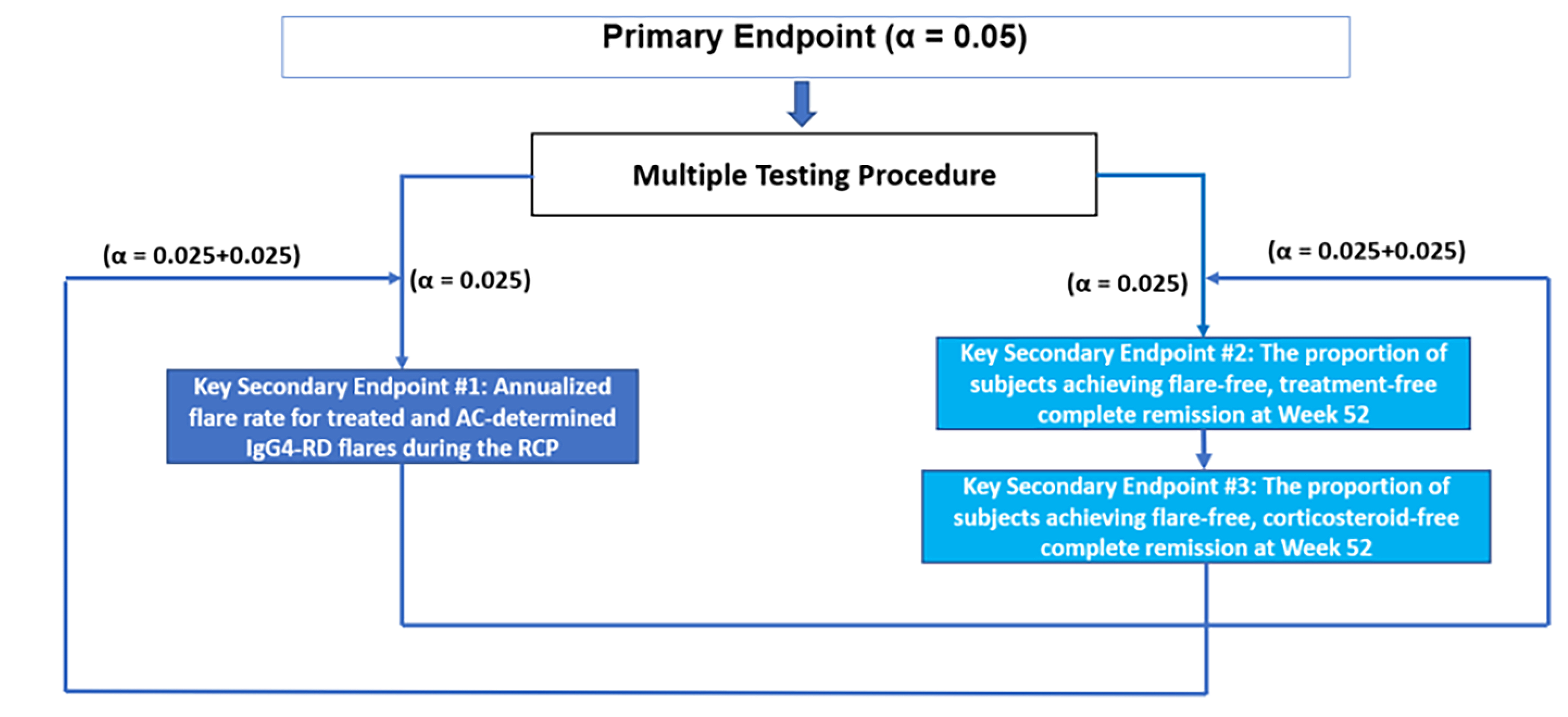
AC = adjudication committee; IgG4-RD = immunoglobulin G4-related disease; RCP = randomized controlled period.
Source: The MITIGATE Clinical Study Report.23
Analysis sets included the full analysis set (all patients who received any dose of the study drug or placebo, analyzed according to their treatment assignment, which was used for all efficacy analyses) and the safety analysis set (patients who received any dose of the study drug or placebo, analyzed according to the treatment they actually received, which was used for all safety analyses).
Patient Disposition
Patient disposition in the MITIGATE study is summarized in the Supplemental Material document, Appendix 4. Of the 227 patients screened, 135 were randomized. The most common reason for unsuccessful screening was not meeting the randomization criteria (75 of 92 unsuccessful screening), followed by physician decision (n = 4), withdrawal by patient (n = 4), protocol deviation (n = 3), AE (n = 1), and other (n = 5). All patients who were randomized received at least 1 dose. In the inebilizumab group, 64 (94.1%) completed the RCP; in the placebo group, 63 (94.0%) did. Of those who did not complete the RCP, the reasons included AEs (2 [2.9%] in the inebilizumab group and 0 in the placebo group), loss to follow-up (0 in the inebilizumab group and 1 [1.5%] in the placebo group), withdrawal by patient (1 [1.5%] in each group), or other (1 [1.5%] in the inebilizumab group and 2 [3.0%] in the placebo group). Patients who completed the RCP could roll over to the OLP, which was the case for 53 patients (77.9%) in the inebilizumab group and 49 patients (73.1%) in the placebo group.
A total of 44 patients (32.6%) experienced 1 or more critical or major protocol deviation: 20 patients (29.4%) in the inebilizumab group and 24 patients (35.8%) in the placebo group. There were 13 critical protocol deviations, all related to SAE reporting (7 [10.3%] in the inebilizumab group and 6 [9.0%] in the placebo group). The major protocol deviations included entry criteria not being met (4 [5.9%] in the inebilizumab group and 0 in the placebo group), excluded medication received (3 [4.4%] in the inebilizumab group and 2 [3.0%] in the placebo group), issues with informed consent (5 [7.4%] in the inebilizumab group and 12 [17.9%] in the placebo group), investigational product deviations (2 [2.9%] in the inebilizumab group and 3 [4.5%] in the placebo group), not withdrawn but development of withdrawal criteria (2 [2.9%] in the inebilizumab group and 3 [4.5%] in the placebo group), and deviations in study procedures related to the infusion premedication regimen not being administered or the dose of IV steroid premedication being lower than that specified in the protocol (6 [8.8%] in the inebilizumab group and 7 [10.4%] in the placebo group).
Baseline Characteristics
Detailed baseline characteristics for patients in the MITIGATE trial are available in the Supplemental Material document, Appendix 4.
The mean age of patients was 58.2 years; 69% of patients were aged younger than 65 years. Some differences were observed in demographic characteristics across the groups. There were more female patients in the inebilizumab group than in the placebo group (42.6% versus 26.9%), but there were fewer male patients in the inebilizumab group than in the placebo group (57.4% and 73.1%). The treatment groups also differed in the distribution of race: in the inebilizumab group, 55.9% of patients were Asian, compared to 37.3% in the placebo group. In the inebilizumab group, 30.9% were white, compared to 47.8% in the placebo group. Other races were uncommon: 2 patients (2.9%) in the inebilizumab group and none in the placebo group were American Indian or Alaskan Native [from original source]; 0 patients in the inebilizumab group and 1 patient (1.5%) in the placebo group was Black or African American [from original source]; 1 patient in the inebilizumab group and 0 patients in the placebo group was Native Hawaiian or Other Pacific Islander [from original source]; and the remaining patients reported being another race or did not report race.
Just less than one-half of all patients had newly diagnosed IgG4-RD (45.6% in the inebilizumab group and 46.3% in the placebo group). In patients with recurrent disease (54.4% in the inebilizumab group and 53.7% in the placebo group), the median disease duration was 3.6 years (range, 0.2 years to 20.5 years) in the inebilizumab group and 3.6 years (range, 0.1 years to 12.5 years) in the placebo group.
The proportion of patients who had 2 affected sites was higher in the inebilizumab group (22.1%) than the placebo group (10.4%). The proportions of patients who had 3, 4, 5, or 6 affected sites were similar between the treatment groups (refer to Table 3). The proportions of patients who had 7, 8, 9, 10, 11, or 13 affected organs or sites were small, with fewer than 4 patients in each treatment group, but collectively there were more patients in the placebo group than in the inebilizumab group who had 7 or more affected organs or sites (refer to Table 3).
Approximately one-quarter of patients had received prior nonglucocorticoid therapy for IgG4-RD flares (25.0% in the inebilizumab group and 29.9% in the placebo group). A minority of patients had experience with prior immunotherapy other than glucocorticoids for IgG4-RD flare treatment (8.8% in the inebilizumab group and 16.4% in the placebo group). In the inebilizumab group, 11.8% of patients had experience with rituximab for IgG4-RD, and in the placebo group, 16.4% did. Most patients had undergone biopsy for IgG4-RD (86.8% in the inebilizumab group and 85.1% in the placebo group). The proportion of patients who had undergone previous surgery or medical procedures, other than biopsy, for IgG4-RD was higher in the placebo group than in the inebilizumab group (28.4% versus 20.6%). Maintenance therapies (azathioprine, methotrexate, mycophenolate mofetil, leflunomide, abatacept, or rituximab) had been used at low but similar proportions in the inebilizumab and placebo groups (16.2% versus 17.9%).
Table 3: Summary of Baseline Characteristics in the MITIGATE Study
Characteristic | Inebilizumab (N = 68) | Placebo (N = 67) |
|---|---|---|
Mean age (SD), years | 58.2 (11.5) | 58.2 (12.2) |
Median age (range), years | 59.5 (24 to 80) | 58.0 (32 to 80) |
< 65 years, n (%) | 47 (69.1) | 46 (68.7) |
Mean BMI (SD), kg/m2 | 24.86 (5.72) | 25.94 (5.12) |
Sex, n (%) | ||
Female | 29 (42.6) | 18 (26.9) |
Male | 39 (57.4) | 49 (73.1) |
Race, n (%) | ||
American Indian or Alaskan Native | 2 (2.9) | 0 |
Asian | 38 (55.9) | 25 (37.3) |
Black or African American | 0 | 1 (1.5) |
Native Hawaiian or Other Pacific Islander | 1 (1.5) | 0 |
White | 21 (30.9) | 32 (47.8) |
Other | 2 (2.9) | 2 (3.0) |
Not reported | 4 (5.9) | 6 (9.0) |
Region, n (%) | ||
Asia | 34 (50.0) | 18 (26.9) |
European Union | 20 (29.4) | 26 (38.8) |
US | 7 (10.3) | 14 (20.9) |
Prior nonglucocorticoid therapy for IgG4-RD, n (%) | ||
Yes | 17 (25.0) | 20 (29.9) |
No | 51 (75.0) | 47 (70.1) |
IgG4 manifestation, n (%) | ||
Newly diagnosed | 31 (45.6) | 31 (46.3) |
Recurrent | 37 (54.4) | 36 (53.7) |
Disease duration, years | ||
Mean (SD) | 2.6 (3.7) | 2.5 (3.1) |
Median (range) | 0.8 (0.1 to 20.5) | 0.9 (0.1 to 12.5) |
Median (range) in patients with recurrent disease | 3.6 (0.2 to 20.5) | 3.6 (0.1 to 12.5) |
Median (range) in patients with newly diagnosed disease | 0.2 (0.1 to 3.8) | 0.1 (0.1 to 7.3) |
Number of organs ever affected by IgG4-RD, n (%) | ||
2 | 15 (22.1) | 7 (10.4) |
3 | 12 (17.6) | 15 (22.4) |
4 | 12 (17.6) | 19 (28.4) |
5 | 10 (14.7) | 9 (13.4) |
6 | 10 (14.7) | 8 (11.9) |
7 | 4 (5.9) | 1 (1.5) |
8 | 4 (5.9) | 2 (3.0) |
9 | 0 | 1 (1.5) |
10 | 0 | 2 (3.0) |
11 | 1 (1.5) | 2 (3.0) |
13 | 0 | 1 (1.5) |
Previous surgery or medical procedure, other than biopsy, associated with IgG4-RD, n (%) | ||
Yes | 14 (20.6) | 19 (28.4) |
Previous treatments and procedures for IgG4-RD, n (%) | ||
Prior nonglucocorticoid therapy for IgG4-RD flare treatment, n (%), n (%) | 17 (25.0) | 20 (29.9) |
Prior immunotherapy other than glucocorticoid for IgG4-RD flare treatment, n (%) | 6 (8.8) | 11 (16.4) |
Prior experience with rituximab for IgG4-RD, n (%) | 8 (11.8) | 11 (16.4) |
Prior experience with azathioprine for IgG4-RD, n (%) | 1 (1.5) | 3 (4.4) |
Prior experience with methotrexate for IgG4-RD, n (%) | 3 (4.4) | 0 |
Prior experience with mycophenolate mofetil for IgG4-RD, n (%) | 2 (2.9) | 2 (3.0) |
Prior biopsy for IgG4-RD, n (%) | 59 (86.8) | 57 (85.1) |
BMI = body mass index; IgG4-RD = immunoglobulin G4-related disease; SD = standard deviation.
Note: Racial categories used in the table are as reported in the source and may not align with Canada's Drug Agency inclusive language guidelines.
Source: MITIGATE Clinical Study Report.23
Treatment Exposure and Concomitant Medications
Details of patients’ treatment exposure in the MITIGATE study are presented in the Supplemental Material document, Appendix 4.
All patients received concomitant, open-label glucocorticoids during an 8-week taper regimen, which concluded glucocorticoid treatment for recent flares. Other immunomodulatory and immunosuppressive medications were prohibited during the study, other than glucocorticoids for the management of IgG4-RD flares; aside from the initial taper, glucocorticoid doses exceeding 40 mg/day prednisone or equivalent or for a duration exceeding 8 weeks, including taper to discontinuation, required discontinuation of the investigational product. Protocol violations related to the receipt of prohibited medications occurred in 2 patients in the inebilizumab group (2.9%) and 6 patients in the placebo group (9.0%); receipt of any prohibited medication required discontinuation of the study drug.
In the RCP, 68 patients (100.0%) in the inebilizumab group and 66 patients (98.5%) in the placebo group received at least 1 concomitant medication. The most common concomitant medications (at a frequency ≥ 20%) in the inebilizumab group were paracetamol (91.2%), methylprednisolone (47.1%), methylprednisolone sodium succinate (38.2%), diphenhydramine (22.1%), and trimethoprim-sulfamethoxazole (22.1%). In the placebo group, the most common concomitant medications were paracetamol (92.5%), methylprednisolone (58.2%), omeprazole (29.9%), diphenhydramine (28.4%), methylprednisolone sodium succinate (25.4%), and pantoprazole (20.9%).
Regarding the concomitant use of diabetes-related medications, 10 patients (14.7%) in the inebilizumab group and 16 patients (23.9%) in the placebo group received metformin or metformin hydrochloride. Six patients (8.8%) in the inebilizumab group and 3 patients (4.5%) in the placebo group received SGLT2 inhibitors. One patient (1.5%) in the inebilizumab group and 2 patients (3.0%) in the placebo group received glucagon-like peptide analogues (dulaglutide). Two patients in the inebilizumab group received other blood glucose-lowering drugs, excluding insulin (1 patient [1.5%] received mitiglinide calcium dihydrate and 1 patient [1.5%] received repaglinide); 0 patients in the placebo group did. Regarding insulins and analogues, 10 patients (14.7%) in the inebilizumab group and 8 patients (11.9%) in the placebo group received fast-acting injectable formulations; 1 patient (1.5%) and 2 patients (3.0%), respectively, received intermediate-acting formulations; and 8 patients (11.8%) and 7 patients (10.4%), respectively, received long-acting formulations.
Critical Appraisal
Internal Validity
The MITIGATE study was randomized, double-blind, and placebo-controlled. The methods of randomization, allocation concealment, and blinding were all considered appropriate. The stratification factor (newly diagnosed versus recurrent IgG4-RD) was prespecified and clinically relevant to enhance balance across this prognostic variable. During screening, patients were normalized to the same dose of glucocorticoids from which to begin the mandatory taper.
The sample size of 135, although objectively small, is considered relatively large for a trial of a rare disease and is adequately powered to assess the difference in the primary end point. The primary, key secondary, and secondary end points were considered relevant and appropriate to assess treatment response in this population, based on consultation with the clinical experts. The primary and key secondary end points reflect the treatment goals and patient-important needs related to the incidence of flares and sparing exposure to glucocorticoids.
The patient baseline characteristics were generally well balanced between the treatment groups. However, there were some imbalances in baseline characteristics, including sex and race distribution, number of organs affected, and prior treatment with IgG4-RD. This may be due to sampling variability, given the small sample size of the trial, within which there is an increased risk that prognostic balance between groups would not be achieved. However, the clinical experts consulted by the review team suggested that these particular imbalances were not likely to raise the risk of bias. Despite limited data in this area, these patient and disease characteristics are not considered prognostic factors or treatment-effect modifiers in patients with IgG4-RD. For example, there were more patients who had 9 or more organs ever affected by IgG4-RD assigned to the placebo group than to the inebilizumab group. The experts noted, however, that the specific count becomes somewhat arbitrary when a patient has several organs or systems affected, depending on past investigations and subjective interpretations of what counts as a discrete organ system. In addition, a few more patients in the placebo group (11 [16.4%]) had prior experience with immunosuppressants other than glucocorticoids for the treatment of a past disease flare and/or maintenance therapy for IgG4-RD compared to the inebilizumab group (6 [8.8%]). This may indicate that patients in the placebo group had more severely active disease in the past; however, the absolute counts are small and the imbalance may very well be due to chance. The clinical experts did not consider this to be a concern when interpreting the results for risk of bias.
The overall quality assurance in the conduct of this trial is suboptimal because of the significant number of critical or major protocol violations, which could have had an impact on interpretation of the final results. Specifically, of the 44 patients (32.6%) who experienced 1 or more critical or major protocol deviation during the RCP, 20 patients (29.4%) were in the inebilizumab group and 24 patients (35.8%) were in the placebo group.
During the study period, all patients received open-label glucocorticoids during an 8-week tapering of prednisone or equivalent, as well as concomitant medications that were considered by their physician to be necessary for their health and well-being, including treatments for IgG4-RD but excluding other immunomodulatory and immunosuppressive medications. There is a possibility that these could have complicated the causal inference of between-group differences in the treatment effect attributable to inebilizumab alone. The primary and key secondary end points were controlled for multiplicity with a hierarchical testing procedure, and the statistical approaches for handling missing data were considered appropriate. For the primary end point, patients were censored at the time of discontinuation if they did not complete the RCP, and in a sensitivity analysis, they were considered to have been having a flare at that time point, which was supportive of the primary analysis. For the end points related to flare-free remission, nonresponder imputation was used, which was considered appropriate. For the annualized flare rate end point, missing data were not imputed, but the calculation of the end point includes the patient’s follow-up time as an offset variable to adjust for patients having different exposure times. For HRQoL and patient-reported outcomes, missing data were not imputed, but the absolute count of patients with missing data at 52 weeks was small. Discontinuation due to AEs occurred in only a few patients in each treatment group, although there were numerically more in the inebilizumab group than in the placebo group.
There is a lack of published literature on minimal important differences (MIDs) for outcomes that matter in the treatment of patients with IgG4-RD, and HRQoL and patient-reported outcomes are not specific to, nor validated in, IgG4-RD. For the end points related to flares and FACIT-Fatigue score, the results were assessed for the presence of a nonnull effect. For the SF-36 scores, MIDs exist in other disease areas that were used in the certainty assessment, but with the caveat that it is unknown whether an MID would differ in patients with IgG4-RD. Nonetheless, even if the null threshold was used for the assessment of SF-36 scores, the results and the 95% CIs included the possibility of both a benefit and a harm. For the objective outcomes related to flares and glucocorticoid exposure, clinical expert opinion supported the clinically meaningful magnitude of effect observed in the study, compared to placebo. For HRQoL and patient-reported outcomes, the clinical experts agreed that no clinically meaningful difference was observed between treatment groups.
External Validity
The MITIGATE study was generally appropriately designed to reflect the target patient population in Canada. According to the clinical experts consulted by CDA-AMC, the characteristics of the patients (e.g., demographics, disease characteristics) were broadly generalizable to clinical practice in Canada, with some minor exceptions that will be discussed here. In the study, patients who were Southeast Asian may have been underrepresented, while patients who were East Asian may have been overrepresented, compared to the demographics in Canada. Additionally, because most patients with IgG4-RD being treated in clinical practice are male, the study had a higher than expected proportion of patients who were female, which was also imbalanced between the treatment groups. Although the impact of race and sex on prognosis and treatment effect in patients with IgG4-RD has not been studied, the clinical experts did not expect that they would be important treatment-effect modifiers.
The end points chosen for the study were reflective of the broad real-world treatment goals for patients with IgG4-RD (i.e., to reduce IgG4-RD flares and exposure to glucocorticoids). The clinical experts considered the duration of the study to be appropriate to assess these end points, although long-term data are needed to elucidate the durability of response, optimal duration of treatment with inebilizumab, and downstream effects. This includes whether the reduction in flares results in a reduction in end-stage organ damage and whether a reduction in glucocorticoid exposure translates to a reduction in related steroid-related complications.
A critical issue regarding the external validity of the MITIGATE study is the lack of an active comparator. Placebo does not adequately reflect the real-world standard of care in treatment for patients with IgG4-RD; however, other therapies for IgG4-RD are used off label. The clinical experts noted that off-label rituximab is the most appropriate comparator for inebilizumab, as they both work by depleting B cells and are both the ideal first-line therapy for patients with IgG4-RD who experience a flare and have moderate to severe, active, relapsing disease. The experts noted that no RCT has been conducted to evaluate rituximab in the treatment of patients with IgG4-RD. However, based on clinical experience and the mechanism of action of these B-cell depleting therapies, the experts suggested that inebilizumab and rituximab would occupy the same place in therapy if both were accessible without financial barriers for patients with IgG4-RD. It is worth noting, however, that no consistent practice has been established among specialists who treat patients with IgG4-RD. The presentation of IgG4-RD is extremely heterogeneous, as it can affect almost any organ system and any number of systems in any combination, and this may change drastically over a patient’s lifetime. As a result, almost any specialist may see patients with IgG4-RD, and the potential combinations of symptoms and health impacts on a patient are broad and varied. The clinical experts noted that specialists may naturally explore treatment options that are familiar to them because of their practice.
Results
The key efficacy and harms results and findings from the GRADE approach are presented in this section. Detailed efficacy and harms results can be found in the Supplemental Material document, Appendix 4.
Efficacy
Key efficacy results include the following:
The median time to first treated adjudication committee-determined disease flare (i.e., the primary end point) was not reached in the inebilizumab group (95% CI, 371.0 days to not reached) and was 246.0 days (95% CI, 191.0 days to not reached) in the placebo group.
The HR was 0.13 (95% CI, 0.06 to 0.28; P < 0.0001) in favour of inebilizumab.
A total of 4 sensitivity analyses were conducted for this end point, and all reported an HR of 0.13 and a nominal P of less than 0.0001 (not adjusted for multiplicity).
The annualized flare rate for treated adjudication committee-determined disease flares was 0.10 (95% CI, 0.05 to 0.21) in the inebilizumab group and 0.71 (95% CI, 0.53 to 0.94) in the placebo group.
The rate ratio was 0.14 (95% CI, 0.06 to 0.31; P < 0.0001) in favour of inebilizumab.
The proportion of patients achieving flare-free, glucocorticoid-free complete remission at week 52 was 58.8% (40 of 68 patients) in the inebilizumab group and 22.4% (15 of 67 patients) in the placebo group.
The odds ratio was 4.96 (95% CI, 2.34 to 10.52; P < 0.0001) and the difference in proportions was 36.51% (95% CI, 21.11% to 51.91%; P < 0.0001) in favour of inebilizumab.
A total of 7 patients (10.3%) in the inebilizumab group and 42 patients (62.7%) in the placebo group used glucocorticoids for IgG4-RD disease control during the study, not including the mandatory initial taper.
The least squares (LS) mean total glucocorticoid use per patient for IgG4-RD disease control was lower in the inebilizumab group (132.0 mg prednisone or equivalent; standard error = 151.7) than in the placebo group (1,396.2 mg prednisone or equivalent; standard error = 152.7 mg).
The LS mean difference in total glucocorticoid use was −1,264.2 mg (95% CI, −1,689.2 mg to −839.2 mg) prednisone or equivalent.
HRQoL results were similar between the treatment groups.
The LS mean difference for the change from baseline to week 52 in SF-36 physical component score was 2.2 (95% CI, −0.3 to 4.7), and for the SF-36 mental component score was 0.4 (95% CI, −2.3 to 3.2).
The LS mean difference for the change from baseline to week 52 in FACIT-Fatigue score was −0.2 (95% CI, −2.3 to 1.8).
Additional efficacy results include the following:
The proportion of patients achieving flare-free, treatment-free complete remission at week 52 was 57.4% (39 of 68 patients) in the inebilizumab group and 22.4% (15 of 67 patients) in the placebo group.
The odds ratio was 4.68 (95% CI, 2.21 to 9.91; P < 0.0001) and the difference in proportions was 35.10% (95% CI, 19.64% to 50.56%; P < 0.0001) in favour of inebilizumab.
The LS mean difference in the change from baseline to week 52 in the Physician’s Global Assessment of Disease Activity was −3.1 (95% CI, −9.1 to 2.9).
The LS mean difference in the change from baseline to week 52 in the Patient Global Assessment of Disease Activity was 3.1 (95% CI, −3.4 to 9.7).
There were 4 inpatient hospitalizations in the inebilizumab group and 8 in the placebo group.
There were 7 emergency department visits in the inebilizumab group and 3 in the placebo group.
Harms
Key results include the following.
Most patients — 66 (97.1%) in the inebilizumab group and 66 (98.5%) in the placebo group — had at least 1 treatment-emergent adverse event (TEAE). The most common TEAEs (in 5% or more patients in the inebilizumab group) were:
COVID-19 (23.5% in the inebilizumab group and 19.4% in the placebo group)
lymphopenia (16.2% in the inebilizumab group and 9.0% in the placebo group)
urinary tract infection (11.8% in the inebilizumab group and 6.0% in the placebo group)
back pain (8.8% in the inebilizumab group and 7.5% in the placebo group)
headache (8.8% in the inebilizumab group and 10.4% in the placebo group)
nasopharyngitis (8.8% in the inebilizumab group and 6.0% in the placebo group)
pyrexia (8.8% in the inebilizumab group and 4.5% in the placebo group)
fatigue (7.4% in the inebilizumab group and 7.5% in the placebo group).
SAEs occurred in 12 patients (17.6%) in the inebilizumab group and 6 patients (9.0%) in the placebo group. No SAE occurred in more than 1 patient in either group during the RCP.
The category of System Organ Class with the most reported SAEs was infections and infestation (5.9% in the inebilizumab group and 0% in the placebo group), which included 1 incident each of appendicitis, COVID-19, COVID-19 pneumonia, and diverticulitis in the inebilizumab group.
Other SAEs that occurred in the inebilizumab group (n = 1 each) were:
femoral neck fracture
gout
hyponatremia
anal cancer
fibroadenomatoid mastopathy
pulmonary atypical adenomatous hyperplasia
pulmonary embolism
deep vein thrombosis.
Other SAEs that occurred in the placebo group (n = 1 each) were:
acute kidney injury
coronary artery stenosis
hepatic function abnormal
diabetes mellitus
epistaxis
sinus disorder.
Discontinuation of the study drug because of AEs occurred in 6 patients (8.8%) in the inebilizumab group and 3 patients (4.5%) in the placebo group. The AEs that led to discontinuation of the study drug (whether inebilizumab or placebo) included:
inebilizumab group (n = 1 each)
anaphylactic reaction
herpes zoster
anal cancer
malignant melanoma
pulmonary embolism
deep vein thrombosis
COVID-19 pneumonia.
placebo group (n = 1 each)
abdominal pain
swelling
varicella zoster virus infection.
Dose interruption due to AEs occurred in 4 patients (5.9%) in the inebilizumab group and 1 patient (1.5%) in the placebo group.
No deaths occurred during the study.
During the RCP, 26 patients (38.2%) in the inebilizumab group and 19 patients (28.4%) in the placebo group experienced at least 1 sponsor-defined adverse event of special interest (AESI):
anaphylaxis (1 [1.5%] in the inebilizumab group and 0 in the placebo group)
cytopenia (17 [25.0%] in the inebilizumab group and 11 [16.4%] in the placebo group)
infusion-related reaction (5 [7.4%] in the inebilizumab group and 10 [14.9%] in the placebo group)
opportunistic infections (4 [5.9%] in the inebilizumab group and 1 [1.5%] in the placebo group)
serious infections (4 [5.9%] in the inebilizumab group and 0 in the placebo group).
The clinical experts consulted by CDA-AMC indicated that hypogammaglobulinemia and reactivation of hepatis B are additional relevant AESIs. No events of either of these AEs were recorded during the RCP.
Summary of Findings and Certainty of the Evidence
Literature-based MID estimates specific to IgG4-RD were not available for any of the outcomes, and the clinical experts were unable to suggest a specific threshold for a clinically important effect. In the absence of a known threshold, null was used as the threshold for the following outcomes: time to first treated disease flare; annualized flare rate; the proportion of patients achieving flare-free, glucocorticoid-free complete remission at week 52; and the proportion of patients with any SAE. For the SF-36, disease-specific MIDs have been estimated to be 2 points to 3 points across various disease areas for the physical component score27 and 3 points for the mental component score,27 so these were used as the threshold in the absence of an MID specific to IgG4-RD. For all outcomes, clinical expert input informed whether the point estimates and relevant bounds of the CIs represented clinically important effects.
Table 4: Summary of Findings for Inebilizumab vs. Placebo in Patients With IgG4-RD
Outcome and follow-up | Patients (studies), N | Relative effect (95% CI) | Absolute effects (95% CI) | Certainty | What happens | ||
|---|---|---|---|---|---|---|---|
Placebo | Inebilizumab | Difference | |||||
Disease flares | |||||||
Median days to first treated disease flarea Follow-up: Week 52 | 135 (1 RCT) | Hazard ratio: 0.13 (0.06 to 0.28) | 246.0 days (191.0 to not reached) | Not reached (371.0 to not reached) | NR | Highb | In patients with IgG4-RD, treatment with inebilizumab results in a clinically important reduction in the risk of first treated disease flare, compared to placebo. |
Annualized flare ratea Follow-up: Week 52 | 135 (1 RCT) | Rate ratio: 0.14 (0.06 to 0.31) | 71 per 100 patients per year (53 to 94) | 10 per 100 patients per year (5 to 21) | 61 fewer flares per 100 patients per year (82 to 39 fewer) | Highb | In patients with IgG4-RD, treatment with inebilizumab results in a clinically important reduction in the annualized flare rate, compared to placebo. |
Steroid sparing | |||||||
Proportion of patients achieving flare-free, glucocorticoid-free complete remissiona Follow-up: Week 52 | 135 (1 RCT) | Odds ratio: 4.96 (2.34 to 10.52) | 22.4% (██ ██)c | 58.8% (██ ██)c | 36.5% (21.1% to 51.9%) | Highd | In patients with IgG4-RD, treatment with inebilizumab results in a clinically important increase in the proportion of patients achieving flare-free, glucocorticoid-free complete remission at week 52, compared to placebo. |
LS mean total glucocorticoid use per patient, mg prednisone or equivalente Follow-up: Week 52 | 135 (1 RCT) | NA | 1,396.2 (NR) | 132.0 (NR) | −1,264.2 (−1,689.2 to −839.2) | Highd | In patients with IgG4-RD, treatment with inebilizumab results in a clinically important reduction in mean total glucocorticoid use, compared to placebo. |
HRQoL and symptom burden | |||||||
LS mean change from baseline in SF-36 physical component score (0 [worst] to 100 [best])e Follow-up: Week 52 | 121 (1 RCT) | NA | −2.8 (█ █ ██)c | −0.6 (█ █ ██)c | 2.2 (−0.3 to 4.7) | Lowf (Serious imprecision and risk of bias) | In patients with IgG4-RD, treatment with inebilizumab may result in little to no difference in SF-36 physical component score, compared to placebo. |
LS mean from baseline in SF-36 mental component score (0 [worst] to 100 [best])e Follow-up: Week 52 | 121 (1 RCT) | NA | −0.4 (██ ██)c | 0.1 (██ ██)c | 0.4 (−2.3 to 3.2) | Lowg (Serious imprecision and risk of bias) | In patients with IgG4-RD, treatment with inebilizumab may result in little to no difference in SF-36 mental component score, compared to placebo. |
LS mean change from baseline in FACIT-Fatigue (0 [worst] to 52 [best])e Follow-up: Week 52 | 119 (1 RCT) | NA | −0.5 (NR) | −0.8 (NR) | −0.2 (−2.3 to 1.8) | Lowh (Serious imprecision and risk of bias) | In patients with IgG4-RD, treatment with inebilizumab may result in little to no difference in FACIT-Fatigue score, compared to placebo. |
Harms | |||||||
Proportion of patients with any SAEe Follow-up: Week 52 | 135 (1 RCT) | NA | 9.0% (█ █ ██)c | 17.6% (█ █ ██)c | ███c (█ █ ██)c | Lowi (Serious imprecision and risk of bias) | In patients with IgG4-RD, treatment with inebilizumab may result in a greater proportion of patients experiencing SAEs, compared to placebo, but the magnitude of this effect is highly uncertain. |
ANCOVA – analysis of covariance; CDA-AMC = Canada’s Drug Agency; CI = confidence interval; FACIT-Fatigue = Functional Assessment of Chronic Illness Therapy–Fatigue; GRADE = ; HRQoL = health-related quality of life; IgG4-RD = immunoglobulin G4-related disease; LS = least squares; MID = minimal important difference; NA = not applicable; NR = not reported; RCT = randomized controlled trial; SAE = serious adverse event; SF-36 = Short Form (36) Health Survey; vs. = versus.
Note: Study limitations (which refer to internal validity or risk of bias), inconsistency across studies, indirectness, imprecision of effects, and publication bias were considered when assessing the certainty of the evidence. All serious concerns in these domains that led to the rating down of the level of certainty are documented in the table footnotes.
aThis outcome was controlled for multiplicity.
bThe certainty level was not rated down. There was no established MID related to reduction of disease flares in patients with IgG4-RD; the target of the certainty of evidence assessment was the presence or absence of an effect relative to the null. Based on clinical expert input, the point estimates and totality of the 95% CIs were consistent with potentially clinically meaningful benefit.
cThese data were not reported in the Clinical Study Report but were provided to CDA-AMC by the sponsor upon request to facilitate the GRADE assessment.
dThe certainty level was not rated down. There was no established MID related to steroid sparing; the target of the certainty of evidence assessment was the presence or absence of an effect relative to the null. The point estimates and 95% CIs upper and lower bounds were all considered by the clinical experts to represent a potentially clinically meaningful benefit.
eNot including the mandatory initial taper. This analysis is based on ANCOVA. A total of 7 patients (10.3%) in the inebilizumab group and 42 patients (62.7%) in the placebo group used glucocorticoids for IgG4-RD disease control during the study, not including the mandatory initial taper.
fThe certainty level was rated down 1 level for serious imprecision and 1 level for potential sources of bias that could not be excluded. The SF-36 physical component score is a generic HRQoL metric that was included because of the absence of metrics that are specific to IgG4-RD. It has not been validated in patients with IgG4-RD, and there is no established MID specific to this condition. The MIDs estimated for other disease areas range from 2 points to 3 points.27 The point estimate was below this MID, close to 0, and the 95% CI spans from below null (0) to above the 3-point MID. The point estimate falls above 2 points but below 3 points and the 95% CI spans from below null (0) to above the 3-point MID. Given each of these elements and in consultation with clinical experts, it was determined that there may be little to no difference between treatment arms for this outcome.
gThe certainty level was rated down 1 level for serious imprecision and 1 level for potential sources of bias that could not be excluded. The SF-36 mental component score is a generic HRQoL metric that was included because of the absence of metrics that are specific to IgG4-RD. It has not been validated in patients with IgG4-RD, and there is no established MID specific to this condition. The MID estimated for other disease areas is 3 points.27 The point estimate was below this MID, close to 0, and the 95% CI spans from below null (0) to above the 3-point MID. The point estimate falls above 2 points but below 3 points and the 95% CI spans from below null (0) to above the 3-point MID. Given each of these elements and in consultation with clinical experts, it was determined that there may be little to no difference between treatment arms for this outcome.
hThe certainty level was rated down 1 level for serious imprecision and 1 level for potential sources of bias that could not be excluded. The FACIT-Fatigue score has not been validated in patients with IgG4-RD. There is no established MID specific to this condition or estimated for other disease areas; the target of the certainty of evidence assessment was the presence or absence of an effect relative to the null. The 95% CI included values above and below null, and the point estimate was close to null.
iThe certainty level was rated down 2 levels for very serious imprecision. There was no established MID; the target of the certainty of evidence assessment was the presence or absence of an effect relative to the null. No 95% CIs were reported. The was a small number of events captured, and potential sources of bias that could not be excluded.
Source: The MITIGATE Clinical Study Report.23
Long-Term Extension Studies
Description of Studies
The MITIGATE study included an optional 3-year OLP, which was ongoing at the time of submission. During the OLP, patients who were assigned to placebo during the preceding RCP received inebilizumab on OLP day 1 and day 15, while patients who were assigned to inebilizumab in the RCP received inebilizumab on OLP day 1 and matching placebo on day 15 to maintain the blinding of patients’ RCP treatment assignments. Both groups will then receive inebilizumab every 6 months for the duration of the OLP. Eligibility criteria were the same as for the pivotal study.
Patient Disposition
Among the 135 patients (100.0%) randomized and treated in the RCP, 102 patients (75.6%) entered the OLP to receive open-label inebilizumab treatment: 53 patients (77.9%) from the inebilizumab group and 49 patients (73.1%) from the placebo group. The reasons for discontinuation from the OLP were AEs (8 patients [7.8%]), discontinuation of dosing (2 patients [2.0%]), and noncompliance with study procedures (1 patient [1.0%]). No patients had completed the OLP at the cut-off date for the OLP (February 9, 2024).
Patient disposition for the OLP is summarized in the Supplemental Material document, Appendix 5.
Exposure to Study Treatments
The OLP remains ongoing at the time of this review, and OLP exposure to inebilizumab at the interim data cut-off is presented as a total of 14 patients who were exposed to inebilizumab for more than 2 years.
During the OLP, the mean inebilizumab dose administered was 974.7 mg (standard deviation [SD] = 283.6 mg) in the placebo to inebilizumab group and 671.7 mg (SD = 291.1 mg) in the inebilizumab to inebilizumab group. The median extent of exposure during the OLP was 279.0 days in the placebo to inebilizumab group and 273.0 days in the inebilizumab to inebilizumab group.
In the OLP, 44 patients (100.0%) in the placebo to inebilizumab group and 46 patients (100.0%) in the inebilizumab to inebilizumab group received at least 1 concomitant medication. The most common concomitant medications (frequency of at least 20%) in the placebo to inebilizumab group were paracetamol (90.9%), methylprednisolone (56.8%), diphenhydramine (25.0%), and methylprednisolone sodium succinate (27.3%). The most common concomitant medications in the inebilizumab to inebilizumab group were paracetamol (93.5%), methylprednisolone (47.8%), methylprednisolone sodium succinate (39.1%), diphenhydramine (23.9%), and diphenhydramine hydrochloride (21.7%).
Critical Appraisal
Internal Validity
After the double-blind phase, the study had no comparator group; therefore, the single-arm design does not support causal interpretation of the findings. The study was conducted in an open-label manner without blinding or concealed allocation, which may introduce performance and assessment bias. This may influence the perception of improvement by patients and clinicians, particularly for outcomes that are subjective in measurement and interpretation (e.g., subjective AEs). The measurement of objective end points would not be affected. In addition, only patients who completed the double-blind phase entered the OLP, introducing potential selection bias.
External Validity
The study included a small number of patients, and only those who completed the double-blind phase were eligible to enter the extension, which may limit generalizability to the broader population.
Results
Efficacy
Results for outcomes relevant to this review are detailed in the Supplemental Material document, Appendix 5.
Key results include the following:
Exploratory end point of annualized flare rate during the OLP
As of the interim cut-off date for the OLP (February 9, 2024), no new treated and adjudication committee-determined flares had occurred in the inebilizumab to inebilizumab group and 3 had occurred in the placebo to inebilizumab group. The annualized flare rate was 0.00 in the inebilizumab to inebilizumab group and 0.07 (95% CI, 0.02 to 0.24) in the placebo to inebilizumab group.
Exploratory end point of flare-free, treatment-free complete remission during the OLP
As of the interim cut-off date for the OLP, 23 patients in the inebilizumab to inebilizumab group had completed the OLP week 52 visit or discontinued before that visit. Of these, 13 patients (56.5%) had achieved flare-free, treatment-free complete remission at OLP week 52.
Exploratory end point of flare-free, glucocorticoid-free complete remission during the OLP
A total of 13 patients (56.5%) in the inebilizumab to inebilizumab group had achieved flare-free, glucocorticoid-free complete remission at OLP week 52. In the placebo to inebilizumab group, 21 patients had completed the OLP week 52 visit or discontinued before that visit. Of these, 7 patients (33%) had achieved flare-free, glucocorticoid-free complete remission at OLP week 52.
Exploratory end point of maintenance of flare-free complete remission during the OLP
At the interim data cut-off for the OLP, all 11 patients (100.0%) in the inebilizumab to inebilizumab group and 3 patients (60.0%) in the placebo to inebilizumab group maintained flare-free, treatment-free complete remission by week 52 of the OLP. The same results were obtained for flare-free, glucocorticoid-free complete remission, with 11 of 11 evaluable patients (100.0%) in the inebilizumab to inebilizumab group and 3 of 5 evaluable patients (60.0%) in the placebo to inebilizumab group achieving complete remission at both RCP week 52 and OLP week 52.
Exploratory end point of total glucocorticoid use for disease control during the OLP
During the OLP, the mean total glucocorticoid use for IgG4-RD disease control per patient in the inebilizumab to inebilizumab group was 5.3 mg (SD = 36.1 mg) and in the placebo to inebilizumab group was 183.6 mg (SD = 374.9 mg) prednisone or equivalent. One patient (2.2%) in the inebilizumab to inebilizumab group and 18 patients (40.9%) in the placebo to inebilizumab group used glucocorticoids for disease control during the OLP. Among these patients, the mean total dose of glucocorticoid use per patient was 245.0 mg (SD = not applicable) in the inebilizumab to inebilizumab group and 448.7 mg (SD = 479.2 mg) in the placebo to inebilizumab group.
Harms
Detailed results for harms are presented in the Supplemental Material document, Appendix 5. Key results include the following.
During the OLP, 41 patients (93.2%) in the placebo to inebilizumab group and 35 patients (76.1%) in the inebilizumab to inebilizumab group had at least 1 TEAE. The most common TEAEs in the placebo to inebilizumab group were COVID-19 (22.7%), upper respiratory tract infection (11.4%), and hypertension (6.8%). The most common TEAEs in the inebilizumab to inebilizumab group were COVID-19 (19.6%), upper respiratory tract infection (10.9%), and nasopharyngitis (8.7%).
During the OLP, SAEs occurred in 15.9% of patients in the placebo to inebilizumab group and 15.2% of patients in the inebilizumab to inebilizumab group. Most reported SAEs were infections and infestations in both the placebo to inebilizumab group (6.8%) and the inebilizumab to inebilizumab group (4.3%).
Discontinuation due to TEAEs occurred in 2.3% of the placebo to inebilizumab group and 10.9% of the inebilizumab to inebilizumab group. There were no deaths reported during the OLP at the time of the data cut-off.
During the OLP, AESIs were reported in 18.2% of patients in the placebo to inebilizumab group and in 13.0% of patients in the inebilizumab to inebilizumab group. The infusion-related reactions rate was 4.5% in the placebo to inebilizumab group and 6.5% in the inebilizumab to inebilizumab group. The cytopenia rate was 6.8% in the placebo to inebilizumab group and 2.2% in the inebilizumab to inebilizumab group. The serious infections rate was 6.8% in the placebo to inebilizumab group and 4.3% in the inebilizumab to inebilizumab group.
No cases of anaphylactic reaction or serious hypersensitivity reaction were reported during the OLP. During the OLP, serious infections were reported for 3 patients (6.8%) in the placebo to inebilizumab group and 2 patients (4.3%) in the inebilizumab to inebilizumab group. During the OLP, opportunistic infections were reported for 1 patient (2.3%) in the placebo to inebilizumab group and no patients in the inebilizumab to inebilizumab group.
Indirect Evidence
The sponsor indicated that it was not feasible to conduct robust indirect comparisons of efficacy or safety between inebilizumab and relevant comparators because of a lack of published, high-quality, relevant RCT evidence evaluating mycophenolate mofetil, azathioprine, rituximab, or other drugs that are currently used off label in the treatment of patients with IgG4-RD.
Although 1 RCT26 exists that included mycophenolate mofetil as a treatment arm, it was a small, single-centre, open-label study conducted in China, and the setting and population are not generalizable to clinical practice in Canada. Additionally, there were multiple sources of heterogeneity between that study and the MITIGATE study. Although an indirect comparison against this study from China is technically possible, it would be difficult to interpret and would violate many assumptions inherent in indirect comparisons. For rituximab, azathioprine, and other off-label comparators, no RCTs were identified, so there are no data available to inform indirect comparisons.
Studies Addressing Gaps in the Systematic Review Evidence
No studies addressing gaps were submitted.
Discussion
Efficacy
IgG4-RD is a rare, chronic, fibroinflammatory genetic disease characterized by relapsing flares that can affect almost any organ system and often affects multiple organs in a single patient.1 No other therapy is indicated for the treatment of patients with IgG4-RD, and the current standard of care in Canada relies entirely on off-label therapies, for which there is no robust supporting evidence. The main treatment goals are to end current flares and prevent future flares while minimizing the burden of treatment-related side effects, which have the aim of preventing downstream flare-related complications, such as irreversible fibrotic organ damage. Given that the standard of care currently relies heavily on glucocorticoid use, a reduction in exposure to glucocorticoids is highly important to patients and their treating clinicians because of the high side-effect burden and the health risks associated with long-term and repeated use of these drugs. Patient and clinician input highlighted significant unmet needs in the treatment of patients with IgG4-RD in Canada, particularly the need for therapies that are targeted to the disease pathology, have meaningful impacts on disease control (especially glucocorticoid-free maintenance of remission), and are tolerable.
The evidence appraisal was based primarily on results from 1 phase III, double-blind, placebo-controlled study (the MITIGATE study [N = 135]); the interim results of its associated LTE are also reported. A predefined set of flare criteria and an independent adjudication committee ensured the consistent evaluation of flares.
Evidence from the MITIGATE study showed that treatment with inebilizumab reduced the risk of first treated disease flare and the annualized rate of treated disease flares. Inebilizumab increased the proportion of patients who achieved flare-free, glucocorticoid-free complete remission at 12 months, compared to placebo, and decreased the average total exposure to glucocorticoids. There was no established MID for these end points in IgG4-RD; the target of the certainty of evidence assessment was the presence or absence of an effect relative to the null, with clinical expert input informing whether the point estimates and relevant bounds of the CIs represented clinically important effects. These end points reflect important treatment goals in the management of patients with IgG4-RD, per the input received, and the clinical experts considered the observed differences to be clinically meaningful.
Improvement in HRQoL is typically a treatment goal for patients with any chronic disease, including IgG4-RD. Based on SF-36 and the FACIT-Fatigue scores, inebilizumab may result in little to no difference in HRQoL compared to placebo after 52 weeks of treatment. Interpretation of these end points is a challenge because of the lack of HRQoL metrics designed for, or validated in, a population with IgG4-RD. The condition is especially heterogeneous because each individual patient’s symptoms are directly related to the organ, organ system, or combination of systems affected by the disease. For example, a patient with IgG4-RD that affects the salivary glands will have substantially different signs, symptoms, and health risks than a patient who has progressive fibrotic damage of the ureters, or one who is experiencing pancreatic insufficiency due to accumulated damage from IgG4-RD flares. For many patients, several different organ systems will be affected, adding to the diversity of constellations of symptoms that patients might experience. No current HRQoL instrument is adequately generalizable across all the organ systems that can be affected by IgG4-RD; applying generic scales may not be sensitive or specific enough to detect meaningful changes over time or differences between treatments. The clinical experts noted that not all patients have a high HRQoL burden from symptoms (it depends on the impact they have on daily life), and that for some people, side effects from treatment may result in the appearance of a net negative in HRQoL. Nevertheless, the experts noted that appropriate treatment is necessary for all patients to prevent downstream organ damage. Finally, standardized quantification of HRQoL is particularly difficult in the setting of diseases that are characterized by intermittent events, such as IgG4-RD flares. The time between flares may not consistently be associated with reduced HRQoL, but impacts from fibrotic organ damage accumulated over time may be permanent, regardless of any future therapy. This is, again, difficult to capture in standardized HRQoL metrics such as the SF-36.
The MITIGATE study did not provide data on the long-term efficacy or safety of inebilizumab beyond 52 weeks. This evidence gap was partially addressed by its associated LTE, which evaluated outcomes over an extended follow-up period (the specific duration of follow-up was not reported). Interim results from the MITIGATE study LTE were supportive of sustained clinical benefit. Given that the LTE is a small, ongoing, noncomparative study with limited interim data available, further conclusions cannot be drawn. The single-arm design does not support causal interpretation of the findings, which were limited by the enrolment of a restricted, small sample of patients who completed the MITIGATE study. Longer-term data would be necessary to observe the impact of inebilizumab on downstream sequelae, mortality, and long-term cumulative glucocorticoid exposure related to IgG4-RD, all of which are important to patients. However, CDA-AMC has acknowledged feasibility constraints, especially in rare diseases such as IgG4-RD, in which it is not practical to enrol large cohorts and follow them for many years.
The possibility of indefinite treatment with inebilizumab may be contemplated for patients with especially severe disease who have an insufficient response with, or intolerance to, other therapies. For most patients, however, the clinical experts indicated that inebilizumab would be used to induce remission and for initial maintenance, and that patients would likely transition to less intensive therapies. Flares are expected to be inevitable, at which time induction with B-cell depleting therapy or glucocorticoids would be resumed. The treatment duration is likely to be decided on a case-by-case basis, depending on the severity of disease presentation and the response to treatment, with life-long courses of inebilizumab unlikely to be clinically appropriate for most patients.
The pivotal MITIGATE study was placebo-controlled, which does not reflect the real-world standard of care in Canada. However, there is no evidence from which to properly assess the efficacy of inebilizumab compared to rituximab or to other off-label maintenance therapies used in Canada (e.g., azathioprine, mycophenolate mofetil, methotrexate, low-dose prednisone), mainly because of the lack of evidence supporting their use in IgG4-RD. Conducting robust indirect comparisons was, therefore, not feasible.
Among the comparators, off-label rituximab is of particular interest. Both inebilizumab and rituximab share a similar mechanism of action in the treatment of IgG4-RD, through B-cell depletion. The clinical experts, as well as input from patient and clinician groups, emphasized that the lack of access to off-label rituximab or other B-cell depleting therapy is currently the most critical barrier to appropriate treatment for patients with IgG4-RD. Clinician input suggests that in clinical practice, rituximab is considered to be the most disease-specific, least toxic, and most effective therapy, especially in terms of durability of remission, that is currently available for the treatment of patients with IgG4-RD. The experts noted that the lack of access to funding for B-cell depleting therapy for IgG4-RD results in patients being exposed to repetitive, high-dose, long-term glucocorticoid treatment, leading to an increased disease burden and substantial health care risks that increase with duration of exposure. For patients with moderate to severe disease, the clinicians noted that first-line treatment with a B-cell depleting therapy is the optimal treatment pathway, especially if organ function is threatened. However, there are no established diagnostic criteria that define moderate to severe disease. According to the clinical experts, patients with an active or recent flare would benefit from immediate management with B-cell depleting therapy, with or without concurrent glucocorticoids, if they have any of the following: visceral organ involvement; critical organ systems affected; symptomatic with multiple organ systems affected; dependence on or poor tolerance to glucocorticoids; multiple prior relapses; progressive fibrotic or otherwise irreversible organ damage; reduced organ function; threat to organ or life; and/or a high risk of disease relapse based on disease presentation and history.
The diagnosis of IgG4-RD is complex and not standardized. The MITIGATE study included adult patients who met the ACR-EULAR classification criteria; although the clinical experts noted that this strategy is broadly generalizable to the population of interest, the ACR-EULAR6 criteria are intensive, developed for the purpose of research rather than diagnosis, and are not used in clinical practice. The experts suggested that the ACR-EULAR criteria should not be necessary for patients with biopsy-proven IgG4-RD, and noted that organ-specific criteria may be more appropriate for patients with organ involvement that cannot be biopsied, such as patients with autoimmune pancreatitis or the involvement of the neurological system. Additionally, they noted that patients can but do not need to be receiving concurrent glucocorticoid therapy during the initiation of treatment with B-cell depleting therapy. Patients may also receive concurrent immunosuppressants. The patient population in the MITIGATE study was designed to include only patients with at least 2 organs or sites affected by IgG4-RD, whereas the Health Canada indication includes patients with 1 critically affected site (i.e., organ-threatening or life-threatening disease). The clinical experts concurred that patients with IgG4-RD who have any critically affected site should not face barriers to treatment with a B-cell depleting therapy. given the severity and urgency of the condition; if insufficiently treated or untreated, IgG4-RD can lead to permanent organ damage, organ failure, or death. The experts noted that findings from the MITIGATE study are expected to be generalizable to patients with 1 critically affected site with a consistent magnitude of treatment benefit.
Harms
Inebilizumab has been available in Canada for the treatment of neuromyelitis optica spectrum disorder since 2023, which provides some clinical experience with its use. No new safety concerns were identified in the MITIGATE study. The clinical experts noted that the safety profile is consistent with expectations for B-cell depleting therapies. AEs were common, regardless of treatment group, in the MITIGATE study. The number of patients who had any AE was similar in the inebilizumab and placebo groups; however, treatment with inebilizumab may have resulted in more SAEs than placebo, although the absolute numbers were small. The AEs observed more frequently with inebilizumab than with placebo were mostly related to infections, which is expected, given the immunosuppressive nature of the drug. Other than infections, SAEs that occurred in the inebilizumab group or the placebo group each only occurred in 1 patient. Discontinuation due to AEs occurred in a few patients in each group, with absolute numbers too small to conclude whether there is any meaningful pattern. Prespecified AESIs defined by the sponsor were anaphylaxis, cytopenia, infusion-related reactions, opportunistic infections, and serious infections. Of these, infusion-related reactions did not raise concerns, but anaphylaxis occurred in 1 patient who received inebilizumab. Serious infections and opportunistic infections appeared to be more common in the inebilizumab group than in the placebo group, but, overall, they were experienced by a small number of patients. Cytopenia appeared to be more common in both groups, with an event reported by approximately 25.0% of patients in the inebilizumab group and by 16.4% of patients in the placebo group. No deaths occurred during the RCT or during the interim analysis of its extension study. The safety profile of inebilizumab in the LTE study was consistent with the previously reported data from the MITIGATE study, and, as of the data cut-off date, no new safety concerns for inebilizumab have been identified during the additional follow-up period. The small sample size means that uncommon harms were unlikely to be captured.
There are no data to inform the safety of inebilizumab compared to rituximab, azathioprine, mycophenolate mofetil, methotrexate, or low-dose prednisone. These comparators are used off label but are relevant in the treatment landscape of IgG4-RD in Canada. No indirect comparisons were possible because of the lack of high-quality RCT evidence in patients with IgG4-RD.
Ethics and Equity Considerations
IgG4-RD is a rare, genetic, incurable disease that can cause substantial morbidity and may be organ threatening or life threatening. At the time of this review, there were no therapies indicated for the treatment of IgG4-RD in Canada. The current standard of care relies heavily on glucocorticoids, which have a substantial side-effect burden. A high cumulative total dose of glucocorticoid exposure is typical in patients with IgG4-RD, and long-term or repeated exposure to glucocorticoids is well known to cause substantial life-impacting health risks. There is an unmet need for treatments indicated for IgG4-RD, for access to (and reimbursement of) B-cell depleting therapies when clinically appropriate, and for treatment strategies that reduce the total exposure to steroids for these patients.
IgG4-RD is extremely heterogeneous because it can affect almost any organ system. Some patients with IgG4-RD may have mild symptoms and impacts, whereas others may experience substantial symptoms, impacts, disability, limitations in the ability to perform daily activities of normal living, and a lack of understanding from peers, clinicians, and employers because of how rare the condition is.
No information was available in any of the inputs regarding whether any racial or ethnic groups experience a higher prevalence of IgG4-RD. Because IgG4-RD is rare and was only recognized as a disease relatively recently, there is a lack of data on how demographic factors like race and sex affect the diagnosis, prevalence, prognosis, and expected treatment effects of patients with IgG4-RD. However, at this time, the clinical experts stated that there are no signals of differences across different demographic groups. That said, it is worth considering that patients with IgG4-RD commonly describe difficulties with the health care system, including dismissal from health care professionals; such difficulties may be even more common among racialized groups, who often report more such issues in general. The clinical experts noted that IgG4-RD is likely underdiagnosed, and patients with IgG4-RD are frequently misdiagnosed because it can mimic several other conditions. There are no specialist treatment centres for patients with IgG4-RD, and because of the wide variety of organ systems that can be affected, patients may present to almost any specialty when seeking diagnosis.
There are disproportionate unmet needs and barriers to adequate treatment across socioeconomic groups, because patients with IgG4-RD who have private insurance, such as through their employer, are currently more likely to be able to access off-label B-cell depleting therapy, usually rituximab biosimilars. Patients who rely on public funding represent the majority of patients with IgG4-RD, given that the disease is typically diagnosed in middle age or later, and such patients typically either cannot access any B-cell depleting therapy or, in some provinces, can only access it through special request, after experiencing treatment failure while receiving several other more toxic, less effective therapies. Patients living in rural, remote, or otherwise underserved communities are very likely to experience disproportionate barriers to access to an adequate diagnosis and treatment.
Given the rarity of IgG4-RD, evidence generation is inherently constrained, and it is neither feasible nor ethical to hold these conditions to evidentiary standards typical of common diseases (e.g., large, hard outcome trials). In the most severe cases, IgG4-RD may compromise patients’ autonomy and dignity by limiting their ability to maintain independence and control over daily activities. IgG4-RD affects the ability to work and/or perform normal activities of daily and family life, relationships, independence, confidence, mental health, and emotional well-being. During flares, patients described severe fatigue, joint pain, muscle pain, abdominal pain, brain fog, trouble finding words, and loss of stamina. Symptoms are often unpredictable and disabling. Over time, patients experience functional loss, persistent uncertainty, and anxiety related to the risk of disease relapse and silent organ damage.
Finally, the potentially high cost of inebilizumab should be weighed against avoided downstream impacts, including broader impacts on autonomy, dignity, and caregiver burden (time off work, income loss, stress). Funding policies that acknowledge rare disease constraints are essential to ensure the appropriate use and equitable uptake across Canada.
Conclusion
One phase III, placebo-controlled, double-blind RCT (the MITIGATE study [N = 135]) and the interim results of the associated LTE have provided evidence for the efficacy and safety of inebilizumab, a B-cell depleting therapy, for the treatment of patients with IgG4-RD.
The MITIGATE study showed that inebilizumab resulted, with high certainty, in a clinically important reduction in the risk of first treated IgG4-RD flare and in the annualized rate of treated flares after 52 weeks of treatment, compared with placebo. In addition, inebilizumab resulted in a clinically important increase in the proportion of patients with a flare-free, glucocorticoid-free complete remission at 52 weeks and in a clinically important reduction in the dose of glucocorticoids used to treat disease flares during the study. Therefore, inebilizumab may address the patient-identified unmet need for treatments that have a meaningful impact on disease control, especially glucocorticoid-free maintenance of remission. Inebilizumab may have little to no impact on patients’ HRQoL and common symptoms of fatigue, compared to placebo; however, there is substantial uncertainty in these findings because of imprecision and a lack of disease-specific HRQoL metrics for IgG4-RD. The study population was broadly representative of patients seen in clinical practice in Canada; however, some additional categories of patients stand to benefit from early intervention, according to the clinical experts, including patients who have any critically affected organ or site, given the severity and urgency of the condition. There is a lack of data on the comparative efficacy and safety of inebilizumab relative to off-label comparators used for maintenance, including rituximab, azathioprine, mycophenolate mofetil, methotrexate, and low-dose prednisone. The clinical experts consulted by CDA-AMC emphasized that the current lack of consistent access to B-cell depleting therapies is the most critical barrier to appropriate treatment for patients with IgG4-RD in Canada.
More patients treated with inebilizumab than with placebo experienced AEs and SAEs related to infections in the MITIGATE study, which was to be expected, given the immunosuppressive nature of B-cell depletion and other treatments currently used in the management patients with IgG4-RD. Cytopenia was a common AE among patients who received inebilizumab, so careful monitoring by specialists with expertise in IgG4-RD is necessary. According to the experts consulted, harms were considered manageable in clinical practice and consistent with the known expected safety profile of B-cell depleting therapies. Findings from the LTE study were supportive of sustained clinical benefit, despite the inherent limitations, and suggested a consistent safety profile for inebilizumab during extended follow-up. The study was, however, small and unlikely to detect harms that are not common. Overall, no new safety signals were identified. Longer-term data are needed to assess the durability of the treatment effect, to assess the long-term safety profile, and to optimize the duration of treatment with inebilizumab.
Economic Review
Methods
The review team appraised the pharmacoeconomic evidence submitted by the sponsor on the cost-effectiveness of inebilizumab plus best supportive care (BSC) compared to BSC alone for the treatment of IgG4-RD in adult patients to reduce the frequency of flares. The sponsor also submitted evidence on the budget impact of reimbursing inebilizumab compared to prednisone, rituximab, and a basket of immunosuppressant therapies (azathioprine, mycophenolate mofetil, and methotrexate). Inebilizumab is being reviewed by CDA-AMC through the complex review pathway (scenario 1); as such, CDA-AMC has appraised 2 cost-effectiveness analyses submitted by the sponsor: one adopting a publicly funded health care payer perspective and the other adopting a societal perspective. The sponsor-submitted subgroup analyses that assessed the cost-effectiveness of inebilizumab among patients with no prior treatment (i.e., newly diagnosed) and among those previously treated (i.e., previously diagnosed).
Summary of the Submitted Economic Evaluation
The sponsor submitted a cost-utility analysis to estimate the cost-effectiveness of inebilizumab plus BSC from the perspective of a public health care payer in Canada and from a societal perspective over a lifetime horizon (41.8 years). The modelled population was based on the MITIGATE trial and comprised adult patients (aged ≥ 18 years) with a diagnosis of IgG4-RD that met the 2019 ACR-EULAR IgG4-RD classification criteria, had recent or ongoing active disease requiring glucocorticoid treatment, and were at high risk of further disease flare based on a history of disease in at least 2 organ systems or sites. This differs from the Health Canada indication, which does not include initiation criteria for glucocorticoid treatment or risk classification. The sponsor’s base-case analysis from the health care payer perspective included costs related to drug acquisition, administration, and monitoring. The sponsors’ base case also considered resource use associated with disease flares, long-term organ damage, and events related to glucocorticoid use. The sponsor’s base-case analysis from the societal perspective included additional costs associated with patient and caregiver productivity loss.
In the sponsor’s base case, which adopted a health care payer perspective, inebilizumab plus BSC was associated with incremental costs of $1,259,521 and 0.71 incremental quality-adjusted life-years (QALYs), relative to BSC alone. This resulted in an incremental cost-effectiveness ratio (ICER) of $1,775,633 per QALY gained. Of the incremental benefit compared to BSC alone (0.71 incremental QALYs), approximately 99% of the benefit was predicted to be accrued after the observation period of the MITIGATE trial (52 weeks). From a societal perspective, the ICER was $1,789,849 per QALY gained. Additional information about the sponsor’s submission is summarized in the Supplemental Material document, Appendix 10.
CDA-AMC identified several key issues with the sponsor’s analysis (refer to Table 5; full details are provided in the Supplemental Material document, Appendix 11).
Table 5: Key Issues With the Sponsor’s Economic Submission
Issue | What evidence is there to inform this issue? | How was this issue addressed by CDA-AMC? | Did CDA-AMC explore uncertainty in a scenario analysis? |
|---|---|---|---|
The comparative efficacy and cost-effectiveness of inebilizumab plus BSC versus rituximab, immunosuppressant therapies, or low-dose prednisone is unknown. | Experts consulted by CDA-AMC noted that rituximab, immunosuppressant therapies, and low-dose prednisone are used in current clinical practice for the management of patients with IgG4-RD. These were not included in the sponsor’s pharmacoeconomic submission. | This issue could not be addressed because of a lack of comparative clinical evidence. | No scenario analysis was conducted. |
The sponsor’s model is unlikely to be representative of clinical practice. | The sponsor assumed that only patients on inebilizumab plus BSC could access subsequent treatments after discontinuation (rituximab or immunosuppressant therapies), whereas patients receiving BSC alone continued BSC indefinitely. This is not reflective of current practice, and likely overestimates the benefit of treatment with inebilizumab plus BSC. Further, there was uncertainty in the validity of the structure of the subsequent treatment pathway. | CDA-AMC could not address this issue in the reanalysis because of limitations in the structure of the sponsor’s model. | To explore uncertainty around this issue, CDA-AMC conducted a scenario analysis to ensure the consistent handling of subsequent treatments between modelled arms. This involved removing subsequent treatments so that patients discontinuing inebilizumab plus BSC could access BSC alone. |
The efficacy of subsequent treatments (immunosuppressant therapies and rituximab) is uncertain. | The efficacy of subsequent treatments considered in the sponsor’s model is uncertain because of the absence of comparative evidence. The sponsor’s methods for estimating treatment effect for these therapies introduces uncertainty in the estimation of costs and benefits for patients on inebilizumab plus BSC. | This issue could not be addressed. | CDA-AMC conducted a scenario analysis to ensure the consistent handling of subsequent treatments between modelled arms. |
The long-term clinical impacts of treatment with inebilizumab plus BSC are uncertain. | IgG4-RD is a heterogeneous disease, and it is uncertain if the reductions in annualized flare rates measured in the MITIGATE study are consistent across the full modelled population. Further, there is no clinical trial evidence to support a benefit in terms of glucocorticoid-related events. | CDA-AMC could not address these issues in the reanalysis because of underlying uncertainty about the benefits of treatment with inebilizumab plus BSC for these outcomes. | In the scenario analysis, CDA-AMC removed glucocorticoid-related events. This may underestimate the long-term incremental benefits associated with inebilizumab plus BSC that would be expected after reductions in long-term glucocorticoid use. |
The impact of inebilizumab plus BSC on mortality is uncertain. | There is no clinical trial evidence to support a benefit in terms of mortality. There is no evidence to suggest that patients in their first remission after entering the model (i.e., remission 1 health state) experience reduced mortality compared to other IgG4-RD health states. | CDA-AMC could not address this issue in the reanalysis because of a lack of clinical evidence on this outcome. | To explore uncertainty around this issue, CDA-AMC conducted a scenario analysis that removed differences in mortality between health states. |
The impact of inebilizumab plus BSC on costs relevant to the societal perspective analysis is highly uncertain. | The sponsor assumed that patients incur costs related to lost productivity beyond the age of retirement. Further, no robust evidence was provided to support the impact of treatment on patient and caregiver productivity losses, with the analysis relying exclusively on expert opinion. | CDA-AMC did not present a societal perspective base case because of these issues. | No scenario analysis was conducted. |
BSC = best supportive care; CDA-AMC = Canada’s Drug Agency; IgG4-RD = immunoglobulin G4-related disease.
Note: Full details of the issues identified by CDA-AMC are provided in the Supplemental Material document, Appendix 3.
CDA-AMC Assessment of Cost-Effectiveness
Given the degree of uncertainty with the submitted analysis, no CDA-AMC reanalysis was performed. Instead, a series of scenario analyses were conducted to assess the impact of potential biases associated with the submitted analysis. Based on these analyses, the ICER for inebilizumab plus BSC versus BSC alone varied from $1,938,171 to $2,585,721 per QALY gained. All of the scenario analyses undertaken by CDA-AMC indicated that the ICER for inebilizumab plus BSC versus BSC alone may be higher than the sponsor’s estimate. All estimates remain highly uncertain, given concerns regarding the structure of the sponsor’s model and the lack of long-term data. Detailed information about the CDA-AMC reanalyses are provided in the Supplemental Material document, Appendix 11.
Impact on Health Care Costs
Figure 2 illustrates the potential impact that inebilizumab plus BSC has on health system costs, based on the sponsor’s submitted base case. Inebilizumab plus BSC is predicted to be associated with additional health care costs compared to BSC alone (incremental costs = $1,259,521). This increase in health care spending primarily results from drug-acquisition costs associated with inebilizumab plus BSC (refer to Figure 2). In CDA-AMC scenario 1, the difference in subsequent therapy use between inebilizumab plus BSC and BSC alone was removed, such that patients discontinuing inebilizumab plus BSC are only able to start BSC. In this scenario, the incremental costs associated with inebilizumab plus BSC compared to BSC alone were slightly lower than in the sponsor’s base case (incremental costs = $1,221,562), primarily because of the removal of the cost of subsequent therapies. Incremental costs in scenario 2 were similar to those in the sponsor’s base case ($1,259,310), and comparatively lower than in scenario 3 ($1,147,434).
Figure 2: Impact of Inebilizumab Plus BSC vs. BSC Alone on Health Care Costs
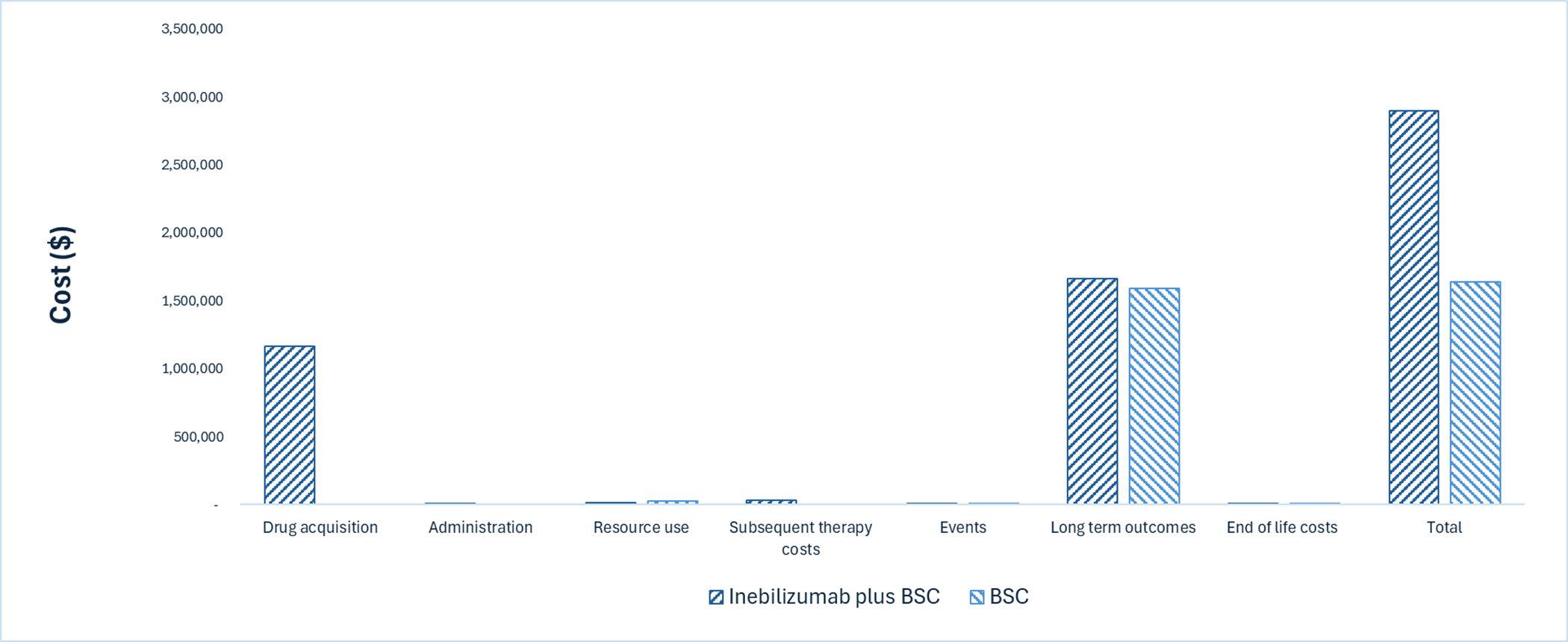
BSC = best supportive care; vs. = versus.
Notes: Probabilistic results are presented.
Resource use includes the cost of health care resources used during remission, either on or off treatment, and during an active flare. Events include the costs of adverse events, glucocorticoid-related events, and flare events. Flare events include the cost of glucocorticoids during a disease flare and the cost of health care resources during a flare. Glucocorticoid-related events include the costs of osteoporosis, established cardiovascular disease, glaucoma, cataract, renal impairment, peptic ulcer, pneumonia, and adrenal insufficiency. Long-term outcomes include costs associated with chronic kidney disease, chronic liver disease, pancreatic damage, and diabetes.
Results presented are for sponsor’s submitted base case. Results for all scenario analyses are presented in the Supplemental Material document, Appendix 11, Table 18.
Impact on Health
Figure 3 illustrates the potential impact that inebilizumab plus BSC has on patient health, based on the sponsor’s submitted base case. Relative to BSC alone, inebilizumab plus BSC is predicted to increase the amount of time a patient remains in a remission health state by approximately 0.71 years, decrease the amount of time spent in a flare health state by 0.15 years, and extend overall survival by 0.56 years. This extended survival is because of the sponsor’s assumption that patients in the remission 1 health state have a reduced mortality risk, and that patients receiving inebilizumab plus BSC, compared to BSC alone, were predicted to spend more time in the remission 1 health state. Considering the impact of treatment on both quality and length of life, inebilizumab plus BSC is predicted to result in 0.71 additional QALYs per patient, compared to BSC alone. Approximately 99% of the predicted incremental benefit was accrued on the basis of extrapolation. Because of the extended overall survival and the sponsor’s assumption of equal risk for long-term organ damage between inebilizumab plus BSC versus BSC alone, patients receiving inebilizumab plus BSC experience greater rates of long-term organ damage. This resulted in greater QALY decrements associated with reduced HRQoL because of the long-term organ damage that can affect those receiving inebilizumab plus BSC, compared to BSC alone.
Compared to the sponsor’s base case, all CDA-AMC scenario analyses predicted smaller incremental differences in quality and length of life for inebilizumab plus BSC than for BSC alone. In CDA-AMC scenario 1, inebilizumab plus BSC is predicted to increase the amount of time a patient remains in a remission health state by approximately 0.57 years, decrease the amount of time spent in a flare health state by 0.11 years, and extend overall survival by 0.47 years. In this scenario, inebilizumab plus BSC is predicted to result in 0.59 additional QALYs per patient, compared to BSC alone. In CDA-AMC scenario 2, inebilizumab plus BSC extended overall survival by 0.56 years and resulted in 0.49 additional QALYs, compared to BSC alone. In CDA-AMC scenario 3, differences in overall survival were removed, and 0.59 additional QALYs were predicted for inebilizumab plus BSC, compared to BSC alone.
Figure 3: Impact of Inebilizumab Plus BSC vs. BSC Alone on Patient Health
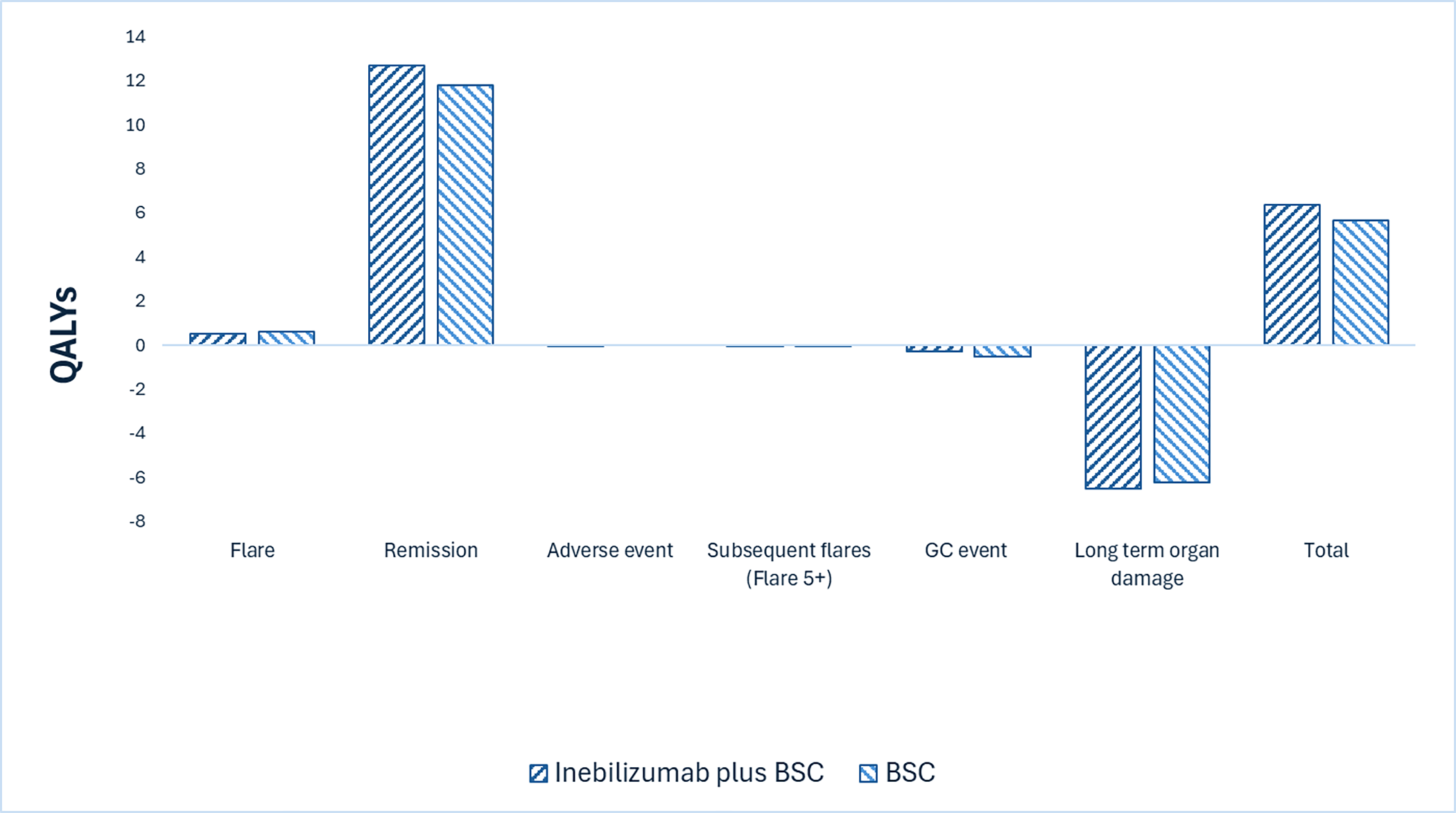
BSC = best supportive care; CDA-AMC = Canada’s Drug Agency; GC = glucocorticoid; QALY = quality-adjusted life-year; vs. = versus.
Notes: Results presented are for sponsor’s submitted base case. Results for all scenario analyses are presented in the Supplemental Material document. Appendix 11, Table 18.
The sponsor included multiple flare and remission health states, based on the number of flare and remission events; CDA-AMC combined these for ease of viewing. Total and relative QALYs across flare health states were similar for both treatment groups, whereas total and relative QALYs across remission health states differed: inebilizumab was associated with more QALYs in the first 3 remission health states, whereas BSC alone was associated with more QALYs in the fourth remission health state. Glucocorticoid-related events include the costs of osteoporosis, established cardiovascular disease, glaucoma, cataract, renal impairment, peptic ulcer, pneumonia, and adrenal insufficiency. Long-term outcomes include costs associated with chronic kidney disease, chronic liver disease, pancreatic damage, and diabetes. Negative values indicate reductions in health-related quality of life.
Probabilistic results are presented.
Summary of the Budget Impact
The sponsor submitted a budget impact analysis to estimate the 3-year (2027 to 2029) budget impact of reimbursing inebilizumab for use in the Health Canada–indicated population, with an additional restriction to those with the involvement of 1 critical organ or at least 2 organs. The sponsor assumed that the payer would be CDA-AMC–participating public drug plans, and derived the size of the eligible population using an epidemiologic approach. The price of inebilizumab was aligned with the price included in the sponsor’s economic evaluation; the prices of comparators were based on publicly available list prices. Additional information pertaining to the sponsor’s submission is provided in the Supplemental Material document, Appendix 10.
CDA-AMC identified a number of issues with the sponsor’s estimated budget impact, and made changes to model parameters and assumptions in consultation with clinical experts to derive the CDA-AMC base case (Supplemental Material document, Appendix 10). CDA-AMC estimated that by year 3 of reimbursement, 479 patients would be eligible for inebilizumab; of these, 321 patients would be expected to receive inebilizumab. The estimated incremental budget impact of reimbursing inebilizumab is predicted to be approximately $128 million over the first 3 years, with an expected expenditure of $129 million on inebilizumab. The actual budget impact will depend on the number of people eligible for treatment with inebilizumab and its uptake.
Conclusion
Based on the sponsor’s base case, inebilizumab plus BSC would be considered cost-effective at the submitted price if public health care systems were willing to pay at least $1,775,633 for each additional QALY gained. If public health care systems are not willing to pay that amount, a price reduction should be considered (refer to Figure 4; full details of the impact of price reductions on cost-effectiveness are presented in the Supplemental Material document, Appendix 11). The estimated cost-effectiveness of inebilizumab plus BSC compared to BSC alone is uncertain because of the sponsor’s assumptions regarding access to subsequent therapies and uncertainty around the impacts of inebilizumab plus BSC on mortality and glucocorticoid-related events, which suggest that the ICER may be higher than that estimated by the sponsor. The cost-effectiveness of inebilizumab plus BSC, compared with therapies used off label for the treatment of IgG4-RD (including rituximab, immunosuppressant therapies, and low-dose prednisone), is unknown because of a lack of evidence on the comparative efficacy and the exclusion of off-label therapies from the sponsor’s economic evaluation.
The budget impact of reimbursing inebilizumab to the public drug plans in the first 3 years is estimated to be approximately $128 million. The 3-year expenditure on inebilizumab (i.e., not accounting for current expenditure on comparators) is estimated to be $129 million. The estimated budget impact is highly uncertain because of uncertainty about the prevalence of IgG4-RD and market uptake assumptions.
Figure 4: Summary of the CDA-AMC Economic Analysis and Price Reduction

BSC = best supportive care; CDA-AMC = Canada’s Drug Agency; ICER = incremental cost-effectiveness ratio; QALY = quality-adjusted life-year; vs. = versus.
Note: Annual cost represents the cost in the initial year of treatment with inebilizumab (i.e., year 1) and the cost in subsequent years (years 2+). Expenditure includes only the drug cost of inebilizumab.
References
1.Baptista B, Casian A, Gunawardena H, D'Cruz D, Rice CM. Neurological Manifestations of IgG4-Related Disease. Curr Treat Options Neurol. 2017;19(4):14. doi:10.1007/s11940-017-0450-9 PubMed
2.Kamisawa T, Funata N, Hayashi Y, et al. A new clinicopathological entity of IgG4-related autoimmune disease. J Gastroenterol. 2003;38(10):982-4. doi:10.1007/s00535-003-1175-y PubMed
3.Kamisawa T, Zen Y, Pillai S, Stone JH. IgG4-related disease. Lancet. 2015;385(9976):1460-71. doi:10.1016/s0140-6736(14)60720-0 PubMed
4.Wallace ZS, Miles G, Smolkina E, et al. Incidence, prevalence and mortality of IgG4-related disease in the USA: a claims-based analysis of commercially insured adults. Ann Rheum Dis. 2023;82(7):957-962. doi:10.1136/ard-2023-223950 PubMed
5.Wallace ZS, Katz G, Hernandez-Barco YG, Baker MC. Current and future advances in practice: IgG4-related disease. Rheumatol Adv Pract. 2024;8(2):rkae020. doi:10.1093/rap/rkae020 PubMed
6.Wallace ZS, Naden RP, Chari S, et al. The 2019 American College of Rheumatology/European League Against Rheumatism Classification Criteria for IgG4-Related Disease. Arthritis Rheumatol. 2020;72(1):7-19. doi:10.1002/art.41120 PubMed
7.Wallace ZS, McMahon GA, Hang B, et al. Assessment of patient-reported symptoms and distress in IgG4-related disease (IgG4-RD): Development, clinical validation, and content validation of the IgG4-RD Symptom Severity Index. Semin Arthritis Rheum. 2023;63:152253. doi:10.1016/j.semarthrit.2023.152253 PubMed
8.Wallace ZS, Miles G, Smolkina E, et al. The clinical outcomes and healthcare resource utilization in IgG4-related disease: a claims-based analysis of commercially insured adults in the United States. Rheumatology (Oxford). 2024;63(9):2457-2466. doi:10.1093/rheumatology/keae230 PubMed
9.Pinheiro FAG, Pereira IA, de Souza AWS, Giardini HAM, Cordeiro RA. IgG4-related disease-rare but you should not forget it. Adv Rheumatol. 2024;64(1):35. doi:10.1186/s42358-024-00374-y PubMed
10.Alliance for Patient Access. The Lived Experiences of IgG4-RD Patients [sponsor submitted reference]. 2021. https://admin.allianceforpatientaccess.org/wp-content/uploads/2021/12/AfPA_In-Their-Own-Voices_IgG4-RD-Report_Dec-2021.pdf
11.Tanaka Y, Stone JH. Perspectives on current and emerging therapies for immunoglobulin G4-related disease. Mod Rheumatol. 2023;33(2):229-236. doi:10.1093/mr/roac141 PubMed
12.Khosroshahi A, Wallace ZS, Crowe JL, et al. International Consensus Guidance Statement on the Management and Treatment of IgG4-Related Disease. Arthritis Rheumatol. 2015;67(7):1688-99. doi:10.1002/art.39132 PubMed
13.Stone JH, Zen Y, Deshpande V. IgG4-related disease. N Engl J Med. 2012;366(6):539-51. doi:10.1056/NEJMra1104650 PubMed
14.Tanaka Y, Stone JH. Perspectives on current and emerging therapies for immunoglobulin G4–related disease. Mod Rheumatol. 2022;33(2):229-236. doi:10.1093/mr/roac141 PubMed
15.Ng YZJ, Bowen S, Phillips J, Rajasekaran M, Lu SS, Taylor BV. Neurological manifestations of immunoglobulin G(4) related disease: a systematic review of 393 cases. J Neurol Neurosurg Psychiatry. 2025;96(11):1109-1116. doi:10.1136/jnnp-2025-336230 PubMed
16.Forsthuber TG, Cimbora DM, Ratchford JN, Katz E, Stuve O. B cell-based therapies in CNS autoimmunity: differentiating CD19 and CD20 as therapeutic targets. Ther Adv Neurol Disord. 2018;11:1756286418761697. doi:10.1177/1756286418761697 PubMed
17.Lanzillotta M, Ramirez GA, Milani R, Dagna L, Della-Torre E. B cell depletion after treatment with rituximab predicts relapse of IgG4-related disease. Rheumatology (Oxford). 2025;64(4):2290-2294. doi:10.1093/rheumatology/keae248 PubMed
18.Carruthers MN, Topazian MD, Khosroshahi A, et al. Rituximab for IgG4-related disease: a prospective, open-label trial. Ann Rheum Dis. 2015;74(6):1171-7. doi:10.1136/annrheumdis-2014-206605 PubMed
19.Wallace ZS, Katz G, Hernandez-Barco YG, Baker MC. Current and future advances in practice: IgG4-related disease. Rheumatology Advances in Practice. 2024;8(2). doi:10.1093/rap/rkae020 PubMed
20.Masaki Y, Matsui S, Saeki T, et al. A multicenter phase II prospective clinical trial of glucocorticoid for patients with untreated IgG4-related disease. Mod Rheumatol. 2017;27(5):849-854. doi:10.1080/14397595.2016.1259602 PubMed
21.Ghazale A, Chari ST, Zhang L, et al. Immunoglobulin G4-associated cholangitis: clinical profile and response to therapy. Gastroenterology. 2008;134(3):706-15. doi:10.1053/j.gastro.2007.12.009 PubMed
22.Carruthers MN, Stone JH, Deshpande V, Khosroshahi A. Development of an IgG4-RD Responder Index. Int J Rheumatol. 2012;2012:259408. doi:10.1155/2012/259408 PubMed
23.Amgen Inc. Clinical Study Report: VIB0551. A Phase 3, Randomized, Double-blind, Multicenter, Placebo-Controlled Study of Inebilizumab Efficacy and Safety in IgG4 Related Disease [internal sponsor's report]. September 6, 2024.
24.Wang L, Zhang P, Wang M, et al. Failure of remission induction by glucocorticoids alone or in combination with immunosuppressive agents in IgG4-related disease: a prospective study of 215 patients. Arthritis Res Ther. 2018;20(1):65. doi:10.1186/s13075-018-1567-2 PubMed
25.Yunyun F, Yu C, Panpan Z, et al. Efficacy of Cyclophosphamide treatment for immunoglobulin G4-related disease with addition of glucocorticoids. Sci Rep. 2017;7(1):6195. doi:10.1038/s41598-017-06520-5 PubMed
26.Yunyun F, Yu P, Panpan Z, et al. Efficacy and safety of low dose Mycophenolate mofetil treatment for immunoglobulin G4-related disease: a randomized clinical trial. Rheumatology (Oxford). 2019;58(1):52-60. doi:10.1093/rheumatology/key227 PubMed
27.Maruish M. User’s manual for the SF-36v2 Health Survey. Quality Metric Incorporated. 2011;198.
ISSN: 2563-6596
Canada’s Drug Agency (CDA-AMC) is a pan-Canadian health organization. Created and funded by Canada’s federal, provincial, and territorial governments, we’re responsible for driving better coordination, alignment, and public value within Canada’s drug and health technology landscape. We provide Canada’s health system leaders with independent evidence and advice so they can make informed drug, health technology, and health system decisions, and we collaborate with national and international partners to enhance our collective impact.
Disclaimer: CDA-AMC has taken care to ensure that the information in this document was accurate, complete, and up to date when it was published, but does not make any guarantee to that effect. Your use of this information is subject to this disclaimer and the Terms of Use at cda-amc.ca.
The information in this document is made available for informational and educational purposes only and should not be used as a substitute for professional medical advice, the application of clinical judgment in respect of the care of a particular patient, or other professional judgments in any decision-making process. You assume full responsibility for the use of the information and rely on it at your own risk.
CDA-AMC does not endorse any information, drugs, therapies, treatments, products, processes, or services. The views and opinions of third parties published in this document do not necessarily reflect those of CDA-AMC. The copyright and other intellectual property rights in this document are owned by the Canadian Agency for Drugs and Technologies in Health (operating as CDA-AMC) and its licensors.
Questions or requests for information about this report can be directed to Requests@CDA-AMC.ca.