Drugs, Health Technologies, Health Systems
Reimbursement Recommendation
Mepolizumab (Nucala)
Indication: As add-on maintenance treatment in adult patients with chronic obstructive pulmonary disease (COPD) characterized by raised blood eosinophils inadequately controlled by the combination of an inhaled corticosteroid (ICS), a long-acting beta2-agonist (LABA), and a long-acting muscarinic antagonist (LAMA)
Sponsor: GlaxoSmithKline Inc.
Final recommendation: Reimburse with conditions
Summary
What Is the Reimbursement Recommendation for Nucala?
Canada’s Drug Agency (CDA-AMC) recommends that Nucala be reimbursed by public drug plans as add-on maintenance treatment in adult patients with chronic obstructive pulmonary disease (COPD) characterized by raised blood eosinophil levels inadequately controlled by the combination of an inhaled corticosteroid (ICS), a long-acting beta2-agonist (LABA), and a long-acting muscarinic antagonist (LAMA) only if certain conditions are met.
Why Did CDA-AMC Recommend Reimbursement?
The Canadian Drug Expert Committee (CDEC) determined that Nucala demonstrates acceptable clinical value in adult patients with COPD. This determination was enough for CDEC to recommend that Nucala be reimbursed. Given that Nucala is expected to be an additive treatment to ICS-LABA-LAMA background therapy, acceptable clinical value refers to added value versus ICS-LABA-LAMA combination therapy.
Evidence from 1 clinical trial and 1 meta-analysis demonstrated that in adult patients with COPD characterized by elevated levels of blood eosinophils (≥ 300 cells/µL) and moderate to severe airflow obstruction despite receiving triple inhaler therapy (ICS-LABA-LAMA therapy), Nucala likely resulted in a clinically meaningful reduction in moderate or severe COPD exacerbations compared to placebo when used in addition to standard of care (SOC) therapy (ICS-LABA-LAMA combination therapy).
Patients said that despite benefits they derive from available treatments, they continue to face challenges in their daily lives due to residual COPD symptoms (e.g., shortness of breath upon exertion), adverse events from medications, disease exacerbations, and disease progression. Nucala may address some of the needs patients identified, such as decreasing the frequency of COPD-related exacerbations and reducing the severity of symptoms.
Based on all the preceding considerations, CDEC recommended that mepolizumab be reimbursed.
Which Patients Are Eligible for Coverage?
Nucala should only be reimbursed as add-on maintenance treatment in adult patients with COPD who have obstructed airflow confirmed by lung function testing, whose disease has been stable while receiving optimized inhaler therapy for at least 3 months, who have experienced at least 2 moderate COPD exacerbations or 1 severe exacerbation within the past 12 months (with at least 1 occurring after the patient had been receiving optimized inhaler therapy for 3 months), and who have elevated blood eosinophil levels. Optimized inhaler therapy must consist of ICS-LABA-LAMA combination therapy or LABA-LAMA combination therapy if the use of an ICS is inappropriate.
What Are the Conditions for Reimbursement?
Nucala should only be reimbursed if the number and severity of a patient’s COPD exacerbations in the previous 12 months are assessed before treatment is started. The patient’s response to treatment should be reviewed every 12 months to determine whether reimbursement should continue. For the first renewal, reimbursement may continue if, compared with baseline, the patient has experienced fewer moderate or severe exacerbations, or less severe exacerbations despite no change in their number, unless the lack of improvement is explained by a medical comorbidity. For subsequent renewals, the physician should provide evidence that the number of moderate or severe exacerbations has not increased compared with baseline, unless any increase is explained by a medical comorbidity. Nucala should be prescribed by, or in consultation with, a respirologist (lung specialist) and should not be reimbursed when used in combination with another biologic drug indicated for COPD. The cost of Nucala should also be reduced.
Important budget impact considerations must be addressed for health systems to be able to adopt Nucala.
Review Background
Disease background: COPD is a progressive lung disease that causes difficulty in breathing and irreversible lung damage in patients. COPD arises from multiple factors, including persistent airway inflammation (e.g., chronic bronchitis and bronchiolitis) that leads to structural changes in the lungs as well as damage to and enlargement of the air sacs (emphysema) that results in airflow limitation. The prevalence of COPD in Canada between 2022 and 2023 was 8.74% in patients aged 35 years or older.
Indication and reimbursement request: Mepolizumab (Nucala) has been approved by Health Canada as “add-on maintenance treatment in adult patients with chronic obstructive pulmonary disease (COPD) characterized by raised blood eosinophils inadequately controlled by the combination of an inhaled corticosteroid (ICS), a long-acting beta2-agonist (LABA), and a long-acting muscarinic antagonist (LAMA).” The application was submitted by the sponsor before receiving a Notice of Compliance from Health Canada, and the CDA-AMC review reflects the anticipated indication for mepolizumab at the time this review was conducted, which was as an add-on maintenance treatment for adult patients with COPD with an eosinophilic phenotype. The sponsor is seeking reimbursement “as add-on maintenance treatment in adult patients with chronic obstructive pulmonary disease (COPD) characterized by raised blood eosinophils inadequately controlled by the combination of an inhaled corticosteroid (ICS), a long-acting beta2agonist (LABA), and a long-acting muscarinic antagonist (LAMA)” if the following conditions are met:
patients are receiving background therapy of inhaled triple therapy (ICS-LABA-LAMA) or dual therapy (LABA-LAMA) if there is intolerance to ICSs
patients have blood eosinophil counts of 300 cells/µL or greater and have had 2 or more moderate exacerbations and/or 1 or more severe exacerbations in the past 12 months (a moderate exacerbation is defined as an acute exacerbation of COPD that requires systemic corticosteroids [intramuscular, IV, or oral] and/or antibiotics; a severe exacerbation is defined as an acute exacerbation of COPD that requires hospitalization or observation for 24 hours or longer in an emergency department or urgent care facility).
Drug under review: Mepolizumab is a monoclonal antibody. It is available as a solution for subcutaneous injection, prefilled autoinjectors, or safety syringes.
Treatment costs: At the submitted price of $2,452.58 per 100 mg vial, the annual cost of mepolizumab is expected to be $31,993 per patient based on the Health Canada–recommended dosage.
Highlights of Input From Interested Parties
The patient groups (the Chronic Obstructive Pulmonary Disease Association [COPD Canada] and the Lung Health Foundation) noted the following regarding impacts of the disease, unmet needs, and important outcomes:
COPD is a progressive and debilitating disease that limits patients’ daily activities and affects their quality of life. Although patients reportedly experience a reduction in shortness of breath and improved quality of life with current treatments, some patients continue to face limitations in their daily lives due to residual symptoms and side effects.
Patients highlighted the need for affordable therapies that reduce exacerbations, improve symptoms, minimize side effects, enhance overall treatment outcomes, and improve overall quality of life.
The clinician group (the Canadian Thoracic Society) and the clinical experts consulted by CDA-AMC noted the following regarding unmet needs arising from the disease and the place in therapy for the drug under review:
Many patients, especially those with eosinophilic inflammation, continue to experience exacerbations despite optimized therapy. Therefore, there is a need for additional therapies that cater to patients who continue to experience exacerbations with conventional therapy with ICSs, LABAs, and LAMAs.
Mepolizumab is anticipated as an add-on therapy for patients who continue to experience moderate or severe exacerbations with conventional first-line COPD drugs (ICSs, LABAs, and LAMAs).
The participating public drug programs raised potential implementation issues related to considerations for initiation, renewal, and prescribing of therapy.
Recommendation
With a vote of 15 in favour to 0 against, CDEC recommends that mepolizumab be reimbursed as an add-on maintenance treatment in adult patients with COPD characterized by elevated blood eosinophil levels inadequately controlled by ICS-LABA-LAMA combination therapy only if the conditions listed in Table 1 are met.
Table 1: Reimbursement Conditions and Reasons
Reimbursement condition | Reason | Implementation guidance |
|---|---|---|
Initiation | ||
| The MATINEE trial and the pooled analysis of the MATINEE trial and the subgroup of patients with BECs ≥ 300 cells/μL from the METREX and METREO trials demonstrated that when used in addition to best supportive care, mepolizumab likely resulted in clinically meaningful benefits compared to placebo in adult patients with COPD characterized by elevated blood eosinophil levels inadequately controlled by ICS-LABA-LAMA combination therapy. The clinical expert noted to CDEC that patients should receive optimized inhaler therapy, which is typically triple therapy (ICS-LABA-LAMA), before initiating a biologic drug. If a patient cannot tolerate 1 of these components (e.g., ICSs due to side effects or contraindications), the clinician should consider the patient as having received the best therapy they can tolerate. In such cases, starting a biologic drug is acceptable even if full triple therapy is not in place. | Condition 1.1: The MATINEE, METREX, and METREO trials enrolled patients who were aged at least 40 years. While there was insufficient evidence to support the use of mepolizumab for the treatment of COPD in adults outside this age range, CDEC considered it appropriate to allow reimbursement of mepolizumab for adults aged 18 years or older based on the treating clinicians’ judgment. Condition 1.2: Spirometry is predominantly performed in specialty respiratory clinics or hospitals; therefore, there may be limitations in access to this test for some patients. Patients with postbronchodilator FEV1 predicted to be ≤ 20% were excluded from the pivotal trials. CDEC considered clinical expert input and noted that it is appropriate to allow reimbursement of mepolizumab for these patients based on the treating physician’s clinical judgment. Condition 1.3: A moderate exacerbation is defined as an AECOPD that requires either systemic corticosteroids (intramuscular, IV, or oral) and/or antibiotics. A severe exacerbation is defined as an AECOPD requiring hospitalization or observation for > 24 hours in an emergency department or urgent care facility. If ICSs are contraindicated, not tolerated, or considered inappropriate, background therapy should consist of LABA-LAMA combination therapy. An ICS may be considered inappropriate for patients with conditions such as intractable dysphonia, recurrent Candida infections, or frequent lower respiratory tract infections or in those at high risk for pneumonia or bacterial colonization of the airway. Condition 1.4: This is based on BECs performed in the past 12 months. Mepolizumab could be initiated similarly to other biologic drugs currently reimbursed for the treatment of COPD as per the reimbursement criteria for each public drug plan. |
2. A baseline assessment of the number and severity of COPD exacerbations in the past 12 months must be completed before initiation of mepolizumab treatment. | A baseline assessment of the patient’s COPD exacerbation rate is needed to assess response to therapy. | — |
Renewal | ||
3. The effects of mepolizumab should be assessed every 12 months to determine whether reimbursement should continue. | This allows sufficient time for patients and clinicians to assess response. | Mepolizumab could be renewed similarly to other biologic drugs currently reimbursed for the treatment of COPD as per the reimbursement criteria for each public drug plan. |
4.For renewal after initial authorization, reimbursement of mepolizumab should be renewed if either of the following occurs: 4.1. a reduction in the number of moderate or severe COPD exacerbations in the previous 12 months compared to baseline, unless the lack of a reduction is explained by a medical comorbidity 4.2. a reduction in the severity of COPD exacerbations despite the same number of COPD exacerbations in the previous 12 months compared to baseline, unless the lack of a reduction is explained by a medical comorbidity. | The MATINEE trial and the pooled analysis of the MATINEE trial and the subgroup of patients with BECs ≥ 300 cells/μL from the METREX and METREO trials demonstrated that mepolizumab treatment likely resulted in a reduction in the annualized rate of moderate or severe COPD exacerbation events compared to placebo, when used in addition to SOC therapy. | Determination of whether COPD exacerbations are attributable to a medical comorbidity (e.g., respiratory tract infection) should be based on the treating clinicians’ judgment. |
5. For subsequent renewal, the physician must provide proof that there has been no increase in the number of moderate or severe COPD exacerbations in the previous 12 months compared to baseline, unless any such increase is explained by a medical comorbidity. | To account for the progressive nature of COPD such that patients may continue to experience exacerbations despite receiving optimized therapy over time. | — |
Prescribing | ||
6. Mepolizumab should be prescribed by or in consultation with a respirologist. | This ensures that mepolizumab is prescribed only for appropriate patients and adverse effects are managed in an optimized and timely manner. | CDEC noted that in communities with limited access to respirologists, physicians with expertise in treating COPD may need to be considered by jurisdictions to prescribe mepolizumab. Mepolizumab could be prescribed similarly to other biologic drugs currently reimbursed for the treatment of COPD as per the reimbursement criteria for each public drug plan. |
7. Mepolizumab should not be reimbursed when used in combination with any other biologic drug indicated for COPD. | There is no evidence to determine the effects of mepolizumab when used in combination with other biologic drugs in adult patients with COPD. | — |
Pricing | ||
8. A reduction in price. | Using the CDA-AMC base-case analysis, the ICER for mepolizumab plus SOC therapy was $1,887,930 per QALY gained when compared with SOC therapy in the indicated population. Based on the CDA-AMC base case, a band 4a price reduction would be required to achieve cost-effectiveness at a threshold of $50,000 per QALY gained or a threshold of $100,000 per QALY gained. Exact price reductions at any given willingness-to-pay threshold can be found in the CDA-AMC Main Report and Supplemental Material documents. | The CDA-AMC analysis is based on public list prices for all treatments. Further price reductions may be required if there are price arrangements (discounts) currently in place for any treatment included in the economic analysis. Likewise, further price reductions may be required to address the economic feasibility of adoption. |
Feasibility of adoption | ||
9. The economic feasibility of adoption of mepolizumab plus SOC therapy must be addressed. | At the submitted price, the incremental budget impact of mepolizumab plus SOC therapy is expected to be greater than $40 million in years 1, 2, and 3. | — |
AECOPD = acute exacerbation of COPD; BEC = blood eosinophil count; CDA-AMC = Canada’s Drug Agency; CDEC = Canadian Drug Expert Committee; COPD = chronic obstructive pulmonary disease; FEV1 = forced expiratory volume in the first second; FVC = forced vital capacity; ICER = incremental cost-effectiveness ratio; ICS = inhaled corticosteroid; LABA = long-acting beta2-agonist; LAMA = long-acting muscarinic antagonist; QALY = quality-adjusted life-year; SOC = standard of care.
aFor the statement regarding the size of the price reduction required, band 1 = 1% to 24%, band 2 = 25% to 49%, band 3 = 50% to 74%, and band 4 = 75% or greater.
Rationale for the Recommendation
Clinical Value
Based on the totality of the clinical evidence, CDEC concluded that mepolizumab demonstrates acceptable clinical value in adult patients with COPD. Given that mepolizumab is expected to be an additive treatment to background ICS-LABA-LAMA therapy, acceptable clinical value refers to added value versus ICS-LABA-LAMA combination therapy.
Evidence from 1 RCT (the MATINEE trial) and 1 meta-analysis (a pooled population of patients enrolled in the MATINEE trial and patients with blood eosinophil counts ≥ 300 cells/µL enrolled in the METREX and METREO trials) was assessed. It demonstrated that in adult patients with COPD characterized by elevated blood eosinophil levels (≥ 300 cells/µL) and moderate to severe airflow obstruction despite receiving triple inhaler therapy (ICS-LABA-LAMA), mepolizumab likely resulted in a clinically meaningful reduction in moderate or severe COPD exacerbations compared to placebo when used in addition to best supportive care. In the MATINEE trial, after a follow-up of up to 104 weeks, the annualized rate of moderate or severe exacerbations was 0.80 (95% CI, 0.70 to 0.91) in the mepolizumab group and 1.01 (95% CI, 0.89 to 1.15) in the placebo group. This corresponds to a rate ratio of 0.79 (95% CI, 0.66 to 0.94; P = 0.011). In addition, the probability of a first moderate or severe exacerbation was 64.5% (95% CI, 57.5% to 71.4%) in the mepolizumab 100 mg group versus 68.3% (95% CI, 61.4% to 74.9%) in the placebo group. The hazard ratio was 0.77 (95% CI, 0.64 to 0.93; P = 0.009). Furthermore, no new safety concerns were identified.
Further information on the committee’s discussion around unmet clinical need is provided in the Summary of Deliberation section.
Developing the Recommendation
The determination of acceptable clinical value was sufficient for CDEC to recommend reimbursement of mepolizumab. As part of the deliberation on whether to recommend reimbursement, the committee also considered unmet clinical need, unmet nonclinical need, and health inequity. Information on this discussion is provided in the Unmet Clinical Need and Distinct Social and Ethical Considerations domains in the Summary of Deliberation section.
Because CDEC recommended that mepolizumab be reimbursed, the committee also deliberated on whether reimbursement conditions should be added to address important economic considerations, health system impacts, or social and ethical considerations, or to ensure clinical value is realized. The resulting reimbursement conditions, with accompanying reasons and implementation guidance, are stated in Table 1.
Summary of Deliberation
CDEC considered all domains of value of the deliberative framework before developing its recommendation: clinical value, unmet clinical need, distinct social and ethical considerations, economic considerations, and impacts on health systems. For further information on the domains of value, refer to Expert Committee Deliberation at Canada’s Drug Agency.
The committee considered the following key discussion points, organized by the 5 domains of value.
Clinical Value
Appropriate comparators: The clinical experts noted to CDEC that there are currently no maintenance therapies available to patients apart from SOC therapy (i.e., ICS-LABA-LAMA); therefore, the use of placebo in combination with SOC therapy was considered an appropriate comparator for the trials. CDEC noted that at the time of this review, dupilumab (a new maintenance treatment targeting type 2 inflammation in patients with COPD) was under review at Health Canada for an indication in line with mepolizumab, and an indirect treatment comparison was not feasible at the time of this review.
Efficacy versus placebo: Evidence from the MATINEE trial showed that mepolizumab as an add-on treatment to triple therapy likely resulted in a clinically meaningful reduction (by 21%) in the annualized rate of a moderate or severe COPD exacerbation for patients receiving mepolizumab 100 mg compared to placebo. Patients in the mepolizumab group were also likely to experience a delay in the median time to onset of a moderate or severe exacerbation compared to placebo (419 days for those in the mepolizumab group and 321 days for those in the placebo group), with a 23% reduction in the hazard rate in favour of mepolizumab (HR = 0.77; 95% CI, 0.64 to 0.93). Individual patient-level data from the subpopulation of patients with baseline peripheral eosinophil levels of 300 cells/uL or greater from the METREO and METREX trials were pooled with data from the MATINEE trial. Results from the pooled data suggested that mepolizumab likely resulted in a 21% reduction in the annualized hazard rate of moderate or severe exacerbation (HR = 0.79; 95% CI, 0.68 to 0.91), which aligned with the MATINEE trial findings.
Clinical importance of treatment effects: CDEC noted important outcomes for patients included reducing mortality, improving health-related quality of life (HRQoL), modifying disease progression, and decreasing the frequency of COPD-related exacerbations. CDEC noted that while mepolizumab as an add-on treatment to triple therapy likely results in a clinically important reduction in the risk of moderate or serious exacerbation events compared to placebo, mepolizumab likely results in little to no clinically important difference in HRQoL. Also, the evidence is very uncertain about the effect of mepolizumab on mortality as an add-on treatment to triple therapy.
Certainty of the evidence: Using the Grading of Recommendations Assessment, Development and Evaluation (GRADE) approach, the certainty of evidence for the annualized rate of moderate or severe COPD exacerbations, time to first moderate or severe exacerbation, and HRQoL was rated as moderate for each of these outcomes in the MATINEE trial due to serious imprecision in the between-group differences. Mortality outcomes were rated as having very low certainty of evidence and very serious imprecision due to the uncertainty in the absolute effect of between-group comparison; also, the number of events was very small.
Unmet Clinical Need
Input on unmet clinical need: The clinical experts and clinician group consulted by CDA-AMC highlighted that despite benefits reported from available treatments (ICS-LABA-LAMA triple maintenance therapy), patients with COPD continue to face challenges in their daily lives due to residual COPD symptoms (e.g., shortness of breath upon exertion), adverse events from medications, exacerbations, and disease progression. There is an unmet need for new treatments that reduce mortality, improve HRQoL (reduce the severity of symptoms), modify disease progression, and decrease the frequency of COPD-related exacerbation.
Severity of the disease: CDEC noted that COPD is a progressive, life-limiting condition associated with substantial morbidity and mortality. Frequent exacerbations accelerate lung function decline, increase hospitalization risk, and contribute to long-term complications from repeated corticosteroid use.
Place in therapy and availability of treatment options: CDEC noted that mepolizumab shares the same place in therapy as dupilumab, and that optimal inhaled therapy (usually ICS-LABA-LAMA triple therapy) should precede biologic drug use, except for patients for whom ICSs are contraindicated or who cannot tolerate ICSs. The clinical experts did not identify any scenarios in which 1 biologic drug (dupilumab or mepolizumab) would warrant selection over the other. However, they noted that mepolizumab may be prescribed to patients who have discontinued or cannot tolerate dupilumab. CDEC noted there is no evidence supporting the use of mepolizumab by patients for whom dupilumab has failed, or vice versa.
Distinct Social and Ethical Considerations
Input on unmet nonclinical need: CDEC noted that patients with COPD often face significant nonclinical challenges, including financial barriers due to high medication costs and uneven provincial drug coverage. Geographic inequities include limited access to spirometry, specialist care, and pulmonary rehabilitation in rural and remote areas. Caregiver burdens may include increased emotional strain and logistical challenges for families.
Equity considerations: The clinical experts noted to CDEC that COPD disproportionately affects systemically marginalized populations, such as Indigenous Peoples, Black people, and people with low socioeconomic status (e.g., those with low incomes), because these groups are more likely to be exposed to multiple and overlapping risk factors contributing to COPD (e.g., cigarette smoking), may have limited access to COPD disease management, and are more likely to be hospitalized due to their symptoms.
Economic Considerations
Health impacts of mepolizumab plus SOC therapy versus relevant comparators: Based on the CDA-AMC reanalysis of the submitted economic analysis, mepolizumab is predicted to have no impact on mortality (i.e., no life-years difference between mepolizumab plus SOC therapy compared to SOC therapy alone) based on the clinical evidence submitted for review and limitations with the proposed modelling approach. The clinical impact of mepolizumab plus SOC therapy is solely based on its impact on HRQoL given that reductions in exacerbations resulted in a gain of 0.10 quality-adjusted life-years (QALYs) compared to SOC alone.
Cost of mepolizumab plus SOC therapy versus relevant comparators: Mepolizumab plus SOC therapy is predicted to be associated with higher costs to health care systems than SOC therapy alone (incremental costs = $180,029), primarily driven by increased costs associated with mepolizumab.
Key findings of the economic evaluation: Based on the submitted evidence using the sponsor’s cost-utility analysis, the CDA-AMC base-case analysis estimated that the incremental cost-effectiveness ratio (ICER) for mepolizumab plus SOC therapy in COPD was $1,887,930 per QALY gained when compared with SOC therapy (Figure 1). The estimated ICER was highly sensitive to an assumption of mortality associated with severe exacerbations. In scenario analyses assuming a direct link between exacerbations and mortality, which resulted in a mortality benefit for mepolizumab, the ICER decreased to a range of $279,427 to $298,295 per QALY gained.
Figure 1: Estimate of the ICER Used by CDEC to Inform the Price Condition
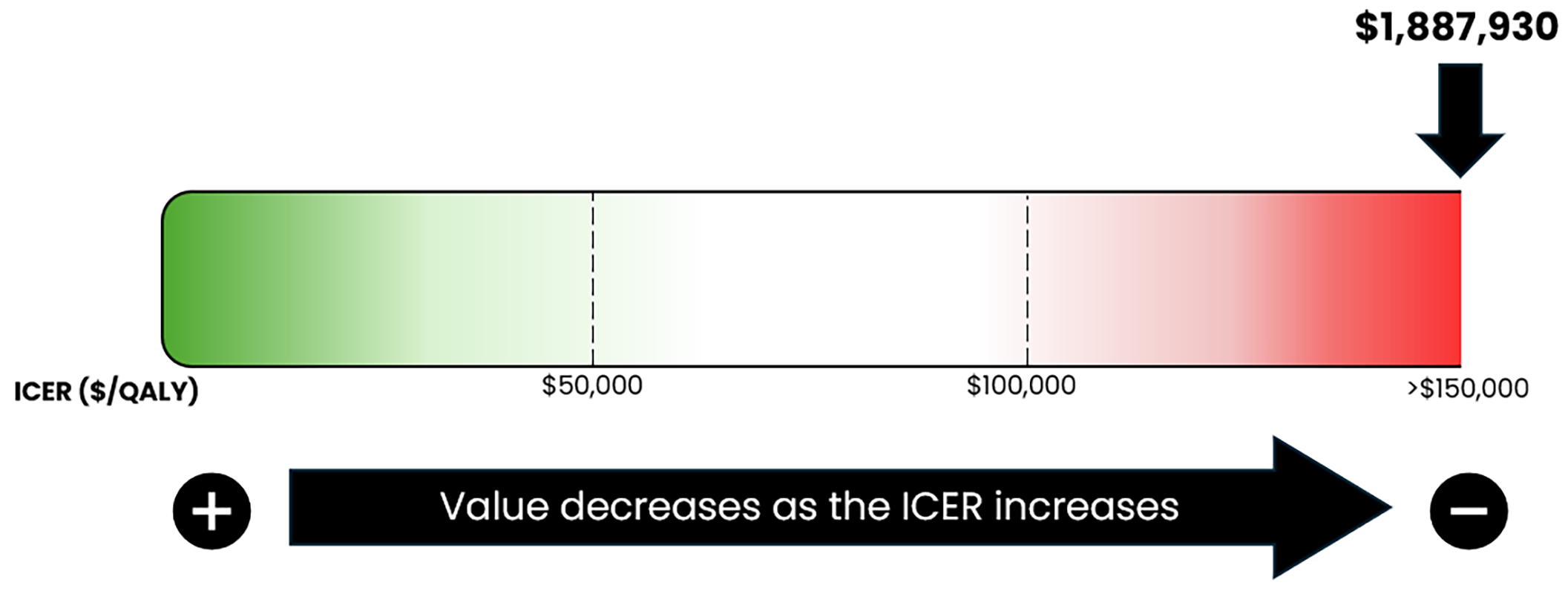
CDEC = Canadian Drug Expert Committee; ICER = incremental cost-effectiveness ratio; QALY = quality-adjusted life-year.
Certainty of the evidence: The estimated cost-effectiveness of mepolizumab plus SOC therapy versus SOC therapy alone is sensitive to the assumption of mortality associated with severe exacerbation. While the CDA-AMC base-case analysis assumed there was no benefit (i.e., no reduction in death due to less frequent severe exacerbation episodes), an alternative scenario analysis that assumed a mortality benefit for mepolizumab based on fewer severe exacerbations found that the ICER would decrease. The evidence to support the magnitude of this benefit was uncertain.
Unaddressed comparator: CDEC noted that CDA-AMC had recently assessed dupilumab for use in a similar patient population. When mepolizumab was submitted for review, dupilumab did not meet the CDA-AMC definition of a comparator as it had not yet been recommended for reimbursement. In the absence of direct or indirect comparative evidence for mepolizumab versus dupilumab, the relative cost-effectiveness of these 2 treatments is unknown, as is the price reduction needed to meet any willingness-to-pay threshold.
Impacts on Health Systems
Anticipated budget impact: CDA-AMC estimated that by year 3, a total of 74,893 patients would be eligible for mepolizumab plus SOC therapy; of them, 11,766 patients would be expected to receive mepolizumab plus SOC therapy. The incremental budget impact of reimbursing mepolizumab plus SOC therapy is estimated to be approximately $757 million over the first 3 years, and this is identical to the expected expenditure on mepolizumab given that mepolizumab is an add-on to SOC therapy for COPD. CDEC noted that at the submitted price, the incremental budget impact of reimbursing mepolizumab plus SOC therapy is predicted to be greater than $40 million in years 1, 2, and 3, and the economic feasibility of adoption must be addressed. The actual budget impact will depend on the number of people eligible for treatment and the market uptake of mepolizumab.
Sources of Information Used by the Committee
To make its recommendation, the committee considered the following information (links to the full documents for the review can be found on the project web page):
the CDA-AMC review of the clinical and pharmacoeconomic evidence submitted by the sponsor, as well as relevant ethical issues related to mepolizumab (refer the Main Report and Supplemental Material documents)
the sponsor’s comments on the draft report and the CDA-AMC responses
patients’ perspectives gathered by 2 patient groups, the Chronic Obstructive Pulmonary Disease Association (COPD Canada) and the Lung Health Foundation (refer to the Patient and Clinician Group Input document)
input from 1 clinician group, the Canadian Thoracic Society (refer to the Patient and Clinician Group Input document)
input from public drug programs that participate in the reimbursement review process (refer to the Supplemental Material document)
input from 2 clinical experts with expertise in the management of COPD consulted by CDA-AMC.
CDEC Information
Members of the Committee
Dr. Peter Jamieson (Chair), Dr. Kerry Mansell (Vice-Chair), Sally Bean, Daryl Bell, Dan Dunsky, Dr. Ran Goldman, Dr. Trudy Huyghebaert, Dr. Dennis Ko, Dr. Christine Leong, Alicia McCallum, Dr. Srinivas Murthy, Dr. Nicholas Myers, Dr. Krishnan Ramanathan, Dr. Marco Solmi, Carla Velastegui, Dr. Edward Xie, and Dr. Peter Zed.
Meeting date: December 17, 2025
Regrets: One expert committee member did not attend.
Conflicts of interest: None
ISSN: 2563-6596
Canada’s Drug Agency (CDA-AMC) is a pan-Canadian health organization. Created and funded by Canada’s federal, provincial, and territorial governments, we’re responsible for driving better coordination, alignment, and public value within Canada’s drug and health technology landscape. We provide Canada’s health system leaders with independent evidence and advice so they can make informed drug, health technology, and health system decisions, and we collaborate with national and international partners to enhance our collective impact.
Disclaimer: CDA-AMC has taken care to ensure that the information in this document was accurate, complete, and up to date when it was published, but does not make any guarantee to that effect. Your use of this information is subject to this disclaimer and the Terms of Use at cda-amc.ca.
The information in this document is made available for informational and educational purposes only and should not be used as a substitute for professional medical advice, the application of clinical judgment in respect of the care of a particular patient, or other professional judgments in any decision-making process. You assume full responsibility for the use of the information and rely on it at your own risk.
CDA-AMC does not endorse any information, drugs, therapies, treatments, products, processes, or services. The views and opinions of third parties published in this document do not necessarily reflect those of CDA-AMC. The copyright and other intellectual property rights in this document are owned by the Canadian Agency for Drugs and Technologies in Health (operating as CDA-AMC) and its licensors.
Questions or requests for information about this report can be directed to Requests@CDA-AMC.ca