Drugs, Health Technologies, Health Systems
Reimbursement Review
Teprotumumab (Tepezza)
Sponsor: Amgen Canada Inc.
Therapeutic area: Thyroid Eye Disease (TED), active
This multi-part report includes:
Clinical Review
Pharmacoeconomic Review
Ethics Review
Clinical Review
Abbreviations
AE
adverse event
AP
Appearance
CAS
clinical activity score
CDA-AMC
Canada’s Drug Agency
CI
confidence interval
CSOPS
Canadian Society of Oculoplastic Surgery
DON
dysthyroid optic neuropathy
ESS
effective sample size
EUGOGO
European Group on Graves Orbitopathy
GC
glucocorticoids
GO
Graves ophthalmopathy
GO-QoL
Graves Ophthalmopathy Quality of Life questionnaire
GRADE
Grading of Recommendations Assessment, Development and Evaluation
HR
hazard ratio
HR-QoL
health-related quality of life
ICD-10
International Classification of Diseases, 10th revision
IGF-1R
insulin-like growth factor-1 receptor
IPD
individual patient data
ITC
indirect treatment comparison
ITC 1
first indirect treatment comparison
ITC 2
second indirect treatment comparison
ITT
intention to treat
IVMP
IV methylprednisolone
MAIC
matching-adjusted indirect comparison
MID
minimal important difference
MMF
mycophenolate mofetil
OLE
open-label extension
OR
odds ratio
ORR
overall responder rate
PP
per protocol
PS
propensity score
PSM
propensity score matching
RCT
randomized controlled trial
SAE
serious adverse event
SMD
standardized mean difference
SD
standard deviation
SE
standard error
T3
triiodothyronine
T4
thyroxine
TEAE
treatment-emergent adverse event
TED
thyroid eye disease
TFC
Thyroid Foundation of Canada
TRAb
thyroid-stimulating hormone receptor antibody
TSH
thyroid-stimulating hormone
RWE
real-world evidence
VF
Visual Functioning
VISA
vision, inflammation, strabismus, and appearance
Executive Summary
An overview of the submission details for the drug under review is provided in Table 1.
Table 1: Background Information on the Application Submitted for Review
Item | Description |
|---|---|
Drug product | Teprotumumab (Tepezza), 500 mg lyophilized powder in a single-dose vial for reconstitution and IV use |
Sponsor | Amgen Canada Inc. |
Indication | In adults for the treatment of moderate to severe active Thyroid Eye Disease (TED) |
Reimbursement request | As per indication |
Health Canada approval status | NOC |
Health Canada review pathway | Standard review |
NOC date | April 17, 2025 |
Recommended dose | 10 mg/kg for the initial dose followed by an IV infusion of 20 mg/kg every 3 weeks for 7 additional infusions |
NOC = Notice of Compliance.
Sources: Sponsor’s Summary of Clinical Evidence;1 product monograph.2
Introduction
Thyroid eye disease (TED), also called Graves ophthalmopathy (GO) (or Graves orbitopathy), dysthyroid eye disease, or thyroid-associated orbitopathy, is a serious autoimmune disease associated with Graves autoimmune thyroid disease.3,4 The pathogenesis of TED is driven by inflammation that is caused by autoantibodies targeting insulin-like growth factor-1 receptor (IGF-1R) on fibroblasts in and around the orbital cavity (“eye socket”).5 This inflammation causes expansion of muscle tissues and fat, which leads to orbital swelling, pain, proptosis (bulging eyes), diplopia (double vision), and potentially vision-threatening compression of the optic nerve (dysthyroid optic neuropathy [DON]).6 Older age, male sex, smoking status, radioiodine therapy, and high levels of thyroid-stimulating hormone (TSH) receptor antibodies (TRAbs) are considered as risk factors for TED.7-9 The estimated incidence of TED is 4.83 cases per 100,000 population, while its prevalence is 89.7 cases per 100,000 population, with 94.82% of cases involving adult patients (≥ 18 years).10 There is no disease marker for TED.7 The evaluation of a patient with TED can include laboratory assessments (TSH, TRAbs, free thyroxine [T4], total triiodothyronine [T3]), examination of the eyes, assessment of disease severity and activity (i.e., clinical activity score [CAS] and vision, inflammation, strabismus, and appearance [VISA] assessments), and imaging (i.e., CT scans or MRI).7 The natural course of TED varies, but it progresses along a continuum of 2 phases: an active inflammatory phase (CAS ≥ 3 points) and a chronic phase (CAS of 0 or 1; i.e., little or no inflammation).11 Active TED involves progressive inflammation and orbital tissue expansion that rapidly progress to maximal disease severity (based on signs and symptoms) and fibrotic changes in the orbit.11,12 After inflammation has ameliorated, TED progresses to a chronic stage with persistent structural and appearance changes (due to underlying fibrosis).11,12 The severity of TED is broadly categorized by the European Group on Graves Orbitopathy (EUGOGO) as mild (i.e., minor impacts on daily life that do not warrant immunosuppression or surgery), moderate to severe (i.e., TED that does not currently threaten vision, but affects the patient’s life sufficiently to justify intervention), or sight-threatening (i.e., DON, corneal breakdown, and/or globe subluxation).13 Health-related quality of life (HRQoL) is severely affected in both the active and chronic phases due to pain, proptosis, and diplopia14,15 as well as the potential need for surgical procedures to correct the structural and appearance changes caused by TED.16-18
Several options for pharmaceutical management are available for moderate to severe active TED, as per the published EUGOGO guidance from 2021 and the American and European Thyroid Associations Guideline from 2022.11,19 According to the experts consulted by Canada’s Drug Agency (CDA-AMC), current treatments for patients with active TED include IV methylprednisolone (IVMP) and orbital radiation, IVMP and mycophenolate mofetil (MMF), rituximab, and tocilizumab. IVMP, MMF, rituximab, and tocilizumab are used off label in Canada.20 The experts further highlighted that glucocorticoids (GCs) are the traditional therapy choices, and that these can be combined with radiotherapy (with risk of retinopathy and cataracts). The experts also reported that statins appear to have some benefit with GCs, but are likely underutilized.20,21 Surgery is considered effective for patients with active TED with sight-threatening orbitopathy that is unresponsive to GCs.
Surgery is usually not performed until after the active phase of TED. However, in cases of acute optic nerve compression or corneal exposure, early surgery is performed. In the chronic stages, orbital decompression surgery may decrease at least 2 mm of proptosis per orbital wall removed, according to the experts. The experts reported that strabismus surgery is required for the correction of diplopia but is an option only once the orbit is stabilized.11 Nonsurgical options for large-angle diplopia include Fresnel prism, translucent occluder, or patching. Small-angle diplopia may respond to prism grind glasses. Botulinum toxin may not be effective for the fibrotic changes of TED, according to the experts.
The objective of this Clinical Review Report is to review and critically appraise the clinical evidence submitted by the sponsor on the beneficial and harmful effects of teprotumumab 500 mg IV in the treatment of adult patients with moderate to severe active TED. The focus will be on comparing teprotumumab to relevant comparators and identifying gaps in the current evidence. Teprotumumab has not been previously reviewed by CDA-AMC.
Perspectives of Patient, Clinicians, and Drug Programs
The information in this section is a summary of the input provided by the patient and clinician groups that responded to our call for input and from clinical experts consulted by for the purpose of this review.
Patient Input
One patient group, the Thyroid Foundation of Canada (TFC), submitted input for this review. TFC is a nonprofit, registered volunteer organization and charity with a mission to awaken public interest in and awareness of thyroid disease; lend moral support to patients with thyroid diseases and their families; and assist in fundraising for thyroid disease research. The information in this submission was gathered by TFC through 1 online survey and 3 telephone interviews. The data collected from the survey and telephone interviews were anonymized when aggregated for analysis. A total of 42 participants (37 patients and 5 caregivers) responded to the online survey. The majority of the patient respondents (almost 95%) were from Canada, with the remainder from the UK and the US. Telephone interviews gathered information from patients receiving teprotumumab, all of whom were living in the US.
Patients with TED indicated that they experienced a range of symptoms, with light sensitivity, bulging eyes, dry, irritated eyes, and eye bags reported as occurring “always” by more than 40% of respondents. Double vision and eyelid retraction were most often cited as always occurring by caregivers. The respondents reported that dry and/or gritty eyes, light sensitivity, bulging eyes, and pressure or pain behind the eyes were the most burdensome ocular symptoms.22 They noted that TED negatively affected their daily lives and/or quality of life, with the most frequent issues being emotional and/or psychological well-being, social life, work or school life, ability to pursue hobbies, financial situation, family life, and ability to travel.
Key outcomes noted as important by patients included improvements in signs and symptoms (i.e., less swelling, less eye pain, reduced redness, and no sensitivity to light), reduced side effects, and reversal of disease.
Three patients who were treated with teprotumumab shared their experiences and noted positive (though not instantaneous) responses and manageable side effects.
Clinician Input
Input From Clinical Experts Consulted for This Review
Unmet Needs
Clinical experts reported that active TED is associated with conjunctival injection, chemosis, caruncular injection, worsening proptosis, pain on eye movement, diplopia, and vision loss.
The functional goals of treatment, as identified by the clinical experts, are reduction in inflammation, preservation of vision, avoidance of diplopia, and comfort. According to the experts, a decrease in orbital inflammation is often reflected by a decrease in proptosis, although proptosis may remain in patients who become quiescent. The experts also reported that decreasing proptosis often decreases corneal exposure and improves patient appearance, which can benefit patients psychologically.
The clinical experts reported that the limitations associated with current treatments include not being wholly effective, not being disease modifying, and posing a risk of recurring thyroid-associated orbitopathy despite treatment. The experts also noted that immunosuppressants cannot be used in patients with liver failure or tuberculosis, and that GC therapy can be associated with systemic adverse events (AEs) that can be short-term or long-term. Access to safer and more convenient immunosuppressives delivered through oral, nasal, or subcutaneous administration would increase convenience, according to the experts. High costs of therapies, especially for teprotumumab and less so with tocilizumab, were highlighted by the experts.
Place in Therapy
The experts stated that teprotumumab should not be considered as a first-line treatment. Rather, its use should be conserved for patients with moderate to severe active TED if there has been incomplete or no response to methylprednisolone and other currently available treatment options.
Patient Population
All of the clinical experts engaged reported that patients with new-onset disease and a CAS equal to or higher than 4 would respond best to treatment with an immunosuppressive (e.g., teprotumumab, tocilizumab, or IVMP). The experts highlighted that patients with marked proptosis, vision loss, or progressive diplopia would also benefit from immunosuppression. According to the experts, patients with chronic thyroid-associated orbitopathy usually do not respond to immunosuppressive therapy, and surgery is becoming more widely available across Canada for patients with chronic TED, with techniques continuing to be refined to minimize diplopia and maximize outcomes.
Of note, the experts highlighted that teprotumumab should be used with increased caution in patients with existing hearing loss or diabetes and should not be used in pregnant patients or those still growing. The following considerations before initiating teprotumumab therapy were highlighted by the experts: patients with an absolute contraindication to corticosteroids (e.g., previous psychosis), differentiation of active versus chronic disease, and mitigation of risk factors (such as considerations for smoking cessation).
Assessing the Response Treatment
The clinical experts agreed that the outcomes of interest include vision, double vision (diplopia), corneal exposure, dry eye, and socialization. One expert reported that a clinically meaningful response to treatment might correspond with a reduction in proptosis of greater than 2 mm.
Regarding the assessment of treatment response, the experts stated that a basic eye exam can be performed every 3 to 6 weeks before infusion, and more detailed exams can be performed at 24 and 48 weeks. Throughout treatment, patients should be monitored for systemic side effects by an endocrinologist or rheumatologist, according to the experts.
Discontinuing Treatment
The clinical experts agreed that teprotumumab should be discontinued if no evidence of a meaningful benefit is observed (i.e., no decrease in inflammation assessed through CAS, no decrease in proptosis, absence of reduction in double vision). All experts agreed that the drug should be suspended in case of certain AEs, such as poorly controlled diabetes mellitus, hearing loss, or infection.
Prescribing Considerations
The clinical experts agreed that ophthalmologists specializing in orbital pathology and TED (or neuro-ophthalmologists) would be required for diagnosis, determination of treatment eligibility, initiation of treatment, and monitoring for and treating possible AEs. The experts also suggested that teprotumumab treatment should not be managed by otolaryngologists, endocrinologists, or general ophthalmologists. According to the expert clinical panel, consideration should be given to screening audiometry before commencing therapy. The experts noted that teprotumumab should be administered in an outpatient setting and, ideally, within a multidisciplinary clinic with access to specialists experienced in managing TED, including an oculoplastic surgeon or neuro-ophthalmologist, an endocrinologist, and a rheumatologist. Regarding restrictions to access in remote areas or smaller centres across the country, the experts reported that initial treatment decisions, initiation of therapy, and final evaluation post-treatment would require a specialist at the level of a tertiary care centre, but that the actual treatment over the 24 weeks of therapy could be administered and monitored through local IV or home care clinics.
Clinician Group Input
The following points summarize the input received from clinician groups (not from the clinical experts consulted by CDA-AMC for the review):
The Canadian Society of Oculoplastic Surgery (CSOPS) provided input for this submission. CSOPS represents a group of ophthalmic surgeons who have additional training and experience in the highly specialized fields of eyelids, orbits, the nasolacrimal system, and facial aesthetics. A total of 29 clinicians provided input.
The clinician group indicated that the ideal treatment would avoid disease onset, delay progression, reduce signs and symptoms, preserve intact vision, and avoid negative impacts on quality of life.
The clinician group noted that patients with active TED will most likely respond to teprotumumab. Patients who respond inadequately to steroids or who are unable to tolerate treatment with steroids, and those with proptosis and/or diplopia, would be in most need of an alternate intervention. Regarding patients’ response to treatment, a clinically meaningful response would need to be assessed using trial outcome metrics, namely proptosis reduction of greater than or equal to 2 mm at week 24 of treatment. In the clinical setting, ophthalmologists would assess patients for a decrease in inflammation seen on clinical exam, stability or improvement of diplopia, proptosis, lid retraction, lid swelling, visual acuity, and redness.
The clinician group highlighted that severe infusion reactions may necessitate discontinuation of treatment.
The clinician group noted that the drug could also be prescribed by an endocrinologist, internal medicine physician, or immunologist; however, patients receiving treatment should be followed by an ophthalmologist to assess response.
Drug Program Input
Input was obtained from the drug programs that participate in the reimbursement review process. The following were identified as key factors that could potentially affect the implementation of a recommendation for teprotumumab:
relevant comparators
considerations for the initiation of therapy
considerations for the continuation or renewal of therapy
considerations for the discontinuation of therapy
considerations for prescribing of therapy
generalizability
system and economic issues.
Clinical Evidence
Systematic Review
Description of Studies in Active TED
Three multicentre, double-masked, randomized controlled trials (RCTs) (the TED01RV phase II study [N = 87], the TEP-301 phase III study [N = 83], and the TEP-303 phase III study [N = 54]) assessed the efficacy and safety of teprotumumab relative to placebo in patients with moderate to severe active TED with CAS values greater than or equal to 3 (the TEP-303 study) or 4 (the TED01RV and TEP-301 studies). The primary outcome of the TED01RV study was overall responder rate (ORR), defined as the proportion of patients with at least a 2 mm reduction in proptosis and at least a 2-point reduction in CAS from baseline to 24 weeks in the study eye without corresponding deterioration in the fellow eye. In the TEP-301 and TEP-303 studies, the primary outcome was proptosis responder rate, defined as the proportion of patients with at least a 2 mm reduction from baseline to 24 weeks in proptosis in the study eye without corresponding deterioration in the fellow eye. The trials were conducted across 39 sites, with 24 centres in Europe, Japan, and the US; there were no sites in Canada. Regarding baseline characteristics, across the studies, the mean ages were 50 and 51 years in the teprotumumab and placebo groups, respectively. More than 65% of patients were females and approximately 30% were males in the teprotumumab group across the active TED trials. In the placebo group, more than 70% were females and less than 30% were males across the active TED trials. In the TED01RV and TEP-301 studies, more than 85% of patients were white, and less than 10% were either Asian, Black or African American, or Native Hawaiian or other Pacific Islander [categories are as reported in study]. The TEP-303 study was conducted in patients of Asian ethnicity. Regarding tobacco use, the proportions of people who were currently smoking in the TEP-301 and TEP-303 studies were generally balanced between the study groups (22% versus 19% for teprotumumab versus placebo in the TEP-301 study; 14.8% versus 14.8% for teprotumumab versus placebo in the TEP-303 study), whereas in the TED01RV study, there were more patients who were currently smoking in the placebo group (40.9%) than in the teprotumumab group (25.6%). The mean time since diagnosis of TED was approximately 5 months across the 2 treatment groups in the TED01RV and TEP-303 studies and approximately 6 months across the 2 treatment groups in the TEP-301 study.
Efficacy Results in the TED01RV, TEP-301, and TEP-303 Active TED Trials
Overall Responder Rate
At week 24, the proportions of patients experiencing overall response across the teprotumumab and placebo groups, respectively, were 69.0% and 20.0% (in the TED01RV study), 78.0% and 7.1% (in the TEP-301 study), and 77.8% and 3.7% (in the TEP-303 study). In the TED01RV, TEP-301, and TEP-303 studies, the corresponding differences in ORR between the teprotumumab and placebo groups at 24 weeks were 50.32% (95% confidence interval [CI], 32.11% to 68.52%; P < 0.0001), 70.82% (95% CI, 55.89% to 85.75%; P < 0.001), and 74.07% (95% CI, 56.9% to 91.3%; P < 0.0001), respectively.
Proptosis Responder Rate
At week 24, the proportions of patients experiencing response in proptosis in the study eye across the teprotumumab and placebo groups, respectively, were 71.4% and 20.0% (in the TED01RV study), 82.9% and 9.5% (in the TEP-301 study), and 88.9% and 11.1% (in the TEP-303 study). The reported differences in proptosis responder rate between the teprotumumab and placebo groups at 24 weeks were 52.45% (95% CI, 34.39 to 70.51; P < 0.0001), 73.45% (95% CI, 58.89% to 88.01%; P < 0.001), and 77.78% (95% CI, 60.7% to 94.8%; P < 0.0001) for the TED01RV, TEP-301, and TEP-303 studies, respectively.
Diplopia Responder Rate
At week 24, the proportions of patients experiencing response in diplopia across the teprotumumab and placebo groups, respectively, were 68.4% and 25.6% (in the TED01RV study), 67.9% and 28.6% (in the TEP-301 study), and 63.6% and 45.0% (in the TEP-303 study). In the TED01RV trial, the integrated summary of efficacy analyses demonstrated a between-group difference in diplopia responder rate of 39.51% (95% CI, 17.78% to 61.24%; P = 0.0004). In the intention-to-treat (ITT) population of the TEP-301 study, the difference in diplopia responder rate in the study eye between the teprotumumab and placebo groups at 24 weeks was 39.29% (95% CI, 15.55% to 63.02%; P = 0.001). In the ITT population of the TEP-303 study, the difference in binocular diplopia responder rate between the teprotumumab and placebo groups at 24 weeks was 16.82% (95% CI, −11.4% to 45.1%; P = 0.2430).
Complete Diplopia Responder Rate at Week 24
Complete diplopia response was not analyzed in the TED01RV and TEP-301 studies. In the ITT population of the TEP-303 study, the proportions of patients experiencing response in complete binocular diplopia at week 24 were 50.0% in the teprotumumab group and 20.0% in the placebo group. The difference in complete binocular diplopia responder rate between teprotumumab and placebo group at 24 weeks was 29.09% (95% CI, 0.9% to 57.3%; P = 0.043).
Change From Baseline in GO-QoL VF Score
At week 24, the mean changes from baseline in Graves Ophthalmopathy Quality of Life questionnaire (GO-QoL) Visual Functioning (VF) subscale scores across the teprotumumab and placebo groups, respectively, were 21.10 (standard error [SE] = 2.90) and 6.80 (SE = 2.66) (TED01RV study), 12.39 (SE = 2.98) and 4.21 (SE = 3.03) (TEP-301 study), and 16.22 (SE = 3.96) and 4.39 (SE = 3.97) (TEP-303 study). Trial findings assessing change from baseline in GO-QoL VF subscale demonstrated differences of 14.30 (95% CI, 6.66 to 21.94; P < 0.001), 8.18 (95% CI, 0.59 to 15.76; P = 0.035), and 11.83 (95% CI, 1.82 to 21.83; P = 0.0215) for the comparison of teprotumumab to placebo in the TED01RV, TEP-301, and TEP-303 studies, respectively.
Change From Baseline in GO-QoL Appearance Score
At week 24, the mean changes from baseline in GO-QoL Appearance (AP) subscale scores across the teprotumumab and placebo groups, respectively, were 12.92 (SE = 2.84) and 6.60 (SE = 2.66) (TED01RV study), 14.43 (SE = 2.40) and 4.22 (SE = 2.41) (TEP-301 study), and 19.35 (SE = 3.93) and 8.69 (SE = 3.93) (TEP-303 study). The results assessing changes from baseline in GO-QoL AP subscale scores demonstrated differences of 6.32 (95% CI, −1.25 to 13.90; P = 0.101), 10.21 (95% CI, 4.10 to 16.32; P = 0.001), and 10.66 (95% CI, 1.04 to 20.28; P = 0.0306) for the comparison of teprotumumab to placebo in the TED01RV, TEP-301, and TEP-303 studies, respectively.
Harms Results in the TED01RV, TEP-301, and TEP-303 Active TED Trials
In the active TED trials, most patients experienced more than 1 treatment-emergent adverse event (TEAE) during the treatment period (teprotumumab group range, 74.4% to 92.6%; placebo group range, 69.0% to 77.8%). Serious TEAEs were more common across the teprotumumab groups (range, 3.7% to 11.6%) than the placebo groups (range, 0% to 2.4%) across the studies. Discontinuation of treatment due to AEs was reported in 5 (11.6%), 1 (2.4%), and 1 (3.7%) patient in the teprotumumab arms of the TED01RV, TEP-301, and TEP-303 studies, respectively. One patient from the placebo group of each study discontinued treatment due to an AE (TED01RV study: 2.3%; TEP-301 study: 2.4%; TEP-303 study: 3.7%). No deaths were reported in any of the trials conducted in patients with active TED. The rates of notable harms were higher in the teprotumumab group (range, 18.6% to 48.8%) than in the placebo group (range, 2.3% to 23.8%).The specific notable harms reported across the trials were muscle spasm (teprotumumab group: 11.1% to 31.7%; placebo group: 0% to 9.5%), infusion-related reaction (teprotumumab group: 3.7% to 14.6%; placebo group: 0% to 9.5%), diarrhea (teprotumumab group: 9.8% to 14.0%; placebo group: 3.7% to 11.9%), and hyperglycemia (teprotumumab group: 4.9% to 22.2%; placebo group: 0% to 4.5%). Hearing impairment was reported in the TEP-301 and TEP-303 studies (teprotumumab group: 9.8% to 14.8%, placebo group: 0% to 3.7%).
Critical Appraisal of the TED01RV, TEP-301, and TEP-303 Active TED Trials
Three randomized, double-masked, multicentre studies in patients with active TED were submitted by the sponsor for the current review. Treatment allocation was performed appropriately through central interactive voice and web response systems (for the TED01RV and TEP-301 studies) or through electronic data capture (for the TEP-303 study). However, there were notable imbalances in key prognostic factors (e.g., uneven distribution of patients with smoking status in the TED01RV study and variability in patient sex in the TED01RV and TEP-303 studies) between the teprotumumab and placebo groups, which could have affected the intervention effects observed.
Risk of performance bias due to knowledge of treatment assignment might have been present in all the trials, despite the double-masked design, given that patients in the teprotumumab groups experienced more notable harms (such as hyperglycemia, hearing impairment, or muscle spasms) compared to those in the placebo groups.
The clinical experts consulted noted 2 issues with the measurement of outcomes in the trials. First, there was potential inaccuracy and low reproducibility of Hertel measurements for proptosis (that said, masking of observers would have ensured that any measurement error was evenly distributed across the 2 groups, with observed differences not completely attributed to errors). Second, the measurement of diplopia was subjective in nature.
Multiplicity control using hierarchical testing procedures was adopted across the trials. However, the following outcomes were assessed only descriptively due to the failed hierarchy: GO-QoL AP subscale (TED01RV study); diplopia responder rate, complete binocular responder rate, GO-QoL overall score, and VF and AP subscale scores (TEP-303 study). Subgroup analyses were conducted in the TEP-301 and TEP-303 studies (for smoking status, age, and sex), but none of the subgroup comparisons were adjusted for multiplicity.
Overall, the clinical experts consulted for the review noted that the results from the 3 sponsor-submitted trials were generalizable to the Canadian context, despite some potential issues. First, from the perspective of real-world clinical practice, the eligibility criteria of the 3 trials may not be aligned with those of the anticipated target population for teprotumumab. The experts indicated that, ideally, the effects of teprotumumab treatment should have been tested in patients with more severe disease, those with sight-threatening disease, or those for whom prior therapies were inadequate. Second, preservation of vision is an important treatment goal identified by the patients, clinicians, and clinical groups consulted, but it was not assessed in the studies. Instead, the primary outcomes included measures of proptosis, which — even though these were identified as important by some patients and clinical groups and could influence quality of life — were considered of limited clinical relevance, according to the panel of clinical experts consulted. Third, the duration of the trials (i.e., 24 weeks) was not long enough to assess the effectiveness and long-term safety of teprotumumab. Lastly, most of the study populations in the TED01RV and TEP-301 studies were white, and the study population in the TEP-303 study was Asian, which does not reflect the multicultural setting of Canada.
GRADE Summary of Findings and Certainty of the Evidence
Following the Grading of Recommendations Assessment, Development and Evaluation (GRADE) approach, certainty in the evidence from the RCTs started as high and could be rated down for concerns related to study limitations (which refer to internal validity or risk of bias), inconsistency across studies, indirectness, imprecision of effects, and publication bias.
When possible, certainty was rated in the context of the presence of an important (nontrivial) treatment effect; if this was not possible, certainty was rated in the context of the presence of any treatment effect (i.e., the clinical importance is unclear). In all cases, the target of the certainty of evidence assessment was based on the point estimate and its location relative to the threshold for a clinically important effect (when a threshold was available) or to the null.
For the GRADE assessments, findings from active TED trials were considered together and summarized narratively per outcome and per comparison because these studies were similar in populations, interventions, designs, and outcome measures.
The selection of outcomes for the GRADE assessment was based on the sponsor’s Summary of Clinical Evidence, consultation with clinical experts, and input received from patient and clinician groups and public drug plans. The following list of outcomes was finalized in consultation with expert committee members:
proptosis responder rate
ORR
diplopia responder rate and complete binocular diplopia responder rate
HRQoL outcomes (i.e., based on the GO-QoL VF and AP subscales)
harms (specifically, hyperglycemia and hearing impairment).
Additional findings from the CAS measures in the active TED trials are provided as supportive evidence in the Systematic Review section of this report.
Table 2: Summary of Findings for Teprotumumab Vs. Placebo for Patients With Active TED
Outcome and follow-up | Patients, N (studies) | Effect | Certainty | What happens |
|---|---|---|---|---|
Proptosis | ||||
Proptosis responder rate, % (95% CI) (≥ 2 mm reduction from baseline in proptosis in the study eye without deterioration [i.e., ≥ 2 mm increase] in the fellow eye) Follow-up: Week 24 | N = 224 (3 RCTs) | TED01RV studya
TEP-301 study
TEP-303 study
| Highb,c,d | Teprotumumab results in a higher proptosis responder rate when compared with placebo. |
Overall responder rate | ||||
Overall responder rate, % (95% CI) (≥ 2 mm reduction in proptosis and ≥ 2-point reduction in CAS from baseline in the study eye, provided there was no corresponding deterioration [i.e., an increase of ≥ 2 mm or ≥ 2 points] in proptosis or CAS in the fellow eye) Follow-up: Week 24 | N = 224 (3 RCTs) | TED01RV studya
TEP-301 study
TEP-303 study
| Highb,e | Teprotumumab results in a higher overall responder rate when compared with placebo. |
Diplopia | ||||
Diplopia responder rate, % (95% CI) (a reduction of ≥ 1 grade among patients with diplopia > 0 at baseline) Follow-up: Week 24 | N = 224 (3 RCTs) | TED01RV studya, f
TEP-301 study
TEP-303 studyf
| Moderateg, h, i | Teprotumumab likely results in a higher diplopia responder rate when compared with placebo. |
Complete binocular diplopia responder rate, % (95% CI) (a diplopia score of 0 among patients with binocular diplopia of > 0 at baseline) Follow-up: Week 24 | N = 54 (1 RCT) | TED01RV study
TEP-301 study
TEP-303 studyf
| Lowj, h, k | Teprotumumab may result in a higher complete binocular diplopia responder rate when compared with placebo. |
HRQoL | ||||
Change from baseline in GO-QoL VF subscale score, mean (95% CI) Follow-up: Week 24 | N = 224 (3 RCTs) | TED01RV study
TEP-301 studyf
TEP-303 studyf
| Moderatel | Teprotumumab likely results in an increase in GO-QoL VF when compared with placebo. |
Change from baseline in GO-QoL AP subscale, mean (95% CI) Follow-up: Week 24 | N = 224 (3 RCTs) | TED01RV studyf
TEP-301 studyf
TEP-303 studyf
| Moderatem | Teprotumumab likely results in an increase in GO-QoL AP subscale score when compared with placebo. |
Harms | ||||
Safety (hyperglycemia) | N = 224 (3 RCTs) | TED01RV study
TEP-301 study
TEP-303 study
| Moderaten | Teprotumumab likely results in an increase in hyperglycemia when compared with placebo. |
Safety (hearing impairment) | N = 224 (3 RCTs) | TED01RV study
TEP-301 study
TEP-303 study
| Moderaten | Teprotumumab likely results in an increase in hearing impairment when compared with placebo. |
AP = Appearance; CAS = clinical activity score; CDA-AMC = Canada’s Drug Agency; CI = confidence interval; GO-QoL = Graves Ophthalmopathy Quality of Life questionnaire; HRQoL = health-related quality of life; LS = least squares; MID = minimal important difference; NR = not reported; RCT = randomized controlled trial; TED = thyroid eye disease; VF = Visual Functioning; vs. = versus.
Note: Study limitations (which refer to internal validity or risk of bias), inconsistency across studies, indirectness, imprecision of effects, and publication bias were considered when assessing the certainty of the evidence. All serious concerns in these domains that led to the rating down of the level of certainty are documented in the table footnotes.
aThe TED01RV study analyzed responder rates using a logistic regression model. To increase consistency and enable comparison between different studies in active TED, the sponsor conducted additional efficacy analyses of data in the TED01RV study using the Cochran-Mantel-Haenszel test (adjusted for tobacco use status).
bNot rated down for concerns with study limitations. Imbalances in patients’ baseline characteristics were observed for smoking status and sex (the TED01RV study) and for sex (the TEP-303 study), suggesting possible impacts on randomization. According to the clinical experts consulted, inaccuracy in Hertel measurements of proptosis is common and reproducibility of measurement with this instrument is low. However, the CDA-AMC team deemed that the magnitude of differences in the response rates observed cannot be largely attributed to sampling or measurement error.
cNot rated down for indirectness. Clinical experts consulted reported that teprotumumab treatment should have been tested in patients with more severe disease, those with sight-threatening disease, or those whose disease responded inadequately to prior therapies, which would be more aligned with the anticipated population of interest in the clinical setting in Canada. Even though some patient and clinical groups identified proptosis as an important outcome influencing quality of life, the clinical experts consulted considered proptosis to have limited clinical relevance.
dNot rated down for imprecision. According to the clinical experts consulted by the review team, a between-group difference > 2 mm in proptosis is considered clinically important (i.e., MID). However, there are no established MIDs for between-group difference in proptosis responder rate; hence, the threshold of null was used.
eNot rated down for indirectness. Clinical experts consulted reported that teprotumumab treatment should have been tested in patients with more severe disease, those with sight-threatening disease, or those whose disease responded inadequately to prior therapies, which would be more aligned with the anticipated population of interest in the clinical setting in Canada.
fStatistical testing for this outcome was not adjusted for multiplicity. The results are considered as supportive evidence.
gRated down 1 level for serious concerns with study limitations. According to the clinical experts consulted, the subjective measurement of outcome adopted in the trial is inappropriate for assessing the effects of teprotumumab on diplopia. Moreover, imbalances in baseline characteristics of patients were observed for smoking status and sex (the TED01RV study) and for sex (the TEP-303 study), suggesting possible impacts on randomization.
hNot rated down for indirectness. Clinical experts consulted reported that teprotumumab treatment should have been tested in patients with more severe disease, those with sight-threatening disease, or those whose disease responded inadequately to prior therapies, which would be more aligned with the anticipated population of interest in the clinical setting in Canada. Clinical experts consulted by CDA-AMC reported that complete binocular diplopia is an outcome of high importance among patients with TED.
iNot rated down for imprecision. According to the clinical experts consulted by the review team, there are no established MIDs for between-group differences in diplopia responder rate; hence, the threshold of null was used. The lower bound of the 95% CI of the LS mean change from baseline in diplopia responder rate in the TEP-303 study included the null and the possibility of favouring placebo.
jRated down 1 level for serious concerns with study limitations. According to the clinical experts consulted, the subjective measurement of outcomes adopted in the trial is inappropriate for assessing the effects of teprotumumab on diplopia.
kRated down 1 level for imprecision, given that the results were based on 1 study, with a limited sample size; the lower bound of the 95% CI was close to the value of null, indicating the possibility of no benefit.
lRated down 1 level for imprecision: According to the clinical experts consulted by the review team, a between-group difference of 6 points was considered clinically important (i.e., MID). The lower bound of the 95% CI of the change from baseline in the GO-QoL VF subscale score was close to the MID (TED01RV study) or crossed the MID (TEP-301 and TEP-303 studies).
mRated down 1 level for imprecision: According to the clinical experts consulted by the review team, a between-group difference of 6 points was considered clinically important (i.e., MID). The lower bound of the 95% CI of the change from baseline in GO-QoL AP subscale score included the possibility of favouring placebo (TED01RV study) or of trivial benefit (TEP-301 and TEP-303 studies).
nRated down 1 level for serious indirectness. The 24-week duration of follow-up is inadequate for capturing notable adverse events of teprotumumab, as per clinical expert panel input.
Sources: Details included in the table are from the sponsor’s Summary of Clinical Evidence, the TED01RV Clinical Study Report, the TEP-301 Clinical Study Report, and the TEP-303 Clinical Study Report.1,23-25
Long-Term Extension Studies
Description of Studies
Two off-treatment follow-up periods (1 connected to the TED01RV study and 1 to the TEP-301 study) and 1 open-label extension (OLE) of the TEP-301 study (the OPTIC-X study) are summarized in this section.
TED01RV Study: Follow-Up Period
This was an off-treatment follow-up period of 48 weeks (weeks 28 to 72) after the 24-week double-masked treatment period of the TED01RV study. Patients were not allowed to be on additional treatment for TED during at least the first 12 weeks, unless medically indicated. The primary efficacy end point was ORR, analyzed at week 28 and week 72 (defined as a decrease in overall CAS ≥ 2 points; a reduction in proptosis of ≥ 2 mm; and no deterioration in the nonstudy eye [i.e., an increase in CAS of ≥ 2 points or in proptosis of ≥ 2 mm]). A total of 76 patients (39 patients [86.7%] in the placebo group and 37 patients [88.1%] in the teprotumumab group) completed the study treatment (i.e., to week 24). Of these, 74 patients (38 patients [84.4%] in the placebo group and 36 patients [85.7%] in the teprotumumab group) completed the off-treatment follow-up week 72 visit. Baseline characteristics were similar to those in the main trial, given that those patients entered the follow-up period.
TEP-301 Study: Follow-Up Period
This was an off-treatment follow-up period of 48 weeks after the 24-week double-masked treatment period in the TEP-301 study. Proptosis “responders” — as well as “nonresponders” who chose not to enrol in the OPTIC-X study — entered a follow-up period during which the study drug was not administered. (Responder and nonresponder were the outcomes used in the study.)
Patients who completed the 48-week treatment-free follow-up period had been off the study drug for a total of 51 weeks at the time of the final visit at week 72. The primary efficacy end point was proptosis responder rate (defined as patients with a ≥ 2 mm reduction from baseline in proptosis in the study eye, without deterioration [i.e., ≥ 2 mm increase] of proptosis in the fellow eye). A total of 79 patients (40 patients [95.2%] in the placebo group and 39 patients [95.1%] in the teprotumumab group) completed the study treatment period (i.e., to week 24). Of these, 23 patients (3 patients [7.1%] in the placebo group and 20 patients [48.8%] in the teprotumumab group) completed the follow-up period (i.e., to week 72). Relapse was defined as an increase in proptosis of greater than or equal to 2 mm in the study eye since week 24 or an increase in CAS of greater than or equal to 2 points after week 24, with an absolute CAS of greater than or equal to 4 points following the week 24 visit. Relapse was measured as the number of days from the week 24 visit date to the date on which relapse criteria were met. In addition, patient symptomology was considered by the investigator to ensure relapse had occurred (e.g., new onset of double vision). Ten of the 41 patients (24.4%) who received teprotumumab relapsed and were discontinued from the follow-up period; of these, 9 enrolled in the OPTIC-X study. Among the 4 patients in the placebo group for whom data were collected in the follow-up period, 1 met the relapse criteria and was enrolled in the OPTIC-X study.
TEP-302 (OPTIC-X) Study: OLE of the TEP-301 Study
The OPTIC-X study was a phase III, multicentre, OLE trial of the safety and efficacy of teprotumumab in patients who completed the 24-week double-masked treatment period of the TEP-301 study and were either proptosis nonresponders or proptosis responders at week 24 but met the criteria for re-treatment due to relapse during the follow-up period of the TEP-301 study. Relapse was defined in a similar manner to that previously stated. The baseline (day 1) visit of this extension trial occurred within 14 days of the final visit of the TEP-301 study (i.e., week 24 for proptosis nonresponders and up to week 72 for proptosis responders who relapsed). Patients who were proptosis nonresponders or had received placebo in the TEP-301 study and entered the OLE study completed a 24-week treatment period followed by a 24-week off-treatment follow-up period. For patients who entered the OPTIC-X study because they were responders who had subsequently relapsed in the TEP-301 study, there was no follow-up period after the OPTIC-X treatment period. For these patients, the last clinic visit was at week 24 of the open-label treatment period
Patients who had previously received placebo in the TEP-301 trial before entering the long-term OPTIC-X study were referred to as “first-course” patients (henceforth, “first-course group”), and those who were proptosis nonresponders at week 24 of the TEP-301 study or who relapsed during the follow-up period of the TEP-301 study and enrolled in the OPTIC-X study were referred to as “second-course” patients (henceforth, “second-course group”). A total of 8 infusions of teprotumumab (10 mg/kg on day 1 followed by 20 mg/kg every 3 weeks for the remaining infusions) were administered during the 24-week treatment period. The primary efficacy end point was proptosis responder rate (percentage of patients with a ≥ 2 mm reduction from baseline in proptosis in the study eye without deterioration [i.e., ≥ 2 mm increase] of proptosis in the fellow eye) at week 24.
Of the 37 patients in the first-course group (who received placebo in the TEP-301 study), 36 patients (97.3%) were proptosis nonresponders in the TEP-301 study, and 1 patient (2.7%) relapsed during the TEP-301 study follow-up period. Of the 14 patients in the second-course group, 5 patients (35.7%) were proptosis nonresponders in the TEP-301 study and 9 patients (64.3%) relapsed during the TEP-301 study follow-up period. One patient in the second-course group did not complete the treatment period and did not continue in the follow-up period due to hospitalization (for a serious adverse event [SAE] of cerebral hemorrhage). Fifty-one patients (37 in the first-course group and 14 in the second-course group) were included in the OPTIC-X study. Most patients were female (first-course group: 73.0%; second-course group: 78.6%), white (first-course group: 89.2%; second-course group: 78.6%), and tobacco nonusers (first-course group: 78.4%; second-course group: 78.6%). The mean times since diagnosis of TED were 12.26 months in the first-course group and 16.5 months in the second-course group.
Efficacy Results
Overall Responder Rate
TED01RV Study: Follow-Up Period
At week 72, the proportion of overall responders was 45.2% (19 of 42 patients) in the teprotumumab group compared to 22.2% (10 of 45 patients) in the placebo group, with a between-group difference of 23.0% (95% CI, 3.7% to 42.4%; P = 0.023).
TEP-301 Study: Follow-Up Period
The proportion of sustained overall responders declined over time during the follow-up period relative to week 24 responders. Of the 32 patients in the teprotumumab group, 56.3% (18 of 32 patients) were overall responders at week 72. Of the 3 patients in the placebo group, 66.7% (2 of 3 patients) were sustained overall responders at week 72.
TEP-302 (OPTIC-X) Study: OLE of the TEP-301 Study
Of the 24 patients in the first-course group who were overall responders at week 24 relative to study baseline, 22 patients (91.6%) had a sustained response at week 48 of the OPTIC-X study. Of the 5 patients in the second-course group who were overall responders at week 24 relative to the study baseline (including 1 proptosis nonresponder in the TEP-301 study and 4 patients who relapsed in the follow-up period of TEP-301), only 1 patient (initially a proptosis nonresponder in TEP-301) had a sustained response at week 48 of the OPTIC-X study.
Proptosis (Responder Rate, Change From Baseline)
TED01RV Study: Follow-Up Period
The proportion of proptosis responders was the same as the proportion of overall responders in both the teprotumumab and placebo groups at week 72. The mean change from baseline in the teprotumumab group was −2.11 mm compared to −1.13 mm in the placebo group at week 72.
TEP-301 Study: Follow-Up Period
Of the 34 patients who were proptosis responders at week 24 of the double-masked treatment period, only 19 patients (55.9%) remained proptosis responders at week 72 in the teprotumumab group, suggesting a decline in proptosis response over time. The mean change from baseline in proptosis was −3.62 mm (mean percentage change from baseline: −16.27% [n = 21]) in the teprotumumab group and −2.67 mm (mean percentage change from baseline: −12.27% [n = 3]) in the placebo group at week 72. While the observed mean changes from baseline in proptosis were clinically meaningful at week 72, the sample sizes were small in both groups.
TEP-302 (OPTIC-X) Study: OLE of the TEP-301 Study
The proportions of proptosis responders at week 24 relative to study baseline were 89.2% (33 of 37 patients) and 53.8% (7 of 13 patients) in the first-course and second-course groups, respectively. Of those entering the OPTIC-X study from the TE-301 study, 29 of the 32 patients (90.6%) in the first-course group and 1 of the 2 patients (50.0%) in the second-course group had a sustained proptosis response at week 48 of the OPTIC-X study. Additionally, of the 1 patient in the first-course group and 9 patients in the second-course group who relapsed during the follow-up period, all patients except 3 in the second-course group were responders at week 24 relative to baseline in the OPTIC-X study. The mean changes from study baseline to week 24 in proptosis in the study eye were −3.47 mm in patients in the first-course group and −1.77 mm in patients in the second-course group. No additional results for change in proptosis were available during the follow-up period of the OPTIC-X study.
Diplopia Responder Rate
TED01RV Study: Follow-Up Period
Of the 36 patients in the teprotumumab and the 36 patients in the placebo group, 58.3% and 28.9% of patients, respectively, were considered responders at week 72.
TEP-301 Study: Follow-Up Period
Of the 19 patients in the teprotumumab group who were diplopia responders at week 24 in the double-masked treatment period, 57.9% (11 of 19 patients) were sustained diplopia responders at week 72. Of the 8 patients in the placebo group, 1 patient (12.5%) was a sustained diplopia responder at week 72.
TEP-302 (OPTIC-X) Study: OLE of the TEP-301 Study
The proportions of diplopia responders at week 24 relative to study baseline were 60.9% (14 of 23 patients) and 75.0% (3 of 4 patients) in first-course and second-course groups, respectively. Of the 14 patients in the first-course group who were considered diplopia responders at week 24 relative to study baseline, 85.7% (12 of 14 patients) had a sustained diplopia response at week 48 of the OPTIC-X study. For the 3 patients in the second-course group who were diplopia responders at week 24 relative to study baseline, diplopia response was not sustained at week 48.
CAS (Responder Rate, Change From Baseline)
TED01RV Study: Follow-Up Period
At week 72, the mean change in CAS scores from baseline was −3.8 points in both the teprotumumab and placebo groups, indicating no difference between the groups at the end of the follow-up period.
TEP-301 Study: Follow-Up Period
Of the 24 patients who were CAS responders at week 24 of the double-masked treatment period, 50.0% were sustained CAS responders at week 72 in the teprotumumab group.
TEP-302 (OPTIC-X) Study: OLE of the TEP-301 Study
The proportion of CAS responders at week 24 relative to study baseline was 65.6% (21 of 32 patients) and 36.4% (4 of 11 patients) in the first-course and second-course groups, respectively. In the first-course group, of the 21 CAS responders at week 24 relative to study baseline (proptosis nonresponders in the TEP-301 study and CAS responders in OPTIC-X at week 24), 20 patients (95.2%) had sustained CAS response at week 48 of the OPTIC-X study. None of the patients in the second-course group had a sustained CAS response at week 48 of the OPTIC-X study.
Go-QoL Scores
TED01RV Study: Follow-Up Period
Only transformed scores for the VF and AP subscales were available. Patients in both groups for both subscales experienced improved GO-QoL scores, with changes of greater than 10 compared to baseline values (except for the AP subscale scores at week 72 in the teprotumumab group).
TEP-301 Study: Follow-Up Period
For the 21 patients receiving teprotumumab who were evaluated at week 72, a mean increase from baseline in the GO-QoL overall transformed score was observed (21.19 points). For the subscales, mean increases from baseline of 18.37 points for the GO-QoL VF subscale (n = 33) and of 27.98 points (n = 21) for the AP subscale were observed for patients in the teprotumumab group.
TEP-302 (OPTIC-X) Study: OLE of the TEP-301 Study
There was clinically meaningful improvement in GO-QoL overall scores for both groups. The mean increase from study baseline in GO-QoL transformed overall score was similar among patients in the first-course and second-course groups in the OPTIC-X study (13.39 and 14.73, respectively). For the VF subscale score, the mean increases from study baseline were 11.73 and 23.21 in patients in the first-course and second-course groups, respectively. For the AP subscale score, the mean increases from study baseline were 15.10 in patients in the first-course group and 6.25 in patients in the second-course group. These results suggest that improvements in overall scores in the first-course and second-course groups were driven mainly by the AP and VF subscales, respectively.
Relapse
TED01RV Study: Follow-Up Period
Of the 30 patients who received teprotumumab, 11 patients (36.7%) who were proptosis responders at week 24 did not maintain improvement relative to baseline (experienced reversal of ≥ 2 mm) during the off-treatment follow-up period at week 72.
TEP-301 Study: Follow-Up Period
Among the 33 patients who received teprotumumab, were week 24 proptosis responders, and entered the follow-up period, 10 patients (30.3%) relapsed during the follow-up period.
Harms Results
TED01RV Study: Follow-Up Period
The safety profile of teprotumumab did not change during the off-treatment follow-up period. No serious SAEs or deaths were reported, and no AEs led to study discontinuation in the follow-up period.
TEP-301 Study: Follow-Up Period
SAEs (intercostal neuralgia and optic neuropathy) were experienced by 2 patients (5.6%) in the teprotumumab group during the follow-up period. These were considered severe in intensity but not related to the study drug. One patient in the teprotumumab group experienced a severe but nonserious event of hypothyroidism (considered unrelated to teprotumumab) during the follow-up period. None of the AEs in the teprotumumab group led to discontinuation from study. Three patients in the teprotumumab group had an AE of special interest during the follow-up period (diabetes mellitus, muscle spasms, and hypoacusis were experienced by 1 patient receiving teprotumumab each).
Among the 4 patients in the placebo group in the follow-up period, 3 patients (75.0%) experienced at least 1 AE that was mild or moderate in intensity. None of the AEs in the placebo group were considered serious or related to the study drug, and none led to discontinuation from study. No patients in the placebo group had an AE of special interest during the follow-up period.
No patient in either treatment group died during the follow-up period.
TEP-302 Study (OPTIC-X): OLE of the TEP-301 Study
Of the 37 patients in the first-course group, 32 patients (86.5%) reported greater than or equal to 1 TEAE; 26 patients (70.3%) reported greater than or equal to 1 treatment-related TEAE; 1 patient (2.7%) reported greater than or equal to 1 TEAE leading to withdrawal of the trial drug; and 1 patient (2.7%) reported greater than or equal to 1 TEAE leading to permanent withdrawal of the trial drug. Similarly, among the 14 patients in the second-course group, 11 patients (78.6%) reported TEAEs, 7 patients (50.0%) reported treatment-related TEAEs, 1 patient (7.1%) reported a serious TEAE (cerebral hemorrhage; considered not drug-related), and 1 patient (7.1%) reported a TEAE leading to permanent withdrawal of the trial drug.
The most common TEAEs in patients in the first-course group (≥ 10.0%) included diarrhea, muscle spasms, dysgeusia, and muscle spasms. The most common TEAEs in patients in the second-course group were nasal dryness and dry skin. Among the 40 patients who entered the follow-up period, 7 patients (17.5%) had AEs that were considered treatment related. TEAEs that occurred in at least 2 patients (≥ 5.0%) during the follow-up period were muscle spasms (3 patients, 7.5%) and onycholysis (2 patients, 5.0%).
No deaths were reported in the treatment or follow-up period of the OLE.
TEAEs of special interest that occurred at any time during the treatment were hearing impairment (14.3% versus 10.8% in patients in the second-course versus first-course groups, respectively), muscle spasms (28.6% versus 48.6%), diarrhea (7.1% versus 13.5%), and hyperglycemia (0 versus 8.1%). Two patients (1 first-course and 1 second-course patient) experienced AEs associated with hyperglycemia during the OPTIC-X study follow-up period. One patient in the first-course group experienced neurosensory deafness during the follow-up period; this was considered unrelated to teprotumumab.
Critical Appraisal
In the 2 off-treatment follow-up periods of the TED01RV and TEP-301 studies, the proportion of responder rates (proptosis, diplopia, and overall) in the teprotumumab group decreased over time. The reduced sample sizes over time suggest a risk of attrition bias and raise concerns regarding the robustness of the follow-up efficacy outcome results. The impact of the use of concomitant medications on efficacy results during the follow-up period is unknown.
The OPTIC-X study was a phase III, multicentre, OLE of the TEP-301 study with a 24-week treatment period and no comparator group. The lack of a control group precludes the ability to make causal statements about benefits and harms. The open-label nature of the study may increase the risk of bias in determining the magnitude of the subjective outcomes because the lack of masking may affect patients’ expectations of the treatment, particularly with respect to subjective measures (such as quality of life). There was a decrease in both response and sample sizes over time in patients in the first-course group, which raises concerns regarding the long-term efficacy of the results. The data suggested that patients in the second-course group experienced a lack of sustained response, making it challenging to evaluate whether nonresponders may benefit from an additional course of teprotumumab in the long term; these results require confirmation. There was a risk of attrition bias because the number of patients contributing to the analyses declined steadily over time; the final outcome measures at week 48 were based on a limited sample size. Given that there were no follow-up data for patients who relapsed in the TEP-301 study and were re-treated in the OPTIC-X study, no conclusions can be drawn regarding sustained responses for those patients. Many patients used concomitant medications during the treatment period (i.e., sulphur-containing imidazole derivates, thyroid hormones, or GCs); the effect of these on efficacy outcomes cannot be determined.
None of the trial sites were in Canada. This reduces the generalizability and applicability of the results to clinical practice in Canada.
Indirect Treatment Comparisons
Description of Studies
The sponsor submitted 2 unanchored matching-adjusted indirect comparison (MAIC) analyses comparing the effects of teprotumumab versus IVMP on proptosis, diplopia, and HRQoL in patients with active TED. The first indirect treatment comparison (ITC 1) leveraged individual patient data (IPD) from 2 teprotumumab trials (the TED01RV and TEP-301 studies) that were matched to the IVMP group of the 8 published studies, pooled through random-effects meta-analysis.26-33 Comparative treatment effects on outcomes of interest were reported, including the mean difference in the change from baseline for proptosis and the odds of diplopia response (i.e., reduction in diplopia of ≥ 1 grade). The base-case scenario incorporated 4 variables in the MAIC analyses (smoking status, baseline diplopia, baseline proptosis, and radioiodine therapy). Matching to the IVMP trials for the MAIC analyses reduced the initial sample size in the teprotumumab trials (N = 84) to effective sample sizes (ESSs) of █████ (for proptosis MAIC) and █████ (for diplopia MAIC). The second ITC (ITC 2) used IPD from the same 2 teprotumumab trials (the TED01RV and TEP-301 studies) matched to IVMP group data from 5 published studies to compare the effects of teprotumumab versus IVMP on quality of life using a random-effects meta-analysis.32,34-37 Changes in GO-QoL overall and subscale scores from baseline to week 24 in patients receiving teprotumumab versus changes in GO-QoL scores from baseline to week 12 in patients receiving IVMP were compared indirectly using an unanchored MAIC analysis. The covariates included in the adjustment were severe diplopia, proptosis, smoking status, baseline GO-QoL scores, female sex, and age. Given that CAS was deemed prognostically important for predicting GO-QoL changes, a sensitivity analysis was conducted. After matching to the IVMP studies, the ESSs in the base-case analysis were 48 for the GO-QoL overall score, 47 for the GO-QoL AP subscale score, and 49 for the GO-QoL VF subscale score; in the sensitivity analysis, these were 36 for the GO-QoL overall score, 36 for the AP subscale score, and 36 for the VF subscale score.
Efficacy Results
For ITC 1, the base-case adjusted MAIC analyses demonstrated a mean difference favouring teprotumumab for the proptosis outcome, with a reported change from baseline in proptosis of █████ ██ (95% CI, █████ ██ █████). For diplopia response, an adjusted odds ratio (OR) favouring teprotumumab was observed, with a reported value of ████ (95% CI, ████ ██ ████) for the teprotumumab versus IVMP comparison.
For ITC 2, the results of the MAIC for the primary analysis (i.e., moderate IVMP dose only) showed a mean difference in change from baseline of 13.26 (95% CI, 7.44 to 19.09) for GO-QoL overall scores, favouring teprotumumab versus IVMP. Results for the GO-QoL AP subscale (mean difference in change from baseline: 7.50; 95% CI, 0.35 to 14.64) and VF subscale scores (mean difference in change from baseline: 17.66; 95% CI, 7.86 to 27.47) also favoured teprotumumab versus IVMP.
Harms Results
The sponsor-conducted ITCs did not evaluate the comparative safety of teprotumumab.
Critical Appraisal
Indirect Treatment Comparison 1
In the absence of a common comparator, an unanchored MAIC was conducted by the sponsor. Limitations that are inherent to an unanchored MAIC include the inability to preserve randomization within each study and the chance of bias in the comparative efficacy estimate due to possible imbalances in prognostic factors across the trial populations. Furthermore, the sample size available for the analyses was reduced due to the matching across groups. Although key baseline covariates were well balanced across the teprotumumab and IVMP cohorts following adjustment, the adjustment considered only 4 out of 11 variables that were preidentified by the sponsor as relevant. According to the experts consulted by CDA-AMC, important prognostic factors, such as diabetes, disease duration, and vision, were not included for the adjustment in the MAIC analyses. Thus, concerns remain that not all prognostic and effect-modifying factors were accounted for in the unanchored comparisons. Input from the clinical expert suggested that certain important treatments of interest for clinical practice in Canada (e.g., tocilizumab) were not considered in the ITC analyses. Considering everything discussed to this point, it is likely that the MAIC estimates are subject to an unknown amount and direction of bias, leading to challenges with respect to interpretation and uncertainty in the MAIC findings.
Indirect Treatment Comparison 2
The sponsor-funded ITC followed standard systematic review methods; however, limitations included a lack of risk of bias assessments, unmasked IVMP studies, and the absence of a sensitivity analyses to explore potential biases. Considerable methodological heterogeneity observed across the IVMP studies — such as differences in dosing, disease duration, baseline characteristics, and study designs — introduced uncertainty in the pooled effect estimates, particularly for the VF subscale score. Due to limited availability of data and restrictions on the sample sizes available, not all relevant prognostic variables could be included (such as the presence of gaze-evoked orbital pain). Additionally, there was no consideration of effect modifiers nor any investigation of the potential extent of residual confounding, which may be substantial. Residual confounding remains likely, and the reduced ESSs further decrease the reliability of the results. The lack of a protocol or statistical analysis plan increased the potential for selective outcome reporting. As a result, the ITC findings are highly uncertain. In addition, the comparisons were limited to teprotumumab and IVMP, with no information on effects versus other relevant comparators used in clinical practice in Canada (i.e., tocilizumab, rituximab).
Studies Addressing Gaps in the Evidence From the Systematic Review
The study by Lo et al.38 was a published retrospective population cohort study that aimed to assess the long-term safety outcomes of teprotumumab versus IV or oral GCs for the management of TED.
Population
The study included patients aged 18 years and older with TED with a treatment code for teprotumumab or GCs from January 1, 2020, to December 1, 2024, from 80 health care organizations in the US (using the TriNetX database). Patients with TED were defined as those with a diagnostic code for thyroid diseases (teprotumumab) or at least 1 diagnostic code for hyperthyroidism and at least 1 diagnostic code for eye symptoms related to TED (i.e., GC groups) using International Classification of Diseases, 10th revision (ICD-10) codes (Table 44). Patients with treatment codes for teprotumumab, IV GCs, and oral GCs following a TED diagnostic code were included in the teprotumumab arm, IV GC arm, and oral GC arm, respectively. Patients who were pregnant were excluded from all groups.
Baseline Characteristics
Before propensity score matching (PSM), the study included 923 patients with TED who received teprotumumab, 3,613 who received IV GCs, and 4,243 who received oral GC. After PSM, there were 685 patients who were teprotumumab exposed, with a mean age of 57.8 years (standard deviation [SD] = 13.9 years); this group was 72.4% female. There were also 685 patients who were propensity score (PS) matched and IV GC exposed (mean age = 57.4 years [SD = 14.7 years]; 73.9% female); 741 patients who were teprotumumab exposed (mean age = 57.0 years [SD = 14.2 years]; 73.5% female); and 741 patients who were PS matched and oral GC exposed (mean age = 57.0 years [SD = 15.2 years]; 73.5% female). The baseline characteristics of patients in each group before PSM were not described. Most baseline characteristics, including demographics, comorbidities, previous medications, socioeconomic status, health care utilization (including screening services), and laboratory data were well balanced (i.e., standardized mean difference [SMD] < 0.1). Some body measurements and laboratory data (i.e., body mass index, hemoglobin A1C, and T3) had a high frequency of missing data, and there is no evidence of how this was handled. Approximately 6% of patients with TED in the cohort had blindness or low vision, and approximately 48% of patients with TED had exophthalmic conditions. Approximately 40% of patients with TED in the cohort had been prescribed methimazole, and approximately 1.5% of patients with TED had been prescribed rituximab.
Results
Harms
Compared to IV or oral GCs, treatment with teprotumumab was associated with a lower hazard of all-cause mortality (hazard ratio [HR] for teprotumumab versus IV GCs = 0.32; 95% CI, 0.16 to 0.65; HR for teprotumumab versus oral GCs = 0.20; 95% CI, 0.10 to 0.39).
Cardiovascular Outcomes
Patients in the teprotumumab group had a lower hazard of acute myocardial infarction compared to patients in the IV or oral GC group (teprotumumab versus IV GCs: HR = 0.37; 95% CI, 0.15 to 0.95; teprotumumab versus oral GCs: HR = 0.33; 95% CI, 0.12 to 0.91). Compared to IV GCs, the point estimates favoured teprotumumab for cerebral infarction, peripheral vascular diseases, heart failure, and atrial fibrillation; however, all 95% CIs were wide and crossed 1. Compared to oral GCs, teprotumumab was associated with a lower hazard of cerebral infarction (HR = 0.33; 95% CI, 0.15 to 0.72), peripheral vascular disease (HR = 0.44; 95% CI, 0.21 to 0.91), heart failure (HR = 0.47; 95% CI, 0.26 to 0.85), and atrial fibrillation (HR = 0.46; 95% CI, 0.23 to 0.90).
Renal Outcomes
There was a lower hazard of acute kidney failure among patients who were exposed to teprotumumab compared to those exposed to GCs (teprotumumab versus IV GCs: HR = 0.54; 95% CI, 0.31 to 0.94; teprotumumab versus oral GCs: HR = 0.37; 95% CI, 0.22 to 0.63). The point estimate for chronic kidney disease favoured teprotumumab compared to IV or oral GCs; however, the CIs were wide and crossed 1.
Other Safety Outcomes
There was a higher hazard of hearing loss among patients who initiated teprotumumab compared to GCs (teprotumumab versus IV GCs: HR = 2.43; 95% CI, 1.67 to 3.55; teprotumumab versus oral GCs: HR = 2.38; 95% CI, 1.65 to 3.44). There was no significant difference in the hazard of diabetes, no inflammatory bowel disease, and no need for a hearing device.
Infectious Outcomes
Among patients treated with teprotumumab versus IV or oral GCs, there was a lower hazard of urinary tract infections (teprotumumab versus IV GCs: HR = 0.60; 95% CI, 0.41 to 0.89; teprotumumab versus oral GCs: HR = 0.58; 95% CI, 0.40 to 0.86), pneumonia (teprotumumab versus IV GCs: HR = 0.37; 95% CI, 0.22 to 0.61; teprotumumab versus oral GCs: HR = 0.33; 95% CI, 0.20 to 0.53), and severe sepsis (teprotumumab versus IV GCs: HR = 0.24; 95% CI, 0.09 to 0.64; teprotumumab versus oral GCs: HR = 0.31; 95% CI, 0.11 to 0.84).
Critical Appraisal
The real-world evidence (RWE) study by Lo et al. (2025) had several important methodological and reporting limitations, including the absence of a predefined protocol, limited information on confounder selection, data quality, and missing data handling, and no reporting of absolute effect estimates with CIs. Although an active-comparator, new-user design was described, key features such as look-back and washout periods were not included, introducing the risk of prevalent user bias. Differences in selection procedures across groups also introduced risks of selection bias and immortal time bias (particular to outcomes such as mortality). PSM reduced some imbalances, but residual confounding is likely, given issues with substantial missing data for some variables and a lack of clarity about whether the exclusion of participants with prior outcomes occurred before or after matching. Additional concerns included the potential for outcome misclassification, differing follow-up durations between groups, small event numbers, unverified model assumptions, and the lack of a prespecified analysis plan, raising the possibility of selective reporting. While the study benefits from a large US real-world sample, the generalizability of the study findings to patients with TED in Canada is unknown. In addition, key harms (such as hyperglycemia) were not assessed, and the heterogeneous population of patients with TED limits the study’s applicability to patients with moderate to severe active TED.
Conclusions
The body of evidence from 3 studies (the TED01RV phase II study and the TEP-301 and TEP-303 phase III studies) suggests that in adult patients with moderate to severe active TED, treatment with teprotumumab results in higher ORR and proptosis response rates compared to placebo. The evidence regarding diplopia outcomes suggests that the improvements in diplopia and complete binocular diplopia with teprotumumab compared to placebo are of moderate and low certainty, respectively. Although evidence of moderate certainty suggested that improvements in HRQoL outcomes (i.e., GO-QoL AP and VF subscale scores) were observed, there was imprecision due to wide CIs; a firm conclusion could not be drawn concerning the clinical meaningfulness of the observed difference. Results from the follow-up period of the TED01RV and TEP301 studies suggest a high relapse rate (i.e., approximately 30%) among proptosis responders. Evidence from the OLE of the TEP-301 (OPTIC-X) study also suggests a lack of sustained responses post-treatment. However, the certainty in the results from the follow-up periods of the TED01RV and TEP301 studies as well as the open-label OPTIC-X study is limited due to the nature of the study designs and the small sample sizes. As such, gaps in the evidence remain regarding long-term efficacy following discontinuation of teprotumumab and re-treatment with teprotumumab.
Safety data from studies on active TED suggest that teprotumumab likely results in an increase in notable harms (i.e., hyperglycemia and hearing impairment) compared to placebo. Similar concerns with the safety profile of teprotumumab were identified based on the safety results from the OPTIC-X OLE study. Clinical experts consulted on this review highlighted emerging RWE around the ototoxicity of teprotumumab and suggested that more data are needed to elucidate whether observed hearing impairments are durable and to gain better awareness and understanding of the long-term safety of teprotumumab. In addition, according to the experts, there is a need to use screening audiograms to select patients for whom the clinical benefit of teprotumumab may outweigh the risk of harm and to conduct safety monitoring throughout treatment.
In the first ITC (an unanchored MAIC) comparing teprotumumab to IVMP in patients with active TED, teprotumumab demonstrated more favourable improvements in proptosis and diplopia response. However, the comparative evidence derived from the ITC was associated with notable limitations, including incomplete adjustment of important effect modifiers and a lack of comparisons to relevant biologic treatments for TED in Canada, not to mention HRQoL and safety outcomes.
The results from the second ITC (also an unanchored MAIC) comparing teprotumumab to IVMP in patients with moderate to severe active TED favoured treatment with teprotumumab for changes in HRQoL. However, the interpretation of these findings is limited by substantial methodological concerns, including the absence of a risk of bias assessment, potential heterogeneity across the IVMP studies, incomplete adjustment of all relevant prognostic factors due to limited data availability, and the absence of consideration of effect-modifying variables. As a result, considerable uncertainty remains regarding the estimated effect of comparative treatment.
A single, nonrandomized, observational study assessed the safety of teprotumumab compared to IV or oral GCs. While the study provides RWE on patients with TED, the interpretation of the study findings remains uncertain due to multiple methodological limitations and potential sources of bias.
Introduction
The objective of this report is to review and critically appraise the evidence submitted by the sponsor on the beneficial and harmful effects of teprotumumab administered through IV at the initial recommended dose of 10 mg/kg followed by 20 mg/kg every 3 weeks for 7 additional infusions in the treatment of moderate to severe active TED in the adult population.
Disease Background
The contents of this section have been informed by materials submitted by the sponsor and by clinical expert input. The following information has been summarized and validated by the review team.
TED (also called GO, dysthyroid eye disease, or thyroid-associated orbitopathy) is a serious autoimmune disease associated with Graves autoimmune thyroid disease.3,4 Its pathogenesis is driven by inflammation caused by autoantibodies targeting IGF-1R on fibroblasts in and around the orbital cavity (“eye socket”).5 This inflammation causes the expansion of muscle tissues and fat, which leads to orbital swelling, pain, proptosis (protrusion of the eye anteriorly out of the orbit), diplopia (double vision [in TED, this is due to ocular misalignment]), and potentially vision-threatening compression of the optic nerve (i.e., DON).6 Older age, male sex, smoking status, radioiodine therapy, and high levels of TRAbs are considered risk factors for TED.7-9
The estimated incidence of TED is 4.83 cases per 100,000 population, and the prevalence of TED is 89.7 cases per 100,000 population, with 94.82% of TED cases involving adult patients (≥ 18 years).10 In a cohort study of more than 2,000 patients, severe TED was more frequently reported in men versus women (30% versus 21%; P < 0.0001), and the median age of men with severe TED was higher than that of women with similarly severe TED (i.e., 52 years versus 40 years; P < 0.05), suggesting that gender affects TED severity.39
There is no definitive disease marker for TED.7 The evaluation of a patient with TED can include laboratory assessments (i.e., of TSH, TRAbs, free T4, and total T3); examination of the eyes, orbit and lid retraction; assessment of disease activity (i.e., CAS and VISA assessments) and severity; and imaging (i.e., CT scans or MRI).7 The natural course of TED varies, but it progresses along a continuum of 2 phases: an active inflammatory phase (CAS ≥ 3 points) and a chronic phase (CAS = 0 or 1; i.e., little or no inflammation).11 Active TED involves progressive inflammation and orbital tissue expansion that rapidly progresses to maximal disease severity (based on signs and symptoms) and fibrotic changes in the orbit.11,12 After inflammation has ameliorated, TED progresses to a chronic stage with persistent structural and appearance changes (due to underlying fibrosis).11,12 Although chronic TED involves reduced inflammation, symptoms persist, and structural damage may become permanent, with patients not typically experiencing a significant clinical improvement without surgery.11,12 Severity of TED is broadly categorized by EUGOGO as mild (i.e., minor impacts on daily life that do not warrant immunosuppression or surgery), moderate to severe (i.e., TED that does not currently threaten vision, but sufficiently affects the patient’s life to justify intervention), or sight-threatening (i.e., involving DON, corneal breakdown, and/or globe subluxation).13
HRQoL is severely affected in both the active and chronic phases due to pain, proptosis, and diplopia as key manifestations,14,15 as well as the potential need for surgical procedures to correct the structural and appearance changes caused by TED.16-18
Standards of Therapy
The contents of this section have been informed by materials submitted by the sponsor and by clinical expert input. The following information has been summarized and validated by the review team.
Several options for pharmaceutical management are available for moderate to severe active TED, as per both the published EUGOGO guidance from 2021 and the American Thyroid Association and European Thyroid Association consensus guidelines from 2022.11,19 According to the experts consulted by CDA-AMC, current treatments for active TED include IVMP, MMF, rituximab, and tocilizumab, all of which are used off label in Canada.20 The experts further highlighted that GCs are the traditional therapy choice and can be combined with radiotherapy (albeit with risk of retinopathy and cataracts). The experts also reported that statins appear to have some benefit with GCs, but are likely underutilized.20,21 Surgery is considered effective for patients with active TED with sight-threatening orbitopathy that is unresponsive to GCs. According to the experts, local measures (e.g., artificial tears, eyedrops) and nonpharmacological measures (smoking cessation) are important in achieving disease control.
In the chronic stages, orbital decompression surgery is effective at achieving 2 mm to 4 mm of reduction in proptosis, according to the experts. The experts reported that strabismus surgery is required for the correction of diplopia but is only an option once the condition is stabilized.11
Drug Under Review
The key characteristics of teprotumumab for adults with TED are summarized in Table 3. Teprotumumab’s mechanism of action in patients with TED has not been fully characterized. It binds to IGF-1R and blocks its activation and signalling. IGF-1R plays a key role in regulating the pathological autoimmune activation of orbital fibroblasts in TED. Therefore, modulation of IGF-1R may alter the underlying immunopathogenesis that drives the orbital inflammation, excessive synthesis of extracellular matrix, and tissue proliferation that are the hallmarks of TED.40
The recommended dosage of teprotumumab is an IV infusion of 10 mg/kg for the initial dose followed by IV infusions of 20 mg/kg every 3 weeks for 7 additional infusions.40 Teprotumumab should be administered as a diluted IV solution over 90 minutes for the first 2 infusions.40 If well tolerated, the minimum time for subsequent infusions can be reduced to 60 minutes.40 If not well tolerated, the minimum time for subsequent infusions should remain at 90 minutes.40
Teprotumumab has been approved by Health Canada for the treatment of moderate to severe active TED in adults, and the reimbursement request aligns with the Health Canada indication. The drug has not been previously reviewed by CDA-AMC. At the time of the initial review, the drug had been approved by the regulatory agency in the US41 and was under review in Australia,43 the European Union,42 and the UK.44
Table 3: Key Characteristics of Teprotumumab and Comparators for Active TED
Characteristic | Teprotumumab | IVMPa | Rituximabb | Tocilizumabb |
|---|---|---|---|---|
Mechanism of action | Has not been fully characterized; binds to IGF-1R and blocks its activation and signalling | Binds to an intracellular glucocorticoid receptor that mediates changes in gene expression, resulting in the promotion of anti-inflammatory signals | Binds to the CD20 antigen on B-lymphocytes; the Fc domain recruits immune effector functions to mediate B-cell lysis in vitro | Binds and inhibits soluble and membrane-bound IL-6 mediated signalling |
Indication | Indicated in adults for the treatment of moderate to severe active TED | NA | NA | NA |
Route of administration | IV | IV | IV | IV |
Recommended dose | 10 mg/kg for the initial dose followed by 20 mg/kg every 3 weeks for 7 additional infusions | 0.5 g weekly for 6 weeks followed by 0.25 g weekly for 6 weeks11 | 1 g dose administered twice weekly11 | 4 doses of 8 mg/kg administered every 4 weeks11 |
Serious adverse effects or safety issues | Hearing impairment, hyperglycemia, infusion reactions, fatigue, headaches, fetal harm | Site infections, endocrine and metabolic disorders, drug hypersensitivity, dizziness, vertigo, and hematologic, cardiac, psychiatric, hepatic, gastrointestinal, musculoskeletal, or skin disorders | Infusion reactions, progressive multifocal leukoencephalopathy, tumour lysis syndrome, hepatitis B virus reactivation, mucocutaneous reactions, infections, cardiovascular events | Serious infections (i.e., sepsis, tuberculosis, and other opportunistic infections), hepatotoxicity |
CD20 = cluster of differentiation 20; CDA-AMC = Canada’s Drug Agency; Fc = fragment crystallizable; IFG-1R = insulin-like growth factor-1 receptor; IL = interleukin; IVMP = IV methylprednisolone; MMF = mycophenolate mofetil; NA = not applicable; TED = thyroid eye disease.
aTreatment used off label for moderate to severe active TED and currently used as standard first-line treatment.
bTreatment used off label for moderate to severe active TED and usually an option only after IVMP.
Note: While MMF is used off label in Canada, it was identified by CDA-AMC experts as not routinely used in clinical practice in Canada for TED; therefore, it has not been added as a relevant comparator.
Sources: Draft product monographs for teprotumumab (Tepezza),40 IVMP,45 rituximab,46 and rocilizumab;47 Burch et al. (2022).11
Perspectives of Patients, Clinicians, and Drug Programs
The full patient and clinician group submissions received are available in the consolidated patient and clinician group input document for this review on the project website.
Patient Group Input
This section was prepared by the review team based on the input provided by patient groups.
One patient group, TFC, submitted input for this review. TFC is a nonprofit, registered volunteer organization and charity with a mission to awaken public interest in and awareness of thyroid disease; lend moral support to patients with thyroid disease and their families; and assist in fundraising for thyroid disease research.
The information in this submission was gathered by TFC through 1 online survey and 3 telephone interviews. Telephone interviews gathered information from patients receiving teprotumumab, all of whom were living in the US. The data collected from the survey and telephone interviews were anonymized when aggregated for analysis. A total of 42 participants (37 patients and 5 caregivers) responded to the online survey. The majority of the patient respondents were from Canada (almost 95%), with the remainder from the UK and the US. Of the patient respondents from Canada, the majority (more than 58%) were from Ontario, followed by Alberta (almost 14%), Quebec (more than 8%), British Columbia (almost 6%), Prince Edward Island, Nova Scotia, Manitoba, and the Northwest Territories. The caregiver respondents were from Canada (2 from Ontario, 1 from Quebec, 1 from Alberta, and 1 from British Columbia). Approximately 30% of the patient respondents were 55 to 64 years of age; 22% were 45 to 54 years of age; 22% were 65 to 74 years of age; 16% were 35 to 44 years of age; and 5% each were 25 to 34 years of age or 75 to 84 years of age. Two of the caregiver respondents were 35 to 44 years of age. The other 3 were 45 to 54 years of age, 55 to 64 years of age, and 65 to 74 years of age. Content was supplemented with information from a published article,22 which included a 62-question survey conducted with funding provided through the Graves’ Disease and Thyroid Foundation, completed by 443 respondents (25 of whom were from Canada).
The patient group noted that TED is a debilitating, lifelong condition and that patients can experience significant disease burden, which is often the consequence of suboptimal medical management or treatment. It is associated with excess comorbidity and mortality, early retirement, loss of productivity, and decreased quality of life resulting from physical manifestations (such as eyelid retraction, ocular dryness and/or grittiness, eyelid redness, pain with eye movement, pressure sensation behind the eyes, excessive tearing, proptosis, or diplopia) and mental health issues (i.e., anxiety and depression). Patients often face incorrect diagnoses, resulting in treatment delays.
Of the patient respondents, almost 60% were aged 40 to 60 years when they were diagnosed. More than 24% were aged 18 to 39 years at diagnosis. The remainder were diagnosed when they were older than 64 years or could not recall when they were diagnosed. At diagnosis, 70% of patients were in the chronic phase, 8% were in the active phase, and 22% were not sure of the stage of their TED. Patients with TED indicated that they experienced a range of symptoms, with light sensitivity, bulging eyes, dry, irritated eyes, and eye bags being reported as “always” by more than 40% of respondents. Double vision and eyelid retraction were most often cited as “always” occurring by the caregivers. In the article survey,22 the respondents reported dry and/or gritty eyes, light sensitivity, bulging eyes, and pressure or pain behind the eyes as the most burdensome ocular symptoms. Patient respondents noted that TED negatively affected their daily lives, including quality of life, with the most frequent issues being their emotional and psychological well-being, social life, work or school life, ability to pursue hobbies, family life, ability to travel, and financial well-being. The caregiver responses were similar to these, with the addition of 2 other affected areas: personal care and housework and/or meal prep. Of the 394 respondents from the survey who answered the quality-of-life questions, approximately half (n = 179, 45%) reported feeling depressed and/or anxious, and 174 respondents (44%) expressed concerns about their appearance. Seventy-three respondents (19%) reported avoiding public situations. One hundred and ninety-two respondents (49%) reported a decline in their confidence and/or feelings of well-being. Seventy-eight of the 394 respondents (20%) experienced a decline in achieving goals.22
Both patient and caregiver respondents noted disadvantages of using steroids, such as weight gain, mood changes and/or irritability, blurred vision, and a fast, slow, pounding, or irregular heartbeat or pulse. Additional side effects noted were insomnia, fatigue, and moon face. The respondents highlighted improvement in signs and symptoms (i.e., less swelling, less eye pain, reduced redness, no sensitivity to light), reduced side effects, and reversal of disease as important outcomes for new treatment options.
Three patients who had the opportunity to be treated with teprotumumab shared their experiences. All noted positive (though not instantaneous) responses to treatment, with manageable side effects.
Clinician Input
Input From Clinical Experts Consulted for This Review
All CDA-AMC review teams include at least 1 clinical specialist with expertise regarding the diagnosis and management of the condition for which the drug is indicated. Clinical experts are a critical part of the review team and are involved in all phases of the review process (e.g., providing guidance on the development of the review protocol, assisting in the critical appraisal of clinical evidence, interpreting the clinical relevance of the results, and providing guidance on the potential place in therapy). As part of the review of teprotumumab, a panel of 3 clinical experts from across Canada was convened to characterize unmet therapeutic needs, assist in identifying and communicating about situations where there are gaps in the evidence that could be addressed through the collection of additional data, promote the early identification of potential implementation challenges, gain further insight into the clinical management of patients living with TED, and explore the potential place in therapy of the drug (e.g., potential reimbursement conditions). A summary of this panel discussion follows.
Unmet Needs
Clinical experts reported that active TED is associated with conjunctival injection, chemosis, caruncular injection, worsening proptosis, pain on eye movement, diplopia, and vision loss. Current treatments for patients in the active phase include IVMP, MMF, rituximab, and tocilizumab, all of which are used off label in Canada. The experts further highlighted that GCs are the main choice of therapy and can be combined with radiotherapy (albeit with risk of retinopathy and cataracts). The experts also reported that statins appear to have some benefit with GCs but are likely underutilized.21 According to the experts, some practitioners opt to introduce oral prednisone in high doses instead of IVMP (for patients’ convenience); some may use methotrexate as well. Surgery can be effective for patients with active TED who have sight-threatening orbitopathy that is unresponsive to GCs.
In the chronic stages, orbital decompression surgery may decrease at least 2 mm of proptosis per orbital wall removed, according to the experts. The experts reported that strabismus surgery is required for the correction of diplopia but is an option only once the disease has stabilized. Nonsurgical options for large-angle diplopia include Fresnel prism, translucent occluder, or patching. Small-angle diplopia may respond to prism grind glasses. Botulinum toxin may not be an effective treatment for the fibrotic changes of TED, according to the experts.
According to the experts, treatment of hyperthyroidism as well as smoking cessation therapies are important in achieving control of disease.
The functional goal of treatment, as identified by the clinical experts, is to reduce inflammation while preserving vision, avoiding diplopia, and maintaining comfort. According to the experts, a decrease in orbital inflammation is often reflected by a decrease in proptosis, although proptosis may remain in patients who become quiescent. The experts also reported that decreasing proptosis often decreases corneal exposure and improves patient appearance, which can benefit patients psychologically. The clinical experts reported that current treatments may not be wholly effective or disease modifying and carry the risk of thyroid-associated orbitopathy recurring despite treatment. Moreover, the experts reported that it is difficult to predict which patients will develop thyroid-associated orbitopathy and would benefit from early immunosuppression.
The experts also noted that immunosuppressants cannot be used in patients with liver failure or tuberculosis, and that GC therapy can be associated with systemic AEs that can be either short-term or long-term. Access to safer and more convenient immunosuppressives through oral, nasal, or subcutaneous routes would increase the convenience of delivery, according to the experts. High costs of therapies (especially for teprotumumab; less so with tocilizumab) were highlighted by the experts.
Place in Therapy
The experts stated that teprotumumab should not be considered as a first-line treatment. Rather, use of teprotumumab should be reserved for patients with moderate to severe active TED if methylprednisolone and other currently available treatment options have failed to provoke a complete response, according to the experts.
The experts expressed concerns about the price of teprotumumab therapy, its notable side effects (i.e., hyperglycemia, hearing loss48-50), and the high recurrence rates observed in active disease.51
Patient Population
All clinical experts engaged reported that patients with new-onset disease and a CAS equal to or higher than 4 would respond best to treatment with an immunosuppressive (e.g., teprotumumab, tocilizumab, or IVMP). The experts highlighted that patients with marked proptosis, vision loss, and progressive diplopia would also benefit from immunosuppression. According to the experts, patients with chronic thyroid-associated orbitopathy usually do not respond to immunosuppressive therapy; meanwhile, surgery is becoming more widely available across Canada for patients with chronic TED. Techniques to minimize diplopia and maximize outcomes continue to be refined.
Of note, the experts highlighted that teprotumumab should be used with heightened caution in patients with existing hearing loss or diabetes and should not be used in patients who are pregnant or still growing. The experts highlighted the following factors to consider before initiating teprotumumab therapy: patients with an absolute contraindication to corticosteroids (e.g., previous psychosis), differentiation of active versus chronic disease, and mitigation of risk factors (such as considerations for smoking cessation).
Assessing the Response to Treatment
The clinical experts agreed that the outcomes of interest include vision, double vision (diplopia), corneal exposure, dry eye, and socialization. One expert reported that a clinically meaningful response to treatment might correspond with a reduction in proptosis of greater than 2 mm.
Regarding the assessment of treatment response, a basic eye exam can be performed every 3 to 6 weeks before infusion, and more detailed exams can be performed at 24 weeks and 48 weeks. Throughout treatment, patients should be monitored for systemic side effects by an endocrinologist or rheumatologist, according to the experts.
Discontinuing Treatment
The clinical experts agreed that teprotumumab should be discontinued if no evidence of meaningful benefit is observed (i.e., no decrease in inflammation assessed through CAS, no decrease in proptosis, absence of reduction in double vision). All experts agreed that the drug should be suspended in case of certain AEs, such as poorly controlled diabetes mellitus, hearing loss, or infection.
Prescribing Considerations
The clinical experts agreed that ophthalmologists specializing in orbital pathology and TED (or neuro-ophthalmologists) would be required for diagnosis, treatment eligibility determination, treatment initiation, and monitoring for and treating possible AEs. The experts also suggested that teprotumumab treatment should not be managed by otolaryngologists, endocrinologists, or general ophthalmologists. According to the expert clinical panel, consideration should be given to screening audiometry before commencing therapy.
The experts noted that teprotumumab should be administered in an outpatient setting and, ideally, within a multidisciplinary clinic with access to specialists experienced in managing TED, including an oculoplastic surgeon or neuro-ophthalmologist, an endocrinologist, and a rheumatologist. Regarding restrictions to access in remote areas or smaller centres across the country, the experts reported that initial treatment decisions, initiation of therapy, and final evaluation post-treatment would require a specialist at the level of a tertiary care centre; however, the actual treatment over the 24 weeks of therapy could be administered and monitored through local IV clinics or local home care clinics. One expert additionally noted that smaller centres could potentially conduct initial exams through online assessments, with a specialist remotely reviewing photos, visual acuity, pupil findings, corneal staining, motility, and perimetric tests.
Clinician Group Input
This section was prepared by the review team based on the input provided by clinician groups.
CSOPS provided input for this submission. CSOPS represents a group of ophthalmic surgeons with additional training and experience in the specialized fields of the eyelids, orbit, nasolacrimal system, and facial aesthetics. The purpose of CSOPS is to advance education, research, and the quality of clinical practice in these areas of expertise. Information was gathered from the literature, product monograph, and consultations by the author of the submission with colleagues. A total of 29 clinicians provided input.
TED is an autoimmune disease affecting the eyelids, conjunctiva, extraocular muscles, fat, optic nerve, and connective tissue within the orbit. Currently, no treatments prevent or reverse the course of the disease. The clinician group noted that treatment regimens for active TED include the use of steroids in high doses; this use is associated with many side effects (i.e., liver failure, diabetes, hypertension, insomnia, and psychosis). Subsets of patients may have disease that does not respond to steroids, may be unable to continue treatment due to intolerance, or may have persistent vision problems and significant facial disfiguration despite treatment, negatively affecting their quality of life. The clinician group indicated that an ideal treatment would avoid disease onset, delay progression, reduce signs and symptoms, preserve intact vision, and avoid negative impacts on quality of life. The group highlighted that currently, no European or North American clinical practice guidelines exist that include teprotumumab.
The clinician group noted that patients with active TED will most likely respond to teprotumumab. Patients for whom steroids are not effective, who are unable to tolerate treatment with steroids, or who have proptosis and/or diplopia would be in most need of an intervention. The group additionally highlighted that patients would be identified by clinician judgment, with no requirement for companion diagnostic tests and no risk of misdiagnosis. Regarding patients’ response to treatment, a clinically meaningful response would need to be assessed using trial outcome metrics — namely, proptosis reduction of greater than or equal to 2 mm at week 24 of treatment. In the clinical setting, ophthalmologists would assess patients for a decrease in inflammation seen on clinical exam as well as for stability or improvement of diplopia, proptosis, lid retraction, lid swelling, visual acuity, and redness.
The clinician group noted that infusion reactions during or up to 24 hours after infusion are possible; severe reactions may necessitate discontinuation of treatment. The group highlighted that prescribing physicians must consider the warnings and precautions of teprotumumab outlined in the product monograph. The drug is administered as an IV infusion in the outpatient setting by a qualified health care professional. An ophthalmologist (typically an oculoplastic surgeon), endocrinologist, internal medicine physician, or immunologist can prescribe the drug. Additionally, the group noted that patients should be followed by an ophthalmologist for treatment and response.
Drug Program Input
The drug programs provide input on each drug being reviewed through the reimbursement review processes by identifying issues that may affect their ability to implement a recommendation. The implementation questions and corresponding responses from the clinical experts consulted by for this review are summarized in Table 4.
Table 4: Summary of Drug Plan Input and Clinical Expert Response
Drug program implementation questions | Clinical expert responses |
|---|---|
Relevant comparators | |
There are currently no therapies approved for TED in Canada. Off-label treatments for moderate to severe TED include IVMP with or without MMF, rituximab, and tocilizumab. The comparator in the submitted trials is a placebo. There are 3 randomized controlled trials for teprotumumab in adults with moderate to severe TED (double-masked, placebo-controlled studies in patients with moderate to severe active TED [the TED01RV, TEP-301, and TEP-303 studies]). Primary end points (for the active TED studies): The TED01RV study: Overall responder rate at week 24 (a ≥ 2-point decrease in overall CAS, a ≥ 2 mm reduction in proptosis, and no deterioration in the nonstudy eye). The TED01RV study demonstrated that teprotumumab provided statistically significant improvements in measures of overall response, GO-QoL, proptosis, and CAS. TEP-301 study: Proptosis responder rate at week 24 (a ≥ 2 mm reduction from baseline in proptosis in the study eye without deterioration of proptosis in the fellow eye). The TEP-301 study demonstrated that teprotumumab provided statistically significant improvements in all primary and secondary measures of proptosis, overall response, CAS, diplopia, and GO-QoL. TEP-303 study: Proptosis responder rate at week 24 (a ≥ 2 mm reduction from baseline in proptosis in the study eye without deterioration of proptosis in the fellow eye). The TEP-303 study demonstrated that teprotumumab provided statistically significant improvements in the primary end point (proptosis responder rate at week 24) and first 3 secondary end points (overall responder rate at week 24, CAS categorical responder rate at week 24, and change from baseline in proptosis at week 24). | This is a comment from the drug programs to inform CDEC deliberations. |
Because comparators do not have a Health Canada indication for TED, access to these may be limited (i.e., considered exceptionally on a case-by-case basis), and approval may or may not be granted. | This is a comment from the drug programs to inform CDEC deliberations. |
Considerations for the initiation of therapy | |
Active TED: Diagnosis, scoring, and staging for eligibility Based on the teprotumumab clinical trials, moderate to severe TED is defined by the presence of 1 or more of the following signs and symptoms: lid retraction ≥ 2 mm, moderate or severe soft tissue involvement, proptosis ≥ 3 mm higher than normal, and/or inconstant or constant diplopia. The teprotumumab trials measured disease activity using the CAS and classified patients as having active TED (≥ 4 of 7 points). Some physicians in Canada have noted that they use the VISA system or clinical judgment to assess disease activity and severity, and that flexibility should be allowed if those systems are routinely used in practice. Question for the clinical experts: Is CAS or VISA more commonly used in clinical practice in Canada? Should 1 of these scoring tools be required to assess eligibility for treatment with teprotumumab? Additionally, should these signs and symptoms (such as lid retraction or proptosis measurements) be used for initiation criteria for teprotumumab? | According to the experts, CAS score is a more practical tool and easier to implement in clinical practice. On the other hand, the experts reported that VISA captures 4 severity parameters (i.e., vision, inflammation, strabismus, and appearance) and is a more comprehensive assessment tool. The experts noted that the use of both VISA and CAS is common across the country, and that their use depends on the preferences of the treating clinicians. Notably, the clinicians reported that the 2 tools are comparable, and that the items in the inflammatory portion of the VISA tool are most aligned with the items of the CAS tool. |
Active TED: Other patient characteristics for eligibility (e.g., age restrictions, comorbidities) The teprotumumab trials excluded patients who had recently completed a course of medical treatment for TED, although there are also limited data to support sequencing for any of the medical treatments used in active TED. Patients were also excluded from the 4 teprotumumab trials if they had previously undergone orbital irradiation or surgery for TED. Question for the clinical experts: Would it be reasonable to use teprotumumab in patients who have previously been treated with other off-label medications for TED (active or chronic) or in those who have undergone irradiation or surgery for TED? | According to the experts consulted, teprotumumab should be considered a second- or third-line treatment in patients with active disease. Moreover, the experts felt that there is potential utility in offering teprotumumab to patients with a history of radiotherapy. The experts highlighted that uncertainty remains regarding the application of teprotumumab in patients who have undergone surgery. |
Active TED: Eligibility for re-treatment Teprotumumab (supplied as 500 mg/20 mL lyophilized powder for concentrate for solution) is administered as a single treatment course consisting of an initial IV infusion of 10 mg/kg followed by 7 additional IV infusions of 20 mg/kg every 3 weeks. Question for the clinical experts: Would there be any reason or rationale to ever re-treat with teprotumumab? | The experts reported that disease recurrence remains an important issue to consider with teprotumumab therapy, considering that there are reports of relapse rates as high as 40% in the literature. As such, re-treatment with teprotumumab (or another immunosuppressive drug) may be required in clinical practice.51,52 |
Considerations for the continuation or renewal of therapy | |
Active TED: Challenges related to assessment and monitoring of therapeutic response In the TED01RV, TEP-301, and TEP-303 studies, patients showed clinical improvements at week 24 (end of treatment). Question for the clinical experts: Should therapeutic response be monitored throughout the 24-week course of treatment, or would a noticeable response to therapy be expected only at the end of the 24 weeks? | Clinical experts reported that patients receiving teprotumumab treatment should be monitored for systemic side effects by an endocrinologist or rheumatologist throughout the treatment period. The experts also highlighted that patients should undergo a basic eye exam every 3 to 6 weeks before infusion and a more detailed exam at 24 and 48 weeks. According to the experts, data from the teprotumumab trials indicate a clinical benefit starting at 6 weeks and over the entire period of therapy. |
Considerations for the discontinuation of therapy | |
Active TED: Definitions of loss of response, absence of clinical benefit, or disease progression Question for the clinical experts: Would you expect to observe clinical benefit before the end of treatment? If yes, but the patient is not showing signs of clinical benefit, would you continue treatment for the full 24 weeks? | According to the experts, patients should complete the full course of teprotumumab unless there is evidence of clinical progression and worsening of symptoms at the 12-week mark. The experts stated that clinical benefit was observed starting from 6 weeks in the teprotumumab trials. |
Active TED: Treatment interruptions Question for the clinical experts: If therapy is interrupted (such as by illness or a drug shortage), should a new 24-week course of therapy be initiated? | The experts highlighted that teprotumumab is administered in 3-week cycles, with a half-life of 20 days ± 5 days. If there have been fewer than 7 weeks of interruption, the effect should be negligible, according to the experts. The experts suggested that a consultation with the manufacturer is required to understand whether treatment should be resumed at 10 mg/kg or 20 mg/kg dose. |
Considerations for the prescribing of therapy | |
Active TED: Dosing schedule and frequency and dose intensity For information: Teprotumumab (supplied as 500 mg/20 mL lyophilized powder for concentrate for solution) is administered as a single treatment course consisting of an initial IV infusion of 10 mg/kg followed by 7 additional IV infusions of 20 mg/kg every 3 weeks. | This is a comment from the drug programs to inform CDEC deliberations. |
Active TED: Drug administration For information: As per the drug sponsor, teprotumumab will typically be administered in an outpatient infusion clinic; however, it may, in exceptional circumstances, be administered in a patient’s home. | This is a comment from the drug programs to inform CDEC deliberations. |
Active TED: Concerns related to accessing clinical specialists and/or special settings Per the drug sponsor, patients receiving teprotumumab will generally be under the care of an expert in diagnosing and treating TED (e.g., oculoplastic surgeons or specialized ophthalmologists). However, to ensure equitable access in communities with limited access to specialists, family physicians or endocrinologists should be able to prescribe teprotumumab in consultation with a TED specialist. The sponsor acknowledges the importance of appropriate use and the contributions of TED experts to identifying when teprotumumab is appropriate. However, there are only a small number of these specialists across Canada, and travel for evaluation and treatment will represent a barrier to many patients. TED specialists can provide remote consultations to the patient’s treating physician to ensure they meet the initiation criteria for teprotumumab. Question for the clinical experts: Should prescribing be limited to specialists experienced in the diagnosis and treatment of TED, or is it reasonable for nonspecialists to prescribe in consultation with an expert? | The clinical experts agreed that specialists, either ophthalmologists specializing in orbital pathology and TED or neuro-ophthalmologists, would be required for prescribing of therapy. The experts noted that teprotumumab should be administered in an outpatient setting and, ideally, within a multidisciplinary clinic with access to specialists experienced in managing TED, including an oculoplastic surgeon or neuro-ophthalmologist, an endocrinologist, and a rheumatologist. Regarding restrictions to access in remote areas or smaller centres across the country, the experts reported that initial treatment decisions, initiation of therapy, and final evaluation post-treatment would require a specialist at the level of a tertiary care centre, but that the actual treatment over the 24 weeks of therapy could be administered and monitored through local IV clinics or local home care clinics. One expert additionally noted that smaller centres could potentially conduct initial exams online, with a specialist remotely reviewing photos, visual acuity, pupil findings, corneal staining, motility, and perimetric tests. |
Active TED: Concerns related to combination usage For information: Teprotumumab was evaluated as monotherapy in all 3 clinical trials, and there is no evidence to support its use in combination with other treatments for TED. Question for the clinical experts: Would this ever be considered for use in combination with an off-label medication for TED? | The experts anticipated that combination therapy will be more frequently reported in clinical practice and in the literature. The experts highlighted some concerns with combination use, such as diabetes risk and degree of immunosuppression. |
Generalizability | |
Active TED: Populations of interest matching the indication, but with insufficient data Question for the clinical experts: Would treatment with teprotumumab ever be considered for patients with mild TED? | The experts reported that, in alignment with value-based health care principles, the potential health benefit in patients with mild disease would not be sufficient to justify the high cost of this therapy. In a universal health care system, teprotumumab treatment should be reserved for patients with active disease who have inadequate or no response to other treatments, according to the experts. |
Care provision issues | |
Active TED: Drug preparation, storage, administration, and dispensing For information: As per the drug sponsor, teprotumumab will typically be administered in an outpatient infusion clinic; however, it may, in exceptional circumstances, be administered in a patient’s home. The sponsor will provide a robust patient support program to support patients and physicians with education and infusion coordination services for teprotumumab. | This is a comment from the drug programs to inform CDEC deliberations. |
System and economic issues | |
Active TED: Concerns regarding anticipated budget impact and sustainability The submitted list price for teprotumumab is $9,776.41 per vial (500 mg/vial). Based on the dosing regimen that has been proposed to Health Canada, a course of teprotumumab treatment will cost $224,857.43. A cost-effectiveness analysis was conducted to determine the cost-effectiveness of teprotumumab in adults for the treatment of moderate to severe TED from the societal and health care payer perspectives. Indirect comparisons involving MMF, rituximab, or tocilizumab were not feasible due to sparse published evidence, major differences in patient characteristics and/or effect modifiers, and major differences in assessed outcomes and/or definitions; as such, the only indirect comparison was with IVMP. In the subgroup of patients with active TED, compared with IVMP (indirect comparison), teprotumumab was more costly but more effective, resulting in an ICUR of $58,949 per QALY gained from the societal perspective. Question: Were drug administration costs considered as part of the cost-effectiveness analysis that was completed by the sponsor? If not, should these costs be considered as part of the pharmacoeconomic analysis? | According to the experts, administration costs should be considered in the pharmacoeconomic analysis. The experts also noted that a medication in a prefilled vial for self-injection by the patient could decrease administration costs; this administration method is available for other drugs used for TED.53 |
Active TED: Special programs or initiatives for the introduction and management of the drug under review For information: The sponsor will provide a robust patient support program to support patients and physicians with education and infusion coordination services for teprotumumab. | This is a comment from the drug programs to inform CDEC deliberations. |
CAS = clinical activity score; CDEC = Canadian Drug Expert Committee; GO-QoL = Graves Ophthalmopathy Quality of Life questionnaire; ICUR = incremental cost-utility ratio; IVMP = IV methylprednisolone; MMF = mycophenolate mofetil; TED = thyroid eye disease; VISA = vision, inflammation, strabismus, and appearance.
Note: The categories used in the table are as reported in the source and may not align with Canada's Drug Agency inclusive language guidelines.
Clinical Evidence
The objective of this Clinical Review Report is to review and critically appraise the clinical evidence submitted by the sponsor on the beneficial and harmful effects of teprotumumab 500 mg IV in the treatment of adult patients with moderate to severe TED. The focus will be on comparing teprotumumab to relevant comparators and identifying gaps in the current evidence.
A summary of the clinical evidence included by the sponsor in the review of teprotumumab is presented in 3 sections, with our critical appraisal of the evidence included at the end of each. The first section, the Systematic Review, includes pivotal studies and RCTs that were selected according to the sponsor’s systematic review protocol. Our assessment of the certainty of the evidence in this first section using the GRADE approach follows the critical appraisal of the evidence. The second section includes sponsor-submitted long-term extension studies. The third section includes indirect evidence from the sponsor.
Included Studies
Clinical evidence from the following studies is included in the review and appraised in this document:
3 pivotal studies or RCTs identified in the systematic review
3 long-term extension studies
1 ITC.
Systematic Review
The contents within this section have been informed by materials submitted by the sponsor. The following information has been summarized and validated by the review team.
Description of Studies
Characteristics of the included studies are summarized in Table 5.
Table 5: Details of the Active TED Studies Included in the Systematic Review
Detail | TED01RV study | TEP-301 study | TEP-303 study |
|---|---|---|---|
Designs and populations | |||
Study design | A phase II, randomized, double-masked, placebo-controlled multicentre trial in patients with active TED | A phase III, randomized, double-masked, placebo-controlled, parallel-group, multicentre study in patients with active TED | A phase III, randomized, double-masked, placebo-controlled, parallel-group, multicentre study in patients with active TED |
Locations | 4 centres in Europe and 11 centres in the US | 5 centres in Europe and 8 centres in the US | 20 centres in Japan |
Key dates | Start date: June 24, 2013 Data cut-off date: March 23, 2016 | Start date: October 4, 2017 Data cut-off date: February 19, 2019 | Start date: February 15, 2022 Data cut-off date: June 14, 2023 |
Randomized (N) | 87 patients were randomized and received teprotumumab (n = 42) or placebo (n = 45) during the 24-week double-masked treatment period. | 83 patients were randomized to receive teprotumumab (n = 41) or placebo (n = 42) during the 24-week double-masked treatment period. | 54 patients were randomized to receive teprotumumab (n = 27) or placebo (n = 27) during the 24-week double-masked treatment period. |
Inclusion criteria |
|
|
|
Exclusion criteria |
|
|
|
Drugs | |||
Intervention | Teprotumumab administered through IV every 3 weeks for a total of 8 infusions; the first dose was 10 mg/kg, and subsequent doses were 20 mg/kg. | ||
Comparator | Matched placebo administered through IV every 3 weeks for a total of 8 infusions | ||
Study duration | |||
Screening phase | ≤ 4 weeks before baseline | ||
Treatment phase | A single course of teprotumumab or placebo was administered over a 24-week, double-masked treatment phase. | ||
Follow-up phase | 48 weeks | Responders at 24 weeks underwent follow-up assessments at weeks 28, 36, 48, 60, and 72.
| Responders at 24 weeks underwent a 30-day safety follow-up.
|
Outcomes | |||
Primary end point | Overall responder rate at week 24 (≥ 2-point decrease in overall CAS, a ≥ 2 mm reduction in proptosis, and no deterioration in the fellow eye) | Proptosis responder rate at week 24 (≥ 2 mm reduction from baseline in proptosis in the study eye without deterioration of proptosis in the fellow eye) | Proptosis responder rate at week 24 (≥ 2 mm reduction from baseline in proptosis in the study eye without deterioration of proptosis in the fellow eye) |
Secondary and exploratory end points | Secondary (hierarchical testing):
Exploratory:
| Secondary (hierarchical testing):
Exploratory:
| Secondary (hierarchical testing):
Exploratory:
|
Publication status | |||
Publications | Sponsor-provided Clinical Study Report for the TED01RV study;23 Smith et al. (2017);54 Kahaly et al. (2021)55 | Sponsor-provided Clinical Study Report for the TEP-301 study;24 Douglas et al. (2020);56 Kahaly et al. (2021)55 | Sponsor-provided Clinical Study Report for the TEP-303 study25 |
ALT = alanine aminotransferase; AP = Appearance; AST = aspartate aminotransferase; CAS = clinical activity score; GO-QoL = Graves Ophthalmopathy Quality of Life questionnaire; IBD = inflammatory bowel disease; TED = thyroid eye disease; ULN = upper limit of normal; VF = Visual Functioning.
Note: The categories used in the table are as reported in the source and may not align with Canada's Drug Agency inclusive language guidelines.
Sources: Details included in the table are from the sponsor’s Summary of Clinical Evidence1 and from the Clinical Study Reports for the TED01RV,23 TEP-301,24 and TEP-303 studies.25
TED01RV Study
The TED01RV study is a phase II, randomized, double-masked, placebo-controlled, multicentre trial designed to evaluate the efficacy and safety of teprotumumab in patients with active TED. A total of 88 patients were randomized through an interactive web response system in a 1:1 ratio to receive either teprotumumab or placebo. Randomization was stratified by smoking status through a randomization table prepared by the contract research organization. The study was conducted across 11 centres in the US and 4 centres in Europe. One patient was randomized but not treated; hence, 87 patients received a single course of teprotumumab (n = 42) or masked placebo (n = 45) during the 24-week, double-masked treatment period. The first patient provided informed consent on June 24, 2013, and the last treatment phase visit was on March 23, 2016.
The study design is described in Figure 1, which shows a screening period of 4 weeks (for eligibility assessments), a treatment period of 24 weeks, and a follow-up period of 12 months.
Figure 1: TED01RV Study Design
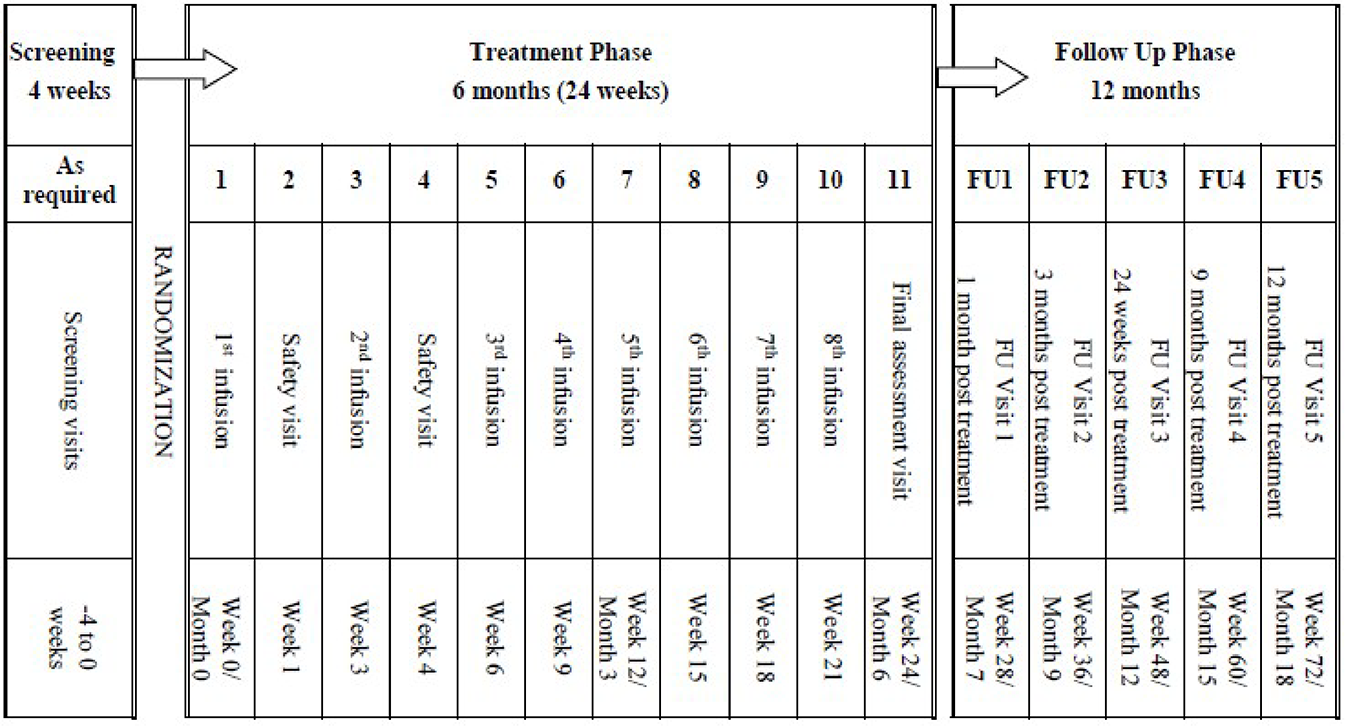
FU = follow-up.
Sources: Details included in the figure are from the sponsor’s Summary of Clinical Evidence1 and the TED01RV Clinical Study Report.23
TEP-301 Study
The TEP-301 study is a phase III, randomized, double-masked, placebo-controlled, parallel-group multicentre study designed to evaluate the efficacy and safety of teprotumumab in patients with active TED. A total of 83 patients with moderate to severe active TED were randomized in a 1:1 ratio through an interactive web response system to receive teprotumumab (n = 41) or placebo (n = 42). Randomization was stratified by smoking status through a central study-level randomization schedule. The study was conducted across 8 centres in the US and 5 centres in Europe. The first patient was enrolled on October 4, 2017, and the data cut-off date for the double-masked treatment period was February 19, 2019.
The study design is described in Figure 2, which shows a screening period of 2 to 6 weeks before the first dose (for eligibility assessments) and a treatment period of 24 weeks. At the end of the treatment period, patients who were proptosis nonresponders (i.e., the study eye had a < 2 mm decrease in proptosis) were eligible to enter an OLE study (Study HZNP-TEP-302). Proptosis responders and nonresponders who chose not to enrol in the OLE study entered a 48-week follow-up period of the TEP-301 study during which teprotumumab was not administered, but clinical assessments were performed. In addition, patients who were responders at week 24 but met the criteria for re-treatment due to a relapse during the follow-up period could enrol in the OLE study. After the end of the follow-up period, patients were contacted at 6 and 12 months (the follow-up contact phase) by phone or email to assess whether they had received new TED treatments.
Figure 2: TEP-301 Study Design
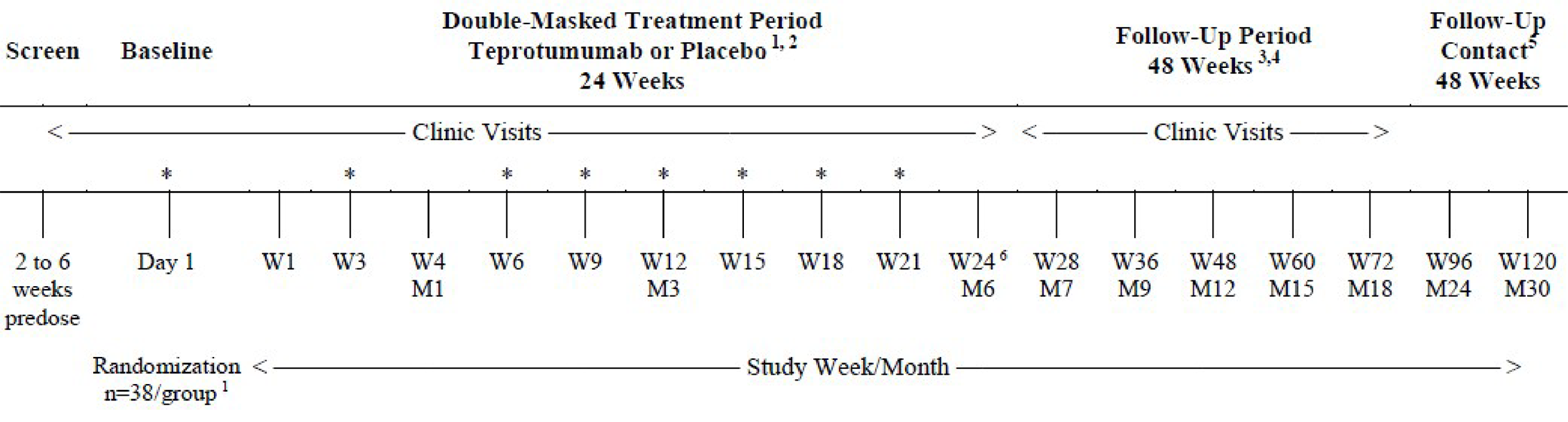
M = month; OLE = open-label extension; W = week.
Note: The categories used in the figure footnotes are as reported in the source and may not align with Canada's Drug Agency inclusive language guidelines.
1Patients were randomized in a 1:1 ratio (stratified by tobacco use status) to receive either teprotumumab (10 mg/kg on day 1 followed by 20 mg/kg every 3 weeks for the remaining 7 infusions) or placebo every 3 weeks for all 8 infusions.
2Visit windows were ± 1 day for weeks 1 and 4, ± 3 days for weeks 3, 6, 9, 12, 15, 18 and 21, and ± 7 days for week 24.
3Patients who were proptosis responders or nonresponders who did not elect to participate in the OLE study entered a follow-up period. Patients who were responders at week 24 but relapsed during the follow-up period could enrol in the OLE study.
4Visit windows of ± 7 days.
5Patients who completed the week 72 visit were contacted by phone or email by research staff to inquire if any treatment for TED had been received since the last study contact.
6Patients who were proptosis nonresponders at week 24 of the double-masked treatment period were offered the option to enter an OLE study.
Sources: Details included in the figure are from the sponsor’s Summary of Clinical Evidence1 and the TEP-301 Clinical Study Report.24
TEP-303 Study
The TEP-303 study is a phase III, randomized, double-masked, placebo-controlled, parallel-group multicentre study conducted in Japan to evaluate the efficacy and safety of teprotumumab in patients with active TED. A total of 54 patients with moderate to severe active TED were randomized in a 1:1 ratio to receive teprotumumab (n = 27) or placebo (n = 42). Randomization was stratified by tobacco use. A randomization schedule was generated by the contract research organization before shipment of any trial drug to the clinical sites. The study was conducted across 20 centres in Japan. The first patient was enrolled on February 15, 2022, and the data cut-off date for the double-masked treatment period was June 14, 2023.
The study design is depicted in Figure 3, which shows a screening period of 4 weeks before the first dose (for eligibility assessments) and a treatment period of 24 weeks. At the end of the treatment period, patients who were proptosis nonresponders (i.e., the study eye had a < 2 mm decrease in proptosis) were eligible to enter an OLE period of 24 weeks. Proptosis responders and nonresponders who chose not to enrol in the OLE period entered a 30-day follow-up period of the TEP-303 study during which the study drug was not administered.
Figure 3: TEP-303 Study Design
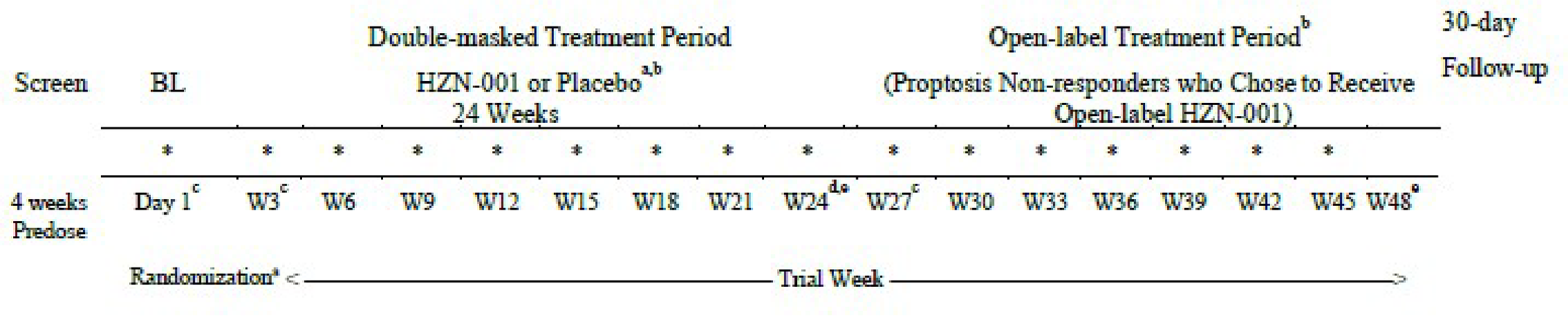
BL = baseline; OLE = open-label extension; W = week.
Notes: The categories used in the figure are as reported in the source and may not align with Canada's Drug Agency inclusive language guidelines.
Patients who were proptosis nonresponders at week 24 of the double-masked treatment period were offered the option to enter an OLE study.
aPatients were randomized in a 1:1 ratio (stratified by tobacco use status) to receive teprotumumab (10 mg/kg on day 1 followed by 20 mg/kg every 3 weeks for the remaining 7 infusions) or placebo every 3 weeks for all 8 infusions.
bVisit windows were ± 1 day for weeks 1 and 4, ± 3 days for weeks 3, 6, 9, 12, 15, 18 and 21, and ± 7 days for week 24.
cPatients who were proptosis responders or nonresponders who did not elect to participate in the OLE study entered a follow-up period. Patients who were responders at week 24 but relapsed during the follow-up period could enrol in the OLE study.
dVisit windows of ± 7 days.
ePatients who completed the week 72 visit were contacted by phone or email by research staff to inquire if any treatment for TED had been received since the last study contact.
Sources: Details included in the figure are from the sponsor’s Summary of Clinical Evidence1 and the TEP-303 Clinical Study Report.25
Populations
Inclusion and Exclusion Criteria
Studies TED01RV, TEP-301, and TEP-303 (Active TED)
The TED01RV, TEP-301, and TEP-303 studies included adult patients (aged 18 to 80 years) with moderate to severe TED (based on significant proptosis and/or diplopia) who were not planning for or did not immediately need surgical ophthalmological intervention and had not recently received treatments for TED.
The inclusion criteria required a clinical diagnosis of Graves disease and active TED, which was defined by a CAS of greater than or equal to 4 (on a 7-item scale) in the TED01RV and TEP-301 studies but by a CAS of greater than or equal to 3 (on a 7-item scale) in the TEP-303 study. According to the sponsor, the TEP-303 study CAS inclusion criteria were adopted to account for the milder signs and symptoms of TED in Asian patients. 57 The TEP-301 and TEP-303 studies specified moderate to severe TED as an inclusion criterion (i.e., lid retraction of greater than or equal to 2 mm, moderate or severe soft tissue involvement, proptosis [exophthalmos] greater than or equal to 3 mm higher than normal, and/or inconstant or constant diplopia). Patients needed to be euthyroid or have mild hypothyroidism or hyperthyroidism for inclusion in the studies, with every effort having been made to correct the mild hypothyroidism or hyperthyroidism. In all the studies, patients were required to enrol less than 9 months from symptom onset.
The key exclusion criteria for all 3 studies mentioned a decrease in best corrected visual acuity due to optic neuropathy, corneal decompensation unresponsive to medical management in the study eye, a decrease in CAS of greater than or equal to 2 points between screening and baseline (i.e., no spontaneous improvement in disease activity), and a decrease of greater than or equal to 2 mm in proptosis between screening and baseline (for the TEP-301 and TEP-303 studies). Patients were also excluded if they had previously undergone radiotherapy or TED-related surgical procedures (i.e., orbital decompression or strabismus surgery) or if they had received TED treatment using steroids (within 4 to 6 weeks before screening), rituximab, tocilizumab (only for the TEP-301 and TEP-303 studies), or other monoclonal antibodies (within 3 months before screening; only for the TEP-301 and TEP-303 studies). Previous steroid use with a maximum cumulative dose of less than 1 g methylprednisolone or equivalent for the treatment of TED was allowed if discontinued at least 4 to 6 weeks before screening.
Interventions
Interventions in the TED01RV, TEP-301, and TEP-303 Studies
Across the active TED studies, single courses of teprotumumab or placebo were administered through IV in a double-masked manner every 3 weeks during the 24-week treatment period for a total of 8 infusions. Teprotumumab was administered at a dose of 10 mg/kg for the first infusion and 20 mg/kg for the following 7 infusions. Masking of treatment assignment was maintained by using 100 mL or 250 mL infusion bags (as appropriate, per weight-based dosing) for both teprotumumab and placebo. The pharmacists responsible for preparing the treatment or placebo solution for IV use were not masked to the treatment being administered, but the investigator and other study personnel were. In both treatment groups, the first 2 infusions were administered over approximately 90 minutes, while subsequent infusions were administered over approximately 60 minutes. Immediate infusion-associated events were managed by slowing the infusion rate, interrupting the administration, or offering symptomatic treatment, if needed.
Treatment Discontinuation in the TED01RV, TEP-301, and TEP-303 Studies
Across all the studies, study treatment discontinuation could occur in the event of an AE (if the AE posed an unacceptable risk to the patient’s health or the patient was unwilling to continue because of it), lack of efficacy, noncompliance with the study drug, protocol deviations, losses to follow-up, pregnancy, withdrawal by patients, or termination by the sponsor.
Permanent study drug discontinuation occurred in the event of a drug-related anaphylactic reaction (in the TEP-301 and TEP-303 studies), a persistently severe drug-related AE that did not become mild or moderate in intensity at least 2 weeks before the next scheduled dose (in the TEP-301 study), severe drug-related hyperglycemia (e.g., blood glucose > 250 mg/dL) that did not decrease to mild or moderate intensity with antidiabetic treatment (the dose could be skipped up to 2 times before permanently discontinuing the study drug) (in the TEP-301 study), or the diagnosis or suspicion of inflammatory bowel disease (in the TEP-301 and TEP-303 studies).
Across all the studies, patients experiencing hyperglycemia could skip their next scheduled infusions to allow for hyperglycemia treatment to take effect or for their fasting glucose rate to return to mild or moderate severity, based on the investigators’ judgment. Withholding a scheduled infusion was permitted only twice during the study.
In all studies, patients who discontinued the study drug were required to return to the clinic and undergo the scheduled end-of-treatment assessments; they were encouraged to participate in the follow-up phases. Patients who discontinued the study drug due to an AE were followed until resolution or stabilization of the AE, or until an adequate explanation for the event was obtained.
The TEP-303 study adopted a replacement policy whereby patients who discontinued from the trial prematurely for any reason (including pandemic or natural disaster and associated restrictions on movement and work) could be replaced at the discretion of the sponsor.
Concomitant Treatments in the TED01RV, TEP-301, and TEP-303 Studies
During all the trials, local supportive measures for TED, simple analgesics (e.g., acetaminophen, nonsteroidal anti-inflammatory therapies), and medications or supplements for conditions other than TED were permitted. Topical and inhaled corticosteroids for conditions other than TED were allowed, but oral and/or IV corticosteroids were not (except for patients who experienced infusion- associated AEs). Similarly, use of other immunosuppressive drugs was restricted during the trials.
Symptomatic treatments (e.g., antipyretics, antihistamines, beta-agonists, GCs, oxygen, and IV fluids) could be administered to patients who experienced immediate infusion-associated AEs. In patients with immediate or delayed infusion-associated events, pretreatment for the following study drug administration was possible.
Outcomes
A list of efficacy end points assessed in this Clinical Review Report is provided in Table 6, followed by descriptions of the outcome measures. The summarized end points are based on outcomes included in the sponsor’s Summary of Clinical Evidence as well as on any outcomes identified as important to this review, according to the clinical experts consulted for this review and input from the patient and clinician groups and public drug plans. Using the same considerations, we selected end points that were considered most relevant to inform the expert committee deliberations and finalized this list of end points in consultation with members of the expert committee. All summarized efficacy end points were assessed using GRADE. Select notable harms outcomes considered important for informing the expert committee deliberations were also assessed using GRADE.
Additional findings from the CAS measures in the active TED trials are provided as supportive evidence in the Systematic Review section of this report.
Table 6: Outcomes Summarized From the Active TED Studies Included in the Systematic Review
Outcome measure | Time point | TED01RV study | TEP-301 study | TEP-303 study |
|---|---|---|---|---|
Proptosis responder rate (≥ 2 mm reduction from baseline in proptosis in the study eye without deterioration [i.e., ≥ 2 mm increase] in the fellow eye) | Week 24 | Exploratory | Primarya | Primarya |
Overall responder rate (percentage of patients with a ≥ 2 mm reduction in proptosis and a ≥ 2-point reduction in CAS from baseline in the study eye, provided there was no corresponding deterioration [i.e., ≥ 2 mm increase] in proptosis or CAS in the fellow eye) | Week 24 | Primarya | Secondarya | Secondarya |
Change from baseline in the GO-QoL AP and VF subscale scores | Week 24 | Secondarya | Exploratory | Secondarya |
Diplopia responder rate (a reduction of ≥ 1 grade among patients with diplopia > 0 at baseline) | Week 24 | Exploratory | Secondarya | Secondarya |
Complete binocular diplopia responder rate (a diplopia score of 0 among patients with binocular diplopia > 0 at baseline) | Week 24 | Not assessed | Not assessed | Secondarya |
Safety (hyperglycemia) | Week 24 | Assessed | Assessed | Assessed |
Safety (hearing impairment) | Week 24 | Not assessed | Not assessed | Assessed |
AP = Appearance; CAS = clinical activity score; GO-QoL = Graves Ophthalmopathy Quality of Life questionnaire; TED = thyroid eye disease; VF = Visual Functioning.
Note: The categories used in the table are as reported in the source and may not align with Canada's Drug Agency inclusive language guidelines.
aStatistical testing for these end points was adjusted for multiple comparisons (i.e., hierarchal testing).
Sources: Details included in the table are from the sponsor’s Summary of Clinical Evidence1 and the TED01RV,23 TEP-301,24 and TEP-303 Clinical Study Reports.25
Proptosis
Proptosis (exophthalmos or protrusion of the eyeball) was evaluated in all 3 studies. The assessments were performed by study observers for both eyes at baseline and at each assessment time point. The eye with the most significant proptosis at the baseline visit was defined as the “study eye,” while the other eye was defined as the “fellow eye.” Analyses were conducted for both eyes, but only the study eye contributed to the primary analyses of proptosis-related end points. Supplementary analyses were conducted using the fellow eye. Proptosis was measured in millimetres (with higher values indicating worse proptosis) using a Hertel exophthalmometer. Whenever possible, the same instrument and same observer were used at each evaluation for the duration of the trial. According to the sponsor, a minimal important difference (MID) in proptosis was defined as a greater than or equal to 2 mm reduction, based on prior TED trials;58 this was validated by a panel of clinical experts consulted by CDA-AMC.
Clinical Activity Score
The CAS assesses patients with active TED (i.e., active inflammation) based on the presence or absence of inflammatory signs and symptoms. In the trials, assessments were performed by study observers using the 7-item EUGOGO-amended CAS for each eye.59
The 7-point CAS is scored as 0 or 1 point for each of the following items, and the total score is calculated as the sum of these scores (scores range from 0 [no clinical activity] to 7 [worst clinical activity]):
spontaneous orbital pain
gaze-evoked orbital pain
eyelid swelling attributed to active TED or GO (inflammatory phase)
eyelid erythema
conjunctival redness attributed to active TED or GO (inflammatory phase) (“equivocal” redness was not scored)
chemosis
inflammation of caruncle or plica.
Psychometric properties of the instrument as well as MIDs are reported in Table 7.
Diplopia
Diplopia (double vision) was graded subjectively by study observers on a scale of 0 to 3, with higher scores indicating worse diplopia. The grades were defined as 0 for no diplopia, 1 for intermittent diplopia (in the primary gaze position, when tired, or when first awakening), 2 for inconstant diplopia (at the extremes of gaze), or 3 for constant diplopia (in the primary or reading position).60 A clinically meaningful change threshold adopted in the clinical trials and sponsor’s submission was defined as a greater than or equal to 1 grade change.58
GO-QoL Questionnaire
The GO-QoL is a disease-specific, self-reported measure of quality of life in patients with TED. The questionnaire contains 16 items divided into 2 subscales (daily functioning as it relates to visual function and the psychosocial consequences of an altered appearance), with each item scored on a 3-point Likert scale. For each subscale, the scores for the 8 questions are summed and transformed to a 0 to 100 scale, with 0 indicating the worst health state and 100 indicating the best health state.61 Psychometric properties of the instrument as well as MIDs are reported in Table 7.
Safety
A descriptive analysis of safety was performed in all the trials. All TEAEs were coded using the Medical Dictionary for Regulatory Activities and classified using the National Cancer Institute Common Terminology Criteria for Adverse Events. A TEAE was defined as an AE that occurred on or after the date of the first infusion, and events were reported according to whether these occurred during the double-masked treatment period, the open-label treatment period, or the follow-up period.
AEs of special interest varied by study, but included infusion reactions (all 3 studies), hyperglycemia (all 3 studies), thrombocytopenia (the TED01RV study), anemia (the TED01RV study), muscle spasms (the TEP-301 study), diarrhea (the TEP-301 study), hearing impairment (the TEP-303 study), and new onset or exacerbation of inflammatory bowel disease (the TEP-303 study).
Table 7: Summary of Outcome Measures and Their Measurement Properties
Outcome measure | Type | Conclusions about measurement properties | MID |
|---|---|---|---|
CAS | A 7-point Likert scale to identify patients with active TED (i.e., with active inflammation) based on the presence or absence of inflammatory signs and symptoms. The 7-point CAS is scored as 0 or 1 point for each of the following items, and the total score is calculated as the sum of these scores (where scores range from 0 [no clinical activity] to 7 [worst clinical activity]): spontaneous orbital pain, gaze-evoked orbital pain, eyelid swelling due to active TED/GO (inflammatory phase), eyelid erythema, conjunctival redness considered due to active TED/GO (inflammatory phase) (“equivocal” redness was not scored), chemosis, inflammation of caruncle or plica. | The sponsor stated that clear evidence regarding the psychometric properties of CAS was unavailable. Validity No information was provided by the sponsor. Reliability The sponsor noted that there are interrater variabilities associated with CAS evaluations due to the score’s subjective nature. For example, a prospective study found wide differences in assessors’ evaluations of CAS patients (9 patients were assessed by observers on the same day); this suggests that caution be exercised when interpreting CAS.52,62 Responsiveness No information was provided by the sponsor. | The MID for the CAS score was defined as ≥ 2 points based on European Group on Graves Orbitopathy recommendations.60 |
Go-QoL | The questionnaire is a disease-specific, self-reported measure of QoL in patients with TED. The 16-item questionnaire is divided into 2 subscales (daily functioning as it relates to visual function and the psychosocial consequences of an altered appearance), with each item scored on a 3-point Likert scale. For each subscale, the scores for the 8 questions are summed and transformed to a scale of 0 to 100, with 0 indicating the worst health state and 100 indicating the best health state. | Validity In a sample of 70 patients with GO, the authors observed Cronbach alphas of 0.86 for the VF subscale score and 0.82 for the AP subscale score, confirming construct validity. They noted that the highest alphas if 1 of the items was deleted would be 0.85 for the VF subscale score and 0.83 for the AP subscale score.61 Compared to subscales of the MOS-24, the authors noted higher correlations with subscales of the SIP (VF subscale score: r ranging from 0.07 to 0.39; P < 0.05 and for AP subscale score: r ranging from 0.14 to 0.41; P < 0.05 only for correlations with social interaction and leisure pastimes).61 In addition, the authors considered the correlation between the clinical activity score and GO-QoL to be low (r = −0.04 for the VF subscale score and r = 0.08 for the AP subscale score).61 In another study of 171 patients, authors noted GO-QoL scores to be correlated with TED severity. They considered that lower scores reflect greater severity, with GO-QoL scores positively correlated with utility scores across 6 TED health states, with a positive utility change of 0.013 for each 1-point improvement in GO-QoL score.63,64 In another study with 67 patients, the authors found no correlation between QoL scores and activity and/or severity scores before and after treatment.65 Reliability The test-retest reliability of the GO-QoL in a total of 89 patients was considered high for the VF subscale score (ICC: 0.83; 95% CI, 0.75 to 0.89) and AP subscale score (ICC: 0.87; 95% CI, 0.81 to 0.91). In addition, the authors considered the VF and AP subscale ICCs to be higher in patients who reported stability than in those who reported improvement or deterioration on the transitional variables about perceived general health changes.64 Responsiveness In a sample of 67 patients, the authors observed significant improvements in QoL scores after steroid and orbital decompression.65 In another study with 159 patients, the authors investigating the effect of selenium on mild GO observed an improvement in GO-QoL scores and considered it to be reflective of improving clinical overall eye scores.66 | The MCIDs were noted to be 6 points for less invasive therapies (i.e., those provided for mild TED) and 10 points for more invasive therapies (i.e., those provided for moderate to severe TED).67,68 |
AP = Appearance; CAS = clinical activity score; CI = confidence interval; GO = Graves ophthalmopathy; GO-QoL = Graves Ophthalmopathy Quality of Life questionnaire; ICC = intraclass correlation; MCID = minimal clinically important difference; MID = minimal important difference; MOS-24 = Medical Outcomes Study Short-Form General Health Survey; QoL = quality of life; SIP = Sickness Impact Profile; TED = thyroid eye disease; VF = Visual Functioning.
Statistical Analysis
According to the sponsor, in general, the statistical analyses were conducted similarly between the 4 trials, with the only notable difference being in the TED01RV study, which analyzed responder rates using a logistic regression model. The sponsor conducted additional efficacy analyses on the TED01RV study data using the Cochran-Mantel-Haenszel test (adjusted for tobacco use status) to allow consistent comparison with the analyses conducted in the TEP-301 and TEP-303 studies. Descriptions of the analytical approaches used for the main outcomes in the active TED trials are reported in Table 8.
Analyses of categorical variables were generally conducted with nonresponder imputation (i.e., patients with missing week 24 data were imputed as nonresponders). Analyses of continuous variables were generally conducted using a mixed model for repeated measures; a change value of 0 (i.e., no response) was imputed for patients without any postbaseline values to avoid excluding those patients from the model.
Table 8: Statistical Analysis of Efficacy End Points
End point | Statistical model | Adjustment factors | Handling of missing data | Sensitivity analyses |
|---|---|---|---|---|
TED01RV study (active TED) | ||||
Overall responder rate | Per statistical analysis plan: Logistic regression model with treatment group as the model effect Additional efficacy analyses: Cochran-Mantel-Haenszel test (stratified chi-square test) | Stratification according to tobacco use (nonuser, user) | Nonresponder imputation (missing week 24 evaluation data were imputed as treatment failures) |
|
Change from baseline in GO-QoL scores (i.e., overall score and AP and VF subscale scores) | MMRM ANCOVA model to fit the individual change from baseline scores for the study eye | Baseline health score, smoking status, treatment group, time, time by treatment, and time by baseline health score interaction | If a patient did not have any postbaseline values, a change from baseline value of 0 was imputed at the first postbaseline visit to avoid including data of the patient from the MMRM analysis |
|
Change from baseline in proptosis | As previous | As previous | As previous | None |
Change from baseline in CAS score | As previous | As previous | As previous | None |
TEP-301 study (active TED) | ||||
Proptosis responder rate | Responder rate was calculated as the stratified difference in proportions between the treatment groups. Estimates from the 2 strata were combined using Cochran-Mantel-Haenszel weights. The test statistic was calculated by dividing the stratified difference by the standard error, and the 2-sided P value was calculated assuming that the test statistic was distributed as a standard normal random variable. | Stratification according to tobacco use (nonuser, user) | Nonresponder imputation (missing week 24 evaluation data imputed as treatment failures) |
|
Overall responder rate | As previous | As previous | As previous |
|
CAS categorical response (reduction to a score 0 or 1) in the study eye | As previous | As previous | As previous | None |
Diplopia responder rate (a ≥ 1-grade reduction among patients with diplopia > 0 at baseline) | As previous | As previous | As previous |
|
Change from baseline in proptosis in the study eye | MMRM ANCOVA model to fit the individual change from baseline scores for the study eye. The overall treatment group’s least squares means and associated standard errors are reported, as well as their difference, the standard error of the difference, 95% CIs, and P values. | Baseline score, tobacco use, treatment group, visit, and visit-by-treatment and visit-by-baseline-score interactions | If a patient did not have any postbaseline values, a change from baseline value of 0 was imputed at the first postbaseline visit to avoid including data of the patient from the MMRM analysis | None |
Change from baseline in the GO-QoL scores (overall score and AP and VF subscale scores) | MMRM ANCOVA, as previous | As previous | As previous | None |
TEP-303 study (active TED) | ||||
Proptosis responder rate | As in TEP-301, Cochran-Mantel-Haenszel test | As in TEP-301, stratification according to tobacco use (nonuser, user) | As in TEP-301 |
|
Overall responder rate | As previous | As previous | As previous |
|
CAS categorical response (score 0 or 1) in the study eye | As previous | As previous | As previous | None |
Diplopia responder rate | As previous | As previous | As previous |
|
Complete binocular diplopia responder rate | As previous | As previous | As previous |
|
Change from baseline in proptosis in the study eye | MMRM (missing at random) with an unstructured variance-covariance matrix | Baseline proptosis (most likely 15 to 30), tobacco use (yes or no), treatment group, and visit (weeks 3, 6, 12, 18, and 24) | No imputation was performed | None |
Change from baseline in GO-QoL scores (i.e., overall score and AP and VF subscale scores) | As previous | As previous | As previous | None |
ANCOVA = analysis of covariance; AP = Appearance; CAS = clinical activity score; GO-QoL = Graves Ophthalmopathy Quality of Life questionnaire; ITT = intention to treat; mITT = modified intention to treat; MMRM = mixed model for repeated measures; PP = per protocol; TED = thyroid eye disease; VF = Visual Functioning.
Note: The categories used in the table are as reported in the source and may not align with Canada's Drug Agency inclusive language guidelines.
Sources: Details included in the table are from the sponsor’s Summary of Clinical Evidence1 and the TED01RV,23 TEP-301,24 and TEP-303 Clinical Study Reports.25
Sample Size and Power Calculation
TED01RV study: The sample size was planned to be 84 patients (42 patients per treatment arm), which would provide 80% power at a 2-sided alpha level of 0.05 to detect a treatment difference in the primary outcome (ORR), assuming a 30% response rate in the placebo arm and a 60% response rate in the teprotumumab arm. Up to 93 evaluable patients could be enrolled to account for up to a 10% dropout rate.
TEP-301 study: The sample size calculation was based on the TED01RV study, in which a 51% difference (71% versus 20%) in proptosis response (≥ 2 mm) was observed between the teprotumumab and placebo arms at week 24. In TEP-301, a sample size of 38 patients per group would provide 90% power at a 2-sided alpha level of 0.05 to detect a difference of 39% between teprotumumab and placebo; the sample size was adjusted to allow for a 16% discontinuation rate.
TEP-303 study: The sample size calculation assumed that a 40% treatment difference would be observed in the proptosis response rate (≥ 2 mm) (teprotumumab: 65%, which the sponsor reported to be lower than the observed response rate in the teprotumumab group from the TED01RV trial; placebo: 25%, which the sponsor reported to be higher than the observed response rate in the placebo from TED01RV trial). In the TEP-303 study, a sample size of 50 patients (25 per treatment group) was needed to provide 83% power to detect the treatment difference using a 2-sided alpha level of 0.05.
Statistical Testing
TED01RV Study
If the primary end point (ORR at week 24) reached statistical significance (i.e., a 2-sided alpha level of 0.05), then the secondary end points were evaluated for statistical significance at the same level in the following order:
change from baseline to week 24 in the GO-QoL overall score
change from baseline to week 24 in proptosis in the study eye
change from baseline to week 24 in CAS in the study eye
change from baseline to week 24 in the GO-QoL VF subscale score
change from baseline to week 24 in the GO-QoL AP subscale score.
TEP-301 Study
If the primary end point (proptosis responder rate at week 24) reached statistical significance (i.e., a 2-sided alpha level of 0.05), then the secondary end points were evaluated for statistical significance at the same level in the following order:
ORR at week 24
CAS categorical response (score of 0 or 1) rate at week 24
change from baseline to week 24 in proptosis in the study eye
diplopia responder rate at week 24
change from baseline to week 24 in the GO-QoL overall score.
TEP-303 Study
If the primary end point (proptosis responder rate at week 24) reached statistical significance (i.e., a 2-sided alpha level of 0.05), then the secondary end points were evaluated for statistical significance at the same level in the following order:
ORR at week 24
CAS categorical response (score of 0 or 1) rate at week 24
change from baseline to week 24 in proptosis in the study eye
diplopia responder rate at week 24
complete binocular responder rate at week 24
change from baseline to week 24 in the GO-QoL overall score at week 24
change from baseline to week 24 in the GO-QoL VF and AP subscale scores at week 24.
Subgroup Analyses
Subgroups analyses were not conducted in the TED01RV study.
In the TEP-301 study, prespecified subgroup analyses were performed for the primary outcome according to race (Asian, Black, white, other), ethnicity (Hispanic or Latino, not Hispanic or Latino), tobacco use (nonuser, including “never” and “former,” versus user), age (< 65 years, ≥ 65 years), sex (female, male), and region (Europe, US). These subgroup analyses were not controlled for multiplicity.
In the TEP-303 study, subgroup analyses were performed for the primary outcome according to tobacco use (nonuser, user), age (< 65 years, ≥ 65 years), and sex (female, male) and were not controlled for multiplicity.
Analysis Populations
The analysis populations were generally aligned between the 3 studies, with the ITT populations used for the primary efficacy analyses, the safety populations used for the safety analyses, and the modified ITT and per-protocol (PP) populations used for sensitivity and supplementary analyses. It is noteworthy that the ITT and safety analyses sets in the TEP-303 study are identical, given that all randomized patients received at least 1 dose of their assigned treatment.
Descriptions of the study populations used in diverse analyses across the studies are presented in Table 9.
Table 9: Analysis Populations of the Studies Included in the Review
Study | Population | Definition | Application |
|---|---|---|---|
TED01RV study (active TED) | ITT | All patients who were randomized to receive either teprotumumab or placebo and received ≥ 1 dose of study treatment | Primary efficacy analyses |
Safety | All patients who received at least 1 dose of study treatment | Safety analyses | |
mITT | All ITT patients who received at least 1 dose of study treatment and had at least 1 postbaseline measurement of the primary efficacy end point | Supplementary analyses | |
PP | All mITT patients who completed treatment and did not incur any major protocol violations that would have challenged the validity of their data | Supplementary analyses | |
TEP-301 and TEP-303 studies (active TED) | ITT | All patients who were randomized to receive either teprotumumab or placebo | Primary efficacy analyses |
Safety | All patients who received at least 1 dose of study treatment | Safety analyses | |
mITT | All ITT patients who received at least 1 dose of study treatment and had at least 1 postbaseline measurement of the primary efficacy end point | Supplementary analyses | |
PP | All mITT patients who completed treatment and did not incur any major protocol violations that would have challenged the validity of their data | Supplementary analyses |
ITT = intention to treat; MITT = modified intention to treat; PP = per protocol; TED = thyroid eye disease.
Sources: Details included in the table are from the sponsor’s Summary of Clinical Evidence1 and the TED01RV,23 TEP-301,24 and TEP-303 Clinical Study Reports.25
Results
Patient Disposition
TED01RV Study
Reasons for patients being screened out were not reported for the TED01RV study (Table 10). A total of 88 patients were randomized in the study. One patient withdrew before receiving the first infusion of the treatment and was removed from the ITT population; however, this patient (counted as discontinuing the study) was added back to the teprotumumab group to align with the definition of the ITT population from other active TED trials (the TEP-301 and TEP-303 studies). The proportions of patients who completed treatment were 86.7% in the placebo group and 88.1% in the teprotumumab group. Discontinuation of treatment occurred in 11.9% (N = 5) and 13.3% (N = 6) of patients in the teprotumumab and placebo groups, respectively. In the teprotumumab group, reasons for discontinuation were entirely related to AEs. In the placebo group, the most common reasons for discontinuation were defined as other (occurring in 6.7% and including back surgery, optic disc edema, and vasovagal attack) and lack of efficacy (4.4%).
TEP-301 Study
Of the 107 patients who were screened for the TEP-301 study, 24 patients (22.4%) were screened out (Table 10). The most common reasons for being screened out were a CAS of under 4 in the most severely affected eye at screening and baseline (N = 8) and unwillingness to comply with the prescribed treatment protocol and evaluations for the duration of the study (N = 4). Overall, 83 patients were randomized to receive placebo (N = 42) or teprotumumab (N = 41). The proportions of patients who completed treatment in the placebo and teprotumumab groups were 95.2% and 95.1%, respectively. Discontinuation of treatment occurred in 4.8% (N = 2) and 4.9% (N = 2) of patients in the placebo and teprotumumab groups, respectively. In both study groups, the most common reasons for discontinuation were AEs (2.4%) and patient decision (2.4%).
TEP-303 Study
Of the 64 patients who were screened for the TEP-303 study, 10 patients (15.6%) were screened out (Table 10). Reasons for being screened out were a CAS of less than 4 in the most severely affected eye at screening and baseline (N = 5), lacking a euthyroid status at screening (N = 2), recent corticosteroid use for non-TED conditions (N = 1), and investigator discretion (N = 2). Overall, 27 patients were randomized to receive placebo and 27 patients were randomized to receive teprotumumab. The proportions of patients who completed treatment were 92.6% and 96.3% in the placebo and teprotumumab groups, respectively. Discontinuation of treatment occurred in 7.4% (N = 2) and 3.7% (N = 1) of patients in the placebo and teprotumumab groups, respectively. In the teprotumumab group, discontinuation occurred due to an AE, while in the placebo group, 1 patient discontinued due to an AE and 1 patient discontinued due to receipt of a restricted concomitant medication.
Table 10: Summary of Patient Disposition in the Active TED Studies Included in the Systematic Review — All Patients
Patient disposition | TED01RV study | TEP-301 study | TEP-303 study | |||
|---|---|---|---|---|---|---|
TEP | Placebo | TEP | Placebo | TEP | Placebo | |
Screened, N | NR | 107 | 64 | |||
Reason for being screened out, n (%) | NR | 24 (22.40) | 10 (15.6) | |||
CAS < 4 at baseline | NR | 8 (7.50) | 5 (7.8) | |||
Unwilling or unable to comply with treatment and evaluations | NR | 4 (3.70) | NR | |||
Randomized, N | — | — | 41 | 42 | 27 | 27 |
Randomized and treated, N | 42a | 45 | 41 | 42 | 27 | 27 |
Completed treatment, n (%) | 37 (88.10) | 39 (86.70) | 39 (95.10) | 40 (95.20) | 26 (96.30) | 25 (92.60) |
Discontinued from treatment, n (%) | 5a (11.90) | 6 (13.30) | 2 (4.90) | 2 (4.80) | 1 (3.70) | 2 (7.40) |
Reason for discontinuation, n (%) | ||||||
Adverse event | 5 (11.90) | 1 (2.20) | 1 (2.40) | 1 (2.40) | 1 (3.70) | 1 (3.70) |
Lack of efficacy | 0 | 2 (4.40) | 0 | 0 | 0 | 0 |
Patient decision | 0 | 0 | 1 (2.40) | 1 (2.40) | 0 | 0 |
Other | 0 | 3 (6.70) | 0 | 0 | 0 | 1 (3.70) |
Analysis set | ||||||
ITT, N | 42 (100) | 45 (100) | 41 (100) | 42 (100) | 27 (100) | 27 (100) |
mITT | 42 (100) | 45 (100) | 40 (97.60) | 42 (100) | 27 (100) | 27 (100) |
PP, N | 33 (78.60) | 36 (80.00) | 33 (80.50) | 34 (81.00) | 23 (85.20) | 24 (88.90) |
Safety, N | 43 (102.40)b | 44 (97.80)b | 41 (100) | 42 (100) | 27 (100.0) | 27 (100.0) |
CAS = clinical activity score; ITT = intention to treat; mITT = modified intention to treat; NR = not reported; PP = per protocol; TED = thyroid eye disease; TEP = teprotumumab; vs. = versus.
aOne patient was randomized to the teprotumumab group but withdrew from the study before receiving the first infusion. In the additional efficacy analyses, this patient was added back to the teprotumumab group in the TED01RV study (to align with the ITT definitions for the TEP-301 and TEP-303 studies) and was counted as having discontinued.
bThree patients received ≥ 1 dose of the wrong treatment (vs. their randomized assignment) and were analyzed using the first treatment actually received for the safety population.
Sources: Details included in the table are from the sponsor’s Summary of Clinical Evidence1 and the TED01RV,23 TEP-301,24 and TEP-303 Clinical Study Reports.25
Protocol Deviations
TED01RV Study
There were 10 protocol deviations occurring in the study (teprotumumab versus placebo: 6 versus 4). The protocol deviations that most commonly excluded patients from the PP population were related to study drug administration (teprotumumab versus placebo: 7.0% [N = 3] versus 2.3% [N = 1]), deviations from exclusion criteria (2.3% [N = 1] versus 4.5% [N = 2]), deviations from inclusion criteria (4.7% [N = 2] in the teprotumumab group), and deviation from visit window (2.3% [N = 1] in the placebo group).
TEP-301 Study
There were 26 major protocol deviations occurring in the study (teprotumumab versus placebo: 14 versus 12). The most common major deviations noted were associated with study drug dispensing and/or dosing (teprotumumab versus placebo: 14.6% [N = 6] versus 16.7% [N = 7]); visit and/or assessment schedule (teprotumumab versus placebo: 12.2% [N = 5] versus 7.1% [N = 3]), and eligibility criteria (teprotumumab versus placebo: 9.8% [N = 4] versus 7.1% [N = 3]).
A total of 16 participants (8 patients in each group) were excluded from the PP analysis set. Reasons for this included week 24 assessments being conducted outside the visit window (teprotumumab versus placebo: 2 versus 2); patients not completing treatment (teprotumumab versus placebo: 2 versus 2); receipt of prohibited medications (teprotumumab versus placebo: 3 versus 0); different assessors for Hertel measurements at baseline and week 24 (teprotumumab versus placebo: 2 versus 1); randomization occurring more than 9 months from the time of TED symptoms onset (teprotumumab versus placebo: 1 versus 2); and a patient undergoing a restricted surgical procedure (teprotumumab versus placebo: 0 versus 1).
TEP-303 Study
There were 10 major protocol deviations occurring in the study (teprotumumab versus placebo: 5 versus 5). The most common major deviation noted was associated with the visit and/or assessment schedule (teprotumumab versus placebo: 4 versus 5).
A total of 7 participants (teprotumumab versus placebo: 4 versus 3) were excluded from the PP analysis set. Major protocol deviations that led to this exclusion in the teprotumumab arm were associated with out-of-window visits due to COVID-19, protocol deviations regarding proptosis assessment at baseline (the investigator misunderstood the procedure of the Hertel measurements), participants not receiving the drug in weeks 15 and 21 (due to a TEAE of neurosensory hypoacusis), and different ophthalmologists assessing the clinical measures of severity at week 24. Major protocol deviations that led to exclusion from the PP analysis set in the placebo arm were associated with protocol deviations regarding proptosis assessment at baseline (the investigator misunderstood the procedure of the Hertel measurements), the use of restricted medication (steroid pulse therapy), patients not receiving treatment in weeks 15, 18, and 21 due to concerns about the development of hyperglycemia during a high-dose steroid pulse for TED, and patients not receiving treatment in weeks 18 and 21 due to a TEAE of neurosensory hypoacusis.
Baseline Characteristics
TED01RV Study
In the TED01RV study, there was a higher proportion of female patients in the placebo group compared to the teprotumumab group (81.8% [N = 36] versus 65.1% [N = 28]) (Table 11). The mean age of patients in the teprotumumab arm was 51.6 years (SD = 10.67 years), and the mean age of patients in the placebo arm was 54.2 years (SD = 12.98 years). The majority of participants in the 2 treatment groups were white (teprotumumab versus placebo: 86% versus 86.4%). More patients were current tobacco users in the placebo group (40.9%) than in the teprotumumab group (25.6%). The mean times since diagnosis of TED were 4.7 months (SD = 2.06 months) in the teprotumumab group and 5.2 months (SD = 2.40 months) in the placebo group. Other clinical and disease characteristics of patients in the TED01RV study are presented in Table 11.
TEP-301 Study
In the TEP-301 study, there were 70.7% female patients (N = 29) in the teprotumumab group compared with 73.8% (N = 31) in the placebo group (Table 11). The mean age of patients in the teprotumumab group was 51.6 years (SD = 12.63 years), and the mean age of patients in the placebo group was 48.9 years (SD = 12.96 years). The majority of participants in the 2 treatment groups were white (teprotumumab group versus placebo group: 85.4% versus 88.1%). More than half of the patients in the 2 treatment groups had never smoked (teprotumumab group versus placebo group: 56.1% versus 59.5%). Patients who were currently smoking accounted for 22% and 19% of patients in the teprotumumab group and placebo group, respectively. The mean times since diagnosis of TED were 6.2 months (SD = 2.33 months) in the teprotumumab group and 6.4 months (SD = 2.38 months) in the placebo group. Hyperthyroidism was reported among 14.6% and 31.0% of patients in the teprotumumab and placebo groups, respectively. Approximately 14% of patients in each treatment arm had a surgical history of thyroidectomy. Other clinical and disease characteristics of patients in the TEP-301 study are presented in Table 11.
TEP-303 Study
In the TEP-303 study, there was a higher proportion of female patients in the placebo arm compared to the teprotumumab group (74.1% [N = 20] versus 66.7% [N = 18]) (Table 11). The mean age of patients in the teprotumumab group was 46.6 years (SD = 14.18 years), and the mean age of patients in the placebo group was 50.0 years (SD = 13.35 years). The study was conducted exclusively in patients of Asian ethnicity. About 40% of the patients in the 2 treatment groups had never smoked (teprotumumab versus placebo: 37% versus 40.7%). Patients who currently smoked accounted for 14.8% of patients in both the teprotumumab and placebo groups. The mean times since diagnosis of TED were 4.3 months (SD = 2.42 months) in the teprotumumab group and 5.2 months (SD = 2.16) in the placebo group. There were no patients reporting hyperthyroidism. History of thyroidectomy was reported by 1 patient (3.7%) in the teprotumumab group and 2 patients (7.4%) in the placebo group. Other clinical and disease characteristics of patients in the TEP-303 study are presented in Table 11.
Table 11: Summary of Baseline Characteristics in the Active TED Studies Included in the Systematic Review — Safety Population
Characteristic | TED01RV study | TEP-301 study | TEP-303 study | ||||
|---|---|---|---|---|---|---|---|
TEP (N = 43) | Placebo (N = 44) | TEP (N = 41) | Placebo (N = 42) | TEP (N = 27) | Placebo (N = 27) | ||
Demographic characteristics | |||||||
Sex, n (%) | |||||||
Female | 28 (65.10) | 36 (81.80) | 29 (70.70) | 31 (73.80) | 18 (66.70) | 20 (74.10) | |
Male | 15 (34.90) | 8 (18.20) | 12 (29.30) | 11 (26.20) | 9 (33.30) | 7 (25.90) | |
Age (years) | |||||||
Mean (SD) | 51.6 (10.67) | 54.2 (12.98) | 51.6 (12.63) | 48.9 (12.96) | 46.6 (14.18) | 50.0 (13.35) | |
Range | 22.3 to 72.6 | 20.4 to 77.0 | 31 to 79 | 20 to 73 | 20 to 73 | 22 to 74 | |
Race, n (%) | |||||||
Asian | 1 (2.30) | 2 (4.50) | 2 (4.90) | 1 (2.40) | 27 (100) | 27 (100) | |
Black or African American | 4 (9.30) | 4 (9.10) | 4 (9.80) | 2 (4.80) | NA | NA | |
Native Hawaiian or other Pacific Islander | 1 (2.3) | 0 | 0 | 0 | NA | NA | |
White | 37 (86.00) | 38 (86.40) | 35 (85.40) | 37 (88.10) | NA | NA | |
Other | 0 | 0 | 0 | 2 (4.80) | NA | NA | |
Weight (kg) | |||||||
Mean (SD) | 82.5 (23.73) | 78.8 (16.88) | 75.03 (16.54) | 75.79 (18.51) | 61.33 (12.52) | 60.01 (11.42) | |
Range | 47.6 to 168.7 | 53.6 to 122.0 | 49.4 to 110.0 | 45.0 to 122.9 | 43.4 to 100.0 | 38.9 to 81.8 | |
Tobacco use, n (%) | |||||||
Former | NA | NA | 9 (22.00) | 9 (21.40) | 13 (48.10) | 12 (44.40) | |
Current | 11 (25.60) | 18 (40.9) | 9 (22.00) | 8 (19.00) | 4 (14.80) | 4 (14.80) | |
Never | NA | NA | 23 (56.10) | 25 (59.50) | 10 (37.00) | 11 (40.70) | |
Did not smoke at baseline | 32 (74.40) | 26 (59.1) | NA | NA | NA | NA | |
Clinical and disease characteristics | |||||||
Study eye, n (%) | |||||||
Right | 27 (62.80) | 20 (45.50) | 22 (53.70) | 20 (47.60) | 13 (48.10) | 15 (55.60) | |
Left | 16 (37.20) | 24 (54.50) | 19 (46.30) | 22 (52.40) | 14 (51.90) | 12 (44.40) | |
Time since diagnosis of Graves disease (years) | |||||||
Mean (SD) | 2.75 (4.12) | 3.42 (5.55) | 3.500 (6.13) | 2.194 (3.19) | NR | NR | |
Range | 0.1 to 19.0 | 0.1 to 24.9 | 0.26 to 28.24 | 0.09 to 14.81 | NR | NR | |
Time since diagnosis of active TED (months) | |||||||
Mean (SD) | 4.72 (2.06) | 5.22 (2.39) | 6.20 (2.33) | 6.42 (2.38) | 4.27 (2.42) | 5.19 (2.16) | |
Range | 1.1 to 9.6 | 0.7 to 9.5 | 0.92 to 9.67 | 1.05 to 10.33 | 0.53 to 8.67 | 1.74 to 8.90 | |
Proptosis for study eye (mm) | |||||||
Mean (SD) | 23.57 (3.36) | 22.91 (2.67) | 22.62 (3.32) | 23.20 (3.21) | 21.07 (2.46) | 20.39 (2.42) | |
Range | 17.0 to 33.0 | 16.0 to 29.0 | 16.0 to 31.0 | 18.5 to 30.0 | 17.5 to 27.0 | 14.5 to 26.0 | |
Clinical activity score for study eye at baseline | |||||||
Mean (SD) | 5.10 (0.97) | 5.20 (0.74) | 5.10 (0.88) | 5.30 (0.98) | 4.50 (1.25) | 4.00 (0.76) | |
Range | 2 to 7 | 4 to 7 | 4 to 7 | 4 to 7 | 3 to 7 | 3 to 5 | |
Thyroid-stimulating hormone (mIU/L) | |||||||
Mean (SD) | NR | NR | 1.754 (4.1586) | 1.417 (2.1741) | NR | NR | |
Range | NR | NR | 0.01 to 25.77 | 0.01 to 7.99 | NR | NR | |
Endocrine disorders, n (%) | 0 (0) | 2 (4.50) | 41 (100) | 42 (100) | 27 (100) | 27 (100) | |
Graves/Basedow’s disease | 0 (0) | 1 (2.30) | 41 (100) | 42 (100) | 27 (100) | 27 (100) | |
Hyperthyroidism | 0 (0) | 1 (2.30) | 6 (14.60) | 13 (31.0) | 0 (0) | 0 (0) | |
Eye disorders, n (%) | 3 (7.0) | 10 (22.70) | 41 (100) | 42 (100) | 27 (100) | 27 (100) | |
Endocrine ophthalmopathy | NR | NR | 41 (100) | 42 (100) | 27 (100) | 27 (100) | |
Surgical and medical procedures, n (%) | NR | NR | 22 (53.70) | 20 (47.60) | 4 (14.80) | 5 (18.50) | |
Thyroidectomy | NR | NR | 6 (14.60) | 6 (14.30) | 1 (3.70) | 2 (7.40) | |
ITT = intention to treat; NA = not applicable; NR = not reported; SD = standard deviation; TED = thyroid eye disease; TEP = teprotumumab.
Notes: The ITT and safety populations of the TEP-303 study were identical; thus, the safety population has been used for consistency.
Racial categories used in the table are as reported in the source and may not align with Canada's Drug Agency inclusive language guidelines.
Sources: Details included in the table are from the sponsor’s Summary of Clinical Evidence1 and the TED01RV,23 TEP-301,24 and TEP-303 Clinical Study Reports.25
Exposure to Study Treatments
TED01RV Study
In the TED01RV study, the proportions of patients who completed all 8 infusions of the treatment were 88.4% and 90.9% in teprotumumab and placebo groups, respectively. The mean number of infusions was 7.5 (SD = 1.6) in the teprotumumab group and 7.6 (SD = 1.6) in the placebo group (Table 12).
TEP-301 Study
In TEP-301 study, the proportions of patients who completed all 8 infusions of the treatment were 92.7% and 95.2% in teprotumumab and placebo groups, respectively. The mean number of infusions was 7.7 (SD = 1.33) in the teprotumumab group and 7.8 (SD = 0.89) in the placebo group (Table 12).
TEP-303 Study
In the TEP-303 study, the proportions of patients who completed all 8 infusions of the treatment were 88.9% and 85.2% in teprotumumab and placebo groups, respectively. The mean number of infusions was 7.9 (SD = 0.46) in the teprotumumab group and 7.7 (SD = 0.71) in the placebo group (Table 12).
Table 12: Summary of Patient Exposure in the Active TED Studies Included in the Systematic Review — Safety Analysis Set
Exposure | TED01RV study | TEP-301 study | TEP-303 study | |||
|---|---|---|---|---|---|---|
TEP (N = 43) | Placebo (N = 44) | TEP (N = 41) | Placebo (N = 42) | TEP (N = 27) | Placebo (N = 27) | |
Duration of exposure (days) | ||||||
Mean (SD) | NR | NR | 142.70 (28.19) | 144.40 (18.95) | 147.20 (4.17) | 144.10 (14.42) |
Range | NR | NR | 1 to 156 | 43 to 163 | 127 to 150 | 85 to 150 |
Mean (SD) number of infusions | 7.5 (1.6) | 7.60 (1.6) | 7.70 (1.33) | 7.80 (0.89) | 7.90 (0.46) | 7.70 (0.71) |
Range | 2 to 8 | 1 to 8 | 1 to 8 | 3 to 8 | 6 to 8 | 5 to 8 |
Received all 8 planned infusions, n (%) | 38 (88.4) | 40 (90.90) | 38 (92.70) | 40 (95.20) | 24 (88.90) | 23 (85.20) |
NR = not reported; SD = standard deviation; TED = thyroid eye disease; TEP = teprotumumab.
Sources: Details included in the table are from the sponsor’s Summary of Clinical Evidence1 and the TED01RV,23 TEP-301,24 and TEP-303 Clinical Study Reports.25
Concomitant Medications
TED01RV Study
During the TED01RV trial, all patients in both the teprotumumab and placebo groups received concomitant medications (Table 13). The most commonly reported concomitant medications (received in the teprotumumab versus placebo groups, respectively) included thyroid hormones (62.8% versus 52.3%), sulphur-containing imidazole derivatives (34.9% versus 45.5%), and other ophthalmological drugs (e.g., carmellose, carmellose sodium) (32.6% versus 34.1%).
TEP-301 Study
During the TEP-301 trial, all patients in both the teprotumumab and placebo groups received concomitant medications (Table 14). The most commonly reported concomitant medications (received in the teprotumumab versus placebo groups, respectively), included sulphur-containing imidazole derivatives (53.7% versus 61.9%), thyroid hormones (46.3% versus 33.3%), vitamin D and analogues (31.7% versus 26.2%), and other ophthalmological drugs (e.g., polyvinyl alcohol, carmellose sodium) (19.5% versus 35.7%).
TEP-303 Study
During the TEP-303 trial, all patients in both the teprotumumab and placebo groups received concomitant medications (Table 15). The most commonly reported concomitant medications (received in the teprotumumab versus placebo groups, respectively), included sulphur-containing imidazole derivatives (81.5% versus 85.2%), thyroid hormones (33.3% versus 18.5%), other ophthalmological drugs (48.1% versus 40.7%), and propionic acid derivatives (33.3% versus 11.1%).
Table 13: Summary of Concomitant Treatments Used by Greater Than or Equal to 10.0% of Patients in the TED01RV Study — Safety Population
Concomitant treatment group | Teprotumumab (N = 43), n (%) | Placebo (N = 44), n (%) |
|---|---|---|
Patients with any concomitant medication use | 43 (100) | 44 (100) |
ACE inhibitors, plain (e.g., enalapril) | 7 (16.30) | 2 (4.50) |
Angiotensin II antagonists, plain (e.g., candesartan, losartan) | 3 (7.00) | 5 (11.40) |
Anilides (e.g., paracetamol) | 5 (11.60) | 4 (9.10) |
Benzodiazepine derivatives (e.g., alprazolam, clonazepam) | 2 (4.70) | 6 (13.60) |
Beta-blocking drugs, nonselective (e.g., propranolol) | 2 (4.70) | 9 (20.50) |
Beta-blocking drugs, selective (e.g., atenolol, metoprolol) | 7 (16.30) | 10 (22.70) |
Biguanides (e.g., metformin) | 6 (14.00) | 5 (11.40) |
Dihydropyridine derivatives (e.g., amlodipine) | 6 (14.00) | 5 (11.40) |
Glucocorticoids (e.g., budesonide, dexamethasone, methylprednisolone) | 5 (11.60) | 9 (20.50) |
HMG-CoA reductase inhibitors (statins) (e.g., atorvastatin) | 6 (14.00) | 6 (13.60) |
Opium alkaloids and derivatives (e.g., Benadryl cold and flu, dextromethorphan) | 2 (4.70) | 6 (13.60) |
Other ophthalmological drugs (e.g., carmellose, carmellose sodium) | 14 (32.60) | 15 (34.10) |
Progestogens and estrogens, fixed combinations (e.g., Anovlar, Cilest) | 4 (9.30) | 6 (13.60) |
Selective serotonin reuptake inhibitors (e.g., citalopram, escitalopram oxalate) | 3 (7.00) | 7 (15.90) |
Sulphur-containing imidazole derivatives (e.g., carbimazole) | 15 (34.90) | 20 (45.50) |
Thyroid hormones (e.g., levothyroxine) | 27 (62.80) | 23 (52.30) |
Vitamin D and analogues (e.g., colecalciferol) | 8 (18.60) | 11 (25.00) |
Not coded (e.g., all other nontherapeutic products, collagen) | 6 (14.00) | 7 (15.90) |
ACE = angiotensin-converting enzyme inhibitor; HMG-CoA = 3-hydroxy-3-methylglutaryl coenzyme A.
Sources: Details included in the table are from the sponsor’s Summary of Clinical Evidence1 and the TED01RV Clinical Study Report.23
Table 14: Summary of Concomitant Treatments Used by Greater Than or Equal to 10.0% of Patients in the TEP-301 Study — Safety Population
Concomitant treatment group | Teprotumumab (N = 41), n (%) | Placebo (N = 42), n (%) |
|---|---|---|
Patients with any concomitant medication use | 41 (100) | 42 (100) |
Sulphur-containing imidazole derivatives (e.g., thiamazole) | 22 (53.70) | 26 (61.90) |
Thyroid hormones (e.g., levothyroxine) | 19 (46.30) | 14 (33.30) |
Vitamin D and analogues (e.g., colecalciferol) | 13 (31.70) | 11 (26.20) |
Other ophthalmological drugs (e.g., polyvinyl alcohol, carmellose sodium) | 8 (19.50) | 15 (35.70) |
Beta-blocking drugs, selective (e.g., atenolol, metoprolol) | 9 (22.00) | 9 (21.40) |
Multivitamins, plain | 8 (19.50) | 9 (21.40) |
Propionic acid derivatives (e.g., ibuprofen) | 4 (9.80) | 11 (26.20) |
Anilides (e.g., paracetamol) | 5 (12.20) | 7 (16.70) |
Angiotensin II antagonists, plain (e.g., candesartan, losartan) | 3 (7.30) | 5 (11.90) |
Calcium | 6 (14.60) | 2 (4.80) |
Magnesium | 6 (14.60) | 2 (4.80) |
Proton pump inhibitors (e.g., omeprazole) | 5 (12.20) | 3 (7.10) |
Glucocorticoids (e.g., hydrocortisone sodium succinate, dexamethasone, methylprednisolone) | 5 (12.20) | 0 |
Sources: Details included in the table are from the sponsor’s Summary of Clinical Evidence1 and the TEP-301 Clinical Study Report.24
Table 15: Summary of Concomitant Treatments Used by Greater Than or Equal to 10.0% of Patients in the TEP-303 Study — Safety Population
Concomitant treatment group | Teprotumumab (N = 27), n (%) | Placebo (N = 27), n (%) |
|---|---|---|
Patients with any concomitant medication use | 27 (100) | 27 (100) |
Amino acids (tranexamic acid) | 3 (11.10) | 1 (3.70) |
Angiotensin II receptor blockers, plain | 2 (7.40) | 3 (11.10) |
Anilides (e.g., paracetamol) | 8 (29.60) | 9 (33.30) |
Anticholinergics | 3 (11.10) | 1 (3.70) |
Beta-blocking drugs | 2 (7.40) | 3 (11.10) |
Beta-blocking drugs, selective | 2 (7.40) | 3 (11.10) |
Colouring agents | 3 (11.10) | 3 (11.10) |
Corticosteroids | 3 (11.10) | 4 (14.80) |
Corticosteroids for local oral treatment | 3 (11.10) | 0 |
Corticosteroids, potent (group III) | 4 (14.80) | 2 (7.40) |
COVID-19 vaccines | 6 (22.20) | 7 (25.90) |
Dihydropyridine derivatives | 3 (11.10) | 2 (7.40) |
Fluoroquinolones | 10 (37.00) | 7 (25.90) |
H2 receptor antagonists | 0 | 3 (11.10) |
HMG-CoA reductase inhibitors | 3 (11.10) | 5 (18.50) |
Herbal anti-inflammatory and antirheumatic remedies | 3 (11.10) | 0 |
Influenza vaccines | 6 (22.20) | 3 (11.10) |
Iodine therapy | 2 (7.40) | 6 (22.20) |
Mucolytics | 2 (7.40) | 6 (22.20) |
Not coded treatment | 4 (14.80) | 5 (18.50) |
Opium alkaloids and derivatives | 2 (7.40) | 3 (11.10) |
Osmotically acting laxatives | 4 (14.80) | 1 (3.70) |
Other antiallergics | 5 (18.50) | 3 (11.10) |
Other antihistamines for systemic use | 4 (14.80) | 4 (14.80) |
Other cardiac preparations | 4 (14.80) | 1 (3.7) |
Other drugs for peptic ulcer and gastroesophageal reflux disease | 3 (11.10) | 3 (11.10) |
Other emollients and protectives | 4 (14.80) | 1 (3.70) |
Other nervous system drugs | 3 (11.10) | 1 (3.70) |
Other ophthalmological drugs | 13 (48.10) | 11 (40.70) |
Preparations inhibiting uric acid production | 3 (11.10) | 1 (3.70) |
Propionic acid derivatives | 9 (33.30) | 3 (11.10) |
Prostaglandin analogues | 3 (11.10) | 0 |
Sulphur-containing imidazole derivatives | 22 (81.50) | 23 (85.20) |
Thyroid hormones | 9 (33.30) | 5 (18.50) |
H2 = histamine type 2; HMG-CoA = 3-hydroxy-3-methylglutaryl coenzyme A.
Sources: Details included in the table are from the sponsor’s Summary of Clinical Evidence1 and the TEP-303 Clinical Study Report.25
Efficacy
Overall Responder Rates
TED01RV Study: Primary Outcome
In the TED01RV trial, the primary prespecified logistic regression analyses yielded an OR of 8.86 (95% CI, 3.293 to 23.825; P < 0.001) for the ORR comparison of teprotumumab to placebo. Sensitivity analyses conducted on the PP and modified ITT populations, as well as analyses using variable approaches to handling missing data, yielded results consistent with those of the primary analysis, with ORs ranging from 8.86 to 14.86 and 95% CIs ranging from 3.29 to 43.08 (Appendix 1).
The additional analyses conducted by the sponsor to support comparisons across trials in active TED demonstrated that, at week 24, the proportions of patients experiencing overall response were 71.4% in the teprotumumab group and 20.0% in the placebo group. A between-group difference in ORR of 50.32% (95% CI, 32.11% to 68.52%) was observed for the comparison of teprotumumab to placebo (Table 16).
TEP-301 Study: Secondary Outcome
At week 24, the proportions of patients experiencing overall response were 78.0% in the teprotumumab group and 7.1% in the placebo group. In the ITT population of the TEP-301 study, the difference in ORR between the teprotumumab and placebo groups at 24 weeks was 70.82% (95% CI, 55.89% to 85.75%; P < 0.001) (Table 16).
Findings of the sensitivity analyses performed using only patients with available data for the study eye were aligned with those of the primary analysis (Appendix 1).
Table 16: Summary of Key Efficacy Results in the Active TED Studies Included in the Systematic Review (TED01RV, TEP-301, and TEP-303 Studies) — ITT Population
Outcome | TED01RV study | TEP-301 study | TEP-303 study | |||
|---|---|---|---|---|---|---|
TEP N = 42 | Placebo N = 45 | TEP N = 41 | Placebo N = 42 | TEP N = 27 | Placebo N = 27 | |
Proptosis responder rates at week 24 | ||||||
Responders, n of N (%) | 30 of 42 (71.40) | 9 of 45 (20.00) | 34 of 41 (82.90) | 4 of 42 (9.50) | 24 of 27 (88.90) | 3 of 27 (11.10) |
Treatment group difference, % (SE) | 52.45 (9.21)a | 73.45 (7.43) | 77.78 (8.69) | |||
Treatment group difference (95% CI) | (34.39, 70.51)a | (58.89, 88.01) | (60.7, 94.8) | |||
P value | < 0.001b to < 0.0001a | < 0.00b | < 0.0001b | |||
Overall responder rates at week 24 | ||||||
Responders, n of N (%) | 29 of 42 (69.00) | 9 of 45 (20.00) | 32 of 41 (78.00) | 3 of 42 (7.10) | 21 of 27 (77.80) | 1 of 27 (3.70) |
Treatment group difference, % (SE) | 50.32 (9.29)a | 70.82 (7.62) | 74.07 (8.78) | |||
Treatment group difference (95% CI) | (32.11 to 68.52)a | (55.89 to 85.75) | (56.9 to 91.3) | |||
Odds ratio (95% CI), teprotumumab vs. placebo | 8.86 (3.293 to 23.825)b | Not reported | Not reported | |||
P value | < 0.001b to < 0.0001a | < 0.001b | < 0.0001b | |||
CAS categorical responder rates at week 24 | ||||||
Responders, n of N (%) | Not assessed | Not assessed | 24 of 41 (58.50) | 9 of 42 (21.40) | 16 of 27 (59.30) | 6 (22.20) |
Treatment group difference, % (SE) | Not assessed | 36.03 (9.51) | 37.04 (12.52) | |||
Treatment group difference (95% CI) | Not assessed | (17.39 to 54.67) | (12.5 to 61.6) | |||
P value | Not assessed | < 0.001b | 0.0031b | |||
Changes from baseline in CAS scores through week 24 | ||||||
LS mean (SE) | −3.43 (0.18) | −1.85 (0.17) | −3.46 (0.23) | −2.07 (0.23) | █████ ██████ | █████ ██████ |
Treatment group difference (SE) | −1.59 (0.25) | –1.39 (0.29) | █████ ██████ | |||
Treatment group difference (95% CI) | (−2.07 to −1.09) | (−1.97 to −0.81) | ███████ ██████ | |||
P value | < 0.001b | < 0.001 | ██████ | |||
Changes from baseline in proptosis (mm) through week 24 | ||||||
LS mean (SE) | −2.46 (0.20) | −0.15 (0.19) | −2.82 (0.19) | −0.54 (0.19) | −2.36 (0.30) | −0.37 (0.30) |
Treatment group difference (SE) | −2.31 (0.27) | −2.28 (0.24) | −1.99 (0.38) | |||
Treatment group difference (95% CI) | (−2.84 to −1.77) | (−2.77 to −1.80) | (−2.75 to −1.22) | |||
P value | < 0.001b | < 0.001b | < 0.0001b | |||
Diplopia responder rates at week 24 | ||||||
Patients with diplopia at baseline | 38 | 39 | 28 | 28 | 22 | 20 |
Responder, n of N (%) | 26 of 38 (68.40) | 10 of 39 (25.60) | 19 of 28 (67.90) | 8 of 28 (28.60) | 14 of /22 (63.60) | 9 (45.00) |
Treatment group difference (SE) | 39.51 (11.09)a | 39.29 (12.11) | 16.82 (14.41) | |||
Treatment group difference (95% CI) | (17.78 to 61.24)a | (15.55 to 63.02) | (−11.4 to 45.1) | |||
P value | 0.0004a | 0.001b | 0.2430c | |||
Complete binocular diplopia responder rates at week 24 | ||||||
Patients with diplopia at baseline | Not assessed | Not assessed | Not assessed | Not assessed | 22 | 20 |
Responders, n of N (%)b | Not assessed | Not assessed | Not assessed | Not assessed | 11 (50.00) | 4 (20.00) |
Treatment group difference (SE) | Not assessed | Not assessed | 29.09 (14.37) | |||
Treatment group difference (95% CI)c | Not assessed | Not assessed | (0.90 to 57.30) | |||
P value | Not assessed | Not assessed | 0.0430c | |||
Changes from baseline in GO-QoL overall scores through week 24 | ||||||
LS mean (SE) | 17.28 (2.41) | 6.42 (2.24) | 13.79 (2.07) | 4.43 (2.10) | 17.39 (3.36) | 6.39 (3.35) |
LS mean difference (SE) | 10.86 (3.21) | 9.36 (2.65) | 11.01 (4.16) | |||
95% CI for LS mean difference | (4.48 to 17.24) | (4.08 to 14.64) | (2.65 to 19.36) | |||
P value | 0.001b | < 0.001b | 0.0109c | |||
Changes from baseline in GO-QoL VF subscale scores through week 24 | ||||||
LS mean (SE) | 21.10 (2.90) | 6.80 (2.66) | 12.39 (2.98) | 4.21 (3.03) | 16.22 (3.96) | 4.39 (3.97) |
LS mean difference (SE) | 14.30 (3.84) | 8.18 (3.81) | 11.83 (4.98) | |||
95% CI for LS mean difference | (6.66 to 21.94) | (0.59 to 15.76) | (1.82 to 21.83) | |||
P value | < 0.001b | 0.0350 | 0.0215c | |||
Changes from baseline in GO-QoL AP subscale scores through week 24 | ||||||
LS mean (SE) | 12.92 (2.84) | 6.60 (2.66) | 14.43 (2.39) | 4.22 (2.41) | 19.35 (3.93) | 8.69 (3.92) |
LS mean difference (SE) | 6.32 (3.81) | 10.21 (3.07) | 10.66 (4.79) | |||
95% CI for LS mean difference | (−1.26 to 13.90) | (4.10 to 16.32) | (1.04 to 20.28) | |||
P value | 0.101c | 0.001 | 0.0306c | |||
AP = Appearance; CAS = clinical activity score; CI = confidence interval; GO-QoL = Graves Ophthalmopathy Quality of Life questionnaire; LS = least squares; SE = standard error; TED = thyroid eye disease; TEP = teprotumumab; VF = Visual Functioning; vs. = versus.
Note: The categories used in the table are as reported in the source and may not align with Canada's Drug Agency inclusive language guidelines.
aTreatment difference and P value from the integrated summary of efficacy analyses (Cochran-Mantel-Haenszel test) to provide a consistent estimate of the treatment difference between the TED01RV and the TEP-301 and TEP-303 studies.
bP values indicate statistical significance within a hierarchical testing strategy to adjust for multiple comparisons.
cP value indicates a nonsignificant result within the hierarchical testing strategy to adjust for multiple comparisons.
Sources: Details included in the table are from the sponsor’s Summary of Clinical Evidence1 and the TED01RV,23 TEP-301,24 and TEP-30325 clinical study reports.69
Figure 4: ORR (Study Eye) by Study Visit in Patients With Active TED (TEP-301 Study) — ITT Population
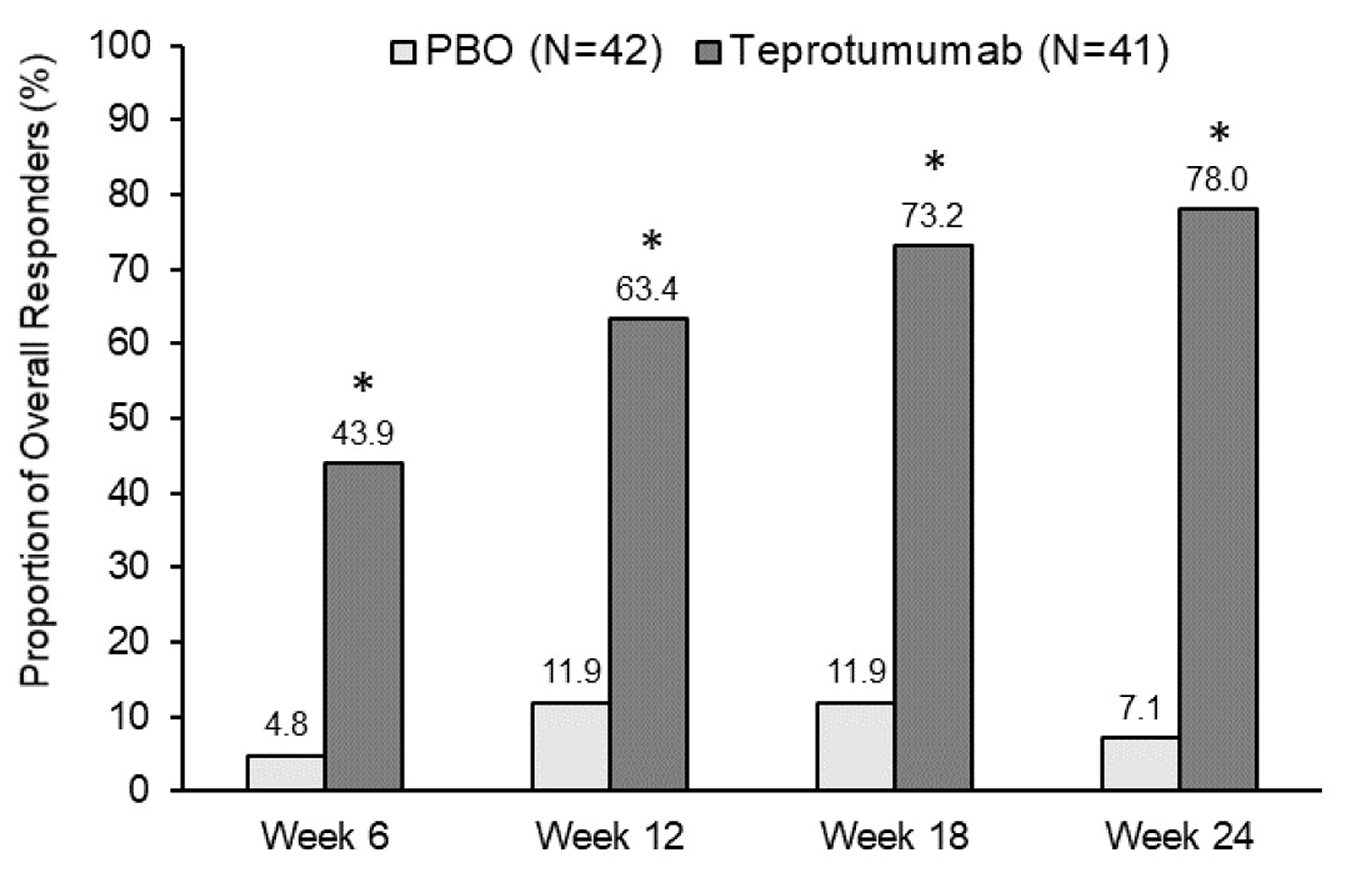
ITT = intention to treat; ORR = overall responder rate; PBO = placebo; TED = thyroid eye disease.
Notes: The categories used in the figure are as reported in the source and may not align with Canada's Drug Agency inclusive language guidelines.
P < 0.001 (2-sided); P values were calculated at weeks 6, 12, 18, and 24, but only the week 24 value was tested within the hierarchical sequence.
Sources: Details included in the figure are from the sponsor’s Summary of Clinical Evidence1 and the TEP-301 Clinical Study Report.24
TEP-303 Study: Secondary Outcome
At week 24, the proportions of patients experiencing overall response were 77.8% in the teprotumumab group and 3.7% in the placebo group. In the ITT population of the TEP-303 study, the difference in ORR between the teprotumumab and placebo groups at 24 weeks was 74.07 (95% CI, 56.9% to 91.3%; P < 0.0001) (Table 16, Figure 5).
The results of the sensitivity analyses including patients with nonmissing values were identical to those of the primary analyses, given that there were no patients with missing evaluations in the trial (Appendix 1).
Figure 5: ORR (Study Eye) by Study Visit in Patients With Active TED (TEP-303 Study) — ITT Population
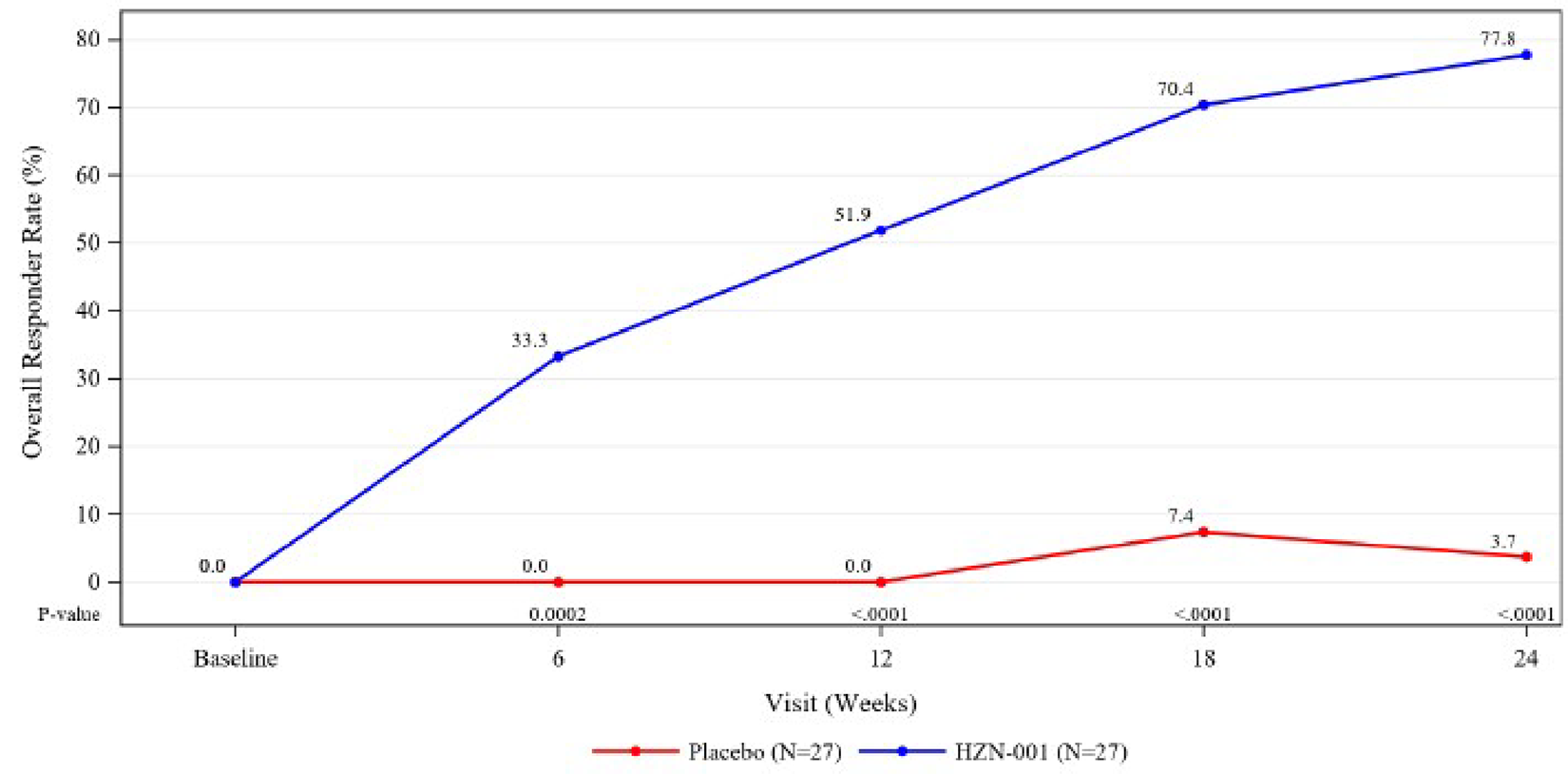
ITT = intention to treat; ORR = overall responder rate; TED = thyroid eye disease.
Note: The categories used in the figure are as reported in the source and may not align with Canada's Drug Agency inclusive language guidelines.
Sources: Details included in the figure are from the sponsor’s Summary of Clinical Evidence1 and the TEP-303 Clinical Study Report.25
Proptosis Responder Rates
TED01RV Study: Exploratory Outcome
In the TED01RV trial, the proportions of patients experiencing response in proptosis in the study eye were 71.4% in the teprotumumab group and 20.0% in the placebo group. Similarly, the integrated summary of efficacy analyses demonstrated a between-group difference in proptosis responder rate of 52.45% (95% CI, 34.39 to 70.51; P < 0.0001) (Table 16).
TEP-301 Study: Primary Outcome
At week 24, the proportions of patients experiencing response in proptosis in the study eye were 82.9% in the teprotumumab group and 9.5% in the placebo group. In the ITT population of the TEP-301 study, the difference in proptosis responder rate between the teprotumumab and placebo groups at 24 weeks was 73.45% (95% CI, 58.89% to 88.01%; P < 0.001) (Table 16, Figure 6). The sensitivity analyses conducted on the PP and modified ITT populations, as well as analyses using variable approaches to handling missing data, reported findings that aligned with those of the primary analysis (Appendix 1).
Higher proportions of patients receiving teprotumumab achieved a proptosis response than patients receiving placebo across all subgroups of interest for this review, including tobacco use status (nonusers: 87.1% versus 9.4%; users: 77.8% versus 12.5%), age group (younger than 65 years: 83.9% versus 11.1%; 65 years or older: 88.9% versus 0%), and sex (male: 90.9% versus 0%; female: 82.8% versus 13.3%) (Figure 18).
Figure 6: Proptosis Responder Rate (Study Eye) by Study Visit in Patients With Active TED (TEP-301 Study) — ITT Population
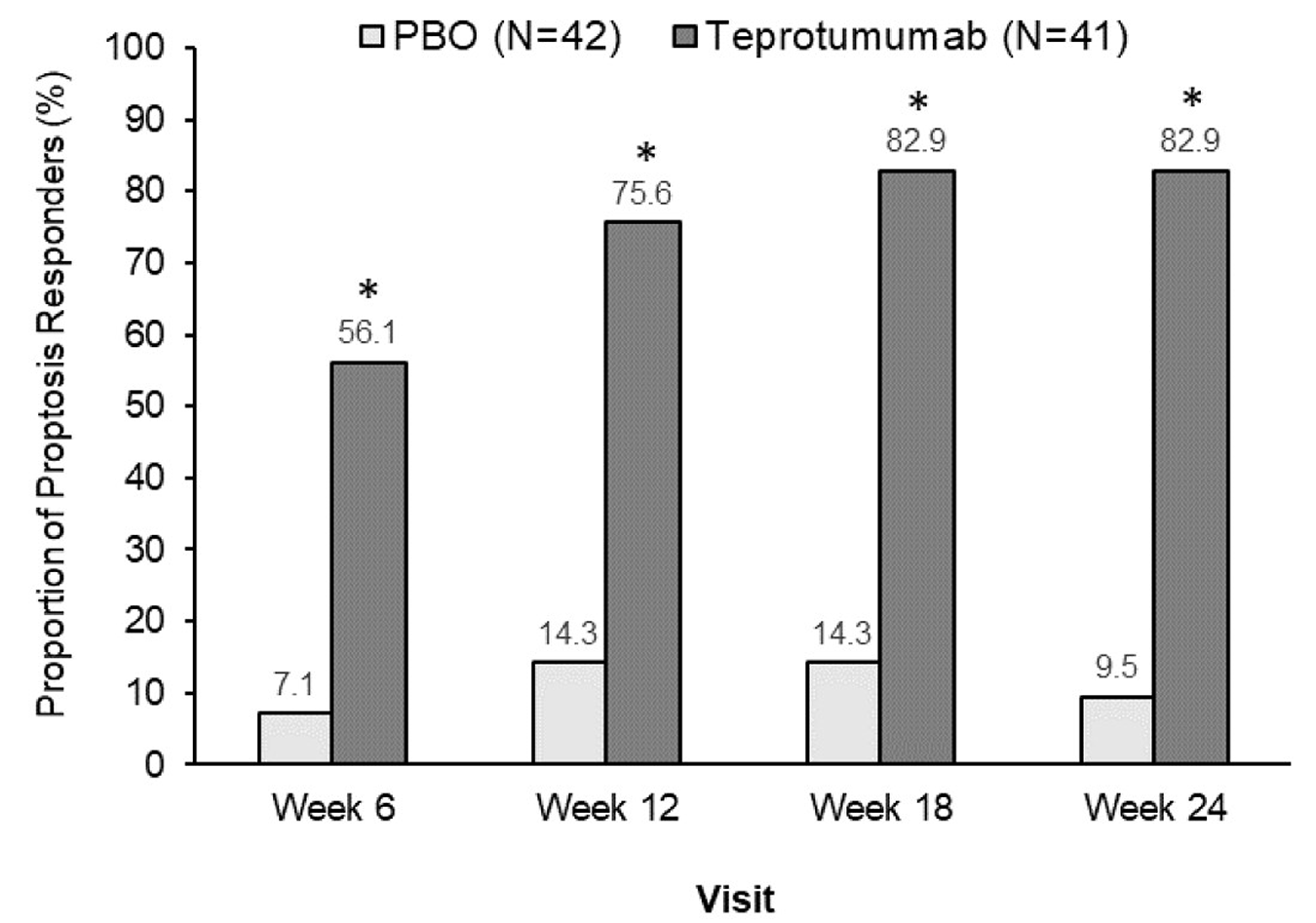
ITT = intention to treat; PBO = placebo; TED = thyroid eye disease.
Notes: The categories used in the figure are as reported in the source and may not align with Canada's Drug Agency inclusive language guidelines.
P < 0.001 (2-sided); P values were calculated at weeks 6, 12, 18, and 24, but only the week 24 value was tested within the hierarchical sequence.
Sources: Details included in the figure are from the sponsor’s Summary of Clinical Evidence1 and the TEP-301 Clinical Study Report.24
TEP-303 Study: Primary Outcome
At week 24, the proportions of patients experiencing response in proptosis in the study eye were 88.9% in the teprotumumab group and 11.1% in the placebo group. In the ITT population of the TEP-303 study, difference in proptosis responder rates between the teprotumumab and placebo groups at 24 weeks was 77.78% (95% CI, 60.7% to 94.8%; P < 0.0001) (Table 16, Figure 7). Sensitivity analyses conducted on the PP population reported findings that aligned with those of the primary analysis (Appendix 1).
Higher proportions of patients receiving teprotumumab achieved a proptosis response than those receiving placebo across all subgroups of interest for this review, including tobacco use status (nonusers: 91.3% versus 8.7%; users: 75.0% versus 25.0%), age group (younger than 65 years: 88.0% versus 4.3%; 65 years or older: 100% versus 50.0%), and sex (male: 77.8% versus 0%; female: 94.4% versus 15.0%) (Figure 19).
Figure 7: Proptosis Responder Rate (Study Eye) by Study Visit in Patients With Active TED (TEP-303 Study) — ITT Population
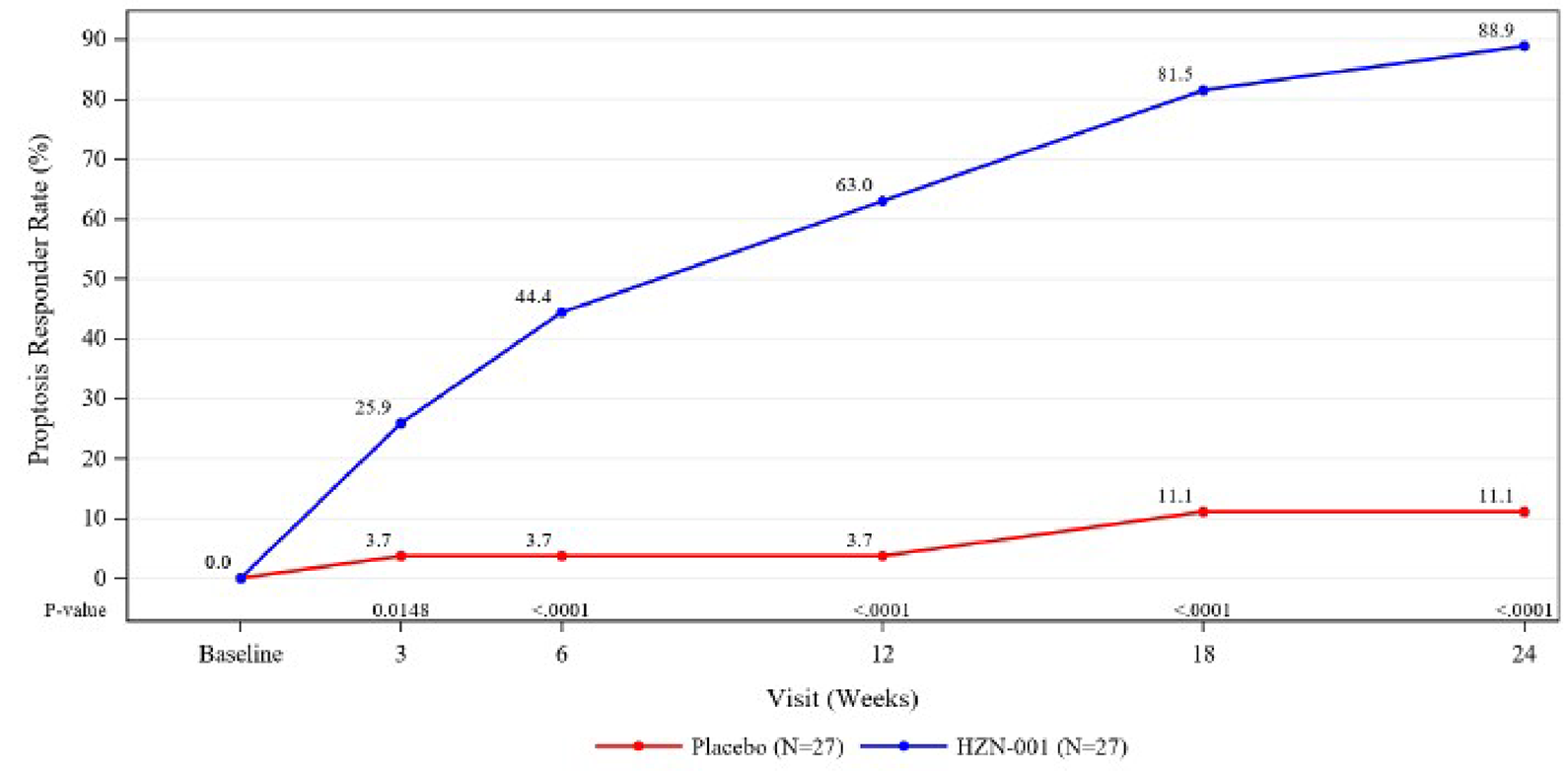
ITT = intention to treat; LS = least squares; TED = thyroid eye disease.
Note: The categories used in the figure are as reported in the source and may not align with Canada's Drug Agency inclusive language guidelines.
Sources: Details included in the figure are from the sponsor’s Summary of Clinical Evidence1 and TEP-303 Clinical Study Report.25
Change From Baseline in Proptosis
TED01RV Study: Secondary Outcome
At week 24, the mean changes from baseline in proptosis were −2.46 (SE = 0.20) in the teprotumumab group and −0.15 (SE = 0.19) in the placebo group. In the TED01RV trial, the findings assessing change from baseline in proptosis demonstrated a mean difference of −2.31 (95% CI, −2.84 to −1.77; P < 0.001) for the comparison of teprotumumab to placebo (Table 16).
TEP-301 Study: Secondary Outcome
At week 24, the mean changes from baseline in proptosis were −2.82 (SE = 0.19) in the teprotumumab group and −0.54 (SE = 0.19) in the placebo group. In the TEP-301 trial, the findings assessing change from baseline in proptosis demonstrated a mean difference of −2.28 (95% CI, −2.77 to −1.80; P < 0.001) for the comparison of teprotumumab to placebo (Table 16, Figure 8).
Figure 8: Change From Baseline in Proptosis (Study Eye) by Visit in Patients With Active TED (TEP-301 Study) — ITT Population
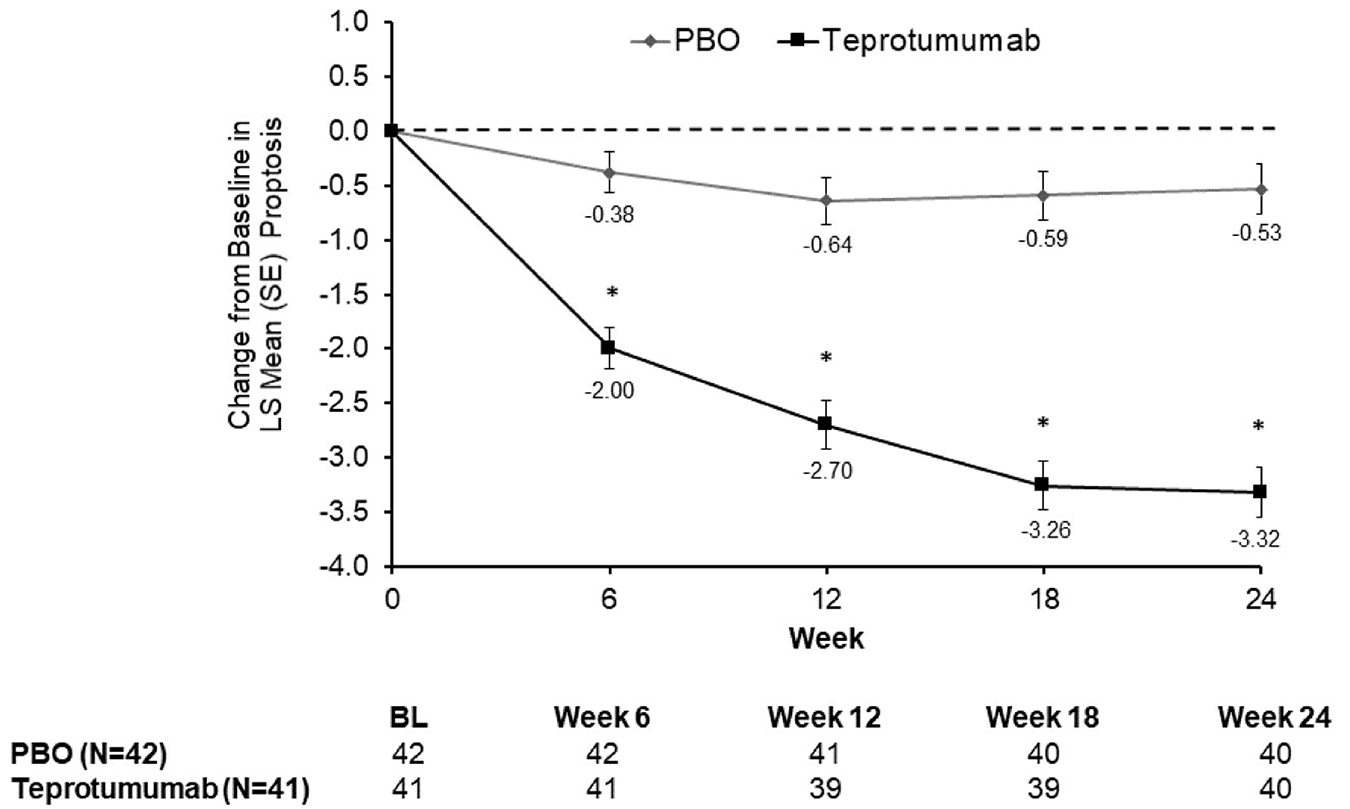
BL = baseline; ITT = intention to treat; PBO = placebo; SE = standard error; TED = thyroid eye disease.
Note: P < 0.001 (2-sided); P values were calculated at weeks 6, 12, 18, and 24, but only the week 24 value was tested within the hierarchical sequence.
Sources: Details included in the figure are from the sponsor’s Summary of Clinical Evidence1 and the TEP-301 Clinical Study Report.24
TEP-303 Study: Secondary Outcome
At week 24, the mean changes from baseline in proptosis were −2.36 (SE = 0.30) in the teprotumumab group and −0.37 (SE = 0.30) in the placebo group. In the TEP-303 trial, findings assessing change from baseline in proptosis demonstrated a mean difference of −1.99 (95% CI, −2.75 to −1.22; P < 0.0001) for the comparison of teprotumumab to placebo (Table 16, Figure 9).
Figure 9: Change From Baseline in Proptosis (Study Eye) by Visit in Patients With Active TED (TEP-303 Study) — ITT Population
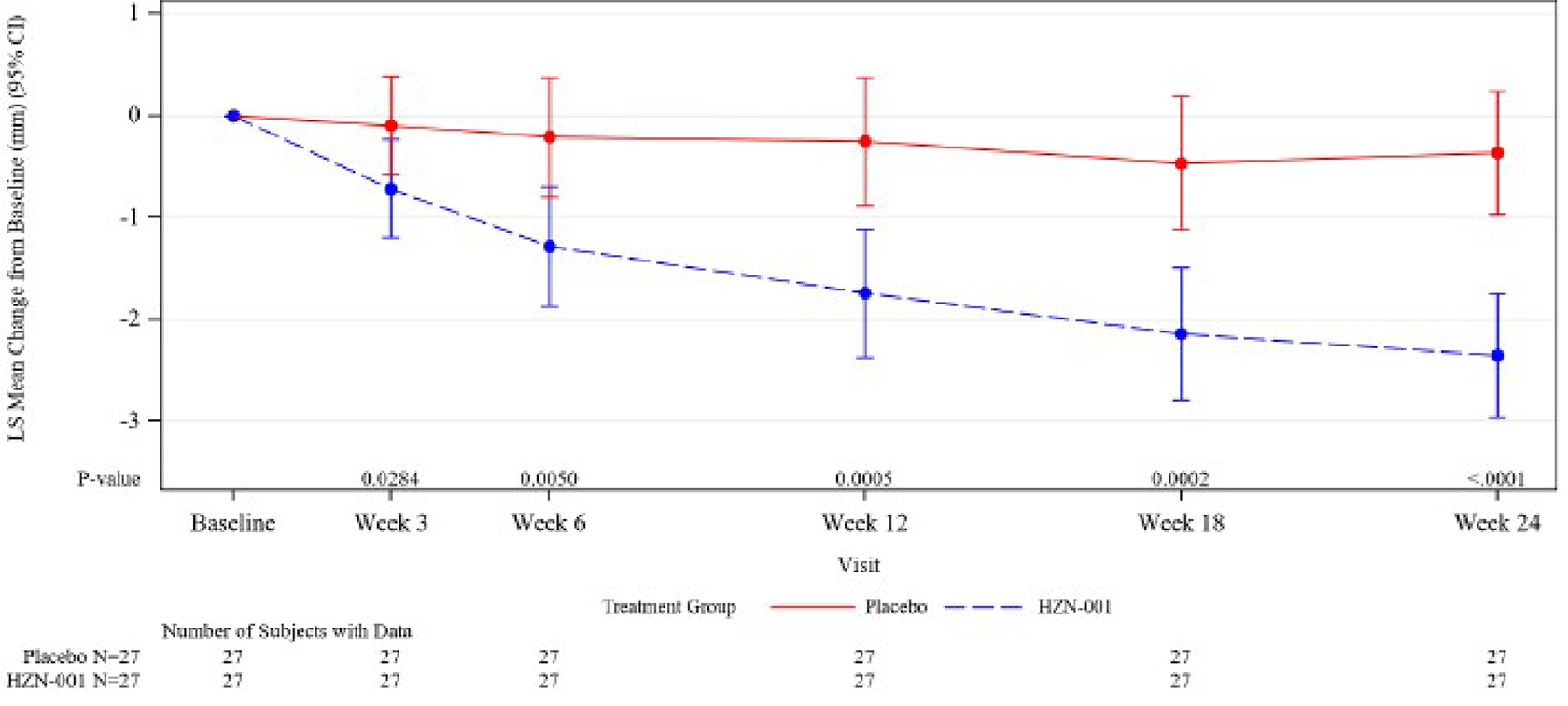
CI = confidence interval; ITT intention to treat; LS = least squares; TED = thyroid eye disease.
Sources: Details included in the figure are from the sponsor’s Summary of Clinical Evidence1 and the TEP-303 Clinical Study Report.25
CAS Categorical Responder Rates
TED01RV Study
CAS categorical responder rates were not analyzed in the TED01RV study.
TEP-301 Study: Secondary Outcome
At week 24, the proportions of patients experiencing response in CAS were 58.5% in the teprotumumab group and 21.4% in the placebo group. In the ITT population of the TEP-301 study, the difference in CAS categorical responder rate in the study eye between the teprotumumab and placebo groups at 24 weeks was 36.03% (95% CI, 17.39 to 54.67; P < 0.001) (Table 16, Figure 10).
Figure 10: CAS Categorical Responder Rate (Study Eye) by Study Visit in Patients With Active TED (TEP-301 Study) — ITT Population
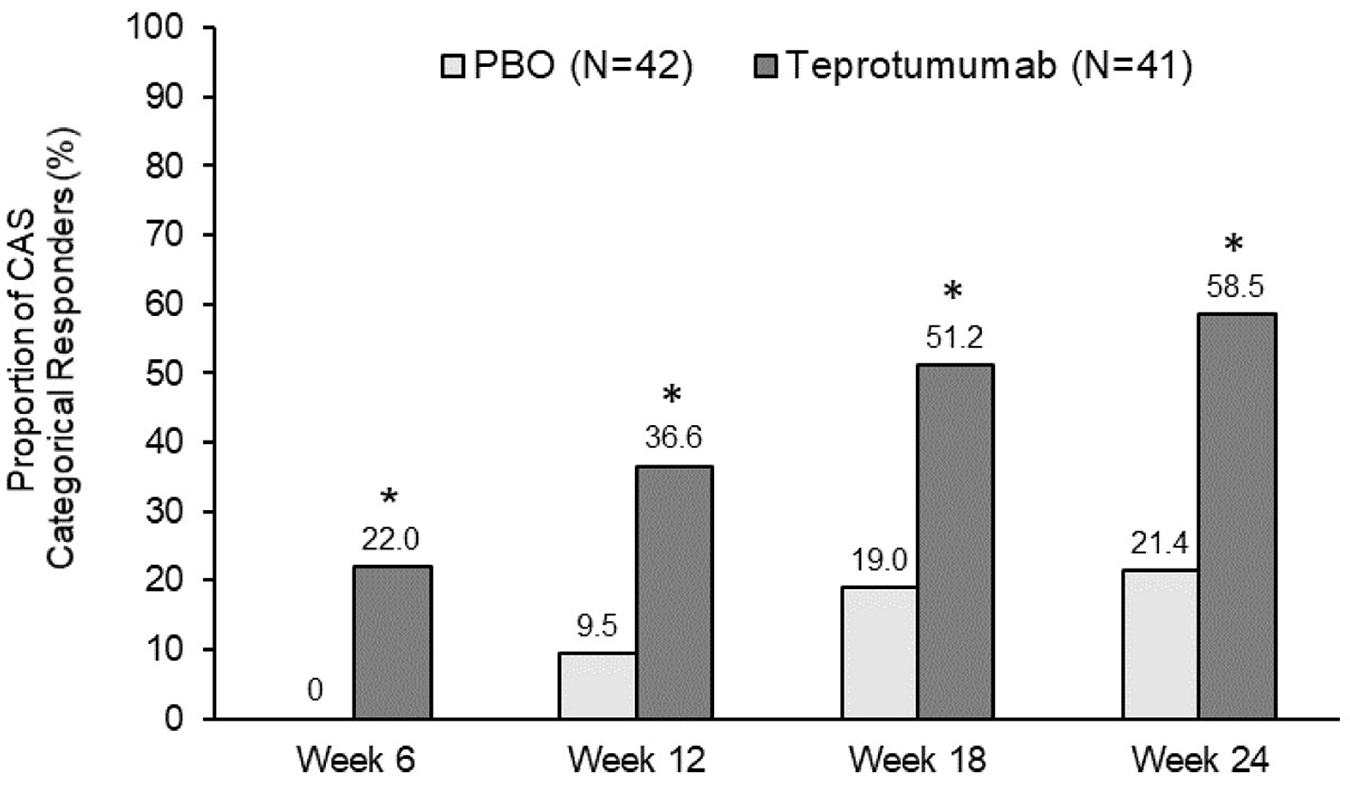
CAS = clinical activity score; ITT = intention to treat; PBO = placebo; TED = thyroid eye disease.
Notes: The categories used in the figure are as reported in the source and may not align with Canada's Drug Agency inclusive language guidelines.
P < 0.01 (2-sided); P values were calculated at weeks 6, 12, 18, and 24, but only the week 24 value was tested within the hierarchical sequence.
Sources: Details included in the figure are from the sponsor’s Summary of Clinical Evidence1 and the TEP-301 Clinical Study Report.24
TEP-303 Study: Secondary Outcome
At week 24, the proportions of patients experiencing response in CAS were 59.3% in the teprotumumab group and 22.2% in the placebo group. In the ITT population of the TEP-303 study, the difference in CAS categorical responder rate in the study eye between the teprotumumab and placebo groups at 24 weeks was 37.04% (95% CI, 12.5 to 61.6; P = 0.0031) (Table 16, Figure 11).
Figure 11: CAS Categorical Responder Rate (Study Eye) by Study Visit in Patients With Active TED (TEP-303 Study) — ITT Population
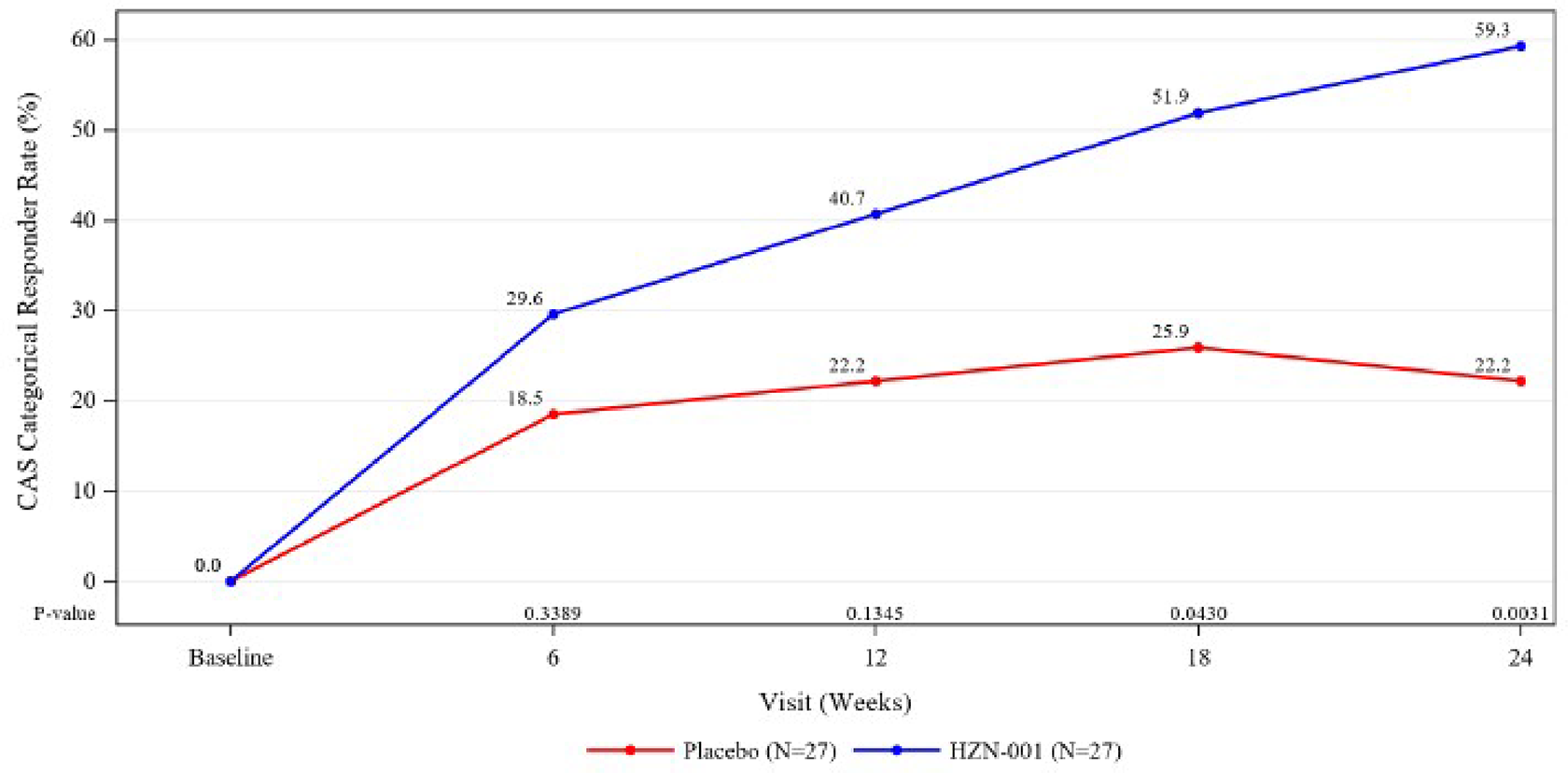
CAS = clinical activity score; ITT = intention to treat; TED = thyroid eye disease.
Note: The categories used in the figure are as reported in the source and may not align with Canada's Drug Agency inclusive language guidelines.
Sources: Details included in the figure are from the sponsor’s Summary of Clinical Evidence1 and the TEP-303 Clinical Study Report.25
Change From Baseline in CAS
TED01RV Study: Secondary Outcome
At week 24, the mean changes from baseline in CAS were −3.43 (SE = 0.18) in the teprotumumab group and −1.85 (SE = 0.17) in the placebo group. In the TED01RV trial, the findings assessing change from baseline in CAS demonstrated a mean difference of −1.59 (95% CI, −2.073 to −1.098; P < 0.001) for the comparison of teprotumumab to placebo (Table 16).
TEP-301 Study: Exploratory Outcome
At week 24, the mean changes from baseline in CAS were −3.46 (SE = 0.23) in the teprotumumab group and −2.07 (SE = 0.23) in the placebo group. In the TEP-301 trial, the findings assessing change from baseline in CAS demonstrated a mean difference of –1.39 (95% CI, −1.97, −0.81; P < 0.001) for the comparison of teprotumumab to placebo (Table 16).
TEP-303 Study: Exploratory Outcome
At week 24, the mean changes from baseline in CAS were █████ (SE = ████) in the teprotumumab group and █████ (SE = ████) in the placebo group. In the TEP-303 trial, findings assessing change from baseline in CAS demonstrated a mean difference of █████ (95% CI, ██████ █████; P = ██████) for the comparison of teprotumumab to placebo (Table 16).
Diplopia Responder Rates
TED01RV Study: Exploratory Outcome
In the TED01RV trial, the primary prespecified analyses found that the proportions of diplopia responders in the study eye were 68.4% in the teprotumumab group and 25.6% in the placebo groups (P < 0.001). Similarly, the additional efficacy analyses, conducted by the sponsor to support comparisons across trials in active TED, demonstrated that at week 24, the proportions of patients experiencing response in diplopia were 68.4% in the teprotumumab group and 25.6% in the placebo group. A between-group difference in diplopia responder rate of 39.51% (95% CI, 17.78% to 61.24%; P = 0.0004) was observed for the comparison of teprotumumab to placebo (Table 16).
TEP-301 Study: Secondary Outcome
At week 24, the proportions of patients experiencing response in diplopia were 67.9% in the teprotumumab group and 28.6% in the placebo group. In the ITT population of the TEP-301 study, the difference in diplopia responder rate in the study eye between the teprotumumab and placebo groups at 24 weeks was 39.29% (95% CI, 15.55% to 63.02%; P = 0.001) (Table 16, Figure 12). The sensitivity analyses included patients with nonmissing values and reported findings that aligned with those of the primary analysis (Appendix 1).
Figure 12: Diplopia Responder Rate (Study Eye) by Visit in Active TED (TEP-301 Study) — ITT Population With Diplopia at Baseline
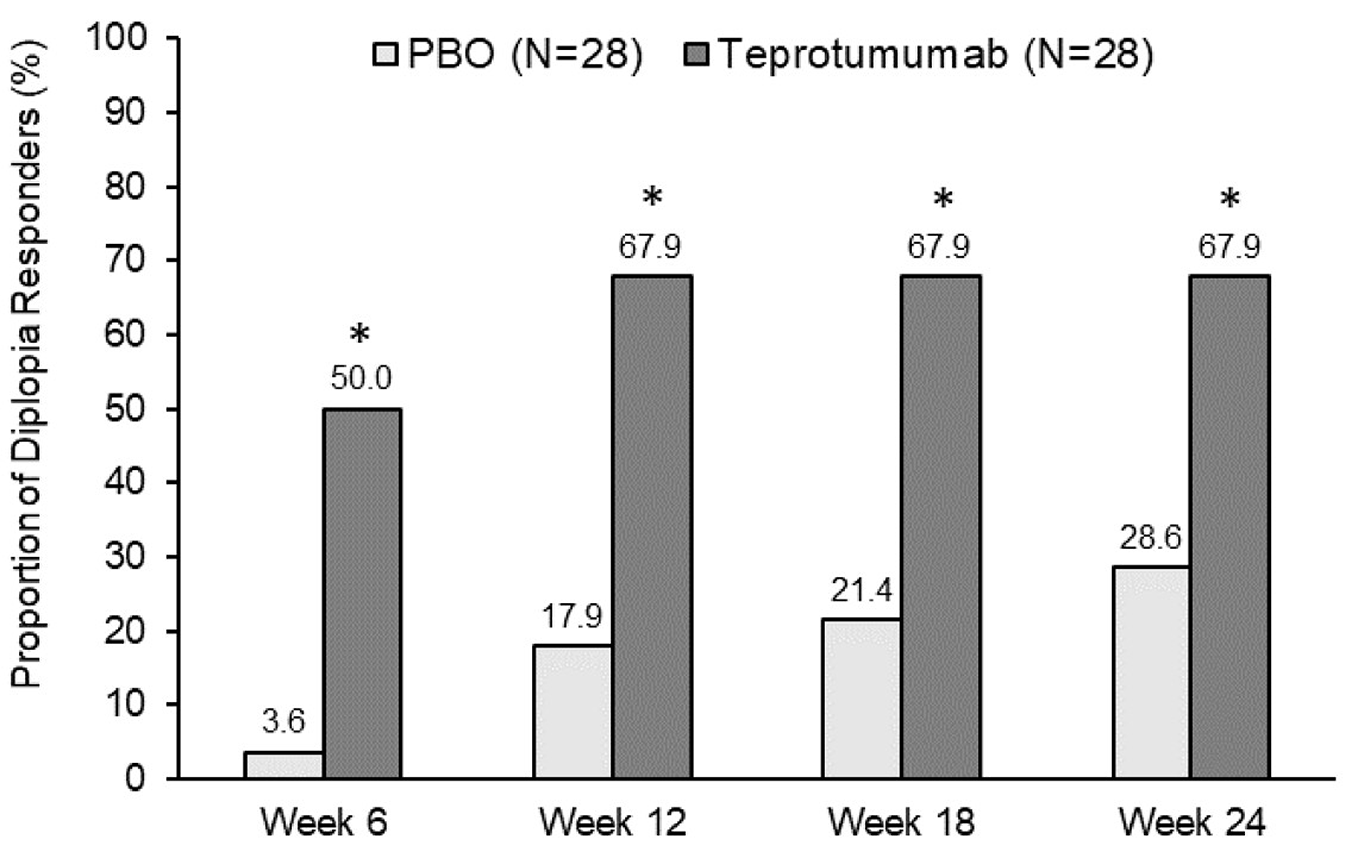
ITT = intention to treat; PBO = placebo; TED = thyroid eye disease.
Notes: The categories used in the figure are as reported in the source and may not align with Canada's Drug Agency inclusive language guidelines.
P < 0.001 (2-sided); P values were calculated at weeks 6, 12, 18, and 24, but only the week 24 value was tested within the hierarchical sequence.
Sources: Details included in the figure are from the sponsor’s Summary of Clinical Evidence1 and the TEP-301 Clinical Study Report.24
TEP-303 Study: Secondary Outcome
At week 24, the proportions of patients experiencing response in diplopia were 63.6% in the teprotumumab group and 45.0% in the placebo group. In the ITT population of the TEP-303 study, the difference in binocular diplopia responder rate between the teprotumumab and placebo groups at 24 weeks was 16.82% (95% CI, −11.4% to 45.1%; P = 0.2430) (Table 16, Figure 13).
Sensitivity analyses included patients with nonmissing values, with results identical to those of the primary analyses, given that there were no patients with missing evaluation in the trial (Appendix 1).
Figure 13: Binocular Diplopia Responder Rate by Visit in Patients With Active TED (TEP-303 Study) — ITT Population With Diplopia at Baseline
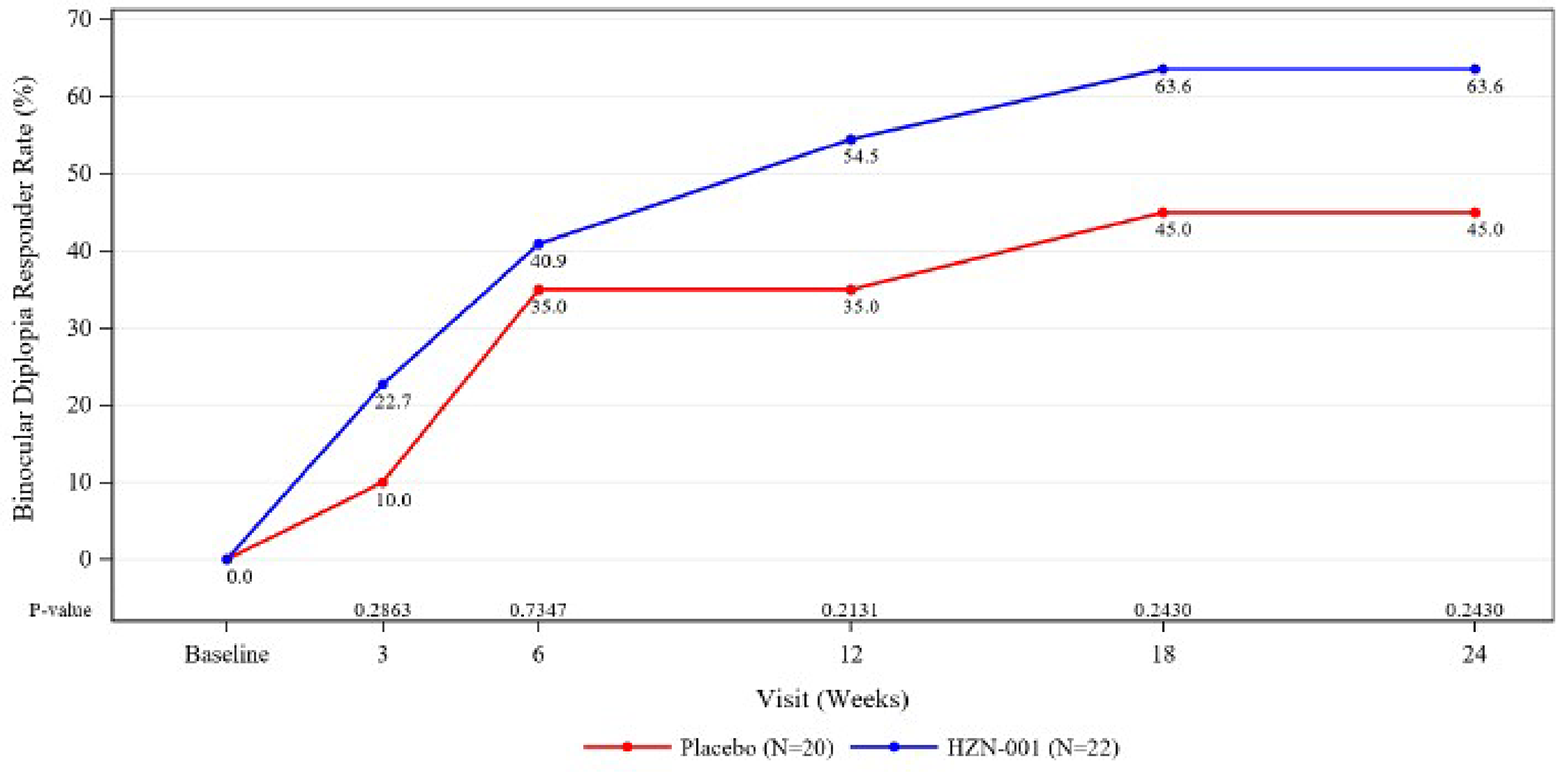
ITT = intention to treat; TED = thyroid eye disease.
Note: The categories used in the figure are as reported in the source and may not align with Canada's Drug Agency inclusive language guidelines.
Sources: Details included in the figure are from the sponsor’s Summary of Clinical Evidence1 and the TEP-303 Clinical Study Report.25
Complete Diplopia Responder Rate at Week 24
TED01RV Study
Complete diplopia response was not analyzed in the TED01RV study.
TEP-301 Study
Complete diplopia response was not analyzed in the TEP-301 study.
TEP-303 Study: Secondary Outcome
At week 24, the proportions of patients experiencing response in complete binocular diplopia were 50.0% in the teprotumumab group and 20.0% in the placebo group. In the ITT population of the TEP-303 study, the difference in the complete binocular diplopia responder rate between the teprotumumab and placebo groups at 24 weeks was 29.09% (95% CI, 0.9% to 57.3%; P = 0.043) (Table 16).
Sensitivity analyses included patients with nonmissing values, with findings identical to those of the primary analyses, given that there were no patients with missing evaluation in the trial (Appendix 1).
Change From Baseline in GO-QoL Overall Score
TED01RV Study: Secondary Outcome
At week 24, the mean changes from baseline in GO-QoL overall score were 17.28 (SE = 2.41) in the teprotumumab group and 6.42 (SE = 2.24) in the placebo group. In the TED01RV trial, findings assessing change from baseline in GO-QoL overall score demonstrated a mean difference of 10.86 (95% CI, 4.48 to 17.24; P = 0.001) for the comparison of teprotumumab to placebo at 24 weeks (Table 16).
TEP-301 Study: Secondary Outcome
At week 24, the mean changes from baseline in GO-QoL overall score were 13.79 (SE = 2.07) in the teprotumumab group and 4.43 (SE = 2.10) in the placebo group. In the TEP-301 trial, findings assessing change from baseline in GO-QoL overall score demonstrated a mean difference of 9.36 (95% CI, 4.08 to 14.64; P < 0.001) for the comparison of teprotumumab to placebo at 24 weeks (Table 16, Figure 14).
TEP-303 Study: Secondary Outcome
At week 24, the mean changes from baseline in GO-QoL overall score were 17.39 (SE = 3.36) in the teprotumumab group and 6.39 (SE = 3.35) in the placebo group. In the TEP-303 trial, findings assessing change from baseline in GO-QoL overall score demonstrated a mean difference of 11.01 (95% CI, 2.65 to 19.36; P = 0.0109) for the comparison of teprotumumab to placebo at 24 weeks (Table 16).
Change From Baseline in GO-QoL VF Subscale Score
TED01RV Study: Secondary Outcome
At week 24, the mean changes from baseline in GO-QoL VF subscale score were 21.10 (SE = 2.90) in the teprotumumab group and 6.80 (SE = 2.66) in the placebo group. In the TED01RV trial, findings assessing change from baseline using the GO-QoL VF subscale demonstrated a mean difference of 14.30 (95% CI, 6.66 to 21.94; P < 0.001) for the comparison of teprotumumab to placebo at 24 weeks (Table 16). Sensitivity analyses conducted on the PP population reported findings that aligned with those of the primary analysis (Appendix 1).
TEP-301 Study: Exploratory Outcome
At week 24, mean change from baseline in GO-QoL VF subscale score was 12.39 (SE = 2.98) in the teprotumumab group and 4.21 (SE = 3.03) in the placebo group. In the TEP-301 trial, findings assessing change from baseline in GO-QoL VF subscale demonstrated a mean difference of 8.18 (95% CI, 0.59 to 15.76; P = 0.035) for the comparison of teprotumumab to placebo at 24 weeks (Table 16, Figure 14).
Figure 14: Change From Baseline by Visit in GO-QoL VF Subscale Scores in Patients With Active TED (TEP-301 Study) — ITT Population, Observed Cases
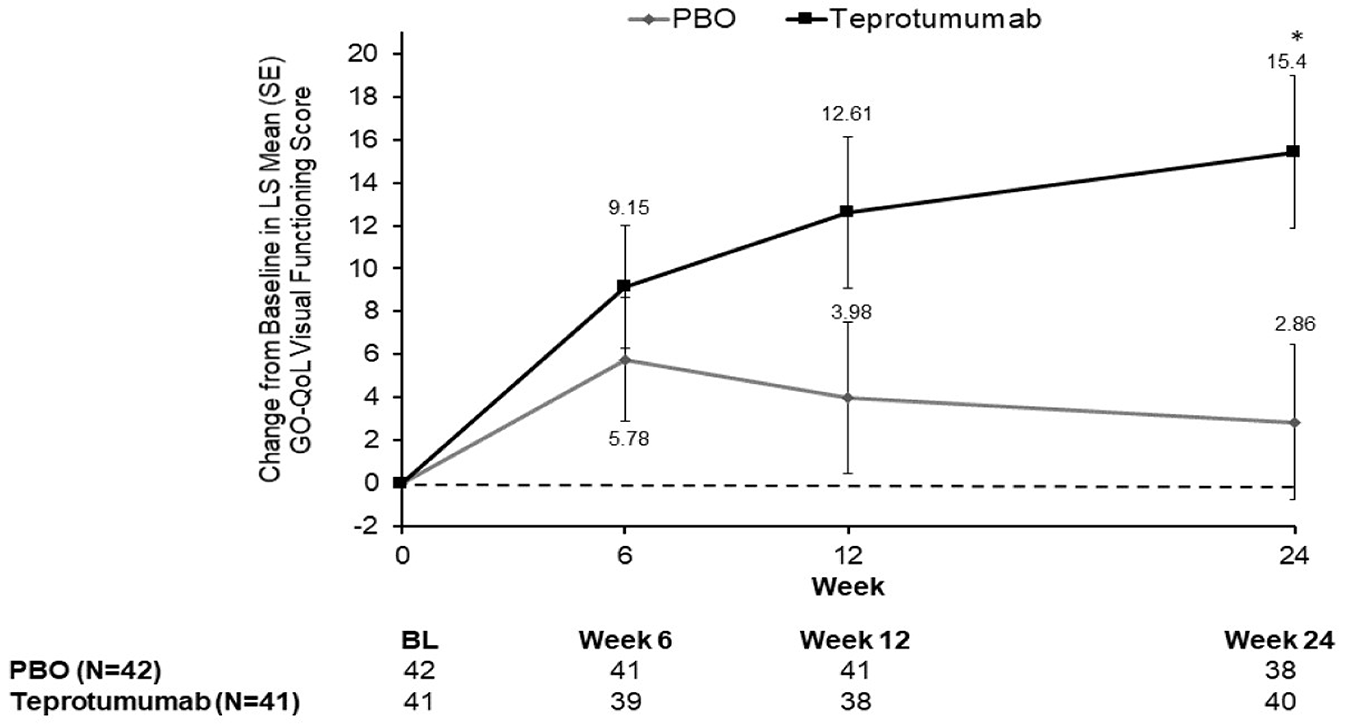
BL = baseline; GO-QoL = Graves Ophthalmopathy Quality of Life questionnaire; ITT = intention to treat; LS = least squares; PBO = placebo; SE = standard error; TED = thyroid eye disease; VF = Visual Functioning.
Note: Nominal P ≤ 0.05.
Sources: Details included in the figure are from the sponsor’s Summary of Clinical Evidence1 and the TEP-301 Clinical Study Report.24
TEP-303 Study: Secondary Outcome
At week 24, the mean changes from baseline in GO-QoL VF subscale scores were 16.22 (SE = 3.96) in the teprotumumab group and 4.39 (SE = 3.97) in the placebo group. In the TEP-303 trial, the findings assessing change from baseline in GO-QoL VF subscale score demonstrated a mean difference of 11.83 (95% CI, 1.82 to 21.83; P = 0.0215) for the comparison of teprotumumab to placebo at 24 weeks (Table 16, Figure 15).
Figure 15: Change From Baseline in GO-QoL Questionnaire VF Subscale Scores by Visit in Patients With Active TED (TEP-303 Study) — ITT Population
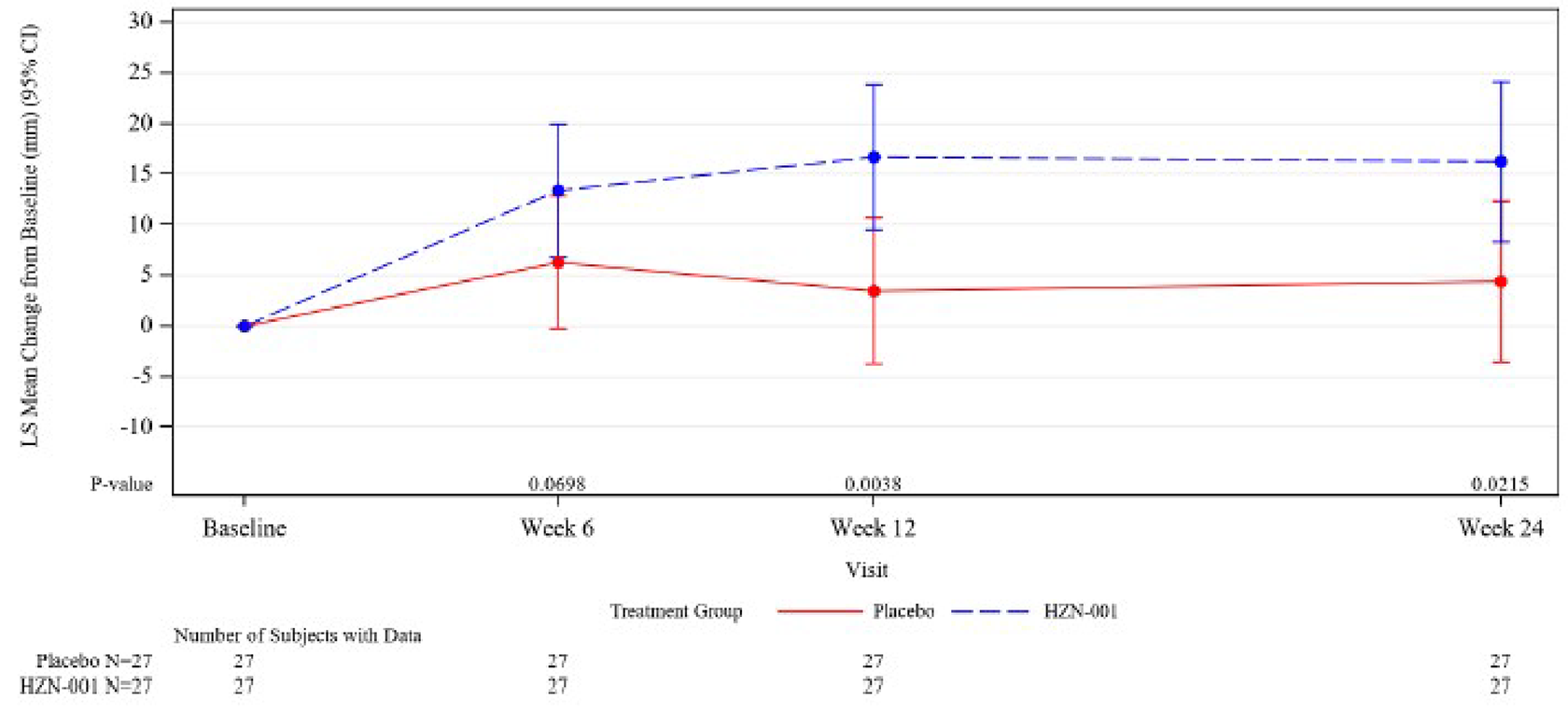
CI = confidence interval; GO-QoL = Graves Ophthalmopathy Quality of Life questionnaire; ITT = intention to treat; LS = least squares; TED = thyroid eye disease; VF = Visual Functioning.
Sources: Details included in the figure are from the sponsor’s Summary of Clinical Evidence1 and the TEP-303 Clinical Study Report.25
Change From Baseline in GO-QoL AP Subscale Score
TED01RV Study: Secondary Outcome
At week 24, the mean changes from baseline in GO-QoL AP subscale score were 12.92 (SE = 2.84) in the teprotumumab group and 6.60 (SE = 2.66) in the placebo group. In the TED01RV trial, the findings assessing change from baseline in GO-QoL AP subscale score demonstrated a mean difference of 6.32 (95% CI, −1.25 to 13.90; P = 0.101) for the comparison of teprotumumab to placebo at 24 weeks (Table 16). Sensitivity analyses conducted on the PP population reported findings aligned with those of the primary analysis (Appendix 1).
TEP-301 Study: Exploratory Outcome
At week 24, the mean changes from baseline in GO-QoL AP subscale score were 14.43 (SE = 2.40) in the teprotumumab group and 4.22 (SE = 2.41) in the placebo group. In the TEP-301 trial, findings assessing change from baseline in GO-QoL AP subscale score demonstrated a mean difference of 10.21 (95% CI, 4.10 to 16.32; P = 0.001) for the comparison of teprotumumab to placebo at 24 weeks (Table 16, Figure 16).
Figure 16: Change From Baseline by Visit in GO-QoL AP Subscale Transformed Scores (TEP-301 Study) — ITT Population, Observed Cases
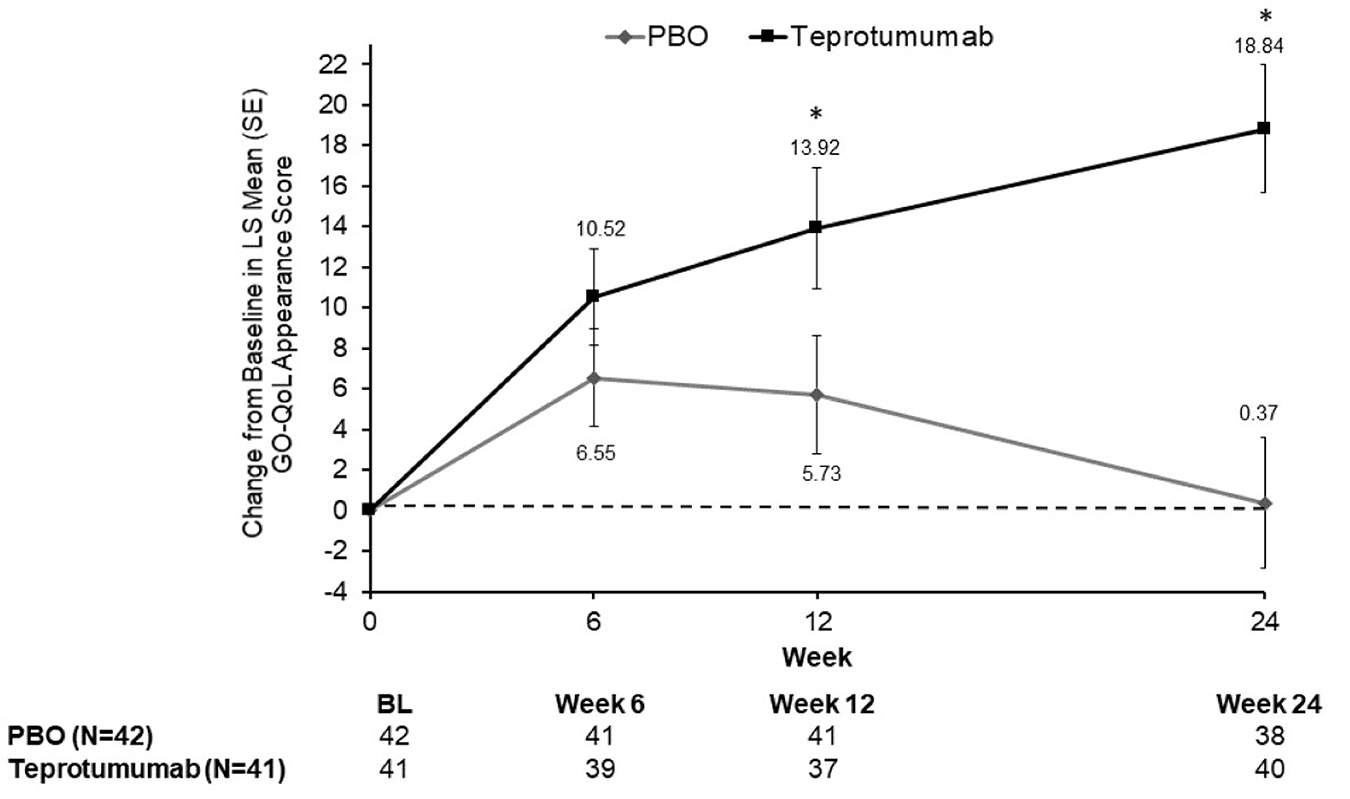
AP = Appearance; BL = baseline; GO-QoL = Graves Ophthalmopathy Quality of Life questionnaire; ITT = intention to treat; LS = least squares; PBO = placebo; SE = standard error.
Note: P ≤ 0.050.
Sources: Details included in the figure are from the sponsor’s Summary of Clinical Evidence1 and the TEP-301 Clinical Study Report.24
TEP-303 Study: Secondary Outcome
At week 24, the mean changes from baseline in GO-QoL AP subscale score were 19.35 (SE = 3.93) in the teprotumumab group and 8.69 (SE = 3.93) in the placebo group. In the TEP-303 trial, findings assessing change from baseline in GO-QoL AP subscale score demonstrated a mean difference of 10.66 (95% CI, 1.04 to 20.28; P = 0.0306) for the comparison of teprotumumab to placebo at 24 weeks (Table 16, Figure 17).
Figure 17: Change From Baseline by Visit in GO-QoL Questionnaire AP Subscale Score in the TEP-303 Study — ITT Population
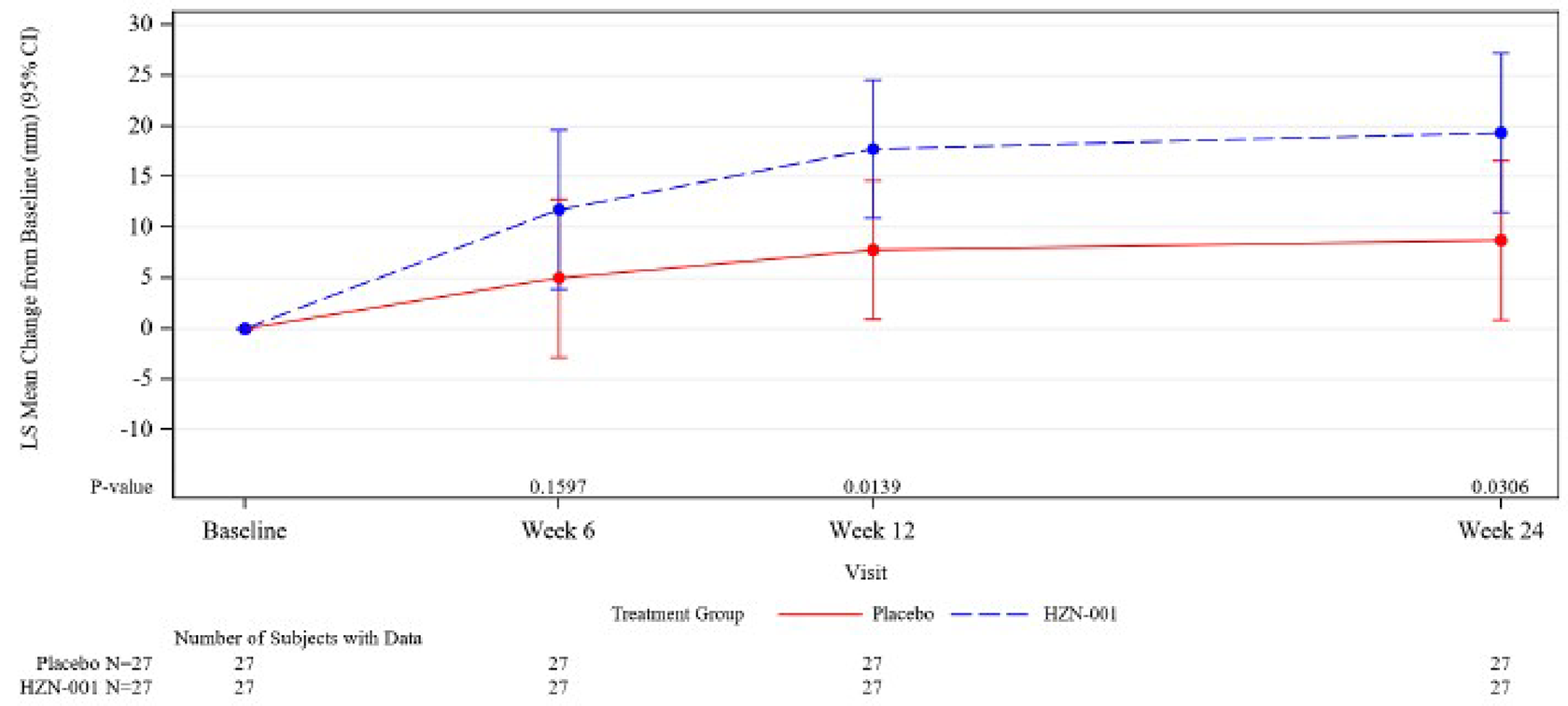
AP = Appearance; CI = confidence interval; GO-QoL = Graves Ophthalmopathy Quality of Life questionnaire; ITT = intention to treat; LS = least squares.
Sources: Details included in the figure are from the sponsor’s Summary of Clinical Evidence1 and the TEP-303 Clinical Study Report.25
Figure 18: Summary of Key Subgroup Analyses for Proptosis Responder Rates at Week 24 in the TEP-301 Study (Study Eye) — ITT Analysis Set, Observed Cases
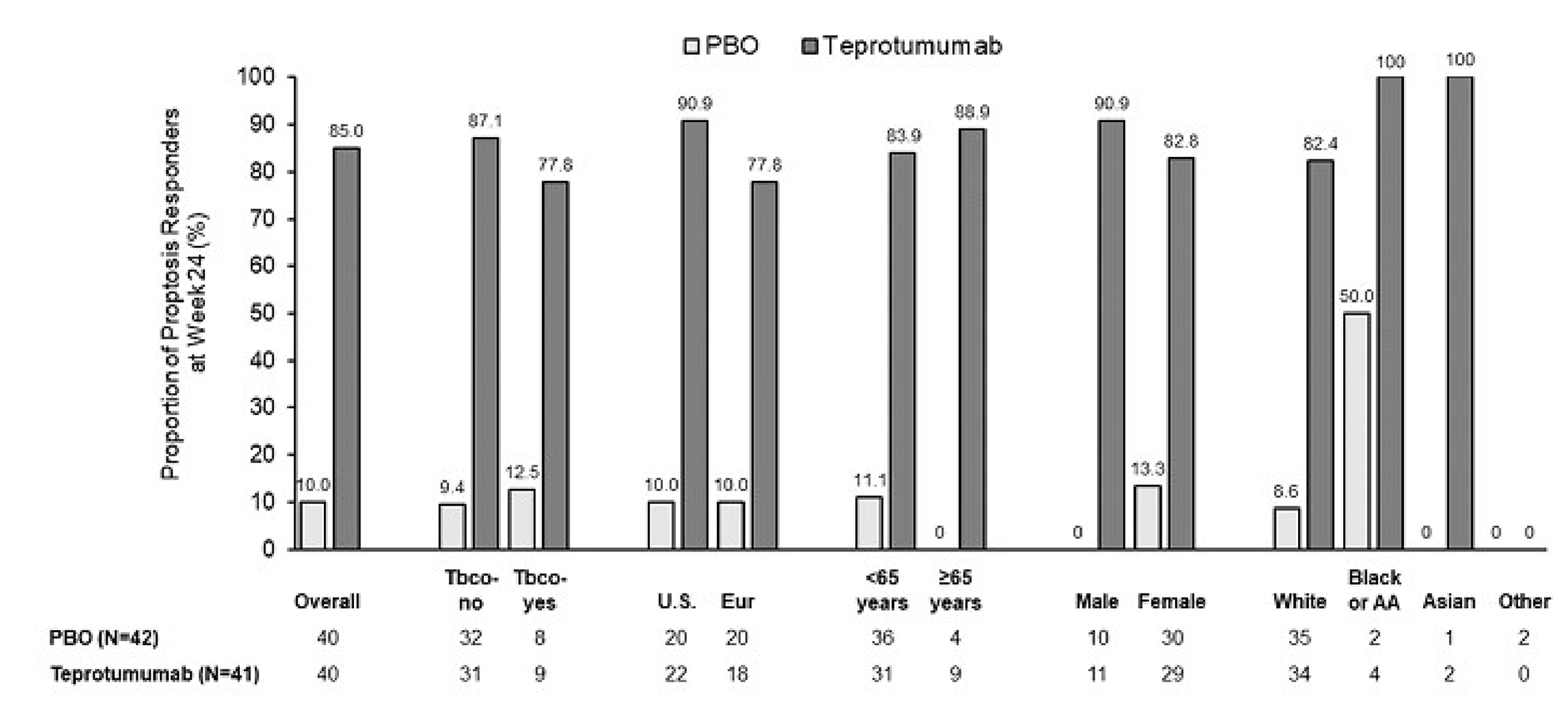
AA = African American; Eur = Europe; ITT = intention to treat; PBO = placebo; Tbco = tobacco.
Notes: The categories used in the figure are as reported in the source and may not align with Canada's Drug Agency inclusive language guidelines.
The percentages are based on the number of patients with nonmissing evaluations. Proptosis responders were defined as patients with a ≥ 2 mm reduction from baseline in proptosis in the study eye without deterioration (i.e., a ≥ 2 mm increase) of proptosis in the fellow eye at week 24.
Sources: Details included in the figure are from the sponsor’s Summary of Clinical Evidence1 and the TEP-301 Clinical Study Report.24
Figure 19: Summary of Key Subgroup Analyses for Proptosis Responder Rates at Week 24 in the TEP-303 Study (Study Eye) — ITT Analysis Set
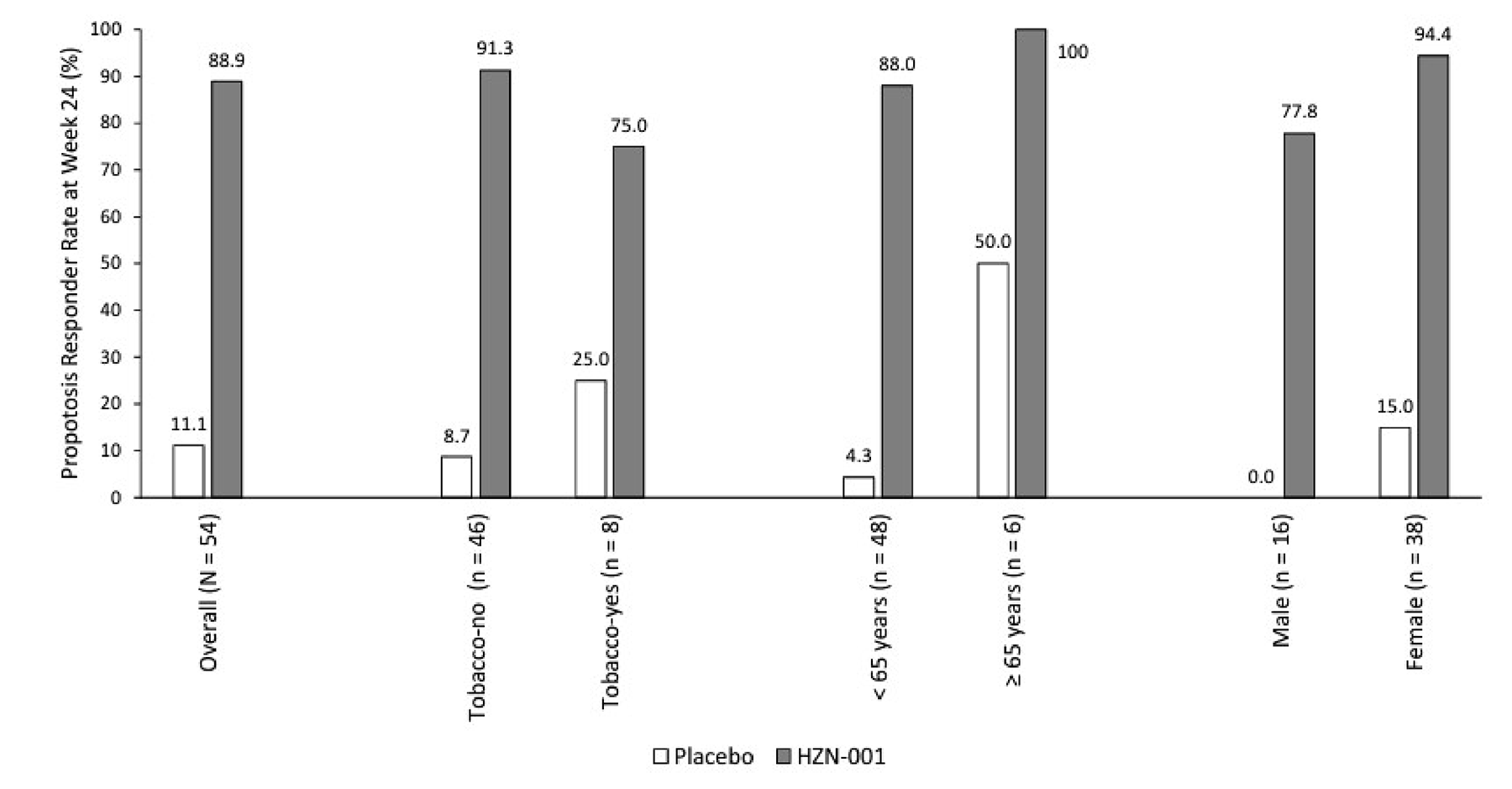
ITT = intention to treat.
Notes: The categories used in the figure are as reported in the source and may not align with Canada's Drug Agency inclusive language guidelines.
Proptosis responders were defined as participants with a greater than or equal to 2 mm reduction from baseline in proptosis in the study eye without deterioration (i.e., ≥ 2 mm increase) of proptosis in the fellow eye at week 24.
Sources: Details included in the figure are from the sponsor’s Summary of Clinical Evidence1 and the TEP-303 Clinical Study Report.25
Harms
Refer to Table 17 for harms data in active TED.
TED01RV Study
A total of 32 patients (74.4%) in the teprotumumab group and 32 patients (72.7%) in the placebo group reported at least 1 AE. The most commonly reported AEs in the teprotumumab group were infections and infestations (30.2%), nausea (18.6%), muscle spasms (18.6%), diarrhea (14%), and hyperglycemia (11.6%). The most commonly reported AEs in the placebo group were infections and infestations (20.5%), fatigue (13.6%), and nausea (9.1%).
TEP-301 Study
A total of 35 patients (85.4%) in the teprotumumab group and 29 patients (69.0%) in the placebo group reported at least 1 AE. The most commonly reported AEs in the teprotumumab group were infections and infestations (39.0%), muscle spasms (31.7%), alopecia (19.5%), and nausea (14.6%). The most commonly reported AEs in the placebo group were infections and infestations (23.8%), diarrhea (11.9%), and alopecia (11.9%).
TEP-303 Study
A total of 25 patients (92.6%) in the teprotumumab group and 21 patients (77.8%) in the placebo group reported at least 1 AE. The most commonly reported AEs in the teprotumumab group were infections and infestations (22.20%), alopecia (18.5%), seasonal allergy (14.8%), COVID-19 (14.8%), muscle spasms (11.1%), tinnitus (11.1%), and diarrhea (11.1%). The most commonly reported AEs in the placebo group were infections and infestations (33.3%) and COVID-19 (11.1%).
Serious AEs
TED01RV Study
The proportions of patients experiencing SAEs were 11.6% in the teprotumumab group and 2.3% in the placebo group.
TEP-301 Study
The proportions of patients experiencing SAEs were 4.9% in the teprotumumab group and 2.4% in the placebo group.
TEP-303 Study
The proportion of patients experiencing SAEs in the teprotumumab group was 3.7%. In the placebo group, no patients experienced SAEs.
Withdrawals Due to AEs
TED01RV Study
In the TED01RV study, more patients discontinued treatment due to AEs in the teprotumumab group (11.6%) than in the placebo group (2.3%).
TEP-301 Study
In TEP-301, 1 patient in the teprotumumab group (2.4%) and 1 patient in the placebo group (2.4%) discontinued treatment due to AEs.
TEP-303 Study
In the TEP-303 study, 1 patient in the teprotumumab group (3.7%) and 1 patient in the placebo group (3.7%) discontinued treatment due to AEs.
Mortality
Studies TED01RV, TEP-301, and TEP-303
There were no deaths reported during any of these 3 active TED trials.
Notable Harms
TED01RV Study
AEs of special interest were more commonly reported in patients receiving teprotumumab (18.6%) than in patients receiving placebo (2.3%). The following notable harms were reported in the teprotumumab arm: infusion reactions (4.7%), hyperglycemia (14.0%), muscle spasm (18.6%), and diarrhea (14.0%). The following notable harms were reported in the placebo group: hyperglycemia (4.5%), muscle spasm 4.5%), and diarrhea (4.5%).
TEP-301 Study
AEs of special interest were more commonly reported in patients receiving teprotumumab (48.8%) than in patients receiving placebo (23.8%). The following notable harms were reported in the teprotumumab arm: muscle spasm (31.7%), infusion reactions (14.6%), diarrhea (9.8%), hearing impairment (9.8%), and hyperglycemia (4.9%). The following notable harms were reported in the placebo group: diarrhea (11.9%), infusion reactions (9.5%), and muscle spasm (9.5%).
TEP-303 Study
AEs of special interest were more commonly reported in patients receiving teprotumumab (33.3%) than in patients receiving placebo (11.1%). The following notable harms were reported in the teprotumumab arm: hyperglycemia (22.2%), hearing impairment (14.8%), muscle spasm (11.1%), diarrhea (11.1%), and infusion reactions (3.7%). The following notable harms were reported in the placebo group: infusion reactions (3.7%), hyperglycemia (3.7%), diarrhea (3.7%), and hearing impairment (3.7%).
Table 17: Summary of Harms Results From the Active TED Studies Included in the Systematic Review (TED01RV, TEP-301, and TEP-303 Studies) — Safety Population
Adverse events | TED01RV study | TEP-301 study | TEP-303 study | |||
|---|---|---|---|---|---|---|
TEP (N = 43) | Placebo (N = 44) | TEP (N = 41) | Placebo (N = 42) | TEP (N = 27) | Placebo (N = 27) | |
Most common adverse events affecting ≥ 10% of patients in any arm, n (%) | ||||||
Patients with ≥ 1 adverse event | 32 (74.40) | 32 (72.70) | 35 (85.40) | 29 (69.00) | 25 (92.60) | 21 (77.80) |
Muscle spasms | 8 (18.60) | 2 (4.50) | 13 (31.70) | 4 (9.50) | 3 (11.10) | 0 |
Fatigue | 3 (7.00) | 6 (13.60) | 5 (12.20) | 1 (2.40) | NA | NA |
Diarrhea | 6 (14.00) | 2 (4.50) | 4 (9.80) | 5 (11.90) | 3 (11.10) | 1 (3.70) |
Infections and infestations | 13 (30.20) | 9 (20.50) | 16 (39.00) | 10 (23.80) | 6 (22.20) | 9 (33.30) |
Nausea | 8 (18.60) | 4 (9.10) | 6 (14.60) | 4 (9.50) | NA | NA |
Alopecia | 3 (7.00) | 2 (4.50) | 8 (19.50) | 5 (11.90) | 5 (18.50) | 0 |
Hyperglycemia | 5 (11.60) | 2 (4.50) | NA | NA | NA | NA |
Tinnitus | NA | NA | NA | NA | 3 (11.10) | 0 |
Seasonal allergy | NA | NA | NA | NA | 4 (14.80) | 0 |
COVID-19 | NA | NA | NA | NA | 4 (14.80) | 3 (11.10) |
Most common SAEs, n (%) | ||||||
Patients with ≥ 1 SAE | 5 (11.60) | 1 (2.30) | 2 (4.90) | 1 (2.40) | 1 (3.70) | 0 |
Visual field defect | NR | NR | 0 | 1 (2.40) | 0 | 0 |
Infusion-related reaction | NR | NR | 1 (2.40) | 0 | 0 | 0 |
Pneumothorax | NR | NR | 1 (2.40) | 0 | 0 | 0 |
Optic neuropathy | 0 | 1 (2.30) | NR | NR | 0 | 0 |
Diarrhea | 1 (2.30) | 0 | NR | NR | 0 | 0 |
Inflammatory bowel disease | 1 (2.30) | 0 | NR | NR | 0 | 0 |
Escherichia sepsis | 1 (2.30) | 0 | NR | NR | 0 | 0 |
Hashimoto encephalopathy | 1 (2.30) | 0 | NR | NR | 0 | 0 |
Urinary retention | 1 (2.3) | 0 | NR | NR | 0 | 0 |
COVID-19 | 0 | 0 | 0 | 0 | 1 (3.70) | 0 |
Patients who stopped treatment due to adverse events, n (%) | ||||||
Patients who stopped treatment | 5 (11.60) | 1 (2.30) | 1 (2.40) | 1 (2.40) | 1 (3.70) | 1 (3.70) |
Neurosensory hypoacusis | 0 | 0 | 0 | 0 | 1 (3.70) | 1 (3.70) |
Visual field defect | NR | NR | 0 | 1 (2.40) | NR | NR |
Infusion-related reaction | NR | NR | 1 (2.40) | 0 | NR | NR |
Syncope | 0 | 1 (2.30) | NR | NR | NR | NR |
Confusional state | 1 (2.30) | 0 | NR | NR | NR | NR |
Diarrhea | 1 (2.30) | 0 | NR | NR | NR | NR |
Inflammatory bowel disease | 1 (2.30) | 0 | NR | NR | NR | NR |
Escherichia sepsis | 1 (2.30) | 0 | NR | NR | NR | NR |
Various (flushing, increased blood pressure, increased heart rate, palpitations) | 1 (2.30) | 0 | NR | NR | NR | NR |
Deaths, n (%) | ||||||
Patients who died | 0 | 0 | 0 | 0 | 0 | 0 |
Adverse events of special interest, n (%) | ||||||
Patients who experienced ≥ 1 adverse event of special interest | 8 (18.60) | 1 (2.30) | 20 (48.80) | 10 (23.80) | 9 (33.30) | 3 (11.10) |
Infusion reaction | 2 (4.70) | 0 | 6 (14.60) | 4 (9.50) | 1 (3.70) | 1 (3.70) |
Anaphylactic reaction | NR | NR | 0 | 0 | NR | NR |
Hyperglycemia event | 6 (14.00) | 2 (4.50) | 2 (4.90) | 0 | 6 (22.20) | 1 (3.70) |
Muscle spasm | 8 (18.60) | 2 (4.50) | 13 (31.70) | 4 (9.50) | 3 (11.10) | 0 |
Diarrhea | 6 (14.00) | 2 (4.50) | 4 (9.80) | 5 (11.90) | 3 (11.10) | 1 (3.70) |
Hearing impairment | NR | NR | 4 (9.80) | 0 | 4 (14.80) | 1 (3.70) |
Thrombocytopenia | 0 | 0 | NR | NR | NR | NR |
Anemia | 0 | 0 | NR | NR | NR | NR |
NA = not applicable; NR = not reported; SAE = serious adverse event; TED = thyroid eye disease; TEP = teprotumumab.
Sources: Details included in the table are from the sponsor’s Summary of Clinical Evidence1 and the TED01RV,23 TEP-301,24 and TEP-303 Clinical Study Reports.25
Critical Appraisal
Internal Validity
Three randomized, double-masked, multicentre studies (the phase II TED01RV study, the phase III TEP-301 study, and the phase III TEP-303 study) of patients with active TED were submitted by the sponsor for the current review.
Treatment allocation was performed appropriately through a central interactive voice and web response systems (the TED01RV and TEP-301 studies) or electronic data capture (the TEP-303 study). A randomization ratio of 1:1 was implemented in the trials, with smoking used as a stratification variable. Despite this, there was a notable imbalance in the proportion of people who were currently smoking in the phase II TED01RV trial, with approximately 25% and 40% of patients declaring themselves “current smokers” in the teprotumumab and placebo groups, respectively. Moreover, certain imbalances were observed in sex distributions in the TED01RV and TEP-303 studies. Considering that smoking and male sex are factors that may worsen the prognosis of thyroid-associated orbitopathy, according to the experts consulted, these baseline imbalances could have caused bias in the intervention effects observed, the quantity of which is unknown.70
Regarding masking, both patients and investigators were blinded to the study treatment; the only unblinded person engaged in the study trial was a pharmacist, who was responsible solely for preparing and dispensing the treatment solutions. Additional steps to maintain masking were undertaken by using a matching placebo solution in the trials. However, it should be acknowledged that, across the 3 trials, patients in the teprotumumab group experienced more notable harms, such as hyperglycemia, hearing impairment, and muscle spasms, than those in the placebo group. This could make it possible for patients or investigators to infer who was receiving active treatment, potentially undermining the trial’s masking. The impact of such unmasking (e.g., patients believing they were assigned to the treatment group rather than to placebo) could have introduced bias in outcomes that were assessed subjectively in the studies (e.g., CAS, GO-QoL).
The proportions of patients who completed treatment in both the teprotumumab and placebo groups were high (≥ 88% and ≥ 87%, respectively), and the rates of discontinuation due to AEs were generally low (≤ 3.7%), except in the teprotumumab group (11.9%) of the phase II TED01RV trial, suggesting a lower possibility of attrition bias in the TEP-301 and TEP-303 studies. In an attempt to account for missing data for the primary outcomes of the trials, the sponsor performed a variety of sensitivity analyses (including last observation carried forward, analyses of patients with nonmissing values only, and modified ITT analyses), the findings of which were aligned with those of the base case. Moreover, despite the varying proportion of patients being excluded from the PP dataset across the studies (11% to 19%), the PP sensitivity analyses results were similar to those of the primary analyses. As such, the impacts of missing data or protocol deviations on the primary estimand effects were limited.
The primary outcome of both the TEP-301 and TEP-303 studies was proptosis responder rate, defined as the proportion of patients experiencing at least a 2 mm reduction from baseline in proptosis in the study eye without deterioration of 2 mm or greater in the fellow eye. In the TED01RV study, ORR, which was a composite outcome embedding the proptosis response rate and inflammation through CAS measures, was the primary outcome. To increase the consistency of proptosis measurements, the same Hertel exophthalmometer instrument and observer were used at each assessment during the trials. Nevertheless, the experts consulted during this CDA-AMC review reported that inaccuracy and inconsistency in Hertel measurements for proptosis are common and that reproducibility is often low, even when the same rater measures proptosis with the same instrument at different time points. However, the masking of observers would have ensured that the outcome measurement error was distributed evenly across the 2 arms. Therefore, the observed differences for each of the outcomes could not be completely attributed to errors.
The sponsor controlled for multiplicity using hierarchical testing procedures, which were applied for different outcomes across the trials. Each hypothesis was formally tested only if the preceding hypothesis was significant at the 2-sided 5% level. Of note, significance was reached across all multiplicity-controlled end points in the TEP-301 study, while the hierarchy failed at the last outcome tested in the TED01RV study (i.e., GO-QoL AP subscale score) and the fourth outcome out of 7 tested in the TEP-303 study (i.e., diplopia responder rate). The findings for the outcomes with failed hierarchies are considered descriptive; no definitive conclusions can be drawn from these analyses.
Subgroup analyses were not conducted in the TED01RV study. In the TEP-301 and TEP-303 studies, a consistent benefit of teprotumumab over placebo was observed for the primary outcomes across all the subgroups of interest for this CDA-AMC review (i.e., smoking status, age, and sex). However, none of the subgroup comparisons were adjusted for multiple statistical comparison; thus, no definitive conclusion can be drawn regarding the effects of teprotumumab across subgroups of interest.
Measures of diplopia — specifically diplopia responder rate (a secondary outcome in the TEP-301 and TEP-303 studies and an exploratory outcome in the TED01RV study) and complete binocular diplopia responder rate (not assessed in the TED01RV and TEP-301 studies, but a secondary outcome in the TEP-303 study) — were of interest for the current review. Double vision was measured on a scale ranging from 0 (no diplopia) to 3 (constant diplopia).60 According to the experts, this subjective measure is inappropriate to accurately capture the treatment effects of teprotumumab versus placebo on diplopia. The experts noted that objective measures (i.e., prism measurement) should have been adopted in the trials. It is also important to note that the findings for the diplopia outcomes of the TEP-303 study are considered descriptive only due to the failure to reach statistical significance within the prespecified multiplicity hierarchy.
Measures of HRQoL, specifically the GO-QoL AP and VF subscales, were reported as secondary outcomes in the TED01RV and TEP-303 studies and as exploratory outcomes in the TEP-301 study. The instrument has been validated in the literature and correlates with TED severity assessment, with lower scores indicating greater severity of disease.61,63,65 Limitations of the evidence regarding GO-QoL scores include failed hierarchy leading to only descriptive findings for the GO-QoL AP subscale scores in the TED01RV study and for both the AP and VF subscale scores in the TEP-303 study, and to analyses not adjusted for multiplicity in these subscales in the TEP-301 study. Therefore, the HRQoL outcomes may be considered supportive of the overall treatment effect, but it is uncertain whether teprotumumab significantly improved patients’ overall quality of life.
Regarding concomitant treatments adopted in the trials, the clinical experts perceived that concomitant use of GCs and teprotumumab might influence efficacy outcomes. In the active TED trials, concomitant use of GCs was reported in a varying proportion of patients (teprotumumab versus placebo: approximately 11% versus 20% in the TED01RV study; approximately 12% versus 0% in the TEP-301 study; approximately 12% versus 7% in the TEP-303 study), but no further analyses were reported to explore the impact of concomitant use on the efficacy measures of the trials. Nevertheless, the experts anticipated that the evidence regarding concomitant use will evolve as the combination therapy with other treatments for TED is more frequently adopted in clinical practice and assessed in studies.
In total, there were 7, 4, and 3 protocol amendments in the TED01RV, TEP-301, and TEP-303 trials, respectively. The results reported in the clinical study reports were based on the studies’ latest database locks, all of which occurred after the last amendments were made, suggesting that their ability to affect the end results or imply bias due to patient selection is limited.
External Validity
The active TED trials were multicentre trials spanning 39 sites in Europe, Japan, and the US; there were no sites in Canada. The selection criteria adopted in the trials (i.e., clinical diagnosis of Graves disease associated with active inflammation [i.e., a CAS of ≥ 4 in the TED01RV and TEP-301 studies or a CAS ≥ 3 in the TEP-303 study], moderate to severe active TED that was not sight-threatening, no requirement for surgical intervention, and no recent optic neuropathy or previous treatment for TED) were broadly aligned with the proposed indication for teprotumumab. Although the clinical experts acknowledged the methodological rationale for the selection criteria adopted in the trials, they anticipated that the target population for teprotumumab in clinical practice in Canada will have different disease characteristics, and that patients with more severe disease, such as those with sight-threatening disease or whose disease had an inadequate response to prior therapies, will be offered teprotumumab treatment.
The clinical experts consulted for this review acknowledged that either CAS (which was used in the teprotumumab pivotal trials) or VISA may be used to assess and identify active TED pathology in clinical practice in Canada; the selection is based on the preference of the treating clinician. Notably, the clinicians reported that the 2 tools are considered comparable, with the inflammatory portion of the VISA tool being most aligned with the items of the CAS tool. As such, the experts reported no issues with the use of either tool for identifying eligible patients for teprotumumab or assessing treatment response.
The clinical experts consulted for this review believed that the baseline demographic characteristics of patients in the active TED studies were generally consistent with those of their clinical populations. Of note, most of the patients in the TED01RV and TEP-301 studies were white, while the study population in the TEP-303 study was Asian, which did not reflect the multicultural setting of Canada.
Although a placebo comparator can be considered appropriate for establishing the efficacy of teprotumumab in a clinical trial setting, the clinical experts noted that off-label treatments (i.e., IVMP, rituximab, tocilizumab) are currently available for patients with active TED. The clinical experts highlighted the lack of direct evidence comparing teprotumumab to other available biologics. Concomitant medications applied in the active TED trials were reflective of clinical practice in Canada, according to the experts. The experts anticipated that the evidence regarding concomitant use will evolve as the combination therapy with other treatments for TED becomes more frequently adopted in clinical practice and assessed in studies.
The clinical experts agreed with the outcomes of importance identified in the patient and clinician group input, namely preservation of vision, reduction in double vision, and improved HRQoL, as relevant goals of therapy for patients with TED. However, the trials were not designed to assess these outcomes. Instead, the primary outcomes of the active TED trials largely included measures of proptosis. While some patient and clinical groups identified proptosis as an important outcome influencing quality of life, the clinical experts consulted considered proptosis to have limited clinical relevance. According to the experts, the timing of the efficacy end point assessment (i.e., 24 weeks) was appropriate in the context of a clinical trial to detect a difference between groups. However, they stated that the 24-week period was not long enough for assessing long-term effectiveness and safety, especially considering the concerns about hearing safety reported in postmarketing studies48-50 and the high levels of relapse rates reported in the literature.51
GRADE Summary of Findings and Certainty of the Evidence
Methods for Assessing the Certainty of the Evidence
For the pivotal studies and RCTs identified in the sponsor’s systematic review, GRADE was used to assess the certainty of the evidence for the outcomes considered most relevant to inform expert committee deliberations, and a final certainty rating was determined as outlined by the GRADE Working Group:71,72
High certainty: We are very confident that the true effect lies close to that of the estimate of the effect.
Moderate certainty: We are moderately confident in the effect estimate. The true effect is likely to be close to the estimate of the effect, but there is a possibility that it is substantially different. We use the word “likely” for evidence of moderate certainty (e.g., “X intervention likely results in Y outcome”).
Low certainty: Our confidence in the effect estimate is limited. The true effect may be substantially different from the estimate of the effect. We use the word “may” for evidence of low certainty (e.g., “X intervention may result in Y outcome”).
Very low certainty: We have very little confidence in the effect estimate. The true effect is likely to be substantially different from the estimate of the effect. We describe evidence of very low certainty as “very uncertain.”
Following the GRADE approach, evidence from the RCTs started as high-certainty evidence and could be rated down for concerns related to study limitations (which refer to internal validity or risk of bias), inconsistency across studies, indirectness, imprecision of effects, and publication bias.
When possible, certainty was rated in the context of the presence of an important (nontrivial) treatment effect; if this was not possible, certainty was rated in the context of the presence of any treatment effect (i.e., the clinical importance is unclear). In all cases, the target of the certainty of evidence assessment was based on the point estimate and its location relative to the threshold for a clinically important effect (when a threshold was available) or to the null.
For the GRADE assessments, findings from the active TED trials were considered together and summarized narratively per outcome and per comparison because these studies were similar in their populations, interventions, designs, and outcome measures.
The selection of outcomes for the GRADE assessment was based on the sponsor’s Summary of Clinical Evidence, consultation with clinical experts, and input received from patient and clinician groups and public drug plans. The following list of outcomes for patients with active TED was finalized in consultation with expert committee members:
proptosis responder rate
ORR
diplopia responder rate and complete binocular diplopia responder rate
HRQoL outcomes (based on GO-QoL VF and AP subscale scores)
harms (hyperglycemia and hearing impairment).
Additional findings from the CAS measures in the active TED trials are provided as supportive evidence in the Systematic Review section of this report.
Results of GRADE Assessments
Table 2 presents the GRADE summary of findings for teprotumumab versus placebo.
Long-Term Extension Studies
The contents within this section have been informed by materials submitted by the sponsor. The following information has been summarized and validated by the review team.
Description of Studies
The following are summaries of the extension studies of patients who participated in the TED01RV and TEP301 studies described previously. The durations of the follow-up periods ranged from 24 to 48 weeks.
TED01RV Study: Follow-Up Period
This was an off-treatment, 48-week follow-up period that began after the 24-week double-masked treatment period of the phase II TED01RV trial from week 28 to week 72. Patients were not allowed to receive additional treatments for TED during at least the first 12 weeks, unless medically indicated. Patients attended clinic visits at weeks 28, 36, 48, 60, and 72 for safety assessments; efficacy was measured only at weeks 28 and 72.
TEP-301 Study: Follow-Up Period
This was an off-treatment, 48-week follow-up period in patients with moderate to severe TED from the phase III TEP301 trial, following the 24-week double-masked treatment period. At the end of the double-masked treatment period (week 24), patients who were proptosis nonresponders or who had relapsed were eligible to enter an OLE, referred to as the OPTIC-X study (details summarized later in this section). Proptosis responders and nonresponders who chose not to enrol in the OPTIC-X study entered a follow-up period during which the study drug was not administered. Patients who discontinued during the treatment-free follow-up period before completing 48 weeks of follow-up underwent the scheduled week 72 assessments before study discharge. Patients who completed the 48-week treatment-free follow-up period had been off the study drug for a total of 51 weeks at the time of the final visit (week 72).
TEP-302 (OPTIC-X) Study: OLE of the TEP-301 Study
The OPTIC-X study was a phase III, multicentre, OLE trial of the safety and efficacy of teprotumumab in patients who completed the 24-week double-masked treatment period of the TEP-301 study and were proptosis nonresponders or responders at week 24, but met the criteria for re-treatment due to relapse during the follow-up period of the TEP-301 study (Figure 20). Relapse was defined as previously stated. The baseline (day 1) visit of this extension trial occurred within 14 days after the final visit of the TEP-301 study (i.e., week 24 for proptosis nonresponders and up to week 72 for proptosis responders who relapsed). Patients who were proptosis nonresponders or who had received placebo in the TEP-301 study and entered the OLE completed a 24-week treatment period, followed by a 24-week off-treatment follow-up period. For patients who entered the OPTIC-X study because they were responders who subsequently relapsed in the TEP-301 study, there was no follow-up period after the OPTIC-X study treatment period. For these patients, the last clinic visit was at week 24 of the open-label treatment period. Those who completed the week 24 visit were contacted 6 and 12 months later by phone or email so that study personnel could inquire about any treatment for TED that they might have received since the last trial contact, including the type of treatment and the outcome or response.
Populations
TED01RV Study: Follow-Up Period
Patients entering the follow-up period were those from the pivotal trial (i.e., there were no changes to the inclusion or exclusion criteria).
TEP-301 Study: Follow-Up Period
Patients entering the follow-up period were those from the pivotal trial (i.e., there were no changes to the inclusion or exclusion criteria).
TEP-302 (OPTIC-X) Study: OLE of the TEP-301 Study
The inclusion criteria generally aligned with those of the TEP-301 study, with the additional requirement that for patients to be eligible, they should have completed the 24-week double-masked treatment period in the TEP-301 study and be proptosis nonresponders (< 2 mm reduction in proptosis in the study eye) at week 24 or proptosis responders at week 24 who relapsed during the follow-up period. The same exclusion criteria of the TEP-301 study also applied to this OLE.
Relapse was defined as either of the following:
an increase in proptosis of greater than or equal to 2 mm in the study eye since week 24 of the TEP-301 study
an increase in CAS of greater than or equal to 2 points since week 24, with an absolute CAS of greater than or equal to 4 in the study eye following week 24 of the TEP-301 study.
In addition to the criteria, the investigator was to consider the patients’ symptomology to ensure a relapse had occurred (e.g., new onset of double vision).
Patients who had received placebo in the TEP-301 trial before entering the long-term OPTIC-X study were referred to as “first-course patients,” and those who were proptosis nonresponders at week 24 of the TEP-301 study or relapsed during follow-up of the TEP-301 study and enrolled in the OPTIC-X study were referred to as “second-course patients.”
Figure 20: OPTIC-X Study Design
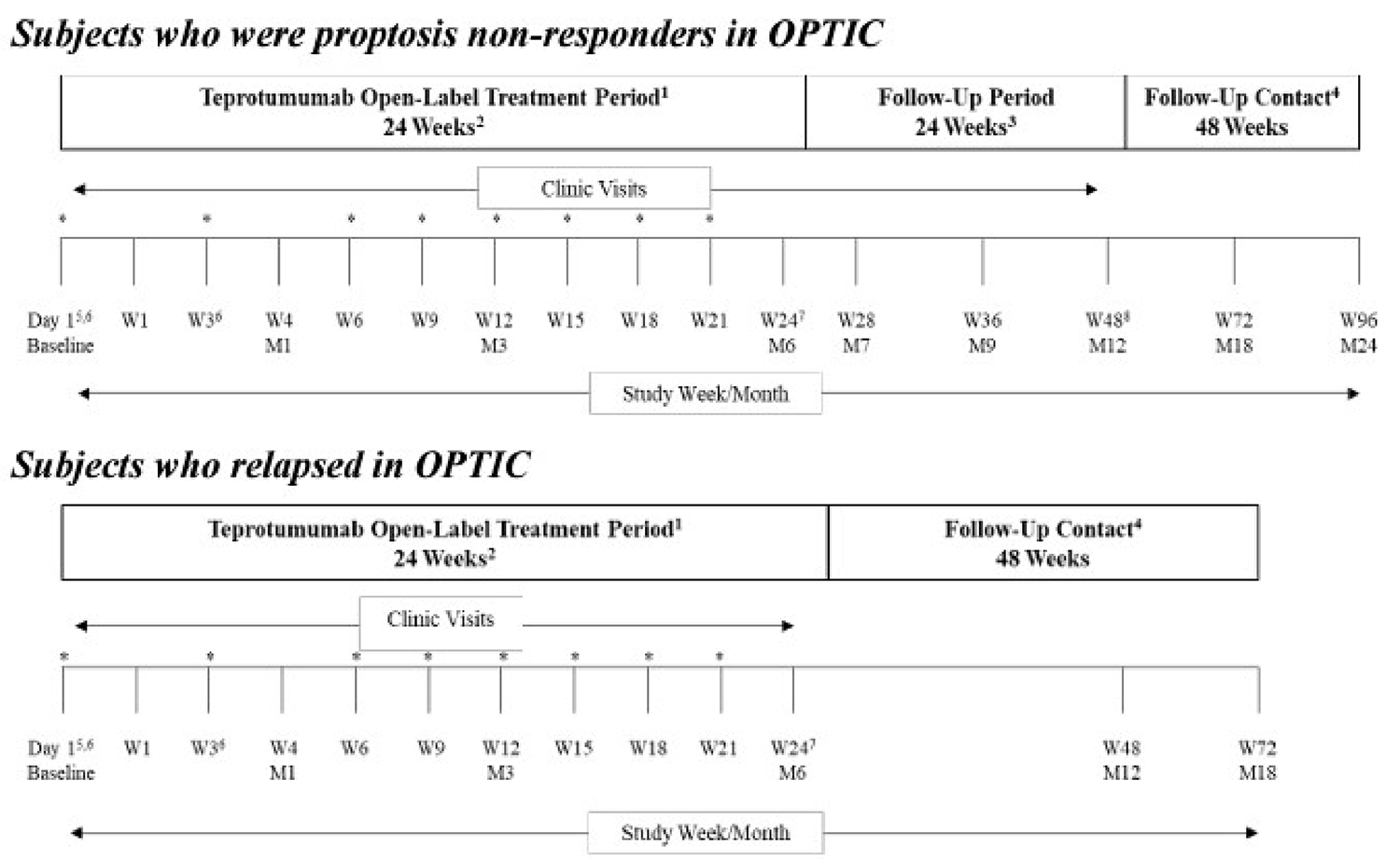
AE = adverse event; M = month; W = week 1.
Notes: The categories used in the figure footnotes are as reported in the source and may not align with Canada's Drug Agency inclusive language guidelines.
Asterisks indicate infusion of the trial drug.
If a patient participated in the follow-up period and discontinued prematurely (i.e., before month 12), they returned to the clinic and underwent the month 12 assessments before trial discharge.
1Teprotumumab 10 mg/kg on day 1 followed by 20 mg/kg every 3 weeks for the remaining 7 infusions.
2Visit windows were ± 1 day for weeks 1 and 4, ± 3 days for weeks 3, 6, 9, 12, 15, 18, and 21, and ± 7 days for week 24.
3Visit windows of ± 7 days.
4Proptosis nonresponders from the TEP-301 (OPTIC-X) study who completed the month 12 visit and proptosis responders who relapsed during the follow-up period of the TEP-301 (OPTIC-X) study and completed the week 24 visit.
5Visit must have occurred within 14 days after the final visit of the TEP-301 (i.e., OPTIC-X) study.
6Patients were contacted by phone or email the day after their first and second infusions for safety and tolerability assessments. Phone or email contacts also occurred on the day after any clinic visit during which a patient experienced an infusion-related AE.
7If a patient discontinued dosing, they returned to the clinic and underwent the scheduled week 24 assessments.
Source: Clinical Study Report, TEP-302 (OPTIC-X) study.73
Interventions
TED01RV Study: Follow-Up Period
Not applicable because the study drug was not administered during the long-term extension follow-up.
TEP-301 Study: Follow-Up Period
Not applicable because the study drug was not administered during the long-term extension follow-up.
TEP-302 (OPTIC-X) Study: OLE of the TEP-301 Study
A total of 8 infusions of teprotumumab (10 mg/kg on day 1 followed by 20 mg/kg every 3 weeks for the remaining infusions) were administered during the 24-week treatment period.
Outcomes
TED01RV Study: Follow-Up Period
The primary efficacy end point was ORR analyzed at week 28 and week 72 (defined as a decrease in overall CAS of ≥ 2 points, a reduction in proptosis of ≥ 2 mm, and no deterioration in the nonstudy eye [i.e., increase in CAS of ≥ 2 points or increase in proptosis of ≥ 2 mm]). Other efficacy end points of interest included proptosis responder rate (defined as reduction in proptosis of ≥ 2 mm from baseline), diplopia responder rate, change from baseline in CAS, proptosis, GO-QoL scores, and the proportion of proptosis responders who relapsed.
TEP-301 Study: Follow-Up Period
The primary efficacy end point was proptosis responder rate (defined as patients with a ≥ 2 mm reduction from baseline in proptosis in the study eye without deterioration [i.e., a ≥ 2 mm increase] of proptosis in the fellow eye). Other efficacy end points of interest included ORR, CAS categorical responder rate, diplopia responder rate, change from baseline in proptosis, and change in GO-QoL scores.
TEP-302 (OPTIC-X) Study: OLE of the TEP-301 Study
The primary efficacy end point was proptosis responder rate (i.e., the percentage of patients with a ≥ 2 mm reduction from baseline in proptosis in the study eye without deterioration [i.e., ≥ 2 mm increase] of proptosis in the fellow eye) at week 24. Other efficacy end points of interest included the percentage of patients with a CAS of 0 or 1 in the study eye at week 24, mean change from baseline to week 24 in proptosis measurement in the study eye, diplopia responder rate, and mean change from baseline to week 24 in GO-QoL overall score.
Statistical Analysis
TED01RV Study: Follow-Up Period
The ITT population included all patients who were randomized and received at least 1 dose of the study drug (either teprotumumab or placebo) during the 24-week treatment phase. The ITT population was the primary population used for the efficacy analyses. The safety population included all patients who were dosed with any study drug (teprotumumab or placebo) during the 24-week treatment phase. The safety population was used for all safety analyses.
Descriptive summaries were provided by treatment group. All statistical tests were 2 sided and performed at the 5% significance level, except where otherwise noted. Baseline characteristics and safety tables were presented for the safety population unless otherwise specified. Efficacy tables were presented for the ITT population. Baseline was defined as the last predose measurement unless otherwise specified. Change from baseline was the measurement at each time point minus baseline. Continuous end point summaries included the number of patients (n) with nonmissing values, mean, SD, median, minimum, and maximum. Categorical end point summaries included the frequencies and percentages of patients in each category. In general, the denominator for the percentage calculation was based upon the total number of patients in the study population for each treatment, unless otherwise specified.
TEP-301 Study: Follow-Up Period
The ITT population was used for all efficacy analyses, and the safety population was used for all analyses of safety end points. Sustained responder rates (proptosis, overall, CAS categorical, and diplopia) at each visit in the follow-up period were provided for patients who were responders for the variable at week 24. Descriptive summaries of each responder rate (proptosis, overall, CAS categorical, and diplopia) were provided for the study eye and fellow eye (using definitions analogous to that used for the study eye) by treatment group for each visit in the follow-up period. Sustained response was defined as continuing to meet the response definition and receiving no additional TED treatment at the time of the visit. Patients who were missing values at a visit were considered nonresponders at that visit. Descriptive summaries of changes from baseline in proptosis for the study eye and changes from baseline in transformed scores from the GO-QoL were provided by treatment group for each visit in the follow-up period.
TEP-302 (OPTIC-X) Study: OLE of the TEP-301 Study
The ITT population was defined as all enrolled patients and was used in the efficacy and safety analyses. Study baseline was defined as the last measurement taken before the first dose in the OPTIC-X study (considering unscheduled visits when available). If a study baseline value was not obtained in the OPTIC-X study before dosing, the last value measured in the TEP-301 study was used.
All efficacy end points were summarized using descriptive statistics, with summaries stratified by trial drug received in the TEP-301 study and overall. Sustained responder rates (for proptosis, overall, CAS categorical, and diplopia) at each visit in the follow-up period were provided for patients who were proptosis nonresponders in the TEP-301 study at week 24 and were responders for the variables at week 24 in this extension trial. Sustained response was defined as continuing to meet the response definition and receiving no additional TED treatments at the time of the visit. Patients who were missing values at a visit were considered nonresponders at that visit.
Results
Patient Disposition
TED01RV Study: Follow-Up Period
A total of 76 patients (39 patients [86.7%] in the placebo group and 37 patients [88.1%] in the teprotumumab group) completed the study treatment (week 24). Of these, 74 patients (38 patients [84.4%] in the placebo group and 36 patients (85.7%)] in the teprotumumab group) completed the off-treatment follow-up period week 72 visit (Table 18).
TEP-301 Study: Follow-Up Period
A total of 79 patients (40 patients [95.2%] in the placebo group and 39 patients [95.1%] in the teprotumumab groups) completed the study treatment period (week 24). Of these, 23 patients (3 patients [7.1%] in the placebo group and 20 patients [48.8%] in the teprotumumab group) completed the follow-up period (week 72) (Table 18). Of all the patients who received teprotumumab, 10 patients (24.4%) in the teprotumumab group were discontinued from the follow-up period due to disease relapse and 9 patients (90.0%) enrolled in the OPTIC-X study. Among the 4 patients in the placebo group who had data collected in the follow-up period, 1 patient (25.0%) met the relapse criteria and was enrolled in the OPTIC-X study.
TEP-302 (OPTIC-X) Study: OLE of the TEP-301 Study
Fifty-one patients entered the OPTIC-X study and were included in the ITT population (Table 19). Thirty-seven patients (72.5%) received placebo in the TEP-301 study (referred to as the first-course group), and 14 patients (27.5%) received teprotumumab in the TEP-301 study (referred to as the second-course group). Of the 37 patients in the first-course group, 36 patients (97.3%) were proptosis nonresponders in the TEP-301 study and 1 patient (2.7%) relapsed during the TEP-301 study follow-up period. Of the 14 patients in the second-course group, 5 patients (35.7%) were proptosis nonresponders in the TEP-301 study and 9 patients (64.3%) relapsed during the TEP-301 study follow-up period. One patient in the second-course group did not complete the treatment period and did not continue in the follow-up period due to hospitalization (SAE of cerebral hemorrhage).
Protocol Deviations
Major protocol deviations were reported for 15 of the 37 patients in the first-course group and for 5 of the 14 patients in the second-course group. The majority of the deviations were related to visits or assessments, trial drug dispensing, and dosing.
Table 18: Patient Disposition in the TED01RV Study and TEP-301 Study Follow-Up Periods
Patient disposition | TED01RV studya | TEP301 studya | ||
|---|---|---|---|---|
Teprotumumab (N = 42) n (%) | Placebo (N = 45) n (%) | Teprotumumab (N = 41) n (%) | Placebo (N = 42) n (%) | |
ITT population, N | 42 | 45 | 41 | 42 |
Safety population,b N | 43 | 44 | NA | NA |
Completed study treatment (week 24) | 37 (88.10) | 39 (86.70) | 39 (95.10) | 40 (95.20) |
Completed the study (week 72) | 36 (85.70) | 38 (84.40) | 20 (48.80) | 3 (7.10) |
Reasons for discontinuation from the follow-up period | ||||
Adverse eventc | 5 (11.90) | 2 (4.40) | NA | NA |
Relapse | NA | NA | 10 (24.40) | 0 |
Withdrawal by patient | NA | NA | 2 (4.90)d | 0 |
Lack of efficacy | 0 | 2 (4.40) | NA | NA |
Protocol deviation | NA | NA | 1 (2.40) | 0 |
Physician decision | NA | NA | 1 (2.40)e | 0 |
Other | 1 (2.40) | 3 (6.70) | 2 (4.90)f | 1 (2.40)g |
ITT = intention to treat; NA = not applicable.
Notes: The categories used in the table footnotes are as reported in the source and may not align with Canada's Drug Agency inclusive language guidelines.
For the TEP-301 study, patient disposition was summarized, including the number of patients screened, the number of patients screened out, the number of patients in each analysis population, and the numbers and percentages of patients who completed the double-masked treatment period, discontinued early from the double-masked treatment period, enrolled in the OPTIC-X study overall, had any data collected during the follow-up period, met the relapse criteria during the follow-up period overall (by reason for relapse), completed the study overall, and discontinued early from the study overall (with reasons for early study discontinuation provided for all).
aInformation is presented for those who completed the follow-up period to week 72.
bOne patient was randomized to placebo but received teprotumumab. This patient was analyzed under placebo for efficacy (ITT population, analyzed based on randomized treatment) and under teprotumumab for safety (safety population, analyzed based on treatment received).
cAll discontinuations due to adverse events occurred during the treatment phase.
dOne patient elected to withdraw to pursue eye surgery and 1 patient elected to pursue surgery to correct diplopia, respectively.
eOne patient elected to withdraw from the double-masked treatment period due to risk of allergy (last dose of study drug administered on day 43). The patient returned for the week 24 visit and entered the follow-up period; they were discontinued from the follow-up period (day 337) due to physician decision when the sponsor indicated that further investigation was not necessary.
fOne patient was discontinued as a nonresponder (on day 310) and entered the OPTIC-X trial; the patient was incorrectly assessed at the site as a week 24 responder and entered the follow-up period. Another patient was discontinued (day 339) due to compliance issues regarding the remaining visits through study completion.
gOne patient discontinued due to meeting the relapse criteria (day 197) and entered the OPTIC-X trial. The reason given for discontinuation was relapse.
Source: Clinical Study Report addendum, TED01RV74 and TEP-301 (OPTIC) studies.75
Table 19: Patient Disposition in the OPTIC-X Study
Patient disposition | OPTIC-X study | ||
|---|---|---|---|
Second-course group (TEP-301 study, teprotumumab) n (%) | First-course group (TEP-301 study, placebo) n (%) | Overall | |
ITT population, N | 14 | 37 | 51 |
Proptosis nonresponder in the TEP-301 study | 5 (35.70) | 36 (97.30) | 41 (80.40) |
Relapsed during the follow-up period of the TEP-301 study | 9 (64.30) | 1 (2.70) | 10 (19.60) |
Completed study | |||
Proptosis nonresponder in the TEP-301 study, completed treatment period and follow-up period | 3 (21.40) | 35 (94.60) | 38 (74.50) |
Proptosis nonresponder in the TEP-301 study, discontinued treatment period and continued in follow-up | 1 (7.10) | 1 (2.70) | 2 (3.90) |
Relapsed during the follow-up period of the TEP-301 study and completed treatment period | 9 (64.30) | 1 (2.70) | 10 (19.60) |
Discontinued, reasons for discontinuation | |||
Proptosis nonresponder in the TEP-301 study did not complete the treatment period and did not continue in follow-up period | 1 (7.10) | 0 | 1 (2.00) |
ITT = intention to treat population.
Notes: The categories used in the table are as reported in the source and may not align with Canada's Drug Agency inclusive language guidelines.
First-course group refers to participants who received placebo in the TEP-301 study; second-course group refers to participants who received teprotumumab in the TEP-301 study.
Source: Clinical Study Report for Study TEP-302.73
Baseline Characteristics
TED01RV Study: Follow-Up Period
Baseline characteristics of the safety population are presented in Table 20. This has been previously summarized in the Systematic Review section of the report.
TEP-301 Study: Follow-Up Period
Baseline characteristics of the safety population are presented in Table 20. This has been previously summarized in the Systematic Review section of the report.
TEP-302 (OPTIC-X) Study: OLE of the TEP-301 Study
Most patients were female (first-course group: 73.0%; second-course group: 78.6%), white (first-course group: 89.2%; second-course group: 78.6%), and tobacco nonusers (first-course group: 78.4%; second-course group: 78.6%) (Table 20).The mean times since diagnosis of TED were 16.5 months in the second-course group and 12.26 months in the first-course group.
Table 20: Baseline Characteristics in the TED01RV Study (ITT Population), TEP-301 Study (Safety Population), and TEP-302 (OPTIC-X) Study (ITT Population)
Characteristic | TED01RV study | TEP-301 study | TEP-302 (OPTIC-X) study | |||
|---|---|---|---|---|---|---|
Teprotumumab (N = 42) | Placebo (N = 45) | Teprotumumab (N = 41) | Placebo (N = 42) | Second-course group (TEP-301 study, teprotumumab) (N = 14) | First-course group (TEP-301 study, placebo) (N = 37) | |
Age (years), mean (SD) | 51.7 (10.78) | 54.1 (12.87) | 51.6 (12.63) | 48.9 (12.96) | 56.1 (11.52) | 48.5 (13.49) |
Gender, n (%) | ||||||
Female | 28 (66.70) | 36 (80.00) | 29 (70.70) | 31 (73.80) | 11 (78.60) | 27 (73.00) |
Male | 14 (33.30) | 9 (20.00) | 12 (29.30) | 11 (26.20) | 3 (21.40) | 10 (27.00) |
Ethnicity, n (%) | ||||||
Hispanic or Latino | 2 (4.80) | 4 (8.90) | 2 (4.90) | 1 (2.40) | 0 | 1 (2.70) |
Other | 40 (95.20) | 41 (91.10) | 39 (95.10) | 41 (97.60) | 14 (100.00) | 36 (97.30) |
Race, n (%) | ||||||
Asian | 1 (2.40) | 2 (4.40) | 2 (4.90) | 1 (2.40) | 2 (14.30) | 1 (2.70) |
Black or African American | 4 (9.50) | 4 (8.90) | 4 (9.80) | 2 (4.80) | 1 (7.10) | 1 (2.70) |
White | 36 (85.70) | 39 (86.70) | 35 (85.40) | 37 (88.10) | 11 (78.60) | 33 (89.20) |
Other | 1 (2.40) | 0 | 0 | 2 (4.80) | 0 | 2 (5.40) |
Body mass index (kg/m2) Mean (SD) | NA | NA | 26.71 (5.63) | 26.89 (5.30) | 25.56 (4.70) | 27.85 (5.65) |
Hemoglobin A1C (%) Mean (SD) | NA | NA | 5.52 (0.41) | 5.45 (0.38) | 5.71 (0.22) | 5.45 (0.35) |
Alcohol use history, n (%) | ||||||
Never | NA | NA | 17 (41.50) | 25 (59.50) | 5 (35.70) | 13 (35.10) |
Current | NA | NA | 21 (51.20) | 8 (19.00) | 9 (64.30) | 18 (48.60) |
Former | NA | NA | 3 (7.30) | 9 (21.40) | 0 | 1 (2.70) |
Missing | NA | NA | 0 | 0 | 0 | 5 (13.50) |
Tobacco use status, n (%) | ||||||
Nonuser | NA | NA | 32 (78.00) | 34 (81.00) | 11 (78.60) | 29 (78.40) |
User | NA | NA | 9 (22.00) | 8 (19.00) | 3 (21.40) | 8 (21.60) |
Time since diagnosis of TED, months Mean (SD) | NA | NA | 6.203 (2.32) | 6.415 (2.37) | 16.521 (4.35) | 12.263 (2.46) |
ITT = intention to treat; NA = not applicable; SD = standard deviation; TED = thyroid eye disease.
Notes: Tobacco use status for the TEP-302 study is reported from the time of the TEP-301 study randomization
First-course group refers to participants who received placebo in the TEP-301 study; second-course group refers to participants who received teprotumumab in the TEP-301 study.
The categories used in the table are as reported in the source and may not align with Canada's Drug Agency inclusive language guidelines.
Sources: Clinical Study Report Addendum, TED01RV study;74 Clinical Study Report Addendum, TEP-301 (OPTIC) study;75 and Clinical Study Report, TEP-302 study.73
Exposure to Study Treatments
TED01RV Study: Follow-Up Period
Not applicable because there was no administration of the study drug during the follow-up period.
Concomitant Treatments Used During Follow-Up
Of 10 patients, 4 patients (40.0%) who received teprotumumab and 6 patients (60.0%) who received placebo during the 24-week double-masked treatment period of the phase II TED01RV trial received additional TED treatment with either corticosteroids, rituximab, or orbital decompression therapy during the off-treatment follow-up period. Of the 6 patients in the placebo group, 5 patients (83.3%) required orbital decompression, 3 in combination with corticosteroids and 1 with the addition of rituximab; 1 additional patient (16.7%) was treated with corticosteroids only. Of the 4 patients who received teprotumumab, 2 patients (50.0%) received corticosteroids, 1 patient (25.0%) required orbital decompression in combination with corticosteroids, and 1 patient (25.0%) required orbital decompression only.
TEP301 Study: Follow-Up Period
Not applicable because there was no administration of the study drug during the follow-up period.
Concomitant Treatments Used During Follow-Up
The medication classes most commonly used (i.e., by ≥ 25.0% of all patients) during the follow-up period included thyroid hormones for the treatment of hypothyroidism (overall, 52.5%; teprotumumab, 55.6% [20 of 36 patients]; placebo, 25.0% [1 of 4 patients]); sulphur-containing imidazole derivatives for the treatment of Graves disease (overall, 47.5%; teprotumumab, 44.4% [16 of 36 patients]; placebo, 75.0% [3 of 4 patients]); vitamin D and analogues (overall, 37.5%; teprotumumab, 33.3% [12 of 36 patients]; placebo, 75.0% [3 of 4 patients]); and other ophthalmological drugs, typically artificial tears or lubricating eye drops (overall, 32.5%; teprotumumab, 30.6% [11 of 36 patients]; placebo, 50.0% [2 of 4 patients]).
Of the 36 patients in the teprotumumab group, 33 patients (91.7%) received no TED treatments (i.e., no medications, procedures, surgeries, or orbital radiation), and 3 patients (8.3%) received 1 or more TED treatments during the follow-up period (1 patient each received GC for strabismus surgery for diplopia, worsening active orbitopathy, and left temporal headache and/or tenderness).
Of the 4 patients in the placebo group, 3 patients (75.0%) received no treatment for TED, and 1 patient (25.0%) received 1 or more treatments for TED during the follow-up period.
TEP-302 (OPTIC-X) Study: OLE of the TEP-301 Study
The majority of patients received all 8 infusions of teprotumumab (Table 21). The mean numbers of doses in the first-course and second-course groups, respectively, were 7.9 (SD = 0.33) and 7.4 (SD = 1.40). One patient in the first-course group and 3 patients in the second-course group received fewer than 8 infusions of teprotumumab.
Concomitant Medications During the Treatment Period
Concomitant medication classes used by greater than or equal to 10.0% of all patients during the treatment period are summarized in Appendix 1 (Table 45). The majority of patients (56.9%) received sulphur-containing imidazole derivatives for treatment of Graves’ disease (24 of 27 patients [64.9%] in the first-course group and 5 of 14 patients [35.7%] in the second-course group).
The use of thyroid hormones for the treatment of hypothyroidism was reported in 13 of 37 patients (35.1%) in the first-course group and 6 of 14 patients [42.9%] in the second-course group.
The use of GCs was reported for 6 patients, 4 of whom were in the first-course group and 2 of whom were in the second-course group. Of these 6 patients, major protocol deviations were noted for 4; the remaining 2 patients received GCs as part of a premedication regimen for infusion-related reaction prophylaxis. Other medications reported in greater than or equal to 10.0% of all patients included selective beta-blocking drugs, platelet aggregation inhibitors excluding heparin, propionic acid derivatives, vitamins (plain multivitamins, vitamin D, and analogues), and other ophthalmological drugs.
Table 21: Duration of Exposure to Teprotumumab in the OPTIC-X Study — ITT Population
Duration of exposure | OPTIC-X study | |
|---|---|---|
Second-course group (TEP-301 study, teprotumumab) (N = 14) | First-course group (TEP-301 study, placebo) (N = 37) | |
Number of doses administered | ||
Mean (SD) | 7.4 (1.40) | 7.9 (0.33) |
Median | 8.0 | 8.0 |
Minimum to maximum | 3 to 8 | 6 to 8 |
Number of doses administered, n (%) | ||
< 8 infusions | 3 (21.40)a | 1 (2.70)b |
8 infusions | 11 (78.60) | 36 (97.30) |
Number of days receiving drug | ||
Mean (SD) | 137.9 (31.02) | 147.5 (7.43) |
Number of days in the trial (treatment period) | ||
Mean (SD) | 170.9 (24.04) | 168.1 (8.24) |
Number of days in the trial (follow-up period) | ||
Mean (SD) | 165.0 (7.12) | 170.1 (12.65) |
Number of days in the trial (overall) | ||
Mean (SD) | 218.8 (72.26) | 332.9 (30.43) |
Patients with any doses not completely administered, n (%) | 0 | 1 (2.70) |
Patients with any infusion interruptions, n (%) | 0 | 1 (2.70) |
ITT = intention to treat; SD = standard deviation.
Note: First-course group refers to participants who received placebo in the TEP-301 study; second-course group refers to participants who received teprotumumab in the TEP-301 study.
aOf the 3 patients in the second-course group who received fewer than 8 infusions, 1 patient each received 3, 6, and 7 doses.
bOne patient in the first-course group received 6 doses.
Source: Clinical Study Report Addendum, TEP-302 study.73
Efficacy
Overall Response Rate
TED01RV Study: Follow-Up Period
The number of overall responders declined over time during the follow-up period. At week 72, the proportion of overall responders was 45.2% (19 of 42 patients) in the teprotumumab group compared to 22.2% (10 of 45 patients) in the placebo group, with a between-group difference of 23.0% (95% CI, 3.7% to 42.4%; P = 0.023) (Table 22).
TEP-301 Study: Follow-Up Period
The proportion of sustained overall responders declined over time during the follow-up period relative to week 24 responders. Of the 32 patients in the teprotumumab group, 56.3% (18 of 32 patients) were sustained overall responders at week 72 (Table 24). Of the 3 patients in the placebo group, 66.7% (2 of 3 patients) were sustained overall responders at week 72.
TEP-302 (OPTIC-X) Study: OLE of the TEP-301 Study
Of the 24 patients in the first-course group who were overall responders at week 24 relative to study baseline (initially, these patients were proptosis nonresponders in the TEP-301 study), 22 patients (91.6%) had sustained response at week 48 of the OPTIC-X study (Table 29). Of the 5 patients in the second-course group who were overall responders at week 24 relative to study baseline (including 1 proptosis nonresponder in the TEP-301 study and 4 patients who relapsed during the follow-up period of the TEP-301 study), 1 patient (initially a proptosis nonresponder in the TEP-301 study) had sustained response at week 48 of the OPTIC-X study.
Table 22: Proportion of Overall Responders for the Study Eye in the TED01RV Study — ITT Population
Visit | TED01RV study | ||
|---|---|---|---|
Teprotumumab N = 42 | Placebo N = 45 | ||
Overall responder rates | |||
Week 28, n (%) | |||
Respondera | 31 (73.8) | 6 (13.3) | |
Nonresponder or missing | 11 (26.2) | 39 (86.7) | |
Difference (%)b | 60.5 | ||
95% CI (%) | (43.9 to 77.1) | ||
P value | < 0.001 | ||
Week 72, n (%) | |||
Respondera | 19 (45.2) | 10 (22.2) | |
Nonresponder/Missing | 23 (54.8) | 35 (77.8) | |
Difference (%)b | 23.0 | ||
95% CI (%) | (3.7 to 42.4) | ||
P value | 0.023 | ||
Proptosis responder rates | |||
Week 28, n (%) | |||
Responderc | 31 (73.8) | 6 (13.3) | |
Other | 11 (26.2) | 39 (86.7) | |
Difference (%)d | 60.5 | ||
95% CI (%) | (43.9 to 77.1) | ||
P value | < 0.001 | ||
Week 72, n (%) | |||
Responderc | 19 (45.2) | 10 (22.2) | |
Other | 23 (54.8) | 35 (77.8) | |
Difference (%)d | 23.0 | ||
95% CI (%) | (3.7 to 42.4) | ||
P value | 0.023 | ||
CI = confidence interval; ITT = intention to treat; TED = thyroid eye disease; vs. = versus.
Notes: The categories used in the table are as reported in the source and may not align with Canada's Drug Agency inclusive language guidelines.
Patients who received TED treatment during the off-treatment follow-up period were treated as nonresponders from the time of TED treatment forward. Patients who discontinued treatment for any reason were treated as nonresponders; therefore, the analysis included all patients randomized in the ITT population.
aA responder was defined as a patient with a reduction in CAS of ≥ 2 points, a reduction in proptosis of ≥ 2 mm in the study eye, and no deterioration (i.e., increase in CAS of ≥ 2 points or increase in proptosis of ≥ 2 mm) in the nonstudy eye.
bChi-square test comparing responder vs. nonresponder. The difference is equal to the responder proportion in the teprotumumab group minus the responder proportion in the placebo group.
cResponder was defined as a reduction in proptosis ≥ 2 mm from baseline.
dChi-square test comparing responder versus other (stable, worsening, missing, or dropped out). The difference is equal to the responder proportion in the teprotumumab group minus the responder proportion in the placebo group.
Sources: Clinical Study Report Addendum of TED01RV study;74 Clinical Study Report Addendum table and figures of TED01RV study.76
Proptosis (Responder Rate, Change From Baseline)
TED01RV Study: Follow-Up Period
The proportion of proptosis responders was the same as the results of the overall responder in both teprotumumab and placebo groups at week 72 (Table 22). The mean change from baseline in the teprotumumab group was −2.11 mm compared to −1.13 mm in the placebo group at week 72 (Table 23). The change from baseline was clinically meaningful in the teprotumumab group.
TEP-301 Study: Follow-Up Period
Of the 34 patients who were proptosis responders at week 24 of the double-masked treatment period, 19 patients (55.9%) were proptosis responders at week 72 in the teprotumumab group, suggesting a decline in proptosis response over time (Table 24). Of the 4 patients in the placebo group, 50.0% (2 of 4 patients) were sustained proptosis responders at week 72. Among the 15 patients receiving teprotumumab who were not sustained proptosis responders at week 72, 8 patients relapsed during the follow-up period and enrolled in the OPTIC-X study.
The mean changes from baseline in proptosis were −3.62 mm (mean percentage change from baseline: −16.27) (n = 21) in the teprotumumab group and −2.67 mm (mean percentage change from baseline: −12.27) (n = 3) in the placebo group at week 72 (Table 25). While the observed mean changes from baseline in proptosis were clinically meaningful at week 72, the sample sizes were small in both groups.
TEP-302 (OPTIC-X) Study: OLE of the TEP-301 Study
The proportions of proptosis responders at week 24 relative to study baseline were 89.2% (33 of 37 patients) and 53.8% (7 of 13 patients) in first-course and second-course groups, respectively (Table 29). Of the 32 patients in the first-course group (initially also proptosis nonresponders in the TEP-301 study) and 2 patients in the second-course group (initially proptosis nonresponders in the TEP-301 study), 29 patients (90.6%) in the first-course group and 1 patient (50.0%) in the second-course group had a sustained proptosis response at week 48 of the OPTIC-X study. Additionally, of the 1 patient in the first-course group and 9 patients in the second-course group who relapsed during the follow-up period, all patients except 3 in the second-course group were responders at week 24 relative to study baseline in the OPTIC-X study.
The mean changes from study baseline to week 24 in proptosis in the study eye were −3.47 mm in the first-course group and −1.77 mm in the second-course group (Table 29). No additional results were available during the follow-up period of the OPTIC-X study.
Table 23: Change From Baseline in CAS and Proptosis in the TED01RV Study — ITT Population
Variable | CAS | Proptosis | ||
|---|---|---|---|---|
Teprotumumab (N = 42) | Placebo (N = 45) | Teprotumumab (N = 42) | Placebo (N = 45) | |
Baseline | ||||
N | 42 | 45 | 42 | 45 |
Mean (SD) | 5.1 (0.97) | 5.2 (0.74) | 23.38 (3.16) | 23.10 (2.93) |
Median | 5.0 | 5.0 | 23.00 | 22.50 |
(Minimum to maximum) | (2 to 7) | (4 to 7) | (17.0 to 33.0) | (16.0 to 31.5) |
Missing | 0 | 0 | 0 | 0 |
Week 28, change from baseline | ||||
N | 37 | 37 | 36 | 36 |
Mean (SD) | −4.2 (1.12) | −2.5 (1.61) | −3.60 (1.90) | −0.38 (1.79) |
Median | −4.0 | −2.0 | −3.75 | −0.50 |
(Minimum to maximum) | (−7 to −2) | (−5 to 2) | (−9.0 to 0.0) | (−6.0 to 4.0) |
Missing | 5 | 8 | 6 | 9 |
Week 72, change from baseline | ||||
N | 33 | 32 | 33 | 32 |
Mean (SD) | −3.8 (1.72) | −3.8 (1.34) | −2.11 (2.00) | −1.13 (1.80) |
Median | −4.0 | −4.0 | −2.10 | −1.00 |
(Minimum to maximum) | (−7 to 1) | (−6 to −1) | (−7.0 to 3.0) | (−5.0 to 3.0) |
Missing | 9 | 13 | 9 | 13 |
CAS = clinical activity score; ITT = intention to treat; SD = standard deviation.
Source: Clinical Study Report Addendum table and figures, TED01RV study.76
Table 24: Sustained Proptosis Responder Rate, Overall Responder Rate, CAS Responder Rate, and Diplopia Responder Rate in the Follow-Up Period of the TEP-301 Study — Week 24 Proptosis Responders, Overall Responders, CAS Responders, and Diplopia Responders
Visit | Sustained proptosis responder rate | Sustained overall responder rate | Sustained CAS responder rate | Sustained diplopia responder rate | ||||
|---|---|---|---|---|---|---|---|---|
Teprotumumab (N = 34) | Placebo (N = 4) | Teprotumumab (N = 32) | Placebo (N = 3) | Teprotumumab (N = 24) | Placebo (N = 9) | Teprotumumab (N = 19) | Placebo (N = 8) | |
Week 28, n (%) | ||||||||
Responder | 31 (91.20) | 3 (75.00) | 29 (90.60) | 2 (66.70) | 22 (91.70) | 2 (22.70) | 14 (73.70) | 2 (25.00) |
Nonresponder | 3 (8.80) | 1 (25.00) | 3 (9.40) | 1 (33.30) | 2 (8.30) | 7 (77.80) | 5 (26.30) | 6 (75.00) |
Week 36, n (%) | ||||||||
Responder | 29 (85.30) | 2 (50.00) | 28 (87.50) | 2 (66.70) | 21 (87.50) | 2 (22.20) | 14 (73.70) | 1 (12.50) |
Nonresponder | 5 (14.70) | 2 (50.00) | 4 (12.50) | 1 (33.30) | 3 (12.50) | 7 (77.80) | 5 (26.30) | 7 (87.50) |
Week 48, n (%) | ||||||||
Responder | 28 (82.40) | 2 (50.00) | 24 (75.00) | 2 (66.70) | 18 (75.00) | 2 (22.20) | 16 (84.20) | 1 (12.50) |
Nonresponder | 6 (17.60) | 2 (50.00) | 8 (25.00) | 1 (33.30) | 2 (25.00) | 7 (77.80) | 3 (15.80) | 7 (87.50) |
Week 60, n (%) | ||||||||
Responder | 21 (61.80) | 2 (50.00) | 19 (59.40) | 2 (66.70) | 13 (54.20) | 2 (22.20) | 11 (57.90) | 1 (12.50) |
Nonresponder | 13 (38.20) | 2 (50.00) | 13 (40.60) | 1 (33.30) | 11 (45.80) | 7 (77.80) | 8 (42.10) | 7 (87.50) |
Week 72, n (%) | ||||||||
Responder | 19 (55.90) | 2 (50.00) | 18 (56.30) | 2 (66.70) | 12 (50.00) | 2 (22.20) | 11 (57.90) | 1 (12.50) |
Nonresponder | 15 (44.10) | 2 (50.00) | 14 (43.80) | 1 (33.30) | 12 (50.00) | 7 (77.80) | 8 (42.10) | 7 (87.50) |
CAS = clinical activity score.
Notes: The categories used in the table are as reported in the source and may not align with Canada's Drug Agency inclusive language guidelines.
Sustained proptosis response was defined for week 24 proptosis responders as ≥ 2 mm reduction from baseline in proptosis in the study eye without deterioration (i.e., ≥ 2 mm increase) of proptosis in the fellow eye and no additional thyroid eye disease treatment received by the time of the visit. Percentages are based on the number of week 24 proptosis responders.
Sustained CAS categorical response was defined for week 24 CAS categorical responders as a reduction to a CAS of 0 or 1 in the study eye as a categorical response variable and no additional thyroid eye disease treatment received by the time of the visit. Percentages are based on the number of week 24 CAS categorical responders.
Sustained overall response was defined for week 24 overall responders as a ≥ 2 mm reduction in proptosis AND a ≥ 2-point reduction in CAS from baseline in the study eye without deterioration (i.e., ≥ 2 mm increase in proptosis or ≥ 2-point increase in CAS) in the fellow eye and no additional thyroid eye disease treatment received by the time of the visit. Percentages are based on the number of week 24 overall responders.
Sustained diplopia response was defined for week 24 diplopia responders as patients who had a reduction of ≥ 1 grade in the study eye with no corresponding deterioration (i.e., ≥ 1 grade worsening) in the fellow eye and who had not received any additional thyroid eye disease treatment by the time of the visit. Percentages are based on the number of patients with diplopia at baseline who were also diplopia responders at week 24.
Source: Clinical Study Report Addendum, Study TEP301.75
Table 25: Mean Change From Baseline in Proptosis (mm) in the Follow-Up Period of the TEP-301 Study (Study Eye) — ITT Population
Variable | Teprotumumab | Placebo |
|---|---|---|
Week 48 | ||
N | 33 | 3 |
Baseline, mean (SD) | 22.65 (3.40) | 21.67 (3.05) |
Change from baseline, mean (SD) | −3.24 (2.04) | −2.67 (0.58) |
Week 60 | ||
N | 25 | 3 |
Baseline, mean (SD) | 22.96 (3.31) | 21.67 (3.05) |
Change from baseline, mean (SD) | −3.62 (1.79) | −2.67 (0.58) |
Week 72 | ||
N | 21 | 3 |
Baseline, mean (SD) | 22.67 (3.25) | 21.67 (3.05) |
Change from baseline, mean (SD) | −3.62 (1.39) | −2.67 (0.58) |
ITT = intention to treat; SD = standard deviation.
Source: Clinical Study Report Addendum, Study TEP301.75
Diplopia Responder Rate
TED01RV Study: Follow-Up Period
Of the 36 patients in the teprotumumab group and 36 patients in the placebo group, 58.3% and 28.9%, respectively, were considered responders at week 72 (Table 26).
TEP-301 Study: Follow-Up Period
Of the 19 patients in the teprotumumab group who were diplopia responders at week 24 during the double-masked treatment period, 57.9% (11 of 19 patients) were sustained diplopia responders at week 72. Of the 8 patients in the placebo group, 1 patient (12.5%) was a sustained diplopia responder at week 72 (Table 24). Of the 16 patients with grade 0 diplopia in the teprotumumab group at week 24, 50.0% (8 of 16 patients) were sustained grade 0 diplopia responders at week 72.
TEP-302 (OPTIC-X) Study: OLE of the TEP-301 Study
The proportions of diplopia responders at week 24 relative to study baseline were 60.9% (14 of 23 patients) and 75.0% (3 of 4 patients) in the first-course and second-course groups, respectively (Table 29). Of the 14 patients in the first-course group who were considered diplopia responders at week 24 relative to study baseline, 85.7% (12 of 14 patients) had a sustained diplopia response at week 48 of the OPTIC-X study. Of the 3 patients in the second-course group who were diplopia responders at week 24 relative to study baseline did not sustain diplopia response at week 48.
Table 26: Diplopia Responder Rate in the TED01RV Study — ITT Population
Visit | Teprotumumab (N = 42) | Placebo (N = 45) |
|---|---|---|
Week 28 | ||
N | 36 | 39 |
CSS responder,a n (%) | 23 (63.9) | 9 (23.1) |
CSS nonresponder, n (%) | 13 (36.1) | 30 (76.9) |
P valueb | < 0.001 | |
Week 72, n (%) | ||
N | 36 | 38 |
CSS responder,a n (%) | 21 (58.3) | 11 (28.9) |
CSS nonresponder, n (%) | 15 (41.7) | 27 (71.1) |
P valueb | 0.011 | |
CSS = clinical measures of severity score; ITT = intention to treat; vs. = versus.
Note: The categories used in the table are as reported in the source and may not align with Canada's Drug Agency inclusive language guidelines.
aCSS responders are defined as patients who had a decrease ≥ 1 grade.
bChi-square test comparing CSS responder vs. CSS nonresponder.
Source: Clinical Study Report Addenda, TED01RV study.74
CAS (Responder Rate, Change From Baseline)
TED01RV Study: Follow-Up Period
At week 72, the mean change in CAS scores from baseline was −3.8 points in the teprotumumab and placebo groups, indicating no difference between the groups at the end of the follow-up period (Table 23).
TEP-301 Study: Follow-Up Period
Of the 24 patients who were CAS responders at week 24 of the double-masked treatment period, 50.0% were sustained CAS responders at week 72 in the teprotumumab group (Table 24).
TEP-302 (OPTIC-X) Study: OLE of the TEP-301 Study
The proportions of CAS responders at week 24 relative to study baseline were 65.6% (21 of 32 patients) and 36.4% (4 of 11 patients) in the first-course and second-course groups, respectively (Table 29). In the first-course group, of the 21 CAS responders at week 24 relative to study baseline (i.e., proptosis nonresponders in the TEP-301 study and CAS responders in the OPTIC-X study at week 24), 20 patients (95.2%) had sustained CAS response at week 48 of the OPTIC-X study.
None of the patients in the second-course group had sustained CAS response at week 48 of the OPTIC-X study.
GO-QoL Scores
TED01RV Study: Follow-Up Period
Transformed scores were available only for the subscales (i.e., VF and AP). Patients in the teprotumumab and placebo groups experienced improvement in the AP and VF subscale GO-QoL scores, with changes of greater than 10 points when relative to baseline values (except for the AP subscale scores at week 72 in the teprotumumab group) (Table 27).
TEP-301 Study: Follow-Up Period
For the 21 patients receiving teprotumumab who were evaluated at week 72, a mean increase from baseline in GO-QoL overall transformed score was observed (21.19 points). For the subscales, there was a mean increase from baseline of 18.37 points in GO-QoL VF subscale score (n = 33) and a mean increase of 27.98 points (n = 21) in GO-QoL AP subscale score (Table 28).
TEP-302 (OPTIC-X) Study: OLE of the TEP-301 Study
There were clinically meaningful improvements in GO-QoL overall scores for both groups (Table 29). The mean increase from study baseline in the GO-QoL transformed overall score was similar in the first-course and second-course groups in the OPTIC-X study (i.e., 13.39 and 14.73, respectively). For the VF subscale score, the mean increases from study baseline were 11.73 points in the first-course group and 23.21 points in the second-course group. For the AP subscale, the mean increases from study baseline were 15.10 points in the first-course group and 6.25 points in the second-course group. These results suggest that improvements in overall scores in the first- and second-course groups were mainly driven by the AP and VF subscale scores, respectively.
Table 27: Changes in GO-QoL Scores From Baseline in the TED01RV Study — ITT Population
Variable | GO-QoL scores | |
|---|---|---|
Teprotumumab | Placebo | |
Visual Functioning subscale scores | ||
Baseline | ||
N | 42 | 45 |
Mean (SD) | 56.55 (27.15) | 61.77 (26.78) |
Change from baseline, week 48 | ||
N | 37 | 33 |
Mean (SD) | 24.16 (27.41) | 10.77 (28.28) |
Missing | 5 | 12 |
Change from baseline, week 72 | ||
N | 33 | 32 |
Mean (SD) | 18.37 (30.23) | 16.13 (21.20) |
Missing | 9 | 13 |
Appearance subscale scores | ||
Baseline | ||
N | 42 | 45 |
Mean (SD) | 60.12 (28.32) | 54.94 (24.09) |
Change from baseline, week 48 | ||
N | 37 | 33 |
Mean (SD) | 14.02 (22.17) | 14.18 (23.04) |
Missing | 5 | 12 |
Change from baseline, week 72 | ||
N | 33 | 32 |
Mean (SD) | 7.95 (17.49) | 13.28 (23.85) |
Missing | 9 | 13 |
GO-QoL = Graves Ophthalmopathy Quality of Life questionnaire; ITT = intention to treat; SD = standard deviation.
Note: Transformed the sum of scores from the following 8 questions to a scale of 0 to 100: bicycling, driving, moving around the house, walking outdoors, reading, watching TV, hobby or pastime, feeling hindered. Transformed total score = [(sum of each score – N of completed items) / (2 * N of completed items)] * 100. Patients who received TED treatment in the follow-up period were removed from the summary statistics from the time of TED treatment forward.
Source: Clinical Study Report Addendum, table and figures, TED01RV study.76
Table 28: Change From Baseline in GO-QoL Scores in the TEP-301 Study — ITT Population
Variable | GO-QoL scores | |
|---|---|---|
Teprotumumab | Placebo | |
Visual Functioning subscale scores | ||
Week 48 | ||
N | 33 | 3 |
Baseline, mean (SD) | 68.61 (24.80) | 47.62 (20.62) |
Change from baseline, mean (SD) | 12.74 (33.66) | 45.54 (27.24) |
Week 72 | ||
N | ||
Baseline, mean (SD) | 73.17 (20.82) | 47.62 (20.62) |
Change from baseline, mean (SD) | 14.33 (20.94) | 44.05 (29.80) |
Appearance subscale score | ||
Week 48 | ||
N | 33 | 3 |
Baseline, mean (SD) | 54.17 (26.82) | 22.92 (18.04) |
Change from baseline, mean (SD) | 23.86 (23.92) | 54.17 (42.54) |
Week 72 | ||
N | 21 | 3 |
Baseline, mean (SD) | 58.33 (27.34) | 22.92 (18.04) |
Change from baseline, mean (SD) | 27.98 (24.58) | 41.67 (43.89) |
Overall score | ||
Week 48 | ||
N | 33 | 3 |
Baseline, mean (SD) | 61.31 (21.70) | 34.44 (19.24) |
Change from baseline, mean (SD) | 18.38 (24.12) | 50.28 (35.44) |
Week 72 | ||
N | 21 | 3 |
Baseline, mean (SD) | 65.69 (19.35) | 34.44 (19.24) |
Change from baseline, mean (SD) | 21.19 (20.65) | 43.68 (35.67) |
GO-QoL = Graves Ophthalmopathy Quality of Life questionnaire; ITT = intention to treat; SD = standard deviation.
Source: Clinical Study Report Addendum, TEP-301 study.75
Table 29: Primary and Secondary Efficacy Results in the OPTIC-X Study
End point | Second-course group (TEP-301 study, teprotumumab) N = 14 | First-course group (TEP-301 study, placebo) N = 37 |
|---|---|---|
Primary | ||
Proptosis responder ratea at week 24, n of N (%) | 7 of 13 (53.84) | 33 of 37 (89.20) |
Sustained proptosis responder rateb in the follow-up period relative to study baseline, week 48, n of N (%) | 1 of 2 (50.00) | 29 of 32 (90.60) |
Other efficacy end points | ||
Overall responder ratec at week 24, n of N (%) | 5 of 11 (45.50) | 25 of 32 (78.10) |
Sustained overall responder rated in the follow-up period relative to study baseline, week 48, n of N (%) | 1 of 1 (100.00) | 22 of 24 (91.60) |
CAS categorical responder ratee at week 24, n of N (%) | 4 of 11 (36.40) | 21 of 32 (65.60) |
Sustained CAS categorical responder ratef in the follow-up period relative to study baseline, week 48, n of N (%) | 0 | 20 of 21 (95.20) |
Mean change from study baseline in proptosis (mm) at week 24 (SD) | −1.77 (1.13) | −3.47 (1.73) |
Diplopia categorical responder rateg at week 24, n of N (%) | 3 of 4 (75.00) | 14 of 23 (60.90) |
Sustained diplopia categorical responder rateh during the follow-up period relative to study baseline, week 48, n of N (%) | 0 | 12 of 14 (85.70) |
Mean change from study baseline in GO-QoL transformed score at week 24: Overall | 14.73 (11.78) | 13.39 (17.89) |
Mean change from study baseline in GO-QoL transformed score at week 24: Visual Functioning subscale | 23.21 (25.16) | 11.73 (22.54) |
Mean change from study baseline in GO-QoL transformed score at week 24: Appearance subscale | 6.25 (10.08) | 15.10 (20.34) |
CAS = clinical activity score; GO-QoL = Graves Ophthalmopathy Quality of Life questionnaire; SD = standard deviation.
Notes: The categories used in the table are as reported in the source and may not align with Canada's Drug Agency inclusive language guidelines.
First-course group refers to participants who received placebo in the TEP-301 (OPTIC) study; second-course group refers to participants who received teprotumumab in the TEP-301 (OPTIC) study.
There was no follow-up for responders in the TEP-301 (OPTIC) study who relapsed and then entered the OPTIC-X study; hence the low numbers in the follow-up data.
aProptosis responders were defined as patients with a ≥ 2 mm reduction from study baseline in proptosis in the study eye without deterioration (i.e., ≥ 2 mm increase) of proptosis in the fellow eye at week 24. This included patients who were initially proptosis nonresponders in the TEP-301 (OPTIC) study and those who relapsed during the TEP-301 (OPTIC) study follow-up period.
bSustained proptosis response was defined for week 24 proptosis responders as a ≥ 2 mm reduction from study baseline in proptosis in the study eye without deterioration of proptosis (i.e., ≥ 2 mm increase) in the fellow eye and no additional thyroid eye disease treatment received by the time of the visit. Percentages were based on the number of week 24 proptosis responders among patients who were proptosis nonresponders in the TEP-301 (OPTIC) study.
cOverall responders were defined as patients with a ≥ 2 mm reduction in proptosis and a ≥ 2-point reduction in CAS from baseline in the study eye without deterioration (i.e., ≥ 2 mm increase in proptosis or ≥ 2-point increase in CAS) in the fellow eye at week 24. This included patients who were initially proptosis nonresponders in the TEP-301 (OPTIC) study and those who relapsed during the TEP-301 (OPTIC) study follow-up period.
dSustained overall responders were defined for week 24 overall responders as patients with a ≥ 2 mm reduction in proptosis, a ≥ 2-point reduction in CAS from baseline in the study eye without deterioration (≥ 2 mm increase in proptosis or ≥ 2-point increase in CAS) in the fellow eye, and no additional thyroid eye disease treatment received by the time of the visit. Percentages were based on the number of week 24 proptosis responders among patients who were initially proptosis nonresponders in the TEP-301 (OPTIC) study.
eCAS responders were defined as patients who achieved a reduction to a CAS of 0 or 1 (i.e., no or minimal inflammatory symptoms) as a categorical response variable at week 24. The denominators in the OPTIC-X study are the numbers of patients with CAS > 1 at study baseline.
fSustained CAS categorical response was defined for week 24 CAS categorical responders as a reduction to a CAS of 0 or 1 in the study eye as a categorical response variable and no additional thyroid eye disease treatment received by the time of the visit. Percentages were based on the number of week 24 CAS categorical responders.
gDiplopia responders were defined as patients with a 1-grade or greater reduction in diplopia in the study eye without worsening by at least 1 grade in the fellow eye at week 24. Denominators are the numbers of patients with diplopia at baseline (in the TEP-301 study or OPTIC-X study, as applicable).
hResponders were defined as patients with 1 grade or greater reduction in diplopia in the study eye without worsening by at least 1 grade in the fellow eye.
Source: Clinical Study Report, TEP-302 study.73
Relapse
TED01RV Study: Follow-Up Period
Of the 30 patients who received teprotumumab, 11 patients (36.7%) who were proptosis responders at week 24 did not maintain improvement relative to baseline (i.e., experienced reversal of ≥ 2 mm) during the off-treatment follow-up period at week 72 (Appendix 1, Table 47). Two of these patients received steroids and 1 received steroids in addition to surgical intervention.
TEP-301 Study: Follow-Up Period
Relapse was defined as an increase in proptosis of greater than or equal to 2 mm in the study eye after week 24 or an increase in CAS of greater than or equal to 2 points after week 24 with an absolute CAS of greater than or equal to 4 points. Time to relapse was measured as the number of days from the week 24 visit date to the date on which the relapse criteria were met. In addition, patient symptomology was considered by the investigator to ensure that relapse (e.g., new onset of double vision) had occurred. Among the 33 patients receiving teprotumumab who were week 24 proptosis responders and entered the follow-up period, 10 patients (30.3%) relapsed during the follow-up period. The median time to relapse could not be estimated because less than 50% of patients relapsed during the follow-up period, although 25% of the patients had relapsed by day 253. Relapse occurred at week 48 for 7 patients, at week 60 for 2 patients, and after week 72 for 1 patient.
TEP-302 (OPTIC-X) Study: OLE of the TEP-301 Study
Relapse was not assessed in the OLE.
Harms
TED01RV Study: Follow-Up Period
The safety profile of teprotumumab did not change during the off-treatment follow-up period. No serious SAEs or deaths were reported, and no AEs led to study discontinuation in the follow-up period.
TEP-301 Study: Follow-Up Period
Among the 36 patients receiving teprotumumab in the follow-up period, 26 patients (72.2%) experienced at least 1 AE, 7 (19.4%) of whom had AEs that were considered treatment related: onychoclasis (3 patients), onychoclasis and nail discoloration (1 patient), nail disorder (1 patient), muscle spasm (1 patient), and diabetes mellitus (1 patient). SAEs (intercostal neuralgia and optic neuropathy) were experienced by 2 patients (5.6%) who were receiving teprotumumab during the follow-up period; these were considered severe in intensity but not related to the study drug. The only other severe AE experienced by a patient receiving teprotumumab in the follow-up period was a nonserious event of hypothyroidism that was considered not related to teprotumumab. None of the AEs in the teprotumumab group led to discontinuation from study. Three patients receiving teprotumumab had AEs of special interest during the follow-up period (diabetes mellitus, muscle spasms, and hypoacusis were experienced by 1 patient each).
Among the 4 patients receiving placebo in the follow-up period, 3 patients (75.0%) experienced at least 1 AE that was mild or moderate in intensity. None of the AEs in the placebo group were considered serious or related to the study drug, and none led to discontinuation from study. None of the patients in the placebo group had an AE of special interest during the follow-up period.
No patient in either treatment group died during the follow-up period.
TEP-302 (OPTIC-X) Study: OLE of the TEP-301 Study
Of the 37 patients in the first-course group, 32 patients (86.5%) reported greater than or equal to 1 TEAE; 26 patients (70.3%) reported greater than or equal to 1 treatment-related TEAE; 1 patient (2.7%) reported greater than or equal to 1 TEAE leading to withdrawal of the trial drug; and 1 patient (2.7%) reported greater than or equal to 1 TEAE leading to permanent withdrawal of the trial drug (Table 30). Similarly, among the 14 patients in the second-course group, 11 patients (78.6%) reported TEAEs; 7 patients (50.0%) reported treatment-related TEAEs; 1 patient (7.1%) reported a serious TEAE; and 1 patient (7.1%) reported a TEAE leading to permanent withdrawal of the trial drug. Two patients permanently discontinued teprotumumab due to a TEAE: 1 due to the serious TEAE of cerebral hemorrhage (a patient in the second-course group; considered not drug-related) and 1 due to nonserious muscle spasms (considered related to teprotumumab).
The most common treatment-related TEAEs (≥ 10.0%) included muscle spasms, nasal dryness, and dry skin in patients in the second-course group, and diarrhea, muscle spasms, and dysgeusia in patients in the first-course group (Table 30). Among the 40 patients who entered the follow-up period, 7 patients (17.5%) had AEs considered treatment related. Treatment-related AEs occurring in at least 2 patients (≥ 5.0%) during the follow-up period were muscle spasms (3 patients; 7.5%) and onycholysis (2 patients; 5.0%).
No deaths were reported in the treatment or follow-up periods of the OLE.
TEAEs of special interest that occurred at any time during the treatment were hearing impairment (14.3% versus 10.8% in the second-course versus first-course groups, respectively), muscle spasms (28.6% versus 48.6%), diarrhea (7.1% versus 13.5%), and hyperglycemia (0% versus 8.1%). Two patients (1 in the first-course group and 1 in the second-course group) experienced AEs associated with hyperglycemia during the OPTIC-X study follow-up period. One patient in the first-course group experienced neurosensory deafness during the follow-up period (considered not related to teprotumumab).
Refer to Table 30 for harms data.
Table 30: Summary of Harms Results From the OPTIC-X Long-Term Extension Study
Adverse events | Second-course group (Received teprotumumab in TEP-301) (N = 14) | First-course group (Received placebo in TEP-301) (N = 37) |
|---|---|---|
Summary of TEAEs, n (%) | ||
≥ 1 TEAE | 11 (78.60) | 32 (86.50) |
≥ 1 treatment-related TEAE | 7 (50.00) | 26 (70.30) |
≥ 1 serious TEAE | 1 (7.10) | 0 |
≥ 1 TEAE leading to permanent withdrawal of trial drug | 1 (7.10) | 1 (2.70) |
≥ 1 treatment-related TEAE leading to permanent withdrawal of trial drug | 0 | 1 (2.70) |
Treatment-related TEAEs, n (%) | ||
≥ 1 treatment-related TEAE | ||
Thrombocytopenia | 0 | 2 (5.40) |
Tinnitus | 0 | 2 (5.40) |
Diarrhea | 0 | 4 (10.80) |
Fatigue | 0 | 3 (8.10) |
Muscle spasms | 3 (21.40) | 17 (45.90) |
Dysgeusia | 0 | 4 (10.80) |
Amenorrhoea | 0 | 2 (5.40) |
Nasal dryness | 2 (14.30) | 0 |
Alopecia | 1 (7.10) | 3 (8.10) |
Dry skin | 2 (14.30) | 3 (8.10) |
Onycholysis | 0 | 3 (8.10) |
Adverse events of special interest, n (%) | ||
Events that occurred at any time during the treatment period (ITT population) | ||
Hearing impairment | 2 (14.30)a | 4 (10.80)a |
Muscle spasms | 4 (28.60) | 18 (48.60) |
Diarrhea | 1 (7.10) | 5 (13.50) |
Hyperglycemia | 0 | 3 (8.10) |
ITT = intention to treat; TEAE = treatment-emergent adverse event.
Note: First-course group refers to participants who received placebo in the TEP-301 study; second-course group refers to participants who received teprotumumab in the TEP-301 study.
aOf the 4 patients in the first-course group, 2 patients experienced hypoacusis and 2 patients experienced tinnitus. Of the 2 patients in the second-course group, 1 patient experienced autophony and the other hypoacusis.
Source: Clinical Study Report, TEP-302 study.73
Critical Appraisal
In the 2 off-treatment follow-up periods of studies TED01RV and TEP-301, the responder rates for proptosis, diplopia, and overall response in the teprotumumab group decreased over time. Relapses leading to reduced sample sizes over time suggest a risk of attrition bias and raise concerns regarding the robustness of the follow-up efficacy outcome results. The impact of the use of concomitant medications on the efficacy results during the follow-up period is unknown.
The OPTIC-X study was a phase III, multicentre OLE of the TEP-301 study with a 24-week treatment period and no comparator group. The lack of a control group precludes the ability to make causal statements about benefits and harms. The open-label nature of the study may increase the risk of bias in determining the magnitude of the subjective outcomes because the lack of masking may affect patients’ expectations of the treatment. There was a decrease in response and sample sizes over time among patients in the first-course group, raising concerns regarding the long-term efficacy of the results. The data suggested a lack of sustained response in patients in the second-course group, making it challenging to evaluate whether nonresponders may benefit from an additional course of teprotumumab in the long term; these results require additional confirmation. There was a risk of attrition bias, given that the number of patients contributing to the analyses declined steadily over time and that final measures of the outcome at week 48 were based on a limited sample size. Because there were no follow-up data for patients who had relapsed in the TEP-301 study and were re-treated in the OPTIC-X study, no conclusions can be drawn regarding the sustained responses for those patients. Many patients used concomitant medications during the treatment period (i.e., sulphur-containing imidazole derivates, thyroid hormones, or GCs), and the effect of these on the efficacy outcomes cannot be determined.
None of the trial sites were in Canada, reducing generalizability and applicability of the results to clinical practice in Canada.
Indirect Evidence
The contents within this section have been informed by materials submitted by the sponsor. The following information has been summarized and validated by the review team.
Objectives for the Summary of Indirect Evidence (ITC 1)
The pivotal trials provided a head-to-head comparison of teprotumumab and placebo among patients with moderate to severe active TED. There was no direct evidence included in the Systematic Review section to support comparisons of the efficacy or safety of teprotumumab with other available treatments for this patient population. As such, an ITC in active TED is warranted to address this evidence gap.
Description of Indirect Comparisons
The sponsor submitted an ITC analysis to compare teprotumumab to IVMP. An unanchored MAIC used IPD from 2 pivotal teprotumumab trials (the TED01RV and TEP-301 studies) and summary-level data from 8 comparator trials of IVMP,26-33 pooled through a random-effects meta-analysis.
Table 31: Study Selection Criteria and Methods for ITCs Submitted by the Sponsor
Characteristics | Indirect comparison |
|---|---|
Population | Adult patients with moderate to severe active TED |
Intervention | Teprotumumab (per the approved dosing regimen) |
Comparator | IVMP (at the standard dosing, cumulatively 4.5 g to 5.0 g) |
Outcomes |
These outcomes were assessed at week 12 in the IVMP studies and at week 24 in the teprotumumab studies. |
Study designs | Studies were considered eligible if they were randomized controlled trials, single-arm trials, or observational studies. |
Publication characteristics | Studies were required to have been published as full-text papers in English. |
Exclusion criteria |
|
Databases searched |
|
Selection process | Records were initially reviewed, based on their titles and abstracts, against the inclusion and exclusion criteria by 2 independent reviewers; disagreements were resolved by a third, independent reviewer. After the initial review, full-text records were retrieved and screened by 2 independent reviewers for eligibility; disagreements were resolved by a third, independent reviewer. |
Data extraction process | Data from eligible records were extracted into a predefined, Excel-based template by 2 independent reviewers and independently checked by a third, senior reviewer. |
HTA = health technology assessment; IVMP = IV methylprednisolone; MAIC = matching-adjusted indirect comparison; TED = thyroid eye disease.
Source: Sponsor’s MAIC technical report.77
ITC Design
Objectives
The objectives of the sponsor-conducted ITCs were to assess the efficacy and/or safety of teprotumumab versus IVMP in adult patients with moderate to severe active TED.
Study Selection Methods
Two systematic literature reviews were conducted in June 2023 to identify the evidence base (i.e., clinical and RWE data) on teprotumumab and IVMP in adult patients with moderate to severe active TED. The literature sources covered scientific databases, conference proceedings, clinical trial registries, health technology assessment submissions, and a manual search of the bibliographic list of relevant systematic literature reviews and meta-analyses (Table 31). The original clinical search had no date limits; it identified 81 records from 68 unique studies. A date restriction of publication after 2013 was subsequently applied, yielding 54 records from 41 unique clinical studies.
A feasibility assessment was conducted on the 54 identified records, as per the criteria outlined in Table 31. Records were selected for inclusion in the ITC if these included adult patients with moderate to severe active TED who were treated with teprotumumab or IVMP and reported on the following outcomes of interest: mean change from baseline in proptosis and/or diplopia response (reduction in diplopia of ≥ 1 grade). Records were excluded if the design of the study was a case report or series and if the study included cumulative IVMP dosing lower than 4.5 g (i.e., lower than the standard dosing per the EUGOGO and the American Thyroid Association and European Thyroid Association consensus guidelines).11,19 The sponsor specified that the observational RWE studies were identified in a separate systematic literature review, but were ultimately excluded from the base-case analyses due to the potential for selection bias because of their lack of randomization. However, RWE studies were reintroduced in a set of scenario analyses to test whether the findings were sensitive to the inclusion of all identified evidence in the analyses, regardless of the potential for bias.
Based on the outcomes of interest specified previously, the feasibility assessment demonstrated that 2 studies of teprotumumab (the TED01RV and TEP-301 studies) can be compared to 8 studies of IVMP.26-33 According to the sponsor, the TEP-303 pivotal trial could not be included in the pooled teprotumumab data because of its different enrolment criteria (i.e., lower CAS and proptosis values) and different baseline patient characteristics (i.e., lower CAS and proptosis scores as well as different diplopia scores).
ITC Analysis Methods
Given that the network of evidence did not contain a common comparator, unanchored MAICs were conducted to compare teprotumumab (from the TED01RV and TEP-301 studies) and IVMP.26-33 The IVMP studies were pooled through random-effects meta-analysis to provide a single treatment-effect estimate for the MAIC analysis. The teprotumumab treatment effect estimate was based on IPD from the TED01RV and TEP-301 studies. Weighted averages of baseline characteristics were calculated for the IVMP trials (based on each study’s sample size) for use in the population adjustment process during the MAICs. Patients from the teprotumumab trials (i.e., the ITT population) were assigned statistical weights to adjust for their overrepresentation or underrepresentation relative to the data available for the IVMP trials.
A total of 11 prognostic variables and treatment-effect modifiers were assessed based on previous indirect comparisons58 and input from the clinical experts consulted by the sponsor. Clinicians were asked to identify whether the baseline characteristics were treatment-effect modifiers or prognostic factors and to categorize them based on the level of importance (i.e., very important, somewhat important, or not important). The following characteristics were identified:
smoking status (very important)
baseline proptosis (very important)
diplopia at baseline (percentage) (very important)
radioiodine therapy for Graves disease (very important)
thyroid function (free T3 and free T4 biomarkers) (very important)
TSH, thyroid-stimulating immunoglobulin, and TRAb levels (very important)
diabetes (somewhat important)
duration of TED symptoms (somewhat important)
age (somewhat important)
sex (somewhat important)
high cholesterol levels (not important).
Cholesterol levels and diabetes were not reported in the IVMP studies or the pooled teprotumumab IPD; thyroid function was not reported in most IVMP studies; and thyroid hormone and/or antibody levels were not reported in the IPD of the TED01RV study. The duration of TED was longer in the IVMP studies (mean: 12.40 months) than in the teprotumumab IPD (mean: 5.7 to 8.5 months). As such, cholesterol level, diabetes, thyroid function, and TED duration were not included as covariates. Furthermore, the sponsor specified that the populations in the included studies were similar in age and sex; thus, these variables were excluded from use as covariates. An ESS threshold of 30 was set to ensure a reasonable approximation of a normal distribution, based on the sponsor’s internal team and the expert clinicians consulted by the sponsor. Based on ESS considerations and variable availability across the included studies, the base-case MAICs included 4 covariates (smoking status, baseline proptosis, baseline diplopia, and radioiodine therapy for Graves disease).
MAIC analyses of mean difference in change from baseline for proptosis were conducted using a weighted linear regression model to estimate the adjusted mean differences between treatments, while the analyses of diplopia response were conducted using a weighted logistic regression model to estimate the adjusted OR of achieving that response. Uncertainty in the relative treatment effects was expressed using 95% CI and SE values that were estimated using a robust sandwich estimator approach (derived empirically from the data rather than by making overly strong assumptions regarding weights). The analyses were conducted in accordance with Technical Support Document 18 for population-adjusted indirect comparisons for National Institute for Health and Care Excellence submissions.78 Additionally, 3 sensitivity analyses were conducted to include different covariates in the models and exclude patients with outlier weights (Table 32).
For each outcome, 3 scenarios were conducted: scenario 1 included only RWE studies in Europe and North America; scenario 2 included both RCT and RWE IVMP studies; and scenario 3 investigated the impact of including only the OPTIC IPD data rather than the pooled teprotumumab IPD.
Table 32: ITC Analysis Methods
Methods | Description |
|---|---|
Analysis methods | Unanchored MAIC informed by pooled estimates from:
The base-case analysis considered smoking status, baseline diplopia, baseline proptosis, and radioiodine therapy as covariates. |
Outcomes |
These outcomes were assessed at week 12 in the IVMP studies and week 24 in the teprotumumab studies. |
Construction of nodes | Nodes were created by grouping IVMP studies according to the cumulative IVMP dose that was used. A cumulative dose of > 4.5 g was required because this is the standard dosing regimen described in the EUGOGO and ATA and ETA guidelines. |
Sensitivity analyses |
|
Subgroup analysis | None |
Methods for pairwise meta-analysis | Pairwise meta-analyses were not conducted. However, pooled IVMP treatment-effect estimates were produced by conducting meta-analyses of the IVMP studies. The pooled IVMP treatment effects were then compared to the teprotumumab treatment effects from the pooled IPD generated in the teprotumumab studies. |
ATA = American Thyroid Association; ETA = European Thyroid Association; EUGOGO = European Group on Graves Orbitopathy; IPD = individual patient data; ITC = indirect treatment comparison; IVMP = IV methylprednisolone; MAIC = matching-adjusted indirect comparison.
Source: Sponsor’s MAIC technical report.77
Results of ITC 1
Summary of Included Studies
The systematic literature review and meta-analysis identified a total of 8 IVMP trials for inclusion as well as the 2 teprotumumab studies providing IPD (the TEP-301 and TED01RV studies). In reference to the heterogeneity of the studies included in the ITC, all studies were RCTs. The majority of the IVMP studies did not report the phase of the clinical research. Sample sizes in the IVMP trials varied from 18 to 81 patients, while sample sizes in the 2 teprotumumab trials were 41 for the TEP-301 study and 42 for the TED01RV study. All trials of IVMP and teprotumumab evaluated IV administration of the drugs of interest. The durations of treatment were 12 weeks for IVMP and 24 weeks for teprotumumab. According to the sponsor, the proptosis and/or diplopia outcomes were defined and measured in a consistent manner across the studies. However, the timings of the outcome assessments differed between the trials (i.e., week 12 for IVMP versus week 24 for teprotumumab).
The assessments of the patients’ baseline characteristics revealed certain imbalances, as shown in Table 33. The mean age of patients in the teprotumumab trials was approximately 51 years, while the reported mean ages of patients in the studies evaluating IVMP ranged from 35 to 52 years. Ethnicity was not reported in the majority of the IVMP studies (however, 1 trial included 100% patients of Asian origin). In the teprotumumab trials, more than 85% of patients were white. The proportion of male patients also varied, ranging from 20% to 60% in the IVMP studies and 29% to 35% in the teprotumumab studies. Similarly, the smoking status of patients was imbalanced across the trials; the proportion of people who smoked ranged from 0% to 60% in the IVMP studies and 9% to 26% in the teprotumumab studies. Baseline levels of diplopia varied greatly, with the proportion of patients experiencing constant diplopia ranging from 17% to 66% in the IVMP studies, whereas 1 teprotumumab study reported 35% baseline constant diplopia and the other reported 68% of any diplopia as a baseline characteristic. Levels of TSH as well as thyroid disease status were also imbalanced across the included studies (Table 33). There was limited reporting of TED duration, cholesterol levels, diabetes, and radioiodine therapy across the included studies.
Table 33: Summary of Baseline Characteristics Across the Evidence Base of the ITC
Study | Trial name | Mean age (years) | Male (%) | Smoking status (%) | Mean duration of TED | Mean baseline proptosis (mm) | Diplopia at baseline, n (%) | Mean TSH levels (SD) | RIT % | Cholesterol levels (mg/dL) | Diabetes | Thyroid function |
|---|---|---|---|---|---|---|---|---|---|---|---|---|
IVMP | ||||||||||||
He et al. (2017) | ChiCTR-IPR-15006848 | 41.20 | 44.44 | 22.20 | NR | 17.20 | Absent: 6 (33.30) Intermittent: 2 (11.10) Inconstant: 6 (33.30) Constant: 5 (22.20) | NR | 33.30 | NR | NR | NR |
Kahaly et al. (2018) | (MINGO) EUDRACT2008-002123-93 | 50.60 | 20.99 | 51.00 | 8.50 months | NR | 52 (64.00) | 0.52 mU/L | 20.00 | NR | NR | NR |
Zhu et al. (2014) | NR | 45.30 | 38.46 | 13.51 | NR | 21.66 | Absent: 11 (28.21) Intermittent: 6 (15.38) Inconstant: 15 (38.56) Constant: 7 (17.95) | 0.41 µIU/L | 10.26 | NR | NR | Free T3: 4.42 pmol/L Free T4: 13.43 pmol/L |
Shen et al. (2022) | NR | 46.50 | 30.00 | 0.00 | NR | 22.30 | Absent: 9 (30.00) Intermittent: 3 (10.00) Inconstant: 7 (23.30) Constant: 11 (36.70) | NR | 20.00 | NR | 3.30 | Free T3: 4.70 (4.10 to 5.30) Free T4: 12.60 (10.60 to 13.80) |
Mu et al. (2020) | NR | 35.20 | 60.87 | 34.80 | 12.64 months | 17.25 | 16 (34.80) | 0.26 | NR | NR | NR | Free T3: 12.39 pmol/L Free T4: 31.08 pmol/L |
Aktaran et al. (2007) | NR | 44.30 | 44.00 | 40.00 | NR | 22.20 | Constant: 2 (18.00) Inconstant: 4 (36.00) Intermittent: 5 (45.00) | 1.90 (1.30) μU/mL | NR | NR | NR | Free T3:2.70 ± 1.90 ng/dL Free T4:1.50 ± 0.30 ng/dL |
Bartalena et al. (2012) | NR | 50.00 | 42.59 | 54.00 | 12.40 months | 22.20 | Constant: 9 (17.00) Inconstant: 20 (37.00) Intermittent: 11 (20.00) Absent: 14 (26.00) | 1.10 mU/L | 9.00 | NR | NR | NR |
Kahaly et al. (2005) | NR | 52.00 | 28.57 | 60.00 | 4 months | NR | Constant: 23 (66.00) Inconstant: 3 (9.00) Intermittent: 0 (0) | NR | NR | NR | NR | NR |
Teprotumumab | ||||||||||||
Smith et al. (2017) | NCT01868997 | 51.60 | 35.00 | 26.00 | NR | 23.40 | Absent: 4 (10.00) Intermittent: 16 (38.00) Inconstant: 7 (17.00) Constant: 15 (35.00) | NR | NR | NR | NR | Free T3: 4.80 (1.40) pmol/L Free T4: 16.30 (4.80) pmol/L |
Douglas et al. (2020) | NCT03298867 (OPTIC) | 51.60 | 29.00 | 9.00 | 6.20 months | 22.62 | 68.29 (NR) | 1.75 mIU/L | NR | NR | NR | Free T3: 5.10 pmol Free T4: 6.46 pmol/L |
ITC = indirect treatment comparison; IVMP = IV methylprednisolone; MAIC = matching-adjusted indirect comparison; NR = not reported; RIT = radioiodine therapy; SD = standard deviation; T3 = triiodothyronine; T4 = thyroxine; TED = thyroid eye disease; TSH = thyroid-stimulating hormone.
Source: Sponsor’s MAIC technical report.77
Results
The ITC network included 8 IVMP studies and 2 teprotumumab studies with no common comparators, all of which assessed proptosis and diplopia as the outcomes of interest (Figure 21). Meta-analyses were conducted with the IVMP studies to create pooled estimates of change from baseline in proptosis (Figure 22) and proptosis response rate (Figure 23).
Figure 21: Network of Evidence for Teprotumumab and IVMP in Adults With Active TED
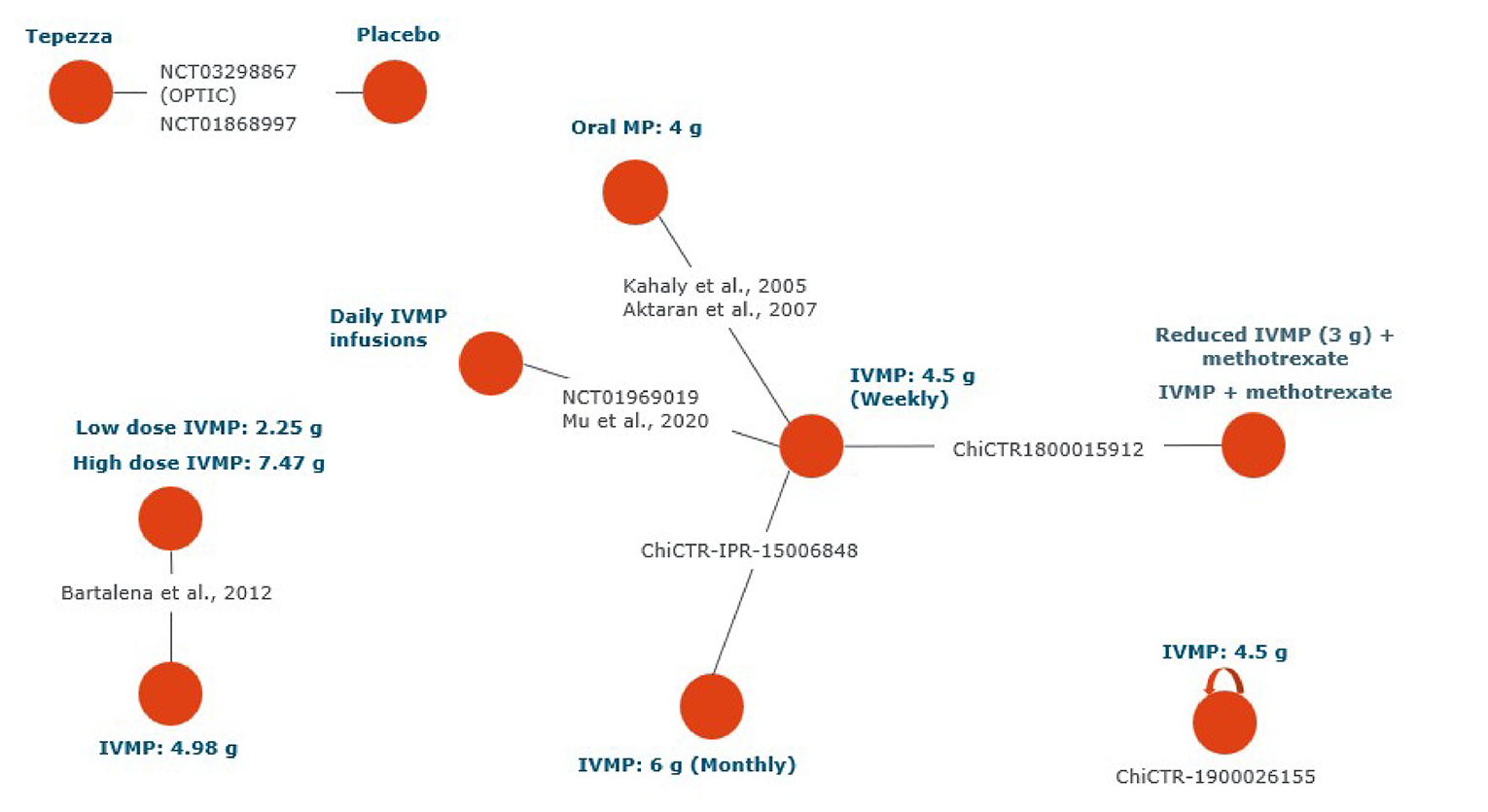
IVMP = IV methylprednisolone; MP = methylprednisolone; TED = thyroid eye disease.
Source: Sponsor’s MAIC technical report.77
Figure 22: Forest Plot and Meta-Analysis of Mean Change From Baseline in Proptosis in IVMP Studies [Redacted]
![A figure depicting the findings from the meta-analyses of mean change from baseline in proptosis in 7 IVMP trials, with a random-effect estimate of [redacted] (95% CI, [redacted]).](https://canjhealthtechnol.ca/index.php/cjht/article/download/SR0853r/version/1485/3550/13642/SR0853-Clinical_Review-fig22.png)
CFB = change from baseline; CI = confidence interval; IVMP = IV methylprednisolone; MAIC = matching-adjusted indirect comparison; RE = random effect.
Source: Sponsor’s MAIC technical report.77
Figure 23: Forest Plot and Meta-Analysis of Diplopia Response in IVMP Studies [Redacted]
![A figure depicting the findings from the meta-analyses of diplopia response in 4 IVMP trials, with a random-effect OR of [redacted] (95% CI, [redacted]).](https://canjhealthtechnol.ca/index.php/cjht/article/download/SR0853r/version/1485/3550/13643/SR0853-Clinical_Review-fig23.png)
CFB = change from baseline; CI = confidence interval; IVMP = IV methylprednisolone; MAIC = matching-adjusted indirect comparison; RE = random effect.
Source: Sponsor’s MAIC technical report.77
Change From Baseline in Proptosis
Baseline characteristics from the IVMP and teprotumumab studies, before and after matching, for the change from baseline in proptosis comparison, are shown in Table 34.
The meta-analysis of 7 IVMP studies that reported mean change from baseline in proptosis was ████ ██ with IVMP treatment (Figure 22). Scenario analyses for the meta-analyses on proptosis with the IVMP studies demonstrated mean change from baseline proptosis of █████ ██ (95% CI, ████ ██ ████) (scenario 1, restricting the results to European and North American studies26,27) and mean change from baseline proptosis of ███████ (95% CI, █████ ██ █████) (scenario 2, using all available studies, including real-world observational studies).
Before matching, the patients treated with IVMP had a higher prevalence of smoking and previous radioiodine therapy but a lower prevalence of diplopia and a lower level of baseline proptosis. Following matching, the distribution of the 4 covariates across the studies was balanced in both the base case and the 2 sensitivity analyses.
Table 34: Baseline Study Characteristics for Change From Baseline in Proptosis
Covariate | Teprotumumab baseline characteristics | IVMP baseline characteristics | |||
|---|---|---|---|---|---|
Before MAIC | Base case (4-covariate adjustment) | Sensitivity 1 (3-covariate adjustment) | Sensitivity 2 (2-covariate adjustment) | ||
Smoked (%) | █████ | █████ | █████ | █████ | █████ |
Baseline diplopia (%) | █████ | █████ | █████ | █████ | █████ |
Baseline proptosis (mm) | █████ | █████ | █████ | NA | █████ |
RIT (%) | ████ | █████ | NA | NA | █████ |
IVMP = IV methylprednisolone; MAIC = matching-adjusted indirect comparison; NA = not applicable; RIT = radioiodine therapy.
Source: Sponsor’s MAIC technical report.77
The results of the MAIC base-case and sensitivity analyses comparing proptosis estimates for teprotumumab versus IVMP are summarized in Table 35. The base-case adjusted analyses demonstrated a mean difference favouring teprotumumab in the change from baseline for proptosis of █████ ██ (95% CI, █████ ██ █████). The results of the MAIC scenario analyses are reported in Appendix 1.
Table 35: MAIC of Change From Baseline in Proptosis (Base-Case and Sensitivity Analyses)
Type | ESS | Mean difference in change from baseline for proptosis (mm) | SE | 95% lower CI | 95% upper CI |
|---|---|---|---|---|---|
Base case (smoking status, baseline diplopia, baseline proptosis, RIT) | |||||
Adjusted results | █████ | █████ | ████ | █████ | █████ |
Unadjusted results | NA | █████ | ████ | █████ | █████ |
Sensitivity analysis 1 (smoking status, baseline diplopia) | |||||
Adjusted results | █████ | █████ | ████ | █████ | █████ |
Unadjusted results | NA | █████ | ████ | █████ | █████ |
Sensitivity analysis 2 (smoking status, baseline diplopia, baseline proptosis) | |||||
Adjusted results | █████ | █████ | ████ | █████ | █████ |
Unadjusted results | NA | █████ | ████ | █████ | █████ |
Sensitivity analysis 3 (excluding outlier patients) | |||||
Adjusted results | █████ | █████ | ████ | █████ | █████ |
Unadjusted results | NA | █████ | ████ | █████ | █████ |
CI = confidence interval; ESS = effective sample size; MAIC = matching-adjusted indirect comparison; NA = not applicable; RIT = radioiodine therapy; SE = standard error.
Source: Sponsor’s MAIC technical report.77
Diplopia Response
Baseline characteristics from the IVMP and teprotumumab studies, before and after matching, for the diplopia response comparison, are shown in Table 36.
The meta-analysis of 4 IVMP studies reporting diplopia response yielded a mean response rate of ███ with IVMP treatment (Figure 23). The scenario analyses for the meta-analyses of diplopia with the IVMP studies demonstrated the pooled proportion of diplopia responders of ████ (95% CI, ████ ██ ████) (scenario 1, restricting the results to European and North American studies29,79,80) and the pooled proportion of diplopia responders of ████ (95% CI, ████ ██ ████) (scenario 2, using all available studies, including real-world observational studies).
Before matching, there were similar proportions of people who smoked among the patients treated with IVMP and the patients treated with teprotumumab. The teprotumumab group had a slightly higher proportion of patients with baseline diplopia and slightly greater baseline proptosis, while the IVMP group had a higher proportion of patients with radioiodine therapy. Following matching, the distribution of the 4 covariates across the studies was balanced in both the base-case and the 2 sensitivity analyses.
Table 36: Baseline Study Characteristics for Diplopia Response
Covariate | Teprotumumab baseline characteristics | IVMP baseline characteristics | |||
|---|---|---|---|---|---|
Before MAIC | Base case (4-covariate adjustment) | Sensitivity analysis 1 (3-covariate adjustment) | Sensitivity analysis 2 (2-covariate adjustment) | ||
Smoked (%) | █████ | █████ | █████ | █████ | █████ |
Baseline diplopia (%) | █████ | █████ | █████ | █████ | █████ |
Baseline proptosis (mm) | █████ | █████ | █████ | NA | █████ |
RIT (%) | ████ | █████ | NA | NA | █████ |
IVMP = IV methylprednisolone; MAIC = matching-adjusted indirect comparison; NA = not applicable; RIT = radioiodine therapy.
Source: Sponsor’s MAIC technical report.77
The results of the MAIC base-case and sensitivity analyses comparing diplopia estimates for teprotumumab versus IVMP are summarized in Table 37. The base-case adjusted analyses demonstrated an OR of diplopia response favouring teprotumumab with a value of ████ (95% CI, ████ ██ ████) for the comparison of teprotumumab versus IVMP. The results of the MAIC scenario analyses are reported in Appendix 1.
Table 37: MAIC of Diplopia Response (Base-Case and Sensitivity Analyses)
Type | ESS | Odds ratio | 95% lower CI | 95% upper CI |
|---|---|---|---|---|
Base case (smoking status, baseline diplopia, baseline proptosis, RIT) | ||||
Adjusted results | █████ | ████ | ████ | ████ |
Unadjusted results | NA | ████ | ████ | ████ |
Sensitivity analysis 1 (smoking status, baseline diplopia) | ||||
Adjusted results | █████ | ████ | ████ | ████ |
Unadjusted results | NA | ████ | ████ | ████ |
Sensitivity analysis 2 (smoking status, baseline diplopia, baseline proptosis) | ||||
Adjusted results | █████ | ████ | ████ | ████ |
Unadjusted results | NA | ████ | ████ | ████ |
Sensitivity analysis 3 (excluding patients with weights > 5) | ||||
Adjusted results | █████ | ████ | ████ | ████ |
Unadjusted results | NA | ████ | ████ | ████ |
Sensitivity analysis 4 (excluding patients with weights > 3) | ||||
Adjusted results | █████ | ████ | ████ | ████ |
Unadjusted results | NA | ████ | ████ | ████ |
CI = confidence interval; ESS = effective sample size; MAIC = matching-adjusted indirect comparison; NA = not applicable; RIT = radioiodine therapy.
Source: Sponsor’s MAIC technical report.77
Critical Appraisal of ITC 1
The sponsor-conducted ITC adopted a systematic review approach to identify clinical trials and RWE studies, with standard methods for conducting and reporting of reviews, including defining the research question according to population, intervention, comparison, outcomes, and study criteria, searching through multiple database sources, and involving multiple reviewers for study selection and data extraction. Of note, details of the literature search and literature review protocol were not available in the sponsor’s submission, which prevented CDA-AMC reviewers from assessing review performance properly. Moreover, no risk of bias assessment at the individual study level was conducted; hence, it was not possible for the review team to comment on whether or how the risk of bias of the individual studies might have influenced the ITC analyses conducted by the sponsor.
A feasibility assessment was performed by the sponsor to understand which type of ITC can be applied to compare teprotumumab to IVMP in the active disease setting (i.e., the current standard of care in first-line, active TED, as per the EUGOGO guideline).19 The feasibility assessment applied inclusion and exclusion criteria, focusing on RCTs, single-arm studies, and RWE studies involving patients with moderate to severe active TED who were receiving either teprotumumab or IVMP treatment (cumulative dose of 4.5 g to 5.0 g). In the absence of a common comparator, an unanchored MAIC was conducted by the sponsor. Inherent limitations with an unanchored MAIC include the inability to preserve randomization within each study and the chance of bias in comparative efficacy estimates due to possible imbalances in the prognostic factors across the trial populations. Before the ITC adjustments, differences were observed in the baseline patient characteristics, notably age, sex, smoking status, baseline diplopia, TSH levels, and thyroid disease status. The MAIC analyses leveraged IPD from 2 teprotumumab trials to match the eligibility criteria and summary-level data reported in 8 IVMP trials.26-33 This process inevitably led to reductions in the sample sizes of the individual treatment arms, introducing both generalizability concerns and the potential for imprecision in the ITC outcome assessment. Matching to the IVMP trials for the MAIC analyses reduced the initial sample size of the teprotumumab trials (N = 84) to an ESS of █████ (for proptosis MAIC) and █████ (for diplopia MAIC).
Identification of the prognostic variables to be used in the adjustments was conducted a priori, based on previous literature58 and consultation with the clinical experts consulted by the sponsor. Based on this process, 11 variables were identified as important to consider in the MAIC analyses. Following adjustment, key baseline covariates were well balanced across the teprotumumab and IVMP cohorts. However, it is important to note that, due to limited data availability and restrictions to the sample sizes available to inform the ITC analyses, only 4 variables were considered in the base-case MAIC analyses (i.e., smoking status, baseline diplopia, baseline proptosis, and radioiodine therapy). Of note, diabetes, disease duration, and vision were neither selected nor included as variables of interest, even though these were considered particularly important prognostic factors by the clinical experts consulted by CDA-AMC. Thus, there remains a high possibility that not all prognostic or effect-modifying factors were balanced between the teprotumumab and IVMP groups in the MAIC analyses, leading to an unknown amount of bias in the unanchored estimates.
The outcomes included in the ITC analyses (i.e., mean difference in the change from baseline for proptosis; diplopia response [reduction in diplopia of ≥ 1 grade]) were relevant to the treatment of patients with active TED; however, the clinical experts considered proptosis to have limited clinical relevance. There was minimal variability in the ways in which the outcomes were defined and measured across the trials included in the ITC analyses; however, there was variability in the timing of the outcome assessment (i.e., week 12 for IVMP versus week 24 for teprotumumab). According to the sponsor, the comparison based on different time points of assessment is considered appropriate because it is aligned with the full treatment benefit of the full course of each treatment (i.e., 12 weeks for IVMP and 24 weeks for teprotumumab). The sponsor further specified that the current MAIC assumes a conservative approach in which the results for IVMP are considered to remain constant from weeks 13 to 24 (i.e., patients do not improve or deteriorate after stopping IVMP). Clinical experts consulted during the CDA-AMC review validated this assumption and reported no issues with the different time points of the outcomes assessments.
No analyses were conducted for HRQoL or safety outcomes (considered important outcomes for patients with active TED, according to the patient groups, clinician groups and clinical experts) in the ITC. As such, no conclusions can be drawn concerning the impact of teprotumumab on HRQoL or on the comparative safety of teprotumumab versus IVMP for active TED.
Sensitivity analyses balancing different combinations of available baseline covariates and excluding patients with outlier values in baseline characteristics were also conducted, allowing for an increase in ESS for certain comparisons. The results of the adjusted treatment comparisons between the sensitivity and base-case analyses were consistent across the 2 end points; still, no new prognostic or effect-modifying variables were included in the sensitivity testing beyond those already accounted for in the base case. A set of prespecified scenario analyses accounted for the inclusion of RWE as well as European and North American studies in the MAIC comparisons and revealed similar proptosis estimates to those of the base-case analyses. For the diplopia outcome, the aforementioned scenario analyses revealed higher OR point estimates for the teprotumumab versus IVMP comparison, but with larger CIs, indicating increased uncertainty. Despite the larger sample size in the scenario with RWE studies, robustness remains questionable due to the possibility of selection bias associated with this study design, according to the sponsor.
Regarding missing data, for the purpose of the MAIC, patients with missing data in the pooled teprotumumab trials were excluded from the analysis. Moreover, when data were missing for the pooling of baseline characteristics for the IVMP meta-analyses, the studies were excluded from the calculation. As a result, the pooled baseline characteristics may not be fully representative of all IVMP studies, possibly introducing unknown bias.
Considerations regarding the representation of the included treatments and the generalizability of the individual trial results to the included therapies were discussed with the clinical experts consulted for this review. IVMP at the cumulative dose of 4.5 g to 5.0 g was considered an appropriate comparator by the clinical experts; however, some of the other relevant therapies, such as tocilizumab, were not included in the ITC. Per the sponsor’s clinical summary of evidence, the feasibility of conducting an ITC for the comparison of teprotumumab to rituximab or tocilizumab was assessed in a commissioned systematic literature review. A robust comparison was not possible due to major differences in baseline patient characteristics and the outcomes assessed. However, the details of this review were not provided to CDA-AMC; thus, the CDA-AMC team could not independently assess the feasibility of performing a more informative ITC.
In reference to the trial setting, the sponsor specified that the studies included in the MAIC were conducted across a variety of geographical locations. MAIC scenario analyses were conducted to assess the comparative efficacy of teprotumumab versus IVMP, restricting the analysis to studies located in Europe and North America. The findings of the scenario analyses were broadly aligned with those of the base case (i.e., beneficial effects were observed with teprotumumab compared to IVMP, with overlapping 95% CIs); however, the magnitude of the point estimate for diplopia was higher in the scenario analyses for the diplopia outcome compared to the base case. Nevertheless, it remains uncertain whether there are differences in clinical practice or the availability of treatments across the regions of the trials included in MAIC, and the direction and magnitude of potential biases remains unclear.
Objectives for the Summary of Indirect Evidence (ITC 2)
There was no direct evidence included in the Systematic Review section of this report to support comparisons of HRQoL changes with teprotumumab versus other available treatments for patients with moderate to severe active TED. The sponsor submitted an ITC comparing teprotumumab with IVMP.
Description of Indirect Comparison
The sponsor submitted a published, sponsor-funded ITC comparing GO-QoL scores in patients who received teprotumumab, placebo, or IVMP treatment. An unanchored MAIC used identified IPD from 2 pivotal teprotumumab trials (the TED01RV and TEP-301 studies) and summary-level data from 5 IVMP studies32,34-37 pooled through random-effects meta-analyses.
Table 38: Study Selection Criteria and Methods to Identify Studies Assessing IVMP in Patients With Moderate to Severe Active TED
Characteristics | Indirect comparison |
|---|---|
Population | Adults with moderate to severe active TED |
Intervention | Teprotumumab (per the approved dosing regimen) |
Comparator | IVMP (per standard dosing, cumulatively, 2.5 g to 8.0 g) Placebo |
Outcome |
The outcomes were assessed at week 12 in the IVMP studies and at week 24 in the teprotumumab studies. |
Study designs | Randomized controlled trials (phases I to IV), single-arm trials, nonrandomized trials, long-term follow-up studies (i.e., open-label follow-up with continuation of treatment), observational studies (retrospective and prospective), and case-control studies |
Publication characteristics | Only human-based and English-language papers were included. |
Exclusion criteria |
|
Databases searched |
|
Selection process | The database search was conducted by a single reviewer. The title, abstract, and full-text screening was conducted by 2 independent reviewers. |
Data extraction process | Data from eligible records were extracted by 1 independent reviewer and verified by another independent reviewer using a standardized data extraction template. |
Quality assessment | Not conducted |
GO-QoL = Graves Ophthalmopathy Quality of Life questionnaire; IVMP = IV methylprednisolone; TED = thyroid eye disease.
Note: A systematic literature review search was conducted to identify studies evaluating IVMP in patients with moderate to severe TED because individual patient data were not available.
Source: Details included in the table are from the sponsor’s submitted published study, Kahaly et al. (2025).81
ITC Design
Objectives
The objective of the sponsor-funded ITC was to assess changes in the GO-QoL scores of patients with moderate to severe active TED receiving teprotumumab versus IVMP and receiving IVMP versus placebo. This report focuses on the teprotumumab and IVMP comparison due to its relevance to the review.
Study Selection Methods
A systematic literature review was conducted to identify studies that evaluated the use of IVMP in patients with moderate to severe active TED. Literature sources included scientific databases, and a manual search of published articles was conducted. The details of the manual search were not provided (Table 38). Articles were searched from database inception to April 1, 2023. Eligible studies must have included patients with moderate to severe active TED who had received IVMP treatment and for whom GO-QoL data were reported at both baseline and end of treatment. Patients must have been treated with IVMP at a moderate cumulative dose of 4.5 g administered over a 12-week period, as per the standard recommended dosage guideline. A total of 786 records were screened, of which 772 were identified from the database search and 14 were identified from citation searching. Forty-two records were considered for eligibility, while 744 were considered irrelevant and excluded. Of the studies considered for eligibility, 5 studies assessing the use of IVMP in patients with moderate to severe active TED (n = 304) were included in the systematic review, and 37 were excluded due to inadequate reporting of outcome (n = 25) or incorrect dose or regimen (n = 12).
Deidentified IPD were available for 2 pivotal teprotumumab studies (the TED01RV and TEP301 studies). The TED01RV trial included 88 patients (teprotumumab: 43; placebo: 45). The TEP-301 study included 83 patients (teprotumumab: 41; placebo: 42). Because the inclusion and exclusion criteria were consistent across the trials, the data were amalgamated to establish treatment groups comprising 84 and 87 randomized patients for teprotumumab and placebo, respectively.
ITC Analysis Methods
Due to the lack of direct evidence from head-to-head RCTs comparing teprotumumab and IVMP, comparative estimates were derived using an unanchored MAIC.
Changes in GO-QoL scores from baseline to week 24 in patients receiving teprotumumab versus changes in GO-QoL scores from baseline to week 12 in patients receiving IVMP were compared indirectly using a MAIC analysis.
Comparisons of teprotumumab and IVMP were derived from IPD for changes from baseline in GO-QoL scores for teprotumumab and placebo and pooled changes from baseline in the IVMP studies. Outcomes were assessed at week 24 for teprotumumab and at week 12 for IVMP, in alignment with the treatment durations of these therapies.
The authors indicated that the prognostic factors used to compute weights were identified through predictive modelling of changes in GO-Qo scores and expert opinion. The modelling was based on data from 84 patients who received teprotumumab and 87 patients who received placebo during the pivotal TED01RV and TEP-301 trials. Using data from the study baseline and weeks 6, 12, and 24, linear mixed-effects models were employed to measure the impacts of demographics, time receiving treatment, proptosis (mm), diplopia (Gorman grade), presence or absence of gaze-evoked orbital pain, and spontaneous orbital pain on the overall, AP subscale, and VF subscale scores of the GO-QoL through hierarchical addition. The models also included a patient-level random effect in the within-patient variance specification. Therefore, the intraclass correlation coefficient was added to the null mixed-effects model. Variability between patients was tested over the 24-week period. Key prognostic factors were identified from this model based on statistical significance; additional prognostic factors were added and ranked by a clinical expert. Therefore, the final set of factors used to derive the weights included severe diplopia (percentage), proptosis (mean), CAS (mean), smoking status (percentage), baseline GO-QoL scores (mean), female sex (percentage), and age (mean). There was no reported attempt to identify effect modifiers.
The resulting weights were used to estimate the weighted mean change from baseline in GO-QoL scores for teprotumumab and placebo, which were then compared with pooled estimates of the mean change from baseline in GO-QoL scores for IVMP; however, details of the weighting process were not reported. Estimates were reported as mean differences and 95% CIs.
It was not possible to adjust for CAS due to imbalances between the IPD and the IVMP trials without a substantial loss of ESS. Given that CAS was deemed prognostically important for predicting changes in GO-QoL scores, a sensitivity analysis was conducted in which weights were constructed so that the distribution of CAS in the weighted IPD was within 0.10 SDs of that observed in the IVMP studies.
Table 39: ITC 2 Analysis Methods
Methods | Description |
|---|---|
Analysis methods | Unanchored MAIC informed by pooled estimates from:
Key covariates included severe diplopia, proptosis, smoking status, baseline GO-QoL scores, female sex, and age. |
Outcomes | Disease-specific GO-QoL scores: overall (16 questions), Appearance subscale (8 questions), and Visual Functioning subscale (8 questions) Data were gathered at baseline and postintervention at weeks 6, 12, and 24. Each question was assigned a score of 1, 2, or 3, indicating serious, mild, or absent limitation, respectively. Individual scores were then summed to derive a raw score. Subscale scores were transformed using the following formula: (raw score − 8) ÷ 16 × 100; the overall score was transformed as: (raw score − 16) ÷ 32 × 100. Scales ranged from 0 (complete limitation) to 100 (no limitation). An increase in the score over time compared to baseline indicated improvement, while a decrease suggested deterioration. |
Follow-up time points | Outcomes were assessed at week 12 in the IVMP studies and week 24 in the teprotumumab studies. |
Construction of nodes | Not applicable |
Sensitivity analyses | Because CAS was deemed prognostically important for predicting GO-QoL score changes, a sensitivity analysis was conducted in which weights were constructed so that the distribution of CAS in the weighted IPD was within 0.10 SDs of that observed in the IVMP studies. |
Subgroup analysis | Not undertaken |
Methods for pairwise meta-analysis | Random-effects meta-analyses were employed to pool estimates of each GO-QoL score outcome for the IVMP studies. The pooled IVMP changes from baseline were then compared to the teprotumumab treatment effects from the pooled IPD generated in the teprotumumab studies. |
CAS = clinical activity score; GO-QoL = Graves Ophthalmopathy Quality of Life questionnaire; IPD = individual patient data; ITC = indirect treatment comparison; IVMP = IV methylprednisolone; MAIC = matching-adjusted indirect comparison; SD = standard deviation.
Source: Details included in the table are from the sponsor’s submitted evidence of the published study, Kahaly et al. (2025).81
Results of ITC 2
Summary of Included Studies
With regards to heterogeneity in design among the 5 IVMP studies, there were 3 single-centre32,36,37 and 2 multicentre34,35 studies. All were RCTs except the study by Hoppe et al. (2021); however, single arms were used in the analysis.37 Masking varied across the studies: 2 were unmasked,36,37 2 were single-masked,32,35 and 1 was double-masked.34 Studies were undertaken in China,32 the EU,34 Germany,37 and Italy.35,36 Except for Lanzolla et al.,36 which was a phase II trial, none of the IVMP studies reported the phase of clinical research. Sample sizes for the IVMP studies ranged from 30 to 100. The cumulative doses of IVMP were 4.5 g in 4 of the studies and 5 g in 1 study.34
The teprotumumab trials were placebo-controlled, double-masked, multicentre investigations conducted across Europe and the US and have been described in the previous section of the report. Sample sizes of the 2 teprotumumab trials were 43 for the TED01RV study and 41 for the TEP-301 study.
Baseline characteristics of the studies included in the ITC are summarized in Table 40. The means age of patients in the teprotumumab and placebo group (based on IPD) were 51.5 years and 51.4 years, respectively. For patients in the teprotumumab group, the mean CAS was 5.1 (SD = 0.9), the mean baseline proptosis was 23.02 mm (SD = 3.23 mm), the mean baseline GO-QoL overall score was 61.3 (SD = 22.3), the mean baseline GO-QoL AP subscale score was 58.6 (SD = 27.5), and the mean baseline GO-QoL VF subscale score was 64.0 (SD = 25.8). In addition, 69.0% of patients were female, 24.0% smoked, and 51.2% had severe diplopia. For patients in the IVMP studies included the primary analysis, the pooled mean age was 49.99 years (SD = 10.19 years), the mean CAS was 4.16 (SD = 1.69), mean baseline proptosis was 21.99 mm (SD = 3.14 mm), mean baseline GO-QoL overall score was 61.41 (SD = 21.06), mean baseline GO-QoL AP subscale score was 61.42 (SD = 22.25), and mean baseline GO-QoL VF subscale score was 62.96 (SD = 24.83). In addition, 71.6% of patients were female, 50.7% smoked, and 47.1% had severe diplopia. For the IVMP studies, the baseline characteristics of the patients in each individual study varied greatly. Duration of disease was defined inconsistently across the IVMP and teprotumumab studies. The timing of the outcome assessments differed between the trials (i.e., week 12 for IVMP versus week 24 for teprotumumab).
Table 40: Summary of Baseline Characteristics of the Studies Included in ITC 2
Study | Study design, sample size | Mean age, years, (SD) | Female (%) | Smoking status (%) | Mean or Median duration of disease, months (Q1 to Q3 or range or SD)f | Mean CAS (SD) | Mean baseline proptosis, mm, (SD) | Severe diplopia (constant plus inconstant) at baseline, (%) | Mean baseline GO-QoL overall score (SD) | Mean baseline GO-QoL AP subscale score (SD) | Mean baseline GO-QoL VF subscale score (SD) |
|---|---|---|---|---|---|---|---|---|---|---|---|
IVMP studies | |||||||||||
Bartalena et al. (2012) | RCT, 54 | 50.00 (9.00) | 57.00 | 54.00 | Duration of eye symptoms, mean (SD): 12.4 (13.0) | 4.30 (0.80)a | 22.20 (3.00) | 54.00 | 62.50 (27.30)b | 70.00 (18.00) | 55.00 (29.00) |
Hoppe et al. (2021) | Non-RCT,100 | 50.6 (10.7) | 72 | 57 | Duration of thyroid disease, median (range): 16.0 (8.9 to 59.0) Duration of TED, median (range): 9.5 (5.0 to 20.0) | 4.6 (2.5)a | 21.8 (3.2) | 44 | 65.1 (16.7) | 63.7 (21.6) | 66.5 (24.5) |
Lanzola et al. (2021) | RCT,39 | 52.4 (11.2) | 77 | 36 | Duration of TED, median (Q1 to Q3): 15.5 (9.8 to 24.0) | 4.1 (1.1) | 23.0 (2.9) | 48 | 45.9 (16.6)c | 46.9 (25)c | 55.6 (22.5)c |
Kahaly et al. (2018) | RCT,81 | 50.6 (10) | 79 | 51 | Duration of thyroid disease, median (Q1 to Q3): 15.0 (5.0 to 48.0) Duration of orbital disease, median (Q1 to Q3): 8.5 (4.0 to 18.0) | 3.7 (1.3)a | 21.27 (3.7) | 41.1 | 66.1 (19.3) | 63.2 (22.9) | 69.8 (21.8) |
Shen et al. (2022) | RCT,30 | 43.2 (9.7) | 70 | 43d | Duration of eye symptoms, median (Q1 to Q3): 6.0 (4.0 to 11.0) | 4.0 (1.0)a | 22.3 (2.3) | 60 | 54.6 (29.5)b | 52.5 (25.5)b | 56.8 (28.3)b |
Pooled estimates (primary analysis)e | NA | 49.99 (10.19) | 71.6 | 50.7 | NA | 4.16 (1.69) | 21.99 (3.14) | 47.1 | 61.41 (21.06) | 61.42 (22.25) | 62.96 (24.83) |
Teprotumumab and placebo groups from IPD | |||||||||||
Kahaly et al. (2021) | RCT, teprotumumab: 84 | 51.5 (11.6) | 69 | 24 | Duration since diagnosis of GD: 11.3 (5.8 to 37.8) Duration since diagnosis of TED: 5.7 (4.2 to 7.6) | 5.1 (0.9) | 23.02 (3.23) | 51.2 | 61.3 (22.3) | 58.6 (27.5) | 64.0 (25.8) |
Kahaly et al. (2021) | RCT, placebo: 87 | 51.4 (13.1) | 77 | 30 | Duration since diagnosis of GD: 10.9 (6.8 to 36.0) Duration since diagnosis of TED: 6.8 (4.4 to 8.3) | 5.3 (0.9) | 23.15 (3.05) | 35.6 | 60.1 (20.3) | 55.5 (23.7) | 64.8 (26.4) |
AP = Appearance; CAS = clinical activity score; GD = Graves disease; GO-QoL = Graves Ophthalmopathy Quality of Life questionnaire; IPD = individual patient data; ITC = indirect treatment comparison; IVMP = IV methylprednisolone; NA = not applicable; Q1 = quartile 1; Q3 = quartile 3; RCT = randomized controlled trial; SD = standard deviation; TED = thyroid eye disease; VF = Visual Functioning.
aMeans (SDs) were imputed from reported medians and Q1 to Q3.
bOverall scores were obtained from the average of the 2 standardized or transformed subscales.
cReported raw scores were transformed to 100% to be consistent with the rest of the studies and the questionnaire’s guideline.
dThose who smoked and those who were “passive smokers” were combined.
eThe primary analysis focused on moderate doses for IVMP only (i.e., 4.5 g to 5 g) and no combination therapy.
fDuration of disease data are presented as median (Q1 to Q3), median (range) or mean (SD).
Source: Sponsor-submitted publication (Kahaly et al. [2025]).81
Results
IVMP Studies: Meta-Analysis and MAIC Analyses
Random-effects meta-analyses were conducted. These included moderate-dose IVMP, highlighting the pooled estimates of change from baseline in GO-QoL overall and subscale scores to week 12 (Figure 24).
The pooled estimate of the mean change in GO-QoL overall scores from baseline to week 12 was 4.80 (95% CI, 2.96 to 6.90) (Figure 24, panel A). The pooled estimate of the mean change from baseline in GO-QoL AP subscale scores from baseline to week 12 was 7.26 (95% CI, 3.85 to 10.68) (Figure 24, panel B). The pooled estimate of the mean change from baseline in GO-QoL VF subscale scores from baseline to week 12 was statistically insignificant, with a mean difference of 3.03 (95% CI, −3.39 to 9.45) (Figure 24, panel C).
Figure 24: Meta-Analysis With Pooled Estimates for Moderate-Dose IVMP (Primary Analysis) for Change From Baseline to Week 12 in GO-QoL Scores
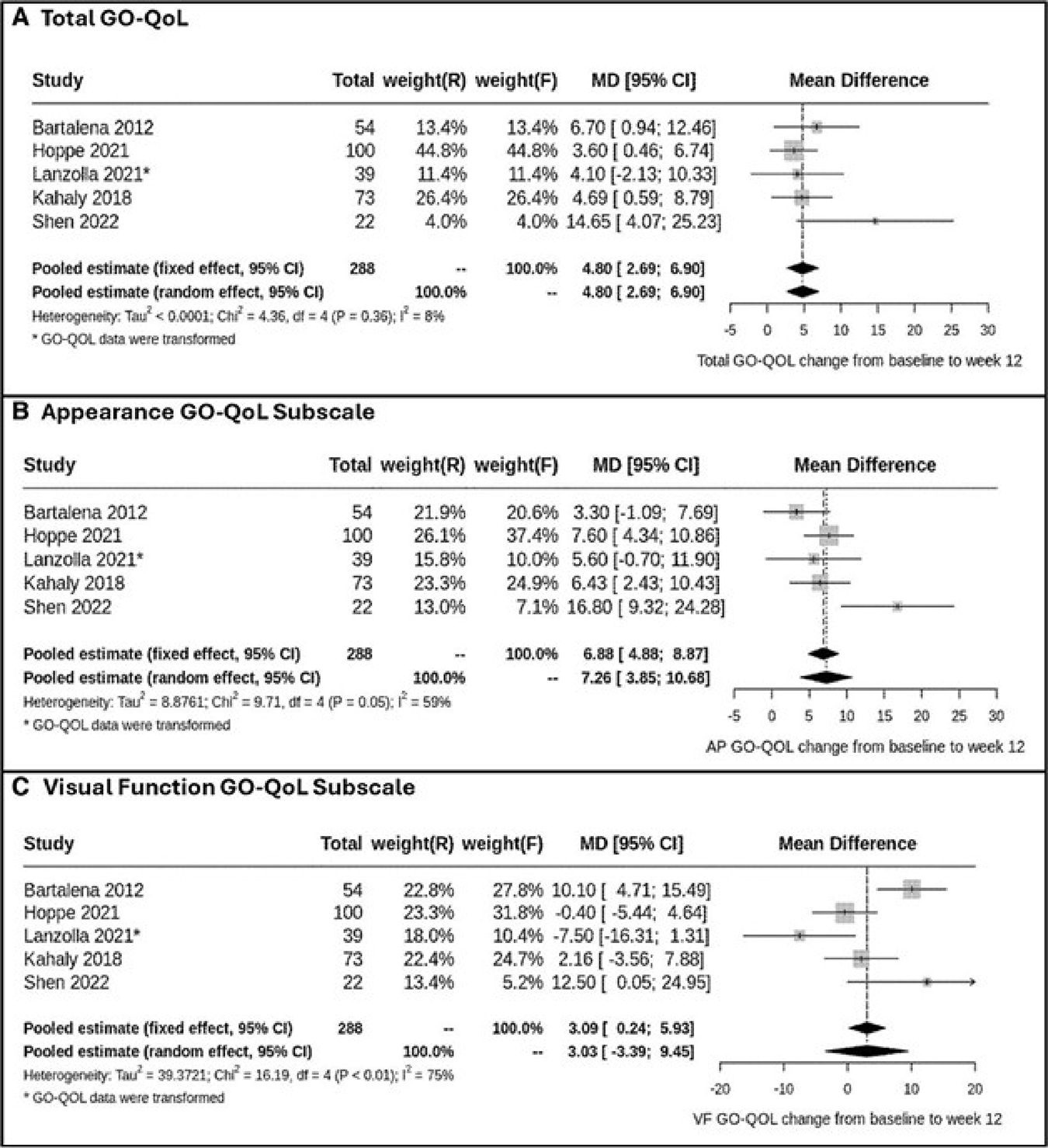
AP = Appearance; CI = confidence interval; GO-QoL = Graves Orbitopathy Quality of Life; IVMP = IV methylprednisolone; MD = mean difference; VF = Visual Functioning.
Source: Sponsor-submitted evidence (Kahaly et al. [2025]).81
Baseline characteristics from the IVMP and teprotumumab studies, before and after matching adjustment, are provided in Table 41.
Before adjustment, there was a higher proportion of people who smoked among patients treated with IVMP compared to patients treated with teprotumumab. The proportion of patients with severe diplopia was slightly higher, as were the mean baseline proptosis and age among patients in the teprotumumab group. Baseline GO-QoL scores were generally similar between groups. A slightly higher proportion of patients treated with IVMP were female. Following matching, the distribution of the covariates across the studies was balanced in the base case.
Table 41: Baseline Characteristics Before and After Adjustment
Covariate | Teprotumumab | IVMP baseline characteristics (EA)a | IVMP baseline characteristics (PA)b | |
|---|---|---|---|---|
Before MAIC (unadjusted) | After adjustment | |||
Adjusted variables | ||||
Severe diplopia at baseline, % | 51.2 | 46.6 | 46.6 | 47.1 |
Proptosis at baseline, mean | 23.0 | 22.0 | 22.05 | 21.99 |
Smoking status, % | 23.8 | 45.2 | 45.2 | 50.7 |
Female sex, % | 69.0 | 72.9 | 72.9 | 71.6 |
Age at baseline, mean | 51.5 | 51.0 | 50.97 | 49.99 |
Go-QoL overall score at baseline, mean | 61.3 | 59.9 | 59.86 | 61.41 |
Unadjusted variables | ||||
CAS, mean | 5.1 | 5.01 | 4.5 | 4.16 |
CAS = clinical activity score; EA = exploratory analysis; GO-QoL = Graves Ophthalmopathy Quality of Life questionnaire; IVMP = IV methylprednisolone; MAIC = matching-adjusted indirect comparison; PA = primary analysis.
aEA refers to an exploratory analysis focusing on any IVMP dose or combination therapy.
bPA refers to the primary analysis focusing only on moderate-dose IVMP.
Source: Sponsor-submitted evidence (Kahaly et al. [2025]).81
The results of the MAIC for the primary analysis (moderate IVMP dose only) showed a mean difference in change from baseline of 13.26 (95% CI, 7.44 to 19.09) for GO-QoL overall scores, favouring teprotumumab over IVMP. The results for the GO-QoL AP subscale score (mean difference in change from baseline: 7.50; 95% CI, 0.35 to 14.64) and VF subscale score (mean difference in change from baseline: 17.66; 95% CI, 7.86 to 27.47) also favoured teprotumumab over IVMP. After matching to the IVMP studies, the ESSs in the base-case analysis were 48 for the GO-QoL overall score, 47 for the GO-QoL AP subscale score, and 49 for the GO-QoL VF subscale score.
After matching to IVMP studies, the ESSs for the sensitivity analysis were 36 for the GO-QoL overall score, 36 for the GO-QoL AP subscale score, and 36 for the GO-QoL VF subscale score. The sensitivity analysis (i.e., with the inclusion of CAS in the adjustment) showed results that were consistent with those of the base-case analysis (Table 42).
Table 42: MAIC Results for Change in GO-QoL Scale — Sensitivity Analysis Results (Primary Analysis)
GO-QoL | Mean difference, teprotumumab (week 24) vs. IVMP (12 weeks) |
|---|---|
GO-QoL overall score | |
Effect | 12.59 (95% CI, 6.79 to 18.39) |
ESS | 36 |
GO-QoL AP subscale score | |
Effect | 7.12 (95% CI, 0.02 to 14.23) |
ESS | 36 |
GO-QoL VF subscale score | |
Effect | 16.66 (95% CI, 7.23 to 26.09) |
ESS | 36 |
AP = Appearance; CI = confidence interval; ESS = effective sample size; GO-QoL = Graves Ophthalmopathy Quality of Life; IVMP = IV methylprednisolone; MAIC = matching-adjusted indirect comparison; VF = Visual Functioning; vs. = versus.
Source: Sponsor-submitted evidence (Kahaly et al. [2025]).81
Critical Appraisal of ITC 2
The sponsor-funded ITC adopted a systematic review approach to identify clinical trials and RWE studies, with standard methods for the conducting and reporting of reviews, including defining the research question according to population, intervention, comparison, outcomes, and study criteria, searching through multiple database sources (PubMed and Embase), and involving multiple reviewers for study selection and data extraction. A risk of bias assessment was not conducted, leaving uncertainty about the presence of bias across the IVMP studies. Some studies were unmasked, implying high risks of performance and detection bias, especially for subjective outcomes, such as HRQoL. In addition, no sensitivity analyses were conducted to understand the impact of any potential bias on the results.
In the absence of a common comparator between the included studies, an unanchored MAIC was conducted. The MAIC analysis leveraged IPD from 2 teprotumumab trials to match the eligibility criteria and summary-level data reported in 5 IVMP trials.32,34-37 The teprotumumab data were derived by combining data from 2 available trials (the TED01RV and TEP-301 studies) and considered these data to constitute 1 larger population. This method is considered suboptimal because it overlooks potential heterogeneity across studies and the clustering of individuals within each of the trials, which can introduce bias.78,82
The IVMP studies were meta-analyzed before incorporation into the MAIC, which is appropriate. Heterogeneity was observed across the IVMP studies due to varying dosage regimens (i.e., 4.5 g to 5 g), differences in the definition of duration of disease (i.e., duration of eye symptoms, GO, orbital disease), and differences in study designs (i.e., some studies were RCTs, while others were observational). In addition, in the IVMP studies, heterogeneity was observed in the median duration of disease (ranging from 6.0 months to 15.5 months) and mean baseline proptosis (21.5 mm to 23 mm). The forest plots showed some heterogeneity in the results across IVMP studies. For the GO-QoL overall and subscale scores, the mean differences in change from baseline varied in magnitude across individual studies, with some point estimates falling higher than and others lower than the MID of 6 points. There was increased heterogeneity observed for the VF subscale score, with studies reporting effects in different directions. This unexplained heterogeneity introduces uncertainty about the appropriateness of pooling the IVMP studies (particularly with respect to the VF subscale score) and the reliability of the pooled effect estimate, which may not accurately reflect the true treatment effect of IVMP.
The validity of the unanchored MAIC results relies on the assumption that all imbalances in prognostic and effect-modifying variables across groups have been accounted for; however, this is a very strong assumption and is generally considered impossible to meet.78 Before ITC adjustments, differences across the pooled teprotumumab and IVMP groups in patient characteristics at baseline were observed for the reported characteristics of age, sex, smoking status, severe diplopia, proptosis, and quality of life scores.
Prognostic variables to be used in the adjustments were identified through predictive modelling of changes in GO-QoL and through consultation with a clinical expert consulted by the study authors. Based on this process, 7 variables were identified as important to consider in the MAIC analyses. Data-driven approaches risk excluding clinically important prognostic variables; however, this may have been mitigated to an extent by the consideration of clinical expert opinion. Following adjustment, the selected baseline covariates were well balanced across the teprotumumab and IVMP cohorts. However, it is important to note that, due to limited data availability and restrictions to the sample sizes available to inform the ITC analyses, not all variables were included (i.e., presence of gaze-evoked orbital pain, CAS, duration of TED, severity). Additionally, the study authors made no attempt to identify relevant effect modifiers and provided no estimate of the potential magnitude of residual confounding in the analysis. Thus, there is a high risk of confounding in the unanchored MAIC estimates, the magnitude of which is unknown; it could be substantial.78 This means that the results may be driven by differences in prognostic and effect-modifying variables across studies rather than by the effects of treatment.
The unanchored MAIC cannot adjust for methodological differences across studies that may further bias the results. There was variability in the timing of the outcome assessment. The IVMP studies measured outcomes at 12 weeks, while the teprotumumab trials measured outcomes at 24 weeks. In reference to the trial setting, the MAIC included studies conducted across a variety of geographic locations (i.e., China, Europe, the US). No scenario analyses were conducted to assess the comparative efficacy of teprotumumab versus IVMP based on geographic location. It remains uncertain whether there are differences in clinical practice or the availability of treatments across the regions of the trials included in MAIC; therefore, the direction and magnitude of potential biases remain unclear.
Matching to the IVMP trials for the MAIC analyses reduced the initial sample size of the teprotumumab trials (N = 79) to an ESS of 48 for the base-case analysis and 36 for the sensitivity analysis. These decreases in ESS imply that the results are heavily influenced by a subset of patients in the teprotumumab trials and cause increased variability and reduced reliability of the results. In addition, there was no evidence that the analysis was informed by a prespecified protocol and/or statistical analysis plan; this raises concerns about selective reporting, given that the reported results may reflect analyses that were selected based on a more favourable direction or magnitude of effect.
In addition, the comparisons were limited to teprotumumab and IVMP; therefore, the comparisons yielded no information about teprotumumab versus tocilizumab, which is considered a relevant comparator in clinical practice in Canada by the clinical experts consulted by CDA-AMC. No analyses were conducted for safety outcomes (considered important to patients with active TED, according to the patient groups, clinician groups and clinical experts) in the ITC; as such, no conclusions can be drawn about the comparative safety of teprotumumab versus IVMP for active TED.
Studies Addressing Gaps in the Systematic Review Evidence
The contents within this section have been informed by materials submitted by the sponsor. The following information has been summarized and validated by the review team.
The sponsor submitted a single observational study to provide evidence regarding the safety of teprotumumab compared to currently available off-label treatments for TED (Table 43).
Table 43: Summary of Gaps in the Systematic Review Evidence
Evidence gap | Study description | Summary of key results |
|---|---|---|
To demonstrate the long-term safety of teprotumumab compared to IVMP in patients with moderate to severe active TED | A retrospective population cohort study evaluating the long-term cardiovascular, renal, infectious, and safety outcomes in patients with TED who initiated teprotumumab, GCs, or conservative treatment from 80 health care organizations in the US | Compared with IV or oral GCs, teprotumumab was associated with lower all-cause mortality and reduced risks of acute myocardial infarction, cerebral infarction, peripheral vascular disease, heart failure, atrial fibrillation, acute kidney failure, emergency department visits, hospitalization, urinary tract infection, pneumonia, and severe sepsis. Compared with IV or oral GCs, teprotumumab was associated with a higher risk of hearing loss. |
GC = glucocorticoid; IVMP = IV methylprednisolone; TED = thyroid eye disease.
Source: Additional evidence submitted by the sponsor (Lo et al. [2025]).38
Description of Studies
The study by Lo et al.38 was a published, retrospective population cohort study that aimed to assess the long-term safety outcomes of teprotumumab versus GCs (IV or oral) and conservative treatment (i.e., eye lubricants or selenium) for the management of TED. This report focuses on the comparison of teprotumumab and GCs due to its relevance to the review. Data were extracted from electronic health records. Patients who received teprotumumab or IV or oral GCs were included in the analysis.
Populations and Intervention
The study included patients aged 18 years and older with TED with a treatment code for teprotumumab or GCs between January 1, 2020, and December 1, 2024, from 80 health care organizations in the US (based on the TriNetX database). Patients with TED were defined as those with a diagnostic code for thyroid diseases (the teprotumumab group) or at least 1 diagnostic code for hyperthyroidism and at least 1 diagnostic code for eye symptoms related to TED (the GC groups) using ICD-10 codes (Table 44). Patients with a treatment code for teprotumumab and IV or oral GCs following a TED diagnostic code were included in the teprotumumab arm, the IV GC arm, and the oral GC arm, respectively. The index date was defined as the first prescription record of teprotumumab, IV GCs, and oral GCs in each respective treatment arm. Patients who were pregnant were excluded from all groups.
Table 44: Criteria for Inclusion of Population
Treatment group | Inclusion and/or exclusion criteria |
|---|---|
Teprotumumab group | Had at least 1 diagnostic code for diseases of the thyroid gland before at least 1 treatment code for teprotumumab use. Patients who were pregnant were excluded. Codes used to identify eligible patients:
|
IV GCs group | Had at least 1 diagnostic code for hyperthyroidism and at least 1 diagnostic code for TED-related eye symptoms before treatment with IV GCs for at least 2 weeks (i.e., 2 instances separated by at least 2 weeks within a 3-month period). Patients previously treated with teprotumumab were excluded. Patients who were pregnant were excluded. |
Oral GCs group | Had at least 1 diagnostic code for hyperthyroidism and at least 1 diagnostic code for TED-related eye symptoms before treatment with oral GCs for at least 2 weeks (i.e., 2 instances separated by at least 2 weeks within a 3-month period). Patients previously treated with teprotumumab were excluded. Patients who were pregnant were excluded. Codes used to identify eligible patients:
|
ATC = anatomic therapeutic chemical; GC = glucocorticoid; HCPCS = Health Care Common Procedure Coding System; ICD-10 = International Classification of Diseases,10th revision; TED = thyroid eye disease; VA = Veterans Affairs.
Source: Details included in the table are from additional evidence submitted by the sponsor (Lo et al. [2025]).38
Outcomes
Evaluated outcomes included:
all-cause mortality
risk of new-onset cardiovascular disease (i.e., acute myocardial infarction, cerebral infarction, peripheral vascular diseases, heart failure, and atrial fibrillation)
new-onset renal disease (i.e., acute kidney failure or chronic kidney disease)
infectious disease (i.e., urinary tract infection, pneumonia, severe sepsis)
safety outcomes (i.e., diabetes, inflammatory bowel disease, hearing loss, need for hearing device, emergency department visits, and hospitalization).
Outcomes were identified using billing codes documented after the index date.
Statistical Analysis
Baseline covariates were included and matched based on PS. These included demographics (such as age, sex, race or ethnicity, and socioeconomic status and history), comorbidities (including hypertension, diabetes, and hyperlipidemia), health care utilization and accessibility, medications (such as insulin and rituximab), ophthalmic manifestations of TED, and laboratory data (including hemoglobin A1C and creatinine between teprotumumab and GC initiators). SMDs were calculated to assess baseline differences before and after PS matching (i.e., PSM).
Following the ITT approach, outcomes identified through billing codes occurring after the index date were compared.
When calculating the risk of each outcome, patients with a history of the respective outcome of interest at baseline were excluded from the respective analysis. HRs with 95% CIs of the outcomes were calculated using Cox proportional hazards regression. Three additional sensitivity analyses were conducted: an analysis reporting outcomes occurring within 1 year of treatment initiation; an analysis restricting the teprotumumab arm to patients who continued treatment for at least 3 months; and a PP analysis excluding patients in the teprotumumab arm who later switched to IV or oral GCs and excluding patients in the GCs arm who later started on teprotumumab.
Results
Baseline Characteristics
Before PSM, 923 patients with TED who received teprotumumab, 3,613 who received IV GCs, and 4,243 who received oral GCs were included. After PSM, 685 teprotumumab initiators (mean age, 57.8 years [SD = 13.9 years]; 72.4% female), 685 PS-matched IV GC initiators (mean age, 57.4 years [SD = 14.7 years]; 73.9% female), 741 teprotumumab initiators (mean age, 57.0 years [SD = 14.2 years]; 73.5% female), and 741 PS-matched oral GC initiators (mean age, 57.0 years [SD = 15.2 years]; 73.5% female) were included. The baseline characteristics of patients in each group before PSM were not described. Most baseline characteristics — including demographics, comorbidities, previous medications, socioeconomic status, health care utilization (including screening services), and laboratory data — were well balanced (i.e., SMD < 0.1). Some body measurements and laboratory data (i.e., body mass index, hemoglobin A1C, T3) had a high frequency of missing data, and the handling of these missing data was not described. Approximately 6% of patients with TED in the cohort had blindness or low vision, and approximately 48% of patients with TED had exophthalmic conditions. Approximately 40% of patients with TED in the cohort had been prescribed methimazole, and approximately 1.5% of patients with TED had been prescribed rituximab.
Harms
Compared to IV or oral GCs, treatment with teprotumumab was associated with lower hazard of all-cause mortality (teprotumumab versus IV GCs: HR = 0.32; 95% CI, 0.16 to 0.65; teprotumumab versus oral GCs: HR = 0.20; 95% CI, 0.10 to 0.39) (Table 44).
Cardiovascular Outcomes
Patients in the teprotumumab group had a lower hazard of acute myocardial infarction compared to patients in the IV or oral GCs group (teprotumumab versus IV GCs: HR = 0.37; 95% CI, 0.15 to 0.95; teprotumumab versus oral GCs: HR = 0.33; 95% CI, 0.12 to 0.91). Compared to IV GCs, teprotumumab was favoured for cerebral infarction, peripheral vascular diseases, heart failure, and atrial fibrillation; however, all 95% CIs were wide and crossed 1. Compared to oral GCs, teprotumumab was associated with a lower hazard of cerebral infarction (HR = 0.33; 95% CI, 0.15 to 0.72), peripheral vascular disease (HR = 0.44; 95% CI, 0.21 to 0.91), heart failure (HR = 0.47; 95% CI, 0.26 to 0.85), and atrial fibrillation (HR = 0.46; 95% CI, 0.23 to 0.90) (Table 44).
Renal Outcomes
There was a lower hazard of acute kidney failure among patients treated with teprotumumab compared to GCs (teprotumumab versus IV GCs: HR = 0.54; 95% CI, 0.31 to 0.94; teprotumumab versus oral GCs: HR = 0.37; 95% CI, 0.22 to 0.63) (Table 44). For chronic kidney disease, teprotumumab was favoured over IV or oral GCs; however, the CIs were wide and crossed 1.
Other Safety Outcomes
There was a higher hazard of hearing loss among patients treated with teprotumumab compared to GCs (teprotumumab versus IV GCs: HR = 2.43; 95% CI, 1.67 to 3.55; teprotumumab versus oral GCs: HR = 2.38; 95% CI, 1.65 to 3.44) (Table 44). There were no significant differences in the hazards of diabetes, inflammatory bowel disease, or need for a hearing device.
Infectious Outcomes
Among patients treated with teprotumumab versus IV or oral GCs, there was a lower hazard of urinary tract infections (teprotumumab versus IV GCs: HR = 0.60; 95% CI, 0.406 to 0.887; teprotumumab versus oral GCs: HR = 0.58; 95% CI, 0.396 to 0.859), pneumonia (teprotumumab versus IV GCs: HR = 0.368; 95% CI, 0.223 to 0.605; teprotumumab versus oral GCs: HR = 0.330; 95% CI, 0.204 to 0.533), and severe sepsis (teprotumumab versus IV GCs: HR = 0.240; 95% CI, 0.091 to 0.635; teprotumumab versus oral GCs: HR = 0.309; 95% CI, 0.114 to 0.836) (Table 44).
Table 45: Outcomes After PSM in Patients With TED Treated With Teprotumumab Vs. IV GCs and Teprotumumab Vs. Oral GCs
Outcomes | Teprotumumab vs. IV GCs HR (95% CI), P value | Teprotumumab vs. oral GCs HR (95% CI), P value |
|---|---|---|
All-cause mortality | 0.320 (95% CI, 0.158 to 0.649), 0.001 | 0.197 (95% CI, 0.100 to 0.387), < 0.001 |
New-onset cardiovascular outcomes | ||
Acute myocardial infarction | 0.374 (95% CI, 0.147 to 0.950), 0.031 | 0.332 (95% CI, 0.122 to 0.908), 0.024 |
Cerebral infarction | 0.660 (95% CI, 0.272 to 1.597), 0.353 | 0.325 (95% CI, 0.147 to 0.719), 0.003 |
Peripheral vascular diseases | 0.605 (95% CI, 0.277 to 1.321), 0.203 | 0.436 (95% CI, 0.208 to 0.913), 0.023 |
Heart failure | 0.663 (95% CI, 0.356 to 1.234), 0.192 | 0.470 (95% CI, 0.261 to 0.846), 0.010 |
Atrial fibrillation | 0.936 (95% CI, 0.427 to 2.053), 0.869 | 0.456 (95% CI, 0.231 to 0.903), 0.021 |
New-onset renal outcomes | ||
Acute kidney failure | 0.540 (95% CI, 0.310 to 0.939), 0.027 | 0.373 (95% CI, 0.221 to 0.630), < 0.001 |
Chronic kidney disease | 0.942 (95% CI, 0.547 to 1.623), 0.830 | 0.719 (95% CI, 0.433 to 1.195), 0.201 |
Safety outcomes | ||
Diabetes | 1.031 (95% CI, 0.820 to 1.297), 0.793 | 1.094 (95% CI, 0.871 to 1.375), 0.438 |
Inflammatory bowel disease | 0.576 (95% CI, 0.267 to 1.244), 0.155 | 0.510 (95% CI, 0.240 to 1.087), 0.076 |
Hearing loss | 2.432 (95% CI, 1.666 to 3.550), < 0.001 | 2.380 (95% CI, 1.648 to 3.437), < 0.001 |
Need for hearing device | 0.964 (95% CI, 0.540 to 1.723), 0.902 | 0.922 (95% CI, 0.508 to 1.673), 0.790 |
Emergency department visits | 0.477 (95% CI, 0.378 to 0.600), < 0.001 | 0.599 (95% CI, 0.478 to 0.750), < 0.001 |
Hospitalization | 0.306 (95% CI, 0.232 to 0.404), < 0.001 | 0.338 (95% CI, 0.256 to 0.447), < 0.001 |
Infectious outcomes | ||
Urinary tract infection | 0.600 (95% CI, 0.406 to 0.887), 0.010 | 0.583 (95% CI, 0.396 to 0.859), 0.006 |
Pneumonia | 0.368 (95% CI, 0.223 to 0.605), < 0.001 | 0.330 (95% CI, 0.204 to 0.533), < 0.001 |
Severe sepsis | 0.240 (95% CI, 0.091 to 0.635), 0.002 | 0.309 (95% CI, 0.114 to 0.836), 0.014 |
CI = confidence interval; GC = glucocorticoid; HR = hazard ratio; PSM = propensity score matching; TED = thyroid eye disease; vs. = versus.
Source: Details included in the table are from additional evidence submitted by the sponsor (Lo et al. [2025]).38
Critical Appraisal
The Guidance for Reporting Real-World Evidence83 forms the foundation for transparent reporting of RWE studies; adherence facilitates the CDA-AMC appraisal.84 The study by Lo et al. (2025) did not report any of the following: a predefined protocol; proposed generalizability to the Canadian context; the method of confounding variable selection; the quality of the data specifications (access, cleaning, validity); a description of how missing data were handled; or between-group absolute effect estimates with CIs. The internal validity appraisal was guided by the APPRAISE tool.85
The study was nonrandomized and observational, with the authors cautioning that the associations reported may not imply causal relationships. Although the study is described as a target trial emulation, there is no specification of the hypothetical target trial nor causal estimand, and features of the design and analysis are not suggestive of a successful emulation.86
The study authors indicate that they used an active-comparator, new-user design, which is a strength. However, there was no reporting of a look-back period to suggest that patients were newly diagnosed; nor was there a washout period to exclude prior use of teprotumumab or GCs (e.g., patients who were re-treated), which would be characteristic of such a design.87 Therefore, both new and prevalent users may be included, causing risk of bias related to misalignment between the timing of treatment initiation and follow-up for some patients. Early events among prevalent users may be missed, and there is potential that the treatment groups differ in the proportion of patients receiving initial treatment versus re-treatment. The overall direction of this source of potential bias is unclear.
The inclusion criteria differ across treatment groups, introducing selection bias. The teprotumumab group required a diagnostic and treatment code, with no criteria regarding prior treatments. The GC groups additionally required at least 1 symptom code, treatment for at least 2 weeks, and no prior teprotumumab use. As a result, the comparison groups are fundamentally different before matching and might be receiving different lines of therapy. There is some risk that GCs were prescribed for diseases other than TED, and drug dosage information was not reported. There is also an immortal time bias for outcomes precluding 2 weeks of treatment such as mortality, favouring the GC groups. The influence of the immortal time could be limited because it is short in duration (2 weeks); however, the collective impact of the selection and bias is difficult to predict.
PSM was used to reduce the risk of bias due to confounding, which is appropriate. Baseline demographics, comorbidities, health care utilization patterns, medication use, and ophthalmic manifestations of TED were included, resulting in few imbalances after matching. Residual confounding from unmeasured factors is always possible in nonrandomized studies and could produce results driven by those factors. In particular, statistical adjustment may not be able to overcome the previously mentioned selection bias. The likely inclusion of prevalent users introduces a risk that causal intermediaries (i.e., variables on the path between exposure and outcome) are included in the adjustment, which may increase the potential for bias.
There are some additional concerns regarding the confounding adjustment. The study authors mention that when analyzing the risk for each outcome, patients with a history of that outcome were excluded. While this can be appropriate for certain outcomes, the limited reporting makes it unclear whether the exclusion occurred before or after matching. Exclusions after matching would introduce a high risk of confounding variables becoming imbalanced across groups. Laboratory values were missing for large proportions of patients (up to 70%); however, the handling of these missing data was not described. Therefore, it is likely that balance in these confounders was not achieved. The authors did not report an evaluation of the potential magnitude and direction of residual confounding, and it is otherwise difficult to predict.
Data were collected from electronic health record systems; the quality of the data sources was not described in the publication. Any incorrect coding of data or missed reporting — such as due to receipt of care outside the system — may result in bias due to outcome misclassification. Only outcome events occurring after the index date were included, which is appropriate. However, the exclusion of patients with prior events was likely appropriate only for certain outcomes (i.e., chronic conditions). There was no lag period described; however, several of the investigated harms would take time to develop. In such cases, early events are ideally not attributed to the exposure. It is not clear whether these issues would cause any differential bias across groups. The length of follow-up was longer in the GC groups than in the teprotumumab group, allowing more time for harm events to accrue.
The main analysis followed an ITT approach in which outcome events are attributed to exposure regardless of adherence, discontinuation, or switching. This might not be appropriate for all harms because it assumes that any exposure duration results in a permanent increase in the risk of the outcome. A sensitivity analysis that excluded all patients who switched treatments during follow-up showed effects aligned in direction with the primary analysis; however, the method results in a selected patient population that no longer represents all those exposed to treatment. Another sensitivity analysis included only patients treated with teprotumumab who continued treatment for at least 3 months. This analysis is at high risk of bias due to differential inclusion criteria for each exposure group (selection bias) and immortal time bias for outcomes precluding 3 months of treatment, such as mortality.
An assessment of the proportional hazards assumption underlying the Cox model was not reported and could not be appraised in the absence of relevant information (e.g., Kaplan-Meier plots). The analyses of several harms were informed by a relatively small number of events, resulting in potentially unstable estimates and wide CIs. When comparing teprotumumab to IV GCs, this often resulted in CIs crossing the null. There was no reporting of absolute differences between groups, which could have clarified the clinical interpretation. There was no evidence that the analysis was informed by a prespecified protocol and/or statistical analysis plan. The result is an increased risk of selective reporting bias, meaning that the reported results may be chosen from multiple analyses of the data based on a favourable direction or magnitude of effect.
Strengths of the study include the relatively large sample size of patients in real-world practice, which may improve the external validity of the findings compared to those from RCTs. The study was performed using data from 80 health care organizations in the US. Differences in clinical practice may affect the generalizability to patients with TED in Canada. Hyperglycemia, an AE of special interest in the pivotal trial, was not assessed in this study. The follow-up duration may be insufficient to assess outcomes that take a longer time to manifest (i.e., malignancies). Patients with TED were identified using ICD-10 codes for thyroid disease and ophthalmic conditions; however, no information was available about disease activity or severity (e.g., mild versus moderate to severe). As a result, the study likely included a heterogeneous population with TED. Therefore, the findings may be more reflective of the broader population of patients with TED rather than the more narrowly defined population of patients with moderate to severe active TED that is the target of the proposed Health Canada indication and reimbursement request.
Discussion
Summary of Available Evidence
Three multicentre, double-masked RCTs (the TED01RV phase II study [N = 87], TEP-301 phase II study [N = 83], and TEP-303 phase III study [N = 54]) assessed the efficacy and safety of teprotumumab relative to placebo in patients with moderate to severe active TED. The primary outcome of the TED01RV study was ORR, defined as the proportion of patients with at least a 2 mm reduction in proptosis and at least a 2-point reduction in CAS from baseline in the study eye without corresponding deterioration in the fellow eye. In the TEP-301 and TEP-303 studies, the primary outcome was proptosis responder rate, defined as the proportion of patients with a reduction of at least 2 mm from baseline in proptosis in the study eye without corresponding deterioration in the fellow eye. The trials were conducted across 39 sites, with 24 centres in Europe, Japan, and the US; there were no sites in Canada. Across the studies, the mean ages were approximately 50 and 51 years among patients randomized to the teprotumumab and placebo groups, respectively. The proportions of female patients were approximately 67% in the teprotumumab group and 76% in the placebo group, across the trials. In the TED01RV and TEP-301 studies, more than 85% of patients were white. The TEP-303 study was conducted in patients of Asian ethnicity. Regarding tobacco use, there were more patients who were currently smoking in the placebo group (40.9%) than in the teprotumumab group (25.6%) in the TED01RV study. In the TEP-301 and TEP-303 studies, the proportions of patients who were currently smoking were balanced between the study groups (TEP-301 study teprotumumab versus placebo: 22% versus 19%; TEP-303 study teprotumumab versus placebo: 14.8% versus 14.8%). The mean time since diagnosis of TED was approximately 5 months across the 2 treatment groups in the TED01RV and TEP-303 studies and approximately 6 months across the 2 treatment groups in the TEP-301 study.
There were off-treatment follow-up periods for the TED01RV and TEP-301 studies. The primary and secondary outcomes and baseline characteristics during the follow-up periods were the same as those in the respective trials (as described in the Long-Term Extension Studies section of this report). The mean times since diagnosis of TED were approximately 6.2 months in the teprotumumab group and 6.4 months in the placebo group in the TEP-301 study. One OLE (the OPTIC-X study) assessed the safety and efficacy of teprotumumab in patients who had completed the 24-week double-masked treatment period in the TEP-301 study and met the criteria for re-treatment (i.e., either due to relapse during the TEP-301 study follow-up period or because they were proptosis nonresponders at week 24 of the treatment period in the TEP-301 study). The primary outcome was proptosis responder rate. A total of 51 patients enrolled in the OPTIC-X study, with a mean age of 48.5 years in the first-course group (i.e., patients who initially received placebo in the TEP-301 study; n = 37) and a mean age of 56.1 years in the second-course group (i.e., patients who received teprotumumab in the TEP-301 study and were re-treated in the OPTIC-X study; n = 14). Most patients were female (73.0% and 78.6% in the first-course and second-course groups, respectively), white (89.2% versus 78.6%), and tobacco nonusers (78.4% versus 78.6%). The mean times since diagnosis of TED were 12.26 months in the first-course group and 16.5 months in the second-course group.
The sponsor submitted 2 ITC analyses to compare the efficacy of teprotumumab to the efficacy of IVMP. These included an unanchored MAIC using IPD data from 2 teprotumumab trials (the TED01RV and TEP-301 studies) and summary-level data from published IVMP trials. In addition, 1 published real-world study that evaluated the safety of teprotumumab compared to currently available off-label treatments in patients with TED was submitted by the sponsor.
Interpretation of Results
Efficacy
The patient and clinician groups consulted during the CDA-AMC review highlighted that preserving vision, reducing double vision, and maintaining HRQoL are important treatment goals for patients with TED. Notably, vision-based outcomes — cited as important treatment goals by both patients and clinicians — were not assessed in the studies of teprotumumab.
Three studies in active TED (the TED01RV, TEP-301, and TEP-303 studies) had similar study populations, interventions, comparators, outcomes, and study designs; all focused on adult patients with moderate to severe active disease. Evidence from the 3 trials demonstrated with high certainty that, compared with placebo, teprotumumab resulted in statistically significantly higher proptosis responder rates at 24 weeks and higher ORRs at 24 weeks. Proptosis response was the primary outcome in the TEP-301 and TEP-303 studies and an exploratory outcome in the TED01RV study, whereas overall response was the primary outcome in the TED01RV study and a secondary outcome in the TEP-301 and TEP-303 studies. The value of 2 mm for the between-group MID for proptosis was accepted by the clinical experts; however, no between-group differences in the proportion of patients reaching this threshold were identified in the published literature. As such, the null value was adopted when assessing the certainty of evidence. The estimated proptosis responder rates were indicative of favourable benefit with teprotumumab, with consistent between-group difference values observed across the active TED trials (TED01RV study: 52.45; 95% CI, 34.39 to 70.51; TEP-301 study: 73.45; 95% CI, 58.89 to 88.01; TEP-303 study: 77.78; 95% CI, 60.7 to 94.8). The certainty of the benefit was rated as high; however, the clinical experts consulted for this review noted that the study population in active TED trials was not reflective of the target population that would be considered eligible for treatment with teprotumumab in clinical practice in Canada (i.e., patients with more severe disease, including those with sight-threatening disease or whose disease had an inadequate response to prior therapies). Moreover, certain concerns with study limitations were noted — specifically, imbalances in prognostic baseline characteristics (i.e., sex and smoking status) and inaccuracy and low reproducibility with respect to the Hertel measurements of proptosis adopted in the trials. The overall response is a composite score that includes measures of proptosis and inflammation assessed through the CAS, which is a validated measure of inflammatory signs and symptoms in patients with TED (per Table 7). According to the clinical experts, both CAS and other assessment tools, such as VISA, are commonly used in clinical practice in Canada, and would not pose generalizability constraints. The directions of treatment effects, expressed as between-group differences in ORRs, were consistent between the TED01RV, TEP-301, and TEP-303 trials, with slight differences in the magnitude of the treatment benefit (range, 50.32% to 74.07%) and overlapping CIs.
In the follow-up period for the TED01RV study, the data suggested clinically meaningful change in proptosis from baseline to week 72 in the teprotumumab group (i.e., −2.11 mm; n = 33). In the follow-up period for the TEP-301 study, the data suggested a clinically meaningful change in proptosis from baseline to week 72 in the teprotumumab group (i.e., −3.62 mm; n = 21) and the placebo group (i.e., −2.67 mm, n = 3). However, the clinical experts noted that the between-group differences at week 72 were approximately 1 mm for the comparisons of teprotumumab versus placebo, which is beneath the 2 mm threshold. Importantly, relapse rates among proptosis responders ranged from 30.3% to 36.7% during the off-treatment follow-up periods of the TEP301 and TED01RV studies, respectively. Nevertheless, sample sizes from the follow-up data were small, limiting the robustness of these long-term results. In the OPTIC-X study, 53.8% of patients in the second-course group and 89.2% of patients in the first-course group were considered proptosis responders at week 24. In the second-course group, only 1 patient (a prior nonresponder in the TEP-301 study) had a sustained response at week 48. The mean change from study baseline in proptosis at week 24 was −1.77 mm (not clinically meaningful) in the second-course group (versus −3.47 mm in the first-course group), with no additional follow-up results; none of the patients who were CAS and/or diplopia responders at week 24 sustained CAS and/or diplopia response at week 48, raising concerns regarding the immediate and long-term benefits of re-treatment. Additionally, the impact of the use of concomitant medications on efficacy outcomes during the treatment period was unknown. Considering the limitations to the presented analyses as well as the concerns raised by the clinical experts regarding the sustained effects and high relapse rates observed in the RWE data,51 the long-term benefit of teprotumumab treatment among patients receiving first-course therapy or patients being re-treated with teprotumumab is uncertain.
Diplopia outcomes assessed in the trials included responder rates for diplopia (an exploratory end point in the TED01RV study and a secondary end point in the TEP-301 and TEP-303 studies) and for complete binocular diplopia (assessed only in the TEP-303 study). The clinical experts consulted during this review emphasized that reduction in diplopia represents 1 of the most relevant goals of therapy in patients with TED. However, the experts expressed significant concerns about the subjective approach to the measurement of double vision in the trials, noting that objective prism measurements are more appropriate when measuring the effects of treatment on diplopia. As such, the certainty of evidence for the diplopia outcomes was downgraded for measurement of outcome within the study limitations assessment. Overall, the GRADE assessment of the evidence from the active TED studies indicated with moderate certainty that teprotumumab likely results in greater diplopia response; still, it is important to note that statistically insignificant findings from the TED01RV and TEP-303 studies were observed, which were considered descriptive due to failed multiplicity hierarchy. Similarly, low-certainty findings for complete binocular diplopia were based on data from 1 trial (the TEP-303 study) that showed that compared to placebo, teprotumumab may result in a benefit for this outcome. Moreover, imprecision in the effects estimate for complete binocular diplopia was noted by CDA-AMC reviewers due to the lower bound of the 95% CI being close to the null.
HRQoL, an important outcome for patients with TED, was investigated in all 3 pivotal trials using the GO-QoL. The GO-QoL is a validated measurement instrument in population of patients with TED. A 6-point between-group change was identified as a MID in the literature and confirmed by a panel of clinical experts consulted by CDA-AMC (Table 7). Changes from baseline in GO-QoL VF and AP subscale scores were secondary outcomes in the TED01RV and TEP-303 studies and exploratory outcomes in the TEP-301 study. The results for both subscales in the population of patients with active TED generally favoured teprotumumab, based on the point estimate and 95% CI, with moderate certainty. However, no firm conclusions could be drawn regarding clinical meaningfulness for the majority of the reported point estimates because the 95% CIs were wide and crossed the MID value. Moreover, due to failed multiplicity hierarchy, no statistical inference could be drawn based on the change in visual function related to quality of life across the phase III trials or on appearance-related quality of life across the phase II and phase III trials.
In reference to the concomitant use of teprotumumab with other off-label therapies, the experts anticipated that possible combination use may be adopted in the future as more evidence on this issue becomes available. Across the phase III trials in active TED, concomitant use of GCs was reported in a larger proportion of patients receiving teprotumumab treatment versus placebo. However, according to the experts consulted on this review, corticosteroid use was expected to be higher in the placebo group, given the higher possibility for uncontrolled disease associated with the lack of treatment. Overall, difficulties remain in the interpretation of whether the observed treatment effects of teprotumumab may have been affected by concomitant therapies, given that no analyses were conducted to explore this. Importantly, the experts further highlighted some considerations with the combination use of teprotumumab with GC therapy in clinical practice, such as concerns related to increased diabetes risk and degree of immunosuppression.
Considering that there is no direct evidence for teprotumumab versus relevant comparators for the treatment of active TED in the clinical setting in Canada, 2 ITC analyses were submitted by the sponsor. The first ITC report presented unanchored MAIC analyses using IPD data from the TED01RV and TEP-301 studies and summary-level data from published trials to compare the efficacy of teprotumumab to that of IVMP.26-33 Comparative treatment effects for 2 outcomes of interest were reported: change from baseline for proptosis and diplopia response (i.e., reduction in diplopia of ≥ 1 grade). Base-case scenarios incorporated 4 variables (smoking status, baseline proptosis, baseline diplopia, and radioiodine therapy for Graves disease) in MAIC analyses. While the comparative effect estimates suggest a favourable treatment effect with teprotumumab versus IVMP, there is substantial uncertainty in the evidence due to limitations in the analyses. Notably, the ESS was considerably reduced, with a reduction from the initial size (N = 84) for teprotumumab to an ESS of █████ for proptosis and █████ for diplopia. The base-case models included only a small number of variables for the adjustment; the models did not consider diabetes, disease duration, or vision — factors that were reported to be of particular prognostic importance, according to the experts consulted. Thus, limited comparability between the teprotumumab and IVMP groups raises concerns that not all prognostic and effect-modifying factors were accounted for in the analysis, potentially leading to biased estimates of the comparative treatment effect. Generalizability issues were raised by the clinical experts consulted for the review, including the lack of important comparators used in clinical practice in Canada (i.e., rituximab or tocilizumab) and the lack of an assessment of outcomes important to patients with TED (i.e., vision). Considering these notable limitations, the comparative efficacy of teprotumumab versus IVMP remains uncertain.
The second ITC used IPD from the same 2 teprotumumab trials (i.e., the TED01RV and TEP-301 studies), matched to IVMP group data from 5 published studies, to compare the effects of teprotumumab versus IVMP on quality of life using a random-effects meta-analysis. The base-case analysis considered some key prognostic variables, including age, sex, severe diplopia, proptosis, and smoking status; however, there was no consideration of effect modifiers. The results of the comparative analysis were suggestive of a favourable treatment effect with teprotumumab versus IVMP; however, there is a high level of uncertainty in the evidence due to the serious methodological limitations of the analysis. Notably, matching adjustments for prognostic variables to the IVMP trials for the MAIC analysis reduced the initial sample sizes of the teprotumumab trials (N = 79) to an ESS of 48 for the base-case analysis and an ESS of 36 for the sensitivity analysis. Due to limited availability of data and restrictions on the sample sizes available, not all variables were included (such as the presence of gaze-evoked orbital pain). Additionally, there was no consideration of effect modifiers nor any investigation of the potential extent of residual confounding, which may be substantial. Furthermore, there was heterogeneity in the results across the IVMP trials, which introduces uncertainty about the appropriateness of the pooling of the IVMP studies. The lack of a protocol or statistical analysis plan increased the potential for selective outcome reporting. In addition, the comparisons were limited to teprotumumab and IVMP, with no information on the comparative effects of other relevant comparators used in clinical practice in Canada (i.e., tocilizumab, rituximab).
Harms
In the active TED01RV, TEP-301, and TEP-303 trials, most patients experienced AEs during treatment, with SAEs more commonly occurring in the teprotumumab arms (range, 3.7% to 11.6%) than in the placebo arms (range, 0% to 2.4%). Discontinuation of treatment was also more common across the teprotumumab arms (range, 2.4% to 11.6%) than the placebo arms (range, 2.3% to 3.7%). No deaths were reported. Overall, the body of evidence from the pivotal studies in active TED suggests that teprotumumab likely results in a higher occurrence of notable harms, specifically hearing impairment and hyperglycemia, compared to placebo.
No AEs other than those already identified in the pivotal trials were reported during the follow-up period or the OLE (i.e., the OPTIC-X study).
The experts noted that hearing loss remains a particular concern with teprotumumab therapy, given that the frequency of this AE in clinical practice may be greater than that reported in the trials.50,52,88,89 Specifically, the experts noted that underreporting of ototoxicity in the trials frequently occurs because the measurements are often based on standard audiometry hearing tests, with thresholds up to 8,000 Herz. Some recent data suggest that teprotumumab-induced hearing loss occurs primarily in higher frequencies,89 which can be captured only with ultra-high-frequency audiometric testing. The experts noted that patients who have positive findings on high-frequency audiometry (even without hearing loss symptoms at the time of assessment) may present with hearing loss decades earlier than what would have been expected from standard age-related hearing loss. Moreover, hearing loss associated with teprotumumab treatment might be more common in patients who are older and in those with pre-existing hearing impairments.48 Considering all this information, the experts highlighted the need to conduct a screening audiogram before initiating treatment with teprotumumab. This would identify at-risk patients and support informed discussions around potential safety concerns.50 Moreover, the experts expressed concerns about how permanent the reported hearing changes from teprotumumab are. Even though it remains unclear whether long-lasting ototoxicity can occur with teprotumumab, given the current stages of evidence, the experts noted that clinical experience with other ototoxic medications implies that the hearing loss may be permanent.
A single nonrandomized observational study submitted by the sponsor evaluated the safety of teprotumumab compared to currently available off-label treatments in patients with TED. High-quality evidence from observational studies can provide important insights into comparative harms in real-world settings. However, the evidence from this study was uncertain due to several sources of potential bias that limited the ability to infer causality. These include the likely inclusion of prevalent users, a risk of selection bias, residual confounding, potential outcome misclassification, the lack of testing of statistical assumptions, and the potential for selective reporting. The reliance on ICD-10 codes without information about disease activity or severity likely resulted in a heterogeneous population of patients with TED. Additionally, the exclusion of outcomes like hyperglycemia and the US-based setting may limit the applicability of the results to longer-term risks and to patients with TED in clinical practice in Canada.
Conclusion
The body of evidence from 3 studies (the TED01RV phase II study and the TEP-301 and TEP-303 phase III studies) suggests that in adult patients with moderate to severe active TED, treatment with teprotumumab results in greater overall response rates and greater proptosis response rates compared to placebo. The evidence regarding diplopia outcomes suggests that the improvements in diplopia and complete binocular diplopia with teprotumumab compared to placebo are of moderate and low certainty, respectively. Although evidence of moderate certainty suggested that improvements in HRQoL outcomes (i.e., the GO-QoL AP and VF subscale scores) were observed, there was imprecision due to wide CIs; a firm conclusion could not be drawn regarding the clinical meaningfulness of the observed difference. Results from the follow-up period of the TED01RV and TEP301 studies suggest a high relapse rate (approximately 30%) among proptosis responders. Evidence from the OLE study of the TEP-301 study (the OPTIC-X study) also suggests a lack of sustained response post-treatment. However, certainty in the results of the follow-up periods of the TED01RV and TEP301 studies and the open-label OPTIC-X study is limited due to the nature of the studies’ designs and their small sample sizes. As such, gaps in the evidence remain regarding long-term efficacy following the discontinuation of teprotumumab and re-treatment with teprotumumab.
Safety data from studies of patients with active TED suggest that teprotumumab likely results in an increase in notable harms (i.e., hyperglycemia and hearing impairment) compared to placebo. Similar concerns with the safety profile of teprotumumab were identified based on the safety results of the OPTIC-X OLE study. The clinical experts consulted for this review highlighted emerging RWE around the ototoxicity of teprotumumab and suggested that more data are needed to elucidate whether the observed hearing impairments are durable and to gain better awareness and understanding of the long-term safety of teprotumumab. In addition, according to the experts, there is a need to select patients for whom the clinical benefit of teprotumumab may outweigh the risk of harm; this would be done by using screening audiograms and monitoring safety throughout treatment.
In the first ITC (an unanchored MAIC) comparing teprotumumab to IVMP in the population of patients with active TED, teprotumumab demonstrated more favourable improvements in proptosis and diplopia response. However, the comparative evidence derived from the ITC was associated with notable limitations, including the incomplete adjustment of important effect modifiers and a lack of comparisons to relevant biologic treatments for TED in Canada. The results from the second ITC (an unanchored MAIC) comparing teprotumumab to IVMP in moderate to severe active TED favoured treatment with teprotumumab for changes in HRQoL. However, the interpretation of these findings is limited by substantial methodological concerns, including the absence of risk of bias assessments, potential heterogeneity across the IVMP studies, incomplete adjustment of all relevant prognostic factors due to limited data availability, and the absence of consideration of effect-modifying variables. As a result, considerable uncertainty remains regarding the estimated comparative treatment effect.
A single nonrandomized observational study assessed the safety of teprotumumab compared to IV or oral GCs. While the study provides RWE about patients with TED, the interpretation of the study findings remains uncertain due to multiple methodological limitations and potential sources of bias.
References
1.Amgen Canada Inc. Sponsor Summary of Clinical Evidence Tepeza [internal sponsor's report]. In: Drug Reimbursement Review sponsor submission: Tepezza (teprotumumab), 500 mg/vial, lyophilized powder for concentrate for solution for intravenous infusion. 2024.
2.Amgen Canada Inc. Tepezza (teprotumumab): 500 mg/ vial, lyophilized powder for concentrate for solution for intravenous infusion [product monograph]. April 17, 2025.
3.Valencia-Sanchez C, Wingerchuk DM. Emerging Targeted Therapies for Neuromyelitis Optica Spectrum Disorders. BioDrugs. Jan 2021;35(1):7-17. doi:10.1007/s40259-020-00460-9 PubMed
4.Saraci G, Treta A. Ocular changes and approaches of ophthalmopathy in basedow - graves- parry- flajani disease. Maedica (Bucur). Apr 2011;6(2):146-52. PubMed
5.Hoa N, Tsui S, Afifiyan NF, et al. Nuclear targeting of IGF-1 receptor in orbital fibroblasts from Graves' disease: apparent role of ADAM17. PLoS One. 2012;7(4):e34173. doi:10.1371/journal.pone.0034173 PubMed
6.Rashad R, Pinto R, Li E, Sohrab M, Distefano AG. Thyroid Eye Disease. Life (Basel). Dec 12 2022;12(12)doi:10.3390/life12122084 PubMed
7.Davies TF, Burch HB. Clinical features and diagnosis of thyroid eye disease. UpToDate; 2024. Accessed December 12, 2024. http://www.uptodate.com
8.Chan LL, Tan HE, Fook-Chong S, Teo TH, Lim LH, Seah LL. Graves ophthalmopathy: the bony orbit in optic neuropathy, its apical angular capacity, and impact on prediction of risk. AJNR Am J Neuroradiol. Mar 2009;30(3):597-602. doi:10.3174/ajnr.A1413 PubMed
9.Poonam NS, Alam MS, Oberoi P, Mukherjee B. Dysthyroid optic neuropathy: Demographics, risk factors, investigations, and management outcomes. Indian J Ophthalmol. Dec 2022;70(12):4419-4426. doi:10.4103/ijo.IJO_719_22 PubMed
10.Perros P, Hegedus L, Bartalena L, et al. Graves' orbitopathy as a rare disease in Europe: a European Group on Graves' Orbitopathy (EUGOGO) position statement. Orphanet J Rare Dis. Apr 20 2017;12(1):72. doi:10.1186/s13023-017-0625-1 PubMed
11.Burch HB, Perros P, Bednarczuk T, et al. Management of Thyroid Eye Disease: A Consensus Statement by the American Thyroid Association and the European Thyroid Association. Thyroid. Dec 2022;32(12):1439-1470. doi:10.1089/thy.2022.0251 PubMed
12.Wang Y, Patel A, Douglas RS. Thyroid Eye Disease: How A Novel Therapy May Change The Treatment Paradigm. Ther Clin Risk Manag. 2019;15:1305-1318. doi:10.2147/TCRM.S193018 PubMed
13.Bartalena L, Baldeschi L, Boboridis K, et al. The 2016 European Thyroid Association/European Group on Graves' Orbitopathy Guidelines for the Management of Graves' Orbitopathy. Eur Thyroid J. Mar 2016;5(1):9-26. doi:10.1159/000443828 PubMed
14.Terwee C, Wakelkamp I, Tan S, Dekker F, Prummel MF, Wiersinga W. Long-term effects of Graves' ophthalmopathy on health-related quality of life. Eur J Endocrinol. Jun 2002;146(6):751-7. doi:10.1530/eje.0.1460751 PubMed
15.Cockerham KP, Padnick-Silver L, Stuertz N, Francis-Sedlak M, Holt RJ. Quality of Life in Patients with Chronic Thyroid Eye Disease in the United States. Ophthalmol Ther. Dec 2021;10(4):975-987. doi:10.1007/s40123-021-00385-8 PubMed
16.Wang Y, Sharma A, Padnick-Silver L, et al. Physician-Perceived Impact of Thyroid Eye Disease on Patient Quality of Life in the United States. Ophthalmol Ther. Mar 2021;10(1):75-87. doi:10.1007/s40123-020-00318-x PubMed
17.Villagelin D, Romaldini J, Andrade J, et al. Evaluation of Quality of Life in the Brazilian Graves' Disease Population: Focus on Mild and Moderate Graves' Orbitopathy Patients. Front Endocrinol (Lausanne). 2019;10:192. doi:10.3389/fendo.2019.00192 PubMed
18.Lin IC, Lee CC, Liao SL. Assessing quality of life in Taiwanese patients with Graves' ophthalmopathy. J Formos Med Assoc. Nov 2015;114(11):1047-54. doi:10.1016/j.jfma.2013.12.002 PubMed
19.Bartalena L, Kahaly GJ, Baldeschi L, et al. The 2021 European Group on Graves' orbitopathy (EUGOGO) clinical practice guidelines for the medical management of Graves' orbitopathy. Eur J Endocrinol. Aug 27 2021;185(4):G43-G67. doi:10.1530/EJE-21-0479 PubMed
20.Davies TF, Burch HB. Treatment of thyroid eye disease. UpToDate; 2024. Accessed October 28, 2024. https://www.uptodate.com/
21.Lanzolla G, Sabini E, Leo M, et al. Statins for Graves' orbitopathy (STAGO): a phase 2, open-label, adaptive, single centre, randomised clinical trial. Lancet Diabetes Endocrinol. Nov 2021;9(11):733-742. doi:10.1016/S2213-8587(21)00238-2 PubMed
22.Smith TJ, Hegedus L, Lesser I, et al. How patients experience thyroid eye disease. Original Research. Front Endocrinol (Lausanne). 2023-November-09 2023;14:1283374. doi:10.3389/fendo.2023.1283374
23.Horizon Pharma USA Inc. Clinical Study Report: TED01RV. A multicenter, double-masked, placebo-controlled, efficacy and safety study of teprotumumab (HZN-001), an insulin-like growth factor-1 receptor (IGF-1R) antagonist antibody (fully human), administered every 3 weeks (Q3W) by intravenous (IV) infusion in patients suffering from active thyroid eye disease (TED) [internal sponsor's report]. December 21, 2018.
24.Horizon Pharma USA Inc. Clinical Study Report: HZNP-TEP-301. A Phase 3, Randomized, Double-Masked, Placebo-Controlled, Parallel-Group, Multicenter Study Evaluating Teprotumumab (HZN-001) Treatment in Subjects with Active Thyroid Eye Disease [internal sponsor's report]. April 24, 2019.
25.Horizon Pharma USA Inc. Clinical Study Report: HZNP-TEP-303. A Phase 3, RandOmized, Double-masked, Placebo-Controlled, Parallel-Group, MulTICenter Trial Evaluating HZN-001 (teprotumumab) Treatment in Japanese Patients with Active Thyroid Eye Disease [internal sponsor's report]. September 4, 2023.
26.Aktaran S, Akarsu E, Erbagci I, Araz M, Okumus S, Kartal M. Comparison of intravenous methylprednisolone therapy vs. oral methylprednisolone therapy in patients with Graves' ophthalmopathy. Int J Clin Pract. Jan 2007;61(1):45-51. doi:10.1111/j.1742-1241.2006.01004.x PubMed
27.Bartalena L, Krassas GE, Wiersinga W, et al. Efficacy and safety of three different cumulative doses of intravenous methylprednisolone for moderate to severe and active Graves' orbitopathy. J Clin Endocrinol Metab. Dec 2012;97(12):4454-63. doi:10.1210/jc.2012-2389 PubMed
28.He Y, Mu K, Liu R, Zhang J, Xiang N. Comparison of two different regimens of intravenous methylprednisolone for patients with moderate to severe and active Graves' ophthalmopathy: a prospective, randomized controlled trial. Endocr J. Feb 27 2017;64(2):141-149. doi:10.1507/endocrj.EJ16-0083 PubMed
29.Kahaly GJ, Pitz S, Hommel G, Dittmar M. Randomized, single blind trial of intravenous versus oral steroid monotherapy in Graves' orbitopathy. J Clin Endocrinol Metab. Sep 2005;90(9):5234-40. doi:10.1210/jc.2005-0148 PubMed
30.Kahaly GJ, Riedl M, Konig J, et al. Mycophenolate plus methylprednisolone versus methylprednisolone alone in active, moderate-to-severe Graves' orbitopathy (MINGO): a randomised, observer-masked, multicentre trial. Lancet Diabetes Endocrinol. Apr 2018;6(4):287-298. doi:10.1016/S2213-8587(18)30020-2 PubMed
31.Mu PW, Tang XX, Wang YN, et al. Comparison of two regimens for patients with thyroid-associated ophthalmopathy receiving intravenous methyl prednisolone: A single center prospective randomized trial. Exp Ther Med. Dec 2020;20(6):153. doi:10.3892/etm.2020.9282 PubMed
32.Shen L, Ye L, Zhu W, et al. Methotrexate plus reduced or full-dose glucocorticoids for the treatment of active, moderate-to-severe Graves' orbitopathy. Eur Thyroid J. Oct 1 2022;11(5)doi:10.1530/ETJ-22-0017 PubMed
33.Zhu W, Ye L, Shen L, et al. A prospective, randomized trial of intravenous glucocorticoids therapy with different protocols for patients with graves' ophthalmopathy. J Clin Endocrinol Metab. Jun 2014;99(6):1999-2007. doi:10.1210/jc.2013-3919 PubMed
34.Bartalena L, Krassas GE, Wiersinga W, et al. Efficacy and safety of three different cumulative doses of intravenous methylprednisolone for moderate to severe and active Graves' orbitopathy. J Clin Endocrinol Metab. Dec 2012;97(12):4454-63. doi:10.1210/jc.2012-2389 PubMed
35.Kahaly GJ, Riedl M, König J, et al. Mycophenolate plus methylprednisolone versus methylprednisolone alone in active, moderate-to-severe Graves' orbitopathy (MINGO): a randomised, observer-masked, multicentre trial. Lancet Diabetes Endocrinol. Apr 2018;6(4):287-298. doi:10.1016/s2213-8587(18)30020-2 PubMed
36.Lanzolla G, Sabini E, Leo M, et al. Statins for Graves' orbitopathy (STAGO): a phase 2, open-label, adaptive, single centre, randomised clinical trial. Lancet Diabetes Endocrinol. Nov 2021;9(11):733-742. doi:10.1016/S2213-8587(21)00238-2 PubMed
37.Hoppe E, Lee ACH, Hoppe D, Kahaly GJ. Predictive Factors for Changes in Quality of Life after Steroid Treatment for Active Moderate-to-Severe Graves' Orbitopathy: A Prospective Trial. Eur Thyroid J. Feb 2021;9(6):313-320. doi:10.1159/000508071 PubMed
38.Lo JE, Freitag SK, Liu CY, Barbesino G, Ma KS. Long-term Cardiovascular, Renal, and Safety Outcomes of Teprotumumab versus Systemic Glucocorticoids in Thyroid Eye Disease: A Target Trial Emulation. Ophthalmology. Oct 2025;132(10):1142-1151. doi:10.1016/j.ophtha.2025.05.012 PubMed
39.Bartalena L, Gallo D, Tanda ML, Kahaly GJ. Thyroid Eye Disease: Epidemiology, Natural History, and Risk Factors. Ophthalmic Plast Reconstr Surg. Dec 1 2023;39(6S):S2-S8. doi:10.1097/IOP.0000000000002467 PubMed
40.Amgen Canada Inc. Tepezza (teprotumumab): 500 mg/ vial, lyophilized powder for concentrate for solution for intravenous infusion [draft product monograph]. 2024.
41.Center for Drug Evaluation and Research. Approval package. Tepezza (teprotumumab-trbw) for injection, for intravenous use. Company: Horizon Therapeutics Ireland DAC. Application No.:761143. Approval date: 1/21/2021. U. S. Food and Drug Administration (FDA); 2021. Accessed February 18, 2026. https://www.accessdata.fda.gov/drugsatfda_docs/nda/2021/761143Orig1s000TOC.html
42.European Medicines Agency. Medicines for human use under evaluation. European Medicines Agency. Accessed December 2, 2024, https://www.ema.europa.eu/en/medicines/medicines-human-use-under-evaluation
43.Therapeutic Goods Administration. Tepezza Amgen Australia Pty Ltd. Australian Government - Therapeutic Goods Administration. Accessed December 2, 2024, https://www.tga.gov.au/resources/prescription-medicines-under-evaluation/tepezza-amgen-australia-pty-ltd
44.Medicines and Healthcare product Regulatory Agency. Key Facts: teprotumumab. Accessed February 18, 2026, https://cms.mhra.gov.uk/index.php/pip/mhra-101230-pip01-23#
45.Teva Canada Limited. Methylprednisolone Sodium Succinate for Injection: 40mg, 125mg, 500 mg, 1 g per vial, sterile powder for solution, for intravenous or intramuscular injection [product monograph]. May 6, 2014. Updated March 22, 2024. Accessed February 18, 2026. https://pdf.hres.ca/dpd_pm/00075122.PDF
46.Teva Canada Limited. Truxima (rituximab for injection): 10 mg/mL, intravenous infusion [product monograph]. April 4, 2019. Updated August 22, 2024. Accessed February 18, 2026. https://pdf.hres.ca/dpd_pm/00076825.PDF
47.Fresenius Kabi Canada Ltd. Tyenne (tocilizumab for injection): 20 mg/mL concentrate solution, in vial for intravenous infusion; Tyenne (tocilizumab injection): 162 mg/0.9 mL solution for subcutaneous injection in a single-use pre-filled syringe (PFS) with needle safety device (NSD) or single-use autoinjector [product monograph]. October 11, 2024. Accessed February 18, 2026. https://pdf.hres.ca/dpd_pm/00077379.PDF
48.Keen JA, Correa T, Pham C, et al. Frequency and Patterns of Hearing Dysfunction in Patients Treated with Teprotumumab. Ophthalmology. Jan 2024;131(1):30-36. doi:10.1016/j.ophtha.2023.08.001 PubMed
49.Markle JC, Johanis A, Shaia JK, Benito D, Talcott KE, Singh RP. Risk of audiologic side effects with teprotumumab treatment for thyroid eye disease: propensity matched analysis. Eye (Lond). Apr 2025;39(6):1107-1114. doi:10.1038/s41433-024-03531-1 PubMed
50.McGwin G, Jr., Owsley C, Vicinanzo MG. Teprotumumab-Related Hearing Loss: A Large-Scale Analysis and Review of Voluntarily Reported Patient Complaints to the Food and Drug Administration (FDA). Ophthalmic Plast Reconstr Surg. Nov-Dec 01 2024;40(6):639-642. doi:10.1097/IOP.0000000000002668
51.Ugradar S, Parunakian E, Malkhasyan E, et al. The Rate of Re-treatment in Patients Treated with Teprotumumab: A Multicenter Study of 119 Patients with 1 Year of Follow-up. Ophthalmology. Jan 2025;132(1):92-97. doi:10.1016/j.ophtha.2024.07.018 PubMed
52.Perros P, Hegedus L. Teprotumumab in thyroid eye disease: wonder drug or great divider? Eur Thyroid J. Aug 1 2023;12(4)doi:10.1530/ETJ-23-0043 PubMed
53.Householder NA, Ray C. Teprotumumab's Impact on Proptosis in Long-duration Thyroid Eye Disease: A Systematic Review and Meta-analysis. touchREV Endocrinol. Oct 2024;20(2):100-109. doi:10.17925/EE.2024.20.2.13 PubMed
54.Smith TJ, Kahaly GJ, Ezra DG, et al. Teprotumumab for Thyroid-Associated Ophthalmopathy. N Engl J Med. May 4 2017;376(18):1748-1761. doi:10.1056/NEJMoa1614949 PubMed
55.Kahaly GJ, Douglas RS, Holt RJ, Sile S, Smith TJ. Teprotumumab for patients with active thyroid eye disease: a pooled data analysis, subgroup analyses, and off-treatment follow-up results from two randomised, double-masked, placebo-controlled, multicentre trials. Lancet Diabetes Endocrinol. Jun 2021;9(6):360-372. doi:10.1016/S2213-8587(21)00056-5 PubMed
56.Douglas RS, Kahaly GJ, Patel A, et al. Teprotumumab for the Treatment of Active Thyroid Eye Disease. N Engl J Med. Jan 23 2020;382(4):341-352. doi:10.1056/NEJMoa1910434 PubMed
57.[A statistical survey on Japanese patients with malignant exophthalmos (author's transl)]. Nihon Naibunpi Gakkai Zasshi. Jan 20 1981;57(1):1-16.
58.Douglas RS, Dailey R, Subramanian PS, et al. Proptosis and Diplopia Response With Teprotumumab and Placebo vs the Recommended Treatment Regimen With Intravenous Methylprednisolone in Moderate to Severe Thyroid Eye Disease: A Meta-analysis and Matching-Adjusted Indirect Comparison. JAMA Ophthalmol. Apr 1 2022;140(4):328-335. doi:10.1001/jamaophthalmol.2021.6284 PubMed
59.Mourits MP, Koornneef L, Wiersinga WM, Prummel MF, Berghout A, van der Gaag R. Clinical criteria for the assessment of disease activity in Graves' ophthalmopathy: a novel approach. Br J Ophthalmol. Aug 1989;73(8):639-44. doi:10.1136/bjo.73.8.639 PubMed
60.European Group on Graves O, Wiersinga WM, Perros P, et al. Clinical assessment of patients with Graves' orbitopathy: the European Group on Graves' Orbitopathy recommendations to generalists, specialists and clinical researchers. Eur J Endocrinol. Sep 2006;155(3):387-9. doi:10.1530/eje.1.02230 PubMed
61.Terwee CB, Gerding MN, Dekker FW, Prummel MF, Wiersinga WM. Development of a disease specific quality of life questionnaire for patients with Graves' ophthalmopathy: the GO-QOL. Br J Ophthalmol. Jul 1998;82(7):773-9. doi:10.1136/bjo.82.7.773 PubMed
62.Perros P, Zarkovic M, Pearce SH, Razvi S, Kolli H, Dickinson AJ. Inter-observer Variability of Clinical Activity Score: Assessments in Patients With Thyroid Eye Disease. Am J Ophthalmol. Aug 2023;252:94-100. doi:10.1016/j.ajo.2023.03.027 PubMed
63.Smith TJ, Cockerham K, Barretto N, et al. Bridging and Validation of the Specific Graves Ophthalmopathy Quality of Life Questionnaire With Health State Utility Values. Endocr Pract. May 2024;30(5):470-475. doi:10.1016/j.eprac.2024.02.002 PubMed
64.Terwee CB, Gerding MN, Dekker FW, Prummel MF, van der Pol JP, Wiersinga WM. Test-retest reliability of the GO-QOL: a disease-specific quality of life questionnaire for patients with Graves' ophthalmopathy. J Clin Epidemiol. Sep 1999;52(9):875-84. doi:10.1016/s0895-4356(99)00069-4 PubMed
65.Kashkouli MB, Heidari I, Pakdel F, Jam S, Honarbakhsh Y, Mirarmandehi B. Change in quality of life after medical and surgical treatment of graves' ophthalmopathy. Middle East Afr J Ophthalmol. Jan 2011;18(1):42-7. doi:10.4103/0974-9233.75884 PubMed
66.Marcocci C, Kahaly GJ, Krassas GE, et al. Selenium and the course of mild Graves' orbitopathy. N Engl J Med. May 19 2011;364(20):1920-31. doi:10.1056/NEJMoa1012985 PubMed
67.Terwee CB, Dekker FW, Mourits MP, et al. Interpretation and validity of changes in scores on the Graves' ophthalmopathy quality of life questionnaire (GO-QOL) after different treatments. Clin Endocrinol (Oxf). Mar 2001;54(3):391-8. doi:10.1046/j.1365-2265.2001.01241.x PubMed
68.Sharma A, Stan MN, Rootman DB. Measuring Health-Related Quality of Life in Thyroid Eye Disease. J Clin Endocrinol Metab. Aug 8 2022;107(Suppl_1):S27-S35. doi:10.1210/clinem/dgac230 PubMed
69.Horizon Pharma USA Inc. Clinical Study Report: HZNP-TEP-403. A Phase 4, Randomized, Double-masked, Placebo-controlled, Multicenter Trial to Evaluate the Efficacy and Safety of Tepezza in Treating Patients with Chronic (Inactive) Thyroid Eye Disease [internal sponsor's report]. June 29, 2023.
70.Roberts C, Torgerson DJ. Understanding controlled trials: baseline imbalance in randomised controlled trials. BMJ. Jul 17 1999;319(7203):185. doi:10.1136/bmj.319.7203.185 PubMed
71.Balshem H, Helfand M, Schunemann HJ, et al. GRADE guidelines: 3. Rating the quality of evidence. J Clin Epidemiol. Apr 2011;64(4):401-6. doi:10.1016/j.jclinepi.2010.07.015 PubMed
72.Santesso N, Glenton C, Dahm P, et al. GRADE guidelines 26: informative statements to communicate the findings of systematic reviews of interventions. J Clin Epidemiol. Mar 2020;119:126-135. doi:10.1016/j.jclinepi.2019.10.014 PubMed
73.Horizon Pharma Inc. Clinical Study Report: HZNP-TEP-302. Multicenter, Safety and Efficacy, Open-label Extension Study Evaluating Teprotumumab (HZN-001) Treatment in Subjects with Thyroid Eye Disease (OPTIC-X) [internal sponsor's report]. October 20, 2020.
74.Horizon Pharma Inc. Clinical Study Report Addendum: TED01RV. A Multicenter, Randomized, Double-masked, Placebo-controlled, Efficacy and Safety Study of RV 001, an Insulin-like Growth Factor 1 Receptor (IGF-1R) Antagonist Antibody (Fully Human), Administered Every 3 Weeks (q3W) by Intravenous (IV) Infusion in Patients Suffering from Active Thyroid Eye Disease (TED) [internal sponsor's report]. February 12, 2018.
75.Horizon Pharma Inc. Clinical Study Report Addendum: HZNP-TEP-301. A Phase 3, Randomized, Double-Masked, Placebo-Controlled, Parallel-Group, Multicenter Study Evaluating Teprotumumab (HZN-001) Treatment in Subjects with Active Thyroid Eye Disease [internal sponsor's report]. August 3, 2020.
76.Horizon Pharma Inc. Clinical Study Report Addendum: Table and Figures TED01RV. A Multicenter, Randomized, Double-masked, Placebo-controlled, Efficacy and Safety Study of RV 001, an Insulin-like Growth Factor 1 Receptor (IGF-1R) Antagonist Antibody (Fully Human), Administered Every 3 Weeks (Q3W) by Intravenous (IV) Infusion in Patients Suffering from Active Thyroid Eye Disease (TED) [internal sponsor's report]. 2018.
77.Amgen Canada Inc. Matching-adjusted indirect treatment comparison (MAIC) of teprotumumab versus intravenous methylprednisolone (IVMP) in moderate to-severe acute thyroid eye disease (TED) [internal sponsor's report]. In: Drug Reimbursement Review sponsor submission: Tepezza (teprotumumab), 500 mg/vial, lyophilized powder for concentrate for solution for intravenous infusion. October 1, 2024.
78.Phillippo DM, Ades AE, Dias S, Palmer S, Abrams KR, Welton NJ. NICE DSU Technical Support Document 18: Methods for population-adjusted indirect comparisons in submissions to NICE. NICE Decision Support Unit; 2016. Accessed September 18, 2024. https://research-information.bris.ac.uk/ws/portalfiles/portal/94868463/Population_adjustment_TSD_FINAL.pdf
79.Nedeljkovic Beleslin B, Ciric J, Stojkovic M, et al. Comparison of efficacy and safety of parenteral versus parenteral and oral glucocorticoid therapy in Graves' orbitopathy. Int J Clin Pract. Nov 2020;74(11):e13608. doi:10.1111/ijcp.13608 PubMed
80.Yang M, Wiersinga WM, Soeters MR, Mourits MP. What is the aim of immunosuppressive treatment in patients with graves' orbitopathy? Ophthalmic Plast Reconstr Surg. Mar-Apr 2014;30(2):157-61. doi:10.1097/IOP.0000000000000036 PubMed
81.Kahaly GJ, Xi A, Barretto N, et al. Teprotumumab Improves Quality of Life in Thyroid Eye Disease: Meta-analysis and Matching-adjusted Indirect Comparison. J Endocr Soc. Jun 2025;9(6):bvaf063. doi:10.1210/jendso/bvaf063 PubMed
82.Truong B, Tran LT, Le TA, Pham TT, Vo TT. Population adjusted-indirect comparisons in health technology assessment: A methodological systematic review. Res Synth Methods. Sep 2023;14(5):660-670. doi:10.1002/jrsm.1653 PubMed
83.CADTH, Health Canada. Guidance for reporting real-world evidence. CADTH; 2023. Accessed January 26, 2026. https://www.cda-amc.ca/sites/default/files/RWE/MG0020/MG0020-RWE-Guidance-Report-Secured.pdf
84.Canada's Drug Agency. Methods Guide for Health Technology Assessment. 2025. Accessed January 20, 2026. https://www.cda-amc.ca/sites/default/files/MG%20Methods/MG0030-Quantitative-Methods-Manual_Mar%202025.pdf
85.Bykov K, Jaksa A, Lund JL, et al. APPRAISE: A Tool for Appraising Potential for Bias in Real-World Evidence Studies on Medication Effectiveness or Safety. Value Health. Dec 2025;28(12):1849-1856. doi:10.1016/j.jval.2025.07.024 PubMed
86.Hernan MA, Robins JM. Using Big Data to Emulate a Target Trial When a Randomized Trial Is Not Available. Am J Epidemiol. Apr 15 2016;183(8):758-64. doi:10.1093/aje/kwv254 PubMed
87.Lund JL, Richardson DB, Stürmer T. The active comparator, new user study design in pharmacoepidemiology: historical foundations and contemporary application. Curr Epidemiol Rep. Dec 2015;2(4):221-228. doi:10.1007/s40471-015-0053-5 PubMed
88.Allen RC, Bradley EA, Fante RG, Lucarelli MJ. A Perspective on the Current Role of Teprotumumab in Treatment of Thyroid Eye Disease. Ophthalmology. Aug 2021;128(8):1125-1128. doi:10.1016/j.ophtha.2021.03.006 PubMed
89.Wong K, Arya P, Salmeron Y, et al. Patterns of Teprotumumab-Induced Hearing Dysfunction: A Systematic Review. Otolaryngol Head Neck Surg. Sep 2025;173(3):539-545. doi:10.1002/ohn.955 PubMed
Appendix 1: Detailed Outcome Data
Please note that this appendix has not been copy-edited.
Table 46: Concomitant Medication Classes Used by Greater Than or Equal to 10.0% of Patients During the Treatment Period (ITT Population) — OPTIC-X Study
ATC Level 4 | Second-course group (TEP-301 study, teprotumumab) (N = 14) n (%) | First-course group (TEP-301 study, placebo) (N = 37) n (%) |
|---|---|---|
Patients with any concomitant use | 14 (100) | 37 (100) |
Aminoalkyl ethers (i.e., diphenhydramine, diphenhydramine hydrochloride) | 3 (21.40) | 3 (8.10) |
Anilides (i.e., paracetamol, No-Flu F) | 3 (21.40) | 8 (21.60) |
Beta-blocking drugs, selective (e.g., bisoprolol, atenolol, metoprolol) | 3 (21.40) | 9 (24.30) |
Glucocorticoids (e.g., prednisone) | 2 (14.30) | 4 (10.80) |
Magnesium | 2 (14.30) | 8 (21.60) |
Multivitamins, plain | 3 (21.40) | 6 (16.20) |
Other ophthalmological drugs (e.g., polyvinyl alcohol, Systane lubricant) | 5 (35.70) | 11 (29.70) |
Platelet aggregation inhibitors excl. heparin | 1 (7.10) | 6 (16.20) |
Propionic acid derivatives (e.g., ibuprofen, naproxen) | 5 (35.70) | 11 (29.70) |
Proton pump inhibitors (i.e., esomeprazole magnesium, omeprazole, pantoprazole) | 4 (28.60) | 5 (13.50) |
Sulphur-containing imidazole derivatives (i.e., thiamazole) | 5 (35.70) | 24 (64.90) |
Thyroid hormones (i.e., levothyroxine, levothyroxine sodium) | 6 (42.90) | 13 (35.10) |
Vitamin D and analogues | 2 (14.30) | 10 (27.00) |
ATC = anatomical therapeutic chemical; ITT = intention to treat.
Note: Medications were coded using WHO Drug Dictionary (September 2017).
Note: First-course group refers to participants who received placebo in the TEP-301 study; second-course group refers to participants who received teprotumumab in the TEP-301 study.
Source: Clinical Study Report, TEP-302 study.73
Table 47: Proptosis Responder Rate, CAS Responder Rate, Overall Responder Rate, and Diplopia Responder Rate in the Follow-Up Period of Study TEP-301 (Study Eye; ITT Population; Observed Cases)
Visit | CAS responder rate | Overall responder rate | Diplopia responder rate | Proptosis responder rate | ||||
|---|---|---|---|---|---|---|---|---|
Teprotumumab | Placebo | Teprotumumab | Placebo | Teprotumumab | Placebo | Teprotumumab | Placebo | |
Week 28, n (%) | ||||||||
N | 35 | 4 | 35 | 4 | 24 | 4 | 35 | 4 |
Responder | 23 (65.70) | 2 (50.00) | 30 (85.70) | 2 (50.00) | 15 (62.50) | 2 (50.00) | 31 (88.60) | 3 (75.00) |
Nonresponder | 12 (34.30) | 2 (50.00) | 5 (14.30) | 2 (50.00) | 9 (37.50) | 2 (50.00) | 3 (11.40) | 1 (25.00) |
Week 36, n (%) | ||||||||
N | 33 | 3 | 33 | 3 | 23 | 3 | 33 | 3 |
Responder | 24 (72.70) | 2 (66.70) | 30 (90.90) | 2 (66.70) | 16 (69.60) | 2 (66.70) | 30 (90.90) | 3 (100.00) |
Nonresponder | 9 (27.30) | 1 (33.30) | 3 (9.10) | 1 (33.30) | 7 (30.40) | 1 (33.30) | 3 (9.10) | 0 |
Week 48, n (%) | ||||||||
N | 33 | 3 | 33 | 3 | 23 | 3 | 33 | 3 |
Responder | 20 (60.60) | 2 (66.70) | 24 (72.70) | 2 (66.70) | 17 (73.90) | 1 (33.30) | 28 (84.80) | 3 (100.00) |
Nonresponder | 13 (39.40) | 1 (33.30) | 9 (27.30) | 1 (33.30) | 6 (26.10) | 2 (66.70) | 5 (15.20) | 0 |
Week 60, n (%) | ||||||||
N | 25 | 3 | 25 | 3 | 18 | 3 | 25 | 3 |
Responder | 14 (56.00) | 2 (66.70) | 19 (76.00) | 2 (66.70) | 14 (77.80) | 2 (66.70) | 22 (88.00) | 3 (100.00) |
Nonresponder | 11 (44.00) | 1 (33.30) | 6 (24.00) | 1 (33.30) | 4 (22.20) | 1 (33.30) | 3 (12.00) | 0 |
Week 72, n (%) | ||||||||
n | 21 | 3 | 21 | 3 | 15 | 3 | 21 | 3 |
Responder | 14 (66.70) | 2 (66.70) | 18 (85.70) | 2 (66.70) | 12 (80.00) | 1 (33.30) | 19 (90.50) | 3 (100.00) |
Nonresponder | 7 (33.30) | 1 (33.30) | 3 (14.30) | 1 (33.30) | 3 (20.00) | 2 (66.70) | 2 (9.50) | 0 |
CAS = clinical activity score; ITT = intention to treat
Note: CAS responders were defined as patients with a reduction to a CAS of 0 or 1 (no or minimal inflammatory symptoms) in the study eye as a categorical response variable at the specific visit. Percentages are based on the number of patients with nonmissing evaluations for the specific visit.
Overall responders were defined as patients with a ≥ 2 mm reduction in proptosis AND a ≥ 2-point reduction in CAS from baseline in the study eye, without deterioration (≥ 2 mm increase in proptosis or ≥ 2-point increase in CAS) in the fellow eye at the specific visit. Percentages are based on the number of patients with nonmissing evaluations for the specific visit.
Diplopia responders were defined as patients with baseline diplopia grade > 0 in the study eye who had a reduction of ≥ 1 grade with no corresponding deterioration (≥ 1 grade worsening) in the fellow eye at the specific visit. Percentages are based on the number of patients with baseline diplopia grade > 0 and nonmissing evaluations for the specific visit.
Proptosis responders were defined as patients with a ≥ 2 mm reduction from baseline in proptosis in the study eye, without deterioration (≥ 2 mm increase) of proptosis in the fellow eye at the specific visit. Percentages are based on the number of patients with nonmissing evaluations for the specific visit.
Additionally, premature withdrawal visits were windowed to the nearest scheduled visit as detailed in the statistical analysis plan.
Source: Clinical Study Report Addendum, TEP301 study.75
Table 48: Proportion of Proptosis Responders Who Relapsed (Experienced an Increase of Greater Than or Equal to 2 mm) From Week 24 to Week 72, ITT Population, in the TED01RV Study
Visit | Teprotumumab (N = 30) | Placebo (N = 9) |
|---|---|---|
Week 28, n (%) | ||
Relapsea | 0 | 1 (11.10) |
No Relapse | 29 (96.70) | 8 (88.90) |
Missing | 1 (3.30) | 0 |
Week 72, n (%) | ||
Relapsea | 11 (36.70) | 3 (33.30) |
No Relapse | 18 (60.00) | 6 (66.70) |
Missing | 1 (3.3)b | 0 |
ITT = intention to treat
Note: Includes week 24 proptosis responders. Patients who received TED treatment in the off-treatment follow-up period were treated as relapsed from the time of TED treatment forward.
aRelapse was defined as an increase in proptosis of ≥ 2 mm from week 24 in the study eye only.
bOne patient elected for TED surgery at week 70; therefore, the week 72 proptosis value is missing.
Source: Clinical Study Report Addenda, TED01RV study.74
Table 49: ITC Scenario Analyses — Mean Change From Baseline Proptosis MAIC Results
Type | ESS | Mean change from baseline proptosis (mm) (SE) | 95% lower CI | 95% upper CI |
|---|---|---|---|---|
Base case (smoking status, baseline diplopia, baseline proptosis, and RIT) | ||||
Adjusted results | █████ | █████ █████ | █████ | █████ |
Unadjusted results | NA | ████ ██████ | █████ | █████ |
Scenario 1 (Europe and North America) | ||||
Adjusted results | █████ | ████ ██████ | █████ | █████ |
Unadjusted results | NA | █████ █████ | █████ | █████ |
Scenario 2 (RCTs and RWE) | ||||
Adjusted results | █████ | ████ ██████ | █████ | █████ |
Unadjusted results | NA | █████ █████ | █████ | █████ |
Scenario 3 (TEP-303 study only) | ||||
Adjusted results | █████ | ████ ██████ | █████ | █████ |
Unadjusted results | NA | █████ █████ | █████ | █████ |
CI = confidence interval; ESS = effective sample size; NA = not applicable; RCT = randomized controlled trial; RIT = radioiodine treatment; RWE = real-world evidence; SE = standard error.
Source: Sponsor’s MAIC technical report.77
Table 50: ITC Scenario Analyses — Diplopia Response Rate (MAIC Results)
Type | ESS | OR | 95% lower CI | 95% upper CI |
|---|---|---|---|---|
Base case (smoking status, baseline diplopia, baseline proptosis, and RIT) | ||||
Adjusted results | █████ | ████ | ████ | ████ |
Unadjusted results | NA | ████ | ████ | ████ |
Scenario 1 (Europe and North America) | ||||
Adjusted results | █████ | ████ | ████ | █████ |
Unadjusted results | NA | ████ | ████ | █████ |
Scenario 2 (RCTs and RWE) | ||||
Adjusted results | █████ | ████ | ████ | █████ |
Unadjusted results | NA | ████ | ████ | █████ |
Scenario 3 (TEP-303 study only) | ||||
Adjusted results | █████ | ████ | ████ | ████ |
Unadjusted results | NA | ████ | ████ | ████ |
CI = confidence interval; ESS = effective sample size; NA = not applicable; RCT = randomized controlled trial; RIT = radioiodine treatment; RWE = real-world evidence; SE = standard error.
Source: Sponsor’s MAIC technical report.77
Table 51: Sensitivity Analyses for Outcomes Reported in the Active TED Trials
Trial | Outcome | Results |
|---|---|---|
TED01RV study | ||
Sensitivity analyses on PP population (teprotumumab N = 33, placebo N = 36) | Overall responder rate | Proportion of respondersa: 78.8% teprotumumab vs. 22.2% placebo ORb (teprotumumab vs. placebo) = 12.73 (95% CI, 4.013 to 40.382; P < 0.001) |
Sensitivity analyses on mITT population (teprotumumab N = 42, placebo N = 45) | Overall responder rate | Proportion of respondersa: 69.0% teprotumumab vs. 20.0% placebo ORb (teprotumumab vs. placebo) = 8.86 (95% CI, 3.293 to 23.825; P < 0.001) |
Sensitivity analyses on ITT population - missing values analyzed using LOCF (teprotumumab N = 42, placebo N = 45) | Overall responder rate | Proportion of respondersa: 78.0% teprotumumab (N = 41) vs. 20.0% placebo ORb (teprotumumab vs. placebo) = 14.86 (95% CI, 5.125 to 43.075; P < 0.001) |
Sensitivity analyses on ITT population - Early Withdrawal as Nonresponder (teprotumumab N = 42, placebo N = 45) | Overall responder rate | Proportion of respondersc: 72.5% teprotumumab (N = 40) vs. 20.0% placebo ORb (teprotumumab vs. placebo) = 10.62 (95% CI, 3.819 to 29.539; P < 0.001) |
Sensitivity analyses on ITT population – Completers (teprotumumab N = 42, placebo N = 45) | Overall responder rate | Number of completersd:100% (N = 38) teprotumumab vs. 100% (N = 39) placebo Proportion of responders: 76.3% teprotumumab vs. 23.1% placebo ORb (teprotumumab vs. placebo) = 11.19 (95% CI, 3.792 to 33.009; P < 0.001) |
Sensitivity analyses on PP population (teprotumumab N = 33, placebo N = 36) | Change from baseline in GO-QoL VF subscale score through week 24 | Difference in LS Meane (teprotumumab vs. placebo) = 15.20 (95% CI, 6.707 to 23.694; P < 0.001) |
Sensitivity analyses on PP population (teprotumumab N = 33, placebo N = 36) | Change from baseline in GO-QoL AP subscale score through week 24 | Difference in LS Meane (teprotumumab vs. placebo) = 8.90 (95% CI, 0.436 to 17.355; P = 0.04) |
TEP-301 study | ||
Sensitivity analyses on mITT Population (teprotumumab N = 40, placebo N = 42) | Proptosis responder rate at week 24 | Proportion of responders: 85.0% teprotumumab vs. 9.5% placebo Treatment group differencef (teprotumumab vs. placebo) = 75.58 (95% CI, 61.39 to 89.77; P < 0.001) |
Sensitivity analyses on PP population (teprotumumab N = 33, placebo N = 34) | Proptosis responder rate at week 24 | Proportion of responders: 87.9% teprotumumab vs. 11.8% placebo Treatment group differencef (teprotumumab vs. placebo) = 76.11 (95% CI, 60.58 to 91.65; P < 0.001) |
Sensitivity analyses on ITT population - Last Available Assessment for patients missing at week 24 (teprotumumab N = 41, placebo N = 42) | Proptosis responder rate at week 24 | Proportion of responders: 82.9% teprotumumab vs. 9.5% placebo Treatment group differencef (teprotumumab vs. placebo) = 73.45 (95% CI, 58.89 to 88.01; P < 0.001) |
Sensitivity analyses on ITT population – Observed results, patients with nonmissing values only (teprotumumab N = 41, placebo N = 42) | Proptosis responder rate at week 24 | Proportion of responders: 85.0% teprotumumab vs. 10.0% placebo Treatment group differencef (teprotumumab vs. placebo) = 75.08 (95% CI, 60.63 to 89.54; P < 0.001) |
Sensitivity analyses on ITT population – Observed results, patients with nonmissing values only (teprotumumab N = 41, placebo N = 42) | Overall responder rate at week 24 | Proportion of responders: 80.0% teprotumumab vs. 17.6% placebo Treatment group differencef (teprotumumab vs. placebo) = 72.46 (95% CI, 57.57 to 87.35; P < 0.001) |
Sensitivity analyses on ITT population – Observed results, patients with nonmissing values only (teprotumumab N = 41, placebo N = 42) | Diplopia responder rate at week 24 | Proportion of responders: 70.4% teprotumumab vs. 29.6% placebo Treatment group differencef (teprotumumab vs. placebo) = 40.74 (95% CI, 16.83 to 64.65; P < 0.001) |
TEP-303 study | ||
Sensitivity analyses on PP population (teprotumumab N = 23, placebo N = 24) | Proptosis responder rate at week 24 | Proportion of responders: 91.3% teprotumumab vs. 12.5% placebo Treatment group differencef (teprotumumab vs. placebo) = 78.83 (95% CI, 60.7 to 96.9; P < 0.0001) |
Sensitivity analyses on ITT population — tipping-point analysis | There were no missing data at week 24; therefore, this analysis was not conducted. | |
Sensitivity analyses on ITT population —observed results, patients with nonmissing values only (teprotumumab N = 27, placebo N = 27) | Overall responder rate at week 24 | No participant had a missing evaluation; therefore, observed results were identical to the results obtained from the primary analysis method. |
Sensitivity analyses on ITT population — observed results, patients with nonmissing values only (teprotumumab N = 22, placebo N = 20) | Binocular diplopia responder rate at week 24 | No participant had a missing evaluation; therefore, observed results were identical to the results obtained from the primary analysis method. |
Sensitivity analyses on ITT population — observed results, patients with nonmissing values only (teprotumumab N = 22, placebo N = 20) | Complete binocular diplopia responder rate Responder Rate at week 24 | No participant had a missing evaluation; therefore, observed results were identical to the results obtained from the primary analysis method. |
AP = Appearance; GO-QoL = Graves Ophthalmopathy Quality of Life questionnaire; VF = Visual Functioning; vs. = versus.
aPatients who had no assessments at 24 weeks were considered nonresponders.
bOdds ratio, 95% confidence interval, and P value are obtained from a logistic regression model with treatment and smoking status as covariates.
cEarly withdrawal patients were considered as nonresponders at 24 weeks.
dPatients were considered as completers if they had evaluations at week 24.
eResults are obtained from an MMRM with an unstructured covariance matrix and including treatment, smoking status, baseline value, visit, treatment by visit, and visit by baseline value interaction as fixed effects.
fThe stratified difference is a weighted average of the difference within each stratum. Estimates from the 2 strata (tobacco user, tobacco nonuser) are combined with Cochran-Mantel-Haenszel weights. The estimate, standard error, and confidence interval are expressed as percentages.
Sources: Details included in the table are from the TED01RV,23 TEP-301,24 and TEP-303 Clinical Study Reports.25
Pharmacoeconomic Review
Abbreviations
AE
adverse event
BIA
budget impact analysis
CDA-AMC
Canada’s Drug Agency
HRQoL
health-related quality of life
ICER
incremental cost-effectiveness ratio
IPD
individual patient data
IVMP
IV methylprednisolone
MAIC
matching-adjusted indirect comparison
MMF
mycophenolate mofetil
QALY
quality-adjusted life-year
TED
thyroid eye disease
WTP
willingness to pay
Executive Summary
The executive summary comprises 2 tables (Table 1 and Table 2) and a conclusion.
Item | Description |
|---|---|
Drug product | Teprotumumab (Tepezza), 500 mg lyophilized powder in a single-dose vial for reconstitution and IV use |
Indication | In adults for the treatment of moderate to severe active Thyroid Eye Disease (TED) |
Health Canada approval status | NOC |
Health Canada review pathway | Standard review |
NOC date | April 17, 2025 |
Reimbursement request | As per indication |
Sponsor | Amgen Canada Inc. |
Submission history | Previously reviewed: No |
NOC = Notice of Compliance.
Table 2: Summary of the Economic Evaluation
Component | Description |
|---|---|
Type of economic evaluation | Cost-utility analysis Markov model |
Target population | Adults with moderate to severe active TED |
Treatment | Teprotumumab |
Dose regimen | 10 mg/kg for the initial dose followed by 20 mg/kg every 3 weeks for 7 additional infusions |
Submitted price | Teprotumumab: $9,776.4100 per 500 mg single-dose vial |
Submitted treatment cost | $215,175 per patient per treatment course, based on a patient weight of 73.37 kga |
Comparators | IVMP |
Perspective | Publicly funded health care payer in Canada Societal perspective |
Outcomes | QALYs, LYs |
Time horizon | Lifetime (50 years) |
Key data sources |
|
Submitted results |
|
Key limitations |
|
CDA-AMC reanalysis results |
|
CDA-AMC = Canada’s Drug Agency; ICER = incremental cost-effectiveness ratio; IVMP = IV methylprednisolone; LY = life-year; MAIC = matching-adjusted indirect comparison; QALY = quality-adjusted life-year; RWE = real-world evidence; TED = thyroid eye disease; vs. = versus; WTP = willingness to pay.
aThe sponsor’s estimated drug cost assumes that there is no drug wastage and that patients are treated for 24 weeks, as per the product monograph.
Conclusions
The Clinical Review report by Canada’s Drug Agency (CDA-AMC) suggests that in adult patients with moderate to severe active thyroid eye disease (TED), compared to placebo, treatment with teprotumumab likely results in higher overall response and proptosis response rates. The evidence regarding diplopia outcomes suggests that improvements in diplopia and complete binocular diplopia with teprotumumab are of low and very low certainty, respectively. Longer-term data (varying from 28 to 72 weeks) suggest high relapse and re-treatment rates (approximately 30%); however, there is high uncertainty about these expectations due to the nature of the study designs and the small sample sizes. As such, gaps in the evidence remain regarding long-term efficacy and the need for re-treatment following the discontinuation of teprotumumab.
The sponsor submitted 2 indirect comparison analyses (unanchored, matching-adjusted indirect comparisons [MAICs]) comparing the effects of teprotumumab to those of IV methylprednisolone (IVMP) on proptosis, diplopia, and health-related quality of life (HRQoL) in patients with active TED. In the first MAIC, teprotumumab demonstrated more favourable improvements in proptosis and diplopia response. However, this evidence was limited by the incomplete adjustment of important effect modifiers and by concerns about generalizability to the clinical setting in Canada, particularly the absence of comparisons to other biologic treatments for TED. The second MAIC favoured treatment with teprotumumab for changes in HRQoL; however, the interpretation of these findings is limited by substantial methodological concerns, including the absence of risk of bias assessments, potential heterogeneity across the IVMP studies, incomplete adjustment for relevant prognostic factors due to data limitations, and the absence of consideration for effect modifiers. Consequently, considerable uncertainty remains regarding the estimated comparative treatment effect.
The safety data suggest that teprotumumab likely results in an increase in notable harms (i.e., hyperglycemia and hearing impairment) compared to placebo. Clinical experts consulted for this review highlighted emerging real-world evidence of the ototoxicity of teprotumumab and suggested that more data are needed to elucidate whether the observed hearing impairments are durable and what the long-term safety of this treatment is. The sponsor-submitted, nonrandomized, observational study that assessed the safety of teprotumumab compared to IV or oral glucocorticoids suggested that teprotumumab had more favourable cardiovascular, renal, and infectious safety outcomes, but was associated with a higher hazard of hearing loss. However, despite providing real-world evidence in patients with TED, the study’s findings remain uncertain due to multiple methodological limitations and potential sources of bias.
CDA-AMC was unable to address several limitations in the sponsor’s submitted model, including concerns regarding the validity and reliability of the outcome measurements used to define the model structure and transition probabilities, the exclusion of relapse and re-treatment, and the exclusion of teprotumumab-induced hearing loss. CDA-AMC was also unable to address uncertainty related to the comparative clinical data, the long-term efficacy and safety of teprotumumab, and the assumptions used in the analysis of the societal perspective. As such, CDA-AMC was unable to derive a more reliable base-case estimate of the cost-effectiveness of teprotumumab. Given concerns about the validity and assumptions for inputs for the analyses from the societal perspective, CDA-AMC focused on the sponsor’s results from the health care payer perspective. The results suggest that teprotumumab is associated with an incremental cost-effectiveness ratio (ICER) of $184,468 per quality-adjusted life-year (QALY) gained versus IVMP (incremental cost: $198,096; incremental QALYs: 1.07). Therefore, teprotumumab was not cost-effective at a willingness-to-pay (WTP) threshold of $50,000 per QALY gained. Based on this analysis, a price reduction of 72% would be required for teprotumumab to be cost-effective (i.e., the unit price would need to be reduced to $2,737.39 per 500 mg vial from $9,776.41 per 500 mg vial). The sponsor’s analyses likely underestimated the ICERs, given that the analyses assumed no treatment waning, relapse, or re-treatment, despite evidence from the trials and postmarket evaluations demonstrating high relapse and re-treatment rates. Approximately 98% of the predicted incremental QALYs were gained in the extrapolated period after the trials (24 weeks), highlighting the importance of these assumptions and uncertainty in the long-term evidence.
While we could not revise treatment effects, we undertook a multivariate scenario analysis to explore the impact of wastage, 1 course of re-treatment, and higher utility values in the postsurgery state. When considering these elements, the ICER increased to $397,788 per QALY gained versus IVMP from a health care payer perspective. CDA-AMC notes that this ICER may still be underestimated. Clinical expert input obtained by CDA-AMC indicated that multiple courses of re-treatment may be required. In addition, uncertainty remains regarding the utility values for other disease health states (e.g., presurgery), and neither teprotumumab-induced hearing loss (including costs and disutilities) nor further treatment waning could be incorporated into the scenario analysis. These factors would be expected to increase costs and decrease the quality of life associated with teprotumumab. As such, further price reductions may be required. While there is no comparative clinical evidence, clinical expert feedback suggested that currently used treatments, such as tocilizumab, have lower costs (i.e., $5,758 per course versus $224,857 per course for teprotumumab); the feedback further noted that no adverse events (AEs) due to hearing loss have been reported with tocilizumab. The cost-effectiveness of teprotumumab versus unmodelled comparators (e.g., tocilizumab, rituximab) is unknown.
Input Relevant to the Economic Review
This section is a summary of the feedback received from the patient groups, clinician groups, and drug plans that participated in the CDA-AMC review process.
Patient group input was received from the Thyroid Foundation of Canada through an online survey of 42 patients with TED, the majority of whom were in Canada. Three telephone interviews were also conducted with patients receiving teprotumumab in the US; additional feedback from a Frontiers in Endocrinology survey was included. The foundation emphasized the importance of new treatments to improve TED symptoms and address the underlying disease mechanism to improve outcomes and quality of life. The survey results reported that patients generally receive surgery, steroids, or no treatment for TED. Patients generally reported positive outcomes with surgery. However, based on the results, while steroids resulted in some improvements, these did not stop the disease from progressing, and resulted in unwanted side effects, such as sleep disturbances, weight gain, fatigue, cataracts, and irregular heartbeat. The patient feedback indicated a desire for novel drugs with mechanisms of disease control beyond the current options. Of the 3 patients interviewed over the telephone, all reported positive outcomes with teprotumumab, including reductions in eye bulging, eye pressure, eye pain, and light sensitivity. In the Frontiers in Endocrinology survey, several patients reported positive outcomes associated with the use of teprotumumab; however, several also noted that their symptoms later returned and that re-treatment would be necessary. Some patients reported limited success in treating eye bulging, redness, and double vision with teprotumumab.
Clinician group input was received from the Canadian Society of Oculoplastic Surgeons. This input stated that the first phase of treatment for TED involves treating the active disease (i.e., inflammatory signs and symptoms) to preserve sight. These initial treatments may range from artificial tears to lubricating ointments; occasionally, patients may tape their eyes closed for comfort. If inflammation is excessive, high-dose steroids are prescribed for 6 to 12 weeks. Orbital irradiation is considered an adjunct treatment for moderate to severe disease. Alternative steroid-sparing immunomodulators may be trialled if the disease continues to be resistant to treatments. If sight becomes endangered during the active phase, orbital decompression surgery is performed. The clinician group input indicated that teprotumumab is the first treatment to target the underlying pathophysiologic mechanism of TED, with the potential to spare patients from surgical treatment. Feedback indicated that many clinicians are using teprotumumab as first-line treatment in the US, bypassing steroids, particularly for patients with diplopia. The clinician input stated that if teprotumumab were available and funded in Canada, it would likely become either a first-line treatment (in specific cases) or a second-line treatment (after IV steroids) for patients with active TED.
The drug plan input noted the lack of currently funded therapies for TED in Canada and highlighted that off-label treatments are used, such as IVMP with or without mycophenolate mofetil (MMF), rituximab, and tocilizumab in the active setting. Drug plans noted that access to these comparators may be limited (i.e., considered exceptionally on a case-by-case basis) because these are not indicated for TED. The drug plans also indicated that some physicians in Canada have reported using scoring tools other than the clinical activity score in clinical practice. The plans also highlighted concerns surrounding the rationale or possibility for re-treatment with teprotumumab, wastage costs, and the limited number of oculoplastic surgeons or specialized ophthalmologists across Canada, raising access issues. The plans noted that the sponsor indicated it would provide a robust program to support patients and physicians with education and infusion coordination services for teprotumumab. Lastly, the plans highlighted concerns about the anticipated budget impact and sustainability, given the high costs of a teprotumumab course and the anticipated drug administration costs of treatment.
Several of these concerns were addressed in the sponsor’s model:
The sponsor modelled treatment efficacy as improvement in eye bulging (proptosis) and double vision (diplopia).
Teprotumumab was compared to IVMP.
In addition, CDA-AMC addressed the following concern:
CDA-AMC assessed the impact of re-treatment and drug wastage in scenario analyses.
CDA-AMC was unable to address the following concern raised in the input:
CDA-AMC could not address the exclusion of other alternative comparators, such as rituximab and tocilizumab.
Economic Review
Economic Evaluation
Summary of Sponsor’s Economic Evaluation
Overview
The sponsor submitted a cost-utility analysis of teprotumumab compared with IVMP.1 The model population comprised adult patients with moderate to severe active TED. The modelled population is aligned with the Health Canada–indicated population.
Teprotumumab is available as 500 mg vials for IV infusion, with a recommended dose of 10 mg/kg for the initial dose followed by 20 mg/kg every 3 weeks for 7 additional infusions.2 At the submitted price of $9,776.41 per vial, the sponsor estimated the treatment course cost of teprotumumab to be $215,175 per patient, assuming a treatment course of 24 weeks, based on a patient weight of 73.37 kg and assuming no wastage.1 The cost of IVMP was estimated by the sponsor to be $415.92 per patient, assuming a total treatment course of 12 weeks.
The clinical outcomes were QALYs and life-years, estimated over a lifetime horizon (50 years; 6-week cycle length). Discounting (1.5% per annum) was applied to both costs and outcomes. The public health care payer perspective and societal perspective were presented.
Model Structure
The sponsor submitted a Markov model with 9 distinct health states, including surgery, postsurgery, death, and 6 disease health states defined by the combination of the different degrees of diplopia (i.e., none, intermittent, or constant) and proptosis (i.e., small or large) (Figure 1).1 Patients entered the model in the disease health states, based on patient distribution at baseline from the pivotal trials. Patients could then transition between any disease health state or directly to death. Surgery was modelled as a tunnel state to which a proportion of patients transition at cycle 22. Only patients in worsening health states could receive surgery (i.e., “no diplopia, large proptosis,” “intermittent diplopia, large proptosis,” “constant diplopia, small proptosis,” and “constant diplopia, large proptosis”). After a recovery period, patients transition to postsurgery at cycle 28. Patients in postsurgery remain in this same health state until death.
Model Inputs
The baseline characteristics and initial distribution of patients in the disease health states were based on pooled data from the TED01RV and TEP-301 studies (mean age = 52 years; 27% male; average weight = 73.37 kg).3-5
To inform the efficacy of teprotumumab, the transition probabilities were derived by pooling individual patient data (IPD) from the TED01RV and TEP-301 trials. These data were then categorized based on the severity of diplopia and proptosis at each time point.3,4 Diplopia was defined according to the subjective diplopia score categories in the Clinical Measures of Severity assessment, with grades of 0, 1 or 2, and 3 corresponding to no diplopia, intermittent or inconstant diplopia, and constant diplopia.1 Proptosis was defined according to the American Thyroid Association severity classification: small proptosis if less than 3 mm above the upper limit of normal for a patient without TED of the same race and sex; large proptosis if greater than or equal to 3 mm.1 Transition probabilities were calculated separately for the different degrees of diplopia and proptosis; these were based on the observed patient counts of transitions between disease health states. Probabilities for each end point (i.e., diplopia and proptosis) were then multiplied by each other to derive the transition probabilities for the composite outcome defining each disease-specific health state used in the model. To inform the comparative efficacy of IVMP, outcomes of the unanchored MAIC6 were applied to the transition probabilities of teprotumumab. The MAIC included diplopia response (defined as the percentage of patients with a reduction in diplopia of ≥ 1 grade, measured as an odds ratio) and mean difference for change in proptosis from baseline (measured in mm). For diplopia, the relative risk (converted from the odds ratio in the MAIC) was applied to the calculated transition probabilities for teprotumumab. For comparisons in which only the odds of improvement for diplopia response were reported (i.e., not the odds of worsening or remaining the same), it was assumed that IVMP probabilities for these specific transitions were the same as for teprotumumab. For proptosis, pseudo-IPD for IVMP were generated by applying the reported mean difference from the MAIC to the teprotumumab IPD, then following the same method as for teprotumumab (i.e., multiplying the probabilities for each end point by each other to derive transition probabilities for the composite outcome).
The sponsor extrapolations after the trial period (i.e., week 24) assumed a plateau in disease severity; these also assumed that patients would remain in their respective composite diplopia-proptosis health states afterward (i.e., would not transition further across the 6 disease-specific health states), but that they could progress into the surgery, postsurgery, or death health states.
It was assumed that patients with TED experience the same risk of mortality as those in the general population.1 The proportion of patients proceeding to surgery, the average number of surgeries received per patient, and the proportion of patients experiencing complications after surgery were based on the clinical expert input obtained by the sponsor.
Treatment discontinuation for teprotumumab and IVMP was based on data from the TED01RV and TEP-301 studies.1,3,4 Re-treatment was not modelled for patients receiving teprotumumab or comparators.
Health state utility values for the 6 disease-specific health states, based on diplopia and proptosis, were informed by published literature that used time trade-off interviews of patients with moderate to severe active TED in the US.7 Utility values for the surgery and postsurgery health states were informed by clinical experts in Canada consulted by the sponsor.
As for AEs, the model applied 1-time costs and disutilities for elevated transaminase and/or aminotransferase and hyperglycemia in the first cycle, based on the trial data for teprotumumab and published literature for IVMP.1,8 AEs related to hearing loss were not modelled in the submission.
The model included costs related to drug acquisition, treatment administration, health care resource use, AEs, surgery, and surgical complications. Drug acquisition costs were based on the sponsor’s submitted price for teprotumumab and were sourced from the Alberta Interactive Drug Benefit List for IVMP.9 Administration costs were included and based on the chair time estimated for each regimen.1 Based on clinician input obtained by the sponsor, health care resource use differed by health state and included costs for physician visits, laboratory tests (i.e., complete blood cell count, thyroid antibodies), and external orbital radiation. Costs were derived from the Ontario Schedule of Benefits for Physician Services and Ontario Schedule of Benefits for Laboratory Services.10,11 Costs associated with AE management were sourced from the Ontario Case Costing Initiative.12 Costs of surgery and associated complications were obtained from the Alberta Interactive Health Data Application, the Ontario Case Costing Initiative, and the Canadian Institute for Health Information Patient Cost Estimator.12-14
The societal perspective analysis additionally included costs related to productivity losses due to missed work for both patients and caregivers. Productivity losses were calculated by using clinical expert input to estimate the proportion of working-age patients and caregivers and the number of work hours missed per model cycle; this figure was then multiplied by the average hourly wage in Canada ($32.69).1,15 Inputs for productivity losses differed by health state, based on assumptions made by the sponsor.
Summary of the Sponsor’s Economic Evaluation Results
All analyses were run probabilistically (i.e., 1,000 iterations for the base-case and scenario analyses). The deterministic and probabilistic results were similar. The probabilistic findings are presented here and are based on publicly available prices of the comparator treatments.
Base-Case Results
From the publicly funded health care payer perspective, teprotumumab was associated with an ICER of $184,468 per QALY gained compared to IVMP (incremental gain of 1.07 QALYs; incremental cost of $198,096). Approximately 98% of the total incremental QALYs were accrued in the posttrial period (i.e., after 24 weeks). Teprotumumab had a 0% probability of being cost-effective at a WTP threshold of $50,000 per QALY.
From the societal perspective, teprotumumab was associated with an ICER of $58,949 per QALY gained compared to IVMP (incremental gain of 1.07 QALYs; incremental cost of $63,304). Similarly, approximately 98% of the total incremental QALYs were accrued in the posttrial period (i.e., after 24 weeks). Teprotumumab had a 45% probability of being cost-effective at a WTP threshold of $50,000 per QALY.
Key drivers of the results included drug acquisition costs, lack of re-treatment with teprotumumab, lack of treatment waning, and assumptions about surgery time, health state utility values for the surgery and postsurgery states, and productivity losses for patients and caregivers (relevant only to the societal perspective analysis).
Table 3: Summary of the Sponsor’s Economic Evaluation Results
Drug | Total costs ($) | Incremental costs ($) | Total QALYs | Incremental QALYs | ICER vs. IVMP ($/QALY) |
|---|---|---|---|---|---|
Publicly funded health care payer perspective | |||||
IVMP | 14,656 | Reference | 12.75 | Reference | Reference |
Teprotumumab | 212,752 | 198,096 | 13.82 | 1.07 | 184,468 |
Societal perspective | |||||
IVMP | 373,594 | Reference | 12.75 | Reference | Reference |
Teprotumumab | 436,899 | 63,304 | 13.82 | 1.07 | 58,949 |
ICER = incremental cost-effectiveness ratio; IVMP = IV methylprednisolone; QALY = quality-adjusted life-year; vs. versus.
Source: Sponsor’s pharmacoeconomic submission.1
Additional results from the sponsor’s submitted economic evaluation base case are presented in Appendix 3.
Sensitivity and Scenario Analysis Results
The sponsor conducted several scenario analyses, including adopting alternate extrapolation assumptions (the last observation carried forward after week 24, meaning patients could not transition to surgery), excluding AEs, including wastage, and considering alternate health state utilities for the surgery and postsurgery health states. Including wastage (payer perspective: $215,596; societal perspective: $990,224) and adopting alternate extrapolation assumptions (payer perspective: $150,619; societal perspective: $27,912) resulted in the greatest impact on the ICER.
CDA-AMC Appraisal of the Sponsor’s Economic Evaluation
CDA-AMC identified several key limitations to the sponsor’s analysis that have notable implications for the economic analysis:
The model structure was designed using outcome measures with limited validity and reliability: The treatment effect of teprotumumab was modelled by combining diplopia and proptosis into health states, as defined in the clinical trials (Study TED01RV and Study TEP-301). The definition and measurement of the outcomes used to evaluate comparative efficacy in the trials and to define the model health states were deemed inappropriate and are not used in clinical practice, according to the clinical expert feedback obtained by CDA-AMC. This feedback indicated that, compared to diplopia, proptosis was likely to have a more limited impact on clinical decision-making in practice because it is considered to have limited clinical relevance, except in severe cases. The clinical expert feedback noted that proptosis would still likely influence quality of life, given that appearance is noted as important to patients; however, treatment decisions would more likely be guided by visual function as measured by diplopia (i.e., a key treatment goal driving clinical decisions). Diplopia, on the other hand, produces restriction in extraocular movement that can be disabling for the patient's quality of life. However, the scale used to grade diplopia in the trials is subjective and not appropriate for capturing treatment effects accurately. Objective measures to assess diplopia (i.e., prism measurement) should have been adopted instead because these are commonly used in clinical practice; doing so would likely change the model structure design. Therefore, the submitted model combining proptosis and diplopia as a composite outcome (based on how these were defined and measured in the trials) may bias the results in the sense that the benefit is largely driven by proptosis. There remains considerable uncertainty in the predicted benefit of teprotumumab in the target population if it were to reflect how these 2 outcomes are measured and play a role in clinical decisions in Canada.
CDA-AMC could not address this limitation in reanalysis.
The model structure was informed by low-certainty evidence: The transition probabilities informing the model were derived from a post hoc analysis conducted by the sponsor that transformed the results from the pivotal trials and unanchored MAIC by combining diplopia and proptosis measurements into a composite outcome for the economic model. This post hoc analysis could not be validated by CDA-AMC, and it introduces further uncertainty into the estimates of cost-effectiveness. Aside from the previously mentioned issues with outcome definitions and measurements, the CDA-AMC clinical review identified several limitations with the pivotal trial data informing the post hoc analysis and the unanchored MAIC: the trial results for diplopia are uncertain (e.g., because the findings from the TED01RV and TEP-303 studies were only descriptive, due to the failed multiplicity hierarchy, and because of concerns related to the subjective measurement of the outcome and the limited generalizability of the findings to the anticipated target population); and the comparative evidence derived from the MAIC included incomplete adjustment for important effect modifiers and concerns about restricted generalizability to the clinical setting in Canada, including the lack of comparisons with other biologic treatments for TED and the lack of HRQoL and safety outcomes.
The clinical feedback stated that teprotumumab should not be considered a first-line treatment for active TED, but rather conserved for patients whose TED does not respond (or has an incomplete response) to methylprednisolone and other currently available treatment options (e.g., tocilizumab), or for whom surgery is contraindicated.
CDA-AMC could not address this limitation in reanalysis.
The modelling approach used to assess the long-term treatment effectiveness of teprotumumab lacks face validity: The treatment efficacy of teprotumumab was derived from the pooled TED01RV and TEP-301 trials. In the base-case analysis, the sponsor assumed that patients would remain in their existing health states, defined by diplopia and proptosis, after 24 weeks; however, only patients in worsening health states (i.e., no diplopia, large proptosis; intermittent diplopia, large proptosis; constant diplopia, small proptosis; and constant diplopia, large proptosis) could receive surgery at a later time point and remain in the postsurgery health state thereafter until death.
These assumptions regarding the durability of treatment, surgery, and relapse and re-treatment (i.e., their exclusion) lead to the majority of patients who receive teprotumumab remaining in the no diplopia, small proptosis health state and the intermittent diplopia, small proptosis health state (i.e., the healthier states) after 24 weeks, with no potential worsening in disease, no possibility of surgery, and no possibility of relapse or re-treatment, while experiencing a mortality risk based on the general population. The economic model predicted that 76% of patients treated with teprotumumab are in these healthiest disease states by week 24, where they are assumed to remain indefinitely until death. Approximately 98% of the incremental QALYs gained with teprotumumab were accrued in the posttrial period, based on extrapolation, highlighting the importance of these assumptions.
However, the long-term data available from the teprotumumab studies (up to 72 weeks in the active population) and additional data from the open-label extension study (the OPTIC-X study) indicate that treatment efficacy is not durable and that re-treatment and relapse occurred in a considerable number of patients. The CDA-AMC clinical report indicates an approximate 34.1% (n = 14 out of 41) re-treatment rate (due to nonresponse or relapse) for patients in the TEP-301 study (i.e., patients re-treated in the OPTIC-X study active population); and the 48-week follow-up periods of the TED01-RV and TEP-301 studies suggest waning of treatment effect (i.e., the proportion of responder rates decreased over time). The CDA-AMC clinical review concluded that the long-term efficacy of teprotumumab is uncertain, both among patients receiving first-course therapy and those receiving re-treatment with teprotumumab. Furthermore, postmarket drug evaluations of teprotumumab (based on real-world evidence) indicate high relapse rates,16 and the clinical expert feedback obtained by CDA-AMC indicated that stability of the treatment effect of teprotumumab is neither expected nor observed in clinical practice; the feedback suggested that up to 40% of patients may require up to 3 or 4 courses of treatment, according to data from the US, where teprotumumab is already available.
Therefore, the modelling approach for long-term effectiveness lacks face validity, and the cost-effectiveness results were biased in favour of teprotumumab.
CDA-AMC could not address the issues with the lack of long-term comparative efficacy data or the lack of treatment waning after 24 weeks.
The cost of 1 course of re-treatment occurring in 34.1% of patients treated with teprotumumab, as reported in the OPTIC-X study, was assessed in a scenario analysis to explore the impact of re-treatment on costs. The impact of re-treatment on effectiveness could not be explored in reanalysis due to lack of data.
Uncertainty surrounding long-term safety and teprotumumab-induced hearing loss: Across the pivotal trials, patients receiving teprotumumab experienced more notable harms compared to those receiving placebo, such as hyperglycemia, hearing impairment, and muscle spasms. Evidence from a sponsor-submitted, nonrandomized, real-world study suggested that teprotumumab was favoured for several safety outcomes (cardiovascular, renal, and infectious), but that patients treated with teprotumumab had a higher hazard of hearing loss versus those treated with IV or oral glucocorticoids. However, the interpretation of these findings is uncertain due to several methodological limitations and potential sources of bias. Moreover, the exclusion of certain outcomes, such as hyperglycemia, and the US-based study setting may limit the applicability of the results to longer-term risks and to patients with TED in clinical practice in Canada.
The clinical expert feedback obtained by CDA-AMC indicated that long-term hearing impairment, including tinnitus and hearing loss, remains a particular concern with teprotumumab, given that the frequency of hearing loss observed in clinical practice may be higher than reported in the trials; experiences from the US with long-term hearing loss (not measured in the trials) have been reported in postmarket evaluation.17-20 Underreporting of ototoxicity in the trials occurs frequently because measurements are often based on standard audiometry hearing tests with thresholds up to 8,000 Herz, whereas recent data suggest that teprotumumab-induced hearing loss occurs primarily at higher frequencies that are not captured by standard audiometry hearing tests.20 The clinical experts also indicated that older patients and those with pre-existing hearing impairments would be more susceptible to teprotumumab-induced hearing loss. Considering all this, they recommended that patients undergo a screening audiogram before treatment with teprotumumab is initiated; this would help to identify at-risk patients and support informed discussions around potential safety concerns. Finally, there is a concern about the permanence of teprotumumab-induced hearing loss. Although it remains unclear with the current evidence whether long-lasting ototoxicity can occur with teprotumumab, clinical experience with other ototoxic medications implies permanent hearing loss. Further, the clinical experts emphasized the need for robust postapproval studies and transparent communication with patients to support informed decision-making. The willingness to accept these risks to hearing may be lower, given that teprotumumab primarily addresses outcomes that are considered of limited clinical relevance, like proptosis, rather than leading to functional vision improvement.
The submitted economic model did not include costs or disutilities related to teprotumumab-induced hearing loss. Therefore, the cost-effectiveness results were biased in favour of teprotumumab.
CDA-AMC could not address this limitation in reanalysis.
The quality of life impact of teprotumumab is highly uncertain: Health state utility values were derived from published literature. Smith et al. (2023) interviewed 100 individuals from the US without TED to estimate utility values for patients with severe active TED using time trade-off interviews.7 Values for the surgery and postsurgery health states were estimated by clinical experts consulted by the sponsor. The economic model predicts an incremental gain of 1.07 QALYs with teprotumumab.
According to clinical expert feedback obtained by CDA-AMC, the utility values used in the model did not meet face validity because these were much lower than expected. For example, if blindness with no light perception was valued at 0.26 in another published study7 (also obtained using the time trade-off methodology), it did not appear reasonable for constant diplopia with large proptosis to be valued with a similarly low utility (i.e., 0.30) in Smith et al. (2023). The clinical experts highlighted that the difference in quality of life between living with blindness and living with diplopia with large proptosis is expected to be much larger. Importantly, Smith et al. (2023) interviewed patients without TED, which likely contributed to the underestimation of the utility values. Additionally, the clinical experts raised concerns about considerable conflicts of interest reported by the authors of Smith et al. (2023). The first author reported being issued US patents covering the use of insulin-like growth factor-1 receptor inhibitors in TED; various authors of the paper were employed by or received consulting fees from the teprotumumab manufacturer; and the publication itself was funded by the US teprotumumab manufacturer. These factors limit the internal validity of the results.
Finally, values for the surgery and postsurgery health states seem underestimated in the context of most patients experiencing positive results from surgery. Published literature indicates that the quality of life for the majority of patients without residual diplopia normalizes to that of the general population after 6 months.21 The underestimation of surgery and postsurgery utility values likely biases the cost-effectiveness results in favour of teprotumumab.
As noted in the CDA-AMC clinical review, improvements in change from baseline in HRQoL (using the Graves Ophthalmopathy Quality of Life questionnaire) were observed; however, there was imprecision in the results due to wide confidence intervals. Therefore, a firm conclusion regarding the clinical meaningfulness of the trial results could not be drawn. The results from an unanchored MAIC favoured teprotumumab over IVMP for HRQoL outcomes; however, interpretation is constrained by important methodological limitations, including the absence of a risk of bias assessment, potential heterogeneity across the IVMP studies, incomplete adjustment for relevant prognostic factors due to data limitations, and the absence of consideration of effect modifiers. Consequently, substantial uncertainty remains regarding the comparative treatment effect of teprotumumab on HRQoL.
CDA-AMC could neither assume different utility values nor address the limitations identified regarding the Smith et al. (2023) published values for the disease severity health states. For the surgery and postsurgery health states, values 10% higher than those assumed by the sponsor were tested in a scenario analysis, in alignment with the clinical expert feedback obtained by CDA-AMC.
Wastage costs were inappropriately excluded from the model: The sponsor assumed perfect vial-sharing for teprotumumab and IVMP in the submitted analysis. However, feedback from the drug plans indicated that vial-sharing is unlikely in an outpatient setting. Similarly, feedback from the drug plans indicated that IVMP is reimbursed by single-use vials and that vial-sharing is not expected with this treatment. The inclusion of wastage for teprotumumab and IVMP will decrease the cost-effectiveness of teprotumumab, given its high drug acquisition cost.
CDA-AMC included wastage of teprotumumab and IVMP in a scenario analysis.
Other alternative treatments used in clinical practice were excluded from the model: The clinical expert feedback obtained by CDA-AMC indicated that glucocorticoids, MMF, rituximab, and tocilizumab are used in practice in Canada to treat patients with active TED. The sponsor excluded these comparators from the analysis because it was not feasible to conduct indirect comparisons with the available data. However, the CDA-AMC team could not independently assess the feasibility of performing a more informative indirect treatment comparison. Clinical expert feedback indicated that the exclusion of tocilizumab is particularly impactful because it is used in place of teprotumumab in clinical practice in Canada (accessible in some jurisdictions). Clinical expert feedback noted that tocilizumab has lower costs; they further noted that no AEs due to hearing loss have been reported with tocilizumab. Due to the model’s exclusion of other relevant comparators (i.e., tocilizumab), the cost-effectiveness of teprotumumab versus unmodelled comparators is unknown.
CDA-AMC could not address this limitation in reanalysis.
The following limitation point applies only when considering a societal perspective.
Indirect costs related to the societal perspective are uncertain: To inform the societal perspective, the sponsor included highly uncertain costs and assumptions related to patient and caregiver productivity. First, no data were presented to estimate the impact of the treatment on productivity costs. Therefore, the sponsor relied on expert opinion to inform all assumptions regarding productivity costs (i.e., working hours). Without any data, assumptions related to productivity costs are highly uncertain and speculative. Second, the sponsor did not consider retirement when estimating productivity costs. This means productivity costs for a patient aged 80 years are the same as for a patient aged 50 years. The sponsor also assumes that 100% of patients who are not retired are employed. Both assumptions do not align with employment statistics. Third, when assessing hours of work missed per cycle, the sponsor did not differentiate between patients who leave the labour force versus those who reduce the number of hours they work, which may overestimate productivity losses. Finally, the sponsor assumed no caregiver burden or productivity loss associated with treatment administration. Treatment with teprotumumab requires travel to an infusion clinic for 60- to 90-minute infusions. In an analysis from a societal perspective, this will likely result in costs to both the patient and caregiver. These were not considered, and excluding them biases the results in favour of teprotumumab.
Given the high degree of uncertainty regarding the impact on productivity costs — as well as missing data and inaccurate calculations — the CDA-AMC reanalyses do not include productivity costs.
Additionally, the following key assumptions were made by the sponsor and have been appraised by CDA-AMC (refer to Table 4).
Table 4: Key Assumptions of the Submitted Economic Evaluation (Not Noted as Limitations to the Submission)
Sponsor’s key assumption | CDA-AMC comment |
|---|---|
The rates of surgery experienced by patients in worsening health states, frequency of complications, number of surgeries, surgery recovery times, and times of surgery were parameterized based on assumptions made by the clinical experts consulted by the sponsor. | Likely inappropriate and/or uncertain. While the clinical expert feedback obtained by CDA-AMC indicated that the rates of surgery, frequency of complications, and numbers of surgeries appeared generally reasonable, the times of surgery and surgery recovery times did not meet face validity, which further introduces uncertainty into the cost-effectiveness estimates. The feedback indicated that the time of surgery (i.e., after 2.5 years for active patients, as estimated by the sponsor) was later than expected and that patients are mostly healed after 1 to 2 months rather than the 9 months to 1 year assumed by the sponsor. Delaying surgery and underestimating recovery times likely biases the results in favour of teprotumumab. |
CDA-AMC = Canada’s Drug Agency.
CDA-AMC Reanalyses of the Economic Evaluation
Base-Case Results
No base-case reanalysis was performed by CDA-AMC, owing to limitations in the model structure that could not be addressed (i.e., the composite outcome defining health states, the exclusion of relapse and re-treatment, and the exclusion of hearing loss) and to uncertainty in the clinical evidence that could not be resolved through reanalysis (i.e., concerns with outcome measures, uncertainty in HRQoL). Based on the sponsor’s submission, the results were driven by the acquisition cost of teprotumumab, assumptions surrounding treatment waning, and the exclusion of relapse and re-treatment from the model.
CDA-AMC assessed the impacts of the alternate parameters associated with some of the previously noted limitations in a series of scenario analyses. These scenario analyses were conducted from a health care payer perspective because of the substantial uncertainty regarding the societal perspective inputs.
Scenario Analysis Results
Based on the limitations identified, CDA-AMC conducted the following scenario analyses from the health care payer perspective to determine the impacts of key parameters:
applied the cost of 1 course of re-treatment to 34.1% of patients receiving teprotumumab, aligned with the findings of the OPTIC-X open-label extension study
applied alternate utilities for the surgery and postsurgery health states (i.e., increased by 10%), based on clinical expert input obtained by CDA-AMC
included wastage for teprotumumab according to drug plan input received by CDA-AMC
conducted a multivariate scenario analysis, including the combination of re-treatment, alternate utilities for surgery and postsurgery, and wastage.
The results of the CDA-AMC scenario analyses are available in Table 8. The ICER for teprotumumab versus IVMP increased, ranging from $221,561 to $253,224 per QALY gained in the individual scenarios. The multivariate scenario analysis combining all changes to include 1 course of re-treatment, higher utility values postsurgery, and wastage resulted in an ICER of $397,788 per QALY (i.e., the analysis more than doubled the ICER estimated by the sponsor). This demonstrates that the cost-effectiveness of teprotumumab is highly uncertain and driven largely by drug acquisition costs, costs of re-treatment, and uncertainty about the impacts of treatment on HRQoL. For several reasons, this ICER may still be underestimated: the clinical expert input obtained by CDA-AMC indicated that multiple courses of re-treatment may be required (based on experience with teprotumumab in the US); there is remaining uncertainty in the utility values of other disease health states (presurgery); and no treatment waning could be incorporated into the scenario analysis.
CDA-AMC undertook price reduction analyses (from the health care payer perspective) based on the sponsor’s submitted results and the CDA-AMC multivariate scenario analysis (Table 9).
Based on the sponsor’s submitted base case and from a health care payer perspective, at WTP threshold of $50,000 per QALY gained, a 72% price reduction (i.e., price per 500 mg vial of $2,737) would be required for teprotumumab to achieve cost-effectiveness versus IVMP. Based on the CDA-AMC multivariate scenario analyses, at the same WTP threshold, an 87% price reduction (i.e., price per 500 mg vial of $1,271) would be required for teprotumumab to achieve cost-effectiveness relative to IVMP.
Issues for Consideration
The clinical expert input obtained by CDA-AMC indicated that teprotumumab may be used off label due to its expected clinical benefit in patients with hyperthyroidism based on its mechanism of action and expected immunosuppressive effects. Clinicians also indicated that concomitant use of teprotumumab with other off-label treatments for TED may be seen more frequently in clinical practice despite concerns about combination use, such as diabetes risk and degree of immunosuppression. The cost-effectiveness of teprotumumab as an off-label or concomitant treatment is unknown.
The clinical expert input obtained by CDA-AMC indicated that other treatments for TED are undergoing investigation, such as linsitinib and veligrotug. The cost-effectiveness of teprotumumab versus linsitinib and veligrotug is unknown.22,23
Drug plans that currently reimburse alternative treatment options for TED (e.g., tocilizumab) on a case-by-case basis may no longer provide reimbursement once teprotumumab becomes available for the same indication.
Overall Conclusions
The CDA-AMC clinical review of the body of evidence suggests that in adult patients with moderate to severe active TED, compared to placebo, treatment with teprotumumab likely results in higher overall response and proptosis response rates. The evidence regarding diplopia outcomes suggests that the improvements in diplopia and complete binocular diplopia with teprotumumab are of low and very low certainty, respectively. Longer-term data (varying from 24 to 72 weeks) suggest high relapse and re-treatment rates (approximately 30%); however, there is high uncertainty in these data due to the nature of the study designs and small sample sizes. As such, gaps in the evidence remain regarding the long-term efficacy of teprotumumab and the need for re-treatment following discontinuation. In the unadjusted MAIC comparing teprotumumab to IVMP, teprotumumab demonstrated statistically significant improvements in proptosis and diplopia response. However, the MAIC evidence was associated with notable limitations, including incomplete adjustment of important effect modifiers, concerns about limited generalizability to the clinical setting in Canada (mainly the lack of important comparisons to other biologic treatments for TED used in Canada), and HRQoL and safety outcomes.
The safety data suggest that teprotumumab likely results in an increase in notable harms (i.e., hyperglycemia and hearing impairment) compared to placebo. The clinical experts consulted for this review highlighted emerging real-world evidence related to the ototoxicity of teprotumumab and suggested that more data are needed to elucidate whether observed hearing impairments are durable and what the long-term safety of this treatment is.
CDA-AMC was unable to address limitations in the sponsor’s submitted model with respect to the validity and reliability of the outcome measurements used to define the model structure and transition probabilities, the exclusion of relapse and re-treatment, and the exclusion of teprotumumab-induced hearing loss. CDA-AMC was also unable to address uncertainty related to the comparative clinical data, the long-term efficacy and safety of teprotumumab, and the assumptions underlying the societal perspective. As such, CDA-AMC was unable to derive a more reliable base-case estimate of the cost-effectiveness of teprotumumab. Given concerns about the validity of the inputs and the assumptions used in the analyses from the societal perspective, CDA-AMC focused on the sponsor’s results from the health care payer perspective. The results suggest that teprotumumab is associated with an ICER of $184,468 per QALY gained. Therefore, teprotumumab was not cost-effective at a WTP threshold of $50,000 per QALY gained. Based on this analysis, a price reduction of 72% would be required for teprotumumab to be cost-effective (i.e., reducing the unit price to $2,737 per 500 mg vial from $9,776.41 per 500 mg vial). The sponsor’s analyses likely underestimated the ICERs, given that the analyses assumed no treatment waning, relapse, or re-treatment, despite evidence from the trials and postmarket evaluations demonstrating high relapse and re-treatment rates. Approximately 98% of the predicted incremental QALYs were gained in the extrapolated period after the trials (24 weeks), highlighting the importance of these assumptions and the uncertainty in the long-term evidence.
While we could not revise treatment effects, we undertook a multivariate scenario analysis to explore the impact of wastage, 1 course of re-treatment, and higher utility values postsurgery. When considering these elements, the ICER increased to $397,788 per QALY gained versus IVMP from a health care payer perspective. CDA-AMC notes that this ICER may still be underestimated, given that the clinical expert input obtained by CDA-AMC indicated that multiple courses of re-treatment may be required, that there is remaining uncertainty in the utility values of other disease health states (i.e., the presurgery state), and that no teprotumumab-induced hearing loss (cost and disutilities) or further treatment waning could be incorporated into the scenario analysis. These aspects are likely to increase costs and decrease the quality of life associated with teprotumumab. As such, further price reductions may be required. While there is no comparative clinical evidence, the clinical expert feedback suggested that currently used treatments, such as tocilizumab, have lower costs than teprotumumab (i.e., $5,758 per course of tocilizumab versus $224,857 per course of teprotumumab) and further noted that no AEs due to hearing loss have been reported with tocilizumab. The cost-effectiveness of teprotumumab versus unmodelled comparators (e.g., tocilizumab, rituximab) is unknown.
References
1.Pharmacoeconomic evaluation [internal sponsor's report]. In: Tepezza® (teprotumumab): 500 mg/vial, lyophilized powder for concentrate for solution for intravenous infusion. Mississauga (ON): Amgen Canada Inc.; 2024.
2.Amgen Canada Inc. PRTepezza® (teprotumumab for injection): 500 mg / Vial, lyophilized powder for concentrate for solution for intravenous infusion [product monograph]. 2024 [sponsor submitted reference].
3.TED01RV: A multicenter, double-masked, placebo-controlled, efficacy and safety study of teprotumumab (HZN-001), an insulin-like growth factor-1 receptor (IGF-1R) antagonist antibody (fully human), administered every 3 weeks (Q3W) by intravenous (IV) infusion in patients suffering from active thyroid eye disease (TED) (data cut-off: 23March2016) [sponsor submitted reference]. 2018.
4.TEP-301 (OPTIC): A Phase 3, Randomized, Double-Masked, Placebo-Controlled, Parallel-Group, Multicenter Study Evaluating Teprotumumab (HZN-001) Treatment in Subjects with Active Thyroid Eye Disease (data cut-off: 19February2019) [sponsor submitted reference]. 2019.
5.Horizon Therapeutics. TEP-403: A Phase 4, Randomized, Double-masked, Placebo-controlled, Multicenter Trial to Evaluate the Efficacy and Safety of TEPEZZA® in Treating Patients with Chronic (Inactive) Thyroid Eye Disease (data cut-off: 30March2023) [sponsor submitted reference]. 2023.
6.Matching-adjusted indirect treatment comparison (MAIC) of teprotumumab versus intravenous methylprednisolone (IVMP) in moderate-to-severe acute thyroid eye disease (TED) [internal sponsor's report]. In: Tepezza® (teprotumumab): 500 mg/vial, lyophilized powder for concentrate for solution for intravenous infusion. Mississauga (ON): Amgen Canada Inc.; 2024.
7.Smith TJ, Cockerham K, Lelli G, et al. Utility Assessment of Moderate to Severe Thyroid Eye Disease Health States. JAMA Ophthalmol. Feb 1 2023;141(2):159-166. doi:10.1001/jamaophthalmol.2022.3225 PubMed
8.Salvi M, Vannucchi G, Curro N, et al. Efficacy of B-cell targeted therapy with rituximab in patients with active moderate to severe Graves' orbitopathy: a randomized controlled study. J Clin Endocrinol Metab. Feb 2015;100(2):422-31. doi:10.1210/jc.2014-3014 PubMed
9.Government of Alberta. Interactive drug benefit list. Accessed January 21, 2025, https://idbl.ab.bluecross.ca/idbl/load.do
10.Ontario Ministry of Health and Long-Term Care. Schedule of Benefits for Laboratory Services. 2017. Accessed May 1, 2018. http://www.health.gov.on.ca/en/pro/programs/ohip/sob/lab/lab_mn.pdf
11.Ontario Ministry of Health and Long-Term Care. Schedule of Benefits Physician Services Under the Health Insurance Act. 2024. Accessed May 1, 2024. https://www.ontario.ca/files/2024-04/moh-schedule-benefit-2024-02-20.pdf
12.Ontario Health and Long-Term Care. Ontario Case Costing Initiative (OCCI). 2017. Accessed January 28, 2025. https://data.ontario.ca/dataset/ontario-case-costing-initiative-occi
13.Canadian Institute for Health Information. Patient Cost Estimator. Updated 2023. Accessed August 27, 2024, https://www.cihi.ca/en/patient-cost-estimator
14.Government of Alberta. Interactive Health Data Application - Hospital Ambulatory Care Case Costs - CACS - 2019. Accessed August 1, 2024. http://www.ahw.gov.ab.ca/IHDA_Retrieval/
15.Statistics Canada. Table: 14-10-0064-01 Employee wages by industry, annual. Accessed January 1, 2024, https://www150.statcan.gc.ca/t1/tbl1/en/tv.action?pid=1410006401&pickMembers%5B0%5D=1.1&pickMembers%5B1%5D=2.2&pickMembers%5B2%5D=3.1&pickMembers%5B3%5D=5.1&pickMembers%5B4%5D=6.3&cubeTimeFrame.startYear=2019&cubeTimeFrame.endYear=2023&referencePeriods=20190101%2C20230101
16.Ugradar S, Parunakian E, Malkhasyan E, et al. The Rate of Re-treatment in Patients Treated with Teprotumumab: A Multicenter Study of 119 Patients with 1 Year of Follow-up. Ophthalmology. Jan 2025;132(1):92-97. doi:10.1016/j.ophtha.2024.07.018 PubMed
17.McGwin G, Jr., Owsley C, Vicinanzo MG. Teprotumumab-Related Hearing Loss: A Large-Scale Analysis and Review of Voluntarily Reported Patient Complaints to the Food and Drug Administration (FDA). Ophthalmic Plast Reconstr Surg. Nov-Dec 01 2024;40(6):639-642. doi:10.1097/IOP.0000000000002668
18.Perros P, Hegedus L. Teprotumumab in thyroid eye disease: wonder drug or great divider? Eur Thyroid J. Aug 1 2023;12(4)doi:10.1530/ETJ-23-0043 PubMed
19.Horizon Pharma USA Inc. Clinical Study Report: HZNP-TEP-301. A Phase 3, Randomized, Double-Masked, Placebo-Controlled, Parallel-Group, Multicenter Study Evaluating Teprotumumab (HZN-001) Treatment in Subjects with Active Thyroid Eye Disease [sponsor submitted reference].
20.Horizon Pharma Inc. Clinical Study Report Addendum: Table and Figures TED01RV. A Multicenter, Randomized, Double-masked, Placebo-controlled, Efficacy and Safety Study of RV 001, an Insulin-like Growth Factor 1 Receptor (IGF-1R) Antagonist Antibody (Fully Human), Administered Every 3 Weeks (q3W) by Intravenous (IV) Infusion in Patients Suffering from Active Thyroid Eye Disease (TED) [sponsor submitted reference]. 2018.
21.Guo W, Geng J, Li D. Comparative effectiveness of various orbital decompression techniques in treating thyroid-associated ophthalmopathy: a systematic review and meta-analysis. BMC Ophthalmol. Dec 18 2024;24(1):526. doi:10.1186/s12886-024-03749-3 PubMed
22.Sling Therapeutics. Sling Therapeutics Announces Positive Topline Results from Phase 2b/3 LIDS Clinical Trial of Oral Small Molecule Linsitinib in Patients with Thyroid Eye Disease. Accessed January 21, 2025, 2025. https://www.slingtx.com/2025/01/14/sling-therapeutics-announces-positive-topline-results-from-phase-2b-3-lids-clinical-trial-of-oral-small-molecule-linsitinib-in-patients-with-thyroid-eye-disease/
23.Viridian Therapeutics. Viridian Therapeutics Announces Positive Topline Results from Veligrotug (VRDN-001) Phase 3 THRIVE Clinical Trial in Patients with Active Thyroid Eye Disease. Accessed January 21, 2025, 2025. https://investors.viridiantherapeutics.com/news/news-details/2024/Viridian-Therapeutics-Announces-Positive-Topline-Results-from-Veligrotug-VRDN-001-Phase-3-THRIVE-Clinical-Trial-in-Patients-with-Active-Thyroid-Eye-Disease/default.aspx
24.Ontario Ministry of Health, Ontario Ministry of Long-Term Care. Ontario drug benefit formulary/comparative drug index. Accessed January 25, 2025, https://www.formulary.health.gov.on.ca/formulary/
25.Burch HB, Perros P, Bednarczuk T, et al. Management of Thyroid Eye Disease: A Consensus Statement by the American Thyroid Association and the European Thyroid Association. Thyroid. Dec 2022;32(12):1439-1470. doi:10.1089/thy.2022.0251 PubMed
26.Budget Impact Analysis [internal sponsor's report]. In: Tepezza® (teprotumumab): 500 mg/vial, lyophilized powder for concentrate for solution for intravenous infusion. Mississauga (ON): Amgen Canada Inc.; 2024.
27.Douglas RS, Kahaly GJ, Patel A, et al. Teprotumumab for the Treatment of Active Thyroid Eye Disease. New Engl J Med. 2020;382(4):341-352. doi:10.1056/NEJMoa1910434 PubMed
28.Stan MN, Garrity JA, Carranza Leon BG, Prabin T, Bradley EA, Bahn RS. Randomized controlled trial of rituximab in patients with Graves' orbitopathy. J Clin Endocrinol Metab. Feb 2015;100(2):432-41. doi:10.1210/jc.2014-2572 PubMed
29.Pérez-Moreiras JV, Varela-Agra M, Prada-Sánchez MC, Prada-Ramallal G. Steroid-Resistant Graves’ Orbitopathy Treated with Tocilizumab in Real-World Clinical Practice: A 9-Year Single-Center Experience. J Clin Med. 2021;10(4)doi:10.3390/jcm10040706 PubMed
30.Perros P, Hegedus L, Bartalena L, et al. Graves' orbitopathy as a rare disease in Europe: a European Group on Graves' Orbitopathy (EUGOGO) position statement. Orphanet J Rare Dis. Apr 20 2017;12(1):72. doi:10.1186/s13023-017-0625-1 PubMed
Appendix 1: Cost Comparison Table
Please note that this appendix has not been copy-edited.
The comparators presented in the following table have been deemed to be appropriate based on feedback from clinical experts. Comparators may be recommended (appropriate) practice or actual practice. Existing Product Listing Agreements are not reflected in the table and as such, the table may not represent the actual costs to public drug plans.
Table 5: CDA-AMC Cost Comparison Table for Active TED
Treatment | Strength/concentration | Form | Price | Recommended dosage | Daily cost ($) | Treatment course cost ($)a |
|---|---|---|---|---|---|---|
Teprotumumab | 500 mg / 20 mL | lyophilized powder for concentrate for solution in a vial for IV infusion | 9,776.4100 | 10 mg/kg IV infusion for the initial dose followed by an IV infusion of 20 mg/kg every 3 weeks for 7 additional infusions | 1,338.44 | 224,857 |
Off-label treatmentsb | ||||||
IV methylprednisolonec | 500 mg vial 125 mg vial | sterile powder and diluent for injection | 46.2100 18.8880 | 500 mg weekly given intravenously for 6 weeks, followed by 250 mg weekly for an additional 6 infusions | 6.60 | 504 |
Mycophenolate mofetil | 250 mg 500 mg | Oral capsule | 0.3712 0.7423 | 1g daily for 24 weeks | 1.48 | 249 |
Rituximab | 500 mg/50 mL vial | sterile liquid concentrate for injection | 1,485.0000 | 1 mg by IV infusion once weekly for 2 weeks | 424.29 | 5,940 |
Tocilizumabc | 200 mg/10 mL vial | sterile concentrate solution for injection | 479.8500 | 8 mg/kg by IV infusion every 4 weeks for 16 weeks | 51.41 | 5,758 |
Notes: Drug prices for teprotumumab were based the sponsor’s submission.1 All prices are from the Ontario Drug Benefit Formulary (accessed January 2025),24 unless otherwise indicated, and do not include dispensing fees.
Calculations use an average patient weight of 75 kg and include wastage.
aCourse duration is 24 weeks for teprotumumab as per the product monograph and 12 weeks for IVMP as per dosing guidelines published by the American Thyroid Association and the European Thyroid Association.25
bRecommended dosage for off-label treatments based on the sponsor’s submitted evidence.1
cCosts for IVMP and tocilizumab were sourced from the Alberta Interactive Drug Benefit List, accessed January 2025.9
Appendix 2: Submission Quality
Please note that this appendix has not been copy-edited.
Description | Yes or No | Comments |
|---|---|---|
Population is relevant, with no critical intervention missing, and no relevant outcome missing | No | Refer to critical appraisal section. |
Model has been adequately programmed and has sufficient face validity | No | Refer to critical appraisal section. |
Model structure is adequate for decision problem | No | Refer to critical appraisal section. |
Data incorporation into the model has been done adequately (e.g., parameters for probabilistic analysis) | Yes | No comment. |
Parameter and structural uncertainty were adequately assessed; analyses were adequate to inform the decision problem | No | Refer to critical appraisal section. |
The submission was well organized and complete; the information was easy to locate (clear and transparent reporting; technical documentation available in enough details) | No | The submitted report did not adequately describe the derivation of transition probabilities for the composite outcome of diplopia and proptosis based on disease severity. |
Appendix 3: Additional Information on the Submitted Economic Evaluation
Please note that this appendix has not been copy-edited.
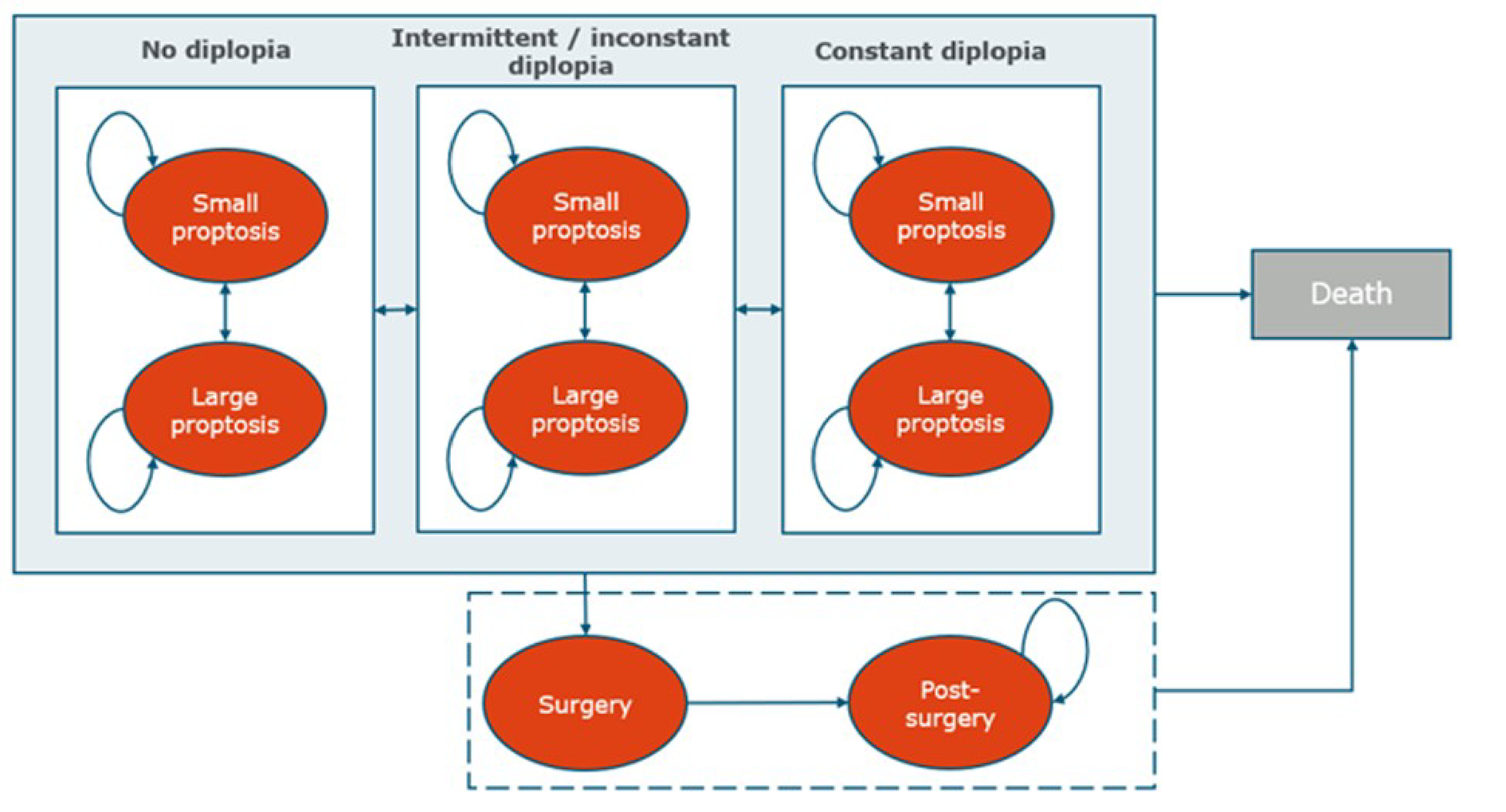
Notes: Small proptosis was defined as < 3 mm above the upper limit of normal for a patient without TED of the same race and sex, and large proptosis was defined as ≥ 3 mm.
Diplopia was defined according to the subjective diplopia score categories in the Clinical Measures of Severity assessment with grades of 0, 1 or 2, and 3 corresponding to no diplopia, intermittent diplopia or inconstant diplopia, and constant diplopia, respectively.
Source: Sponsor’s pharmacoeconomic submission.1
Detailed Results of the Sponsor’s Base Case — Health Care Payer Perspective
Table 7: Disaggregated Summary of the Sponsor’s Economic Evaluation Results
Parameter | Teprotumumab | IVMP |
|---|---|---|
Discounted LYs | ||
Total | 25.10 | 25.10 |
Discounted QALYs | ||
Total | 13.82 | 12.75 |
No diplopia, small proptosis | 7.98 | 3.90 |
No diplopia, large proptosis | 0.75 | 1.09 |
Intermittent diplopia, small proptosis | 3.04 | 2.23 |
Intermittent diplopia, large proptosis | 0.11 | 0.71 |
Constant diplopia, small proptosis | 0.23 | 0.39 |
Constant diplopia, large proptosis | 0.03 | 0.20 |
Surgery | 0.04 | 0.10 |
Postsurgery | 1.65 | 4.16 |
Adverse events | 0.00 | −0.03 |
Discounted costs ($) | ||
Total | 212,752 | 14,656 |
Drug costs | 202,017 | 408 |
Treatment administration | 2,572 | 2,664 |
Adverse event costs | 0 | 326 |
Health care Resource Use | 8,163 | 11,258 |
No diplopia, small proptosis | 2,942 | 1,438 |
No diplopia, large proptosis | 515 | 754 |
Intermittent diplopia, small proptosis | 1,770 | 1,298 |
Intermittent diplopia, large proptosis | 113 | 701 |
Constant diplopia, small proptosis | 283 | 488 |
Constant diplopia, large proptosis | 38 | 289 |
Surgery | 1,412 | 3,548 |
Postsurgery | 1,091 | 2,742 |
Source: Sponsor’s pharmacoeconomic submission.1
Appendix 4: Additional Details on the CDA-AMC Reanalyses and Sensitivity Analyses of the Economic Evaluation
Please note that this appendix has not been copy-edited.
Scenario Analyses
Table 8: Scenario Analysis Conducted on the Sponsor’s Base Case — Publicly Funded Health Care Payer Perspective
Stepped analysis | Drug | Total costs ($) | Total QALYs | ICER ($/QALY) |
|---|---|---|---|---|
Sponsor’s base case | IVMP | 14,656 | 12.75 | Reference |
Teprotumumab | 212,752 | 13.82 | 184,468 | |
CDA-AMC scenario 1 – re-treatment | IVMP | 14,555 | 12.61 | Reference |
Teprotumumab | 284,766 | 13.68 | 253,224 | |
CDA-AMC scenario 2 – utilities for surgery and postsurgery states | IVMP | 14,734 | 13.22 | Reference |
Teprotumumab | 212,718 | 14.04 | 241,872 | |
CDA-AMC scenario 3 – wastage included | IVMP | 14,751 | 12.67 | Reference |
Teprotumumab | 252,159 | 13.74 | 221,561 | |
CDA-AMC scenario 4 – combined re-treatment, utilities, and wastage (SA1+SA2+SA3) | IVMP | 14,581 | 12.97 | Reference |
Teprotumumab | 337,228 | 13.78 | 397,788 |
CHT = platinum-based chemotherapy; ICER = incremental cost-effectiveness ratio; QALY = quality-adjusted life-year; vs. = versus.
Note: All analyses were run probabilistically and based on the publicly available prices of comparator treatments.
Table 9: CDA-AMC Price Reduction Analyses
Analysis | Unit drug cost ($) | ICERs for teprotumumab vs. IVMP ($/QALY) | |
|---|---|---|---|
Price reduction | $ | Sponsor base case | CDA-AMC scenario #4 |
No price reduction | 9,776 | 184,468 | 397,788 |
10% | 8,799 | 165,578 | 357,457 |
20% | 7,821 | 146,688 | 317,125 |
30% | 6,843 | 127,797 | 276,794 |
40% | 5,866 | 108,907 | 236,462 |
50% | 4,888 | 90,017 | 196,131 |
60% | 3,911 | 71,127 | 155,799 |
70% | 2,933 | 52,237 | 115,468 |
80% | 1,955 | 33,347 | 75,136 |
90% | 978 | 14,457 | 34,805 |
ICER = incremental cost-effectiveness ratio; IVMP = IV methylprednisolone; vs. = versus.
Appendix 5: Submitted Budget Impact Analysis and CDA-AMC Appraisal
Please note that this appendix has not been copy-edited.
Table 10: Summary of Key Take-Aways
Key take-aways of the BIA |
|---|
|
BIA = budget impact analysis; RWE = real-world evidence; TED = thyroid eye disease.
Summary of Sponsor’s Budget Impact Analysis
In the submitted budget impact analysis (BIA), the sponsor estimated the incremental budget impact of reimbursing teprotumumab for the treatment of moderate to severe active TED in adult patients.26 The BIA was undertaken using an epidemiologic approach from the perspective of a public payer in Canada over a 3-year time horizon (2026 to 2028). Data to inform the model were obtained from various sources, including the published literature, the sponsor’s internal data, and input from clinical experts consulted by the sponsor. Key inputs to the BIA are documented in Table 11.
The analysis assumes that all incident cases have active TED. The sponsor compared a reference scenario in which patients received IVMP plus or minus MMF, rituximab, or tocilizumab to a new-drug scenario in which teprotumumab is reimbursed. The sponsor assumed that IVMP plus or minus MMF is administered as the first-line treatment, followed by rituximab or tocilizumab as the second-line treatment, followed by a ‘watch and wait period’ for third-line treatment. Across all lines of treatment, patients who respond to treatment based on published data25,27-29 are removed from the model because they are assumed to improve to mild or no TED and no longer have moderate to severe disease. The sponsor’s analysis included drug acquisition costs for 1 course of teprotumumab based on the sponsor’s submitted price.26
Table 11: Summary of Key Model Parameters
Parameter | Sponsor’s estimate (reported as year 1/year 2/year 3 if appropriate) |
|---|---|
Target population | |
TED incidence rate in general population | 4.83 per 100,00030 |
Proportion of TED population that are adult patients | 94.82%30 |
Proportion of adult patients with moderate to severe TED | 33.00%30 |
Proportion of incident adult patients with moderate to severe active TED that accept medical drug treatment | 90.00%a |
Percentage of incident patients who do not respond in each line of treatment | Varied by comparator and treatment lineb |
Public coverage | 41.00%a |
Number of patients with active TED eligible for drug under review | 196/202/208 |
Market uptake (3 years) | |
Uptake (reference scenario) | Refer to Table 12 |
Uptake (new-drug scenario) | Refer to Table 13 |
Cost of treatment (per patient, per course) | |
Teprotumumab IVMP ± MMF Rituximab Tocilizumab | $224,857.43 $579.50c $5,940.00 $5,758.20 |
IVMP = IV methylprednisolone; MMF = mycophenolate mofetil; TED = thyroid eye disease.
aBased on sponsor assumption.
bIn first-line treatment, 60% of patients were nonresponders after IVMP ± MMF and 17% of patients were nonresponders after teprotumumab. In second-line treatment, 50% of patients were nonresponders after rituximab, 26% of patients were nonresponders after tocilizumab, and 17% of patients were nonresponders after teprotumumab. These response rates were applied to incident patients only in first-and-second lines of treatment based on published literature.
cThe estimated costs of IVMP ± MMF assumes that only 10% of patients receiving IVMP are treated with MMF.
Table 12: Market Shares for the Reference Drug Scenario
Reference drug scenario | Incident patients (moderate to severe active TED) | |||
|---|---|---|---|---|
Year 0 (2025) | Year 1 (2026) | Year 2 (2027) | Year 3 (2028) | |
First line | ||||
Teprotumumab | 0% | 0% | 0% | 0% |
IVMP ± MMF | 100% | 100% | 100% | 100% |
Total | 100% | 100% | 100% | 100% |
Second linea | ||||
Teprotumumab | 0% | 0% | 0% | 0% |
Rituximab | 5% | 5% | 5% | 5% |
Tocilizumab | 95% | 95% | 95% | 95% |
Total | 100% | 100% | 100% | 100% |
IVMP = IV methylprednisolone; MMF = mycophenolate mofetil; TED = thyroid eye disease.
aOnly patients who did not respond to the first-line therapy move on to receive a second-line therapy. Only patients who did not respond to the second-line therapy move on to receive a third-line therapy (referred to as “wait and watch”).
Table 13: Market Share for the New-Drug Scenario
New-drug scenario | Incident patients (moderate to severe active TED) | |||
|---|---|---|---|---|
Year 0 (2025) | Year 1 (2026) | Year 2 (2027) | Year 3 (2028) | |
First line | ||||
Teprotumumab | 0% | 30% | 40% | 60% |
IVMP ± MMF | 100% | 70% | 60% | 40% |
Total | 100% | 100% | 100% | 100% |
Second linea | ||||
Teprotumumab | 0% | 50% | 65% | 80% |
Rituximab | 5% | 3% | 2% | 1% |
Tocilizumab | 95% | 48% | 33% | 19% |
Total | 100% | 100% | 100% | 100% |
IVMP = IV methylprednisolone; MMF = mycophenolate mofetil; TED = thyroid eye disease.
aOnly patients who did not respond to the first-line therapy move on to receive a second-line therapy. Only patients who did not respond to the second-line therapy move on to receive a third-line therapy (referred to as “wait and watch”).
Summary of the Sponsor’s BIA Results
The sponsor estimated that the 3-year budget impact of reimbursing teprotumumab for the treatment of moderate to severe active TED would be $91,541,779 (Year 1: $24,571,068; Year 2: $29,849,450; and Year 3: $37,121,261).
CDA-AMC Appraisal of the Sponsor’s BIA
CDA-AMC identified several key limitations to the sponsor’s analysis that have notable implications on the results of the BIA:
Costs of re-treatment with teprotumumab were not included in the analysis: As described in the appraisal of the submitted cost-utility analysis, high relapse rates were observed in the pivotal trials and OPTIC-X open-label extension (34.1%) and not incorporated in the BIA. Furthermore, clinical expert feedback obtained by CDA-AMC indicated that postmarket drug evaluation of teprotumumab in the US, where the drug is already available, suggests 40% of patients required re-treatment, up to 3 or 4 courses.
Based on the sponsor’s estimated number of eligible patients with active TED, 265 patients will receive teprotumumab in first-line treatment in years 1, 2, and 3. Using a simplified analysis using the sponsors’ submitted costs per course of treatment, assuming that 34.1% of these patients (90 patients) would be re-treated with another course of teprotumumab, an additional impact of $20,237,169 would be felt by the drug plans. This represents a 22% increase in the sponsor’s estimates, indicating that the exclusion of re-treatment underestimates the true budget impact of teprotumumab in clinical practice.
CDA-AMC could not completely address the exclusion of re-treatment due to the limitations of the submitted BIA model and the lack of available clinical data. CDA-AMC did not address multiple courses of re-treatment or re-treatment following second-line treatment with teprotumumab.
The market uptake of teprotumumab is uncertain: The sponsor estimates market share uptake for teprotumumab across Year 1, Year 2, and Year 3 based on the line of therapy received. This includes uptake of 30%, 40% and 60% in first-line treatment and uptake of 50%, 65% and 80% in second-line treatment. All estimates were based on internal sponsor estimates and clinician input.
Clinical expert feedback obtained by CDA-AMC indicated, however, that teprotumumab is not expected to be used in first-line treatment given its high cost and availability of surgery and/or IVMP as treatment options. Clinical expert feedback indicated that the use of teprotumumab would likely be restricted to second-line treatment in the active setting.
In a scenario analysis, the market shares of teprotumumab were adjusted to 0% in first-line treatment (but still available as second-line treatment) to reflect clinical expert input obtained by CDA-AMC.
The number of patients eligible for treatment with teprotumumab is uncertain: The sponsor used an epidemiologic approach to derive the eligible population, which resulted in an estimated 196 eligible patients with active TED, in CDA-AMC–participating jurisdictions in the base year. The sponsor’s incidence rates were based on a European Group on Graves Orbitopathy publication informed by data from Denmark, Slovenia, and Sweden ranging from 1992 to 2011. Based on clinical expert feedback obtained by CDA-AMC, the incidence of TED appeared to be underestimated and not reflective of the number of patients in Canada, leading to concerns with face validity. Due to a lack of available published data informing incidence and prevalence rates in Canada, there is uncertainty in the true number of patients that would be eligible and accept treatment with teprotumumab.
CDA-AMC conducted a scenario analysis where the incidence was increased by 50% (maintaining the sponsor’s uptake), reflecting clinical expert feedback to test the impact of including a higher number of eligible patients.
Drug prices paid by public drug plans are uncertain. Both the sponsor’s and the CDA-AMC analyses are based on publicly available list prices for all comparators. Actual costs paid by public drug plans are unknown.
CDA-AMC could not address this limitation in reanalysis.
CDA-AMC Reanalyses of the BIA
CDA-AMC did not conduct a base-case reanalysis of the BIA due to a lack of clinical data and model flexibility to address concerns with re-treatment with teprotumumab. An approximate estimate considering 1 course of treatment with teprotumumab for 34% of patients treated in the first line suggests that the sponsor’s budget impact estimates may be underestimated by at least 22%.CDA-AMC conducted the following scenario analyses to explore the impact of alternate parameters associated with some of the other previously mentioned limitations. The detailed results of the CDA-AMC scenario analyses are presented in Table 14.
Assuming that teprotumumab is not used in first-line treatment for active TED according to clinical expert input obtained by CDA-AMC.
Assuming that the incidence rate of TED is increased by 50%
Table 14: Detailed Breakdown of the CDA-AMC Reanalyses of the BIA
Analysis | Scenario | Year 0 (current situation) ($) | Year 1 ($) | Year 2 ($) | Year 3 ($) | Three-year total ($) |
|---|---|---|---|---|---|---|
Sponsor’s base case | Reference | 767,544 | 791,629 | 816,480 | 842,124 | 2,450,232 |
New drug | 767,544 | 25,362,697 | 30,665,930 | 37,963,384 | 93,992,011 | |
Budget impact | 0 | 24,571,068 | 29,849,450 | 37,121,261 | 91,541,779 | |
CDA-AMC scenario analysis 1: Teprotumumab excluded from first-line in active TED | Reference | 767,544 | 791,629 | 816,480 | 842,124 | 2,450,232 |
New drug | 767,544 | 17,266,520 | 20,681,205 | 24,293,620 | 62,241,345 | |
Budget impact | 0 | 16,474,891 | 19,864,725 | 23,451,497 | 59,791,113 | |
Scenario analysis 2: 50% higher incidence of TED | Reference | 1,151,317 | 1,187,443 | 1,224,720 | 1,263,185 | 3,675,348 |
New drug | 1,151,317 | 38,044,045 | 45,998,895 | 56,945,076 | 140,988,017 | |
Budget impact | 0 | 36,856,603 | 44,774,175 | 55,681,891 | 137,312,669 |
BIA = budget impact analysis.
Note: The submitted analysis is based on the publicly available prices of the comparator treatments.
Ethics Review
Ethical Considerations
Thyroid eye disease (TED) is an autoimmune inflammatory disorder, typically associated with Graves disease, that presents in 2 phases: an active (inflammatory) phase and a chronic phase. The active phase is marked by progressive swelling and tissue expansion around the eyes, often shifting from mild to severe presentations rapidly.1,2 Tissue expansion and swelling may lead to the appearance of bulging eyes (i.e., proptosis). In some cases, it may also cause double vision (i.e., diplopia). As the inflammation diminishes, TED transitions into a chronic phase. At this point, fibrotic changes around the eye and their side effects of proptosis and diplopia can persist, sometimes requiring surgical intervention for meaningful improvement.1,2 TED severity can range from mild (with minor daily impacts) to moderate or severe (in which vision is not yet threatened, but intervention may be justified). In extreme cases, it can lead to sight-threatening complications.3
This brief report is informed by the sponsor’s submission and by patient group, clinician group, and drug plan input received by Canada’s Drug Agency for this review. Additionally, we engaged in direct consultations with 3 clinical experts (2 oculoplastic surgeons and 1 neuro-ophthalmologist) who have experience treating patients with TED.
This brief report highlights ethical considerations regarding the use of teprotumumab in adults for the treatment of moderate to severe TED. It outlines considerations relevant for decision-making regarding the public reimbursement and implementation of teprotumumab in Canada. However, it does not necessarily present an exhaustive list of all ethical considerations associated with TED and its treatment.
Diagnosis, Treatment, and Experiences of People Living With TED
Active TED can significantly affect patients’ quality of life, particularly when inflammation and tissue expansion around the eyes lead to proptosis, eyelid retraction, and diplopia. Patient group input indicated that symptoms such as blurred or double vision and sensitivity to light can disrupt daily activities like reading, driving, and working. Even when TED does not threaten vision directly, constant eye pain and tearing can curtail independence, causing patients to withdraw from social or professional settings. Further, changes in physical appearance (e.g., proptosis and eyelid retraction) may contribute to stigma and psychological distress, with many patients reporting anxiety and depression related to the visible nature of their condition. These challenges extend to caregivers, who may shoulder emotional and logistical burdens. For example, they may need to assist with daily tasks and medical appointments and provide emotional support, often while navigating their own feelings and responsibilities.
Clinical experts and patient group input indicated that TED diagnosis can be delayed if eye symptoms are subtle or patients do not have timely access to specialists. Because vision care is not publicly funded across Canada (with some exceptions), individuals without private insurance may face additional barriers to accessing the ophthalmologic care necessary for diagnosis. These delays can postpone access to treatment options, increasing the risk of disease progression and exacerbating the physical and psychosocial burdens of living with TED.
There are currently no disease-modifying treatment options for active TED. As a result, patients rely on therapies that are primarily meant to address symptoms or manage complications. Treatment for active TED involves the use of off-label therapies, such as IV methylprednisolone (a high-dose glucocorticoid) and tocilizumab (an immunomodulator). Radiotherapy may also be used as an adjunct, but it can carry significant risks, including retinopathy, cataracts, and systemic side effects. While these options are widely used to manage active inflammation, their accessibility varies across patient populations due to differences in insurance coverage and the varying geographic availability of clinical expertise. Clinical experts highlighted that surgery, particularly orbital decompression, is reserved for sight-threatening complications during the active phase. However, access to surgical expertise and prolonged waiting times can present barriers for patients who need surgical intervention. The experts also noted that lifestyle modifications, such as smoking cessation, could provide added benefit but may be challenging for some patients to sustain.
The patient group input emphasized the need for treatments that go beyond symptom management to address the underlying cause of TED. It indicated that patients value interventions that minimize side effects, particularly those associated with steroid use (e.g., weight gain). Desired outcomes for new therapies include improvements in swelling, eye pain, redness, and light sensitivity, as well potential disease reversal. These priorities reflect a strong preference for therapies that not only alleviate symptoms but also enhance overall quality of life.
Clinical Evidence Used in the Evaluation of Teprotumumab
The safety and efficacy of teprotumumab in adult patients aged 18 to 80 years with active TED were evaluated across 3 pivotal trials: the TED01RV, TEP-301, and TEP-303 studies. The TED01RV study was a phase II, randomized, placebo-controlled, double-masked trial (N = 87). Its primary objective was to assess the overall response rate, defined as a greater than or equal to 2 mm reduction in proptosis and a greater than or equal to 2-point reduction in clinical activity score, which assesses eye inflammation, from baseline to week 24. The TEP-301 study (N = 83) and the TEP-303 study (N = 54) were phase III, randomized, placebo-controlled, double-masked trials. They shared the same primary objective of assessing the proptosis responder rate, defined as a greater than or equal to 2 mm reduction in proptosis from baseline in the study eye (without deterioration in the fellow eye) by week 24. Across all trials, patients in the active arm received an initial dose of 10 mg/kg of teprotumumab by IV followed by 20 mg/kg IV every 3 weeks until they reached a total of 8 doses. The results across all 3 studies suggest that treatment with teprotumumab likely results in higher proptosis and overall treatment response rates compared to placebo. Further details about these trials are provided in the Clinical Review report.
The long-term efficacy and safety of teprotumumab in active TED is currently uncertain. The sponsor submitted long-term follow-up studies for the TED01RV and TEP-301 studies that extended the observation period by an additional 48 weeks each. The Clinical Review report notes that while the results suggest there was a clinically meaningful proptosis reduction at the follow-up, challenges with trial dropout and similar response rates across the placebo and active arms limit confidence in these findings. Further, notable relapse rates for proptosis response were observed in both studies, ranging from 30.3% to 36.7%. The clinical experts expressed concerns about the high cost of teprotumumab, given the uncertainty of the long-term benefit. They were particularly concerned with relapse rates and diminishing differences between the treatment and placebo groups. These findings underscore the challenges of assessing the long-term value of teprotumumab for the health care system.
The OPTIC-X open-label extension study evaluated teprotumumab in TEP-301 study participants who were either “nonresponders” or placebo arm participants. While some patients experienced an initial response during treatment, these effects were inconsistent over time, with diminishing proptosis, diplopia, and clinical activity score responses by week 48. The clinical experts highlighted that this raises ethical concerns about whether re-treatment provides sufficient long-term value, especially given the high cost of teprotumumab.
The clinical experts indicated that the focus on reducing proptosis across all 4 trials may not fully capture the functional impact of TED on vision and people’s ability to participate in daily activities. Although the clinical experts acknowledged that patients often face significant psychosocial challenges due to proptosis — and that reductions in proptosis may have a positive impact on quality of life — they considered the focus on proptosis reduction to be of limited clinical relevance. Further, although some secondary and exploratory outcomes did assess teprotumumab’s impact on diplopia, the clinical experts suggested that the subjective tools used to measure diplopia were inadequate and not consistent with clinical practice.
The clinical experts indicated that the eligibility criteria across all 4 trials limited the generalizability of the trial results. The exclusion of people with optic neuropathy (a sight-threatening manifestation of TED) limits the applicability of the findings for people at the greatest risk of vision loss. Additionally, excluding patients with recent steroid use creates uncertainty about how teprotumumab might perform in the typical clinical pathway in Canada. While these exclusions may be justified from a trial design perspective, they raise ethical considerations regarding the adequacy of evidence to guide real-world decision-making. Experts emphasized the need for long-term, real-world evidence to fill these gaps and support clinical decision-making in the future.
Clinical Use of Teprotumumab
The clinical experts indicated that they would consider prescribing teprotumumab for the treatment of active TED. However, they also emphasized that it should not replace glucocorticoids as first-line therapy in Canada. While teprotumumab has demonstrated the ability to reduce proptosis in a trial setting, the experts were concerned that the lack of evidence for functional improvements to vision suggests that this impact may have limited clinical relevance.
Despite the clinical experts’ view that teprotumumab may have only a “cosmetic” impact on active TED, patient input emphasized the importance of reducing proptosis and eye pain. This is especially significant given the visible nature of the condition and its effects on self-confidence and mental health. Even a cosmetic reduction in proptosis could be meaningful for some patients, offering psychosocial benefits by alleviating feelings of stigma and enhancing quality of life.
The clinical experts raised concerns about emerging evidence on long-term hearing impairment associated with teprotumumab. They suggested that ototoxicity may have been underreported in trials due to the use of standard rather than high-frequency audiometric testing. They added that emerging real-world evidence from the US indicates potential long-term risks of hearing impairment (e.g., tinnitus and hearing loss) with teprotumumab, and they reiterated the importance of further investigation into this risk. To mitigate the risks of ototoxicity, the experts recommended more routine, higher-frequency audiometric testing before teprotumumab initiation, given that patients with pre-existing hearing complications may be at greater risk of experiencing hearing impacts. Further, the clinical experts emphasized the need for robust postapproval studies and transparent communication with patients to support informed decision-making. In the absence of robust clinical evidence demonstrating a clear impact on visual function, the clinical experts suspect that the willingness to accept these risks to hearing may be low.
The clinical experts emphasized the importance of reserving teprotumumab for the patients most likely to benefit, particularly those with active, moderate to severe TED that is treated early. Diagnosis, treatment initiation, and monitoring for adverse events will require oversight by specialists, such as ophthalmologists specializing in orbital pathology or neuro-ophthalmologists. The experts also acknowledged that these requirements could create access barriers for patients in rural or underserved areas. To address this, they suggested enabling follow-up care and infusions at local centres. This could be supported by virtual care to reduce travel burdens while maintaining specialist oversight for prescriptions and long-term monitoring.
Health Systems
Based on the totality of the clinical evidence, teprotumumab is a high-cost immunosuppressant that may reduce proptosis by 2 mm or more in eligible patients with active TED. However, the clinical experts questioned whether this reduction justifies teprotumumab’s significant cost to the health system, given their perception that reduction in proptosis has limited clinical relevance. This raises broader concerns about sustainable resource allocation. This may be especially true when less expensive alternatives, such as off-label tocilizumab, have shown some benefit in real-world settings. Clinical experts emphasized the need for more robust comparative evidence to assess the efficacy and cost-effectiveness of teprotumumab relative to existing therapies. Such evidence is critical to supporting equitable clinical decision-making and ensuring health system sustainability.
The clinical experts raised significant concerns about the uncertain long-term effectiveness and safety of teprotumumab in managing active TED. Questions remain about whether its effects on proptosis and inflammation are sustained over time, complicating the assessments of cost-effectiveness and value to the health system. The pharmacoeconomic review concluded that teprotumumab is not cost-effective under current conditions. This raises further concerns about its financial sustainability, particularly if re-treatment is required.
Additionally, hearing-related risks associated with teprotumumab remain a significant challenge, given that long-term safety data are lacking. The clinical experts noted that reports of hearing loss or impairments in patients from the US highlight the need for ongoing monitoring and real-world evidence to better understand the extent and durability of this adverse effect. The experts emphasized the importance of transparent reporting and careful postmarket surveillance to guide future reimbursement and clinical decisions.
References
1.Burch HB, Perros P, Bednarczuk T, et al. Management of Thyroid Eye Disease: A Consensus Statement by the American Thyroid Association and the European Thyroid Association. Thyroid. 2022;32(12):1439-1470. PubMed
2.Wang Y, Patel A, Douglas RS. Thyroid Eye Disease: How A Novel Therapy May Change The Treatment Paradigm. Therapeutics and Clinical Risk Management. 2019;Volume 15:1305-1318. PubMed
3.Bartalena L, Kahaly GJ, Baldeschi L, et al. The 2021 European Group on Graves’ orbitopathy (EUGOGO) clinical practice guidelines for the medical management of Graves’ orbitopathy. European Journal of Endocrinology. 2021;185(4):G43-G67. PubMed
ISSN: 2563-6596
Canada’s Drug Agency (CDA-AMC) is a pan-Canadian health organization. Created and funded by Canada’s federal, provincial, and territorial governments, we’re responsible for driving better coordination, alignment, and public value within Canada’s drug and health technology landscape. We provide Canada’s health system leaders with independent evidence and advice so they can make informed drug, health technology, and health system decisions, and we collaborate with national and international partners to enhance our collective impact.
Disclaimer: CDA-AMC has taken care to ensure that the information in this document was accurate, complete, and up to date when it was published, but does not make any guarantee to that effect. Your use of this information is subject to this disclaimer and the Terms of Use at cda-amc.ca.
The information in this document is made available for informational and educational purposes only and should not be used as a substitute for professional medical advice, the application of clinical judgment in respect of the care of a particular patient, or other professional judgments in any decision-making process. You assume full responsibility for the use of the information and rely on it at your own risk.
CDA-AMC does not endorse any information, drugs, therapies, treatments, products, processes, or services. The views and opinions of third parties published in this document do not necessarily reflect those of CDA-AMC. The copyright and other intellectual property rights in this document are owned by the Canadian Agency for Drugs and Technologies in Health (operating as CDA-AMC) and its licensors.
Questions or requests for information about this report can be directed to Requests@CDA-AMC.ca.