Drugs, Health Technologies, Health Systems
Reimbursement Review
Cariprazine (Vraylar)
Sponsor: AbbVie Corporation
Therapeutic area: Schizophrenia
This multi-part report includes:
Clinical Review
Pharmacoeconomic Review
Clinical Review
Abbreviations
AAP
atypical antipsychotic
AE
adverse event
ANCOVA
analysis of covariance
BPRS
Brief Psychiatric Rating Scale
C-SSRS
Columbia-Suicide Severity Rating Scale
CCEIP
Canadian Consortium for Early Intervention in Psychosis
CDA-AMC
Canada's Drug Agency
CDEC
Canadian Drug Expert Committee
CGI
Clinical Global Impression
CGI-I
Clinical Global Impression–Improvement
CGI-S
Clinical Global Impression–Severity
CGI-S-N
Clinical Global Impression–Severity–Negative Symptoms
CGI-SCH
Clinical Global Impression–Schizophrenia
CI
confidence interval
CMHA
Canadian Mental Health Association
CrI
credible interval
CSR
Clinical Study Report
D2
dopamine type 2
DAE
discontinuation due to adverse event
DOR
discontinuation due to other reason
DSM-IV-TR
Diagnostic and Statistical Manual of Mental Disorders, Fourth Edition, Text Revision
DSM-5
Diagnostic and Statistical Manual of Mental Disorders, Fifth Edition
DSM-5-TR
Diagnostic and Statistical Manual of Mental Disorders, Fifth Edition, Text Revision
ECT
electroconvulsive therapy
EMA
European Medicines Agency
EPS
extrapyramidal symptom
FSNS
factor score for negative symptoms
HR
hazard ratio
HRQoL
health-related quality of life
IAM
Institute for Advancements in Mental Health
INESSS
Institut national d’excellence en santé et en services sociaux
ITC
indirect treatment comparison
LOCF
last observation carried forward
LSM
least squares mean
MCMC
Markov chain Monte Carlo
MDSC
Mood Disorders Society of Canada
MID
minimal important difference
mITT
modified intention to treat
MMRM
mixed model of repeated measures
NICE
National Institute for Health and Care Excellence
NMA
network meta-analysis
NSA-16
16-item Negative Symptom Assessment
OR
odds ratio
PANSS
Positive and Negative Syndrome Scale
PBAC
Pharmaceutical Benefits Advisory Committee
PSP
Personal and Social Performance Scale
QoL
quality of life
RCT
randomized controlled trial
RWE
real-world evidence
SAE
serious adverse event
SAND
Short Assessment of Negative Domains
SD
standard deviation
SE
standard error
SLR
systematic literature review
SQLS-R4
Schizophrenia Quality of Life Scale Revision 4
SSA
Schizophrenia Society of Alberta
SSC
Schizophrenia Society of Canada
TEAE
treatment-emergent adverse event
Executive Summary
An overview of the submission details for the drug under review is provided in Table 1.
Table 1: Background Information on Application Submitted for Review
Item | Description |
|---|---|
Drug product | Cariprazine (Vraylar); 1.5 mg, 3 mg, 4.5 mg, 6 mg oral capsules |
Sponsor | AbbVie Corporation |
Indication | Vraylar (cariprazine) is indicated for the treatment of schizophrenia in adults. |
Reimbursement request | Per the approved Health Canada indication |
Health Canada approval status | NOC |
Health Canada review pathway | Standard review |
NOC date | April 22, 2022 |
Recommended dosage | The starting dosage of cariprazine is 1.5 mg daily. The recommended target dosage for cariprazine is 1.5 mg to 6 mg once daily. Depending upon clinical response and tolerability, the dosage can be increased gradually in 1.5 mg increments. The maximum recommended dosage is 6 mg daily. |
NOC = Notice of Compliance.
Basis of Resubmission
Cariprazine was previously reviewed by CADTH for the treatment of schizophrenia in adults.1 The evidence provided for the original review of cariprazine included 5 double-blind randomized controlled trials (RCTs), including 3 short-term placebo-controlled studies (the RGH-MD-16, RGH-MD-04, and RGH-MD-05 studies, referred to hereafter as the MD-16, MD-04, and MD-05 studies), 1 placebo withdrawal study (the RGH-MD-06 study, referred to hereafter as the MD-06 study),2 and 1 active-controlled study in patients with predominantly negative symptoms (the RGH-188-05 study, referred to hereafter as the188-05 study), 2 open-label extension studies (RGH-MD-17 and RGH-MD-11, referred to hereafter as the MD-17 and MD-11 studies), and 3 indirect treatment comparisons (ITCs) — 2 published ITCs and 1 unpublished ITC versus other atypical antipsychotic (AAP) drugs available in Canada. The submission was initially discussed at the March 2022 Canadian Drug Expert Committee (CDEC) meeting and was issued a “do not reimburse” recommendation by the committee. A request for major reconsideration was submitted by the sponsor, which was discussed at the July 2022 CDEC meeting, and the original do not reimburse recommendation was upheld.
In response to the initial draft recommendation, Canada’s Drug Agency (CDA-AMC) received written feedback from 3 clinician groups, 2 individual clinicians, and 3 patient groups. This information was discussed as part of the deliberation on the major reconsideration of the recommendation. The feedback received was consistent across stakeholder groups, which spoke to the significant impact of mental health on the lives of patients and caregivers (particularly those living with schizophrenia), the heterogeneity of the condition and response to treatment, the challenges with conducting clinical trials in this population, and correspondingly, the need for additional treatment options.
The gaps identified by CDA-AMC within the original submission included uncertainty in the clinical relevance of the results of the submitted RCTs, uncertainty in the reported magnitude of effect in treating symptoms for patients presenting with predominantly negative symptoms, limited evidence of the long-term effects of continued cariprazine use, uncertainty in the comparative effectiveness of cariprazine compared to relevant comparators, and uncertainty in the generalizability of the 188-05 study due to its extensive screening and exclusion criteria.
The sponsor filed this resubmission based on new evidence that is intended to address the gaps identified by CDA-AMC and considered by CDEC in the recommendation for the original submission. The evidence provided in the resubmission included:
2 real-world evidence (RWE) studies of cariprazine; the first study included patients with schizophrenia and predominantly negative symptoms, and the second study included patients who met Diagnostic and Statistical Manual of Mental Disorders, Fifth Edition (DSM-5) criteria for schizophrenia and cannabis use disorder3,4
a responder analysis for the primary end point of the acute schizophrenia trials (the MD-16, MD-04, and MD-05 studies), as defined by a 20% change from baseline in the Positive and Negative Syndrome Scale (PANSS) total score5
a meta-regression reanalysis of the originally submitted network meta-analysis (NMA).6
The objective of this report is to review and critically appraise the totality of evidence submitted by the sponsor on the beneficial and harmful effects of cariprazine (Vraylar), 1.5 mg to 6 mg oral capsules, in the treatment of adult patients with schizophrenia. The emphasis of the clinical review of the resubmission is to appraise whether the additional evidence submitted addresses the gaps identified in the previous review, and to consider the new information alongside the evidence that was reviewed and appraised in the original submission.1
As such, within the present Clinical Review Report, a summary of clinical evidence from the original Clinical Review report7 has been included (refer to the section titled Clinical Evidence From the Original Vraylar Review). This is followed by a summary of the new clinical evidence that was reviewed and appraised as part of the resubmission (refer to the section titled Clinical Evidence From the Vraylar Resubmission).
Introduction
Schizophrenia is a chronic mental illness that affects the way a person interacts with and understands the world. The condition is characterized by delusions, hallucinations, disorganized speech, disorganized behaviour, negative symptoms, and impaired cognitive ability.8 The symptoms associated with schizophrenia are categorized as either positive or negative in nature. Positive symptoms reflect a distortion of reality or an abundance of perceptual normal functions (e.g., delusions, conceptual disorganization, hallucinatory behaviour, excitement, hostility), while negative symptoms reflect a loss or restriction of normal functioning (e.g., blunted affect, emotional withdrawal, poor rapport, passive or apathetic social withdrawal, lack of spontaneity and flow of conversation, disturbance of volition). Other general and cognitive psychopathological manifestations include motor retardation, uncooperativeness, unusual thought content, disorientation, poor attention, lack of judgment and insight, poor impulse control, preoccupation, and active social avoidance. The severity, duration, and frequency of these symptoms can cause social and occupational challenges.
Despite its relatively low prevalence, schizophrenia is associated with tremendous health, social, and economic burden.9 People living with schizophrenia are at increased risk for other medical illnesses, suicide, substance abuse, homelessness, and unemployment.10 Moreover, the burden associated with schizophrenia extends beyond the individual living with the disease to families, caregivers, and the wider community. According to national data (2016 to 2017), 1 of 100 people residing in Canada aged 10 years or older is living with a diagnosis of schizophrenia; 56% of these individuals are men and 44% are women.11 The incidence of schizophrenia in Canada was estimated to be approximately 49 per 100,000 in 2016, with an incidence of 58 per 100,000 in males and 41 per 100,000 in females.12 In Canada, the all-cause mortality rate in people diagnosed with schizophrenia is 2.8 times higher than in those without, and 374 people died due to schizophrenia in 2004.11,13
Schizophrenia is diagnosed by specific signs and symptoms that prevent reality-based judgment,8 as well as by a physical examination and the conduct of a thorough review of an individual’s medical, psychiatric, and family history. The most recent updated diagnostic criteria for schizophrenia are defined in the Diagnostic and Statistical Manual of Mental Disorders, Fifth Edition, Text Revision (DSM-5-TR).14 To receive an official diagnosis of schizophrenia, an individual must exhibit at least 2 symptoms consisting of delusions, hallucinations, disorganized speech, disorganized behaviour, and negative symptoms for at least a 1-month period, with some level of disturbance being present for 6 months.
Currently, there is no cure for schizophrenia. Treatment focuses on managing symptoms in the community and at work and includes medication and psychosocial interventions. Existing antipsychotic drug therapies fall into 1 of 2 classes: typical antipsychotic drugs and AAPs drugs. Per the clinical experts consulted by CDA-AMC for the purpose of this review, both typical antipsychotic and AAP drug classes are considered to be equally effective in the treatment of positive symptoms. Currently, there are no approved medications to specifically treat the negative and cognitive symptoms, which are the symptoms most impairing for long-term function. Canadian guidelines recommend that, following an acute episode of schizophrenia, patients should be offered maintenance treatment with antipsychotic medications. Canadian guidelines also recommend the prescription of clozapine for patients with treatment-resistant schizophrenia.
Cariprazine is an AAP drug that is approved by Health Canada for the treatment of schizophrenia in adults. Cariprazine is available as 1.5 mg, 3 mg, 4.5 mg and 6 mg oral capsules and the recommended dosage is 1.5 mg to 6 mg once daily. The suggested initial dose is 1.5 mg, which may be increased in 1.5 mg increments to a maximum of 6 mg daily. Cariprazine and its active metabolites have a long half-life; thus, the full dose-related treatment response and the occurrence of adverse effects may be delayed.
The reimbursement request for cariprazine is in line with the Health Canada indication for the treatment of schizophrenia in adults.
Stakeholder Perspectives
The information in this section is a summary of input provided by the patient and clinician groups that responded to CDA-AMC’s call for input and from clinical experts consulted by CDA-AMC for the purpose of this review.
Patient Input
CDA-AMC received 1 joint input for this review from the Schizophrenia Society of Canada (SSC) in collaboration with the Institute for Advancements in Mental Health (IAM), the Schizophrenia Society of Alberta (SSA), the Canadian Mental Health Association (CMHA) Alberta Division, and the Mood Disorders Society of Canada (MDSC). A series of interviews, focus groups, and surveys was conducted between 2021 and 2023. This included a 2-part national survey for persons with lived experience of early psychosis and schizophrenia (N = 118 responders) and 1 survey for family members of people with early psychosis and schizophrenia (N = 121 responders) conducted between 2021 and 2023, as well as a smaller survey for those with personal experience with cariprazine were conducted between November and December 2023.
Among the patient respondents, 76% reported 1 or more positive symptom, primarily delusions. One or more negative symptom was reported by 94% of patients, mainly consisting of social withdrawal and reduced motivation. Cognitive symptoms were reported by 97% of patients and included difficulty with attention and memory. According to the patient group input, more than 1 antipsychotic drug may be needed to address both positive and negative symptoms of schizophrenia, along with a holistic treatment plan that includes psychosocial rehabilitation, family education, recovery-oriented mental health services, psychological support services, substance use issues care, and trauma-informed care. The majority of patient responders (94%) was taking medications for early psychosis or schizophrenia, with drowsiness, restlessness, nausea, and weight gain being the most commonly experienced side effects. As the negative symptoms have a major impact on social engagement and integration, patients cite the need for a medication that can address the negative symptoms of schizophrenia. This is also because none of the typical antipsychotic drugs or AAP drugs are able to target negative symptoms. Patients also expressed a need for treatment options that have fewer side effects. Four patients had experience with cariprazine, accessed through private health plans. Most respondents indicated that cariprazine improved the positive, negative, and cognitive symptoms associated with their disease and positively impacted their quality of life (QoL) with tolerable side effects.
Clinician Input
Input From Clinical Experts Consulted by CDA-AMC
Schizophrenia is a lifelong condition. Many individuals with schizophrenia do not respond to currently available treatment options and of those who do, many become refractory to treatment. Existing treatments have burdensome adverse effects that impact QoL, compliance, and tolerability. The clinical experts emphasized that current available treatment options have minimal to no impact on negative and cognitive symptoms of schizophrenia and there is no approved treatment for negative (and cognitive) symptom domains, which are among the major predictors of functional outcomes.
Antipsychotic medications are the mainstay of schizophrenia treatment; however, treatment with antipsychotic medications is mostly effective on positive symptoms. The clinical experts indicated that the primary goal of treatment with antipsychotic medications is to treat psychosis (i.e., positive symptoms of schizophrenia), which may improve QoL, burden of illness, and safety (i.e., the reduction of suicide and violence), as well as prevent relapse and progression of the disease. In most cases, antipsychotic medications have equal efficacy in treating the first episode of psychosis. Therefore, the clinical experts highlighted that in clinical practice, treatment usually begins with newer antipsychotic medications (i.e., partial agonists), which have a more benign and manageable side effect profile (e.g., aripiprazole). Treatment guidelines suggest 2 separate trials of antipsychotic medications of adequate dose and duration, followed by clozapine if response was poor (i.e., treatment-resistant schizophrenia). There are no guidelines for the management of schizophrenia after the failure of clozapine. Options generally include the addition of a second antipsychotic medication, a mood stabilizer, or electroconvulsive therapy (ECT). According to the clinical experts, the full remission of psychotic symptoms is ideal; however, many patients will not attain full remission. For inpatients, the main goal of treatment is to attain a degree of symptom control that is compatible with living in the community. For outpatients, symptom control as well as working on recovery goals (i.e., vocational, leisure, or self-care goals) become the target of treatment.
The clinical experts described the manifestation of schizophrenia as remarkably heterogenous and thus, treatment goals for each patient could be very different. The experts noted that efficacy is not necessarily predictable, and most often comes down to trial and error. The clinical experts indicated that cariprazine could be used similarly to other AAP medications as monotherapy, though it could be useful as a first-line therapy in the first episode of psychosis. Additionally, the clinical experts highlighted its potential for use as an add-on therapy to other drugs when needed and that it may have unique benefits for patients with prominent negative symptoms. Considering there are no other options available to treat negative symptoms, the experts stated that cariprazine is a good option to try and it is expected that some patients will benefit from it. Overall, the clinical experts stated that cariprazine would be another treatment option within their armamentarium. The experts stated that based on their experience, cariprazine is well tolerated overall and has a better side effect profile than many other antipsychotic drugs; however, for patients sensitive to akathisia, cariprazine may not be most appropriate. The experts stated that psychiatrists are most often involved in diagnosing schizophrenia and initiating therapy, to monitor potential adverse effects. However, the clinical experts also noted that general practitioners currently prescribe and monitor many antipsychotic drugs; thus, they should be able to prescribe cariprazine following proper education. Additionally, the clinical experts noted that no specialized setting would be required to prescribe and monitor treatment.
Clinician Group Input
Three clinician groups provided input for the submission: the Canadian Consortium for Early Intervention in Psychosis (CCEIP) group (3 clinicians contributed to the input), the National Advisory Board (20 clinicians contributed to the input), and a group of Quebec psychiatrists (7 clinicians contributed to the input).
Clinicians highlighted that early intervention with pharmacologic and nonpharmacologic approaches can help address important treatment goals such as improving the course of psychosis to lead to a period of stability, returning to preillness social and occupational levels of functioning, and decreasing the risk of suicide. The clinician groups agreed with the clinical experts consulted by CDA-AMC on the place in therapy of cariprazine as a first-line antipsychotic drug. They agreed that it is particularly relevant for patients with adherence concerns and reluctance to use long-acting injectable antipsychotic drugs, and those who have encountered tolerability issues, given the longer half-life and more favourable metabolic tolerability profile of cariprazine. However, the clinician groups highlighted that patients with treatment-refractory schizophrenia or with comorbidities would be least likely to benefit from treatment with cariprazine. They also highlighted that it is necessary to offer patients treatment options for both positive and negative symptoms, and in multiple formulations to reduce symptom burden and maximize health-related quality of life (HRQoL).
In alignment with the clinical experts consulted by CDA-AMC, the clinician groups noted that response is assessed through multidisciplinary clinical observation to establish a reduction in positive and negative symptoms, and improvement in QoL and the ability to function more independently. However, key evaluative scales for response in trials (e.g., PANSS) are not routinely conducted in clinical practice. The clinician groups stated that the discontinuation of therapy should be considered based on the lack of or suboptimal response, tolerability issues (generally including excessive drowsiness, cognitive disturbance, sexual dysfunction, metabolic effects, and hormonal and weight-related changes), as well as nonadherence, of which they state that tolerability and adherence issues are less a concern with cariprazine.
As noted by the clinical experts consulted by CDA-AMC, the clinician groups highlighted that the treatment of patients with schizophrenia is provided in both inpatient and outpatient settings as well as in the emergency department, often under the care of a multidisciplinary team, with medication decisions and choices usually determined by the psychiatrist.
Drug Program Input
The drug programs identified the following jurisdictional implementation issues: relevant comparators, considerations for the initiation of therapy, considerations for the continuation or renewal of therapy, considerations for the prescribing of therapy, and system and economic issues. Refer to Table 7 for more details.
Clinical Evidence From the Original Vraylar Review
Pivotal Studies and Protocol-Selected Studies
Description of Studies
Five double-blind RCTs met the inclusion criteria for the systematic review, including 3 short-term studies (the MD-16, MD-04, and MD-05 studies), 1 randomized withdrawal study (the MD-06 study), and 1 study in patients with predominantly negative symptoms (the 188-05 study).
The 6-week, double-blind MD-16, MD-04, and MD-05 studies evaluated the efficacy, safety, and tolerability of cariprazine compared with placebo in adults with an acute exacerbation of schizophrenia. Patients were randomized to receive placebo or either a fixed or flexible dosing of cariprazine (1.5 mg to 9 mg daily). Two studies also included an active control group for assay sensitivity (risperidone 4 mg daily or aripiprazole 10 mg daily). The sample size ranged from 446 patients to 732 patients and the primary outcome in all trials was the change from baseline to week 6 in the PANSS total score. The mean age of patients enrolled in the acute schizophrenia trials ranged from 35.5 years (standard deviation [SD] = 9.3 years) to 39.3 years (SD = 10.8 years), and the proportion of males ranged from 62% to 78% per treatment group. The mean baseline PANSS total score was approximately 96 points across studies, and most patients were categorized as markedly ill based on the Clinical Global Impression–Severity of Illness (CGI-S) score.
The objective of the MD-06 study was to evaluate the efficacy and safety of cariprazine relative to placebo in preventing the relapse of symptoms. Adults with acute schizophrenia were enrolled and received open-label cariprazine (3 mg to 9 mg daily) for up to 20 weeks. Those able to tolerate cariprazine and who met the treatment response criteria were randomized to receive double-blind cariprazine or placebo for 26 weeks to 72 weeks (N = 200). The study was stopped once the last patient randomized had completed 26 weeks in the double-blind period. Time to relapse was the primary outcome of this study. In the MD-06 study, the mean age of patients who entered the run-in stage was 38.4 years (SD = 10.4 years) and 71% were male. The mean PANSS total score was 91.3 points (SD = 10.1 points) and 54% of patients were markedly ill. Treatment responders who had completed the open-label cariprazine run-in stage and were randomized had a mean age of 37.7 years (SD = 10.1 years) and 39.2 years (SD = 10.9 years), and 71% and 61% of patients were male in the placebo and cariprazine groups, respectively. At randomization, the PANSS total score was 50.9 points (SD = 6.7 points), and most patients were mildly ill based on the CGI-S score.
The objective of the 188-05 study was to evaluate the safety, efficacy, and tolerability of cariprazine versus risperidone in patients with predominantly negative symptoms of schizophrenia for at least 6 months (i.e., a PANSS factor score for negative symptoms [FSNS] ≥ 24 and a rating of ≥ 4 [moderate] for 2 of 3 PANSS items for flat affect, avolition, and poverty of speech). A total of 461 adults were randomized to receive 26 weeks of double-blind cariprazine (3 mg to 6 mg daily) or risperidone (3 mg to 6 mg daily). The primary outcome was change from baseline to week 26 in the PANSS FSNS. The mean age of patients enrolled in the 188-05 study was 40.4 years (SD = 10.8 years), and 57% were male. The mean baseline PANSS score was approximately 76 points, with ███ of patients classified as moderately ill and ███ classified as markedly ill, according to the CGI-S score.
Efficacy Results
Acute Schizophrenia Trials
The primary efficacy objective was met in all 3 acute schizophrenia studies, with all cariprazine dosage groups (1.5 mg to 9 mg daily) showing statistically significant mean differences versus placebo in the change from baseline to week 6 in the PANSS total score. The least squares mean (LSM) differences versus placebo ranged from –6.8 (95% confidence interval [CI], –11.3 to –2.4; P = 0.003) for the cariprazine 3 mg to 6 mg group in the MD-05 study, to –10.4 (95% CI, –14.6 to –6.2; P < 0.0001) for the cariprazine 4.5 mg group in the MD-16 study (Table 2). No statistical testing was performed comparing cariprazine to risperidone or aripiprazole.
The change from baseline to week 6 in the CGI-S score was the secondary outcome in the acute schizophrenia trials. The CGI-S assesses the overall severity of mental disorders on a 7-point scale ranging from 1 (normal) to 7 (extremely ill). The LSM differences favoured all dosage groups of cariprazine versus placebo, with treatment effects that ranged from –0.3 (95% CI, –0.6 to –0.1; P = 0.0115) to –0.6 (95% CI, –0.9 to –0.4; P < 0.0001) (Table 2).
The proportion of patients who attained treatment response (≥ 30% improvement in the PANSS total score) favoured the cariprazine 1.5 mg, 3 mg, and 4.5 mg groups (31.4%, 35.7% and 35.9%, respectively) and the risperidone group (43.5%) compared with the placebo group (18.9%) in the MD-16 study (all P < 0.05). In the MD-04 study, the proportion of responders was higher for cariprazine 6 mg (31.8%; P = 0.013) than placebo (19.5%), but with no difference detected for the cariprazine 3 mg group (24.5%; P = 0.28) versus placebo (19.5%). No difference in the proportion of responders was detected between the cariprazine 3 mg to 6 mg groups (28.6%) or the 6 mg to 9 mg groups (34.7%) compared with the placebo group (24.8%) in the MD-05 study (both P > 0.05). There was no control of the type I error rate for the responder analyses; thus, any results showing a P value of less than 0.05 should be interpreted as supportive evidence only.
Table 2: Key Efficacy Outcomes in Acute Schizophrenia Studies (MD-16, MD-04, and MD-05 Trials)
Study and treatment group | N included in analysis | Change from baseline to week 6 in PANSS total scorea | Change from baseline to week 6 in CGI-S scoreb | ||
|---|---|---|---|---|---|
Change at week 6, LSM (SE) | LSM difference vs. placebo (95% CI; P value) | Change at week 6, LSM (SE) | LSM difference vs. placebo (95% CI; P value) | ||
MD-16 studyc | |||||
Placebo | 148 | –11.8 (1.5) | Reference | –0.7 (0.1) | Reference |
CAR 1.5 mg | 140 | –19.4 (1.6) | –7.6 (–11.8 to –3.3; P = 0.0005) | –1.0 (0.1) | –0.4 (–0.6 to –0.1; P = 0.004) |
CAR 3 mg | 140 | –20.7 (1.6) | –8.8 (–13.1 to –4.6; P < 0.0001d) | –1.1 (0.1) | –0.5 (–0.7 to –0.2; P = 0.0003d) |
CAR 4.5 mg | 145 | –22.3 (1.6) | –10.4 (–14.6 to –6.2; P < 0.0001d) | –1.3 (0.1) | –0.6 (–0.9 to –0.4; P < 0.0001d) |
RIS 4 mg | 138 | –26.9 (1.6) | –15.1 (–19.4 to –10.8; P < 0.0001e) | –1.5 (0.1) | –0.8 (–1.1 to –0.6; P < 0.0001e) |
MD-04 studyf | |||||
Placebo | 149 | –14.3 (1.5) | Reference | –1.0 (0.1) | Reference |
CAR 3 mg | 151 | –20.2 (1.5) | –6.0 (–10.1 to –1.9; P = 0.0044) | –1.4 (0.1) | –0.4 (–0.6 to –0.2; P = 0.0044) |
CAR 6 mg | 154 | –23.0 (–1.5) | –8.8 (–12.9 to –4.7; P < 0.0001) | –1.5 (0.1) | –0.5 (–0.7 to –0.3; P < 0.0001) |
ARIP 10 mg | 150 | –21.2 (1.4) | –7.0 (–11.0 to –2.9; P = 0.0008e) | –1.4 (0.1) | –0.4 (–0.6 to –0.2; P = 0.0001e) |
MD-05 studyf | |||||
Placebo | 145 | –16.0 (1.6) | Reference | –1.0 (0.1) | Reference |
CAR 3 mg to 6 mg | 147 | –22.8 (1.6) | –6.8 (–11.3 to –2.4; P = 0.0029) | –1.4 (0.1) | –0.3 (–0.6 to –0.1; P = 0.0115) |
CAR 6 mg to 9 mg | 147 | –25.9 (1.7) | –9.9 (–14.5 to –5.3; P < 0.0001) | –1.6 (0.1) | –0.5 (–0.8 to –0.3; P = 0.0002) |
ANCOVA = analysis of covariance; ARIP = aripiprazole; CAR = cariprazine; CGI-S = Clinical Global Impression–Severity; CI = confidence interval; LOCF = last observation carried forward; LSM = least squares mean; mITT = modified intention to treat; MMRM = mixed model of repeated measures; PANSS = Positive and Negative Syndrome Scale; RIS = risperidone; SE = standard error; vs. = versus.
aThe PANSS total score is scored from 30 to 210 with higher scores indicating more severe symptoms and psychopathology.
bThe CGI-S tool assessed the overall severity of mental disorders on a 7-point scale from 1 = normal to 7 = extremely ill.
cAn ANCOVA model was used with pooled study centre and baseline value as covariates, and LOCF for missing data (mITT population).
dThe P value was < 0.0001 for the comparison of the average effect of the cariprazine 3 mg and 4.5 mg groups vs. placebo.
eThe P value was not adjusted for multiple testing (i.e., the type I error rate was not controlled).
fAn MMRM was used with pooled study centre, visit, treatment-by-visit interaction, baseline value, and baseline-value-by-visit interaction (mITT population).
Sources: Clinical Study Report for MD-16,53 Clinical Study Report for MD-04,55 and Clinical Study Report for MD-05.54
Two studies reported data on HRQoL measured using the Schizophrenia Quality of Life Scale Revision 4 (SQLS-R4) instrument. The between-group differences favoured the cariprazine 3 mg to 6 mg groups versus placebo in the MD-04 and MD-05 studies, but no differences were detected between the cariprazine 6 mg to 9 mg dosage group and placebo in the MD-05 study. The type I error rate was not controlled for this outcome, and the clinical relevance of the differences is unclear as the minimal important difference (MID) is not known.
Withdrawal Design Trial
Time to relapse was the primary outcome in the MD-06 study. Relapse was defined as a composite end point that included clinical outcomes (hospitalization, self-harm or violent behaviour, suicidal or homicidal ideation) as well as criteria based on standardized symptom and disease severity rating scales (e.g., a ≥ 30% increase in the PANSS total score, a ≥ 2-point increase in CGI-S, and a score > 4 on 1 of 7 specific PANSS items).
Among patients who had demonstrated treatment response to cariprazine during the 20-week open-label phase, 47.5% of patients experienced a relapse after being switched to placebo compared with 24.8% of patients who remained on cariprazine therapy (Table 3). Between-group differences favoured cariprazine versus placebo with a hazard ratio (HR) of 0.45 (95% CI, 0.28 to 0.73; P = 0.001).
Predominantly Negative Symptoms Study
In the 188-05 study, the primary outcome was the change from baseline to week 26 in the PANSS FSNS (scored from 7 to 49 with a lower score indicating fewer symptoms). Both treatment groups showed an improvement over time with an LSM change score of –8.9 (standard error [SE] = 0.3) for cariprazine and –7.4 (SE = 0.4) for risperidone. The LSM difference was –1.5 (95% CI, –2.4 to –0.5; P = 0.002) favouring cariprazine versus risperidone (Table 4). The MID for the mean difference is unclear. The proportion of patients with at least a 20% reduction in the PANSS factors score for negative symptoms at week 26 was 69.2% and 58.1% in the cariprazine and risperidone groups, respectively, with an odds ratio (OR) of 2.1 (███ ███ ███ ██ █████████). There was no control of the type I error rate for the responder analysis; thus, these data should be interpreted as supportive evidence only.
The change from baseline to week 26 in the Personal and Social Performance Scale (PSP) was the secondary outcome in the 188-05 study. The clinician-rated PSP is scored from 0 to 100, with higher scores indicating better psychosocial function. In the 188-05 study, the cariprazine and risperidone groups both reported an improvement in the mean PSP scores at week 26 with increases of 14.3 points (SE = 0.6 points) and 9.7 points (SE = 0.8 points), respectively. The LSM difference was 4.6 points (95% CI, 2.7 to 6.6 points; P < 0.001), favouring cariprazine versus risperidone. The between-group differences did not exceed the MID of 7 points to 10 points reported in the literature.
Table 3: Primary Efficacy Outcome in the Withdrawal Design Study (MD-06 Study)
Outcome | Placebo (N = 99) | CAR 3 mg to 9 mg (N = 101) |
|---|---|---|
Time to relapsea | ||
Number of patients contributing to the analysis | 99 | 101 |
Number of patients censored (%) | 52 (53) | 76 (75) |
Number of patients with relapseb (%) | 47 (47.5) | 25 (24.8) |
25th percentile time to relapse, days (95% CI) | 92 (44 to 151) | 224 (99 to NE) |
Median time to relapse, days (95% CI) | 296 (157 to NE) | NE |
HR (95% CI) | Reference | 0.45 (0.28 to 0.73) |
P value | Reference | 0.0010 |
CAR = cariprazine; CGI-S = Clinical Global Impression–Severity of Illness; CI = confidence interval; DB = double-blind; HR = hazard ratio; mITT = modified intention to treat; NE = not estimable; PANSS = Positive and Negative Syndrome Scale.
aThe HR was based on a Cox proportional hazards model (unadjusted), and the P value was based on a log-rank test. Percentiles and 95% CI were based on Kaplan-Meier estimates (DB mITT population).
bRelapse was defined as 1 of the following: psychiatric hospitalization; an increase in the PANSS total score by ≥ 30% for patients who scored 50 or higher at randomization or a 10-point or more increase for patients who scored less than 50 at randomization; CGI-S score increased by 2 or more points; deliberate self-injury or aggressive or violent behaviour; suicidal or homicidal ideation that was clinically significant as judged by the investigator; and a score of greater than 4 on 1 or more of the following PANSS items: P1 (delusions), P2 (conceptual disorganization), P3 (hallucinatory behaviour), P6 (suspiciousness/persecution), P7 (hostility), G8 (uncooperativeness), or G14 (poor impulse control).
Source: Clinical Study Report for MD-06.2
Table 4: Primary Efficacy Outcome in the Predominantly Negative Symptoms Study (188-05 Trial)
Outcome and treatment group | N included in analysis | Baseline score, mean (SD) | Change at week 26, LSM (SE) | LSM difference vs. RIS (95% CI) | P value vs. RIS |
|---|---|---|---|---|---|
Change from baseline to week 26 in the PANSS factor score for negative symptomsa | |||||
CAR 3 mg to 6 mg | 227 | 27.7 (2.6) | –8.9 (0.3) | –1.5 (–2.4 to –0.5) | 0.002b |
RIS 3 mg to 6 mg | 229 | 27.5 (2.4) | –7.4 (0.4) | Reference | Reference |
CAR = cariprazine; CI = confidence interval; LSM = least squares mean; mITT = modified intention to treat; MMRM = mixed model of repeated measures; PANSS = Positive and Negative Syndrome Scale; RIS = risperidone; SD = standard deviation; SE = standard error; vs. = versus.
aAn MMRM was used with pooled study centre, visit, treatment-by-visit interaction, baseline value, and baseline-value-by-visit interaction (mITT population). The 7-item PANSS factor score for negative symptoms was scored from 7 to 49, with higher scores indicating more severe negative symptoms.
bThe P value was not adjusted for multiple testing (i.e., the type I error rate was not controlled).
Source: Clinical Study Report for 188-05.15
Harms Results
Most patients in the short term studies (61% to 78%) and the longer-term studies (54% to 80%) reported 1 or more adverse event (AE), with a frequency that was generally similar between groups within trials (Table 5). Insomnia, akathisia, and headache were the most commonly reported AEs in the cariprazine groups.
The frequency of serious adverse events (SAEs) ranged from 1% to 9% of patients in the placebo groups, 3% to 6% of those in the cariprazine groups, and 3% to 4% of patients in the active control groups of the acute schizophrenia trials. In the longer-term studies, SAEs were reported in 7% and 14% of patients in the open-label and double-blind phases of the MD-06 study and in 3% of patients per group in the 188-05 study. Across all studies, the proportion of patients who withdrew due to AEs ranged from 9% to 15% in the placebo groups, 6% to 14% in the cariprazine groups, and 9% to 12% in the active control groups. Schizophrenia and psychotic disorders were the most frequently reported SAEs or AEs leading to withdrawal.
Two patients died in the 6 mg cariprazine dosage group of the MD-04 study (suicide; ischemic stroke and myocardial infarction), and 1 patient died in the risperidone group of the 188-05 study (carcinoma). No deaths were reported in the other treatment groups.
In the 6-week studies, treatment-emergent extrapyramidal symptoms (EPSs) were reported by 12% to 16% of patients in the placebo groups, 17% to 41% of patients in the cariprazine groups, and 16% and 29% of patients in the aripiprazole and risperidone groups, respectively (Table 5). The frequency of EPSs was similar in the cariprazine and risperidone groups of the 188-05 study (14% versus 13%). In the MD-06 study, EPSs were reported in 40% of patients receiving open-label cariprazine, in 21% of patients who remained on cariprazine, and 7% of patients who switched to placebo during the double-blind phase. The frequency of discontinuation due to EPS AEs was low, ranging from 0% to 2% per treatment group across the short-term and longer-term studies.
Suicidal ideation or behaviour was infrequently reported in the acute and longer-term studies. Based on the Columbia-Suicide Severity Rating Scale (C-SSRS), 1% to 5% of patients reported suicidal ideation and 0% to 0.4% of patients reported suicidal behaviour across treatment groups. One patient died by suicide and 1 suicide attempt was reported among patients receiving cariprazine, as well as 1 suicide attempt in a patient on risperidone.
Table 5: Summary of Harms From Pivotal and Protocol-Selected Studies
Study (duration) and treatment group | N included in analysis | Adverse event, n (%) | SAE, n (%) | WDAE, n (%) | EPS, n (%) |
|---|---|---|---|---|---|
MD-16 study (DB phase, 6 weeks)a, b | |||||
Placebo | 151 | 100 (66) | 8 (5) | 22 (15) | 20 (13) |
CAR 1.5 mg | 145 | 99 (68) | 7 (5) | 14 (10) | 31 (21) |
CAR 3 mg | 146 | 104 (71) | 5 (3) | 8 (6) | 32 (22) |
CAR 4.5 mg | 147 | 108 (74) | 8 (5) | 12 (8) | 32 (22) |
RIS 4 mg | 140 | 95 (68) | 5 (4) | 13 (9) | 41 (29) |
MD-04 study (DB phase, 6 weeks)a, b | |||||
Placebo | 153 | 102 (67) | 2 (1) | 17 (11) | 18 (12) |
CAR 3 mg | 155 | 95 (61) | 4 (3) | 15 (10) | 27 (17) |
CAR 6 mg | 157 | 112 (71) | 7 (5) | 20 (13) | 42 (27) |
ARIP 10 mg | 152 | 100 (66) | 4 (3) | 14 (9) | 24 (16) |
MD-05 study (DB phase, 6 weeks)a, b | |||||
Placebo | 147 | 97 (66) | 13 (9) | 13 (9) | 23 (16) |
CAR 3 mg to 6 mg | 151 | 116 (77) | 9 (6) | 14 (9) | 49 (33) |
CAR 6 mg to 9 mg | 148 | 116 (78) | 4 (3) | 13 (9) | 60 (41) |
MD-06 study (OL phase, 20 weeks)a, c | |||||
CAR 3 mg to 9 mg | 765 | 612 (80) | 50 (7) | 99 (13) | 303 (40) |
MD-06 study (DB phase, 26 weeks to 72 weeks)a, c | |||||
Placebo | 99 | 64 (65) | 14 (14) | 15 (15) | 7 (7) |
CAR 3 mg to 9 mg | 101 | 75 (74) | 14 (14) | 14 (14) | 21 (21) |
188-05 study (DB phase, 26 weeks)a, c | |||||
CAR 3 mg to 6 mg | 230 | 123 (54) | 7 (3) | 23 (10) | 33 (14) |
RIS 3 mg to 6 mg | 230 | 131 (57) | 7 (3) | 27 (12) | 29 (13) |
ARIP = aripiprazole; CAR = cariprazine; DB = double-blind; EPS = extrapyramidal symptom; OL = open-label; RIS = risperidone; SAE = serious adverse event; WDAE = withdrawal due to adverse event.
aSafety population.
bSAEs reported include the double-blind and safety follow-up periods.
cIn the MD-06 study, another 6 (0.8%) patients experienced an SAE during the safety follow-up period following the OL phase; following the DB phase, no cariprazine-treated patients and 2 (2%) patients in the placebo group reported an SAE. In the 188-05 study, no patients in the risperidone group and 2 patients in the cariprazine group experienced an SAE during the safety follow-up period.
Sources: Clinical Study Report for MD-16,53 Clinical Study Report for MD-04,55 Clinical Study Report for MD-05,54 Clinical Study Report for MD-06,1 and Clinical Study Report for 188-05.58
In the 6-week studies, 5% to 11% of patients who received cariprazine reported a clinically important increase in body weight (defined as ≥ 7%) versus 2% to 4% of patients in the placebo group, 6% of patients in the aripiprazole group, and 17% of patients in the risperidone group. In the MD-06 study, 11% of patients reported a 7% or greater increase in body weight during the open-label cariprazine phase, and 27% to 32% of those in the cariprazine and placebo groups reported the same in the double-blind phase. In the 188-05 study, ██ ███ ██ in the cariprazine and risperidone groups, respectively, reported at least a 7% increase in weight.
Critical Appraisal
The design of the trials was consistent with European Medicines Agency (EMA) guidance for the investigation of drugs for schizophrenia. All studies were double-blinded, and the methods used to randomize patients and conceal allocation appear to have been appropriate. The baseline patient characteristics were similar between groups within studies, but all the trials reported a high proportion of early withdrawals (23% to 57% per treatment group) and with some withdrawal imbalances between treatment groups within trials. It is possible that the high proportion of discontinuations may have compromised randomization, and both the measured and unmeasured characteristics of the treatment groups may not have remained similar over time. Furthermore, many of the end point measurements reported in these trials had to be estimated by imputation, which may introduce bias. However, a number of sensitivity analyses was conducted that explored different missing data assumptions, and these analyses supported the primary findings of the studies. Interpretation of the change in the PANSS scores and HRQoL data were limited by the lack of MID. In addition, the type I error rate was not controlled for several outcomes of interest, such as the 30% or more responder analyses and change in HRQoL scores.
In the study that enrolled patients with predominantly negative symptoms, the use of risperidone as a comparator was a potential limitation, given its lack of demonstrated efficacy on negative symptoms. The clinical importance and relevance of the observed differences in outcomes in this trial are uncertain due to the lack of evidence for what is considered a significant difference in negative symptoms trials.
With respect to external validity, all trials excluded patients with psychiatric and medical comorbidities, including those with substance use disorders or those who were at risk of harming themselves or others. According to the clinical expert consulted, the numerous exclusion criteria have the potential to affect the external validity, as most patients seeking psychiatric care in Canada have complex medical and psychiatric conditions. Older adults (> 60 years) and those with schizoaffective disorders or treatment-resistant schizophrenia were also excluded; thus, the efficacy and safety in these populations is unknown. By design, the withdrawal study randomized an enriched population with a demonstrated response to treatment; as a result, the treatment effects observed may be inflated while the frequency of adverse effects may be under-reported relative to the broader population of patients with an acute schizophrenia exacerbation.
The available evidence consisted of 4 placebo-controlled studies and 1 active-controlled trial in a select patient population (predominantly negative symptoms). While 2 of the 6-week studies included an active control group, there was no a priori hypothesis evaluating risperidone or aripiprazole versus cariprazine; thus, head-to-head data on the comparative efficacy and safety in acute schizophrenia are lacking. None of the studies were designed to test for differences in hospitalization or treatment persistence. The impact of treatment on HRQoL was assessed in 2 studies but the type I error rate was not controlled for these analyses. Only the predominantly negative symptoms study assessed functional outcomes. Thus, the treatment effects of cariprazine on these outcomes of importance to patients is unclear. The sample size and duration of the RCTs may have been insufficient to detect infrequent AEs.
Indirect Comparisons
Description of Studies
One unpublished ITC that was used to inform the pharmacoeconomic analysis and 2 published ITCs submitted by the sponsor were included in this report.
The unpublished ITC evaluated the efficacy and safety of cariprazine versus other oral AAP drugs used in Canada for the treatment of acute schizophrenia and the prevention of relapse. Data from 70 RCTs on acute schizophrenia and 12 RCTs on relapse prevention were used to inform the fixed-effects or random-effects Bayesian NMA. The primary outcome for the acute model was the proportion of patients who attained at least a 30% improvement in the PANSS total scores (or other response criteria) at week 4 to week 8. For the maintenance therapy model, the primary outcome was the proportion of patients who relapsed at week 26 to week 72.
The published ITCs focused on short-term efficacy and safety (Huhn et al. [2019]16) or the metabolic effects (Pillinger et al. [2020]17) of antipsychotic drugs in patients with acute schizophrenia.
Results
For the acute treatment of schizophrenia, the results of the unpublished NMA ███████ ████ for the proportion of responders, but ████ ██ ███████████ ████████ ███████. The indirect evidence suggests that ███████████ ███ ████ █ ██████ ████ ██ █████████ ███████████████ ███ █████ ████ ██ ████████ ██ ██████████ ██████ █████ ███ ██.
The results of the 2 published ITCs ████ █████████ █████ and showed no difference in short-term symptom severity, and possible differences in some adverse effects for cariprazine versus other antipsychotic drugs. The authors of both ITCs rated confidence in the evidence for cariprazine as low or very low.
Critical Appraisal
Several sources of heterogeneity were noted across trials in the unpublished ITC, including differences in the baseline PANSS score, disease duration, the publication year of the study, the timing of the outcome assessment, outcome definitions, and placebo response rate. The statistical methods could not fully account for the heterogeneity; thus, the potential for bias is high and should be considered when interpreting the findings of the acute schizophrenia NMA.
The relapse prevention network had several limitations that affected the ability to draw conclusions from these analyses. Due to differences in study design across trials, there were important differences in the patients included, as well as heterogeneity in the timing of the outcomes and the definition of relapse. Moreover, the network was sparse, with many comparisons showing wide credible intervals (CrIs) and high uncertainty. Considering these limitations, the results of this ITC may not be representative of the true effect of cariprazine relative to placebo or comparators.
Comparative evidence for HRQoL and functional status, which were identified as important end points by patients, is lacking as the ITC did not analyze these outcomes.
Other Relevant Evidence
Description of Studies
Two open-label extension studies (the MD-17 and MD-11 studies) provided longer-term safety and tolerability data for patients with schizophrenia who completed 1 of the 6-week pivotal studies and had responded to treatment (with a CGI-S ≤ 3). New patients who met the inclusion criteria were also eligible for the MD-11 study.
In the MD-17 study, 93 patients received cariprazine (1.5 mg to 4.5 mg daily), and 49% of the patients completed 48 weeks of therapy. Of the 568 patients who received cariprazine (3 mg to 9 mg daily) in the MD-11 study, 39% of the patients completed 48 weeks of therapy.
Efficacy Results
The mean PANSS total score decreased from baseline by –5.0 points (SD = 14.0 points) in the MD-11 study and –6.8 points (SE = 1.3 points) in the MD-17 study (last observation carried forward [LOCF] for missing data). Minimal changes in the CGI-S scores were reported in both studies.
Harms Results
No new safety signals were reported based on the 48-week safety data in the MD-17 and MD-11 studies. AEs were reported by 81% to 83% of patients, including akathisia (14% to 16%), extrapyramidal disorder (7%), and headache or insomnia (9% to 14%). A 7% or greater increase in body weight was reported by 26% and 33% of patients in the MD-11 study and the MD-17 study, respectively. In both studies, 10% to 13% of patients discontinued due to AEs or experienced an SAE. One died by suicide was reported in the extension studies.
Critical Appraisal
Limitations of the extension studies include selection bias, the lack of a control group, and the lack of blinding. Reporting of harms and subjective measures (such as symptoms) may have been biased by knowledge of the treatment received. As only descriptive statistics were published, and without comparator groups, the interpretation of the results is limited. Moreover, there is potential for selection bias as patients who discontinued the parent RCTs due to AEs, lack of efficacy, or other reasons were excluded. In addition, some patients in the MD-11 study received a higher daily dose of cariprazine than is recommended by Health Canada.
Clinical Evidence From the Vraylar Resubmission Report
Systematic Review
Description of Studies
As part of the resubmission to CDA-AMC, a post hoc responder analysis for the primary end point of the acute schizophrenia trials (the MD-16, MD-04, and MD-05 studies) was submitted; it used a 20% within-group threshold for change from baseline in the PANSS total score. Pivotal studies in the acute population have previously been described.
Efficacy Results
In the MD-16 study, the proportion of patients with a 20% or greater improvement in the PANSS total score at week 6 among the cariprazine 1.5 mg, 3 mg, and 4.5 mg groups was ██████ █████ █ respectively, █████ of patients in the risperidone group and █████ in the placebo group. For the comparison of cariprazine to placebo, the OR was █████ ████ ███ ██ for the 1.5 mg group; █████ ████ ███ for the 3 mg group; and █████ ████ ███ █ for the 4.5 mg group. The comparison of risperidone 4 mg to placebo corresponded to an OR of █████ ██ ██████.
In the MD-04 study, the proportion of 20% responders at week 6 for cariprazine 3 mg and 6 mg was █████ ███ ██████ The proportion of responders at week 6 for aripiprazole was █████ and for placebo was █████ For the comparison of cariprazine to placebo, the OR for the 3 mg group was █████ ████ ██, and the OR for the 6 mg group was █████ ████. The comparison of aripiprazole to placebo corresponded to an OR of █████ ████ ███.
In the MD-05 study, the proportion of patients with a 20% or greater improvement in the PANSS total score at week 6 for the cariprazine 3 mg to 6 mg group, the cariprazine 6 mg to 9 mg group, and the placebo group was ██████ ████ respectively. For the comparison of the cariprazine groups to placebo, the OR for the 3 mg to 6 mg group was █████ ████, and the OR for the 6 mg to 9 mg group was █████ ████ ███
Harms Results
No additional harms analyses were included as part of the resubmission.
Critical Appraisal
The pivotal trials submitted are the same as those in the previous submission and the appraisal points raised by CDA-AMC related to the MD-16, MD-04, and MD-05 trials still apply. Results of the 3 post hoc analyses were in favour of cariprazine, demonstrating that 49% to 58% of patients treated with cariprazine experienced a 20% or greater improvement in the PANSS total score compared to placebo across trials (range of scores, 32% to 36%). As the included data were derived from a post hoc analysis, and the outcome was not part of any multiple testing procedure that controlled for type I error, any results showing a P value less than 0.05 was considered supportive. Because the threshold of clinical relevance was not defined, there is an uncertainty in our conclusions about the true magnitude of the effect of cariprazine compared to placebo in reducing PANSS scores by 20%.
Long-Term Extension Studies
Beyond the MD-17 and MD-11 studies, which were included in the original review of cariprazine, no additional long-term extension studies were included as part of this resubmission. Of note, the MD-17 and MD-11 studies are summarized in the Other Relevant Evidence subsection of the Clinical Evidence From the Original Vraylar Review section.
Indirect Comparisons
Description of Studies
In response to the identified gaps and concerns raised by CDA-AMC in the original submission, the sponsor submitted an updated NMA that included novel analyses of the change from baseline in the PANSS score, a 30% response rate, and the relapse rate. The NMA was submitted to address the high levels of heterogeneity in the patient and study characteristics that could not be fully accounted for by the statistical methods, and uncertainty about the comparative efficacy and safety of cariprazine in both the acute schizophrenia population and the population presenting with predominantly negative symptoms.
Analyses for other outcomes, including discontinuation due to adverse events (DAEs), discontinuation due to other reasons (DORs), weight gain, EPSs, and sedation and somnolence, were rerun using the same data inputs as those used in the original NMA. As such, the authors noted that there was no difference between analyses.6 Inputs from these new NMAs were used in the pharmacoeconomic model for cariprazine, which was also included in the resubmission to CDA-AMC.
Efficacy Results
Change From Baseline in PANSS and 30% Response Rate
Comparisons of cariprazine to the other active treatments included in the NMA ███ ███ ███████████ █ █████████████ ███████████ based on the change from baseline in the PANSS score in the random-effects NMA adjusted for placebo effect, the year of publication, and treatment duration. ██████████ ███ ███ ████ ████ ████ ███ ████████ ████ ██████████.
Comparisons of cariprazine to other active treatments ███ ███ ███████████ █ in the response to treatment based on the 30% response rate in the random-effects NMA adjusted for placebo effect. ███████████ ████████████ ███ ███ ████ ████ ████ ███ ████████ ██.
Results of sensitivity and subgroup analyses that aimed to address the sources of heterogeneity and methodological concerns were generally consistent with the primary analyses, ██████ ████ ██████████ ██████████ ███████████ ██████
Relapse Rate
█████ ███ ██ ███████████ ██████████ ████████ ███████ ███████████ ███ ████ ██ ███ ██████ ███████████ ███ ███████████ ██ ███████ ████ ██ ███ ███████ ███████████ ████████.
Results of the sensitivity and subgroup analyses in the relapse network were in line with the primary analysis, though results were associated with extremely wide 95% CrIs.
Harms Results
The models for other outcomes presented in the original submission — namely, DAEs, weight gain, EPS, and sedation and somnolence — were not rerun as the data inputs remained unchanged. Following a request for clarification by CDA-AMC, the authors highlighted several corrections that were applied to 3 studies included in the acute network dataset. Results for these outcomes were consistent with the original NMA.
For the relapse network, results for the outcomes of DAEs, DORs, weight gain, and EPSs remained unchanged from the original NMA.
Critical Appraisal
Given the similarities in conduct and statistical analysis between the original NMA and the updated NMA included in this resubmission, the key criticisms from the original NMA still apply (refer to the Indirect Evidence subsection of the Clinical Evidence From the Original Vraylar Review section). These criticisms included the potential for bias due to heterogeneity in the study characteristics that could not be fully accounted for, and the resulting uncertainty of the magnitude of the comparative efficacy and safety of cariprazine. To address the heterogeneity concerns outlined in the previous review, meta-regression was conducted to adjust for the heterogeneity of the study-reported treatment effect caused by potential effect modifiers, as well as supplementary analyses to remove or modify the heterogeneity introduced by the effect modifiers.
The studies included in the updated NMA were identical to those included in the original NMA summarized in the original Vraylar review and therefore subject to most of the same limitations that were previously described. However, the authors applied various outcome-specific exclusions to further reduce the number of studies in each analysis. Despite this, given the heterogeneity across the included studies’ patient populations, it was unclear if the transitivity assumption was met. There was notable variation across trials with regard to the baseline PANSS, the duration of time since diagnosis, the study publication year, and some patient demographics. Other potential sources of heterogeneity included the definition of relapse, which was based on the study-specific criteria. Data were missing on the patient subtype (first episode, not first episode, or mixed population) for up to 40% of studies, and it was unclear if patient subtypes were comparable across studies. Due to the heterogeneity in the time points of assessment for the outcomes included in the studies of the NMA, a 24-week time of assessment was selected as it was common across studies of the relapse network, as opposed to the longest evaluable time point for each study, which ranged from 26 weeks to 72 weeks.
Novel analyses were conducted for the change from baseline in the PANSS score, and a 30% response in the PANSS score in the acute network, and for the outcome of the relapse rate in the relapse population network. Per the authors, metabolically neutral AAP drugs — aripiprazole, brexpiprazole, lurasidone, and ziprasidone — were considered the most relevant comparators as these were identified as the treatments that cariprazine would most likely replace based on the original CDA-AMC review of cariprazine, other published NMAs, and the Institut national d’excellence en santé et en services sociaux (INESSS) recommendation for cariprazine.18 This assumption was not considered invalid by the clinical experts, though they also noted that comparisons to other antipsychotic drugs (i.e., asenapine, clozapine, olanzapine, paliperidone, quetiapine, and risperidone) are also relevant. Throughout the base-case and all supplementary analyses, █████ ███ █████████ ██ ███████████ █████ for outcomes of change from baseline in the PANSS score, a 30% response in the PANSS score, and the relapse rate. Other antipsychotic drugs (asenapine, olanzapine, paliperidone, and quetiapine) ████ █████████ ████████ ███. However, results for all comparisons were uncertain due to the wide 95% CrIs, with many estimates crossing the 0 or 1 threshold, suggesting notable imprecision and precluding conclusions on which treatment is favoured for these outcomes. Thus, the results may not be representative of the true comparative effect of cariprazine.
Studies Addressing Gaps in the Evidence From the Systematic Review
During the original review of cariprazine, CDA-AMC noted the following gaps in the submitted evidence: uncertainty in the generalizability of the results to the population of patients with schizophrenia in Canada, uncertainty in the comparative efficacy of cariprazine in treating negative symptoms, and limited evidence of long-term effects after continued cariprazine use.
To strengthen the totality of evidence for cariprazine and to address the concerns with the included evidence identified during the original review of cariprazine, the sponsor submitted 2 real-world observational studies: Rancans et al. (2021)3 and Szerman et al. (unpublished data).3,4
Rancans et al. (2021)
Description of Study
The study by Rancans et al. (2021) was a prospective, observational, open-label, single-arm 16-week study of cariprazine conducted in 9 psychiatric clinics in Latvia (N = 116). Patients with insufficient symptom control with their previous antipsychotic treatment were included. The primary outcome of the study was the change from baseline in the Short Assessment of Negative Domains (SAND). Additional outcomes included the Clinical Global Impression–Improvement (CGI-I) and CGI-S scales, and safety.4
At baseline, the mean age was 37.4 years (SD = 11.3 years), and most patients were diagnosed with paranoid schizophrenia (82; 70.7%). Inadequate control of negative symptoms occurred in 103 (88.8%) patients, and the most frequent antipsychotic therapies were quetiapine (38; 32.8%), olanzapine (24; 20.7%), haloperidol (23; 19.8%), and aripiprazole (22; 19.0%).4
Results
The mean change from baseline in SAND total score at week 16 was −7.3 points (95% CI, −8.3 to −6.2 points), with greater changes occurring in negative symptom domains, where the change was −6.3 points (95% CI, −7.3 to −5.4 points) than in positive domains, where the change was −0.9 points (95% CI, −1.2 to −0.6 points). Results for the CGI-I and CGI-S suggested mean improvements of 2.6 points (95% CI, 2.4 to 2.8 points) and −0.9 points (95% CI, −1.0 to −0.7 points), respectively.4
A total of 46 (39.7%) patients experienced treatment-emergent adverse events (TEAEs), including but not limited to akathisia (15; 12.9%) and anxiety (12; 10.3%).4
Critical Appraisal
General principles of appraisal of prospective observational studies were applied to the study by Rancans et al. (2021); however, the study was noncomparative. In the absence of a frame of reference for comparison, it is not possible to determine whether the observed treatment effects of cariprazine on the outcomes were solely due to the drug, a placebo effect, or the natural history of the disease. Additionally, the outcome assessment was at a greater risk of measurement or reporting bias due to the lack of blinding and awareness of treatment assignment.
The primary outcome of this study was the change from baseline in SAND. It was not possible to assess the clinical importance of the change in SAND as it has not yet been validated as a measure of antipsychotic treatment efficacy. A total of 17% of patients did not complete the study and the amount of missing data was not reported, which may introduce selection bias into the reported estimates.
Overall, the transportability of the reported results to patients with schizophrenia in Canada is uncertain. The difference between populations in Latvia and Canada in their access to care, social support, patient characteristics, and the prognosis of patients with schizophrenia remains unknown.
Szerman et al. (Unpublished Data)
Description of Study
Szerman et al. (unpublished data) was a retrospective, cross-sectional, observational review of adult patients who met the DSM-5 criteria for schizophrenia and cannabis use disorder and were treated with cariprazine maintenance therapy for at least 6 months. A total of ██ ███ patients were enrolled at ██ ███ centres in Spain. The primary objective was to describe the change in PANSS, Clinical Global Impression–Schizophrenia (CGI-SCH), CGI-S, and CGI-I scores from the start of treatment to 6 months later among patients who completed at least 6 months of treatment with cariprazine.3
In the ██ patients included, the mean age at baseline was ████ ████. Most patients (██ ██) had multiple previous episodes of schizophrenia while ██ ██ patients had a first episode of schizophrenia. Patients included in the study were receiving treatment with cariprazine for 6 months, with the most frequently administered doses being 4.5 mg (██) and 3 mg (██). Most patients were also receiving other treatment, including ███████████████ ████████ ██████████████ ██.3
Results
At baseline, the mean score of the PANSS positive and negative subscales was ████ ███ █ ████ █, respectively. At the 6-month follow-up, the mean PANSS positive and negative subscale scores were ████ ███ █ ████ ██, respectively.3
From baseline to the 6-month mark, the CGI-SCH positive symptom scores decreased from ███ ███ █ ███, and the negative symptom scores decreased from ███ ███ █ ████. For the CGI-I, scores decreased from ███ ██ at baseline to ███ ██ 6 months later, and for the CGI-S, scores decreased from ███ ███ at baseline to ███ ██ at 6 months.3
No harms were evaluated in the study.
Critical Appraisal
General principles of appraisal of observational studies were applied to the study by Szerman et al. (unpublished data). The study was noncomparative, which limits the ability to interpret the observed changes from baseline as it is not possible to distinguish between the effect of cariprazine, a placebo effect, or the natural history of the disease in the absence of a frame of reference for comparison. The population was selected retrospectively based on 6 months of continuous treatment with cariprazine, which introduces selection bias in the study. Any patients with poor adherence, negative response, or early important AEs were not represented by the study and the reported results are not generalizable to the entire population of adults with schizophrenia and cannabis use disorder.
Overall, the transportability of the reported results to patients with schizophrenia in Canada is uncertain. The difference between populations in Spain and Canada in their access to care, social support, patient characteristics, and the prognosis of patients with schizophrenia remains unknown.
Conclusions
Schizophrenia is a severe and debilitating chronic disorder with a heterogenous presentation of positive, negative, and cognitive symptoms. Though there are multiple antipsychotic treatments available, there is a lack of treatments that effectively manage living with schizophrenia. As such, patients and clinicians have expressed a significant need for additional treatment options, particularly to manage the negative symptoms of schizophrenia.
Five RCTs (the MD-16, MD-04, MD-05, 188-05, and MD-06 trials), 2 open-label extension studies, and multiple NMAs were reviewed in the original submission and used as the basis of the original CDEC recommendation for cariprazine. As highlighted in the original review, this evidence demonstrated that cariprazine was associated with statistically significant improvements in schizophrenia symptoms and overall severity compared with placebo; however, the generalizability of results to patients with predominantly negative symptoms and the comparative effectiveness of cariprazine versus other antipsychotic drugs was uncertain.
In addition to the previously mentioned evidence, the sponsor included in this resubmission 1 post hoc analysis of 3 pivotal trials (the MD-16, MD-04, and MD-05 studies), an updated NMA to address heterogeneity concerns, and 2 RWE studies in an effort to address the uncertainty in the original review and corroborate the totality of evidence for cariprazine.
In general, the evidence provided for this resubmission was supportive of the findings in the original review; however, the uncertainties raised in the previous submission, and limitations in the quality of the evidence provided for this resubmission, remained a concern. Estimates of efficacy from the post hoc analysis of trial data were interpreted as nonconfirmatory, though they generally aligned with the results of the primary outcomes of the trials submitted during the original review. More specifically, while the results of the 30% responder analysis conducted during the original review were inconsistent, the results of the post hoc 20% responder analysis provided for this resubmission consistently favoured cariprazine over placebo. No definitive conclusions could be drawn on the effectiveness of cariprazine compared to other active treatments for adults with schizophrenia. The results of the updated NMA remained uncertain and imprecise due to the considerable heterogeneity across studies and wide CrIs. Additional supportive evidence in the form of the RWE studies was provided to validate the efficacy for patients presenting with predominantly negative symptoms, although these studies were subject to limitations. Though the results were generally consistent with the pivotal trial results, they could not be attributed to treatment with cariprazine due to the lack of a control group.
Overall, despite the limitations with the evidence included in the resubmission, the collective evidence included across the reviews generally suggested a consistent positive effect of cariprazine compared to placebo on outcomes related to positive and negative symptoms in patients with schizophrenia. Though cariprazine represents another potential treatment option for patients with schizophrenia, it remains unclear whether cariprazine is better or worse than other antipsychotic treatments available.
Introduction
The objective of this report is to review and critically appraise the evidence submitted by the sponsor on the beneficial and harmful effects of cariprazine 1.5 mg, 3 mg, 4.5 mg, and 6 mg oral capsules in the treatment of schizophrenia in adults.
Disease Background
Content in this section has been informed by materials submitted by the sponsor and clinical expert input. The following has been summarized and validated by the CDA-AMC review team.
Schizophrenia is a chronic mental illness that affects the way a person interacts with and understands the world. The condition is characterized by delusions, hallucinations, disorganized speech, disorganized behaviour, negative symptoms, and impaired cognitive ability.8 The symptoms associated with schizophrenia are categorized as either positive or negative in nature. Positive symptoms reflect a distortion of reality or an abundance of perceptual normal functions (e.g., delusions, conceptual disorganization, hallucinatory behaviour, excitement, hostility), while negative symptoms reflect a loss or restriction of normal functioning (e.g., blunted affect, emotional withdrawal, poor rapport, passive or apathetic social withdrawal, lack of spontaneity and flow of conversation, disturbance of volition). Other general and cognitive psychopathological manifestations include motor retardation, uncooperativeness, unusual thought content, disorientation, poor attention, lack of judgment and insight, poor impulse control, preoccupation, and active social avoidance. The severity, duration, and frequency of these symptoms can cause social and occupational challenges.
Global Burden of Disease studies reported that the age-standardized point prevalence of schizophrenia was 0.28% in 2016, with little variation across countries or regions.19 According to national data (2016 to 2017), 1 in 100 people residing in Canada aged 10 years or older is living with a diagnosis of schizophrenia; 56% of these individuals are men and 44% are women.11 The incidence of schizophrenia in Canada was estimated to be approximately 49 per 100,000 in 2016, with an incidence of 58 per 100,000 in males and 41 per 100,000 in females.12 The onset of schizophrenia typically occurs during middle to late adolescence or early adulthood. In general, men experience an earlier onset of schizophrenia than women, with new cases diagnosed in men at a rate 2 times higher than in women.11
Despite its relatively low prevalence, schizophrenia is associated with tremendous health, social, and economic burden.9 People living with schizophrenia are at increased risk for other medical illnesses, suicide, substance abuse, homelessness, and unemployment.10 Indeed, schizophrenia contributes 13.4 million (95% uncertainty interval, 9.9 million to 16.7 million) years of life lived with disability to disease burden globally.19 Furthermore, the life expectancy of those living with schizophrenia is approximately 20 years less than that of the general population.20 Most excess deaths among those with schizophrenia are due to underlying physical illness, especially chronic disease such as coronary heart disease, stroke, type 2 diabetes, respiratory disease, and some cancer;20 suicide accounts for less than 15% of excess deaths.21 In Canada, the all-cause mortality rate in people diagnosed with schizophrenia is 2.8 times higher than in those without.11 Moreover, the burden associated with schizophrenia extends beyond the individual living with the disease, to families, caregivers, and the wider community. In terms of resource utilization in people aged 1 year and older, more than 147,500 Canadians require health services for schizophrenia.11 In a 2004 analysis, the direct health care and non–health care costs of schizophrenia were estimated to be 2.02 billion in Canada.13 Another study estimated the costs of treatment-resistant schizophrenia to be up to 11 times higher than costs for non–treatment-resistant schizophrenia.22
The causes of schizophrenia are not fully understood. Structural changes in the brain and genetics, combined with lifestyle and environmental factors, may play a role in its etiology.11
Schizophrenia is diagnosed by specific signs and symptoms that prevent reality-based judgment.8 The first step in diagnosis involves ruling out other mental health disorders and determining that symptoms are not due to substance abuse, medication, or another medical condition. The most recent updated diagnostic criteria for schizophrenia are defined in the DSM-5-TR.14 Briefly, to receive an official diagnosis of schizophrenia, an individual must exhibit at least 2 of the following symptoms during at least a 1-month period, with some level of disturbance being present for 6 months (note that at least 1 of the symptoms must be delusions, hallucinations, or disorganized speech). The symptoms are:
delusions, such as a belief that a person is being poisoned
hallucinations
disorganized speech
disorganized or catatonic behaviour
negative symptoms.
In determining a diagnosis, the diagnosing clinician will perform a physical examination and conduct a thorough review of an individual’s medical, psychiatric, and family history. Safety is also carefully assessed. The diagnosing clinician may also order additional tests, including MRI and blood tests.
Standards of Therapy
Content in this section has been informed by materials submitted by the sponsor and clinical expert input. The following has been summarized and validated by the CDA-AMC review team.
Currently, there is no cure for schizophrenia. Treatment focuses on managing symptoms primarily through medication and psychosocial interventions. Based on the input from the clinical expert consulted by CDA-AMC for the purpose of this review, in more severe or refractory cases, ECT may be selectively used.
Antipsychotic medications, which target the characteristic symptoms of schizophrenia, form the cornerstone of treatment.8,14,23 The underlying principles for pharmacotherapy include:
the individualization of medication (including patient preferences)
simple medication regimens
appropriate dosage
attention to adverse effect profiles
regular evaluation of response, including adverse effects
short-term and long-term clinical efficacy, safety, and tolerability.24
The choice of antipsychotic medication should be a joint decision by the patient and clinician, considering the views of a caregiver, where appropriate.25
According to the clinical experts consulted by CDA-AMC, medications are prescribed in oral and parenteral formulations, and treat the positive symptoms of psychosis. Currently, there are no approved medications to specifically treat the negative and cognitive symptoms, which are the major predictor of functional outcomes.
Existing antipsychotic drug therapies fall into 1 of 2 classes: typical antipsychotic drugs and AAP drugs. Typical antipsychotic drugs, also known as conventional antipsychotic drugs or neuroleptic drugs, are the first-generation antipsychotic class. These drugs have antagonistic activity at dopamine type 2 (D2) receptors26 and are associated with an increased incidence of EPS adverse effects.24 The second-generation or AAP drugs have antagonistic activity at D2 receptors, histamine1 receptors, alpha receptors, and serotonin (5-HT2A) receptors. Table 6 provides a summary of the commonly prescribed oral antipsychotic drugs that are currently marketed in Canada. The risk of the incidence of EPSs appears to be reduced with AAP drugs; however, differences between typical antipsychotic and AAP drugs can be variable in this respect.27 Both typical antipsychotic and AAP drug classes are considered to be equally effective in the treatment of positive symptoms. AAP drugs appear to be more effective in the treatment of negative symptoms;24 however, AAP drugs are associated with an increased risk of weight gain and metabolic adverse effects.10
The treatment of schizophrenia is typically divided into 3 phases: acute, stabilization, and maintenance. In the acute phase, the patient is routinely experiencing psychotic or positive symptoms, with pharmacotherapy being initiated or adjusted as soon as possible.10,28 AAP drugs (oral or intramuscular injections) represent first-line treatment, although the formulations administered may differ under certain circumstances (e.g., in the case of nonadherence, in the case of needing rapid control of symptoms). Examples of alternative formulations that may be used in these situations include intramuscular, short-acting injectable treatments. Nonemergent acute presentations still have a degree of urgency as a delay in treatment may lead to patient distress and/or harm to self or others. Moreover, a longer time to treatment has been linked to a less favourable outcome.29-31 Patients who experience multiple episodes are, as a rule, offered a trial of another antipsychotic drug.10,28,32 AAP drugs are, again, the treatment of choice unless the patient prefers a typical antipsychotic drug or has had a prior good response to a typical antipsychotic drug.
Canadian guidelines recommend that, following an acute episode of schizophrenia, patients should be offered maintenance treatment with antipsychotic medications at low or moderate regular dosages of around 30 mg to 400 mg of chlorpromazine equivalents, or 4 mg to 6 mg of risperidone or other equivalents daily for 2 years and possibly up to 5 years or longer.25
Based on the input from the clinical experts, patients who have a poor response rate in the treatment of positive symptoms to 2 trials of different antipsychotic drugs are considered treatment-resistant and should be offered clozapine. Canadian guidelines also recommend the prescription of clozapine for patients with treatment-resistant schizophrenia. Approximately 25% to 30% of individuals with schizophrenia meet the criteria for treatment-resistant schizophrenia.33,34 Among this population, RCTs have reported a response rate with clozapine in the range of 30% to 60%, and clozapine is the only recommended treatment in treatment-resistant schizophrenia.35 The clinical experts noted that clinicians may be reluctant to start clozapine because of the regular blood tests required to monitor for severe adverse effects, and patients may refuse treatment. Consequently, clozapine is underused.
One major obstacle to the effective treatment of schizophrenia is nonadherence to medications, resulting in cycles of relapse.36,37
The clinical experts consulted for this review indicated that the ideal medication for schizophrenia would reduce the positive and negative symptoms of schizophrenia, have minimal adverse effects, be associated with improved daily function such as improved social and occupational activities and QoL, and improve compliance. According to the experts, currently no such medication exists.
Drug Under Review
Cariprazine is available as 1.5 mg, 3 mg, 4.5 mg, and 6 mg oral capsules. The starting dosage of cariprazine is 1.5 mg daily increased gradually in 1.5 mg increments to a maximum recommended dosage of 6 mg daily.
The mechanism of action for cariprazine is unknown; however, it may be mediated through partial agonist activity at central dopamine type 3 and D2 receptors, and serotonin 5-HT1A receptors. Cariprazine also has antagonist activity at serotonin 5-HT2A receptors. Cariprazine forms 2 major metabolites — desmethyl cariprazine and didesmethyl cariprazine — that have in vitro receptor binding profiles similar to the parent drug. The drug and its active metabolites have an extended half-life of 2 days to 4 days for cariprazine, 1 day to 2 days for desmethyl cariprazine, and 1 week to 3 weeks for didesmethyl cariprazine. Due to the long half-life of the drug and its metabolites, changes in dosage will not be fully reflected in the plasma for several weeks; thus, treatment response and the occurrence of adverse effects may be delayed. The product monograph recommends that prescribers monitor patients for adverse reactions and treatment response for several weeks after starting cariprazine and after each dosage change.38
Cariprazine has previously been reviewed by CDA-AMC for the treatment of schizophrenia in adults; however, it received a do not reimburse recommendation from CDEC on March 23, 2022, and this recommendation was upheld upon reconsideration on July 27, 2022.
The reimbursement request for cariprazine is in line with the Health Canada indication for the treatment of schizophrenia in adults. Cariprazine is also approved by Health Canada for use as monotherapy for the acute management of manic or mixed episodes associated with bipolar I disorder in adults, and the acute management of depressive episodes associated with bipolar I disorder in adults.38
Table 6: Characteristics of Orally Administered Antipsychotic Drugs in Canada
Drug | Schizophrenia indication | Oral recommended dosage in adults |
|---|---|---|
Atypical antipsychotic drugs | ||
Cariprazine38 | Treatment of schizophrenia in adults | 1.5 mg to 6 mg once daily |
Aripiprazole39 | Treatment of schizophrenia and related psychotic disorders in adults | 10 mg to 30 mg once daily |
Asenapine40 | Treatment of schizophrenia | 10 mg SL per day in divided doses (maximum 20 mg per day) |
Brexpiprazole41 | Treatment of schizophrenia | 2 mg to 4 mg once daily |
Clozapine42 | Management of symptoms of treatment-resistant schizophrenia | 150 mg to 450 mg per day in divided doses (maximum 900 mg per day) |
Lurasidone43 | Management of manifestations of schizophrenia | 40 mg to 80 mg once daily (maximum 160 mg per day) |
Olanzapine44 | Acute and maintenance treatment of schizophrenia and related psychotic disorders | 5 mg to 20 mg once daily |
Paliperidone45 | Treatment of schizophrenia and related psychotic disorders | 3 mg to 12 mg once daily |
Quetiapine46 | Management of manifestations of schizophrenia | 150 mg to 600 mg per day in divided doses (maximum 800 mg per day) |
Risperidone47 | Acute treatment and maintenance treatment of schizophrenia and related psychotic disorders | 4 mg to 8 mg per day in single or divided doses |
Ziprasidone48 | Treatment of schizophrenia and related psychotic disorders | 20 mg to 80 mg twice daily |
Typical antipsychotic drugsa | ||
Loxapine49 | Management of the manifestations of schizophrenia | 20 mg to 100 mg per day in divided doses (maximum 250 mg per day) |
Haloperidol50 | Management of manifestations of acute and chronic psychosis, including schizophrenia and manic states | 2 mg to 18 mg per day in divided doses |
Zuclopenthixol51 | Management of the manifestations of schizophrenia | 20 mg to 60 mg per day (in 1 to 3 divided doses) |
SL = sublingual.
aTypical antipsychotic drugs listed in the systematic review protocol.
Submission History
Basis of Resubmission
Cariprazine was previously reviewed by CADTH for the treatment of schizophrenia in adults.1 The evidence provided for the original review of cariprazine featured 5 double-blind RCTs, including 3 short-term placebo-controlled studies (the MD-16, MD-04, and MD-05 trials), 1 placebo withdrawal study (the MD-06 trial),2 and 1 active-controlled study in patients with predominantly negative symptoms (the 188-05 study), 2 open-label extension studies (the MD-17 and MD-11 studies), and 3 ITCs — 2 published ITCs and 1 unpublished ITC versus other AAP drugs available in Canada. The submission was initially discussed at the March 2022 CDEC meeting and was issued a do not reimburse recommendation by the committee. A request for major reconsideration was submitted by the sponsor, which was discussed at the July 2022 CDEC meeting; the original do not reimburse recommendation was upheld.
In response to the initial draft recommendation, CDA-AMC received written feedback from 3 clinician groups, 2 individual clinicians, and 3 patient groups. This information was discussed as part of the deliberation on the major reconsideration of the recommendation. The feedback received was consistent across stakeholder groups, which spoke to the significant impact of mental health on the lives of patients and caregivers (particularly for those living with schizophrenia), the heterogeneity of the condition and response to treatment, the challenges with conducting clinical trials in this population, and correspondingly, the need for additional treatment options.
The gaps identified by CDA-AMC in the original submission included uncertainty in the clinical relevance of the results of the submitted RCTs, uncertainty in the reported magnitude of effect in treating symptoms for patients presenting with predominantly negative symptoms, limited evidence of the long-term effects of continued cariprazine use, uncertainty in the comparative effectiveness of cariprazine compared to relevant comparators, and uncertainty in the generalizability of the 188-05 study due to the extensive screening and exclusion criteria.
The sponsor filed this resubmission based on new evidence that is intended to address the gaps identified by CDA-AMC and considered by CDEC in the recommendation for the original submission. The evidence provided in the resubmission included:
2 RWE studies of cariprazine; the first study included patients with schizophrenia and predominantly negative symptoms, and the second study included patients who met DSM-5 criteria for schizophrenia and cannabis use disorder10,11
a responder analysis for the primary end point of the acute schizophrenia trials (the MD-16, MD-04, and MD-05 studies), as defined by a 20% change from baseline in the PANSS total score12
a meta-regression reanalysis of the originally submitted NMA.13
The objective of this report is to review and critically appraise the totality of evidence submitted by the sponsor on the beneficial and harmful effects of cariprazine (Vraylar) 1.5 mg to 6 mg oral capsules in the treatment of adult patients with schizophrenia. The emphasis of the clinical review of the resubmission is to appraise whether the additional evidence submitted addresses the gaps identified in the previous review, and to consider the new information alongside the evidence that was reviewed and appraised in the original submission.1
Stakeholder Perspectives
Patient Group Input
This section was prepared by the CDA-AMC review team based on the input provided by patient groups. The full original patient input received by CDA-AMC has been included in the Stakeholder section of this report.
As part of the resubmission, CDA-AMC received 1 joint input for this review from SSC in collaboration with IAM, SSA, CMHA Alberta Division, and MDSC. SSC, IAM, SSA, CMHA, and MDSC are organizations that serve individuals, caregivers, and families living with mental illnesses, including schizophrenia, by advocating for these patients in the community, addressing stigma and discrimination, improving the QoL of those affected by mental health, and informing policy and research.
In collaboration with the submitting organizations, SSC led a series of interviews, focus groups, and surveys, conducted between 2021 and 2023. This included a 2-part national survey for persons with lived experience of early psychosis and schizophrenia (N = 118 responders), and 1 survey for family members of people with early psychosis and schizophrenia (N = 121 responders), as well as a smaller survey for those with personal experience with cariprazine conducted between November and December 2023. The intent of the surveys was to gain an understanding of the impact that positive symptoms, negative symptoms, and cognitive symptoms have on patients and caregivers.
The joint input indicated that the negative symptoms of schizophrenia (i.e., reduced motivation or apathy, reduced emotional expression or feeling, loss of interest, reduced verbal communication, social withdrawal, change in daily functioning, and change in productivity) are those that most people, particularly the public, are fearful of and uncomfortable with. As such, the negative symptoms of schizophrenia greatly diminish social engagement and the integration of patients with schizophrenia.
Among the patients with lived experiences, 76% reported 1 or more positive symptom, primarily delusions. One or more negative symptoms were reported by 94% of patients, mainly consisting of social withdrawal and reduced motivation. Cognitive symptoms were reported by 97% of patients and included difficulty with attention and memory. According to the family member respondents, cognitive symptoms were reported to a higher degree than positive or negative symptoms — mainly, difficulty with daily thinking and/or organizing and difficulty with attention and memory. Positive symptoms reported by family members included hallucinations and disorganized thinking, while the most frequently reported negative symptoms included reduced motivation or apathy, and social withdrawal. The majority of patient responders (94%) were taking medications for early psychosis or schizophrenia, with drowsiness, restlessness, nausea, and weight gain being the most experienced side effects. Additionally, hypertension, diabetes, and cardiovascular problems were considered to affect QoL moderately to greatly. Patient respondents indicated that they seek treatment options that have fewer side effects.
According to the patient group input, more than 1 antipsychotic drug may be needed to address both positive and negative symptoms of schizophrenia, along with a holistic treatment plan that includes psychosocial rehabilitation, family education, recovery-oriented mental health services, psychological support services, substance use issues care, and trauma-informed care. As the negative symptoms have a major impact on social engagement and integration, patients cite the need for a medication that can address the negative symptoms of schizophrenia as none of the typical antipsychotic drugs or AAP drugs are able to target negative symptoms.
Four patients had experience with cariprazine, which had been accessed through private health plans. Most respondents indicated that cariprazine improved the positive, negative, and cognitive symptoms associated with their disease and positively impacted their QoL with tolerable side effects.
Clinician Input
Input From Clinical Experts Consulted by CDA-AMC
All CDA-AMC review teams include at least 1 clinical specialist with expertise regarding the diagnosis and management of the condition for which the drug is indicated. Clinical experts are a critical part of the review team and are involved in all phases of the review process (e.g., providing guidance on the development of the review protocol, assisting in the critical appraisal of clinical evidence, interpreting the clinical relevance of the results, providing guidance on the potential place in therapy). The following input for the resubmission was provided by 2 clinical specialists with expertise in the diagnosis and management of schizophrenia.
Unmet Needs
There are no treatments available that target the fundamental disease pathology, which is not fully understood for schizophrenia and related disorders. As such, there are no treatments available that reverse the course of the disease. Furthermore, the clinical experts emphasized that current available treatment options have minimal to no impact on negative and cognitive symptoms of schizophrenia and there is no approved treatment for negative (and cognitive) symptom domains, which are among the major predictors of functional outcomes.
Schizophrenia is a lifelong condition, and many individuals with schizophrenia do not respond to currently available treatment options. Among patients who do respond to treatment, many become refractory to treatment. Moreover, existing treatments have burdensome adverse effects that impact QoL, compliance, and tolerability. The clinical experts indicated that clozapine is an effective treatment for the resistant population. However, 30% to 70% of patients with treatment-resistant schizophrenia do not respond to clozapine monotherapy and require further additions to their treatment regimen. The clinical experts also highlighted that there are only a few long-acting injectables available when adherence and noncompliance are an issue; however, the clinical experts considered there to be a need for more convenient formulations to improve compliance.
Place in Therapy
Treatment with antipsychotic medications is the mainstay of schizophrenia treatment. However, treatment with antipsychotic medications is mostly effective on positive symptoms, and there is minimal to no benefit for negative or cognitive symptoms of schizophrenia, which are 2 major predictors of functioning. The primary goal of treatment with antipsychotic medications is to treat psychosis (i.e., positive symptoms of schizophrenia), which may improve QoL, burden of illness, and safety (i.e., the reduction of suicide and violence), as well as prevent relapse and progression of the disease. In most cases, antipsychotic medications have equal efficacy in treating the first episode of psychosis. Therefore, the clinical experts highlighted that in clinical practice, treatment usually begins with newer antipsychotic medications (i.e., partial agonists), which have a more benign and manageable side effect profile (e.g., aripiprazole). Treatment guidelines suggest 2 separate trials of antipsychotic medications of adequate dose and duration, followed by clozapine if response was poor (i.e., treatment-resistant schizophrenia). However, many patients with multiple relapses tend not to respond to the previous medications and/or dosage. The clinical experts noted that 30% to 70% of patients with schizophrenia have a suboptimal response to clozapine (ultraresistant schizophrenia); however, there is no guideline for the management of schizophrenia after the failure of clozapine. Options generally include the addition of a second antipsychotic medication, a mood stabilizer, or ECT. The clinical experts also highlighted that amisulpride may be accessed through special access programs.
The mechanism of action of cariprazine is different than that of other available antipsychotic drugs. Similar to aripiprazole and brexpiprazole, cariprazine is a partial agonist for D2 receptors, which may differentiate these drugs from other antipsychotic drugs. The clinical experts indicated that cariprazine could be used similarly to other AAP medications as monotherapy, though it could also be useful as a first-line therapy in the first episode of psychosis. Additionally, the clinical experts highlighted cariprazine’s potential for use as add-on therapy to other drugs when needed, due to the potential benefits in addressing negative symptoms. Considering there are no other options available to treat negative symptoms, the experts stated that cariprazine represents an additional treatment option and it is expected that some patients will benefit from it. Overall, the clinical experts stated that cariprazine would be another treatment option within their armamentarium, which would be ideal when all other options have been exhausted.
Patient Population
The manifestation of schizophrenia is remarkably heterogenous; as a result, treatment goals for each patient could be very different. While there are many factors considered when choosing specific antipsychotic drugs, the experts noted that efficacy is not necessarily predictable, and most often comes down to trial and error. It was highlighted that cariprazine would not be reserved for patients who are intolerant of other antipsychotic drugs. The experts stated that based on their experience, cariprazine is well tolerated overall and has a better side effect profile than many other antipsychotic drugs. However, for patients sensitive to akathisia, cariprazine may not be the most appropriate choice.
The clinical experts noted that there is no lab or diagnostic tests to predict who will respond to treatment with various antipsychotic drugs, and that the choice of antipsychotic drug is usually decided by the clinical judgment of the treating psychiatrist in collaboration with patients and families to treat psychotic symptoms. However, the experts did note that patients with a high burden of negative symptoms could be considered as candidates for cariprazine above other antipsychotic medications.
Assessing the Response Treatment
According to the clinical experts, full remission of psychotic symptoms is ideal; however, many patients will not attain full remission. For inpatients, the main goal of treatment is to attain a degree of symptom control that is compatible with living in the community. For outpatients, controlling symptoms as well as working on recovery goals (i.e., vocational, leisure, or self-care goals) become the target of treatment. The clinical experts highlighted that no measures of treatment response are applied in clinical practice; rather, response to treatment is based on the subjective experience of patients, as well as improvement in functional capability and overall clinical assessment. With regard to clinical trials, a 20% to 30% reduction in PANSS (or other psychosis rating scale) total score is used to confirm response to antipsychotic medication. However, as noted, such measures are not used in routine practice in Canada. The clinical experts highlighted that response to treatment is different depending on the stage of disease, and evaluating response depends on the treatment setting. For inpatient treatment, response is assessed daily as symptoms of psychosis are managed, while in the outpatient setting, response may be assessed weekly to every 4 weeks through a multidisciplinary case management team, depending on how patients are handling their daily lives. Per the clinical experts, the most important outcomes are the reduction in negative symptoms as there are no approved treatments available to address these. However, given the heterogeneity of the disease, treatments generally impact different domains of positive and negative symptoms, making an overall response assessment difficult, with interpretations relying heavily on clinical judgment.
Though it is impossible to predict which patients will respond to treatment, the clinical experts highlighted that most patients (approximately 85%) respond to antipsychotic medications following their first psychotic episode. Treatment-resistant schizophrenia tends to occur in approximately 30% of patients, and patients with resistant or relapsed disease tend to respond to fewer treatments. Treatment response and the determination of treatment resistance is generally guided by the determination of the adequate dose and adequate duration while confirming adherence. Based on their experience, the clinical experts noted that early signs of intolerable side effects will predict poor outcomes; however, it also generally results in distrust between patients and health care practitioners.
Discontinuing Treatment
According to the clinical experts, the primary reason for the discontinuation of treatment is a lack of clinical response despite adequate dosage and duration, or intolerable side effects, which are common among antipsychotic treatments. Key side effects include akathisia as well as metabolic side effects and weight gain, which are common with other antipsychotic drugs. The clinical experts also noted that cariprazine is associated with a longer half-life; thus, it can be stopped abruptly without withdrawal symptoms or concerns.
Prescribing Considerations
The experts stated that psychiatrists are most often involved in diagnosing schizophrenia and initiating therapy, to monitor potential adverse effects. However, the clinical experts also noted that general practitioners currently prescribe and monitor many antipsychotic drugs; thus, they should be able to prescribe cariprazine following proper education. Additionally, the experts noted that no specialized setting would be required to prescribe and monitor treatment.
Clinician Group Input
This section was prepared by the CDA-AMC review team based on the input provided by clinician groups. The full original clinician group input received by CDA-AMC has been included in the Stakeholder section of this report.
Three clinician groups provided input for the resubmission: the CCEIP group (3 clinicians contributed to the input), the National Advisory Board (20 clinicians contributed to the input), and a group of Quebec psychiatrists (7 clinicians contributed to the input). The CCEIP is a national, not-for-profit organization of clinicians and researchers with a mandate to enhance optimum care for patients living in Canada in the early phase of psychosis. The National Advisory Board consists of Canadian psychiatrists with experience in the management of schizophrenia. The psychiatrists from Quebec represent a group of clinicians that practices in both urban and rural settings.
Clinicians highlighted that early intervention with pharmacologic and nonpharmacologic approaches can help address important treatment goals such as improving the course of psychosis to lead to a period of stability, returning to preillness social and occupational levels of functioning, and decreasing the risk of suicide. The CCEIP highlighted many obstacles to current treatments, including treatment delays, nonadherence to treatment, substance use, low and ephemeral remission rates, and a lack of response for negative symptoms. In line with the clinical experts, the clinician groups highlighted that current treatment regimens in Canada focus primarily on positive symptoms (e.g., delusions, hallucinations). The CCEIP and the National Advisory Board identified significant unmet needs in the management of schizophrenia, highlighting that that there are currently no medications available in Canada that target negative symptoms. Given that up to 60% of patients with schizophrenia has negative symptoms, they considered this important as negative symptoms are a major driver of short-term and long-term functional outcomes that are strongly correlated with cognitive dysfunction, poorer QoL, increased disease burden, and higher costs.
The CCEIP highlighted that for young adults in the early phase of psychosis (within the first 5 years of illness), current treatments may not optimize their long-term outcomes. According to the CCEIP, there is a rapid period of progression of psychosis before and in the 3 years to 5 years following the first presentation. Moreover, clinician groups stated that nearly 75% of patients relapse within 5 years of their first episode, and at least one-third of patients are refractory to currently available treatment options. The lack of long-acting formulations may contribute to poor adherence and further physical and psychological comorbidities. For this reason, clinician groups noted that it is necessary to offer patients treatment options for both positive and negative symptoms, and in multiple formulations to reduce symptom burden and maximize HRQoL. Clinician groups highlighted that ideal treatments would address the constellation of positive, negative, and cognitive symptoms, and should be associated with improved tolerability.
In line with the clinical experts consulted by CDA-AMC, the CCEIP and the National Advisory Board indicated that cariprazine could be used as a first-line antipsychotic drug, with a focus on those with early phase psychosis, as these patients are most likely to respond to treatment. Additionally, clinician groups considered cariprazine ideal for patients with negative symptoms, as well as those who have not fully responded over time. The CCEIP and Quebec psychiatrists stated that cariprazine is particularly relevant for patients with adherence concerns and reluctance to use long-acting injectable antipsychotic drugs, and those who have encountered tolerability issues, given the longer half-life and more favourable metabolic tolerability profile of cariprazine. Conversely, patients with treatment-refractory schizophrenia or with comorbidities (specifically, individuals with substance abuse and intellectual impairment) would least likely benefit from treatment with cariprazine.
The input provided by clinician groups highlighted that response is assessed through multidisciplinary clinical observation to establish a reduction in positive and negative symptoms, improvement in QoL, and the ability to function more independently. In addition, gaining stability of illness or preventing recurrence or relapse are measures of successful treatment. In clinical trials, response is often defined as reduction in key evaluative scale scores (e.g., PANSS); however, the clinician groups also stated that these assessments are not routinely conducted in clinical practice. The clinician groups indicated that the discontinuation of therapy should be considered based on the lack of or suboptimal response, tolerability issues, as well as nonadherence. The Quebec psychiatrists stated that the main AEs likely to cause discontinuation of treatment include excessive drowsiness, cognitive disturbance, sexual dysfunction, metabolic effects, and hormonal and weight-related changes, which they note are less of a concern with cariprazine. If adherence is an issue, switching to a long-acting injectable antipsychotic drug should be considered, though the National Advisory Board and Quebec psychiatrists also stated that the tolerability of cariprazine represents a significant added value, improving treatment adherence, compliance, and overall acceptability, which is imperative for the success of schizophrenia therapy.
According to the CCEIP and the National Advisory Board, the treatment of patients with schizophrenia is provided in both inpatient and outpatient settings, as well as in the emergency department, often under the care of a multidisciplinary team, with medication decisions and choices usually determined by the psychiatrist.
Drug Program Input
The drug programs provide input on each drug being reviewed through CDA-AMC’s reimbursement review processes by identifying issues that may impact their ability to implement a recommendation. The implementation questions and corresponding responses from the clinical experts consulted by CDA-AMC for the resubmission are summarized in Table 7.
Table 7: Summary of Drug Plan Input and Clinical Expert Response
Drug program implementation question | Clinical expert response |
|---|---|
Relevant comparators | |
The 3 pivotal studies included in the original review of cariprazine were placebo-controlled trials and did not compare cariprazine to other oral antipsychotic drugs. The resubmission includes additional evidence, including 2 RWE studies, an updated NMA designed to address CDEC’s specific concerns, and a responder analysis for the primary end point of the acute schizophrenia trials. | Comment from the drug programs to inform CDEC deliberations. |
Considerations for initiation of therapy | |
Would cariprazine be used as a first-line treatment or should patients have not experienced improvement with less expensive options before the consideration of cariprazine? If not used as a first-line treatment, how many well-established AAPs do you recommend before initiating cariprazine? | In first-episode psychosis, cariprazine would be used as monotherapy in line with current guidelines for the management of schizophrenia (i.e., as 1 of the 2 adequate trials of antipsychotic medications of adequate dose and duration). In more complex cases, or in treatment-resistant schizophrenia, cariprazine could be used as add-on therapy to clozapine and other antipsychotic drugs. |
Per the CDEC recommendations for other AAPs (i.e., aripiprazole, brexpiprazole, and ziprasidone), treatment should be reimbursed for patients who did not experience improvement with a trial of less expensive antipsychotic drugs due to contraindication, intolerance, or lack of response. Should initiation criteria of cariprazine be aligned with that of other AAPs in the same therapeutic space? | Similar to other AAPs (aripiprazole and brexpiprazole), cariprazine is a partial agonist, which is different than typical D2 blockers. As a general rule, partial agonists are more efficacious in the earliest stages of schizophrenia (i.e., first-episode psychosis), stabilizing the dopamine system before dopamine-related changes have occurred in the brain, which renders partial agonists less effective. As such, it is expected that cariprazine would be used similarly to other partial agonists as 1 of the trials of antipsychotic drugs before clozapine initiation. For patients who have already been treated with multiple trials of antipsychotic drugs, the clinical experts felt that it may be beneficial to try cariprazine as there are so few options with strong efficacy and tolerability, particularly for negative symptoms. |
Considerations for continuation or renewal of therapy | |
Considering the long half-life of cariprazine, changes in dosage may not be fully reflected for several weeks, requiring increased monitoring for adverse effects for several weeks. How would this be managed in rural areas where consistent monitoring and psychiatric services may be unavailable? | Clinicians would follow similar guidelines for the management of other partial agonists, which are readily prescribed by general practitioners. Side effects associated with cariprazine are manageable, and the most frequently reported adverse event, akathisia, could be managed by a family doctor. Dosing increases and/or changes for cariprazine occur in 3-week, 1.5 mg increments to achieve the adequate dose and adequate duration. Once the adequate dose is achieved, response is assessed over a 6-week to 8-week period. If patients experience some response or improvement, clinicians will try to continue treatment but will monitor tolerability and patient preferences about the treatment experience. If there is absolutely no response, then clinicians would switch to an alternative option. The clinical experts noted that it is important to ensure that a patient has truly not responded to a treatment; otherwise, patients could exhaust all options within a year. |
Consider alignment with renewal criteria for other drugs in the same therapeutic space (i.e., aripiprazole, brexpiprazole, and ziprasidone). | Comment from the drug programs to inform CDEC deliberations. |
Considerations for prescribing of therapy | |
Psychiatric services are not always readily available in certain areas; thus, there may be issues related to accessing clinical specialists and/or special settings. | The clinical experts noted that in line with other partial agonists and antipsychotic treatments for schizophrenia, cariprazine could be prescribed by a general practitioner. |
Some oral and injectable antipsychotic drugs are regular benefits on drug plans. Would cariprazine be prescribed as monotherapy, and would all other oral or injectable antipsychotic drugs be discontinued? | According to the clinical experts, cariprazine would be used in the same manner as other partial agonists as described previously. The clinical experts indicated that cariprazine could be used as monotherapy in the right person (i.e., those with minimal relapses and minimal treatment exposure). However, in many cases, a combination of therapies is required to control symptoms. The experts noted that there is a risk of relapse with every treatment switch, so patients and clinicians are hesitant to switch treatments, particularly if positive symptoms are in remission. |
Consider alignment with prescribing criteria for other drugs in the same therapeutic space (i.e., aripiprazole, brexpiprazole, and ziprasidone). | Comment from the drug programs to inform CDEC deliberations. |
System and economic issues | |
At the submitted price, cariprazine is significantly more costly than other currently listed AAPs, most of which are generic and offer cost savings. Compared to the currently listed brand alternatives, it is still a more expensive option. | Comment from the drug programs to inform CDEC deliberations. |
There may be confidential product listing agreements with currently listed alternatives. | Comment from the drug programs to inform CDEC deliberations. |
AAP = atypical antipsychotic; CDEC = Canadian Drug Expert Committee; D2 = dopamine type 2; NMA = network meta-analysis; RWE = real-world evidence.
Clinical Evidence From the Original Vraylar Review
The clinical evidence included in the review of cariprazine is presented in 3 sections. The first section, the systematic review, includes pivotal studies provided in the sponsor’s submission to CDA-AMC and Health Canada, as well as those studies that were selected according to an a priori protocol. The second section includes indirect evidence from the sponsor and indirect evidence selected from the literature that met the selection criteria specified in the review. The third section includes sponsor-submitted, long-term extension studies and additional relevant studies that were considered to address important gaps in the evidence included in the systematic review.
Systematic Review (Pivotal and Protocol-Selected Studies)
Objectives
To perform a systematic review of the beneficial and harmful effects of cariprazine for the treatment of schizophrenia in adults
Methods
Studies selected for inclusion in the systematic review included pivotal studies provided in the sponsor’s submission to CDA-AMC and Health Canada, as well as those studies meeting the selection criteria presented in Table 8. Outcomes included in the CDA-AMC review protocol reflect outcomes considered to be important to patients, clinicians, and drug plans.
Table 8: Inclusion Criteria for the Systematic Review
Criteria | Description |
|---|---|
Population | Adults with schizophrenia Subgroups:
|
Intervention | Cariprazine (oral) 1.5 mg to 6 mg daily |
Comparator | Atypical or typical antipsychotic drugs:
|
Outcomes | Efficacy outcomes:
Harms outcomes: AEs, SAEs, WDAEs, mortality, suicidal ideation or behaviour, extrapyramidal symptoms, sedation, metabolic effects, weight gain, compulsive behaviour |
Study designs | Published and unpublished phase III and phase IV RCTs |
AE = adverse event; HRQoL = health-related quality of life; RCT = randomized controlled trial; SAE = serious adverse event; WDAE = withdrawal due to adverse event.
The literature search for clinical studies was performed by an information specialist using a peer-reviewed search strategy according to the PRESS Peer Review of Electronic Search Strategies checklist.52
Published literature was identified by searching the following bibliographic databases: MEDLINE All (1946‒) via Ovid, Embase (1974‒) via Ovid, and APA PyscINFO (1806‒) via Ovid. All Ovid searches were run simultaneously as a multifile search. Duplicates were removed using Ovid deduplication for multifile searches, followed by manual deduplication in Endnote. The search strategy consisted of both controlled vocabulary, such as the National Library of Medicine’s MeSH (Medical Subject Headings), and keywords. The main search concept was Vraylar (cariprazine). Clinical trials registries were searched: the US National Institutes of Health’s clinicaltrials.gov, WHO’s International Clinical Trials Registry Platform search portal, Health Canada’s Clinical Trials Database, and the European Union Clinical Trials Register.
No filters were applied to limit the retrieval by study type. Retrieval was not limited by publication date or by language. Conference abstracts were excluded from the search results. Refer to Appendix 1 for the detailed search strategies.
The initial search was completed on November 26, 2021. Regular alerts updated the search until the meeting of CDEC on March 23, 2022.
Grey literature (literature that is not commercially published) was identified by searching relevant websites from the Grey Matters: A Practical Tool For Searching Health-Related Grey Literature checklist.53 Included in this search were the websites of regulatory agencies (US FDA and EMA). Google was used to search for additional internet-based materials. Refer to Appendix 1 for more information on the grey literature search strategy.
Two CDA-AMC clinical reviewers independently selected studies for inclusion in the review based on titles and abstracts, according to the predetermined protocol. Full-text articles of all citations considered potentially relevant by at least 1 reviewer were acquired. Reviewers independently made the final selection of studies to be included in the review, and differences were resolved through discussion.
Findings From the Literature
A total of 5 studies were identified from the literature for inclusion in the systematic review (Figure 1). The included studies are summarized in Table 9 and Table 10.
A list of excluded studies is presented in Appendix 2.
Table 9: Details of Studies Included in the Systematic Review
Detail | MD-16 study | MD-04 study | MD-05 study |
|---|---|---|---|
Designs and populations | |||
Study design | Phase II, double-blind RCT, fixed dose (pivotal) | Phase III, double-blind RCT, fixed dose (pivotal) | Phase III, double-blind RCT, fixed and flexible dose (pivotal) |
Locations | US (18 centres), India (16 centres), Russia (15 centres), Ukraine (11 centres), and Malaysia (5 centres; 1 centre did not randomize any patients) | US (20 centres; 1 centre did not screen any patients), Romania (12 centres), Russia (14 centres), and Ukraine (12 centres) | US (15 centres), Colombia (4 centres), India (19 centres), and South Africa (3 centres) |
Patient enrolment dates | Start date: June 6, 2008 (first patient, first visit) End date: August 25, 2009 (last patient, last visit) | Start date: April 23, 2010 (first patient, first visit) End date: December 20, 2011 (last patient, last visit) | Start date: April 27, 2010 (first patient, first visit) End date: December 15, 2011 (last patient, last visit) |
Randomized (N) | Randomized: 732
| Randomized: 617
| Randomized: 446
|
Inclusion criteria |
|
| Same as MD-04 study |
Exclusion criteria |
|
| Same as MD-04 |
Drugs | |||
Intervention | Cariprazine 1.5 mg daily, cariprazine 3 mg daily, or cariprazine 4.5 mg daily | Cariprazine 3 mg daily or cariprazine 6 mg daily | Cariprazine 3 mg to 6 mg daily or cariprazine 6 mg to 9 mg daily |
Comparator(s) |
|
| Placebo |
Study duration | |||
Washout | Up to 7 days | Up to 7 days | Up to 7 days |
Double-blind | 6 weeks | 6 weeks | 6 weeks |
Safety follow-up | 2 weeks | 2 weeks | 2 weeks |
Outcomes | |||
Primary end point | Change from baseline to week 6 in PANSS total score | Change from baseline to week 6 in PANSS total score | Change from baseline to week 6 in PANSS total score |
Secondary and additional end points | Secondary: Change from baseline to week 6 in the CGI-S score Additional:
| Secondary: Change from baseline to week 6 in the CGI-S score Additional:
| Same as MD-04 |
Publication status | |||
Publications | Durgam et al. (2014)54 NCT00694707 | Durgam et al. (2015)55 NCT01104766 | Kane et al. (2015)56 NCT01104779 |
BMI = body mass index; CDR = Cognitive Drug Research; C-SSRS = Columbia-Suicide Severity Rating Scale; CGI-I = Clinical Global Impression–Improvement; CGI-S = Clinical Global Impression–Severity of Illness; CNS = central nervous system; CTT = Color Trails Test; CV = cardiovascular; DSM-IV-TR = Diagnostic and Statistical Manual of Mental Disorders, Fourth Edition, Text Revision; ECG = electrocardiogram; ECT = electroconvulsive therapy; EPS = extrapyramidal symptom; NSA-16 = 16-item Negative Symptom Assessment; PANSS = Positive and Negative Syndrome Scale; RCT = randomized controlled trial; SIADH = syndrome of inappropriate antidiuretic hormone secretion; SQLS-R4 = Schizophrenia Quality of Life Scale Revision 4.
Note: Three additional reports were included (US FDA Medical and Statistical Reports, EPAR report).
Sources: Clinical Study Report for MD-16,57 Clinical Study Report for MD-04,58 and Clinical Study Report for MD-05.
Table 10: Details of MD-06 and 188-05 Included Studies
Detail | MD-06 study | 188-05 study |
|---|---|---|
Designs and populations | ||
Study design | DB randomized withdrawal design (pivotal) | DB RCT, fixed and flexible dosing |
Locations | US, India, Romania, Slovakia, Ukraine | Europe, Russia |
Patient enrolment dates | September 2011 to September 2014 | May 2013 to November 2014 |
Randomized (N) | 200 | 461 |
Inclusion criteria | Screening criteria:
Criteria to enter stabilization phase (at week 8) or DB phase (at week 20):
| Screening criteria:
Lead-in week 2 criteria and randomization (baseline visit) criteria:
|
Exclusion criteria |
|
|
Drugs | ||
Intervention | Cariprazine 3 mg, 6 mg, or 9 mg daily | Cariprazine 3 mg, 4.5 mg, or 6 mg daily |
Comparator(s) | Placebo | Risperidone 3 mg, 4 mg, or 6 mg daily |
Duration | ||
Phase | ||
Washout | Up to 7 days | NA |
Run-in or lead-in | 8 weeks | 4 weeksa |
Stabilization | 12 weeks | NA |
Double-blind | 26 weeks to 72 weeks | 26 weeksb |
Safety follow-up | 4 weeks | 2 weeks |
Outcomes | ||
Primary end point | Time to relapse | Change from baseline to week 26 in PANSS factor score for negative symptoms |
Secondary and exploratory end points | Other:
| Secondary:
Other:
|
Notes | ||
Publications | Durgam et al. (2016)59 | Nemeth et al. (2017)60 |
BMI = body mass index; CDSS = Calgary Depression Scale for Schizophrenia; CGI-I = Clinical Global Impression–Improvement; CGI-S = Clinical Global Impression–Severity of Illness; CNS = central nervous system; CV = cardiovascular; DB = double-blind; DSM-IV-TR = Diagnostic and Statistical Manual of Mental Disorders, Fourth Edition, Text Revision; ECG = electrocardiogram; ECT = electroconvulsive therapy; EPS = extrapyramidal symptom; G8 = general psychopathology 8; G9 = general psychopathology 9; G14 = general psychopathology 14; NA = not applicable; NSA-16 = 16-item Negative Symptom Assessment; P1 = positive 1; P2 = positive 2; P3 = positive 3; P5 = positive 5; P6 = positive 6; P7 = positive 7; PANSS = Positive and Negative Syndrome Scale; PSP = Personal and Social Performance Scale; RCT = randomized controlled trial; SIADH = syndrome of inappropriate antidiuretic hormone secretion.
aDuring the lead-in period, patients continued their current antipsychotic medications and were assessed for clinical status and the presence, severity, and stability of negative symptoms at week 2 and week 4.
bThis included a 2-week treatment titration period followed by a 24-week treatment continuation period. During the titration period, patients’ current antipsychotic medications were down-titrated and the study drug was up-titrated to the target dose of either cariprazine 4.5 mg daily or risperidone 4 mg daily. The study drug was the only antipsychotic medication patients received during the stabilization period.
Sources: Clinical Study Report for MD-062 and Clinical Study Report for 188-05.15
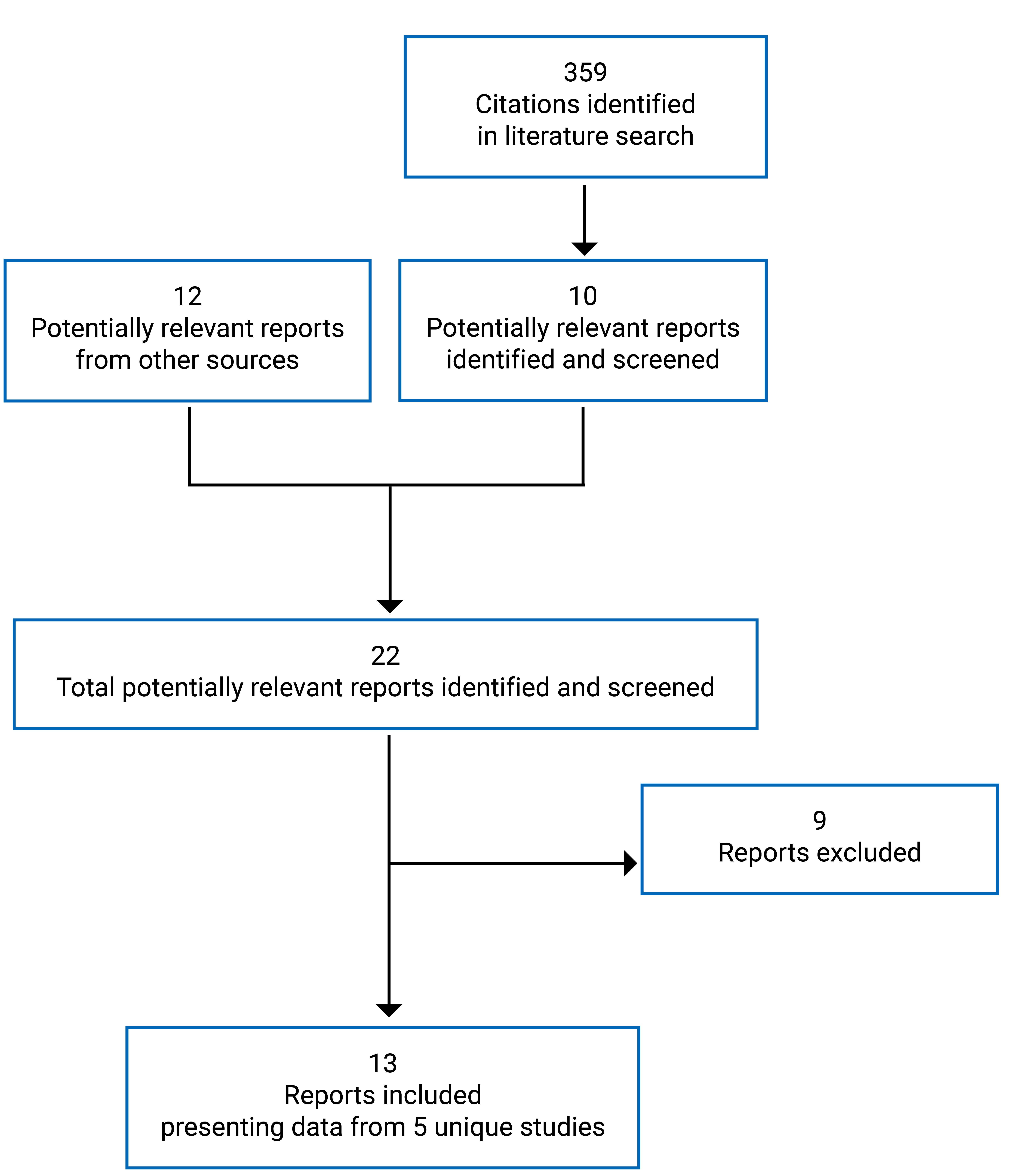
Description of Studies
Five RCTs met the inclusion criteria for the systematic review in the original review of cariprazine, including 3 short-term studies (Table 9), 1 randomized withdrawal study, and 1 study in patients with predominantly negative symptoms (Table 10).
The objective of the MD-16, MD-04, and MD-05 studies was to assess the efficacy, safety, and tolerability of cariprazine compared with placebo in patients with an acute exacerbation of schizophrenia. These 6-week, double-blind RCTs randomized patients to receive placebo or either a fixed or flexible dosing of cariprazine. Two studies also included an active control group for assay sensitivity (i.e., to ensure the study was adequate to detect a drug effect if cariprazine did not separate from placebo). In the MD-16 study, 732 patients were randomized 1:1:1:1:1 to placebo, cariprazine 1.5 mg, cariprazine 3 mg, or cariprazine 4.5 mg daily, or risperidone 4 mg daily. The MD-04 study randomized 617 patients to placebo, cariprazine 3 mg, cariprazine 6 mg, or aripiprazole 10 mg daily (1:1:1:1), and the MD-05 study randomized 446 patients to either placebo, cariprazine 3 mg to 6 mg daily, or cariprazine 6 mg to 9 mg daily (1:1:1). All 3 studies used a similar study design, as shown in Figure 2. Patients were hospitalized before randomization during the medication washout period and for at least the first 4 weeks of the double-blind treatment period. After 4 weeks, patients could be discharged at the discretion of the investigator if the CGI-S score was 3 (mildly ill) or less, and if the investigator assessed that the patient was ready for discharge and that there was no significant risk of suicide or violent behaviour. Patients not meeting these criteria remained in hospital, and any discharged patient who experienced a clinical deterioration could be readmitted. To randomize patients to treatment, each study site was supplied with study drug products corresponding to a sequence of randomized numbers; as patients were enrolled, they were assigned the first (lowest) available number in the sequence. The primary outcome was change from baseline to week 6 in the PANSS total score.
The objective of the MD-06 study was to evaluate the efficacy and safety of cariprazine in the prevention of the relapse of symptoms in patients with schizophrenia, relative to placebo. The trial included a drug washout screening phase (up to 7 days), an 8-week run-in phase, a 12-week stabilization phase, a 26-week to 72-week double-blind phase, and a 4-week safety follow-up phase (Figure 3). During the run-in phase, all patients received open-label cariprazine at a dose of 3 mg, 6 mg, or 9 mg daily (flexibly dosed during the first 6 weeks with dosing fixed for the last 2 weeks). Patients who completed the run-in phase and met the treatment response and tolerability criteria (≥ 20% reduction in the PANSS total scores with a score ≤ 60 points, and a score ≤ 4 on specific PANSS items, a CGI-S score ≤ 4, and no significant tolerability issues.) entered the stabilization phase, and continued to receive open-label cariprazine at the same fixed dose as they received previously. Patients who completed the stabilization phase and met the week 20 response and tolerability criteria (N = 200) were randomized (1:1) using an interactive voice or web response system to receive double-blind cariprazine (same dose) or placebo for a minimum of 26 weeks and a maximum of 72 weeks, or until relapse or early termination occurred. The study was stopped once the last patient randomized had completed 26 weeks in the double-blind period. Time to relapse was the primary outcome of the study.
In the MD-06 study, all patients were hospitalized during the drug washout screening phase (while prior psychotropic medications were stopped) and for the first 2 weeks of the run-in phase. Patients could be discharged after 2 weeks in the run-in phase or could remain in hospital for another 2 weeks at the discretion of the investigator.
The objective of the 188-05 study was to evaluate the safety, efficacy, and tolerability of cariprazine versus risperidone in patients with schizophrenia and predominantly negative symptoms. The trial consisted of a 4-week lead-in period, where patients continued with current antipsychotic drugs and were evaluated for the stability of schizophrenia symptoms (Figure 4). After the lead-in phase, those who continued to meet the inclusion criteria (N = 461) were then randomized (1:1) via an interactive voice or web response system to receive double-blind cariprazine or risperidone for 26 weeks. In the first 2 weeks after randomization, prior antipsychotic drugs were down-titrated and discontinued, and the study drug was up-titrated to the target dose of cariprazine 4.5 mg daily (range, 3 mg to 6 mg) or risperidone 4 mg daily (range, 3 mg to 6 mg). The primary outcome was change from baseline to week 26 in the PANSS FSNS.
The studies were conducted between 2008 and 2014 in Eastern and Western Europe, the US, South Africa, India, Malaysia, and Colombia. There were no Canadian study sites in any of the included studies.
Patients who completed the 6-week MD-16 study were eligible to enter the open-label MD-17 extension study, and those who completed the MD-04 or MD-05 study were eligible to enter the open-label MD-11 extension study.
Figure 2: Study Design Schematic for MD-04 Trial on Acute Schizophrenia
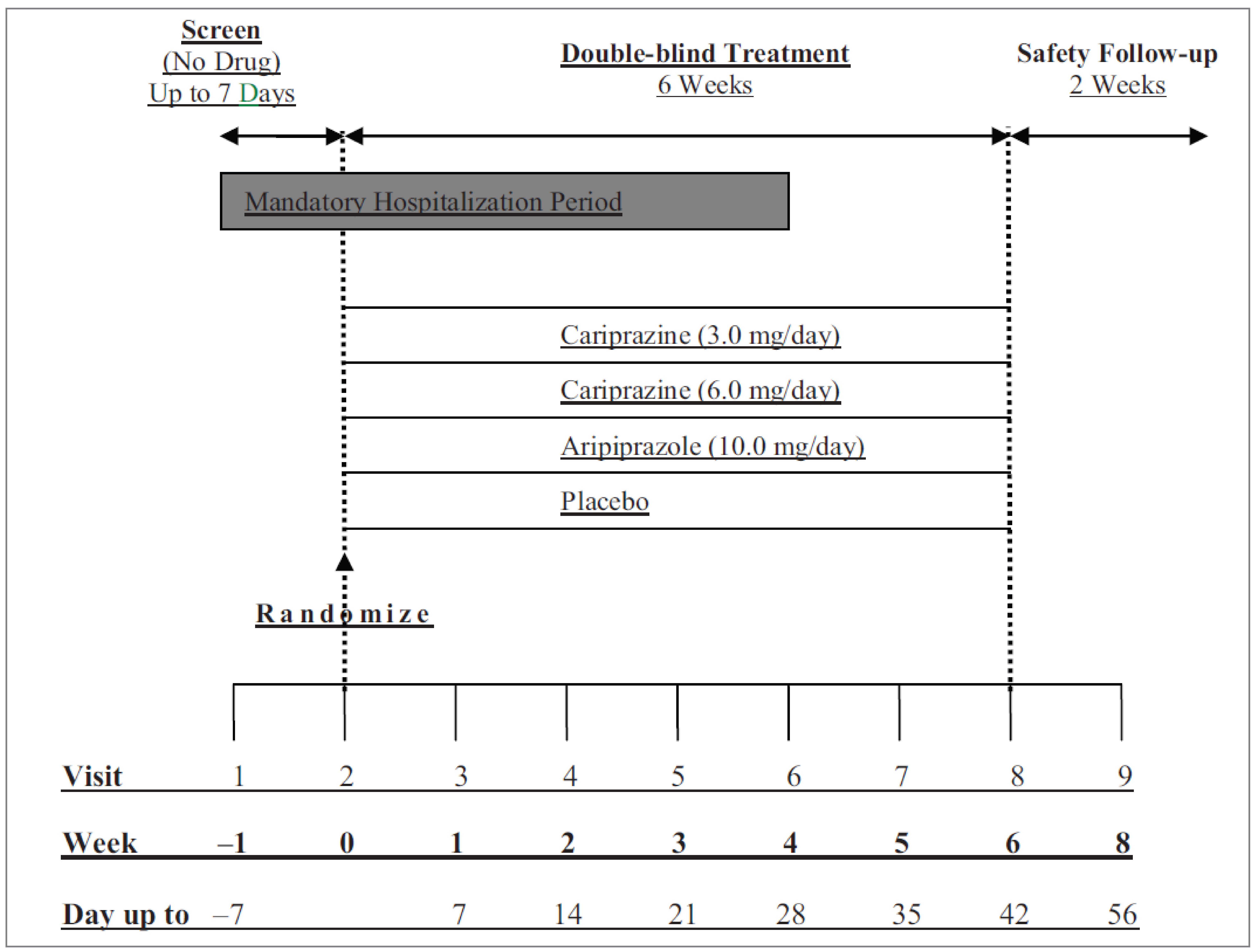
Source: Clinical Study Report for MD-04.58
Figure 3: Study Design Schematic for MD-06 Randomized Withdrawal Trial
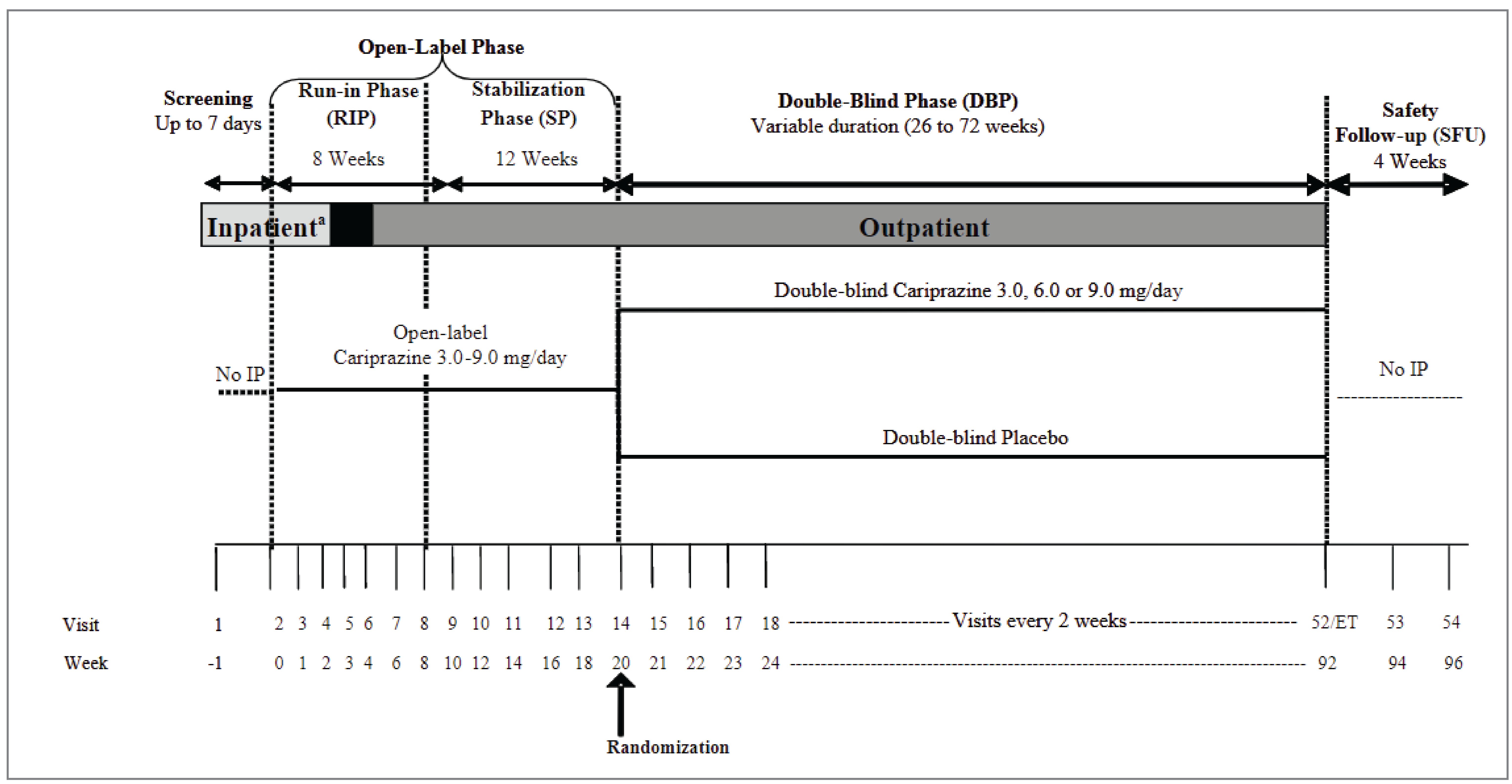
DBP = double-blind phase; ET = early termination; IP = investigational product; RIP = run-in phase; SFU = safety follow-up; SP = stabilization phase.
aAll patients were hospitalized during screening and for the first 2 weeks of the RIP. After 2 weeks of open-label treatment in the RIP, patients could be discharged and followed as outpatients, or they could remain hospitalized for an additional 2 weeks.
Source: Clinical Study Report for MD-06.2
Figure 4: Study Design Schematic for 188-05 Trial

D = day, IMP = investigational medicinal product.
Source: Clinical Study Report for 188-05.15
Populations
Inclusion and Exclusion Criteria
The acute schizophrenia studies enrolled adults aged 18 years to 60 years who met the Diagnostic and Statistical Manual of Mental Disorders, Fourth Edition, Text Revision (DSM-IV-TR) criteria for schizophrenia, and who had had a schizophrenia diagnosis for at least 1 year (excluding patients in their first episode of psychosis who were allowed to enter the MD-16 study). In addition, the current psychotic episode was less than 2 weeks in duration and patients had a structured clinical interview for a PANSS total score of between 80 and 120 and a CGI-S score of at least 4, which is rated as moderately ill (additional criteria listed in Table 9).
The patients enrolled in the withdrawal design study (the MD-06 trial) were required to meet inclusion criteria at screening that was similar as those in the 6-week studies; however, at week 8 and week 20, additional criteria were applied. The patients had to show at least a 20% reduction in the PANSS total score with a score 60 points or less, and a score of 4 or less on specific PANSS items, a CGI-S score of 4 or less, and no significant cariprazine tolerability issues (refer to Table 10).
In the acute schizophrenia and withdrawal design studies, patients were excluded if they met DSM-IV-TR diagnostic criteria for other mental health disorders, including schizoaffective, bipolar, developmental, cognitive, or severe Axis II disorders. In addition, patients with alcohol or substance abuse or dependence, treatment-resistant schizophrenia, active suicidal or homicidal intent, or a history of prior attempt were excluded from the studies. Medical exclusions included patients with HIV, hepatitis B, or hepatitis C (unless stable), a history of seizures or related central nervous system disorders, tardive dyskinesia or neuroleptic malignant syndrome, or any clinically significant cardiovascular disease or uncontrolled medical condition. Patients who had used clozapine in the past 10 years were excluded (except for episodic use of clozapine for insomnia at ≤ 100 mg per day) or required concomitant treatment with a prohibited medication. The MD-04, MD-05, and MD-06 studies excluded patients experiencing a first episode of psychosis.
The 188-05 study enrolled adults aged 18 years to 65 years who met the criteria of the DSM-IV-TR for schizophrenia (for at least 2 years) and had predominantly negative symptoms for at least 6 months (i.e., PANSS FSNS ≥ 24 and a rating of ≥ 4 [moderate] for 2 of 3 PANSS items for flat affect, avolition, and poverty of speech). Prior to enrolment, patients could be receiving antipsychotic drugs if the total daily dose was equivalent to 6 mg risperidone (if on 1 drug) or 8 mg risperidone (if on 2 drugs). The 188-05 study excluded patients with other psychiatric, neurological, or behavioural disorders, clinically unstable schizophrenia, significant positive schizophrenia symptoms, moderate to severe depressive symptoms, or who had used an antidepressant in the past 3 months. Other psychiatric, medical, or treatment-related exclusion criteria were similar to those of the acute trials (refer to Table 10 for details).
Interventions
In the MD-16, MD-04, and MD-05 studies, the double-blind treatment period was 6 weeks in duration.
In the MD-16 study, the study drug was supplied as encapsulated cariprazine 1.5 mg or 3 mg tablets, encapsulated risperidone 2 mg tablets, or encapsulated placebo that were identical in appearance and packaging. Each patient received 2 capsules a day that provided either placebo, cariprazine 1.5 mg, cariprazine 3 mg, or cariprazine 4.5 mg, or risperidone 4 mg per day. The dose of cariprazine and risperidone was increased over the first 1 day to 2 days of therapy for patients in the risperidone group and the cariprazine 3 mg and 4.5 mg groups until the randomized daily dose was reached.
In the MD-04 study, patients received identical-looking capsules that contained cariprazine 1.5 mg, cariprazine 3 mg, placebo, or aripiprazole 5 mg. Each patient received 2 capsules a day that provided either placebo, cariprazine 3 mg or 6 mg, or aripiprazole 10 mg daily. The initial dose of cariprazine was increased over the first few days by 1.5 mg daily until the randomized dose (i.e., 3 mg or 6 mg per day) was reached. There was no dose titration period for patients assigned to aripiprazole.
In the MD-05 study, patients received identical-looking capsules that contained cariprazine 1.5 mg, cariprazine 3 mg, cariprazine 6 mg, or placebo. The study used an initial flexible dosing regimen with response assessed at week 2, after which the dose of the study drug was fixed. At the start of therapy, each patient received 1 capsule a day that provided either placebo, cariprazine 3 mg, or cariprazine 6 mg daily for the first 2 weeks of therapy. At the end of week 2, treatment response was assessed and patients with an inadequate response (< 20% improvement in the PANSS total score) and who did not have significant tolerability issues received a dose increase of 1 capsule per day. Thus, for patients in the cariprazine low-dose group, the dose was increased to 6 mg per day, and for those in the high-dose group, the dose was increased to 9 mg per day. At week 2, patients with tolerability issues or those showing an adequate response to therapy remained on the initial dose of the study drug. The dose of cariprazine remained fixed between week 3 and week 6. At the start of therapy, and with the any-week 2 dose increases, the dose of cariprazine was titrated up in 1.5 mg increments over 1 day to 4 days (depending on the target dose).
For the short-term studies, the study sites had access to a tear-off label that contained the treatment allocation for each package of study drug, which was to be opened only in case of an emergency. Patients were disqualified from continuing in the study if the randomization code was broken by the study site. The Clinical Study Report (CSR) for the MD-16 study states that blinding was maintained for all patients.
In the MD-06 study, the study drug was supplied as capsules that contained either placebo, cariprazine 1.5 mg, or cariprazine 3 mg that were identical in appearance and packaging. During the 8-week run-in phase, patients received open-label cariprazine that was flexibly dosed at 3 mg, 6 mg, or 9 mg daily for the first 6 weeks, with dosing fixed for the last 2 weeks. During the run-in phase, tolerability and treatment response were assessed on day 4, and the dose of cariprazine could be increased at the discretion of the investigator from 3 mg to 6 mg daily; starting on day 10, the dose could be increased to 9 mg daily. The dose could be decreased at any time during the first 6 weeks of the run-in phase if there were significant tolerability issues. No further dose adjustments, except for a temporary 3-day drug holiday for dose-limiting AEs, were allowed after the first 6 weeks of the run-in phase. Patients who met the treatment response and tolerability inclusion criteria for the stabilization phase (refer to Table 10) continued to receive open-label cariprazine 3 mg, 6 mg, or 9 mg for 12 weeks based on the same fixed dose as that of the end of the run-in phase. No dose increases were allowed, but a dose decrease, or temporary drug holiday of 3 days, was allowed if there were significant tolerability issues as judged by the investigator. Patients who could not tolerate cariprazine 3 mg daily were discontinued from the study. At week 20, patients who continued to meet the treatment response and tolerability inclusion criteria (refer to Table 10) were randomized to receive double-blind placebo or cariprazine at the same fixed dose as received earlier (3 mg, 6 mg, or 9 mg daily) for a minimum of 26 weeks, a maximum of 72 weeks, or until relapse occurred.
In the 188-05 study, patients enrolled could have been untreated or were receiving treatment with 1 or 2 antipsychotic drugs at a maximum total daily dose equivalent to 6 mg of risperidone (if on 1 drug) or 8 mg of risperidone (if on 2 drugs). Patients remained on the same antipsychotic drug regimen during the 28-day prospective lead-in period, with no change in drug or dose allowed. Patients were then randomized to receive double-blind cariprazine or risperidone, with the study drug up-titrated and the prior antipsychotic drug down-titrated during the first 2 weeks. The dose of study drug was increased in 1.5 mg increments for cariprazine and 1 mg increments for risperidone to the target dose of cariprazine 4.5 mg daily and risperidone 4 mg daily by day 14. Doses were fixed for 1 week, then from day 21 onward, the dose of the double-blind study medication could be decreased at the investigator’s discretion to cariprazine 3 mg or risperidone 3 mg per day, in case of poor tolerability, or increased to 6 mg per day of cariprazine or risperidone in the case of impending psychotic deterioration. Doses could return to the target dose as determined by the investigator. Decreasing or increasing the dose of the study drug from the target dose was allowed only once for each modification during the double-blind phase. In addition, short 3-day treatment interruptions were allowed, if needed. During the first 2 weeks following randomization, the dosage of the antipsychotic medication that the patient took during the prospective lead-in period was down-titrated. The investigator had the option to extend the withdrawal of prior antipsychotic drugs to 4 weeks if needed to decrease the severity of symptoms associated with the withdrawal effects or the occurrence of an impending deterioration. The study drug was supplied as encapsulated risperidone 1 mg, 2 mg, or 3 mg, or cariprazine 1.5 mg or 3 mg that were identical in appearance. The total duration of the double-blind treatment period was 26 weeks.
Concomitant and Prohibited Medications
In the 3-week to 6-week trials and the MD-06 study, patients were prohibited from receiving other psychotropic medications, including the following: antipsychotic drugs or neuroleptic drugs, antidepressants (including monoamine oxidase-B inhibitors), stimulants, anticonvulsants or mood stabilizers, sedatives, hypnotics, anxiolytics, dopamine-releasing drugs or dopamine agonists, and psychotropic drugs not otherwise specified (including herbal products). Tapering and the discontinuation of psychotropic medications occurred before randomization, during the washout period (up to 7 days in duration). In the 188-05 study, patients continued prior antipsychotic medications during the lead-in phase, and then these medications were down-titrated and discontinued over the first 2 weeks to 4 weeks after randomization. Other psychotropic medications from the previously mentioned list were to be discontinued during the lead-in period. Patients who received prohibited psychotropic medications were withdrawn from the studies.
ECT was not allowed during the MD-04, MD-05, and MD-06 studies. Patients were asked to abstain from alcohol during the studies. Strong inducers and inhibitors of cytochrome P-450 (CYP) isoenzyme 3A4 were to be avoided due to effects on cariprazine pharmacokinetics.
During the trials, prespecified doses of zolpidem, zaleplon, chloral hydrate, eszopiclone, or zopiclone (the MD-06 and 188-05 trials only) were allowed for the treatment of insomnia. In addition, diphenhydramine, benztropine (or trihexyphenidyl), and propranolol were allowed to manage EPSs or akathisia that emerged or worsened during the studies. In the 188-05 study, no medications for EPSs were allowed during the lead-in period, but rescue therapy was permitted during the double-blind phase.
Rescue therapy with lorazepam was allowed to control agitation, restlessness, irritability, hostility, and insomnia during the washout period and double-blind treatment period of the 6-week trials, with maximum dosage limits that decreased over time from 6 mg to 2 mg per day. For countries where lorazepam was not available, rescue therapy with oxazepam and diazepam, at prespecified doses, was allowed. Lorazepam (or alternatives) was also allowed during the run-in phase of the MD-06 study and after randomization in the 188-05 study during the titration phase, with a maximum dose of 2 mg per day thereafter.
Outcomes
A list of efficacy end points identified in the CDA-AMC review protocol that were assessed in the clinical trials included in this review is provided and further summarized in Table 11. A detailed discussion and critical appraisal of the outcome measures is provided in Appendix 4.
The primary outcome in the 6-week trials was the change from baseline in the PANSS total score, with the change from baseline in the CGI-S as the secondary outcome. Time to relapse was the primary outcome in the MD-06 study. In the 188-05 study, the primary outcome was the change from baseline to week 26 in the PANSS FSNS and the secondary outcome was the change from baseline in the PSP score. The CSRs report that the outcome assessments were conducted by experienced raters who met the training requirements for each instrument.
Table 11: Summary of Outcomes of Interest Identified in the CDA-AMC Review
Outcome measure | MD-16 study | MD-04 study | MD-05 study | MD-06 study | 188-05 study |
|---|---|---|---|---|---|
PANSS total score | Primary | Primary | Primary | Other | Other |
CGI-S | Secondary | Secondary | Secondary | Other | Other |
Time to relapse | NA | NA | NA | Primary | NA |
PANSS factor score for negative symptoms | NA | NA | Other | Other | Primary |
PSP total score | NA | NA | NA | Other | Secondary |
NSA-16 | Other | Other | Other | Other | NA |
CGI-I | Other | Other | Other | Other | Other |
PANSS positive subscale score | Other | Other | Other | Other | Other |
PANSS negative subscale score | Other | Other | Other | Other | Other |
PANSS total score responder rate (% with ≥ 30% decrease in total score) | Other | Other | Other | Other | NA |
PANSS factor score for negative symptoms responder rate (% with ≥ 20% decrease in factor score) | NA | NA | NA | NA | Other |
Schizophrenia Quality of Life Scale Revision 4 (total score, vitality score, and psychosocial score) | NA | Other | Other | NA | NA |
CGI-I = Clinical Global Impression–Improvement; CGI-S = Clinical Global Impression–Severity of Illness; NA = not applicable; NSA-16 = 16-item Negative Symptom Assessment; PANSS = Positive and Negative Syndrome Scale; PSP = Personal and Social Performance Scale.
Sources: Clinical Study Report for MD-16,57 Clinical Study Report for MD-04,58 Clinical Study Report for MD-05,61 Clinical Study Report for MD-06,2 and Clinical Study Report for 188-05.15
PANSS
The PANSS is a 30-item rating scale that assesses the presence and severity of psychopathology. It consists of 3 subscales (positive symptoms, negative symptoms, and general psychopathology), as well as a total score. The PANSS is based on a structured clinical interview, with each item scored on a 7-point scale (1 [absent] to 7 [extreme]). The positive and negative subscale scores range from 7 to 49, and the total score ranges from 30 to 210, with higher scores indicating more severe symptoms or psychopathology.
The 7-item PANSS FSNS includes 5 items from the negative subscale and 2 items from the general psychopathology subscale and is scored from 7 to 49, with higher scores representing more severe symptoms. Table 12 lists the items included in PANSS positive, negative, and FSNS subscales.
Appendix 4 outlines the available data on the validity and reliability of the PANSS total and subscale scores. No data were available on responsiveness. The MID is unclear and may be dependent on the baseline severity. However, at least a 20% decrease in the FSNS or the total score, or at least a 15-point reduction in the total score, may be associated with clinical improvement.62-67 According to the EMA, a responder threshold of a 30% reduction on the total PANSS score from baseline is considered clinically relevant in short-term clinical trials.68
Table 12: Items in the PANSS Positive, Negative, and FSNS
PANSS subscale | Rating |
|---|---|
PANSS positive score | P1 = Delusions P2 = Conceptual disorganization P3 = Hallucinatory behaviour P4 = Excitement P5 = Grandiosity P6 = Suspiciousness/persecution P7 = Hostility |
PANSS negative score | N1 = Blunted affect N2 = Emotional withdrawal N3 = Poor rapport N4 = Passive/apathetic social withdrawal N5 = Difficulty in abstract thinking N6 = Lack of spontaneity and flow of conversation N7 = Stereotyped thinking |
PANSS FSNS | N1 = Blunted affect N2 = Emotional withdrawal N3 = Poor rapport N4 = Passive/apathetic social withdrawal N6 = Lack of spontaneity and flow of conversation G7 = Motor retardation G16 = Active social avoidance |
FSNS = factor score for negative symptoms; PANSS = Positive and Negative Syndrome Scale.
Source: Clinical Study Report for MD-16.57
CGI-S or CGI-I
The CGI-S tool measures the overall severity of mental disorders at the time of the clinician’s assessment, and the CGI-I tool measures the change from baseline in the overall severity of illness, each based on a 7-point scale (Table 13). There is limited information on the validity and reliability of these measures in patients with schizophrenia. A 1-point change has been used as a predefined measure of clinical improvement or criteria for response to antipsychotic treatment in a number of clinical trials.65-67
Table 13: Descriptions and Scoring for the CGI-S and CGI-I Tools
Score | CGI-S description | CGI-I description |
|---|---|---|
1 | Normal, not at all ill | Very much improved |
2 | Borderline ill | Much improved |
3 | Mildly ill | Minimally improved |
4 | Moderately ill | No change |
5 | Markedly ill | Minimally worse |
6 | Severely ill | Much worse |
7 | Among the most extremely ill patients | Very much worse |
CGI-I = Clinical Global Impression–Improvement; CGI-S = Clinical Global Impression–Severity of Illness.
Source: Clinical Study Report for MD-16.57
Time to Relapse
The primary efficacy parameter in the MD-06 study was the time to first relapse during the double-blind period, defined as the number of days from the randomization date to the relapse date. Relapse was defined as meeting 1 or more of the following criteria:
psychiatric hospitalization due to worsening of the patient’s underlying condition
an increase in the PANSS total score by 30% or more for patients who scored 50 or higher at randomization or a 10-point or more increase for patients who scored less than 50 at randomization
an increase from the end of the stabilization period in CGI-S score by 2 or more points
deliberate self-injury or aggressive or violent behaviour
suicidal or homicidal ideation that was clinically significant as judged by the investigator
a score of greater than 4 on 1 or more of the following PANSS items: P1 (delusions), P2 (conceptual disorganization), P3 (hallucinatory behaviour), P6 (suspiciousness/Persecution), P7 (hostility), G8 (uncooperativeness) or G14 (poor impulse control).
Changes in the PANSS or CGI-S scores were to be confirmed at a repeat visit within 7 days. Patients who did not meet the relapse criteria were censored at the time of study completion or discontinuation from the study.
Personal and Social Performance Scale
The PSP is a single-item, clinician-rated scale that assesses the presence and level of difficulties in personal and social functioning in patients with schizophrenia over the previous month in 4 main areas: socially useful activities, including work; personal and social relationships; self-care; and disturbing and aggressive behaviours.69 The PSP is scored from 1 to 100, with a higher score indicating higher personal and social functioning. A between-group difference of 7 points to 10 points has been reported in the literature as representing an MID.65,66
Schizophrenia Quality of Life Scale Revision 4
The SQLS-R4 is a 33-item scale with 2 domains (psychosocial; cognition and vitality) that measure HRQoL in individuals with schizophrenia. The items are scored on a 5-point scale (never to always), with scoring transformed to range from 0 to 100 for both the total and subscale scores, and higher scores indicating relatively worse QoL. No information on the MID was identified for the SQLS-R4.
16-Item Negative Symptom Assessment
The 16-item Negative Symptom Assessment (NSA-16) is a 16-item scale that examines the presence, severity, and range of negative symptoms associated with schizophrenia. It includes 5 domains: communication, emotion/affect, social involvement, motivation, and retardation. Each item is rated on a 6-point scale and the total score ranges from 16 to 96, with higher scores indicating more severe symptoms. There is evidence of construct validity in patients with schizophrenia, but the MID is unclear.70
Harms
An AE was defined as any untoward medical occurrence that did not necessarily have a causal relationship with the study drug reported during treatment or up to 30 days after the last dose of the study drug. SAEs included any death, life-threatening adverse drug experience, inpatient hospitalization or prolongation of hospitalization, persistent or significant disability, congenital anomaly or birth defect, or any event that required medical intervention to prevent 1 of the outcomes listed in the definition.
Suicidal ideation or behaviour was documented using the C-SSRS.
Statistical Analysis
The statistical analyses conducted in the RCTs are summarized in Table 14.
In the MD-16 study, the change from baseline to week 6 in the PANSS total score and other continuous outcomes was analyzed using an analysis of covariance (ANCOVA) model that included a study centre and the baseline value as covariates. LOCF was used to impute missing postbaseline outcome values. A sequential multiple-comparison procedure was used to control the overall type I error for the 3 doses of cariprazine. In step 1, the average effect of the 3 mg and 4.5 mg doses was compared with that of placebo. If the global test was significant at the 2-sided significance level of 0.05, then step 2 was performed; otherwise, the analysis was stopped. For step 2, each of the 3 mg and 4.5 mg dosage groups was compared with placebo. If both tests were statistically significant, then step 3 was performed; otherwise, the analysis was stopped. In step 3, the cariprazine 1.5 mg dosage group was compared with placebo at the 2-sided significance level of 0.05. A similar 3-step closed testing procedure was used for the inferential testing of the secondary outcome (CGI-S) only if the results of the primary outcome for all 3 comparisons were significant at the 0.05 level. There was no control of type I error for the comparison between risperidone and placebo for the primary or secondary outcomes, or for other efficacy outcomes reported.
Based on the enrolment of 135 patients in each of the treatment groups, the MD-16 study was estimated to have 80% power to detect an effect size of 0.4 for cariprazine and placebo (adjusting for multiple comparisons of the 3 cariprazine doses) for the change from baseline in the PANSS total score. No citations were provided to support the assumed effect size used in the power calculations, and it is unclear if losses to follow-up were considered in the calculations.
The MD-04 and MD-05 studies used similar methods to conduct the statistical analyses. The primary outcome of change from baseline in the PANSS total score was analyzed using a mixed model of repeated measures (MMRM) that included pooled study centre, visit, treatment-by-visit interaction, baseline value, and baseline-value-by-visit interaction terms. MMRM models were run based on observed case data with no imputation for missing data, centred on the assumption that patient data are missing at random. Sensitivity analyses were run that used a pattern-mixture model or an ANCOVA model with LOCF to explore alternate assumptions for missing data. The pattern-mixture model assumes that the probability of dropout at a specific visit is dependent on the observed value and the possibly missing value up to that visit, but not future values beyond that visit. Secondary and other continuous outcomes were analyzed using the same MMRM or ANCOVA (LOCF) models, and responder analyses were run using logistic regression models as described in Table 14. All statistical tests were 2-sided with an alpha of 0.05.
The MD-04 and MD-05 studies used a matched parallel gatekeeping procedure to control the overall type I error rate. In the first step, each cariprazine dosage group was compared with placebo for the change from baseline in the PANSS total score. If at least 1 dosage group showed a P value less than 0.05, then testing of the secondary hypothesis proceeded, and each cariprazine dosage group was compared with placebo for the change from baseline in the CGI-S score. The significance for a given dosage group could only be claimed for the CGI-S if the primary null hypothesis was rejected (i.e., the PANSS total score was statistically significant for that dosage group). There was no control of multiplicity for other comparisons (e.g., aripiprazole versus placebo) or outcomes.
Table 14: Statistical Analysis of Efficacy End Points
End point | Statistical model | Adjustment factor | Sensitivity analysis |
|---|---|---|---|
MD-16 study | |||
Change from baseline to week 6 in the PANSS total score | ANCOVA (LOCF) for mITT population |
|
|
Change from baseline to week 6 in:
| ANCOVA (LOCF) for mITT population |
| NR |
CGI-I score at week 6 | ANCOVA (LOCF) for mITT population |
| NR |
PANSS responder (≥ 30% improvement in total score at week 6 vs. baseline) | Logistic regression for mITT population (LOCF) |
| NR |
MD-04 and MD-05 studies | |||
Change from baseline to week 6 in the PANSS total score | MMRM for mITT population |
|
|
Change from baseline to week 6 in:
| MMRM for mITT population | Same as described earlier | NR |
CGI-I score at week 6 | MMRM for mITT population | Same as described earliera | NR |
Change from baseline to week 6 in SQLS-R4 total score | ANCOVA (LOCF) for mITT population |
| NR |
PANSS total score responder (≥ 30% improvement in total score at week 6 vs. baseline) | Logistic regression for mITT population (LOCF) | Baseline value | NR |
MD-06 study | |||
Time to relapse | Log-rank test, Cox PH model for DB mITT population | None | Reference-based controlled imputation (post hoc) |
Change from baseline to each postbaseline visit:
| Descriptive statistics (LOCF and OC) for the OL and DB mITT population | None | NR |
CGI-I score at end point PANSS total score responder (≥ 30% improvement in total score at end point vs. baseline) | Descriptive statistics (LOCF and OC) for the OL and DB mITT population | None | NR |
188-05 study | |||
Change from baseline to week 26 in PANSS factor score for negative symptoms | MMRM for mITT population |
|
|
Change from baseline to week 26 in PSP score | MMRM for mITT population | Same as described earlier |
|
Change from baseline to each postbaseline visit:
| MMRM for mITT population | Same as described earlier | NR |
CGI-I score at end point | MMRM for mITT population | Same as described earliera | NR |
PANSS factor score for negative symptoms responder (≥ 20% improvement in PANSS factor score for negative symptoms at week 26 vs. baseline) | Logistic regression for mITT population (LOCF) |
| NR |
ANCOVA = analysis of covariance; CGI-I = Clinical Global Impression–Improvement; CGI-S = Clinical Global Impression–Severity of Illness; DB = double-blind; LOCF = last observation carried forward; mITT = modified intention to treat; MMRM = mixed model of repeated measures; NR = not reported; NSA-16 = 16-item Negative Symptom Assessment; OC = observed case; OL = open-label; PANSS = Positive and Negative Syndrome Scale; PH = proportional hazards; PSP = Personal and Social Performance Scale; SQLS-R4 = Schizophrenia Quality of Life Revision 4; vs. = versus.
aFor analysis of CGI-I, the baseline CGI-S value was included in the model.
bThis outcome was planned to be analyzed using an MMRM model in the statistical plan, but data were reported based on an ANCOVA mixed-effects model using OC data (no imputation for missing data).
Sources: Clinical Study Report for MD-16,57 Clinical Study Report for MD-04,58 Clinical Study Report for MD-05,61 Clinical Study Report for MD-06,2 and Clinical Study Report for 188-05.15
The MD-04 and MD-05 studies were estimated to have 88% power to detect a difference between cariprazine and placebo in the PANSS total score, based on 150 patients per group and adjusting for multiplicity for the 2 dosage groups and 2 efficacy parameters. These calculations were based on an estimated effect size of 0.42 for the primary outcome, a 2-sided significance level of 5%, a correlation coefficient of within-patient assessments of 0.7, and a 35% withdrawal rate. No citations were listed to support the assumptions used in the power calculations.
In the MD-06 withdrawal design study, the primary outcome was the time to relapse for cariprazine versus placebo among patients who demonstrated adequate response to and tolerability of cariprazine during the run-in and stabilization periods. Between-group differences were tested based on a log-rank test with the HRs and 95% CIs based on an unadjusted Cox proportional hazards model. Patients who did not experience a relapse were censored at their early withdrawal date or the study termination date. No secondary outcomes were defined in the study, and all other efficacy outcomes were reported descriptively, with no between-group comparisons estimated.
The sample size of the MD-06 study assumed a 46-week accrual period and a 26-week double-blind treatment period; thus, the maximum follow-up period was 72 weeks. An HR of 0.48 was assumed for the time to relapse, based on a 26-week cumulative relapse rate of 25% and 45% for the cariprazine and placebo groups, respectively, and an early termination rate (for reasons other than relapse) of 20%. With a total of 80 relapse events observed, the study would have 90% power to detect a difference between cariprazine and placebo using a 2-tailed log-rank test at a 5% significance level. Based on these calculations, 180 patients would need to be randomized in the double-blind phase. To achieve this sample size, an estimated 900 patients were to be enrolled in the study, assuming 50% of patients would complete the run-in phase and 40% of patients would complete the stabilization phase. No citations were listed to support the assumptions used in the power calculations.
The primary outcome of the 188-05 study was the change from baseline to week 26 in the PANSS FSNS, which was analyzed using an MMRM model that included pooled study centre, visit, treatment-by-visit interaction, baseline value, and baseline-value-by-visit interaction terms. Sensitivity analyses were run using a pattern-mixture model and ANCOVA (LOCF) model to examine the impact of different assumptions for missing data. A similar model was used for the secondary outcome (the change from baseline in the PSP score). The secondary outcome was formally tested only if the primary outcome was statistically significant. There was no control of multiplicity for any other outcomes reported.
With a planned sample size of 210 patients per treatment group, the 188-05 study had an estimated power of 90% to detect an effect size of 0.25 in the PANSS FSNS at a 2-sided significance level of 5%. The power calculations assumed a treatment difference of 2.25 points and a pooled SD of 9 points, a correlation coefficient of 0.2 between repeated measurements, and a 10% attrition rate. Data sources for the assumptions used in the power calculations were not listed in the CSR.
With regard to subgroups, the MD-16 and MD-06 studies did not analyze any subgroups, and the other 3 studies did not report data for any subgroups of interest that were listed in the protocol of this review.
Analysis Populations
In the MD-16, MD-04, MD-05, and 188-05 studies, the safety population included all randomized patients who received at least 1 dose of the study drug. The modified intention-to-treat (mITT) population included all randomized patients who received at least 1 dose of the study drug and had at least 1 postbaseline assessment of the primary efficacy outcome.
The MD-06 study included the following populations:
run-in safety population (all patients who took at least 1 dose of open-label cariprazine during the run-in phase)
stabilization safety population (all patients who took at least 1 dose of open-label cariprazine during the stabilization phase)
open-label mITT population (all patients in the run-in safety population who had at least 1 postbaseline assessment of the PANSS during the open-label phase of the study)
randomized population (all patients in the stabilization safety population who were randomized to a treatment group during the double-blind phase of the study)
double-blind safety population (all patients in the randomized population who took at least 1 dose of the double-blind study drug)
double-blind mITT population (all patients in the double-blind safety population who had at least 1 postrandomization assessment of PANSS or CGI-S during the double-blind phase of the study).
Results
Patient Disposition
Across the 6-week trials, 67% to 74% of patients screened were randomized to placebo or active treatment groups. The frequency with withdrawals ranged from 38% to 48% of patients in the placebo groups, 33% to 42% of patients in the cariprazine groups, and 25% to 28% of patients in the active control groups. AEs, insufficient therapeutic response, and withdrawal of consent were the most commonly reported reasons for withdrawal. The frequency of withdrawals was generally similar across groups within studies, except for the MD-16 trial where 48% of patients in the placebo group withdrew versus 28% to 38% of patients in the active treatment groups (risperidone or cariprazine), and in the MD-04 study, where 25% of patients withdrew from the aripiprazole group versus 33% to 38% of patients in the cariprazine groups and 38% of patients in the placebo group.
In the MD-05 study, 1 US centre (N = 6) and 1 centre in India (N = 6) were excluded from the analyses due to good clinical practice violations in study conduct. Of these patients, 8 patients completed the study and 4 patients withdrew early. Sensitivity analyses that included these patients showed results that were similar to the analysis that excluded these centres. One patient was enrolled in the study twice. The second enrolment was excluded from the analysis (the patient had received placebo for 7 days).
Table 15: Patient Disposition for MD-16 Study on Acute Schizophrenia
Disposition | MD-16 study | ||||
|---|---|---|---|---|---|
Placebo | CAR 1.5 mg | CAR 3 mg | CAR 4.5 mg | RIS 4 mg | |
Screened, N | 1,011 | ||||
Randomized, N (%) | 732 (72)a | ||||
Randomized per group, N | 151 | 145 | 147 | 148 | 141 |
Did not receive study drug, N (%) | 0 | 0 | 1 (1) | 1 (1) | 1 (1) |
Discontinued from study, N (%) | 72 (48) | 55 (38) | 50 (34) | 49 (33) | 39 (28) |
Reason for study discontinuation, N (%) | |||||
Adverse event | 22 (15) | 14 (10) | 8 (6) | 12 (8) | 13 (9) |
Insufficient therapeutic response | 33 (22) | 18 (12) | 17 (12) | 15 (10) | 10 (7) |
Protocol violation | 1 (1) | 2 (1) | 1 (1) | 3 (2) | 1 (1) |
Withdrawal of consent | 14 (9) | 18 (12) | 22 (15) | 16 (11) | 15 (11) |
Lost to follow-up | 0 | 1 (1) | 2 (1) | 0 | 0 |
Other | 2 (1) | 2 (1) | 0 | 3 (2) | 0 |
mITT, N (%) | 148 (98) | 140 (97) | 140 (95) | 145 (98) | 138 (98) |
Safety, N (%) | 151 (100) | 145 (100) | 146 (99) | 147 (99) | 140 (99) |
CAR = cariprazine; mITT = modified intention to treat; RIS = risperidone.
aOf the 279 patients who did not advance past the screening stage, the reasons for exclusion were as follows: the patient did not meet eligibility criteria (n = 221), there was withdrawal of consent (n = 47), the patient discontinued due to an adverse event (n = 6), or other reason (n = 5).
Source: Clinical Study Report for MD-16.57
Table 16: Patient Disposition for MD-04 and MD-05 Studies on Acute Schizophrenia
Disposition | MD-04 study | MD-05 study | |||||
|---|---|---|---|---|---|---|---|
Placebo | CAR 3 mg | CAR 6 mg | ARIP 10 mg | Placebo | CAR 3 mg to 6 mg | CAR 6 mg to 9 mg | |
Screened, N | 834 | 664 | |||||
Randomized, N (%) | 617 (74)a | 446 (67)b | |||||
Randomized per group, N | 153 | 155 | 157 | 152 | 147 | 151 | 148 |
Did not receive study drug, N (%) | 0 | 0 | 0 | 0 | 0 | 0 | 0 |
Discontinued from study, N (%) | 58 (38) | 51 (33) | 60 (38) | 38 (25) | 59 (40) | 55 (36) | 62 (42) |
Reason for study discontinuation, N (%) | |||||||
Did not meet inclusion criteria | 1 (1) | 0 | 0 | 0 | 1 (1) | 1 (1) | 1 (1) |
Adverse event | 17 (11) | 15 (10) | 20 (13) | 14 (9) | 13 (9) | 14 (9) | 13 (9) |
Insufficient therapeutic response | 20 (13) | 15 (10) | 14 (9) | 8 (5) | 26 (18) | 12 (8) | 13 (9) |
Protocol violation | 2 (1) | 0 | 0 | 0 | 1 (1) | 2 (1) | 2 (1) |
Withdrawal of consent | 17 (11) | 19 (12) | 25 (16) | 15 (10) | 16 (11) | 25 (17) | 32 (22) |
Lost to follow-up | 1 (1) | 2 (1) | 1 (1) | 1 (1) | 2 (1) | 0 | 1 (1) |
Other | 0 | 0 | 0 | 0 | 0 | 1 (1) | 0 |
mITT, N (%) | 149 (97) | 151 (97) | 154 (98) | 150 (99) | 145 (99) | 147 (97) | 147 (99) |
Safety, N (%) | 153 (100) | 155 (100) | 157 (100) | 152 (100) | 147 (100) | 151 (100) | 148 (100) |
ARIP = aripiprazole; CAR = cariprazine; mITT = modified intention to treat.
aOf the 217 patients who did not advance past the screening stage in the MD-04 study, the reasons for exclusion were as follows: the patient did not meet eligibility criteria (n = 185), there was withdrawal of consent (n = 22), the patient discontinued due to an adverse event (n = 2), there was a protocol violation (n = 2), or other reason (n = 6).
bA total of 218 patients were screened but were not randomized in the MD-05 study because they did not meet the eligibility criteria (n = 171), withdrew consent (n = 35), there was an adverse event (n = 3), there was a protocol violation (n = 1), or other reason (n = 8).
Sources: Clinical Study Report for MD-0458 and Clinical Study Report for MD-05.61
Table 17: Patient Disposition for MD-06 Withdrawal Design Study
Disposition | MD-06 study | |
|---|---|---|
Placebo | Cariprazine | |
Screened, N | 1,149 | |
Entered run-in period, N (% of patients screened) | 765 (67)a | |
Completed run-in but did not enter stabilization period, N (% of patients who entered run-in) | 54 (7) | |
Discontinued run-in, N (% of patients who entered run-in) | 347 (45) | |
Reason for discontinuation or not entering stabilization period, n (%) | ||
Adverse event | 86 (11) | |
Insufficient therapeutic response | 66 (9) | |
Protocol violation | 27 (4) | |
Withdrawal of consent | 117 (15) | |
Lost to follow-up | 32 (4) | |
Other | 19 (3) | |
Entered stabilization period, N (% of patients who entered run-in) | 364 (48) | |
Completed stabilization period but did not enter double-blind period, N (% of patients who entered run-in) | 64 (8) | |
Discontinued stabilization period, N (% of patients who entered run-in) | 100 (13) | |
Reason for discontinuation or not entering double-blind study period, n (%) | ||
Adverse event | 9 (1) | |
Insufficient therapeutic response | 9 (1) | |
Protocol violation | 14 (2) | |
Withdrawal of consent | 40 (5) | |
Lost to follow-up | 9 (1) | |
Other | 19 (3) | |
Randomized, N (% of patients who entered run-in) | 200 (26) | |
Randomized per group, n | 99 | 101 |
Completed double-blind study period, N (%) | 16 (16) | 18 (18) |
Relapse, N (%) | 47 (48) | 25 (25) |
Discontinued double-blind study period, N (%) | 36 (36) | 58 (57) |
Reason for discontinuation, N (%) | ||
Adverse event | 5 (5) | 6 (6) |
Protocol violation | 4 (4) | 5 (5) |
Withdrawal of consent | 10 (10) | 15 (15) |
Lost to follow-up | 6 (6) | 5 (5) |
Otherb | 11 (11) | 27 (27) |
Run-in safety population, N | 765 | |
Stabilization safety population, N | 364 | |
Double-blind mITT, N (%) | 99 (100) | 101 (100) |
Double-blind safety, N (%) | 99 (100) | 101 (100) |
mITT = modified intention to treat.
aOf the 384 patients who were screened but not enrolled, the most common reasons for exclusion were that the patient did not meet study criteria (n = 339), there was withdrawal of consent (n = 40), there was an adverse event (n = 1), or other reason (n = 4).
bThe Clinical Study Report states, “Nearly all ‘other reasons’ for discontinuation were because the last randomized patient had completed at least 26 weeks of double-blind treatment, thus, per protocol, double-blind treatment for all active patients was stopped.”
Source: Clinical Study Report for MD-06.2
Table 18: Patient Disposition for 188-05 Study on Predominantly Negative Symptoms
Disposition | 188-05 study | ||
|---|---|---|---|
Cariprazine | Risperidone | ||
Screened, N | 533 | ||
Randomized, N (%) | 461 (87)a | ||
Randomized per group, N | 230 | 231 | |
Discontinued study, N (%) | 52 (23) | 52 (23) | |
Reason for discontinuation, n (%) | |||
Adverse event | 22 (10) | 25 (11) | |
Withdrawal of consent | 15 (7) | 15 (7) | |
Nonadherence | 3 (1) | 2 (1) | |
Insufficient therapeutic response | 2 (1) | 2 (1) | |
Protocol violation | 3 (1) | 0 | |
Lost to follow-up | 2 (1) | 1 (0.4) | |
Other | 5 (2) | 7 (3) | |
mITT, N (%) | 227 (99) | 229 (99) | |
Safety, N (%) | 230 (100) | 230 (99.6) | |
mITT = modified intention to treat.
aThere were 72 patients screened but not randomized. The most common reasons for this were that the patient did not meet study criteria (n = 57), there was withdrawal of consent (n = 14), or the patient was lost to follow-up (n = 1).
Source: Clinical Study Report for 188-05.15
In the relapse prevention study, 67% of patients screened entered the run-in phase and started open-label cariprazine (N = 765). During the run-in phase, 45% of patients withdrew, 13% of patients discontinued during the stabilization phase, and another 15% of patients opted to not continue into the next phase of the trial. Thus, 200 (26%) patients of the 765 patients who started the trial were randomized. During the run-in phase, the most common reasons for discontinuation were withdrawal of consent (15%), AEs (12%), and insufficient therapeutic response (11%). In the stabilization phase, the most common reason for withdrawal was randomization limits having been met (7%) and withdrawal of consent (5%). During the double-blind phase, 16% and 18% of patients completed the study, 48% and 25% of patients had a relapse, and 36% and 57% of patients discontinued from the study in the placebo and cariprazine groups, respectively. Withdrawal of consent accounted for 10% and 15% of discontinuations, and other reasons were listed for 11% and 27% of placebo and cariprazine-treated patients, respectively. The CSR states the “nearly all” other reasons were because the last randomized patient had completed at least 26 weeks of treatment, and the study was stopped.
In the 188-05 study of predominantly negative symptoms, 461 (87%) patients of the 533 patients screened were randomized. In both the cariprazine and risperidone groups, 23% of patients discontinued the study primarily due to AEs (10% and 11% of patients, respectively) or withdrawal of consent (7% and 7% of patients, respectively).
Baseline Characteristics
The mean age of patients enrolled in the acute schizophrenia trials ranged from 35.5 years (SD = 9.3 years) to 39.3 years (SD = 10.8 years), and the proportion of males ranged from 62% to 78% per treatment group (Table 19 and Table 20). The race distribution varied across studies. In the MD-16 and MD-04 studies, at least half of patients were white, and approximately 23% of patients were Black. In the MD-05 study, Black and Asian patients each comprised approximately 37% of patients enrolled, and 19% of patients were white. The mean baseline PANSS total score was approximately 96 points across studies (range, 95.6 to 98.1), and the majority of patients were categorized as markedly ill based on the CGI-S score. The mean number of prior hospitalizations was 7.4 (SD = 8.2) for the MD-04 study and 6.3 (SD = 8.1) for the MD-16 study but was lower for the MD-05 study (mean = 4.1; SD = 5.4). In general, the patient characteristics appeared to be balanced between groups within trials.
Table 19: Summary of Baseline Characteristics for MD-16 Study on Acute Schizophrenia
Characteristic | MD-16 study (safety population) | ||||
|---|---|---|---|---|---|
Placebo N = 151 | CAR 1.5 mg N = 145 | CAR 3 mg N = 146 | CAR 4.5 mg N = 147 | RIS 4 mg N = 140 | |
Age (years), mean (SD) | 36.0 (10.8) | 36.8 (9.6) | 37.1 (10.4) | 35.8 (10.8) | 36.5 (11.1) |
Male, n (%) | 101 (67) | 93 (64) | 107 (73) | 103 (70) | 98 (70) |
Race, n (%) | |||||
Asian | 36 (24) | 34 (23) | 37 (25) | 39 (27) | 37 (26) |
Black | 34 (23) | 32 (22) | 38 (26) | 32 (22) | 35 (25) |
White | 80 (53) | 77 (53) | 71 (49) | 75 (51) | 67 (48) |
Other | 1 (1) | 2 (1) | 0 | 1 (1) | 1 (1) |
BMI (kg/m2), mean (SD) | 25.2 (4.5) | 24.9 (4.9) | 25.6 (4.6) | 24.8 (4.2) | 25.8 (4.8) |
Duration of schizophrenia (years), mean (SD) | 11.6 (9.7) | 11.4 (8.7) | 11.2 (8.6) | 11.1 (9.8) | 12.3 (10.0) |
Number of previous psychiatric hospitalizations, mean (SD) | 5.6 (5.7) | 6.3 (8.4) | 5.6 (6.5) | 7.0 (8.6) | 6.3 (8.1) |
Attempted suicide, n (%) | 16 (11) | 32 (22) | 28 (19) | 31 (21) | 22 (16) |
History of violence, n (%) | 19 (13) | 20 (14) | 11 (8) | 11 (8) | 15 (11) |
Mean PANSS total score (SD)a | 97.3 (9.22) | 97.1 (9.13) | 97.2 (8.66) | 96.7 (9.01) | 98.1 (9.50) |
CGI-S score, n (%)a | |||||
Moderately ill | 41 (28) | 47 (34) | 32 (23) | 43 (30) | 48 (35) |
Markedly ill | 88 (60) | 86 (61) | 92 (66) | 90 (62) | 68 (49) |
Severely ill | 19 (13) | 7 (5) | 15 (11) | 12 (8) | 22 (16) |
Among the most extremely ill | 0 | 0 | 1 (1) | 0 | 0 |
BMI = body mass index; CAR = cariprazine; CGI-S = Clinical Global Impression–Severity of Illness; PANSS = Positive and Negative Syndrome Scale; RIS = risperidone; SD = standard deviation.
aBased on the modified intention-to-treat population.
Source: Clinical Study Report for MD-16.57
In the MD-06 withdrawal design study, the mean age of patients who entered the run-in stage was 38.4 years (SD = 10.4 years), 71% was male, 41% was Black, and 39% was white. The demographics of patients who were randomized was similar. In the placebo and cariprazine groups, respectively, the mean age was 37.7 years (SD = 10.1 years) and 39.2 years (SD = 10.9 years), and 71% and 61% of patients were male. The overall proportion of patients who were Black was 31%, and 42% was white. At the start of the run-in phase, the mean PANSS total score was 91.3 (SD = 10.1) points and 54% of patients were markedly ill. At randomization, the PANSS total score was 50.9 points (SD = 6.7 points), and most patients were mildly ill based on the CGI-S score. There were differences between groups in the number of previous psychiatric hospitalizations; however, the impact of these differences is unclear (Table 21).
Table 20: Summary of Baseline Characteristics for MD-04 and MD-05 Studies on Acute Schizophrenia
Characteristic | MD-04 study (safety population) | MD-05 study (safety population) | |||||
|---|---|---|---|---|---|---|---|
Placebo N = 153 | CAR 3 mg N = 155 | CAR 6 mg N = 157 | ARIP 10 mg N = 152 | Placebo N = 147 | CAR 3 mg to 6 mg N = 151 | CAR 6 mg to 9 mg N = 148 | |
Age (years), mean (SD) | 38.2 (11.3) | 37.9 (10.6) | 38.6 (10.6) | 39.3 (10.8) | 36.7 (11.3) | 36.6 (10.5) | 35.5 (9.3) |
Male, n (%) | 97 (63) | 99 (64) | 100 (64) | 94 (62) | 110 (75) | 118 (78) | 113 (76) |
Race, n (%) | |||||||
Asian | 1 (1) | 1 (1) | 0 | 2 (1) | 56 (38) | 56 (37) | 56 (38) |
Black | 42 (28) | 32 (21) | 36 (23) | 33 (22) | 51 (35) | 56 (37) | 53 (36) |
White | 93 (61) | 102 (66) | 101 (64) | 99 (65) | 26 (18) | 28 (19) | 30 (20) |
Other | 5 (3) | 3 (2) | 3 (2) | 2 (1) | 14 (10) | 11 (7) | 9 (6) |
BMI (kg/m2), mean (SD) | 26.5 (5.4) | 26.0 (5.1) | 26.3 (4.9) | 26.9 (5.5) | 25.8 (5.5) | 25.6 (5.4) | 25.1 (5.4) |
Duration of schizophrenia, (years), mean (SD) | 12.5 (9.7) | 12.4 (8.7) | 11.7 (9.0) | 12.4 (8.9) | 11.0 (10.2) | 11.3 (10.4) | 9.9 (8.2) |
Number of previous psychiatric hospitalizations, mean (SD) | 7.2 (9.4) | 7.3 (6.6) | 7.6 (7.2) | 7.5 (9.4) | 3.5 (4.4) | 4.8 (6.4) | 3.9 (5.2) |
Attempted suicide, n (%) | 25 (16) | 35 (23) | 29 (19) | 32 (21) | 21 (14) | 30 (20) | 20 (14) |
History of violence, n (%) | 16 (11) | 16 (10) | 13 (8) | 14 (9) | 17 (12) | 10 (7) | 14 (10) |
Mean PANSS total score (SD)a | 96.5 (9.1) | 96.1 (8.7) | 95.7 (9.4) | 95.6 (9.0) | 96.6 (9.3) | 96.3 (9.3) | 96.3 (9.0) |
CGI-S score, n (%)a | |||||||
Moderately ill | 45 (30) | 39 (26) | 51 (33) | 44 (29) | 45 (31) | 49 (33) | 41 (28) |
Markedly ill | 93 (62) | 91 (60) | 89 (58) | 95 (63) | 80 (55) | 76 (52) | 87 (59) |
Severely ill | 11 (7) | 21 (14) | 14 (9) | 11 (7) | 16 (11) | 21 (14) | 16 (11) |
Among the most extremely ill | 0 | 0 | 0 | 0 | 4 (3) | 1 (1) | 3 (2) |
ARIP = aripiprazole; BMI = body mass index; CAR = cariprazine; CGI-S = Clinical Global Impression–Severity of Illness; PANSS = Positive and Negative Syndrome Scale; SD = standard deviation.
aBased on the modified intention-to-treat population.
Sources: Clinical Study Report for MD-0458 and Clinical Study Report for MD-05.61
The mean age of patients enrolled in the 188-05 study was 40.4 years (SD = 10.8 years), 57% were male, and 95% were white (Table 21). Overall, 60% of patients had fewer than 5 prior exacerbations and 30% of patients had between 5 events and 10 events. The mean baseline PANSS score was approximately 76 points (SD = approximately 8 points), with ███ classified as moderately ill and ███ classified as markedly ill, according to the CGI-S score.
Exposure to Study Treatment
In the 6-week acute schizophrenia trials, the treatment duration for placebo and active treatment groups was generally similar between groups and ranged from 30.5 days (SD = 13.8 days) to 36.4 days (SD = 11.8 days) (details shown in Table 22).
In the MD-05 study, the overall modal daily dose for patients in the cariprazine 3 mg to 6 mg group was 3 mg for 57 (38%) patients and 6 mg for 93 (62%) patients (1 patient received 1.5 mg daily). For those in the cariprazine 6 mg to 9 mg group, the modal dose was 6 mg for 58 (39%) patients and 9 mg for 84 (57%) patients (6 [4%] patients received a dose of 1.5 mg or 3 mg per day).
Approximately half of patients in the MD-16 and MD-04 studies received rescue therapy with benzodiazepines whereas in the MD-05 study, at least 80% of patients required rescue therapy.
Table 21: Summary of Baseline Characteristics for MD-06 and 188-05 Studies on Withdrawal and Negative Symptoms
Characteristic | MD-06 study | 188-05 study | |||
|---|---|---|---|---|---|
Run-in safety population | Double-blind safety population | Safety population | |||
CAR 3 mg to 9 mg N = 765 | Placebo N = 99 | CAR 3 mg to 9 mg N = 101 | CAR N = 230 | RIS N = 230 | |
Age (years), mean (SD) | 38.4 (10.4) | 37.7 (10.1) | 39.2 (10.9) | 40.2 (10.5) | 40.7 (11.2) |
Male, n (%) | 544 (71) | 70 (71) | 62 (61) | 124 (54) | 140 (61) |
Race, n (%) | |||||
Asian | 149 (20) | 30 (30) | 25 (25) | 0 | 0 |
Black | 313 (41) | 30 (30) | 31 (31) | 0 | 0 |
White | 299 (39) | 38 (38) | 45 (45) | 221 (96) | 217 (94) |
Other | 4 (1) | 1 (1) | 0 | 0 | 0 |
Not reported | 0 | 0 | 0 | 9 (4) | 13 (6) |
BMI (kg/m2), mean (SD) | 26.5 (5.6) | 26.2 (5.5) | 26.4 (5.9) | 27.0 (4.9) | 26.1 (4.6) |
Duration of schizophrenia, (years), mean (SD) | 12.9 (10.2) | 10.5 (9.5) | 11.9 (10.4) | 12.0 (8.1) | 13.0 (9.2) |
Number of previous psychiatric hospitalizations, mean (SD)a | 6.4 (8.8) | 3.8 (4.4) | 5.3 (6.1) | 0.3 (1.5) | 0.2 (0.5) |
Acute exacerbations, n (%) | |||||
< 5 | NR | NR | NR | 148 (64) | 126 (55) |
5 to 10 | NR | NR | NR | 61 (27) | 79 (34) |
11 to 15 | NR | NR | NR | 11 (5) | 20 (9) |
> 15 | NR | NR | NR | 10 (4) | 5 (2) |
Attempted suicide, n (%) | 123 (16) | 14 (14) | 12 (12) | NR | NR |
History of violence, n (%) | 70 (9) | 7 (7) | 10 (10) | NR | NR |
Mean PANSS total score (SD)b | 91.3 (10.1) | 50.5 (6.1) | 51.3 (7.2) | 76.7 (8.1) | 76.4 (8.2) |
CGI-S score, n (%)c | |||||
Normal, not at all ill | 0 | 4 (4) | 2 (2) | █████ | █████ |
Borderline ill | 0 | 31 (31) | 22 (22) | █████ | █████ |
Mildly ill | 1 (0.1) | 61 (62) | 70 (69) | █████ | █████ |
Moderately ill | 286 (38) | 3 (3) | 7 (7) | █████ | █████ |
Markedly ill | 408 (54) | 0 | 0 | █████ | █████ |
Severely ill | 56 (8) | 0 | 0 | █████ | █████ |
Among the most extremely ill | 0 | 0 | 0 | █████ | █████ |
BMI = body mass index; CAR = cariprazine; CGI-S = Clinical Global Impression–Severity of Illness; NR = not reported; PANSS = Positive and Negative Syndrome Scale; RIS = risperidone; SD = standard deviation.
aFor the 188-05 study, the data reported are the number of psychiatric hospitalizations in the past 12 months.
bBased on the modified intention-to-treat population.
cThis was based on the mITT population for study MD-06.
Sources: Clinical Study Report for MD-062 and Clinical Study Report for 188-05.15
Table 22: Treatment Exposure for MD-16, MD-04, and MD-05 Studies on Acute Schizophrenia
Study and treatment group | Total N | Study drug duration (days), mean (SD) | Study drug duration (days), median (range) | Patients who received rescue lorazepam, n (%) | Patients who received rescue diazepam or oxazepam, n (%) | Patients who received antiparkinsonian drugs, n (%) |
|---|---|---|---|---|---|---|
MD-16 study (safety population) | ||||||
Placebo | 151 | 30.5 (13.8) | 41 (2 to 46) | 86 (57) | 4 (3) | 26 (17) |
CAR 1.5 mg | 145 | 33.3 (13.4) | 42 (1 to 49) | 83 (57) | 4 (3) | 28 (19) |
CAR 3 mg | 146 | 33.9 (12.9) | 42 (1 to 46) | 79 (54) | 4 (3) | 29 (20) |
CAR 4.5 mg | 147 | 34.0 (13.3) | 42 (2 to 46) | 85 (58) | 3 (2) | 36 (25) |
RIS 4 mg | 140 | 35.0 (12.8) | 42 (1 to 46) | 81 (58) | 1 (1) | 40 (29) |
MD-04 study (safety population) | ||||||
Placebo | 153 | 33.4 (12.8) | 42 (1 to 47) | 60 (39) | 18 (12) | 4 (3) |
CAR 3 mg | 155 | 33.8 (13.5) | 42 (1 to 45) | 72 (46) | 13 (8) | 18 (12) |
CAR 6 mg | 157 | 33.3 (12.8) | 42 (2 to 46) | 64 (41) | 20 (13) | 22 (14) |
ARIP 10 mg | 152 | 36.4 (11.8) | 42 (1 to 49) | 58 (38) | 12 (8) | 12 (8) |
MD-05 study (safety population) | ||||||
Placebo | 147 | 32.1 (13.9) | 41 (2 to 49) | 118 (80) | 0 | 4 (3) |
CAR 3 mg to 6 mg | 151 | 33.2 (13.3) | 42 (1 to 45) | 124 (82) | 1 (1) | 24 (16) |
CAR 6 mg to 9 mg | 148 | 32.1 (13.6) | 41 (1 to 45) | 121 (82) | 1 (1) | 35 (24) |
ARIP = aripiprazole; CAR = cariprazine; RIS = risperidone; SD = standard deviation.
Sources: Clinical Study Report for MD-16,57 Clinical Study Report for MD-04,58 and Clinical Study Report for MD-05.61
For the withdrawal design study (the MD-06 trial), the mean duration of treatment was 75.7 days (SD = 54.2 days) in the open-label cariprazine phase, and for the double-blind phase, the mean treatment duration was 205.9 days (SD = 176.7 days) in the placebo group and 257 days (SD = 184.0 days) in the cariprazine group (Table 23). The final daily dose of cariprazine in the double-blind phase was 3 mg for 14% of patients, 6 mg for 37% of patients, and 9 mg for 50% of patients.
In the MD-06 study, 193 (25%) patients received lorazepam, and 22 (2.9%) patients received another benzodiazepine as rescue medication during the open-label treatment period. In the double-blind period, 8 (8%) patients in the placebo group and 6 (6%) patients in the cariprazine group received rescue treatment with a benzodiazepine. The proportion of patients who received rescue therapy for extrapyramidal adverse effects or insomnia was similar between treatment groups in the double-blind phase.
Table 23: Treatment Exposure for MD-06 Withdrawal Design Study
Population and treatment group | Total N | Study drug duration (days), mean (SD) | Study drug duration (days), median (range) | Final daily dose, n (%) | ||
|---|---|---|---|---|---|---|
Low dose | Middle dose | High dose | ||||
Open-label safety population | ||||||
CAR 3 mg, 6 mg, or 9 mga | 765 | 75.7 (54.2) | 57 (1 to 154) | 101 (13) | 230 (30) | 419 (55) |
Double-blind safety population | ||||||
Placebo | 99 | 205.9 (176.7) | 157 (7 to 506) | NA | NA | NA |
CAR 3 mg, 6 mg, or 9 mg | 101 | 257 (184.0) | 222 (7 to 506) | 14 (14) | 37 (37) | 50 (50) |
CAR = cariprazine; NA = not applicable; SD = standard deviation.
aThe final dose in a total of 15 patients was either 1.5 mg, 4.5 mg, or 90 mg (an overdose in 1 patient).
Source: Clinical Study Report for MD-06.2
In the 188-05 predominantly negative symptoms trial, most patients (91%) were receiving a psycholeptic drug before enrolment, which was titrated down over a median 15 days (range, 1 to 29 days). The mean study drug duration was similar between groups (cariprazine: 155.0 days [SD = 53.6 days]; risperidone: 157.8 days [SD = 51.6 days]). Most patients received the target dose of cariprazine 4.5 mg daily (███) and risperidone 4 mg daily (███) (Table 24).
The CSR for the 188-05 trial states that the use of rescue therapy for insomnia, treatment-emergent extrapyramidal adverse effects, and agitation was generally low during the trial, with no notable differences between treatment groups.
Table 24: Treatment Exposure for 188-05 Study on Predominantly Negative Symptoms
Study, population, and treatment group | Total N | Study drug duration (days), mean (SD) | Study drug duration (days), mean (range) | Final daily dose, n (%) | ||
|---|---|---|---|---|---|---|
Low dose | Target dose | High dose | ||||
188-05 study (safety population) | ||||||
CAR 3 mg, 4.5 mg, or 6 mg | 230 | 155.0 (53.6) | 182 (1 to 190) | █████ | █████ | █████ |
RIS 3 mg, 4 mg, or 6 mg | 230 | 157.8 (51.6) | 182 (4 to 189) | █████ | █████ | █████ |
CAR = cariprazine; RIS = risperidone; SD = standard deviation.
Source: Clinical Study Report for 188-05.15
Efficacy
Only those efficacy outcomes and analyses of subgroups identified in the review protocol of the original cariprazine review are reported as follows. Supplementary efficacy data are included in Appendix 3.
None of the included studies analyzed data on psychiatric hospitalization or persistence with therapy as an efficacy parameter. The limited information on hospitalizations has been summarized as follows for the acute and relapse studies. Please refer to the Disposition section for a summary of premature study discontinuation, and to the Harms section for study drug DAEs.
Acute Schizophrenia Studies
Symptoms
The primary outcome in the 3 acute schizophrenia trials was the change from baseline to week 6 in the PANSS total score for cariprazine versus placebo.
All the active and placebo treatment groups showed an improvement in the mean PANSS total score at week 6. The primary efficacy objective was met in all 3 studies, with all cariprazine dosage groups (1.5 mg to 9 mg daily) showing statistically significant mean differences versus placebo. The LSM differences versus placebo ranged from –6.8 (95% CI, –11.3 to –2.4; P = 0.003) for the cariprazine 3 mg to 6 mg group in the MD-05 study to –10.4 (95% CI, –14.6 to –6.2; P < 0.0001) for the cariprazine 4.5 mg group in the MD-16 trial (Table 25).
The active control groups in the MD-16 and MD-04 studies also showed differences that favoured risperidone and aripiprazole versus placebo in the change from baseline in the PANSS total score, but these analyses were not part of the fixed testing procedure to control the type I error. No statistical testing was performed comparing cariprazine to active control groups.
The proportion of patients with a 30% or greater improvement in the PANSS total score was higher for the cariprazine 1.5 mg, 3 mg, and 4.5 mg groups (31.4%, 35.7%, and 35.9%, respectively) and the risperidone group (43.5%) compared with the placebo group (18.9%) in the MD-16 study (all P < 0.05). In the MD-04 study, the proportion of responders was higher for cariprazine 6 mg (31.8%; P = 0.013) and aripiprazole (30.0%; P = 0.031) than placebo (19.5%), but with no difference detected between cariprazine 3 mg and placebo (24.5%, P = 0.28). No difference in the proportion of responders was detected between the cariprazine 3 mg to 6 mg group (28.6%) or the cariprazine 6 mg to 9 mg group (34.7%) and the placebo group (24.8%) in the MD-05 study (both P > 0.05). There was no control of the type I error rate for the responder analyses; thus, any results showing a P value of less than 0.05 should be interpreted as supportive evidence only (Appendix 3, Table 50).
The results of the analyses of the change from baseline in the PANSS positive and negative subscale scores were consistent with the results of the analyses of primary outcomes, with all but 1 analysis showing results that favoured cariprazine versus placebo (Appendix 3, Table 51). These outcomes, however, were not controlled for the type I error rate and should be interpreted as supportive evidence only.
Sensitivity analyses generally showed results that were consistent with the primary analysis, including the MMRM analysis in the MD-16 trial, and the ANCOVA (LOCF) and pattern-mixture models in the MD-04 and MD-05 trials. In the MD-16 study, the ANCOVA analysis based on observed case data did not show statistically significant differences for cariprazine versus placebo. Additional conservative sensitivity analyses requested by the EMA for the PANSS (baseline observation carried forward) or responder analyses (nonresponder imputation) were reported to show “reasonably similar estimates of the treatment effects.”71
Table 25: Change From Baseline to Week 6 in PANSS Total Score (mITT Population)
Study and treatment group | N included in analysis | Baseline score, mean (SD) | Change at week 6, LSM (SE) | LSM difference vs. placebo (95% CI) | P value vs. placebo |
|---|---|---|---|---|---|
MD-16 studya | |||||
Placebo | 148 | 97.3 (9.2) | –11.8 (1.5) | Reference | Reference |
CAR 1.5 mg | 140 | 97.1 (9.1) | –19.4 (1.6) | –7.6 (–11.8 to –3.3) | 0.0005 |
CAR 3 mg | 140 | 97.2 (8.7) | –20.7 (1.6) | –8.8 (–13.1 to –4.6) | < 0.0001b |
CAR 4.5 mg | 145 | 96.7 (9.0) | –22.3 (1.6) | –10.4 (–14.6 to –6.2) | < 0.0001b |
RIS 4 mg | 138 | 98.1 (9.5) | –26.9 (1.6) | –15.1 (–19.4 to –10.8) | < 0.0001c |
MD-04 studyd | |||||
Placebo | 149 | 96.5 (9.1) | –14.3 (1.5) | Reference | Reference |
CAR 3 mg | 151 | 96.1 (8.7) | –20.2 (1.5) | –6.0 (–10.1 to –1.9) | 0.0044 |
CAR 6 mg | 154 | 95.7 (9.4) | –23.0 (–1.5) | –8.8 (–12.9 to –4.7) | < 0.0001 |
ARIP 10 mg | 150 | 95.6 (9.0) | –21.2 (1.4) | –7.0 (–11.0 to –2.9) | 0.0008c |
MD-05 studyd | |||||
Placebo | 145 | 96.6 (9.3) | –16.0 (1.6) | Reference | Reference |
CAR 3 mg to 6 mg | 147 | 96.3 (9.3) | –22.8 (1.6) | –6.8 (–11.3 to –2.4) | 0.0029 |
CAR 6 mg to 9 mg | 147 | 96.3 (9.0) | –25.9 (1.7) | –9.9 (–14.5 to –5.3) | < 0.0001 |
ANCOVA = analysis of covariance; ARIP = aripiprazole; CAR = cariprazine; CI = confidence interval; LOCF = last observation carried forward; LSM = least squares mean; mITT = modified intention to treat; MMRM = mixed model of repeated measures; PANSS = Positive and Negative Syndrome Scale; RIS = risperidone; SD = standard deviation; SE = standard error; vs. = versus.
aAn ANCOVA model was used with pooled study centre and baseline value as covariates, and LOCF for missing data (mITT population).
bP value was < 0.0001 for the comparison of the average effect of the cariprazine 3 mg and 4.5 mg groups vs. placebo.
cP value was not adjusted for multiple testing (i.e., the type I error rate was not controlled).
dAn MMRM was used with pooled study centre, visit, treatment-by-visit interaction, baseline value, and baseline-value-by-visit interaction.
Sources: Clinical Study Report for MD-16,57 Clinical Study Report for MD-04,58 and Clinical Study Report for MD-05.61
The change from baseline to week 6 in the CGI-S score was the secondary outcome in the acute schizophrenia trials. The LSM differences favoured all cariprazine dosage groups versus placebo, with treatment effects that ranged from –0.3 (95% CI, –0.6 to –0.1; P = 0.0115) to –0.6 (95% CI, –0.9 to –0.4; P < 0.0001) (Table 26).
Table 26 also summarizes the CGI-I score at week 6 and the LSM differences versus placebo. The point estimates ranged from –0.5 to –0.9 for cariprazine groups versus placebo. There was no control for the type I error rate for this outcome; thus, these data should be interpreted as supportive evidence only.
Data for the NSA-16 is shown in Appendix 3, Table 52. Most comparisons favoured cariprazine versus placebo; however, the interpretation of these data may be limited by the lack of an MID for the NSA-16, and the potential for an inflated type I error rate due to multiple testing.
Table 26: Change From Baseline to Week 6 in CGI-S and CGI-I Scores (mITT Population)
Study and treatment group | N included in analysis | CGI-S | CGI-I | |||
|---|---|---|---|---|---|---|
Baseline score, mean (SD) | Change at week 6, LSM (SE) | LSM difference vs. placebo (95% CI; P value) | Score at week 6, LSM (SE) | LSM difference vs. placebo (95% CI; P value) | ||
MD-16 studya | ||||||
Placebo | 148 | 4.9 (0.6) | –0.7 (0.1) | Reference | 3.6 (0.1) | Reference |
CAR 1.5 mg | 140 | 4.7 (0.6) | –1.0 (0.1) | –0.4 (–0.6 to –0.1; P = 0.004) | 3.1 (0.1) | –0.5 (–0.8 to –0.2; P = 0.0012b) |
CAR 3 mg | 140 | 4.9 (0.6) | –1.1 (0.1) | –0.5 (–0.7 to –0.2; P = 0.0003c) | 3.0 (0.1) | –0.6 (–0.9 to –0.3; P < 0.0001b) |
CAR 4.5 mg | 145 | 4.8 (0.6) | –1.3 (0.1) | –0.6 (–0.9 to –0.4; P < 0.0001c) | 2.8 (0.1) | –0.8 (–1.1 to –0.5; P < 0.0001b) |
RIS 4 mg | 138 | 4.8 (0.7) | –1.5 (0.1) | –0.8 (–1.1 to –0.6; P < 0.0001b) | 2.6 (0.1) | –1.0 (–1.3 to –0.7; P < 0.0001b) |
MD-04 studyd | ||||||
Placebo | 149 | 4.8 (0.6) | –1.0 (0.1) | Reference | 3.2 (0.1) | Reference |
CAR 3 mg | 151 | 4.9 (0.6) | –1.4 (0.1) | –0.4 (–0.6 to –0.2; P = 0.0044) | 2.7 (0.1) | –0.6 (–0.9 to –0.3; P = 0.0001b) |
CAR 6 mg | 154 | 4.8 (0.6) | –1.5 (0.1) | –0.5 (–0.7 to –0.3; P < 0.0001) | 2.7 (0.1) | –0.5 (–0.8 to –0.2; P = 0.0004b) |
ARIP 10 mg | 150 | 4.8 (0.6) | –1.4 (0.1) | –0.4 (–0.6 to –0.2; P 0.0001b) | 2.7 (0.1) | –0.5 (–0.8 to –0.3; P = 0.0003b) |
MD-05 studyd | ||||||
Placebo | 145 | 4.9 (0.7) | –1.0 (0.1) | Reference | 3.2 (0.1) | Reference |
CAR 3 mg to 6 mg | 147 | 4.8 (0.7) | –1.4 (0.1) | –0.3 (–0.6 to –0.1; P = 0.0115) | 2.6 (0.1) | –0.6 (–0.9 to –0.3; P = 0.0003b) |
CAR 6 mg to 9 mg | 147 | 4.9 (0.7) | –1.6 (0.1) | –0.5 (–0.8 to –0.3; P = 0.0002) | 2.4 (0.1) | –0.9 (–1.2 to –0.5; P < 0.0001b) |
ANCOVA = analysis of covariance; ARIP = aripiprazole; CAR = cariprazine; CGI-I = Clinical Global Impression–Improvement; CGI-S = Clinical Global Impression–Severity of Illness; CI = confidence interval; LOCF = last observation carried forward; LSM = least squares mean; mITT = modified intention to treat; MMRM = mixed model of repeated measures; RIS = risperidone; SD = standard deviation; SE = standard error; vs. = versus.
aAn ANCOVA model was used with pooled study centre and baseline CGI-S value as covariates, and LOCF for missing data (mITT population).
bP value was not adjusted for multiple testing (i.e., the type I error rate was not controlled).
cP value was < 0.0001 for the comparison of the average effect of the cariprazine 3 mg and 4.5 mg groups vs. placebo.
dMMRM was used with pooled study centre, visit, treatment-by-visit interaction, baseline value, and baseline-value-by-visit interaction.
Sources: Clinical Study Report for MD-16,57 Clinical Study Report for MD-04,58 and Clinical Study Report for MD-05.61
Health-Related Quality of Life
Two 6-week studies reported data on HRQoL using the SQLS-R4. The SQLS-R4 total score ranges from 0 to 100, with higher scores indicating worse QoL. The MID of this instrument is unclear.
In the MD-04 study, the LSM difference in the change from baseline in SQLS-R4 total scores was –6.8 points (95% CI, –11.2 points to –2.4 points; P = 0.0027) for the cariprazine 3 mg group and –8.3 points (95% CI, –12.7 points to –4.0 points; P = 0.0002) for the cariprazine 6 mg group versus the placebo group (Table 27). In the MD-05 study, the LSM difference favoured the lower-dose cariprazine group (3 mg to 6 mg) versus the placebo group by –5.0 points (95% CI, –9.8 points to –0.1 points; P = 0.044) but not the cariprazine 6 mg to 9 mg group (–3.5 points (95% CI, –8.5 points to 1.4 points; P = 0.157). The type I error rate was not controlled for this outcome; thus, any data showing a P value of less than 0.05 should be interpreted as supportive evidence only.
Hospitalization
All patients were hospitalized for at least 28 days in the acute schizophrenia studies. Overall, 18% to 29% of patients were discharged after day 28, and 1% to 2% of patients were rehospitalized between day 29 and day 42, across the 3 studies.
In the MD-16 study, the proportion of patients discharged was 17% for the placebo group, 25% to 40% for the cariprazine groups, and 36% for the risperidone group. In the MD-04 study, 12% of patients in the placebo group, 15% to 20% of patients in the cariprazine groups, and 22% of patients in the aripiprazole group were discharged. In the MD-05 study, 20% of patients in the placebo group and 23% to 28% of patients in the cariprazine groups were discharged. The frequency of rehospitalizations was low and generally similar between groups within studies.
Table 27: Change From Baseline to Week 6 in SQLS-R4 Total Score (mITT Population)
Study and treatment group | N included in analysis | Baseline score, mean (SD) | Change at week 6, LSM (SE) | LSM difference vs. placebo (95% CI) | P value vs. placebo |
|---|---|---|---|---|---|
MD-04 studya | |||||
Placebo | 149 | 55.6 (21.3) | –3.1 (1.6) | Reference | Reference |
CAR 3 mg | 151 | 55.1 (21.3) | –9.9 (1.6) | –6.8 (–11.2 to –2.4) | 0.0027b |
CAR 6 mg | 154 | 55.0 (22.6) | –11.5 (1.6) | –8.3 (–12.7 to –4.0) | 0.0002b |
ARIP 10 mg | 150 | 58.5 (21.8) | –12.8 (1.6) | –9.7 (–14.0 to –5.3) | < 0.0001b |
MD-05 studya | |||||
Placebo | 145 | 60.8 (21.9) | –4.5 (1.9) | Reference | Reference |
CAR 3 mg to 6 mg | 147 | 59.9 (20.5) | –9.5 (1.9) | –5.0 (–9.8 to –0.1) | 0.044b |
CAR 6 mg to 9 mg | 147 | 58.8 (19.2) | –8.0 (1.9) | –3.5 (–8.5 to 1.4) | 0.157b |
ANCOVA = analysis of covariance; ARIP = aripiprazole; CAR = cariprazine; CI = confidence interval; LOCF = last observation carried forward; LSM = least squares mean; mITT = modified intention to treat; SD = standard deviation; SE = standard error; SQLS-R4 = Schizophrenia Quality of Life Scale Revision 4; vs. = versus.
aAn ANCOVA model was used with pooled study centre and baseline value as covariates, and LOCF for missing data (mITT population).
bThe P value was not adjusted for multiple testing (i.e., the type I error rate was not controlled).
Sources: Clinical Study Report for MD-0458 and Clinical Study Report for MD-05.61
Withdrawal Design Trial
Relapse
Time to relapse was the primary outcome in the MD-06 study. Relapse was defined as a composite end point that included clinical outcomes (e.g., hospitalization, self-harm) as well as criteria based on standardized symptom and disease severity rating scales.
Among patients who had demonstrated treatment response to cariprazine during the 20-week open-label phase of the MD-06 study, 47.5% of patients experienced a relapse after being switched to placebo compared with 24.8% of patients who remained on cariprazine therapy (Table 28). The between-group differences favoured cariprazine versus placebo with an HR of 0.45 (95% CI, 0.28 to 0.73; P = 0.001).
The most common relapse criteria reported in the placebo and cariprazine groups was a 30% or greater increase in the PANSS total score (43.4% versus 20.8%, respectively), followed by an increase of 2 points or more in CGI-S score (28.3% versus 4.0%, respectively), or a score greater than 4 on specific PANSS items (25.3% versus 10.9%, respectively). The relapse study reported that 9 (9%) patients per treatment group were hospitalized due to worsening conditions during the double-blind period. Four (4%) patients in the placebo group and no patients in the cariprazine group reported deliberate self-injury or aggressive or violent behaviour.
Table 28: Time to Relapse for MD-06 Study (DB mITT Population)
Outcome | MD-06 study | |
|---|---|---|
Placebo (N = 99) | CAR 3 mg to 9 mg (N = 101) | |
Time to relapse | ||
Number of patients contributing to the analysis | 99 | 101 |
Number of patients censored, (%) | 52 (53) | 76 (75) |
Number of patients with relapse, (%) | 47 (47.5) | 25 (24.8) |
25th percentile time to relapse, days (95% CI) | 92 (44 to 151) | 224 (99 to NE) |
Median time to relapse, days (95% CI) | 296 (157 to NE) | NE |
HR (95% CI)a | Reference | 0.45 (0.28 to 0.73) |
P valuea | Reference | 0.001 |
Relapse category | ||
Patients who met criteria, n (%) | ||
Psychiatric hospitalization due to worsening of the patient’s underlying condition | 9 (9.1) | 9 (8.9) |
Increase in PANSS total score by ≥ 30% for patients who scored ≥ 50 at randomization or a ≥ 10-point increase for patients who scored < 50 at randomization | 43 (43.4) | 21 (20.8) |
Increase in week 20 CGI-S score by ≥ 2 points | 28 (28.3) | 4 (4.0) |
Deliberate self-injury or aggressive or violent behaviour | 4 (4.0) | 0 |
Suicidal or homicidal ideation that was clinically significant as judged by the investigator | 0 | 0 |
Score of > 4 on 1 or more of the following PANSS items: P1, P2, P3, P6, P7, G8, or G14b | 25 (25.3) | 11 (10.9) |
CAR = cariprazine; CGI-S = Clinical Global Impression–Severity of Illness; CI = confidence interval; DB = double-blind; HR = hazard ratio; mITT = modified intention to treat; NE = not estimable; PANSS = Positive and Negative Syndrome Scale.
aThe HR was based on a Cox proportional hazards model (unadjusted) and the P value was based on a log-rank test. Percentiles and 95% CI were based on Kaplan-Meier estimates.
bThese were P1 (delusions), P2 (conceptual disorganization), P3 (hallucinatory behaviour), P6 (suspiciousness/persecution), P7 (hostility), G8 (uncooperativeness), or G14 (poor impulse control).
Source: Clinical Study Report for MD-06.2
The cumulative incidence of relapse during the double-blind phase of the MD-06 study is shown in Figure 5. The Kaplan-Meier curves begin to separate after 50 days, with the placebo group showing a higher incidence of relapse than the cariprazine group. However, it should be noted that the number of patients who remained in the study was low in the later time points, with less than half the patients at risk at 6 months of follow-up.
Figure 5: Kaplan-Meier Curves of Cumulative Rate of Relapse in MD-06 Study (DB mITT Population)

DB = double-blind; mITT = modified intention to treat.
Source: Clinical Study Report for MD-06.2
A post hoc sensitivity analysis was conducted to assess the robustness of the primary analysis results to the potential violation of the noninformative censoring assumption. In this reference-based controlled imputation, the statistical significance of cariprazine versus placebo for the time to relapse was retained over the range of the sensitivity parameters.
Descriptive data on the within-group change in the PANSS total, CGI-S, and PSP scores are shown in Appendix 3, Table 53. No between-group comparisons were reported for these outcomes.
Predominantly Negative Symptoms Study
Symptoms
In the 188-05 study, the primary outcome was the change from baseline to week 26 in the PANSS FSNS. The scores ranged from 7 to 49, with a lower score indicating fewer symptoms. Both treatment groups showed an improvement over time with an LSM change score of –8.9 for the cariprazine group and –7.4 for the risperidone group. The LSM difference was –1.5 (95% CI, –2.4 to –0.5; P = 0.002), favouring cariprazine versus risperidone (Table 29). Sensitivity analyses based on ANCOVA (LOCF) and pattern-mixture models showed results that were consistent with the primary MMRM analysis.
In the responder analysis, 157 (69.2%) patients who received cariprazine and 133 (58.1%) patients who received risperidone attained at least a 20% reduction in the PANSS FSNS at week 26. The CSR states that the planned logistic regression model had poor fit and thus, estimates had poor reliability. The between-group difference in the percentage of responders was reported based on a post hoc logistic regression model using Firth’s penalized likelihood approach (with the study centre and baseline value as covariates and LOCF for missing data); this estimated a response OR of 2.1 (95% CI, 1.3 to 3.3; P = 0.002) for cariprazine versus risperidone. Of note, this outcome should be interpreted as supportive evidence only as there was no control of the type I error rate.
Additional results are shown in Table 29. Between-group differences favoured cariprazine versus risperidone for the LSM change from baseline in the PANSS negative subscale at –1.5 points (95% CI, –2.4 points to –0.6 points; P < 0.001), the CGI-S score at –0.2 points (95% CI, –0.4 points to –0.1 points; P = 0.005), and the CGI-I score at –0.4 points (95% CI, –0.6 points to –0.2 points; P < 0.001). No differences were detected between groups for the PANSS total score or positive subscale score. There was no control of type I error rate; thus, any outcomes showing P values of less than 0.05 should be interpreted as supportive evidence only.
Table 29: Symptom Severity Outcomes in 188-05 Study (mITT Population)
Outcome and treatment group | N included in analysis | Baseline score, mean (SD) | Change at week 26, LSM (SE) | LSM difference vs. RIS (95% CI) | P value vs. RIS |
|---|---|---|---|---|---|
Change from baseline to week 26 in the PANSS factor score for negative symptomsa | |||||
CAR 3 mg to 6 mg | 227 | 27.7 (2.6) | –8.9 (0.3) | –1.5 (–2.4 to –0.5) | 0.002 |
RIS 3 mg to 6 mg | 229 | 27.5 (2.4) | –7.4 (0.4) | Reference | Reference |
Change from baseline to week 26 in the PANSS total scorea | |||||
CAR 3 mg to 6 mg | 227 | 76.7 (8.1) | –16.9 (0.8) | –2.1 (–4.3 to 0.1) | 0.065b |
RIS 3 mg to 6 mg | 229 | 76.4 (8.2) | –14.8 (0.8) | Reference | Reference |
Change from baseline to week 26 in the PANSS negative scorea | |||||
CAR 3 mg to 6 mg | 227 | 28.5 (2.5) | –8.6 (0.3) | –1.5 (–2.4 to –0.6) | 0.001b |
RIS 3 mg to 6 mg | 229 | 28.3 (2.7) | –7.2 (0.3) | Reference | Reference |
Change from baseline to week 26 in the PANSS positive scorea | |||||
CAR 3 mg to 6 mg | 227 | 12.0 (2.8) | –1.4 (0.2) | 0.0 (–0.5 to 0.5) | 0.959b |
RIS 3 mg to 6 mg | 229 | 11.8 (2.7) | –1.4 (0.2) | Reference | Reference |
Change from baseline to week 26 in CGI-S scorea | |||||
CAR 3 mg to 6 mg | 227 | ███ █████ | –0.9 (0.05) | –0.2 (–0.4 to –0.1) | 0.005b |
RIS 3 mg to 6 mg | 229 | ███ █████ | –0.7 (0.05) | Reference | Reference |
CGI-I score at week 26 | |||||
CAR 3 mg to 6 mg | 227 | NA | 2.5 (0.1) | –0.4 (–0.6 to –0.2) | < 0.001b |
RIS 3 mg to 6 mg | 229 | NA | 2.9 (0.1) | Reference | Reference |
CAR = cariprazine; CGI-I = Clinical Global Impression–Improvement; CGI-S = Clinical Global Impression–Severity of Illness; CI = confidence interval; LSM = least squares mean; mITT = modified intention to treat; MMRM = mixed model of repeated measures; NA = not applicable; PANSS = Positive and Negative Syndrome Scale; RIS = risperidone; SD = standard deviation; SE = standard error; vs. = versus.
aMMRM was used with pooled study centre, visit, treatment-by-visit interaction, baseline value, and baseline value-by-visit interaction.
bP value was not adjusted for multiple testing (i.e., the type I error rate was not controlled).
Source: Clinical Study Report for 188-05.15
Functional Capacity
The change from baseline to week 26 in the PSP was the secondary outcome in the 188-05 study. The PSP is scored from 0 to 100, with higher scores indicating better psychosocial function. A between-group difference of 7 points to 10 points has been reported in the literature as the MID.
In the 188-05 study, the cariprazine and risperidone groups both reported an improvement in the mean PSP scores at week 26 with increases of 14.3 points and 9.7 points, respectively. The LSM difference was 4.6 points (95% CI, 2.7 points to 6.6 points; P < 0.001), favouring cariprazine versus risperidone (Table 30).
Table 30: Change From Baseline to Week 26 in PSP Scores — 188-05 Study on Predominantly Negative Symptoms (mITT Population)
Outcome and treatment group | N included in analysis | Baseline score, mean (SD) | Change at week 26, LSM (SE) | LSM difference vs. placebo (95% CI) | P value vs. placebo |
|---|---|---|---|---|---|
Change from baseline to week 26 in the PSP scorea | |||||
CAR 3 mg to 6 mg | 227 | 48.8 (10.9) | 14.3 (0.6) | 4.6 (2.7 to 6.6) | < 0.001 |
RIS 3 mg to 6 mg | 229 | 48.1 (10.7) | 9.7 (0.8) | Reference | Reference |
ANCOVA = analysis of covariance; CAR = cariprazine; CI = confidence interval; LSM = least squares mean; mITT = modified intention to treat; PSP = Personal and Social Performance Scale; RIS = risperidone; SD = standard deviation; SE = standard error; vs. = versus.
aANCOVA mixed-effects model was used with pooled study centre, visit, treatment-by-visit interaction, baseline value, and baseline-value-by-visit interaction as covariates.
Source: Clinical Study Report for 188-05.15
Harms
Only those harms identified in the review protocol are reported as follows. Refer to Table 31, Table 32, and Table 33 for detailed harms data.
Adverse Events
Among the 6-week studies, the frequency of AEs ranged from 66% to 67% in the placebo groups, 61% to 78% in the cariprazine groups, and 66% to 68% in the active control groups (Table 31 and Table 32). The most frequently reported AEs in the cariprazine groups were insomnia, akathisia, and headache (each reported in 7% to 17% of patients).
In the withdrawal design study (the MD-06 trial), 80% of patients reported an AE during the 20-week, open-label cariprazine treatment phase, compared with 74% and 65% of patients who received cariprazine and placebo, respectively, during the 26-week to 72-week double-blind phase. Akathisia was reported by 19% of patients during open-label treatment, but only 3% to 5% of patients during the double-blind phase. The frequency of insomnia (14%) and headache (12%) was higher during the open-label treatment phase than during the double-blind treatment phase (7% or 8% per group) (Table 33).
In the 26-week study in patients with predominantly negative symptoms (the 188-05 study), 54% of patients in the cariprazine group and 57% of patients in the risperidone group experienced 1 or more AE (Table 33). Insomnia, akathisia, and headache were reported in 6% to 9% of patients in the cariprazine group and in 5% to 10% of those in the risperidone group.
Serious Adverse Events
The frequency of SAEs ranged from 1% to 9% of patients in the placebo groups, 3% to 6% of those in the cariprazine groups, and 3% to 4% of patients in the active control groups of the acute schizophrenia trials. SAEs were reported in 7% and 14% of patients in the open-label and double-blind phases, respectively, of the MD-06 trial and in 3% of patients per group in the 188-05 study. Schizophrenia and psychotic disorder were the most frequently reported SAEs.
Withdrawals Due to Adverse Events
The proportion of patients who withdrew from the studies due to AEs ranged from 9% to 15% in the placebo groups, 6% to 14% in the cariprazine groups, and 9% to 12% in the active control groups. Schizophrenia and psychotic disorder were the most common AEs leading to study withdrawal.
Mortality
Two patients died in the 6 mg cariprazine dosage group of the MD-04 study (suicide; ischemic stroke and myocardial infarction), and 1 patient died in the risperidone group of the 188-05 study (carcinoma). No deaths were reported in the other treatment groups.
Notable Harms
In the 6-week studies, treatment-emergent EPSs were reported by 12% to 16% of patients in the placebo group, 17% to 41% of patients in the cariprazine groups, and 16% and 29% of patients in the aripiprazole and risperidone groups, respectively (Table 31 and Table 32). The frequency of EPSs was similar in the cariprazine and risperidone groups of the 188-05 study (14% versus 13% of patients), and in the MD-06 study, EPSs were reported in 40% of patients receiving open-label cariprazine, in 21% of patients who remained on cariprazine, and in 7% of patients who switched to placebo during the double-blind phase. The frequency of discontinuation due to extrapyramidal AEs was low, ranging from 0% to 2% per treatment group across the short-term and longer-term studies.
Suicidal ideation or behaviour was infrequently reported in the acute and longer-term studies. Based on the C-SSRS, 1% to 5% of patients reported suicidal ideation and 0% to 0.4% of patients reported suicidal behaviour across treatment groups. In the 6-week MD-16 study, 1 patient in the cariprazine 4.5 mg group discontinued due to suicidal ideation, and in the MD-05 study, 1 patient in the placebo group discontinued due to a suicidal ideation SAE. One died by suicide was reported in the cariprazine 6 mg group of the MD-04 study. During the open-label cariprazine phase of the MD-06 study, 7 (0.9%) patients discontinued due to suicidal ideation, 5 (0.7%) patients had SAEs of suicidal ideation, and 1 patient had a suicide attempt classified as an SAE. ███ ███████ ██████ attempted suicide in the risperidone group of the 188-05 study (an SAE).
During the run-in phase of the MD-06 study, 1 patient receiving cariprazine reported a treatment-emergent gambling behaviour described as an impulse control disorder. No other AEs related to compulsive behaviour were reported in the other 4 studies.
The frequency of sedation or somnolence ranged from 0% to 8% across the cariprazine groups compared with 0% to 3% in the placebo groups and 0% to 11% in the active control groups.
In the 6-week studies, 5% to 11% of patients who received cariprazine reported a clinically important increase in body weight (defined as ≥ 7%) versus 2% to 4% of patients in the placebo group, 6% of patients in the aripiprazole group, and 17% of patients in the risperidone group. In the MD-06 study, a 7% or greater increase in body weight was reported in 11% of patients during the open-label cariprazine phase, and in 27% to 32% of those in the cariprazine and placebo groups of the double-blind phase. In the 188-05 study, ██ and ██ in the cariprazine and risperidone groups, respectively, reported at least a 7% increase in weight. TEAEs related to metabolic effects are shown in Table 31, Table 32, and Table 33.
Table 31: Summary of Harms in MD-16 Study (DB Phase, Safety Population)
Adverse event | Placebo N = 151 | CAR 1.5 mg N = 145 | CAR 3 mg N = 146 | CAR 4.5 mg N = 147 | RIS 4 mg N = 140 |
|---|---|---|---|---|---|
Patients with ≥ 1 adverse event | |||||
n (%) | 100 (66) | 99 (68) | 104 (71) | 108 (74) | 95 (68) |
Most common events,a n (%) | |||||
Insomnia | 11 (7) | 15 (10) | 24 (16) | 24 (16) | 21 (15) |
Extrapyramidal disorder | 7 (5) | 13 (9) | 13 (9) | 17 (12) | 18 (13) |
Headache | 16 (11) | 16 (11) | 10 (7) | 12 (8) | 12 (9) |
Sedation | 5 (3) | 7 (5) | 7 (5) | 12 (8) | 16 (11) |
Akathisia | 7 (5) | 13 (9) | 14 (10) | 11 (8) | 12 (9) |
Constipation | 5 (3) | 14 (10) | 9 (6) | 7 (5) | 13 (9) |
Patients with ≥ 1 SAE | |||||
n (%)b | 8 (5) | 7 (5) | 5 (3) | 8 (5) | 5 (4) |
Most common events,c n (%) | |||||
Psychotic behaviour | 3 (2) | 2 (1) | 0 | 0 | 0 |
Psychotic disorder | 2 (1) | 0 | 1 (1) | 1 (1) | 2 (1) |
Patients who discontinued from study due to adverse events | |||||
n (%) | 22 (15) | 14 (10) | 8 (6) | 12 (8) | 13 (9) |
Most common events,d n (%) | |||||
Schizophrenia | 8 (5) | 4 (3) | 3 (2) | 4 (3) | 2 (1) |
Psychotic disorder | 4 (3) | 1 (1) | 2 (1) | 0 | 1 (1) |
Deaths | |||||
n (%)e | 0 | 0 | 0 | 0 | 0 |
Notable harms | |||||
TEAE related to EPS, n (%) | 20 (13) | 31 (21) | 32 (22) | 32 (22) | 41 (29) |
EPS leading to discontinuation, n (%) | 1 (1) | 3 (2) | 0 | 0 | 3 (2) |
Sedation, n (%) | 5 (3) | 7 (5) | 7 (5) | 12 (8) | 16 (11) |
Somnolence, n (%) | 3 (2) | 3 (2) | 3 (2) | 5 (3) | 6 (4) |
Weight increased ≥ 7%, n (%) | 3 of 149 (2) | 12 of 141 (9) | 15 of 139 (11) | 7 of 144 (5) | 23 of 138 (17) |
Weight decreased ≥ 7%, n (%) | 4 of 149 (3) | 2 of 141 (1) | 3 of 139 (2) | 3 of 144 (2) | 1 of 138 (1) |
Metabolic effects, n (%) | |||||
Blood triglycerides, increased | 0 | 1 (1) | 1 (1) | 0 | 0 |
Hypercholesterolemia | NR | NR | NR | NR | NR |
Blood cholesterol, increased | NR | NR | NR | NR | NR |
Hyperlipidemia | 0 | 0 | 0 | 0 | 1 (1) |
Blood glucose, increased | 2 (1) | 0 | 0 | 0 | 0 |
Suicidal ideation (C-SSRS), n (%) | NR | NR | NR | NR | NR |
Suicidal behaviour (C-SSRS), n (%) | NR | NR | NR | NR | NR |
Death by suicide, n (%) | NR | NR | NR | NR | NR |
CAR = cariprazine; C-SSRS = Columbia-Suicide Severity Rating Scale; DB = double-blind; EPS = extrapyramidal symptom; NR = not reported; RIS = risperidone; SAE = serious adverse event; TEAE = treatment-emergent adverse event.
aFrequency > 10%.
bSAEs were reported during the double-blind and safety follow-up periods.
cReported in 2 or more patients in 1 treatment group.
dFrequency > 3%.
eOne patient in the risperidone group died of cardiorespiratory arrest, 1 day after randomization before receiving a dose of risperidone. No deaths were reported during the safety follow-up period.
Source: Clinical Study Report for MD-16.57
Table 32: Summary of Harms in MD-04 and MD-05 Studies (Safety Population)
Adverse event | MD-04 study (DB phase) | MD-05 study (DB phase) | |||||
|---|---|---|---|---|---|---|---|
Placebo N = 153 | CAR 3 mg N = 155 | CAR 6 mg N = 157 | ARIP 10 mg N = 152 | Placebo N = 147 | CAR 3 mg to 6 mg N = 151 | CAR 6 mg to 9 mg N = 148 | |
Patients with ≥ 1 adverse event | |||||||
n (%) | 102 (67) | 95 (61) | 112 (71) | 100 (66) | 97 (66) | 116 (77) | 116 (78) |
Most common events,a n (%) | |||||||
Akathisia | 7 (5) | 11 (7) | 23 (15) | 11 (7) | 5 (3) | 24 (16) | 25 (17) |
Insomnia | 25 (16) | 21 (14) | 22 (14) | 16 (11) | 16 (11) | 10 (7) | 16 (11) |
Headache | 17 (11) | 10 (7) | 16 (10) | 15 (10) | 17 (12) | 14 (9) | 24 (16) |
Restlessness | 6 (4) | 5 (3) | 4 (3) | 5 (3) | 7 (5) | 10 (7) | 15 (10) |
Extrapyramidal disorder | 3 (2) | 5 (3) | 4 (3) | 6 (4) | 3 (2) | 8 (5) | 15 (10) |
Patients with ≥ 1 SAE | |||||||
n (%)b | 2 (1) | 4 (3) | 7 (5) | 4 (3) | 13 (9) | 9 (6) | 4 (3) |
Most common events,c n (%) | |||||||
Schizophrenia, paranoid type | 0 | 2 (1) | 1 (1) | 0 | 6 (4) | 2 (1) | 0 |
Psychotic disorder | 0 | 2 (1) | 0 | 0 | 2 (1) | 4 (3) | 1 (1) |
Psychomotor hyperactivity | NR | NR | NR | NR | 3 (2) | 3 (2) | 0 |
Patients who discontinued from study due to adverse events | |||||||
n (%) | 17 (11) | 15 (10) | 20 (13) | 14 (9) | 13 (9) | 14 (9) | 13 (9) |
Most common events,d n (%) | |||||||
Schizophrenia | 8 (5) | 3 (2) | 4 (3) | 7 (5) | 6 (4) | 3 (2) | 6 (4) |
Psychotic disorder | 1 (1) | 3 (2) | 4 (3) | 1 (1) | 3 (2) | 3 (2) | 1 (1) |
Deaths | |||||||
n (%)e | 0 | 0 | 2 (1) | 0 | 0 | 0 | 0 |
Description of events | NA | NA | Suicide; ischemic stroke and MI | NA | NA | NA | NA |
Notable harms | |||||||
TEAE related to EPS, n (%) | 18 (12) | 27 (17) | 42 (27) | 24 (16) | 23 (16) | 49 (33) | 60 (41) |
EPS leading to discontinuation, n (%) | 0 | 3 (2) | 2 (1) | 0 | 1 (1) | 0 | 1 (1) |
Sedation, n (%) | 0 | 2 (1) | 0 | 0 | 3 (2) | 4 (3) | 6 (4) |
Somnolence, n (%) | 0 | 1 (1) | 4 (3) | 4 (3) | 4 (3) | 4 (3) | 5 (3) |
Weight increase ≥ 7%, n (%) | 5 of 148 (3) | 9 of 151 (6) | 8 of 155 (5) | 9 of 150 (6) | 6 of 145 (4) | 12 of 148 (8) | 16 of 147 (11) |
Weight decrease ≥ 7%, n (%) | 6 of 148 (4) | 2 of 151 (1) | 1 of 155 (1) | 2 of 150 (1) | 4 of 145 (3) | 2 of 148 (1) | 1 of 147 (1) |
Metabolic effects, n (%) | |||||||
Blood triglycerides, increased | 0 | 0 | 2 (1) | 0 | 0 | 0 | 1 (1) |
Hypertriglyceridemia | NR | NR | NR | NR | 2 (1) | 0 | 1 (1) |
Blood cholesterol, increased | 0 | 1 (1) | 0 | 0 | 1 (1) | 0 | 1 (1) |
Hypercholesterolemia | 0 | 0 | 1 (1) | 0 | NR | NR | NR |
Hyperlipidemia | 0 | 0 | 0 | 1 (1) | NR | NR | NR |
Blood glucose, increased | 3 (2) | 0 | 1 (1) | 0 | NR | NR | NR |
Diabetes mellitus | NR | NR | NR | NR | 1 (1) | 0 | 0 |
Suicidal ideation (C-SSRS), n (%) | 7 (5) | 3 (2) | 4 (3) | 4 (3) | 7 (5) | 8 (5) | 7 (5) |
Suicidal behaviour (C-SSRS), n (%) | 0 | 0 | 0 | 0 | 0 | 0 | 0 |
Death by suicide, n (%) | 0 | 0 | 1 (1) | 0 | 0 | 0 | 0 |
ARIP = aripiprazole; CAR = cariprazine; C-SSRS = Columbia-Suicide Severity Rating Scale; DB = double-blind; EPS = extrapyramidal symptom; MI = myocardial infarction; NA = not applicable; NR = not reported; SAE = serious adverse event; TEAE = treatment-emergent adverse event.
aFrequency > 10%.
bOn-treatment SAEs included those reported on or after the date of the first dose of the study drug up to 30 days after the last dose of the study drug.
cReported in 2 or more patients in 1 treatment group.
dFrequency > 3%.
eNo deaths were reported during the 2-week safety follow-up phase in either study.
Sources: Clinical Study Report for MD-0458 and Clinical Study Report for MD-05.61
Table 33: Summary of Harms in MD-06 and 188-05 Studies
Adverse event | MD-06 study (OL or DB safety population) | 188-05 study (safety population) | |||
|---|---|---|---|---|---|
OL phase | DB phase | DB phase | DB phase | DB phase | |
CAR 3 mg to 9 mg (N = 765) | Placebo (N = 99) | CAR 3 mg to 9 mg (N = 101) | CAR 3 mg to 6 mg (N = 230) | RIS 3 mg to 6 mg (N = 230) | |
Patients with ≥ 1 adverse event | |||||
n (%) | 612 (80) | 64 (65) | 75 (74) | 123 (54) | 131 (57) |
Most common events,a n (%) | |||||
Akathisia | 147 (19) | 3 (3) | 5 (5) | 19 (8) | 12 (5) |
Extrapyramidal disorder | 56 (7) | 3 (3) | 6 (6) | ███ | ███ |
Tremor | 38 (5) | 0 | 8 (8) | ███ | ███ |
Somnolence | 21 (3) | 0 | 3 (3) | 9 (4) | 13 (6) |
Insomnia | 110 (14) | 8 (8) | 8 (8) | 21 (9) | 23 (10) |
Headache | 92 (12) | 7 (7) | 7 (7) | 13 (6) | 24 (10) |
Dizziness | 35 (5) | 3 (3) | 2 (2) | 4 (2) | 11 (5) |
Anxiety | 38 (5) | 3 (3) | 4 (4) | 13 (6) | 11 (5) |
Restlessness | 71 (9) | 2 (2) | 2 (2) | ███ | ███ |
Schizophrenia | 26 (3) | 13 (13) | 8 (8) | 15 (7) | 10 (4) |
Nausea | 48 (6) | 2 (2) | 3 (3) | 9 (4) | 6 (3) |
Dyspepsia | 44 (6) | 0 | 0 | ███ | ███ |
Constipation | 39 (5) | 3 (3) | 4 (4) | ███ | ███ |
Diarrhea | 29 (4) | 5 (5) | 4 (4) | ███ | ███ |
Nasopharyngitis | 13 (2) | 5 (5) | 8 (8) | 3 (1) | 7 (3) |
Weight, increased | 44 (6) | 3 (3) | 4 (4) | ███ | ███ |
Blood creatine phosphokinase, increased | 21 (3) | 3 (3) | 5 (5) | ███ | ███ |
Back pain | 17 (2) | 2 (2) | 5 (5) | ███ | ███ |
Patients with ≥ 1 SAE | |||||
n (%)b | 50 (7) | 14 (14) | 14 (14) | 7 (3) | 7 (3) |
Description of events reported in ≥ 2 patients | Schizophrenia (including paranoid type), psychotic disorder, suicidal ideation, social stay hospitalization | Schizophrenia, psychotic disorder | Schizophrenia (including paranoid type), psychotic disorder | █████████ | █████████ |
Patients who discontinued from study due to adverse events | |||||
n (%) | 99 (13) | 15 (15) | 14 (14) | 23 (10) | 27 (12) |
Most common events,c n (%) | |||||
Schizophrenia | 20 (3) | 9 (9) | 4 (4) | ███ | ███ |
Schizophrenia, paranoid type | 3 (0.4) | 0 | 2 (2) | ███ | ███ |
Psychotic disorder | 8 (1) | 1 (1) | 1 (1) | ███ | ███ |
Akathisia | 8 (1) | 0 | 0 | ███ | ███ |
Suicidal ideation | 7 (1) | 0 | 0 | ███ | ███ |
Deaths | |||||
n (%)d | 0 | 0 | 0 | 0 | 1 (0.4) |
Description of events | NA | NA | NA | NA | Carcinoma |
Notable harms | |||||
TEAE related to EPS, n (%) | 303 (40) | 7 (7) | 21 (21) | 33 (14) | 29 (13) |
EPS leading to discontinuation, n (%) | 15 (2) | 0 | 0 | 4 (2) | 3 (1) |
Sedation, n (%) | 18 (2) | NR | NR | ███ | ███ |
Somnolence, n (%) | 21 (3) | 0 | 3 (3) | 9 (4) | 13 (6) |
Weight increased ≥ 7%, n (%) | 80 of 753 (11) | 32 of 99 (32) | 27 of 100 (27) | ██ ███ | ██ ███ |
Weight decreased ≥ 7%, n (%) | 30 of 753 (4) | 13 of 99 (13) | 12 of 100 (12) | ██ ████ | ██ ███ |
Metabolic effects, n (%) | |||||
Blood triglycerides, increased | 4 (0.5) | 1 (1) | 4 (4) | ██ | ██ |
Hypercholesterolemia | 1 (0.1) | NR | NR | ██ | ██ |
Hyperlipidemia | 3 (0.4) | 0 | 1 (1) | ██ | ██ |
Diabetes mellitus | 3 (0.4) | 1 (1) | 0 | ██ | ██ |
Diabetes mellitus, type 2 | 1 (0.1) | 0 | 3 (3) | ██ | ██ |
Suicidal ideation (C-SSRS), n (%) | 29 (4) | 2 (2) | 1 (1) | 3 (1) | 2 (1) |
Suicidal behaviour (C-SSRS), n (%) | 1 (0.1) | 0 | 0 | 0 | 1 (0.4) |
Death by suicide, n (%) | 0 | 0 | 0 | ███ | ███ |
CAR = cariprazine; C-SSRS = Columbia-Suicide Severity Rating Scale; DB = double-bind; EPS = extrapyramidal symptom; MI = myocardial infarction; NA = not applicable; NR = not reported; OL = open-label; RIS = risperidone; SAE = serious adverse event; TEAE = treatment-emergent adverse event.
aFrequency was > 5%.
bIn the MD-06 study, another 6 (0.8%) patients experienced an SAE during the safety follow-up period following the OL phase, and following the DB phase, no CAR-treated patients and 2 (2%) patients in the placebo group reported an SAE. In the 188-05 study, no patients in the RIS group and 2 patients in the CAR group experienced an SAE during the safety follow-up period.
cFrequency > 1% or 2 or more patients per treatment group.
dNo deaths were reported during the safety follow-up phase of the MD-06 or 188-05 study.
Sources: Clinical Study Report for MD-062 and Clinical Study Report for 188-05.15
Critical Appraisal
Internal Validity
In all trials, the methods used to randomize patients and conceal allocation appear to have been appropriate and were based on randomized study drug kits or an interactive voice or web response system. The baseline patient characteristics were similar between groups within studies. The study drug was supplied as identical-looking capsules to maintain blinding. In general, the frequency of AEs was similar across groups; thus, the disproportionate occurrence of AEs was not an obvious source of unblinding. The efficacy analyses were not based on a true intention-to-treat population but, rather, on the randomized patients who had received the study drug and had at least 1 postbaseline measurement for the primary outcome. This meant that 1% to 5% of patients per group in the 6-week studies and 1% of patients in the 188-05 study were excluded from the analyses. In addition, all the trials reported a high proportion of discontinuation from study, which ranged from 23% to 57% per treatment group, with some imbalances between treatment groups within trials (28% to 48% in the MD-16 study, and 36% and 57% in the MD-06 study). Since withdrawal is unlikely to occur randomly, it is possible that the high proportion of discontinuations may have compromised randomization, and both the measured and unmeasured characteristics of the treatment groups may not have remained similar over time. Furthermore, many of the end point measurements reported in these trials had to be estimated by imputation. The primary analyses in 4 trials used MMRM for imputing missing data, which may be associated with a reduced risk of bias in schizophrenia trials compared to alternate methods, such as LOCF.68 MMRM assumes the missing data were missing at random, but given the differential losses to follow-up and reasons for discontinuations, this assumption is not supported. In addition, the MMRM methods assume that patients’ missing data would continue to change in a way similar to those who continued in the trial.72 This assumption is strong and unverifiable, and particularly in situations where patients discontinued therapy due to adverse effects or lack of efficacy (such as the included trials), may increase the bias in the observed results. However, the sponsor conducted sensitivity analyses using a PMM, which relies on the assumptions that data are missing not at random. The results of the PMM analyses are consistent with the results of the primary analyses. The MD-16 study used an ANCOVA model with LOCF for the primary outcome analysis, but the MMRM sensitivity analysis showed similar results. Much of the differential discontinuation rate in the withdrawal study (57% versus 36% for cariprazine versus placebo) may be explained by the protocol-specified censoring of patients when the study was terminated (27% versus 11% for cariprazine versus placebo). The sponsor conducted sensitivity analyses that evaluated missingness assumptions and, in addition, the EMA requested analyses with more conservative assumptions for the missing data.71 These analyses generally showed comparable results, and although it cannot be known what the true treatment effects would have been if all patients had continued therapy, the sensitivity analyses supported the primary findings of the studies.
Overall, the design of the trials was consistent with EMA guidance on the clinical investigation of drugs in the treatment of schizophrenia.68 For the acute trials, the primary and secondary end points (PANSS and CGI-S, respectively), the duration of the trials (6 weeks), the inclusion of a placebo group, and the diagnostic criteria for screening patients were consistent with EMA recommendations.68 A 30% reduction in the total PANSS score relative to baseline was acknowledged to be a clinically relevant change that may be used to define responders.68 The MID for the change from baseline in PANSS total or subscales scores, however, is less clear, with the literature indicating that the MID may vary depending on patients’ baseline severity. The 30% responder analyses conducted, though, were not part of the fixed statistical testing procedure and thus have not been controlled for multiple testing. As such, the responder analyses and other outcomes (e.g., PANSS subscale scores, CGI-I, NSA-16, SQLS-R4) should be interpreted as supportive evidence only. Moreover, the EMA noted that interpretation of the NSA-16 results from the MD-16, MD-04, and MD-05 studies was limited due to the short duration, acute treatment setting, and study population, which were not considered appropriate to evaluate negative symptoms.71 The MID for the NSA-16 and SQLS-R4 is unknown.
The withdrawal study included an 8-week and 12-week open-label treatment period after which patients with a demonstrated response to treatment were randomized to active treatment or placebo. This adaptive design that enrolled an enriched population with demonstrated treatment response and tolerability was consistent with EMA guidance;68 however, its impact on external validity will be discussed as follows. The composite end point of relapse included both clinical measures such as hospitalization, harmful behaviour, or suicidal ideation as well as changes in standardized symptom or disease severity scores (e.g., PANSS, CGI-S). While the clinical expert consulted for the initial review of cariprazine suggested that the definition used was clinically relevant, they noted that not all items may be considered equal in terms of seriousness or importance to patients. The between-group difference in the time to relapse was tested based on the log-rank test and an unadjusted Cox proportional hazards model. It is unclear if the investigator assessed whether the proportional hazards assumption was met. Other outcomes were reported descriptively with no between-group comparisons conducted.
The 188-05 study was designed to assess the impact of treatment in a subset of patients with schizophrenia who had predominantly negative symptoms. The selection of the patient population, which was limited to patients with core negative symptoms that were stable in the previous 6 months and excluded those with potentially confounding major depression, EPSs, or substance abuse, was consistent with EMA guidance.68 The primary outcome (PANSS FSNS) has evidence to support its validity and reliability; however, the MID for the change from baseline is unknown. The EMA states that there is no evidence to evaluate what is considered a significant difference in negative symptoms trials.68 For the study, only the primary and secondary outcomes (PSP) were part of the fixed testing procedure to control the type I error rate. As a result, the additional analyses that show between-group differences (e.g., responder analysis) should be interpreted as supportive evidence only. According to the clinical expert, risperidone is not expected to have a significant impact on negative symptoms, and the trial’s investigators acknowledged that there is no antipsychotic with established efficacy for negative symptoms.15 The lack of demonstrated efficacy of risperidone should be considered when interpreting the comparative treatment effects. The expert indicated that negative symptoms may be confounded by other factors, such as depressive, cognitive, or positive symptoms of the condition. Although the study took steps to minimize this potential confounding by excluding patients with moderate to severe depressive symptoms, or significant positive symptoms, the possibility of confounding cannot be eliminated. It should be noted that the change in positive symptoms scores and depressive scores was similar in both groups, which suggests no substantial confounding; however, there was limited assessment of potential confounding related to anxiety or cognitive effects. Additionally, changes in psychosocial function may be impacted by numerous factors independent of the disease (e.g., labour market), and a longer time frame may be required to witness changes in function.
The available evidence consisted of 4 placebo-controlled studies and 1 active trial in a select patient population (predominantly negative symptoms). The MD-16 study included a risperidone active treatment group and the MD-04 trial included an aripiprazole group for the purpose of assay sensitivity. There was no a priori hypothesis comparing active comparators to cariprazine; thus, direct evidence of comparative efficacy and safety in acute schizophrenia is lacking. Although the 188-05 study included a risperidone control group, this drug is not known to substantially improve negative symptoms, which may limit the interpretation of the findings. None of the studies was designed to test for differences in hospitalization or treatment persistence. The impact of treatment on HRQoL was assessed in two 6-week studies, but the type I error rate was not controlled for these analyses. Only the predominantly negative symptoms study assessed functional outcomes. Thus, the treatment effects of cariprazine on these outcomes of importance to patients is unclear.
External Validity
Four trials enrolled patients experiencing an acute exacerbation of schizophrenia; these patients were classified as moderately to severely ill based on the CGI-S scores. Patients with psychiatric and medical comorbidities were excluded, such as those with substance use disorders or those at risk of harming themselves or others. According to the clinical expert consulted for the initial review of cariprazine, the numerous exclusion criteria have the potential to affect the external validity, as most patients seeking psychiatric care in Canada have complex medical and psychiatric conditions. Older adults (> 60 years) and those with schizoaffective disorders or treatment-resistant schizophrenia were also excluded; thus, the efficacy and safety in these populations is unknown. Only the MD-16 study included patients with a first episode of schizophrenia. On average, patients in the MD-16 study had been diagnosed for 12 years. Little information was provided on the characteristics of the patients screened but not randomized in the trials (13% to 33%).
The 188-05 study enrolled a specific subset of patients with predominantly negative symptoms. The exclusion of patients with depressive symptoms, substance abuse disorder, or significant EPSs was consistent with EMA guidance to minimize confounding factors; however, this could affect the generalizability of the findings.
On average, the patients enrolled were in their mid to late 30s, with more males included than females. The racial distribution varied; 19% to 95% of patients reported as white, 23% to 41% of patients were Black, and 1% to 38% of patients were Asian. There were no patients living in Canada in any of the trials, which were conducted primarily in the US, Eastern Europe, and Russia, with some studies including sites in India, Malaysia, South Africa, and Western Europe countries. The trials were conducted between 2008 and 2014 in both inpatient and outpatient settings. Although the trials may not fully reflect the racial diversity of patients with schizophrenia in Canada, the clinical expert did not identify any major generalizability issues with respect to the demographics, timing, or setting of the studies, except for the 188-05 study. In this trial, all patients were white, and due to limitations in how prior hospitalization data were reported (an average of 0.2 to 0.3 hospitalizations in the past year), it is unclear if the frequency of hospitalization is representative of patients living in Canada, with a duration of illness of 12 years to 13 years.
Of note, the withdrawal study, by design, randomized an enriched population that had demonstrated adequate treatment response to and tolerability of cariprazine. There were extensive withdrawals during the run-in phase and stabilization phase, with only 26% of patients who remained eligible for randomization. Although this adaptive design is accepted by the EMA, the treatment effects observed may be inflated relative to the broader population of patients with an acute schizophrenia exacerbation. The post–run-in AEs would not be representative of the situation for new users but may more closely reflect the condition of chronic patients who have shown tolerance of the drug. The high rate of study discontinuation in the other trials may also impact generalizability, as the adverse effects and treatment effects of those who remained in the study may differ from real-world efficacy and safety.
Not all the dosage regimens tested were consistent with the Health Canada recommended dosing (1.5 mg to 6 mg daily). Specifically, more than half of patients in the high-dose group of the MD-05 study and in the withdrawal study (the MD-06 study) received cariprazine 9 mg daily. The applicability of these data to the Canadian context may be limited and treatment effects observed in practice may not reflect the trial findings as lower doses will be used. In addition, 2 of the studies used a fixed-dose regimen, which does not reflect clinical practice.
Other Relevant Evidence
This section includes submitted long-term extension studies and additional relevant studies included in the sponsor’s submission to CDA-AMC that were considered to address important gaps in the evidence included in the systematic review.
Long-Term Extension Studies
Two long-term extension studies, the MD-1773 and MD-1174 trials, have been summarized as follows to examine the long-term safety and tolerability data for patients who have completed the pivotal MD-1657 and MD-0458 or MD-05 studies,61 respectively.
MD-1773 Study
Methods
The MD-1773 trial, a single-arm, open-label extension study, was conducted to evaluate the long-term safety and tolerability of flexibly dosed cariprazine (1.5 mg to 4.5 mg daily) in adult patients with schizophrenia for up to 48 weeks of treatment. Patients who completed the pivotal MD-16 study54 (a 6-week, double-blind, randomized, placebo- and active-controlled, phase IIb trial), as outpatients were eligible to enrol in the MD-17 trial. Patients may have been hospitalized at the discretion of the investigator during the 3 days to 7 days of screening. All patients were hospitalized during the first week of open-label treatment. Patients could then be discharged and followed-up as outpatients or remain in the hospital for an additional week at the discretion of the investigator; patients could be readmitted back into the hospital at any time. Patients were evaluated every week for the first 6 weeks of treatment and then every 2 weeks for the remainder of the study. After completing 48 weeks of open-label treatment or prematurely discontinuing, patients were evaluated for an additional 4 weeks for safety follow-up.
The open-label extension study was conducted between 2009 and 2010 in the US, India, Malaysia, Russia, and Ukraine. There were no Canadian study sites in the extension study.
Populations
To enter the open-label extension study, patients must have completed the MD-16 lead-in study as outpatients and attained a CGI-S score of 3 or less (mildly ill or better) and a 20% or greater reduction in the PANSS total score from baseline at the end of the lead-in study. Other inclusion and exclusion criteria were consistent with the lead-in pivotal trial.54
Notable exclusion criteria included having experienced any clinically significant, uncontrolled AEs or EPSs during the lead-in study, having received depot antipsychotic or ECT since the lead-in study, pregnancy, and ophthalmology assessment criteria, such as a history of intraocular surgery.
A total of 97 patients were enrolled in the extension study after completing the lead-in study as outpatients. Of the 93 (96%) patients who received at least 1 dose of open-label cariprazine (safety population), 57%, 27%, and 16% of patients received cariprazine, risperidone, and placebo in the lead-in study, respectively. The mean age of patients in the extension study was 34.4 years (SD = 10.1 years). The majority of participants were male (68%) and white (56%). The mean duration of schizophrenia in the lead-in study was 11.6 years (SD = not reported). Refer to Figure 6 for a summary of baseline characteristics of patients enrolled in the MD-17 trial.
Interventions
The open-label treatment period was 48 weeks in duration. The starting dose of cariprazine was 1.5 mg daily. Depending on the investigator’s judgment of the patient’s response and tolerability, the dose of cariprazine could be increased on day 2 and day 3 in increments of 1.5 mg per day to a maximum daily dose of 4.5 mg. If tolerability became a concern, the dose could be decreased in decrements of 1.5 mg per day or a drug holiday of up to 3 days could be initiated.
Psychotropic medications were prohibited during the open-label study with the following exceptions after receiving approval from the study physician: divalproex and selective serotonin reuptake inhibitors, including citalopram, escitalopram, fluoxetine, fluvoxamine, and sertraline.
Zolpidem, zaleplon, eszopiclone, and chloral hydrate were allowed for the treatment of insomnia. Diphenhydramine, benztropine, and propranolol were allowed as rescue medications for EPSs. Lorazepam was allowed for the control of agitation, irritability, and hostility.
Outcomes
The safety outcomes included AEs, clinical laboratory parameters, vital signs, electrocardiograms, and ophthalmologic examinations. Suicidal ideation and behaviour were assessed using the Suicidality Tracking Scale. EPSs were assessed by the Barnes Akathisia Scale, the Abnormal Involuntary Movement Scale, and the Simpson-Angus Scale.
The efficacy outcomes included changes from baseline in the PANSS total score, the PANSS positive and negative subscale scores, and the CGI-S score. No HRQoL outcome was reported in the extension study.
Statistical Analysis
Safety analyses were conducted on the safety population, which included all patients who received at least 1 dose of open-label cariprazine in the MD-17 trial. The lead-in study baseline values for safety parameters were used where available to reflect the total cariprazine exposure; only the Suicidality Tracking Scale and ophthalmologic examinations did not have lead-in study baseline values. The end-of-study value was the last available assessment during the open-label treatment. Descriptive statistics were performed for the safety outcomes while the AEs were analyzed separately for the safety follow-up period.
Figure 6: Summary of Baseline Characteristics for MD-17 Study (Safety Population)
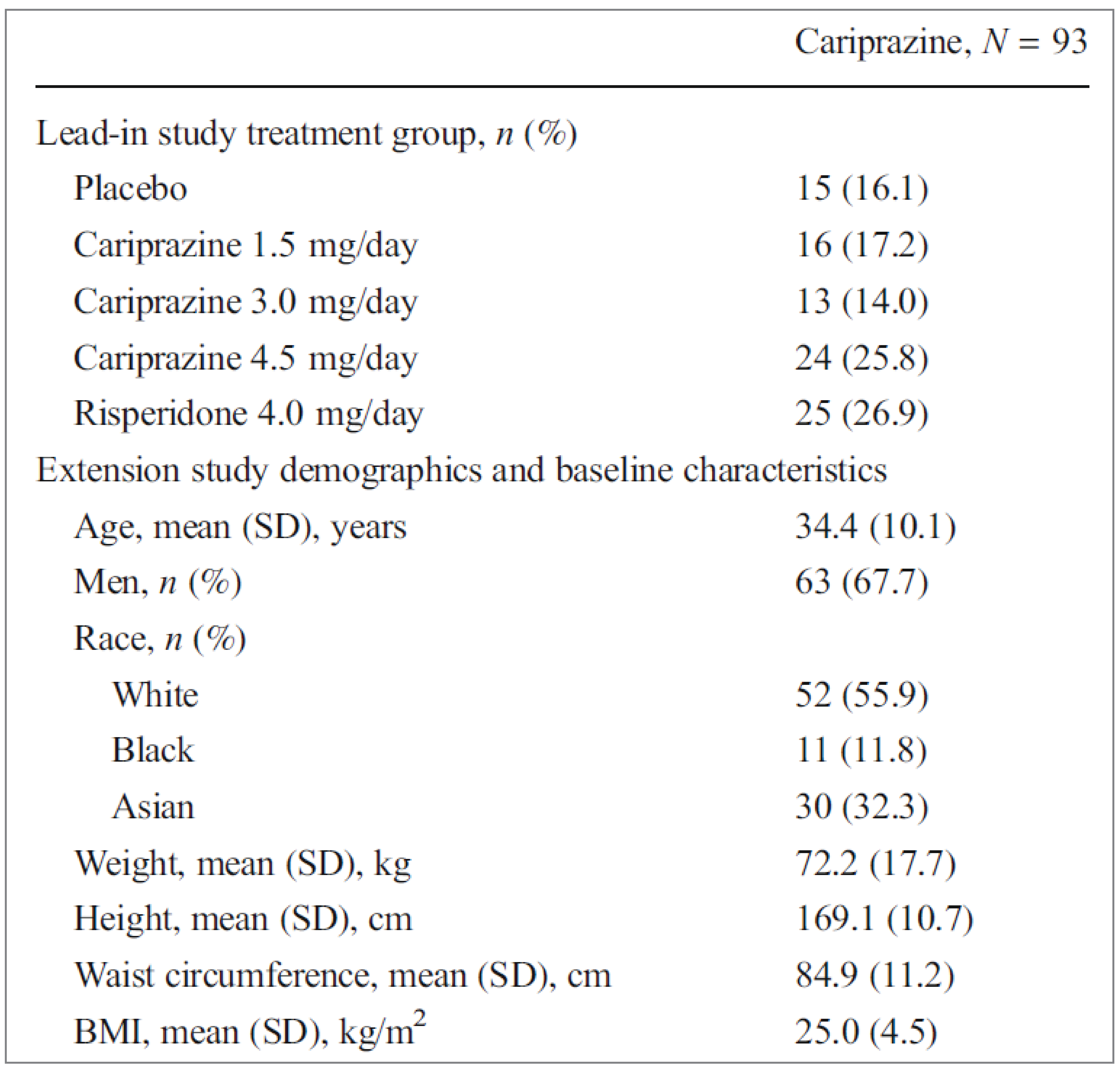
BMI = body mass index; SD = standard deviation.
Source: Durgam et al. (2017).73 This work is licensed under Attribution 4.0 International (CC BY 4.0) licence. Full text available here: https://doi.org/10.1007/s00213-016-4450-3.
A TEAE was defined as an AE that either increased in severity following the first dose of open-label treatment, or first presented during open-label treatment and was not present before the first dose of double-blind treatment during the lead-in study.
Efficacy analyses were conducted on the mITT population, which included the patients from the safety population who had at least 1 efficacy assessment completed in the MD-17 study. The observed case and LOCF approaches were used for handling missing data from efficacy outcomes.
Patient Disposition
Of the 464 patients who completed the MD-16 lead-in study, 97 (21%) patients enrolled in the MD-17 study. The number of patients who were available to enter the extension study was relatively low because the extension study did not begin until 9 months after the lead-in study was initiated. A total of 93 (96%) patients received at least 1 dose of open-label cariprazine (safety population) and 92 (99%) patients from the safety population had at least 1 efficacy assessment completed postbaseline (mITT population). A total of 46 (49%) patients completed open-label treatment and 67 (72%) patients entered the safety follow-up period. Of the patients who had received placebo, cariprazine 1.5 mg per day, cariprazine 3 mg per day, cariprazine 4.5 mg per day, and risperidone 4 mg per day in the lead-in study, 47%, 50%, 54%, 50%, and 52% of patients discontinued during open-label treatment, respectively. The most frequently reported reason for discontinuation during open-label treatment was withdrawal of consent (17%), followed by AEs (11%). Refer to Figure 7 for a summary of patient disposition in the MD-17 trial.
Exposure to Study Treatments
The mean (SD) duration of treatment exposure was 221.7 (132.7) days. The total time at risk was 56.4 patient-years. The modal dose for 68%, 25%, and 8% of patients was cariprazine 4.5 mg, cariprazine 3 mg, and cariprazine 1.5 mg daily, respectively. The final daily dose for 70% of patients was cariprazine 4.5 mg.
Efficacy
The PANSS total score and CGI-S score for the mITT population in the MD-17 trial were provided up to week 48 as shown in Figure 8. The mean (SE) changes in the PANSS total score from the lead-in and extension baselines to week 48 were –44.8 (1.8) and –11.6 (1.4), respectively. The mean (SE) changes in the CGI-S score from the lead-in and extension baselines to week 48 were –2.3 (0.1) and –0.6 (0.1), respectively. The CGI-S score at week 12 did not change from week 6. Overall, the PANSS total score, the PANSS positive and negative subscale scores (data not reported), and the CGI-S score decreased over the course of open-label treatment.
Figure 7: Patient Disposition for MD-17 Study
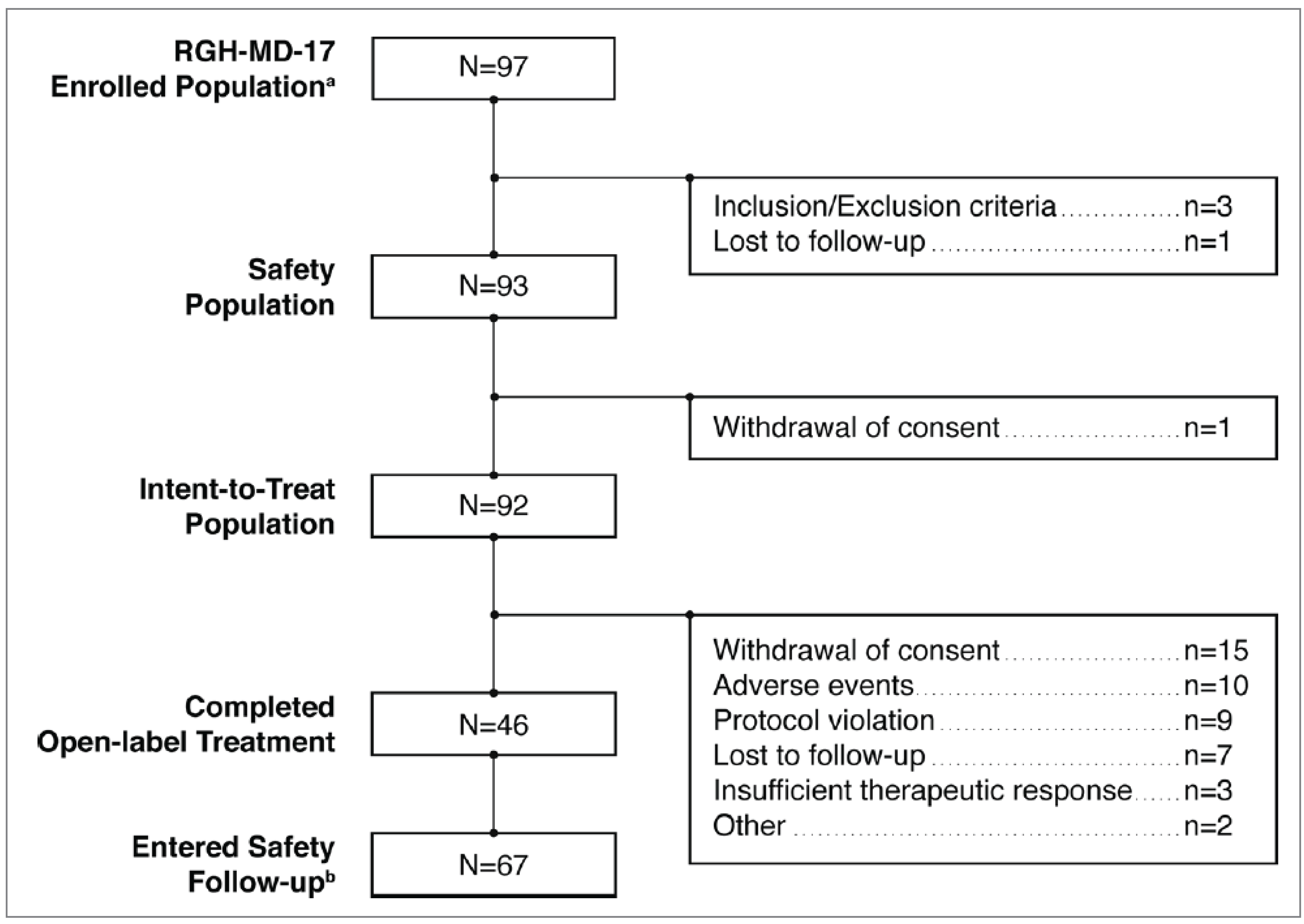
aThe majority of the participants from the lead-in study was not available to enrol in the MD-17 study because the extension study was initiated 9 months after the start of the lead-in study.
bThis number included patients who completed the study as well as patients who prematurely discontinued the study but entered safety follow-up.
Source: Durgam et al. (2017).73 This work is licensed under Attribution 4.0 International (CC BY 4.0) licence. Full text available here: https://doi.org/10.1007/s00213-016-4450-3.
Harms
TEAEs were reported in 77 (83%) patients in the safety population. A summary of harms, including the most common events based on events occurring in 5% or more of patients, are presented in Figure 9. The most frequently reported TEAEs were akathisia (14%), insomnia (14%), and weight gain (12%). The most frequently reported TEAEs occurred early in open-label treatment. Most TEAEs (73%) were considered mild in severity and 61% of TEAEs were considered related or possibly related to the study drug by the investigator. Akathisia, tremor, and joint stiffness were TEAEs that occurred in 3 or more patients and were considered related to the study medication.
SAEs were reported in 12 (13%) of patients in the safety population. Among the 17 SAEs reported, 4 patients experienced exacerbation of schizophrenia and 1 patient experienced agitation and/or intentional overdose, which were considered related or possibly related to the study drug. The most frequently reported SAEs (occurring in ≥ 2 patients) were the worsening of schizophrenia in 4 patients and the worsening of psychotic disorder in 2 patients. During the safety follow-up period, newly emergent AEs that either first presented or increased in severity during the extension study were reported in 3 patients, 2 of which were SAEs (the worsening of schizophrenia and a lower limb fracture).
DAEs were reported in 10 (11%) patients in the safety population, 4 of which were AEs (headache, pneumonia, sedation, and insomnia) and 6 of which were SAEs (1 died by suicide, 1 worsening of psychotic condition, and 4 worsening of schizophrenia). Of the patients who had received placebo, cariprazine 3 mg daily, cariprazine 4.5 mg daily, and risperidone 4 mg daily in the lead-in study, 2 patients, 2 patients, 4 patients, and 2 patients discontinued due to AEs, respectively.
One death by suicide occurred after receiving cariprazine 4.5 mg daily for 327 days. Since trigger(s) for the event were not identified and the patient did not have a history of suicidal ideation or behaviour, the event was not considered related to the study drug. Overall, the mean Suicidality Tracking Scale total score was unchanged throughout the open-label treatment.
Notable harms included sedation in 5 (5%) patients, somnolence in 5 (5%) patients, and a weight gain of 7% or more in 31 (33%) patients. No patients prematurely discontinued the study due to extrapyramidal-related TEAEs. The most frequently reported TEAEs related to EPSs were the following: 13 (14%) patients experienced akathisia, 7 (8%) patients experienced tremor, and 6 (7%) patients experienced extrapyramidal disorder. Treatment-emergent parkinsonism, defined as a total score of 3 or less at baseline and greater than 3 postbaseline on the Simpson-Angus Scale, was reported in 8 (9%) patients. This finding is consistent with the rates reported in the lead-in study for the cariprazine and risperidone groups (approximately 8% to 10%). The overall trend of AEs reported was similar to the lead-in study, such that the investigators did not report any new or unexpected findings in the extension study.
Eleven patients were rehospitalized due to clinical deterioration during the extension study.
Figure 8: Change From Baseline to Week 48 in PANSS Total and CGI-S Scores for MD-17 Study (mITT Population)
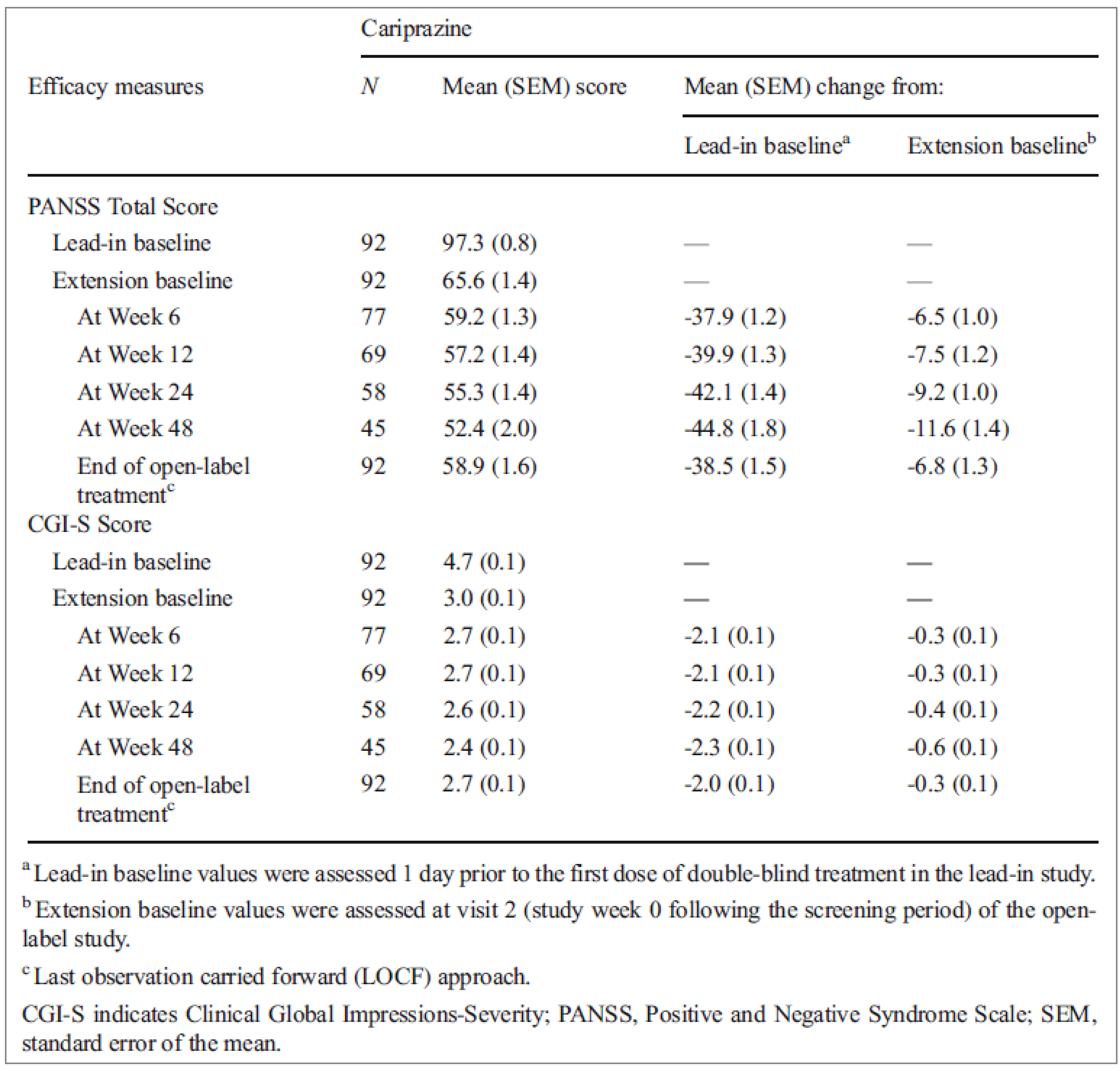
Source: Durgam et al. (2017)73 This work is licensed under Attribution 4.0 International (CC BY 4.0) licence. Full text available here: https://doi.org/10.1007/s00213-016-4450-3
Figure 9: Summary of Harms in MD-17 Study (Safety Population)
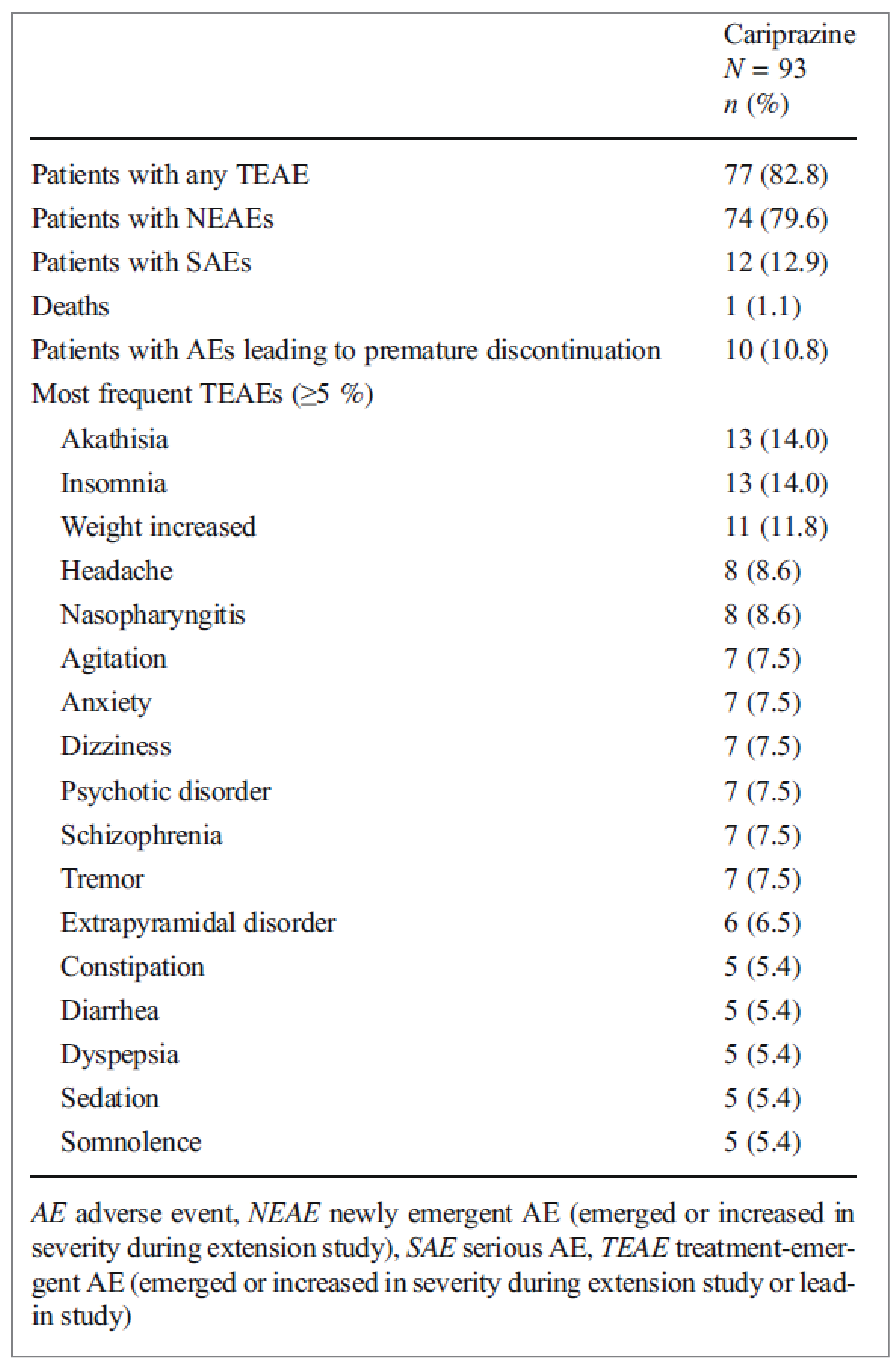
Source: Durgam et al. (2017).73 This work is licensed under Attribution 4.0 International (CC BY 4.0) licence. Full text available here: https://doi.org/10.1007/s00213-016-4450-3.
MD-1174 Study
Methods
The MD-1174 trial, an open-label extension study, was conducted to evaluate the long-term safety and tolerability of flexibly dosed cariprazine (3 mg to 9 mg daily) in adult patients with schizophrenia for up to 48 weeks of treatment. Patients who completed 1 of the 2 pivotal trials,55,56 which were 6-week, double-blind, randomized, phase III trials; the MD-04 trial55 was a fixed-dose, placebo-controlled, and active-controlled study and the MD-05 trial56 was a fixed-flexible dose, placebo-controlled study, and new patients were eligible to enrol in the MD-11 trial. During the screening period of up to 7 days and for the first week of open-label treatment, all patients were hospitalized. If the patient remained stable on their dose for at least 3 days and did not require a dose adjustment at discharge, then the patient could be discharged and followed-up as an outpatient. Patients could also remain hospitalized for up to 2 weeks at the discretion of the investigator. Patients were evaluated every week for the first 6 weeks of open-label treatment and then every 2 weeks for the remainder of the study. After completing 48 weeks of treatment or prematurely discontinuing, patients were evaluated for an additional 4 weeks for safety follow-up and could receive treatment as per usual at the discretion of the investigator, but no study drug was provided.
The open-label extension study was conducted between 2010 and 2013 in the US, Colombia, India, Romania, Russia, and Ukraine. There were no Canadian study sites in the extension study.
Populations
Adults aged 18 years to 60 years with a diagnosis of schizophrenia (DSM-IV-TR criteria) for at least 1 year were eligible to enrol in the extension study. Patients could have completed either the MD-04 or MD-05 study; new patients who had not previously participated in a cariprazine randomized trial were also eligible for entry. All patients were required to have a score of 25 or less on the PANSS positive subscale, and a score of 3 or less on the CGI-S. Other inclusion and exclusion criteria were consistent with the lead-in pivotal trials.55,56 Notably, urine drug screens were conducted throughout the study. Patients were discontinued due to protocol violation if their urine drug screen was positive for drug use unless the participant was allowed to continue with the study based on the investigator’s judgment. The participant would have been discontinued from the study if a second positive urine drug was collected. Additionally, pregnancy and breastfeeding as well as clinically significant, uncontrolled AEs from the lead-in study and uncontrolled EPSs at baseline were exclusion criteria.
A total of 752 patients were enrolled in the extension study; 369 (49%) patients had completed a lead-in study and 383 (51%) patients were new. Of the 586 (78%) patients who received at least 1 dose of open-label cariprazine (safety population), 351 (60%) patients had completed a lead-in study and 235 (40%) patients were new. Of the 351 patients who had completed a lead-in study, 210 (60%) patients, 61 (17%) patients, and 80 (23%) patients had received cariprazine, aripiprazole, and placebo, respectively. The mean age of patients in the extension study was 39.1 years (SD = 10.8 years). The majority of participants were male (70%) and white (43%). The mean duration of schizophrenia at baseline was 12.8 years (SD = 9.9 years). The mean PANSS positive subscale and CGI-S scores were 16.0 (SD = 3.9) and 3.0 (SD = 0.4), respectively, at baseline. Refer to Figure 10 for a summary of baseline characteristics of patients enrolled in the MD-11 trial.
Figure 10: Summary of Baseline Characteristics for MD-11 Study (Safety Population)
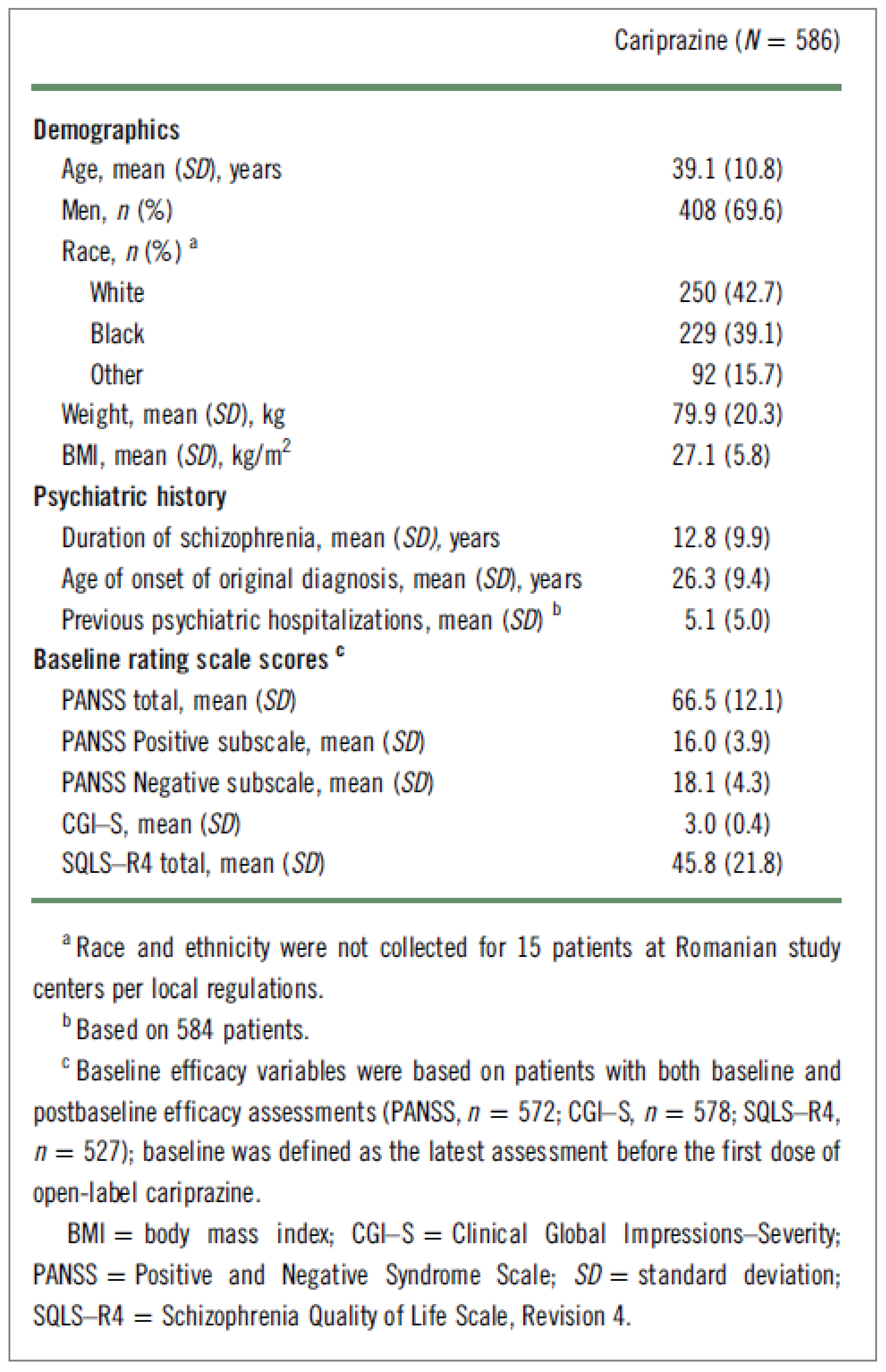
Source: Cutler et al. (2018).74 Cutler AJ, Durgam S, Wang Y, et al. Evaluation of the long-term safety and tolerability of cariprazine in patients with schizophrenia: results from a 1-year open-label study. CNS Spectr. 2018;23(1):39-50. Reproduced with permission.
Interventions
The open-label treatment period was 48 weeks in duration. The starting dose of cariprazine was 1.5 mg daily. The starting dose of cariprazine could be increased in increments of 1.5 mg per day to a daily dose of 3 mg on day 2 and to a maximum daily dose of 4.5 mg on day 3 or day 4. Patients were required to receive daily doses of 3 mg or 6 mg on day 5 to day 7. The daily dose could then be increased to 9 mg. Dose changes (both increases and decreases were permitted) depended on the investigator’s judgment of the patient’s response to and tolerability of cariprazine.
Psychotropic medications were prohibited during the extension study with the following exceptions at prespecified daily doses or maximum daily doses: the short-term use of lorazepam for agitation, irritability, hostility, or restlessness; zolpidem, zaleplon, chloral hydrate, or eszopiclone for insomnia; and diphenhydramine, benztropine, or propranolol for EPSs or akathisia. The previously mentioned psychotropic medications were not allowed to be taken within 8 hours of psychiatric or neurological evaluation.
Outcomes
The safety outcomes included AEs, vital signs, clinical laboratory tests, electrocardiograms, and physical and ophthalmologic examinations. Suicidal ideation and behaviour were assessed using the C-SSRS. EPSs were assessed by the Barnes Akathisia Scale, Abnormal Involuntary Movement Scale, and the Simpson-Angus Scale.
The efficacy outcomes included the PANSS total, positive, and negative subscales, CGI-S, and SQLS-R4.
Statistical Analysis
Safety analyses were conducted on the safety population, which included all patients who received at least 1 dose of open-label cariprazine in the MD-11 trial. The lead-in study baseline values for safety parameters were used where available to reflect the total cariprazine exposure while the last evaluation before the first dose of open-label cariprazine was used as the baseline value for new patients. The end-of-study values were the last available assessment during the open-label treatment in the postbaseline period. Descriptive statistics were performed to summarize the safety parameters for the safety population.
For patients entering from a lead-in study, a TEAE was defined as an AE that either increased in severity following the first dose of open-label treatment, or first presented during open-label treatment and was not present before the first dose of double-blind treatment during the lead-in study. For new patients, a TEAE was defined as an AE that either increased in severity following the first dose of open-label cariprazine, or first presented during the open-label treatment and was not present before the first dose of open-label cariprazine.
Efficacy analyses were conducted on the mITT population, which included patients from the safety population who had at least 1 postbaseline efficacy assessment completed in the MD-11 study. Descriptive statistics were performed to summarize the efficacy parameters for the mITT population; missing data were imputed using the LOCF approach.
Adherence to the study drug was defined as the total number of capsules taken by a patient during the open-label treatment period divided by the number of capsules that were prescribed to be taken during the same period multiplied by 100. Descriptive statistics were performed to summarize adherence for the safety population, but the relationship between adherence to treatment and study outcomes was not explored.
Patient Disposition
Of the 752 patients who enrolled in the MD-11 extension study, 369 (49%) patients completed a lead-in study, the MD-0455 or MD-05 trial,56 and 383 (51%) patients were new. Of the 586 (78%) patients remaining as the safety population, 351 (60%) patients had completed a lead-in study and 235 (40%) patients were new. A total of 578 (99%) patients from the safety population had at least 1 efficacy assessment completed postbaseline (mITT population). A total of 226 (39%) patients completed the open-label treatment; the completion rate was higher for patients who had completed a lead-in study compared to newly enrolled patients (47% versus 26%, respectively). A total of 390 (67%) patients entered the safety follow-up period. The most frequently reported reason for discontinuation during open-label treatment was due to the withdrawal of consent (26%), followed by AEs (13%). Refer to Figure 11 for a summary of patient disposition in the MD-11 study.
Figure 11: Patient Disposition for MD-11 Study
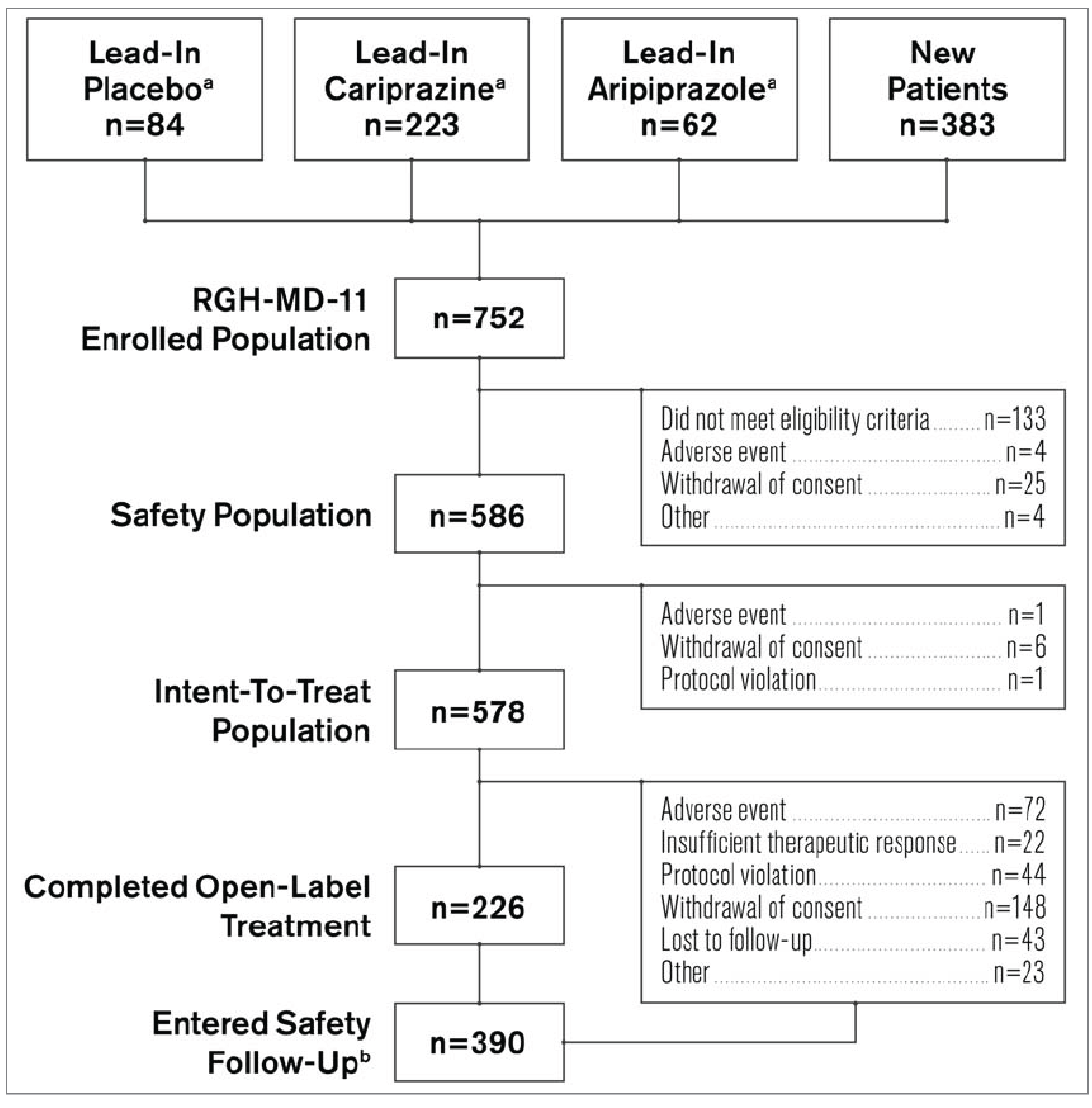
aThese are patients who received the indicated treatment or placebo in the MD-04 or MD-05 lead-in study.
bThis number included patients who completed the MD-11 study and prematurely discontinued but entered safety follow-up.
Source: Cutler et al. (2018).74 Cutler AJ, Durgam S, Wang Y, et al. Evaluation of the long-term safety and tolerability of cariprazine in patients with schizophrenia: results from a 1-year open-label study. CNS Spectr. 2018;23(1):39-50. Reproduced with permission.
Exposure to Study Treatments
The mean duration of treatment exposure was 183.2 (SD = not reported) days. The total time at risk was 293.8 patient-years. The modal daily dose in 51%, 25%, and 23% of patients was cariprazine 6 mg, cariprazine 9 mg, and cariprazine 3 mg, respectively. The modal daily dose in 1% of patients, including those who discontinued during the first week, was 1.5 mg. The mean daily dose of cariprazine was 5.7 mg (SD = not reported).
The mean adherence with study medication was 99.5%; overall treatment adherence ranged from 80% to 110%.
Efficacy
The change from baseline to week 48 in efficacy parameters for the intention-to-treat population in the MD-11 trial are shown in Table 34. Overall, the mean PANSS total, PANSS positive and negative subscales, CGI-S, and SQLS-R4 scores decreased over the course of open-label treatment.
Table 34: Change From Baseline to Week 48 in Efficacy Parameters for MD-11 Study (mITT Population)
Efficacy measure | Mean (SD) extension baseline scorea | Mean (SD) change from extension baseline to week 48 | |
|---|---|---|---|
LOCF analysis | OC analysis | ||
PANSS total score | 66.5 (12.1) | –5.0 (14.0) | –12.0 (13.2) |
PANSS positive subscale score | 16.0 (3.9) | –1.6 (4.6) | –3.5 (4.0) |
PANSS negative subscale score | 18.1 (4.3) | –1.3 (4.0) | –2.6 (4.5) |
CGI-S score | 3.0 (0.4) | –0.1 (0.8) | –0.5 (0.7) |
SQLS-R4 score | 45.8 (21.8) | –4.4 (21.3) | –10.7 (21.4) |
CGI-S = Clinical Global Impression–Severity of Illness; mITT = modified intention to treat; LOCF = last observation carried forward; OC = observed case; PANSS = Positive and Negative Syndrome Scale; SD = standard deviation; SQLS-R4 = Schizophrenia Quality of Life Scale Revision 4.
aThe extension baseline efficacy parameters were based on patients who completed both baseline and postbaseline efficacy evaluations (PANSS, n = 572; CGI-S, n = 578; SQLS-R4, n = 527). The extension baseline was defined as the latest evaluation completed before the first dose of open-label cariprazine.
Source: Cutler et al. (2018).74
Harms
TEAEs were reported in 476 (81%) patients in the safety population. A summary of the harms, including the most common TEAEs based on events occurring in 5% or more of patients, is presented in Figure 12. The majority (> 95%) of TEAEs were considered mild to moderate in severity and 54% of TEAEs were considered related to cariprazine by the investigator. The most frequently reported TEAEs were akathisia (16%), headache (13%), and insomnia (13%). The most frequently reported TEAEs occurred during the first 6 weeks of cariprazine treatment.
SAEs were reported in 59 (10%) patients and in 7 patients during the open-label treatment and the safety follow-up period, respectively. The following SAEs were reported in 1% or more of patients: the worsening of schizophrenia (4%), the worsening of psychotic disorder (2%), and social stay hospitalization (1%).
No deaths were reported in the safety population. One death was reported during the screening period due to cardiac hypertrophy of undetermined etiology. The 45-year-old male patient had a history of hypertension, was newly enrolled in the extension study, and had never received the study medication. During the open-label treatment, no suicidal behaviour was reported on the C-SSRS. One (0.2%) patient reported active suicidal ideation with a specific plan and intent and 4 (0.7%) patients reported nonspecific active suicidal thoughts.
DAEs were reported in 73 (13%) patients in the safety population. The following AEs were reported in 1% or more of patients that led to discontinuation: the worsening of schizophrenia (3%) and psychotic disorder (2%). A total of 4 patients experienced SAEs of suicidal ideation concurrent with hallucinations or the exacerbation of schizophrenia; 3 of these patients discontinued the study. One additional patient discontinued due to a suicidal ideation AE secondary to increased psychosis.
Notable harms reported include sedation (3%), somnolence (3%), and a weight gain of 7% or more (26%). The most frequently reported extrapyramidal TEAEs were akathisia (16%), extrapyramidal disorder (7%), tremor (7%), and restlessness (6%). Among the TEAEs related to EPSs, 62%, 35%, and 3% of them were considered mild, moderate, and severe, respectively. A total of 13 patients prematurely discontinued the study due to TEAEs related to EPSs: 5 (0.9%) patients due to akathisia, 2 (0.3%) patients due to extrapyramidal disorder, and 1 (0.2%) patient each due to restlessness, dystonia, parkinsonism, salivary hypersecretion, tremor, and musculoskeletal stiffness. Treatment-emergent parkinsonism, defined as a total score of 3 or less at baseline and greater than 3 postbaseline on the Simpson-Angus Scale, was reported in 11% of patients. The overall trend of AEs reported was similar to the lead-in studies, such that the investigators did not report any new or unexpected findings in the extension study.
Any readmissions throughout the extension study have not been reported.
Critical Appraisal
Limitations of the results of the MD-17 and MD-11 extension studies include the absence of an active comparator or placebo group. As with most extension studies, an additional limitation is the open-label study design; unblinding of the study drug in the extension phase can bias the reporting of end points, particularly any subjective measures included in the efficacy parameters and AEs. As only descriptive statistics were published in the reports, and without a comparator group, the interpretation of the results is limited. Since completion of a pivotal trial was an eligibility criterion for the extension study, patients who discontinued those trials due to AEs or death were excluded while patients who responded to treatment during those trials were more likely to be included in the extension studies. This could result in a population of patients that was more tolerant of cariprazine, which can lead to a response bias as those not responding to treatment are less likely to continue with the study. Having patients more tolerant of cariprazine can also lead to bias, potentially resulting in fewer AEs being reported. According to the EMA, long-term efficacy data are difficult to interpret in open-label, single-arm extension studies due to potential sources of bias, including the use of the LOCF approach that could overestimate or underestimate the overall long-term treatment benefits.68 Although the expectation is that patients who receive the study drug improve over time with respect to efficacy parameters, the results can remain difficult to interpret given the previously mentioned limitations. This is compounded by the notable discontinuation rates in both studies (> 50%), which decrease the certainty and generalizability of the efficacy and safety results. In the MD-11 study, differences in the efficacy and harms outcomes between patients who have completed a pivotal trial and new patients who have no prior exposure to the study drug are expected, further limiting the interpretation of the results.
Figure 12: Summary of TEAEs in MD-11 Study (Safety Population)
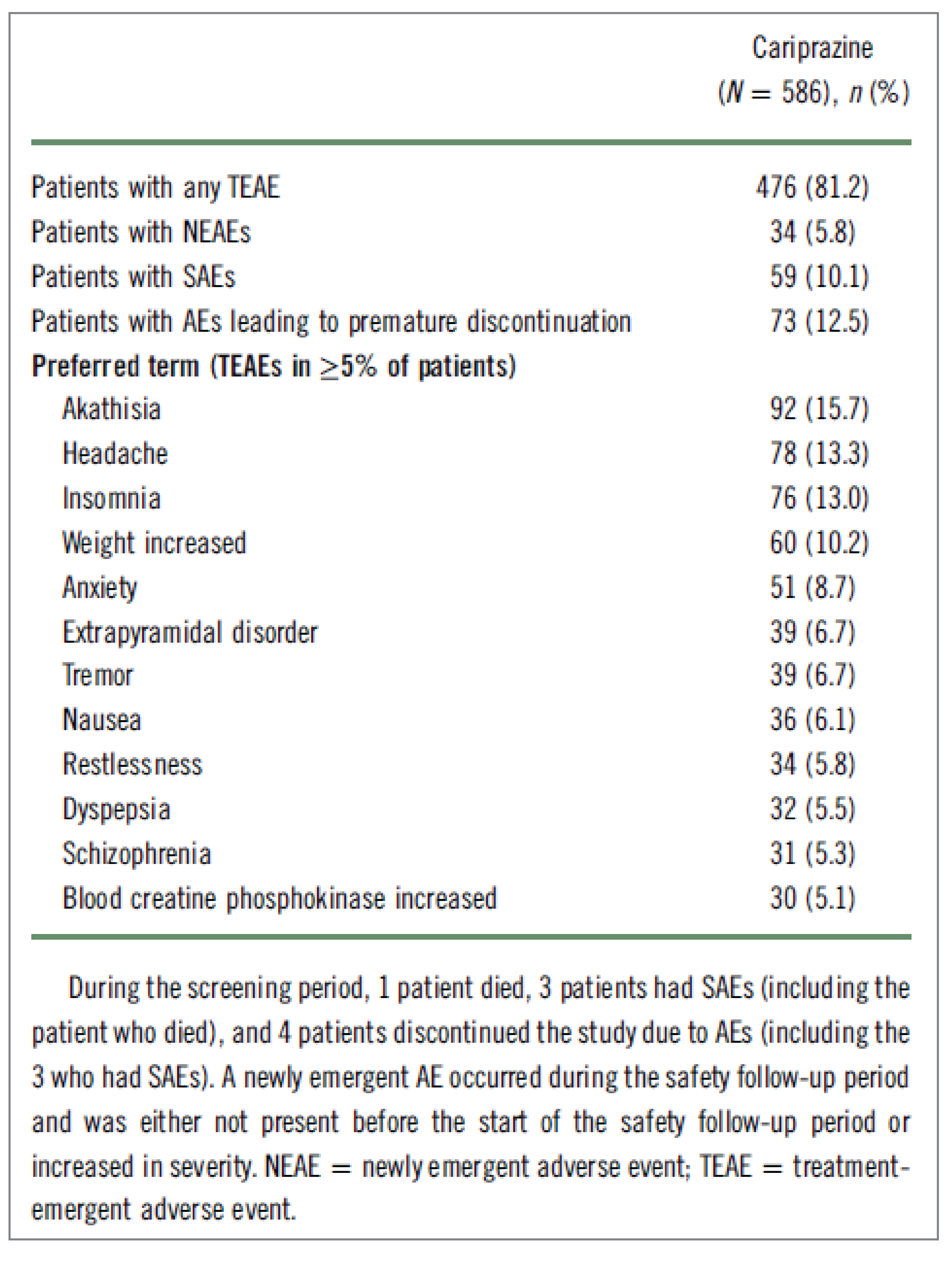
Source: Cutler et al. (2018).74 Cutler AJ, Durgam S, Wang Y, et al. Evaluation of the long-term safety and tolerability of cariprazine in patients with schizophrenia: results from a 1-year open-label study. CNS Spectr. 2018;23(1):39-50. Reproduced with permission.
Indirect Evidence
Objectives and Methods for the Summary of Indirect Evidence
The aim of this section was to identify indirect comparisons that fill gaps in the evidence from the systematic review and to appraise the indirect evidence used to inform the pharmacoeconomic model. Direct evidence on the efficacy and safety of cariprazine versus risperidone was available for patients with predominantly negative symptoms only, and no other comparative efficacy studies for the broader schizophrenia population were identified in the systematic literature search.
A focused literature search for ITCs dealing with schizophrenia was run in MEDLINE All (1946—) on November 25, 2021. No limits were applied to the search. The results were reviewed by 1 researcher to select any indirect comparisons that met the patient, intervention, comparator, and outcome criteria listed in the review protocol (Table 8).
The sponsor submitted an unpublished ITC75 and 2 published ITCs16,17 that evaluated the efficacy or safety of cariprazine versus other antipsychotic drugs in patients with schizophrenia. All 3 were included in this report. No other relevant ITCs were identified in the literature search.
Description of the Indirect Comparisons
Three ITCs that evaluated the comparative efficacy and safety of antipsychotic drugs in patients with schizophrenia met the inclusion criteria for this review.16,17,75 The unpublished ITC examined short-term and longer-term outcomes, whereas the published ITCs focused on short-term efficacy and safety (Huhn et al. [2019]16) or short-term metabolic effects (Pillinger et al. [2020]17).
This review focused on the appraisal of the unpublished ITC as this was used to inform the pharmacoeconomic model. A brief summary of the 2 published ITCs has also been included.
Methods of the Unpublished ITC
Objectives
███ █████████ ██ ███ █████████████████ ███████████ ███ ███ ██ ██████ ███ ████████████████ ███ ██████ ██ ███████████ ████████ ████ █████ █████████████ █████ ███ ███ █████ █████████ ███ ██████████ ██ ███████ ██ ████████ ████ █████████████
Study Selection Methods
███ █████████ ██ ███ █████████████████ ███████████ ███ ███ ██ ██████ ███ ████████████████ ███ ██████ ██ ███████████ ████████ ████ █████ █████████████ █████ ███ ███ █████ █████████ ███ ██████████ ██ ███████ ██ ████████ ████ █████████████████████
Table 35: Study Selection Criteria and Methods for Sponsor-Submitted Unpublished ITC
Criteria | Unpublished ITC |
|---|---|
Population | ██████ █████ ████ ██████ ██ █████ ████████████ ██ █████████████ ██ ████ ████ ████ ██ ███████ ██████████████ ██ |
Intervention | ██████ █████████████ ███████████ ████████ ████████████████████████████████████████████████████████████████████████████ |
Comparator | ███ ██ ███ █████ ███████████████ █ |
Outcome | ████████ ██████████████████ ████ ████ ████████ ███ ███ █████████ ██████ ██████████ █████████████ ████ ████████ ██████████ ██████████ █████████████████████ ███████████ ██ █████ ██ ████ ████████████ ██ ██████ ███████ |
Study design | ████████████ ████ ████ ███ |
Setting | ███ ████ |
Publication characteristics | ███████ ████ |
Exclusion criteria | ███████ █████ ████ ██ ████████ ████████ ████ █████████ ████ █████████████████████ ██ ████████ ████ ███████ █ ██ ██ █████████ █████████████ |
Databases searched | ████████ ███████ ██████████ ████████ ███████ ███ ██ ███ ███ ██████ |
Selection process | ███ █████ ████████ ████ |
Data extraction process | ███ ██████████ █████████ ██ |
Quality assessment | █████ █████ ██████ ██ █ █████ █████████ █ ██ █ ███████ █ |
████ █ █████ ███████████ ██████ ██████ █████ █ ████████ ██████ ████████████████████████ █████ █ ████████ ██████ █████████████████████ █████ █ ██████████████ ███████ ██ █████ ██ █ █████████ ████████ ███ █ ████████ █████████ █████
Note: Table redacted as per sponsor’s request.
Source: Sponsor submission.1
ITC Analysis Methods
█████ ██████████ ██ ███ ██████████ ██████████ ███████ ███ ███████ ██ ███ ███ █████████ █ ███████████ ██████████ ███ ███████ ██████████ █████████ ███ █████████ ████████ ██ █████████ ███ ██████ ████ ████ ████████████████ ██ ██████████ █████████████ ███ ███████ ████████ ███████ ████ ███ ███ ██████ ███████ ████ ████ ███ ████████ ██ ███████ ███ █████████ █████████ ███ ████ ████ ████████ ██ ████ ██████ █ ██████████ ███ █████ █████ ██ ████ ██ ████ ██ ███ ████████ █████ ████ ███████ ████ ████████ ██ ████████ ████ ███ ████████ ██████ ████████ ████████ ██████████████████ ████ ███████████ ██ █████ █████████ ██ ████ ████ █ ██ ██ █████ ██ █████████ ███ ███████ ██████████ ██ ████ ████ ██████ ████████ ██ ████ █ ███████ ██████████ ███████ ███████ ████ ████ ███████████ █████████ ██ ███ ██████████ ███████ ███████ ██████████ ██ ███ ███████ ████ ██████ █████ ██ ███████████ █████████ ██████████ ████ █████████ ██ ███ ███████ ████ ███ ███ █████ ███ █ █████ ██████ ███ ████████ ████ ██████████ ██ ██████ ████ ████████ ████████ ███ ███ ███████████ ████████ █████████████ █████████ ██ █ █████ ██████████ ████ █ ███████ ██ █████ ██ ████████ █████████████ █████████ ███ █████ ███████ ██████ ████ ████████ ████ █████████████ ████████ █████████ ███ █████ ████████████ █████ █████ █████████████ ███████ ███ █ █████████ █████████ ████ ████████ ███ ███ ███████████ ████████ █████████████ █████████ ███ ████ █████ ███ ███████████████ ████ ████████ ████ ███ █████ ███ ███████ ██████████ █████████ ████ ████████ ███ ███████ ██ ████ ██ ██████████ █████████████ █████ ████████████ ██ ██ ██ ████████ ████████ █████ ██████ █████ ████ ███ ███████ ████ ███ ██████ ██ ███████ █████ ██████ ██████ ██ ███ ███████ ███████████ ███ ███████ ██ █ █████ ████ ████ ████████ ████ ███ █████ ██ ███ ████ ███ ██████████ █████████ ███████ ███ ████████ ███████ ██████ ██████ ███ ███ ████████ ███████ ██ ███████████ █████████ ██ ███ ██ ████ ██████ ███████████ ██ ███ ██████████████ ████████████ ██ ██████████ ███ ███████ ███████ ██ ███ █████ █████ ███ ███ ████████ ████ ██ ████ █ ██ ██ █████ ███ ███████ ██ ███ ██ ███ ██████████ █████████████ ███████████ ██ ███ ███ ███ ████████ ███ █████
Table 36: Unpublished ITC Analysis Methods
Item | Description |
|---|---|
ITC methods | ████████ ████ █████ ██████ ███ ██████ ████████ ████ █████████ ███ ███████████ ████ █████████ ███████ ██ |
Priors | ███████████████ █████ ███ ███ ██████ ███████ ███████ █████ █████████████ █████████████ ███████ ████ ██ ██ █████ |
Assessment of model fit | ████████ ████████████ ██ ███ █████████ ████████ █████████ ███████ ████ ███ █████ █████████ |
Assessment of consistency | ████ █ |
Assessment of convergence | ███████████████████ ████ |
Iterations | ████████ ██ █████ ██████ ██████████ ███ █████ ██ ████ |
Outcomes | ████████████ ████████ ████ ██████ █████ █████████████ ████████ █████ █████ ███████ █████████ ██ ███ ██████ |
Follow-up time points | ██████ █ ██ █ ████████████ |
Construction of nodes | ███ ████████ █████ ███████ ██ ███████ ████ ██████ ███ ████ ████ ████ █ |
Sensitivity analyses | █████ ███ ██████ ███████ ██████████████████ ██████████████ ████ ███ ██████ ██████ █████████ ███████ |
Subgroup analysis | ███ ███ ████████ ████ ███████ ██ █████ █████████████████ ███████ ██████ ███ ██ █████ ███ ████████ █████████████ ██ |
Methods for pairwise meta-analysis | █████████ █████ ████ ███████ ██ █ ███ ███████ ███████ ██████████████ |
████ █ █████ ███████████ ██████ ██████ ███ █ ████████ █████████ ███ █ ████████ ███████████ ██████████ ███ █ ████████ █████████ ███████████ ████ █ ██████ █████ █████ ██████ ██ █ ████████ █████ ██ █ ████████ █████████████ ████████ ████ ███ ███████ ██ ██ █████ █ ███ █████████ ██ ███ ██████ ████ ████████ ██ ███
Note: Table redacted as per sponsor’s request.
Source: Sponsor submission.1
Results of Unpublished ITC
Summary of Included Studies
█████ ██ ███ ████ ████ ████████ ██ ███ ██████████ ██████ ██ ███ ██████████ ███ ██ ██████ ██ ████ ███ ███ ████████ ███ ███ ███ ██ █████ █████████████ ██████ ███ ██ ███ ███ ████████ ███ ███ ███████ ██████████ ██████ ███████ ███ █████████ ████ ███ ███ ████ ██ ████████ ██████████ ████ █████████████ ████████ ████████ ██ █████ ███████ ██ █ ██ █████████ ██████████ ██████ ██ █ ███ █████ ███ ██ ██████ ██ ███ ███████ ██ █ ████ ███████████ ███████ ██ ████████ ██████████ ██ █ ████ ██ █████████ █ █████ ███████ ████ ████████ ████ ███ █████ █████ ███ █ ███ ████████ ████ ███ ███████ ██████████ ██████ ██ █████ ████ ██████ ██ ███
███ ███ ███████ ████████ ██ ███ ████ ██ ███████████ ███ ████████ ██ ███ █████ ███████ █████████ ██ █████████ █████████ █████████ █████ ██ ██████ ███████ ██████ ██ ██████████ ███ ███████ ███████ ██████ ████████ ███ █████ ███████ ██ █████ ███████████ ███ ███ ████████ ███ █████████████ ███ █████ ██ ███ ███████ ███████ ███ ███ ██ █████ ████████ ████ ████ ██ ███ ████████ ███████ █████████ ████████ ███ ████ ████████████ █████ █████ ███████ ██ ██████████████ ██ ████ ████████ █████ ███ █████████ ██ ███ ████████████ ██ ███ ████ ██ ████████ █████ ██████ ████ ███████ ████ ████████ ██████ ████████ █████ ████████████ ██ ███ █████████ ████████████ ███ ████ ████ ███████████ ███████ ████ █████████████ █ █████ ██ ███████ ██ ███ █████ ██████████████ ███ ██████ ████████ ██ ███ █████ █████████████ ███████ ███ ████ ███ ██ ████████ ████████ ██████ ████ █████████████ ██ █████ ██ ██ ██████ ███ ███ ███████ ██████ ████ ██████ ████████ ████ ██ ████████ ███████ ███ ████ ████████ ████ ██████ ███ █████████████ ██ ██ ██ ██ ███ ███ ████ ████ █████ █████ ███ ██ ██ ███ ████ ████ ███████ ███ ████ ████ ████ ██ ███ ███████ ███ ████ █████ █████ █████ ██ ████████ ██████ ████ █████████████ ██ ██ ███ ██████ ███████ ████████ ███ █████ ███ ██ █████████ ███ ████ ████ █████████ ██ ██████████ ██████ ████ █ █████ ██ ██ █████ ███████ ████ ███ ████ ████████ ███ ████████ ███ ████ █████ █ █████ ██ ███ ████████ ███ █████ ███████ ████ █████████ ███████ ████ ███ ████ ███ ████ ██████ ████ █████████ ██ ████ ██ █████████ ███ ██████████ ███████ ██ ██ ████████ █████████ ████████ ███ ████████ ██ ███ ██████ ██████ ████ █ █████ ██ ██ ██████ ████████ ███ ████████ ████ █████ ██ ████████ ██ ███████ ██████ ████████ ███████ ████ █ ███ ████ ██ ███ ███ ████████ ████ ████████ ███ ███ ███████ ██████ ██████ ████ ██ ██ ███ ██████
Table 37: Assessment of Homogeneity for Unpublished ITC
Item | Description and handling of potential effect modifiers |
|---|---|
Patient demographics | ████ █████████ ██ ███ ████ ████ ███ ███ ████ |
Disease severity | ████████ █████ █████ █████ ██████ █████████████ ██████ █████████████████ ████████ ████ ██████ |
Treatment history | ███ ████████ ███ ████████ ████████████ ████████ ██████ ████ ████████ ████ █████████ █████ ███ |
Clinical trial eligibility criteria | ███████████████████ ████████ ████ ██ ███ ████████ ██████ ███ ███ █████████ ███ |
Dosing of comparators | ███████ ██ ████████ ██████ ███████ ████ ██████████ ██ ███████ ████ ██ |
Placebo response | ██████ ███ ████████ ████ ██████ ████ ██ ██ █████████████ ████ ██ ███████ █████ |
Definitions of end points | ██████ █████ ████████ ███ ███ ███ ███ ███ ████████ ████████ ████ ██████████████████ ██ ████████ ██████ ██████ ███ ███ ██ █ ██████ ██ ██████████████ ████████ ████████ █████████ █████ ██ ███ |
Timing of end point evaluation or trial duration | ██████ ████ █ ██ █ █████ ██ ████████ ██████ ████████ ████████ ████████ █████ ██████ █████ ██ ██ ████ ████ ████ ████████████████ |
Withdrawal frequency | ██ ███████████ ██ ███ ██████ ██ ███████ ████ ██ ███ ████████ ████ ██████ |
Clinical trial setting | ███ ██ ██████████ █ |
Study design | ███ ████████ ███████ ████ ██████ █████ ████ ████ ██ █████ ██ ███████████ |
Study date | ██████ █████████ ████ |
ITC = indirect treatment comparison.
Note: Table redacted as per sponsor’s request.
Source: Sponsor submission.1
Results
Acute Treatment Model
███ ████████ █████ ███████ ██ ███████ ████ ██████ ███ ████ ███ ████████ █████ ███████ ██ ███████ ████ ██████ ███ ████ ███ ████████ █████ ███████ ██ ███████ ████ ██████ ███.
██ ████████ █████ ███████ ██ ███████ ████ ██████ ███ ██████ ███ ██████ ███ ████
██ ████████ █████ ███████ ██ ███████ ████ ██████ ███ ████ ███ ████████ █████ ███████ ██ ███████ ████ ██████ ███ ████ ███ ████████ █████ ███████ ██ ███████ ████ ██████ ███ ██████████ ███ ██████████ ███ ██████████ ███ ██████████ ███ ██████████ ███ ██████████ ███ ██████████ ███ ██████████ ███ ██████████ ███ ██████████ ███ ██████████ ███ ██████████ ███ ██████████ ███ ████
██ ████████ █████ ███████ ██ ███████ ████ ██████ ███ ████ ███ ████████ █████ ███████ ██ ███████ ████ ██████ ███ ████ ███ ████████ █████ ███████ ██ ███████ ████ ██████ ███ ██████ ████ ██████ ███ ████ ███ ████████ █████ ███████ ██ ███████ ████ ██████ █████████████ ███ ██████████ ███ ██████████ ███ ██████████ ███ ██████████ ███ ██████████ ███ ██████████ ███ ██████████ ███ ██████████ ███ ██████████ ███ ██████████ ███ ██████████ ███ ██████████ ███ ██████████ ████ ██████ ███ ████ ███ ████████ █████ ███████ ██ ███████ ██
███ ████████ █████ ███████ ██ ███████ ████ ██████ ███ ████ ███ ████████ █████ ███████ ██ ███████ ████ ██████ ███ ████ ███ ████████ █████ ███████ █
████ █████ ███████ ██ ███████ ████ ██████ ███ ████ ███ ████████ █████ ███████ ██ ███████ ████ ██████ ███ ████ ███ ████████ █████ ███████ ██ ███████ ████ ██████ ██████████ ███ ██████████ ███ ██████████ ███ ██████████ ███ ██████████ ███ ██████████ ███ ██████████ ███ ██████████ ███ ████████████ ████████████ ████████████ ████████████ ████████████ ████████████ ████████████ ██████████████████████████████████████████████████
Figure 13: Network Diagram for 30% Response Rate in Acute Schizophrenia — Redacted

Note: Figure redacted as per sponsor’s request.
Source: Sponsor submission.1
Relapse Prevention Model
███ ████ ██ ███ ███████ ██████████ ██████████ ████ ████████ ██ █ ███████ ██ █████ ████████ █████████████████ ██ ██ ███████ ██ █████ ████████.
Table 38: Key Results for the Acute Treatment NMA — Redacted
█████ | ████████ ████ █ | ███ ███ | ███ █████ █ | ██████ ████ ███ | ████████ ██ ████ |
|---|---|---|---|---|---|
█████ | ██ ████ | ██ ████ | ██ ████ ███ | ██ ████ | ██ ████ ███ |
█████ | ██ ████ | ██ ████ | ██ ████ ███ | ██ ████ | ██ ████ ███ |
█████ | ██ ████ | ██ ████ | ██ ████ ███ | ██ ████ | ██ ████ ███ |
█████ | ██ ████ | ██ ████ | ██ ████ ███ | ██ ████ | ██ ████ ███ |
█████ | ██ ████ | ██ ████ | ██ ████ ███ | ██ ████ | ██ ████ ███ |
█████ | ██ ████ | ██ ████ | ██ ████ ███ | ██ ████ | ██ ████ ███ |
█████ | ██ ████ | ██ ████ | ██ ████ ███ | ██ ████ | ██ ████ ███ |
█████ | ██ ████ | ██ ████ | ██ ████ ███ | ██ ████ | ██ ████ ███ |
█████ | ██ ████ | ██ ████ | ██ ████ ███ | ██ ████ | ██ ████ ███ |
█████ | ██ ████ | ██ ████ | ██ ████ ███ | ██ ████ | ██ ████ ███ |
█████ | ██ ████ | ██ ████ | ██ ████ ███ | ██ ████ | ██ ████ ███ |
█████ | ██ ████ | ██ ████ | ██ ████ ███ | ██ ████ | ██ ████ ███ |
█████ | ██ ████ | ██ ████ | ██ ████ ███ | ██ ████ | ██ ████ ███ |
█████ | ██ ████ | ██ ████ | ██ ████ ███ | ██ ████ | ██ ████ ███ |
█████ | ██ ████ | ██ ████ | ██ ████ ███ | ██ ████ | ██ ████ ███ |
█████ | ██ ████ | ██ ████ | ██ ████ ███ | ██ ████ | ██ ████ ███ |
█████ | ██ ████ | ██ ████ | ██ ████ ███ | ██ ████ | ██ ████ ███ |
█████ | ██ ████ | ██ ████ | ██ ████ ███ | ██ ████ | ██ ████ ███ |
█████ | ██ ████ | ██ ████ | █████████ | ██ ████ | █████████ |
Note: Table redacted as per sponsor’s request.
Source: Sponsor submission.1
Figure 14: Network Diagram for Relapse Rate in Chronic Schizophrenia — Redacted

Note: Figure redacted as per sponsor’s request.
Source: Sponsor submission.1
█████ ██ ██ ████ ██████ █████████ ████ ████████ ██ ███ ████████ ██ ███████ █████ ███ ███ ███ █ ████ ███████ ███████████ ████████ ████ ████████ ███████ ██ ███ ██ █████ ███████ ████ ██████ ███ ███ ██████████ ██ ████████ ████ ███████ ██ ███ ███████ ██████ ██████ ████ █████ ██ █████ ██████ ███████ ████ ███ ███████ ██ ████ ███████ ██████████ ███ ██████████ ██
███ ██████ ███ ████████ ████████ ███████ ████ ███ ████ ██ ███████ ███████ ███████████ ██████ ████████ ███ ███ ██████ ██████████ ██████████ ██ ███████████ █████ ███ █████ █████████ ███ █ █████ ████ ██ ███████ ████ ████████████ ██ ███████████ ████ ████████ ███████ ███████████ ███ █████ ██████ ████████████ ████ ███████ ██ ███ ███ ███ ███████████████ ███ ██ ███████ ██████ ██ █████ ████████ ██████ ████ ███ ██████████████ ████████ █████████ ██████ ██ ███████████ ███████ ███████████ ███ ██████ ████████████ ██ ██ ███████████ ████ █████████ ███ ███ ███ ████ █████ ███ ██████ ██████████ ██ ███████████ ██ ███ █████████ ██ ████████████████ ████ ████████ ███████ ███████████ ███ ███████████ █████████ ███
Critical Appraisal of Unpublished ITC
The unpublished ITC submitted by the sponsor was based on a systematic literature review (SLR), which was performed using standard methods. The authors conducted a search of multiple databases and a limited grey literature search, and used a 2-stage duplicate selection process. The inclusion and exclusion criteria used for screening studies were clear and the study selection flow chart was reported. The scope of the review was comprehensive and included all the AAP drugs available in Canada. However, 3 typical antipsychotic drugs (haloperidol, loxapine, and zuclopenthixol) listed in this review’s protocol were not included in the ITC. Study quality assessment was based on the Jadad scale, which is a relatively simple instrument that only includes a review of randomization, blinding, and overall reporting of withdrawals, but may not fully describe the risk of bias of the clinical trials. Based on the Jadad scale, most of the included studies were rated as being of fair study quality, with 6% of the acute trials rated as being of poor quality. No studies were excluded based on study quality.
Table 39: Key Results for the Chronic Schizophrenia NMA — Redacted
████████ | ███ ██ | ███ ██ | ███ █████ █ | ██████ ██ | ████████ ██ |
|---|---|---|---|---|---|
██ ████ | ██ ████ ███ | ██ ████ | ██ ████ ███ | ██ ████ ███ | ██ ████ ███ |
██ ████ | ██ ████ ███ | ██ ████ | ██ ████ ███ | ██ ████ ███ | ██ ████ ███ |
██ ████ | ██ ████ ███ | ██ ████ | ██ ████ ███ | ██ ████ ███ | ██ ████ ███ |
██ ████ | ██ ████ ███ | ██ ████ | ██ ████ ███ | ██ ████ ███ | ██ ████ ███ |
██ ████ | ██ ████ ███ | ██ ████ | ██ ████ ███ | ██ ████ ███ | ██ ████ ███ |
██ ████ | ██ ████ ███ | ██ ████ | ██ ████ ███ | ██ ████ ███ | ██ ████ ███ |
██ ████ | ██ ████ ███ | ██ ████ | ██ ████ ███ | ██ ████ ███ | ██ ████ ███ |
██ ████ | ██ ████ ███ | ██ ████ | ██ ████ ███ | ██ ████ ███ | ██ ████ ███ |
██ ████ | ██ ████ ███ | ██ ████ | ██ ████ ███ | ██ ████ ███ | ██ ████ ███ |
██ ████ | ██ ████ ███ | ██ ████ | ██ ████ ███ | ██ ████ ███ | ██ ████ ███ |
██ ████ | ██ ████ ███ | ██ ████ | ██ ████ ███ | ██ ████ ███ | ██ ████ ███ |
██ ████ | ██ ████ ███ | ██ ████ | ██ ████ ███ | ██ ████ ███ | ██ ████ ███ |
██ ████ | ██ ████ ███ | ██ ████ | ██ ████ ███ | ██ ████ ███ | ██ ████ ███ |
██ ████ | ██ ████ ███ | ██ ████ | ██ ████ ███ | ██ ████ ███ | ██ ████ ███ |
██ ████ | ██ ████ ███ | ██ ████ | ██ ████ ███ | ██ ████ ███ | ██ ████ ███ |
██ ████ | ██ ████ ███ | ██ ████ | ██ ████ ███ | ██ ████ ███ | ██ ████ ███ |
██ █ ██████████ █████████ ███ ██ ████████ █████████ ███ █ ██████████████ █████████ ██ █ █████ ████████ ███ █ ██████████ █████████ ███ ██ ████████ █████████ ███ █ ██████████████ █████████ ██ █ █████ ██████
Note: Table redacted as per sponsor’s request.
Source: Sponsor submission.1
The ITC’s authors conducted a feasibility assessment of the patient and trial characteristics to determine if the trials were sufficiently similar to conduct the NMA. The rationale for excluding studies from the ITC based on the feasibility assessment was clearly reported. Variation was noted across trials in the baseline PANSS scores, the duration of time since diagnosis, the study publication year, and some patient demographics. Other potential sources of heterogeneity include the timing of the outcome assessment, which ranged from 4 weeks to 8 weeks in the acute network and from 26 weeks to 72 weeks in the relapse network, and the definition of relapse, which was based on the study-specific criteria. Data were missing on the patient subtype (first episode, not first episode, or a mixed population) for up to 40% of studies, and it is unclear if patient subtypes were comparable across studies. Patients experiencing a first episode have a different prognosis than patients with recurrent events, according to the clinical expert consulted for the initial review of cariprazine. No information on drug doses or dosing regimen was provided for the included studies; thus, it is not possible to evaluate if this was another potential source of heterogeneity. Moreover, the relapse prevention network appears to have included both placebo withdrawal and parallel design trials. Withdrawal design studies enrol an enriched population that has demonstrated response to and tolerability of run-in treatments. Due to this selection process, patients in withdrawal studies are not comparable to patients enrolled in longer-term parallel design trials, and the ITC report shows the baseline PANSS score was higher in the 3 parallel design trials than in the withdrawal studies. In addition, the AEs reported during the withdrawal phase likely underestimate the frequency of events in the broader population, given the exclusion of patients with poor tolerability. For both the acute and relapse prevention models, the differences in patient and study characteristics could potentially bias the results of the NMAs.
The Bayesian models used to conduct the NMA appeared to be consistent with the guidance issued by the National Institute for Health and Care Excellence (NICE), with fixed-effects or random-effects models selected as the base-case analysis based on goodness of fit. In general, the results of the NMA were consistent with the direct evidence for cariprazine. The authors of the ITC conducted some sensitivity analyses with informative priors (for sparse networks only) and to explore sources of statistical heterogeneity identified in the pairwise meta-analyses. The subgroup analyses conducted for the 30% response outcome in the acute model attempted to create more homogeneous networks by excluding studies based on baseline severity, patient subtype, timing of outcomes, and response criteria. These subgroups generally showed similar findings to the primary analyses. Of note, both networks showed substantial variation in the placebo rate for the primary outcome (30% response, relapse), and although the placebo rate has been identified as a significant source of heterogeneity in other analyses and a threat to the transitivity assumption,16 there were no analyses conducted that controlled for the placebo rate. In the NMA by Huhn et al. (2019),16 effect sizes changed, and heterogeneity was reduced by 60% in the meta-regression model that adjusted for placebo response. Thus, it is possible that controlling for the placebo rate may have impacted the findings of the unpublished ITC. Also noteworthy, in the sponsor’s submitted ITC, is that some models required a high number of iterations for the burn-in, which suggests there were issues with model fit or heterogeneity that impacted convergence of the models. The selection of a fixed-effects model as the base-case analysis had the potential to modify the interpretation of the findings from the NMAs in the relapse prevention population. Both the fixed-effects and random-effects models showed similar model fit statistics for the key outcomes, but fixed-effects models generally have narrower CrIs and may lead to different interpretations of the data than random-effects models.
The relapse prevention network was sparse, with many comparisons showing wide CrIs. Moreover, due to the heterogeneity in the patient populations, the timing of the outcomes, and the definition of relapse, it is unclear if the key assumption required for an NMA (i.e., transitivity) has been met. Thus, the results for this NMA are uncertain and may not be representative of the true effect of cariprazine relative to placebo or comparators.
No analyses were conducted on the comparative effects on HRQoL or functional outcomes, which are important to patients.
Summary of the Published ITCs
Huhn et al. (2019) evaluated the comparative efficacy and tolerability of 32 oral antipsychotic drugs or placebo in adults with acute symptoms of schizophrenia or related disorders for the acute treatment of schizophrenia.16 The SLR identified a total of 402 short-term RCTs (53,463 patients) with a follow-up duration of 3 weeks to 13 weeks. The primary outcome was the change from baseline in overall symptoms as measured by a rating scale such as the PANSS. Seven other efficacy outcomes and 8 safety outcomes were also assessed. The NMA was conducted using a Bayesian random-effects hierarchical model and results were reported as standardized mean differences or relative risk and 95% CrI. Meta-regression was used to adjust for potential effect modifiers, and sensitivity analyses were run to explore the robustness of the estimates. The NMA for the change from baseline in overall symptoms favoured cariprazine versus placebo, but with no differences compared with most other antipsychotic drugs. The change from baseline in symptoms data favoured amisulpride, olanzapine, and risperidone versus cariprazine. In terms of all-cause discontinuation, the estimates favoured amisulpride, aripiprazole, paliperidone, olanzapine, and risperidone versus cariprazine, with no differences detected for other comparisons with cariprazine. The mean difference in body weight favoured cariprazine versus quetiapine and olanzapine, but the likelihood of needing antiparkinsonian syndrome medication was higher for cariprazine than these comparators. The risk of akathisia was higher for cariprazine than olanzapine, quetiapine, brexpiprazole, paliperidone, and placebo, but lower than zuclopenthixol. Huhn et al.16 noted that the degree of placebo response had the greatest impact on heterogeneity, and that adjusting for the placebo rate changed the effect sizes of individual drugs. Differences in the median baseline severity across studies and inflated small sample effects were also identified as potential threats to transitivity. Huhn et al.16 rated the confidence in the evidence as low or very low for most comparisons with cariprazine, primarily due to study limitations and serious imprecision, but heterogeneity and incoherence were also cited as reasons for downgrading the evidence for some comparisons.
Pillinger et al. (2020) evaluated the short-term metabolic adverse effects of antipsychotic drugs used for the treatment of acute schizophrenia.17 The report included a total of 100 RCTs in 25,952 patients treated with 18 antipsychotic drugs or placebo for 2 weeks to 13 weeks (a median of 6 weeks). The mean differences in weight gain, body mass index, total cholesterol, low-density lipoprotein and high-density lipoprotein cholesterol, triglycerides, and glucose were estimated using frequentist random-effects NMA methods. The results suggest that cariprazine may have favourable short-term changes for cholesterol and triglycerides levels versus olanzapine and quetiapine, but less favourable changes in glucose versus lurasidone.17 With regard to body weight, the mean differences favoured cariprazine versus olanzapine, but not the other antipsychotic drugs of interest to this formulary review.17 The analysis was limited to evaluating short-term impacts, and the clinical relevance of some of the differences estimated, is unclear. There was inconsistency and/or statistical heterogeneity detected for body weight, total cholesterol, high-density lipoprotein cholesterol, triglycerides, and glucose outcomes, and most studies had some risk of bias. Pillinger et al.17 rated the confidence in the evidence as low or very low for most comparisons with cariprazine, except for low-density lipoprotein cholesterol, which was rated as low to moderate.
Discussion
Summary of Available Evidence
Five double-blind RCTs met the inclusion criteria for the systematic review, including 3 short-term placebo-controlled studies (the MD-16, MD-04, and MD-05 trials),57,58,61 1 placebo withdrawal study (the MD-06 trial),2 and 1 active-controlled study in patients with predominantly negative symptoms (the 188-05 trial).15
The 6-week double-blind MD-16, MD-04, and MD-05 studies evaluated the efficacy, safety, and tolerability of cariprazine compared with placebo in adults with an acute exacerbation of schizophrenia. Patients were randomized to receive placebo or either a fixed or flexible dosing of cariprazine (1.5 mg to 9 mg daily). Two studies also included an active control group for assay sensitivity (risperidone 4 mg daily or aripiprazole 10 mg daily). The sample size ranged from 446 patients to 732 patients and the primary outcome in all trials was the change from baseline to week 6 in the PANSS total score.
The mean age of patients enrolled in the acute schizophrenia trials ranged from 35.5 years (SD = 9.3 years) to 39.3 years (SD = 10.8 years), and the proportion of males ranged from 62% to 78% per treatment group. The mean baseline PANSS total score was approximately 96 points across studies, and most patients were categorized as markedly ill based on the CGI-S score.
The objective of the MD-06 study was to evaluate the efficacy and safety of cariprazine relative to placebo in the prevention of the relapse of symptoms. Adults with acute schizophrenia were enrolled and received open-label cariprazine (3 mg to 9 mg daily) for up to 20 weeks. Those able to tolerate cariprazine and who met the treatment response criteria were randomized to receive double-blind cariprazine or placebo for 26 weeks to 72 weeks (N = 200). The study was stopped once the last randomized patient had completed 26 weeks in the double-blind period. Time to relapse was the primary outcome of this study.
The randomized patients in the placebo and cariprazine groups had a mean age of 37.7 years (SD = 10.1 years) years and 39.2 years (SD = 10.9 years), respectively, and 71% and 61% of patients were male, respectively. At randomization, the PANSS total score was 50.9 points (SD = 6.7 points), and most patients were mildly ill based on the CGI-S score.
The objective of the 188-05 study was to evaluate the safety, efficacy, and tolerability of cariprazine versus risperidone in patients with predominantly negative symptoms of schizophrenia for at least 6 months (i.e., PANSS FSNS ≥ 24 and a rating of ≥ 4 [moderate] for 2 of 3 PANSS items for flat affect, avolition, and poverty of speech). A total of 461 adults were randomized to receive 26 weeks of double-blind cariprazine (3 mg to 6 mg daily) or risperidone (3 mg to 6 mg daily). The primary outcome was change from baseline to week 26 in the PANSS FSNS.
The mean age of patients enrolled in the 188-05 study was 40.4 years (SD = 10.8 years), and 57% of patients was male. The mean baseline PANSS total score was approximately 76 points, with ███ of patients classified as moderately ill and ███ classified as markedly ill, according to the CGI-S score.
In addition, the sponsor supplied an ITC that compared the efficacy and safety of cariprazine versus other AAP drugs available in Canada.75 Two other published ITCs were also included in this report.16,17 Additional longer-term safety data from 2 open-label extension studies were summarized.73,74
Interpretation of Results
Efficacy
All three 6-week trials in patients with an acute exacerbation of schizophrenia (the MD-16, MD-04, and MD-05 studies) met their primary and secondary objectives and showed statistically significant differences between cariprazine and placebo for the change from baseline in the PANSS total score and CGI-S score. The clinical relevance of the differences detected was less clear, given the uncertainty in the MID for the change in the PANSS scores. While all the active and placebo groups showed improvement from baseline in the PANSS total score, the LSM difference versus placebo ranged from –6.0 to –10.4 for cariprazine (1.5 mg to 9 mg daily), –7.0 for aripiprazole (10 mg daily), and –15.1 points for risperidone (4 mg daily). Moreover, the LSM differences in the CGI-S scores were all less than 1, ranging from –0.3 to –0.6 for cariprazine versus placebo. A 1-point change in the CGI-S score has been suggested as a clinically important difference, although limited data were found to validate this value. The responder analysis (defined as at least a 30% improvement in the PANSS total score) failed to consistently detect differences between cariprazine and placebo for all comparisons. Changes in the PANSS positive subscale scores were consistent with the total score results; however, these data and the responder analyses were not part of the fixed testing procedure to control the type I error rate and should be interpreted as supportive evidence only.
Although the 6-week studies also reported end points focused on negative symptoms (the PANSS negative subscale and NSA-16), due to the patient population enrolled, the study duration, and other confounding factors, these studies were not designed to assess the impacts on negative symptoms.71 In an acute exacerbation population, an observed change in negative symptoms may be confounded by improvement in positive symptoms, depressive symptoms, or EPSs.71 Moreover, the study duration was insufficient to evaluate impacts on negative symptoms.71 The clinical expert consulted by CDA-AMC for the initial review of cariprazine confirmed that negative symptoms of schizophrenia take longer to emerge and to treat, and may be predominant only in a subset of patients.
Two of the 6-week studies measured HRQoL using the SQLS-R4 instrument. The MD-04 and MD-05 studies reported differences in the change from baseline in SQLS-R4 scores favouring cariprazine 3 mg to 6 mg dosage groups compared with placebo, but no difference between the cariprazine 6 mg to 9 mg and placebo groups in the MD-05 study. The clinical relevance of the differences is unclear as the MID for this instrument is unknown. Moreover, the type I error rate was not controlled for this outcome; thus, any data showing a P value of less than 0.05 should be interpreted as supportive evidence only.
The key limitation of the acute trials was the high discontinuation frequency, which had the potential to compromise randomization and bias the results. Many of the end point measurements reported in these trials had to be estimated by imputation. Most analyses of continuous outcomes were based on MMRM methods, which may be preferred over LOCF, but can also introduce bias into the results. Several sensitivity analyses were conducted that explored different missing data assumptions, and although it cannot be known what the true treatment effects would have been if all patients had continued therapy, overall, the sensitivity analyses supported the primary findings of the studies.
In the withdrawal study (the MD-06 study), time to relapse favoured cariprazine versus placebo and the 25th percentile for the time to relapse was 224 days versus 92 days, respectively. The composite end point of relapse included both clinical measures such as hospitalization, harmful behaviour, or suicidal ideation as well as changes in standardized symptom or disease severity scores (e.g., PANSS, CGI-S). While the expert consulted for the initial review of cariprazine suggested that the definition used was clinically relevant, they noted that not all items may be considered equal in terms of seriousness or importance to patients. The withdrawal study, by design, randomized an enriched population that had demonstrated adequate treatment response to and tolerability of cariprazine. There were extensive withdrawals during the run-in phase and stabilization phase, with only 26% of patients remaining eligible for randomization and 16% of patients completing the study. Although this adaptive design is accepted by regulators such as the EMA, the treatment effects observed may be inflated relative to the broader population of patients with an acute schizophrenia exacerbation.
The study that enrolled patients with predominantly negative symptoms (the 188-05 study) reported differences favouring cariprazine versus risperidone for the LSM change in PANSS FSNS at –1.5 (95% CI, –2.4 to –0.5) and the PSP at 4.6 (95% CI, 2.7 to 6.6). While a proportion of patients in both groups attained a typical response of 20% or greater reduction in negative symptoms, the absolute 1.5-point advantage in PANSS FSNS of cariprazine over risperidone is of unclear significance for clinical practice. The responder analysis, which reported an 11% absolute difference favouring cariprazine versus risperidone, was not controlled for type I error rate, and thus is supportive evidence only. The LSM difference in PSP did not exceed the 7-point to 10-point MID reported in the literature. The clinical expert noted that the PSP is not specific to negative symptoms, and thus is of unclear clinical significance in this population. Moreover, there is no antipsychotic drug with established efficacy for negative symptoms,15 and according to the clinical expert, risperidone is not expected to have a significant impact on negative symptoms. The lack of demonstrated efficacy of risperidone should be considered when interpreting the results of this trial. The expert indicated that negative symptoms may be confounded by other factors, such as depressive, cognitive, or positive symptoms of the condition. However, the study took steps to minimize this potential confounding by excluding patients with moderate to severe depressive symptoms or significant positive symptoms, and by conducting additional analyses to rule out such confounding. Additionally, changes in psychosocial function may be impacted by numerous factors independent of the disease (e.g., labour market), and a longer time frame may be required to witness changes in function. Thus, although statistically significant differences were detected between cariprazine and risperidone in terms of negative symptoms or functional status, there is uncertainty regarding the clinical relevance and importance of the effects observed.
With respect to external validity, all trials excluded patients with psychiatric and medical comorbidities, including those with substance use disorders or who were at risk of harming themselves or others. According to the clinical expert consulted for the initial review of cariprazine, the numerous exclusion criteria have the potential to affect generalizability, as most patients seeking psychiatric care in Canada have complex medical and psychiatric conditions. Older adults (> 60 years) and those with schizoaffective disorders or treatment-resistant schizophrenia were also excluded; thus, efficacy and safety in these populations is unknown. Only the MD-16 study included patients with a first episode of schizophrenia. On average, patients in the MD-16 study had been diagnosed for 12 years.
The direct evidence consisted of 4 placebo-controlled studies and 1 active trial in a select population of patients with predominantly negative symptoms. While 2 of the 6-week studies included an active control group, there was no a priori hypothesis evaluating risperidone or aripiprazole versus cariprazine; thus, head-to-head data on the comparative efficacy and safety in acute schizophrenia is lacking. None of the studies were designed to test for differences in hospitalization or treatment persistence. The impact of treatment on HRQoL was assessed in 2 studies, but the type I error rate was not controlled for these analyses. Only the predominantly negative symptoms study (the 188-05 study) assessed functional outcomes. Thus, the treatment effects of cariprazine on these outcomes of importance to patients is unclear.
The sponsor submitted an unpublished ITC that evaluated the efficacy and safety of cariprazine in the treatment of schizophrenia compared with other oral AAP drugs available in Canada. The NMA was based on a systematic review of the literature. ████ ████ ██ ████ ██ ███ █████████ ██ █████ ██████████████ ███ ██ █
For the acute treatment of schizophrenia, the indirect evidence ███████ ███████████ ██████ ███████ ███ ███ ██████████ ██ ██████████ ██████ ██ █████ █. Several sources of heterogeneity were noted across trials, including the baseline PANSS score, disease duration, the publication year of the study, the timing of the outcome assessment, outcome definitions, and the placebo response rate. The statistical methods could not fully account for the heterogeneity; thus, the potential for bias is high and should be considered when interpreting the findings of the acute schizophrenia NMA.
The relapse prevention network had several limitations that affected the ability to draw conclusions from these analyses. Due to differences in study design across trials, there were important differences in the patients included, as well as heterogeneity in the timing of the outcomes, and the definition of relapse. Moreover, the network was sparse, with many comparisons showing wide CrIs and high uncertainty. Considering these limitations, the results of this ITC may not be representative of the true effect of cariprazine relative to placebo or comparators.
The results of the 2 published ITCs were █████████ █████████ and showed no difference in short-term symptom severity. The authors of both ITCs rated confidence in the evidence for cariprazine as low or very low.
Comparative evidence for HRQoL or functional status is lacking as the ITCs did not address these outcomes.
Harms
Most patients reported 1 or more AE during the trials, with akathisia, headache, and insomnia reported most frequently by patients in the cariprazine groups. In general, the frequency of SAEs and withdrawals due to AEs was similar between cariprazine and control groups. The most common SAEs or AEs leading to discontinuation were related to the disease (i.e., schizophrenia or psychotic disorder). Three patients died during the studies, including 2 patients who received cariprazine and 1 patient who received risperidone. One death was by suicide. Overall, suicidal ideation and behaviour was infrequently reported; however, the studies excluded any patients with significant suicidal or homicidal risk.
The frequency of EPSs was numerically higher for some cariprazine groups than placebo groups; however, these AEs infrequently led to treatment discontinuation in the trials (0% to 2% of patients). Clinically significant weight gain (≥ 7%) was reported in 5% to 11% of patients after initiating therapy (6 weeks to 26 weeks), and in 27% of patients who remained on cariprazine treatment during the double-blind phase of the withdrawal study.
The product monograph states that AEs may first appear several weeks after starting cariprazine due to the long half-life and active metabolites that may accumulate over time.78 No new safety signals were detected in the open-label extension studies and, overall, the occurrence of AEs was similar to that in the RCTs. These data, however, are limited by selection bias and the lack of blinding or a control group. In postmarketing safety monitoring, aripiprazole, which has a similar mechanism of action as cariprazine, has been associated with treatment-emergent compulsive behaviour, such as pathological gambling, or other impulse control disorders.79 In the cariprazine trials, only 1 AE related to compulsive behaviour was reported; however, the sample size and duration of the trials may have been insufficient to detect these and other rare events. Also, the generalizability of the safety data may be limited due to the high frequency of discontinuation across studies, and specifically in the withdrawal study, which excluded patients showing poor tolerability of cariprazine. All trials excluded patients who were older than 60 years; thus, the safety in older patients, who may be more prone to adverse effects, is unknown.
The indirect evidence from the unpublished NMA suggests ████ ███████████ ███ ████ █ ██████ ████ ██ ███ ████████ ███████████████ ██ ███████████ ████ ████████ ███████ ███████████ ███. The published ITCs also reported possible differences in some adverse effects for cariprazine versus other antipsychotic drugs, but these were rated as low or very low-quality evidence.
Clinical Evidence From the Vraylar Resubmission Report
The objective of this report is to review and critically appraise the evidence submitted by the sponsor on the beneficial and harmful effects of cariprazine (Vraylar) 1.5 mg to 6 mg oral capsules in the treatment of adult patients with schizophrenia. The emphasis of the review is to appraise whether the additional evidence submitted addresses the gaps identified in the previous review.
A summary of the clinical evidence included by the sponsor in the review of cariprazine is presented in 3 sections with CDA-AMC’s critical appraisal of the evidence included at the end of each section. The first section, the systematic review, includes an additional analysis of the pivotal studies and RCTs that were selected according to the sponsor’s systematic review protocol. The next section includes indirect evidence from the sponsor, which has been updated for this resubmission. The final section includes additional studies that were considered by the sponsor to address important gaps in the systematic review evidence. No additional long-term extension studies were submitted for this resubmission.
Included Studies
In addition to the data provided as part of the original submission for cariprazine, clinical evidence from the following is included in the CDA-AMC resubmission review and appraised in this document:
a responder analysis for the primary end point of the acute schizophrenia trials (the MD-16, MD-04, and MD-05 studies)
1 ITC
2 additional studies addressing gaps in evidence (Rancans et al. [2021] and Szerman et al. [unpublished data]).
Systematic Review
Content in this section has been informed by materials submitted by the sponsor. The following has been summarized and validated by the CDA-AMC review team.
Description of Studies
Characteristics of the pivotal studies (the MD-16, MD-04, and MD-05 trials) and additional studies (the MD-06 and 188-05 trials) included in the original submission for cariprazine have previously been described and are summarized in Table 9 and Table 10. For further details on the analysis of the pivotal studies, refer to the Clinical Evidence From the Original Vraylar Review section of this report.
The following summary is specific to the details of the post hoc responder analysis of the primary outcome for the MD-16, MD-04, and MD-05 trials.
Outcomes
Most of the outcomes included in the resubmission were previously described in the original review of cariprazine (Table 11). Based on the evidence provided, and in consultation with the clinical experts consulted by CDA-AMC and stakeholder input from patient and clinician groups and public drug plans, the following were identified as outcomes of importance to the resubmission:
change from baseline in PANSS score
20% response rate
30% response rate
relapse rate (included in the NMA)
SAND score
CGI-SCH score
CGI-I score
CGI-S score.
Statistical Analysis
Using the data from the MD-16, MD-04, and MD-05 study datasets, a post hoc analysis of PANSS total responder or improvement analyses was conducted using a within-person improvement (decrease) from baseline of 20% or more in the PANSS total score. Analyses were based on the intention-to-treat population, and LOCF imputation was used to address missing data. All available postbaseline PANSS visits during the treatment period were examined (i.e., week 1 to week 6) across the 3 studies.
Independent logistic regression models were used to describe the likelihood of improvement at each visit and estimated using a maximum likelihood estimation. The dependent variable was the binary “not improved” (0) versus “improved” (1) status variable and predictors were the treatment group (placebo was the reference group) and the baseline PANSS total score. Conditional ORs, 95% CIs, and P values corresponding to the treatment group odds of improvement given a fixed baseline PANSS total score were reported. Descriptive statistics of responders were calculated for each of the 3 clinical trial datasets (e.g., the number of patients improved of the total number of patients and corresponding percentages) by treatment group.
Efficacy
Post Hoc Responder Analysis of MD-16, MD-04, and MD-05 Studies (Resubmission): 20% or Greater Improvement in PANSS
As part of the resubmission, a responder analysis focusing on assessing within-person change defined as a 20% or greater decrease in the PANSS total score relative to baseline was conducted on the acute schizophrenia pivotal trials (Table 40).
In the MD-16 study, the proportion of patients with a 20% or greater improvement in the PANSS total score at week 6 among the cariprazine 1.5 mg, 3 mg, and 4.5 mg groups was ██████ █████ ██ of patients in the risperidone group and ████ in the placebo group. For the comparison of cariprazine to placebo, the OR was █████ ████ ███ ███ for the 1.5 mg group; █████ ████ ███ █████ for the 3 mg group; and █████ ████ ███ ██ for the 4.5 mg group. The comparison of risperidone 4 mg to placebo corresponded to an OR of █████ ████ ███ ██.
In the MD-04 study, the proportion of 20% responders at week 6 for the cariprazine 3 mg group and the cariprazine 6 mg group was █████ █, respectively. The proportion of responders at week 6 for the aripiprazole group was █████, and for the placebo group was ██████, For the comparison of cariprazine to placebo, the OR for the 3 mg group was █████ ████ █, and the OR for the 6 mg group was █████ ████ ██. The comparison of the aripiprazole group to the placebo group corresponded to an OR of █████ ████ ███ █.
In the MD-05 study, the proportion of patients with a 20% or greater improvement in the PANSS total score at week 6 for the cariprazine 3 mg to 6 mg group, the cariprazine 6 mg to 9 mg group, and the placebo group was ██████ ██, respectively. For the comparison of the cariprazine groups to the placebo group, the OR for the 3 mg to 6 mg group was █████ ████, and the OR for the 6 mg to 9 mg group was █████ ████ ██.
The total type I error was not controlled for in the updated responder analyses; thus, any results showing a P value of less than 0.05 should be interpreted as supportive evidence only.
Table 40: PANSS Response Rate (20% or Greater) at Week 6 (ITT Population) — Redacted
█████ ███ █ | ███████ | ███ ████████ ██ █████ █████████ | ██ ████ ███ ███████ | █ ███ ███████ |
|---|---|---|---|---|
█████ | ||||
███████ | ███ | ██ ████████ | █████████ | █████████ |
███ ███ ██ | ███ | ██ ███████ | █████ ███████ ██████ | ██████ |
███ █ ██ | ███ | ██ ████████ | █████ ███████ ██████ | ██████ |
███ ███ ██ | ███ | ██ ████████ | █████ ███████ ██████ | ██████ |
███ █ ██ | ███ | ██ ███████ | █████ ███████ ██████ | ███████ |
█████ | ||||
███████ | ███ | ██ ████████ | ██ ████ | █████████ |
███ █ ██ | ███ | ██ ████████ | █████ ███████ ██████ | ██████ |
███ █ ██ | ███ | ██ ████████ | █████ ███████ ██████ | ██████ |
████ ██ ██ | ███ | ██ ███████ | ██ ████ | ██████ |
█████ | ||||
███████ | ███ | ██ ████████ | █████████ | █████████ |
███ █ ██ ██ | ███ | ██ ███████ | █████ ███████ ██████ | ██████ |
███ █ ██ ██ | ███ | ██ ████████ | █████ ███████ ██████ | ██████ |
████ █ █████████████ ███ █ ████████████ ██ █ ██████████ █████████ ███ █ ███████████████████ ██ █ ████ ██████ █████ █ ████████ ███ ████████ ████████ ██████ ███ █ ███████████████████████ ███████ ███ ████ ███████ ███ ███ ████████ ███ ████████████ ███ ██████ ██ ██████████ ██ ███████████████████████
Note: Table redacted as per sponsor’s request.
Source: Sponsor submission.5
Critical Appraisal
The pivotal trials submitted are the same as the those in the previous submission and the appraisal points that were raised by CDA-AMC related to the MD-16, MD-04, and MD-05 trials still apply. Results of the 3 post hoc analyses were suggestive of a benefit for cariprazine, with ███ █ of patients treated with cariprazine having experienced a within-person improvement in the PANSS total score of 20% or greater compared to patients in placebo groups across trials (range of scores, ███ █. The ████ █████ in all studies impacted the ability to interpret the efficacy of cariprazine, though the clinical experts noted that this was likely higher than what would be observed in clinical practice given the level of additional care and observation that patients receive during controlled trials, as well as the high hopes for new drugs to treat schizophrenia. Additionally, because a threshold of clinical relevance was not defined, there is uncertainty in the conclusions about the true magnitude of the effect of cariprazine compared to placebo in reducing PANSS scores by 20%.
As the included data were derived from a post hoc analysis, there may be bias in the selection of the reported result as the threshold of clinical relevance was not defined a priori and the outcome was not part of any multiple testing procedure (i.e., was not controlled for type I error). Any results, particularly the comparative OR (95% CI) and associated P value, can lead to spurious conclusions about the true magnitude of the effect of cariprazine. Post hoc analyses by themselves cannot establish effectiveness and the results can only be considered supportive of the overall effect of cariprazine.
According to the clinical expert consulted during the original review, numerous exclusion criteria were applied to the pivotal trials, which have the potential to affect the external validity as most patients seeking psychiatric care in Canada have complex medical and psychiatric conditions.
Long-Term Extension Studies
No additional long-term extension studies were included as part of this resubmission.
Indirect Evidence
Content in this section has been informed by materials submitted by the sponsor. The following has been summarized and validated by the CDA-AMC review team.
Objectives for the Summary of Indirect Evidence
Indirect evidence that informed the initial CDA-AMC submission for cariprazine1 included 1 unpublished sponsor-submitted NMA75 and 2 published NMAs (Huhn et al. [2019] and Pillinger et al. [2020]),16,17 which have previously been described and appraised.
As part of the current resubmission, the sponsor submitted an updated NMA that aimed to address the limitations of the original NMA highlighted by CDA-AMC and the gaps considered by CDEC. The limitations included the presence of heterogeneity in the study populations that could not be fully accounted for by the statistical methods, and uncertainty about the comparative efficacy and safety of cariprazine within both the acute schizophrenia population and the population presenting with predominantly negative symptoms.
Inputs from these new NMAs were used in the pharmacoeconomic model for cariprazine, which was also included in the resubmission to CDA-AMC.
Description of the Sponsor-Submitted ITC
One updated sponsor-submitted NMA was included in this resubmission. The NMA compared cariprazine to comparators of interest for this review, including aripiprazole, asenapine, brexpiprazole, lurasidone, olanzapine, paliperidone, quetiapine, risperidone, and ziprasidone for patients with acute disease, and those with relapsed disease. The novel and updated outcomes from the updated NMA assessed in this report included change from baseline in the PANSS score, a 30% response rate, and the relapse rate. Analyses for other outcomes including DAEs, DORs, weight gain, EPSs, and sedation and somnolence were rerun using the same data inputs as in the original NMA. As such, the authors of the sponsor-submitted NMA reported that there was no difference between analyses.6
ITC Design
Objectives
The objective of the sponsor-submitted NMA was to assess the relative efficacy, tolerability, and safety of cariprazine versus placebo and other oral AAP drugs available in Canada for the acute treatment of schizophrenia or relapse prevention.6
To address the limitations of the potential for heterogeneity and reduce the uncertainty of the NMA’s results, which were noted by CDA-AMC in the original submission, the following strategies were implemented in the sponsor-submitted NMA.6
For each outcome, the study definitions were compared and assessed for homogeneity. If certain definitions were considered too dissimilar, they were excluded.
Meta-regression analyses were conducted for key efficacy outcomes (i.e., change from baseline in the PANSS score and a 30% response) to adjust for potential trial-level effect modifiers.
Subgroup analyses were performed to investigate potential sources of heterogeneity.
Study Selection Methods
Study selection methods for the original NMA have previously been described.1 Briefly, the sponsor conducted an SLR to identify existing RCTs on November 14, 2018. Methods for the identification of citations included searches of MEDLINE, Embase, the Cochrane Central Register of Controlled Trials, and PsycINFO. Additional grey literature sources, including conference proceedings and electronic bibliographical databases as well as those of key systematic reviews and meta-analyses, were hand-searched.6 Details of the conduct of the SLR is described in Table 35.
Feasibility Assessment
Prior to conducting the original NMA, the sponsor did a feasibility assessment, further restricting the inclusion criteria of the SLR and focusing on the patient population, study design, and treatments of interest to the Canadian landscape. Of the trials captured in the SLR, studies that were conducted in patients with predominantly negative symptoms, in disease-refractory patients, and in patients with a first episode of schizophrenia were excluded. Regarding study design, crossover and single-arm studies were excluded. Studies were then grouped as either acute or relapse prevention studies based on the length of the trial (acute studies were short term [4 weeks to 12 weeks] whereas relapse studies were longer term). Given that the treatment of both populations is different, 2 separate networks were created: 1 for patients with an acute exacerbation of schizophrenia, and 1 for those with long-term or chronic schizophrenia (i.e., relapse prevention).6
Per the sponsor, only orally administered treatments were considered as relevant comparators for cariprazine, and studies with nonoral treatments, studies with a combination of 2 or more active treatments, or studies with dosages that did not align with the Canadian target to maximum licensed dose range were excluded (methods in line with Leucht et al. [2017], Huhn et al. [2019], and the International Consensus Study of Antipsychotic Dosing).16,80-82 The authors highlighted that newer generation AAP drugs (i.e., aripiprazole, brexpiprazole, lurasidone, and ziprasidone) were considered the most relevant comparators for cariprazine based on the literature (the original CDA-AMC review of Vraylar, published NMAs, and the INESSS recommendation), given that these were identified as the treatments that cariprazine would most likely replace. As such, the authors placed greater emphasis on the metabolically neutral AAP drugs in the NMA results, though results for all comparators currently used in Canada for the treatment of schizophrenia were also included.
Studies with different outcome definitions or time points of outcome assessments outside the specified range were excluded. Note that this exclusion was already applied in the NMA from the original submission; thus, the number of studies eligible for inclusion in the NMA remained the same. Variations in definition were noted for the outcomes of 30% response and the relapse rate. For 30% response, various definitions were used in the included studies. These included at least a 30% reduction on the PANSS score from baseline; at least a 30% reduction on the Brief Psychiatric Rating Scale (BPRS) from baseline; a CGI-I score of 1 (very much improved) or 2 (much improved); and any response as defined by the authors, using different thresholds or scales listed previously. A total of 43 studies reported a response rate between 4 weeks and 8 weeks. Only studies in which the response rate was based on a scale (e.g., PANSS, BPRS, CGI-I) were retained. As a result, all studies reporting a response based on another definition were excluded from this network (n = 6).
Definitions of relapse also varied across studies. However, the limited number of studies (n = 12) that reported results on the relapse rate prevented the exclusion of additional studies based on relapse definition. A recently published network meta-regression analysis concluded that the definition of relapse was not an effect modifier expected to impact the estimated treatment effect.83
Analysis Methods
NMA Analysis Methods
The updated NMA used the same methods of analysis as the original NMA, which have previously been described.1 Details of the methods used are summarized in Table 42. Briefly, Bayesian NMAs were conducted following the framework outlined in the NICE Decision Support Unit 2, NICE Decision Support Unit 3, and NICE Decision Support Unit 4 technical documents, per the authors. Models were estimated using Markov chain Monte Carlo (MCMC) fixed-effects and random-effects models. Model selection was based on the deviance information criterion, the between-study SDs (sigma statistic), and the regression coefficient (beta statistic). The initial burn-in consisted of 4 chains of 50,000 samples for meta-analyses and 3 chains of 60,000 samples for meta-regressions, but these were increased if there was evidence that the MCMC was not found to converge. Once convergence was achieved, another 50,000 samples and 100,000 samples for meta-analyses and meta-regressions, respectively, were generated from the posterior distribution to estimate treatment effects and the 95% Crls. Convergence was assessed using Brooks-Gelman-Rubin plots, and inconsistency was evaluated using node-splitting methods. Noninformative priors were used for the random-effects, between-study heterogeneity parameter, and for networks with 10 or fewer studies, analyses were also run using informative priors. For any pairwise comparison showing high heterogeneity based on standard meta-analyses (I2 ≥ 50%), differences in trial design or populations were assessed, and any studies with potential clinical differences were excluded in a sensitivity analysis. Sensitivity analyses were also run based on inconsistency detected in specific loops.
Statistical heterogeneity was based on the I2 statistic for direct treatment comparisons included in the networks that were evaluated in more than 1 study. All comparisons with an I2 higher than 50% were investigated to determine the cause of the observed heterogeneity. If needed, sensitivity analyses without the studies were conducted.
Meta-Regression Analysis Methods
In the original NMA, CDA-AMC highlighted variation across the trials included in the network. Of specific concern were the heterogeneity of the timing of outcome assessments (range, 4 weeks to 8 weeks in the acute network; range, 26 weeks to 72 weeks in the relapse network), baseline PANSS scores, the duration of time since diagnosis, the study publication year, and key patient characteristics. A meta-regression analysis was conducted to evaluate these potential sources of heterogeneity across studies for key outcomes. Due to the limited number of studies included in the relapse network (n = 12), the authors decided not to conduct meta-regression on the relapse rate outcome.6
The covariate selection process was based on significance testing from univariable meta-regressions. Only those covariates that demonstrated a significant impact on treatment effects in a model, as shown by a significantly different from 0 regression coefficient, were incorporated into the multivariable model. Coefficients of the univariable meta-regression for change from baseline in the PANSS score included placebo response, publication year, baseline severity, minimum severity score at entry, duration of treatment, baseline severity score greater than or equal to 95 in the PANSS score (indicative of markedly ill patients), a required baseline PANSS score at study entry greater than or equal to 70 (indicative of moderately ill status), and the mean PANSS score at baseline. Statistically significant regression coefficients, placebo effect, publication year, and the duration of treatment were considered treatment effect modifiers. For the 30% response, the following were the coefficients used in the univariable meta-regression: placebo effect, publication year, a baseline severity score of 95 or more in the PANSS score, the duration of treatment, a required baseline PANSS score at study entry greater than or equal to 70, the scale used (PANSS, BPRS, or CGI-I), and the mean PANSS score at baseline. Only the placebo response had a statistically significant regression coefficient; thus, it was included as a potential treatment effect modifier.6
Sensitivity and Subgroup Analyses
Additional subgroup analyses were conducted as sensitivity analyses on 3 key efficacy end points when applicable and when a meta-regression was not considered appropriate (i.e., when there was a small number of studies and the distribution of the suspected effect modifier was not well balanced between trials).6
The updated NMA conducted the following sensitivity analyses:6
a sensitivity analysis was performed to assess the impact of the priors selected for the meta-regressions by doubling the variance of the between-study SD priors
sensitivity analyses were conducted based on observed direct evidence and the I2 statistic; whenever applicable, studies associated with high statistical heterogeneity were considered for exclusion
several sensitivity analysis models were explored for each outcome, including FE and RE models, and with or without meta-regression; results were generated for all models
in cases where evidence of inconsistency between direct and indirect evidence was observed, a sensitivity analysis was conducted by excluding 1 of the 2 studies responsible for the inconsistency
a sensitivity analysis was performed in efficacy outcomes excluding studies with a high risk of bias in at least 1 domain according to the Cochrane Risk of Bias tool.
Subgroup analyses considered as sensitivity analyses for the updated NMA focused on disease subtype, disease severity at baseline, eligibility criteria (specifically, the requirement of a minimum severity score at entry), and study design, and are summarized in Table 41. As noted in the original submission, data were missing on the patient subtype (first episode, not first episode, or mixed population) for up to 40% of studies included in the initial NMA, and it is unclear if patient subtypes were comparable across studies. Therefore, subgroup analysis on patient subtype was conducted to retain studies including recurrent patients (not first episode). In addition, in the original NMA, the relapse network included both placebo withdrawal and parallel design trials, and CDA-AMC noted that withdrawal design studies enrol an enriched population that has demonstrated response to and tolerability of run-in treatments. Due to this selection process, patients in withdrawal studies are not comparable to patients enrolled in longer-term parallel design trials, and the baseline PANSS score was higher in the parallel design trials than in the withdrawal studies. As such, a subgroup analysis was performed by excluding parallel design trials; this also permitted the exclusion of studies with a higher PANSS score at baseline, which may indicate a more severely ill population.6
Table 41: Additional Subgroup Analyses
Suspected effect modifier (rationale) | Level of the covariate | Studies included or excluded in the sensitivity analysis |
|---|---|---|
Outcome: CFB in PANSS scorea | ||
Patient subtype (treatment response may vary depending on different patient subtype) |
| Only including studies where patient subtype is recurrent (n = 29 of 56) |
Outcome: 30% response | ||
Patient subtype (treatment response may vary depending on different patient subtype) |
| Only including studies where patient subtype is recurrent (n = 25 of 37) |
Disease severity (treatment response may vary depending on disease severity at baseline) |
| Only including studies with PANSS ≥ 75 (moderately ill patients) (n = 34 of 37) |
Minimum severity score at entry (requiring a minimum severity score at entry was associated with smaller treatment effects based on previous literature) |
| Only including studies with a minimum severity score required at entry (n = 35 of 37) |
Outcome: Relapse rateb | ||
Disease severity (treatment response may vary depending on disease severity at baseline) |
| Excluding studies with an outlying value of PANSS at baseline (n = 9 of 12) |
Study design (patients in withdrawal studies are not comparable to those enrolled in parallel design trials) |
| Only including studies with a withdrawal design (n = 9 of 12) |
CFB = change from baseline; PANSS = Positive and Negative Syndrome Scale.
aFor the CFB in the PANSS score outcome, no subgroup analysis was performed on disease severity as none of the studies included in the CFB in the PANSS score recorded a baseline PANSS score < 75 at baseline. No subgroup analysis was performed on minimum severity score at entry as the impact of this covariate on treatment effect had already been tested using the meta-regression approach.
bThe small number of studies reporting a relapse rate (n = 12) limited the amount of subgroup analysis that could be conducted.
Source: Sponsor-submitted network meta-analysis.6
Confidence in the NMA Results
To address CDEC’s concerns regarding confidence in the comparative evidence involving cariprazine, the sponsor applied the Confidence in Network Meta-Analysis (CINeMA) web application to the NMA of the change from baseline in the PANSS score. The CINeMA framework covers 6 domains to evaluate confidence in the results from NMAs: within-study bias, reporting bias, indirectness, imprecision, heterogeneity, and inconsistency. For each domain, the reviewer assigns judgments at 3 levels: no concerns, some concerns, or major concerns based on subjective, specified assessment criteria.
Table 42: Sponsor-Submitted NMA Analysis Methods
Methods | Original NMA | Updated NMA |
|---|---|---|
Analysis methods | Bayesian MCMC model (FE and RE) that accounted for correlation from multiarm studies Binary outcomes: Binomial likelihood and log link, reported as RR (95% CrI) Continuous: Normal likelihood and identity link, reported as mean difference in the CFB (95% CrI) | Bayesian MCMC model (FE and RE). For the 30% response and the CFB in PANSS score outcomes, models adjusted for various covariates through a meta-regression were also tested. |
Priors | Noninformative prior for the RE, between-study, heterogeneity parameter Any network with 10 or fewer studies was also analyzed using informative priors based on Turner et al. (2012) (log-normal [mean = –3.02; SD = 1.852]) Although not stated, it was assumed that all other priors were noninformative. | |
Assessment of model fit | Clinical plausibility of the estimated relative treatment effects, DIC (≤ 5-point difference between FE and RE models considered not important), and total residual deviance | DIC, along with the between-study SDs (σ statistic) and the regression coefficient (β statistic) |
Assessment of consistency | Node-splitting | |
Assessment of convergence | Brooks-Gelman-Rubin statistic and plots based on 4 chains | |
Outcomes | Primary:
Secondary:
| Primary:
Secondary:
|
Follow-up time points | Acute population: All results were reported within 4 weeks to 8 weeks.e Relapse population: Longest time point available | Acute population: All results were reported within 4 weeks to 8 weeks. Relapse population: 24-week time of assessment (follow-up duration ranged from 26 weeks to 72 weeks) |
Construction of nodes | All licensed doses (targeted to maximum dose range) for each drug were pooled in 1 node. Quetiapine immediate and extended-release pooled into 1 node | Only orally administered (including sublingual) treatments were considered as relevant comparators for cariprazine. After excluding doses not belonging within the targeted to maximum dose range as described in the dosage section, all treatments and doses of interest were considered as a single treatment node. |
Sensitivity analyses |
|
|
Subgroup analysis | For 30% response rate outcome in acute model only:
| Acute population:
Relapse population:
|
BPRS = Brief Psychiatric Rating Scale; CFB = change from baseline; CGI-I = Clinical Global Impression–Improvement; CrI = credible interval; DIC = deviance information criterion; FE = fixed-effect; ITC = indirect treatment comparison; MCMC = Markov chain Monte Carlo; NMA = network meta-analysis; PANSS = Positive and Negative Syndrome Scale; RE = random-effect; RR = relative risk; SD = standard deviation.
aA 30% response rate was defined as at least a 30% reduction in the CFB of the PANSS total score or BPRS, or a CGI-I score of 1 or 2 (very much improved or improved), or clinical improvement as defined by the individual study.
bThis was the key outcome used to inform the pharmacoeconomic model.
cIf a study reported both sedation and somnolence, the event with the highest number of occurrences across the entire study was used in the analysis.
dA 20% response rate was defined as at least a 20% reduction in the CFB of the PANSS total score or BPRS, or a CGI-I score of 1, 2, or 3 (very much improved, improved, or minimally improved).
eIf multiple time points were reported in the source study, 6-week data were preferentially selected, followed by 8-week data and 4-week data.
Sources: Vraylar Clinical Review Report1 and sponsor-submitted network meta-analysis.6
Results of the Sponsor-Submitted NMA
Summary of Included Studies and Results of the Feasibility Assessment
███ ███████ ██ ███ ████████ ███ ████ ██████████ ████ ██████████ █████████ ██ █████ █████████████ ███████ ██ ██ █████ ████████ ████████ ███████ ████ ███ ███ ██ ████ █████████ ███ ██ ███ ███ ███████ ██████████ ████ ███ ███████ ████ ██ ███████ ████ ████████ ███ ███ █████████ ██ ██ ███ █████ ████████ ███ ██ ██ ███ ███████ ██████████ █████████ ███████ ████ ███ ████████ ██ ██ ████████ ██ ███ █████ ███████ ██████ ███ ███████ ███ ███ ██ ███
Table 43: Assessment of Homogeneity for the Sponsor-Submitted NMA
Characteristic | Description and handling of potential effect modifier | |
|---|---|---|
Original NMA | Updated NMA | |
Patient demographics | ████ █████████ ██ ███ ████ ████ █████████ ███ █████ | ██████████ ████ █████ ██ ███ ████ ████ ███████ ███ ██████ ████████████ ██████ ████████ ███ ███████ ████ ███████ ██████ ████ ████ ████ ██████ ████ ████████████ ██████████ █████ ██ ████ ███ ███ ████ █████████ ██ ██████████ ████ |
Disease severity | ████ █████████ ██ ███ ████ ██████ █████████ ███ █████ █████████ ██ ████ ███████████ █████████ ██ ███ | ███████ █████████ █████████ ██ ███ ████ ████████ ██████ ██████ ███████ ██████ ███ ██ ████████ ████████ █████████ █████████ ██ ███████████ ██ ███████████ ████████ ██████ ████████ ████ ████████ ██ █ ████ ███ ████████ █████ ██████ ████ ████ ██ ██████ ███ ████████ █████ ███ █ ███ ████████████ ██████████ ███ █████████ ██ █ ███████ ████████ ███ ████ ████████ █████ ███ ███████ ██ ███ ██ ██ █████ ██ █ ███ ██ ████████ ████████ ███ ████ ████████ █████ ███ █ ███ █████ ██ ██████████ ██ █ ████████ ███ ██████ |
Patient subtype | ███ | █████ █████ █████ ████ ███████ ██ ███ ███████ ███████ ██████ ████████ ███ █████ ███████ ██ █ █████ ███████████ ███ ██ ██ ███ ██ ████████ ███ ██ ██ ███████ ██ ███████ ████████ ████ ██████████ ██████ ████████ ████████ ████████████ █ █████ ███████ ████ █ █████████ █████████ ████ ████████ ████ █████████ ███████ █████████ ██ ███ ████████ ██████ █████████ ███ ████ █ |
Treatment history | ████ █████████ ██ ███ ████ ████ █████████ ███ █████ █████████ ██ ███████ | ███ ████████ ███ ████████ ██████ ████ ████████ ████ █████████ █████ ████████ █████████ ██████ ██ █████ ███████████ ████ █████ ███ █████████ ████████ ████ █████████ ██ █████ ████ █████████ █████████ ██████████████ █████████ ███████ ███ ███ ██████ ███████ ████████ ██ ████████ █████████████ █████████ █████████ ████████████████████ █████████ ██ ████ ██ |
Clinical trial eligibility criteria | ████ █████████ ██ ███ ████ ████ █████████ ███ █████ █████████ ██ ███████ | ████████ ███████ ███████████████ ██████ ████ █ ███████ ████████ █████ ██ █████ ███ ██████████ ████ ███ █████████ █████████ ███████ █████████████ ██████ █████████ █ ███████ ████████ █████ ██ ████████ ████ |
Dosing of comparators | ████ █████████ ██ ███ ████ ████ █████████ ███ █████ █████████ ██ ███████ | ███ |
Placebo response | ████ █████████ ██ ███ ████ ████ █████████ ███ █████ █████████ ██ ███████ | ███ ███ ███ ████████ ████████ ███ ███████ ████ ██████ ████ █████████████ ███ ██ ████ ███ ███ ███████ ████ ████████ ██ ██████ ████ ███ ██ █████████ ██████ ██ ███████ ██████ ██ ███ ███████ ███ ████████ ███ ████████ ███ █ |
Definitions of end points | ████ █████████ ██ ███ ████ ████ █████████ ███ █████ █████████ ██ ███████ | █████████ ██████████ ████ █████ ██ ███ ███████████ ██ ███ █████████ ███ ████████ ███ ███████ █████ █████ ███ ███ ████████ ████████ ████ ███████ ██ █████ ███ ████████ ████ ███ █████ ██ ██ █████████ ██ ██████████████ █████ ███████ █████ ██████ ████ ████████ ███ ███ █████████ ██ █████████ ███ ██████ ██ █████ █████████ ██████ ██ |
Timing of end point evaluation or trial duration | ████ █████████ ██ ███ ████ ████ █████████ ███ █████ █████████ ██ ███████ | ██ █████ ████████ ███ ███████ ████ ████████ ██████ █ ██ █ ██████ ██ ███ ███████ ████████ ██████████ ████ ████ ██████████ █████ ███ ███████ ████ █████ █████████ ███ ████████ ███ ███ █████████ ████ ███ █████ ████████ ███ ██████ ██ █████████ ██████████ ██ █████████ ██████ ███ ████████ ███████ |
Withdrawal frequency | ████ █████████ ██ ███ ████ ████ █████████ ███ █████ █████████ ██ ███████ | ███ |
Clinical trial setting | ████ █████████ ██ | ███ |
Study design | ████ █████████ ██ ███ ████ ████ █████████ ███ █████ █████████ ██ ███████ | █████ ███ ██ ███████ ███████ █ ████ ███████ ██████████ ███████ ███ █ ████ ████████ █ |
Study date | ████ █████████ ██ ███ ████ ████ | ██████ ████ █████████ ███████ ████ ███ ████ ███████ ███ ████ ████ ██ ████ ██████████ ███ ██████ ██ ███ ████ ██ ███████████ ██ ███ ███████ ███ ████████ ████████████████████ ██ ███ ███ ██ █████ ███ ███ ███ ████████ █ |
████ █ ████████ ███████████████ ████ █ █████ ███████████ ██████ ██████ ███ █ ██████ ████ █████████ █
Note: Table redacted as per sponsor’s request.
Sources: Vraylar Clinical Review Report1 and sponsor-submitted network meta-analysis.6
NMA Results
Acute Network
Change From Baseline in PANSS Score: ██ ███ ███████ ████ █ █████ ██ ██ ██████ ██ █ ██████ █████████ ████ ████████ ██ ███ ███████ ███ ███ ███ ██ ███ ███ ██ █████ █████ ███████
████████ ██████ ███████ █████ ███ ████████ ██ ██ ███ ██████████ ████ ███████████ █████ ██ █████
Figure 15: Network Diagram for Change From Baseline in PANSS Score — Redacted

Note: Figure redacted as per sponsor’s request.
Source: Sponsor-submitted network meta-analysis.6
███████ ██ ███ ██████ ███████ ███ ███ ██████ ████ ████████ ██ █████ ████████ ███ ███████ ███████ ████ ██ ███████████ ███ █████████ ████████ ███ ██████████████ ███ ██ █████████████ ███████████ ██████████ ████████ ███████ ███████████ ███ ███ ██ ███ █████
Supplementary Sensitivity and Subgroup Analysis
█████ ██ █ ████████ ███ ███████████ ████████ ████ █████████ ███ ███ ██████ ████ ████████ ██ ██████ ███████ ███ ███ ████████ ███ ███████████ ████████ ███ ██████████ ███ ████████ ██ ███ ███████ ██ █████████████ ████████ █████ ██████████ ██████ ███████ █████████ █████ █ ████████ ██ ██ ███ ███ ██ ██████ ███ █████████ ███████ █████ ██ █████ ███████ ████ ██████████ ████ ███ ███████ █████████ ███ ███ ██████ ████ ████████ ██ ██████ ██ ███████ ███ █ ████ ███ ██ ██ █████ ███ ██████ ███ ████ █████████ ████████ ██████████ ███
30% Response
█████ ██ ██ ██████ ██ █ ███████ ████ ████████ ██ ███ ███████ ███ ███ ███ ██ ███ ███ ████████ █████ █████ ██ ███ ███ █████████ ███ █ █████████ █████████████ ███ ████████ ██ █████████████ █████████████ █████ ████ ███ ████ ██ ███████ ███ ██████ ███████ █████
Figure 16: Network Diagram for 30% Response — Redacted

Note: Figure redacted as per sponsor’s request.
Source: Sponsor-submitted network meta-analysis.6
███████ ██ ███ ██████ ███████ ███ ███ ███ █████████ ████████ ███ ███████ ███████ ████ ██ ███████████ ███ █████████ ████████ ███ ██████████ █████████████ ███████████ ██████████ ███ ████████ ███████ ███████████ ███ ███ ██ ███ █████ ██████████ █████████
Supplementary Sensitivity and Subgroup Analysis
█████ ██ █ ████████ ███ ███████████ ████████ ████ █████████ ███ ███ ███ ████████ ██ ██████ ███████ ███ ███ ████████ ███ ███████████ ████████ ███ ██████████ ██ ████████ ██ ███████ ███ ███ █████████████ ████████ █████ ██████████ ██████ ███████ ██████ ███ █████ █ ████████ ██ ██ ███ ███ ██ █████ ████ ██████████ ████ ███ ███████ █████████ ███ ███ ████████ █████████ ███████ █████ ██ ████ ████████ █ ███████ ████ █████████ ███████ ████ █████████ ███████████ ██████ ████████████ ███ ██ ██████ ████████ ████ ████████████ ███ ███ █████
Other Outcomes Evaluated
███████████ ████ ████ ███████ ██ █ ███████ ████ ████ ████████ ██ ███ █████ ███████ ████████ █████████████ ███ ██████████ ████ ████ ███████████ ██ ███ ███████ ███ ██ ███ ███ ██ ████ ██████ ███ ███████ ████ ████████ ██ ██████ ███████ ███ ███ ██████████ █████████ █████████ ██ █████ ███ ████ ██ ███ ████████ ███ ██ █████████ ███ █████████ ████ ████ ████ ███████ ████ █████████ ██ ██ ████████ ██████ ████ ███████ ███████████ █████ ███ ███████ ████████ ██ ███ ████████ ████ ██ ███████ ████ ██████ ████ ███████████ ███ ████████ ██ ███ ███████ ████ ███████ ██████ █ ███████████ ███ ███ ███████ ██ ███ ████████ ███ ███ ███ █████████ ████████ ██ ███ ███████ ███████████████ ███ █████ ████████ ███ ██████████ ██ ████████ ███████ ███ █████ ████████ ████ ██████████ ████ ███ ████████ ████
Relapse Network
Relapse Rate: █████ ██ ██ ██████ ██ █ █████ █████████ ████ ████████ ██ ███ ███████ ███ ███ ███ ██ ███ ███████ ██████ ███ ███████ █████ ████ █████ ███ ██████ ███████ ██████ ████ ███████ █████ ██ ███ ████
Table 44: Summary of Results for the Comparison of Cariprazine and Relevant Comparators in the Acute Schizophrenia Network — Redacted
████████ | ███ ███ | ███ ███ | ███ ███ | ███ ███ | ███ ███ | ███ ███ |
|---|---|---|---|---|---|---|
███████ | ███████ | ███████ | ███████ | ███████ | ███████ | ███████ |
███████ | ███████ | ███████ | ███████ | ███████ | ███████ | ███████ |
███████ | ███████ | ███████ | ███████ | ███████ | ███████ | ███████ |
███████ | ███████ | ███████ | ███████ | ███████ | ███████ | ███████ |
███████ | ███████ | ███████ | ███████ | ███████ | ███████ | ███████ |
███████ | ███████ | ███████ | ███████ | ███████ | ███████ | ███████ |
███████ | ███████ | ███████ | ███████ | ███████ | ███████ | ███████ |
███████ | ███████ | ███████ | ███████ | ███████ | ███████ | ███████ |
███████ | ███████ | ███████ | ███████ | ███████ | ███████ | ███████ |
███████ | ███████ | ███████ | ███████ | ███████ | ███████ | ███████ |
███████ | ███████ | ███████ | ███████ | ███████ | ███████ | ███████ |
██ █ ███████ ██████ ███ █ ██████ ████ █████████ ███ █ ████████ █████████ ███ █ ██████████████ █████████ ███ █ ███████ ██████████████ ██
Note: Table redacted as per sponsor’s request.
Source: Sponsor-submitted network meta-analysis.6
Figure 17: Network Diagram for Response Rate in the Relapse Population — Redacted

Note: Figure redacted as per sponsor’s request.
Source: Sponsor-submitted network meta-analysis.6
███████ ██ ███ █████ ███████ ███ ███ ███████ ████ ██ ███ ███████ ██████████ ███ ██████████ ████ ████ ██ █████████████ ███████████ ███████████ ████████ ███████ ███████████ ███ ████ ██ ███ ██████ ███████████ ███ ███████████ ██ ███████ █████ ████████ ██████████ ███████████ ███ ██████████ ████ ████████ ████ ███████████ ████ ████ ████ ████
Sensitivity Analysis
█████ ██ █ ████████ ███ ███████████ ████████ ████ █████████ ███ ███████ ████ ██ ███ ███████ ████████ ███████ ███ ███ ████████ ███ ███████████ ████████ ███ ██████████ ████████ ██ ███ █████████ █████████████ ████████ ████ ██████████ █████ █ ██████ ███████ ██████ █████████ ███████ ████ ██ ████████ █████ ██ █████ █████ ██ █████████ ██████████ ███
Other Outcomes Evaluated
██ ████ ███ █████ ████ ███████ ███ ███ ████████ ██ ███████████████ ███ ████ ██████████.
Table 45: Summary of Results for the Comparison of Cariprazine and Relevant Comparators in the Relapse Network — Redacted
████████ | ███ █████ ███ ███ | ███ ██████ | ██████ | ██████ ████ █ ██ | ███ ███ ████ |
|---|---|---|---|---|---|
███████ | ███████ | ███████ | ███████ | ███████ | ███████ |
███████ | ███████ | ███████ | ███████ | ███████ | ███████ |
███████ | ███████ | ███████ | ███████ | ███████ | ███████ |
███████ | ███████ | ███████ | ███████ | ███████ | ███████ |
███████ | ███████ | ███████ | ███████ | ███████ | ███████ |
███████ | ███████ | ███████ | ███████ | ███████ | ███████ |
███████ | ███████ | ███████ | ███████ | ███████ | ███████ |
███████ | ███████ | ███████ | ███████ | ███████ | ███████ |
███████ | ███████ | ███████ | ███████ | ███████ | ███████ |
███████ | ███████ | ███████ | ███████ | ███████ | ███████ |
███████ | ███████ | ███████ | ███████ | ███████ | ███████ |
███ █ ████████ █████████ ███ █ ██████████████ █████████ ███ █ ███████ ██████████
Note: Table redacted as per sponsor’s request.
Source: Sponsor-submitted network meta-analysis.6
Critical Appraisal of the Sponsor-Submitted NMA
The sponsor-submitted NMA was based on an SLR, which was performed using standard methods. The authors conducted a search of multiple databases and a limited grey literature search, and used a 2-stage duplicate selection process. No updates to the SLR were performed for this resubmission, and previous search terms were limited to November 2018. It remains unclear whether any relevant evidence was published after November 2018 and should be included; however, there have been limited advancements in the treatment landscape for adults with schizophrenia in Canada during that time span and therefore it is unlikely any studies of importance were missed. The scope of the SLR was comprehensive and included all AAP drugs available in Canada; however, iloperidone and lumateperone were also included as relevant comparators, even though they are not approved for use in Canada. As such, they were not considered of interest to this review and comparative results versus these treatments were not included in this report. Critical appraisal points for the original NMA have previously been summarized (refer to the Indirect Evidence subsection in the Clinical Evidence From the Original Vraylar Review section). Given the similarities between the original NMA and the updated NMA included in this resubmission, many key criticisms from the original NMA still apply. These include the potential for bias due to heterogeneity in the study characteristics that could not be fully accounted for, and the resulting uncertainty in the magnitude of the comparative efficacy and safety of cariprazine. Additional critical appraisal points that apply to the updated NMA are summarized as follows.
In the original NMA, CDA-AMC highlighted concerns with study quality, which was assessed using the Jadad scale and did not result in the exclusion of any studies based on quality. To address this concern, study quality was reassessed in the updated NMA using the Cochrane Risk of Bias tool for RCTs, with sensitivity analyses conducted excluding studies with a high risk of bias in 1 or more domain (of 6 domains) from the Risk of Bias tool. In the updated NMA, upward of 14 studies had a high risk of bias in at least 1 domain for the outcomes of interest using the Cochrane Risk of Bias tool and were excluded in sensitivity analyses, though the results were consistent with the primary analyses.
The Bayesian models used to conduct the updated analysis appeared consistent with the guidance issued by NICE, with fixed-effects or random-effects models selected based on goodness of fit. The random-effects models were selected as the base case, which was considered appropriate given the level of heterogeneity between the included studies. Meta-regression was conducted to adjust for the heterogeneity of the study-reported treatment effect caused by potential effect modifiers, which was noted as a concern in the original NMA. As such, in the updated NMA, analyses were adjusted for potential effect modifiers, including placebo response, publication year, and duration of treatment. The sponsor cited a recently conducted meta-regression analysis claiming that relapse definition was not an effect modifier; however, this analysis included a heterogeneous population of studies that evaluated long-acting and short-acting, oral and injectable antipsychotic drugs, and overall did not detect any differences in active treatments with respect to relapse prevention. Overall, the authors of the meta-regression by Schneider-Thoma concluded that there was too much uncertainty (wide CrIs) and unresolved heterogeneity and inconsistency to make recommendations of efficacy.83
Due to the heterogeneity in the time points of assessment for the outcomes included in the studies of the NMA, a 24-week time of assessment was selected as it was common across studies of the relapse network, as opposed to the longest evaluable time point for each study, which ranged from 26 weeks to 72 weeks.
The studies included in the updated NMA were identical to those included in the original NMA summarized in the original Vraylar review and therefore subject to most of the same limitations that were previously described. However, the authors applied various outcome-specific exclusions to further reduce the number of studies in each analysis. Despite this, given the heterogeneity across the studies’ patient populations, it was unclear if the key assumption required for an NMA (i.e., transitivity) was met. There was notable variation across trials with regard to the baseline PANSS score, the duration of time since diagnosis, the study publication year, and some patient demographics. Other potential sources of heterogeneity included the definition of relapse, which was based on the study-specific criteria. Data were missing on the patient subtype (first episode, not first episode, or mixed population) for up to 40% of studies, and it was unclear if patient subtypes were comparable across studies. As noted in the original review and corroborated with the clinical experts for this resubmission, patients experiencing a first episode have a different prognosis than patients with recurrent events. The original review also noted that the relapse prevention network included both placebo withdrawal and parallel design trials. Withdrawal design studies enrol an enriched population that has demonstrated response to and tolerability of run-in treatments. Due to this selection process, patients in withdrawal studies are not comparable to patients enrolled in longer-term parallel design trials. Given that these were key appraisal points in the original submission, a meta-regression analysis and a series of supplementary analyses were conducted in the updated NMA that aimed to address these factors and reduce between-study heterogeneity (refer to Table 43).
Novel analyses were conducted for the change from baseline in the PANSS score, and a 30% response in PANSS in the acute network, and for the outcome of the relapse rate in the relapse population network. For the change from baseline in PANSS, the web-based CINeMA tool was used to specifically assess the level of heterogeneity and imprecision in the network using the 95% CrIs for each comparison. Based on previous reviews by CDA-AMC and Australia’s Pharmaceutical Benefits Advisory Committee (PBAC),87-90 the authors defined a between-group clinically meaningful threshold of 7 points to specify the upper and lower bounds of the 95% CrI. Using the 7-point threshold, the authors highlighted that there were “no concerns” for imprecision in 8 of 13 comparisons, as the 95% CrIs fell within the specified thresholds, suggesting ██ ██████████ ███████ ███████████ ███ █████████████ ██████████████ ██████. Though this 7-point between-group threshold has previously been cited, it was originally identified as a noninferiority threshold for a trial comparing paliperidone and olanzapine, and no further evidence supporting this difference was provided. As such, the clinical importance of the between-group effects, including values within the 95% CrIs, are uncertain and the wide 95% CrIs for all comparisons continued to impact the precision of comparative efficacy estimates.
The authors of the sponsor-submitted NMA highlighted that metabolically neutral AAP drugs — aripiprazole, brexpiprazole, lurasidone, and ziprasidone — were the most relevant comparators for cariprazine as these were identified as the treatments that cariprazine would most likely replace based on the original CDA-AMC review of cariprazine, other published NMAs, and the INESSS recommendation for cariprazine.18 As such, the authors placed greater emphasis on these comparisons in the NMA results. This assumption was not considered invalid by the clinical experts consulted by CDA-AMC for the resubmission, though they also noted that comparisons to other antipsychotic drugs (i.e., asenapine, clozapine, olanzapine, paliperidone, quetiapine, and risperidone) are also relevant. Throughout the base-case and all supplementary analyses in both the acute and relapse networks, comparisons between cariprazine and metabolically neutral AAP drugs ███ ███ ███████████ █ for outcomes of change from baseline in the PANSS score, a 30% response in the PANSS score, and the relapse rate. In the base-case analyses for change from baseline in the PANSS score, there was ██ █████████████ █████ between cariprazine and active comparators in most cases except █████ ██████████. Similar results were observed for a 30% response rate, where ████████████ ███. Results for the relapse rate in the relapse network were ██████████ ███████ ███ ████████ ███ ███████ ███; thus, the timing of the outcome assessment, which was a notable difference between the NMA included in the original submission and the resubmission, may not have influenced the results as previously noted. The results of the supplementary analyses in the updated NMA were generally consistent with the base-case analysis in both the acute and relapse networks. However, some supplementary analyses in the acute network (i.e., those using fixed-effects adjusted and unadjusted models, those including only recurrent subtype patients, those including only studies with a PANSS score greater than or equal to 75 at baseline, and those including only studies with a minimum severity score at entry) suggested that █████ █████████████ ██████. Results for all comparisons were uncertain due to the wide 95% CrIs, with many estimates crossing the 0 or 1 threshold, suggesting notable imprecision and precluding conclusions on which treatment is favoured for these outcomes. Thus, the results may not be representative of the true comparative effect of cariprazine.
Studies Addressing Gaps in the Evidence
Content in this section has been informed by materials submitted by the sponsor. The following has been summarized and validated by the CDA-AMC review team.
During the original review of cariprazine, CDA-AMC noted the following gaps in the submitted evidence: uncertainty in the generalizability of the results to the population of patients with schizophrenia in Canada, uncertainty in the comparative efficacy of cariprazine in treating negative symptoms, and limited evidence of long-term effects after continued cariprazine use.
Table 46: Summary of Studies Addressing Gaps in the Systematic Review Evidence (Rancans et al. [2021])
Study detail | Description |
|---|---|
Study design | Prospective, observational, open-label, single-arm, 16-week study. Outcome measures were assessed at 0 weeks, 2 weeks, 6 weeks, 10 weeks, and 16 weeks. Conducted in 9 outpatient psychiatric clinics in Latvia |
Population | Adult patients with schizophrenia based on ICD-10 of at least mild severity according to the CGI-S scale (CGI-S score of at least 3) who did not have sufficient effect from previous antipsychotic therapy or had experienced side effects or wanted to switch drugs; these patients had also not been receiving cariprazine in the previous 30 days. 116 patients participated. The mean age was 37 (SD = 11) years, and 59% of patients was male. The mean duration of illness was 8 (SD = 7) years. |
Interventions | Cariprazine once daily with dose (1.5 mg, 3 mg, 4.5 mg, or 6 mg) being determined by the practitioners based on clinical judgment. At the end of the study, 11% of patients were receiving a daily dose of cariprazine 1.5 mg, 28% of patients were receiving cariprazine 3 mg, 28% of patients were receiving cariprazine 4.5 mg, 30% of patients were receiving cariprazine 6 mg, and 3% of patients were receiving cariprazine 7.5 mg (7.5 mg was a protocol violation; the maximum recommended dose in the study and product monograph is 6 mg). At the final evaluation, additional psychoactive drugs taken by at least 10% of patients were as follows: antidepressants (36%), antipsychotic drugs (54%), mood stabilizers (14%), and benzodiazepines (28%). |
Outcomes | Primary:
Secondary:
Additional:
|
Key findings | Primary (change from baseline to 16 weeks):
Secondary (change from baseline to 16 weeks):
Additional (change from baseline to 16 weeks):
Harms:
|
Critical appraisal |
|
Reporting of RWE | CDA-AMC’s Guidance for Reporting Real-World Evidence91 should be followed to provide sufficient information to evaluate a study. Some of the relevant sections from the guidance that are insufficiently reported are described as follows.
|
AE = adverse event; CDA-AMC = Canada’s Drug Agency; CGI-I = Clinical Global Impression–Improvement; CGI-S = Clinical Global Impression–Severity of Illness; CI = confidence interval; DSM-5-TR = Diagnostic and Statistical Manual of Mental Disorders, Fifth Edition, Text Revision; HTA = Health Technology Assessment; ICD-10 = International Classification of Diseases,10th Revision; MID = minimal important difference; RWE = real-world evidence; SAND = Short Assessment of Negative Domains; SD = standard deviation; TEAE = treatment-emergent adverse event.
Source: Rancans et al. (2021).4
To strengthen the totality of evidence for cariprazine and to address the concerns with the included evidence identified during the original review of cariprazine, the sponsor submitted 2 real-world observational studies: Rancans et al. (2021)3,4 and Szerman et al. (unpublished data).3,4
In the resubmission, the sponsor noted that Rancans et al. (2021) provides supportive evidence to address uncertainty in the clinical relevance and generalizability of cariprazine’s efficacy in treating patients with predominantly negative symptoms. The study by Szerman et al. (unpublished data) was submitted to address gaps in the generalizability of the reported trial efficacy and additional long-term data by evaluating the effectiveness of cariprazine in patients with a dual diagnosis of schizophrenia and cannabis use disorder, which the sponsor considered an increasing concern in Canada. Details of these studies, critical appraisal points, and reporting of RWE guidance from relevant sections of CDA-AMC’s Guidance for Reporting Real-World Evidence91 are summarized in Table 46 and Table 47.
CDA-AMC’s Guidance for Reporting Real-World Evidence91 forms the foundation for transparent reporting of RWE studies in Canada and facilitates the appraisal of RWE by CDA-AMC. All applicable sections in the guidance should be reported when submitting RWE studies as part of a reimbursement review.
Table 47: Summary of Studies Addressing Gaps in the Systematic Review Evidence (Szerman et al. [Unpublished Data])
Study detail | Description |
|---|---|
Study design | Cross-sectional, retrospective, medical record review of the first 6 months of maintenance therapy for the treatment of schizophrenia in patients with both schizophrenia and cannabis use disorder in █████ centres in Spain. Patients were required to consent to the use of their data for the study. |
Population | Adult patients (18 years to 65 years) with a dual diagnosis of schizophrenia and cannabis use disorder according to DSM-5 criteria and who have followed the standard clinical practice protocol for patients with a dual diagnosis of schizophrenia and cannabis use disorder in the last 6 months ██ patients participated. The mean age was ████ █████ ██, ███ were male, ███ were experiencing a first episode of schizophrenia, ███ had multiple episodes (remaining ██ had continuous episodes or episode was not specified), and ███ had moderate or severe cannabis use disorder. |
Interventions | At the time of data collection, ██ were receiving 1.5 mg, ███ were receiving 3 mg, ███ were receiving 4.5 mg, ██ were receiving 5 mg, and ███ were receiving 6 mg of cariprazine. At the time of data collection, █████ were also receiving individual and/or group therapy. Additional psychoactive drugs taken by at least ███ of patients were as follows: ████ █████ █████████████████ ████████ ████. |
Outcomes | Primary
|
Key findings | Primary (mean score at baseline and 6 months; statistical comparison for 0 to 6 months)
|
Critical appraisal |
|
Reporting of RWE | CDA-AMC’s Guidance for Reporting Real-World Evidence91 should be followed to provide sufficient information to evaluate a study. Some of the relevant sections from the guidance that are insufficiently reported are described as follows.
|
CGI = Clinical Global Impression; CGI-I = Clinical Global Impression–Improvement; CGI-S = Clinical Global Impression–Severity of Illness; CGI-SCH = Clinical Global Impression–Schizophrenia; CGI-SCH-DC = Clinical Global Impression–Schizophrenia Degree of Change; CGI-SCH-SI = Clinical Global Impression–Schizophrenia Severity of Illness; DSM-5 = Diagnostic and Statistical Manual of Mental Disorders, Fifth Edition; HTA = Health Technology Assessment; PANSS = Positive and Negative Syndrome Scale; PANSS GP = Positive and Negative Syndrome Scale general psychopathology; PANSS C = Positive and Negative Syndrome Scale composite; PANSS N = Positive and Negative Syndrome Scale negative; PANSS P = Positive and Negative Syndrome Scale positive; RWE = real-world evidence.
aSponsor submission does not specify if the CGI-SCH positive symptoms and negative symptoms dimensions were reported for the severity of illness or degree of change subscales.
bStudent t test comparing 6-month scores to baseline.
cWilcoxon test comparing 6-month scores to baseline.
Source: Szerman et al. (unpublished data).3
Discussion
Summary of Available Evidence
Cariprazine was previously reviewed by CDA-AMC for the indication of schizophrenia in 2022, and reconsidered in 2023; however, CDEC issued a do not reimburse recommendation for the population under review. Though CDEC highlighted that cariprazine demonstrated statistically significant improvements in schizophrenia symptoms and overall severity compared with placebo in clinical trials, the clinical relevance of the results was unclear and the comparative efficacy against active comparators was uncertain. As such, the sponsor filed a resubmission based on new clinical evidence to address the issues identified by CDEC in the recommendation for the original submission. The additional clinical evidence consisted of a post hoc analysis of the pivotal MD-16, MD-04, and MD-05 trials, an updated NMA, and 2 RWE studies that aimed to supplement the totality of evidence for cariprazine.
The post hoc analysis of the MD-16, MD-04, and MD-05 trials aimed to further contextualize the results for patients experiencing a clinically meaningful response, defined as the proportion of patients experiencing a 20% or greater response in a PANSS total score. The details of these studies have previously been described.6 Briefly, these were 6-week, double-blind, placebo-controlled studies to evaluate the efficacy, safety, and tolerability of cariprazine compared with placebo in adults with an acute exacerbation of schizophrenia. Patients were randomized to receive placebo or either fixed or flexible dosing of cariprazine (1.5 mg to 9 mg daily). The sample size ranged from ██ ██ patients and the primary outcome in all trials was the change from baseline to week 6 in the PANSS total score.
The updated NMA included in the resubmission compared the efficacy and safety of cariprazine versus other AAP drugs available in Canada in the acute and relapsed schizophrenia populations. The methods of the NMA have also previously been described.6 The sponsor indicated that to address the concerns identified by CDA-AMC in the original review, the updated NMA included novel analyses of change from baseline in the PANSS score, a 30% response, and the relapse rate, using meta-regression, multiple subgroup analyses to investigate sources of heterogeneity, and sensitivity analyses that varied the models used.
Lastly, 2 RWE studies, 1 prospective (Rancans et al. [2021]3,4) and 1 retrospective (Szerman et al. [unpublished data]3,4), were included in the resubmission to help support the overall findings of cariprazine and address the evidence gaps identified by CDA-AMC during the original review — namely, uncertainty in the generalizability of the results to the population of patients with schizophrenia in Canada, the uncertainty in the comparative efficacy of cariprazine in treating negative symptoms, and the limited evidence of the long-term effects after continued cariprazine use. The Rancans et al. (2021) study focused on the effectiveness of cariprazine in patients with schizophrenia with predominantly negative symptoms, while the Szerman study focused on patients with a dual diagnosis of schizophrenia and cannabis use disorder. Both studies were single-arm, observational studies.
Interpretation of Results
Efficacy
The indication and reimbursement request for cariprazine is broad and is for the treatment of adult patients with schizophrenia. Schizophrenia is a debilitating and enduring mental disorder marked by a variety of symptoms typically categorized as positive, negative, and cognitive. At the time of the first episode of psychosis, most patients seek medical or psychiatric attention due to positive symptoms (e.g., paranoia, hearing voices). Treatment guidelines suggest 2 separate trials of antipsychotic medications of adequate dose and duration for first-episode psychosis — generally partial agonists (e.g., aripiprazole, brexpiprazole) — followed by clozapine if response was poor. As noted by the clinical experts, there are numerous treatments available to treat schizophrenia; however, most are only effective in treating positive symptoms. As such, the clinical experts highlighted the significant unmet need for additional treatment options for first-episode psychosis and for the treatment of negative symptoms of schizophrenia, which have the greatest impact on QoL and long-term function. Additionally, the clinical experts consulted by CDA-AMC also highlighted that the addition of new treatments will allow for greater individualization of treatment. With the exception of the MD-16 study, the clinical trial evidence informing the review of cariprazine excluded patients who were experiencing their first episode of psychosis, and limited information was provided on prior antipsychotic therapy; thus, the efficacy of cariprazine as first-line treatment remains uncertain. The clinical experts also highlighted the unmet need for treatments as an add-on therapy to clozapine, noting that about 30% to 70% of patients have a suboptimal response to clozapine and will require additional treatment options. Most of the included pivotal trials excluded patients with treatment-resistant schizophrenia. Further, patients were excluded from the MD-16, MD-04, MD-05, and MD-06 studies if they had a history of treatment with clozapine within the previous 10 years, and patients in the 188-05 study were excluded if they had had treatment with clozapine in the past 12 months. As such, the efficacy of cariprazine in patients with treatment-resistant schizophrenia and as an add-on to clozapine remains unknown. However, the clinical experts consulted for this resubmission stated that there is a preference to use partial agonists as early as possible before the introduction of full dopamine agonists, in line with Canadian treatment guidelines.
The efficacy of cariprazine versus placebo in acute schizophrenia was established by the MD-16, MD-04, and MD-05 studies included in the original review. The previous review highlighted that in an exploratory analysis that was not controlled for type I error, the trials did not consistently detect a difference between cariprazine and placebo in the proportion of responders, which was defined as a 30% improvement in the PANSS total score. Previous literature and clinical expert opinion have also stated that a change from baseline in the PANSS total score of at least 20% is to be considered clinically meaningful.64,67,94-96 Additionally, Health Canada cited uncertainty in the definition of clinically meaningful reductions in the PANSS total score, ranging from 20% to 50% in clinical trials, depending on the response to prior treatment and refractoriness. Regardless, the Health Canada reviewers noted that cariprazine was associated with modest but clinically meaningful changes from baseline in the PANSS score for the treatment of patients with acute exacerbations of schizophrenia. In response, the sponsor submitted a post hoc responder analysis from the pivotal studies for cariprazine using a within-patient threshold of 20% or greater improvement in the PANSS total score to support the clinical relevance of the findings. The results of the post hoc responder analysis was █████████ across trials, with ███ ██ █ of patients treated with cariprazine experiencing a response to treatment, suggesting a clinically relevant improvement in the PANSS total score per the definition used. However, as with the previous review, more than ███ of patients in the placebo groups also experienced a response across trials. Unlike the exploratory 30% responder analyses reviewed in the original submission where a statistically significant treatment benefit was inconsistently observed, the results for this post hoc analysis using the 20% threshold for response ████████ ███████████ ████ ██████. However, given the nature of the 20% and 30% responder analyses, the results can only be interpreted as supportive evidence. The reason for the ████ █████ in both the original review and post hoc analysis is unclear; however, it may be related to additional care and observation received in a clinical trial setting that patients with schizophrenia may not receive in the real-world setting, though this would have also impacted the cariprazine-treated patients.
As previously noted, there is an unmet need for treatments that address negative symptoms. In the original review, in addition to the 188-05 study that enrolled patients predominantly with negative symptoms, the other pivotal studies conducted analyses of the change from baseline in the PANSS positive and negative subscale scores; though consistent with the PANSS total scores, these analyses were not controlled for type I error rate and could only be interpreted as supportive evidence. CDA-AMC also concluded that the 188-05 study demonstrated a greater improvement in the PANSS FSNS and functional status for cariprazine compared with risperidone. However, the clinical relevance of the differences in these outcomes was unclear because the MID to show a clinical effect was uncertain for negative symptoms scores. The 20% responder analysis of the acute studies included in this resubmission was only conducted for the PANSS total score and did not consider the individual positive and negative domain scores. The clinical experts consulted by CDA-AMC for this resubmission highlighted that the PANSS total score alone may not capture the most relevant changes or improvements in the individual positive and negative symptom domains, potentially underestimating or overestimating the actual treatment effect, depending on which symptoms are most impacted. Given the endorsement of cariprazine for negative symptoms, demonstrating response in the individual domains of the PANSS score, particularly negative score domains, is an important consideration, though this was not conducted as part of this resubmission. Though not evaluated in this resubmission, an improvement in PANSS FSNS of at least 20% has been considered clinically meaningful for patients with predominantly negative symptoms.62,97
With regard to the studies included in the original review, and the evidence submitted for the resubmission, the exclusion of patients was highlighted as a concern for the generalizability of the results. The clinical experts consulted by CDA-AMC noted that cariprazine is expected to be used in first-episode psychosis and they observed the unmet need for treatment options in patients with treatment-resistant schizophrenia, although evidence for the latter is lacking (as previously described). However, clinician group input noted that patients with treatment-refractory schizophrenia would least likely benefit from treatment with cariprazine. Among the studies, only the MD-16 trial enrolled patients experiencing their first episode of schizophrenia. The clinical experts consulted by CDA-AMC highlighted the potential for greater efficacy of cariprazine in the earliest possible setting (i.e., first-episode psychosis), given the mechanism of action as a partial agonist. The pivotal studies included in the review used the DSM-IV-TR criteria for schizophrenia, and the DSM-5-TR criteria is currently used in Canadian clinical practice according to the clinical experts consulted by CDA-AMC; thus, it is unclear whether there are differences in populations with regard to diagnosis.
Despite the numerous treatments currently available for schizophrenia, there is a lack of direct comparative evidence for cariprazine versus other antipsychotic drugs. The updated NMA submitted by the sponsor aimed to address the previous concerns of heterogeneity in the baseline PANSS score, the duration of time since diagnosis, the study publication year, some patient demographics, the timing of the outcome assessment, placebo response rate, and the definition of relapse using meta-regression and supplementary analyses to remove or modify the heterogeneity introduced by the effect modifiers. As the studies included in the updated NMA were identical to those included in the original NMA, most of the same limitations that were previously described also apply to the updated analysis. Despite the efforts to remove or modify the heterogeneity through various exclusions and supplementary analyses, notable variation remained in important study characteristics that was unable to be adjusted for. In the original NMA, study quality was considered a limitation of the analysis; this was addressed using the Cochrane Risk of Bias scale in the updated NMA. The exclusion of studies based on poorer quality had limited impact on the results of the NMA as the results were generally consistent with the primary analysis, and the original NMA for the outcomes evaluated. The sponsor considered the main comparators for cariprazine in these analyses to be the metabolically neutral AAP drugs (i.e., aripiprazole, brexpiprazole, lurasidone, and ziprasidone) as they considered these most likely to be replaced by cariprazine. However, in discussion with the clinical experts consulted by CDA-AMC, cariprazine would not replace the metabolically neutral comparators; rather, it would be used as another option to these treatments. Additionally, the clinical experts noted that all antipsychotic treatments used for these patients should be considered relevant. Results of the NMAs consistently suggested that cariprazine was ██ █████████ than metabolically neutral AAP drugs, ███████████ ██ ███ █████ █████████ ███ ███ ████ ████ ███████ █████ ███ █ ██ █ ██████ in the analysis of these outcomes, though the clinical experts consulted by CDA-AMC highlighted that the use of asenapine in Canada is limited. Previously, CDA-AMC and Australia’s PBAC had cited a minimally clinical important difference of 7 points for the change from baseline in the PANSS total score.87-90 However, given the uncertainty in the clinical importance of this threshold and wide 95% CrIs for all analyses, no comparisons were able to meet this threshold of clinical importance with certainty. Overall, the interpretation of the results of the NMA was limited given the wide 95% CrIs, which suggested notable imprecision in the estimates of treatment effect, and the potential for remaining heterogeneity that was unable to be accounted for. Additionally, comparative evidence specifically for negative or positive symptom domains, HRQoL, or functional status was lacking, as the ITCs did not address these outcomes.
In the previous review of cariprazine, evidence gaps concerning the generalizability and long-term effectiveness of cariprazine were noted, particularly in the population of patients with predominantly negative symptoms. The sponsor submitted 2 RWE studies to provide evidence for the long-term efficacy of cariprazine and improve the overall generalizability through the consideration of patients with predominantly negative symptoms, and those with a dual diagnosis of schizophrenia and cannabis use disorder. The primary outcome of the study by Rancans et al. (2021) was the change from baseline in SAND, which has not been validated. The results generally suggested that patients experienced improvement in negative domains with cariprazine over 16 weeks and improvement in PANSS, CGI-I, and CGI-S scores in patients with both positive and negative symptoms. There were concerns with the selection of patients in both RWE studies, with differences in diagnostic criteria for Rancans et al. (2021) and an increased risk of selection bias in Szerman et al. (unpublished data), which limit the generalizability and transportability of the results to the population of patients with schizophrenia in Canada. Further, the absence of a comparator in both studies precludes the ability to interpret the relative therapeutic benefit or safety of cariprazine against currently available antipsychotic drugs in Canadian clinical practice. Despite the limitations, the results of these 2 observational studies were generally consistent with the findings of the pivotal trials.
In summary, the original review of cariprazine included 5 double-blind RCTs, 2 open-label extension studies, and multiple NMAs, which demonstrated statistically significant improvements in schizophrenia symptoms and overall severity compared with placebo; however, the clinical relevance of the reported improvements in the PANSS score, the generalizability of results to patients with predominantly negative symptoms, and the comparative effectiveness of cariprazine versus other antipsychotic drugs was uncertain. The evidence provided for this resubmission aimed to address the uncertainty in the original review, and though associated with notable limitations, the direction of the results was generally aligned with, and therefore supportive of, the results for cariprazine in the previous review.
Harms
As noted by the clinical experts consulted by CDA-AMC, antipsychotic medications generally have similar efficacy in treating the first episode of psychosis. Thus, treatment usually begins with antipsychotic drugs that have a more benign side effect profile. However, existing antipsychotic treatments have burdensome and intolerable adverse effects, including EPSs, weight gain, other metabolic adverse effects, and sedation and/or somnolence that impact QoL, compliance, and tolerability. As such, efficacy as well as the ability to tolerate treatment are both key considerations in treatment decisions for patients with schizophrenia.
The harms associated with cariprazine were established during the previous review. Briefly, most patients reported 1 or more AE during the trials, with akathisia, headache, and insomnia reported most frequently by patients in the cariprazine groups. The product monograph states that AEs may first appear several weeks after starting cariprazine due to the long half-life and active metabolites that may accumulate over time.
No additional harms data were included in the post hoc analysis of the pivotal trials, and the effect of continued cariprazine use remains unknown. For the NMA, analyses of DAEs, DORs, weight gain, EPSs, and sedation and somnolence were rerun using the same data inputs as in the original NMA; however, several corrections were applied to 3 studies in the acute network dataset. The results of these analyses were consistent with the original NMA. In the updated NMA, ███████████ ███ ██████████ ████ █ ███████ ████ ██ ████████ ███ ██████████ ████████ ██ ████ ██████████████ ██ █. Overall, harms outcomes evaluated in the NMA were generally associated with wide 95% CrIs, precluding conclusions about the comparative safety of cariprazine. In the study by Rancans et al. (2021), select harms of interest to this review, including akathisia, parkinsonism, insomnia, and sleep disorder, were reported; however, these events were infrequent and in line with the safety profile for cariprazine. No harms were included in the study by Szerman et al. (unpublished data).
Other Considerations
Concurrent with the original CDA-AMC review of cariprazine, INESSS provided a positive recommendation for cariprazine in October 2022,18 and it was subsequently listed on the Liste des médicaments du régime général and the Liste des médicaments – Établissements of the Régie de l’assurance maladie du Québec on April 13, 2023. Despite receiving a negative CDA-AMC recommendation, cariprazine is currently listed with federal drug programs, including the Non-Insured Health Benefits program, and Veterans Affairs Canada and Correctional Service Canada programs. Furthermore, cariprazine has also received positive reimbursement recommendations from other international Health Technology Assessment bodies, including those in Australia (PBAC) in November 2020,98 France (Haute Autorité de Santé) in February 2019,99 Germany (Institute for Quality and Efficiency in Health Care [Institut für Qualität und Wirtschaftlichkeit im Gesundheitswesen]) in July 2018,100 Ireland (National Centre for Pharmacoeconomics) in December 2018,101 and Scotland (Scottish Medicines Consortium) in April 2019.102
Conclusion
Schizophrenia is a severe and debilitating chronic disorder with a heterogenous presentation of positive, negative, and cognitive symptoms. Though multiple antipsychotic treatments are available, there is a lack of treatments that effectively manage living with schizophrenia. As such, patients and clinicians have expressed a significant need for additional treatment options, particularly to manage the negative symptoms of schizophrenia.
Five RCTs (the MD-16, MD-04, MD-05, MD-06, and 188-05 trials), 2 open-label extension studies, and multiple NMAs were reviewed in the original submission and used as the basis of the original CDEC recommendation for cariprazine. As highlighted in the original review, this evidence demonstrated that cariprazine was associated with statistically significant improvements in schizophrenia symptoms and overall severity compared with placebo; however, the generalizability of results to patients with predominantly negative symptoms and the comparative effectiveness of cariprazine versus other antipsychotic drugs was uncertain.
In addition to the previously mentioned evidence, the sponsor included 1 post hoc analysis of 3 pivotal trials (the MD-16, MD-04, and MD-05 studies), an updated NMA to address heterogeneity concerns, and 2 RWE studies in this resubmission in an effort to address the uncertainty in the original review and corroborate the totality of evidence for cariprazine.
In general, the evidence provided for this resubmission was supportive of the findings in the original review; however, the uncertainties raised in the previous submission and the limitations in the quality of the evidence provided for this resubmission remained a concern. Estimates of efficacy from the post hoc analysis of trial data were interpreted as nonconfirmatory, though they generally aligned with the results of the primary outcomes of the trials submitted during the original review. More specifically, while the results of the 30% responder analysis conducted during the original review were inconsistent, the results of the post hoc 20% responder analysis provided for this resubmission ████████████ ███████. No definitive conclusions could be drawn on the effectiveness of cariprazine compared to other active treatments for adults with schizophrenia. The results of the updated NMA remained uncertain and imprecise due to the considerable heterogeneity across studies and wide CrIs. Additional supportive evidence in the form of the RWE studies was provided to validate the efficacy for patients presenting with predominantly negative symptoms, although these studies were subject to limitations. Though the results were generally consistent with the pivotal trial results, they could not be attributed to treatment with cariprazine due to the lack of a control group.
Overall, despite the limitations with the evidence included in the resubmission, the collective evidence included across the reviews generally suggested a consistent positive effect of cariprazine compared to placebo on outcomes related to positive and negative symptoms in patients with schizophrenia. Though cariprazine represents another potential treatment option for patients with schizophrenia, it remains unclear whether cariprazine is better or worse than other antipsychotic treatments available.
References
1.CADTH Reimbursement Review: cariprazine (Vraylar) for the treatment of schizophrenia. Can J Health Technol. 2022;2(10). https://www.cadth.ca/sites/default/files/DRR/2022/SR0708-Cariprazine.pdf. [sponsor submitted reference].
2.Clinical Study Report: RGH-MD-06. A randomized, double-blind, placebo controlled, parallel-group study of evaluation of cariprazine (RGH-188) in the prevention of relapse in patients with schizophrenia [internal sponsor's report]. Jersey City (NJ): Forest Research Institute, Inc.; 2015 Jun 26.
3.Szerman N, Vega P, Roncero C, et al. Cariprazine Maintenance Treatment for Patients with Dual Schizophrenia And Cannabis Use Disorder. [Manuscript submitted for publication].
4.Rancans E, Dombi ZB, Matrai P, et al. The effectiveness and safety of cariprazine in schizophrenia patients with negative symptoms and insufficient effectiveness of previous antipsychotic therapy: an observational study. Int Clin Psychopharmacol. 2021;36(3):154-161. PubMed
5.Drug Reimbursement Review sponsor submission: Vraylar (cariprazine), 1.5 mg, 3 mg, 4.5 mg and 6 mg oral capsules [internal sponsor's package]. Pointe-Claire (QC): Abbvie Corporation; 2023 Dec 20.
6.Vraylar (cariprazine) For the Treatment of Schizophrenia in Adults Network Meta-Analysis Technical Report [internal sponsor's report]. In: Drug Reimbursement Review sponsor submission: Vraylar (cariprazine), 1.5 mg, 3 mg, 4.5 mg and 6 mg oral capsules [internal sponsor's package]. Pointe-Claire (QC): Abbvie Corporation; 2023 Dec 20.
7.Recommendation and Reasons: Vraylar (cariprazine). Ottawa (ON): CADTH; 2022: https://www.cadth.ca/sites/default/files/DRR/2022/SR0708REC-Cariprazine.pdf. [sponsor submitted reference].
8.A Report on Mental Illnesses in Canada. Ottawa (ON): Health Canada; 2002: https://www.phac-aspc.gc.ca/publicat/miic-mmac/pdf/men_ill_e.pdf. Accessed 2024 Jan 17.
9.Chong HY, Teoh SL, Wu DB, Kotirum S, Chiou CF, Chaiyakunapruk N. Global economic burden of schizophrenia: a systematic review. Neuropsychiatr Dis Treat. 2016;12:357-373. PubMed
10.Canadian Psychiatric Association. Clinical practice guidelines. Treatment of schizophrenia. Can J Psychiatry. 2005;50(13 Suppl 1):7s-57s. PubMed
11.Public Health Agency of Canada. Schizophrenia in Canada. 2022: https://www.canada.ca/content/dam/phac-aspc/documents/services/publications/diseases-conditions/schizophrenia-canada/schizophrenia-canada-en.pdf. Accessed 2024 Jan 17.
12.Public Health Agency of Canada. Canadian Chronic Disease Surveillance System (CCDSS). 2021: https://health-infobase.canada.ca/ccdss/data-tool/. Accessed 2024 Jan 17.
13.Goeree R, Farahati F, Burke N, et al. The economic burden of schizophrenia in Canada in 2004. Curr Med Res Opin. 2005;21(12):2017-2028. PubMed
14.American Psychiatric Association. Diagnostic And Statistical Manual Of Mental Disorders, Fifth Edition, Text Revision (DSM-5-TR). Washington (DC): American Psychiatric Publishing, Inc.; 2022: https://dsm.psychiatryonline.org/doi/book/10.1176/appi.books.9780890425787. Accessed 2024 Mar 12.
15.Clinical Study Report: RGH-188-005. A randomized, double-blind, parallel-group study to investigate the efficacy, safety, and tolerability of cariprazine in patients with predominant negative symptoms of schizophrenia [internal sponsor's report]. Budapest (HU): Gedeon Ritchter PLC; 2015 May 29.
16.Huhn M, Nikolakopoulou A, Schneider-Thoma J, et al. Comparative efficacy and tolerability of 32 oral antipsychotics for the acute treatment of adults with multi-episode schizophrenia: a systematic review and network meta-analysis. Lancet. 2019;394(10202):939-951. PubMed
17.Pillinger T, McCutcheon RA, Vano L, et al. Comparative effects of 18 antipsychotics on metabolic function in patients with schizophrenia, predictors of metabolic dysregulation, and association with psychopathology: a systematic review and network meta-analysis. Lancet Psychiatry. 2020;7(1):64-77. PubMed
18.VRAYLAR, Schizophrénie, avis transmis au ministre en septembre 2022. Quebec City (QC): Institut national d’excellence en santé et en services sociaux; 2022: https://www.inesss.qc.ca/fileadmin/doc/INESSS/Inscription_medicaments/Avis_au_ministre/Octobre_2022/Vraylar_schizophrenie_2022_09.pdf. Accessed 2024 Jan 22.
19.Charlson FJ, Ferrari AJ, Santomauro DF, et al. Global Epidemiology and Burden of Schizophrenia: Findings From the Global Burden of Disease Study 2016. Schizophr Bull. 2018;44(6):1195-1203. PubMed
20.Laursen TM, Nordentoft M, Mortensen PB. Excess early mortality in schizophrenia. Annu Rev Clin Psychol. 2014;10:425-448. PubMed
21.Charlson FJ, Baxter AJ, Dua T, Degenhardt L, Whiteford HA, Vos T. Excess mortality from mental, neurological and substance use disorders in the Global Burden of Disease Study 2010. Epidemiol Psychiatr Sci. 2015;24(2):121-140. PubMed
22.Kennedy JL, Altar CA, Taylor DL, Degtiar I, Hornberger JC. The social and economic burden of treatment-resistant schizophrenia: a systematic literature review. Int Clin Psychopharmacol. 2014;29(2):63-76. PubMed
23.Morrison G, O'Carroll R, McCreadie R. Long-term course of cognitive impairment in schizophrenia. Br J Psychiatry. 2006;189:556-557. PubMed
24.Kasper S, Lerman MN, McQuade RD, et al. Efficacy and safety of aripiprazole vs. haloperidol for long-term maintenance treatment following acute relapse of schizophrenia. Int J Neuropsychopharmacol. 2003;6(4):325-337. PubMed
25.Remington G, Addington D, Honer W, Ismail Z, Raedler T, Teehan M. Guidelines for the Pharmacotherapy of Schizophrenia in Adults. Can J Psychiatry. 2017;62(9):604-616. PubMed
26.Marder SR, McQuade RD, Stock E, et al. Aripiprazole in the treatment of schizophrenia: safety and tolerability in short-term, placebo-controlled trials. Schizophr Res. 2003;61(2-3):123-136. PubMed
27.Lehman AF, Kreyenbuhl J, Buchanan RW, et al. The Schizophrenia Patient Outcomes Research Team (PORT): updated treatment recommendations 2003. Schizophr Bull. 2004;30(2):193-217. PubMed
28.Lehman AF, Lieberman JA, Dixon LB, et al. Practice guideline for the treatment of patients with schizophrenia, second edition. Am J Psychiatry. 2004;161(2 Suppl):1-56.
29.Malla AK, Norman RM, Joober R. First-episode psychosis, early intervention, and outcome: what have we learned? Can J Psychiatry. 2005;50(14):881-891. PubMed
30.Ricciardi A, McAllister V, Dazzan P. Is early intervention in psychosis effective? Epidemiol Psichiatr Soc. 2008;17(3):227-235. PubMed
31.Schimmelmann BG, Huber CG, Lambert M, Cotton S, McGorry PD, Conus P. Impact of duration of untreated psychosis on pre-treatment, baseline, and outcome characteristics in an epidemiological first-episode psychosis cohort. J Psychiatr Res. 2008;42(12):982-990. PubMed
32.Moore TA, Buchanan RW, Buckley PF, et al. The Texas Medication Algorithm Project antipsychotic algorithm for schizophrenia: 2006 update. J Clin Psychiatry. 2007;68(11):1751-1762. PubMed
33.Brenner HD, Dencker SJ, Goldstein MJ, et al. Defining treatment refractoriness in schizophrenia. Schizophr Bull. 1990;16(4):551-561. PubMed
34.Kane JM. Treatment-resistant schizophrenic patients. J Clin Psychiatry. 1996;57 Suppl 9:35-40. PubMed
35.Warnez S, Alessi-Severini S. Clozapine: a review of clinical practice guidelines and prescribing trends. BMC Psychiatry. 2014;14:102. PubMed
36.Ayuso-Gutiérrez JL, del Río Vega JM. Factors influencing relapse in the long-term course of schizophrenia. Schizophr Res. 1997;28(2-3):199-206. PubMed
37.Cramer JA, Rosenheck R. Compliance with medication regimens for mental and physical disorders. Psychiatr Serv. 1998;49(2):196-201. PubMed
38.AbbVie Corporation. Product Monograph Pr VRAYLAR®Cariprazine capsules Capsules, 1.5 mg, 3 mg, 4.5 mg and 6 mg cariprazine (as cariprazine hydrochloride), oral. 2022: https://pdf.hres.ca/dpd_pm/00067467.PDF. [sponsor submitted reference].
39.Abilify (aripiprazole): 2 mg, 5 mg, 10 mg, 15 mg and 20 mg and 30 mg oral tablets [product monograph]. Saint-Laurent (QC): Otsuka Canada Pharmaceutical Inc.; 2021: https://pdf.hres.ca/dpd_pm/00060025.PDF. Accessed 2024 Jan 18.
40.Saphris (asenapine): 5 mg and 10 mg sublingual tablets [product monograph]. Kirkland (QC): Organon Canada Inc.; 2021: https://pdf.hres.ca/dpd_pm/00060860.PDF. Accessed 2024 Jan 18.
41.Rexulti (brexpiprazole): 0.25 mg, 0.5 mg, 1 mg, 2 mg, 3 mg, and 4 mg tablets [product monograph]. Saint-Laurent (QC): Otsuka Canada Pharmaceutical Inc.; 2020: https://pdf.hres.ca/dpd_pm/00059932.PDF. Accessed 2024 Jan 18.
42.Clozaril (clozapine): 25 mg, 50 mg, 100 mg and 200 mg tablets [product monograph]. Etobicoke (ON): HLS Therapeutics Inc.; 2021: https://pdf.hres.ca/dpd_pm/00062071.PDF. Accessed 2024 Jan 18.
43.Latuda (lurasidone): 20 mg, 40 mg, 60 mg, 80 mg and 120 mg tablets [product monograph]. Mississauga (ON): Sunovion Pharmaceuticals Canada Inc.; 2020: https://pdf.hres.ca/dpd_pm/00055478.PDF. Accessed 2024 Jan 18.
44.Zyprexa (olanzapine): 2.5 mg, 5 mg, 7.5 mg, 10 mg, 15 mg, 20 mg tablets; Zyprexa Zydis (olanzapine): 5 mg, 10 mg, 15 mg, 20 mg tablets; Zyprexa IntraMuscular (olanzapine tartate): 10 mg/vial for injection [product monograph]. Toronto (ON): Eli Lilly Canada Inc.; 2020: https://pdf.hres.ca/dpd_pm/00057094.PDF. Accessed 2024 Jan 18.
45.Invega (paliperidone): 3 mg, 6 mg, and 9 mg extended-release tablets [product monograph]. Toronto (ON): Janssen Inc.; 2020: https://pdf.hres.ca/dpd_pm/00059282.PDF. Accessed 2024 Jan 18.
46.Seroquel (quetiapine fumarate): 25, 100, 200 and 300 mg immediate-release tablets [product monograph]. Mississauga (ON): AstraZeneca Canada Inc.; 2021: https://pdf.hres.ca/dpd_pm/00063750.PDF. Accessed 2024 Jan 18.
47.Apo-Risperidone (risperidone): 0.25 mg, 0.5 mg, 1 mg, 2 mg, 3 mg and 4 mg tablets; Apo-Risperidone Oral Solution (risperidone): 1 mg/mL [product monograph]. Toronto (ON): Apotex Inc; 2021: https://pdf.hres.ca/dpd_pm/00063055.PDF. Accessed 2024 Jan 18.
48.Zeldox (ziprasidone): 20, 40, 60, and 80 mg capsules [product monograph]. Kirkland (QC): Upjohn Canada ULC; 2020: https://pdf.hres.ca/dpd_pm/00056273.PDF. Accessed 2024 Jan 18.
49.Xylac (Loxapine Succinate): 2.5 mg, 5 mg, 10 mg, 25 mg, 50 mg tablets [product monograph]. Montreal (QC): Pendopharm; 2021: https://pdf.hres.ca/dpd_pm/00059742.PDF. Accessed 2024 Jan 18.
50.Teva-haloperidol (haloperidol): 0.5, 1, 2, 5, 10 and 20 mg tablets [product monograph]. Toronto (ON): Teva Canada Limited; 2016: https://pdf.hres.ca/dpd_pm/00036413.PDF. Accessed 2024 Jan 18.
51.Clopixol (Zuclopenthixol hydrochloride): 10 mg and 25 mg tablets; Clopixol-Acuphase (Zuclopenthixol acetate): 50 mg/mL Intramuscular injection; Clopixol-Depot (Zuclopenthixol decanoate): 200 mg/mL Intramuscular injection [product monograph]. Montreal (QC): Lundbeck Canada Inc.; 2014: https://pdf.hres.ca/dpd_pm/00024771.PDF. Accessed 2024 Jan 18.
52.McGowan J, Sampson M, Salzwedel DM, Cogo E, Foerster V, Lefebvre C. PRESS Peer Review of Electronic Search Strategies: 2015 Guideline Statement. J Clin Epidemiol. 2016;75:40-46. PubMed
53.Grey matters: a practical tool for searching health-related grey literature. Ottawa (ON): CADTH; 2019: https://www.cadth.ca/grey-matters. Accessed 2024 Jan 22.
54.Durgam S, Starace A, Li D, et al. An evaluation of the safety and efficacy of cariprazine in patients with acute exacerbation of schizophrenia: a phase II, randomized clinical trial. Schizophr Res. 2014;152(2-3):450-457. PubMed
55.Durgam S, Cutler AJ, Lu K, et al. Cariprazine in acute exacerbation of schizophrenia: a fixed-dose, phase 3, randomized, double-blind, placebo- and active-controlled trial. J Clin Psychiatry. 2015;76(12):e1574-1582. PubMed
56.Kane JM, Zukin S, Wang Y, et al. Efficacy and Safety of Cariprazine in Acute Exacerbation of Schizophrenia: Results From an International, Phase III Clinical Trial. J Clin Psychopharmacol. 2015;35(4):367-373. PubMed
57.Clinical Study Report: RGH-MD-16. Evaluation of the safety and efficacy of RGH-188 in the acute exacerbation of schizophrenia [internal sponsor's report]. Jersey City (NJ): Forest Research Institute, Inc.; 2010 Jul 27.
58.Clinical Study Report: RGH-MD-04. A double-blind, placebo and active-controller evaluation of the safety and efficacy of cariprazine in the acute exacerbation of schizophrenia [internal sponsor's report]. Jersey City (NJ): Forest Research Institute, Inc.; 2012 Sep.
59.Durgam S, Earley W, Li R, et al. Long-term cariprazine treatment for the prevention of relapse in patients with schizophrenia: A randomized, double-blind, placebo-controlled trial. Schizophr Res. 2016;176(2-3):264-271. PubMed
60.Nemeth G, Laszlovszky I, Czobor P, et al. Cariprazine versus risperidone monotherapy for treatment of predominant negative symptoms in patients with schizophrenia: a randomised, double-blind, controlled trial. Lancet. 2017;389(10074):1103-1113. PubMed
61.Clinical Study Report: RGH-MD-05. Volume 1: a double-blind, placebo controlled evaluation of the safety and efficacy of cariprazine in the acute exacerbation of schizophrenia [internal sponsor's report]. Jersey City (NJ): Forest Research Institute, Inc.; 2012 Sep 14.
62.Edgar CJ, Blaettler T, Bugarski-Kirola D, Le Scouiller S, Garibaldi GM, Marder SR. Reliability, validity and ability to detect change of the PANSS negative symptom factor score in outpatients with schizophrenia on select antipsychotics and with prominent negative or disorganized thought symptoms. Psychiatry Res. 2014;218(1-2):219-224. PubMed
63.Hermes ED, Sokoloff D, Stroup TS, Rosenheck RA. Minimum clinically important difference in the Positive and Negative Syndrome Scale with data from the Clinical Antipsychotic Trials of Intervention Effectiveness (CATIE). J Clin Psychiatry. 2012;73(4):526-532. PubMed
64.Leucht S, Kane JM, Etschel E, Kissling W, Hamann J, Engel RR. Linking the PANSS, BPRS, and CGI: clinical implications. Neuropsychopharmacology. 2006;31(10):2318-2325. PubMed
65.Nasrallah H, Morosini P, Gagnon DD. Reliability, validity and ability to detect change of the Personal and Social Performance scale in patients with stable schizophrenia. Psychiatry Res. 2008;161(2):213-224. PubMed
66.Patrick DL, Burns T, Morosini P, et al. Reliability, validity and ability to detect change of the clinician-rated Personal and Social Performance scale in patients with acute symptoms of schizophrenia. Curr Med Res Opin. 2009;25(2):325-338. PubMed
67.Rabinowitz J, Mehnert A, Eerdekens M. To what extent do the PANSS and CGI-S overlap? J Clin Psychopharmacol. 2006;26(3):303-307. PubMed
68.Committee for Medicinal Products for Human Use. Guideline on clinical investigation of medicinal products, including depot preparations in the treatment of schizophrenia. London (GB): European Medicines Agency; 2012: https://www.ema.europa.eu/en/documents/scientific-guideline/guideline-clinical-investigation-medicinal-products-including-depot-preparations-treatment_en.pdf. Accessed 2022 Jan 10.
69.Morosini PL, Magliano L, Brambilla L, Ugolini S, Pioli R. Development, reliability and acceptability of a new version of the DSM-IV Social and Occupational Functioning Assessment Scale (SOFAS) to assess routine social functioning. Acta Psychiatr Scand. 2000;101(4):323-329. PubMed
70.Axelrod BN, Goldman RS, Alphs LD. Validation of the 16-item Negative Symptom Assessment. J Psychiatr Res. 1993;27(3):253-258. PubMed
71.Committee for Medicinal Products for Human Use. Assessment report: Reagila (cariprazine). (European public assessement report). London (GB): European Medicines Agency; 2017: https://www.ema.europa.eu/en/documents/assessment-report/reagila-epar-public-assessment-report_en.pdf. Accessed 2021 Dec 17.
72.Committee for Medicinal Products for Human Use. Guideline on Missing Data in Confirmatory Clinical Trials. London (GB): European Medicines Agency; 2010: https://www.ema.europa.eu/en/documents/scientific-guideline/guideline-missing-data-confirmatory-clinical-trials_en.pdf. Accessed 2022 Feb 1.
73.Durgam S, Greenberg WM, Li D, et al. Safety and tolerability of cariprazine in the long-term treatment of schizophrenia: results from a 48-week, single-arm, open-label extension study. Psychopharmacology (Berl). 2017;234(2):199-209. PubMed
74.Cutler AJ, Durgam S, Wang Y, et al. Evaluation of the long-term safety and tolerability of cariprazine in patients with schizophrenia: results from a 1-year open-label study. CNS Spectr. 2018;23(1):39-50. PubMed
75.Vraylar (cariprazine): network meta-analysis of cariprazine versus alternative antipsychotics for the treatment of schizophrenia [internal sponsor's report]. In: Drug Reimbursement Review sponsor submission: Vraylar (cariprazine as hydrochloride), 1.5 mg, 3 mg, 4.5 mg and 6 mg oral capsules. Markham (ON): Allergan Inc.; 2021.
76.Cochrane Handbook for Systematic Reviews of Interventions version 6.2 (updated February 2021). In: Higgins JPT, Thomas J, Chandler J, et al., eds. London (UK): Cochrane; 2021: www.training.cochrane.org/handbook. Accessed 2022 Jan 08.
77.Turner RM, Davey J, Clarke MJ, Thompson SG, Higgins JP. Predicting the extent of heterogeneity in meta-analysis, using empirical data from the Cochrane Database of Systematic Reviews. Int J Epidemiol. 2012;41(3):818-827. PubMed
78.Vraylar (cariprazine as hydrochloride): 1.5 mg, 3 mg, 4.5 mg and 6 mg oral capsules [product monograph]. Markham (ON): Allergan Inc.; 2021 Feb 03.
79.Abilify (aripiprazole): 2 mg, 5 mg, 10 mg, 15 mg and 20 mg and 30 mg oral tablets [product monograph]. Saint-Laurent (QC): Otsuka Canada Pharmaceutical Inc.; 2021 Feb 11: https://pdf.hres.ca/dpd_pm/00060025.PDF. Accessed 2022 Jan 6.
80.Leucht S, Cipriani A, Spineli L, et al. Comparative efficacy and tolerability of 15 antipsychotic drugs in schizophrenia: a multiple-treatments meta-analysis. Lancet. 2013;382(9896):951-962. PubMed
81.Leucht S, Leucht C, Huhn M, et al. Sixty Years of Placebo-Controlled Antipsychotic Drug Trials in Acute Schizophrenia: Systematic Review, Bayesian Meta-Analysis, and Meta-Regression of Efficacy Predictors. Am J Psychiatry. 2017;174(10):927-942. PubMed
82.Leucht S, Tardy M, Komossa K, et al. Antipsychotic drugs versus placebo for relapse prevention in schizophrenia: a systematic review and meta-analysis. The Lancet. 2012;379(9831):2063-2071. PubMed
83.Schneider-Thoma J, Chalkou K, Dörries C, et al. Comparative efficacy and tolerability of 32 oral and long-acting injectable antipsychotics for the maintenance treatment of adults with schizophrenia: a systematic review and network meta-analysis. Lancet. 2022;399(10327):824-836. PubMed
84.Cutler AJ, Tran-Johnson T, Kalali A, Aström M, Brecher M, Meulien D. A failed 6-week,randomized, double-blind, placebo-controlled study of once-daily extended release quetiapine fumarate in patients with acute schizophrenia: lessons learned. Psychopharmacol Bull. 2010;43(4):37-69. PubMed
85.Loebel A, Cucchiaro J, Sarma K, et al. Efficacy and safety of lurasidone 80 mg/day and 160 mg/day in the treatment of schizophrenia: a randomized, double-blind, placebo- and active-controlled trial. Schizophr Res. 2013;145(1-3):101-109. PubMed
86.Sumitomo Pharma Co. Ltd. NCT00711269: Study of SM-13496 (Lurasidone HCl) in Patients With Schizophrenia. ClinicalTrials.gov. Bethesda (MD): U.S. National Library of Medicine; 2022: https://clinicaltrials.gov/study/NCT00711269. Accessed 2024 Feb 6.
87.Clinical Review Report: Rexulti (brexpiprazole). Ottawa (ON): CADTH; 2017: https://www.cadth.ca/sites/default/files/cdr/clinical/SR0514_Rexulti_CL_Report.pdf. [sponsor submitted reference].
88.Pharmaceutical Benefit Advisory Committee. Public summary document: lurasidone hydrochloride, 40 mg tablet, 30 and 80 mg tablet, Latuda. Canberra (AU): Pharmaceutical Benefits Scheme; 2014: https://www.pbs.gov.au/info/industry/listing/elements/pbac-meetings/psd/2014-03/Lurasidone-hydrochloride. [sponsor submitted reference].
89.Pharmaceutical Benefit Advisory Committee. Public summary document: brexpiprazole, oral tablet, 1 mg, 2 mg, 3 mg and 4 mg, Rexulti. Canberra (AU): Pharmaceutical Benefits Scheme; 2017: https://www.pbs.gov.au/industry/listing/elements/pbac-meetings/psd/2017-03/files/brexpiprazole-psd-march-2017.pdf. [sponsor submitted reference].
90.Public summary document for PALIPERIDONE, prolonged release tablets, 3mg, 6 mg, 9 mg, 12 mg, Invega. Canberra (AU): Australian Government Pharmaceutical Benefits Scheme; 2007 Nov: https://www.pbs.gov.au/industry/listing/elements/pbac-meetings/psd/2007-11/Paliperidone%20PR%20INVEGA%20Janssen-Cilag%20PSD%205.7%20Nov%2007%20FINAL.pdf. Accessed 2022 Jun 14.
91.Guidance for reporting real-world evidence. Ottawa (ON): CADTH; 2023: https://www.cadth.ca/sites/default/files/RWE/MG0020/MG0020-RWE-Guidance-Report-Secured.pdf. Accessed 2024 Jan 22.
92.Haro JM, Kamath SA, Ochoa S, et al. The Clinical Global Impression-Schizophrenia scale: a simple instrument to measure the diversity of symptoms present in schizophrenia. Acta Psychiatr Scand Suppl. 2003(416):16-23. PubMed
93.Hernán MA, Wang W, Leaf DE. Target Trial Emulation: A Framework for Causal Inference From Observational Data. JAMA. 2022;328(24):2446-2447. PubMed
94.Clinical and Pharmacoeconomic Review Report: erseris (risperidone). Ottawa (ON): CADTH; 2022: https://www.cadth.ca/sites/default/files/DRR/2021/SR0671-Perseris-Combine.pdf. [sponsor submitted reference].
95.Clinical and Pharmacoeconomic Combined Report: Vraylar (cariprazine). Ottawa (ON): CADTH; 2022: https://www.cadth.ca/sites/default/files/DRR/2022/SR0708-Cariprazine.pdf. [sponsor submitted reference].
96.Kim JH, Youn T, Choi JG, et al. Combination of Electroconvulsive Therapy and Clozapine in Treatment-Resistant Schizophrenia. Psychiatry Investig. 2018;15(8):829-835. PubMed
97.Czobor P, Sebe B, Acsai K, et al. What Is the Minimum Clinically Important Change in Negative Symptoms of Schizophrenia? PANSS Based Post-hoc Analyses of a Phase III Clinical Trial. Front Psychiatry. 2022;13:816339. PubMed
98.Pharmaceutical Benefit Advisory Committee. Public summary document: cariprazine, capsule, 1.5 mg, 3 mg, 4.5 mg and 6 mg, Reagila. Canberra (AU): Pharmaceutical Benefits Scheme; 2020: https://www.pbs.gov.au/industry/listing/elements/pbac-meetings/psd/2020-11/files/cariprazine-psd-nov-2020.pdf. [sponsor submitted reference].
99.Haute Autorité de santé. Reagila (cariprazine). 2019; https://www.has-sante.fr/jcms/c_2904637/en/reagila-cariprazine-antipsychotique. [sponsor submitted reference].
100.Cariprazine (schizophrenia). Cologne (DE): Institute for Quality and Efficiency in Health Care; 2018: https://www.iqwig.de/download/a18-25_cariprazin_kurzfassung_nutzenbewertung-35a-sgb-v_v1-0.pdf [sponsor submitted reference].
101.National Centre for Pharmacoeconomics. Cariprazine (Reagila®). 2018; https://www.ncpe.ie/drugs/cariprazine-reagila. [sponsor submitted reference].
102.cariprazine (Reagila®). Glasgow (GB): Scottish Medicines Consortium; 2019: https://www.scottishmedicines.org.uk/media/4379/cariprazine-reagila-final-april-2019-for-website.pdf. [sponsor submitted reference].
103.Durgam S, Litman RE, Papadakis K, Li D, Nemeth G, Laszlovszky I. Cariprazine in the treatment of schizophrenia: a proof-of-concept trial. Int Clin Psychopharmacol. 2016;31(2):61-68. PubMed
104.Nakamura T, Kubota T, Iwakaji A, Imada M, Kapas M, Morio Y. Clinical pharmacology study of cariprazine (MP-214) in patients with schizophrenia (12-week treatment). Drug Des Devel Ther. 2016;10:327-338. PubMed
105.Mitsubishi Tanabe Pharma Corporation. NCT01626872: Long-Term Study of MP-214 in Patients With Schizophrenia. ClinicalTrials.gov. Bethesda (MD): U.S. National Library of Medicine; 2021: https://clinicaltrials.gov/ct2/show/results/NCT01626872. Accessed 2021 Dec 17.
106.Allergan. NCT03593213: Clinical Trial Evaluating the Efficacy, Safety, and Tolerability of Cariprazine in a Dose-Reduction Paradigm in the Prevention of Relapse in Patients With Schizophrenia. ClinicalTrials.gov. Bethesda (MD): U.S. National Library of Medicine; 2021: https://clinicaltrials.gov/ct2/show/NCT03593213. Accessed 2021 Dec 17.
107.Mitsubishi Tanabe Pharma Corporation. NCT01625000: Safety and Efficacy of MP-214 in Patients With Schizophrenia. ClinicalTrials.gov. Bethesda (MD): U.S. National Library of Medicine; 2021: https://clinicaltrials.gov/ct2/show/NCT01625000. Accessed 2021 Dec 17.
108.Mitsubishi Tanabe Pharma Corporation. NCT01625897: A Long-Term Study of MP-214 in Patients With Chronic Phase or Elderly Schizophrenia. ClinicalTrials.gov. Bethesda (MD): U.S. National Library of Medicine; 2021: https://clinicaltrials.gov/ct2/show/results/NCT01625897. Accessed 2021 Dec 17.
109.Kay SR, Fiszbein A, Opler LA. The positive and negative syndrome scale (PANSS) for schizophrenia. Schizophr Bull. 1987;13(2):261-276. PubMed
110.Peralta V, Cuesta MJ. Psychometric properties of the positive and negative syndrome scale (PANSS) in schizophrenia. Psychiatry Res. 1994;53(1):31-40. PubMed
111.Guy W. ECDEU assessment manual for psychopharmacology. US Department of Health, Education, and Welfare, Public Health Service …; 1976 [sponsor submitted reference].
112.Martin CR, Allan R. Factor structure of the Schizophrenia Quality of Life Scale Revision 4 (SQLS-R4). Psychol Health Med. 2007;12(2):126-134. PubMed
113.Kay SR, Opler LA, Lindenmayer JP. Reliability and validity of the positive and negative syndrome scale for schizophrenics. Psychiatry Res. 1988;23(1):99-110. PubMed
114.Andreasen NC, Carpenter WT, Jr., Kane JM, Lasser RA, Marder SR, Weinberger DR. Remission in schizophrenia: proposed criteria and rationale for consensus. Am J Psychiatry. 2005;162(3):441-449. PubMed
115.van Os J, Burns T, Cavallaro R, et al. Standardized remission criteria in schizophrenia. Acta Psychiatr Scand. 2006;113(2):91-95. PubMed
116.Marder SR, Davis JM, Chouinard G. The effects of risperidone on the five dimensions of schizophrenia derived by factor analysis: combined results of the North American trials. J Clin Psychiatry. 1997;58(12):538-546. PubMed
117.Bell MD, Lysaker PH, Milstein RM, Beam-Goulet JL. Concurrent validity of the cognitive component of schizophrenia: relationship of PANSS scores to neuropsychological assessments. Psychiatry Res. 1994;54(1):51-58. PubMed
118.Bell MD, Lysaker PH, Beam-Goulet JL, Milstein RM, Lindenmayer JP. Five-component model of schizophrenia: assessing the factorial invariance of the positive and negative syndrome scale. Psychiatry Res. 1994;52(3):295-303. PubMed
119.Lançon C, Auquier P, Nayt G, Reine G. Stability of the five-factor structure of the Positive and Negative Syndrome Scale (PANSS). Schizophr Res. 2000;42(3):231-239. PubMed
120.Lindenmayer JP, Bernstein-Hyman R, Grochowski S. A new five factor model of schizophrenia. Psychiatr Q. 1994;65(4):299-322. PubMed
121.Allergan Inc. provided additional information regarding Vraylar (cariprazine as hydrochloride) DRR review: PNS study analysis [internal additional sponsor's information]. Markham (ON): Allergan Inc.; 2022 May 19.
122.Allergan Inc. request for reconsideration regarding Vraylar (cariprazine as hydrochloride) DRR review [internal additional sponsor's information]. Markham (ON): Allergan Inc.; 2022 May 19.
Appendix 1: Literature Search Strategy for Original Vraylar Review
Please note that this appendix has not been copy-edited.
Clinical Literature Search
Overview
Interface: Ovid
Databases:
MEDLINE All (1946 to present)
Embase (1974 to present)
APA PsycINFO (1806 to present)
Note: Subject headings and search fields have been customized for each database. Duplicates between databases were removed in Ovid.
Date of search: November 25, 2021
Alerts: Bi-weekly search updates until project completion
Search filters applied: No filters were applied to limit the retrieval by study type
Limits:
Publication date limit: none
Language limit: none
Conference abstracts: excluded
Syntax | Description |
|---|---|
/ | At the end of a phrase, searches the phrase as a subject heading |
MeSH | Medical Subject Heading |
* | Before a word, indicates that the marked subject heading is a primary topic; or, after a word, a truncation symbol (wildcard) to retrieve plurals or varying endings |
.ti | Title |
.ot | Original title |
.ab | Abstract |
.hw | Heading word; usually includes subject headings and controlled vocabulary |
.kf | Author keyword heading word (MEDLINE) |
.kw | Author keyword (Embase) |
.dq | Candidate term word (Embase) |
.pt | Publication type |
.rn | Registry number |
.nm | Name of substance word (MEDLINE) |
.id | Key concept (PsycINFO) |
medall | Ovid database code: MEDLINE All, 1946 to present, updated daily |
oemezd | Ovid database code; Embase, 1974 to present, updated daily |
psyh | Ovid database code; APA PsycINFO, 1806 to present, updated weekly |
Multidatabase Strategy
(cariprazine* or vraylar* or reagila* or mp 214 or mp214 or rgh 188 or rgh188 or F6RJL8B278 or KQD7C255YG).ti,ab,kf,ot,hw,rn,nm.
1 use medall
*cariprazine/
(cariprazine* or vraylar* or reagila* or mp 214 or mp214 or rgh 188 or rgh188).ti,ab,kf,dq.
or/3-4
5 use oemezd
6 not conference abstract.pt.
(cariprazine* or vraylar* or reagila* or mp 214 or mp214 or rgh 188 or rgh188).ti,ab,id.
8 use psyh
2 or 7 or 9
remove duplicates from 10
Clinical Trials Registries
ClinicalTrials.gov
Produced by the US National Library of Medicine. Targeted search used to capture registered clinical trials.
[Search -- Studies with results | (Cariprazine OR vraylar OR reagila OR mp-214 OR mp214 OR rgh-188 OR rgh188) AND Schizophrenia]
WHO ICTRP
International Clinical Trials Registry Platform, produced by the World Health Organization. Targeted search used to capture registered clinical trials.
[Search terms -- (Cariprazine OR vraylar OR reagila OR mp-214 OR mp214 OR rgh-188 OR rgh188) AND Schizophrenia]
Health Canada’s Clinical Trials Database
Produced by Health Canada. Targeted search used to capture registered clinical trials.
[Search terms -- cariprazine AND schizophrenia]
EU Clinical Trials Register
European Union Clinical Trials Register, produced by the European Union. Targeted search used to capture registered clinical trials.
[Search terms -- cariprazine AND schizophrenia]
Grey Literature
Search dates: November 16, 2021, to November 22, 2021
Keywords: [Cariprazine OR vraylar OR reagila OR mp-214 OR mp214 OR rgh-188 OR rgh188 OR Schizophrenia]
Limits: Publication years: none
Updated: Search updated before the meeting of CDEC
Relevant websites from the following sections of the CDA-AMC grey literature checklist Grey Matters: A Practical Tool for Searching Health-Related Grey Literature were searched:
Health Technology Assessment Agencies
Health Economics
Clinical Practice Guidelines
Drug and Device Regulatory Approvals
Advisories and Warnings
Drug Class Reviews
Clinical Trials Registries
Databases (free)
Internet Search
Appendix 2: Excluded Studies in Original Vraylar Review
Please note that this appendix has not been copy-edited.
Reference | Reason for exclusion |
|---|---|
Cutler AJ, Durgam S, Wang Y, et al. Evaluation of the long-term safety and tolerability of cariprazine in patients with schizophrenia: results from a 1-year open-label study. CNS Spectrums. 2018;23(1):39-50. | Study design74 |
Durgam S, Greenberg WM, Li D, et al. Safety and tolerability of cariprazine in the long term treatment of schizophrenia: results from a 48-week, single-arm, open-label extension study. Psychopharmacology (Berl). 2017;234(2):199-209. | Study design73 |
Durgam S, Litman RE, Papadakis K, Li D, Nemeth G, Laszlovszky I. Cariprazine in the treatment of schizophrenia: a proof-of-concept trial. Int Clin Psychopharmacol. 2016;31(2):61-68. | Study design103 |
Rancans E, Dombi ZB, Matrai P, et al. The effectiveness and safety of cariprazine in schizophrenia patients with negative symptoms and insufficient effectiveness of previous antipsychotic therapy: an observational study. Int Clin Psychopharmacol. 2021;36(3):154-161. | Study design4 |
Nakamura T, Kubota T, Iwakaji A, Imada M, Kapas M, Morio Y. Clinical pharmacology study of cariprazine (MP-214) in patients with schizophrenia (12-week treatment). Drug Des Devel Ther. 2016;10:327-338. | Comparator104 |
Mitsubishi Tanabe Pharma Corporation. NCT01626872: Long-Term Study of MP-214 in Patients With Schizophrenia. ClinicalTrials.gov. Bethesda (MD): US National Library of Medicine; 2021: https://clinicaltrials.gov/ct2/show/results/NCT01626872. Accessed 2021 Dec 17. | Study design105 |
Allergan. NCT03593213: Clinical Trial Evaluating the Efficacy, Safety, and Tolerability of Cariprazine in a Dose-Reduction Paradigm in the Prevention of Relapse in Patients With Schizophrenia. ClinicalTrials.gov. Bethesda (MD): US National Library of Medicine; 2021: https://clinicaltrials.gov/ct2/show/NCT03593213. Accessed 2021 Dec 17. | Outcomes106 |
Mitsubishi Tanabe Pharma Corporation. NCT01625000: Safety and Efficacy of MP-214 in Patients With Schizophrenia. ClinicalTrials.gov. Bethesda (MD): US National Library of Medicine; 2021: https://clinicaltrials.gov/ct2/show/NCT01625000. Accessed 2021 Dec 17. | Outcomes107 |
Mitsubishi Tanabe Pharma Corporation. NCT01625897: A Long-Term Study of MP-214 in Patients With Chronic Phase or Elderly Schizophrenia. ClinicalTrials.gov. Bethesda (MD): US National Library of Medicine; 2021: https://clinicaltrials.gov/ct2/show/results/NCT01625897. Accessed 2021 Dec 17. | Outcomes108 |
Appendix 3: Detailed Outcome Data for Original Vraylar Review and Resubmission Report
Please note that this appendix has not been copy-edited.
Table 50: PANSS Response Rate at Week 6 (mITT Population)
Study and treatment group | N included in analysis | N (%) patients with ≥ 30% improvement in PANSS total score at week 6 | OR (95% CI) vs. placebo | P value vs. placebo |
|---|---|---|---|---|
MD-16 studya | ||||
Placebo | 148 | 28 (18.9) | Reference | Reference |
CAR 1.5 mg | 140 | 44 (31.4) | 1.97 (1.14 to 3.40) | 0.015b |
CAR 3 mg | 140 | 50 (35.7) | 2.39 (1.40 to 4.09) | 0.002b |
CAR 4.5 mg | 145 | 52 (35.9) | 2.42 (1.42 to 4.13) | 0.001b |
RIS 4 mg | 138 | 60 (43.5) | 3.28 (1.92 to 5.58) | < 0.001b |
MD-04 studya | ||||
Placebo | 149 | 29 (19.5) | Reference | Reference |
CAR 3 mg | 151 | 37 (24.5) | 1.36 (0.78 to 2.35) | 0.28b |
CAR 6 mg | 154 | 49 (31.8) | 1.96 (1.15 to 3.34) | 0.013b |
ARIP 10 mg | 150 | 45 (30.0) | 1.80 (1.05 to 3.09) | 0.031b |
MD-05 studya | ||||
Placebo | 145 | 36 (24.8) | Reference | Reference |
CAR 3 mg to 6 mg | 147 | 42 (28.6) | 1.20 (0.71 to 2.03) | 0.484b |
CAR 6 mg to 9 mg | 147 | 51 (34.7) | 1.60 (0.96 to 2.67) | 0.070b |
ARIP = aripiprazole; CAR = cariprazine; CI = confidence interval; LOCF = last observation carried forward; mITT = modified intention to treat; OR = odds ratio; PANSS = Positive and Negative Syndrome Scale; RIS = risperidone; vs. = versus.
aLogistic regression model with baseline PANSS total score as covariate for mITT population (LOCF).
bP value was not adjusted for multiple testing (i.e., the type I error rate was not controlled).
Sources: Clinical Study Report for MD-16,57 Clinical Study Report for MD-04,58 and Clinical Study Report for MD-05.61
Table 51: Change From Baseline to Week 6 in PANSS Positive and Negative Scores (mITT Population)
Study and treatment group | N included in analysis | PANSS positive score | PANSS negative score | ||||
|---|---|---|---|---|---|---|---|
Baseline score, mean (SD) | Change at week 6, LSM (SE) | LSM difference vs. placebo (95% CI; P value) | Baseline score, mean (SD) | Change at week 6, LSM (SE) | LSM difference vs. placebo (95% CI; P value) | ||
MD-16 studya | |||||||
Placebo | 148 | 25.4 (3.9) | –4.1 (0.5) | Reference | 25.2 (4.3) | –2.0 (0.4) | Reference |
CAR 1.5 mg | 140 | 25.2 (3.7) | –6.1 (0.5) | –2.0 (–3.4 to –0.6; P = 0.0056c) | 24.3 (4.2) | –4.2 (0.4) | –2.2 (–3.2 to –1.1; P < 0.0001c) |
CAR 3 mg | 140 | 25.5 (3.9) | –7.0 (0.5) | –2.9 (–4.3 to –1.5; P < 0.0001b, c) | 24.5 (4.2) | –4.5 (0.4) | –2.5 (–3.5 to –1.4; P < 0.0001b, c) |
CAR 4.5 mg | 145 | 25.5 (4.0) | –7.5 (0.5) | –3.4 (–4.8 to –2.0; P < 0.0001b, c) | 24.5 (4.3) | –5.0 (0.4) | –3.0 (–4.0 to –2.0; P < 0.0001b, c) |
RIS 4 mg | 138 | 25.4 (3.7) | –9.5 (0.5) | –5.4 (–6.8 to –3.9; P < 0.0001c) | 25.2 (4.5) | –5.1 (0.4) | –3.1 (–4.2 to –2.1; P < 0.0001c) |
MD-04 studyd | |||||||
Placebo | 149 | 24.6 (3.4) | –5.3 (0.5) | Reference | 25.0 (4.3) | –3.0 (0.4) | Reference |
CAR 3 mg | 151 | 25.3 (3.7) | –6.8 (0.5) | –1.5 (–2.8 to –0.2; P = 0.0258c) | 24.0 (4.2) | –4.4 (0.4) | –1.4 (–2.4 to –0.4; P = 0.0068c) |
CAR 6 mg | 154 | 24.6 (3.4) | –7.5 (0.5) | –2.2 (–3.5 to –0.9; P = 0.0009c) | 24.2 (4.2) | –4.7 (0.4) | –1.7 (–2.7 to –0.7; P = 0.0009c) |
ARIP 10 mg | 150 | 24.7 (3.5) | –7.2 (0.4) | –1.9 (–3.1 to –0.6; P = 0.0038c) | 24.3 (4.5) | –4.2 (0.3) | –1.2 (–2.2 to –0.2; P = 0.0152c) |
MD-05 studyd | |||||||
Placebo | 145 | 26.3 (3.6) | –5.8 (0.6) | Reference | 24.1 (4.2) | –3.4 (0.5) | Reference |
CAR 3 mg to 6 mg | 147 | 26.0 (3.3) | –7.8 (0.5) | –2.0 (–3.5 to –0.6; P = 0.0074c) | 23.9 (4.3) | –4.3 (0.4) | –0.9 (–2.1 to 0.3; P = 0.1548c) |
CAR 6 mg to 9 mg | 147 | 26.5 (3.6) | –9.1 (0.6) | –3.4 (–4.9 to –1.8; P < 0.0001c) | 24.1 (4.0) | –5.0 (0.5) | –1.7 (–2.9 to –0.4; P = 0.0095c) |
ANCOVA = analysis of covariance; ARIP = aripiprazole; CAR = cariprazine; CI = confidence interval; LOCF = last observation carried forward; LSM = least squares mean; mITT = modified intention to treat; MMRM = mixed model of repeated measures; PANSS = Positive and Negative Syndrome Scale; RIS = risperidone; SD = standard deviation; SE = standard error; vs. = versus.
aANCOVA model was used with pooled study centre and baseline value as covariates, and LOCF for missing data (mITT population).
bP value was < 0.0001 for the comparison of the average effect of cariprazine 3 mg and 4.5 mg groups vs. placebo.
cP value was not adjusted for multiple testing (i.e., the type I error rate was not controlled).
dMMRM was used with pooled study centre, visit, treatment-by-visit interaction, baseline value, and baseline-value-by-visit interaction.
Sources: Clinical Study Report for MD-16,57 Clinical Study Report for MD-04,58 and Clinical Study Report for MD-05.61
Table 52: Change From Baseline to Week 6 in NSA-16 Total Score (mITT Population)
Study and treatment group | N included in analysis | Baseline score, mean (SD) | Change at week 6, LSM (SE) | LSM difference vs. placebo (95% CI) | P value vs. placebo |
|---|---|---|---|---|---|
MD-16 studya | |||||
Placebo | 148 | 55.9 (10.5) | –3.8 (0.8) | Reference | Reference |
CAR 1.5 mg | 140 | 55.2 (12.1) | –7.7 (0.8) | –3.9 (–6.1 to –1.7) | 0.0005c |
CAR 3 mg | 140 | 56.0 (11.7) | –8.3 (0.8) | –4.6 (–6.8 to –2.4) | < 0.0001b,c |
CAR 4.5 mg | 145 | 54.9 (11.1) | –9.3 (0.8) | –5.5 (–7.6 to –3.3) | < 0.0001b,c |
RIS 4 mg | 138 | 55.5 (12.6) | –9.6 (0.8) | –5.9 (–8.1 to –3.7) | < 0.0001c |
MD-04 studyd | |||||
Placebo | 149 | 56.2 (11.5) | –3.0 (0.8) | Reference | Reference |
CAR 3 mg | 151 | 52.9 (12.2) | –6.6 (0.8) | –3.6 (–5.8 to –1.3) | 0.0018c |
CAR 6 mg | 154 | 54.4 (11.7) | –7.5 (0.8) | –4.5 (–6.7 to –2.3) | < 0.0001c |
ARIP 10 mg | 150 | 54.3 (11.1) | –7.2 (0.8) | –4.2 (–6.4 to –2.0) | 0.0002c |
MD-05 studyd | |||||
Placebo | 145 | 54.0 (9.4) | –5.6 (1.0) | Reference | Reference |
CAR 3 mg to 6 mg | 147 | 54.4 (11.6) | –8.0 (0.9) | –2.4 (–4.9 to 0.1) | 0.065c |
CAR 6 mg to 9 mg | 147 | 55.6 (10.9) | –9.1 (0.9) | –3.4 (–6.0 to –0.9) | 0.009c |
ANCOVA = analysis of covariance; ARIP = aripiprazole; CAR = cariprazine; CI = confidence interval; LOCF = last observation carried forward; LSM = least squares mean; mITT = modified intention to treat; MMRM = mixed model of repeated measures; NSA-16 = 16-item Negative Symptom Assessment; RIS = risperidone; SD = standard deviation; SE = standard error; vs. = versus.
aANCOVA model was used with pooled study centre and baseline value as covariates, and LOCF for missing data (mITT population).
bP value was < 0.0001 for the comparison of the average effect of cariprazine 3 mg and 4.5 mg groups vs. placebo.
cP value was not adjusted for multiple testing (i.e., the type I error rate was not controlled).
dMMRM was used with pooled study centre, visit, treatment-by-visit interaction, baseline value, and baseline-value-by-visit interaction.
Sources: Clinical Study Report for MD-16,57 Clinical Study Report for MD-04,58 and Clinical Study Report for MD-05.61
Table 53: Other Efficacy Outcomes for MD-06 Withdrawal Design Study (mITT Population)
Outcome | OL period (20 weeks) | DB period (26 weeks to 72 weeks) | |
|---|---|---|---|
CAR 3 mg to 9 mg N = 751 | Placebo N = 99 | CAR 3 mg to 9 mg N = 101 | |
PANSS total scorea | |||
Number of patients included in analysis | 751 | 99 | 100 |
Baseline, mean (SD) | 91.3 (10.1) | 50.5 (6.1) | 51.3 (7.2) |
Postbaseline, mean (SD) | 68.5 (19.3) | 63.7 (19.1) | 56.2 (15.5) |
Change from baseline, mean (SD) | –22.8 (19.8) | 13.2 (18.8) | 5.0 (14.2) |
CGI-S scorea | |||
Number of patients included in analysis | 751 | 99 | 101 |
Baseline, mean (SD) | 4.7 (0.6) | 2.6 (0.6) | 2.8 (0.6) |
Postbaseline, mean (SD) | 3.6 (1.0) | 3.4 (1.3) | 2.9 (0.9) |
Change from baseline, mean (SD) | –1.1 (1.1) | 0.7 (1.3) | 0.1 (0.9) |
PSP scorea | |||
Number of patients included in analysis | 678 | 93 | 93 |
Baseline, mean (SD) | 48.2 (10.2) | 68.3 (9.2) | 66.8 (9.1) |
Postbaseline, mean (SD) | 59.3 (13.3) | 61.1 (15.6) | 66.8 (11.4) |
Change from baseline, mean (SD) | 11.1 (14.6) | –7.2 (16.2) | 0.0 (9.1) |
CAR = cariprazine; CGI-S = Clinical Global Impression–Severity of Illness; CI = confidence interval; DB = double-blind; LOCF = last observation carried forward; mITT = modified intention to treat; OL = open-label; PANSS = Positive and Negative Syndrome Scale; PSP = Personal and Social Performance Scale; SD = standard deviation.
aChange from baseline to end of OL period or DB period, with LOCF for missing data.
Source: Clinical Study Report for MD-06.2
Table 54: Subgroup and Sensitivity Analyses in the Updated NMA (Acute Network) — Redacted
██████████ | ███ | ███ | ███ | ███ | ███ | ███ | ███ | ███ |
|---|---|---|---|---|---|---|---|---|
███ █████ ███ ████ █████ | ||||||||
███████ | ████ | ████ | ████ | ████ | ████ | ████ | ████ | ████ |
███████ | ████ | ████ | ████ | ████ | ████ | ████ | ████ | ████ |
███████ | ████ | ████ | ████ | ████ | ████ | ████ | ████ | ████ |
███████ | ████ | ████ | ████ | ████ | ████ | ████ | ████ | ████ |
███████ | ████ | ████ | ████ | ████ | ████ | ████ | ████ | ████ |
███████ | ████ | ████ | ████ | ████ | ████ | ████ | ████ | ████ |
███████ | ████ | ████ | ████ | ████ | ████ | ████ | ████ | ████ |
███████ | ████ | ████ | ████ | ████ | ████ | ████ | ████ | ████ |
███████ | ████ | ████ | ████ | ████ | ████ | ████ | ████ | ████ |
███████ | ████ | ████ | ████ | ████ | ████ | ████ | ████ | ████ |
███████ | ████ | ████ | ████ | ████ | ████ | ████ | ████ | ████ |
███ ████████ ███ ████ █████ | ||||||||
███████ | ████ | ████ | ████ | ████ | ████ | ████ | ████ | ████ |
███████ | ████ | ████ | ████ | ████ | ████ | ████ | ████ | ████ |
███████ | ████ | ████ | ████ | ████ | ████ | ████ | ████ | ████ |
███████ | ████ | ████ | ████ | ████ | ████ | ████ | ████ | ████ |
███████ | ████ | ████ | ████ | ████ | ████ | ████ | ████ | ████ |
███████ | ████ | ████ | ████ | ████ | ████ | ████ | ████ | ████ |
███████ | ████ | ████ | ████ | ████ | ████ | ████ | ████ | ████ |
███████ | ████ | ████ | ████ | ████ | ████ | ████ | ████ | ████ |
███████ | ████ | ████ | ████ | ████ | ████ | ████ | ████ | ████ |
███████ | ████ | ████ | ████ | ████ | ████ | ████ | ████ | ████ |
███████ | ████ | ████ | ████ | ████ | ████ | ████ | ████ | ████ |
███ █ ██████ ████ █████████ ██ █ ███ ███████████ █████ █ ████████ ███ ████████ ████████ ██████ ██ █ █████████████ ███████████████ ██████ ████████ ███ ███████ █████████ ████ ██ ████████████████████ ██ █████████ █████ ███████ ████████ ███ ███ ████████████████ ███████ █████████████████ ██████ ██████████ ████ ████████ ██ ██ ███ ██ █████ ███ ███ ███ ███████████████ ██████████████████████████ ████ ████ ████ █████████ ███████ ████ ███████ ███████ █ █████████ ████ ██ ██████ ███████ ████████ ███
Note: Table redacted as per sponsor’s request.
Source: Sponsor-submitted NMA.6
Table 55: Subgroup and Sensitivity Analyses in the Updated NMA (Relapse Network) — Redacted
██████████ | ███ | ███ | ███ | ███ |
|---|---|---|---|---|
███████ ████ | ||||
███████ | ████ ██████ | ████ ██████ | ████ ██████ | ████ ██████ |
███████ | ████ ██████ | ████ ██████ | ████ ██████ | ████ ██████ |
███████ | ████ ██████ | ████ ██████ | ████ ██████ | ████ ██████ |
███████ | ████ ██████ | ████ ██████ | ████ ██████ | ████ ██████ |
███████ | ████ ██████ | ████ ██████ | ████ ██████ | ████ ██████ |
███████ | ████ ██████ | ████ ██████ | ████ ██████ | ████ ██████ |
███████ | ████ ██████ | ████ ██████ | ████ ██████ | ████ ██████ |
███████ | ████ ██████ | ████ ██████ | ████ ██████ | ████ ██████ |
███████ | ████ ██████ | ████ ██████ | ████ ██████ | ████ ██████ |
███████ | ████ ██████ | ████ ██████ | ████ ██████ | ████ ██████ |
██ █ ███ ███████████ ██ █ █████████████ ███████████████ ██████ ██████ ███████████████ ████ ████ █████████ ███████ ████ ██ ████████ █████ ██ █████ ██ ████████ ███████ ██████████████████ ████ ████ ████ █████████ ███████ ████ █ ██
Note: Table redacted as per sponsor’s request.
Source: Sponsor-submitted network meta-analysis.6
Appendix 4: Description and Appraisal of Outcome Measures in Original Vraylar Review
Please note that this appendix has not been copy-edited.
Aim
To describe the outcome measures summarized in Table 56 and review their measurement properties including validity, reliability, responsiveness to change, and clinical relevance (i.e., MID).
Table 56: Outcome Measures Included in Each Study
Outcome measure | MD-16 study | MD-04 study | MD-05 study | MD-06 study | 188-05 study |
|---|---|---|---|---|---|
PANSS total score | Primary | Primary | Primary | Other | Other |
CGI-S | Secondary | Secondary | Secondary | Other | Other |
PANSS factor score for negative symptoms | NA | NA | Other | Other | Primary |
PSP total score | NA | NA | NA | Other | Secondary |
NSA-16 | Other | Other | Other | Other | NA |
SQLS-R4 | NA | Other | Other | NA | NA |
CGI-S = Clinical Global Impression–Severity of Illness; NSA-16 = 16-item Negative Symptom Assessment; PANSS = Positive and Negative Syndrome Scale; PSP = Personal and Social Performance Scale; SQLS-R4 = Schizophrenia Quality of Life Scale Revision 4.
Sources: Clinical Study Report for MD-16,57 Clinical Study Report for MD-04,58 Clinical Study Report for MD-05,61 Clinical Study Report for MD-06,2 and Clinical Study Report for 188-05.15
Findings
The efficacy outcome measures are briefly summarized in Table 57.
Positive and Negative Syndrome Scale
The PANSS was developed as a 30-item rating scale, which adapted 18 items from the BPRS and 12 items from the Psychopathology Rating Schedule. The PANSS requires a 30- to 40-minute patient interview to gather information on which to assess the patient with regard to the presence and severity of psychopathology in the previous week. The PANSS instrument provides a complete definition of each item as well as detailed anchoring criteria for each of the 7 rating points: 1 = absent, 2 = minimal, 3 = mild, 4 = moderate, 5 = moderate-severe, 6 = severe, 7 = extreme. A score of 1 indicates the absence of symptoms and a score of 7 indicates extremely severe symptoms. In the 30-item scale, 7 items are related to positive symptoms (i.e., delusions, conceptual disorganization, hallucinatory behaviour, excitement, grandiosity, suspiciousness, and hostility), 7 items to negative symptoms (i.e., blunted affect, emotional withdrawal, poor rapport, passive/apathetic social withdrawal, difficulty in abstract thinking, lack of spontaneity and flow of conversation, and stereotyped thinking), and 16 items (i.e., somatic concern, anxiety, guilt feelings, tension, mannerisms and posturing, depression, motor retardation, uncooperativeness, unusual thought content, disorientation, poor attention, lack of judgment and insight, disturbance of volition, poor impulse control, preoccupation, and active social avoidance) to general psychopathology.109,113 The general psychopathology scale is considered an adjunct to the positive and negative syndrome assessment since it provides a separate but parallel measure of schizophrenia severity that can serve as a point of reference for interpreting the positive and negative scores.109 Finally, a composite scale may be derived by subtracting the negative from the positive score. This scale expresses the direction and magnitude of difference between positive and negative syndromes. This score may reflect the degree of predominance of 1 syndrome over the other based on the score (positive or negative).
In clinical trials, changes from baseline in the PANSS total score, as well those for the positive and negative subscales, are typically used as study end points. The PANSS total is scored by summing ratings across the items in the 3 subscales; the potential ranges are 7 to 49 for both the positive and negative subscales and 16 to 112 for the general psychopathology subscale. Thus, the total range of possible scores for the 3 subscales is from 30 to 210. The general psychopathology subscale is usually not rated individually, but it is captured in the total score. The range of scores for the composite scale is from −42 to 42, which may be used to characterize whether positive or negative symptoms predominate and is not a part of the PANSS total score.
Table 57: Summary of Outcome Measures and Their Measurement Properties
Outcome measure | Type | Conclusions about measurement properties | MID |
|---|---|---|---|
PANSS total score | 30-item rating scale that assesses the presence and severity of psychopathology. It consists of 3 subscales (positive symptoms, negative symptoms, and general psychopathology), as well as a total score. Positive and negative subscale scores range from 7 to 49, and the total score ranges from 30 to 210, with higher scores indicating more severe symptoms or psychopathology.10 | Validity: Scores on all subscales exhibited a normal distribution. The range of scores was less than the potential range suggesting a lack of ceiling effect. Internal consistency was demonstrated for the positive (alpha = 0.73), negative (alpha = 0.83), and general psychopathology (alpha = 0.79) subscales.10 Reliability: Pearson correlation coefficients for test-retest reliability were 0.80, 0.68, and 0.60 for the positive, negative, and general psychopathology subscales, respectively.109 Positive and negative subscales showed good interrater reliability; interclass correlation coefficients were 0.72 and 0.80, respectively. Interrater reliability was moderate for the general psychopathology subscale; interclass correlation was 0.56.110 Responsiveness: Not assessed to date | Unclear; it depends on the baseline severity.63,64 Usually, a 15-point reduction or a 20% reduction in the PANSS total score have been considered as clinical improvement (similar to a 1-point reduction on CGI-S).64,67 A responder threshold of 30% reduction on the PANSS total score from baseline has been considered clinically relevant in short-term/acute clinical trials.68 |
PANSS factor score for negative symptoms | PANSS 7-item rating scale that assesses negative symptoms. Scores range from 7 to 49 with higher scores indicating more severe symptoms.62 | Validity: PANSS factor score for negative symptoms demonstrated a strong correlation, Pearson correlation of 0.63, with the CGI-S-N and a moderate correlation, Pearson correlation of –0.39, with the PSP. PANSS factor score for negative symptoms was able to discriminate between different levels of disease severity on the CGI-S-N. Reliability: Reported intraclass correlation coefficients for test-retest reliability were > 0.80 for stable patients. Internal consistency was acceptable to good as indicated by a Cronbach alpha ranging from 0.71 to 0.88.62 Responsiveness: Not assessed to date | An improvement of 20% or greater on PANSS factor score for negative symptoms has been associated with a 10-point improvement on the PSP.62 |
CGI-S | CGI-S assesses the overall severity of mental disorders at the time of the assessment on a 7-point scale (1 = normal; 7 = extremely ill).111 | There is little information regarding its reliability, validity, and responsiveness. | A 1-point improvement has often been considered as clinical improvement by investigators in clinical studies.64,67 |
CGI-I | CGI-I assesses improvement in mental disorders relative to baseline on a 7-point scale (1 = very much improved; 7 = very much worse).111 | There is little information regarding its reliability, validity, and responsiveness. | A 15-point reduction on the total PANSS score has been considered clinically important, which corresponds to “minimally improved” on the CGI-I.64 |
PSP score | Clinician-reported assessment of personal and social functioning based on 4 domains: socially useful activities including work, personal and social relationships, self-care, and disturbing and aggressive behaviours. A single score from 1 to 100 is assigned by the clinician, with a higher score indicating higher functioning.69 | Validity: PSP was able to discriminate between different levels of disease severity on the CGI-S and PANSS.65,66 Reliability: Interrater reliability was good (intraclass correlation: 0.87) and test-retest reliability was good (intraclass correlation: > 0.90) in the acute population.66 Test-retest reliability was sufficient (intraclass correlation: 0.79) in the stable population.65 Responsiveness: PSP was able to detect changes in symptoms. Effect size based on 1-category of improvement on the CGI-S was 0.80 and 0.72 in the acute and stable population, respectively65,66 | Acute population: Between-group MID was 7 points. Responder threshold was approximately 9 points.66 Stable population: Between-group MID was 7 points, but because PSP is scored in 10-point intervals, investigators approximated the MID to 10 points. Responder thresholds were 6.6 and 3.6 based on a 1-category improvement on the CGI-S and 20% improvement in the PANSS total score, respectively.65 |
NSA-16 | 16-item rating scale that assesses negative symptoms. It consists of 5 dimensions: communication, emotion/affect, social involvement, motivation, and psychomotor activity. Ratings of symptom severity are made on a 6-point Likert scale and total score can range from 16 to 96, with higher scores indicating more severe negative symptoms.70 | There is little information regarding its reliability, validity, and responsiveness. | Unknown |
SQLS-R4 | A self-reported scale that measures QoL in patients with schizophrenia. There are 2 domains (psychosocial feelings, and cognition and vitality) and contains 33 items scored on a Likert scale (0 = never; 4 = always). Each scale score is transformed to have a range of 0 to 100, with higher scores indicating a relatively lower QoL.112 | Validity: Construct validity was reported based on significant correlations between the total SQLS-R4 score and the HADS anxiety and depression subscales; Pearson correlation coefficients were 0.89 and 0.70, respectively. Reliability: High internal consistency of the total instrument and both subscales (psychosocial feelings, and cognition and vitality) have been reported; the Cronbach alpha values were 0.96, 0.96, and 0.82, respectively.112 Responsiveness: Not assessed to date | Unknown |
CGI-I = Clinical Global Impression–Improvement; CGI-S = Clinical Global Impression–Severity of Illness; MID = minimal important difference; NSA-16 = 16-item Negative Symptoms Assessment; PANSS = Positive and Negative Syndrome Scale; PSP = Personal and Social Performance Scale; QoL = quality of life; SQLS-R4 = Schizophrenia Quality of Life Scale Revision 4.
Validity
Kay et al. reported on psychometric testing of the PANSS in 101 patients with schizophrenia.109 Scores on all subscales were reported to exhibit a normal distribution, suggesting suitability for parametric statistical analysis. Further, the range of scores was less than the potential range suggesting a lack of ceiling effect. Internal consistency was demonstrated for the positive (alpha = 0.73), negative (alpha = 0.83), and the general psychopathology (alpha = 0.79) subscales.
Reliability
Test-retest reliability was assessed 3 to 6 months later on a cohort of 15 patients who remained hospitalized; Pearson correlation coefficients were 0.80, 0.68, and 0.60 for the positive, negative, and general psychopathology subscales, respectively.109 Peralta and Cuesta reported on the inter-rater reliability of the PANSS from a sample of 100 consecutively admitted patients with schizophrenia.110 The positive and negative subscales showed good inter-rater reliability; the interclass correlation coefficients were 0.72 and 0.80, respectively. Inter-rater reliability was moderate for the general psychopathology scale (interclass correlation = 0.56).
Clinical Relevance
In a comparison of PANSS to the Clinical Global Impression (CGI) scale, it was suggested that an absolute reduction of 15 points in the total PANSS score corresponds to “minimally improved” on the CGI-I score,63 and a reduction of the CGI-S score by 1 severity step.64 In comparison, a reduction of 33 points in the total PANSS score corresponds to “much improved” on the CGI-I score. However, the previously mentioned estimates were sensitive to baseline severity of illness to the extent that patients with a lower baseline severity of illness required smaller reductions in the PANSS to produce a particular improvement in the CGI. For this reason, it has been suggested that change in the PANSS score has limited usefulness as a primary outcome, due to variability in baseline symptom intensity.114,115 Rather, standardized remission criteria, which may be suitable for use in clinical practice and clinical trials, has been proposed. Specifically, a score of 3 or less on 8 PANSS items (P1, P2, P3, N1, N4, N6, G5 and G9) for a period of at least 6 months is considered to represent remission of disease.114,115 A number of clinical trials have used a 20% reduction in the PANSS total score, which has been found to correspond to a 1-point decrease on the CGI-S, as predefined measures of clinical improvement or criterion for response to antipsychotic treatment.65-67
According to the EMA, a responder threshold of 30% reduction on the total PANSS score from baseline is considered clinically relevant in short-term clinical trials that are conducted to determine the efficacy and safety of a drug product in patients with acute symptoms of schizophrenia.68
PANSS FSNS
A number of investigators have conducted a principal component analysis to expand the identification of discrete dimensions of schizophrenia beyond the focus on positive and negative symptoms. A number of similar 5-factor models including most or all of the original PANSS items have been proposed and tested for reliability and validity.116-120 One such model was proposed by Marder et al. and categorizes all original PANSS items into 5 dimensions; positive symptoms (8 items), negative symptoms (7 items), disorganized thought (7 items), uncontrolled hostility/excitement (4 items), and anxiety/depression (4 items).116 The PANSS FSNS, which assesses the negative symptoms associated with schizophrenia, consists of 7 items from the PANSS scale: N1 blunted affect, N2 emotional withdrawal, N3 poor rapport, N4 passive/apathetic social withdrawal, N6 lack of spontaneity and flow of conversation, G7 motor retardation, and G16 active social avoidance.62 The PANSS FSNS ranges from 7 to 49 with higher scores indicating more severe symptoms.
Validity, Reliability, Responsiveness, and Clinical Relevance
The reliability and validity of the PANSS FSNS were evaluated in a sample of 312 adult outpatients with schizophrenia and prominent negative or disorganized thought symptoms.62 The data were collected as part of a phase II proof-of-concept trial that was conducted to determine the safety and efficacy of bitopertin as an add-on therapy to olanzapine, quetiapine, risperidone, or paliperidone. Reported intraclass correlation coefficients for test-retest reliability were greater than 0.80 for stable patients with time between assessments being 10 to 18 days. Internal consistency was acceptable to good as indicated by Cronbach alpha values ranging from 0.71 to 0.88. Removal of G16 active social avoidance led to a slight increase in the Cronbach alpha value, while the removal of any other item led to a reduction in the Cronbach alpha value. Construct validity was examined through a comparison to Clinical Global Impression–Severity of Illness–Negative Symptoms (CGI-S-N), PSP, Schizophrenia Quality of Life Scale, and PANSS total score and other factor scores. At baseline, the authors reported a strong correlation between CGI-S-N and PANSS FSNS (Pearson correlation of 0.63) and a moderate correlation between PSP and PANSS FSNS (Pearson correlation of –0.39). The PANSS FSNS was able to discriminate between different levels of disease severity (moderate, marked, and severe) on the CGI-S-N. An improvement of 20% or greater on PANSS FSNS was associated with a 10-point improvement on the PSP.62
Clinical Global Impression–Severity of Illness
The CGI is a 3-item scale used to assess overall severity and response to treatment of mental disorders.111 It is not specific to schizophrenia, although efforts to adapt the scale to this condition have been undertaken.92 The usual CGI scale items include severity of illness (CGI-S) at the time of the assessment on a 7-point scale (1 = normal; 7 = extremely ill), global improvement (CGI-I) relative to baseline on a 7-point scale (1 = very much improved; 7 = very much worse), and an efficacy index which incorporates the clinician’s assessment of therapeutic effect in relation to adverse effects in a 4 point x 4 point grid rating scale (0 = marked improvement and no adverse effects; 4 = unchanged or worse, and adverse effects outweigh the therapeutic events).111 The difficulty of combing the 2 concepts of efficacy and AEs has led to criticism of this last item.92 There is no total score for the CGI, rather scores on the individual items (i.e., CGI-S and CGI-I) are considered separately.
Validity, Reliability, Responsiveness, and Clinical Relevance
As the CGI is quick to administer, it is suited for clinical settings; however, there is little information regarding its reliability, validity, and responsiveness. With respect to clinical relevance, a 20% reduction in the PANSS total score, which corresponded to a 1-point improvement on the CGI-S, have been used as predefined measures of clinical improvement or criteria for response to antipsychotic treatment in a number of clinical trials.65-67 Rabinowitz et al. sought to validate the CGI-S through a comparison of PANSS total and CGI-S scores using data from 7 trials of risperidone in schizophrenia.67 CGI-S scores from the pooled trials corresponded to the following mean PANSS scores: 1 (normal) = PANSS 55.5, 2 (borderline ill) = PANSS 67.0, 3 (mildly ill) = PANSS 79.6, 4 (moderately ill) = PANSS 92.4, and 5 (markedly ill) = PANSS 99.7. Predefined measures of clinical improvement were a 20% reduction in the PANSS score and a 1-point decrease on the CGI-S. The sensitivities and specificities for the CGI-S to detect this level of improvement in the 7 trials ranged from 64.5% to 89.6% and 65.7% to 82.8%, respectively. From this assessment, it appears that the CGI-S and PANSS are correlated and exhibit substantial agreement in detecting change.
Personal and Social Performance Scale
The PSP assesses the presence and level of difficulties in personal and social functioning in patients with schizophrenia over the previous month in 4 main areas: (a) socially useful activities including work; (b) personal and social relationships; (c) self-care; and (d) disturbing and aggressive behaviours.69 Each of the 4 main areas are evaluated separately based on the following categories of severity: absent; mild; manifest, but not marked; marked; severe; and very severe. The PSP provides operational definitions for each degree of severity with respect to the level of difficulty in functioning. Based on the combination of severity scores in each area, the clinician assigns the patient into 1 of the 10-point intervals on the 100-point rating scale. The PSP provides operational definitions for each 10-point interval. For example, a score of 91 to 100 indicates excellent functioning in all 4 main areas, while a score of 21 to 30 indicates severe difficulties in 2 of areas (a) through (c), or severe difficulties in (d), with or without impairment in areas (a) through (c). The level of functioning in other areas, such as management of physical health, is used to adjust the rating inside the 10-point interval (e.g., between 61 and 70) to arrive at a single score from 1 to 100, with a higher score indicating higher personal and social functioning.
Validity, Reliability, Responsiveness, and Clinical Relevance
The reliability and validity of the PSP were evaluated in patients with acute symptoms of schizophrenia using pooled data from 3 paliperidone extended-release clinical studies (n = 1,665) and a separate validation study (n = 299).66 Interrater reliability was good (intraclass correlation: 0.87) and test-retest reliability was good (intraclass correlation > 0.90). The time between assessments for test-retest reliability was 48 to 72 hours and 30 days for the validation and clinical studies, respectively. Based on the pooled data across the clinical studies, a normal distribution was reported for baseline PSP scores, which indicated no ceiling or floor effects. Construct validity was evaluated using prospectively defined hypothesized relationships between PSP and the PANSS or CGI-S. In the clinical studies, the hypothesis that patients with CGI-S scores of 4 to 7 would score lower on the PSP than those with CGI-S scores of 1 to 3 was confirmed by a statistically significant difference between the mean PSP baseline scores in these 2 groups (P < 0.001). In the validation study, the hypothesis that patients with a PANSS total score equal to or greater than the median score of 92 would score lower on the PSP than patients with a PANSS total score of less than the median score of 92 was confirmed by a statistically significant difference between the mean PSP baseline scores in these 2 groups (P = 0.005). The PSP was able to detect changes in symptoms and the effect size based on 1-category of improvement in the CGI-S was 0.80. The between-group MID anchored to a 1-category of improvement in the CGI-S was 7 points. The responder threshold anchored to a 1-category of improvement in the CGI-S and a 20% improvement in the PANSS total score was approximately 9 points.
The reliability and validity of the PSP were also evaluated in outpatients with stable schizophrenia using pooled data from 2 long-acting risperidone clinical studies (n = 411).65 Test-retest reliability was sufficient (intraclass correlation: 0.79); the time between assessments was 2 weeks. Construct validity was evaluated using a prospectively defined hypothesized relationship. The hypothesis that patients with CGI-S scores of 4 to 7 would score lower on the PSP than those with CGI-S scores of 1 to 3 was confirmed by a statistically significant difference between the mean PSP baseline scores in the 2 groups (P < 0.0001). Furthermore, the PSP was strongly correlated with the Strauss-Carpenter Level of Function (Pearson correlation coefficient: 0.61), an instrument that measures a similar construct. The PSP was moderately correlated with the PANSS total (Pearson correlation coefficient: –0.45) and CGI-S (Spearman Rank correlation coefficient: –0.44), which measure different constructs. The PSP was able to detect changes in symptoms and the effect size based on 1-category of improvement in the CGI-S was 0.72. The between-group MID anchored to a 1-category of improvement in the CGI-S was 7 points, but because the PSP is scored in 10-point intervals, the investigators approximated the MID to 10 points. The responder thresholds were 6.6 and 3.6 based on a 1-category of improvement on the CGI-S and 20% improvement in the PANSS total score, respectively.
16-Item Negative Symptoms Assessment
The NSA-16 is a 16-item rating scale that assesses the presence, severity, and range of negative symptoms associated with schizophrenia.70 The NSA-16 requires a structured interview using its clearly defined and anchored items. It consists of 5 dimensions: communication, emotion/affect, social involvement, motivation, and psychomotor activity. Ratings of symptom severity are made on a 6-point Likert with higher scores indicating greater impairment. The total score can range from 16 to 96, with higher scores indicating more severe negative symptoms.57
The dimensions of the NSA-16 were evaluated in a sample of unmedicated patients with schizophrenia (n = 223) and cross-validated in an independent sample of patients with schizophrenia (n = 276).70 The internal consistency was high (alpha coefficient: 0.92), demonstrating that the 5 dimensions reliably identify the construct of negative symptoms. No studies were identified evaluating what change in the NSA-16 scores is clinically meaningful.
Schizophrenia Quality of Life Scale Revision 4
The SQLS-R4 is the fourth revision of the Schizophrenia Quality of Life Scale and is a self-reported scale that measures QoL in patients with schizophrenia. While many of the original items have remained, several items relating to physical symptoms have been removed (e.g., “my muscles get stiff,” “my vision is blurred”) and new items have been added (e.g., “I felt cut off from the world”).112 The SQLS-R4 consists of 2 domains (psychosocial feelings, and cognition and vitality) and contains 33 items scored on a Likert scale. Scoring is based on experiences over the previous week: never (0), rarely (1), sometimes (2), often (3), and always (4). Each scale score is transformed to have a range of 0 to 100, with higher scores indicating a relatively lower QoL.
High internal consistency of the total instrument and both subscales have been reported; Cronbach alpha values were 0.96, 0.96, and 0.82, respectively.112 Construct validity was reported based on significant correlations between the total SQLS-R4 score and the HADS anxiety subscale (HADS-A) and depression (HADS-D) subscale; Pearson correlation coefficients were 0.89 and 0.70, respectively. The reason for using anxiety and depression measures to determine construct validity is unclear. No evidence of stability (test-retest) of the revised instrument could be located. Further, the instrument’s sensitivity to change and what would denote a minimal clinically important difference is unclear.
Appendix 5: Request for Reconsideration Additional Data in Original Vraylar Review
Please note that this appendix has not been copy-edited.
As part of the original review of cariprazine, the sponsor submitted an additional post hoc analysis of the proportion of patients who attained at least a 30% improvement in the PANSS FSNS at week 26.121,122
At week 26, 113 (49.8%) patients versus 83 (36.2%) patients in the cariprazine versus risperidone groups, respectively, attained at least a 30% improvement in the PANSS FSNS with a reported OR of 1.97 (95% CI, 1.25 to 3.09; P = 0.0033).121 Interpretation of these data should consider the inflated risk of type I error rate, and that this analysis was conducted post hoc.
Pharmacoeconomic Review
Abbreviations
AE
adverse event
BIA
budget impact analysis
CDA-AMC
Canada’s Drug Agency
NMA
network meta-analysis
PANSS
Positive and Negative Syndrome Scale
Executive Summary
The executive summary comprises 2 tables (Table 1 and Table 2) and a conclusion.
Item | Description |
|---|---|
Drug product | Cariprazine (Vraylar); 1.5 mg, 3 mg, 4.5 mg, and 6 mg oral capsules |
Indication | For the treatment of schizophrenia in adults |
Health Canada approval status | NOC |
Health Canada review pathway | Standard |
NOC date | April 22, 2022 |
Reimbursement request | As per indication |
Sponsor | AbbVie Corporation |
Submission history | Previously reviewed: Yes Indication: For the treatment of schizophrenia in adults
Indication: Monotherapy for the acute management of manic or mixed episodes associated with bipolar I disorder (bipolar mania), and acute management of depressive episodes associated with bipolar I disorder (bipolar depression)
|
NOC = Notice of Compliance.
Table 2: Summary of Economic Evaluation
Component | Description |
|---|---|
Type of economic evaluation | Cost-utility analysis Markov model |
Target population | Adult patients with schizophrenia |
Treatment | Cariprazine |
Dosage regimen | Recommended starting dose is 1.5 mg once daily and can be increased gradually in 1.5 mg increments up to a maximum recommended dose of 6 mg once daily |
Submitted price | Cariprazine: $4.90 per 1.5 mg, 3 mg, 4.5 mg, or 6 mg capsule |
Submitted treatment cost | $1,790 per patient annually |
Comparators |
|
Perspective | Canadian publicly funded health care payer |
Outcomes | QALYs, LYs |
Time horizon | 2 years |
Key data source | Sponsor-submitted NMA |
Submitted results | Based on the sequential analysis, cariprazine was dominated (i.e., more costly and less effective) by olanzapine, asenapine, quetiapine, paliperidone, lurasidone, and risperidone. |
Key limitations |
|
CDA-AMC reanalysis results |
|
CDA-AMC = Canada’s Drug Agency; CDEC = Canadian Drug Expert Committee; LY = life-year; NMA = network meta-analysis; QALY = quality-adjusted life-year.
Conclusions
In addition to 5 randomized controlled trials reviewed in the original submission, the sponsor provided post hoc analysis of 3 pivotal trials, an updated network meta-analysis (NMA), and 2 real-world studies in the resubmission for cariprazine. As reported in the Canada’s Drug Agency (CDA-AMC) Clinical Review Report, while the available evidence generally suggests a benefit for cariprazine compared to placebo on outcomes related to positive and negative schizophrenia symptoms, no definitive conclusions could be drawn on the effectiveness of cariprazine compared to other atypical antipsychotic drugs in adults with schizophrenia. Specifically, results from the sponsor’s updated NMA reported ██ ██████████ between cariprazine and most of the active comparators for both the acute and relapse networks. The CDA-AMC clinical review noted that the 2 real-world observational studies were associated with several limitations, including the single-arm study designs, uncertainty in the clinical importance in outcomes, and uncertainty in the generalizability to the Canadian population. Furthermore, these real-world studies were not used to inform the sponsor’s economic evaluation. The sponsor’s submitted base-case results suggest that cariprazine is dominated (i.e., more costly and less effective) than several other atypical antipsychotic drugs available for the treatment of schizophrenia. Based on the sponsor’s submitted economic results and the uncertainty in the clinical evidence, there is insufficient evidence to suggest that cariprazine should be priced higher than other atypical antipsychotic drugs currently reimbursed for the treatment of schizophrenia.
Stakeholder Input Relevant to the Economic Review
This section is a summary of the feedback received from the patient groups, registered clinicians, and drug plans that participated in the CDA-AMC review process.
Patient input was received jointly from the Schizophrenia Society of Canada, the Institute for Advancements in Mental Health, the Schizophrenia Society of Alberta, the Canadian Mental Health Association, and the Mood Disorders Society of Canada. Information from patients and caregivers was gathered between 2021 and 2023 via interviews, focus groups, and surveys. Survey respondents indicated that treatment goals included improving life functioning and addressing negative symptoms of schizophrenia that greatly diminish social engagement and integration; however, currently available treatments do not target the negative symptoms of schizophrenia. Of patients with lived experience with schizophrenia, a high percentage of them reported experiencing 1 or more positive symptoms (76%), negative symptoms (94%), and cognitive symptoms (97%) over the year prior to the survey. Many patients reported that side effects from treatment include feeling sleepy, restless, and nauseous, and experiencing weight gain. Lastly, 4 patients noted improvement in their quality of life and schizophrenia negative symptoms following treatment with cariprazine.
Registered clinician input was received from the Canadian Consortium for Early Intervention in Psychosis and the National Advisory Board, and from a group of Quebec psychiatrists working in the public sector. Clinician input noted that there is a range of available antipsychotic drugs in Canada, all primarily focusing on treating positive symptoms. As such, there is a gap in the treatment landscape for patients with persistent negative symptoms. Clinician input flagged the inequality of access to treatments as cariprazine is reimbursed for veterans’ programs, the Non-Insured Health Benefits program, and other federal programs but is not accessible by patients in provincial programs. Furthermore, clinician input stressed the importance of choosing the right drug for the right patient first to increase the probability of better overall outcomes.
Drug plan input noted concerns with the choice of comparators in the submitted trials as all 3 pivotal studies were placebo-controlled and did not compare cariprazine to other oral antipsychotic drugs. The drug plans commented that cariprazine was associated with a long half-life, which is associated with increased monitoring for adverse events (AEs). There were additional questions on whether cariprazine would be used as monotherapy or in combination with other antipsychotic drugs. Lastly, the drug plans flagged that the submitted price of cariprazine is significantly higher than other currently listed atypical antipsychotic drugs, most of which are generic and offer cost savings.
Several of these concerns were addressed in the sponsor’s model.
The sponsor’s model compared cariprazine to all oral atypical antipsychotic drugs available for the treatment of acute schizophrenia in Canada.
AEs associated with treatment with atypical antipsychotic drugs were included.
The impact of treatment on a patient’s quality of life was examined via health state utility values.
In addition, CDA-AMC addressed some of these concerns as follows.
CDA-AMC performed a cost comparison between cariprazine and its comparators, assuming equal efficacy.
CDA-AMC was unable to address the following concerns raised from stakeholder input.
The uncertainty in analyses due to the lack of head-to-head clinical evidence comparing cariprazine with other atypical antipsychotic drugs was not addressed.
Economic Review
The current review is for cariprazine (Vraylar) for the treatment of adult patients with schizophrenia.
Economic Evaluation
Summary of Sponsor’s Economic Evaluation
Cariprazine has been previously reviewed by CDA-AMC for the treatment of schizophrenia in adults and received a “do not reimburse” recommendation.1 For this resubmission, the sponsor filed with additional evidence to address gaps identified by CDA-AMC, including a responder analysis for the primary end point of the acute schizophrenia trials; analyses for the change from baseline in the Positive and Negative Syndrome Scale (PANSS), a 30% response in the PANSS score in the acute network, and the outcome of the relapse rate in the relapse population network as part of the previous NMA; and 2 real-world evidence studies focusing on cariprazine use in patients with schizophrenia with negative symptoms and cannabis use disorders.2,3 In addition, an economic analysis that modelled both the acute and maintenance states with efficacy informed by the updated NMA was submitted to CDA-AMC.
Overview
The sponsor submitted a cost-utility analysis that assessed the cost-effectiveness of cariprazine against oral atypical antipsychotic treatments available in Canada for the treatment of adult patients with schizophrenia. The model population aligns with that of the Health Canada indication.4
Cariprazine is available as 1.5 mg, 3 mg, 4.5 mg, and 6 mg oral capsules.5 The recommended starting dose is 1.5 mg once daily and it can be increased gradually in 1.5 mg increments up to a maximum recommended dose of 6 mg once daily.5 Patients should be treated with the lowest effective dose that provides optimal clinical response and tolerability.5 The submitted price for cariprazine is $4.90 per capsule or $1,789.73 per patient annually.4 The comparators for this analysis included aripiprazole, asenapine, brexpiprazole, lurasidone, olanzapine, paliperidone, quetiapine, risperidone, and ziprasidone. Clozapine was included as the third-line treatment option.
Outcomes of the model included quality-adjusted life-years and life-years over a time horizon of 2 years. Discounting (1.5% per annum) was applied for both costs and outcomes and a cycle length of 3 months was used with a half-cycle correction applied.4
Model Structure
A Markov model was used consisting of 9 health states, including 8 mutually exclusive health states aligned with the Mohr-Lenert health states and death.4 The Mohr-Lenert approach stratified patients into unique health states based on 3 domains of the PANSS tool (positive factor score, negative factor score, and cognitive factor score).4 All 8 health states included varying combinations of negative, positive, and cognitive symptoms.4 Canadian clinician expert feedback obtained by the sponsor mapped Mohr-Lenert health states to corresponding acute (inpatient-managed), acute (outpatient-managed), stable (on treatment), and stable (off treatment) health states.4
Patients entered the model in the acute phase (either inpatient-managed or outpatient-managed) where they would either respond or not respond to their initial treatment. Patients who did not experience an adequate clinical response remained in the acute state for the duration of the cycle and switched to a subsequent atypical antipsychotic drug in the next cycle. Patients who attained an adequate response continued to the maintenance phase and transitioned to the stable health state. Patients could discontinue therapy due to AEs during the acute phase. Patients in the stable (on treatment) state could either remain, experience a relapse, discontinue due to an AE, discontinue due to other reasons, or move to the death health state. If a relapse occurred, patients switched to another oral atypical antipsychotic drug and entered the acute phase in the next model cycle. Patients in the stable (on treatment) health state who discontinued due to an AE were assumed to switch to the next atypical antipsychotic drug but remained in the stable health state of the maintenance phase. For patients who discontinued for other reasons, it was assumed that they stopped taking any atypical antipsychotic drug treatment but remained in a stable condition and entered the stable (no treatment) health state. Once in the stable (no treatment) health state, patients experienced a greater probability of relapse, which was informed by the placebo rate of relapse in the model. Patients who did not experience relapse would remain in the stable (no treatment) state for the next cycle. Patients who switched atypical antipsychotic drugs twice due to a lack of response in the maintenance phase, a relapse from the maintenance phase or no-treatment phase, or a combination of both were assumed to receive clozapine as their third-line treatment in the model.
Model Inputs
Data from patients in the safety set of clinical trials of cariprazine for the treatment of acute schizophrenia were used to inform baseline characteristics.6,7
Comparative efficacy and safety data for cariprazine and comparators were informed by the sponsor-conducted NMA. Two separate networks were constructed based on acute schizophrenia (68 studies) or relapse prevention (12 studies). Response during the acute phase was defined as a 30% or greater improvement in the PANSS total score from baseline whereas the primary outcome in the relapse prevention network was the relapse rate. A weighted average by market share of all oral atypical antipsychotic drugs available in Canada was used to estimate efficacy parameters for the second-line atypical antipsychotic drug in the model sequence.4 Third-line treatment included clozapine where efficacy was informed by published literature.8,9
The mortality rate used in the sponsor’s model for a given cycle was calculated by multiplying the general Canadian population mortality rate from Statistics Canda by a Canadian schizophrenia-specific mortality multiplier (2.8).10,11
Health state utility values were informed by Lenert et al. (2004) where patients in the stable health state (on or off treatment), the acute health state (outpatient management), and the acute health state (inpatient management) were assumed to have utility values of 0.880, 0.750, and 0.570, respectively.12 Disutility values for AEs were informed by published literature.12,13
The analysis included drug acquisition costs and health state–specific resource usage. Unit costs were informed by the Ontario Drug Benefit Formulary whereas market share and dosing data were derived from the IQVIA database.14-16
Summary of Sponsor’s Economic Evaluation Results
All analyses were run probabilistically with 5,000 iterations. The deterministic results were largely aligned with submitted probabilistic results. The probabilistic findings are presented as follows.
Base-Case Results
In the sponsor’s probabilistic base-case analysis, cariprazine was associated with total costs of $27,200 and 1.504 quality-adjusted life-years over a 2-year time horizon. In the sequential analysis, cariprazine was not on the frontier (i.e., not considered among the most efficient treatments) and was dominated (i.e., more costly and less effective) by olanzapine, asenapine, quetiapine, paliperidone, lurasidone, and risperidone. At the submitted price, cariprazine has a 0% probability of being cost-effective at a $50,000 willingness-to-pay threshold.
Table 3: Summary of the Sponsor’s Economic Evaluation Results
Drug | Total costs ($) | Total QALYs | Sequential ICER ($/QALY) |
|---|---|---|---|
Olanzapine | $22,916 | 1.537 | Reference |
Dominated treatments | |||
Asenapine | $24,221 | 1.527 | Dominated by olanzapine |
Quetiapine | $24,925 | 1.521 | Dominated by olanzapine and asenapine |
Paliperidone | $25,422 | 1.517 | Dominated by olanzapine, asenapine, and quetiapine |
Lurasidone | $25,879 | 1.512 | Dominated by olanzapine, asenapine, quetiapine, and paliperidone |
Risperidone | $26,343 | 1.507 | Dominated by olanzapine, asenapine, quetiapine, paliperidone, and lurasidone |
Brexpiprazole | $26,844 | 1.502 | Dominated by olanzapine, asenapine, quetiapine, paliperidone, lurasidone, and risperidone |
Cariprazine | $27,200 | 1.504 | Dominated by olanzapine, asenapine, quetiapine, paliperidone, lurasidone, risperidone |
Aripiprazole | $27,370 | 1.497 | Dominated by olanzapine, asenapine, quetiapine, paliperidone, lurasidone, risperidone, brexpiprazole, and cariprazine |
Ziprasidone | $27,913 | 1.491 | Dominated by olanzapine, asenapine, quetiapine, paliperidone, lurasidone, risperidone, brexpiprazole, cariprazine, and aripiprazole |
ICER = incremental cost-effectiveness ratio; QALY = quality-adjusted life-year.
Source: Sponsor’s pharmacoeconomic submission.4
Sensitivity and Scenario Analysis Results
The sponsor conducted several scenario analyses, including those featuring alternative time horizons, alternative discounting rates, alternative efficacy sources, the exclusion of third-line treatment, the exclusion of AEs, the inclusion of metabolic syndrome, alternative utility values, alternative relapse hospitalization proportions, and the exclusion of a mortality multiplier. Results were largely aligned with the sponsor’s base case where cariprazine was not on the cost-effectiveness frontier.
The sponsor also conducted a scenario analysis from a societal perspective. This analysis included additional costs associated with productivity. In this analysis, cariprazine remained dominated by the majority of comparisons. This was similar to the sponsor’s base-case analysis using a health care payer perspective.
CDA-AMC Appraisal of the Sponsor’s Economic Evaluation
CDA-AMC identified a key limitation to the sponsor’s analysis that has notable implications for the economic analysis.
The comparative and clinical efficacy and safety of cariprazine versus other atypical antipsychotic drugs for the treatment of schizophrenia is uncertain. There is a lack of head-to-head evidence comparing cariprazine to other atypical antipsychotic drugs for the treatment of schizophrenia. In the absence of head-to-head evidence, the sponsor conducted NMAs to inform various parameters in the economic model for all treatments, including improvement in the PANSS total score from baseline and the relapse rate. As noted in the CDA-AMC clinical review, results of the updated NMA were generally consistent with the original NMA; however, several sources of heterogeneity in both the patient and study characteristics remained and thus the potential for bias is high. Furthermore, the interpretation of the results of the NMA was limited given the wide 95% credible intervals, which suggested notable imprecision in the estimates of treatment effect. The CDA-AMC clinical review concluded that the comparative findings of the sponsor’s NMAs were insufficient to support claims of differences in efficacy or harms of cariprazine versus other atypical antipsychotic drugs because of the presence of substantial imprecision and unresolved heterogeneity.
Given the lack of direct evidence for cariprazine versus other atypical antipsychotic drugs and limitations with the sponsor’s NMA, it is uncertain whether cariprazine provides a net benefit relative to any of the currently available treatments for schizophrenia.
Issues for Consideration
Publicly available list prices may not reflect the actual costs to public plans. The actual cost paid by Canadian public drug plans for oral atypical antipsychotic drugs may be lower than those listed on public formularies.
The recommended starting dose of cariprazine is 1.5 mg once daily and can be increased gradually in 1.5 mg increments. Given the flat pricing for cariprazine ($4.90 per tablet regardless of dosage strength), the daily cost of treatment may be higher when initiating treatment based on the number of 1.5 mg tablets required to identify a therapeutic dose.
Cariprazine was previously reviewed by CDA-AMC for the treatment of schizophrenia in adults and as a monotherapy for bipolar mania (the acute management of manic or mixed episodes associated with bipolar I disorder in adults) and bipolar depression (the acute management of depressive episodes associated with bipolar I disorder in adults). Both reviews received do not reimburse recommendations.1,17
Overall Conclusions
In addition to 5 randomized controlled trials reviewed in the original submission, the sponsor provided post hoc analysis of 3 pivotal trials, an updated NMA, and 2 real-world studies in the resubmission for cariprazine. As reported in the CDA-AMC Clinical Review Report, while the available evidence generally suggests a benefit for cariprazine compared to placebo on outcomes related to positive and negative schizophrenia symptoms, no definitive conclusions could be drawn on the effectiveness of cariprazine compared to other atypical antipsychotic drugs in adults with schizophrenia. Specifically, results from the sponsor’s updated NMA reported ██ ██████████ between cariprazine and most of the active comparators for both the acute and relapse networks. The CDA-AMC clinical review noted the 2 real-world observational studies were associated with several limitations, including the single-arm study designs, uncertainty in the clinical importance of outcomes, and uncertainty in the generalizability to the Canadian population. Furthermore, these real-world studies were not used to inform the economic model. The sponsor’s submitted base-case results suggest that cariprazine is dominated (i.e., more costly and less effective) than several other atypical antipsychotic drugs available for the treatment of schizophrenia. Based on the sponsor’s submitted economic results and the uncertainty in the clinical evidence, there is insufficient evidence to suggest that cariprazine should be priced higher than other atypical antipsychotic drugs currently reimbursed for the treatment of schizophrenia.
References
1.CADTH Canadian Drug Expert Committee (CDEC) final recommendation: cariprazine (Vraylar) for the treatment of schizophrenia in adults. Ottawa (ON): CADTH; 2023: https://www.cadth.ca/sites/default/files/DRR/2022/SR0708REC-Cariprazine.pdf. Accessed 2024 Feb 16.
2.Rancans E, Dombi ZB, Matrai P, et al. The effectiveness and safety of cariprazine in schizophrenia patients with negative symptoms and insufficient effectiveness of previous antipsychotic therapy: an observational study. Int Clin Psychopharmacol. 2021;36(3):154-161. PubMed
3.Szerman N, Vega P, Roncero C, Peris L, Grau-Lopez L, Basurte-Villamor I. Cariprazine Maintenance Treatment for Patients with Dual Schizophrenia and Cannabis Use Disorder. [manuscript submitted for publication].
4.Pharmacoeconomic evaluation [internal sponsor's report]. In: Drug Reimbursement Review sponsor submission: cariprazine (Vraylar), 1.5 mg, 3 mg, 4.5 mg, and 6 mg capsules. Markham (ON): AbbVie Corporation; 2023 Dec 20.
5.Vraylar (cariprazine): apsules, 1.5 mg, 3 mg, 4.5 mg and 6 mg cariprazine (as cariprazine hydrochloride), oral [product monograph]. St-Laurent (QC): AbbVie Corporation; 2022 Sep 7.
6.Durgam S, Starace A, Li D, et al. An evaluation of the safety and efficacy of cariprazine in patients with acute exacerbation of schizophrenia: a phase II, randomized clinical trial. Schizophr Res. 2014;152(2-3):450-457. PubMed
7.Durgam S, Cutler AJ, Lu K, et al. Cariprazine in acute exacerbation of schizophrenia: a fixed-dose, phase 3, randomized, double-blind, placebo- and active-controlled trial. J Clin Psychiatry. 2015;76(12):e1574-1582. PubMed
8.Siskind D, Siskind V, Kisely S. Clozapine Response Rates among People with Treatment-Resistant Schizophrenia: Data from a Systematic Review and Meta-Analysis. Can J Psychiatry. 2017;62(11):772-777. PubMed
9.Rosenheck R, Evans D, Herz L, et al. How long to wait for a response to clozapine: a comparison of time course of response to clozapine and conventional antipsychotic medication in refractory schizophrenia. Schizophr Bull. 1999;25(4):709-719. PubMed
10.Table: 13-10-0114-01. Life expectancy and other elements of the life table, Canada, all provinces except Prince Edward Island. Ottawa (ON): Statistics Canada; 2022: https://www150.statcan.gc.ca/t1/tbl1/en/tv.action?pid=1310011401. Accessed 2024 Jan 29.
11.Public Health Agency of Canada. Canadian Chronic Disease Surveillance System (CCDSS). 2023; https://health-infobase.canada.ca/ccdss/data-tool/. Accessed 2024 Feb 1.
12.Lenert LA, Sturley AP, Rapaport MH, Chavez S, Mohr PE, Rupnow M. Public preferences for health states with schizophrenia and a mapping function to estimate utilities from positive and negative symptom scale scores. Schizophr Res. 2004;71(1):155-165. PubMed
13.Millier A, Amri I, Boyer L, Auquier P, Toumi M. Utility decrements associated with side effects in schizophrenia. J Med Econ. 2014;17(12):853-861. PubMed
14.Ontario Ministry of Health, Ontario Ministry of Long-Term Care. Ontario drug benefit formulary/comparative drug index. 2023; https://www.formulary.health.gov.on.ca/formulary/. Accessed 2024 Jan 29.
15.Iqvia. RxDynamics Database. MAT October 2023. 2023 [sponsor submitted reference].
16.Iqvia. PharmaStat Database. 2023 [sponsor submitted reference].
17.CADTH Canadian Drug Expert Committee (CDEC) final recommendation: cariprazine (Vraylar) as a monotherapy for bipolar mania and bipolar depression. Ottawa (ON): CADTH; 2023: https://www.cadth.ca/sites/default/files/DRR/2022/SR0718%20Vraylar%20BPD%20-%20CADTH%20Final%20Recommendation%20(with%20redactions)_RW_DM_RW-meta.pdf. Accessed 2024 Feb 16.
18.Ziprasidone (generic): 20 mg, 40 mg, 60 mg, and 80 mg oral [product monograph]. Woodbridge (ON): Auro Pharma Inc.; 2016: https://pdf.hres.ca/dpd_pm/00044311.PDF. Accessed 2024 Feb 5.
19.Risperidone (generic): 0.25 mg, 0.5 mg, 1 mg, 2 mg, 3 mg, and 4 mg oral [product monograph]. Boucherville (QC): Angita Pharma Inc.; 2019: https://pdf.hres.ca/dpd_pm/00049156.PDF. Accessed 2024 Feb 5.
20.Seroquel (quetiapine fumarate): 25 mg, 100 mg, 200 mg, and 300 mg oral [product monograph]. Mississauga (ON): AstraZeneca Canada Inc.; 2021: https://www.astrazeneca.ca/content/dam/az-ca/downloads/productinformation/seroquel-product-monograph-en.pdf. Accessed 2024 Feb 5.
21.Invega (paliperidone): 3 mg, 6 mg, 9 mg, and 12 mg oral [product monograph]. Toronto (ON): Janssen Inc.; 2018: https://pdf.hres.ca/dpd_pm/00043904.PDF. Accessed 2024 Feb 5.
22.Olanzapine (generic): 2.5 mg, 5 mg, 7.5 mg. 10 mg, 15 mg, and 20 mg oral [product monograph]. Etobicoke (ON): Mylan Pharmaceuticals ULC; 2018: https://pdf.hres.ca/dpd_pm/00038283.PDF. Accessed 2024 Feb 5.
23.Lurasidone (generic): 20 mg, 40 mg, 60 mg, 80 mg, and 120 mg oral [product monograph]. Mississauga (ON): Sunovion Pharmaceuticals Canada Inc.; 2018: https://pdf.hres.ca/dpd_pm/00044901.PDF. Accessed 2024 Feb 5.
24.Rexulti (brexpiprazole): 0.25 mg, 0.5 mg, 1 mg, 2 mg, 3 mg, and 4 mg oral [product monograph]. Saint-Laurent (QC): Lundbeck Canada Inc.; 2020: https://www.lundbeck.com/content/dam/lundbeck-com/americas/canada/products/files/rexulti_product_monograph_english.pdf. Accessed 2024 Feb 5.
25.Saphris (asenapine): 5 mg and 10 mg oral [product monograph]. Kirkland (QC): Organon Canada Inc; 2021: https://www.organon.com/canada-en/wp-content/uploads/sites/5/2021/05/SAPHRIS-PM_E.pdf. Accessed 2024 Feb 5.
26.Aripiprazole (generic): 2 mg, 5 mg, 10 mg, 15 mg, 20 mg, and 30 mg oral [product monograph]. Montreal (QC): Pharmascience Inc.; 2018: https://pdf.hres.ca/dpd_pm/00046328.PDF. Accessed 2024 Feb 5.
27.Budget Impact Analysis [internal sponsor's report]. In: Drug Reimbursement Review sponsor submission: cariprazine (Vraylar), 1.5 mg, 3 mg, 4.5 mg, and 6 mg capsules. Markham (ON): AbbVie Corporation; 2023 Dec 20.
Appendix 1: Cost Comparison Table
Please note that this appendix has not been copy-edited.
The comparators presented in the following table have been deemed to be appropriate based on feedback from clinical expert(s). Comparators may be recommended (appropriate) practice or actual practice. Existing Product Listing Agreements are not reflected in the table and as such, the table may not represent the actual costs to public drug plans.
Table 4: CDA-AMC Cost Comparison Table for Schizophrenia
Treatment | Strength/ concentration | Form | Price ($) | Recommended dosage | Daily cost ($) | Annual cost ($) |
|---|---|---|---|---|---|---|
Cariprazine (Vraylar) | 1.5 mg 3 mg 4.5 mg 6 mg | Capsule | 4.9000 | 1.5 to 6 mg once daily | 4.90 | 1,789 |
Oral atypical antipsychotic drugs | ||||||
Aripiprazole (generics) | 2 mg 5 mg 10 mg 15 mg 20 mg 30 mg | Tablet | 0.8092 0.9046 1.0754 1.2692 1.0017 1.0017 | 10 mg to 15 mg once daily | 1.08 to 1.27 | 393 to 463 |
Asenapine (Saphris) | 5 mg 10 mg | ST Tablet | 1.5910 | 5 mg twice daily | 3.18 | 1,161 |
Brexpiprazole (Rexulti) | 0.25 mg 0.5 mg 1 mg 2 mg 3 mg 4 mg | Tablet | 3.5000 | 2 mg to 4 mg once daily | 3.50 | 1,278 |
Lurasidone (generics) | 20 mg 40 mg 60 mg 80 mg 120 mg | Tablet | 1.2250 | 40 mg to 160 mg once daily | 1.23 to 2.45 | 447 to 894 |
Olanzapine (generics) | 2.5 mg 5 mg 7.5 mg 10 mg 15 mg | Tablet | 0.1772 0.3544 0.5316 0.7088 1.0631 | 5 mg to 10 mg once daily | 0.35 to 0.71 | 129 to 259 |
5 mg 10 mg 15 mg | ODT | 0.3574 0.7143 1.0711 | 0.36 to 0.71 | 130 to 259 | ||
Paliperidone (Invega) | 3 mg 6 mg 9 mg | ER tablet | 3.9820 5.9560 7.9390 | 6 mg once daily | 5.96 | 2,174 |
Quetiapine (generics) | 25 mg 100 mg 200 mg 300 mg | Tablet | 0.0494 0.1318 0.2647 0.3863 | 150 mg to 300 mg twice daily | 0.39 to 0.77 | 141 to 282 |
50 mg 150 mg 200 mg 300 mg 400 mg | ER tablet | 0.2501 0.4926 0.6661 0.9776 1.3270 | 400 mg to 800 mg once daily | 1.33 to 2.65 | 484 to 969 | |
Risperidone (generics) | 0.25 mg 0.5 mg 1 mg 2 mg 3 mg 4 mg | Tablet | 0.0878 0.1470 0.2031 0.4062 0.6083 0.8111 | 4 mg to 6 mg once daily | 0.81 to 1.22 | 296 to 444 |
0.5 mg 1 mg 2 mg 3 mg 4 mg | ODT | 0.5588 0.5150 1.0188 1.5275 2.0425 | 2.04 to 3.06 | 746 to 1,117 | ||
Ziprasidone (generics) | 20 mg 40 mg 60 mg 80 mg | Capsule | 1.3784 1.5786 1.5786 1.5786 | 40 mg to 80 mg twice daily | 3.16 | 1,152 |
ER = extended release; ODT = orally disintegrating tablets; ST = sublingual tablet.
All prices are from the Ontario Drug Benefit Formulary (accessed February 2024), unless otherwise indicated, and do not include dispensing fees.14 Recommended dosing as per respective product monographs.18-26
Appendix 2: Submitted Budget Impact Analysis and CDA-AMC Appraisal
Please note that this appendix has not been copy-edited.
Table 5: Summary of Key Take-Aways
Key take-aways of the BIA |
|---|
|
Summary of Sponsor’s Budget Impact Analysis
The sponsor submitted a budget impact analysis (BIA) to estimate the 3-year budget impact of reimbursing cariprazine for the treatment of schizophrenia in adults.27 The analysis took the perspective of CDA-AMC–participating Canadian public drug plans using a claims-based approach and incorporated drug acquisition costs. A 3-year time horizon between 2025 to 2027 was taken, with 2024 being the base year of the model.27 The target population size was estimated using IQVIA PharmaStat public claims data for each comparator in the reference scenario. Market share uptake of cariprazine in the new drug scenario was based on the sponsor’s internal forecast estimates.27 The reference case scenario included aripiprazole, asenapine, brexpiprazole, lurasidone, olanzapine, paliperidone, quetiapine, risperidone, and ziprasidone. The new drug scenario included all comparators in the reference case scenario as well as cariprazine. Key inputs to the BIA are documented in Table 6.
Key assumptions:
Market share uptake of cariprazine was informed by the sponsor’s internal forecast estimates.
Capture rates from comparator products were estimated using the sponsor’s internal estimates of jurisdiction-specific market share distributions. Weighted average cost per day for all treatments were multiplied by a length of 14 days per claim for standardization.
Cariprazine market share would be captured exclusively from metabolically neutral comparators (i.e., aripiprazole, lurasidone, ziprasidone, and brexpiprazole).
Cariprazine already has some market share in the reference scenario as it is currently listed on the Non-Insured Health Benefits program drug benefit list for the treatment of schizophrenia.
Table 6: Summary of Key Model Parameters
Parameter | Sponsor’s estimate (reported as year 1/year 2/year 3, if appropriate) |
|---|---|
Target population | |
Standardized claim forecast using IQVIA PharmaStat claims data for base year (2024) | █████████ |
Claim share distribution by comparator for pan-Canada in the base year (2024): Cariprazine Aripiprazole Asenapine Brexpiprazole Lurasidone Olanzapine Paliperidone Quetiapine Risperidone Ziprasidone | █████████ █████████ █████████ █████████ █████████ █████████ █████████ █████████ █████████ █████████ |
Claim share distribution of cariprazine | ████ █ ████ █ ████ |
Number of claims in uptake scenario | 2,253,712 / 2,279,241 / 2,301,942 |
Market uptake | |
Uptake (reference scenario) Cariprazine Aripiprazole Asenapine Brexpiprazole Lurasidone Olanzapine Paliperidone Quetiapine Risperidone Ziprasidone | █████████ █████████ █████████ █████████ █████████ █████████ █████████ █████████ █████████ █████████ |
Uptake (new drug scenario) Cariprazine Aripiprazole Asenapine Brexpiprazole Lurasidone Olanzapine Paliperidone Quetiapine Risperidone Ziprasidone | █████████ █████████ █████████ █████████ █████████ █████████ █████████ █████████ █████████ █████████ |
Cost of treatment (per patient) | |
Cost of treatment over 14 days (standardized claim) Cariprazine Aripiprazole Asenapine Brexpiprazole Lurasidone Olanzapine Paliperidone Quetiapine Risperidone Ziprasidone | $68.60 $15.76 $44.55 $49.00 $17.15 $14.38 $83.38 $16.60 $14.94 $44.20 |
Summary of the Sponsor’s BIA Results
The sponsor’s estimated incremental budget impact of funding cariprazine for the treatment of schizophrenia in adults was $4,679,399 in year 1, $8,283,211 in year 2, and $8,828,917 in year 3, for a 3-year total of $21,791,527.
CDA-AMC Appraisal of the Sponsor’s BIA
CDA-AMC identified several key limitations to the sponsor’s analysis that have notable implications on the results of the BIA:
Market shares estimates for cariprazine may be underestimated. The sponsor anticipated a gradual uptake of cariprazine based on internal market share. Clinical expert feedback received by CDA-AMC noted that the market shares for cariprazine were likely underestimated as there may be anticipated preference for the drug considering there are no available treatments for patients with schizophrenia experiencing negative symptoms. As such, a higher uptake of this product is anticipated if it were to be made available.
CDA-AMC increased the market share of cariprazine in the BIA and proportionately reduced the market shares of other comparators.
Cariprazine market uptake from only metabolically neutral comparators is uncertain. In the sponsor’s base case, all oral atypical antipsychotic drugs currently listed for public coverage in Canada were included as comparators. However, the sponsor considered metabolically neutral comparators (i.e., aripiprazole, brexpiprazole, lurasidone, and ziprasidone) as the primary comparators for cariprazine. It was assumed that the anticipated market share uptake of cariprazine would be captured exclusively from these metabolically neutral comparators. While clinical expert feedback received by CDA-AMC agreed that metabolically neutral therapies are important comparators for cariprazine, they further noted that cariprazine market share will likely come from all available comparators.
To address this limitation, CDA-AMC assumed that 80% of cariprazine market share was captured from metabolically neutral comparators, and 20% would be captured from remaining comparators (aligned with the sponsor-conducted scenario analysis).
Uncertainty with the use of a claims-based approach to estimate market size. The sponsor estimated the market size for cariprazine using IQVIA PharmaStat claims data for the comparators from approximately 2015 to 2023. To determine the number of comparator claims specific to schizophrenia, the sponsor used IQVIA RxDynamics data from Ontario as a proxy. While this approach is more thorough than solely using PharmaStat data, the derivation of market size using claims data is still associated with uncertainty. It is also unclear whether the claims by indication data for Ontario would be generalizable to the other jurisdictions, as is assumed in the sponsor’s base case.
Additionally, clinical expert feedback received by CDA-AMC flagged some discrepancies between the sponsor reported market share values and the anticipated market share values across Canada including the market share values of quetiapine in the reference case scenario. Feedback indicated that while quetiapine is widely available its use to treat schizophrenia is must lower.
CDA-AMC could not address this limitation in reanalysis due to the sponsor’s modelling approach and lack of transparency in the technical guidance.
CDA-AMC Reanalyses of the BIA
Table 7: CDA-AMC Revisions to the Submitted Budget Impact Analysis
Stepped analysis | Sponsor’s value or assumption | CDA-AMC value or assumption |
|---|---|---|
Changes to derive the CDA-AMC base case | ||
1. Cariprazine market share | Cariprazine = ████ █ ████ █ ████ | Cariprazine = 4.6% / 8.0% / 12.0% |
2. Cariprazine market uptake | Exclusively from these metabolically neutral comparators | 80% from metabolically neutral comparators and 20% from remaining comparators |
CDA-AMC base case | Reanalysis 1 + 2 | |
The results of the CDA-AMC stepwise reanalysis are presented in summary format in Table 8 and a more detailed breakdown is presented in Table 9.
Based on the CDA-AMC base case, the budget impact of reimbursing cariprazine for the treatment of schizophrenia in adults is expected to be $4,795,446 in year 1, $8,406,469 in year 2, and $12,870,280 in year 3. Therefore, the 3-year budget impact is $26,072,195. The submitted analysis is based on the publicly available prices of the comparator treatments. Limitations in the sponsor’s methodology, lack of transparency, and the derivation of comparator capture rates result in uncertainty in the budget impact estimate and could not be addressed by CDA-AMC.
Table 8: Summary of the CDA-AMC Reanalyses of the BIA
Stepped analysis | 3-year total |
|---|---|
Submitted base case | $21,791,527 |
CDA-AMC reanalysis 1 | $25,642,975 |
CDA-AMC reanalysis 2 | $22,154,567 |
CDA-AMC base case | $26,072,195 |
BIA = budget impact analysis.
Table 9: Detailed Breakdown of the CDA-AMC Reanalyses of the BIA
Stepped analysis | Scenario | Year 0 (current situation) | Year 1 | Year 2 | Year 3 | 3-year total |
|---|---|---|---|---|---|---|
Submitted base case | Reference | $40,818,231 | $41,639,936 | $42,455,950 | $43,065,759 | $127,161,645 |
New drug | $40,818,231 | $46,319,335 | $50,739,161 | $51,894,676 | $148,953,172 | |
Budget impact | $0 | $4,679,399 | $8,283,211 | $8,828,917 | $21,791,527 | |
CDA-AMC base case | Reference | $40,818,231 | $41,639,936 | $42,455,950 | $43,065,759 | $127,161,645 |
New drug | $40,818,231 | $46,435,382 | $50,862,419 | $55,936,039 | $153,233,840 | |
Budget impact | $0 | $4,795,446 | $8,406,469 | $12,870,280 | $26,072,195 |
BIA = budget impact analysis.
ISSN: 2563-6596
Canada’s Drug Agency (CDA-AMC) is a pan-Canadian health organization. Created and funded by Canada’s federal, provincial, and territorial governments, we’re responsible for driving better coordination, alignment, and public value within Canada’s drug and health technology landscape. We provide Canada’s health system leaders with independent evidence and advice so they can make informed drug, health technology, and health system decisions, and we collaborate with national and international partners to enhance our collective impact.
Disclaimer: CDA-AMC has taken care to ensure that the information in this document was accurate, complete, and up to date when it was published, but does not make any guarantee to that effect. Your use of this information is subject to this disclaimer and the Terms of Use at cda-amc.ca.
The information in this document is made available for informational and educational purposes only and should not be used as a substitute for professional medical advice, the application of clinical judgment in respect of the care of a particular patient, or other professional judgments in any decision-making process. You assume full responsibility for the use of the information and rely on it at your own risk.
CDA-AMC does not endorse any information, drugs, therapies, treatments, products, processes, or services. The views and opinions of third parties published in this document do not necessarily reflect those of CDA-AMC. The copyright and other intellectual property rights in this document are owned by the Canadian Agency for Drugs and Technologies in Health (operating as CDA-AMC) and its licensors.
Questions or requests for information about this report can be directed to Requests@CDA-AMC.ca.