Drugs, Health Technologies, Health Systems
Reimbursement Review
Romosozumab (Evenity)
Indication: The treatment of osteoporosis in postmenopausal women at high risk for fracture, defined as a history of osteoporotic fracture, or multiple risk factors for fracture
Request for advice: From public drug programs
Key Messages
What Is Osteoporosis?
Osteoporosis is a bone disease characterized by low bone mass, weakened bone strength, and decreased bone quality, which results in an increased risk of fracture. Osteoporosis affects 2.3 million people in Canada and is most predominant in “postmenopausal women” [from original sources].
What Is Romosozumab?
Romosozumab has a Health Canada indication for “the treatment of osteoporosis in postmenopausal women at high risk for fracture, defined as a history of osteoporotic fracture, or multiple risk factors for fracture.” Romosozumab is a humanized monoclonal antibody that inhibits the action of sclerostin, a regulatory factor in bone metabolism. It is available as a solution for subcutaneous injection in a prefilled syringe, 105 mg/1.17 mL, and the Health Canada–approved dose is 210 mg administered once every month. Treatment duration of romosozumab is limited to 12 monthly doses.
Why Did CDA-AMC Conduct the Request for Advice?
In 2021, the Canadian Drug Expert Committee recommended that romosozumab be reimbursed if conditions were met. One of the reimbursement conditions was that patients must be “treatment naive” [from original source] to osteoporosis medications (with the exception of calcium and/or vitamin D). Public drug programs have requested advice on the reimbursement condition requiring patients to be treatment naive and its interpretation.
How Did CDA-AMC Conduct the Request for Advice?
The scope of the Request for Advice was to determine the clinical criteria, specifically related to prior use of osteoporosis medications, for treatment with romosozumab in patients with osteoporosis at high risk of fracture.
To address the question outlined in this review, Canada’s Drug Agency (CDA-AMC) gathered and evaluated the following information:
Reviewed the inclusion and exclusion criteria from clinical trials of romosozumab included in the 2021 Canadian Drug Expert Committee reimbursement review.
Reviewed exposure-response data related to antiosteoporotic treatments.
Reviewed clinical guidelines identifying patients with osteoporosis at high or very high risk of fracture who may be eligible for treatment with romosozumab, including guidance on treatment breaks or holidays.
Evaluated romosozumab utilization data from 2019 to 2025 in 3 provinces using all prescription drug claims, and in 9 provinces and 1 territory using public drug plans claims.
Sought input from interested parties, including 1 patient group, industry, 8 clinician groups, and 4 clinical experts.
What Were the Findings?
Interested parties identified treatment gaps in the following patient populations:
Patients who are intolerant to 1 or more osteoporosis treatments following a short course of therapy.
Patients who were initiated on a prior osteoporosis treatment (i.e., minimal exposure to antiresorptive therapy), but in whom subsequent evaluation identified romosozumab as the preferred first-line therapy (e.g., following specialist consultation or identification of contraindications to the initial treatment).
Patients with remote prior exposure to antiresorptive therapy (e.g., following a bisphosphonate drug holiday and/or time since last osteoporosis treatment exceeds the expected duration of effect) who require reinitiation of therapy, and for whom romosozumab is the preferred option.
Seven percent of participants in the ARCH study and 9% of patients in the FRAME study had prior exposure to an osteoporosis treatment. The exclusion criteria relating to previous osteoporosis treatment is included in Table 3. The use of osteoporosis treatments more than 5 years before screening was not captured. As a result, it is unclear how many patients enrolled in the ARCH and FRAME trials had received osteoporosis treatment more than 5 years before enrolment and were truly treatment naive.
The exposure-response data demonstrated that time to response for first-line osteoporosis treatments (i.e., oral or IV bisphosphonates, denosumab and teriparatide) is 6 to 12 months, depending on the specific treatment. Persistence of therapy varies greatly, from hours to years, depending on the osteoporosis treatment.
Utilization data showed that 40% of all recipients receiving romosozumab in Manitoba, Saskatchewan, and British Columbia had exposure to another osteoporosis drug in the 5 years before initiating romosozumab; only 2% of those were funded through public drug plans in those provinces.
Abbreviations
BMD
bone mineral density
CDA-AMC
Canada’s Drug Agency
CDEC
Canadian Drug Expert Committee
CI
confidence interval
CIHI
Canadian Institute for Health Information
HTA
health technology assessment
INESSS
l’Institut national d’excellence en santé et en services sociaux
MI
myocardial infarction
NPDUIS
National Prescription Drug Utilization System
RCT
randomized controlled trial
Background
Introduction and Context
The objective of the romosozumab Request for Advice is to provide clarification on existing reimbursement recommendations, specifically related to the condition that patients must be treatment naive to osteoporosis medications.
On November 11, 2021, the Canadian Drug Expert Committee (CDEC) issued a recommendation to reimburse romosozumab for the treatment of osteoporosis in postmenopausal women at high risk for fracture, defined as a history of osteoporotic fracture or multiple risk factors for fracture. As part of the conditions for reimbursement, patients must be treatment naive to osteoporosis medications (except for calcium and/or vitamin D) to initiate romosozumab. The committee’s reimbursement conditions and reasons are outlined in Appendix 1.
Canada’s Drug Agency (CDA-AMC) received a request from public drug programs seeking clarification on the reimbursement condition requiring patients to be treatment naive to osteoporosis medications (with the exception of calcium and/or vitamin D), due to implementation considerations. Specifically, questions were raised regarding how this condition should be applied to patients with remote prior exposure to osteoporosis treatments (e.g., treatment received many years ago) and to those with short-term exposure to an alternative osteoporosis therapy.
Table 1: Information on the Drug Under Review and the CDA‑AMC Review
Item | Description |
|---|---|
Information on the drug under review | |
Drug | Romosozumab 105 mg/1.17 mL prefilled syringe for subcutaneous injection |
Relevant Health Canada indication | For the treatment of osteoporosis in postmenopausal women at high risk of fracture, defined as a history of osteoporotic fracture, or multiple risk factors for fracture. |
Mechanism of action | Romosozumab is a humanized monoclonal antibody that stimulates osteoblast and inhibits osteoclast activity by inhibiting sclerostin. |
Recommended dosage | The recommended dose of romosozumab is 210 mg administered once every month as 2 consecutive subcutaneous injections of 105 mg each using the single-dose prefilled syringes. Treatment with romosozumab is limited to 12 months (12 doses), after which it is stopped then followed by an antiresorptive therapy. |
2021 CDEC recommendation | In November 2021, CDEC recommended that romosozumab be reimbursed for the treatment of osteoporosis in postmenopausal women at high risk for fracture or multiple risk factors for fracture if conditions were met. The reimbursement conditions and reasons are outlined in Appendix 1. |
NOC date | June 17, 2019 |
Manufacturer | Amgen Canada Inc. |
Information on the CDA-AMC review | |
Type of review | Request for Advice |
Requester | Formulary Working Group |
Indication under consideration | Osteoporosis |
CDA-AMC = Canada’s Drug Agency; CDEC = Canadian Drug Expert Committee; NOC = Notice of Compliance.
Scope of the Review
Policy Question
What are the clinical criteria, specific to previous use of osteoporosis medications, for treatment with romosozumab in patients with osteoporosis at high risk for fractures?
Research Questions
What are the treatment gaps relating to patients with short-term use of a different first-line osteoporosis treatment or patients who had remote prior exposure (i.e., drug holiday) under the current reimbursement recommendation?
What are the clinical criteria, specific to previous use of osteoporosis medications, for treatment with romosozumab in patients with osteoporosis at high risk for fractures?
How is romosozumab being used in women in Canada with respect to prior treatment with osteoporosis medications?
Disease Background
Osteoporosis is a bone disease characterized by low bone mass, weakened bone strength, and decreased bone quality, which results in an increased risk of fracture. Osteoporosis affects 2.3 million Canadians and is most predominant in postmenopausal women. 1
Current Management
Treatment Goals and Current Treatment Options
The primary goal of osteoporosis treatment is to reduce fractures and fracture risk in the treated population. Current treatment options include antiresorptive drugs and anabolic drugs.
Antiresorptive therapies, such as bisphosphonates, denosumab, and selective estrogen receptor modulators, slow bone loss by inhibiting the breakdown of existing bone tissue. These drugs act primarily on osteoclasts, the cells responsible for bone resorption. Osteoclasts normally attach to the surface of old bone and initiate chemical reactions that dissolve bone matrix, creating space for subsequent bone formation. By suppressing osteoclast activity, antiresorptive treatments reduce bone resorption and help preserve bone mass.
A bisphosphonate drug holiday may be considered after 3 to 6 years of treatment, depending on an individual’s fracture risk and response to therapy. The intent of a drug holiday is to reduce the risk of potential adverse effects associated with long-term bisphosphonate use, including atypical femoral fractures and osteonecrosis of the jaw. Although a drug holiday is meant to be temporary, the timing of reassessment and the decision to resume osteoporosis treatment is individualized based on patient-specific factors.
Anabolic drugs, including romosozumab and teriparatide, actively build new bone by stimulating osteoblasts. Osteoblasts are cells that create and secrete a mix of protein to form bone matrix. Specifically, romosozumab inhibits sclerostin, a glycoprotein that inhibits osteoblast and promotes osteoclast activity.
Unmet Needs and Existing Challenges
Interested parties identified treatment gaps in the following patient populations:
Patients who are intolerant to 1 or more osteoporosis treatments following a short course of therapy.
Patients who were initiated on a prior osteoporosis treatment (i.e., minimal exposure to antiresorptive therapy), but in whom subsequent evaluation identified romosozumab as the preferred first-line therapy (e.g., following specialist consultation or identification of contraindications to the initial treatment).
Patients with remote prior exposure to antiresorptive therapy (e.g., following a bisphosphonate drug holiday and/or time since last osteoporosis treatment exceeds the expected duration of effect) who require reinitiation of therapy, and for whom romosozumab is the preferred option.
Access to anabolic treatment options (i.e., romosozumab) for patients who experience fragility fracture(s) or decline in bone mineral density (BMD) while adherent to osteoporosis therapy was identified as an unmet need; however, was outside the scope of this review. While this treatment gap falls outside the scope of this review, it is noteworthy that l’Institut national d’excellence en santé et en services sociaux (INESSS) and several international health technology assessment (HTA) bodies do not limit the coverage of romosozumab to first-line use. Accordingly, consideration could be given to a future CDA‑AMC review to evaluate romosozumab for the treatment of osteoporosis in postmenopausal women who experience fragility fracture(s) or BMD decline while adherent to prior osteoporosis therapy.
Input From Interested Parties
This section was prepared by CDA-AMC staff based on input provided by interested parties.
Patient Input
One patient group, Osteoporosis Canada, submitted input for this review.
The patient group noted the impact of fragility fractures can be substantial and are associated with acute and often chronic pain, decreased independence and mobility, social isolation resulting in depression, institutionalization, and even death. In a published study of greater than 1,000 members of the Canadian Osteoporosis Patient Network, those who responded to the study expressed the desire to have the choice of alternate treatment options, like romosozumab, to prevent the impact of fragility fractures, if they were unable to tolerate or had an inadequate response to conventional medications.
The patient group felt the undefined condition of treatment naive in the November 2021 CDEC recommendation2 has led to restricted access to romosozumab for patients at high risk of fracture who have had any prior exposure to osteoporosis medications, such as oral bisphosphonates. The patient group felt that an evidence-based definition of treatment naive would support appropriate access to potent bone-forming therapies, like romosozumab, for people who were previously treated and living in Canada with high fracture risk. The patient group suggested that the range of potential exposure to prior therapy with commonly prescribed oral bisphosphonates be considered, as well as different washout periods for previous use of various osteoporosis therapies.
The patient group noted that most patients with osteoporosis are currently treated with oral bisphosphonates, which they expressed were inconvenient to take and may cause gastrointestinal tract discomfort. They felt there is a need for an effective treatment that prevents osteoporosis-related fractures, is easily administered, and well-tolerated by patients.
The patient group felt that undefined treatment naive reimbursement criteria places patients already experiencing vulnerability at an increased risk of fractures, which diminishes longevity, quality of life, and are costly to health care systems.
Industry Input
Industry input was submitted by Amgen Canada, the manufacturer of romosozumab in Canada. The manufacturer stated this project would be beneficial to policy-makers and clinicians to provide clarification regarding eligibility for romosozumab reimbursement.
Amgen recommended that pharmacodynamic and pharmacokinetic studies of prior antiosteoporotic therapies be considered when defining treatment naive. They felt that clearly defined criteria such as time since last osteoporosis therapy, cumulative prior exposure, and whether a short course of therapy immediately before romosozumab could be initiated without diminishing efficacy benefit.
The manufacturer cited the original ARCH trial protocol, which outlines the inclusion criteria requiring washout of previous antiosteoporotic medication. The manufacturer also noted that a patient’s medical history beyond 5 years was ignored in the trial protocol, and patients without a history of antiosteoporotic medication within 5 years of study enrolment were considered treatment naive.
The manufacturer also felt that clarification regarding the appropriate role and necessity of dual-energy X-ray absorptiometry within the Fracture Risk Assessment Tool (FRAX) fracture assessment is warranted. They stated that some jurisdictions currently require bone density tests for romosozumab coverage, which can significantly delay treatment initiation. The manufacturer felt this is particularly troublesome for hospital-based specialists who lack administrative infrastructure for patient follow-up, and for patients with limited mobility such as those with recent hip fractures. They stated that dual-energy X-ray absorptiometry facilities are not broadly available, limiting equitable access.
Clinician Group Input
Input was received from the following 8 clinician groups:
BC Coalition of Osteoporosis Physicians
Canadian Geriatrics Society
The Canadian Society of Endocrinology and Metabolism
Osteoporosis Canada’s Scientific Advisory Council
British Columbia Society of Rheumatologists
Fragility Fracture Network
Canadian Endocrine Update
Canadian Rheumatology Association
Clinician groups felt that clinical confusion exists regarding the meaning of “clinically treatment naive” [from original source] in the CDA-AMC clinical conditions for the initiation of romosozumab, which they felt is to the detriment of patients. Clinician groups felt that a consistent, reasonable, and evidence-based definition of clinically treatment naive would lead to increased uniformity and fair access to romosozumab reimbursement. Clinician groups noted a recent Canadian publication, which aligns with the clinician group recommendations regarding washout periods in the subsequent paragraphs.
Clinician groups noted that pivotal trials showed greater BMD gains when romosozumab was used first-line compared to switching from antiresorptive. However, they shared that populations who switch from an antiresorptive therapy to romosozumab still demonstrated clinically meaningful BMD improvements and fracture risk reduction in real-world cohorts. They felt a binary interpretation of “any prior exposure” does not reflect the gradient of response observed in practice.
Clinician groups also noted that there can be delays in accessing care from a specialist, and short-term exposure to bisphosphonates or other osteoporosis treatments should not be a barrier to access romosozumab reimbursement. They noted that, in practice, romosozumab is often considered a specialist drug prescribed by bone health specialists, and there can be a significant wait time to access specialist services. Clinician groups noted that longstanding fracture prevention messaging to primary care health care professionals has been to start patients on treatment as soon as possible for secondary fracture prevention. Clinician groups felt that patients should not be denied access to anabolic therapy because they have been appropriately started on osteoporosis treatment, particularly oral bisphosphonates where less than 1% of the medication is absorbed and short-term (< 3 months) exposure is considered clinically insignificant.
Clinician groups also noted that, in practice, some patients discontinue bisphosphonates after weeks or months due to intolerance or adverse effects. One clinician group noted, in their experience, 20% to 30% of patients are intolerant to oral bisphosphonates due to gastrointestinal side effects. Clinician groups are concerned that these patients may lose access to reimbursement of romosozumab despite minimal biological effect from prior treatment.
Some clinician groups felt that patients with remote prior exposure to previous osteoporosis therapy (i.e., patients who underwent a drug holiday) should be considered clinically treatment naive. According to clinician groups, skeletal effects of denosumab, raloxifene, and calcitonin resolve more rapidly than bisphosphonates. Some clinician groups recommended the following “washout” periods:
oral bisphosphonate for 1 year or more or received 1 or more annual IV bisphosphonate dose and discontinued 2 or more years ago
treated with oral bisphosphonate for more than 3 months and less than 1 year and discontinued 1 to 2 years ago
received last denosumab injection 12 or more months ago
discontinued abaloparatide or teriparatide 12 or more months ago.
Other physician groups recommended that all patients who discontinued osteoporosis therapy for 2 or more years be considered clinically treatment naive.
Clinical Expert Input
Four clinical experts were consulted in the development of this Request for Advice.
The clinical experts shared the goal of treatment is to improve bone density, reduce the likelihood of low-trauma fragility fractures, and reduce morbidity and mortality related to fractures.
The clinical experts shared that bisphosphates are the most common first-line treatment options provided to patients with osteoporosis. The clinical experts noted that patients are most often initiated on bisphosphonates by primary care health care professionals, including patients who are waiting to see a specialist to consider alternative treatments (e.g., romosozumab). Clinical experts indicated that primary care professionals may start patients on bisphosphonates to ensure treatment is initiated; however, upon review with a specialist or once deemed at high risk of fractures, romosozumab may be indicated and potentially more appropriate based on the patient’s risk factors. They indicated that the current reimbursement criteria do not allow for romosozumab reimbursement when specialists switch to first-line romosozumab treatment for patients at high risk of fractures once the patient has received very limited, or any exposure to a bisphosphonate.
The clinical experts shared that an anabolic drug (e.g., romosozumab) followed by an antiresorptive drug (i.e., bisphosphonate) are preferred for patients with very low bone density and strength, especially patients with multiple fragility fractures and those at imminent risk of fractures (e.g., those within 2 years of having a fragility fracture). The clinical experts felt that romosozumab is often positioned as a niche, rescue drug. However, the clinical experts felt that this positioning contradicts the evidence which suggests the value of romosozumab may be stronger if a patient at high risk is offered romosozumab for first-line treatment.
As per the clinical experts, all patients with osteoporosis have the potential to respond to romosozumab. However, they shared those with the lowest bone density, and the highest fracture risk are likely to benefit the most from treatment. The clinical experts stated that patients who are completely treatment naive will achieve the greatest increase in bone density, but patients who have received prior treatment also achieve a clinically meaningful increase in bone density and strength with fracture reduction.
The clinical experts referenced a recent article, the SABRE study,3 evaluating BMD as a surrogate end point for fracture risk reduction in clinical trials of osteoporosis. The study demonstrated that BMD can serve as a surrogate end point for fracture risk. The clinical experts linked the findings of this study to other studies conducted to evaluate the impact of an anabolic drug (i.e., romosozumab or teriparatide) on patients who had received prior antiresorptive therapy, sharing that the improvements in bone density and fracture reduction were clinically meaningful.
The clinical experts also indicated that bisphosphonates could have a treatment effect for weeks to years after exposure to treatment given the mechanism of action of bisphosphonates. However, the benefits of other treatments, such as denosumab, will discontinue immediately after treatment is stopped. The clinical experts also shared that antiresorptive therapies (e.g., bisphosphonates and denosumab) are not immediately effective and can take up to a year to achieve full effectiveness.
The clinical experts shared that the ARCH and FRAME clinical trial protocols, specifically the exclusion criteria relating to previous treatment, were not designed to apply to real-world clinical practice. They shared, for example, that 18 months of not receiving denosumab is clinically inappropriate as the effects of denosumab treatment subside immediately after treatment discontinuation.
The clinical experts emphasized that osteoporosis treatment must be individualized, and that a prescriptive period off therapy — such as those required under clinical trial protocols — is neither clinically appropriate nor ethically justified. This concern was also echoed by provincial and territorial jurisdictions, which noted that rigid timelines used to deem a patient clinically treatment naive for romosozumab eligibility could place patients at increased risk of fracture while they wait to meet the criteria, raising additional ethical concerns.
The clinical experts shared that discontinuation of bisphosphonates, often referred to as a drug holiday is generally considered after a patient has been receiving bisphosphonates for a certain duration, often 3 to 5 years. They shared the intention of a drug holiday is to reduce adverse events related to bisphosphonates such as the risk of atypical fractures acknowledging the plateauing of BMD and fracture risk reduction efficacy after 2 to 3 years of taking bisphosphonates.
The clinical experts emphasized that osteoporosis treatment for patients at high risk can be very complex and treatment needs to be tailored to the patient’s needs, including consideration for treatment tolerance and adherence. Clinician groups noted a recent Canadian publication intended to provide clarification regarding clinically treatment naive, which aligns with the clinician group recommendations regarding washout periods.
Clinical Review
Methods
To address the policy and research questions, CDA-AMC gathered and evaluated the following information:
Reviewed the inclusion and exclusion criteria from clinical trials of romosozumab included in the 2021 CDEC reimbursement review.
Reviewed exposure-response data related to antiosteoporotic treatments.
Reviewed clinical guidelines identifying patients with osteoporosis at high or very high risk of fracture who may be eligible for treatment with romosozumab, including guidance on treatment breaks or holidays.
Evaluated romosozumab utilization data from 2019 to 2025 in 3 provinces using all prescription drug claims, and in 9 provinces and 1 territory using public drug plans claims.
Sought input from interested parties, including 1 patient group, industry, 8 clinician groups, and 4 clinical experts.
The review included an exploratory literature search from 2021 to 2025 to identify evidence for romosozumab for the treatment of osteoporosis. Studies were selected according to the eligibility criteria in Table 2. A search was also conducted to identify evidence-based clinical practice guidelines published between 2021 and 2025. Guidelines were also selected according to the eligibility criteria in Table 2.
The review identified no new clinical trials published between 2021 and 2025 that addressed the policy question, thereby meeting the criteria for a Request for Advice review. The scope of a Request for Advice review is limited to the evaluation of clinical trials considered in the original review. Should new studies for the drug and indication under review be identified in the future, a reassessment, resubmission, or nonsponsored reimbursement review would be required.4
The scope of the review was limited to the policy and research questions listed in the Scope of the Review section. Romosozumab use following fragility fracture(s) or BMD decline while adherent to other therapies is outside the scope of this review. Published clinical trials and other published evidence with regards to switching osteoporosis medications was not reviewed or included in this review.
Table 2: Systematic Review Eligibility Criteria
Elements | Inclusion criteria |
|---|---|
Population | Postmenopausal women with osteoporosis at high risk for fractures treated with romosozumab |
Intervention(s) or phenomena of interest | Clinical criteria or eligibility for initiation of romosozumab |
Context | Inclusion criteria in primary studies (randomized controlled trials, observational studies) and systematic reviews Recommendations in evidence-based guidelines |
Clinical Evidence
Description of Studies Included in the 2021 Romosozumab Review
Study Characteristics
Two phase III studies (ARCH [N = 4,093]; FRAME [N = 7,180]) were included in the 2021 systematic review of romosozumab.5,6 The trials enrolled postmenopausal women (aged 55 years to 90 years) with osteoporosis. Study protocols and criteria relating to “treatment-experienced” [from original source] and treatment naive were evaluated.
The sponsor submitted an additional phase III study (STRUCTURE [N = 436]).7 The STRUCTURE study compared the efficacy of 12 months of romosozumab versus teriparatide, both anabolic drugs, in postmenopausal women with severe osteoporosis (aged 55 years to 90 years) who transitioned from bisphosphonate therapy. Patients enrolled in the trial were required to receive an oral bisphosphonate for at least 3 years before screening and alendronate the year before screening. The primary end point of the STRUCTURE study was the percentage change from baseline in areal BMD by dual-energy X-ray absorptiometry at the total hip through 12 months.
The STRUCTURE study was not evaluated in the 2021 romosozumab review because its comparator, teriparatide, did not meet the inclusion criteria for that systematic review. In this review, the STRUCTURE study was included specifically to assess whether romosozumab is effective in patients with prior bisphosphonate exposure — that is, patients who are not treatment naive. The purpose of this review is not to evaluate sequencing of osteoporosis therapies, but rather to address the policy question regarding eligibility criteria for romosozumab in patients with short-term exposure to a prior osteoporosis treatment or remote prior exposure (i.e., drug holiday).
The overview of the patient populations and relevant exclusion criteria are outlined in Table 3.
Table 3: Overview of Clinical Trials and Relevant Exclusion Criteria
Author (year) | Study design | Patient population | N | Relevant exclusion criteria |
|---|---|---|---|---|
FRAME study, Cosman et al. (2016)5 | Phase 3, multicentre, double-blind, placebo-controlled RCT |
| 7,180 | Recent use of the following drugs affecting bone metabolism:
Of note, 9% of the patients in the FRAME trial had prior exposure to osteoporosis treatment and did not meet the threshold for exclusion. The exclusion criteria examined use within 5 years of study enrolment. Prior use ≥ 5 years before enrolment was not evaluated. |
ARCH study, Saag et al. (2017)6 | Phase 3, multicentre, double-blind, active-controlled RCT |
| 4,093 | Recent use of the following drugs affecting bone metabolism:
Of note, 7% of the patients in the ARCH trial had prior exposure to osteoporosis treatment and did not meet the threshold for exclusion. The exclusion criteria examined use within 5 years of study enrolment. Prior use ≥ 5 years before enrolment was not evaluated. |
STRUCTURE study, Langdahl et al. (2017)7 | Phase 3b, multicentre, open-label, active-controlled RCT |
| 436 | Recent use of drugs affecting bone metabolism:
|
BMD = bone mineral density; DXA = dual-energy X-ray absorptiometry; RCT = randomized controlled trial; PTH = parathyroid hormone; SERM = selective estrogen receptor modulator.
Findings
Major outcomes for the ARCH and FRAME studies were reported in the prior romosozumab review in November 2021.2
The ARCH study was a double-blind randomized controlled trial (RCT) in postmenopausal women with osteoporosis who were at high risk of fracture. It demonstrated that romosozumab 210 mg subcutaneously monthly for 12 months followed by an oral bisphosphonate reduced the risk of fractures compared with an oral bisphosphonate alone. Fewer patients treated with romosozumab for 12 months followed by alendronate for 12 months (4.1%) had a new vertebral fracture compared with alendronate alone at 24 months (8.0%, relative risk = 0.50; 95% confidence interval [CI], 0.38 to 0.66). Treatment with romosozumab followed by alendronate was also associated with a lower incidence of clinical fracture (nonvertebral fracture and clinical vertebral fracture) compared with alendronate alone (9.7% versus 13.0%, respectively; hazard ratio = 0.73; 95% CI, 0.61 to 0.88).2
The frequencies of cardiovascular events, particularly myocardial infarction (MI) and stroke, were higher with romosozumab versus alendronate at 12 and 24 months in the ARCH study, as described in the November 2021 romosozumab review.2
The FRAME study was a double-blind placebo-controlled RCT that assessed the efficacy and safety of romosozumab for the treatment of osteoporosis in postmenopausal women. Eligible patients were randomized to receive romosozumab 210 mg subcutaneously or placebo once a month for 12 months. After the 12-month double-blind treatment period, both groups received open-label denosumab 60 mg every 6 months for an additional 12 months. After the first 24-month treatment (12 months with romosozumab or placebo followed by 12 months with denosumab), patients entered a 12-month open-label extension period, during which they continued to receive denosumab 60 mg every 6 months. The coprimary efficacy end points were the incidences of new vertebral fractures at month 12 and month 24. Treatment with romosozumab was associated with a 73% (95% CI, 53% to 84%) relative risk reduction at month 24, compared to placebo. The comparison of romosozumab to placebo in the FRAME study showed no signal of MI or stroke risk.2
No subgroup analyses were reported to assess treatment efficacy among participants with prior use of a bone-specific drug.
As outlined in the ARCH and FRAME clinical trial protocols,5,6 information on the administration of osteoporosis treatments within the 5 years before screening was collected. However, the use of osteoporosis treatments more than 5 years before screening was not reported. As a result, it is unclear how many patients enrolled in the ARCH and FRAME trials had received osteoporosis treatment more than 5 years before enrolment. Therefore, it is unclear how many patients were truly treatment naive (i.e., had never experienced osteoporosis pharmacotherapy).
The STRUCTURE7 study was a phase 3b open-label trial that evaluated the effects of 12 months of romosozumab subcutaneously versus teriparatide on BMD in postmenopausal women transitioning from bisphosphonates to anabolic treatment (romosozumab or teriparatide). On average, patients in the STRUCTURE trial received 6.2 years of bisphosphonate therapy before randomization to teriparatide or romosozumab and all patients had prior oral bisphosphonate exposure. While the sequencing of osteoporosis treatments is beyond the scope of this review, the STRUCTURE trial has been included to determine if romosozumab is effective in patients with prior exposure to osteoporosis treatments.
The primary end point of the STRUCTURE trial7 was the percentage change from baseline in areal BMD by dual-energy X-ray absorptiometry at the total hip through month 12 of the trial. The mean percentage change from baseline in total hip areal BMD was 2.6% (95% CI, 2.2% to 3.0%) in the romosozumab group and 0.6% (95% CI, −1.0% to –0.2%) in the teriparatide group. The magnitude of hip BMD improvement observed in the romosozumab group is clinically meaningful based on input from clinical experts that were consulted as well as findings from the SABRE study.3 The SABRE study compiled a large database of individual patient data from numerous RCTs to assess the relationship between baseline BMD and fracture risk. The SABRE study established that baseline hip BMD is a strong indicator of fracture risk, and clinical relevance of improvements in BMD.
Exposure-Response Evidence
The review team conducted an evaluation of onset of effect and persistence after discontinuing common first-line antiresorptive treatment options (i.e., bisphosphonates and denosumab) to summarize what is known about time to onset of effect and persistence after discontinuing bisphosphonates or other first-line treatment options since these properties may be a consideration in a definition of treatment naivety.
Table 4: Exposure-Response Data of Antiresorptive Therapies
Drug | Administration | Onset of fracture risk reduction after initiation | Persistence of fracture protection after discontinuation |
|---|---|---|---|
Alendronate8 |
| The effect of alendronate became statistically significant at 6 months for multiple symptomatic vertebral fractures and at 12 months for multiple spine and nonspine symptomatic fractures.8 | In the FLEX randomized controlled trial, women who discontinued alendronate after 5 years had no significant increase in nonvertebral fracture risk over the subsequent 5 years compared with those who continued treatment, indicating persistence of antifracture efficacy after discontinuation.9 However, there was an increase in symptomatic vertebral fractures in those discontinuing alendronate as compared to those continuing out to 10 years. It should be noted that this study was not powered to detect nonvertebral fracture efficacy.9 Real-world data suggests that fracture risk significantly increases after a 2-year alendronate drug holiday.10 |
Risedronate |
| Vertebral fracture reduction reported within 1 year in populations at high risk.11,12 | In a follow-up of the VERT trials, vertebral fracture risk remained reduced by 46% during the year after discontinuation of risedronate (approximately 1 year of residual fracture protection).13 |
Zoledronic acid |
| Significant reduction in clinical fractures at 12 months.14 | Zoledronic acid demonstrates substantial persistence of effect for up to 3 years after discontinuation, particularly for nonvertebral fractures.15 |
Denosumab |
| Denosumab has a rapid onset of action, with suppression of bone resorption markers observed within days and exceeding 80% by 1 week; however, pivotal fracture trials were not designed to determine the precise timing of fracture risk reduction.16,17 | No persistence. Treatment effect is rapidly lost. High risk of rebound vertebral fractures if stopped without follow-up therapy.18 |
Teriparatide |
| The earliest demonstrated clinical fracture reduction was at 12 months in a pivotal trial.19 | Ongoing fracture protection beyond 1 year, though less robust than during treatment.20 If not followed by antiresorptive treatment (bisphosphonate or denosumab), all the gains in bone mineral density are lost within 18 months. The newly formed bone is not fully mineralized and therefore lost quickly. |
Findings
The onset of effect to reduce fracture risk is not immediate. Based on the evidence, onset of fracture risk reduction after initiating treatment is 6 to 12 months for bisphosphonates as outlined in Table 4.
A meta-analysis conducted by Deardorff et al.21 to assess the time to benefit of bisphosphonate therapy for the prevention of nonvertebral and other fractures among postmenopausal women suggested 12.4 months of bisphosphonate treatment was needed to avoid 1 nonvertebral fracture per 100 women who received bisphosphonate therapy.
As outlined in Table 4, the persistence of fracture protection varies greatly among first-line antiresorptive treatment options, from no persistence with denosumab to several years of persistence with zoledronic acid and alendronate.
Clinical Practice Guidelines
The review also identified 11 clinical practice guidelines for the management of osteoporosis and fracture prevention from 2021 to 2025, including the updated Canadian guidelines. The review of the clinical practice guidelines was limited to recommendation statements, and not an evaluation of their supporting evidence.
The clinical practice guidelines for management of osteoporosis and fracture prevention in Canada were updated in 2023.22 The guidelines recommend the use of anabolic therapy (romosozumab or teriparatide) as initial therapy in patients with recent severe vertebral fractures or 2 or more vertebral fractures and T-score of 2.5 or less. This recommendation differs from the Health Canada indication23 where romosozumab is indicated for “the treatment of osteoporosis in postmenopausal women at high risk for fracture, defined as a history of osteoporotic fracture, or multiple risk factors for fracture.” Neither the Canadian guidelines nor Health Canada comment on prior therapy before initiating romosozumab, and do not identify prior osteoporosis treatment as a limitation for romosozumab treatment.
The clinical practice guidelines for management of osteoporosis and fracture prevention in Canada22 define a recent fracture as a fracture occurring within the past 2 years, and “severe vertebral fracture” as vertebral body height loss of more than 40%. The guidelines recommend that health care providers seek advice from a consultant with expertise in osteoporosis and anabolic therapy for patients who have had a recent severe vertebral fracture or more than 1 vertebral fracture, and a T-score of 2.5 or less.
The clinical practice guidelines for management of osteoporosis and fracture prevention in Canada22 recommend an initial treatment of 3 to 6 years for patients receiving bisphosphonates, followed by a drug holiday for patients with an adequate response to treatment and no ongoing substantial concerns for fracture. The guidelines recommend repeating BMD measurements and clinical assessment of fracture risk 3 years after discontinuing bisphosphonate therapy to determine the need for resumption of therapy. A shorter interval for assessment may be warranted for people with high fracture risk, secondary causes of osteoporosis, new fracture, or new clinical factors associated with rapid bone loss.
Patients who are intolerant to bisphosphonates were identified by interested parties as a population where a treatment gap exists. The Canadian guidelines recommend the use of denosumab for patients who have contraindications, substantial intolerance, or barriers to bisphosphonate use. The timing to start a subsequent treatment was not addressed in the guidelines.
Other guidelines, including international guidelines and the Canadian Society of Obstetricians and Gynecologists of Canada osteoporosis treatment guidelines24 are included in Table 5.
Table 5: International Guidelines
Guideline citation | Relevant information within guideline |
|---|---|
Slovakia national guidelines25 | The indication for romosozumab treatment is postmenopausal osteoporosis in women with a DXA-determined T-score ≤ −2.5 standard deviation in the femoral neck or total hip area or in the L-spine area plus 1 of the following criteria:
|
Dutch multidisciplinary guidelines26 | Romosozumab should be considered first-line treatment in postmenopausal women without a history of myocardial infarction or stroke and with T-score ≤ −2.5 in the femoral neck or total hip (not lumbar spine) and at least 1 grade 2 or 3 vertebral fracture, or a T-score ≤ −2.0 in the femoral neck or total hip (not lumbar spine) and at least 2 grade 2 or 3 vertebral fracture. The guidelines recommended switching to a bone-forming medication (romosozumab or teriparatide) upon treatment failure with elevated fracture risk (T scores < −2.5, bone loss > 5% vs. baseline and new fractures or prevalent vertebral fracture or risk factors). |
Saudi Arabia guidelines27 | Oral bisphosphonates are the first line of treatment for the majority of patients. Denosumab, zoledronic acid, teriparatide, and romosozumab are other alternative first-line therapies for specific groups of patients and when bisphosphonates are not feasible, contraindicated, or have failed. Sequential treatment for individuals with osteoporosis with very high fracture risk should start with anabolic first with antiresorptive added afterwards. Romosozumab is an alternative first-line therapy for postmenopausal women with concerns of hip fracture. During follow-up, consider continuing or changing treatment after 3 years of IV bisphosphonate or 5 years for oral bisphosphonates. |
Korean guidelines28 | For patients at high risk, initial therapy options include raloxifene, alendronate, risedronate, zoledronic acid, ibandronate, and denosumab. At reassessment of fracture risk after 1 year, patients that continue to be at high risk can consider continuing therapy or switching medication. When bisphosphonates are used as first-line therapy, BMD measurements and fracture risk assessments should be performed annually. Oral bisphosphonates are typically used for 5 years, and IV bisphosphonates are used for 3 years. If the fracture risk persists in patients classified as high risk, bisphosphonates should be continued or switching to a more effective drug should be considered. If oral bisphosphonates are used, switching to injectable antiresorptive drugs can be considered. If injectable antiresorptive drugs are used or the fracture risk increases to a very high level, switching to anabolic drugs may be considered. For patients at very high risk, teriparatide or romosozumab as first-line treatment, followed by sequential therapy with bisphosphonates or denosumab; alternatively, zoledronic acid or denosumab, and if still at high risk after 1 year, can continue or switch. Treatment with zoledronic acid can be continued for 6 years, and if bone loss progresses or fractures occur repeatedly, treatment may potentially be changed to denosumab, teriparatide, or romosozumab. Switching from an anabolic drug to an antiresorptive drug is recommended in the very high-risk group rather than switching from an antiresorptive drug to an anabolic drug, as it shows a much more effective increase in spine and hip BMD and a reduction in fracture risk. |
American College of Physicians osteoporosis guidelines29 | Recommendation 1a: ACP recommends that clinicians use bisphosphonates for initial pharmacologic treatment to reduce the risk of fractures in postmenopausal women diagnosed with primary osteoporosis (strong recommendation; high-certainty evidence). Recommendation 3: ACP suggests that clinicians use the sclerostin inhibitor (romosozumab, moderate-certainty evidence) or recombinant parathyroid hormone such as teriparatide (low-certainty evidence), followed by a bisphosphonate, to reduce the risk of fractures only in patients with primary osteoporosis with very high risk of fracture (conditional recommendation). Clinical considerations:
Not specific to postmenopause:
|
Society of Obstetricians and Gynecologists of Canada24 | Anabolic therapy is recommended as first-line therapy in patients at high risk of an imminent fracture. Romosozumab, a monoclonal antibody to sclerostin, is an anabolic drug and has been approved for the treatment of postmenopausal osteoporosis for up to 1 year. Romosozumab should not be stopped without replacing these drugs with an antiresorptive drug to prevent declines in bone mineral density and bone strength following cessation of drug therapy (high). Romosozumab may be offered to those at high or very high risk of fracture for up to 1 year (strong, high). After 1 year of therapy, romosozumab should be followed by an antiresorptive drug (strong, moderate). Romosozumab is contraindicated in the presence of a recent myocardial infarction or stroke or for patients with a high risk for major adverse cardiovascular events. In those at a high fracture risk, ongoing therapy is required, and therapy may be switched to teriparatide, romosozumab, or denosumab as long-term bisphosphonate therapy beyond 5 years has not been shown to consistently reduce nonvertebral fracture risk. |
Brazilian Society of Endocrinology and Metabolism and the Brazilian Association of Bone Assessment and Metabolism30 | Romosozumab following bisphosphonate therapy has demonstrated BMD gains at the lumbar spine and hip sites, although more modest than in patients who were treatment naive. A randomized trial comparing teriparatide with romosozumab therapy for 12 months in postmenopausal women previously treated with bisphosphonates (mostly alendronate) for a mean period of 6 years has shown significant greater increments in BMD at the lumbar spine, total hip, and femoral neck with romosozumab than teriparatide. However, this study did not assess the difference in fracture incidence between the groups. Romosozumab can be used as first-line treatment in patients at very high risk of fracture, apart from those receiving prolonged use of glucocorticoids. For women previously treated with bisphosphonates:
For women previously treated with denosumab:
|
African Society of Bone Health and Metabolic Bone Diseases31 | Romosozumab can be considered for patients who did not respond positively (increase in the BMD) or sustained a fracture while receiving bisphosphonate therapy; or as initial therapy for patients at very high fracture risk. Romosozumab therapy should last for 12 months. The medication should be followed by a drug intended for long-term use, such as a bisphosphonate or denosumab. In postmenopausal women with osteoporosis at very high risk of fracture, particularly those with a history of osteoporotic vertebral fracture, sequential therapy can be adopted with an anabolic drug (e.g., abaloparatide, romosozumab, teriparatide) followed with a bisphosphonate or denosumab to prevent bone density decline and loss of fracture efficacy. Sequential therapy starting with romosozumab is an option for treatment of osteoporosis in postmenopausal women who are at very high risk for fracture particularly those who have a past history of hip or vertebral fractures. This should be decided and prescribed by an osteoporosis specialist. For patients at high risk: First-line drugs include bisphosphonates for 3 to 5 years, denosumab for 5 to 10 years, or any other resorptive. Then if a patient remains at high risk, they can continue or switch to another therapy (e.g., romosozumab). For very high risk, a patient can consider romosozumab as first-line treatment. |
American College of Obstetricians and Gynecologists osteoporosis guidelines32 | ACOG recommends the sclerostin-binding inhibitor romosozumab for the treatment of postmenopausal osteoporosis for up to 1 year in patients who are not at increased risk of cardiovascular disease or stroke and have a very high risk of fracture or for whom other treatments have not been effective. |
ACOG = American College of Obstetricians and Gynecologists; ACP = American College of Physicians; BMD = bone mineral density; DXA = dual-energy X-ray absorptiometry.
Findings
Canadian and international guidelines recommend the use of romosozumab as a first-line treatment option in postmenopausal women at high risk of fracture.
The Society of Obstetricians and Gynecologists of Canada guidelines on menopause and osteoporosis24 and the American College of Obstetricians and Gynecologists guideline for the management of postmenopausal osteoporosis32 both include a recommendation that romosozumab should be used in patients who are not at increased risk of cardiovascular disease or stroke and have a very high risk of fracture or for whom other treatments have not been effective. This risk was also identified by Health Canada, as the product monograph for romosozumab23 contains a boxed warning regarding the potentially increased risk of MI, stroke, and cardiovascular death with romosozumab treatment. Health Canada does not recommend romosozumab in patients with a history of MI or stroke. The US FDA differs from Health Canada, as their warning states that romosozumab should not be initiated in patients who have had a MI or stroke within the preceding year.33
During the 12-month double-blind treatment period of the ARCH study, serious cardiovascular events were reported more frequently in the romosozumab group than the alendronate group (2.5% versus 1.9% of patients, respectively).6 However, no cardiac signal was identified when romosozumab was compared to placebo in the FRAME study.5
Criteria for Coverage by Other HTA Bodies
A review of the criteria for coverage of romosozumab by other HTA bodies was conducted to determine if they align with the current reimbursement conditions by CDA-AMC.
Table 6: Review of Reimbursement Recommendations or Conditions by Other HTA Bodies
HTA body | Reimbursement recommendations or condition(s) |
|---|---|
INESSS (Quebec)34 | In May 2021, INESSS modified the previously proposed payment indication of romosozumab as a second-line treatment for osteoporosis in postmenopausal women to include first-line use. The criteria for coverage is as follows: for the treatment of osteoporosis in postmenopausal women who are exposed to a high risk of fracture defined as a history of fragility fracture at the hip or spine; or to a very high risk of fracture defined as the occurrence of a new fragility fracture at the hip or spine within the past 24 months, or as a history of more than 1 fragility fracture at the spine. The maximum authorization period is 12 months. Re-treatment with romosozumab is not permitted. |
NICE (National Health Service England)35 | Romosozumab is recommended as an option for treating severe osteoporosis in people after menopause who are at high risk of fracture, only if they have a major osteoporotic fracture (spine, hip, forearm or humerus fracture) within 24 months (at imminent risk of another fracture). |
Scottish Medicines Consortium (Scotland)36 | For the treatment of severe osteoporosis in postmenopausal women at high risk of fracture. To use in patients who have experienced a fragility fracture and are at imminent risk of another fragility fracture (within 24 months). |
Italian Medicines Agency37 | Romosozumab (Evenity) is reimbursed in the presence of all of the following conditions:
|
Australian Pharmaceutical Benefits Scheme (Australia)38 | The clinical criteria are as follows:
|
Haute Authorite de Santé (France)39 | For the treatment of severe postmenopausal osteoporosis, only in women aged younger than 75 years with a history of severe fracture and in the absence of a history of coronary artery disease. |
Agencia Española de Medicamentos y Productos Sanitarios (Spain)40 | Do not list recommendation:
|
INESSS = l’Institut national d’excellence en santé et en services sociaux; NICE = National Institute for Health and Care Excellence; PBS = Australian Pharmaceutical Benefits Scheme.
Findings
INESSS34 and the majority of international HTA bodies recommend the coverage of romosozumab for the treatment of severe osteoporosis in postmenopausal women. Of note, the Spanish Agencia Española de Medicamentos y Productos Sanitarios40 did not recommend the reimbursement of romosozumab for any patient population. The reimbursement conditions from other HTA bodies included criteria regarding the patient’s disease severity and fracture risk, which is aligned with the current CDA-AMC reimbursement condition.
CDA-AMC is currently the only HTA body reviewed in the Environmental Scan that requires patients to be treatment naive to osteoporosis medications, except for calcium and/or vitamin D for romosozumab reimbursement.
The Australian Pharmaceutical Benefits Scheme – Australia38 excludes patients who have received the Australian Pharmaceutical Benefits Scheme-subsidized treatment with a prior antiresorptive therapy, including teriparatide and romosozumab but is silent on other osteoporosis medications. Some HTA bodies also included criteria regarding the patient’s cardiovascular risk (i.e., France and Italy), and others included age restrictions (i.e., France included an age restriction of 75 years or less). It is important to note that Australia, France, INESSS, Italy, National Health Service England, and Scotland all reimburse romosozumab in the first-line and subsequent-line setting with no BMD requirement.
Romosozumab Utilization
Methods
We analyzed drug claims in collaboration with the Canadian Institute of Health information (CIHI). The National Prescription Drug Utilization Information System (NPDUIS) holds prescription drug claims for most publicly funded drug programs in Canada, and holds all claims regardless of payer for Manitoba, Saskatchewan, and British Columbia. We performed 2 separate analyses – 1 in women from the 3 provinces with all claims data (aged 18 years and older), and a separate analysis in women aged 71 years and older in all available public plans. We identified women receiving an initial prescription for romosozumab and looked backward in their records to assess exposure to other osteoporosis drugs in the 1-year to 5-year period before receiving romosozumab to provide context on prior treatment experience in Canada. We also used CIHI’s eReports41 to summarize all prescription osteoporosis drug use in women aged 20 years and older and presented it first in the subsequent findings. The findings from the analyses in Manitoba, Saskatchewan, and British Columbia follow the eReports summary. The findings for women aged 71 years and older are in Appendix 2. Detailed methods are described in Appendix 2.
Findings: Manitoba, Saskatchewan, and British Columbia
Romosozumab Utilization (eReports Summary)
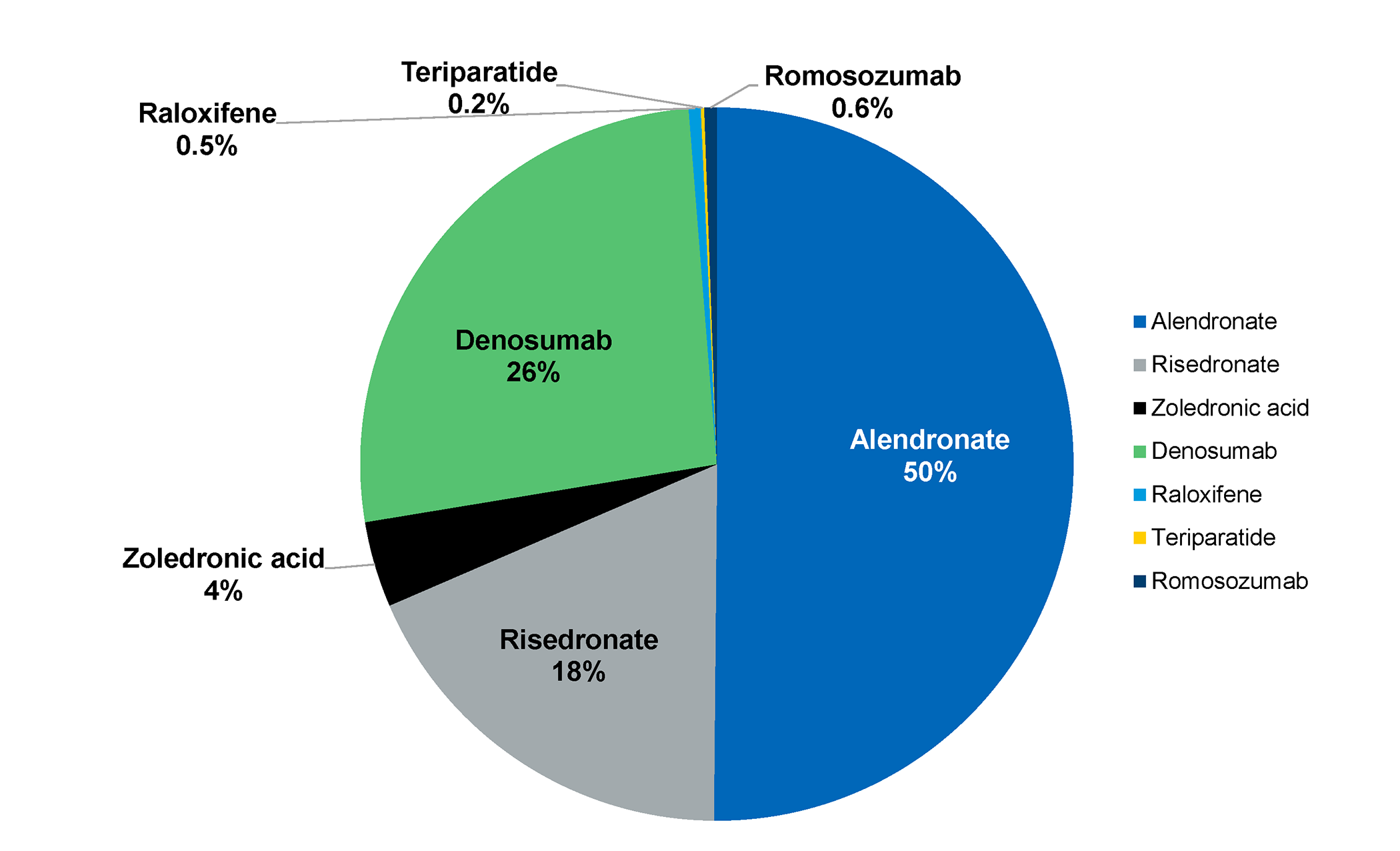
Patients receiving romosozumab make up a small share of all patients receiving osteoporosis drugs. In 2024, across all payment types in Manitoba, Saskatchewan, and British Columbia, 72% of women received bisphosphonates, 26% received denosumab, and 0.6% of women received romosozumab (Figure 1). Women receiving publicly funded romosozumab represented 0.2% of women receiving osteoporosis drugs. Preliminary 2025 data (claims from January to June), indicate that the proportion receiving romosozumab increased to 0.8% and 0.4% of that was publicly funded. These patterns suggest a modest increase in use and public coverage. Additional information about the distribution of drugs within the public plans across Canada is available in Appendix 2.
Figure 1: Proportion of Women Receiving Osteoporosis Treatments in Manitoba, Saskatchewan, and British Columbia, 2024
Note: Includes all payment types. Population restricted to women aged 20 years and older.
Source: National Prescription Drug Utilization Information System eReports.
Three Provinces Analyses
Patients Receiving Romosozumab
There were 1,461 women who received romosozumab in the 3 provinces of Manitoba, Saskatchewan, and British Columbia since its introduction to the Canadian market in 2019 to June 2025. Use of romosozumab in the 3 provinces has increased since it was first available in 2019 which suggests it is providing an unmet need. Figure 2 shows new patients each year. The increase in the slope of the line between 2023 and 2024 is consistent with changes in public drug plan coverage. The first public claim for romosozumab in Saskatchewan was the fourth quarter of 2023, the first quarter of 2024 in British Columbia, and the second quarter of 2024 in Manitoba. For context, the pan-Canadian Pharmaceutical Alliance issued a Letter of Intent for romosozumab in June 2023, which outlined the negotiated terms for funding.
Figure 2: New Recipients Receiving Romosozumab in Manitoba, Saskatchewan, and British Columbia
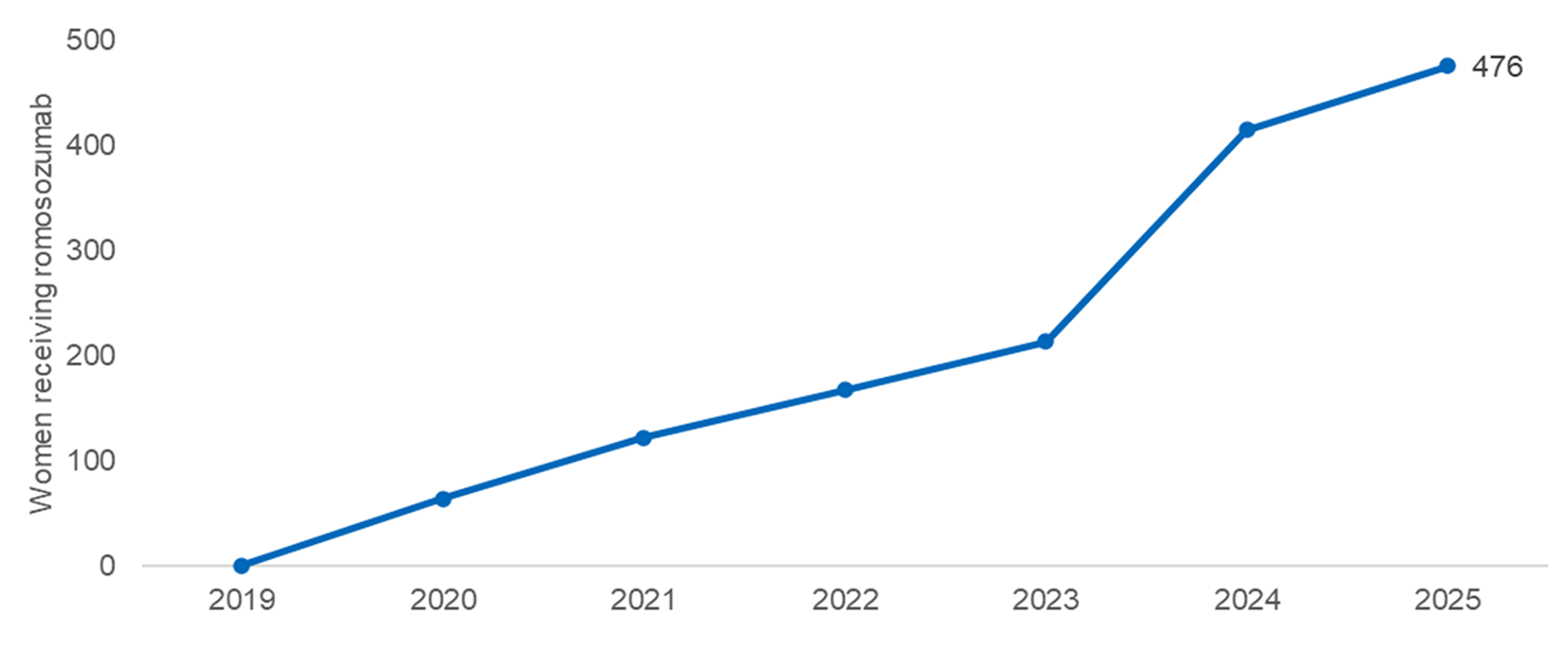
Notes: Includes all payment types in women aged 18 years and older.
The value in 2019 is 0 but was suppressed for privacy reasons, and was a number between 1 and 4 women.
The value for 2025 includes data to June 2025.
Source: National Prescription Drug Utilization Information System.
Variation Among Jurisdictions
When adjusted for population differences, there is a different rate of use in each of the 3 provinces (Figure 3), with British Columbia having the most women receiving romosozumab (50 per 100,000 women aged 18 years and older). Saskatchewan and Manitoba had 21 and 24 per 100,000 women, respectively. The rate of use in recipients of the public plan in the 3 provinces is also shown in Figure 3. In Manitoba 19% of claims were public, in Saskatchewan, 44% were public, and in British Columbia, 34% were public. The differences observed may be due to a combination of prescriber preferences, age of women in each jurisdiction, listing dates on public plans, and differences in drug plan policies for coverage of romosozumab.
Figure 3: New Recipients Receiving Romosozumab From 2019 to 2025 in Manitoba, Saskatchewan, and British Columbia, Adjusted for Population
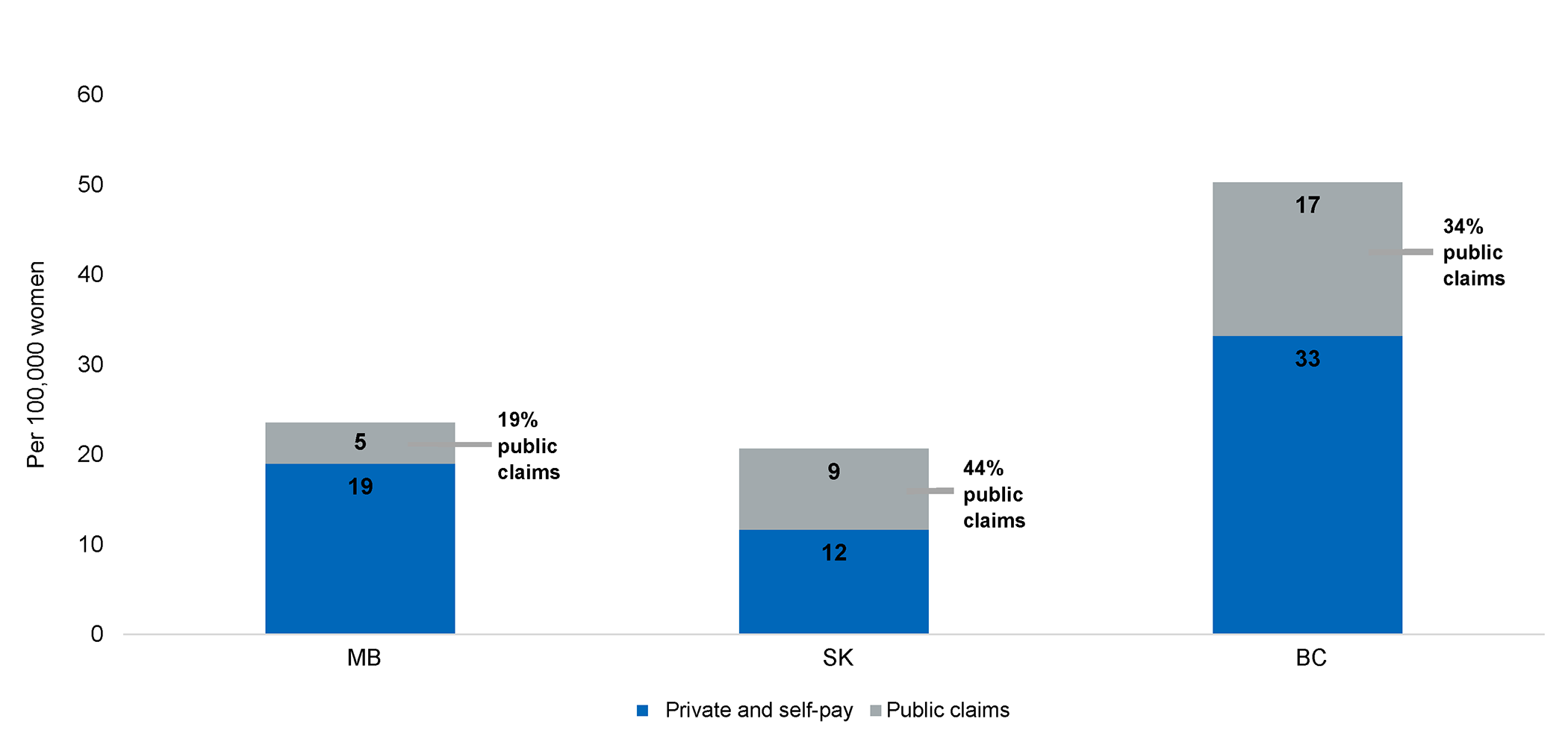
BC = British Columbia; MB = Manitoba; SK = Saskatchewan.
Notes: Includes all payment types.
Adjusted for population using Statistics Canada population estimates for women aged 18 years and older.42
Data included to June 2025.
Source: National Prescription Drug Utilization Information System.
Prior Treatment With Other Drugs for Osteoporosis
We looked back 1 to 5 years for prior osteoporosis drug use before the initial romosozumab prescription among the 1,461 women who received romosozumab in Manitoba, Saskatchewan, and British Columbia. Osteoporosis drugs that were considered were alendronate, risedronate, zoledronic acid, denosumab, raloxifene, and teriparatide. We required at least 2 prescription claims for oral drugs to count as prior exposure to avoid counting individuals who received a single prescription and never took it. Refer to Appendix 2 for more details.
Among romosozumab recipients, 28% (410) of women had prior exposure to an osteoporosis drug in the year before initiating romosozumab. Forty percent (578) had exposure to an osteoporosis drug in the 5 years before initiating romosozumab. Differences in prior treatment exposure compared with the ARCH (7%) and FRAME (9%) studies likely reflect differences between real-world populations and clinical trial populations. Exposures occurring more than 5 years before romosozumab receipt were not captured with our methods; therefore, the true proportion with prior exposure may be higher than reported. Among those with prior exposure, bisphosphonate use was common and the proportion increased with the length of the look-back period, from 57% of all osteoporosis drug use at 1 year to 68% at 5 years. Figure 4 shows the number of patients with prior exposure to an osteoporosis drug at each year increment up to 5 years of look back, stratified by payment type.
There is a clear difference between prior osteoporosis drug exposure for patients funded by public drug plans and patients with private insurance or self-payment, which may indicate inequity in access. When stratified by funding models, 2% of recipients in the public plans and 37% of recipients with private insurance or self-payment had prior osteoporosis drug exposure in the look-back window (percentages do not sum to 40% due to rounding). Figure 4 shows the number of patients with prior osteoporosis drug exposure in each of the 5 years of the look-back window. The observed difference likely reflects variability in reimbursement requirements among private insurance plans, enabling access to romosozumab in a broader range of clinical scenarios. This does not necessarily indicate appropriate use, as no assessment was conducted. Differences in socioeconomic status, the ability to navigate the health system and prior authorization processes associated with some private drug plans may also contribute to these patterns.
Figure 4: Disparity in Prior Treatment With Osteoporosis Drugs by Payer Among 1,461 Women Who Received Romosozumab in Manitoba, Saskatchewan, and British Columbia From 2019 to 2025
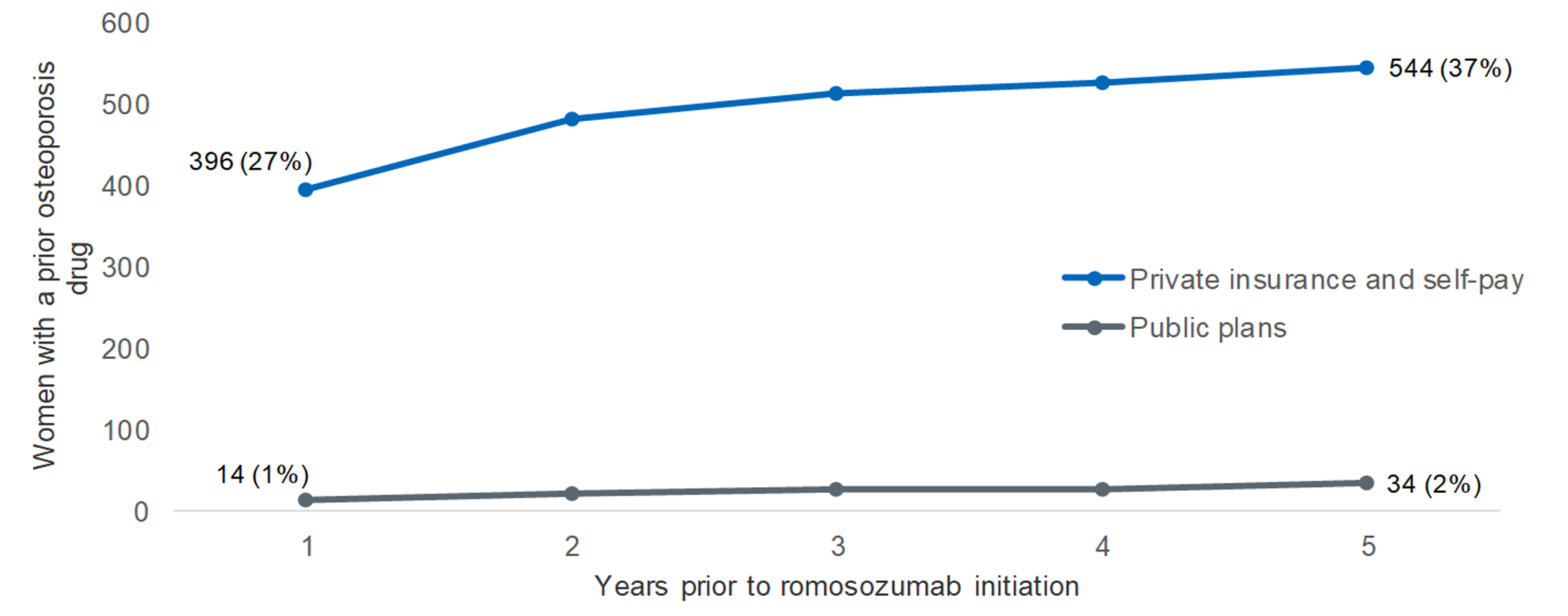
Notes: Includes all payment types. Look-back windows were cumulative: women with prior osteoporosis drug exposure in shorter windows were also included in all longer windows.
Data included to June 2025.
Percentages at 5 years do not sum to 40% due to rounding.
Source: National Prescription Drug Utilization Information System.
Demographics
Age
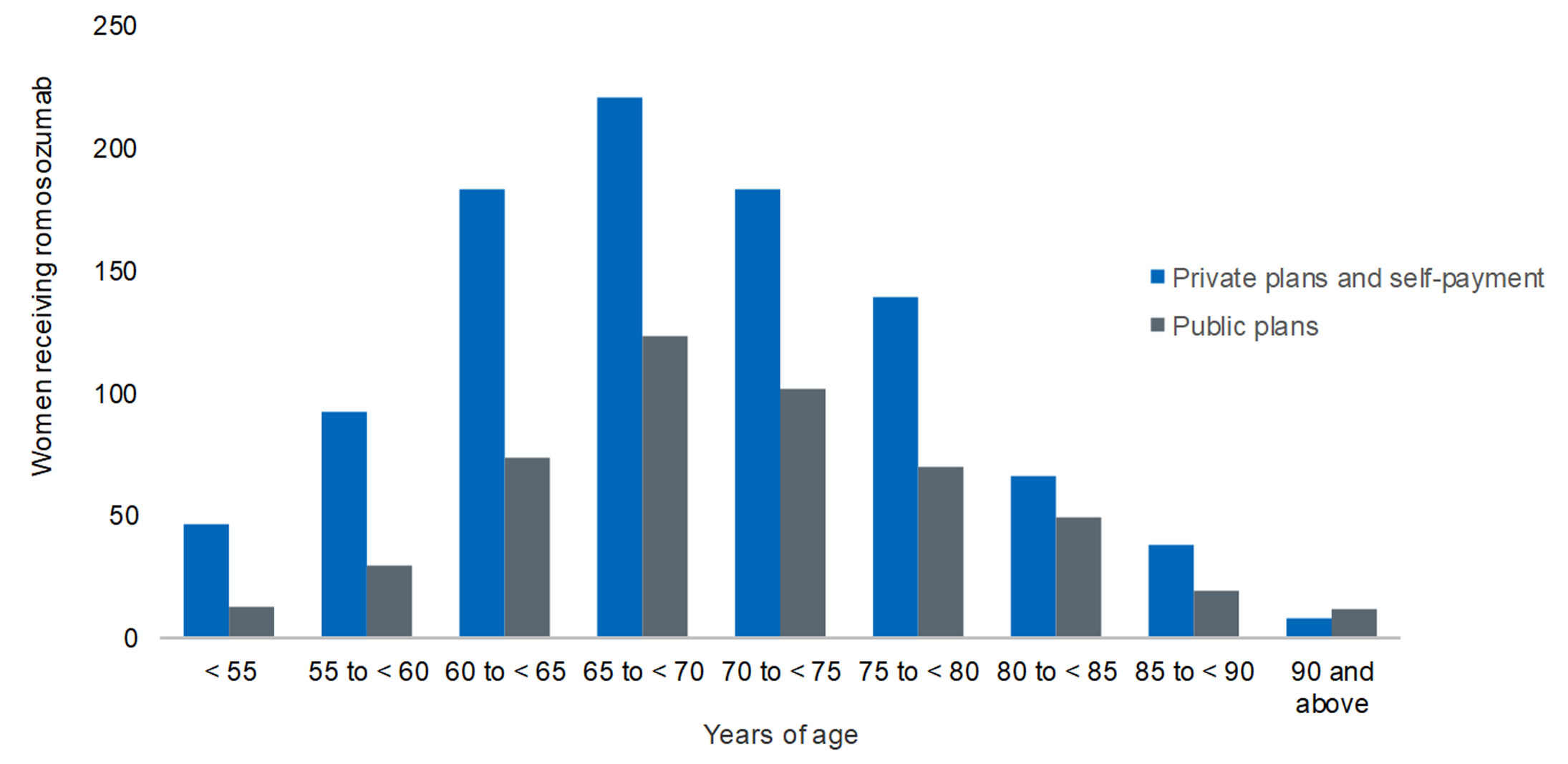
The average age of the women who had a claim for romosozumab was 69 years. The distribution of ages is shown in Figure 5. It is notable that women who are generally covered by public drug plans (those aged 65 years and older) are accessing the drug via private plans or self-payment in greater volumes than on the public drug plans, likely a reflection of an access barrier in the public drug plans.
Figure 5: Age Distribution of Women Receiving Romosozumab in Manitoba, Saskatchewan, and British Columbia From 2019 to 2025
Note: Data included to June 2025.
Source: National Prescription Drug Utilization Information System.
Place of Residence
Among all recipients receiving romosozumab, 86% lived in an urban area and 87% of recipients of the public plan lived in an urban area. This is slightly higher than what would be expected based on the proportion living in urban areas among the 3 provinces (83%).43 This suggests that living in a rural area may be a barrier to accessing romosozumab in general but current data does not suggest it is a greater barrier for those who accessed romosozumab through public drug plans. There were 34 women with a missing urban or rural residence and were not included in the percentage calculations.
Access Associated With Income
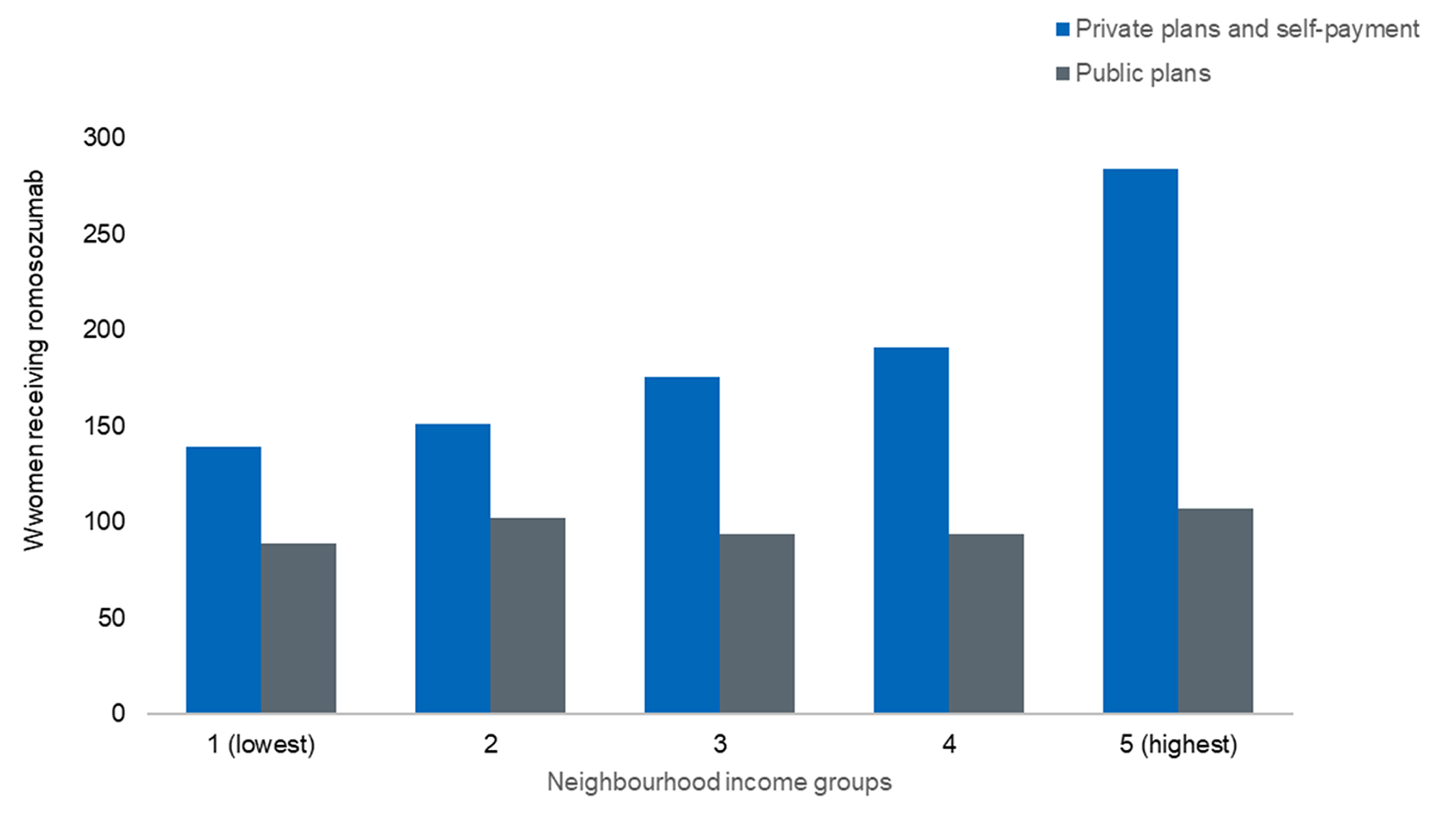
Among women who received romosozumab through private plans or self-payment, receipt increased stepwise with neighbourhood income (Figure 6), consistent with greater access among those with higher financial means. This pattern was not observed among recipients of a public drug plan; however, there were small numbers of women in each group, making the findings less reliable. There were 34 women with a missing income group and were not included in Figure 6.
Figure 6: Income Association With Receipt of Romosozumab in Manitoba, Saskatchewan, and British Columbia From 2019 to 2025
Notes: There were 34 women with missing data who were excluded from this figure.
Data included to June 2025.
Source: National Prescription Drug Utilization Information System.
Limitations
This analysis is based on prescription drug claims data from 3 provinces and may not be generalizable to other jurisdictions in Canada, where drug coverage policies, reimbursement criteria, prescribing patterns, and patient demographics can differ. In addition, complete public drug plan data were not available for a full year in all provinces: the first public claim for romosozumab occurred in the second quarter of 2024 in Manitoba, the fourth quarter of 2023 in Saskatchewan, and the first quarter of 2024 in British Columbia. As a result, comparisons across provinces and over time should be interpreted with caution.
The relatively small number of individuals receiving romosozumab limits the stability of estimates; observed patterns may not be apparent or may not persist in larger populations. The assessment of prior therapy was limited to a 1-year to 5-year look-back period and did not evaluate the extent of prior drug exposure beyond a minimum requirement for oral therapies. Indication is not captured in claims data; however, for prior therapies, the occurrence of dispensing — rather than the indication for use — was the primary consideration, and off-label use is not expected to materially affect these findings.
Finally, some osteoporosis treatments (e.g., IV bisphosphonates such as zoledronic acid) may be administered in hospital or clinic settings and funded through mechanisms that do not involve community pharmacy claims. These administrations would not be captured in the data, resulting in potential underestimation of prior exposure. The extent to which this affects observed patterns or relates to funding decisions is unclear.
Summary of Findings
Romosozumab utilization is low relative to other osteoporosis medications but has increased since its introduction in 2019.
Clear differences were observed by payer. Among women initiating romosozumab, 37% of those with private insurance or self-payment had prior osteoporosis drug exposure within the previous 5 years, compared with 2% of those covered by public drug plans and this is likely due to fewer reimbursement restrictions on private insurance plans.
A higher proportion of women eligible for the age-related coverage (aged 65 years and older) received romosozumab outside of public drug plans than within them, which may reflect challenges accessing treatment through public plans, and suggests potential inequities in access.
An association was observed between higher income and receipt of romosozumab, suggesting a potential equity-related signal.
Conclusion
The purpose of the Request for Advice was to determine the clinical criteria, specific to previous use of osteoporosis medications, for treatment with romosozumab in patients with osteoporosis at high risk for fractures. To do so, the review team conducted the following:
reviewed the inclusion and exclusion criteria from clinical trials of romosozumab included in the 2021 CDEC reimbursement review
reviewed exposure-response data related to antiosteoporotic treatments
reviewed clinical guidelines identifying patients with osteoporosis at high or very high risk of fracture who may be eligible for treatment with romosozumab, including guidance on treatment breaks or holidays
evaluated romosozumab utilization data from 2019 to 2025 in 3 provinces using all prescription drug claims, and in 9 provinces and 1 territory using public drug plans claims
sought input from interested parties, including 1 patient group, industry, 8 clinician groups, and 4 clinical experts.
Interested parties identified treatment gaps in the following patient populations based on the current CDA-AMC clinical criteria:
Patients who are intolerant to 1 or more osteoporosis treatment following a short course of therapy.
Patients who were initiated on a prior osteoporosis treatment (i.e., minimal exposure to antiresorptive therapy), but in whom subsequent evaluation identified romosozumab as the preferred first-line therapy (e.g., following specialist consultation or identification of contraindications to the initial treatment).
Patients with remote prior exposure to antiresorptive therapy (e.g., following a bisphosphonate drug holiday and/or time since last osteoporosis treatment exceeds the expected duration of effect) who require reinitiation of therapy, and for whom romosozumab is the preferred option.
Seven percent of participants in the ARCH study and 9% of patients in the FRAME study had prior exposure to an osteoporosis treatment. The exclusion criteria relating to previous osteoporosis treatment was outlined in Table 3. The use of osteoporosis treatments more than 5 years before screening was not captured. As a result, it is unclear how many patients enrolled in the ARCH and FRAME trials had received osteoporosis treatment more than 5 years before enrolment.
The STRUCTURE trial was evaluated as part of the Request for Advice to determine if romosozumab is clinically effective in patients who received prior exposure to bisphosphonate therapies. All patients in the STRUCTURE trial had previous exposure to an oral bisphosphonate. The STRUCTURE trial demonstrated the magnitude of hip BMD and strength improvement observed in patients who received prior bisphosphonate therapy followed by romosozumab is clinically meaningful, based on the SABRE study and input from the clinical experts consulted.
The exposure-response data demonstrated that osteoporosis treatments are not immediately effective. Based on the finding, the onset of action is 6 to 12 months, depending on the specific osteoporosis treatment. As a result, the effectiveness of bisphosphonates or denosumab is not yet achieved in patients who receive short-term (i.e., 3 to 4 month) exposure while awaiting a specialist consultation, or in patients who experience an adverse event shortly after starting a bisphosphonate therapy.
The persistence of fracture protection varies greatly among first-line antiresorptive treatment options, from no persistence with denosumab to several years of persistence with zoledronic acid and alendronate. As a result, it is not possible to generalize the persistence of a first-line treatment option following treatment discontinuation or during a drug holiday.
Based on a review of other HTA bodies’ romosozumab clinical criteria, no other HTA bodies currently include the requirement for a patient to be treatment naive to osteoporosis treatments (excluding calcium and vitamin D). The review of clinical guidelines did not directly address the Request for Advice policy question. Romosozumab reimbursement criteria in numerous countries leaves Canada unique in requiring patients to be treatment naive to osteoporosis medications, except for calcium and/or vitamin D.
The drug utilization analysis identified a higher proportion of women with prior osteoporosis drug exposure among those with private insurance or who paid out-of-pocket for romosozumab than among women who were receiving romosozumab through a public drug plan. Among those who were eligible for age-based public coverage (aged 65 years and older), receipt of romosozumab was more common outside public drug plans than within them. In addition, higher income was associated with receipt of romosozumab, suggesting a potential equity-related signal.
References
1.Osteoporosis: impact report 2024-2025. Toronto (ON): Osteoporosis Canada; 2025: Impact Report 2025 | Osteoporosis Canada Accessed 2026 May 4.
2.Canada’s Drug Agency: Romosozumab CADTH Reimbursement Recommendation. November 2021, Volume 1; Issue 11: Romosozumab (Evenity) Accessed 2026 May 4.
3.Schini M., Li-Ying L., Vilaca T. et al. The relationship between baseline bone mineral density and fracture incidence in the placebo groups of randomized controlled trials using individual patient data from the FNIH-ASBMR-SABRE project. J Bone Miner Res. 2025 Mar 15;40(3):307-314. PubMed
4.Canada’s Drug Agency: Procedures for Reimbursement Reviews. September 2025. www.cda-amc.ca/search?s+request%20for%20 advice Accessed 2026 May 19.
5.Cosman F, Crittenden DB, Adachi J, Binkley N, et al. Romosozumab Treatment in Postmenopausal Women with Osteoporosis. N Engl J Med 2016; 375, 1532-1543. PubMed
6.Saag K, Petersen J, Brandi ML, Karaplis AC, et al. Romosozumab or Alendronate for Fracture Prevention in Women with Osteoporosis. N Engl J Med 2017; 377, 1417-1427. PubMed
7.Langdahl B, Libanati C, Crittenden D et al. Romosozumab (sclerostin monoclonal antibody) versus teriparatide in postmenopausal women with osteoporosis transitioning from oral bisphosphonate therapy: a randomised, open-label, phase 3 trial. Lancet, 2017; 390, 1585-1594. PubMed
8.Levis S, Quandr SA, Thompson D, et al. 2002. Alendronate reduces the risk of multiple symptomatic fractures: results from the Fracture Intervention Trial. Journal of the American Geriatrics Society, 50:409-15. PubMed
9.Black, D.M, Schwartz A.V., Ensrud K, et al. Effects of Continuing or Stopping Alendronate after 5 years of treatment. The Fracture Intervention Trial Long-Term Extension (FLEX): A Randomized Trial. JAMA December 27, 2006. 2006;296;(24):2927-2938.
10.Curtis J.R., Saag K.G., Arora T, et al. Duration of bisphosphonate drug holidays and associated fracture risk. Med Care. 2020 May; 58(5):419-426. doi:10.1097/MLR.0000000000001294.; PMCID: PMC8287838.PubMed
11.Harrington J.T., Ste-Marie L.-G., Brandi M.L., et al. 2004. Risedronate rapidly reduces the risk for nonvertebral fractures in women with postmenopausal osteoporosis. Calcified Tissue International. Vol 74 p 129-135 (March 2004). PubMed
12.Roux C., Seeman E., Eastell R, et al. 2004. Efficacy of risedronate on clinical vertebral fractures within six months. Current Medical Research and Opinions, 01 April 2004, 20(4):433-439. PubMed
13.Cummings, S.R., San Martin J, McClung, M., et al. Denosumab for prevention of fractures in postmenopausal women with osteoporosis. The New England Journal of Medicine. 2009;361:756-65. PubMed
14.Boonen S, Eastell R, Guoqin S, et al. 2012. Time-to-onset of antifracture efficacy and year-by-year persistence of effect of zoledronic acid in women with osteoporosis. Journal of Bone and Mineral Research. 2012 July; 27(7); 1487-1493. PubMed
15.Sarli M, Farias V, Abdala R, et al. Romosozumab after rebound vertebral fractures induced by denosumab discontinuation: a case series. JBMR Plus. 2025 Dec 8; 10 (2): ziaf186. doi:10.1093/jbmrpl/ziaf186.; PMCID: PMC12790271.PubMed
16.International Osteoporosis Foundation. Denosumab effects. www.osteoporosis.foundation/health-professionals/treatment/denosumab. Accessed 20 May 2026.
17.McClung, M.R., Lewiecki E.M., Cohen S.B., et al., Denosumab in postmenopausal women with low bone mineral density. New England Journal of Medicine, 2006. 354(8): p 821-31. PubMed
18.Symonds C. and Kline G. Warning of an increased risk of vertebral fracture after stopping denosumab. Canadian Medical Association Journal. April 23, 2018. 190(16) E485-486. PubMed
19.Kendler D.L., Marin F, Zerbini, C, et al. Effects of teriparatide and risedronate on new fractures in post-menopausal women with severe osteoporosis (VERO): a multicentre, double-blind, double-dummy, randomized controlled trial. Lancet, 2018; 391, 230-240. PubMed
20.Prince R., Sipos A, Hossain A, et al. Sustained nonvertebral fragility fracture risk reduction after discontinuation of teriparatide treatment. Journal of Bone and Mineral Research May 2005; (20)9 doi:10.1359/JBMR.050501 PubMed
21.Deardorff WJ, Cenzer I, Nguyen B, Lee SJ. Time to Benefit of Bisphosphonate Therapy for the Prevention of Fractures Among Postmenopausal Women With Osteoporosis: A Meta-analysis of Randomized Clinical Trials. JAMA Intern Med. 2022;182(1):33–41. PubMed
22.Morin SN, Feldman S, Funnell L, Giangregorio L, Kim S. Clinical practice guidelines for management of osteoporosis and fracture prevention in Canada: 2023 update. Canadian Medical Association Journal (CMAJ) 2023 Oct 10; 195:E1333-48. PubMed
23.Health Canada. Romosozumab product monograph. https://pdf.hres.ca/dpd_pm/00051819.PDF Accessed June 17, 2026.
24.Khan AA, Alrob HA, Ali DS, Dandurand K, Wolfman W, Fortier M. Guideline no. 422g: menopause and osteoporosis. Journal of Obstetrics and Gynaecology Canada. 2022 May 1;44(5):527-36. PubMed
25.Payer J, Jackuliak P, Vaňuga P, Killinger Z, Dubecká S, Kužma M. National guidelines for diagnosis and treatment of osteoporosis in Slovakia. Archives of Osteoporosis. 2025 May 4;20(1):56. PubMed
26.Van den Bergh JP, Geusens P, Appelman-Dijkstra NM, van den Broek HJ, Elders PJ, de Klerk G, van Oostwaard M, Willems HC, Zillikens MC, Lems WF. The Dutch multidisciplinary guideline osteoporosis and fracture prevention, taking a local guideline to the international arena. Archives of Osteoporosis. 2024 Apr 2;19(1):23. PubMed
27.Al-Saleh Y, Sulimani R, Sabico S, Alshahrani FM, Fouda MA, Almohaya M, Alaidarous SB, Alkhawashki HM, Alshaker M, Alrayes H, Saleh N. Diagnosis and management of osteoporosis in Saudi Arabia: 2023 key updates from the Saudi Osteoporosis Society. Archives of osteoporosis. 2023 May 22;18(1):75. PubMed
28.Park SY, Kim SH, Lee YK, Shin JH, Ha YC, Chung HY. Position statement: postmenopausal osteoporosis treatment strategies in Korea. Journal of Bone Metabolism. 2023 Nov 30;30(4):289. PubMed
29.Qaseem A, Hicks LA, Etxeandia-Ikobaltzeta I, Shamliyan T, Cooney TG, Clinical Guidelines Committee of the American College of Physicians, Cross Jr JT, Fitterman N, Lin JS, Maroto M, Obley AJ. Pharmacologic treatment of primary osteoporosis or low bone mass to prevent fractures in adults: a living clinical guideline from the American College of Physicians. Annals of internal medicine. 2023 Feb;176(2):224-38. PubMed
30.Silva BC, Madeira M, d’Alva CB, Maeda SS, Holanda NC, Ohe MN, Szejnfeld V, Zerbini CA, Paula FJ, Bandeira F. Definition and management of very high fracture risk in women with postmenopausal osteoporosis: a position statement from the Brazilian Society of Endocrinology and Metabolism (SBEM) and the Brazilian Association of Bone Assessment and Metabolism (ABRASSO). Archives of endocrinology and metabolism. 2022;66:591-603. PubMed
31.El Miedany Y, Paruk F, Kalla A, Adebajo A, El Gaafary M, El Maghraoui A, Ngandeu M, Dey D, Gadallah N, Elwy M, Moosajee F. Consensus evidence-based clinical practice guidelines for the diagnosis and treat-to-target management of osteoporosis in Africa: an initiative by the African Society of Bone Health and Metabolic Bone Diseases. Archives of Osteoporosis. 2021 Dec;16(1):176. PubMed
32.American College of Obstetricians and Gynecologists (2022). Management of Postmenopausal Osteoporosis: ACOG Clinical Practice Guideline No. 2. Obstetrics & Gynecology. 2022;139(4). 10.1097/AOG.0000000000004730. PubMed
33.United Stated Food and Drug Administration. Romosozumab label and prescribing information. www.accessdata.fda.gov/drugsatfda_docs/label/2019/761062s000lbl.pdf. Accessed 2026 May 28.
34.Institut national d’excellence en sante et en services sociaux Quebec (INESSS). Romosozumab extrait d’avis au ministre. https://www.inesss.qc.ca/fileadmin/doc/INESSS/Inscription_medicaments/Avis_au_ministre/Juin_2021/Evenity_2021_05.pdf Accessed June 17, 2026.
35.National Institute for Health and Care Excellence (NICE). Romosozumab for treating severe osteoporosis. www.nice.org.uk/guidance/TA791/chapter/1-Recommendations. Accessed June 17, 2026.
36.Scottish Medicines Consortium. Romosozumab Advice. https://scottishmedicines.org.uk/medicines-advice/romosozumab-evenity-full-smc2280/ Accessed June 17, 2026.
37.Italian Medicines Agency. Romosozumab Reimbursement Recommendation. www.aifa.gov.ot/en/ricerca-aifa. Accessed June 17, 2026.
38.Australia Pharmaceutical Benefits Scheme (PBS). Romosozumab Public Summary Document. www.pbs.gov.au/industry/listing/elements/pbac-meetings/psd/2022-07/files/romosozumab-psd-july-2022.pdf. Accessed June 17, 2026.
39.Haute Authorite de Sante (France). Avis sur les medicaments – Romosozumab. romosozoumab https://www.has-sante.fr/jcms/p_3243905/fr/evenity-romosozumab. Accessed June 17, 2026.
40.Agencia espanola de medicamentos y productos sanitarios. Romosozumab therapeutic reimbursement recommendations. www.aemps.gob.es/medicamentosUsoHumano/informesPublicos/docs/2022/IPT_05-2022-romosozumab.pdf. Accessed June 17, 2026.
41.Canadian Institute for Health Information. National Prescription Drug Utilization Information System eReports. Accessed May 22, 2026.
42.Statistics Canada. Table 17-10-0005-01. Population estimates on July 1, by age and gender. DOI: 10.25318/1710000501-eng. Accessed May 28, 2026.
43.Statistics Canada. Table 98-10-0016-01 Population and dwelling counts by the Statistical Area Classification https://www150.statcan.gc.ca/t1/tbl1/en/tv.action?pid=9810001601. Accessed June 1, 2026.
44.World Health Organization. Anatomical Therapeutic Chemical (ATC) classification. https://www.who.int/tools/atc-ddd-toolkit/atc-classification. Accessed June 1, 2026.
45.Health Canada. Drug product database: terminology. Government of Canada. https://www.canada.ca.en/health-canada/services/drugs-health-products/drug-products/drug-product-database/terminology.html. Accessed June 1, 2026.
46.Statistics Canada. Postal Code OM Conversion File Plus (PCCF+). 2026. Accessed June 24, 2026. https://www150.statcan.gc.ca/n1/en/catalogue/82F0086X
47.Canadian Institute for Health Information. Measuring Health Inequalities: A Toolkit. 2018. Accessed June 24, 2026. https://www.cihi.ca/sites/default/files/document/toolkit-area-level-measurement-pccf-en.pdf
48.Canadian Institute for Health Information. Indicator Library General Methodology Notes — Clinical Indicators. 2025. Accessed June 24, 2026. https://www.cihi.ca/sites/default/files/document/general-methodology-notes.pdf
49.Canadian Institute for Health Information. Privacy and Security. https://www.cihi.ca/en/about-cihi/privacy-and-security Accessed June 1, 2026.
50.Statistics Canada. Table 17-10-0005-01. Population estimates on July 1, by age and gender. DOI: 10.25318/1710000501-eng. Accessed May 28, 2026.
51.Lan M, Alemu FW and Ali S (2024) The doctor will not see you now: investigating the social determinants of specialist care using the Canadian Longitudinal Study on Aging (CLSA). Front. Public Health 12:1384604. doi:10.3389/fpubh.2024.1384604 PubMed
52.Government of Canada. Health Inequalities Data Tool. Health Inequalities | Public Health Infobase - Canada.ca. ccessed May 27, 2026.
Appendix 1: Historical Romosozumab Reimbursement Conditions and Reasons
Please note that this appendix has not been copy-edited.
Table 7: Romosozumab Reimbursement Conditions and Reasons, November 2021
Reimbursement condition | Reason |
|---|---|
Initiation | |
1. Patients with a history of osteoporotic fracture and who are at high risk for future fracture, defined as a 10-year fracture risk ≥ 20% as defined by the FRAX tool. | The ARCH trial included patients who had a history of fracture (> 99%) or a prevalent fracture (96%). Patients had a mean 10-year probability of a major osteoporotic fracture of 20% at baseline based on FRAX. |
2. The patient must be treatment naive to osteoporosis medications, except for calcium and/or vitamin D. | Only 9% of patients enrolled in the ARCH trial had prior use of osteoporosis medications, such as oral bisphosphonates. The currently available evidence demonstrating reduced risk of fracture with romosozumab compared with alendronate in patients who were predominantly treatment naive, the lack of evidence on initiating treatment with romosozumab in patients who were treatment experienced, and the bone-forming mechanism of action of the drug support the use of romosozumab in patients who have not been previously treated with osteoporosis medications. |
3. Maximum duration of reimbursement is 12 months. | The maximum duration of treatment with romosozumab in the ARCH trial was 12 months. The approved duration of treatment by Health Canada for romosozumab is limited to 12 months. |
Prescribing | |
4. Romosozumab should not be prescribed concurrently with other osteoporosis medications, except for calcium and/or vitamin D. | There is no evidence supporting concurrent treatment with romosozumab and other osteoporosis medications. Concurrent therapy was not permitted in the ARCH trial, except with calcium and vitamin D. |
Pricing | |
5. Price reduction needed. | In the base case, a sequential ICER was derived for romosozumab of $219,799 per QALY when compared to currently funded alternatives in patients covered under the requested reimbursement population. A price reduction of 53% would be required for romosozumab to achieve an ICER of $50,000 per QALY in this population. These price reductions are based on an ITC which was deemed to have substantial uncertainty associated with it. Therefore, a higher price reduction may be required to ensure cost-effectiveness, given that romosozumab is substantially more expensive than alternatives for which there is no direct evidence. |
FRAX = Fracture Risk Assessment Tool; ICER = incremental cost effectiveness ration; ITC = indirect treatment comparison; QALY = quality-adjusted life year.
Table 8: Relevant Responses to Questions From the Drug Programs
Implementation issues | Response |
|---|---|
Considerations for initiation of therapy | |
Would patients who are currently receiving active treatment for osteoporosis (e.g., bisphosphonates) be switched to romosozumab in practice? | CDEC discussed clinical expert input that in practice settings if patients are receiving active treatment for osteoporosis and not achieving treatment goals and are still at high risk of facture, clinicians would likely switch to romosozumab. However, CDEC noted that the ARCH and FRAME trials were designed to include patients who had not been treated with osteoporosis medications. Although the ARCH trial included patients who had previously been treated with an osteoporosis medication (9%, mostly oral bisphosphonates) despite the eligibility criteria, the trial was not designed to evaluate the effects of switching to romosozumab. Therefore, there is no evidence for the effects of switching from osteoporosis medications to romosozumab. |
Will romosozumab be prescribed initially by a clinical specialist (e.g., endocrinologist)? There may be limited access to specialists within some regions. | Primary care prescribers as well as specialists should be able to prescribe romosozumab. |
CDEC = Canadian Drug Expert Committee.
Appendix 2: Drug Utilization Methods
Detailed Methods for Drug Utilization
We conducted 2 sets of analyses in collaboration with CIHI using the NPDUIS. NPDUIS contains public drug claims data from community pharmacies from most jurisdictions in Canada, and contains all drug claims regardless of payer in Manitoba, Saskatchewan, and British Columbia. We also summarized prescription drug data from NPDUIS eReports. Table 9 provides an overview of the approach to each analysis, Table 10 provides drug identification criteria and Table 11 provides detail on additional concepts.
Table 9: Overview of Study Methods and Specifications
Analysis | Three provinces | Public drug plans | eReports summary for 3 provinces | eReports summary for public drug plans |
|---|---|---|---|---|
Population | Women aged 18 years and older in Manitoba, Saskatchewan, and British Columbia. | Women aged 71 years and older in Newfoundland, Prince Edward Island, Nova Scotia, New Brunswick, Ontario, Manitoba, Saskatchewan, Alberta, British Columbia, and Yukon. | Women aged 20 years and older in Manitoba, Saskatchewan, and British Columbia. | Women aged 20 years and older in Newfoundland, Prince Edward Island, Nova Scotia, New Brunswick, Ontario, Manitoba, Saskatchewan, Alberta, British Columbia, and Yukon. |
Data source | NPDUIS | NPDUIS; public drug plan claims only | NPDUIS eReports | NPDUIS eReports |
Exposure | Initial claim for romosozumab, defined as having no claim for romosozumab in the 365-day period before the claim. Refer to Table 10 for prior osteoporosis drug exposures, ATC classification codes used, and look-back definitions. | Initial claim for romosozumab, defined as having no claim for romosozumab in the 365-day period before the claim. Refer to Table 10 for prior osteoporosis drug exposures, ATC classification codes used, and look-back definitions. | A claim for any osteoporosis treatment listed in Table 10 in a year. | A public drug plan claim for any osteoporosis treatment listed in Table 10 in a year. |
Outcomes | Number of recipients receiving romosozumab, number of recipients with prior osteoporosis drug claims in 1 to 5 years before initial romosozumab claim, recipient demographics. Some analyses were stratified by payer type (private insurance and self-payment, public drug plans). | Number of recipients receiving romosozumab, number of recipients with prior osteoporosis drug claims in 1 to 5 years before initial romosozumab claim, recipient demographics. | Number of recipients for each drug listed in Table 10. | Number of recipients in a public drug plan for each drug listed in Table 10. |
Study design | Retrospective descriptive study | Retrospective descriptive study | Cross-sectional summary | Cross-sectional summary |
Time | 2019 to 2025 calendar years Romosozumab was first available in Canada in 2019. NPDUIS data were available to June 2025. Most analyses include the entire cohort over this time period, except when presented by year. | 2019 to 2025 calendar years Romosozumab was first available in Canada in 2019. NPDUIS data were available to June 2025. Most analyses include the entire cohort over this time period, except when presented by year. | 2024 calendar-year claims 2025 calendar-year claims for romosozumab for comparison | 2024 calendar-year claims 2025 calendar-year claims for romosozumab for comparison |
ATC = Anatomic Therapeutic Chemical; NPDUIS = National Prescription Drug Utilization System.
Three Provinces Analyses
All claims for women aged 18 years and older from Manitoba, Saskatchewan, and British Columbia dispensed in community pharmacies between 2019 and June 2025 were included. This includes both public and private claims and self-payment, as well as claims submitted to public drug programs for payment or processed for documentation under a drug information system.
The initial romosozumab prescription (index date) was defined as the first observed romosozumab claim during the study period. Demographic characteristics (age, location of residence, and neighbourhood income group) were assessed at the time of the index claim.
Claims were classified as public drug plan claims if they were accepted by a public drug program, meaning that all or part of the claim was applied toward a deductible or reimbursed. In analyses stratified by payer, classification was based on the payer of the index romosozumab claim.
Prior osteoporosis drug exposure was assessed over look-back periods of 1 to 5 years (365 to 1,825 days) before the index date. Individuals identified in a shorter look-back period were also included in longer look-back periods. Prior exposure could reflect drugs funded through either public or private payers.
Drugs were identified using Anatomic Therapeutic Chemical classification codes at the fifth level, as described in Table 10.
Public Drug Plans Analyses
We analyzed drug claims that were accepted by public drug programs for Newfoundland and Labrador, Prince Edward Island, Nova Scotia, New Brunswick, Ontario, Manitoba, Saskatchewan, Alberta, British Columbia, and Yukon. This included claims where at least part of the claim was paid by the plan or applied toward a patient deductible. This analysis was performed to assess generalizability of the public drug plans stratification in the 3-province analyses to other jurisdictions.
We identified women aged 71 years or older between 2019 and June 2025 with an initial claim for romosozumab (defined as no romosozumab claim in the 365 days before the claim). Age 71 years was used in the public drug plans analysis to account for how age is recorded in NPDUIS, which assigns all individuals a January 1 birthdate. This can overestimate age within a calendar year and result in misalignment between observed age and eligibility for public drug coverage. By using age 71 years, a 5-year look-back period more reliably falls within years when individuals were eligible for public coverage (aged 65 years), avoiding the inclusion of time periods before coverage that would occur if age 70 years were used.
Prior osteoporosis drug exposure was assessed over look-back periods of 1 to 5 years (365 to 1,825 days) before the index date (initial romosozumab claim). Individuals identified in a shorter look-back period were also included in longer look-back periods. Prior exposure reflected drugs funded through the public plans only.
Drugs were identified using Anatomic Therapeutic Chemical classification codes at the fifth level, as described in Table 10.
eReports Analysis
We also conducted an analysis using NPDUIS eReports,36 an online, interactive data tool maintained by CIHI as part of NPDUIS. It provides standardized summary statistics by jurisdiction on drug claims and beneficiaries. We prepared an analysis of women aged 20 years and older for the 3 provinces where all claims are available (Manitoba, Saskatchewan, and British Columbia). Age 20 years was selected rather than age 18 years due to the standardized age groups available in eReports. We used the Anatomic Therapeutic Chemical classification codes (Table 10) to identify each drug and reported the number of women with a claim for each drug as a proportion of all women receiving an osteoporosis drug in 2024. We repeated this analysis for romosozumab in 2025 because as a relatively new drug, romosozumab use as a proportion of all drugs, may have grown; however, data were only available until June 2025. Any individuals initiating a drug in the second half of 2025 would not be reflected in the 2025 analysis. We repeated this analysis in women aged 20 years and older in all available public drug plans in 2024 and 2025.
Table 10: Osteoporosis Drug Definitions and Identification Criteria
Drug | Class | Route of administration | ATC classification code(s) | Look-back definition |
|---|---|---|---|---|
Romosozumab | Primary drug of interest | N/A | M05BX06 | Count as initial prescription if no other romosozumab claim in the 365 before the claim |
Alendronate | Bisphosphonate | Oral | M05BA04 M05BB03 M05BB05 M05BB06 | Count if there are 2 claims on different days for any of the ATC classification codes in the time period indicated (except, count if there are 2 claims each with 84+ supply on the same day, which indicates a vacation supply) |
Risedronate | Bisphosphonate | Oral | M05BA07 M05BB02 M05BB04 M05BB07 | |
Etidronate | Bisphosphonate | Oral | M05BA01 M05BB01 | |
Zoledronic acid | Bisphosphonate | Parenteral | M05BA08 M05BB08 | Count if there is at least 1 claim in the time period indicated |
Denosumab | Other | Parenteral | M05BX04 | Count if there is at least 1 claim in the time period indicated |
Teriparatide | Other | Parenteral | H05AA02 | Count if there is at least 1 claim in the time period indicated |
Raloxifene | Other | Oral | G03XC01 | Count if there are 2 claims on different days (except, count if there are 2 claims each with 84+ supply on the same day, which indicates a vacation supply) |
ATC = Anatomic Therapeutic Chemical; N/A = not applicable.
Table 11: Additional Concepts Descriptions
Concept | Definition |
|---|---|
Adjustment for population differences across provinces and territories | The July 1 Statistics Canada population37 was used to provide a rate per 100,000 population. For the 3-province analyses, the population of women aged 18 years and older for 2025 was used; for the public drug plan analysis, the population of women aged 71 years and older for 2025 was used. Statements comparing the overall proportion of urban population to study findings were based on the Statistics Canada 2021 population and dwelling counts by the Statistical Area Classification.43 No age or sex adjustment could be made for these numbers. |
ATC classification codes | A hierarchical drug classification system maintained by the WHO44,45 that categorizes medications according to the organ or system on which they act and their therapeutic, pharmacological, and chemical properties. ATC classification codes are structured across 5 levels. In this analysis, drugs were identified using fifth-level codes, which correspond to specific chemical substances. |
Neighbourhood income quintiles or groups | Patients were categorized using the full patient postal code and the PCCF+ algorithm. First or lowest neighbourhood income quintile represents the bottom 20% of the population within the person’s local area (census metropolitan area, census agglomeration, or provincial residual area); fifth or highest neighbourhood income quintile represents the top 20% of the population within that area. Neighbourhood income quintiles are designed to account for differences in income distributions across geographic areas and provide a relative measure of neighbourhood income.46-48 Records without a usable postal code were not assigned a neighbourhood income quintile; if missing values represented between 1 and 4 women, they were included in income quintile 3. Otherwise, they were reported separately in text. When data were presented graphically, missing values of 5 or larger were not included in the percentage calculation. |
Suppressed values | When the number of claimants is between 1 and 4 for a given stratification, the number and its associated metrics is suppressed to ensure confidentiality, in accordance with CIHI privacy policy.41 To avoid recalculation, additional values may also require be suppressed (secondary suppression). |
Urban and rural place of residence | Determined by CIHI using the full patient postal code and the PCCF+ algorithm.46 Urban was defined as SAC type 1, 2, 3. Rural was defined as SAC type 4, 5, 6, 7, 8.47,48 Records without a usable postal code were not assigned to either category; if missing values represented between 1 and 4 women, they were included in the rural category. Otherwise, they were reported separately in text. When data were presented graphically, missing values of 5 or larger were not included in the percentage calculation. Statements comparing the overall proportion of urban population to study findings were based on Statistics Canada 2021 population and dwelling counts by the Statistical Area Classification.43 No age or sex adjustment could be made for these numbers. |
ATC = Anatomic Therapeutic Chemical; CIHI = Canadian Institute for Health Information; PCCF+ = Postal Code Conversion File Plus; SAC = Statistical Area Classification.
Findings: Public Drug Plans
Romosozumab Utilization (eReports Summary)
Women receiving romosozumab make up a small share of all patients receiving osteoporosis drugs, at 0.1% in 2024 (Figure 7). The proportion in 2025 increased to 0.2% using claims to June. While the proportions of bisphosphonates and denosumab differ from the 3-province analyses, the overall proportion of women receiving romosozumab is still very small, as in the 3-province analyses.
Figure 7: Proportion of Women Receiving Osteoporosis Treatments in 10 Public Drug Plans, 2024
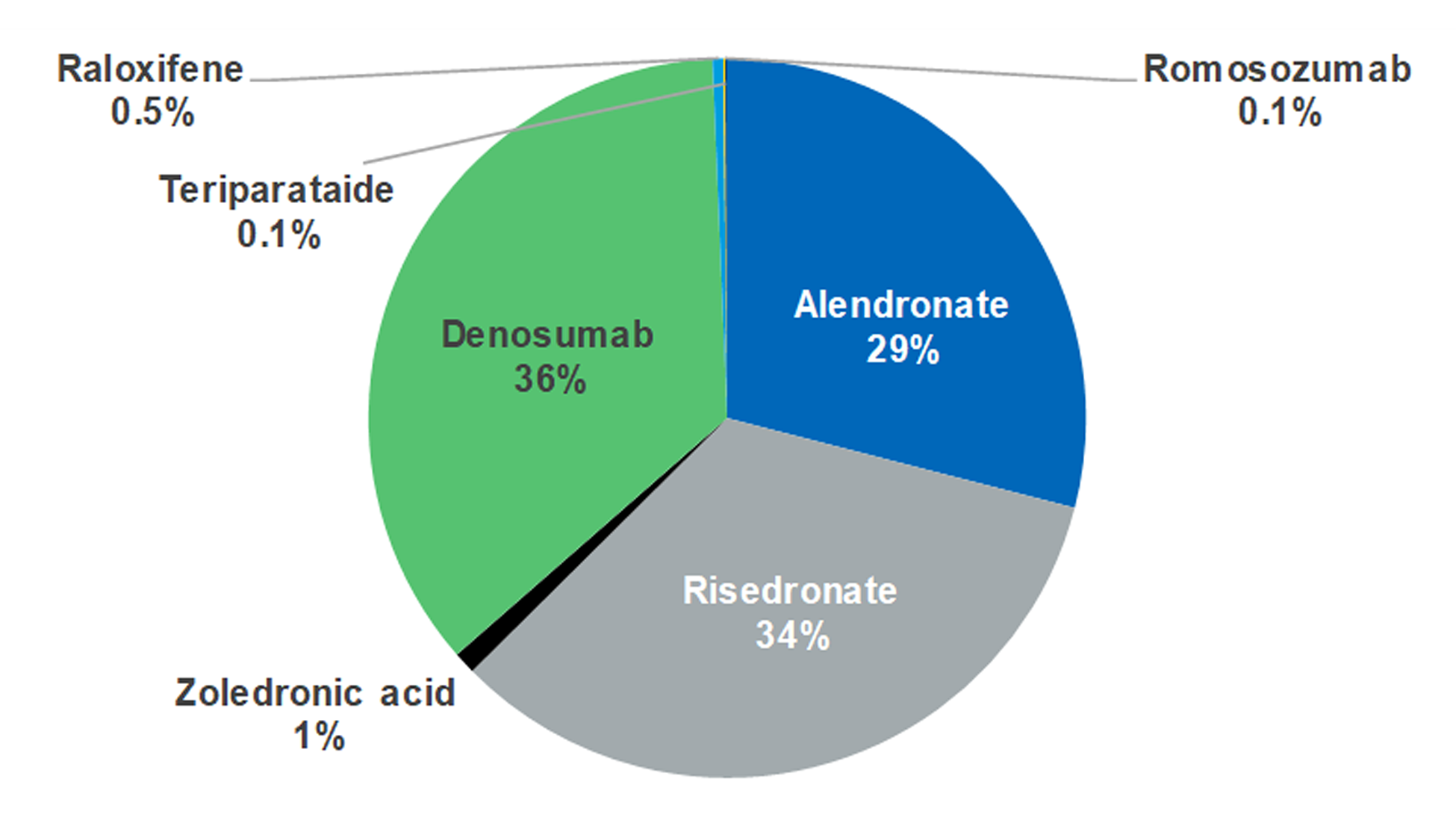
Note: Includes public drug plans claims in Newfoundland and Labrador, Prince Edward Island, Nova Scotia, New Brunswick, Ontario, Manitoba, Saskatchewan, Alberta, British Columbia, and Yukon. Population restricted to women aged 20 years and older.
Source: National Prescription Drug Utilization Information System eReports.
Public Drug Plans Analyses
Patients Receiving Romosozumab
We analyzed prescription drug records in women aged 71 years or older with a claim for romosozumab between 2019 and 2025 in public drug plans across Canada, except Quebec, Northwest Territories, and Nunavut. Age 71 years allowed us to look back 5 full years while ensuring the individual would be covered under the public plans for older adults which begin at age 65 years. We found 644 women who received romosozumab during this time (Figure 8). The first claims were in the fourth quarter of 2023 for Ontario and Saskatchewan; Atlantic Canada and British Columbia had their first claims in the first quarter of 2024, and Manitoba had their first claims in the second quarter of 2024 (Figure 9). No claims were identified from Alberta or Yukon up to June 2025. Provinces in Atlantic Canada were grouped to comply with CIHI privacy policy.49
Figure 8: New Recipients Receiving Romosozumab Aged 71 Years and Older in 10 Public Drug Plans
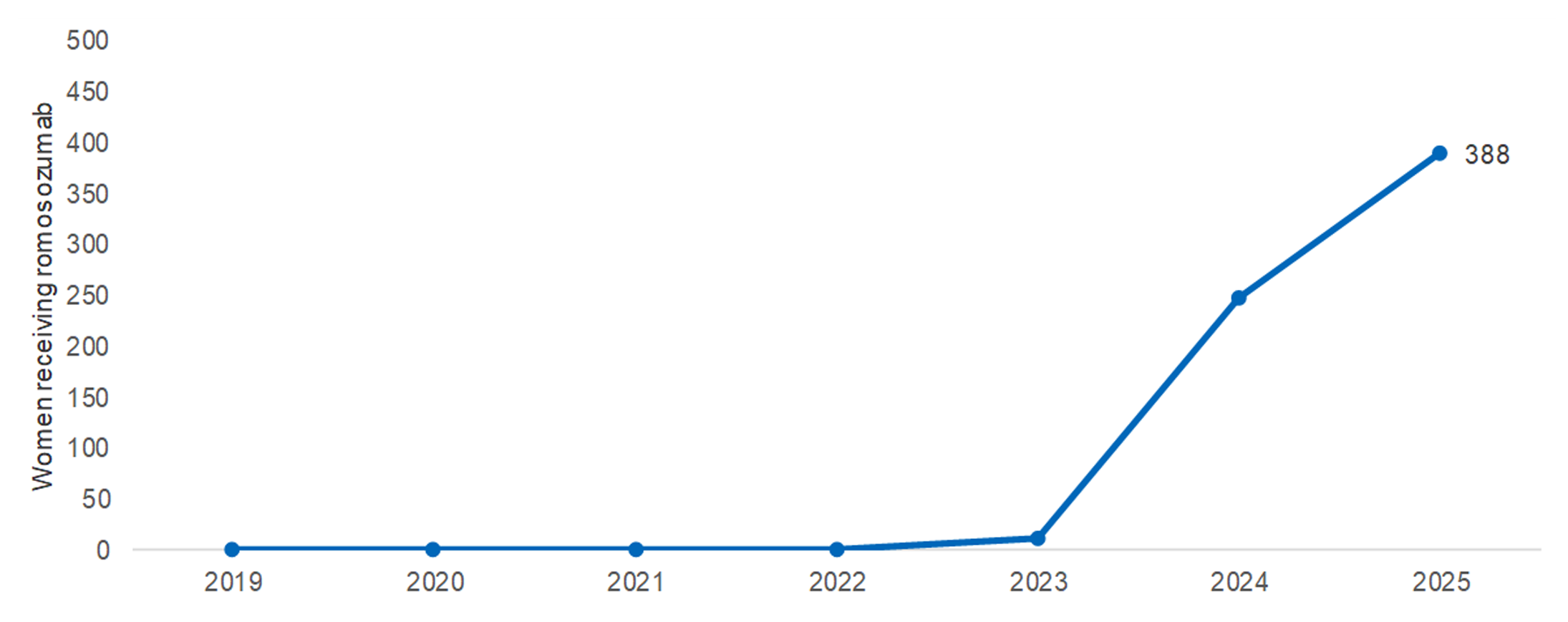
Notes: Includes public drug plan claims in Newfoundland and Labrador, Prince Edward Island, Nova Scotia, New Brunswick, Ontario, Manitoba, Saskatchewan, Alberta, British Columbia, and Yukon.
The values in 2019 to 2021 were 0. There were no claims from Alberta or Yukon during the observation period.
The value for 2025 includes data to June 2025.
Source: National Prescription Drug Utilization Information System.
Figure 9: Romosozumab Claims Availability in Public Drug Plans in NPDUIS
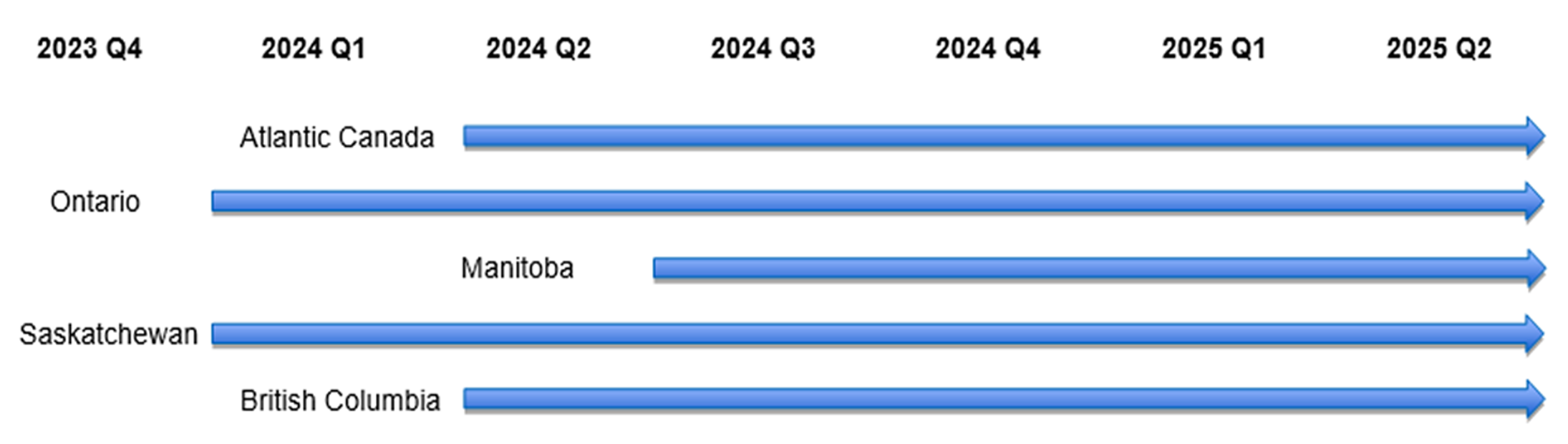
NPDUIS = National Prescription Drug Utilization Information System; Q = quarter; Q1 = January 1 to March 31; Q2 = April 1 to June 30; Q3 = July 1 to September 30; Q4 = October 1 to December 31.
Note: Atlantic Canada includes Newfoundland and Labrador, Prince Edward Island, Nova Scotia, and New Brunswick. They were grouped for patient privacy reasons.46
Source: National Prescription Drug Utilization Information System.
Variation Among Jurisdictions
There were differences noted in the rate of women receiving romosozumab across provinces, when adjusted for population (Figure 10), which was also seen in the analysis of all claims in 3 provinces presented earlier. Some of the variation may be due to drug coverage policy and prescriber preferences. The proportions of women in each province at an age generally receiving osteoporosis drugs is less of a factor than in the 3-province analyses since the analysis was restricted to age 71 years and older. Some of the observed variation is also due to the number of months of observation. For example, Ontario and Saskatchewan had almost 21 months of observation (1 to 3 months in 2023, 12 months in 2024, and 6 months in 2025). Atlantic Canada and British Columbia had almost 18 months of observation and Manitoba had almost 12 months of observation. However, when we adjusted the number for months of observation, a similar pattern was evident (figure not shown).
Figure 10: Women Aged 71 Years and Older Receiving Romosozumab From 10 Public Drug Plans, Adjusted for Population, 2023 to 2025
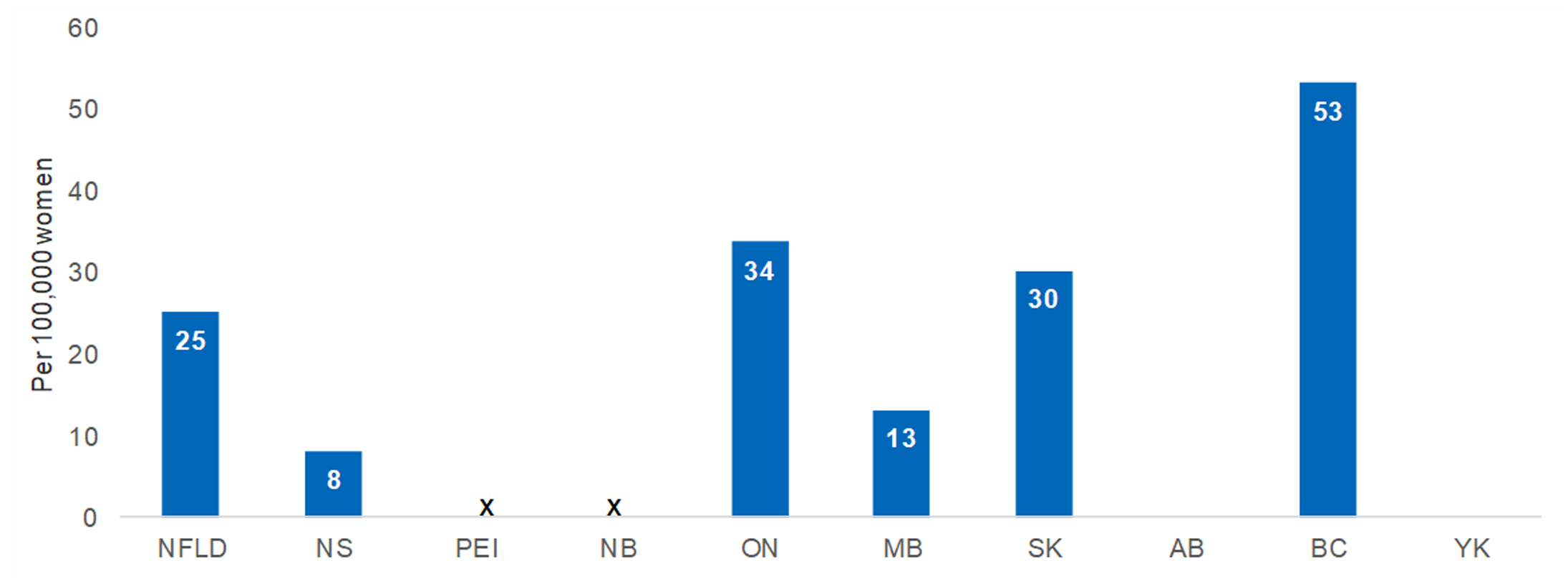
AB = Alberta; BC = British Columbia; MB = Manitoba; NB = New Brunswick; NFLD = Newfoundland and Labrador; NS = Nova Scotia; ON = Ontario; PEI = Prince Edward Island; SK = Saskatchewan; x = suppressed for patient privacy;46 YK = Yukon.
Notes: Adjusted for population using Statistics Canada population estimates for women aged 71 years and older.42
Data until June 2025.
Source: National Prescription Drug Utilization Information System.
Prior Treatment With Other Drugs for Osteoporosis
Among the 644 recipients receiving romosozumab, 4% of them had prior exposure to an osteoporosis drug in the year before initiating romosozumab. Seven percent had exposure to an osteoporosis drug within 5 years before initiating romosozumab. These proportions are substantially lower than those identified in the analysis of all claims in Manitoba, Saskatchewan, and British Columbia. These proportions are slightly larger than the proportions among the public drug plan recipients in 3-provinces analyses. This may be due to differences in prescribing preferences and drug policy variation among jurisdictions. We found that 36 of the 47 women with prior exposure at 5 years were from Ontario, and this represented 10% of recipients receiving romosozumab in Ontario. Patient volumes were too small to disclose in Nova Scotia, Manitoba, and British Columbia. There were no patients in the other jurisdictions. Similar to the 3-province analysis, bisphosphonate use was the most common class of prior osteoporosis drug — 57% of all prior osteoporosis drug exposure in the 5 years before romosozumab initiation. Figure 11 shows the number of patients with exposure to an osteoporosis drug in the 1 to 5 years before initiating romosozumab.
Figure 11: Prior Treatment With Osteoporosis Drugs in 644 Women Aged 71 Years and Older Receiving Romosozumab, 2023 to 2025
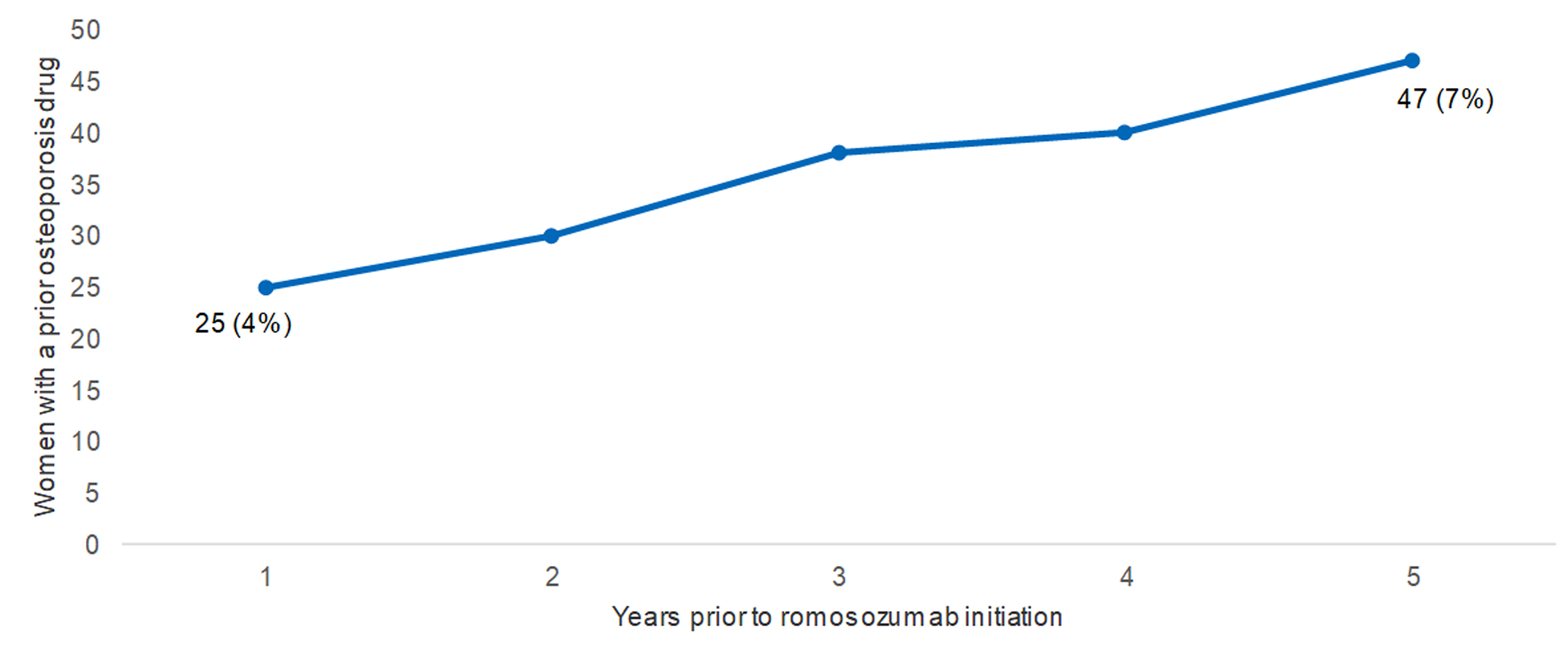
Note: Data until June 2025.
Source: National Prescription Drug Utilization Information System.
Demographics
Age
The average age of this cohort was 78 years at first receipt of romosozumab and the age distribution is shown in Figure 12. The 75 years to younger than 80 years group includes the highest number of individuals (215); however, the preceding group (71 years to younger than 75 years) spans 4 years rather than 5, so the age-group distributions are not directly comparable to those presented in the 3-provinces analyses.
Figure 12: Age Distribution of Women Aged 71 Years and Older Receiving Romosozumab on a Public Drug Plan, 2023 to 2025
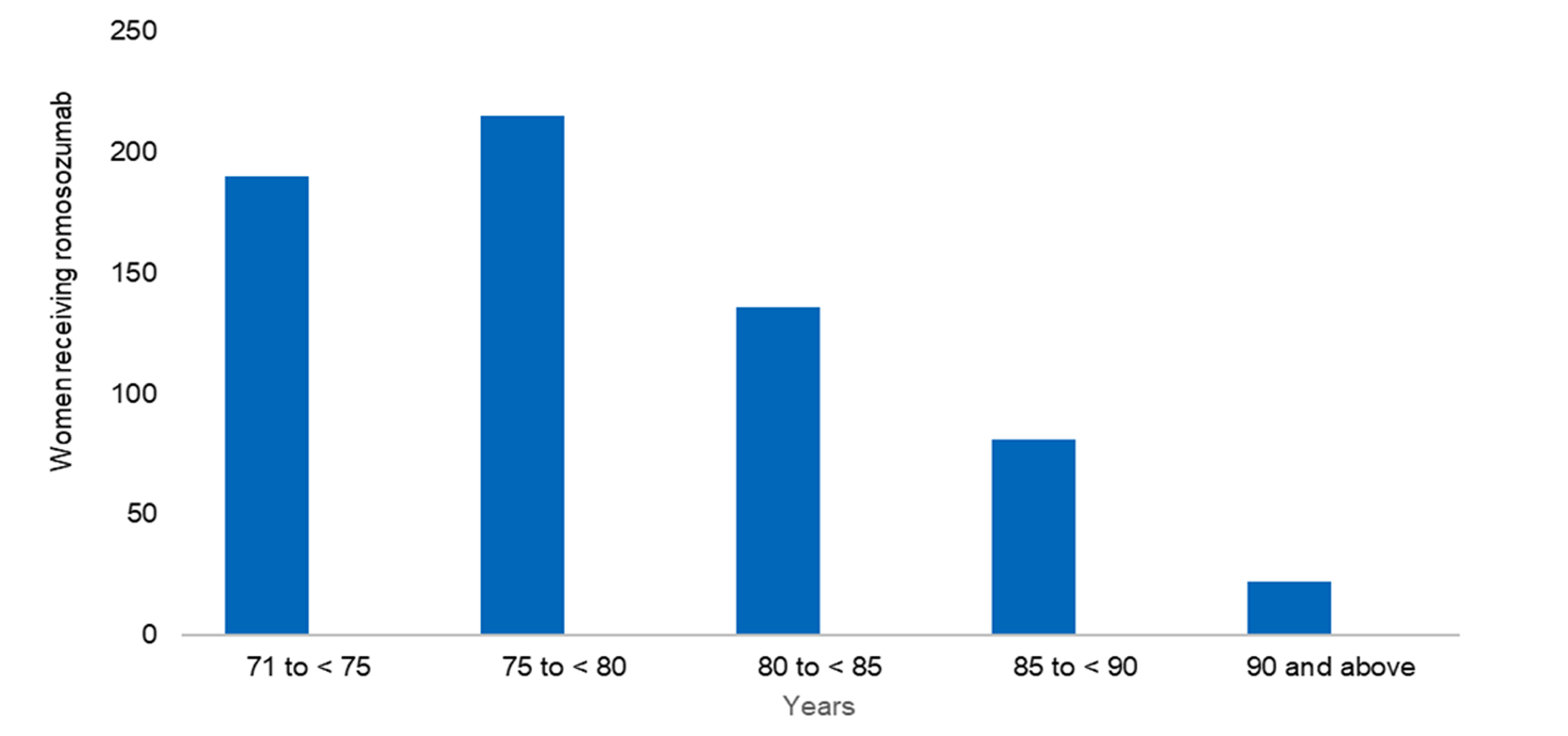
Note: Data until June 2025.
Source: National Prescription Drug Utilization Information System.
Place of Residence
Among all recipients receiving romosozumab, 91% lived in an urban area. This is slightly higher than what would be expected based on the proportion living in urban areas among the provinces who had recipients receiving romosozumab (Newfoundland, Prince Edward Island, Nova Scotia, New Brunswick, Ontario, Manitoba, Saskatchewan, and British Columbia [85%]).50 This suggests, like the 3-provinces analyses, that living in a rural area may be a barrier to accessing romosozumab. Five women with a missing urban or rural residence were not included in the percentage calculations.
Access Associated With Income
Among women aged 71 years and older who received romosozumab through public drug plans, a slightly greater proportion were in the highest neighbourhood income group (group 5) than would be expected if use was evenly distributed across income groups (20% in each group; Figure 13). This pattern may reflect random variation or be related to patient copayments in public drug plans; however, similar income-related gradients have been observed in other areas of health care51 where direct costs are not a primary barrier and are generally understood to reflect broader social and economic factors that influence access to health care.52 Five women with missing income group assignment were not included in Figure 13.
Figure 13: Income Association With Receipt of Romosozumab in Women Aged 71 Years and Older, 2019 to 2025
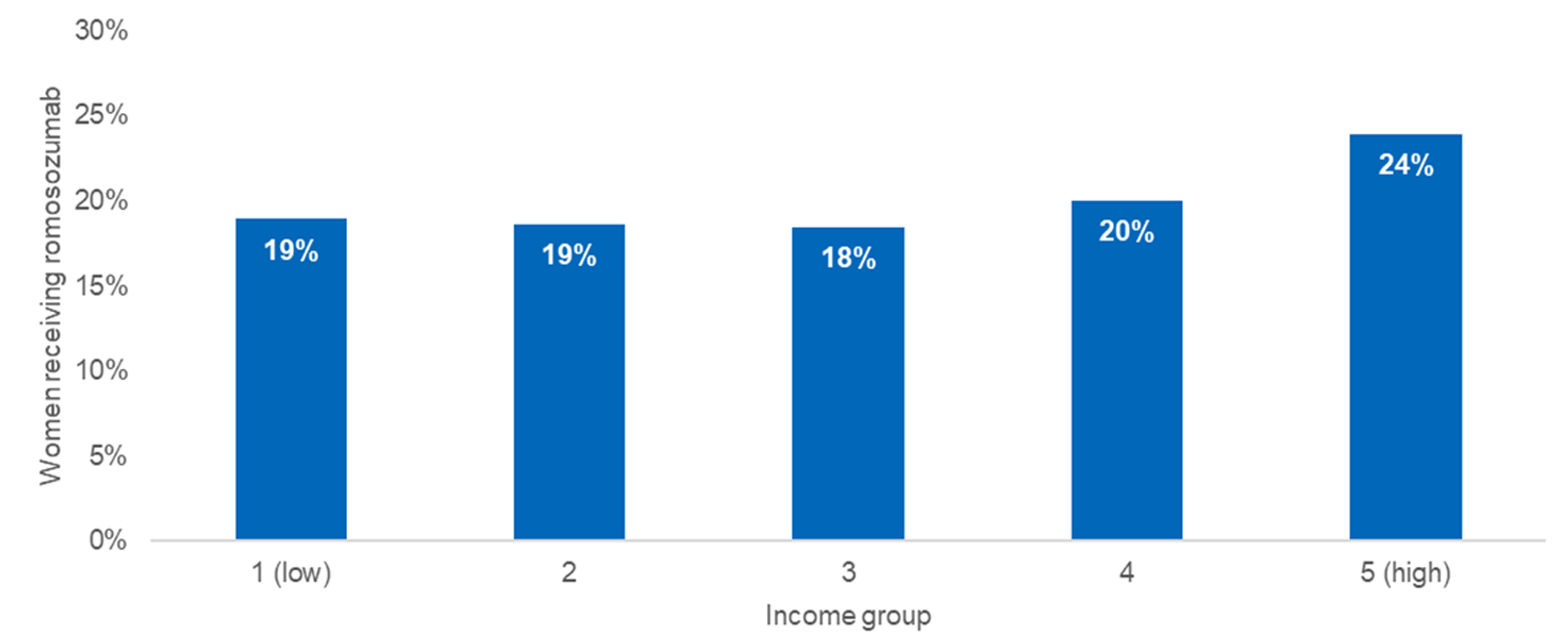
Note: Data until June 2025.
Source: National Prescription Drug Utilization Information System.
Limitations
Several limitations should be considered when interpreting these analyses.
NPDUIS provides a complete capture of drug claims across payers only in Manitoba, Saskatchewan, and British Columbia. In other jurisdictions, analyses are limited to publicly funded claims, and public drug plan data are not population-based, as coverage is typically restricted to seniors and certain income-based groups. As a result, findings from the 3-province analyses may not be generalizable to all provinces or populations. Differences in eligibility criteria and uptake of public coverage may also affect representativeness, especially in jurisdictions where a smaller proportion of seniors are covered.
The database does not capture prescriptions that were written but not dispensed, dispensed but not submitted to or accepted by public plans, or drugs provided in hospital or cancer agency settings. Some therapies, such as infused drugs (e.g., zoledronic acid), may be funded through mechanisms outside community pharmacies and therefore not recorded, leading to potential underestimation of prior treatment exposure. Claims from federal drug programs and certain other populations are also not included.
Information on indication is not available. Although some drugs included in the analyses may be used for conditions other than osteoporosis, this is expected to represent a small proportion of use and does not negate the identification of prior exposure.
Assessment of prior drug use was limited to a maximum 5-year look-back period and was based on dispensing records. Exposure outside this window, incomplete capture due to interprovincial movement or gaps in eligibility, and lack of information on treatment duration or adherence may result in misclassification of prior treatment.
Analyses of publicly funded claims are further limited by incomplete calendar-year data for some jurisdictions and by the restriction to women aged 71 years and older, which improves alignment with eligibility but reduces the study population. Population standardization was limited to broad age groups and does not account for differences in age structure across provinces.
Finally, the number of women receiving romosozumab was small, particularly in stratified analyses. Estimates may therefore be unstable and subject to random variation. Observed patterns likely reflect a combination of reimbursement policies, local prescribing practices and population structure.
Overall, these analyses provide a partial view of osteoporosis drug use in Canada, with more complete capture in 3 provinces and more limited, population-specific insight elsewhere. Findings should be interpreted in the context of incomplete data capture, restricted population coverage, and small sample sizes.
ISSN: 2563-6596
Canada’s Drug Agency (CDA-AMC) is a pan-Canadian health organization. Created and funded by Canada’s federal, provincial, and territorial governments, we’re responsible for driving better coordination, alignment, and public value within Canada’s drug and health technology landscape. We provide Canada’s health system leaders with independent evidence and advice so they can make informed drug, health technology, and health system decisions, and we collaborate with national and international partners to enhance our collective impact.
Disclaimer: CDA-AMC has taken care to ensure that the information in this document was accurate, complete, and up to date when it was published, but does not make any guarantee to that effect. Your use of this information is subject to this disclaimer and the Terms of Use at cda-amc.ca.
The information in this document is made available for informational and educational purposes only and should not be used as a substitute for professional medical advice, the application of clinical judgment in respect of the care of a particular patient, or other professional judgments in any decision-making process. You assume full responsibility for the use of the information and rely on it at your own risk.
CDA-AMC does not endorse any information, drugs, therapies, treatments, products, processes, or services. The views and opinions of third parties published in this document do not necessarily reflect those of CDA-AMC. The copyright and other intellectual property rights in this document are owned by the Canadian Agency for Drugs and Technologies in Health (operating as CDA-AMC) and its licensors.
Questions or requests for information about this report can be directed to Requests@CDA-AMC.ca.