Drugs, Health Technologies, Health Systems
Reimbursement Review
Pegylated Liposomal Doxorubicin
Requester: Public drug programs
Therapeutic area: Soft tissue sarcoma
Summary
What Is Advanced Soft Tissue Sarcoma?
Soft tissue sarcoma (STS) is a rare type of cancer that starts in the soft tissue of the muscle, fat, lymph vessels, blood vessels, nerves, tendons, and linings of the joints. In adults, less than 1% of all cancers are sarcomas and approximately 80% of sarcoma cases originate from soft tissue. Advanced soft tissue sarcoma (aSTS) refers to STS that has spread or cannot be completely treated by surgery or radiation, and includes unresectable locally advanced and metastatic cancer. Due to its heterogeneity, the clinical course of aSTS varies greatly.
In Canada, it was estimated that approximately 1,700 people would be diagnosed with STS in 2025, and that approximately 690 people would die from it. There is no published source that directly reported the number of patients with aSTS in Canada in 2025; however, based on approximately 10% to 15% of patients presenting with metastatic disease at diagnosis, it is estimated that there were 100 to 300 cases of metastatic aSTS in Canada in 2025.
What Are the Treatment Goals and Current Treatment Options for aSTS?
The treatment goals for patients with aSTS is to achieve disease stabilization, delay progression, reduce toxic effects of treatment, and improve health-related quality of life (HRQoL). These have been identified by patient group input as important outcomes. Other important outcomes identified through clinician input include prolonging survival and increasing the ability to maintain independence.
Current treatment options for adults with aSTS include:
conventional doxorubicin, either as a single agent or in combination
epirubicin
gemcitabine with or without docetaxel
histological subtype-specific chemotherapies.
What Is Pegylated Liposomal Doxorubicin and Why Did Canada’s Drug Agency Conduct This Review?
Pegylated liposomal doxorubicin is a specific formulation of the drug doxorubicin hydrochloride. It is administered by IV infusion. Health Canada has approved pegylated liposomal doxorubicin for patients with metastatic breast cancer, advanced ovarian carcinoma, and in AIDS-related Kaposi sarcoma for patients who were intolerant of prior chemotherapy. Pegylated liposomal doxorubicin is used off-label for the treatment of aSTS in Canada.
At the request of the participating public drug programs, Canada’s Drug Agency (CDA-AMC) reviewed pegylated liposomal doxorubicin to inform a recommendation on whether it should be reimbursed for aSTS.
How Did CDA-AMC Evaluate Pegylated Liposomal Doxorubicin?
CDA-AMC reviewed the clinical evidence on the beneficial and harmful effects and compared costs of pegylated liposomal doxorubicin versus other treatments used in Canada for aSTS. Conventional doxorubicin (either as a single agent or in combination), epirubicin, gemcitabine with or without docetaxel, and histological subtype–specific chemotherapies were considered relevant treatments to compare with pegylated liposomal doxorubicin.
The clinical evidence was identified through systematic searches for available studies.
The review was also informed by 2 patient group submissions in response to our call for input, and by input from the participating public drug programs around issues that may impact their ability to implement a recommendation.
Two medical oncologists with expertise in the diagnosis and management of STS in adults and adolescents, with representation from Ontario and British Columbia, were consulted as part of the review process.
What Were the Findings?
Clinical Evidence
CDA-AMC reviewed the following clinical evidence:
1 randomized controlled, phase II trial comparing pegylated liposomal doxorubicin with conventional doxorubicin in 95 patients with aSTS
1 single-arm, phase II trial evaluating HRQoL outcomes in patients with aSTS treated with pegylated liposomal doxorubicin
1 retrospective cohort study comparing pegylated liposomal doxorubicin with conventional doxorubicin in a real-world setting.
For the comparison of pegylated liposomal doxorubicin versus conventional doxorubicin:
The evidence was insufficient to demonstrate differences between treatment groups for median progression-free survival and overall survival.
The evidence was insufficient to demonstrate a difference in objective response rate or stable disease.
Pegylated liposomal doxorubicin had a lower frequency and less severity of symptoms of myelosuppression, cardiotoxicity, and alopecia. Pegylated liposomal doxorubicin was likely associated with increased risk for palmar-plantar erythrodysesthesia (also known as hand-foot syndrome).
For evidence on HRQoL without a comparison:
HRQoL findings for the single-arm, phase II trial were at high risk of bias and had limited interpretability due to the open-label, noncomparative design and loss of observations at follow-up.
There was no evidence on how pegylated liposomal doxorubicin compares with epirubicin, gemcitabine with or without docetaxel, and histological subtype–specific chemotherapies.
There was no evidence to inform how pegylated liposomal doxorubicin compares with other available treatments with regard to HRQoL.
Economic Evidence
Reimbursing pegylated liposomal doxorubicin for aSTS is expected to increase costs to the public drug programs.
Abbreviations
AE
adverse event
aSTS
advanced soft tissue sarcoma
CI
confidence interval
CTCAE
Common Terminology Criteria for Adverse Events
DB
double-blind
ECOG
Eastern Cooperative Oncology Group
EORTC
European Organisation for Research and Treatment of Cancer
GIST
gastrointestinal stromal tumour
HRQoL
health-related quality of life
ITC
indirect treatment comparison
ITT
intention to treat
KS
Kaposi sarcoma
LVEF
left ventricular ejection fraction
LOCF
last observation carried forward
MID
minimal important difference
NYHA
New York Heart Association
OS
overall survival
PFS
progression-free survival
PP
per protocol
RCT
randomized controlled trial
RR
relative risk
SAE
serious adverse event
STS
soft tissue sarcoma
SD
standard deviation
WDAE
withdrawal due to adverse event
Background
Introduction
The objective of the Clinical Review is to review and critically appraise the evidence on the beneficial and harmful effects of pegylated liposomal doxorubicin, 2 mg/mL, for IV administration in the treatment of advanced soft tissue sarcoma (aSTS) in adults. The focus of this review is on the comparison of pegylated liposomal doxorubicin to relevant comparators in clinical practice in Canada and identifying gaps in the current evidence. The Economic Review consists of a cost comparison for pegylated liposomal doxorubicin compared with relevant comparators for the same population. The comparators considered relevant to the reviews were conventional doxorubicin monotherapy, epirubicin, combination chemotherapy with conventional doxorubicin, gemcitabine with or without docetaxel, and histologically specific usual care.
Table 1: Information on the Drug Under Review and on the CDA-AMC Review
Item | Description |
|---|---|
Information on the drug under review | |
Drug | Pegylated liposomal doxorubicin |
Relevant Health Canada indication | Off-label use in advanced soft tissue sarcoma |
Mechanism of action | Doxorubicin hydrochloride is encapsulated in long-circulating pegylated liposomal vesicles, allowing for increased delivery of the encapsulated doxorubicin into tumours. Doxorubicin induces DNA damage and disrupts DNA replication and transcription, leading to cell death. |
Recommended dosage | 50 mg/m2 every 4 weeksa |
Status of generic drugs or biosimilars | Generic pegylated liposomal doxorubicin is currently marketed in Canada. |
Information on the CDA-AMC review | |
Requester | Oncology Working Group |
Indication under consideration for reimbursement | Adult patients with advanced soft tissue sarcoma |
CDA-AMC = Canada’s Drug Agency.
aDosage differs from Health Canada-indicated cancers and was based on guidance from the clinical experts consulted for this review.
Context for the Review
The public drug programs, via the Oncology Working Group, have requested a review of pegylated liposomal doxorubicin for the treatment of aSTS in adults after the recent closure of the patient assistance program. This is the first Canada’s Drug Agency (CDA-AMC) review of pegylated liposomal doxorubicin. The requested indication is broader than the Health Canada–approved indication, which limits its use to monotherapy for patients with metastatic breast cancer, where there is an increased cardiac risk associated with conventional doxorubicin; advanced ovarian carcinoma in those who have failed standard first-line therapy; and patients with AIDS-related Kaposi sarcoma (KS) with low CD4 counts (< 200 CD4 lymphocytes/mm3) and extensive mucocutaneous or visceral disease whose disease has progressed despite therapy, or who are intolerant to prior systemic combination chemotherapy comprising at least 2 of the following agents: vinca alkaloid, bleomycin, and doxorubicin (or another anthracycline).
Submission History for the Drug Under Review
CDA-AMC has not previously reviewed pegylated liposomal doxorubicin through the Reimbursement Review process.
Sources of Information
The contents of the Clinical Review are informed by studies identified through systematic literature searches, input received from interested parties (patient groups and drug programs), and input from clinical experts consulted for this review.
Calls for patient group, clinician group, and industry input are issued for each Non-Sponsored Reimbursement Review. Two patient group submissions were received from the Canadian Cancer Society and the Sarcoma Cancer Foundation of Canada. The Canadian Cancer Society gathered information using a mixed-methods approach through a combination of targeted online data collection, direct patient engagement, and a secondary analysis of previously submitted patient input. The input included 1 patient interview conducted in February 2026 with a person who, with the advice of their clinician, was considering pegylated liposomal doxorubicin as their next line of treatment. The Canadian Cancer Society also drew on relevant disease-experience insights from its 2025 patient group input submission on trabectedin for leiomyosarcoma, a subtype of soft tissue sarcoma (STS). Recruitment of patients with direct experience using pegylated liposomal doxorubicin was challenging. The Canadian Cancer Society found 1 patient who had tried pegylated liposomal doxorubicin and posted in an online forum, but very few details were shared in their post. The Sarcoma Cancer Foundation of Canada shared a summary of compiled experiences of patients and caregivers across Canada. The full input received is available on the project landing page for pegylated liposomal doxorubicin.
Input from patients and clinical experts was considered throughout the review, including in the selection of outcomes to include in the Clinical Review and in the interpretation of the clinical evidence. Relevant patient and clinician group input and industry input is summarized in the Disease Background, Current Management, and Unmet Needs and Existing Challenges sections.
The drug programs provide input on each drug being reviewed through the Reimbursement Review process by identifying issues that may impact their ability to implement a recommendation. The implementation questions and corresponding responses from the clinical experts consulted for this review are summarized and provided to the expert committee in a separate document.
Each review team includes at least 1 clinical expert with expertise regarding the diagnosis and management of the condition for which the drug is indicated. Clinical experts are a critical part of the review team and are involved in all phases of the review process. Two medical oncologists with expertise in the diagnosis and management of STS in adults and adolescents participated as part of the review team, with representation from Ontario and British Columbia.
Disease Background
Soft tissue sarcoma (STS) comprises a heterogeneous group of rare tumours in mesenchymal tissue outside the skeleton, including muscle, adipose, fibrous, cartilage, nerve, and vascular tissue. In adult patients, less than 1% of all cancers are sarcomas and approximately 80% of all sarcoma cases originate from soft tissue.1 Common subtypes differ between adults and children; the most common STS subtypes in adults are liposarcoma, leiomyosarcoma, and undifferentiated pleomorphic sarcoma.1 Some histological subtypes of STS are associated with chromosomal translocations (e.g., Ewing sarcoma, myxoid liposarcoma, rhabdomyosarcoma, and epithelioid hemangioendothelioma),1 and some types are associated with previous exposure to radiotherapy (e.g., angiosarcoma after therapeutic breast irradiation, undifferentiated pleomorphic sarcoma, and leiomyosarcoma).1,2
The clinical course varies greatly due to the heterogeneous nature of STS. STS commonly presents as a gradually enlarging, painless mass. Patients may develop pain and/or other symptoms as the mass starts to compress surrounding tissue.2,3 In patients with suspected STS, evaluation involves physical examination to determine clinical signs and symptoms; MRI or CT imaging to determine tumour etiology, extent, and metastatic disease; and biopsy for histologic diagnosis and treatment planning;2-4 however, clinical recognition in early stages can be difficult.2
Surgical resection with and without radiotherapy is preferred; however, if the tumour is no longer resectable (due to size, location, or metastasis), treatment may depend upon tumour site and other factors.4 Factors associated with improved outcomes in metastatic aSTS include female sex, younger age, good performance status, lack of bone or liver metastases, low-grade histology, and longer disease-free interval between initial diagnosis and metastatic disease.1 Metastases spread predominantly to the lung, although specific sarcoma subtypes may have different metastatic patterns. Relative to people in the general population who do not have cancer but share similar characteristics, the Canadian Cancer Society estimates the 5-year relative survival for metastatic aSTS to be approximately 16%;5 Canada-specific survival statistics for nonmetastatic aSTS were not available.
The National Comprehensive Cancer Network recommends treating advanced, metastatic, or locally unresectable STS with radiation therapy and/or chemotherapy; if tumours become resectable with acceptable functional outcomes following treatment, surgery may follow with or without postoperative chemotherapy.6
Patient group input: Patients with STS noted that the rare and heterogeneous nature of the disease impacted their ability to receive a timely and accurate diagnosis. They often find difficulty accessing support services, including specialized health care providers, and have trouble receiving timely and appropriate care. Several patients experienced lengthy and complex diagnostic journeys, which delayed treatment initiation and required frequent monitoring after diagnosis. In addition to the symptoms attributed to the disease itself, available treatment often has debilitating effects that impact patients’ physical and mental health, ability to work and participate in activities of daily living, and cause financial and/or emotional strain on both themselves and caregivers.
Current Management
Treatment Goals
The clinical experts consulted for this review noted that major goals in the advanced stage of disease are to prolong life, delay disease progression, reduce the severity of symptoms, improve HRQoL, and increase the ability to maintain independence.
Patient group input: Responses gathered by the Canadian Cancer Society indicated that patients focused on disease stabilization and tolerability of treatment effects. One patient interview indicated that treatment tolerability, not just cancer symptoms alone, significantly disrupted her ability to maintain routines and engage in meaningful activities, contributing to cumulative impacts on quality of life. Treatments with less toxicity, fewer complications, or longer intervals between treatments were viewed as having the potential to lessen the burden on patients and caregivers.
Current Treatment Options
Broadly, chemotherapy and/or radiation therapy are the usual treatment options for advanced, metastatic, or locally unresectable STS. The clinical experts consulted by CDA-AMC indicated that conventional doxorubicin, either as a single agent or in combination with other chemotherapeutic agents, is considered the most effective therapy for patients with aSTS and that conventional doxorubicin is the standard of care for most patients with aSTS in Canada. After reaching a 375 mg/m2 to 450 mg/m2 cumulative dose of conventional doxorubicin, clinicians may consider pegylated liposomal doxorubicin for the patients with ongoing clinical benefit. Other chemotherapy regimens, such as epirubicin, docetaxel-gemcitabine (DOCE-GEMC), and other combination chemotherapies, are used as second-line treatments and may vary based on histological subtypes as well as jurisdictional access. The clinical experts noted that conventional doxorubicin usually must be stopped if a patient undergoes radiotherapy, while pegylated liposomal doxorubicin can be administered along with radiation.
According to the clinical experts, current treatment options and protocols also vary based on sarcoma subtype, patient-specific factors, and jurisdictional access. For example, doxorubicin combined with dacarbazine would be appropriate for leiomyosarcoma, whereas combination DOCE-GEMC may be considered first-line treatment for uterine leiomyosarcoma.
Pegylated liposomal doxorubicin is a specific formulation of doxorubicin, in which doxorubicin hydrochloride (conventional doxorubicin) is encapsulated in long-circulating liposomes (microscopic phospholipid bilayer vesicles) with surface-bound methoxypolyethylene glycol.7 This process is referred to as pegylation. This formulation changes the drug’s pharmacokinetic properties: pegylated liposomes decrease detection by the mononuclear phagocyte system, increasing blood circulation time and distribution of the drug.7 Due to these differing properties, liposomal formulations of doxorubicin and conventional doxorubicin hydrochloride are not direct substitutes for each other8 in dosing and administration frequencies. In Canada, pegylated liposomal doxorubicin is currently approved as monotherapy for patients with metastatic breast cancer, as second-line treatment for advanced ovarian carcinoma, and in AIDS-related KS for patients who were intolerant of prior chemotherapy.7 Pegylated liposomal doxorubicin is used off-label for the treatment of aSTS in Canada.
Unmet Needs and Existing Challenges
The clinical expert consulted for this review identified several challenges, as well as specific populations that may benefit from having access to pegylated liposomal doxorubicin. This includes patients with cardiac sarcomas and comorbidities. For younger patients, the current paradigm of first-line conventional doxorubicin therapy negatively impacts daily functioning. While clinically effective, conventional doxorubicin’s significant toxicities are challenging for patients with poor performance status, who may require single-agent therapies with better toxicity profiles. For patients requiring maintenance chemotherapy after the lifetime dose limit of conventional doxorubicin is reached, accessible options are limited. Patients with prior cancer history may have already reached the lifetime dose of conventional doxorubicin, and many patients with aSTS that is responding to doxorubicin may have disease progression shortly after treatment discontinuation and rapidly develop resistance to subsequent treatment lines.
Patient group input: Due to the rarity of aSTS and the limited durability and tolerability of existing treatment options, there is a high treatment burden on patients and caregivers, and many factors influence patient experiences and access to care. Individuals living outside major urban areas, those with limited ability to travel, and those without strong caregiver support may face disproportionate barriers to accessing care. Treatment inequities also exist for patients with elevated cardiac risks, those with few treatment options, and those who have exhausted other treatment alternatives. Several patients with STS of the leiomyosarcoma subtype reported that conventional doxorubicin had been effective, but reaching the lifetime dose limit had constrained their future treatment options. One patient described difficulties she experienced when transitioning to another chemotherapy regimen after reaching the lifetime dose limit of conventional doxorubicin with a good clinical response. She found the new treatment less tolerable, experienced frequent treatment visits, and required intensive supportive care after switching. Patients highlighted the emotional and physical burden of ongoing treatment, vigilance for disease progression, and uncertainty associated with the loss of effective and tolerable treatment options over time. The patient group highlighted that access to pegylated liposomal doxorubicin allows patients to receive further anthracycline-based treatments.
Considerations for Using the Drug Under Review
Contents within this section have been informed by input from the clinical experts consulted for the purpose of this review. The implementation questions from the public drug programs and corresponding responses from the clinical experts consulted for this review are summarized in the Supplemental Material document, in the Summary of Drug Program Input and Clinical Expert Responses table in Appendix 1, Table 1. The following has been summarized by the review team.
Place in Therapy
The clinical experts consulted for this review considered pegylated liposomal doxorubicin as a first-line treatment for patients who are not considered suitable for conventional doxorubicin, such as those with significant cardiac history, poor cardiac function, and specific subtypes of aSTS (e.g., uterine leiomyosarcoma cardiac sarcoma). The clinical experts noted that conventional doxorubicin, which is the current paradigm for treating aSTS, causes significant cardiotoxicity. Patients who have reached the lifetime dose of doxorubicin (e.g., due to prior cancer history, or for treatment of aSTS) would benefit from accessing pegylated liposomal doxorubicin as either first-line or maintenance therapy. If accessible, clinical experts indicated that pegylated liposomal doxorubicin may be considered as a first-line treatment in younger patients with better performance status to preserve HRQoL and maintain functioning. The ability to access pegylated liposomal doxorubicin as first-line treatment or maintenance therapy would shift the current treatment paradigm.
Patient Population
Less than 1% of all cancers are sarcomas and approximately 80% of all sarcoma cases originate from soft tissue.1 While there are some subtype-specific treatments for STS (e.g., paclitaxel for angiosarcoma, eribulin for liposarcoma, and combination dacarbazine-doxorubicin for leiomyosarcoma), the clinical experts emphasized that STS is complex, with doxorubicin being the standard therapy for most patients. The clinical experts indicate that pegylated liposomal doxorubicin in any line of treatment would be appropriate, based on clinical judgment. Some scenarios identified were:
pegylated liposomal doxorubicin administered as first-line chemotherapy for patients with poor cardiac function, poor performance status, cardiac sarcomas, or other comorbidities
pegylated liposomal doxorubicin administered in subsequent lines of therapy for patients whose disease has not responded to non-doxorubicin chemotherapy
pegylated liposomal doxorubicin administered as maintenance therapy for patients whose disease has responded to conventional doxorubicin but have reached the maximum lifetime exposure.
The clinical experts noted that pegylated liposomal doxorubicin would not be appropriate for patients who have previously been treated with doxorubicin and experienced a poor response. Clinical experts also indicated that gastrointestinal stromal tumours (GISTs), while categorized as a type of STS, respond poorly to chemotherapy regimens and are treated with tyrosine kinase inhibitors. This subtype of STS was excluded from this review, and pegylated liposomal doxorubicin would not be a suitable treatment for GISTs.
Assessing the Response to Treatment
The clinical experts consulted for this review indicated that imaging (via CT, PET, and/or MRI) would be used to assess response to treatment, usually every 2.5 to 3 months. According to the clinical experts, while survival is always the main goal, in advanced disease it is rarely achieved with current therapies. In this population, the clinical experts also consider stable disease as a clinically meaningful response to treatment, and clinical symptoms (e.g., size of the superficial mass, pain level stabilization) may also be used to assess treatment response. Patients would continue to receive treatment if they have stable disease and tolerable toxicity.
Discontinuing Treatment
Pegylated liposomal doxorubicin should be discontinued when there is evidence of disease progression or significant toxicities (such as myelosuppression that requires prolonged treatment interruption).
Prescribing Considerations
The clinical experts indicated that patients are primarily followed by an oncology clinic specializing in sarcoma care. Medical oncologists, dedicated nurse practitioners, general practitioners in oncology, and cardiologists may be involved in patient care. Patients receiving pegylated liposomal doxorubicin need to be monitored for myelosuppression, palmar-plantar erythrodysesthesia (also known as hand-foot syndrome), infusion reactions, and cardiotoxicity.
Clinical Review
Methods
The review team conducted a systematic review to identify evidence for pegylated liposomal doxorubicin in the treatment of metastatic STS or aSTS. An information specialist conducted a literature search of key bibliographic databases, trial registries, and grey literature sources, using a peer-reviewed search strategy. The initial search was completed on February 27, 2026, with alerts maintained until the meeting of the Formulary Management Expert Committee on July 16, 2026. Details of search strategies are presented in Appendix 2 of the Supplemental Material document.
Studies were selected according to the eligibility criteria in Table 2. Long-term extension studies of included randomized controlled trials (RCTs), indirect treatment comparisons (ITCs) that adhered to the eligibility criteria (except for the study design criteria), and studies addressing gaps that did not meet the eligibility criteria but were considered to address important gaps in the systematic review evidence were included.
Relevant comparators included treatments used in clinical practice in Canada in the patient population under review. Clinical expert input and patient and clinician group input were considered when selecting outcomes (and follow-up times) for review. Selected outcomes are those considered relevant to expert committee deliberations. Detailed methods for the literature search, study selection, data extraction, and risk of bias appraisal are in the Supplemental Material document, in Appendix 2.
Table 2: Systematic Review Eligibility Criteria
Criteria | Description |
|---|---|
Patient population | Adult patients with advanced STS Exclusion: Gastrointestinal stromal tumours, Kaposi sarcomaa |
Intervention | Pegylated liposomal doxorubicin hydrochloride for IV administration (2 mg/mL) |
Comparators |
|
Outcomes | Efficacy outcomes:
Harms outcomes:
|
Study Design | RCTs (phase II, III, and IV) |
AE = adverse event; HRQoL = health-related quality of life; LVEF = left ventricular ejection fraction; RCT = randomized controlled trial; SAE = serious adverse event; STS = soft tissue sarcoma; TEAE = treatment-emergent adverse event.
aConsultation with the clinical experts indicated that these 2 sarcomas are not representative of the majority of patients with advanced STS, and evidence from these 2 populations cannot be generalized to patients with advanced STS broadly. Based on this context, gastrointestinal stromal tumours and Kaposi sarcoma were excluded from the population of interest.
bCombination chemotherapy with conventional doxorubicin may vary depending on STS subtype and jurisdiction protocols.
cUsual care can depend on STS subtype and jurisdiction protocols.
Clinical Evidence
From the search for primary studies, the review team identified 511 unique records via the searches of databases and registers, of which 476 were excluded by title and abstract. The review team screened 35 records by full text and included 1 report from 1 study.9 One potentially relevant record was identified via other sources and was excluded, as it was a conference abstract. No long-term extensions of the included study were identified.
From the search for ITCs, the review team identified 48 unique records via the searches of databases, of which 46 were excluded by title and abstract. The review team screened 2 records by full text; both were excluded during the full-text screen. No ITC records were identified.
Noncomparative studies were considered to address gaps in the systematic review in case they might provide relevant outcome data that were missing from studies included in the systematic review. One single-arm study10 was included, which assessed HRQoL in patients with aSTS or metastatic STS treated with pegylated liposomal doxorubicin.
One comparative retrospective cohort study was identified on April 27, 2026, through literature search alerts. One report from 1 study11 was included. This study assessed the use of first-line conventional doxorubicin and pegylated liposomal doxorubicin in aSTS with contemporary real-world multi-institutional data, and was summarized as a study addressing gaps.
A list of excluded studies, with reasons for exclusion, is provided in Table 3 of Appendix 2 in the Supplemental Material document.
Systematic Review
Description of Studies
One open-label, randomized, phase II trial9 that compared pegylated liposomal doxorubicin and conventional doxorubicin in adult patients with aSTS is summarized in this section.
Study Characteristics
The study was a multicentre, open-label, phase II, randomized trial of pegylated liposomal doxorubicin compared to conventional doxorubicin for the treatment of metastatic STS or aSTS in adults aged 18 years or older. The trial recruited patients from 3 sites, with 2 in the UK and 1 in the Netherlands; there were no Canadian sites. The primary end point was objective response as defined by the WHO Handbook for Reporting Response determined both by physical examination and radiological assessments.12 Secondary end points include time to progression (progression-free survival [PFS]) and overall survival (OS), in those with an objective response.12
Characteristics of the included study are summarized in Table 3. Additional details pertaining to the eligibility criteria are presented in Table 5 of Appendix 3 in the Supplemental Material document.
The method of randomization and the randomization ratio were not described; 50 patients were randomized into the pegylated liposomal doxorubicin group, and 45 patients were randomized into the conventional doxorubicin group. Of note, GISTs were not universally distinguished from gastrointestinal leiomyosarcoma.
Patients were assessed for response before the start of treatment and after each 2 subsequent courses of therapy. Appendix 3 of the Supplemental Material document summarizes additional methodological details of this clinical trial.
The study was sponsored by the European Organisation for Research and Treatment of Cancer, with financial support from SEQUUS Pharmaceuticals, Inc.
Table 3: Characteristics of Study Included in the Systematic Review
Study characteristic | Judson et al. (2001) |
|---|---|
Study design | Simon 2-stage adaptive design, multicentre, phase II, randomized, parallel-group, open-label, active-comparator trial |
Sample size | Enrolment dates not provided Total N = 95 |
Key inclusion criteria |
|
Key exclusion criteria |
|
Intervention | Pegylated liposomal doxorubicin (n = 50) 50 mg/m2 by 1-hour IV infusion every 4 weeks; toxicity-related dose modifications were allowed |
Comparator | Conventional doxorubicin (n = 45) 75 mg/m2 by 5-minute IV bolus every 3 weeks; toxicity-related dose modifications were allowed |
Relevant end points |
|
Follow-up duration | Minimum follow-up duration was 1 year; median follow-up duration was 84 days (range of 1 to 8 treatment cycles; each cycle was 3 to 4 weeks) |
Clinical trial registry | EORTC protocol 62962 |
Publication(s) | Judson I, Radford JA, Harris M, et al. Randomised phase II trial of pegylated liposomal doxorubicin (DOXIL/CAELYX) versus doxorubicin in the treatment of advanced or metastatic soft tissue sarcoma: A study by the EORTC Soft Tissue and Bone Sarcoma Group. Eur J Cancer. 2001;37(7):870-7. doi:10.1016/s0959-8049(01)00050-8 |
EORTC = European Organisation for Research and Treatment of Cancer; NYHA = New York Heart Association; RCT = randomized controlled trial; STS = soft tissue sarcoma.
aThe following types were included: malignant fibrous histiocytoma, liposarcoma, rhabdomyosarcoma, synovial sarcoma, malignant paraganglioma, fibrosarcoma, leiomyosarcoma, neurogenic sarcoma, unclassified sarcoma, and miscellaneous sarcoma histiocytoma.
bNormal cardiac function defined as cardiac ejection fraction within normal limits; adequate bone marrow function defined as hemoglobin ≥ 10 g/L, neutrophils ≥ 2.0 × 10⁹/L, and platelets ≥ 100 × 109/L; adequate organ function defined as creatinine < 140 µmol/L and bilirubin, AST, and ALT < 1.25 × upper limit of normal, unless related to cancer.
cExcluded histological subtypes included malignant mesothelioma, chondrosarcoma, neuroblastoma, Ewing sarcoma, and embryonal rhabdomyosarcoma.
dBasal or squamous cell carcinoma of skin or cervical carcinoma in situ were not considered as active malignant tumours.
eResponses were assessed according to standard WHO criteria; response was confirmed by repeat evaluation at least 4 weeks later.
fJudson et al. (2001)9 defined progression-free survival as time to progression.
Sources: Judson et al. (2001),9 EORTC protocol 62962.12
Statistical Testing and Analysis Populations
A Simon 1-sample, 2-stage adaptive design was used, allowing for early stoppage of the trial if there were a lack of positive signals of treatment effect for the intervention. Each arm of the trial was conducted in 2 stages, with the option to stop the trial after the first or second stage. Study parameters were as follows: P0 (the largest response probability, implying that further investigation was not warranted) was set at 10%; P1 (the lowest response probability, implying that further investigation was warranted) was set at 25%; alpha (the probability of recommending further study if the true response rate was P0) was set at 0.1; and beta (the probability of rejecting further study if the true response rate was > P1) was set at 0.1. The total sample size was aimed to include 40 patients in each arm; early termination was planned in the event that there were 2 or fewer responses observed after 27 patients were evaluable for response. Once 40 patients were evaluated for response, a second point for study termination was performed if 6 or fewer responses were observed.
Patients who started a new treatment before progression were censored on the start day of the new treatment. Survival outcomes were analyzed by an intention-to-treat (ITT) Kaplan-Meier method for all patients who presented with an objective (complete or partial) response. Patients who started a new treatment before progression were censored on the start day of the new treatment. A 95% confidence interval (CI) for the overall response rate was reported based on all eligible patients. This trial did not adjust for multiple testing.
A post hoc descriptive analysis of patients with GIST was included.
Patient Disposition
The number of patients who were screened for this study was not reported. Overall, 95 patients were randomized: 50 into the pegylated liposomal doxorubicin arm and 45 into the conventional doxorubicin arm.
In the conventional doxorubicin arm, 2 patients did not receive treatment as part of the study: 1 due to administrative oversight regarding regulatory approval, and the other refused treatment after randomization. They were included in the ITT analysis.
Baseline Characteristics
Table 4 summarizes details regarding baseline characteristics. There were no major differences between the 2 groups in the distribution of disease sites; there were slightly more patients with leiomyosarcoma and visceral intra-abdominal sites in the pegylated liposomal doxorubicin arm, and more liposarcomas in the conventional doxorubicin arm. Additional baseline characteristics of the included study9 are presented in Table 6 of Appendix 4 in the Supplemental Material document.
Table 4: Summary of Baseline Characteristics From Study Included in the Systematic Review
Characteristic | Judson et al. (2001) | ||
|---|---|---|---|
Pegylated liposomal doxorubicin (N = 50) | Conventional doxorubicin (N = 45) | Overall (N = 95) | |
Age in years, median (range) | 52 (19 to 80) | 52 (27 to 77) | — |
Sex, n (%) | |||
Female | 24 (48) | 25 (56) | 49 (52) |
Male | 26 (52) | 20 (44) | 46 (48) |
WHO performance status score, n (%) | |||
0 to 1 | 43 (86) | 40 (89) | 83 (87) |
2 | 7 (14) | 5 (11) | 12 (13) |
Previous chemotherapy, n (%) | |||
No | 48 (96) | 44 (98) | 92 (97) |
Yes, (neo)adjuvant | 2 (4) | 1 (2) | 3 (3) |
Histology subtype, n (%) | |||
Leiomyosarcomaa | 18 (36) | 13 (29) | 31 (33) |
Miscellaneous sarcoma | 8 (16) | 5 (11) | 13 (14) |
Angiosarcoma | 5 (10) | 6 (13) | 11 (12) |
Synovial sarcoma | 6 (12) | 5 (11) | 11 (12) |
Unclassified sarcoma | 6 (12) | 3 (7) | 9 (9) |
Liposarcoma | 1 (2) | 7 (16) | 8 (8) |
Malignant fibrous histiocytoma | 2 (4) | 4 (9) | 6 (6) |
Neurogenic sarcoma | 2 (4) | 2 (4) | 4 (4) |
Fibrosarcoma | 1 (2) | 0 (0) | 1 (1) |
Rhabdomyosarcoma | 1 (2) | 0 (0) | 1 (1) |
GIST = gastrointestinal stromal tumour.
aPost hoc stratification suggested some patients with this histology type may be categorized as GIST.
Source: Judson et al. (2001).9
Treatment Exposure and Concomitant Medications
The trial aimed to administer 6 cycles of therapy; no dose escalation was allowed in consideration of possible cardiotoxicity related to doxorubicin. Dose interruption or delay was permitted if toxicity was observed. Appendix 3 in the Supplementary Material document presents a summary of toxicities that permit dose adjustment. The dose of pegylated liposomal doxorubicin or conventional doxorubicin could be decreased by 1 or 2 dose levels (a decrease of 25% or 50%) depending on the severity and type of toxicity. Concomitant medications were allowed; however, a list of prohibited and permitted concomitant medications was not reported. Previous neoadjuvant chemotherapy was allowed, but further information on the specific therapies was not provided.
The median total number of cycles administered for pegylated liposomal doxorubicin was 3 (range, 1 to 8), and for conventional doxorubicin it was 4 (range, 0 to 8). Table 6 in Appendix 3 of the Supplemental Material document outlines the number of patients who completed each treatment cycle. Both had the same median duration of treatment of 84 days. The relative median dose intensity was 99% (range, 70% to 107%) for pegylated liposomal doxorubicin and 98% (range, 73% to 104%) for conventional doxorubicin. There was a similar percentage of treatment delay, although specific numbers were not provided.
Critical Appraisal
Table 4 of Appendix 2 in the Supplemental Material presents the results of the risk of bias appraisal of the included study.
Internal Validity
Judson et al. (2001)9 was a phase II, multicentre, open-label, randomized trial. The study applied a Simon 2-stage adaptive design, which prespecified a sequential testing procedure based on the number of events of treatment response to determine if the study should stop early for futility or warrant further investigation. Therefore, the study provided only exploratory and preliminary results on the comparative efficacy between pegylated liposomal doxorubicin versus conventional doxorubicin. Due to a small number of events, statistical testing was not performed for some efficacy outcomes, and estimates were likely imprecise. In this context, evidence was inconclusive on whether efficacy differed between the formulated versus conventional doxorubicin at the studied dosages.
There was a potential risk of bias for the randomization process: allocation sequence and randomization procedures were not described; the trial was an open-label study and there were some differences in characteristics between the 2 arms of the patients at baseline. The randomization was not stratified (e.g., histology or primary site of disease). There were more patients with liposarcoma in the pegylated liposomal doxorubicin group (n = 7; 16%) than in the conventional doxorubicin group (n = 1; 2%). Clinician experts noted that histological subtypes have different natural histories and clinical courses, which may affect objective outcomes such as PFS, OS, and objective response rate (ORR). The open-label nature of the trial had the possibility for bias toward reporting favourable outcomes for subjectively measured harms outcomes (e.g., skin reactions and nausea). However, the open-label nature of the trial was unlikely to bias objective outcomes like PFS and OS, and ORR, which were based on well-established consensus criteria (the WHO Handbook for Reporting Response).
Two patients in the conventional doxorubicin arm did not receive treatment; this was unlikely to affect efficacy outcomes but raised concerns for risk of bias regarding deviations from the intended interventions. The trial analyzed all prespecified outcomes using the ITT population and the trial followed a prespecified analysis plan; there did not seem to be losses to follow-up, suggesting a low risk of bias due to missing outcome data. Minimal information on censoring was provided; although patients were censored at the date of starting a new treatment, it was unclear how many patients were censored in this way. There was not enough evidence to evaluate bias related to informative censoring.
The Kaplan-Meier median unadjusted PFS and OS with 95% CIs were calculated. Time-to-event outcomes were appropriate for the setting of this trial, and clinical experts noted that in the aSTS population, a 1-year follow-up would be sufficient to observe time-to-event outcomes. Due to the rarity of aSTS, the study was limited by a small sample size and was likely not powered to detect differences between the 2 arms for time-to-event outcomes. The 95% CIs for PFS and OS estimates in each arm were wide, suggesting the estimates were imprecise. In view of the adaptive design of the trial, Kaplan-Meier estimates of CIs for PFS and OS may be biased. The trial did not adjust for multiplicity in all analyses, which may inflate type I errors for significant findings and was likely underpowered for additional analyses on subgroups. A post hoc descriptive analysis of GISTs indicated that the trial could have benefitted from stratification, as 24% in the pegylated liposomal doxorubicin group and 20% in the conventional doxorubicin group were retroactively designated as having GISTs. The clinical experts noted that GISTs are resistant to anthracycline-based therapies, and this may negatively impact efficacy outcomes.
Concomitant medications were allowed but specific details were not reported. Based on clinical expert input, it was unlikely for concomitant medications to have an impact on the efficacy of doxorubicin, regardless of the doxorubicin formulation. For harms outcomes, certain medications may lessen the severity of adverse event (AE) symptoms (e.g., antinausea drugs, prophylaxis for febrile neutropenia), but there was insufficient information to appraise whether the proportions of patients who received concomitant medications were similar between treatment groups, and whether these were used to treat specific AEs.
External Validity
Pegylated liposomal doxorubicin has been used off-label in Canada for aSTS. The clinical experts noted that treatment regimens for aSTS differ from doses used for Health Canada–indicated cancers, and that pegylated liposomal doxorubicin has been administered at 50 mg/m2 every 3 to 4 weeks for aSTS. Based on the Health Canada monograph,7 conventional doxorubicin is commonly given at 60 mg/m2 to 75 mg/m2 every 3 weeks, or a lower dose of 20 mg/m2 weekly to minimize toxicities. The clinical experts agreed that the doses of pegylated liposomal doxorubicin and conventional doxorubicin used by Judson et al.9 were in line with practice in Canada, but that discontinuing patients due to toxicity in clinical practice is more flexible than the settings of the clinical trial (trial participants were withdrawn from treatment if they experienced persistent grade 3 or 4 skin toxicities after dose adjustment and delay). In practice, clinicians may choose to further adjust the dose to keep patients on treatment. Nonetheless, the clinical experts agreed that the levels of dose reduction and delay protocols outlined in the trial were broadly applicable to clinical practice in Canada. In the Judson et al. trial,9 pegylated liposomal doxorubicin and conventional doxorubicin were administered in a first-line setting. The clinical experts agreed that conventional doxorubicin is appropriate for a first-line setting in aSTS and that pegylated liposomal doxorubicin would be appropriate in any line of therapy, per clinical judgment.
The inclusion and exclusion criteria in the Judson et al. trial9 were clinically relevant. The trial9 excluded Ewing sarcoma, chondrosarcoma, and embryonal rhabdomyosarcoma, as the clinical experts indicated that these conditions would not be treated with pegylated liposomal doxorubicin. However, the patients in the trial had some misalignment compared to the indication under review. The clinical experts noted differences between the recruited patients and the current paradigm for aSTS, due to changes in the clinical landscape for this population. The trial included malignant paraganglioma and mixed mesodermal tumours of the uterus, which are no longer classified as aSTS in current clinical practice. The clinical trial9 retroactively diagnosed some patients with GIST (24% in the pegylated liposomal doxorubicin arm and 20% in the conventional doxorubicin arm) and GIST was included in the final analysis of trial data, adding heterogeneity to the trial. GIST was an excluded subtype for this review, and the clinical experts noted that anthracyclines are not part of treatment paradigms for GIST.11
Patients with poor performance status (those with WHO performance status scores of 3 to 4) were excluded from the clinical trial. Patients with poor performance status have been frequently excluded from oncology trials due to a higher risk of developing AEs or having a negative impact on trial outcomes, especially in older trials.13 Judson et al.9 did not provide specific reasoning for excluding patients with poor performance status, and it limits the generalizability of efficacy and harms outcomes to those with WHO or Eastern Cooperative Oncology Group (ECOG) performance status scores of 3 to 4. According to the clinical experts, it is common for patients with aSTS to have poor performance status. Additionally, they considered pegylated liposomal doxorubicin to be more appropriate than conventional doxorubicin for those with poor performance status (WHO or ECOG performance status score of 3).
The study’s primary outcome was defined as objective response. PFS and OS were calculated for all patients with an objective response. Objective response, PFS, and OS are accepted efficacy outcomes, and the reported efficacy outcome measures were in line with the clinical experts’ experience and expectations. However, the clinical experts emphasized that in nontrial settings, stable disease is more applicable for the advance stage of disease. The experts noted that a clinically relevant time point for assessing treatment response is every 2.5 to 3 months, which was consistent with the trial’s follow-up at every 3 months until death, progression, or survival.
Results
Efficacy
Results for outcomes important to this review are presented in Table 5.
There were no differences between the 2 treatment arms in OS and PFS, and the authors defined PFS as the time to progression.
The unadjusted overall response rate was 10% (95% CI, 3.33% to 21.8%) for pegylated liposomal doxorubicin and 9% (95% CI, 2.47% to 21.2%) for conventional doxorubicin.
Table 5: Summary of Key Efficacy Results
Outcome | Judson et al. (2001) | |
|---|---|---|
Pegylated liposomal doxorubicin (N = 50) | Conventional doxorubicin (N = 45) | |
Overall survival (days), median (95% CI) | 320 (272 to 505) | 246 (193 to 316) |
Time to progression (days), median (95% CI)a | 65 (55 to 98) | 82 (52 to 143) |
Response | ||
Overall response, n (%) | 5 (10) | 4 (9) |
Overall response rate, unadjusted (95% CI) | 10% (3.33 to 21.8) | 9% (2.47 to 21.2) |
Complete response, n (%) | 1 (2) | 1 (2) |
Partial response, n (%) | 4 (8) | 3 (7) |
Stable disease, n (%) | 16 (32) | 18 (40) |
Progressive disease, n (%) | 24 (48) | 20 (44) |
Early death due to malignant disease, n (%) | 4 (8) | 1 (2) |
Not assessable, n (%) | 1 (2)b | 2 (4)c |
CI = confidence interval.
aThe authors defined progression-free survival as time to progression.
bOne patient in the pegylated liposomal doxorubicin arm discontinued treatment after the first cycle because of clinical disease progression.
cTwo patients randomized to conventional doxorubicin did not receive treatment in the trial: 1 due to administrative error and 1 refused treatment after randomization.
Source: Judson et al. (2001).9
Although functional status and HRQoL were considered important to this review, they were not assessed as outcomes in the included study.9
Harms
The most common reason for treatment discontinuation was disease progression. Five patients (10%) in the pegylated liposomal doxorubicin arm and 6 (13%) in the doxorubicin arm stopped treatment due to toxicity.
Detailed results for harms for the included study9 can be found in Table 8 and Table 9 of Appendix 4 in the Supplemental Material document. AEs of special interest identified in this review were myelosuppression (specifically, neutropenia and thrombocytopenia), cardiac toxicity (measured by LVEF), and skin toxicities (specifically, plantar-palmar erythrodysesthesia, infusion reactions, and alopecia).
Key results include the following:
There were no deaths due to AEs; 5 patients (10%) and 6 patients (13%) stopped treatment due to toxicity in the pegylated liposomal doxorubicin group and conventional doxorubicin group, respectively.
Myelosuppression was less common in the pegylated liposomal doxorubicin group:
In the pegylated liposomal doxorubicin arm, neutropenia was not observed in 62% of patients (n = 31), while 38% (n = 19) experienced grade 1 to 4 neutropenia, and 6% (n = 3) experienced grade 3 or 4 neutropenia. In the conventional doxorubicin arm, 11% of patients (n = 5) did not have neutropenia, while 89% (n = 38) experienced grade 1 to 4 neutropenia, and 77% (n = 33) had grade 3 or 4 neutropenia.
Grade 3 febrile neutropenia was noted in 1 patient (2%) in the pegylated liposomal doxorubicin arm; the remaining 49 patients (98%) in the pegylated liposomal doxorubicin arm did not experience febrile neutropenia. In the conventional doxorubicin arm, 16% of patients (n = 7) experienced grade 3 febrile neutropenia.
Thrombocytopenia was not observed in the pegylated liposomal doxorubicin arm. In the conventional doxorubicin arm, 11% of patients (n = 5) had grade 1 or 2 thrombocytopenia and 1 patient (2%) had grade 3 thrombocytopenia.
Cardiac toxicity was not observed for patients in the pegylated liposomal doxorubicin arm. Grade 1 and 2 impairments of ventricular function were more common in the conventional doxorubicin arm, in which 9% of patients (n = 4) experienced grade 1 or 2 cardiac toxicity. Serious cardiotoxicity was not observed in the conventional doxorubicin arm.
Skin toxicity profiles differed:
There was a small number of local toxicities in both groups; 1 patient (2%) experienced grade 1 toxicities in the conventional doxorubicin group, versus 2 patients (4%) in the pegylated liposomal doxorubicin group.
Alopecia was commonly observed in the conventional doxorubicin group (grade 2 alopecia occurred in 28 patients [65%] and grade 3 alopecia occurred in 9 patients [21%]), but more rarely in the pegylated liposomal doxorubicin group (grade 2 alopecia occurred in 2 patients [4%] and grade 3 alopecia occurred in 1 patient [2%]).
Palmar-plantar erythrodysesthesia was observed exclusively in the pegylated liposomal doxorubicin group (grade 1 to 2 occurred in 15 patients [30%], and grade 3 and 4 occurred in 10 patients [20%]).
Other grade 3 AEs were observed for gastrointestinal, pulmonary, and flu-like symptoms; detailed numbers for these AEs are reported in Appendix 4 of the Supplemental Material document. There were 2 patients (5%, with 1 patient in each arm) who experienced grade 4 shortness of breath. The proportions of patients who experienced other grade 3 and 4 AEs were similar between the 2 groups.
Studies Addressing Gaps in the Systematic Review Evidence
The trial9 identified in the systematic review did not collect outcome data for HRQoL measures or functional status, and the clinical experts noted differences in sarcoma typing compared to the current diagnostic paradigm for aSTS, due to changes in the clinical landscape for this population.
One single-arm, phase II study by Poveda et al. (2005)10 was identified and summarized to provide evidence regarding HRQoL measures.
One comparative retrospective cohort study was identified on April 27, 2026, through literature search alerts. One report of 1 study11 was included, which assessed the use of first-line, single-agent conventional doxorubicin and pegylated liposomal doxorubicin for aSTS, with contemporary, real-world data in alignment with current diagnostic criteria for aSTS.
Description of Studies
Characteristics of the included studies are summarized in Table 6. Appendix 5 of the Supplemental Material document summarizes additional methodological details for the single-arm, phase II study and the retrospective comparative cohort study.
Table 6: Characteristics of Studies Addressing Gaps in Systematic Review Evidence
Study name, study design, sample size, and country | Patient population | Intervention | Relevant end points |
|---|---|---|---|
Poveda et al. (2005) Phase II, single-arm trial; June 1998 to June 1999 Total N = 28 Spain |
|
|
|
Aleixo et al. (2026) Retrospective comparative cohort study, medical records from 2 academic cancer centres; January 2016 to August 2024 Total N = 135 US |
|
|
|
CTCAE = Common Terminology Criteria for Adverse Events; HRQoL = health-related quality of life; LVEF = left ventricular ejection fraction; NYHA = New York Heart Association; EORTC QLQ-C30 = European Organisation for Research and Treatment of Cancer Quality of Life Questionnaire Core 30; STS = soft tissue sarcoma.
aIncluding ifosfamide, dacarbazine, olaratumab, or trabectedin.
Sources: Poveda et al. (2005),10 Aleixo et al. (2026).11
Patient Disposition
Additional details regarding patient disposition are summarized in Table 10 of Appendix 5 in the Supplemental Material document. Between June 1998 to June 1999, 28 patients were enrolled into the Poveda et al. study.10 One patient was categorized as “not evaluable” due to a retrospective GIST diagnosis and died of tumour-related complications 2 weeks after the first cycle; another patient only received 1 cycle due to rapid disease progression. Overall, 27 patients completed the study and baseline HRQoL measures were collected for 23 patients. In the retrospective cohort study by Aleixo et al. (2026),11 44 records of patients with aSTS who received pegylated liposomal doxorubicin and 91 records of patients with aSTS who received conventional doxorubicin were identified between January 2016 and August 2024. Aleixo et al. (2026)11 included all patients in the analyses of survival and toxicity; 42 patients in the pegylated liposomal doxorubicin group were included in the complete response, partial response, stable disease, progressive disease, and ORR outcomes.
Baseline Characteristics
Additional details of patient baseline characteristics are summarized in Table 11 of Appendix 5 in the Supplemental Material document.
In the Poveda et al. (2005) single-arm trial,10 GIST was diagnosed in 6 patients (21%). All patients had prior chemotherapy, either for advanced disease (n = 24) or as adjuvant therapy (n = 4): 23 (82%) had received doxorubicin (of any formulation) combined with ifosfamide, 3 (11%) had received high-dose ifosfamide monotherapy, and 2 (7%) had received ifosfamide with cis-platinum.
In the Aleixo et al. (2026) retrospective cohort study, patients had not previously received treatment with doxorubicin.11 Patients in the pegylated liposomal doxorubicin group were older than those in the conventional doxorubicin group. There were differences in the proportions of patients with respect to the primary tumour site, those who received subsequent second-line therapy, those who had first-dose (empirical) modifications, sarcoma histological subtype, and those who received DOCE-GEMC. A cardioprotective drug (i.e., dexrazoxane) was administered in 53% of patients receiving conventional doxorubicin and was not prescribed for the pegylated liposomal doxorubicin group.
Exposure to Study Treatments
Poveda et al. (2005)10 reported that the median cumulative dose of doxorubicin per patient was 200 mg/m2 (range, 50 mg/m2 to 300 mg/m2); 18% of patients (n = 5) received pegylated liposomal doxorubicin dose reductions. Doses of pegylated liposomal doxorubicin were reduced by 25%.
Aleixo et al. (2026)11 did not report cumulative dose and doxorubicin exposure; 15% of patients (n = 14) in the conventional doxorubicin cohort and 11% (n = 5) in the pegylated liposomal doxorubicin group had dose reductions due to treatment-related toxicities. The amount of the dose reductions was not reported.
Critical Appraisal
Internal Validity
Poveda et al. (2005)
This was a phase II, single-arm trial that assessed patient-reported HRQoL measures in aSTS treated with pegylated liposomal doxorubicin, using the European Organisation for Research and Treatment of Cancer Quality of Life Questionnaire Core 30 (EORTC QLQ-C30). The EORTC QLQ-C30 is widely used as a patient-reported quality of life measure in oncology studies. It has been validated for cancer broadly, and in many specific cancer types.14 Anchor-based minimal important difference thresholds ranging from 5 to 10 points are available depending on the domain or scale and cancer type.14 In aSTS specifically, the EORTC QLQ-C30 version 1.0 has not been validated, while published reference values for the “all cancer” categories include a small proportion of patients with sarcoma;15 this limits the applicability of the EORTC QLQ-C30 in an aSTS-only cohort. Poveda et al. (2005)10 noted acceptable internal consistency for most of the QLQ-C30 domains when assessed by the Cronbach alpha coefficient, suggesting the instrument was adequate in capturing some measures of HRQoL in patients with aSTS. The trial collected baseline HRQoL measures from 82% of enrolled patients (n = 23). Follow-up data were available for a small subset of patients (n = 13 for weeks 6 to 12; n = 7 after week 12), limiting the conclusions that could be drawn from the reported scales. The authors did not specify the length of follow-up. Patients with poorer functioning (such as those with higher scores for WHO performance status) or greater AE severity may have discontinued treatment and may not have been accounted for in follow-up assessments.
Some scale items from the EORTC QLQ-C30 version 1.0 were reported with standard deviations (SDs) larger than the mean, suggesting overdispersion and non-normal distribution of data, and estimates were likely to be imprecise. Given that the chosen correlation analysis (Pearson r) may be sensitive to influential points or outliers, correlation estimates should be interpreted with caution.
The noncomparative design of the study by Poveda et al. (2005)10 limits the ability to attribute observed outcomes directly to pegylated liposomal doxorubicin. The open-label nature of the study increases the risk of reporting and assessment bias, particularly for subjective outcomes such as well-being, pain, fatigue, and other quality of life measures.
Aleixo et al. (2026)
This was a comparative retrospective cohort study of patients with aSTS who were treated with first-line pegylated liposomal doxorubicin or conventional doxorubicin in alignment with current diagnostic criteria for STS in a nontrial setting. There were several key characteristics that differed between the pegylated liposomal doxorubicin and conventional doxorubicin cohorts, which may have biased the study findings. Although the authors employed statistical techniques such as multivariable Cox regression and sensitivity analysis to account for some confounders, the study was limited by the small sample size and estimates of efficacy outcomes were likely biased and imprecise. The clinical experts considered characteristics that differed between the cohorts to be reflective of real-world clinical practice for prescribing pegylated liposomal doxorubicin versus conventional doxorubicin (e.g., administration of dexrazoxane for the conventional doxorubicin cohort, with the pegylated liposomal doxorubicin cohort being older and having more cases of angiosarcoma).
External Validity
Poveda et al. (2005)
A nonstandard dose of pegylated liposomal doxorubicin (35 mg/m2 every 3 weeks) was used in the Poveda et al. study,10 compared to the commonly used dose of pegylated liposomal doxorubicin in Canada (50 mg/m2 every 3 to 4 weeks). According to the clinical experts, the cumulative dose intensity is close to the standard dose given every 4 weeks, and the lower dose at a higher frequency is consistent with dosing in patients with observed toxicity.
All patients in this trial had prior exposure to chemotherapy, which is aligned with a second-line therapy population. The clinical experts considered this to be consistent with clinical practice in Canada, as they indicated that pegylated liposomal doxorubicin would be appropriate in any line of therapy per clinical judgment. The maximum prior cumulative dose for conventional doxorubicin (300 mg/m2) was lower, but the clinical experts considered it to be overall consistent with the current cumulative dose cap of 375 mg/m2 to 450 mg/m2. Patients who had previously received doxorubicin and were considered resistant to doxorubicin (n = 17; 60%) were enrolled into the trial. The clinical experts indicated that, in current practice in Canada, pegylated liposomal doxorubicin should not be considered for patients with aSTS whose disease has not responded to conventional doxorubicin. Doxorubicin resistance may be associated with poor efficacy outcomes and disease-related HRQoL measures, but it was difficult to appraise the extent of this effect because the publication did not provide outcome data stratified by doxorubicin resistance status.
Poveda et al.10 also included patients with GIST in the trial (21%; n = 6). According to the clinical experts, before tyrosine kinase inhibitors became available, GIST grew quickly and would not have responded to chemotherapy; HRQoL was expected to be poor for the GIST subgroup. HRQoL measures were not reported by GIST status, nor were they reported separately by patient response and progression status. Patients with fast progression or poor response may not have been captured in the follow-up HRQoL measurements. The clinical experts also noted that patients who are experiencing more toxicity and burdens of treatment or disease may self-select and choose to decline HRQoL questionnaires. With these factors in mind, longitudinal HRQoL results may be biased.
Aleixo et al. (2026)
The clinical experts agreed that, compared to the comparative phase II trial included in the Clinical Review of this report, the Aleixo et al. (2026) study was more reflective of current diagnostic criteria. A small number of patients with aSTS with borderline performance status were included in the study (3 patients [5%] had WHO performance status scores of 2 to 3), exclusive to the pegylated liposomal doxorubicin cohort. The clinical experts consider this to be within expectations, as pegylated liposomal doxorubicin would be more appropriate than conventional doxorubicin for those with poor performance status (WHO or ECOG performance status scores of 3). Real-world evidence studies can have limitations for risk of bias and quality control. Cumulative dose and doxorubicin exposure were not reported by Aleixo et al.11 and specific dose reductions regimens were not reported. Thus, it was not feasible to appraise whether dosing in either treatment group was consistent with practice in Canada.
Health-Related Quality of Life
Mean scores and details for each HRQoL domain are summarized in Table 13 of Appendix 5 in the Supplemental Material document. Poveda et al.10 detected no statistical differences for paired analyses of QLQ-C30 scores at weeks 6 to 12 (during treatment) or after week 12, compared with respective baseline values. Assessable data were collected in 13 patients from weeks 6 to 12, and in 7 patients after week 12.
The mean point estimate for the role functioning subscale was 54.3 (SD = 45) at baseline (n = 23), and after 12 weeks of treatment was 82.1 (SD = 37.4) for 7 patients. Higher scores indicate better patient-reported role functioning.
Point estimates for mean global quality of life subscale (SD) of the functioning at baseline (n = 23) was 50 (26.3), after 12 weeks of treatment, the value was 64.6 (12.56) for 7 patients. Higher scores indicate better patient-reported global quality of life.
There were no differences in physical, cognitive, emotional, and social scales from baseline, during treatment (week 6 to 12), and after treatment (after 12 weeks).
Efficacy Outcomes
Detailed results for efficacy outcomes important to this review are summarized in Table 14 of Appendix 5 of the Supplemental Material document.
From the single-arm Poveda et al. study:10
Median OS was 8.7 months (95% CI, 2.8 to 15 months) and median PFS was 5.8 months (95% CI, 1.4 to 10 months).
From the comparative retrospective cohort study by Aleixo et al. (2026):11
Median OS for pegylated liposomal doxorubicin was 17.7 months (95% CI, 9.8 to 34.7 months), and in the conventional doxorubicin group was 12.4 months (95% CI, 5.2 to 31.4 months). Median PFS for pegylated liposomal doxorubicin was 2.8 months (95% CI, 1.4 to 7.6 months), and in the conventional doxorubicin group was 2.1 months (95% CI, 1.4 to 7.0 months).
Objective response was 14.3% for pegylated liposomal doxorubicin and 8.8% for conventional doxorubicin; 95% CIs were not calculated for this outcome.
Multivariable Cox regressions for OS and PFS were adjusted for performance status, first dose modification, metastatic pattern, and age at diagnosis. OS and PFS did not significantly differ between pegylated liposomal doxorubicin and conventional doxorubicin after adjusting for covariates.
Angiosarcomas were disproportionally treated with pegylated liposomal doxorubicin in the included cohorts. Kaplan-Meier estimates of median OS and PFS were not associated with a difference between treatment groups after a sensitivity analysis excluding angiosarcomas.
There were no differences between groups for complete response and stable disease in the entire cohort, nor after excluding angiosarcomas.
Harms
Table 15 of Appendix 5 in the Supplemental Material document summarizes relevant treatment-related toxicities.
From the single-arm Poveda et al. study:10
Self-reported scales for appetite loss, constipation, nausea and vomiting, and diarrhea are summarized in Table 13 of Appendix 5 in the Supplemental Material document. Scores for self-reported scales for fatigue and pain were variable, with SDs that were larger than the mean values.
The mean point estimate for the fatigue symptoms subscale was 33.8 (SD = 25.2) at baseline (n = 23); 25.2 (SD = 25.5) for 13 patients at weeks 6 to 12; and 18.7 (SD = 13.5) for 7 patients after week 12. Lower scores indicate less patient-reported fatigue.
The mean point estimate for the pain symptoms subscale was 34 (SD = 26.3) at baseline (n = 23); 19.2 (SD = 16.4) for 13 patients at weeks 6 to 12; and 30.6 (SD = 24.57) for 7 patients after week 12. Lower scores indicate less patient-reported pain.
There were no differences in values reported at baseline, weeks 6 to 12, and after week 12 for appetite loss, constipation, and diarrhea. The authors did not report internal consistency measures for these items.
From the comparative retrospective cohort study by Aleixo et al. (2026):11
Cardiac toxicity was observed in 6 patients (7%) in the conventional doxorubicin group, with 1 patient (1%) having grade 3 to 4 cardiotoxicity. Dexrazoxane, a cardioprotective drug, was administered in 53% of patients in the conventional doxorubicin group. Grade 3 to 4 cardiotoxicity was observed in 1 patient (2%) in the pegylated liposomal doxorubicin group; no patients in this group received dexrazoxane.
Grade 3 to 4 skin toxicity occurred exclusively in the pegylated liposomal doxorubicin group (4 patients; 9%).
Grade 3 to 4 fatigue was observed exclusively in the conventional doxorubicin group (3 patients; 3%).
Discussion
Efficacy
In the included trial9 evaluating pegylated liposomal doxorubicin and conventional doxorubicin for aSTS, overall responses were observed in 5 of 50 patients in the pegylated liposomal doxorubicin group and 4 of 45 patients in the conventional doxorubicin group, with the unadjusted overall response rate being 10% (95% CI, 3.33% to 21.8%) and 9% (95% CI, 2.47% to 21.2%) respectively. The 95% CIs for overall response rate, PFS, and OS all overlapped between treatment groups, indicating that, in terms of efficacy outcomes, treatment with either arm could be favoured. The noncomparative study by Poveda et al.10 evaluating second-line pegylated liposomal doxorubicin treatment for aSTS found a similar median OS estimate as that in the Judson et al.9 trial. Poveda et al.10 reported wide 95% CIs for OS (median OS = 8.7 months; 95% CI, 2.8 to 15 months [or 265 days; 95% CI, 85 to 456 days]). In the study by Judson et al., median OS was 320 days (95% CI, 272 to 505 days) for pegylated liposomal doxorubicin and 246 days (95% CI, 193 to 316 days) for conventional doxorubicin. Median PFS was 65 days (95% CI, 55 to 98 days) for pegylated liposomal doxorubicin and 82 days (95% CI, 52 to 143 days) for conventional doxorubicin. Both the Judson et al. and Poveda et al. studies had small and heterogeneous groups of patients, and both were further complicated by outdated diagnostic criteria and the inclusion of patients with GIST (who accounted for approximately one-fifth of the observed sample and would no longer be treated with anthracycline-based chemotherapies in current clinical practice, according to the clinical experts).
The retrospective cohort study by Aleixo et al.,11 which was in alignment with current diagnostic criteria for STS, did not detect a difference in efficacy between pegylated liposomal doxorubicin and conventional doxorubicin. This was similar to the observations from the prospective RCT by Judson et al.9 Aleixo et al.11 reported overlapping CIs for survival outcomes (OS and PFS) between pegylated liposomal doxorubicin and conventional doxorubicin before and after adjusting for potential confounders. The clinical experts indicated that they would not expect differences between pegylated liposomal doxorubicin and conventional doxorubicin in time-to-event outcomes. The formulation of pegylated liposomal encapsulation changes the distribution and pharmacokinetics of the drug but does not change pharmacodynamic properties compared to conventional doxorubicin.
There are limitations to the interpretation of efficacy evidence across the included studies. There was a lack of a comparative arm for the Poveda et al. study, and the phase II comparative RCT by Judson et al. was designed with a Simon 2-stage method to explore treatment effects between pegylated liposomal doxorubicin and conventional doxorubicin. As such, both studies were not intended to support a firm conclusion on the equivalence of treatment effects. While Aleixo et al. performed a power calculation based on the results of Judson et al., it was likely still underpowered to detect differences between groups, and there were key characteristics that differed between the Aleixo et al. study’s cohorts. Due to the small sample size of the retrospective cohorts, Aleixo et al. also had limited options to address these confounding variables. The clinical experts agreed that the 3 included studies broadly captured sarcoma subtypes typically seen in clinical practice in Canada but also acknowledged that aSTS is a rare cancer. This likely results in difficulty recruiting for prospective studies and would present a challenge for retrospective studies spanning a long period time, during which standard clinical practice for aSTS may have shifted.
The clinical experts noted a difference in the number of liposarcoma cases between treatment arms in the Judson et al. study (16% in the conventional doxorubicin group and 2% in the pegylated liposomal doxorubicin group). According to the clinical experts, a larger proportion of liposarcomas in a particular treatment group may affect the resulting response rate, as liposarcomas are considered more sensitive to chemotherapy, with the exception of some subtypes that are well differentiated.
Both the patient group input and the clinical experts heavily emphasized that a major treatment goal in this population is stable disease; Judson et al. reported that 32% of patients (16 of 50) had stable disease in the pegylated liposomal doxorubicin group versus 50% (18 of 45) in the conventional doxorubicin group. It was not feasible to assess which treatment might be favoured for maintaining stable disease, due to a lack of reported CIs. PFS as a measure of time to progression was likely imprecise; both treatment arms were observed with similar median durations of PFS and overlapping CIs, suggesting that both treatment regimens likely maintained similar proportions of patients with stable disease during the study period.
HRQoL would be an important outcome to assess if the overall benefit were comparable between the modified formulation of doxorubicin and conventional doxorubicin; however, it was evaluated only in the small single-arm study (n = 23) by Poveda et al.10 Only 30% to 57% of the patients who completed the HRQoL questionnaire at baseline also had data at follow-up (during treatment, n = 13; after week 12, n = 7). There was also a lack of information on strata within patients (e.g., sarcoma subtypes, performance status, or other characteristics) and their response outcomes in association with HRQoL measures. According to the clinical experts, it is common for patients who experience more AEs or who have poorer functioning to discontinue treatment, and they are also less likely to complete questionnaires. Thus, these patients may not be captured in follow-up HRQoL assessments. In this context, it is likely that longitudinal HRQoL values were biased due to patient self-selection. With reference to baseline values, the role subscale’s mean point estimate had a numerical increase of 27.8 points after 12 weeks. Published MIDs for this scale suggest that a positive change score of 8 to 11 would be considered a meaningful improvement.14 With reference to the baseline, the mean global quality of life score had a numerical increase of 14.6 points after 12 weeks. Published MIDs for global quality of life suggest a positive change score of 4 to 10 would be considered a meaningful improvement.14 There are limitations to the interpretation of HRQoL data, as published reference values for “all cancers” only include a small proportion of sarcoma cases,15 and MIDs were based on specific cancers with different clinical courses and natural histories (brain, breast, colorectal, lung, melanoma, and ovarian cancers).14 This limits the applicability of the EORTC QLQ-C30 tool in an aSTS-only sample.
Both the phase II comparative trial9 and the single-arm study10 had generalizability concerns. The clinical experts indicated that the diagnostic criteria for aSTS have evolved since the 2 trials were conducted (published in 2001 and 2005). GISTs should not be included in the aSTS group, and while both trials provided some retroactive analysis of included GISTs, both were underpowered for subgroup analyses. According to the clinical experts, GIST grows fast and did not respond to chemotherapy before tyrosine kinase inhibitors became available. In the phase II trial’s historical context, efficacy and HRQoL were expected to be poor for the participants with GIST, and this may have had a negative impact on the reported efficacy and HRQoL results. The clinical experts also noted that diagnosis criteria for aSTS have been changed in the current aSTS guidelines. The retrospective comparative cohort study by Aleixo et al. was aligned to current diagnostic criteria, but outcome evidence associated with this study was limited by confounders, including the group receiving pegylated liposomal doxorubicin being much older; having different histological subtypes; receiving empiric dose modifications; being less likely to receive additional lines of therapy; and not receiving dexrazoxane, a cardioprotective drug.11 According to the clinical experts, empiric dose adjustments are part of standard clinical practice in Canada to ensure that the balance of risk and benefit is maintained for patients with aSTS receiving pegylated liposomal doxorubicin.
Another factor that affected the generalizability of both the trial by Judson et al.9 and the study by Poveda et al.10 was the exclusion of patients with poor performance status (ECOG or WHO scores of 3 to 4). While neither study provided justification for the exclusion, this decision was common in older oncology trials.13 The clinical experts indicated that in nontrial settings, they commonly encounter patients with aSTS who have poor performance status, and also that patients with poor performance status (ECOG performance status score = 3) would particularly benefit from pegylated liposomal doxorubicin due to its better tolerability profile. While the Aleixo cohort study occurred in a real-world setting, only 5% (2 patients, both in the pegylated liposomal doxorubicin cohort) were categorized as having ECOG performance status scores of 2 to 3, and data specific to an ECOG performance status score of 3 were not available.11
Harms
In the trial by Judson et al.,9 a smaller number of patients in the pegylated liposomal doxorubicin group than in the conventional doxorubicin group experienced AEs related to myelosuppression. In the Aleixo et al. cohort study, there was a lower incidence of grade 3 to 4 neutropenia and alopecia in the conventional doxorubicin group with reference to the Judson et al. trial. The clinical experts interpreted this difference as a potential reflection of improvements in supportive care and better treatment selection compared to 2 decades ago. The clinical experts highlighted the difference in the myelosuppression profile of pegylated liposomal doxorubicin, especially in grade 3 neutropenia and grade 3 or 4 febrile neutropenia, which they considered to be clinically relevant.
Patient group input and clinical expert input both emphasized the unmet need of being able to continue with effective anthracycline-based chemotherapy after reaching the cumulative exposure limit for conventional doxorubicin. Cumulative exposure limits for conventional doxorubicin are related to cardiotoxic effects, as doxorubicin induces irreversible cardiomyopathy or congestive heart failure.16,17 An early indicator for doxorubicin-induced cardiotoxicity is a decrease in LVEF. Ventricular function impairments as measured by LVEF were not observed in patients in the pegylated liposomal doxorubicin arm; grade 1 and 2 ventricular function impairments were observed in the conventional doxorubicin arm. Serious cardiotoxicity was not observed in the conventional doxorubicin arm. The clinical experts indicated that this observation is consistent with their expectations and is the reason why pegylated liposomal doxorubicin would be appropriate for patients with significant cardiac history or poor cardiac function, and for those who have already received doxorubicin due to prior cancer history.
In the Aleixo et al. cohort study, a lower frequency of cardiotoxicity was observed compared to the Judson et al. trial; 6 patients (7%) in the conventional doxorubicin cohort experienced cardiotoxicity, and 1 patient (1%) had grade 3 to 4 cardiotoxicity. More than half of patients in the conventional doxorubicin cohort received dexrazoxane, a cardioprotective drug. According to the clinical experts, dexrazoxane is available in some jurisdictions and would be offered to patients at high risk of cardiac dysfunction in Canada. Unlike the lack of cardiotoxicity observed by Judson et al. and Poveda et al., grade 3 to 4 cardiotoxicity was observed in 1 patient (2%) in the pegylated liposomal doxorubicin group in the Aleixo et al. cohort study.11 None of the patients in the pegylated liposomal doxorubicin cohort received dexrazoxane. The clinical experts noted that patients in the pegylated liposomal doxorubicin cohort of the Aleixo study were much older: the median age in this cohort was 71.8 years, compared to 60.5 years in the conventional doxorubicin cohort and 52 years in participants in the Judson et al. trial. In this context, the clinical experts indicated that cardiotoxicity in a small proportion of patients receiving pegylated liposomal doxorubicin is still within expectations.
Skin toxicity profiles differed between pegylated liposomal doxorubicin and conventional doxorubicin. Alopecia was uncommon in the pegylated liposomal doxorubicin group in the Judson et al. trial, with 82% of patients (n = 40) not reporting alopecia at all. In the conventional doxorubicin group, 95% of patients (n = 43) experienced alopecia. The clinical experts indicated that although alopecia does not alter a patient’s response or functional status outcomes, a lower frequency and reduced severity of alopecia can positively impact patients’ quality of life, especially in female patients. The clinical experts acknowledged the higher frequency of palmar-plantar erythrodysesthesia in the liposomal pegylated doxorubicin group, which was reported by both Judson et al. and Poveda et al., but indicated that it is manageable by adjusting the dose or schedule. Aleixo et al. did not specifically report alopecia or palmar-plantar erythrodysesthesia but observed that grade 3 to 4 nonspecific skin toxicity occurred exclusively in the pegylated liposomal doxorubicin cohort (4 patients; 9%). The trial by Judson et al.9 and the study by Poveda et al.10 both included dose and schedule adjustments for toxicities in their study design, and Aleixo et al. reported that 43% (n = 19) received empiric dose modifications in the pegylated liposomal doxorubicin cohort. The clinical experts had no concerns with the dosing intensity values and dosing modifications as reported in the 3 studies, remarking that they were broadly aligned with clinical practice in Canada.
Harms related to HRQoL measures were reported in the study addressing gaps by Poveda et al.10 The clinical experts highlighted that fatigue, pain, appetite loss, constipation, and diarrhea are closely monitored in real-world settings. Poveda et al.10 considered the fatigue and pain symptom scales to be internally consistent. The mean point estimate for fatigue after week 12 (n = 7) was numerically lower by 15.1 points than the mean estimate reported at baseline (n = 23); for this scale, lower scores indicate less patient-reported fatigue. The authors did not detect a statistically significant longitudinal change, change scores were not reported, and multiple testing was not accounted for. Clinically relevant MIDs suggest that an improvement of 8 to 14 points on the fatigue scale would be considered meaningful.14 For pain, the mean point estimate during treatment (weeks 6 to 12; n = 13) was numerically lower by 14.8 points than the mean pain score at baseline (n = 23). The pain score after 12 weeks of treatment in 7 patients was similar to the score reported at baseline. Lower scores indicate less patient-reported pain; anchor-based MIDs in other cancers suggest that an improvement of 6 to 10 points on the pain scale would be considered meaningful.14 Due to the single-arm study design of the Poveda et al. trial, it was not possible to attribute HRQoL harms outcomes directly to pegylated liposomal doxorubicin. There were additional limitations to the interpretation of HRQoL harm outcomes, as MIDs were based on other cancer types14 and the observed HRQoL values might be biased due to patient self-selection at follow-up assessments.
Other Considerations
An overarching issue in the appraisal of the included studies was the small and heterogeneous sample size, which limits any conclusions that might be drawn from the evidence. The clinical experts recognized this limitation as inherent to the patient population and rely on a range of evidence of varying quality to help inform clinical practice, including case series, single-arm trials, and retrospective noncomparative studies.
Other factors influencing patient experience and access to care were identified in the patient group input, including living outside major urban areas, travelling limitations, and access to caregiver support. These were additional barriers to receiving timely and appropriate care. Like conventional doxorubicin, pegylated liposomal doxorubicin is administered in a specialized care setting and cannot address logistical barriers related to patient care identified here.
Conclusion
The current paradigm of first-line conventional doxorubicin therapy for aSTS has limitations due to its toxicity profile. Clinicians and patients seek additional treatment options with lower toxicity and continued access to effective anthracycline-based chemotherapies after reaching the lifetime cumulative exposure to conventional doxorubicin. Pegylated liposomal doxorubicin may be able to address these challenges and unmet needs. Limited conclusions could be drawn from efficacy outcomes of the phase II comparative trial9 evaluating the efficacy and safety of pegylated liposomal doxorubicin and conventional doxorubicin for aSTS, and similar results were reported in more a more contemporary study using real-world evidence. Pegylated liposomal doxorubicin had a better toxicity profile in the included trial. The clinical experts expected pegylated liposomal doxorubicin and conventional doxorubicin to be similar in terms of efficacy and highlighted that it was the improved toxicity profile of pegylated liposomal doxorubicin — especially for reducing cardiac toxicity and myelosuppression — that was important for allowing patients to continue an anthracycline-based chemotherapy. HRQoL was measured by a noncomparative phase II study10 and the results were inconclusive. There was a lack of evidence on the clinical efficacy and safety of pegylated liposomal doxorubicin compared to other chemotherapies identified in the review, and there was no evidence on change in functional status with therapy.
Economic Review
Methods
CDA-AMC Assessment of Costs
The Economic Review consisted of a cost comparison for pegylated liposomal doxorubicin versus comparators for aSTS.
Based on list prices sourced from the IQVIA DeltaPA database,18 pegylated liposomal doxorubicin is expected to have a per-patient cost of $2,850.00 per 28 days (refer to the Supplemental Material document, Appendix 6). Doxorubicin, epirubicin, doxorubicin-dacarbazine (DOX-DTIC), doxorubicin-ifosfamide-mesna (DOXOIFOS), epirubicin-ifosfamide-mesna (EPIRIFOS), gemcitabine, DOCE-GEMC, and paclitaxel are expected to have per-patient costs of $947, $1,039, $1,821, $3,396, $7,842, $1,622 (based on the maintenance phase of gemcitabine), $4,029, and $4,680, respectively. As a result, the incremental drug costs of pegylated liposomal doxorubicin when compared to doxorubicin, epirubicin, DOX-DTIC, DOXOIFOS, EPIRIFOS, gemcitabine, DOCE-GEMC, and paclitaxel are $1,903, $1,811, $1,029, –$546, –$4,992, $1,228, –$1,179, and –$1,830 per patient per 28 days, respectively. Pegylated liposomal doxorubicin is less costly than DOXOIFOS, EPIRIFOS, DOCE-GEMC, and paclitaxel, and more costly than doxorubicin, epirubicin, DOX-DTIC, and gemcitabine.
While pegylated liposomal doxorubicin ranges from cost savings to increased costs per patient per 28 days, most comparators (doxorubicin, DOX-DTIC, DOXOIFOS, EPIRIFOS, DOCE-GEMC, and paclitaxel) have a maximum lifetime dose or a maximum number of cycles, while pegylated liposomal doxorubicin does not. The comparators that may represent drug cost savings per 28 days are DOXOIFOS, EPIRIFOS, DOCE-GEMC, and paclitaxel; however, if the treatment duration of pegylated liposomal doxorubicin is longer than ten 28-day cycles, then the total cost of pegylated liposomal doxorubicin is greater (refer to Figure 1).
To demonstrate the impact of treatment duration and cost differences, CDA-AMC conducted a threshold analysis to determine the treatment duration necessary for the drug cost of pegylated liposomal doxorubicin to exceed that of comparators.
Figure 1: Drug Cost Threshold Analysis for Pegylated Liposomal Doxorubicin and Comparators
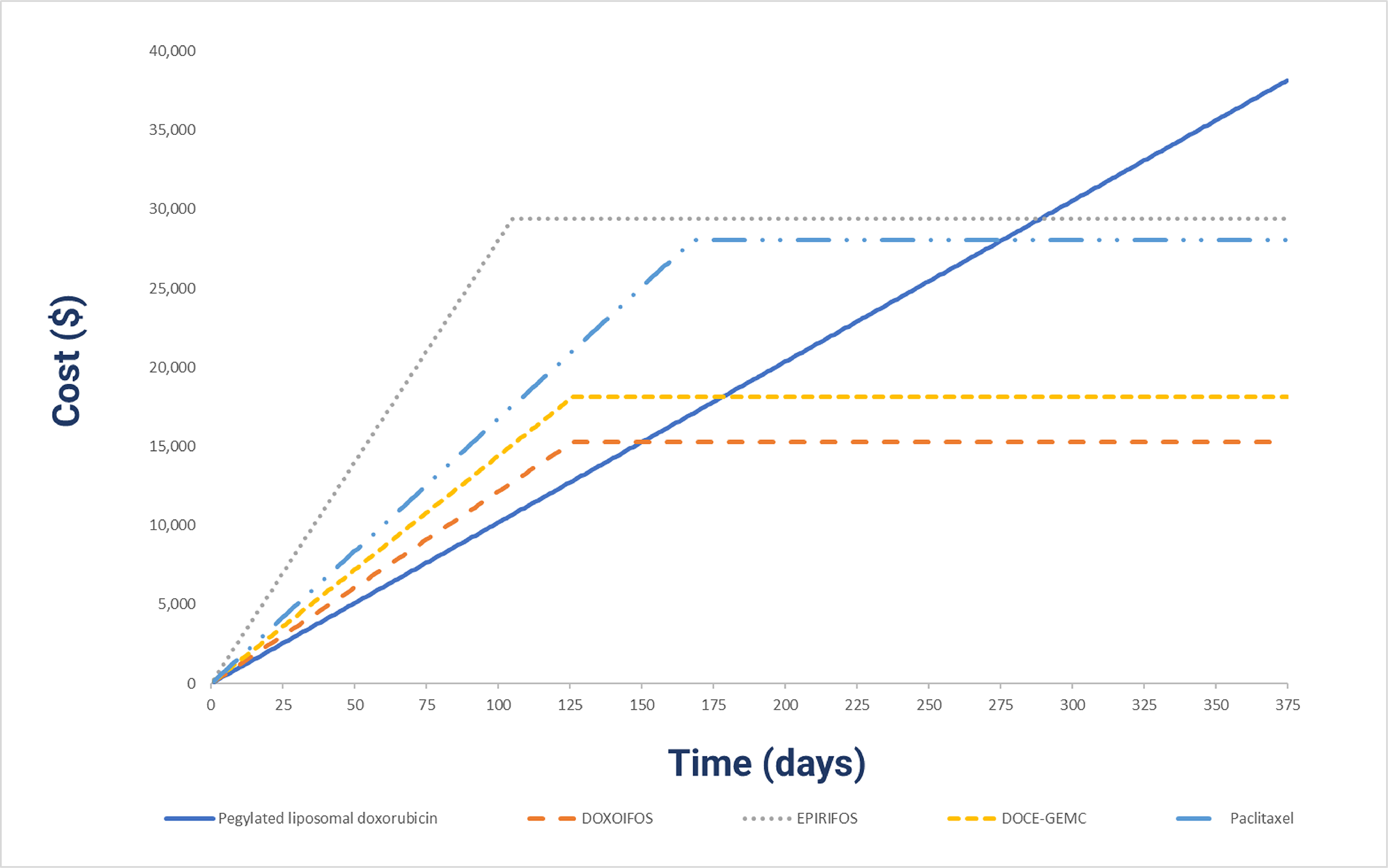
DOCE-GEMC = docetaxel-gemcitabine; DOXOIFOS = doxorubicin-ifosfamide-mesna; EPIRIFOS = epirubicin-ifosfamide-mesna.
Note: The graph may be inaccurate to determine the number of days for pegylated liposomal doxorubicin to exceed the cost of other comparators, as it assumes a daily cost increase, whereas true costs are accrued on the day of administration per cycle.
Table 7: Drug Cost Threshold Analysis for Pegylated Liposomal Doxorubicin and Comparators
Treatment | Duration of cycles (days) | Maximum number of cycles | Treatment duration (days) | Maximum cost ($) | Number of cycles for equal cost | Number of days for equal cost |
|---|---|---|---|---|---|---|
Pegylated liposomal doxorubicin (Caelyx) | 28 | NA | NA | NA | Reference | Reference |
DOCE-GEMC | 21 | 6 | 126 | 18,130 | 7 | 196 |
DOXOIFOS | 21 | 6 | 126 | 15,281 | 6 | 168 |
EPIRIFOS | 21 | 5 | 105 | 29,407 | 11 | 308 |
Paclitaxel | 28 | 6 | 168 | 28,080 | 10 | 280 |
DOCE-GEMC = docetaxel-gemcitabine; DOXOIFOS = doxorubicin-ifosfamide-mesna; EPIRIFOS = epirubicin-ifosfamide-mesna; NA = not applicable.
Depending on the treatment duration, the reimbursement of pegylated liposomal doxorubicin may represent additional costs to the public drug plans and health care systems. Therefore, the reimbursement of pegylated liposomal doxorubicin for the treatment of aSTS is expected to increase costs if the treatment duration of pegylated liposomal doxorubicin is greater than 308 days. Additional items for consideration are provided as follows:
According to the Clinical Review, the main source of efficacy evidence is a phase II trial, which compared pegylated liposomal doxorubicin and doxorubicin in 95 patients with aSTS.9 Based on the Clinical Review, it is uncertain whether pegylated liposomal doxorubicin differs in ORR, OS, or PFS when compared to doxorubicin. The 95% CIs for ORR, OS, or PFS overlapped, indicating potentially similar efficacy between treatment arms. No evidence was identified regarding the comparative efficacy and safety of pegylated liposomal doxorubicin versus other active comparators.
As of March 25, 2026, pegylated liposomal doxorubicin is available as a generic product in Canada (submission approved February 7, 2024).7
No health care resource use outcomes were reported in the clinical trial. However, when compared with conventional doxorubicin, patients treated pegylated liposomal doxorubicin experienced lower rates and severity of cardiotoxicity, myelosuppression, febrile neutropenia, and alopecia.9 The reduced rates of AEs may decrease costs associated with unplanned hospitalization and outpatient visits for pegylated liposomal doxorubicin when compared to doxorubicin; cost differences associated with unplanned hospitalizations and outpatient visits in comparison with other comparators are unknown.
According to the clinical experts consulted for this review, when compared with all comparators, pegylated liposomal doxorubicin is expected to decrease health care resource use associated with administration and monitoring due to the frequency of the dosing schedule. Clinical experts noted that cost differences of both DOXOIFOS and EPIRIFOS when compared to pegylated liposomal doxorubicin are expected to be greater, as patients may require hospital administration depending on the treatment regimen. Clinical experts noted that regimens that include doxorubicin may increase patient cardiotoxicity (i.e., doxorubicin, DOX-DTIC, DOXOIFOS) and may have increased rates of AEs, unplanned hospitalizations, or outpatient visits.
Trabectedin-doxorubicin was previously reviewed by CDA-AMC in 2025 for the treatment of patients with advanced unresectable or metastatic uterine or soft tissue leiomyosarcoma and received a “reimburse with conditions” recommendation.19
No cost-effectiveness studies conducted in Canada were identified based on a literature search conducted on February 17, 2026.
Conclusion
The reimbursement of pegylated liposomal doxorubicin for the treatment of aSTS is expected to increase in terms of overall drug acquisition costs. Based on the Clinical Review conclusions, pegylated liposomal doxorubicin may have similar OS, PFS, and ORR benefits when compared to conventional doxorubicin. Given that pegylated liposomal doxorubicin is associated with increased drug acquisition costs when compared to conventional doxorubicin and similar benefit in terms of OS, PFS, and ORR, there is limited evidence to support a price premium for pegylated liposomal doxorubicin over conventional doxorubicin. No comparative clinical evidence was identified for pegylated liposomal doxorubicin versus any other comparators; therefore, there is insufficient evidence to support a price premium.
References
1.Ryan CW, Meyer J. Clinical presentation, diagnostic evaluation, and staging of soft tissue sarcoma. Accessed Jan 29. www.uptodate.com
2.Hayes AJ, Nixon IF, Strauss DC, et al. UK guidelines for the management of soft tissue sarcomas. Br J Cancer. 2025;132(1):11-31. doi:10.1038/s41416-024-02674-y PubMed
3.Elias A, Ryan L, Sulkes A, Collins J, Aisner J, Antman KH. Response to mesna, doxorubicin, ifosfamide, and dacarbazine in 108 patients with metastatic or unresectable sarcoma and no prior chemotherapy. J Clin Oncol. 1989;7(9):1208-16. doi:10.1200/jco.1989.7.9.1208 PubMed
4.Gebhardt MC, Ryan CW, Baldini EH. Treatment of locally recurrent and unresectable, locally advanced soft tissue sarcoma of the extremities. Wolters Kluwer, Accessed Jan 29. www.uptodate.com
5.Canadian Cancer Society. Survival statistics for soft tissue sarcoma. Canadian Cancer Society. Accessed Mar 25. https://cancer.ca/en/cancer-information/cancer-types/soft-tissue-sarcoma/prognosis-and-survival/survival-statistics
6.National Comprehensive Cancer N. Soft Tissue Sarcoma National Comprehensive Cancer, Network. Accessed January 16, 2026.
7.Dr. Reddy’s Laboratories Ltd. Product Monograph Pegylated Liposomal Doxorubicin Hydrochloride for Injection. Health Canada Drug Product Database. Updated Dec 16, 2024. Accessed Apr 28. https://pdf.hres.ca/dpd_pm/00078036.PDF
8.UpToDate. Pegylated liposomal doxorubicin: Drug information. Wolters Kluwer. Accessed Jan 29. www.uptodate.com
9.Judson I, Radford JA, Harris M, et al. Randomised phase II trial of pegylated liposomal doxorubicin (DOXIL/CAELYX) versus doxorubicin in the treatment of advanced or metastatic soft tissue sarcoma: a study by the EORTC Soft Tissue and Bone Sarcoma Group. Eur J Cancer. 2001;37(7):870-7. doi:10.1016/s0959-8049(01)00050-8 PubMed
10.Poveda A, Lopez-Pousa A, Martin J, et al. Phase II Clinical Trial With Pegylated Liposomal Doxorubicin (CAELYX(R)/Doxil(R)) and Quality of Life Evaluation (EORTC QLQ-C30) in Adult Patients With Advanced Soft Tissue Sarcomas: A study of the Spanish Group for Research in Sarcomas (GEIS). Sarcoma. 2005;9(3-4):127-32. doi:10.1080/13577140500287024 PubMed
11.Aleixo G, Hartner L, Diamond M, et al. Liposomal Versus Conventional Doxorubicin as First-Line Therapy in Advanced Soft Tissue Sarcomas: Observational Multi-Institutional Cohort of 8.5-Year Experience. JCO Oncol Pract. 2026:OP2600132. doi:10.1200/op-26-00132 PubMed
12.European Organisation for Research and Treatment of Cancer Soft Tissue and Bone Sarcoma Group. Phase II Study of CAELYX_TM (doxorubicin HCl, pegylated liposomal) or Doxorubicin in Previously Untreated Adult Patients with Advanced and/or Metastatic Soft Tissue Sarcomas EORTC Protocol n° 62962 (SEQUUS Protocol n° 30-96-050). European Organisation for Research and Treatment of Cancer; 1997. Accessed March 13, 2026.
13.Magnuson A, Bruinooge SS, Singh H, et al. Modernizing Clinical Trial Eligibility Criteria: Recommendations of the ASCO-Friends of Cancer Research Performance Status Work Group. Clin Cancer Res. 2021;27(9):2424-2429. doi:10.1158/1078-0432.Ccr-20-3868 PubMed
14.Musoro JZ, Coens C, Sprangers MAG, et al. Minimally important differences for interpreting EORTC QLQ-C30 change scores over time: A synthesis across 21 clinical trials involving nine different cancer types. Eur J Cancer. 2023;188:171-182. doi:https://doi.org/10.1016/j.ejca.2023.04.027 PubMed
15.Scott NW, Fayers P, Aaronson NK, et al. EORTC QLQ-C30 Reference Values Manual. EORTC Quality of Life Group; 2008.
16.Buzdar AU, Marcus C, Smith TL, Blumenschein GR. Early and delayed clinical cardiotoxicity of doxorubicin. Cancer. 1985;55(12):2761-5. doi:10.1002/1097-0142(19850615)55:12<2761:aid-cncr2820551206>3.0.co;2-p PubMed
17.Swain SM, Whaley FS, Ewer MS. Congestive heart failure in patients treated with doxorubicin: a retrospective analysis of three trials. Cancer. 2003;97(11):2869-79. doi:10.1002/cncr.11407 PubMed
18.IQVIA. DeltaPA. 2023. Accessed March 1, 2026. https://www.iqvia.com/
19.Canada's Drug Agency. Reimbursement recommendation: Trabectedin. Can J Health Technol. 2025;5(10):1 to 13.
20.BC Cancer. Chemotherapy protocols. 2026. Accessed February 1. https://www.bccancer.bc.ca/health-professionals/clinical-resources/chemotherapy-protocols
21.Cancer Care Ontario. Funded evidence-informed regimens. 2026. Accessed February 1, 2026. https://www.cancercareontario.ca/en/drugformulary/regimens
22.Ontario Ministry of Health. Ontario drug benefit formulary/comparative drug index. 2026. Accessed February 1, 2026. https://www.formulary.health.gov.on.ca/formulary/
ISSN: 2563-6596
Canada’s Drug Agency (CDA-AMC) is a pan-Canadian health organization. Created and funded by Canada’s federal, provincial, and territorial governments, we’re responsible for driving better coordination, alignment, and public value within Canada’s drug and health technology landscape. We provide Canada’s health system leaders with independent evidence and advice so they can make informed drug, health technology, and health system decisions, and we collaborate with national and international partners to enhance our collective impact.
Disclaimer: CDA-AMC has taken care to ensure that the information in this document was accurate, complete, and up to date when it was published, but does not make any guarantee to that effect. Your use of this information is subject to this disclaimer and the Terms of Use at cda-amc.ca.
The information in this document is made available for informational and educational purposes only and should not be used as a substitute for professional medical advice, the application of clinical judgment in respect of the care of a particular patient, or other professional judgments in any decision-making process. You assume full responsibility for the use of the information and rely on it at your own risk.
CDA-AMC does not endorse any information, drugs, therapies, treatments, products, processes, or services. The views and opinions of third parties published in this document do not necessarily reflect those of CDA-AMC. The copyright and other intellectual property rights in this document are owned by the Canadian Agency for Drugs and Technologies in Health (operating as CDA-AMC) and its licensors.
Questions or requests for information about this report can be directed to Requests@CDA-AMC.ca.