Drugs, Health Technologies, Health Systems
Reimbursement Review
Olaparib
Requester: Public drug programs
Therapeutic area: Breast cancer
Key Messages
What Is HER2-Negative Unresectable Locally Advanced or Metastatic Breast Cancer With Deleterious or Suspected Deleterious BRCA Mutations?
HER2-negative unresectable locally advanced or metastatic breast cancer with deleterious or suspected deleterious BRCA mutations is an incurable disease associated with substantial symptom burden, reduced health-related quality of life (HRQoL), and poor survival.
In Canada, breast cancer is the most commonly diagnosed cancer among females. A total of 12.4% of patients are diagnosed with unresectable locally advanced disease, and 4.9% with metastatic breast cancer.
Based on international data, germline BRCA1 or BRCA2 pathogenic variants are present in approximately 5% to 10% of patients with breast cancer, whereas somatic BRCA1 or BRCA2 mutations occur in approximately 3% of patients. Germline mutations are more common among younger patients, whereas somatic alterations are more frequently identified in older patients.
What Are the Treatment Goals and Current Treatment Options for HER2-Negative Unresectable Locally Advanced or Metastatic Breast Cancer With Deleterious or Suspected Deleterious BRCA Mutations?
The goals of therapy for patients with deleterious or suspected deleterious BRCA-mutated, HER2-negative unresectable locally advanced or metastatic breast cancer are to prolong survival, delay disease progression, control symptoms, and maintain or improve HRQoL. Because the disease is incurable, the overall intent of treatment in this setting is palliative.
In Canada, treatment of unresectable locally advanced or metastatic HER2-negative unresectable locally advanced or metastatic breast cancer is guided primarily by tumour subtype. For hormone receptor (HR)–positive disease, treatment includes endocrine therapy combined with a CDK4 or CDK6 inhibitor, with or without a PIK3CA-targeted agent, followed by antibody-drug conjugates (e.g., trastuzumab deruxtecan or sacituzumab govitecan) and subsequent chemotherapy. For triple-negative breast cancer, first-line treatment includes chemotherapy with pembrolizumab for PD-L1–positive disease or chemotherapy alone for PD-L1–negative disease, followed by antibody-drug conjugates and additional chemotherapy.
There is no established standard-of-care therapy specifically for patients with BRCA-mutated metastatic breast cancer, and treatment decisions are individualized based on tumour characteristics and patient factors.
What Is Olaparib and Why Did Canada’s Drug Agency Conduct This Review?
Olaparib is a targeted poly(ADP-ribose) polymerase inhibitor that is administered orally at a dose of 300 mg (two 150 mg tablets) taken twice daily, for a total daily dose of 600 mg, until disease progression or unacceptable toxicity. Health Canada has approved olaparib as monotherapy for the treatment of adult patients with germline BRCA‑mutated, HER2‑negative metastatic breast cancer who have been previously treated with chemotherapy.
At the request of the participating public drug programs, Canada’s Drug Agency (CDA-AMC) reviewed olaparib to inform a reimbursement recommendation for treatment of adults with deleterious or suspected deleterious BRCA‑mutated, HER2‑negative unresectable locally advanced or metastatic breast cancer previously treated with chemotherapy. The reimbursement request is broader than the Health Canada indication, given that it includes patients with somatic BRCA mutations and unresectable locally advanced disease.
How Did CDA-AMC Evaluate Olaparib?
CDA-AMC reviewed the clinical evidence on the beneficial and harmful effects and compared costs of olaparib versus other treatments used in Canada for the treatment of adults with deleterious or suspected deleterious BRCA-mutated, HER2‑negative unresectable locally advanced or metastatic breast cancer previously treated with chemotherapy. Single-agent chemotherapy and, for PD-L1–positive disease, pembrolizumab plus chemotherapy were considered relevant treatments to compare with olaparib.
The clinical evidence was identified through systematic searches for available studies.
The review was also informed by 1 patient group submission and 2 clinician group submissions in response to our call for input, and by input from the participating public drug programs around issues that may impact their ability to implement a recommendation.
Two clinical experts with representation from New Brunswick and Ontario were consulted as part of the review process.
What Were the Findings?
Clinical Evidence
CDA-AMC reviewed the following clinical evidence:
1 phase III randomized controlled trial (the OlympiAD trial) comparing olaparib with chemotherapy in 302 patients with germline BRCA‑mutated, HER2‑negative metastatic breast cancer
2 reports of an open-label, phase II, single-arm study (the TBCRC 048 study) to address gaps in patients with somatic BRCA mutations.
In the OlympiAD trial, the magnitude of differences in overall survival at most time points appeared small and were presented without confidence intervals. Overall, clinical experts consulted for this review indicated that the observed differences in overall survival would not be considered clinically meaningful in this setting.
Progression-free survival was longer with olaparib compared with chemotherapy, which clinical experts considered clinically meaningful given that it may delay the need for IV chemotherapy and associated treatment burden; however, the relative effectiveness of olaparib compared with current standards of care remains uncertain because the comparator does not reflect newer therapies used in Canada.
Objective response rate was higher with olaparib; however, interpretation is limited because this analysis was restricted to patients with measurable disease at baseline. Clinical experts considered the difference between groups to be clinically meaningful, particularly for symptomatic patients.
HRQoL outcomes favoured olaparib; however, interpretation is limited by the open-label design, missing data, and lack of multiplicity adjustment.
The overall incidence of adverse events was comparable between olaparib and chemotherapy, although the toxicity profiles differed. Olaparib was associated with expected and generally manageable toxicities, and no new or unexpected safety signals were identified. Clinical experts considered the safety profile of olaparib to be manageable in practice and noted that oral administration may reduce treatment burden.
Evidence from phase II, single-arm studies in patients with somatic BRCA mutations showed objective tumour responses and modest progression-free survival following treatment with olaparib; however, these findings are highly uncertain due to the single-arm design, small sample sizes, and lack of comparative evidence.
Direct evidence in patients with locally advanced unresectable disease is lacking because the OlympiAD trial enrolled patients with metastatic breast cancer.
We did not identify any studies comparing the clinical efficacy and safety of olaparib with other relevant comparators (e.g., pembrolizumab plus chemotherapy) in PD-L1–positive triple-negative breast cancer.
Economic Evidence
Reimbursing olaparib for HER2-negative unresectable locally advanced or metastatic breast cancer with deleterious or suspected deleterious BRCA mutations can increase costs to the public drug programs with a favourable impact on clinical outcomes.
Abbreviations
AE
adverse event
BICR
blinded independent central review
CDA-AMC
Canada’s Drug Agency
DAC
Drug Advisory Committee
DCO
data cut-off
HR
hormone receptor
HRQoL
health-related quality of life
ITC
indirect treatment comparison
OH-CCO
Ontario Health (Cancer Care Ontario)
ORR
objective response rate
OS
overall survival
PARP
poly(ADP-ribose) polymerase
PFS
progression-free survival
RCT
randomized controlled trial
REAL
Research Excellence Active Leadership
RECIST
Response Evaluation Criteria in Solid Tumours
SAE
serious adverse event
TNBC
triple-negative breast cancer
TPC
treatment of physician’s choice
Background
Introduction
The objective of the Clinical Review is to review and critically appraise the evidence on the beneficial and harmful effects of olaparib 150 mg oral tablets for the treatment of adult patients with deleterious or suspected deleterious BRCA-mutated, HER2-negative unresectable locally advanced or metastatic breast cancer who have been previously treated with chemotherapy. The focus will be placed on comparing olaparib to relevant comparators in clinical practice in Canada and identifying gaps in the current evidence. The Economic Review consists of a cost comparison for olaparib compared with relevant comparators for the same population. The comparators considered relevant to the reviews were single chemotherapy agents.
Table 1: Information on the Drug Under Review and on the Canada’s Drug Agency Review
Item | Description |
|---|---|
Information on the drug under review | |
Drug | Olaparib 150 mg oral tablets |
Relevant Health Canada indication | Olaparib is indicated as monotherapy for the treatment of adult patients with deleterious or suspected deleterious germline BRCA-mutated, HER2-negative metastatic breast cancer who have been previously treated with chemotherapy in the neoadjuvant, adjuvant, or metastatic setting. Patients with hormone receptor–positive breast cancer should have been treated with a prior endocrine therapy or be considered inappropriate for endocrine therapy. Germline BRCA mutation must be confirmed before olaparib treatment is initiated. |
Mechanism of action | PARP inhibitor; selective inhibitor of PARP1, PARP2, and PARP3 involved in DNA repair, thereby preventing repair of DNA damage and inducing cancer cell death, with higher activity in tumours harbouring BRCA mutations or other homologous recombination repair deficiencies |
Recommended dosage | Olaparib is administered orally as monotherapy. The recommended dosage is 300 mg (two 150 mg tablets) taken twice daily, for a total daily dose of 600 mg. Treatment should be continued until disease progression or unacceptable toxicity. |
Data protection status | Ended April 29, 2024 |
Patent status | Ends October 5, 2029 |
Status of generic drugs | There are currently no marketed generic versions of olaparib in Canada. According to Health Canada’s drug submission database, 3 generic olaparib submissions remain under review as of April 2026. |
Information on the CDA-AMC review | |
Requester | Oncology Working Group |
Indication under consideration for reimbursement | For the treatment of adult patients with deleterious or suspected deleterious BRCA-mutated, HER2-negative, unresectable locally advanced or metastatic breast cancer who have been previously treated with chemotherapy. Patients with hormone receptor–positive breast cancer should have been treated with a prior endocrine therapy or be considered inappropriate for endocrine therapy. Germline BRCA mutation must be confirmed before olaparib treatment is initiated. |
CDA-AMC = Canada’s Drug Agency; PARP = poly(ADP-ribose) polymerase.
Context for the Review
The public drug programs, via the Oncology Working Group, requested a review of olaparib for the treatment of adult patients with deleterious or suspected deleterious BRCA-mutated, HER2-negative, unresectable locally advanced or metastatic breast cancer who have been previously treated with chemotherapy. This is the first Canada’s Drug Agency (CDA-AMC) review of olaparib for this indication. The reimbursement request is broader than the Health Canada–approved indication, given that it includes patients with BRCA-mutated breast cancer, regardless of germline or somatic mutation status, and extends eligibility to those with locally advanced, unresectable disease, whereas the Health Canada indication is restricted to patients with germline BRCA-mutated, HER2-negative metastatic breast cancer.
Submission History for the Drug Under Review
CDA-AMC has previously reviewed olaparib through the reimbursement review process for several indications other than the 1 requested, including for breast, ovarian, prostate, and pancreatic cancers.
For breast cancer, olaparib received a “reimburse with clinical criteria and/or conditions” recommendation in March 2023 for the adjuvant treatment of adults with deleterious or suspected deleterious germline BRCA-mutated, HER2-negative, high-risk early breast cancer previously treated with neoadjuvant or adjuvant chemotherapy.1
For ovarian cancer, olaparib was first reviewed in September 2016 for the maintenance treatment of adults with platinum-sensitive relapsed BRCA-mutated epithelial ovarian, fallopian tube, or primary peritoneal cancer following response to platinum-based chemotherapy, for which a “do not reimburse” recommendation was issued.2 A subsequent review in September 2017 recommended reimbursement for maintenance monotherapy in adults with platinum-sensitive relapsed BRCA-mutated high-grade serous ovarian, fallopian tube, or primary peritoneal cancer who had completed at least 2 prior lines of platinum-based chemotherapy and achieved a radiologic response to their most recent regimen.3 In December 2019, olaparib monotherapy received a reimbursement recommendation as first-line maintenance treatment of newly diagnosed ovarian, fallopian tube, or primary peritoneal cancer.4
For pancreatic cancer, olaparib received a “reimburse with clinical criteria and/or conditions” recommendation in April 2026 for maintenance treatment of adult patients with germline BRCA‑mutated unresectable locally advanced or metastatic adenocarcinoma.5
For prostate cancer, olaparib monotherapy was reviewed for the treatment of adults with metastatic castration-resistant prostate cancer and homologous recombination repair gene mutations whose disease progressed following prior treatment with a new hormonal agent, resulting in a “reimburse with conditions” recommendation in April 2021.6 In January 2024, CDA‑AMC issued a “reimburse with conditions” recommendation for olaparib in combination with abiraterone and prednisone (or prednisolone) for first-line treatment of adults with deleterious or suspected deleterious germline and/or somatic BRCA‑mutated metastatic castration-resistant prostate cancer in whom chemotherapy is not clinically indicated.7
Sources of Information
The contents of the Clinical Review are informed by studies identified through systematic literature searches, input received from interested parties (patient groups, clinician groups, and drug programs), and input from clinical experts consulted for this review.
Calls for patient group, clinician group, and industry input are issued for each Non-Sponsored Reimbursement Review. The following submissions were received: 1 patient group submission from Breast Cancer Canada, 2 clinician group submissions from Ontario Health (Cancer Care Ontario) (OH-CCO) Breast Cancer Drug Advisory Committee (DAC) and REAL (Research Excellence Active Leadership) Canadian Breast Cancer Alliance. Information for this submission was gathered by email. No submissions were received from industry. The full submissions received are available on the project landing page, in the consolidated input document. CDA-AMC engaged with Canadian Breast Cancer Network and Rethink Breast Cancer using facilitated group discussions to seek insights on patients’ perspectives of living with deleterious germline BRCA-mutated, HER2‑negative metastatic breast cancer. Patient group input from facilitated group discussions is summarized in a separate section of this report.
Input from patient and clinician groups is considered throughout the review, including in the selection of outcomes to include in the Clinical Review and in the interpretation of the clinical evidence. Relevant patient and clinician group input is summarized in the Disease Background, Current Management, and Unmet Needs and Existing Challenges sections.
The drug programs provide input on each drug being reviewed through the reimbursement review process by identifying issues that may impact their ability to implement a recommendation. The implementation questions and corresponding responses from the clinical experts consulted for this review are summarized and provided to the expert committee in a separate document.
Each review team includes at least 1 clinical expert with expertise regarding the diagnosis and management of the condition for which the drug is indicated. Clinical experts are a critical part of the review team and are involved in all phases of the review process. Two specialists with expertise in the diagnosis and management of breast cancer malignancies participated as part of the review team, with representation from New Brunswick and Ontario.
Disease Background
Breast cancer is the most commonly diagnosed cancer among females in Canada and remains a leading cause of cancer-related death among females, although it can also occur in males. In 2026, an estimated 32,400 females in Canada will be diagnosed with breast cancer, and 5,400 are projected to die from the disease, representing approximately 26% of all new cancer cases and 13% of cancer deaths in females; the 5-year net survival is approximately 89%.8
Advanced breast cancer includes both unresectable locally advanced (stage III) and metastatic (stage IV) disease. Locally advanced breast cancer is characterized by spread to regional lymph nodes or surrounding tissues, whereas metastatic breast cancer involves spread to distant organs.9 Unresectable locally advanced and metastatic breast cancer are often collectively referred to as advanced disease, reflecting a unified approach to systemic management in this setting.10 Advanced breast cancer is generally considered incurable10 and is associated with a poor prognosis and reduced survival; however, outcomes are typically poorer in the metastatic setting.11 For example, 5-year net survival for breast cancer in females was 74% for unresectable locally advanced and 23.2% for metastatic disease.12
Canadian data indicate that 12.4% of patients are diagnosed with unresectable locally advanced breast cancer and 4.9% with metastatic disease at diagnosis.12 In addition, a proportion of patients initially diagnosed with early-stage breast cancer will subsequently experience recurrence, with approximately 10% to 30% developing metastatic disease depending on tumour subtype.13
Breast cancer is a heterogeneous disease with variability in clinical presentation and underlying molecular mechanisms, and treatment is guided by disease stage as well as biomarker status, including hormone receptor (HR) and HER2 expression.14 HER2-negative breast cancer represents the majority of cases and includes HR-positive, HER2-negative disease and triple-negative breast cancer (TNBC); HR‑positive, HER2‑negative disease accounts for approximately 70% of cases, and TNBC accounts for approximately 10%.15
BRCA1 and BRCA2 are tumour suppressor genes involved in homologous recombination repair of DNA double-strand breaks.16 BRCA mutations may be germline or somatic; germline mutations are inherited and present in all cells, whereas somatic mutations arise within tumour cells.17 Based on international data, germline pathogenic variants in BRCA1 or BRCA2, which impair DNA repair, are identified in approximately 5% to 10% of patients with breast cancer,18-20 whereas somatic BRCA1 or BRCA2 mutations occur in approximately 3% of cases.21,22 Germline BRCA1 or BRCA2 variants are more frequently observed in younger patients, whereas somatic mutations are more commonly detected in older patients.18 BRCA‑associated breast cancer is predominantly HER2‑negative, with HER2-positive tumours representing a small proportion of cases.23 Germline BRCA1 or BRCA2‑associated breast cancer is typically characterized by an earlier age at diagnosis, whereas somatic BRCA alterations are more commonly identified in older patients, consistent with the accumulation of somatic mutations over time.17,24 Clinical experts consulted for this review indicated that the overall treatment paradigm is generally similar across germline and somatic BRCA‑mutated disease in clinical contexts.
Patients with advanced breast cancer experience a substantial disease burden, including physical symptoms such as pain, fatigue, nausea, and shortness of breath, as well as breast- and axillary-related symptoms in locally advanced disease.25 These symptoms are often accompanied by psychosocial impacts.26 Health‑related quality of life (HRQoL) is reduced compared with the general population and may decline with disease progression and subsequent lines of therapy.27
International guidelines, including those from the American Society of Clinical Oncology,28 and the European Society for Medical Oncology,11 recommend germline BRCA1 and BRCA2 mutation testing for patients with breast cancer who may be eligible for poly(ADP-ribose) polymerase (PARP) inhibitor therapy, including patients with recurrent or metastatic HER2-negative disease. Recent American Society of Clinical Oncology and Society of Surgical Oncology guidance also recommends broader germline BRCA1 and BRCA2 mutation testing for all patients diagnosed with breast cancer at age 65 years or younger, as well as selected older patients based on clinical and family history characteristics.28
In Canada, implementation of germline and somatic BRCA mutation testing for breast cancer is not standardized nationally and varies across provinces. Based on input from participating jurisdictions and clinical experts, there is substantial interprovincial variation in funded access, eligibility criteria, referral pathways, laboratory capacity, and turnaround times. Whereas several provinces provide funded access to germline BRCA mutation testing when results may inform treatment eligibility, approaches to testing and patient selection differ. In contrast, access to somatic BRCA mutation testing for breast cancer remains limited nationwide. These variations may affect the timely identification of patients eligible for targeted therapies.
Current Management
Treatment Goals
Patient and clinician groups agreed with the clinical experts consulted for this review that the treatment goals for patients with germline BRCA-mutated, HER2-negative, unresectable locally advanced or metastatic breast cancer are to prolong survival, delay disease progression, reduce cancer-related symptoms, reduce the severity of cancer-related symptoms while minimizing treatment toxicity, and maintain or improve HRQoL. The clinical experts further noted that the overall intent of treatment in this setting is palliative, given that advanced disease is not curable and progression is expected over time.
Current Treatment Options
The clinical experts indicated that, in Canada, treatment for unresectable locally advanced or metastatic HER2-negative breast cancer is guided primarily by tumour subtype. For patients with HR-positive disease, treatment typically consists of a CDK4 or CDK6 inhibitor in combination with endocrine therapy, with or without a PIK3CA-targeted agent, in the first and second lines, followed by the potential use of the first line of antibody-drug conjugate therapy, such as trastuzumab deruxtecan or sacituzumab govitecan, and then subsequent lines of chemotherapy. For patients with TNBC, first-line treatment consists of chemotherapy in combination with pembrolizumab for PD-L1–positive disease and chemotherapy alone for PD-L1–negative disease, followed by the possibility of antibody-drug conjugate therapy and additional chemotherapy in later lines. Other emerging options discussed by the clinical experts for potential first-line treatment of PD-L1–positive disease include datopotamab deruxtecan and sacituzumab govitecan. The clinical experts also noted that emerging evidence from small studies and early-phase trials suggests PARP inhibitors may have activity in tumours with somatic BRCA1 and BRCA2 mutations; however, the available evidence remains limited and is not yet well established across tumour types.29 Input from the REAL Canadian Breast Cancer Alliance clinician group was consistent with this approach and further emphasized that there is no established standard-of-care targeted therapy specifically for patients with germline BRCA-mutated metastatic breast cancer, and that management is instead guided by estrogen-receptor (ER), progesterone-receptor (PR), and HER2 status, with treatment decisions individualized based on disease characteristics, patient factors, and preferences. Both clinician groups agreed with the subtype-driven treatment approach described by the clinical experts. The REAL Canadian Breast Cancer Alliance group additionally highlighted the lack of therapies targeting the underlying germline BRCA biology and the importance of flexible, patient-centred sequencing to delay IV chemotherapy. The OH-CCO Breast Cancer DAC additionally highlighted that PARP inhibitors are not publicly funded in the metastatic setting despite guideline recommendations, leading to inequitable access, and noted that olaparib monotherapy is proposed for patients with deleterious germline BRCA-mutated, HER2-negative metastatic breast cancer in the first to third line.
Unmet Needs and Existing Challenges
The clinical expert and clinician groups indicated that metastatic breast cancer remains incurable and that current treatments are not considered curative. They noted that while existing therapies can delay disease progression and improve survival, there remains a need for more effective, well-tolerated treatment options. The clinical expert highlighted that tolerability remains a concern across subtypes, particularly for patients with TNBC and for those with HR-positive disease following progression on first-line therapy. Clinician groups further highlighted that currently available chemotherapy regimens are associated with substantial toxicity, which can negatively impact patients’ quality of life.
Clinician groups highlighted the lack of targeted, effective, well-tolerated oral treatment options that provide meaningful disease control and extended survival. Current reliance on chemotherapy is associated with substantial toxicity and negatively impacts quality of life, in addition to the logistical and patient burden associated with IV chemotherapy administration.
The OH-CCO Breast Cancer DAC specifically noted that there are no publicly funded targeted therapies in the metastatic setting for patients with germline BRCA mutations, representing a gap in access to targeted treatment options.
Patient input emphasized that current treatments do not adequately meet patient needs, citing limited effectiveness in disease control and survival, as well as challenges related to tolerability and impact on daily life. Patients reported that existing chemotherapy options are associated with significant side effects, including fatigue, pain, and reduced ability to carry out daily activities. They highlighted the need for treatments that are more effective, better tolerated, and more convenient to administer, including oral therapies.
Considerations for Using the Drug Under Review
Place in Therapy
The clinical expert indicated that, for patients with HR-positive disease, olaparib would generally be considered after progression on endocrine therapy in combination with a CDK4 or CDK6 inhibitor, with flexibility in sequencing relative to other treatments. In patients with HER2-low disease, olaparib may be used before or after trastuzumab deruxtecan. For patients with TNBC, olaparib would typically be used after failure of first-line therapy, although earlier use may be considered in PD-L1–negative disease.
This approach was consistent with REAL Canadian Breast Cancer Alliance input, which recommends the use of a PARP inhibitor after progression on endocrine therapy in patients with germline BRCA-mutated disease, as an alternative to chemotherapy. REAL Canadian Breast Cancer Alliance noted that, in patients with TNBC and PD-L1–negative disease, PARP inhibitors may be prioritized in the first-line setting; however, this approach is based on clinical rationale rather than evidence from prospective, line-specific clinical trials.
The OH-CCO Breast Cancer DAC recommended that olaparib should be available to patients with deleterious germline BRCA-mutated, HER2-negative recurrent or metastatic breast cancer in the first or later lines of treatment. The committee also indicated that olaparib should be used as a replacement for standard chemotherapy and that sequencing flexibility should be maintained to allow individualized treatment decisions.
Patient Population
The clinical expert and clinician groups indicated that patients with germline BRCA1 or BRCA2–mutated, HER2-negative metastatic breast cancer are appropriate candidates for treatment with olaparib. The clinical expert noted that, in general, patients who are candidates for systemic therapy would also be candidates for olaparib. However, access to molecular testing may be a limitation in some settings.
Both clinician groups specified that patients best suited for the treatment include those with confirmed germline BRCA mutations and adequate performance status and organ function. In patients with HR-positive disease, olaparib would generally be considered following progression on endocrine-based therapy, whereas in patients with TNBC, it may be used earlier in PD-L1–negative disease and in later lines for PD-L1–positive disease. Patients without germline BRCA mutations or with poor performance status may be less suitable.
The OH-CCO Breast Cancer DAC noted that patient selection and line of therapy should allow flexibility based on patient-physician discussion, and that patients who prefer an oral alternative to chemotherapy may be particularly well suited for treatment. They also indicated that additional tumour testing may not inform patient selection and that patients with germline PALB2 mutations may also benefit from treatment.
Assessing the Response to Treatment
The clinical expert and clinician groups indicated that treatment response is assessed using radiographic imaging, in accordance with standard practice, with CT scans commonly performed every 3 months. The clinical expert noted that response is evaluated using established criteria for progression and response, and that clinically meaningful benefit would be reflected in improvements in survival, delayed disease progression, and improved quality of life or symptoms. The OH-CCO Breast Cancer DAC noted that patients would undergo standard follow-up and monitoring for treatment response and tolerability in accordance with institutional practices.
Discontinuing Treatment
The clinical expert and clinician groups indicated that treatment with olaparib should be discontinued in cases of disease progression or intolerable adverse events (AEs). Clinician groups further noted that discontinuation may also occur based on patient preference or deterioration in performance status.
Prescribing Considerations
The clinical expert and clinician groups indicated that olaparib should be prescribed and monitored by a medical oncologist. Clinician groups further noted that olaparib is an oral, take-home cancer therapy that can be administered in both academic and community settings, with ongoing monitoring through regular oncology follow-up to assess treatment response and tolerability.
Additional Considerations
REAL Canadian Breast Cancer Alliance indicated that olaparib should be reimbursed for patients with germline BRCA-mutated metastatic breast cancer in any line of therapy for TNBC and following endocrine resistance in HR-positive disease. REAL Canadian Breast Cancer Alliance also emphasized the importance of timely germline BRCA1 or BRCA2 mutation testing in patients with metastatic breast cancer to identify candidates for PARP inhibitor therapy.
The OH-CCO Breast Cancer DAC noted that implementation considerations may include provisions for re‑treatment, such that patients who received adjuvant olaparib may be eligible for treatment in the metastatic setting if they did not progress on adjuvant therapy and had a sufficient disease-free interval.
The clinical experts and clinician group highlighted that delays and inconsistencies in BRCA mutation testing are major barriers to accessing olaparib. The clinical experts also pointed out that olaparib’s oral administration and lack of peripheral neuropathy make it especially suitable for patients in rural areas who face challenges with frequent IV chemotherapy.
The clinical experts indicated that the requested indication differs from Health Canada’s approval, suggesting that access should extend to patients with somatic BRCA mutations rather than be restricted to patients with germline BRCA mutations. In practice, patients with somatic BRCA mutations may be considered for treatment in a manner similar to those with germline mutations.
Clinical Review
Methods
The review team conducted a systematic review to identify evidence for olaparib for the treatment of adult patients with deleterious or suspected deleterious BRCA-mutated unresectable locally advanced or metastatic breast cancer who have been previously treated with chemotherapy. Studies were selected according to the eligibility criteria in Table 2. Long-term extension studies of included randomized controlled trials (RCTs), indirect treatment comparisons (ITCs) that adhered to the eligibility criteria (except for the study design criteria), and studies addressing gaps that did not meet the eligibility criteria but were considered to address important gaps in the systematic review evidence were eligible for inclusion. Given that direct evidence comparing olaparib with relevant comparators (pembrolizumab plus chemotherapy) was lacking, a search for ITCs was also conducted.
Relevant comparators included treatments used in clinical practice in Canada for the patient population under review. Clinical expert input and patient and clinician group input were considered when selecting outcomes (and follow-up times) for review. Selected outcomes are those considered relevant to expert committee deliberations. Detailed methods for the literature search(es), study selection, and data extraction are in Appendix 2 of the Supplemental Material document (available on the project landing page).
Table 2: Systematic Review Eligibility Criteria
Criteria | Description |
|---|---|
Population | Adult patients with deleterious or suspected deleterious BRCA-mutated, HER2-negative, unresectable locally advanced or metastatic breast cancer who have been previously treated with chemotherapy Patients with HR-positive breast cancer whose disease has progressed on endocrine therapy or for whom endocrine therapy is inappropriatea |
Intervention | Olaparib Dosage: two 150 mg tablets per dose, taken orally twice daily, for a total daily dose of 600 mg |
Comparator |
|
Outcomes | Efficacy outcomes:
Harms outcomes:
|
Study design | Published phase III and IV RCTs |
AE = adverse event; AESI = adverse event of special interest; AML = acute myeloid leukemia; HR = hormone receptor; HRQoL = health-related quality of life; MDS = myelodysplastic syndrome; ORR = objective response rate; OS = overall survival; PFS = progression-free survival; RCT = randomized controlled trial; SAE = serious adverse event; TNBC = triple-negative breast cancer.
aBRCA mutation must be confirmed before olaparib treatment is initiated.
bSingle agent chemotherapy options (e.g., capecitabine, eribulin, vinorelbine, docetaxel, doxorubicin, epirubicin).
cChemotherapy options (e.g., albumin-bound paclitaxel, paclitaxel, or gemcitabine with carboplatin).
Clinical Evidence
An information specialist conducted a literature search of key bibliographic databases, trial registries, and grey literature sources, using a peer-reviewed search strategy. The initial search was completed on February 11, 2026, with alerts maintained until the Formulary Management Expert Committee meeting on July 16, 2026. Refer to Appendix 2 in the Supplemental Material document for detailed search strategies.
From the search for primary studies, the review team identified 1,503 unique records via the searches of databases and registers, of which 1,497 were excluded by title and abstract. The review team screened 6 records by full text and included 4 reports of 1 study (the OlympiAD study).30-33 No potentially relevant records were identified from other sources. No reports of long-term extensions of the included study were identified.
From the search for ITCs, the review team identified 246 unique records via the searches of databases and registers, of which none met the eligibility criteria by title and abstract screening.
Additionally, 2 reports34,35 of an open-label, phase II, single-arm study (the TBCRC 048 study) were identified, which are presented in the section on Studies Addressing Gaps in the Systematic Review Evidence.
A list of excluded studies, including reasons for exclusion, is presented in Table 3 in the Supplemental Material document, in Appendix 2.
Systematic Review
Description of Studies
Study Characteristics
The OlympiAD trial (NCT02000622)30-33 is a randomized, multicentre, open-label, controlled, phase III trial sponsored by AstraZeneca and conducted in 171 locations across 19 countries, including Bulgaria, China, Czechia, France, Hungary, Italy, Japan, Mexico, Peru, Poland, Romania, Russia, South Korea, Spain, Switzerland, Taiwan, Türkiye, the UK, and the US.36 The study aimed to evaluate the efficacy and safety of olaparib monotherapy versus chemotherapy treatment of physician’s choice (TPC) in adult patients with deleterious or suspected deleterious germline BRCA1 or BRCA2-mutated, HER2-negative metastatic breast cancer. The primary end point was progression-free survival (PFS). Secondary end points included overall survival (OS), objective response rate (ORR), HRQoL, and safety outcomes.30-32
The OlympiAD trial enrolled patients aged 18 years and older with HER2-negative metastatic breast cancer that was either HR-positive (ER-positive, PR-positive, or both) or TNBC. Patients were required to have a confirmed deleterious or suspected deleterious germline BRCA1 or germline BRCA2 mutation, identified by central testing using BRACAnalysis (Myriad Genetics) or by local testing, with confirmation by central testing in nearly all cases. Patients were required to have at least 1 lesion (measurable and/or nonmeasurable) that could be accurately assessed at baseline by CT (MRI where CT is contraindicated) and was suitable for repeated assessment according to modified Response Evaluation Criteria in Solid Tumours (RECIST), version 1.1, an Eastern Cooperative Oncology Group performance status of 0 or 1, and adequate organ and bone marrow function.30
Eligible patients must have received prior treatment with an anthracycline and a taxane in the neoadjuvant, adjuvant, or metastatic setting unless contraindicated. Patients with HR-positive disease were required to have received at least 1 endocrine therapy (in either the adjuvant or metastatic setting) and to have experienced disease progression during therapy, unless endocrine therapy was considered inappropriate. Patients could have received no more than 2 prior chemotherapy regimens for metastatic disease. Prior platinum therapy in the neoadjuvant or adjuvant setting was permitted if at least 12 months had elapsed since the last dose; prior platinum therapy for metastatic disease was allowed, provided disease progression had not occurred during treatment.30
A total of 302 patients were randomized between April 2014 and November 2015 in a 2:1 ratio to receive olaparib tablets (300 mg twice daily) or TPC single-agent chemotherapy. TPC was restricted to 1 of 3 prespecified single-agent options administered on 21‑day cycles: capecitabine administered orally at a dose of 2,500 mg per square metre of body-surface area daily (divided into 2 doses) for 14 days, eribulin mesylate administered intravenously at a dose of 1.4 mg per square metre on day 1 and day 8, or vinorelbine administered intravenously at a dose of 30 mg per square metre on day 1 and day 8. Randomization was conducted using an interactive voice or web response system and was stratified according to prior chemotherapy for metastatic disease, HR status, and prior platinum therapy.30 Patients continued treatment until objective disease progression or unacceptable toxicity. After discontinuation of study treatment, subsequent anticancer therapies were permitted at the investigators’ discretion, and patients were followed for survival and safety outcomes.30
Concomitant medications were permitted during the study, provided they were not expected to interfere with trial treatment. Investigators were allowed to prescribe supportive medications such as antiemetics, antidiarrheal agents, anticoagulants, contraceptive therapy, and antihormonal agents. Treatments targeting bone metastases, including bisphosphonates or receptor activator of nuclear factor κB ligand (RANKL) inhibitors, were permitted if initiated at least 5 days before randomization. Concomitant use of other anticancer agents, live vaccines, and strong CYP3A inhibitors or inducers was prohibited during study treatment.
Tumour imaging with CT or MRI was performed every 6 weeks until week 24 and every 12 weeks thereafter until disease progression. Disease progression was assessed according to modified RECIST version 1.1, with the primary analysis based on blinded independent central review (BICR). OS was assessed throughout the study and every 8 weeks after disease progression. Safety was monitored during treatment and for 30 days after the last dose.
HRQoL was assessed using the European Organization for Research and Treatment of Cancer Quality of Life Questionnaire Core-30. The questionnaire was completed by patients at baseline (before randomization) and every 6 weeks until disease progression. Patients who discontinued treatment due to toxicity continued HRQoL assessments until investigator-assessed disease progression.30,32
Following the prespecified final OS analysis, the study protocol was amended in March 2018 to extend survival follow-up for at least 2 additional years, allowing evaluation of longer-term OS and selected safety outcomes.33
Details regarding additional inclusion criteria and outcome measures are presented in Table 4 and Table 5 in the Supplemental Material document, in Appendix 3.
Statistical Testing and Analysis Populations
A total sample size of 302 patients was planned for the OlympiAD trial. The statistical design assumed that approximately 230 PFS events (data maturity is approximately 75%) would provide 90% power at a 2-sided significance level of 5% to detect a hazard ratio of 0.635 for disease progression or death with olaparib compared with TPC.30
Three major analyses were conducted during the trial, each associated with prespecified efficacy outcomes and corresponding data cut-offs (DCOs):
Primary PFS analysis (DCO1): PFS, the primary end point, was assessed after 77.5% (234 of 302) of patients demonstrated disease progression or had died (December 9, 2016) across both treatment arms. This analysis represented the primary hypothesis testing for PFS and included assessment of secondary outcomes such as OS, ORR, safety outcomes, and HRQoL.30-32
Final OS analysis (DCO2): Conducted after approximately 190 deaths had occurred, corresponding to the September 25, 2017, DCO. In this analysis, 192 deaths had been observed, representing approximately 64% data maturity. This analysis included the prespecified final assessment of OS, with updated analyses of secondary outcomes and safety.31
Extended follow-up analyses conducted after the protocol amendment incorporated approximately 25.7 months of additional follow-up and included exploratory evaluations of OS and selected safety outcomes, with landmark survival analyses at 12, 24, 36, and 48 months. Estimation of the OS treatment effect (hazard ratio) remained based on the method used for the prespecified analysis, though P values are considered nominal. The landmark analyses were exploratory, and the time points presented were not preplanned.33
Statistical testing followed a prespecified hierarchical procedure. A multiple testing procedure was used to control the type I error rate at 2.5% (1-sided) across the primary end point (PFS) and key secondary end point (OS). PFS was tested first, followed by OS. A spending function was used to control for multiple testing across interim and final analyses.
Efficacy analyses were conducted in the intention-to-treat population, defined as all randomized patients according to their randomized group, regardless of the treatment actually received. Safety analyses included all patients who received at least 1 dose of study treatment, according to the treatment actually received.30
Patient Disposition
Between April 7, 2014, and November 27, 2015, a total of 344 patients were screened for eligibility in the OlympiAD trial. Of these, 42 patients were excluded before randomization, including 2 who declined participation, 38 who did not meet eligibility criteria, and 2 for other reasons. A total of 302 patients underwent randomization to olaparib (n = 205) or TPC (n = 97) and were included in the efficacy analyses.
All 205 patients assigned to the olaparib group received study treatment and were included in the safety analyses. In the TPC arm, 6 patients did not receive study treatment because they declined treatment after randomization due to treatment allocation. Consequently, 91 patients received TPC and were included in the safety population. Among the 91 patients who received TPC, treatment consisted of capecitabine (n = 41), eribulin (n = 34), or vinorelbine (n = 16).
At the time of the primary PFS analysis (DCO1), 169 of 205 (82%) patients in the olaparib group and 88 of 97 (91%) in the TPC group had discontinued treatment. The most common reason in both groups was disease progression (73% in the olaparib group and 70% in the TPC group). The proportion of patients who discontinued the study was not reported.
A total of 7 of 205 (3%) patients in the olaparib group and 8 of 97 (8%) in the TPC group did not consent to participate in the extended follow-up. By the time of the extended OS follow-up DCO, 194 of 205 (95%) patients in the olaparib group and 91 of 97 (94%) in the TPC group had discontinued treatment, primarily due to disease progression (81% in the olaparib group and 72% in the TPC group). At this time, 169 of 205 (82%) of patients in the olaparib group and 91 of 97 (94%) in the TPC group had discontinued the study, primarily due to death (78% in the olaparib group and 73% in the TPC group).
Further details of patient disposition in the OlympiAD trial at each DCO are presented in Table 6 in the Supplemental Material document, in Appendix 4.
Baseline Characteristics
Baseline demographics and disease characteristics of patients enrolled in the OlympiAD trial are presented in Table 3.
Table 3: Summary of Baseline Characteristics From the OlympiAD Trial
Characteristics | Olaparib (205 patients) | TPC (97 patients) |
|---|---|---|
Age | ||
Years, median (range) | 44 (22 to 76) | 45 (24 to 68) |
< 50, n (%) | 138 (67.3) | 63 (64.9) |
≥ 50 to < 65 years, n (%) | 56 (27.3) | 30 (30.9) |
≥ 65 years, n (%) | 11 (5.4) | 4 (4.1) |
Sex, n (%) | ||
Female | 200 (97.6) | 95 (97.1) |
Male | 5 (2.4) | 2 (2.1) |
Race, n (%)a | ||
Asian | 66 (32.2) | 28 (28.9) |
White | 134 (65.4) | 63 (64.9) |
Other | 5 (2.4) | 6 (6.2) |
ECOG performance status, n (%)b | ||
0 | 148 (72.2) | 62 (63.9) |
1 | 57 (27.8) | 35 (36.1) |
Germline BRCA mutation type, n (%)c | ||
BRCA1 | 117 (57.1) | 51 (52.6) |
BRCA2 | 84 (41.0) | 46 (47.4) |
Both BRCA1 and BRCA2 | 4 (2.0) | 0 |
HR status, n (%)d | ||
HR-positive | 103 (50.2) | 49 (50.5) |
TNBC | 102 (49.8) | 48 (49.5) |
Disease presentation, n (%) | ||
New metastatic breast cancer | 26 (12.7) | 12 (12.4) |
Location of the metastasis, n (%) | ||
Bone only | 16 (7.8) | 6 (6.2) |
Othere | 189 (92.2) | 91 (93.8) |
Measurable disease, n (%) | ||
Patients with measurable disease | 167 (81.5) | 66 (68.0) |
Prior treatment in the metastatic and/or adjuvant or neoadjuvant setting | ||
Previous chemotherapy for metastatic breast cancer, n (%) | 146 (71.2) | 69 (71.1) |
Previous platinum-based therapy for breast cancer, n (%) | 60 (29.3) | 26 (26.8) |
Endocrine therapy in HR+ patients | ||
Metastatic | 66 (66.0) | 28 (59.6) |
Adjuvant or neoadjuvant | 70 (70.0) | 35 (74.5) |
Lines of chemotherapy for metastases | ||
0 line | 68 (33.2) | 31 (32.0) |
1 line | 80 (39.0) | 42 (43.3) |
2 lines | 57 (27.8) | 24 (24.7) |
Platinum therapy for breast cancer | ||
Adjuvant or neoadjuvant | 15 (7.3) | 7 (7.2) |
Metastatic | 43 (21.0) | 14 (14.4) |
≥ 2 metastatic sites, n (%) | 159 (77.6) | 72 (74.2) |
ECOG = European Cooperative Oncology Group; HR = hormone receptor; HR+ = hormone receptor-positive; TNBC = triple-negative breast cancer; TPC = treatment of physician’s choice.
aRace or ethnic group was self-reported. The Other category includes American Indian or Alaska Native (4 patients), Black (5 patients), unknown (1 patient), and declined to specify (1 patient). Racial categories used in the table are as reported in the source and may not align with Canada's Drug Agency inclusive language guidelines.
bECOG performance status scores range from 0 to 5, with 0 indicating no symptoms, 1 indicating mild symptoms, and higher numbers indicating increasing degrees of disability.
cIn the majority of patients, BRCA mutation type was confirmed by central testing with BRACAnalysis. Three patients in the olaparib group and 2 patients in the physician’s choice chemotherapy group had their mutation type confirmed by local testing only. Percentages may not sum to 100 because of rounding.
dHormone receptor–positive disease is estrogen receptor–positive, PR-positive, or both. Triple-negative disease is HER2-negative, estrogen receptor-negative, and PR-negative.
eData for the other category include patients who did not have bone metastases, as well as patients who may have had bone metastases along with metastases in other locations.
Source: Robson et al. (2017).30
Treatment Exposure and Concomitant Medications
In the OlympiAD trial, treatment exposure was assessed in the safety population, comprising 205 patients who received olaparib and 91 who received TPC. At the time of the primary PFS analysis (DCO1), the median relative dose intensity was 99.5% (interquartile range, 89.5 to 100.0; mean 92.3%) in the olaparib arm and 92.4% (interquartile range, 77.4 to 99.0; mean 89.3%) in the TPC arm (Robson et al. [2017] Supplementary Appendix).30 Dose interruptions occurred in 49.8% of patients receiving olaparib, and dose reductions in 26.8%. In the TPC arm, 38.5% experienced treatment delays and 30.8% required dose reductions. These treatment exposure metrics were not reported in the final OS analysis or for the extended OS follow-up.
There was no information on the use of concomitant medications for any DCO. At the time of the extended follow-up DCO, 16.1% of patients in the olaparib group and 17.5% of patients in the TPC group received no subsequent cancer therapy. Among those receiving additional therapy, the most frequently reported treatments included other cytotoxic chemotherapy (66% versus 73%) and platinum-based chemotherapy (43% versus 49%) in the olaparib and TPC groups, respectively. Subsequent PARP inhibitor therapy was reported in 2% of patients in the olaparib group and 12.4% of patients in the TPC group. Details of subsequent cancer therapies in the OlympiAD trial are presented in Table 7 of the Supplemental Material document (Appendix 4).
Critical Appraisal
Internal Validity
A summary of the internal validity of the included RCT is presented in Table 4. Details of the internal validity appraisal are available in Appendix 4 of the Supplemental Material document.
Table 4: Critical Appraisal — Internal Validity of the Included RCT
Domain | Outcomes | Risk of bias | Reasons |
|---|---|---|---|
Randomization process | OS, PFS, HRQoL, AE | Low | Randomization was conducted centrally using an interactive voice or web response system and stratified by prior chemotherapy for metastatic disease, HR status, and prior platinum therapy, supporting adequate allocation concealment. Baseline imbalance in ECOG (more ECOG 0 in the olaparib arm) and measurable disease, likely arising due to chance. Clinical experts indicated that these imbalances are unlikely to have an important impact on OS, PFS, and HRQoL results. |
ORR | High | ORR is assessed only in those with measurable disease at baseline. Given that the presence of measurable disease is not a stratification factor, there is a high risk that randomization is not maintained in this population. | |
Deviations from the intended intervention | All | Low | The trial was open-label, which increases the risk of deviations arising from the trial context, but the risk was judged to be low. The proportion of patients in the TPC group not receiving treatment was relatively low, and reasons for discontinuing treatment appeared consistent with practice. There was no information on concomitant treatments, but these were intended to be those that would not interfere with trial treatment. There was no information on protocol deviations. Efficacy was appropriately assessed in the ITT population. |
Missing outcome data | OS, AE | Low | The censoring rules for OS were appropriate. Few patients discontinued the study for reasons other than death, suggesting the risk of bias is probably low. |
PFS, ORR | Some concerns | Censoring for losses to follow-up or missed assessments could introduce bias. Few patients discontinued the study for reasons other than death, suggesting that risk of bias might be limited. However, in the absence of information regarding the censoring reasons or proportion of missing data for ORR, a risk of bias cannot be excluded. | |
HRQoL | High | Missing data are likely related to progression or toxicity, and the missing data quantity is likely to be high given the proportion of patients who discontinued the trial; the missing-at-random assumption is not plausible in the metastatic setting, and there are no sensitivity analyses. | |
Measurement of the outcome | OS, PFS, ORR, objective AE | Low | The assessment methods and time points were acceptable and aligned across groups. PFS and ORR were assessed using BICR, and OS was assessed objectively. The measurement of AEs that are objective would not be affected by the open-label design. |
HRQoL, subjective AE | High | A validated tool was used to measure HRQoL. However, when subjective outcomes are assessed in an open-label setting, they are susceptible to bias. | |
Selection of the reported result | OS (primary analysis and HR at extended follow-up), PFS, ORR, HRQoL, AE | Low | The trial was registered (NCT02000622). The reported primary end point matches the prespecified protocol on the registered webpage; there is no evidence of selective reporting. The extended OS analysis was not preplanned, but the results were aligned with the primary analysis. |
OS probabilities at the extended follow-up | High | The time points selected for reporting OS probabilities were not preplanned and may have been chosen based on the magnitude of difference at those time points. | |
Other considerations (not contributing to risk of bias) |
| ||
AE = adverse event; BICR = blinded independent central review; ECOG = Eastern Cooperative Oncology Group; HR = hormone receptor; HRQoL = health-related quality of life; ITT = intention-to-treat; ORR = objective response rate; OS = overall survival; PARP = poly(ADP-ribose) polymerase; PFS = progression-free survival; RCT = randomized controlled trial; TPC = treatment of physician’s choice.
Source: Robson et al. (2017), Robson et al. (2019a, 2019b), Robson et al. (2023), clinical trial registry.30-33,36
External Validity
A summary of the strengths and weaknesses of the included RCTs’ external validity is presented in Table 5. Details of the external validity appraisal are provided in Appendix 4 of the Supplemental Material document.
Table 5: Critical Appraisal — External Validity of the Included RCT
Domain | Strengths | Limitations |
|---|---|---|
Population | The population includes the target population of germline BRCA-mutated, HER2-negative metastatic breast cancer previously treated with chemotherapy. | Does not include patients with locally advanced unresectable disease or somatic BRCA mutations. Clinical experts indicated that treatment paradigms are similar for locally advanced unresectable disease and somatic BRCA, but evidence remains indirect. |
Intervention | Olaparib dose and administration align with the Health Canada indication and clinical practice. | None identified. |
Comparator | Includes relevant chemotherapy options such as capecitabine, eribulin, and vinorelbine. | Does not include newer therapies such as pembrolizumab combinations or antibody-drug conjugates; clinical experts indicated that the current practice is more heterogeneous. |
Outcome | Includes clinically relevant outcomes such as OS, PFS, ORR, HRQoL, and safety. | HRQoL interpretation is limited by missing data and uncertainty in MIDs. |
Time frame | Adequate follow-up for primary PFS and OS analyses; extended follow-up available. | Extended analyses are exploratory and not powered for formal inference. |
Setting | International, multicentre design reflecting global clinical practice. | No patients in Canada; clinical experts did not consider this a major limitation. |
HRQoL = health-related quality of life; MID = minimal important difference; ORR = objective response rate; OS = overall survival; PFS = progression-free survival; RCT = randomized controlled trial.
Source: Robson et al. (2017), Robson et al. (2019a, 2019b), Robson et al. (2023), clinical trial registry.30-33,36
Results
Efficacy
Results for outcomes important to this review are presented in Table 6.
Key results include the following:
In the extended follow-up analysis with a DCO of November 17, 2019, 232 deaths (76.8% data maturity) had occurred among the 302 randomized patients. The median duration of follow-up for OS among censored patients was longer with olaparib (18.9 months) than in the TPC group (15.5 months). Median OS remained 19.3 months with olaparib and 17.1 months with TPC. The probabilities of OS at 6, 12, 18, 48, and 60 months were reported for each study group, but the between-group differences were not reported; these analyses were exploratory.
At the primary PFS analysis (DCO1), the median follow-up duration was 14.5 months (range, 2.1 to 29.5) in the olaparib group and 14.1 months (range, 0 to 28.2) in the TPC group. The median PFS assessed by BICR was 7 months in the olaparib group compared to 4.2 months in the TPC group, and the hazard ratio favoured olaparib over the TPC group.
Among patients with measurable disease at baseline, ORR was 59.9% with olaparib (and 28.8% with TPC).
For HRQoL measured using the European Organization for Research and Treatment of Cancer Quality of Life Questionnaire Core-30 global health status scale, the between-group difference favoured olaparib over the TPC group.
Table 6: Summary of Key Efficacy Results
Variable | Olaparib (N = 205) | TPC (N = 97) |
|---|---|---|
OS | ||
OS, extended follow-up | ||
Events, n (%) | 159 (77.6) | 73 (75.3) |
Censored, n (%) | 46 (22.4) | 24 (24.7) |
Median OS, months (95% CI)a | 19.3 (NR) | 17.1 (NR) |
Hazard ratio (95% CI)b | 0.89 (0.67 to 1.18) | Reference |
P value | NR | Reference |
Probability of OS, % (95% CI)a | ||
12 months | 72.7 (NR) | 69.2 (NR) |
24 months | 39.0 (NR) | 39.1 (NR) |
36 months | 27.9 (NR) | 21.2 (NR) |
48 months | 19.6 (NR) | 14.8 (NR) |
60 months | 14.5 (NR) | 14.8 (NR) |
PFS | ||
Primary analysis (DCO1), assessed via BICR | ||
Events, n (%) | 163 (79.5) | 71 (73.2) |
Censored, n (%) | 42 (20.5) | 26 (26.8) |
Median PFS, months (95% CI)a | 7.0 (5.7 to 8.3) | 4.2 (2.8 to 4.3) |
Hazard ratio (95% CI)b | 0.58 (0.43 to 0.80) | Reference |
P valuec | < 0.001 | Reference |
Probability of PFS, % (95% CI)a | ||
12 months | 25.9 (NR) | 15.0 (NR) |
ORR — primary analysis (DCO1) | ||
Patients with measurable disease at baseline, n | 167 | 66 |
Patients with response (CR or PR), n (%) | 100 (59.9) | 19 (28.8) |
(95% CI)d | 52.0 to 67.4 | 18.3 to 41.3 |
CR, n (%) | 15 (9) | 1 (1.5) |
PR, n (%) | 85 (50.9) | 18 (27.3) |
HRQoL (EORTC QLQ-C30) — primary analysis (DCO1) | ||
Global health status | ||
Number of patients analyzed, n | 191 | 73 |
Baseline, mean (SD)e | 63.2 (21.0) | 63.3 (21.2) |
Change from baseline across all visits, mean (95% CI)f | 3.9 (1.5 to 6.3) | −3.6 (−8.0 to 0.8) |
Between-group difference (95% CI)g | 7.5 (2.48 to 12.44) | Reference |
P valueh | 0.0035 | Reference |
BICR = blinded independent central review; CI = confidence interval; CR = complete response; DCO = data cut-off; EORTC QLQ-C30 = European Organization for Research and Treatment of Cancer Quality of Life Questionnaire Core 30; HRQoL = health-related quality of life; MID = minimal important difference; NR = not reported; ORR = objective response rate; OS = overall survival; PFS = progression-free survival; PR = partial response; SD = standard deviation.
aEstimated using the Kaplan-Meier method.
bEstimated using stratified Cox proportional hazards models.
cAnalyzed using a stratified log-rank test within a prespecified hierarchical multiple testing procedure controlling for type I error.
dEstimated using the Clopper-Pearson method for 95% confidence intervals.
eHigher scores indicate better global health status.
fThe trial suggested a 10-point change in global health status as clinically meaningful; however, more recent literature has estimated between-group MID values of approximately 8 to 11 points for the EORTC QLQ-C30 global health status scale in breast cancer populations.
gEstimated using a mixed model for repeated measures across all time points.
hMultiplicity was not controlled for HRQoL analyses.
Source: Robson et al. (2017), Robson et al. (2019a, 2019b), Robson et al. (2023), clinical trial registry.30-33,36
Harms
AEs of any grade, grade 3 or higher AEs, serious AEs, AEs leading to treatment discontinuation, deaths, and AEs of special interest are summarized in Table 8 in the Supplemental Material document, in Appendix 4.
Key results include the following:
At the final analysis (DCO2), nearly all patients experienced at least 1 AE of any grade: 97.6% in the olaparib group and 95.6% in the TPC group.
The most common AEs with olaparib were nausea (58.0% versus 35.2% with TPC), anemia (40.0% versus 26.4%), vomiting (32.2% versus 15.4%), fatigue (29.8% versus 24.2%), and diarrhea (20.5% versus 22.0%). Neutropenia occurred more frequently with TPC (49.5%) than with olaparib (27.3%), and palmar-plantar erythrodysesthesia occurred primarily with TPC (20.9% versus 0.5%).
Grade 3 or greater AEs occurred in 38.0% of patients receiving olaparib and 49.5% receiving TPC. The most frequent grade 3 or greater events with olaparib were anemia (16.1% versus 4.4% with TPC) and fatigue (3.4% versus 1.1%). Whereas the most frequent grade 3 or greater events with TPC were neutropenia (26.4% versus 9.3% with olaparib) and decreased white blood cell count (9.9% versus 3.4%).
Serious AEs (SAEs) were not reported in the publications and were retrieved from clinicaltrials.gov, which was last updated on February 2, 2026. SAEs occurred in 18.05% of patients receiving olaparib and 16.48% receiving TPC. The most commonly reported SAEs with olaparib were anemia (2.4% versus 2.2% with TPC), dyspnea (1.95% versus 0%), and pyrexia (1.46% versus 0%), whereas the most commonly reported SAE with TPC was febrile neutropenia (2.2% versus 0% with olaparib).
AEs leading to treatment discontinuation occurred in 10 patients (4.9%) receiving olaparib and 7 patients (7.7%) receiving TPC. The most common causes of discontinuation with olaparib were anemia (2.0% versus 2.2% with TPC) and thrombocytopenia (1.5% versus 0%), whereas the most common cause of discontinuation with TPC was neutropenia (2.2% versus 0% with olaparib). Deaths due to AEs were reported in 1 patient (0.5%) receiving olaparib and 1 (1.1%) patient receiving TPC; the reported causes were sepsis and dyspnea, respectively.
For AEs of special interest, no cases of pneumonitis or myelodysplastic syndrome or acute myeloid leukemia were reported in either treatment group. One case of new primary malignancy (melanoma) occurred in the olaparib group. Hematologic toxicities of grade 3 or greater included anemia (16.1% versus 4.4% with TPC), neutropenia (9.3% versus 26.4%), leukopenia (2.4% versus 3.3%), and decreased white blood cell count (3.4% versus 9.9%).
In an extended follow-up analysis, no new safety signals were identified. Over the course of the study, 11 patients (5.4%) in the olaparib arm and 6 patients (6.6%) in the TPC arm discontinued treatment due to an AE. The proportion of patients experiencing SAEs was 18.0% with olaparib and 16.5% with TPC. The most commonly reported SAE was anemia (2.4% with olaparib and 2.2% with TPC). No cases of pneumonitis, myelodysplastic syndrome, or acute myeloid leukemia were reported throughout the study.
Studies Addressing Gaps in the Systematic Review Evidence
Two reports from the nonrandomized single-arm TBCRC 048 study were identified to provide evidence regarding the efficacy of olaparib in patients with metastatic breast cancer with somatic BRCA1 or BRCA2 mutations. These reports were included to address gaps in the systematic review evidence, particularly the lack of data for patients with somatic BRCA mutations or mutations in other DNA damage repair genes.
Table 7: Summary of Gaps in the Systematic Review Evidence
Study name | Evidence gap |
|---|---|
TBCRC 048 Tung et al. (2020) | Effect of olaparib in patients with metastatic breast cancer with somatic BRCA mutations |
TBCRC 048 (Expansion cohort) Tung et al. (2026) | Effect of olaparib in patients with metastatic breast cancer with somatic BRCA mutations |
Description of Studies
Details regarding characteristics of the included reports are presented in Table 9 in the Supplemental Material document, in Appendix 5.
TBCRC 048 Study
TBCRC 048 was an investigator-initiated, open-label, multicentre, phase II single-arm trial evaluating olaparib in patients with metastatic breast cancer harbouring germline or somatic mutations in homologous recombination–related genes other than BRCA1 or BRCA2, or somatic BRCA1 or BRCA2 mutations.
Eligible patients had measurable metastatic breast cancer, Eastern Cooperative Oncology Group performance status 0 or 1, and could not have progressed on more than 2 prior chemotherapy regimens in the metastatic setting. The study enrolled 54 patients with metastatic breast cancer and mutations in genes such as PALB2, somatic BRCA1 or BRCA2, ATM, or CHEK2. Patients were enrolled in 2 cohorts. Cohort 1 included patients with a germline mutation in an HR-related gene (but not BRCA1 or BRCA2), and cohort 2 included patients with a somatic mutation in these same genes (including BRCA1 and BRCA2). Only the 16 patients enrolled in cohort 2 are relevant to this review and are reported herein. Patients received olaparib tablets at a dose of 300 mg orally twice daily until disease progression or unacceptable toxicity. The primary end point was ORR; secondary outcomes included PFS and safety.
TBCRC 048 Expansion Study
This publication reports the expansion cohorts of the TBCRC 048 trial, which was previously reported in Tung et al. (2020).34 The expansion cohorts were conducted to confirm the activity of olaparib in a larger population of patients with germline PALB2 mutations or somatic BRCA1 or BRCA2 mutations. The study was an open-label, multicentre, phase II trial evaluating olaparib monotherapy (300 mg orally twice daily) in patients with metastatic breast cancer and measurable disease. The study enrolled patients with a PALB2 mutation in cohort 1a, and patients with somatic BRCA1 and BRCA2 mutations in cohort 2a. Only the 30 patients enrolled in cohort 2a are relevant to this review and are reported herein. The primary end point was ORR, with PFS and safety as secondary end points.
Patient Disposition
TBCRC 048 study: Between March 2018 and January 2020, 55 patients were enrolled, 16 of whom were enrolled in cohort 2 and are relevant to this review. From the overall population, 1 patient withdrew consent before receiving study treatment and was replaced per protocol. All remaining patients received at least 1 cycle of olaparib and were included in the safety population. At the DCO of June 5, 2020, 14 patients remained on treatment and 12 had not experienced disease progression. One patient was lost to follow-up, 1 discontinued due to AEs, and 1 withdrew from the study.
TBCRC 048 expansion study: A total of 54 patients were enrolled in the expansion cohorts, including 30 patients with somatic BRCA1 or BRCA2 mutations (15 with somatic BRCA1 and 15 with somatic BRCA2). These patients were not included in the original TBCRC 048 cohorts. All enrolled patients received olaparib and were included in the safety analyses. One patient discontinued treatment due to toxicity. Detailed reporting of the number of patients included in efficacy analyses, reasons for discontinuation, and timing of DCO was not provided in the expansion report.
Baseline Characteristics
In the TBCRC 048 study, cohort 2 included patients with somatic mutations in homologous recombination–related genes, of whom 16 had somatic BRCA1 or BRCA2 mutations. Baseline characteristics were reported for the overall cohort 2 population (n = 27) and were not specific to the subgroup of patients with somatic BRCA mutations. The mean age was 59 years (range, 34 to 79). Eighteen patients (67%) had ER-positive, HER2-negative disease, 8 patients (30%) had TNBC, and 1 patient (4%) had HER2-positive disease. The mean number of prior lines of chemotherapy in the metastatic setting was 1 (range, 0 to 4). Four patients (15%) had not received prior chemotherapy, and 3 patients (11%) had received prior platinum therapy. Among patients with ER-positive, HER2-negative disease, 16 (89%) had received a prior CDK4 or CDK6 inhibitor. Six patients had somatic BRCA1 mutations and 10 had somatic BRCA2 mutations.34
TBCRC 048 expansion study, cohort 2a included additional patients with somatic BRCA1 or BRCA2 mutations enrolled in the expansion phase of the same trial (n = 30). The mean age was 63 years (range, 28 to 86). Twenty-three patients (77%) had ER-positive, HER2-negative disease, 4 patients (13%) had TNBC, and 3 patients (10%) had HER2-positive disease. The number of prior lines of chemotherapy in the metastatic setting was 1 (range, 0 to 3). Previous platinum therapy was received by 3 patients (10%). Among patients with ER-positive, HER2-negative disease, 20 (87%) had received a prior CDK4 or CDK6 inhibitor. Fifteen patients (50%) had BRCA1 mutations and 15 patients (50%) had BRCA2 mutations.35
Exposure to Study Treatments
In both studies, exposure was reported for the overall study population. In the TBCRC 048 study,34 the median duration of olaparib treatment was 18.3 weeks (range, 4 to 86 weeks), and the mean delivered dose intensity was 297.1 mg twice daily (range, 200 mg to 300 mg). Dose reductions were reported in 8 patients (15%), and 2 patients (4%) discontinued treatment due to AEs.
In the TBCRC 048 expansion study,35 dose reductions were reported in 22 patients (40.7%), and 1 patient discontinued treatment due to toxicity. No additional details on treatment duration, dose intensity, or number of cycles were reported in the TBCRC 048 expansion study.
Critical Appraisal
Internal validity: Both TBCRC 048 studies were multicentre, phase II, open-label, single-arm studies evaluating olaparib monotherapy in patients with metastatic breast cancer with selected homologous recombination–related gene alterations, including germline PALB2 mutations and somatic BRCA1 or BRCA2 mutations. A key limitation of both studies is the absence of a randomized comparator arm. In the absence of a comparator group, time-to-event outcomes such as PFS cannot be readily interpreted, given that they may reflect an underlying prognosis rather than a treatment effect, and the effect of olaparib cannot be distinguished from these factors. ORR may be more attributable to treatment; however, its clinical relevance remains uncertain in the absence of comparative evidence. Consequently, the studies provide only descriptive evidence of antitumour activity and do not permit conclusions regarding the comparative efficacy or safety of olaparib relative to standard care or chemotherapy.
Interpretation of the 2020 study is limited by the small sample size in the subgroup of patients with somatic BRCA1 or BRCA2 mutations, leading to imprecise estimates with wide confidence intervals.
The expansion analysis reported by Tung et al. (2026) enrolled more clearly defined cohorts of patients with somatic BRCA1 or BRCA2 mutations. However, the sample sizes remained small, and the resulting efficacy estimates were imprecise. In the somatic BRCA1 or BRCA2 expansion cohort, the ORR did not meet the prespecified success threshold because the lower limit of the confidence interval fell below the target threshold. In addition, ORR is a surrogate end point, and its clinical relevance depends on its association with patient-important outcomes such as OS, which were not robustly assessed in these studies.
The clinical experts indicated that interpretation of response outcomes in this population is further complicated by variability in the biological relevance of somatic BRCA mutations. Specifically, they noted that mutation allele frequency may influence whether a mutation is a true driver of disease, and inclusion of patients with low-frequency mutations may dilute the observed treatment effect.
Tumour response assessments were based on modified RECIST 1.1 criteria; however, assessments were conducted by investigators without BICR, which may introduce a risk of detection bias, particularly in evaluating objective response outcomes.
Safety assessment was also limited. Safety results were reported descriptively, and subgroup-specific safety data for the populations most relevant to this review were lacking. Therefore, it is unclear whether the frequency or severity of AEs differed meaningfully across mutation-defined subgroups. However, treatment-related harms may be more consistent across patient subgroups than efficacy outcomes.37
External validity: Both studies enrolled a relatively highly selected population of patients with metastatic breast cancer who had measurable disease, good performance status, adequate organ function, and restricted prior treatment exposure. In addition, not all patients had received prior chemotherapy in the metastatic setting, which does not fully align with the population defined in the review, for which prior chemotherapy is required. However, the clinical experts consulted for this review indicated that prior treatment exposure in these studies was broadly consistent with that observed in the OlympiAD trial, and they did not consider these differences to meaningfully limit applicability to the target population.
Because of these eligibility criteria, a fitter population with more favourable treatment tolerance and potentially better outcomes was likely selected than may be observed in routine clinical practice; however, clinical experts considered the study populations to be generally reflective of patients encountered in practice, particularly for somatic BRCA-mutated disease.
The generalizability of the results to the broader target population is further limited by the molecular selection strategy and the small sample size. Tung et al. (2020) enrolled patients with a range of HR-related gene alterations, not only somatic BRCA1 or BRCA2 mutations, which limits the direct applicability of the review to BRCA-mutated populations. Although the expansion analysis reported by Tung et al. (2026) included a cohort restricted to patients with somatic BRCA1 or BRCA2 mutations, the small sample size limits the representativeness of the study population relative to the broader population of patients with somatic BRCA‑mutated metastatic breast cancer.
The clinical experts noted that the demographic and disease characteristics of patients with somatic BRCA mutations, including older age and predominance of HR-positive disease, are consistent with typical breast cancer populations and differ from the younger populations with a higher prevalence of TNBC observed in germline BRCA studies.
Results
Efficacy
Results for outcomes important to this review from the TBCRC studies are presented in Table 8. The median follow-up was 4.2 months (range, 1 to 19.8) in the TBCRC 048 study, reported for the overall study population, and 9.3 months (interquartile range, 4.7 to 15.0) in the TBCRC 048 expansion study.
Table 8: Summary of Key Efficacy Results — TBCRC 048 Studies
Characteristic | TBCRC 048 study cohort 2a (somatic BRCA-mutated subgroup) n = 16 | TBCRC 048 expansion study cohort 2ab (somatic BRCA-mutated cohort) n = 30 |
|---|---|---|
PFS | ||
Patients with event, n (%) | NR | NR |
PFS, median (90% CI) monthsc | 6.3 (4.4 to NE) | 5.5 (2.8 to 8.3) |
ORR | ||
Patients with event, n (%) | 8 (50) | 11 (36.7) |
ORR rate, % (90% CI)d,e | 50 (28 to 72)f | 36.7 (24.7 to 50)g |
Cl = confidence interval; NE = not estimable; NR = not reported; ORR = objective response rate; PFS = progression-free survival.
aCohort 2 included patients with somatic BRCA1 or BRCA2 mutations within a broader cohort of homologous recombination–related gene alterations; results presented here correspond to the somatic BRCA subgroup.
bCohort 2a represents the expansion cohort restricted to patients with somatic BRCA1 or BRCA2 mutations.
cPFS was estimated using the Kaplan-Meier method, with medians reported with 90% CIs.
dORR was defined as the proportion of patients with a confirmed complete or partial response according to RECIST version 1.1, based on investigator assessment. Patients were considered evaluable if they received at least one cycle of olaparib or discontinued due to disease progression.
eCIs for ORR were calculated using exact binomial methods.
fTwo-sided 90% CIs were calculated using the Atkinson-Brown method to account for the 2-stage design.
g80% CIs were reported for ORR based on an exact 1-sample binomial framework.
Source: Tung et al. (2020), Tung et al. (2026).31,32
Harms
TBCRC 048 study:
AEs are reported for the overall study population and not specifically for the somatic BRCA subgroup.
The trial publication did not report all AEs, and only selected AEs of grade ≥ 2 are reported. Grade ≥ 2 AEs included anemia (26%), nausea (9%), fatigue (8%), diarrhea (8%), and anorexia (6%). Other reported AEs included reflux (4%), alopecia (4%), vomiting (2%), constipation (2%), mucositis (2%), dyspnea (4%), and extremity discomfort or weakness (2%) with additional events included lymphopenia (8%), neutropenia (4%), thrombocytopenia (2%), and hypocalcemia (2%).
Grade 3 or 4 AEs included anemia (13%), lymphopenia (4%), and abnormal aspartate aminotransferase or alanine aminotransferase? (4%). Other grade 3 or 4 events occurred at low frequency, including neutropenia (2%), fatigue (2%), diarrhea (2%), and dyspnea (2%).
Treatment discontinuation due to AEs occurred in 2 patients (4%), with reported causes including elevated liver function tests and anemia.
Deaths due to AEs were not reported.
Hematologic toxicities of grade 3 or 4 included anemia (13%), lymphopenia (4%), and neutropenia (2%).
TBCRC 048 expansion study:
AEs are reported for the overall study population and not specifically for the somatic BRCA subgroup.
The trial publication did not report all AEs, and only selected AEs of grade 2 or higher are reported. Grade 2 or higher AEs included fatigue (27.8%), anemia (27.8%), nausea (18.5%), neutropenia (9.3%), diarrhea (5.6%), gastroesophageal reflux disease (5.6%), vomiting (5.6%), leukopenia (5.6%), and anorexia (5.6%). Other reported AEs included malaise (3.7%), with additional events such as thrombocytopenia, dizziness, dysgeusia, headache, pustular rash, and pain each reported in 1.9% of patients.
Grade 3 AEs included anemia (13%) and fatigue (7.4%). Other grade 3 events occurred at low frequency, including neutropenia (3.7%) and leukopenia (3.7%). Additional grade 3 events (1.9% each) included nausea, vomiting, febrile neutropenia, increased alkaline phosphatase, anorexia, and thromboembolic events.
Treatment discontinuation due to AEs occurred in 1 patient, with the reported cause being anemia.
Deaths due to AEs were not reported.
Hematologic toxicities of grade 3 or 4 included anemia (13%), neutropenia (3.7%), and leukopenia (3.7%).
Discussion
Efficacy
The OlympiAD trial did not demonstrate a statistically significant improvement in OS with olaparib compared with TPC. Although OS numerically slightly favoured olaparib at certain time points on the Kaplan-Meier curve, the estimates were not statistically significant, and the magnitude of difference was small. The clinical experts consulted for this review indicated that the observed differences in OS would not be considered clinically meaningful in this setting. They emphasized that OS in metastatic breast cancer is influenced by subsequent lines of therapy and generally reflects the effect of the randomized intervention in addition to subsequent therapies received after progression, which, in their opinion, may attenuate treatment effects and limit the interpretability of OS as an end point. In addition, some of the landmark survival time points presented in the extended follow-up analyses were not prespecified and may have highlighted portions of the curve where a separation appeared, further limiting the interpretability of these findings. According to the clinical experts, the principal advantage of olaparib may lie in its oral administration and avoidance of cumulative toxicities associated with chemotherapy, which, in addition to minimizing the burdens of drug administration, enhances patient acceptability and treatment convenience. The clinical experts also considered that these factors may contribute to improved HRQoL; however, the HRQoL evidence from the trial remains uncertain because of methodological limitations.
Olaparib extended the median PFS by 3 months and increased the probability of patients remaining progression-free at 12 months. However, the interpretation of the magnitude of PFS benefit is limited by the comparator. The trial compared olaparib with selected chemotherapy agents and did not include newer therapies currently used in clinical practice in Canada, such as immunotherapy or antibody-drug conjugates. In addition, the trial did not include patients with locally advanced unresectable disease. As a result, uncertainty remains regarding the relative effectiveness of olaparib compared with current standards of care and the generalizability of the findings to patients with locally advanced unresectable disease. Despite these limitations, the clinical experts considered this improvement clinically meaningful, noting that delaying progression allows patients to remain on oral therapy and may postpone the need for IV chemotherapy. They emphasized that this delay may translate into improved patient experience, including reduced treatment burden and better maintenance of independence. The clinical experts also indicated that PFS is often a more informative end point than OS in this setting given that patients may be treated with a number of subsequent therapies and the relatively long survival of patients with metastatic breast cancer. They further noted that incremental gains in disease control may contribute to the cumulative benefit of treatment over the disease course, even if this is not fully captured by OS.
Olaparib was associated with a higher ORR compared with TPC. However, this analysis was restricted to patients with measurable disease at baseline, and randomization was not stratified by this factor, introducing uncertainty in the interpretation of response-based outcomes. The clinical experts considered the improvement in response to be clinically meaningful, particularly for patients with symptomatic disease, given that tumour shrinkage may contribute to symptom relief and improved functional status. They also noted that complete responses are relatively uncommon in this setting and that the observed findings were notable. However, they emphasized that response is not the primary treatment goal in metastatic breast cancer, for which maintaining disease control is generally of greater importance.
Harms
The overall incidence of AEs of any grade was comparable between olaparib and TPC, with 97.6% of patients experiencing at least 1 AE in the olaparib group (compared with 95.6% in the TPC group), and 38% experienced a grade 3 or greater event (compared with 49.5% in the TPC group); however, the toxicity profiles differed. Olaparib was associated with higher rates of hematologic and gastrointestinal AEs, including anemia, whereas chemotherapy was associated with higher rates of neutropenia and dermatologic toxicities such as palmar-plantar erythrodysesthesia. The clinical experts indicated that these findings reflect differences in toxicity profiles rather than differences in overall tolerability. The higher incidence of anemia with olaparib was considered expected given its mechanism of action and clinical experience and was generally manageable with dose modification or supportive care. They also noted that differences in AE rates may be influenced by treatment patterns in clinical practice, including dose adjustments for chemotherapy and the use of supportive measures such as growth factor support, which are not typically used with olaparib. In addition, they suggested that a longer duration of treatment with olaparib in patients whose disease is responding to treatment may contribute to the accumulation of certain toxicities. Although some individual AEs of higher severity occurred more frequently with olaparib, the overall rates of SAEs were comparable between treatment groups (18.05% versus 16.48%).
Chemotherapy-related toxicities, including neuropathy and the burden associated with IV administration, were highlighted by clinical experts as important considerations that may affect patient experience and treatment adherence. Neuropathy was not prominently reported in the trial results, which limits the ability to assess differences between treatment groups. Clinical experts noted that neuropathy is a well-recognized and clinically important toxicity associated with commonly used chemotherapies such as vinorelbine and eribulin and would be expected to occur more frequently with these agents than with olaparib. The absence of clear reporting on neuropathy limits the ability to fully characterize differences in safety profiles.
No new or unexpected safety signals were identified. One patient in the olaparib group died due to sepsis, and 1 in the TPC arm died due to dyspnea. There were no cases of myelodysplastic syndrome or acute myeloid leukemia. In the olaparib group, 1 new melanoma case occurred in a patient with a known medical history of melanoma, according to the authors.
The phase II studies reported safety findings consistent with the known safety profile of olaparib, with no new safety signals identified. However, due to the small sample size and lack of comparative data, the relative safety of olaparib compared with standard treatments in patients with somatic BRCA mutations remains uncertain.
Ethics and Equity Considerations
Access to BRCA mutation testing is an important consideration for equitable use of olaparib. Identification of eligible patients depends on access to both germline and somatic testing. The clinical experts and clinician group highlighted that delays and inconsistencies in BRCA mutation testing and the identification of somatic BRCA mutations may be more variable in practice, reflecting evolving testing approaches and the relatively recent use of tumour-based genomic testing. This variability may result in differences in the identification of patients who could benefit from treatment. In addition, the clinical experts highlighted ethical considerations related to patient expectations and access to targeted therapies. In clinical practice, patients identified as having a BRCA mutation may be aware of targeted treatment options and expect access to these therapies. Situations in which a potentially relevant targeted treatment is identified but not accessible may give rise to concerns related to fairness and consistency of care.
Geographic and resource-related factors may further influence access to treatment. The clinical experts emphasized that, in Canada, patients living in rural or remote areas may face challenges accessing IV chemotherapy due to travel distance, weather conditions, and limited availability of cancer centres. In this context, oral therapies such as olaparib may reduce treatment burden by allowing patients to receive treatment without frequent visits to specialized centres, thereby supporting greater independence and reducing disruption to daily life.
Patient preference was also identified as an important consideration. Clinical experts noted that, when appropriate, patients may prefer oral treatment options that allow them to maintain daily activities and avoid frequent hospital visits. However, access to olaparib may be influenced by reimbursement decisions, and variability in coverage may contribute to differences in access across jurisdictions.
Conclusion
Olaparib provides a clinically meaningful delay in disease progression compared with chemotherapy in patients with germline BRCA-mutated metastatic breast cancer, which clinical experts considered relevant in the context of maintaining patients on oral therapy and delaying the need for IV chemotherapy. However, this benefit is not accompanied by an improvement in OS, and assessment of the clinical relevance of the observed survival results should take into account the influence of subsequent therapies received after progression on olaparib or TPC. Uncertainty also remains regarding the magnitude of benefit relative to current standards of care, given that the comparator used in the trial does not reflect newer treatment options used in Canada. In addition, direct evidence in patients with locally advanced unresectable disease is lacking.
The overall safety profile of olaparib is consistent with expectations and differs from chemotherapy, with manageable hematologic toxicities, particularly anemia, and no new safety signals identified. While HRQoL findings suggest a potential benefit, these results are uncertain due to methodological limitations and missing data, although they align with clinical expectations for an oral therapy that may reduce treatment burden and support patient independence.
Evidence in patients with somatic BRCA mutations is limited to a small, single-arm study (and its expansion). It is highly uncertain due to the absence of comparative data, variability in mutation characteristics, and limited ability to identify patients most likely to benefit.
Overall, olaparib represents a treatment option that may improve disease control and reduce treatment burden; however, important uncertainties remain regarding its impact on survival, its comparative effectiveness relative to current therapies, and its role in specific patient populations, particularly those with unresectable advanced diseases and with somatic BRCA mutations.
Economic Review
Methods
CDA-AMC Assessment of Costs
The Economic Review consisted of a cost comparison for olaparib compared with multiple comparators for HER2-negative unresectable locally advanced or metastatic breast cancer with deleterious or suspected deleterious BRCA mutations. For HR-positive, HER2-negative breast cancer, only single chemotherapy agents were considered comparators. For PD-L1–positive TNBC, pembrolizumab plus chemotherapy was also considered a relevant comparator.
Based on public list prices, olaparib is expected to have a cost of $7,897 per 28-day cycle per patient (refer to Supplemental Material document, Appendix 6). Single chemotherapy agents are expected to have costs between $262 and $4,440 per 28-day cycle per patient. Pembrolizumab plus chemotherapy for PD-L1–positive TNBC is expected to have costs between $14,295 and $16,173 (Figure 1 and Figure 2).
Figure 1: Drug Acquisition Cost per 28 Days of Olaparib and Comparators for HR-Positive, HER2-Negative Breast Cancer
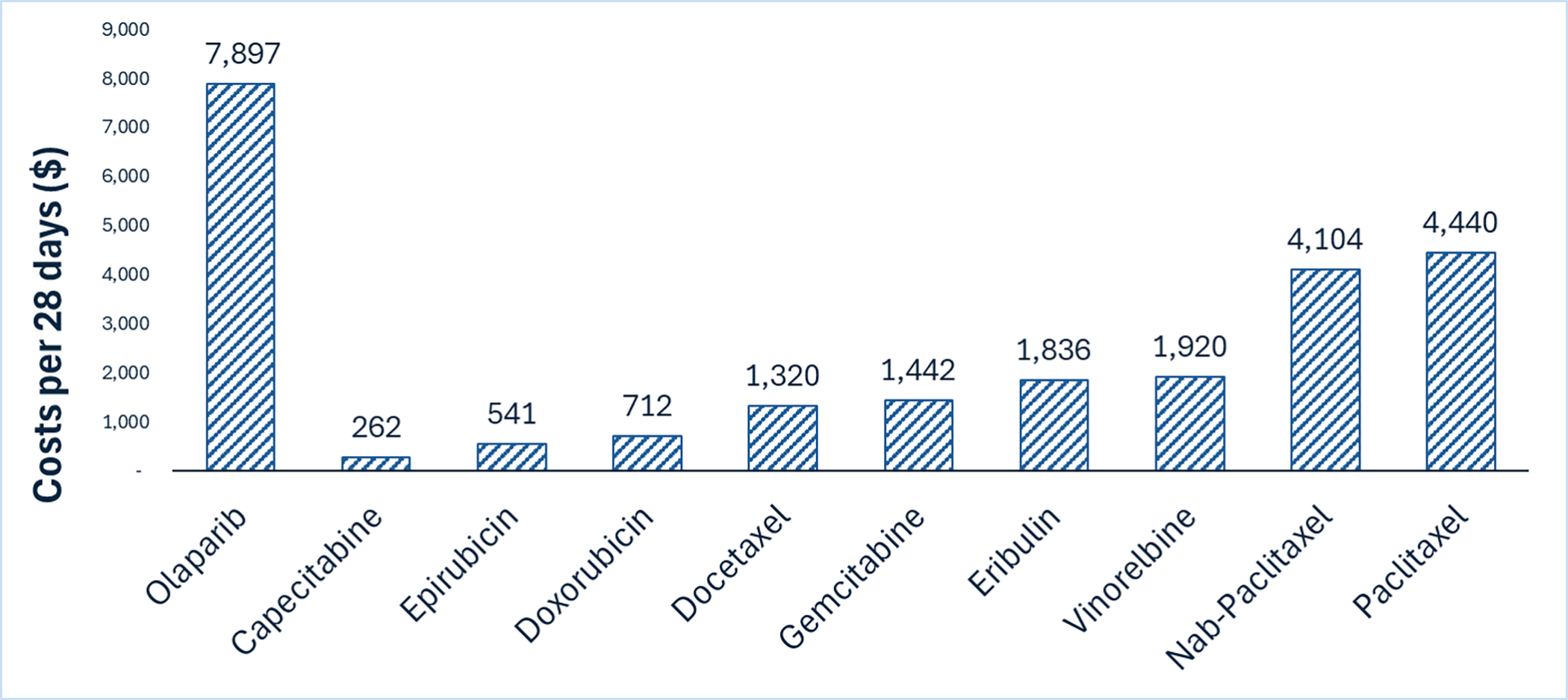
HR = hormone receptor
Figure 2: Drug Acquisition Cost per 28 Days of Olaparib and Comparators for TNBC
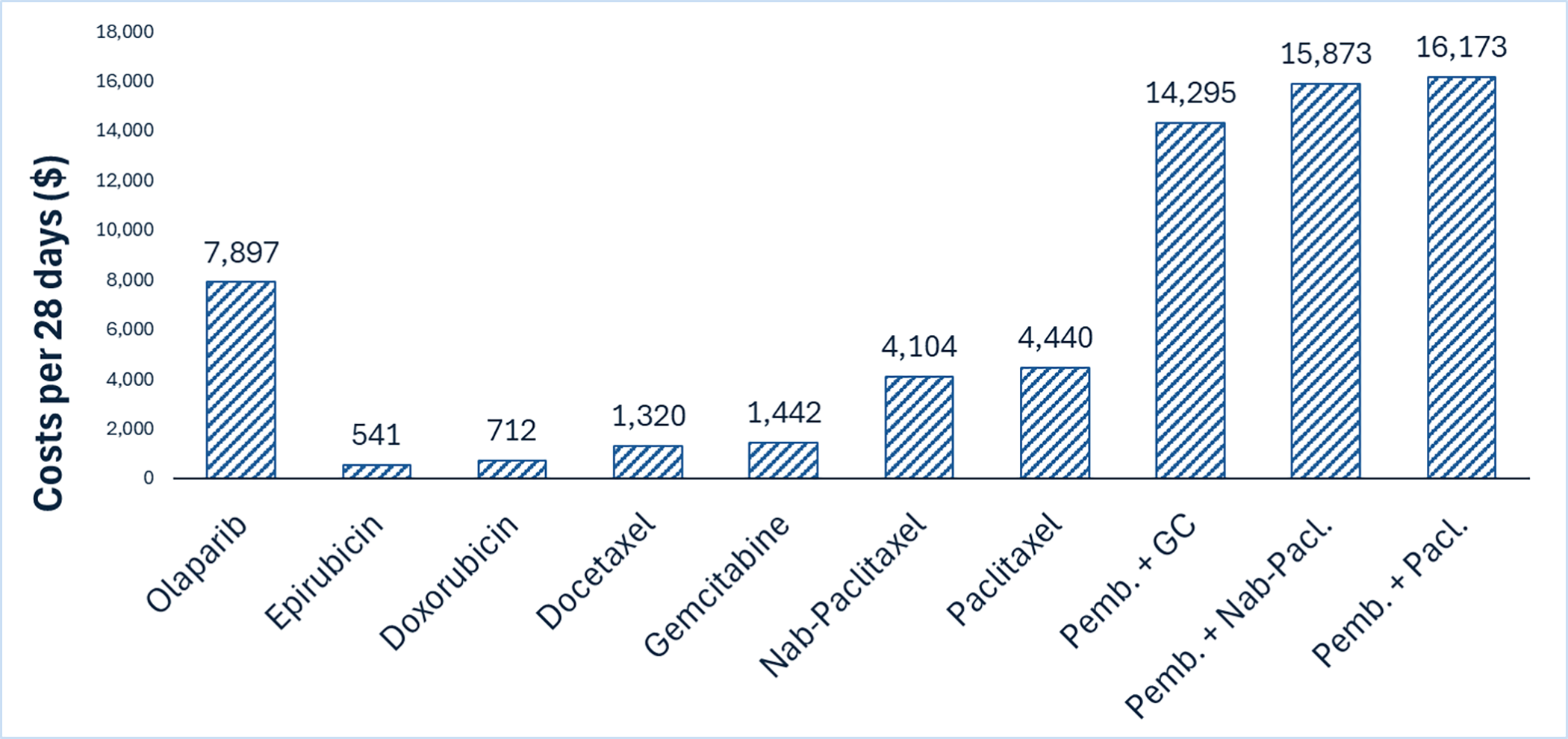
GC = gemcitabine + carboplatin; Pacl. = paclitaxel; Pemb. = pembrolizumab; TNBC = triple-negative breast cancer.
The difference in the cost of olaparib compared with its comparators varies between – $8,276 and $7,635 per patient per 28 days. Given that the majority of HER2-negative breast cancer cases are HR-positive, olaparib is expected to increase overall drug acquisition costs in this population. Additional items for consideration are provided in the following bullets:
According to the Clinical Review, evidence from multiple studies suggests that olaparib improved PFS compared with chemotherapy, with no statistically significant improvement in OS. The overall incidence of AEs was comparable between olaparib and chemotherapy. The relative effectiveness of olaparib compared with current standards of care remains uncertain because the comparators in the studies did not reflect newer therapies used in Canada. No evidence was identified regarding the comparative efficacy and safety of olaparib versus pembrolizumab plus chemotherapy in PD‑L1–positive TNBC.
As of April 2026, olaparib is only available as a brand name product in Canada. There are 3 generics currently under review by Health Canada. As such, 1 or more generic versions of olaparib may become available. According to the pan-Canadian Pharmaceutical Alliance Tiered Pricing Framework, the availability of 3 or more oral solid generic products on the Canadian market would set the price of generic olaparib to 25% of the brand reference price.38 Assuming a price consistent with 25% of the price of the reference brand, the cost of generic olaparib would be $1,974 per 28-day cycle, which would still be more costly than most of its comparators at wholesale list prices.
Clinical experts consulted for this review provided the following considerations on possible impacts of the reimbursement of olaparib on the use of health care resources — olaparib is expected to increase testing costs compared with most chemotherapy agents, given that genetic testing for BRCA mutations is needed to confirm eligibility for treatment with olaparib. Among its comparators, capecitabine and pembrolizumab would also require some testing before treatment. Olaparib is expected to decrease administration costs, given that it is an oral drug and most of its comparators, except capecitabine, are administered intravenously. Olaparib is also expected to decrease costs related to monitoring (consultations, testing), given that patients receiving chemotherapy must be monitored at each cycle, and patients who are stable with olaparib may require less frequent monitoring. Olaparib may decrease costs related to the management of AEs and toxicities, given that chemotherapy is associated with more AEs and cumulative toxicities.
Olaparib was previously reviewed by CDA-AMC for several indications, including breast cancer (refer to Background section, Submission History for the Drug Under Review). As of May 2026, there are no drugs under review for HER2-negative breast cancer.
A literature search was conducted on February 17, 2026, with alerts maintained until the Formulary Management Expert Committee meeting on July 16, 2026. No studies conducted in Canada assessing the cost-effectiveness of olaparib for HER2-negative breast cancer were identified.
Conclusion
The reimbursement of olaparib for the treatment of HER2-negative unresectable locally advanced or metastatic breast cancer with deleterious or suspected deleterious BRCA mutations is expected to increase overall drug acquisition costs. Based on the Clinical Review conclusions, olaparib is expected to extend PFS, with uncertain impact on OS when compared to chemotherapy. The clinical effectiveness of olaparib versus pembrolizumab plus chemotherapy for PD-L1–positive TNBC is unknown, because it has not yet been assessed in the published literature.
Given that olaparib is associated with increased drug acquisition costs and incremental clinical benefit, a cost-effectiveness analysis would be required to determine the cost-effectiveness of olaparib relative to chemotherapy. Because this was not available, its cost-effectiveness could not be determined.
Patient Group Input Test and Learn
Summary of Facilitated Group Discussion
Project Number: PX0385
Project Name: Olaparib for the treatment of adult patients with deleterious germline BReast CAncer Gene (BRCA)-mutated, HER2-negative metastatic breast cancer
Facilitated Discussion Session:
Date: March 25, 2026
Patient Group:
Kimberly Carson, Breast Cancer Canada
JK Miller, Bukun Adegbembo, Canadian Breast Cancer Network
Jenn Gordon, Rethink Breast Cancer.
In the drug reimbursement review process, CDA-AMC seeks patient perspectives by inviting groups to submit written input. As part of our ongoing efforts to evolve the patient group input process, we are testing a new approach to gain insights about the patient perspectives though facilitated discussion with representatives from patient groups. We invited 5 patient groups connected to people living with breast cancer or cancer in general to attend a CDA-AMC-led, facilitated group discussion aimed at gathering patient group input to inform expert committee deliberations. We are grateful that members from 3 patient groups were able to participate in our second trial of a 90-minute facilitated group discussion. The session provided valuable insights on metastatic breast cancer from the perspective of groups that work directly with individuals with lived and living experience with the disease.
The discussion was guided by questions that aligned with the 5 domains of value of the Deliberative Framework. Refer to Appendix 1.
A summary of the discussion has been provided in the following sections, structured under the domains of the deliberative framework.
A Guidance for Reporting Involvement of Patients and the Public 2 (GRIPP2) table summarizing the process of engagement is in Appendix 2.
Clinical Value
Impact on Daily Life
Patient groups shared that the incurable nature of metastatic breast cancer means patients are in treatment for the rest of their lives. As a result, metastatic breast cancer is being increasingly experienced as a chronic, not an acute condition.
Patient groups noted that diagnosis of BRCA-mutated breast cancer often occurs in the younger patient population. As such, diagnosis and treatment coincide with peak working and caregiving years, causing significant disruption to work and financial stability, family responsibilities, fertility, and future family planning. One group shared a statistic from their survey that found 53% of patients with dependents reported minimal or no access to appropriate care for their loved ones when experiencing symptoms.
Fatigue was identified as 1 of the most debilitating and pervasive symptoms that significantly impacts daily life. Other impactful symptoms include pain (especially bone metastases), insomnia, shortness of breath, and emotional distress (due to treatment, caregiving needs, changes in responsibilities, and so forth) that often manifested as fear, guilt, anxiety, and body image concerns.
Important Treatment Outcomes
The incurable and life-limiting nature of BRCA-mutated metastatic breast cancer means patients prioritize reaching life milestones such as children graduating and marriage. Patient groups shared that patients say to them frequently, “I want to see my child start kindergarten” or “I want to be able to see my child graduate middle school or graduate high school or get married.” Accordingly, patient groups shared that patients place high value on PFS. PFS is seen by patients as time without cancer symptoms, psychological reassurance that their disease is controlled, and preservation of normal daily function. The patient groups emphasized that PFS extends beyond clinical metrics to encompass mental health and quality of life.
One group added that PFS goes together with symptom management. That is, if patients are not experiencing any disease progression, then they are in a stabilized state and not experiencing symptoms from the cancer. To know that their disease is under control and has not progressed is reassuring from both a psychological and symptomatic standpoint. As they described, “if you are not experiencing symptoms from progression, then you have much better quality of life and are able to maintain your daily living.”
Unmet Clinical Need
Challenges With Current Treatments
All patient groups emphasized that current treatment options may not adequately support personalized, biology-driven care for all eligible patients. Limited access to precision oncology delays optimal treatment outcomes and forces earlier use of chemotherapy. Patient groups emphasized that delaying chemotherapy was critical for patients due to the toxic effects of chemotherapy, such as nausea, vomiting, diarrhea, and severe fatigue, which significantly impact quality of life. Moreover, oral therapies provide patients with independence away from cancer clinics. Although chemotherapy is highly effective at treating cancer, for patients with metastatic disease — which is cancer that cannot be fully eradicated — chemotherapy is seen as a last resort when targeted therapies are no longer workable. Because targeted therapies typically come with fewer or more manageable side effects than chemotherapy due to their “targeted” mechanism of action on the tumour cells, postponing chemotherapy, when possible, reflects the need to maximize quality of life while living with breast cancer.
Treatment Trade-Offs
Patient groups explained that when making treatment decisions, patients weigh treatment toxicity against cancer control. Patient groups shared that patients with metastatic breast cancer prioritize longer cancer control over avoiding side effects. Patient groups added that many patients with metastatic breast cancer are willing to tolerate nausea, fatigue, diarrhea, or other toxicities for improved disease control. One patient group described what they call the bother score, which is a patient’s rating of treatment-related toxicity and what they would exchange for it. The group noted that their last bother score poll found that 68% of patients with metastatic breast cancer would accept worse side effects for longer disease control.
Patient groups also emphasized that trade-offs and tolerance for side effects are highly personal. Accordingly, what 1 patient may find tolerable, another may find incredibly debilitating. One group shared an excerpt from a blog that illustrated a patient’s willingness to tolerate hair loss because they believed the treatment would be life-saving: “I thought it's either my hair or my life, so I’d rather have my life.” Consequently, there is a strong desire among patients with metastatic breast cancer for multiple lines of therapy and choice over sequencing to find the balance between side effects and disease control that is best for their personal situation.
Unmet Clinical Needs
Patient groups noted that having multiple lines of effective therapy is critical, because metastatic disease is progressive and treatment options diminish over time. Delays at the end of the treatment lines leave patients facing uncertainty, limit options, or increase reliance on clinical trials.
Patient groups emphasized that current care does not sufficiently support personalization and choice. Targeted therapies based on tumour biology are seen as offering meaningful clinical benefits beyond conventional chemotherapy. Targeted therapies offer reassurance to patients with BRCA-mutated breast cancer that treatment of their disease is personalized and based on their biology.
Lastly, patient groups agreed that there is a major unmet need for oral, take-home, targeted treatment that reduces reliance on in-clinic infusion. Given the disruptive nature of BRCA-mutated metastatic breast cancer, an at-home treatment option can reduce clinic time and its impacts on quality of life.
Distinct Social and Ethical Considerations
Patient groups reiterated that metastatic breast cancer disproportionately affects people in their working and caregiving years, creating ethical concerns around parenting and caregiving responsibility, fertility, and life milestones combined with caring for aging parents.
Groups also noted several equity considerations, including:
higher incidence of BRCA-mutated metastatic breast cancer and poorer outcomes in Black women
travel, access, and time burden faced by patients living in rural and remote areas
gaps in coverage and support for younger patients
inconsistent access to genetic testing.
The patient groups emphasized that inconsistent access to genetic testing across provinces and locations creates inequitable entry points into the system, further compounding equity concerns.
Economic Considerations
Patient groups noted that diagnosis and treatment for BRCA-mutated metastatic breast cancer is associated with significant financial toxicity from:
medication costs
co-pays, insurance caps, and paperwork
travel, parking, childcare, and time off work.
Patient groups noted that these costs become significantly more toxic for patients living in provinces such as Ontario that do not fund take-home oral cancer therapies for patients younger than 65 years. Patients with insurance are often burdened with co-pays and other administrative costs or later find out that their coverage is capped at a certain dollar amount.
Patient groups added that individuals and caregivers experience moral distress — acting in a manner contrary to their personal values — when forced to pay privately for additional care they believe is medically necessary for survival and managing pain and nausea symptoms, such as physiotherapy and acupuncture.
Notably, 1 patient group described “predatory costs” related to supplements and ancillary care patients pursue out of fear and desperation. The patient group shared the following quote from a patient member: “I did trust my oncology team implicitly, but I was so terrified that I just thought anything I can do or anything that says online to supplement my treatment I’m going to do. So, I spent all this money, and I can’t say that it was effective or not effective.” Another patient group cited statistics from a recent survey that found 90% of patients with metastatic breast cancer felt that they had no choice but to pay money for additional supplementary care.
Patient groups added that caregivers also experience financial burden as they step back from work to manage daily care, paperwork and insurance, and household and family responsibilities.
Impacts on Health Systems
The patient groups emphasized that supporting take-home treatment options, such as olaparib, can improve system efficiency while aligning with patient preferences. Oral, take-home therapies can:
reduce infusion chair use and clinic congestion
decrease demand on nursing and hospital resources
enable more virtual follow-up and community-based care.
However, the groups stressed supporting oral, take-home therapies alone is not enough and that several system-level issues require attention. There were 2 main system-level issues the groups discussed.
First, access to BRCA mutation testing is inconsistent across provinces, centres, and geography, creating system-level concerns. While some patients are automatically tested, others must self-advocate for BRCA mutation testing. As a result, awareness and knowledge gaps affect how patients enter the system. Second, there is no standard turnaround time for genetic testing, and variability in testing turnaround time can range from days to weeks. Delay in testing turnaround time is especially harmful in metastatic disease due to the aggressive nature, given that even small delays can lead to worse outcomes.
Additional Information
Place in Therapy
Patient groups shared that patients want to delay time to chemotherapy. They shared that patients will often say to them, “Anything but chemo. How far can we hold that off?” The patient groups explained that access to olaparib or another appropriate gene-targeted treatment as the first line of therapy enables patients to “kick the chemotherapy can” down the line. Patient groups noted that access to targeted treatments that work well immediately is especially important for patients with metastatic disease because at some point they will experience disease progression. The hope is that delaying the time to progression translates to increasing survival time and reaching important life milestones.
Key Points
Metastatic breast cancer is incurable and life-limiting: Patients experience ongoing impacts on psychological well-being, quality of life, and longevity, with constant uncertainty over disease progression.
Symptom burden is heavy and pervasive: Fatigue is the most debilitating symptom, alongside pain, insomnia, nausea, diarrhea, and emotional distress, all of which significantly affect daily life.
Patients prioritize disease control over side effects: Most patients are willing to tolerate significant side effects if it means longer cancer control and PFS, which they equate with being symptom-free and maintaining normalcy.
Major unmet need for oral, targeted take-home treatments: Patients strongly value personalized, biology-driven therapies that can be taken at home, reducing clinic visits and caregiver burden, and moving chemotherapy to later lines of therapy when possible.
Access and financial toxicity are critical barriers: Challenges include uneven access to genetic testing, long turnaround times, provincial coverage gaps (especially for patients younger than 65 years), high out-of-pocket costs, and administrative burden for patients and caregivers.
Authors and Contributors
Acknowledgements
We thank Bukun Adegbembo, MSc (Director of Operations, Canadian Breast Cancer Network) for contributing to the acquisition and analysis of data and reviewing the final Summary of Facilitated Discussion.
We thank Kimberly Carson, MA (CEO, Breast Cancer Canada) for contributing to the acquisition and analysis of data and reviewing the final Summary of Facilitated Discussion.
We thank Jenn Gordon (Lead Stakeholder Engagement & Advocacy, Rethink Breast Cancer) for contributing to the acquisition and analysis of data and reviewing the final Summary of Facilitated Discussion.
We thank JK Miller (Health Policy and Advocacy Lead, Canadian Breast Cancer Network) for contributing to the acquisition and analysis of data and reviewing the final Summary of Facilitated Discussion.
Conflicts of Interest
No conflicts of interest were declared.
References
1.Canada’s Drug Agency-L'Agence des médicaments du Canada. pan-Canadian Oncology Drug Review Committee (pERC) Final Recommendation: Olaparib (Lynparza)2023Accessed April 27, 2026. https://www.cda-amc.ca/sites/default/files/DRR/2023/PC0299%20Lynparza%20%E2%80%93%20CADTH%20Final%20Recommendation.pdf
2.Canada's Drug Agency-L'Agence des médicaments du Canada. pan-Canadian Oncology Drug Review Committee (pERC) Final Recommendation: Olaparib (Lynparza). 2016. Accessed April 27, 2026. https://www.cda-amc.ca/sites/default/files/pcodr/pcodr_olaparib_lynparza_oc_fn_rec.pdf
3.Canada's Drug Agency-L'Agence des médicaments du Canada. pan-Canadian Oncology Drug Review Committee (pERC) Final Recommendation: Olaparib (Lynparza). 2017. Accessed April 27, 2026. https://www.cda-amc.ca/sites/default/files/pcodr/pcodr_olaparib_lynparza_resub_fn_rec.pdf
4.Canada's Drug Agency-L'Agence des médicaments du Canada. pan-Canadian Oncology Drug Review Committee (pERC) Final Recommendation: Olaparib (Lynparza). 2019. Accessed April 27, 2026. https://www.cda-amc.ca/sites/default/files/pcodr/Reviews2019/10174OlaparibOC_fnRec_2019-12-04_ChairApproved_Post_05Dec2019_final.pdf
5.Canada's Drug Agency-L'Agence des médicaments du Canada. pan-Canadian Formulary Management Expert Committee (FMEC) Final Recommendation: Olaparib (Lynparza). 2026. Accessed April 27, 2026. https://www.cda-amc.ca/sites/default/files/DRR/2026/PX0382-Olaparib-Final_rec_BRCA-pancreatic-Cancer.pdf
6.Canada's Drug Agency-L'Agence des médicaments du Canada. pan-Canadian Oncology Drug Review Committee (pERC) Final Recommendation: Olaparib (Lynparza). 2021. Accessed April 27, 2026. https://www.cda-amc.ca/olaparib-3
7.Canada's Drug Agency-L'Agence des médicaments du Canada. pan-Canadian Oncology Drug Review Committee (pERC) Final Recommendation: Olaparib (Lynparza). 2024. Accessed April 27, 2026. https://www.cda-amc.ca/sites/default/files/DRR/2024/PC0319REC-Lynparza.pdf
8.Canadian Cancer Society. Breast cancer statistics. 2026. Accessed April 27, 2026. https://cancer.ca/en/cancer-information/cancer-types/breast/statistics
9.Canadian Cancer Society. Stages of breast cancer 2026. Accessed April 27, 2026. https://cancer.ca/en/cancer-information/cancer-types/breast/staging
10.Cardoso F, Paluch-Shimon S, Senkus E, et al. 5th ESO-ESMO international consensus guidelines for advanced breast cancer (ABC 5). Ann Oncol. 2020;31(12):1623-1649. doi:10.1016/j.annonc.2020.09.010 PubMed
11.Gennari A, André F, Barrios CH, et al. ESMO Clinical Practice Guideline for the diagnosis, staging and treatment of patients with metastatic breast cancer. Ann Oncol. 2021;32(12):1475-1495. doi:10.1016/j.annonc.2021.09.019 PubMed
12.Ellison LF, Saint-Jacques N. Five-year cancer survival by stage at diagnosis in Canada. Health Rep. 2023;34(1):3-15. doi:10.25318/82-003-x202300100001-eng PubMed
13.Breast Cancer Research Foundation. What to Know About Breast Cancer Recurrence. Accessed April 27, 2026. https://www.bcrf.org/about-breast-cancer/breast-cancer-recurrence/?utm
14.Orrantia-Borunda E, Anchondo-Nuñez P, Acuña-Aguilar LE, Gómez-Valles FO, Ramírez-Valdespino CA. Subtypes of Breast Cancer. In: Mayrovitz HN, ed. Breast Cancer. Exon Publications.
15.National Cancer Institute. Cancer Stat Facts: Female Breast Cancer Subtypes. 2026. Accessed April 27, 2026. https://seer.cancer.gov/statfacts/html/breast-subtypes.html#:~:text=*%20HR+/HER2%2D%20(70%25)%20*%20HR%2D/HER2%2D%20(11%25)%20*,(9%25)%20*%20HR%2D/HER2+%20(4%25)%20*%20Unknown%20(6%25
16.Roy R, Chun J, Powell SN. BRCA1 and BRCA2: different roles in a common pathway of genome protection. Nat Rev Cancer. 2011;12(1):68-78. doi:10.1038/nrc3181 PubMed
17.National Cancer Institute. BRCA Gene Changes: Cancer Risk and Genetic Testing. 2024.
18.Casaubon JT, Kashyap S, Regan JP. BRCA1 and BRCA2 Mutations. StatPearls. StatPearls Publishing.
19.Apostolou P, Fostira F. Hereditary breast cancer: the era of new susceptibility genes. Biomed Res Int. 2013;2013:747318. doi:10.1155/2013/747318 PubMed
20.Arun B, Couch FJ, Abraham J, Tung N, Fasching PA. BRCA-mutated breast cancer: the unmet need, challenges and therapeutic benefits of genetic testing. Br J Cancer. 2024;131(9):1400-1414. doi:10.1038/s41416-024-02827-z PubMed
21.Winter C, Nilsson MP, Olsson E, et al. Targeted sequencing of BRCA1 and BRCA2 across a large unselected breast cancer cohort suggests that one-third of mutations are somatic. Ann Oncol. 2016;27(8):1532-1538. doi:10.1093/annonc/mdw209 PubMed
22.Khalid T, Cutress RI, Remer M, Copson ER. Clinical Impact of Somatic Genomic Testing on Breast Cancer Care. Clin Oncol. 2025;37:103665. doi:10.1016/j.clon.2024.10.037 PubMed
23.Tomasello G, Gambini D, Petrelli F, et al. Characterization of the HER2 status in BRCA-mutated breast cancer: a single institutional series and systematic review with pooled analysis. ESMO Open. 2022;7(4):100531. doi:10.1016/j.esmoop.2022.100531 PubMed
24.Selenica P, Dopeso H, Repetto M, et al. Genomic landscape of breast cancer in elderly patients. npj Breast Cancer. 2025;11(1):70. doi:10.1038/s41523-025-00781-4 PubMed
25.National Library of Medicine. Overview: Metastatic breast cancer. 2024. Accessed April 27, 2026. https://www.ncbi.nlm.nih.gov/books/NBK361001/
26.Su Z, Zhou Y, Han X, Pang Y, He S, Tang L. Symptom burden in advanced breast cancer patients and its association between death anxiety and psychological distress. Chin J Cancer Res. 2022;34(3):298-308. doi:10.21147/j.issn.1000-9604.2022.03.09 PubMed
27.Zhan Y, Feder SL, Lustberg M, Batten J, Knobf MT. Health-Related Quality of Life in Women With Metastatic Breast Cancer: An Integrative Review. J Adv Nurs. 2025;81(7):3485-3503. doi:10.1111/jan.16643 PubMed
28.Bedrosian I, Somerfield MR, Achatz MI, et al. Germline Testing in Patients With Breast Cancer: ASCO–Society of Surgical Oncology Guideline. J Clin Oncol. 2024;42(5):584-604. doi:10.1200/JCO.23.02225 PubMed
29.Szentmartoni G, Mühl D, Csanda R, Szasz AM, Herold Z, Dank M. Predictive Value and Therapeutic Significance of Somatic BRCA Mutation in Solid Tumors. Biomedicines. 2024;12(3). doi:10.3390/biomedicines12030593 PubMed
30.Robson ME, Im S-A, Senkus E, et al. Olaparib for Metastatic Breast Cancer in Patients with a Germline BRCA Mutation. The New England journal of medicine. 2017;377(6):523-533. doi:10.1056/NEJMoa1706450 PubMed
31.Robson ME, Tung N, Conte P, et al. OlympiAD final overall survival and tolerability results: Olaparib versus chemotherapy treatment of physician's choice in patients with a germline BRCA mutation and HER2-negative metastatic breast cancer. Annals of oncology: official journal of the European Society for Medical Oncology. 2019;30(4):558-566. doi:10.1093/annonc/mdz012 PubMed
32.Robson ME, Ruddy KJ, Im S-A, et al. Patient-reported outcomes in patients with a germline BRCA mutation and HER2-negative metastatic breast cancer receiving olaparib versus chemotherapy in the OlympiAD trial. European journal of cancer (Oxford, England: 1990). 2019;120:20-30. doi:10.1016/j.ejca.2019.06.023
33.Robson ME, Im S-A, Senkus E, et al. OlympiAD extended follow-up for overall survival and safety: Olaparib versus chemotherapy treatment of physician's choice in patients with a germline BRCA mutation and HER2-negative metastatic breast cancer. European journal of cancer (Oxford, England: 1990). 2023;184:39-47. doi:10.1016/j.ejca.2023.01.031
34.Tung NM, Robson ME, Ventz S, et al. TBCRC 048: Phase II Study of Olaparib for Metastatic Breast Cancer and Mutations in Homologous Recombination-Related Genes. Journal of clinical oncology: official journal of the American Society of Clinical Oncology. 2020;38(36):4274-4282. doi:10.1200/JCO.20.02151 PubMed
35.Tung NM, Robson ME, Li T, et al. TBCRC 048 (Olaparib Expanded) Expansion Cohorts: Phase II Study of Olaparib Monotherapy for Patients With Metastatic Breast Cancer With Germline Mutations in PALB2 or Somatic Mutations in BRCA1 or BRCA2. Journal of clinical oncology: official journal of the American Society of Clinical Oncology. 2026:44(8). doi:10.1200/JCO-25-02075 PubMed
36.National Library of Medicine. NCT02000622. Assessment of the Efficacy and Safety of Olaparib Monotherapy Versus Physicians Choice Chemotherapy in the Treatment of Metastatic Breast Cancer Patients With Germline BRCA1/2 Mutations. (OlympiAD). 2026. Accessed April 27, 2026. https://clinicaltrials.gov/study/NCT02000622?tab=results#more-information
37.Guyatt G, Iorio A, De Beer H, et al. Core GRADE 5: rating certainty of evidence—assessing indirectness. BMJ. 2025;389:e083865. doi:10.1136/bmj-2024-083865 PubMed
38.pan-Canadian Pharmaceutical Alliance. Generic drugs. 2026. Accessed April 27, 2026. https://www.pcpacanada.ca/generic-drug-framework
Appendix 1: Discussion Questions
Please note that this appendix has not been copy-edited.
Questions From the Deliberative Framework
What is the impact of metastatic breast cancer on patients’ day-to-day life and quality of life? Is the impact same or different for the indication population?
Which symptoms of metastatic breast cancer have the biggest impact of day-to-day life or well-being? Are the symptoms same for the indication population?
Which treatment outcomes are most important to people living with metastatic breast cancer?
For patients with experience using olaparib, how, if at all, did it affect their lives? What effects (good or bad) have they or their caregiver observed with the use of olaparib?
What short-term or long-term side effects, if any, do patients experience with current treatments? Which are the most bothersome or hardest to manage?
What trade-offs, if any, do patients, families, and caregivers consider when choosing a treatment? Example: Trade-offs between how long the treatment will keep the condition from getting worse and the risk of serious side effects.
Are there clinical needs that are not being met by current treatments? Example: A need for a treatment that addresses a specific outcome or a treatment with fewer side effects.
Does deleterious germline BRCA-mutated, HER2-negative metastatic breast cancer affect equity-deserving groups more than others or in different ways? Equity-deserving groups include Indigenous, Black, or otherwise racialized people, people with low income, the 2SLGBTQ+ community, or those living in rural or remote locations. If yes, please describe how.
Are there groups of patients within the indication under review who have a greater need for treatment? Example: Those for whom the current treatments are not effective, who experience significant AEs, or who cannot receive a current treatment.
Are there any challenges related to how the current treatments are delivered?
Could olaparib make challenges associated with current treatment easier or harder? If so, how?
What are the most impactful kinds of costs (not dollar amounts) that people face when managing or treating metastatic breast cancer? For example: Out-of-pocket costs for treatment, time off work, and need for paid caregivers, devices, or equipment.
What part of the health care system do patients with metastatic breast cancer rely on the most? Examples may include clinic visits, tests, IV care, hospital care?
How would treatment with olaparib affect interaction with the health systems?
For patients with experience with olaparib, what were patients’ and caregivers’ experiences with the testing associated with the treatment?
Appendix 2: GRIPP2 Short Form
Please note that this appendix has not been copy-edited.
Table 9: Involvement of Interested Parties in PX0385 Olaparib for Breast Cancer
Section and topic | Item | Where reported |
|---|---|---|
Aim | To gather patient group perspectives on metastatic breast cancer aligned to the Deliberative Framework, including symptom burden, treatment challenges, unmet needs, and system-level barriers to support expert committee deliberations. | Introduction; description of CDA-AMC purpose in testing facilitated patient group discussions. (page 1) |
Methods | CDA-AMC invited 5 cancer and breast cancer– focused patient groups to participate in a pilot 90-minute facilitated group discussion; 3 groups attended. Discussion was structured around the 5 domains of the Deliberative Framework. | Description of recruitment and session structure. (page 1) |
Study results | Key insights were summarized under clinical impact (significant disruption to daily life, fatigue), important outcomes (PFS), treatment challenges (uncertainty to next line in therapy, cost), unmet needs (personalized therapy, access to supportive care), social/ethical inequities, economic impacts, and system-level gaps. Patient groups emphasized that metastatic breast cancer profoundly affects quality of life, that cost and access barriers limit optimal treatment, that geographic inequities worsen outcomes, and that system-level supports (equitable access to testing and standard turnaround time) are essential. They reinforced that patients desire personalized, biology-driven therapies that can be taken at home, reducing clinic visits, caregiver burden, and delays to chemotherapy. | Full summary sections under each domain (Clinical Value, Unmet Clinical Need, Social and Ethical Considerations, Economic Considerations, Systems Impacts) (pages 2 to 5) Key Points summary (page 6) |
Discussion and conclusions | Dialogue between CDA-AMC and the patient groups helped build trust and greater understanding of each other’s goals. The engagement method, which was reliant on connecting with known national organizations, may have excluded certain populations, potentially limiting diverse perspective on challenges faced by people in Canada living with metastatic breast cancer. It appeared, however, that the participating patient groups had a clear understanding on some of the challenge and barriers encountered by equity-deserving groups. | — |
Reflective/critical perspective | CDA-AMC-led facilitated group discussion aimed at gathering patient group input offered a test and learn approach for CDA-AMC to collect patient group input which also simplified the input submission process for patient groups. The group discussion allowed patient groups to share ideas and build on each other’s thoughts. For example, when the topic of financial toxicity came up by 1 group, another responded “that reminds me …” There remains a gap in capturing the perspectives of individuals outside of these patient groups. Engaging with a greater number of groups would offer additional or different perspectives on the challenges and experiences facing those living with BRCA-mutated metastatic breast cancer | — |
CDA-AMC = Canada’s Drug Agency; PFS = progression-free survival.
ISSN: 2563-6596
Canada’s Drug Agency (CDA-AMC) is a pan-Canadian health organization. Created and funded by Canada’s federal, provincial, and territorial governments, we’re responsible for driving better coordination, alignment, and public value within Canada’s drug and health technology landscape. We provide Canada’s health system leaders with independent evidence and advice so they can make informed drug, health technology, and health system decisions, and we collaborate with national and international partners to enhance our collective impact.
Disclaimer: CDA-AMC has taken care to ensure that the information in this document was accurate, complete, and up to date when it was published, but does not make any guarantee to that effect. Your use of this information is subject to this disclaimer and the Terms of Use at cda-amc.ca.
The information in this document is made available for informational and educational purposes only and should not be used as a substitute for professional medical advice, the application of clinical judgment in respect of the care of a particular patient, or other professional judgments in any decision-making process. You assume full responsibility for the use of the information and rely on it at your own risk.
CDA-AMC does not endorse any information, drugs, therapies, treatments, products, processes, or services. The views and opinions of third parties published in this document do not necessarily reflect those of CDA-AMC. The copyright and other intellectual property rights in this document are owned by the Canadian Agency for Drugs and Technologies in Health (operating as CDA-AMC) and its licensors.
Questions or requests for information about this report can be directed to requests@cda-amc.ca.