Drugs, Health Technologies, Health Systems
Reimbursement Recommendation
Tarlatamab (Imdelltra)
Indication: For the treatment of adult patients with extensive-stage small cell lung cancer (ES-SCLC) with disease progression on or after platinum-based chemotherapy.
Sponsor: Amgen Canada Inc.
Recommendation: Reimburse with conditions
Summary
What Is the Reimbursement Recommendation for Imdelltra?
Canada’s Drug Agency (CDA-AMC) recommends that Imdelltra be reimbursed by public drug plans for the treatment of patients with extensive-stage small cell lung cancer (ES-SCLC) with disease progression on or after platinum-based chemotherapy, if certain conditions are met.
Why Did CDA-AMC Recommend Reimbursement?
The pan-Canadian Oncology Drug Review Expert Review Committee (pERC) determined that Imdelltra demonstrates acceptable clinical value versus standard of care (SOC) chemotherapy in patients with ES-SCLC whose disease progressed on or after platinum-based chemotherapy. This determination was enough for pERC to recommend that Imdelltra be reimbursed. Given that Imdelltra is expected to be an alternative to SOC chemotherapy, acceptable clinical value refers to at least comparable value versus SOC chemotherapy.
Evidence from a clinical trial (the DeLLphi-304 trial) showed that, in adult patients with ES-SCLC whose disease progressed on or after platinum-based chemotherapy, treatment with Imdelltra is likely to prolong patients’ lives and may delay disease progression compared with SOC chemotherapy. Additionally, compared with SOC chemotherapy, Imdelltra may improve patients’ quality of life and relieve symptoms such as shortness of breath. Other important outcomes reported from the trial, including objective response rate, duration of response, and disease control rate, provided further evidence of the benefits of Imdelltra in patients with ES-SCLC.
Which Patients Are Eligible for Coverage?
Imdelltra should only be reimbursed for adult patients who have relapsed or refractory small cell lung cancer (SCLC) and have received prior platinum-based chemotherapy. In addition, the patients should have experienced disease progression after a first-line PD-1 or PD-L1 inhibitor or be ineligible for PD-1 or PD-L1 inhibitor treatment. The patients must have good performance status and must not have active central nervous system (CNS) disease.
What Are the Conditions for Reimbursement?
Imdelltra should only be initiated by oncologists with expertise in treating patients with SCLC in centres with appropriate medical support to manage potentially life-threatening adverse events such as cytokine release syndrome (CRS) or immune effector cell–associated neurotoxicity syndrome (ICANS). Imdelltra should not be reimbursed if treatment is discontinued upon clinical disease progression or unacceptable toxicity. The reimbursement condition also requires that there is a reduction in price. In addition, the economic feasibility of adoption of Imdelltra must be addressed, and the organizational feasibility must be addressed so that jurisdictions have the infrastructure in place to implement treatment with Imdelltra, including access to specialized facilities that can administer bispecific T-cell engager therapies and are equipped to manage adverse events.
Review Background
Disease background: SCLC is a highly aggressive and rapidly progressive subtype of lung cancer. The disease imposes a substantial burden on patients, impacting their physical, psychological, and social well-being. In Canada, approximately 32,900 new cases of lung cancer are projected in 2026, with SCLC accounting for an estimated 10% to 15% of diagnoses. In Canada, the prognosis for patients with SCLC remains poor, with an estimated 5-year net survival rate of 7%.
Indication and reimbursement request: Tarlatamab (Imdelltra) has been approved by Health Canada for the treatment of adult patients with ES-SCLC with disease progression on or after platinum-based chemotherapy. The sponsor is seeking reimbursement for this patient population. CDA-AMC previously recommended reimbursement of tarlatamab, with clinical criteria and/or conditions, for patients with ES-SCLC after at least 2 prior lines of therapy, including platinum-based chemotherapy.
Drug under review: Tarlatamab is a bispecific DLL3-directed CD3 T-cell engager. It is available as a lyophilized powder for solution for IV infusion containing 1 mg or 10 mg per vial. The recommended dose of tarlatamab is 1 mg administered on day 1, followed by 10 mg on days 8 and 15 and every 2 weeks thereafter.
Treatment costs: At the submitted price of $1,545 per 1 mg vial and $15,450 per 10 mg vial, the cost per 28-day cycle of tarlatamab is expected to be $32,445 per patient in the first cycle of treatment and $30,900 per patient in subsequent cycles, based on the Health Canada recommended dosage.
Highlights of Input From Interested Parties
The joint patient input from Lung Cancer Canada (LCC), Canadian Cancer Survival Network, and Lung Health Foundation noted the following regarding impacts of the disease, unmet needs, and important outcomes:
Common symptoms of SCLC include persistent cough, chest pain, hemoptysis (coughing up blood), hoarseness, and wheezing. SCLC has a substantial impact on patients’ physical, psychological, and social well-being. Health-related quality of life (HRQoL) is often significantly compromised, with many patients experiencing anxiety, depression, and emotional distress associated with both the disease and its treatment.
Important treatment outcomes include prolonged overall survival, improved HRQoL and functional status, effective symptom control, fewer side effects, and reduced dependence on caregiver support.
The clinician groups (LCC Medical Advisory Committee and Ontario Health [Cancer Care Ontario] Lung Cancer Drug Advisory Committee) and the clinical experts consulted by CDA-AMC noted the following regarding unmet needs arising from the disease and place in therapy for the drug under review:
There is a need for safer and more effective systemic therapy options with fewer and manageable side effects that improve overall survival, delay disease progression, improve quality of life, and reduce the incidence of new CNS disease.
Imdelltra has the potential to shift the treatment paradigm for patients with ES-SCLC whose disease has progressed on or after platinum-based chemotherapy, serving as an alternative second-line systemic therapy.
The participating public drug programs raised potential implementation issues related to considerations for initiation, discontinuation, and prescribing of therapy; health system implementation; relevant comparators; and drug administration.
Recommendation
With a vote of 16 in favour to 0 against, pERC recommends that tarlatamab be reimbursed for the treatment of patients with ES-SCLC whose disease has progressed on or after platinum-based chemotherapy only if the conditions listed in Table 1 are met.
Table 1: Reimbursement Conditions and Reasons
Reimbursement condition | Reason | Implementation guidance |
|---|---|---|
Initiation | ||
1. Treatment with tarlatamab should be reimbursed when initiated in adult patients (≥ 18 years) who: 1.1. have relapsed or refractory SCLC and have received prior platinum-based chemotherapy 1.2. have experienced disease progression after first-line PD-1 or PD-L1 inhibitors or were ineligible for PD-1 or PD-L1 inhibitor treatment. | In the DeLLphi-304 trial, treatment with tarlatamab demonstrated a clinical benefit in patients with SCLC whose disease had progressed on or after platinum-based chemotherapy. | Condition 1.1: pERC agreed with clinical experts that patients with limited-stage SCLC who had received platinum-based chemotherapy and whose disease subsequently progresseda to extensive-stage SCLC would be eligible for tarlatamab. pERC also agreed with the clinical experts that re-treatment with platinum-based chemotherapy, before initiating tarlatamab, remains an option and should be considered when clinically appropriate. Condition 1.2: pERC agreed with clinical experts that, in jurisdictions where first-line treatment for ES-SCLC includes platinum-based chemotherapy in combination with a PD-1 or PD-L1 inhibitor, patients should have experienced disease progression following PD-1 or PD-L1 inhibitor therapy, or be ineligible for such therapy, before initiating tarlatamab. pERC agreed with the clinical experts that for patients currently receiving second-line chemotherapy, switching to tarlatamab for a limited period at the time of implementation would not be reasonable, given that these patients would remain eligible to receive tarlatamab in the third-line setting and beyond. |
2. Patients must have a good performance status. | Patients with an ECOG performance status of 0 or 1 were included in the DeLLphi-304 trial. | pERC agreed with the clinical experts that patients with an ECOG performance status of 2 may be treated at the discretion of the treating clinician. |
3. Patients must not have active CNS disease. | The DeLLphi-304 trial excluded patients with symptomatic brain metastasis and symptomatic leptomeningeal disease. As such, the potential benefit of tarlatamab in these patients has not been demonstrated. | Consistent with the DeLLphi-304 trial, pERC agreed that patients with treated brain metastases that are asymptomatic and clinically stable, as well as patients with untreated brain metastases that are asymptomatic and did not require corticosteroids or local therapy, should be eligible for treatment. The clinical experts noted that baseline neurologic exam is essential to determine the suitability of tarlatamab for patients with brain metastases. There may be scenarios in which cognitive assessment would be helpful. However, pERC suggests deferring to jurisdictions to develop region-specific guidance as part of the implementation plan for bispecific T-cell engager therapies. |
Discontinuation | ||
4. Treatment should be discontinued upon the occurrence of either of the following: 4.1. clinical disease progression 4.2. unacceptable toxicity. | Patients in the DeLLphi-304 trial discontinued treatment upon disease progression or unacceptable toxicity, consistent with clinical practice. | Condition 4.1: Consistent with the DeLLphi-304 study, pERC agreed with clinical experts that patients may continue receiving tarlatamab beyond first radiologic disease progression if they continue to derive clinical benefit, at the discretion of the treating physician. pERC discussed that patients who experience disease progression during treatment with tarlatamab would not be eligible to receive tarlatamab again in subsequent lines of therapy. Condition 4.2: pERC agreed with the clinical experts that treatment with tarlatamab may be restarted following a treatment interruption for reasons other than disease progression (e.g., adverse events), at the discretion of the treating physician. |
Prescribing | ||
5. Tarlatamab should only be initiated by oncologists with expertise in treating patients with SCLC in centres with appropriate medical support to manage potentially life-threatening adverse events, such as CRS and ICANS. | This condition is to ensure that treatment is prescribed only to patients it is appropriate for and that adverse effects (e.g., CRS and ICANS) are managed in an optimized and timely manner. | — |
Pricing | ||
6. A reduction in price. | Using a CDA-AMC scenario analysis in which rechallenge with platinum-based chemotherapy was not considered as a comparator, the ICER for tarlatamab was $624,919 per QALY gained when compared with CAV in the indicated population. A band 4b price reduction would be required to achieve cost-effectiveness at a $50,000 and $100,000 per QALY gained threshold. Price reductions for any given willingness-to-pay threshold are available in the CDA-AMC Main Report and Supplemental Material document. | The CDA-AMC analysis is based on public list prices for all treatments. Further price reductions may be required if there are price arrangements (discounts) currently in place for any treatment included in the economic analysis. Likewise, further price reductions may be required to address the economic feasibility of adoption. |
Feasibility of adoption | ||
7. The economic feasibility of adoption of tarlatamab must be addressed. | At the submitted price, the incremental budget impact of tarlatamab is expected to be greater than $40 million in years 1, 2, and 3. | — |
8. Organizational feasibility must be addressed so that jurisdictions have the infrastructure in place to implement treatment with tarlatamab, including access to specialized facilities that can administer bispecific T-cell engager therapies and are equipped to manage adverse events. | Bispecific T-cell engager therapies are an emerging treatment class for solid tumours. Infrastructure to administer, monitor, and manage the known adverse events associated with these treatments (e.g., access to tocilizumab for the management of CRS, and the need to provide additional funding for inpatient therapy) is required. The limited availability of specialized treatment centres may limit access to tarlatamab. | — |
CAV = cyclophosphamide, doxorubicin, and vincristine; CDA-AMC = Canada’s Drug Agency; CNS = central nervous system; CRS = cytokine release syndrome; ECOG = Eastern Cooperative Oncology Group; ES-SCLC = extensive-stage small cell lung cancer; ICANS = immune effector cell–associated neurotoxicity syndrome; ICER = incremental cost-effectiveness ratio; pERC = pan-Canadian Oncology Drug Review Expert Review Committee; QALY = quality-adjusted life-year; SCLC = small cell lung cancer.
aDisease relapse or progression occurring at least 3 months after completion of platinum-based chemotherapy.
bFor the statement regarding the size of the price reduction required, band 1 = 1% to 24%, band 2 = 25% to 49%, band 3 = 50% to 74%, and band 4 = 75% or greater.
Rationale for the Recommendation
Clinical Value
Based on the totality of the clinical evidence, pERC concluded that tarlatamab demonstrates acceptable clinical value compared with SOC chemotherapy in patients with ES-SCLC whose disease progressed on or after platinum-based chemotherapy.
Evidence from 1 randomized controlled trial (the DeLLphi-304 trial, N = 509) demonstrated that tarlatamab likely results in added clinical benefit in overall survival (OS) at 12 months for patients with ES-SCLC whose disease progressed on or after platinum-based chemotherapy compared with SOC chemotherapy. Treatment with tarlatamab was associated with statistically significant and clinically meaningful improvements in OS compared with SOC chemotherapy. After a median follow-up time of approximately 11.5 months, the median OS was 13.6 months in the tarlatamab group versus 8.3 months in the SOC group, with the 12-month between-group difference in OS rate of █████ (95% confidence interval [CI], ████ ██ █████) in favour of tarlatamab. Treatment with tarlatamab was associated with a statistically significant and clinically meaningful improvement in progression-free survival (PFS) compared with SOC chemotherapy, with absolute difference in PFS rates of ████ (95% CI, █████ ██ █████) at 6 months and █████ (95% CI, ████ ██ █████) at 12 months, favouring tarlatamab. At 12 months, the estimated restricted mean PFS time was 5.3 months in the tarlatamab group and 4.3 months in the SOC group. Additionally, results from the DeLLphi-304 trial showed that tarlatamab may provide clinically meaningful improvements in quality of life and the dyspnea composite score, and no deterioration in cough and chest pain, when compared with SOC chemotherapy after 18 weeks. These results were assessed using European Organisation for Research and Treatment of Cancer Quality of Life Questionnaire Core 30 (EORTC QLQ-C30) and European Organisation for Research and Treatment of Cancer Quality of Life Questionnaire Lung Cancer Module (EORTC QLQ-LC13) instruments in the DeLLphi-304 trial. CRS and ICANS were among the notable harms and aligned with the known safety profile of tarlatamab. Overall, the safety findings from the DeLLphi-304 trial were consistent with the established risks of bispecific T-cell engager therapies, with no unexpected signals identified. The outcomes of other secondary end points — including objective response rate, duration of response, and disease control rate — further supported the findings of the primary analyses. The efficacy and safety findings from the 90-day update of the DeLLphi-304 trial were consistent with those reported in the primary analysis; however, these results should be interpreted as supportive.
Patients and clinicians identified the need for effective treatment options that delay disease progression, extend survival, improve disease and symptom control, minimize side effects, and improve quality of life. pERC concluded that, compared to SOC chemotherapy, tarlatamab addresses some of the identified unmet needs, given that it may improve survival and HRQoL, and demonstrates a manageable safety profile.
In the overall population with ES-SCLC, indirect treatment comparison results suggested that tarlatamab may improve OS versus topotecan; cyclophosphamide, doxorubicin, and vincristine (CAV); and irinotecan; and PFS versus topotecan and irinotecan. In the platinum-sensitive ES-SCLC subpopulation, indirect treatment comparison analyses also suggested OS benefits versus topotecan, rechallenge with platinum-based chemotherapy (platinum rechallenge), and CAV. However, these findings must be interpreted with caution due to methodological limitations, between-study heterogeneity, and a sparse evidence network. Additionally, no comparative safety or HRQoL evidence was identified versus CAV, irinotecan, and platinum rechallenge.
Further information on the committee’s discussion around clinical value is provided in the Summary of Deliberation section.
Developing the Recommendation
The determination of acceptable clinical value was sufficient for pERC to recommend reimbursement of tarlatamab. As part of the deliberation on whether to recommend reimbursement, the committee also considered unmet clinical need, unmet nonclinical need, and health inequity. Information on this discussion is provided in the Unmet Clinical Need and Distinct Social and Ethical Considerations domains in the Summary of Deliberation section.
Because pERC recommended that tarlatamab be reimbursed, the committee also deliberated on whether reimbursement conditions should be added to address important economic considerations, health system impacts, or social and ethical considerations, or to ensure clinical value is realized. The resulting reimbursement conditions, with accompanying reasons and implementation guidance, are stated in Table 1.
Summary of Deliberation
pERC considered all domains of value of the deliberative framework before developing its recommendation: clinical value, unmet clinical need, distinct social and ethical considerations, economic considerations, and impacts on health systems. For further information on the domains of value, refer to Expert Committee Deliberation at Canada’s Drug Agency.
The committee considered the following key discussion points, organized by the 5 domains of value.
Clinical Value
Appropriate comparators: pERC agreed with the clinical experts that, for patients with ES-SCLC who have progressed during or after platinum-based chemotherapy, relevant comparators include topotecan, CAV, and irinotecan. For the subpopulation of patients with platinum-sensitive ES-SCLC, relevant comparators include rechallenge with platinum-based chemotherapy plus etoposide (with cisplatin or carboplatin), as well as topotecan, CAV, or irinotecan. pERC agreed that among comparators used in the DeLLphi-304 trial, topotecan is the most appropriate comparator for treatment with tarlatamab, while amrubicin is neither used nor available in Canada. At the time when this reimbursement request for tarlatamab was submitted to CDA-AMC, lurbinectedin had not received a funding recommendation from CDA-AMC and was therefore not considered a relevant comparator for this review. However, on April 23, 2026, pERC issued a time-limited recommendation that lurbinectedin be reimbursed for the second-line treatment of adult patients with stage III or metastatic SCLC who have progressed on or after platinum-based therapy. Lurbinectedin may be an added treatment option in this setting; however, at the time of writing this report, subsequent pCPA temporary access process negotiations had concluded without an agreement.
Efficacy and safety versus SOC chemotherapy: Evidence for this review consisted of the phase III open-label, randomized controlled trial (the DeLLphi-304 trial; N = 509) that compared tarlatamab with SOC chemotherapy in adults with ES-SCLC whose disease progressed on or after platinum-based therapy. The DeLLphi-304 trial demonstrated that treatment with tarlatamab resulted in improvement in OS at the primary analysis (hazard ratio [HR] = 0.599, 95% CI, 0.468 to 0.768) compared with SOC chemotherapy. These results were statistically significant and were considered clinically meaningful by the clinical experts. Findings in key subgroups generally aligned with those observed in the overall population, with hazard ratios favouring tarlatamab. However, estimates for certain subgroups were less precise. Because the proportional hazards assumption was violated, the Restricted Mean Survival Time method was used to analyze PFS. The estimated restricted mean PFS time was 5.3 months in the tarlatamab group and 4.3 months in the SOC group (piecewise weighted average HR = 0.71; 95% CI, 0.59 to 0.86). The Kaplan-Meier estimated between-group difference in PFS rate was ████ (95% CI, █████ ██ █████) at 6 months and █████ (95% CI, ████ ██ █████) at 12 months in favour of tarlatamab. The PFS results were considered clinically meaningful by the clinical experts, although they appeared less favourable than the OS results. pERC considered the clinical expert input, noting that the adverse effects of tarlatamab are consistent with its mechanism of action. Treatment with tarlatamab may result in little to no difference in serious adverse events when compared with SOC chemotherapy. The notable harms (i.e., CRS and ICANS) were consistent with the known safety profile of tarlatamab. The efficacy and safety findings from the 90-day update of the DeLLphi-304 trial were consistent with those reported in the primary analysis. However, no separate multiplicity-controlled testing hierarchy was identified for the 90-day update. Accordingly, these updated findings should be interpreted as supportive and descriptive rather than confirmatory.
HRQoL: Evidence from the DeLLphi-304 trial demonstrated that, after 18 weeks, treatment with tarlatamab may result in a clinically meaningful improvement in dyspnea (least squares [LS] mean treatment difference from baseline = –9.14 points [95% CI, –12.6 points to –5.6 points]) and quality of life (LS mean difference = 8.9 points [95% CI, 5.0 points to 12.8 points]). Treatment with tarlatamab may result in little to no difference in cough and chest pain. For cough, the odds ratio (OR) was 2.0 (95% CI, 1.2 to 3.5), whereas for chest pain, the OR was 1.8 (95% CI, 0.9 to 3.8). These outcomes were assessed using the EORTC QLQ-C30 and EORTC QLQ-LC13 instruments in the DeLLphi-304 study. Although the results for dyspnea and cough were statistically significant, chest pain did not meet statistical significance within the prespecified testing hierarchy. Consequently, the quality of life findings should be considered exploratory.
Clinical importance of treatment effects: pERC considered outcomes of importance identified by patient groups and clinicians, which include prolonging life, controlling the disease and its symptoms, prolonging the duration of remission, improving quality of life, and minimizing side effects of treatments. Thresholds for clinically meaningful between-group differences were selected in consultation with the clinical experts for the probability of OS at 12 months, and PFS at 6 months (a difference of 5%). The observed difference in the probability of OS exceeded the threshold at 12 months, indicating a clinically meaningful difference between groups at this time point. Although interim analyses carry some risk of overestimating treatment effects, the extent of any potential overestimation in the OS benefit is uncertain. However, OS data remain relatively immature, limiting the precision of the estimated long-term OS benefit. The difference in the probability of PFS at 6 months also exceeded the threshold, suggesting a clinically meaningful difference at this time point; however, the lower boundary of the 95% CI suggests the possibility of no clinically important benefit. After 18 weeks, the difference from baseline exceeded the clinically meaningful threshold (4-point difference) for HRQoL and dyspnea (5-point difference), suggesting a clinically meaningful between-group difference; however, wide confidence intervals limit the certainty of this finding. The differences from baseline at 19 weeks did not meet the predefined thresholds for cough (16‒point difference) or chest pain (7-point difference), indicating little to no clinically meaningful difference between groups.
Certainty of the evidence: The certainty of evidence for OS at 12 months was rated as moderate (downgraded 1 level for serious risk of bias). There is a risk of bias due to confounding as a result of the transition of patients to subsequent treatment after progression. The subsequent anticancer treatments were not balanced between groups. Additionally, the use of anti-DLL3 therapy in the SOC group, as well as certain postprogression treatments (such as PD-1 or PD-L1 inhibitors, or antibody-drug conjugates) which are not routinely available in Canada, may bias the estimated treatment effect. There is a low level of certainty (downgraded 2 levels for serious imprecision and risk of bias) that tarlatamab may result in a clinically meaningful increase in the probability of being alive or progression-free at 6 months when compared with SOC chemotherapy. Although the point estimate met the clinically important threshold (a difference of 5%) suggested by the clinical experts, the lower bound of the confidence interval crossed this threshold. The open-label design of the DeLLphi-304 study may have introduced a risk of bias in the assessment of PFS, given that it was evaluated by investigators. At the end of treatment, the assessment of HRQoL (quality of life, dyspnea, cough, and chest pain measured by EORTC QLQ-C30 and EORTC QLQ-LC13 tools) was rated as low certainty of evidence due to missing data and imprecision. The certainty of evidence for serious adverse events and ICANS was low due to serious imprecision and the open-label nature of the study. There is a moderate level of certainty that tarlatamab likely results in an increased proportion of patients experiencing CRS when compared with SOC chemotherapy. Although CRS is a relatively objective outcome that typically requires clinical management, ascertainment of CRS may have been influenced by knowledge of treatment assignment.
Efficacy versus relevant therapies: The sponsor-conducted network meta-analysis compared tarlatamab with topotecan, irinotecan, and CAV in the overall population with ES-SCLC, as well as platinum rechallenge, topotecan, and irinotecan in the platinum-sensitive subpopulation. An unanchored matching-adjusted indirect comparison compared tarlatamab with CAV in the overall ES-SCLC population. pERC concluded that limitations of the network meta-analysis and matching-adjusted indirect comparison (e.g., methodological constraints, between-study heterogeneity, residual confounding due to unknown and unmeasured prognostic factors, and a sparse evidence network) preclude definitive conclusions regarding the comparative efficacy of tarlatamab versus relative comparators. Additionally, no evidence on safety or HRQoL for tarlatamab versus relevant second-line ES-SCLC comparators was identified.
Generalizability: pERC agreed with the clinical experts consulted by CDA-AMC that the population enrolled in the DeLLphi-304 study was generally representative of patients in Canada with SCLC who would be eligible to receive tarlatamab after 1 prior line of platinum-based chemotherapy. Although the DeLLphi-304 trial enrolled patients initially diagnosed with either limited-stage small cell lung cancer (LS-SCLC) or ES-SCLC, all patients had ES-SCLC at study entry, as patients with LS-SCLC had progressed to extensive-stage disease following initial platinum-based chemotherapy. The clinical experts indicated that patients with recurrent LS-SCLC are biologically similar to those with ES-SCLC and are not expected to differ meaningfully in disease biology following relapse. These patients typically have incurable, platinum-resistant disease and no longer meet the definition of LS-SCLC, and tarlatamab may represent a potential treatment option for this population following progression on platinum-based chemotherapy.
Clinical value: Based on the preceding considerations, pERC determined that tarlatamab may be an alternative option for adult patients with ES-SCLC whose disease had progressed on or after platinum-based chemotherapy.
Unmet Clinical Need
Input on unmet clinical need: Patients identified a need for effective treatment options for relapsed SCLC that prolong survival, delay remission, have fewer side effects, and improve HRQoL. The clinical experts consulted for this review and input received from clinician groups highlighted the need for safer and effective systemic therapy options with fewer and manageable side effects that improve OS, delay disease progression, improve quality of life, and reduce the incidence of CNS disease. Patient and clinician group submissions also indicated that, despite the availability of treatment options, important unmet needs persist, including high relapse rates, poor survival outcomes, treatment-related toxicity, and a need for therapies that provide durable benefit in the SCLC setting.
Severity of the disease: SCLC is a highly aggressive and rapidly progressive lung cancer subtype, accounting for around 10% to 15% of all lung cancer cases. At the time of diagnosis, around 70% of patients present with extensive-stage disease. The committee considered SCLC, especially extensive-stage disease, to be a serious condition that is associated with a high risk of progression and mortality, with the 5-year survival rates ranging from 1% to 9%.
Availability of treatment options: Available treatments for patients with ES-SCLC whose disease has progressed on or after platinum-based chemotherapy include topotecan, CAV, and irinotecan. For patients with relapsed SCLC who are considered platinum-sensitive, treatment options include rechallenge with platinum-based chemotherapy plus etoposide (with cisplatin or carboplatin), as well as topotecan, CAV or irinotecan. The prognosis for relapsed SCLC in the second-line setting is very poor.
Significant unmet clinical need: Based on clinician and patient input, pERC established that there was a significant unmet clinical need for effective and safe treatments for patients with ES-SCLC whose disease progressed on or after platinum-based chemotherapy. Approximately 70% of patients with SCLC present with extensive-stage disease at diagnosis. These patients have aggressive disease, and available second-line therapies provide limited clinical benefit. Existing treatment options result in poor survival outcomes and substantial toxicity, while the disease significantly impacts quality of life through pain, functional limitations, and emotional distress.
Distinct Social and Ethical Considerations
Input on unmet nonclinical need: Patient and clinician groups identified important unmet nonclinical needs and health inequities for patients with relapsed SCLC. These include substantial physical, psychosocial, and financial burdens associated with treatment. Patients also reported impacts on independence, daily functioning, employment, and social participation, as well as out-of-pocket costs related to accessing and receiving care, particularly for those living far from treatment centres. Significant caregiver burden was also identified, including effects on employment, daily routines, financial stability, relationships, and emotional well-being.
Equity considerations: pERC noted that geographic location, particularly residence in rural or remote areas, along with socioeconomic status, may limit access to treatment and supportive care for patients with relapsed SCLC. pERC also recognized that SCLC disproportionately affects certain populations — including First Nations, Inuit, and Métis Peoples; people who are Black; males; and older adults 3 — and that environmental and occupational exposures may contribute to differences in disease incidence and outcomes.
Ethical implications: pERC noted that access to tarlatamab may be limited by implementation requirements during the initial treatment cycles, including administration at specialized centres, postdose monitoring, travel and accommodation needs, caregiver support, and potential out-of-pocket costs. These requirements may create barriers to equitable access, particularly for patients who are older; have limited caregiver or social support; experience financial hardship; or reside in rural, remote, or geographically distant regions. Once the initial treatment period is completed without complications, tarlatamab is generally considered less burdensome to administer than standard chemotherapy.
Economic Considerations
Health impacts of tarlatamab versus relevant comparators: pERC discussed the use case of tarlatamab and considered that platinum rechallenge may not be a direct comparator for tarlatamab. Based on clinical expert feedback, pERC agreed that clinicians would continue to use platinum-based chemotherapy regimens until platinum resistance occurs, and then consider tarlatamab. As a result, pERC considered a scenario analysis which removed platinum rechallenge as the relevant analysis to inform the pricing condition. In that analysis, tarlatamab is predicted to be associated with a gain of 0.79 life-years and 0.47 quality-adjusted life-years (QALYs) compared with CAV over a 20-year time horizon. The majority of the incremental survival benefit for tarlatamab compared with CAV is in the postprogression period.
Cost of tarlatamab versus relevant comparators: Tarlatamab is predicted to be associated with higher costs to the health care system when compared to CAV (incremental costs = $299,182) over a 20-year time horizon. This is primarily driven by increased costs associated with drug acquisition.
Key findings of the economic evaluation: Based on the submitted evidence using the sponsor’s cost-utility analysis, the CDA-AMC base-case analysis estimated that the incremental cost-effectiveness ratio (ICER) for tarlatamab in SCLC was $640,067 per QALY gained when compared with platinum rechallenge. In the scenario analysis chosen by pERC in which platinum rechallenge was removed as a comparator, the ICER for tarlatamab was $624,919 per QALY gained compared with CAV (Figure 1).
Figure 1: Estimate of the ICER Used by pERC to Inform the Price Condition
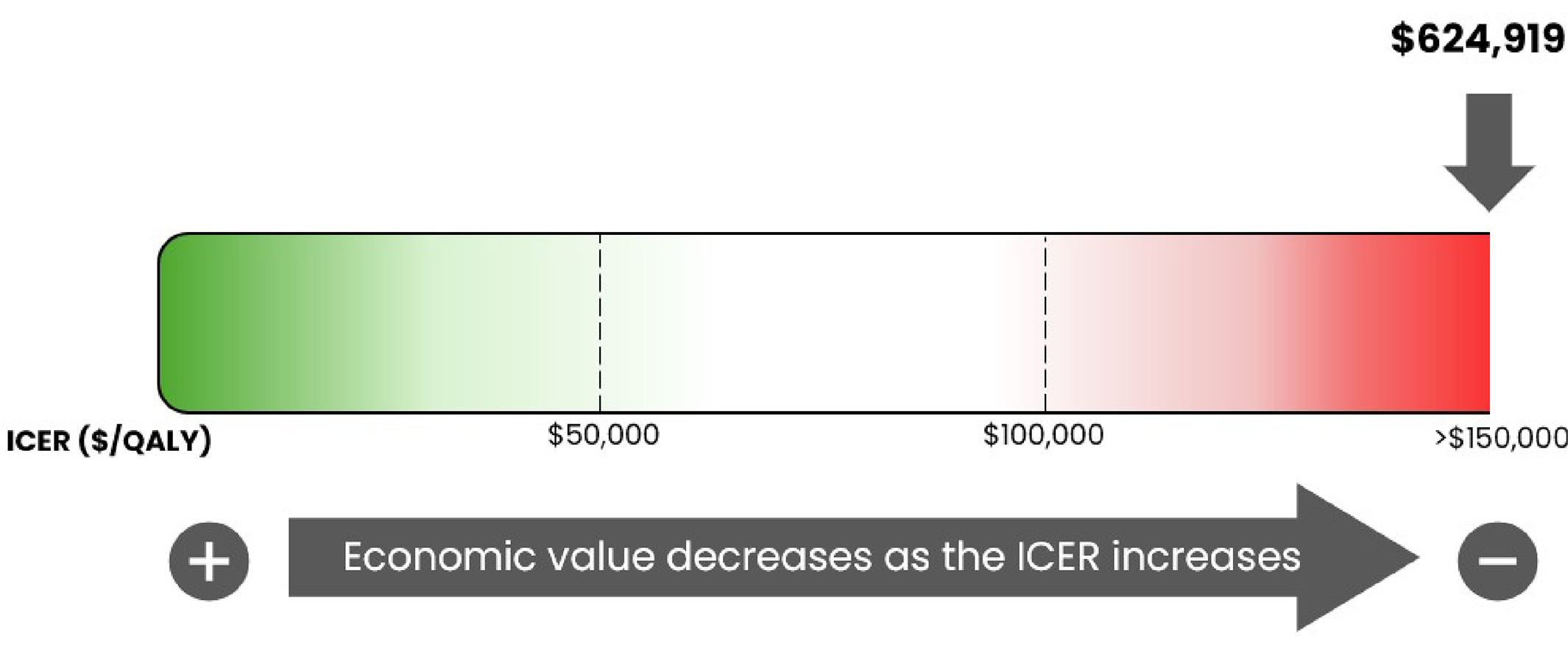
ICER = incremental cost-effectiveness ratio; pan-Canadian Oncology Drug Review Expert Review Committee.
Certainty of the evidence: Given the high uncertainty in the magnitude of the projected survival benefit, CDA-AMC conducted a series of scenario analyses on its base-case analysis, which indicated that assumptions about OS extrapolation had the greatest impact on the cost-effectiveness results. In light of the limitations of the sponsor’s modelling approach and the uncertainty in the comparative clinical benefits of tarlatamab, price reductions beyond those presented in this report may be required for tarlatamab to be considered cost-effective at a commonly accepted willingness-to-pay threshold.
Other considerations: This submission did not assess the impact of using tarlatamab as a third-line or later treatment due to the lack of submitted data and the sponsor’s model structure.
Impacts on Health Systems
Anticipated budget impact: The budget impact to the public drug plans of reimbursing tarlatamab is estimated to be approximately $353 million in the first 3 years. The 3-year expenditure on tarlatamab (i.e., not accounting for current expenditure on comparators) is estimated to be $365 million. The estimated budget impact is uncertain due to imprecision in the market share, annual mortality estimates, and subsequent therapy assumptions. pERC noted that the budget impact did not take into account costs to the health system beyond drug costs. pERC discussed that there may be large hospital or infrastructure cost implications that were not captured within the budget impact analysis.
Organizational and equity implications: pERC discussed provision of care and system and economic considerations that were noted by the drug plans. pERC acknowledged the extensive health system resource implications pertaining to the step-up dosing and the serious warnings and precautions of administering tarlatamab. This includes administration, monitoring, and the management of adverse events, particularly CRS and ICANS (patients are required to be monitored for 6 to 8 hours on day 1 of cycle 1 and day 8 of cycle 1, with tocilizumab readily available), for which the existing infrastructure may not be readily equipped or available at many centres in most jurisdictions. pERC and the clinical experts consulted for this review emphasized that the implementation of tarlatamab presents unique and significant challenges for each jurisdiction, given that tarlatamab is 1 of the first bispecific T-cell engager therapies available for treating solid tumours and time may be needed for oncologists to gain experience in managing the side effects of this class of drugs, including CRS and ICANS.
Sources of Information Used by the Committee
To make its recommendation, the committee considered the following information (links to the full documents for the review can be found on the project landing page):
the CDA-AMC review of the clinical and pharmacoeconomic evidence submitted by the sponsor, as well as relevant ethical issues related to tarlatamab (refer to the Main Report and Supplemental Material document)
the sponsor’s comments on the draft report and the CDA-AMC responses
patients' perspectives gathered in 1 joint patient group submission from LCC, Canadian Cancer Survival Network, and Lung Health Foundation (refer to the Patient and Clinician Group Input document)
input from 2 clinician groups, from LCC Medical Advisory Committee and Ontario Health (Cancer Care Ontario) Lung Cancer Drug Advisory Committee (refer to the Patient and Clinician Group Input document)
input from public drug programs that participate in the reimbursement review process (refer to the Supplemental Material document)
input from 2 clinical experts with expertise in the management of SCLC consulted by CDA-AMC.
All feedback received in response to the draft recommendation is available on the project landing page.
pERC Information
Members of the Committee
The following list reflects the members of the committee at the most recent meeting, whether they actually attended or not.
pERC: Dr. Catherine Moltzan (Chair), Dr. Kelvin Chan (Vice-Chair), Paul Agbulu, Dr. Phillip Blanchette, Dr. Matthew Cheung, Annette Cyr, Dr. Jennifer Fishman, Dr. Prafull Ghatage, Dr. Jason Hart, Terry Hawrysh, Dr. Yoo-Joung Ko, Dr. Aly-Khan Lalani, Amy Peasgood, Dr. Anca Prica, Dr. Michael Raphael, Dr. Adam Raymakers, Dr. Patricia Tang, Dr. Pierre Villeneuve, and Danica Wasney.
Meeting date: August 12, 2026
Regrets: Two expert committee members did not attend.
Conflicts of interest: One expert committee member did not participate due to considerations of conflict of interest.
ISSN: 2563-6596
Canada’s Drug Agency (CDA-AMC) is a pan-Canadian health organization. Created and funded by Canada’s federal, provincial, and territorial governments, we’re responsible for driving better coordination, alignment, and public value within Canada’s drug and health technology landscape. We provide Canada’s health system leaders with independent evidence and advice so they can make informed drug, health technology, and health system decisions, and we collaborate with national and international partners to enhance our collective impact.
Disclaimer: CDA-AMC has taken care to ensure that the information in this document was accurate, complete, and up to date when it was published, but does not make any guarantee to that effect. Your use of this information is subject to this disclaimer and the Terms of Use at cda-amc.ca.
The information in this document is made available for informational and educational purposes only and should not be used as a substitute for professional medical advice, the application of clinical judgment in respect of the care of a particular patient, or other professional judgments in any decision-making process. You assume full responsibility for the use of the information and rely on it at your own risk.
CDA-AMC does not endorse any information, drugs, therapies, treatments, products, processes, or services. The views and opinions of third parties published in this document do not necessarily reflect those of CDA-AMC. The copyright and other intellectual property rights in this document are owned by the Canadian Agency for Drugs and Technologies in Health (operating as CDA-AMC) and its licensors.
Questions or requests for information about this report can be directed to Requests@CDA-AMC.ca