Drugs, Health Technologies, Health Systems
Reimbursement Review
Retifanlimab (Zynyz)
Sponsor: Incyte Biosciences Canada Corporation
Therapeutic area: Squamous Cell Carcinoma of the Anal Canal
Summary
What Is Squamous Cell Carcinoma of the Anal Canal?
Squamous cell carcinoma of the anal canal (SCAC) is a rare malignancy that arises from cells lining the anal canal and margin. Most patients present with symptoms such as anal bleeding, pain, and a sensation of a rectal mass. SCAC accounts for approximately 90% of all anal cancers; 40% of SCACs are estimated to be metastatic or inoperable locally recurrent disease. The mortality rate for anal cancer has increased by 3.3% annually since 2011. SCAC is characterized by poor prognosis in locally recurrent or metastatic settings. Patients in the advanced stages face a poor survival rate, with 5-year overall survival (OS) rates of 18% to 36%.
Anal cancer accounts for approximately 0.5% of all new cancer cases worldwide. In 2022, 740 people in Canada were diagnosed with anal cancer.
What Are the Treatment Goals and Current Treatment Options for Patients With SCAC?
Treatment goals for patients with SCAC include extending OS, improving symptom management and quality of life, and reducing toxicities related to treatment.
Progression-free survival (PFS), OS, and health-related quality of life were identified as important outcomes in the clinical expert, clinician group, and patient group inputs.
The current standard of care for SCAC in the first-line setting is platinum-based combination chemotherapy (carboplatin and paclitaxel). Cisplatin in combination with fluorouracil is used in selected patients, but rarely; it is associated with increased toxicity.
What Is Zynyz, and Why Did Canada’s Drug Agency Conduct This Review?
Zynyz is a drug that is administered through IV infusion. Health Canada has approved Zynyz in combination with carboplatin and paclitaxel for the first-line treatment of adult patients with metastatic or inoperable locally recurrent SCAC.
Canada’s Drug Agency (CDA-AMC) reviewed Zynyz to inform a recommendation to the participating public drug programs on whether the drug should be reimbursed for the Health Canada–approved indication. The sponsor is seeking reimbursement for this patient population.
How Did CDA-AMC Evaluate Zynyz?
CDA-AMC reviewed the clinical evidence on the beneficial and harmful effects, as well as the economic evidence, of Zynyz versus other treatments used in Canada for the first-line treatment of adult patients with metastatic or inoperable locally recurrent SCAC. Carboplatin in combination with paclitaxel was considered a relevant treatment regimen to compare with Zynyz when reviewing the clinical evidence.
CDA-AMC identified equity and ethical considerations relevant to Zynyz and SCAC.
The review was informed by materials submitted by the sponsor, which included clinical and economic evidence.
The review was also informed by 2 patient group submissions and 2 clinician group submissions, in response to our call for input, and by input from the participating public drug programs around issues that may impact their ability to implement a recommendation.
Two medical oncologists were consulted as part of the review process.
What Were the Findings?
Clinical Evidence
CDA-AMC reviewed the following clinical evidence:
1 randomized, controlled, phase III trial (the POD1UM-303 study) comparing Zynyz in combination with carboplatin and paclitaxel with carboplatin and paclitaxel alone in 308 patients with metastatic or inoperable locally recurrent SCAC.
For the comparison of Zynyz in combination with carboplatin and paclitaxel versus carboplatin and paclitaxel alone:
Treatment with Zynyz in combination with carboplatin and paclitaxel likely results in a clinically important increase in the probability of PFS at 24 months and the probability of being alive at 36 months compared to carboplatin and paclitaxel alone. The certainty of the conclusion is reduced due to imprecision for both outcomes because the confidence interval included the possibilities of both little to no clinically important benefit and clinically important benefit.
Treatment with Zynyz in combination with carboplatin and paclitaxel may result in a clinically important improvement in European Organisation for Research and Treatment of Cancer Quality of Life Questionnaire Core 30 Global Health Status score by the end of treatment. The evidence is very uncertain about the effect of Zynyz in combination with carboplatin and paclitaxel on mean change in European Organisation for Research and Treatment of Cancer Quality of Life Questionnaire for Anal Cancer 27 bowel function (stoma) score from baseline to the end of the treatment compared with carboplatin and paclitaxel alone. The certainty of these conclusions is reduced due to serious imprecision and a risk of bias due to selection bias (i.e., a smaller sample analyzed and the possibility that randomization was not preserved).
Zynyz in combination with carboplatin and paclitaxel likely increases the proportion of patients who experience adverse events (AEs) of grade 3 or higher and serious adverse events (SAEs) compared with patients receiving carboplatin and paclitaxel alone. More patients treated with Zynyz in combination with carboplatin and paclitaxel reported immune-related AEs compared to patients treated with carboplatin and paclitaxel alone. The clinical experts indicated that the safety profile of Zynyz is aligned with its mechanism of action and that of other immunotherapies, and that the AEs are generally manageable in oncology practice.
Economic Evidence
Zynyz is available as a 500 mg/20 mL single-use vial. At the submitted price of $16,090.00 per vial, the cost per 28-day cycle is expected to be $16,090.00 per patient, based on the Health Canada–recommended dosage. In combination with carboplatin and paclitaxel, the cost per 28-day cycle is expected to be $21,365 per patient.
The key clinical efficacy data (i.e., PFS and OS) used to inform the economic model were derived from the POD1UM-303 (also known as InterAACT-2) trial, which compared Zynyz in combination with carboplatin and paclitaxel with placebo in combination with carboplatin and paclitaxel. Evidence submitted by the sponsor indicates that Zynyz in combination with carboplatin and paclitaxel likely results in a clinically important increase in the probability of PFS at 24 months and in the probability of being alive at 36 months versus carboplatin and paclitaxel alone.
The results of the CDA-AMC base case suggest that:
Zynyz in combination with carboplatin and paclitaxel is predicted to be associated with higher costs to the health care system than carboplatin and paclitaxel alone (incremental cost = $160,909) over a lifetime (40-year) horizon, with the increase primarily associated with drug acquisition costs.
Zynyz in combination with carboplatin and paclitaxel is predicted to be associated with a gain of 1.51 life-years compared to carboplatin and paclitaxel alone and may result in a gain of 1.16 quality-adjusted life-years (QALYs) compared to carboplatin and paclitaxel alone over a lifetime (40-year) horizon.
The incremental cost-effectiveness ratio of Zynyz in combination with carboplatin and paclitaxel compared to carboplatin and paclitaxel alone was $138,857 per QALY gained in the CDA-AMC base case. The estimated incremental cost-effectiveness ratio was sensitive to long-term survival assumptions. Approximately 43% of incremental QALYs were accrued on the basis of extrapolation.
CDA-AMC estimates that the budget impact of reimbursing Zynyz in combination with carboplatin and paclitaxel for the indicated population will be approximately $76,443,334 over the first 3 years of reimbursement compared to the amount currently spent on carboplatin and paclitaxel and cisplatin plus 5-fluorouracil, entirely reflecting the anticipated expenditure on Zynyz. The actual budget impact of reimbursing Zynyz in combination with carboplatin and paclitaxel will depend on its uptake in clinical practice.
Abbreviations
AE
adverse event
CDA-AMC
Canada's Drug Agency
CGOEN
Canadian Gastrointestinal Oncology Evidence Network
CI
confidence interval
ECOG PS
Eastern Cooperative Oncology Group Performance Status
EORTC QLQ-ANL27
European Organisation for Research and Treatment of Cancer Quality of Life Questionnaire for Anal Cancer 27
EORTC QLQ-C30
European Organisation for Research and Treatment of Cancer Quality of Life Questionnaire Core 30
FAS
full analysis set
GI DAC
Gastrointestinal Cancer Drug Advisory Committee
GHS
Global Health Status
GRADE
Grading of Recommendations Assessment, Development and Evaluation
HR
hazard ratio
HRQoL
health-related quality of life
ICE
intercurrent event
ICER
incremental cost-effectiveness ratio
IPCW
inverse probability of censoring weighting
MID
minimal important difference
OS
overall survival
PFS
progression-free survival
QALY
quality-adjusted life-year
RCT
randomized controlled trial
RPSFT
rank-preserving structural failure time
SAE
serious adverse event
SCAC
squamous cell carcinoma of the anal canal
SD
standard deviation
TEAE
treatment-emergent adverse event
Background
Introduction
The objectives of this report are as follows:
Review and critically appraise the evidence submitted by the sponsor on the beneficial and harmful effects of retifanlimab, 500 mg/20 mL (25 mg/mL) solution for IV infusion, in combination with carboplatin and paclitaxel, for the first-line treatment of adult patients with metastatic or inoperable locally recurrent squamous cell carcinoma of the anal canal (SCAC). The focus is on comparing retifanlimab in combination with carboplatin and paclitaxel to relevant comparators in clinical practice in Canada and identifying gaps in the current evidence. This focus is outlined in Table 1.
Review and critically appraise the economic information submitted by the sponsor, including a cost-effectiveness analysis and budget impact analysis. The focus of the economic review is aligned with the scope of the clinical review unless otherwise stated. For most reviews, a Canada’s Drug Agency (CDA-AMC) base case is developed and is informed by clinical expert input, the available clinical evidence, and the best interpretation of the economic evidence based on the information provided by the sponsor.
The application was submitted by the sponsor before a Notice of Compliance was received from Health Canada. This report reflects the anticipated indication and recommended dosage of retifanlimab in combination with carboplatin and paclitaxel during the initial CDA-AMC review period.
Table 1: Information on the Application Submitted for Review and on the CDA-AMC Review
Item | Description |
|---|---|
Information on the application submitted for review | |
Drug | Retifanlimab (Zynyz), 500 mg/20 mL (25 mg/mL), concentrate for solution, IV infusion |
Sponsor | Incyte Biosciences Canada Corporation |
Health Canada indication | In combination with carboplatin and paclitaxel for the first-line treatment of adult patients with metastatic or with inoperable locally recurrent SCAC |
Health Canada approval status | NOC |
Health Canada review pathway | Standard |
NOC date | May 28, 2026 |
Mechanism of action | IgG4 monoclonal antibody that binds to PD-1 and blocks its interaction with its ligands, PD-L1 and PD-L2 |
Recommended dosage | The recommended dose of retifanlimab is 500 mg every 4 weeks administered as an IV infusion over 30 minutes, in combination with carboplatin and paclitaxel for 6 cycles followed by retifanlimab 500 mg as monotherapy every 4 weeks for all cycles thereafter. Treatment should continue until disease progression, unacceptable toxicity, or up to 12 months. |
Submission type | Initial |
Sponsor’s reimbursement request | Per indication |
Submitted price | $16,090.00 per 500 mg/20 mL vial |
Information on the CDA-AMC review | |
Review type | Standard |
Clinical review focus | Population: As defined in the Health Canada indication Intervention: Per recommended dosage Comparator: Carboplatin in combination with paclitaxel Outcomes: PFS, OS, EORTC QLQ-C30, EORTC QLQ-ANL27, serious adverse events, and grade 3 or higher adverse eventsa |
CDA-AMC = Canada’s Drug Agency; EORTC QLQ-ANL27 = European Organisation for Research and Treatment of Cancer Quality of Life Questionnaire for Anal Cancer 27; EORTC QLQ-C30 = European Organisation for Research and Treatment of Cancer Quality of Life Questionnaire Core 30; IgG4 = immunoglobulin G4; NOC = Notice of Compliance; ORR = objective response rate; OS = overall survival; PFS = progression-free survival; SCAC = squamous cell carcinoma of the anal canal.
aSupportive outcomes presented in this report include ORR, EQ-5D-5L, and safety outcomes.
Submission History for the Drug Under Review
CDA-AMC has not previously reviewed retifanlimab through the reimbursement review process.
Sources of Information
The contents of the Reimbursement Review report are informed by materials submitted by the sponsor, input received from interested parties (patient groups, clinician groups, and drug programs), and input from clinical experts consulted for this review.
Calls for patient group input and clinician group input are issued for each reimbursement review. CDA-AMC received 2 patient group submissions: 1 from the Colorectal Cancer Resource & Action Network in collaboration with the Canadian Cancer Survivor Network, the Gastrointestinal Society, HPV Global Action, and Save Your Skin Foundation; and 1 from Colorectal Cancer Canada. Two clinician group submissions were received from the Canadian Gastrointestinal Oncology Evidence Network (CGOEN) and the Ontario Health (Cancer Care Ontario) Gastrointestinal Cancer Drug Advisory Committee (GI DAC). Patient perspectives were collected through telephone, email, and online surveys. Of the 6 participants who responded to the Colorectal Cancer Resource & Action Network, 2 had experience with retifanlimab in combination with chemotherapy. The GI DAC clinician group gathered information through structured discussions with the Ontario Health (Cancer Care Ontario) Drug Advisory Committee, and CGOEN gathered information through clinical experiences treating patients with SCAC and virtual discussions regarding the POD1UM-303 trial. The full submissions received are available on the project landing page in the consolidated input document. The drug programs provide input on each drug being reviewed through the reimbursement review process by identifying issues that may affect their ability to implement a recommendation.
Input from patient and clinician groups is considered throughout the review, including in the selection of outcomes to include in the clinical review and in the interpretation of the clinical and economic evidence. Relevant patient and clinician group inputs are summarized in the Disease Background, Current Management, and Unmet Needs and Existing Challenges sections.
Each review team includes at least 1 clinical expert with expertise regarding the diagnosis and management of the condition for which the drug is indicated. Clinical experts are a critical part of the review team and are involved in all phases of the review process. Two medical oncologists with expertise in the diagnosis and management of SCAC participated as part of the review team.
Disease Background
Anal cancer is a rare malignancy that accounts for approximately 0.5% of all new cancer cases worldwide, with SCAC being the most common histological subtype.1-3 These carcinomas arise from cells lining the anal canal and margin. Most patients present with symptoms such as anal bleeding, pain, and a sensation of a rectal mass.4 Although SCAC is a rare malignancy, it represents a growing concern in Canada. In 2022, 740 people were diagnosed with anal cancer in Canada.5 Among patients diagnosed with anal cancer, 90.0% are estimated to have SCAC,3 of whom 40% are estimated to have metastatic or inoperable locally recurrent disease.6 Unlike the overall trend in cancer mortality, which has declined slightly each year since 2011, the mortality rate for anal cancer has increased by 3.3% annually since 2011.5 Patients in the advanced stages face 5-year OS rates of just 18% to 36%.7-9
Patient group input: The disease causes significant physical symptoms, including anal discomfort and pain, bleeding, abdominal pain, and loss of bowel control, which can severely affect daily functioning. It also has a substantial impact on quality of life, with major disruptions to work, physical and social activities, relationships, and mental health, leading to anxiety, depression, sleep disturbances, and social withdrawal for some patients. Moreover, patients with anal cancer often face stigma, guilt, and shame related to their cancer diagnosis, leading to misconceptions and delays in seeking medical advice. Approximately 90% of SCAC cases are associated with HPV. Epidemiologic data in Canada show a higher incidence of SCAC in groups with lower socioeconomic status.10 Based on input from Colorectal Cancer Canada, SCAC disproportionately affects some systemically marginalized populations because of differences in both underlying risk factors and geographic distribution. These populations include the 2SLGBTQ+ community, gay men, and patients who are living with HPV or HIV.10
Current Management
Treatment Goals
The patient group input (i.e., from interviewed and surveyed patients and caregivers) indicated that it was very important for any new drug therapies to extend overall survival (OS) and help patients maintain their daily activities, including work and caregiving. Interview respondents also emphasized lower out-of-pocket costs and fewer side effects as important goals.
The clinical experts and clinician groups agreed that the primary goals of treatment are to improve survival, delay disease progression, and manage symptoms — particularly pelvic complications — to reduce disease burden. Both groups emphasized patients’ ability to maintain or improve their quality of life and functional status while minimizing treatment-related toxicities and reducing both caregiver burden and health care use.
Current Treatment Options
Several national and provincial resources in Canada provide recommendations for managing the patient population under review.11-16 Chemotherapy is the recommended first-line treatment in Canada; this approach aligns with international guidelines for metastatic and inoperable locally recurrent SCAC, such as those issued by the European Society for Medical Oncology, and with historical recommendations from the National Comprehensive Cancer Network.2 Clinical experts consulted by CDA-AMC indicated that in Canada, the current first-line treatment for adult patients with metastatic or inoperable locally recurrent SCAC consists of platinum-based combination chemotherapy, with carboplatin plus weekly paclitaxel considered the preferred standard regimen in routine practice. Findings from the POD1UM-303 trial support the use of carboplatin and paclitaxel over older regimens of cisplatin and fluorouracil as the standard of care for the first-line treatment of patients with metastatic or inoperable locally recurrent SCAC. These findings are reflected in international clinical practice guidelines that inform care in Canada.17 The experts noted that cisplatin in combination with fluorouracil may still be used in selected patients, but that this treatment is generally considered an alternative rather than preferred option. More intensive regimens of 3 cytotoxic drugs (docetaxel, cisplatin, and 5-fluorouracil) have been explored. However, these are associated with increased toxicities and, based on more recent data and clinical experience, are less likely to be used in routine first-line practice. The National Comprehensive Cancer Network guidelines recently recommended retifanlimab in combination with carboplatin and paclitaxel as the preferred first-line treatment in anal cancer, reflecting a shift toward the addition of immunotherapies to chemotherapy regimens for SCAC.18
Key characteristics of retifanlimab are summarized along with those of other treatments available for SCAC in the Supplemental Material document, Appendix 1 (available on the project landing page); refer to the Key Characteristics table.
Unmet Needs and Existing Challenges
Patient group input: The patient group input indicated that there is a significant unmet clinical need for a treatment that can meaningfully extend survival while preserving the ability to maintain daily activities. Patients are willing to accept side effects and treatment burden, particularly when a greater survival benefit is expected, but they still highlight the importance of minimizing toxicity and reducing financial burden. According to Colorectal Cancer Canada, in neighbourhoods where many people are immigrants or live with lower incomes, a higher incidence of anal cancer may also reflect barriers to prevention, delayed diagnosis, and inequitable access to vaccination, screening, and treatment. Although the incidence of SCAC is lower in rural areas, people living outside major centres may face different challenges, including reduced access to screening, specialist care, and early diagnosis.
Clinician input: Clinical experts and clinician groups highlight a significant unmet need due to the lack of effective treatment options beyond carboplatin plus paclitaxel in the first-line setting, with subsequent lines of therapies providing minimal benefit and no available immunotherapy options. They emphasize the need for more durable disease control, improved progression-free survival (PFS) and OS, and better-tolerated treatments that preserve functional status and limit toxicity in a palliative, highly symptomatic population. One clinical expert indicated that while treatment with carboplatin and paclitaxel is generally available in Canada, access can be challenging for patients in rural or remote areas due to the need to receive infusion-based treatments in specialized centres. The regimen also places a notable burden on patients and caregivers because it involves repeated IV treatments, frequent clinic visits, and ongoing monitoring. In addition, side effects, such as fatigue, neuropathy, and myelosuppression, can reduce quality of life and lead to treatment adjustments, making the overall experience demanding in a palliative setting.
Considerations for Using the Drug Under Review
The contents of this section have been informed by input from the clinician groups and clinical experts consulted for the purpose of this review and by the reimbursement conditions proposed by the sponsor. More information is available in the Supplemental Material document, Appendix 1 (available on the project landing page); refer to the Initiation, Renewal, Discontinuation, and Prescribing Conditions Proposed by the Sponsor table. The implementation questions from the public drug programs and corresponding responses from the clinical experts consulted for this review are summarized in the Supplemental Material document, Appendix 1; refer to the Summary of Drug Program Input and Clinical Expert Responses table. The following information has been summarized by the review team.
Place in Therapy
Both of the clinician groups that submitted input to CDA-AMC agreed that retifanlimab in combination with chemotherapy would be best suited as a first-line regimen for patients with SCAC who are not eligible for curative treatment. The clinical experts consulted by CDA-AMC agreed with clinician groups that retifanlimab in combination with carboplatin and paclitaxel would serve as a first-line treatment for patients with metastatic or inoperable locally recurrent SCAC. The clinical experts expected a shift in the treatment paradigm to using chemoimmunotherapy in the first-line setting, provided that the clinical benefit is considered meaningful and the regimen is accessible in practice. One expert emphasized that retifanlimab represents an intensification of the current standard first-line chemotherapy regimen of carboplatin plus paclitaxel.
Patient Population
The clinical experts consulted by CDA-AMC indicated that the patients most in need of intervention are those with metastatic or inoperable, locally recurrent SCAC who have a high disease burden, are symptomatic, and have a limited prognosis with current therapies. One expert noted that this includes patients with rapidly progressive disease or visceral metastases (such as liver involvement) and those experiencing significant symptoms — including pain, bleeding, or impaired bowel function — that substantially affect their quality of life. The expert also highlighted a particular need among patients who are at higher risk of poor outcomes and among those who have been historically underserved in clinical research, including individuals living with HIV.
The clinical experts indicated that the patients best suited for treatment with retifanlimab would be those with metastatic or inoperable locally recurrent SCAC who are eligible for first-line systemic therapy and are fit to receive combination treatment with carboplatin and paclitaxel. This generally includes patients with adequate performance status and organ function who can tolerate both chemotherapy and immunotherapy. Both clinician groups agreed that patients should have a reasonable Eastern Cooperative Oncology Group Performance Status (ECOG PS). Both groups noted that this includes patients with an ECOG PS of 0 to 1. Additionally, the CGOEN group noted that patients with an ECOG PS of 2 should be eligible at the discretion of the treating physician, while the GI DAC group noted that patients with an ECOG PS of 2 or greater should be eligible at the clinician’s discretion. The groups noted that patients should be eligible regardless of PD-1 or PD-L1 expression status, given that PD-L1 testing was not found to be a useful predictive tool to select a population more likely to derive benefit. The GI DAC also mentioned that patients should be eligible to receive the treatment regardless of HPV status or if they have perianal (i.e., anal margin) squamous cell carcinoma. The exclusion of perianal disease may create a distinction that is not clinically meaningful and may result in inequitable access to therapy. The GI DAC also noted that patients who have previously completed either chemoradiation or neoadjuvant or adjuvant chemotherapy should be eligible for this treatment regardless of when their prior therapy was completed.
The sponsor proposed criteria pertaining to the initiation of treatment with retifanlimab and chemotherapy among patients with metastatic or inoperable locally recurrent SCAC. The clinical experts consulted by CDA-AMC agreed with the proposed conditions and indicated that these criteria can be implemented in practice without challenges.
Assessing the Response to Treatment
One of the clinical experts consulted by CDA-AMC indicated that treatment response is primarily assessed using radiologic imaging, most commonly CT scans, to evaluate changes in tumour burden according to standardized response criteria. The expert added that outcomes used in clinical trials — such as objective response rate, PFS, and OS — are aligned with assessment approaches in clinical practice. However, in routine care, greater emphasis is placed on symptom control, quality of life, and treatment tolerability, reflecting the palliative intent of therapy. The clinical experts noted objective tumour reduction, durable disease stabilization, maintenance of performance status, and acceptable toxicity as meaningful responses in this setting. The experts added that treatment response is typically evaluated with imaging every 8 to 12 weeks, alongside ongoing clinical assessment of symptoms and tolerability.
The CGOEN clinician group indicated that treatment response is monitored through regular clinical assessments and laboratory evaluations before each cycle, along with serial imaging (CT or MRI) every 2 to 4 months. Clinical assessment includes evaluation of symptoms, performance status, and treatment-related toxicities.
Discontinuing Treatment
According to the clinical experts consulted for this review, disease progression based on imaging or clear clinical deterioration (such as worsening symptoms) and intolerable toxicity would be reasons to discontinue treatment. Any decision to discontinue should also consider patient factors, such as performance status, the development of significant comorbidities, or a shift toward a more palliative approach. The sponsor proposed that the reimbursement of retifanlimab in combination with carboplatin and paclitaxel should continue until disease progression or the development of unacceptable toxicity, or up to 1 year. The clinical experts noted that the discontinuation criteria proposed by the sponsor can be implemented without challenges.
Prescribing Considerations
The clinical experts noted that a specialist, typically a medical oncologist, who is experienced in the treatment of gastrointestinal malignancies is required to diagnose, treat, and monitor patients with SCAC. They noted that treatment with retifanlimab would be appropriately delivered in outpatient oncology settings where systemic therapy infusion services can be accessed, as is standard for patients receiving combination chemotherapy and immunotherapy. The clinician groups similarly noted that retifanlimab would be primarily prescribed by a medical oncologist in a cancer centre.
The sponsor-proposed treatment with retifanlimab should be initiated and supervised by a physician experienced in the treatment of cancer. The clinical experts consulted by CDA-AMC agreed that the prescribing condition aligns well with current clinical practice and would be implementable within health care systems in Canada.
Clinical Review
Methods
The review team considered studies in the sponsor’s systematic review (pivotal studies and randomized controlled trials [RCTs]). Sponsor-submitted long-term extension studies, indirect treatment comparisons, and studies addressing gaps in the evidence for inclusion would also typically be considered; however, none were submitted by the sponsor. Eligible studies for the sponsor’s systematic review included phase III and IV interventional clinical trials. Patients and interventions were defined according to the indication and recommended dosage in the product monograph. Relevant comparators were drugs used in clinical practice in Canada to treat patients described in the indication under review, including carboplatin with paclitaxel.
The review team selected outcomes and follow-up times for review considering the sponsor’s Summary of Clinical Evidence, clinical expert input, and patient and clinician group input. The included outcomes are those considered relevant to expert committee deliberations; these were selected in consultation with committee members. Evidence from the systematic review for the most important outcomes was assessed using the Grading of Recommendations Assessment, Development and Evaluation (GRADE) approach. The outcomes assessed using GRADE, with their respective rationales for inclusion, were as follows:
OS: SCAC is a life-limiting cancer. Extending OS is crucial to patients, according to patient group input and clinician group input.
PFS: It addresses 1 of the main treatment goals for SCAC and is important to patients, according to clinical expert input.
European Organisation for Research and Treatment of Cancer Quality of Life Questionnaire Core 30 (EORTC QLQ-C30): This questionnaire captures health-related quality of life (HRQoL), a concern cited by the patient and clinician groups and clinical experts.
European Organisation for Research and Treatment of Cancer Quality of Life Questionnaire for Anal Cancer (EORTC QLQ-ANL27): This questionnaire captures disease-specific quality of life for patients with anal cancer, a concern cited by the patient and clinician groups and clinical experts.
Serious adverse events (SAEs) and grade 3 or higher adverse events (AEs): These were identified as important outcomes in the input from the patient groups and clinical experts.
Additional outcomes presented in the report were objective response rate and the EQ-5D-5L visual analogue scale. Safety outcomes were also included because these provide additional context to the HRQoL results.
The methods used for data extraction, the risk of bias appraisal, and the certainty of evidence assessment are in the Supplemental Material document, Appendix 2.
Clinical Evidence
In this report, the following sources of evidence submitted by the sponsor are reviewed and appraised:
One RCT (the POD1UM-303 study) was included in the systematic review.
Systematic Review
Description of Studies
Study Characteristics
The characteristics of the included study are summarized in Table 2. Details pertaining to the eligibility criteria, interventions and comparators, and relevant outcome measures are in the Supplemental Material document, Appendix 3.
The POD1UM-303 study is a phase III, multicentre, double-blind RCT that was conducted at 70 centres in 13 countries (no sites in Canada). The first patient received treatment on November 12, 2020, and the primary data cut-off was on April 15, 2024. The final OS data cut-off was on August 1, 2025. A total of 308 patients were randomized to receive retifanlimab in combination with carboplatin and paclitaxel (N = 154) or placebo in combination with carboplatin and paclitaxel (N = 154) in a 1:1 ratio and were included in the full analysis set (FAS) population; of these, 306 participants received at least 1 dose of the study treatment and were included in the safety population.
The POD1UM-303 study consisted of 4 periods: screening, study drug administration, crossover, and follow-up. Randomization was blinded and stratified 1:1 by PD-L1 expression (< 1% versus ≥ 1%), region (Australia, Europe, North America, and the UK versus the rest of the world), and extent of disease (i.e., locally recurrent versus metastatic). Following a 28-day screening period, the date of cycle 1, day 1 was the date of the administration of the first dose of retifanlimab or placebo. Treatment with retifanlimab was continued for up to 13 cycles (i.e., 1 year) in the absence of disease progression, intolerable toxicity, death, withdrawal of consent, loss to follow-up, premature discontinuation of all assigned study drugs, or any other reason. Carboplatin and paclitaxel were given in combination with retifanlimab or placebo for up to the first 6 cycles. After completing or discontinuing the assigned study drugs in the study drug administration period, patients entered either the follow-up period or the optional crossover treatment period. During the crossover period, participants who had been randomized to placebo in combination with carboplatin and paclitaxel chemotherapy and experienced progressive disease had the opportunity to receive open-label retifanlimab monotherapy for up to thirteen 28-day cycles (i.e., 1 year).
Table 2: Characteristics of Studies Included in the Systematic Review
Study name, design, and sample size | Key inclusion criteria | Key exclusion criteria | Intervention and comparator | Relevant end points |
|---|---|---|---|---|
POD1UM-303 study Phase III, multicentre, randomized, double-blind RCT Total N = 308 |
|
| Interventions:
Paclitaxel: 80 mg/m2 was administered by IV on days 1, 8, and 15 of each 28‑day cycle, for up to 6 cycles. Comparators:
| Primary end point: PFS, defined as the time from the date of randomization until disease progression according to RECIST 1.1 by BICR or death from any cause Key secondary end point: OS, defined as the time from the date of randomization until death from any cause Secondary end points:
Exploratory end points: PRO assessments of EQ‑5D, EORTC QLQ‑C30, and EORTC QLQ‑ANL27 were performed at cycle 1 and cycle 2 and at the end of treatment. |
AE = adverse event; ART = antiretroviral therapy; AUC = area under the curve; BICR = blinded independent central review; CD4 = cluster of differentiation 4; CNS = central nervous system; ECOG PS = Eastern Cooperative Oncology Group Performance Status; EORTC QLQ-ANL27 = European Organisation for Research and Treatment of Cancer Quality of Life Questionnaire for Anal Cancer 27; EORTC QLQ-C30 = European Organisation for Research and Treatment of Cancer Quality of Life Questionnaire Core 30; HAART = highly active antiretroviral therapy; irAE = immune-related adverse event; ORR = objective response rate; OS = overall survival; PFS = progression-free survival; PRO = patient-reported outcome; RCT = randomized controlled trial; RECIST 1.1 = Response Evaluation Criteria in Solid Tumours Version 1.1; SAE = serious adverse event; SCAC = squamous cell anal carcinoma.
Sources: POD1UM 303 Clinical Study Report19 and sponsor’s Summary of Clinical Evidence.20
Statistical Testing and Analysis Populations
The study was statistically powered for inferences on the primary end point of PFS, defined as the time from randomization to disease progression or death. PFS was analyzed using a stratified log-rank test at an overall 1-sided 2.5% level of significance in the FAS population; this was done according to the treatment group to which participants were randomized and the strata to which they were assigned during randomization. The primary hypothesis compared median PFS between treatment groups in the FAS population using a stratified log-rank test at a 1-sided significance level of 2.5%, with stratification by region, PD-L1 expression, and extent of disease. The strata identified during the randomization process were used for the analysis. Hazard ratios (HRs) and corresponding 95% confidence intervals (CIs) were estimated using a stratified Cox proportional hazards model with Efron’s method for ties. Kaplan-Meier methods were used to estimate median PFS, with 95% CIs calculated using the Brookmeyer-Crowley method. The sample size was based on the total number of patients rather than on an event-driven design. All safety analyses during the randomized and overall periods were based on the safety population. The clinical safety data (e.g., vital signs, electrocardiogram results, routine laboratory test results, and AEs) were summarized with descriptive statistics (e.g., mean, frequency) using the safety population for the randomized and overall periods.
OS was the key secondary end point. It was analyzed using a hierarchical gatekeeping procedure to control the type I error rate; formal hypothesis testing for OS was conducted only if statistical significance was achieved for PFS. OS was analyzed using a stratified log-rank test at a 1-sided 2.5% significance level, with alpha adjustment for interim analysis using an O’Brien-Fleming boundary. The final OS analysis was conducted after a prespecified number of death events (n = 172), indicating an event-driven component for this end point. Additional OS analyses (to adjust for treatment crossover) were performed using inverse probability of censoring weighting (IPCW) and rank-preserving structural failure time (RPSFT) models; these analyses were exploratory and supportive, and were conducted as post hoc analyses.
Multiplicity was controlled using a hierarchical gatekeeping strategy between PFS and OS only; no formal type I error adjustment was applied to additional secondary or other end points, subgroup analyses, or sensitivity analyses.
Sensitivity analyses for PFS included an unstratified log-rank test and an analysis in which patients with documented progression or death occurring after missing 2 or more consecutive scheduled tumour assessments were treated as events rather than censored, as in the primary analysis.
The FAS population, defined as all randomized patients analyzed according to assigned treatment, was used for efficacy analyses. Patients were analyzed according to the treatment and strata to which they had been assigned during randomization. The safety analysis population included all patients who received at least 1 dose of study treatment. Treatment groups for this population were determined according to the actual treatment the participant had received, regardless of treatment assignment at randomization. Data presented in this report are based on a data cut-off date of August 1, 2025, unless otherwise stated.
Patient Disposition
Patient disposition for the included study is summarized in the Supplemental Material document, Appendix 4.
Of 376 patients enrolled, 308 patients (81.9%) were randomized 1:1 to the treatment groups. A total of 154 patients (50%) were assigned to the retifanlimab in combination with carboplatin and paclitaxel group and 154 patients (50%) were assigned to the placebo in combination with carboplatin and paclitaxel group. Of the 308 randomized patients, 231 participants (75.0%) discontinued study treatment, including 105 patients (68.2%) in the retifanlimab in combination with carboplatin and paclitaxel group and 126 patients (81.8%) in the placebo plus carboplatin and paclitaxel group. The most common reason for treatment discontinuation was progressive disease, experienced by 72 patients (46.8%) in the retifanlimab in combination with carboplatin and paclitaxel group and 105 patients (68.2%) in the placebo in combination with carboplatin and paclitaxel group. Seventy-seven patients (50.0%) in the placebo in combination with carboplatin and paclitaxel group entered the optional crossover treatment period.
Baseline Characteristics
The baseline characteristics of patients in the POD1UM-303 study are summarized in Table 3. Patients in the FAS ranged in age from 29 to 86 years, with a median age of 62.0 years. Most patients (72.1%) were female. Of note, there was an imbalance in the proportion of females and males between the groups (32.5% of patients were male in the retifanlimab group versus 23.4% in the placebo group). Two hundred and sixty-nine patients (87.3%) identified as white, 18 patients (5.8%) as Asian, and 5 patients (1.6%) as Black or African American; 5 patients characterized their race as “other.” There were more patients enrolled with an ECOG PS of 0 (54.5%) than of 1 (45%). A total of 3.5% of patients were living with HIV, while around 96% had an HIV status of negative or unknown. The majority of patients (82.5%) had metastatic SCAC, and approximately 15% had locally recurrent SCAC.
Table 3: Summary of Baseline Characteristics From the POD1UM-303 Study Included in the Systematic Review (FAS)
Characteristic | Retifanlimab + carboplatin and paclitaxel (N = 154) | Placebo + carboplatin and paclitaxel (N = 154) |
|---|---|---|
Demographic characteristics | ||
Age (years), median (range) | 61.6 (29 to 86) | 61.1 (35 to 84) |
Sex, n (%) | ||
Female | 104 (67.5) | 118 (76.6) |
Male | 50 (32.5) | 36 (23.4) |
Race, n (%) | ||
Asian | 10 (6.5) | 8 (5.2) |
Black or African American | 3 (1.9) | 2 (1.3) |
Multiple | 1 (0.6) | 0 (0.0) |
White | 132 (87.5) | 137 (89.0) |
Other | 3 (1.9) | 2 (1.3) |
Not reported | 5 (3.2) | 3 (1.9) |
Ethnicity, n (%) | ||
Hispanic or Latino | 13 (8.4) | 8 (5.2) |
Not Hispanic or Latino | 129 (83.8) | 132 (85.7) |
Not reported | 1 (0.6) | 1 (0.6) |
Unknown | 10 (6.5) | 11 (7.1) |
Missing | 1 (0.6) | 2 (1.3) |
Disease characteristics | ||
Current metastasis stage | ||
M0 | 26 (16.9) | 27 (17.5) |
M1 | 127 (82.5) | 127 (82.5) |
Missing | 1 (0.6) | 0 (0.0) |
HPV status (local) | ||
Positive | 29 (18.8) | 28 (18.2) |
Negative | 3 (1.9) | 4 (2.6) |
Unknown | 0 (0.0) | 2 (1.3) |
Missing | 122 (79.2) | 120 (77.9) |
ECOG PS at baseline | ||
0 | 82 (53.2) | 86 (55.8) |
1 | 71 (46.1) | 68 (44.2) |
HIV status | ||
Positive | 6 (3.9) | 5 (3.2) |
Negative or unknown | 148 (96.1) | 149 (96.8) |
Extent of disease | ||
Locally recurrent | 23 (14.9) | 24 (15.6) |
Metastatic | 129 (83.8) | 125 (81.2) |
Missing | 2 (1.3) | 5 (3.2) |
Liver metastases | ||
Yes | 55 (35.7) | 56 (36.4) |
No | 99 (64.3) | 98 (63.6) |
PD-L1 expression (IRT) | ||
< 1% | 15 (9.7) | 14 (9.1) |
≥ 1% | 139 (90.3) | 140 (90.9) |
Prior therapya | ||
Yes | 95 (61.7) | 99 (64.3) |
No | 99 (35.7) | 55 (35.7) |
Prior radiation therapy | ||
Yes | 104 (67.5) | 113 (73.4) |
No | 49 (31.8) | 41 (26.6) |
Prior surgery | ||
Yes | 56 (36.4) | 51 (33.1) |
No | 97 (63.0) | 103 (66.9) |
ECOG PS = Eastern Cooperative Oncology Group Performance Status; FAS = full analysis set; IRT = interactive response technology.
Note: Racial categories used in the table are as reported in the source and may not align with Canada's Drug Agency inclusive language guidelines.
aPrior therapy is chemotherapy.
Source: POD1UM-303 study primary Clinical Study Report.21
Treatment Exposure and Concomitant and Subsequent Medications
Details of patients’ treatment exposure and adherence — along with use of concomitant medications and subsequent treatments in the included study — are in the Supplemental Material document, Appendix 4.
As of the final OS data cut-off date of August 1, 2025, during the randomized treatment period, the median duration of retifanlimab treatment for patients was 7.4 months in the retifanlimab in combination with carboplatin and paclitaxel group, and the median duration of placebo treatment was 6.8 months in the placebo in combination with carboplatin and paclitaxel group. The median number of retifanlimab infusions administered was 9 (range, 1 to 13) in the retifanlimab in combination with carboplatin and paclitaxel group, and the median number of placebo infusions administered was 8 (range, 1 to 13) in the placebo in combination with carboplatin and paclitaxel group. As of the primary data cut-off date of April 15th, 2024, the median number of carboplatin infusions was 6 in both the placebo and retifanlimab groups; 1 carboplatin infusion was given per cycle. The median number of paclitaxel infusions was 15 for patients in both the placebo and retifanlimab groups; 3 paclitaxel infusions were given per cycle.
The most common concomitant medications (i.e., received by 50% or more of patients) in the retifanlimab in combination with carboplatin and paclitaxel group were paracetamol (101 patients [65.6%]), ondansetron (91 patients [59.1%]), and dexamethasone (78 patients [50.6%]). The frequency of patients who reported concomitant medications and the concomitant medications reported in the retifanlimab in combination with carboplatin and paclitaxel group were generally consistent with those in the placebo in combination with carboplatin and paclitaxel group. The percentages of patients who received posttreatment anticancer therapy were 60.4% in the retifanlimab group versus 50.0% in the placebo group. The most common posttreatment anticancer therapies in the retifanlimab group versus the placebo group were posttreatment radiation (19.5% versus 9.1%), fluorouracil (18.2% versus 15.6%), carboplatin (12.3% versus 11.0%), paclitaxel (12.3% versus 9.1%), and capecitabine (10.4% versus 4.5%).
Critical Appraisal
Internal Validity
Overall, there was a low risk of bias arising from the randomization and allocation concealment process. Baseline and disease characteristics were generally balanced between the study groups; however, there was an imbalance between the study groups in the proportion of male patients (i.e., 32.5% of patients in the retifanlimab group were male versus 23.4% in the placebo group). The clinical experts indicated that sex may represent not only a prognostic factor, but potentially also a treatment-effect modifier. In particular, the higher proportion of men in the retifanlimab group may have the potential to bias the results. There is evidence that suggests better OS for females than males for stage I to IV SCAC; on the other hand, a meta-analysis demonstrated that in some types of cancer, OS and PFS are greater for males than females who received immunotherapy.22,23 Therefore, the direction of bias is uncertain. Subgroup analyses suggested a consistent treatment effect (based on the point estimates and CIs; no tests for interaction were reported) for retifanlimab across both females and males, indicating that sex might not have meaningfully modified the treatment effects.
For the POD1UM-303 study, no prespecified formal estimands for PFS and OS were reported in the study protocol, statistical analysis plan, or Clinical Study Report. The estimand framework (per the addendum to the International Council for Harmonisation of Technical Requirements for Pharmaceuticals for Human Use guidelines [ICH E9 (R1)])24 is essential for defining the population, intervention, comparator, and outcome (PICO) of interest, and importantly, how intercurrent events (ICEs) — such as treatment discontinuations, subsequent lines of therapy, and missing data — are systematically handled in the analysis of each outcome. As will be described, the lack of a clearly defined estimand and handling of ICEs are limitations of the trial.
PFS was the primary end point of the trial, while OS was selected as the key secondary end point. Patient group and clinician input identified delaying progression and extending survival as important outcomes; thus, PFS is a relevant clinical end point in the population of patients with metastatic or inoperable locally recurrent SCAC. However, no information about the association between PFS and OS in metastatic and locally recurrent SCAC was provided in the submission to CDA-AMC. This highlights an uncertainty about whether improvements in PFS translate into meaningful survival benefits. Moreover, the clinical experts consulted by CDA-AMC emphasized that OS has the greater clinical importance, considering the life-limiting nature of SCAC and lack of effective second-line treatments, and should be prioritized when interpreting the clinical benefit in this setting. One expert highlighted that in the immunotherapy era, improvements in PFS have not consistently shown changes in OS or quality of life.
Concerning outcome assessment and analysis in the trial, time-to-event outcomes were analyzed using Kaplan-Meier methods, which are appropriate for censored data. However, estimates at later time points may be unstable due to small numbers of patients remaining at risk (i.e., less than 25% of randomized patients in each group from 22 months onward for PFS and 40 months onward for OS), increasing the uncertainty in PFS and OS over time. PFS was assessed according to Response Evaluation Criteria in Solid Tumours Version 1.1 by blinded independent central review; OS, HRQoL outcomes, and safety data were assessed by the investigator. Subgroup analyses were prespecified, but not adjusted for multiplicity; therefore, these should be considered as supportive evidence of the consistency of treatment effect with the primary analysis only. Evidence for the validity and reliability of the EORTC QLQ-C30 and EORTC QLQ-ANL27 as measures of HRQoL is summarized in the Supplemental Material document, Appendix 3. Based on the available evidence in the literature for these scales, there is no between-group minimal important difference (MID) for patients with SCAC. However, for the EORTC QLQ-C30, the between-group MIDs on the Global Health Status (GHS) domain for patients with colorectal cancer have been estimated as an improvement of 6 points and a deterioration of 8 points.25 The clinical experts suggested that colorectal cancer–derived MID estimates for the EORTC QLQ-C30-GHS domain are likely reasonable to apply in the population of patients with metastatic and locally recurrent SCAC in the absence of SCAC-specific thresholds, given the similarities in symptom burden and use of the instrument across gastrointestinal malignancies. No between- or within-group MID estimates were identified or provided by the sponsor for the EORTC QLQ-ANL27. However, a 5-point to 10-point range has been reported across scales for the EORTC QLQ-C30. As a result, a 5-point between-group MID was used as the target threshold for the EORTC QLQ-ANL27 results. The clinical experts agreed that a MID of 5 points would likely represent a clinically meaningful difference for the EORTC QLQ-ANL27. The POD1UM-303 study did not preplan formal statistical testing of differences in the HRQoL measures; the results of the HRQoL outcomes were summarized using descriptive statistics. Approximately 78% of patients (122 of 154 patients receiving placebo and 120 of 154 patients receiving retifanlimab) had baseline scores; 24 patients in the placebo group and 34 patients in the retifanlimab group contributed data for the EORTC QLQ-C30 at the end of treatment. For the change in EORTC QLQ-ANL27 scores from baseline to end of treatment, baseline data were reported for only 52 patients (34%) receiving placebo and 46 patients (30%) receiving retifanlimab. End-of-treatment data were available for only 12 patients in the retifanlimab group and 12 patients in the placebo group. There is a high risk of selection bias (because the analysis included only the selected subgroup of the randomized population, potentially compromising the benefits of randomization) and of attrition bias (because 20% or fewer patients contributed end-of-treatment data). As a result, the HRQoL data may not provide a valid estimate of the comparative treatment effect on this outcome. Therefore, these results are considered as exploratory evidence only.
Few patients had important protocol deviations (4 patients in the retifanlimab group and 8 patients in the placebo group). Although the reasons for the deviations were not balanced between groups, the review team noted that these deviations were unlikely to have meaningfully affected the results, given the nature of these and the small number of affected patients.
There is a potential for informative censoring within the PFS analysis due to the censoring rules applied, especially following initiation of new anticancer therapy before a PFS event. Starting a new therapy is an ICE; ideally, it would be addressed through a formal estimand-based analysis strategy to help assess whether bias may be introduced. Patients who initiated new anticancer therapies were censored at their last evaluable radiographic assessments before receiving subsequent treatments. This approach aligns with a hypothetical strategy (i.e., it assumes that the event did not happen and/or had no impact on results); no sensitivity analysis was performed to test the impact of this approach on PFS estimates. Following a request from the sponsor to provide more information, it was shown that the proportions of patients who started new anticancer therapies were relatively small (13.0% in the retifanlimab group and 9.1% in the placebo group) and similar between groups. The clinical experts consulted for the review indicated that alternative anticancer treatments (especially as second-line therapies) are not considered as effective as carboplatin and paclitaxel. While there are some concerns about risk of bias with the approach to new anticancer therapies taken in the trial, the proportion of censoring per group was relatively low and not very different between the 2, indicating that there is no clear evidence that informative censoring introduced bias in the PFS results.
Crossover to retifanlimab monotherapy following disease progression was allowed for patients who received placebo in combination with chemotherapy. To account for the potential impact of crossover on OS estimation, post hoc IPCW and RPSFT analyses were conducted. When the CDA-AMC review team asked about the rationale for not preplanning these analyses, despite the crossover being permitted in the trial design, the sponsor noted that once the notable extent and timing of treatment switching had been observed, these analyses were conducted to explore the impacts of crossover on OS. The CDA-AMC review team asserts that conducting a post hoc analysis may introduce a bias, especially if analytic decisions are data-driven and not prespecified; however, the maintenance of blinding of analytic staff likely reduces the risk of bias in the OS analyses. The sponsor was also asked to justify the choice to use just 2 methods of assessing the impact of crossover on the OS results, given that there is no gold standard approach and each method is associated with nontrivial assumptions and limitations. CDA-AMC reviewers were satisfied that the 2 models selected were appropriate and that the IPCW model likely fit the data better than the RPSFT model (and better than the other 2 generally accepted methods: 2-stage estimation and iterative parameter estimation). However, the IPCW method is prone to producing biased adjustments when the proportion of crossover reaches 60% or more;26 50% of placebo patients crossed over in the trial. The sponsor provided the diagnostics for the IPCW model. These indicated that the larger proportion of the crossover had some influence on the results (i.e., the means and medians for the weight distributions showed a slight skew), but not significantly. The RPSFT analysis is limited in its application to the POD1UM-303 trial data by the common treatment-effect assumption because patients crossed over at different time points for various clinical reasons, and they crossed over to retifanlimab monotherapy, not to retifanlimab plus chemotherapy. Thus, CDA-AMC reviewers agree with the sponsor’s perspective that the IPCW model fit the trial data better than the RPSFT model. Despite the minor influence of the high rate of crossover on the IPCW model, the consistency of findings across the IPCW and RPSFT analyses provides supportive evidence for the primary ITT OS results and increases confidence in the robustness of the findings and direction of the treatment.
External Validity
The clinical experts consulted by CDA-AMC agreed that overall, the population of the POD1UM-303 study is reasonably representative of patients with metastatic or locally recurring SCAC who would be considered for first-line chemo-immunotherapy, but does not fully capture the more complex or less-fit patients that may be seen in real-world practice. They noted that patients with an ECOG PS of 2 may still be considered for treatment in clinical practice, especially in the case of metastatic cancer, in which a borderline performance status resulting from underlying symptoms is common. They also indicated that the inclusion of patients living with HIV is a strength of the trial and reflects real-world practice. However, the requirement for well-controlled HIV means the trial population is more selected than the population typically seen in practice. In real-world practice settings, not everyone can achieve well-controlled HIV (for numerous reasons), yet physicians still consider treating them. The experts further noted that, in clinical practice in Canada, some patients with active autoimmune disease, interstitial lung disease, organ transplant, active hepatitis, grade 2 or higher neuropathy, or central nervous system metastases may still be considered for treatment on a case-by-case basis if their condition is stable or well controlled. Such decisions would generally be made at the physician’s discretion following careful assessment of individual patient factors and, where appropriate, consultation with other specialists involved in the patient’s care. This should not be interpreted as a general recommendation for the routine use of retifanlimab in these patient populations. Therefore, whether the efficacy and safety profile of retifanlimab observed in this trial can be extrapolated to include those patients not studied remains unknown.
The clinical experts consulted by CDA-AMC noted that the baseline characteristics of patients in the POD1UM-303 trial were generally representative of patients with SCAC seen in clinical practice. However, the experts highlighted that the trial population may not reflect the racially and ethnically diverse populations in Canada, especially Indigenous populations. In addition, no study sites were located in Canada, which may limit the generalizability of the findings to the context in Canada. Although HPV infection is a major risk factor for anal cancer, HPV status was unknown or missing in approximately 79% of enrolled patients; only 18% to 19% of patients had been documented as having a history of HPV.4,27,28 Despite that, the experts did not express significant concerns regarding the overall generalizability of the study findings to these patients. Moreover, approximately 90% of patients in the trial had PD-L1 expression greater than or equal to 1%, which the experts considered reflective of the population of patients with SCAC, given that most are expected to have PD-L1–positive disease.
The clinical experts consulted by CDA-AMC agreed that paclitaxel and carboplatin are relevant comparators in the trial and that this regimen aligns with the standard of care in Canada. However, they flagged some differences in concomitant and subsequent anticancer treatments. They noted that a high proportion of patients (51%) received dexamethasone as a concomitant medication in the trial, which is not common in practice in Canada. Moreover, the clinical experts questioned the clinical plausibility of rechallenging patients with paclitaxel and carboplatin as subsequent anticancer therapy following progression on the same regimen in the first-line setting. They noted for second-line treatment, patients typically receive 5-fluorouracil or capecitabine (although the experts acknowledged that these therapies offer limited efficacy). A higher proportion of patients in the trial were female than male; this is consistent with clinical practice, according to the clinical experts.
The PFS, OS, safety, and HRQoL outcomes in the POD1UM-303 trial were aligned with important treatment goals that were highlighted in the patient and clinician inputs and identified as important by the clinical experts consulted by CDA-AMC.
Results
The key efficacy and harms results and findings from the GRADE assessment are presented in this section. Detailed efficacy and harms results can be found in the Supplemental Material document, Appendix 4.
Efficacy
Key results include the following:
PFS: At the final PFS analysis (on August 1, 2025), a total of 99 patients (64.3%) in the retifanlimab in combination with carboplatin and paclitaxel group and 119 patients (77.3%) in the placebo in combination with carboplatin and paclitaxel group had experienced events. In the former group, 93 patients (60.4%) had experienced a progressive disease event and 6 patients (3.9%) had died. In the latter group, 114 patients (74.0%) had experienced a progressive disease event and 5 patients (3.2%) had died. The probabilities of being progression-free at 12 months were 43.4% (95% CI, 34.9% to 51.6%) in the retifanlimab in combination with carboplatin and paclitaxel the group and 22.8% (95% CI, 16.0% to 30.3%) in the placebo in combination with carboplatin and paclitaxel group; at 24 months, the probabilities of being progression-free were 28.2% (95% CI, 20.5% to 36.4%) in the retifanlimab in combination with carboplatin and paclitaxel group and 13.5% (95% CI, 8.2% to 20.2%) in the placebo in combination with carboplatin and paclitaxel group. The median PFS durations were 9.3 months (95% CI, 7.6 to 12.7 months) in the retifanlimab in combination with carboplatin and paclitaxel group and 7.4 months (95% CI, 6.9 to 7.6 months) in the placebo in combination with carboplatin and paclitaxel group. The stratified HR was 0.62 (95% CI, 0.47 to 0.81; P = 0.0002), favouring retifanlimab.
OS: As of the final data cut-off on August 1, 2025, 78 patients (50.6%) in the retifanlimab in combination with carboplatin and paclitaxel group and 94 patients (61.0%) in the placebo in combination with carboplatin and paclitaxel group had died. The probabilities of being alive at 12 months were 79.4% (95% CI, 71.9% to 85.2%) in the retifanlimab in combination with carboplatin and paclitaxel group and 66.4% (95% CI, 58.2% to 73.4%) in the placebo in combination with carboplatin and paclitaxel group; at 24 months, these probabilities were 60.3% (95% CI, 51.8% to 67.8%) in the retifanlimab in combination with carboplatin and paclitaxel group and 47.1% (95% CI, 38.9% to 55.0%) in the placebo in combination with carboplatin and paclitaxel group; at 36 months, these probabilities were 47.5% (95% CI, 38.8% to 55.6%) in the retifanlimab in combination with carboplatin and paclitaxel group and 34.3% (95% CI, 26.4% to 42.3%) in the placebo in combination with carboplatin and paclitaxel group. The median OS durations were 32.8 months (95% CI, 25.7 to 44.5 months) in the retifanlimab in combination with carboplatin and paclitaxel group and 22.2 months (95% CI, 15.7 to 27.2 months) in the placebo in combination with carboplatin and paclitaxel group. The stratified HR was 0.75 (95% CI, 0.55 to 1.01; P = 0.0305) in favour of retifanlimab. OS rates based on the IPCW and RPSFT supplemental analyses confirmed the robustness of the main OS analysis, despite a 50% crossover from the placebo group to the retifanlimab in combination with carboplatin and paclitaxel group. The HR of the IPCW was 0.53 (95% CI, 0.36 to 0.79), and the HR of the RPSFT was 0.63 (95% CI, 0.47 to 0.86).
The prespecified subgroup analyses of OS and PFS in the subgroups of interest to this review were age, liver metastases, ECOG PS, and HIV status. The results of these analyses were generally consistent with those of the main analysis, albeit with wide 95% CIs.
Objective response rate: By the final data cut-off on August 1, 2025, 38 patients (24.7%) and 21 patients (13.6%) had experienced a complete response — and 49 patients (31.8%) and 48 patients (31.2%) had experienced a partial response — in the retifanlimab and placebo groups, respectively. The objective response rates were 87 (56.5%) in the retifanlimab group and 69 (44.8%) in the placebo group (P = 0.0138).
EORTC QLQ-C30 GHS score: At the data cut-off on April 15, 2024, the mean difference in change in score from baseline (95% CI) between the retifanlimab in combination with carboplatin and paclitaxel group and the placebo in combination with carboplatin and paclitaxel group was █████ ██████ ██ ██████ at the end of treatment.
EORTC QLQ-ANL27 bowel function (stoma) score: At the data cut-off on April 15, 2024, the mean difference in change from baseline (95% CI) between the retifanlimab in combination with carboplatin and paclitaxel group and the placebo in combination with carboplatin and paclitaxel group was █████ ███████ ██ ██████ at the end of treatment.
EQ-5D-5L EQ visual analogue scale: At the data cut-off on April 15, 2024, the baseline scores for the EQ-5D-5L EQ visual analogue scale were 67.8 points (standard deviation [SD] = 21.94 points) in the retifanlimab in combination with carboplatin and paclitaxel group and 69.2 points (SD = 25.17 points) in the placebo in combination with carboplatin and paclitaxel group. The mean changes from baseline to end of treatment were −5.7 points (SD = 25.52 points) in the retifanlimab in combination with carboplatin and paclitaxel group and −9.9 points (SD = 15.94 points) in the placebo in combination with carboplatin and paclitaxel group.
Harms
The results for key harms as of the cut-off date of August 1, 2025, are discussed in this section.
Treatment-Emergent AEs:
All patients in both treatment groups reported treatment-emergent adverse events (TEAEs). The majority of patients (83.8% in the retifanlimab in combination with carboplatin and paclitaxel group and 77.0% in the placebo in combination with carboplatin and paclitaxel group) reported TEAEs of grade 3 or higher.
The most common TEAEs in the retifanlimab in combination with carboplatin and paclitaxel group versus the placebo in combination with carboplatin and paclitaxel group were anemia (66.2% versus 69.7%), nausea (56.5% versus 57.2%), alopecia (51.3% versus 49.3%), neutropenia (47.4% versus 44.7%), diarrhea (48.7% versus 40.1%), asthenia (48.1% versus 40.1%), and constipation (37.0% versus 41.4%).
Greater proportions of patients in the retifanlimab in combination with carboplatin and paclitaxel group compared to the placebo in combination with carboplatin and paclitaxel group reported pruritus (24.0% versus 6.6%) and rash (15.6% versus 7.9%).
Serious AEs:
The proportions of patients who experienced SAEs were 47.4% in the retifanlimab in combination with carboplatin and paclitaxel group and 38.8% in the placebo in combination with carboplatin and paclitaxel group.
The most common SAEs observed in the retifanlimab in combination with carboplatin and paclitaxel group, compared with the placebo in combination with carboplatin and paclitaxel group, were pulmonary embolism (3.2% versus 0.7%), sepsis (3.2% versus 2.4%), diarrhea (2.6% versus 2.6%), and vomiting (2.6% versus 2.0%). The proportions reported for these SAEs were generally similar between the treatment groups, except for pulmonary embolism, which was slightly higher in the retifanlimab in combination with carboplatin and paclitaxel group.
Withdrawals Due to AEs: More patients in the retifanlimab in combination with carboplatin and paclitaxel group discontinued treatment due to AEs relative to the placebo in combination with carboplatin and paclitaxel group (18 patients [11.7%] versus 4 patients [2.6%]). The most common TEAEs that led to treatment discontinuation in the retifanlimab in combination with carboplatin and paclitaxel group were immune-mediated enterocolitis and increased aspartate aminotransferase (2 patients [1.3%] each). All other TEAEs leading to the discontinuation of retifanlimab were reported in 1 patient (0.6%) each. In the placebo in combination with carboplatin and paclitaxel group, all TEAEs leading to the discontinuation of placebo occurred in 1 patient (0.7%).
Mortality: A total of 4 patients (2.6%) in the retifanlimab in combination with carboplatin and paclitaxel group and 1 patient (0.7%) in the placebo in combination with carboplatin and paclitaxel group died due to TEAEs. The causes of death in the retifanlimab group were pancytopenia¸ pneumonia, sepsis, and metastases to the peritoneum (1 patient each). The cause of death in the placebo group was disease pneumonia (1 patient).
AEs of Special Interest:
More patients in the retifanlimab in combination with carboplatin and paclitaxel group reported immune-related TEAEs relative to the placebo in combination with carboplatin and paclitaxel group (73 patients [47.4%] versus 42 patients [27.6%]). A numerically higher proportion of patients in the retifanlimab in combination with carboplatin and paclitaxel group also reported grade 3 or higher immune-related TEAEs relative to the placebo in combination with carboplatin and paclitaxel group (13.6% versus 5.9%).
The most common grade 3 or higher immune-related TEAEs in the retifanlimab plus carboplatin and paclitaxel group, compared with the placebo plus carboplatin and paclitaxel group, were hypothyroidism (14.3% versus 3.9%) and hyperthyroidism (7.8% versus 1.3%).
Summary of Findings and Certainty of the Evidence
Refer to the summary of outcome measures in the Supplemental Material document, Appendix 3. In the absence of literature-based MID estimates, thresholds suggested by the clinical experts were used for the outcomes of probability of PFS at 24 months (threshold: 10%) and probability of being alive at 36 months (threshold: 10%). In the absence of a known threshold, the certainty in the presence of a non-null effect was rated for AEs. The clinical experts noted that in the absence of SCAC-specific thresholds, colorectal cancer–derived MID estimates for the EORTC QLQ-C30 are likely reasonable to apply in the population of patients with metastatic and locally recurrent SCAC, given the similarities in symptom burden and the use of the instrument across gastrointestinal malignancies. Therefore, literature-based MID estimates were used as the thresholds for clinically important between-group differences for the EORTC QLQ-C30 GHS score (MIDs: improvement of 6 points and deterioration of 8 points).25 No established MID was available for the difference in mean change in EORTC QLQ-ANL27 bowel function (stoma) score for patients with SCAC. A 5-point between-group MID has been estimated across the EORTC QLQ-C30 scales and across several tumour types (MID estimate range, 5 points to 10 points). The clinical experts suggested that a 5-point difference between groups for EORTC QLQ-ANL27 bowel function (stoma) score would likely be clinically meaningful.
Table 4: Summary of Findings for Retifanlimab vs. Carboplatin in Combination With Paclitaxel for Patients With SCAC
Outcome and follow‑up | Patients (studies), N | Relative effect (95% CI) | Absolute effects (95% CI) | Certainty | What happens | ||
|---|---|---|---|---|---|---|---|
Placebo + carboplatin and paclitaxel | Retifanlimab + carboplatin and paclitaxel | Difference | |||||
Survival outcomes | |||||||
Progression-free survival (data cut-off on August 1, 2025) | |||||||
Proportion of patients who are progression-free at 24 months Median follow-ups: 7.16 months (placebo group) and 7.64 months (retifanlimab group) | 308 (1 RCT) | NA | 135 per 1,000 | 282 per 1,000 ████ | ████ | Moderatea,b | Retifanlimab plus carboplatin and paclitaxel likely results in a clinically important increase in the probability of PFS at 24 months compared with placebo plus carboplatin and paclitaxel. |
Based on the unadjusted overall survival analysis (data cut-off on August 1, 2025) | |||||||
Proportion of patients who are alive at 36 months Median follow-ups: 20.60 months (placebo group) and 26.27 months (retifanlimab group) | 308 (1 RCT) | NA | 343 per 1,000 | 475 per 1,000 (388 per 1,000 to 556 per 1,000) | ████ | ████ | ████ |
Health-related quality of life (data cut-off on April 15, 2024) | |||||||
EORTC QLQ-C30 GHS score (100 [best] to 0 [worst]) | |||||||
Mean change from baseline in EORTC QLQ‑C30 GHS score at the end of treatment | 242 (1 RCT) | NA | −11.67 | −1.67 (NR) | ████ | Lowe,f,g | Retifanlimab plus carboplatin and paclitaxel may result in a clinically important improvement in EORTC QLQ‑C30 GHS score at the end of treatment compared with placebo plus carboplatin and paclitaxel. |
EORTC QLQ-ANL27 bowel function (stoma) score (100 [worst] to 0 [best]) | |||||||
Mean change from baseline in EORTC QLQ‑ANL27 bowel function (stoma) score at the end of treatment | 98 (1RCT) | NA | −4.94 | −6.06 (NR) | ████ | Very lowe,f,h | The evidence is very uncertain about the effect of retifanlimab plus carboplatin and paclitaxel on the mean change from baseline to end of the treatment in EORTC QLQ‑ANL27 bowel function (stoma) score compared with placebo plus carboplatin and paclitaxel. |
Harms (data cut-off on August 1, 2025) | |||||||
Proportion of patients with ≥ 1 SAE | 306 (1 RCT) | NR | ████ | ████ | ████ | Moderatei | Retifanlimab plus carboplatin and paclitaxel likely results in an increase in the proportion of patients with 1 or more SAEs compared with placebo plus carboplatin and paclitaxel. |
Proportion of patients with grade ≥ 3 adverse events | 306 (1 RCT) | NR | ████ | ████ | ████ | Moderatei | Retifanlimab plus carboplatin and paclitaxel likely results in an increase in the proportion of patients with grade 3 or higher adverse events compared with placebo plus carboplatin and paclitaxel. |
CDA-AMC = Canada’s Drug Agency; CI = confidence interval; EORTC QLQ-ANL27 = European Organisation for Research and Treatment of Cancer Quality of Life Questionnaire for Anal Cancer 27; EORTC QLQ-C30 = European Organisation for Research and Treatment of Cancer Quality of Life Questionnaire Core 30; GHS = Global Health Status; IPCW = inverse probability of censoring weighting; MID = minimal important difference; NA = not available; NR = not reported; OS = overall survival; PFS = progression-free survival; RCT = randomized controlled trial; RPSFT = rank-preserving structural failure time; SAE = serious adverse event; SCAC = squamous cell carcinoma of the anal canal; vs. = versus.
Note: Study limitations (which refer to internal validity or risk of bias), inconsistency across studies, indirectness, imprecision of effects, and publication bias were considered when assessing the certainty of the evidence. All serious concerns in these domains that led to the rating down of the level of certainty are documented in the table footnotes.
aThere is no established between-group MID for the probability of PFS at 24 months; however, the clinical experts consulted by CDA-AMC considered that a difference of 100 patients per 1,000 patients at this time point could be considered a threshold of clinical importance.
bRated down 1 level for imprecision. The 95% CI crossed the target threshold and included effects ranging from little to no clinically important difference to clinically important benefit.
cThere is no established between-group MID for the probability of OS at 36 months; however, the clinical experts consulted by CDA-AMC considered that a difference of 100 patients per 1,000 patients at this time point could be considered a threshold of clinical importance.
dRated down 1 level for imprecision. The 95% CI crossed the target threshold and included effects ranging from little to no clinically important difference to clinically important benefit. Of note, the CDA-AMC review team acknowledged that 50% of patients crossed over to retifanlimab monotherapy; however, there was no downgrade for risk of bias because the IPCW and RPSFT analyses were consistent with each other and confirmed the robustness of the main OS analysis.
eThis end point was not statistically tested in the POD1UM-303 trial. It should be considered as exploratory evidence only.
fRated down 1 level for risk of bias due to the low number of patients eligible for analysis at the specified time point (i.e., attrition bias) and the possibility that randomization was not preserved.
gRated down 1 level for serious imprecision. There is no established between- or within-group MID for EORTC QLQ-C30 GHS score for patients with metastatic and locally recurrent SCAC. The clinical experts noted that in the absence of SCAC-specific thresholds, colorectal cancer–derived between-group MID estimates for the EORTC QLQ-C30 GHS score are likely applicable in the population of patients with metastatic and locally recurrent SCAC. The estimated between-group MIDs for the EORTC QLQ-C30 GHS score in colorectal cancer are an improvement of 6 points and a deterioration of 8 points.25 Based on these thresholds, the point estimate and upper bound of the 95% CI suggested clinically meaningful improvement between the groups, whereas the lower bound of the 95% CI suggested little to no clinically important difference between the groups.
hRated down 2 levels for very serious imprecision. There is no established between- or within-group MID for the EORTC QLQ-ANL27 bowel function (stoma) score for patients with metastatic and locally recurrent SCAC. Therefore, the MID of 5 points on the EORTC QLQ-C3025 was used as the target threshold and agreed to by the clinical experts. Based on this threshold, the point estimate did not suggest a clinically important difference between the groups. The 95% CI was wide and included the possibility of both important benefit and important deterioration.
iRated down 1 level for serious imprecision. There is no established MID, and the clinical experts were unsure of an appropriate target threshold; therefore, the effect was judged based on a non-null target of assessment. The CI includes the possibilities of no effect, harm, and benefit in the outcome.
Source: Details included in the table are from the sponsor’s Summary of Clinical Evidence.20
Long-Term Extension Studies
The submission did not include any long-term extension studies.
Indirect Evidence
The submission did not include any indirect treatment comparisons.
Studies Addressing Gaps in the Systematic Review Evidence
The submission did not include any studies addressing gaps in the systematic review evidence.
Discussion
The current review examines the clinical evidence submitted by the sponsor to assess the efficacy and safety of retifanlimab in combination with carboplatin and paclitaxel for the treatment of adult patients with metastatic or inoperable locally recurrent SCAC. The evidence appraised was based on 1 phase III RCT (the POD1UM-303 study) with 2 analyses, including an interim analysis containing data reported by blinded patients and investigators (April 15, 2024, data cut-off) and a final analysis of OS, PFS, and updated safety data (August 1, 2025, data cut-off). The POD1UM-303 trial (N = 308) randomized patients 1:1 to either retifanlimab combined with carboplatin and paclitaxel for up to 13 cycles (1 year) or to placebo plus carboplatin and paclitaxel. Patients who were randomized to placebo plus carboplatin and paclitaxel and experienced progressive disease had the opportunity to enter a crossover period during which they received open-label retifanlimab monotherapy for up to 1 year.
Efficacy
First-line treatments for metastatic or inoperable locally recurrent SCAC are currently limited to chemotherapy. The patient and clinician group inputs and the clinical experts consulted by CDA-AMC for this review indicated a need for safer, more effective treatment options that extend survival, improve PFS, cause fewer adverse effects, reduce symptoms (e.g., pain, bleeding, and loss of bowel control), and improve quality of life. The evidence from the POD1UM-303 trial addressed some of these treatment outcomes, which are considered important by both patients and clinicians.
The evidence from the POD1UM-303 trial showed that retifanlimab likely results in a clinically significant improvement in OS at 36 months, based on the 10% MID for this outcome suggested by the clinical experts. The certainty of the evidence was rated down (to moderate) because the 95% CI crossed the threshold for clinical importance and included effects ranging from little to no clinically important difference to clinically important difference. The Kaplan-Meier curve for OS demonstrated that a few patients remained at risk beyond 45 months; in addition, there are high degrees of censoring toward the tail of the curve, indicating uncertainty in OS at longer time points. A large proportion of patients (50%) crossed over from the placebo group to the retifanlimab monotherapy group; therefore, the IPCW and RPSFT methods were used to adjust for the impact on the OS analysis. The results of both methods were consistent; both analyses confirmed an OS benefit of retifanlimab compared with placebo. The evidence also indicated that retifanlimab likely results in a clinically significant increase in PFS at 24 months compared with placebo, based on the 10% MID suggested by the clinical experts. The certainty of the evidence was assessed as moderate. At the final analysis, the PFS curves began to separate after 6 months. This was followed by a sharp decline in PFS events during the first 12 months, with the curves remaining separated, followed by a plateau starting around 16 months for both groups. Moreover, a limited number of patients remained at risk beyond 24 months, resulting in uncertainty regarding the long-term benefit of retifanlimab. Overall, the clinical experts agreed that the improvements observed in PFS and OS were clinically meaningful in this setting, which is associated with a poor prognosis and limited effective second-line options, and that a subset of patients receiving immunotherapy may achieve durable disease control and prolonged survival with retifanlimab.
The ability to maintain quality of life was highlighted as an important outcome by patients. HRQoL was assessed using the EORTC QLQ-C30 GHS scale and the EORTC QLQ-ANL27 bowel function (stoma) scale, a disease-specific measure. The evidence was of low certainty and demonstrated that, compared to placebo in combination with carboplatin and paclitaxel, retifanlimab in combination with carboplatin and paclitaxel may result in a clinically important improvement in EORTC QLQ-C30 GHS score; however, the evidence is very uncertain about the effect of retifanlimab on the mean change in EORTC QLQ-ANL27 bowel function (stoma) score from baseline to the end of the treatment. The uncertainty was attributed to risk of bias and serious imprecision. The point estimate of the EORTC QLQ-C30 GHS score suggests an improvement, but there is evidence of imprecision, given that the 95% CI crosses the MID thresholds (i.e., an improvement of 6 points and a deterioration of 8 points), including the possibility of both little to no clinically important improvement and clinically important benefit. The point estimate of the EORTC QLQ-ANL27 bowel function score (stoma) does not suggest a clinically important difference between the 2 groups. The CI was very wide, crossing the MID of 5 points, and it included the possibility of both clinically important harm and clinically important benefit. Moreover, there was a risk of bias due to the reduced proportions of patients in the randomized samples who had baseline data for each scale and substantial missing outcome data at the end of treatment for the EORTC QLQ-C30 GHS and EORTC QLQ-ANL27 bowel function scores (stoma). These limitations indicate a risk of selection bias, which may have influenced the results.
This review highlighted some considerations pertaining to the generalizability of the results of the POD1UM-303 trial to clinical practice in Canada. The clinical experts consulted for this review noted that the study population is reasonably representative of patients who receive retifanlimab in clinical practice. However, the exclusion of patients with an ECOG PS of 2 does not align with clinical practice in Canada. The clinical experts noted that in clinical practice, there is more flexibility with respect to treating patients who are living with HIV but do not have stable disease as well as those who have active autoimmune disease, organ transplant, active hepatitis, or central nervous system metastases. In addition, the clinical experts indicated that some patient subgroups, such as Indigenous populations, racial groups other than white, and patients living with HIV, were underrepresented in the trial.
Harms
All patients reported experiencing TEAEs during the POD1UM-303 trial, with the majority (i.e., 83.8% in the retifanlimab group and 77.0% in the placebo group) reporting TEAEs of grade 3 or higher. The frequencies of the most commonly reported TEAEs were generally comparable between the retifanlimab and placebo groups, except for pruritus and rash, which were more common in the retifanlimab group than in the placebo group (24.0% versus 6.6% and 15.6% versus 7.9%, respectively) and are consistent with the immune-mediated effects of retifanlimab. The evidence suggests that retifanlimab in combination with carboplatin and paclitaxel likely results in an increase in SAEs and of grade 3 or higher AEs compared to placebo in combination with carboplatin and paclitaxel. Given that there was no established MID for SAEs or for TEAEs of grade 3 or higher, the target of the certainty appraisal was any effect; the finding of moderate certainty was attributed to serious imprecision because the 95% CI for both outcomes included the possibility of no effect, harm, and benefit. The frequencies of withdrawal due to TEAEs and immune-related TEAEs (including those of grade 3 or higher) were also higher in the retifanlimab group than in the placebo group. The most common grade 3 or higher immune-related TEAEs in the retifanlimab group were hypothyroidism and hyperthyroidism; both were reported more commonly in the retifanlimab group than in the placebo group. Four patients and 1 patient died due to TEAEs in the retifanlimab and placebo groups, respectively.
In the POD1UM-303 trial, the proportion of patients who had previously received radiation therapy at baseline was greater than that of patients who had not. One expert noted that prior pelvic radiotherapy may contribute to pre-existing baseline symptoms, making it more difficult to determine whether certain AEs were attributable to the study treatment.
The clinical experts indicated that increased AEs are generally observed with the addition of immunotherapy to chemotherapy and that the observed AEs are consistent with those seen in clinical practice and manageable most of the time. The experts noted that some of the side effects observed could be attributed to the backbone chemotherapy in both groups, and that the SAEs were in a range that is considered acceptable in clinical practice. The clinical experts noted that many of the immune-related AEs reported might be baseline events, not necessarily related to retifanlimab; this observation arose because almost 30% of patients in the placebo group experienced immune-related AEs.
Ethics and Equity Considerations
According to the patient group input submitted to CDA-AMC, interviewed patients and caregivers highlighted the need for better, quicker, equitable access to funded drug therapies and clinical trials in Canada. The clinical experts consulted by CDA-AMC noted that access to chemotherapy and specialist oncology care may be more challenging for patients living in rural or remote locations.
Based on input from Colorectal Cancer Canada, SCAC disproportionately affects some systemically marginalized populations — such as the 2SLGBTQ+ community, gay men, and patients living with HPV or HIV — because of differences in underlying risk factors and geographic distribution.10 According to Colorectal Cancer Canada, in neighbourhoods where many people are immigrants or live with lower incomes, the higher incidence of anal cancer may also reflect barriers to prevention, delayed diagnosis, and inequitable access to vaccination, screening, and treatment. Although incidence is lower in rural areas, people living outside major centres may face different challenges, including reduced access to screening, specialist care, and early diagnosis. According to the patient group inputs, interviewed and surveyed patients and caregivers reported that it was very important that new drug therapies extend OS and help patients maintain their ability to perform daily activities, including work and caregiving responsibilities. Interviewed respondents also emphasized lower out-of-pocket costs and fewer side effects. The patient population of the POD1UM-303 trial was predominantly white; the clinical experts noted that other racial groups were underrepresented.
Conclusion
Carboplatin plus paclitaxel is the current standard of care for the first-line treatment of patients with metastatic or inoperable SCAC; prognosis is poor, and there are few options for second-line therapy. There remains an unmet need for first-line treatment options to improve clinical outcomes and HRQoL among patients with advanced SCAC. Moderate-certainty evidence from 1 phase III, double-blind RCT in adults with metastatic or inoperable locally recurrent SCAC (N = 308) demonstrated that compared with carboplatin plus paclitaxel alone, retifanlimab in combination with carboplatin and paclitaxel likely results in a clinically important benefit in PFS at 24 months and OS at 36 months. The evidence that retifanlimab in combination with carboplatin and paclitaxel may improve HRQoL compared with placebo in combination with carboplatin and paclitaxel is of low to very low certainty. Results were uncertain due to serious imprecision and the low number of patients who completed the HRQoL scales at the end of treatment. Overall, the AEs associated with retifanlimab in combination with carboplatin and paclitaxel in the POD1UM-303 trial were consistent with the mechanisms of action. The evidence demonstrated that compared with placebo, treatment with retifanlimab likely results in an increase in the incidence of SAEs and of grade 3 or higher TEAEs, with higher rates of immune-related AEs observed with retifanlimab. The clinical experts consulted for this review noted that the addition of immunotherapy to chemotherapy is expected to be associated with increased toxicity. They considered the safety profile of retifanlimab to be generally manageable and consistent with the known safety of immunotherapy in clinical practice.
Economic Review
Methods
The review team appraised the pharmacoeconomic evidence submitted by the sponsor on the cost-effectiveness and budget impact of retifanlimab in combination with carboplatin and paclitaxel compared to carboplatin and paclitaxel alone for the first-line treatment of adult patients with metastatic or inoperable locally recurrent SCAC.
Summary of the Submitted Economic Evaluation
The sponsor submitted a cost-utility analysis to estimate the cost-effectiveness of retifanlimab in combination with carboplatin and paclitaxel from the perspective of a public health care payer in Canada over a lifetime horizon (i.e., 40 years). The modelled population comprised patients with metastatic or inoperable locally recurrent SCAC, which is aligned with the Health Canada indication and was based on the participants in the POD1UM-303 trial. The sponsor’s base-case analysis included costs related to drug acquisition and administration, disease management, AE management, subsequent treatment, and terminal care.
In the sponsor’s base case, retifanlimab in combination with carboplatin and paclitaxel was associated with an incremental cost of $159,231 and 1.75 incremental QALYs relative to carboplatin and paclitaxel alone. This resulted in an incremental cost-effectiveness ratio (ICER) of $90,793 per QALY gained. Of the incremental benefit versus carboplatin and paclitaxel alone (i.e., 1.75 incremental QALYs), approximately 62% was predicted to be accrued after the maximum observation period of the POD1UM-303 trial (i.e., 56.5 months). Additional information about the sponsor’s submission is summarized in the Supplemental Material document, Appendix 10.
CDA-AMC identified several key issues with the sponsor’s analysis (refer to Table 5; full details are provided in the Supplemental Material document, Appendix 11).
Table 5: Key Issues With the Sponsor’s Economic Submission
Issue | What evidence is there to inform this issue? | How was this issue addressed by CDA-AMC? | Did CDA-AMC explore uncertainty in a scenario analysis? |
|---|---|---|---|
Long-term survival for patients with metastatic or inoperable locally recurrent SCAC is uncertain. | The sponsor used parametric models fitted to the POD1UM-303 trial data to extrapolate OS over a lifetime horizon. The sponsor’s selected extrapolation was uncertain due to a large postprogression survival benefit for retifanlimab in combination with carboplatin and paclitaxel that was not supported by evidence, external data comparisons, or mortality risk assumptions (i.e., a declining risk of mortality) over time. The assumption assumes that mortality risk is lower for individuals postprogression, for example. | CDA-AMC adopted an alternative extrapolation for OS as a base-case change. This extrapolation better reflects clinical expectations. | Given the lack of long-term data, the impact of retifanlimab in combination with carboplatin and paclitaxel on long-term survival is highly uncertain. CDA-AMC explored alternative assumptions about long-term survival in scenario analyses. |
The use of subsequent therapies following disease progression is uncertain. | The sponsor’s assumptions for both the distribution and treatment duration of subsequent therapies following disease progression are uncertain and do not align with the clinical expert opinion obtained by CDA-AMC. The sponsor assumed that the amount of time spent receiving a subsequent therapy would be equivalent for both of the modelled treatments, despite longer postprogression survival for patients treated with retifanlimab in combination with carboplatin and paclitaxel. | First, CDA-AMC adjusted the distribution of subsequent therapies to align with clinical practice in Canada. Second, CDA-AMC modified the duration of subsequent treatment for patients treated with retifanlimab in combination with carboplatin and paclitaxel to reflect the longer time spent alive following disease progression. | No scenario analyses were conducted. |
PFS for patients with metastatic or inoperable locally recurrent SCAC is uncertain. | The sponsor used parametric models fitted to the POD1UM-303 trial data to extrapolate PFS over a lifetime horizon. The sponsor’s selected extrapolation was uncertain and resulted in long-term PFS estimates that did not align well with the trial evidence or clinical expert opinion. | This issue could not be addressed using standard parametric survival analysis because the trial data were immature. Therefore, CDA-AMC could only maintain the same parametric survival curve selected by the sponsor to interpolate and extrapolate the clinical evidence. The cost-effectiveness of retifanlimab in combination with carboplatin and paclitaxel may be overestimated. | Due to a lack of alternative long-term data, no scenario analyses were conducted. |
CDA-AMC = Canada’s Drug Agency; OS = overall survival; PFS = progression-free survival; SCAC = squamous cell carcinoma of the anal canal.
Note: Full details of the issues identified by CDA-AMC are provided in the Supplemental Material document, Appendix 11.
CDA-AMC Assessment of Cost-Effectiveness
The CDA-AMC base case was derived by making changes to model parameter values and assumptions (refer to the Supplemental Material document, Appendix 11) in consultation with clinical experts. Detailed information about the CDA-AMC base case is provided in the Supplemental Material document, Appendix 11.
Impact on Health Care Costs
Retifanlimab in combination with carboplatin and paclitaxel is predicted to be associated with additional health care costs compared to carboplatin and paclitaxel alone (incremental cost = $160,909). This increase in health care spending results primarily from the drug acquisition costs associated with retifanlimab in combination with carboplatin and paclitaxel (refer to Figure 1).
Figure 1: Impact of Retifanlimab in Combination With Carboplatin and Paclitaxel vs. Carboplatin and Paclitaxel Alone on Health Care Costs
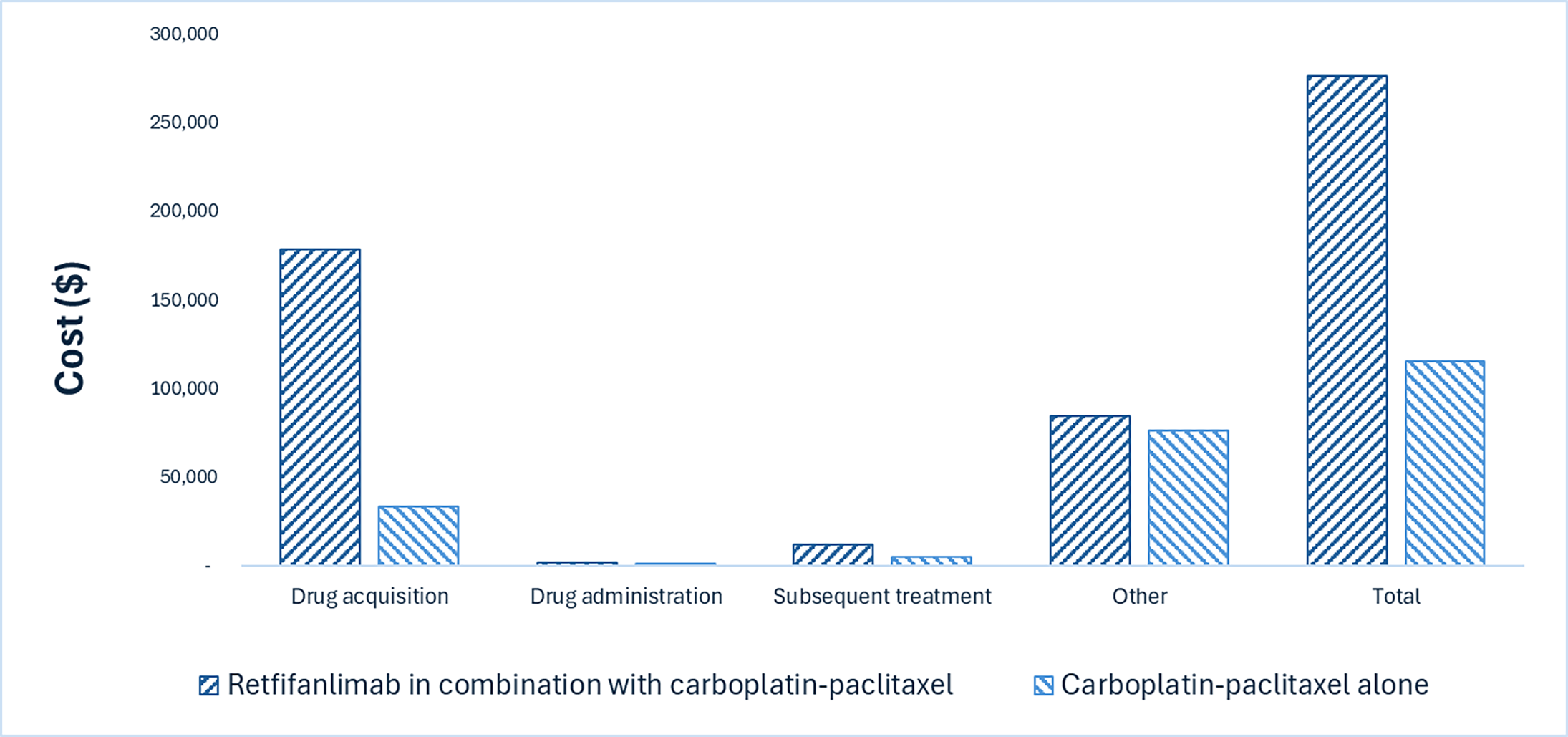
vs. = versus.
Note: “Other” includes costs associated with adverse events, resource use, and end of life.
Impact on Health
Relative to carboplatin and paclitaxel alone, retifanlimab in combination with carboplatin and paclitaxel is predicted to increase the amount of time a patient remains in both the progression-free and progressed health states by approximately 0.9 years and 0.6 years, respectively, and to extend OS by 1.51 years. Considering the impact of treatment on both quality and length of life, retifanlimab in combination with carboplatin and paclitaxel is predicted to result in 1.16 additional QALYs per patient compared to carboplatin and paclitaxel alone (refer to Figure 2). Approximately 43% of the predicted incremental benefit was accrued on the basis of extrapolation.
Figure 2: Impact of Retifanlimab in Combination With Carboplatin and Paclitaxel Versus Carboplatin and Paclitaxel Alone on Patient Health
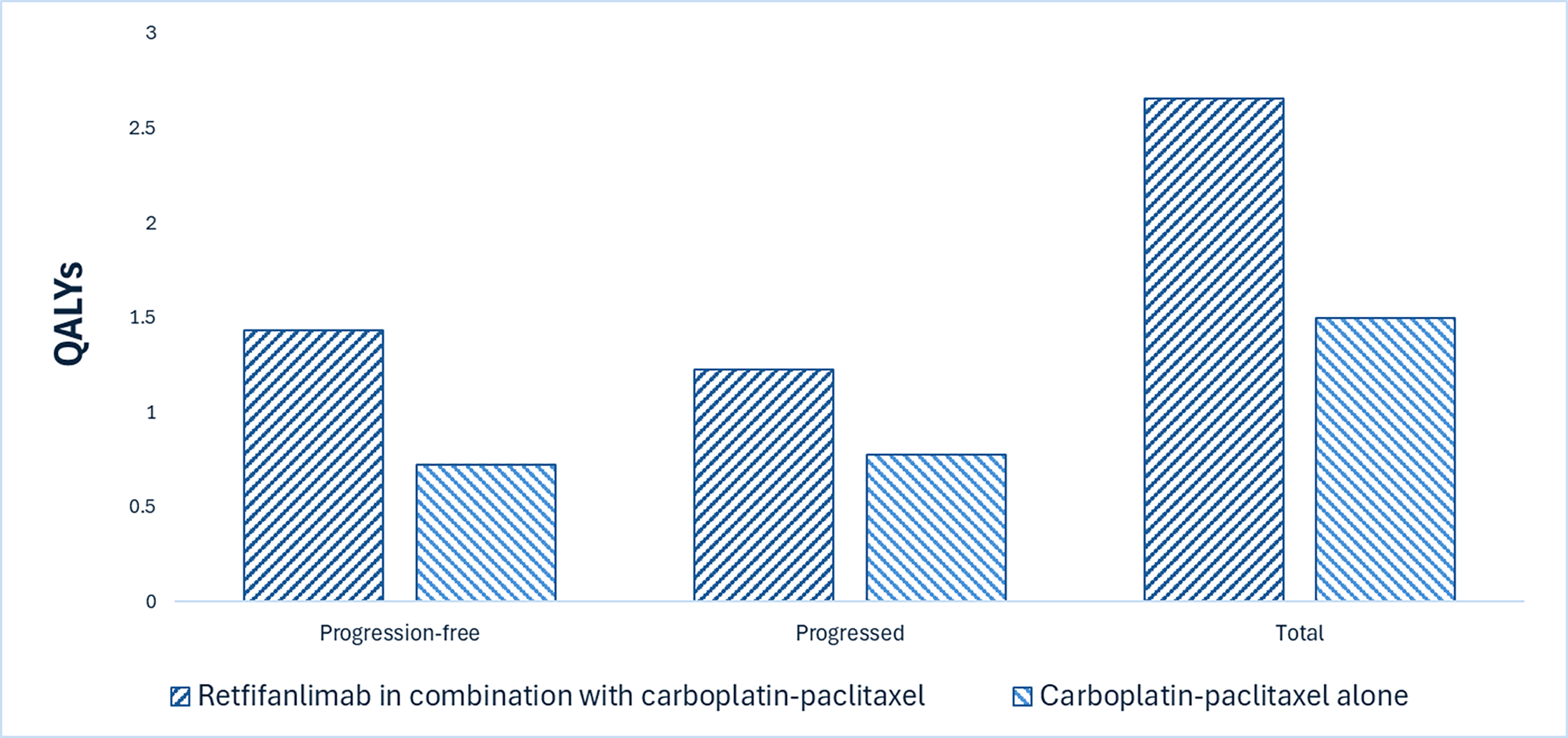
QALY = quality-adjusted life-year.
Overall Results
The results of the CDA-AMC base case suggest an ICER of $138,857 per QALY gained for retifanlimab in combination with carboplatin and paclitaxel compared to carboplatin and paclitaxel alone (refer to Table 6). Additional details on the CDA-AMC base case are available in the Supplemental Material document, Appendix 11.
Table 6: Summary of CDA-AMC Economic Evaluation Results
Drug | Total costs ($) | Total QALYs | Total LYs | ICER vs. carboplatin and paclitaxel alone ($/QALY) |
|---|---|---|---|---|
Carboplatin and paclitaxel alone | 115,225 | 1.50 | 1.98 | Reference |
Retifanlimab in combination with carboplatin and paclitaxel | 276,133 | 2.66 | 3.49 | 138,857 |
CDA-AMC = Canada’s Drug Agency; ICER = incremental cost-effectiveness ratio; LY = life-year; QALY = quality-adjusted life-year; vs. = versus.
Note: Publicly available list prices were used for all comparators.
Uncertainty and Sensitivity
Due to a lack of long-term data, the long-term OS benefit of retifanlimab in combination with carboplatin and paclitaxel is uncertain. The impact of uncertainty on long-term OS for patients with metastatic or inoperable locally recurrent SCAC was explored in a scenario analysis. CDA-AMC used Weibull OS extrapolations for both treatment arms because the resulting hazard functions were considered more clinically plausible over time. This resulted in a more plausible postprogression survival benefit for retifanlimab in combination with carboplatin and paclitaxel; however, this approach may misestimate long-term survival for both treatments. To explore this uncertainty, a scenario analysis using exponential extrapolations, which assumes constant hazards and predicts greater long-term survival (e.g., 18% versus 5% OS for carboplatin and paclitaxel at 5 years), was conducted. It resulted in an ICER of $131,445 per QALY gained.
Summary of the Budget Impact
The sponsor submitted a budget impact analysis to estimate the 3-year (i.e., June 2027 to May 2030) budget impact of reimbursing retifanlimab for use in combination with carboplatin and paclitaxel for use in the Health Canada–indicated population. The sponsor assumed that the payer would be CDA-AMC–participating public drug plans, and it derived the size of the eligible population using an epidemiologic approach. The price of retifanlimab was aligned with the price included in the sponsor’s economic evaluation, while the prices of comparators were based on the publicly available list prices. Additional information pertaining to the sponsor’s submission is provided in the Supplemental Material document, Appendix 12.
CDA-AMC identified an issue with the sponsor’s estimated budget impact. To derive the CDA-AMC base case, CDA-AMC made changes to the model parameters and assumptions in consultation with clinical experts (refer to the Supplemental Material document, Appendix 12). CDA-AMC estimated that 633 patients would be eligible for retifanlimab in combination with carboplatin and paclitaxel over a 3-year period (year 1 = 206; year 2 = 211; year 3 = 216), of whom 528 could be expected to receive retifanlimab in combination with carboplatin and paclitaxel (year 1 = 154; year 2 = 179; year 3 = 194). The estimated incremental budget impact of reimbursing retifanlimab in combination with carboplatin and paclitaxel is predicted to be approximately $76,443,334 over the first 3 years, entirely attributable to the expenditure on retifanlimab. The actual budget impact will depend on the number of people who are eligible for and receive treatment.
Conclusion
Based on the CDA-AMC base case, retifanlimab in combination with carboplatin and paclitaxel would be considered cost-effective at the submitted price if the public health care system was willing to pay at least $138,857 for each additional QALY gained. If the public health care system is not willing to pay that amount, a price reduction should be considered (refer to Figure 3; full details of the impacts of price reductions on cost-effectiveness are presented in the Supplemental Material document, Appendix 11). The estimated cost-effectiveness of retifanlimab in combination with carboplatin and paclitaxel compared to carboplatin and paclitaxel alone is uncertain due to uncertainty regarding the long-term OS assumptions.
The budget impact of reimbursing retifanlimab in combination with carboplatin and paclitaxel to the public drug plans in the first 3 years is estimated to be approximately $76 million. The 3-year expenditure on retifanlimab (i.e., not accounting for current expenditures on comparators) is estimated to be $76 million.
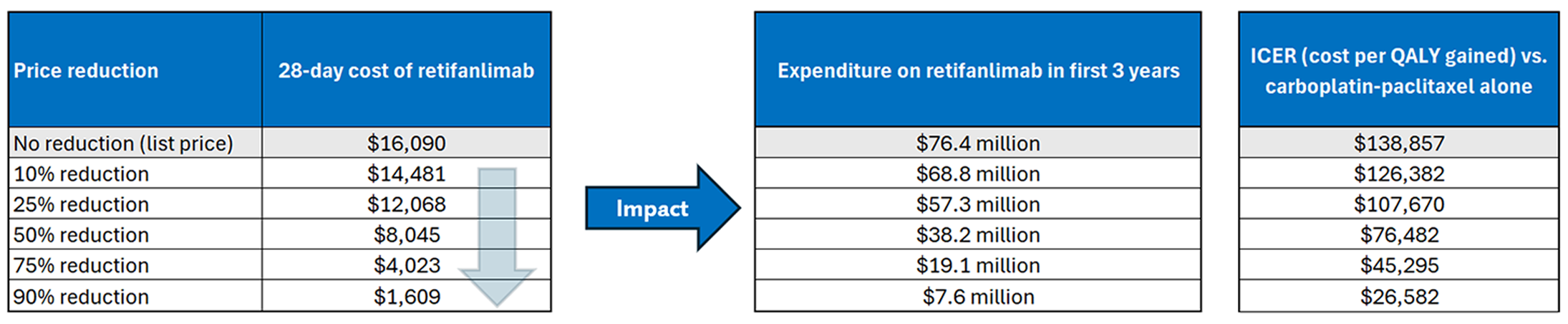
References
1.National Comprehensive Cancer Network. NCCN Guidelines Version 2.2025 Anal Carcinoma. 2025. Accessed January 17, 2025.
2.Rao S, Guren MG, Khan K, et al. Anal cancer: ESMO Clinical Practice Guidelines for diagnosis, treatment and follow-up. Ann Oncol. 2021;32(9):1087-1100. doi:10.1016/j.annonc.2021.06.015 PubMed
3.Dhawan N, Afzal MZ, Amin M. Immunotherapy in Anal Cancer. Curr Oncol. 2023;30(5):4538-4550. doi:10.3390/curroncol30050343 PubMed
4.National Comprehensive Cancer Network. NCCN Clinical Practice Guidelines in Oncology (NCCN Guidelines®) - Anal Carcinoma - Version 2.2025. 2025. Accessed February 6, 2025. https://www.nccn.org/professionals/physician_gls/pdf/anal.pdf
5.Canadian Cancer Society. Anal cancer statistics. Accessed December 2024. https://cancer.ca/en/cancer-information/cancer-types/anal/statistics#:~:text=Incidence%20and%20mortality,were%20diagnosed%20with%20anal%20cancer
6.Gunderson LL, Winter KA, Ajani JA, et al. Long-term update of US GI intergroup RTOG 98-11 phase III trial for anal carcinoma: survival, relapse, and colostomy failure with concurrent chemoradiation involving fluorouracil/mitomycin versus fluorouracil/cisplatin. J Clin Oncol. 2012;30(35):4344-51. doi:10.1200/JCO.2012.43.8085 PubMed
7.Pedersen ESL, Verschoor D, Segelov E. Incidence and burden of anal cancer-time to fight the growing disparities. ESMO Gastrointestinal Oncology. 2025;doi:10.1016/j.esmogo.2025.100147
8.Pessia B, Romano L, Giuliani A, Lazzarin G, Carlei F, Schietroma M. Squamous cell anal cancer: Management and therapeutic options. Annals of Medicine and Surgery. 2020;55:36-46. PubMed
9.National Cancer Institute. Cancer Stat Facts: Anal Cancer. 2025. Accessed September 24, 2025. https://seer.cancer.gov/statfacts/html/anus.html
10.Cattelan L, Ghazawi FM, Le M, et al. Investigating epidemiologic trends and the geographic distribution of patients with anal squamous cell carcinoma throughout Canada. Curr Oncol. 2020;27(3):e294-e306. doi:10.3747/co.27.6061 PubMed
11.Alberta Health Services. Anal Canal Cancer. 2025. Accessed May 26, 2025. https://www.albertahealthservices.ca/assets/info/hp/cancer/if-hp-cancer-guide-gi001-anal-canal.pdf
12.B. C. Cancer. Cancer Management Manual: Anus. http://www.bccancer.bc.ca/health-professionals/clinical-resources/cancer-management-manual/gastrointestinal/anus#Follow-Up-anus
13.Canadian Cancer Society. Treatments for recurrent anal cancer. Updated July 2023. Accessed May 26, 2025. https://cancer.ca/en/cancer-information/cancer-types/anal/treatment/recurrent
14.B. C. Cancer. Systemic Therapy Update. 2021. https://www.bccancer.bc.ca/systemic-therapy-site/Documents/2021%20ST%20Updates/ST%20Update_Jan%202021.pdf
15.Gotfrit J, Goodwin R, Asmis T, et al. Eastern Canadian Gastrointestinal Cancer Consensus Conference 2019. Curr Oncol. 2021;28(3):1988-2006. doi:10.3390/curroncol28030185 PubMed
16.Cancer Care Ontario. CRBPPACL Regimen. 2020. Accessed August 2020.
17.Rao S, Sclafani F, Eng C, et al. International Rare Cancers Initiative Multicenter Randomized Phase II Trial of Cisplatin and Fluorouracil Versus Carboplatin and Paclitaxel in Advanced Anal Cancer: InterAAct. J Clin Oncol. 2020;38(22):2510-2518. doi:10.1200/JCO.19.03266 PubMed
18.National Comprehensive Cancer Network. NCCN Guidelines Version 1.2026 Anal Carcinoma. 2026. Accessed February 2026.
19.Incyte. Clinical Study Protocol: A Phase 3 Global, Multicenter, Double-Blind Randomized Study of Carboplatin-Paclitaxel With INCMGA00012 or Placebo in Participants With Inoperable Locally Recurrent or Metastatic Squamous Cell Carcinoma of the Anal Canal Not Previously Treated With Systemic Chemotherapy (POD1UM-303/InterAACT 2). 2025.
20.Incyte. Sponsor Summary of Clinical Evidence. 2025.
21.Incyte Corporation. Clinical Study Report: INCMGA 0012-303. A Phase 3 Global, Multicenter, Double-Blind Randomized Study of Carboplatin-Paclitaxel With INCMGA00012 or Placebo in Participants With Inoperable Locally Recurrent or Metastatic Squamous Cell Carcinoma of the Anal Canal Not Previously Treated With Systemic Chemotherapy (POD1UM-303/InterAACT 2) [internal sponsor's report]. October 17, 2024.
22.Welten VM, Fields AC, Malizia RA, et al. The Association Between Sex and Survival for Anal Squamous Cell Carcinoma. J Surg Res. 2021;268:474-484. doi:10.1016/j.jss.2021.07.015 PubMed
23.Klein SL, Morgan R. The impact of sex and gender on immunotherapy outcomes. Biol Sex Differ. 2020;11(1):24. doi:10.1186/s13293-020-00301-y PubMed
24.Kahan BC, Hindley J, Edwards M, Cro S, Morris TP. The estimands framework: a primer on the ICH E9(R1) addendum. BMJ. 2024;384:e076316. doi:10.1136/bmj-2023-076316 PubMed
25.Musoro JZ, Coens C, Sprangers MAG, et al. Minimally important differences for interpreting EORTC QLQ-C30 change scores over time: A synthesis across 21 clinical trials involving nine different cancer types. Eur J Cancer. 2023;188:171-182. doi:10.1016/j.ejca.2023.04.027 PubMed
26.Latimer NR, Abrams KR, Lambert PC, Morden JP, Crowther MJ. Assessing methods for dealing with treatment switching in clinical trials: A follow-up simulation study. Stat Methods Med Res. 2018;27(3):765-784. doi:10.1177/0962280216642264 PubMed
27.Anal Cancer Foundation. What is HPV Cancer? Symptoms, Causes & Treatment. Accessed February 2024. https://www.analcancerfoundation.org/what-is-anal-cancer/hpv-cancer/
28.Silva Dalla Libera L, Almeida de Carvalho KP, Enocencio Porto Ramos J, et al. Human Papillomavirus and Anal Cancer: Prevalence, Genotype Distribution, and Prognosis Aspects from Midwestern Region of Brazil. J Oncol. 2019;2019:6018269. doi:10.1155/2019/6018269 PubMed
ISSN: 2563-6596
Canada’s Drug Agency (CDA-AMC) is a pan-Canadian health organization. Created and funded by Canada’s federal, provincial, and territorial governments, we’re responsible for driving better coordination, alignment, and public value within Canada’s drug and health technology landscape. We provide Canada’s health system leaders with independent evidence and advice so they can make informed drug, health technology, and health system decisions, and we collaborate with national and international partners to enhance our collective impact.
Disclaimer: CDA-AMC has taken care to ensure that the information in this document was accurate, complete, and up to date when it was published, but does not make any guarantee to that effect. Your use of this information is subject to this disclaimer and the Terms of Use at cda-amc.ca.
The information in this document is made available for informational and educational purposes only and should not be used as a substitute for professional medical advice, the application of clinical judgment in respect of the care of a particular patient, or other professional judgments in any decision-making process. You assume full responsibility for the use of the information and rely on it at your own risk.
CDA-AMC does not endorse any information, drugs, therapies, treatments, products, processes, or services. The views and opinions of third parties published in this document do not necessarily reflect those of CDA-AMC. The copyright and other intellectual property rights in this document are owned by the Canadian Agency for Drugs and Technologies in Health (operating as CDA-AMC) and its licensors.
Questions or requests for information about this report can be directed to Requests@CDA-AMC.ca.