Drugs, Health Technologies, Health Systems
Reimbursement Recommendation
Belzutifan (Welireg)
Indication: For the treatment of adult and pediatric (12 years and older) patients with locally advanced, unresectable, or metastatic pheochromocytoma or paraganglioma
Sponsor: Merck Canada Inc.
Final recommendation: Reimburse with conditions
Summary
What Is the Reimbursement Recommendation for Welireg?
Canada’s Drug Agency (CDA-AMC) recommends that Welireg be reimbursed by public drug plans for the treatment of locally advanced, unresectable, or metastatic pheochromocytoma or paraganglioma (PPGL), if certain conditions are met.
Why Did CDA-AMC Recommend Reimbursement?
The pan-Canadian Oncology Drug Review Expert Review Committee (pERC) noted uncertainty in the clinical evidence for Welireg. However, pERC found the level of uncertainty in the clinical value of Welireg compared with relevant comparators in adult and pediatric (aged 12 years and older) patients with locally advanced, unresectable, or metastatic PPGL to be acceptable when the committee also considered the significant unmet clinical need associated with the rarity, heterogeneity, and severity of the condition. Given that Welireg is expected to be an alternative treatment to sunitinib; cyclophosphamide, vincristine, and dacarbazine (CVD); and temozolomide, acceptable clinical value refers to at least comparable value versus these relevant comparators.
A clinical trial suggested that treatment with Welireg may help patients with locally advanced, unresectable, or metastatic PPGL live longer, delay disease progression, and keep their cancer under control. No major safety concerns were identified, and pERC considered the side effects of Welireg to be manageable. However, because the study did not compare Welireg with another treatment and both patients and researchers knew which treatment was being given, it is not possible to determine with certainty whether the observed benefits or harms were due to Welireg or how it compares with other available treatment options. An indirect comparison suggested that Welireg may help patients live longer and delay disease progression compared with sunitinib; however, the results were highly uncertain because of important methodological limitations in the available evidence. In addition, no information was available to compare quality of life or side effects between these treatments, and no evidence was available to compare Welireg with CVD or temozolomide. Ultimately, pERC concluded that Welireg addresses a significant unmet clinical need with an acceptable level of certainty in clinical value.
Which Patients Are Eligible for Coverage?
Welireg should only be covered for patients aged 12 years or older who have a confirmed diagnosis of locally advanced, unresectable, or metastatic PPGL. In addition, patients should be in relatively good health.
What Are the Conditions for Reimbursement?
Welireg should only be reimbursed if initiated by a specialist experienced in treating advanced or metastatic PPGL. Ongoing prescribing, follow-up, and monitoring may be provided by local clinicians with support from the specialist. Reimbursement for Welireg should stop if it no longer provides clinical benefit or if it causes unacceptable side effects. Welireg should not be reimbursed when used in combination with other cancer treatments. Welireg should only be reimbursed if the cost of Welireg is reduced. Important budget impact considerations must be addressed for health systems to be able to adopt Welireg.
Review Background
Disease background: PPGLs are uncommon neuroendocrine tumours arising from catecholamine-producing chromaffin cells, with pheochromocytomas occurring in the adrenal medulla and paragangliomas in autonomic ganglia. Excess catecholamine secretion can cause severe cardiovascular, metabolic, and gastrointestinal complications, including sustained or paroxysmal hypertension, arrhythmias, heart failure, strokes, and life-threatening catecholamine crises. Based on data from Alberta, PPGLs have an annual incidence of 0.2 to 0.8 per 100,000 (0.66 per 100,000 person-years). The global prevalence was estimated to be 1 in 6,500 to 1 in 2,500. Approximately 30% to 40% of PPGLs are hereditary, and 10% to 15% of pheochromocytomas may be malignant. Metastatic disease develops in approximately 20% of patients, with 11% presenting with metastases at diagnosis and others progressing over time. Common metastatic sites include lymph nodes, liver, bone, and lungs. Patients with metastatic PPGL experience higher recurrence rates and substantial morbidity due to catecholamine-driven hypertension and systemic complications. A 5-year survival rate ranging from 40% to 77% and progression-free survival (PFS) ranging from 4 to 36 months following various therapeutic modalities have been described.
Indication and reimbursement request: Belzutifan (Welireg) has been approved by Health Canada for the treatment of adult and pediatric (aged 12 years and older) patients with locally advanced, unresectable, or metastatic PPGL. The sponsor is seeking reimbursement for this patient population.
Drug under review: Belzutifan is a hypoxia-inducible factor 2 alpha inhibitor. The recommended dose for adults is 120 mg taken orally once daily. For pediatric patients aged 12 years and older, the dose is based on body weight: 120 mg once daily for patients weighing 40 kg or greater and 80 mg once daily for patients weighing less than 40 kg.
Treatment costs: At the submitted price of $213.33 per 40 mg tablet, the per 28-day cycle cost of belzutifan is expected to be $17,920 per patient, based on the Health Canada–recommended dosage.
Highlights of Input From Interested Parties
The patient group (Canadian Neuroendocrine Tumour Society) noted the following regarding impacts of the disease, unmet needs, and important outcomes:
Patients reported a substantial and ongoing burden on daily functioning and overall quality of life while living with PPGL. They described a combination of physical symptoms, psychological distress, and treatment-related effects that significantly limit independence, employment, and social participation. The most impactful symptoms reported were fatigue, anxiety related to disease progression, cognitive difficulties, and episodic “spells” (e.g., palpitations, sweating, and hypertensive episodes). There is a cumulative burden of ongoing monitoring, frequent medical appointments, and travel to specialized centres, which further disrupts daily life and contributes to emotional and logistical strain.
Patients identified an unmet need for treatments that provide more durable disease control, offer better tolerability and fewer long-term side effects, and maintain quality of life and functional independence. There is also an unmet need for more consistent and equitable access to specialized treatments across Canada.
Patients noted that preservation of long-term quality of life and extending survival, followed by tumour control or shrinkage, are the most important factors when considering treatment options. They indicated that they are willing to accept some level of treatment-related side effects if therapies can meaningfully prolong survival and maintain independence and daily functioning.
Current PPGL treatment pathways are associated with significant logistical, financial, and social burdens. Treatments that can be administered more conveniently with fewer disruptions to daily life may help improve patient autonomy, reduce caregiver burden, and support better overall quality of life.
The clinician group (Ontario Health [Cancer Care Ontario] Drug Advisory Committee — Provincial Drug Reimbursement Programs and the Systemic Treatment Program) and the clinical experts consulted by CDA-AMC noted the following regarding unmet needs arising from the disease and place in therapy for the drug under review:
The clinical experts and the clinician group indicated that there is a lack of effective treatment options; there is limited evidence for the efficacy and safety of existing treatments for the indication under review, and most of them are used off-label. Despite available treatments, metastatic PPGLs remain incurable for all metastatic patients, and systemic therapies primarily aim to control disease and symptoms. They also noted that access to treatments presents significant inequities due to the lack of uniform access to clinicians with expertise in PPGL and treatment options across regions.
Many patients eventually develop resistance to radioligand therapy or metaiodobenzylguanidine (MIBG), and evidence guiding optimal sequencing is limited. Treatment-related toxicities such as bone marrow suppression, renal impairment, and tyrosine kinase inhibitor–associated hypertension and fatigue can restrict long-term use and affect quality of life, particularly in younger patients. There is an unmet need for therapies that have more durable treatment effects and are better tolerated, for effective treatment options after radioligand failure, and for improved biomarker-driven treatment selection.
The clinical experts indicated that the anticipated place in therapy of belzutifan is as first- or later-line therapy in patients with locally advanced, unresectable, or metastatic PPGL. They also indicated that patients should be eligible for belzutifan treatment regardless of whether prior therapy failed in the locally advanced, unresectable, or metastatic setting. PPGL is a heterogeneous disease. Although belzutifan would likely be used early in selected patients, treatment sequencing would be individualized based on rate of disease progression, symptom burden, somatostatin receptor and/or MIBG avidity, genotype, need for response, toxicity profile, and availability of alternatives.
The participating public drug programs provided input regarding considerations for initiation, renewal, and discontinuation of therapy.

Note: The perspectives shared by people with lived experience who present to the committee reflect their individual experiences and are not necessarily representative of all people with the same condition or course of treatment. Their insights provide valuable context about what a patient, support person, or caregiver might go through with this condition or treatment, helping to inform the committee’s deliberations. These narratives complement other forms of evidence and input and should be considered as 1 element contributing to a broader understanding of the condition and treatment under review.
Recommendation
With a vote of 16 in favour to 0 against, pERC recommends that belzutifan be reimbursed for the treatment of adult and pediatric (aged 12 years and older) patients with locally advanced, unresectable, or metastatic PPGL, only if the conditions listed in Table 1 are met.
Table 1: Reimbursement Conditions and Reasons
Reimbursement condition | Reason | Implementation guidance |
|---|---|---|
Initiation | ||
1. Treatment should only be reimbursed when initiated in patients who meet all of the following criteria: 1.1. aged 12 years or older 1.2. have histologically confirmed locally advanced, unresectable, or metastatic pheochromocytomas or paragangliomas. | Evidence from cohort A1 of the LITESPARK-015 study demonstrated that treatment with belzutifan resulted in clinical benefits in patients with locally advanced, unresectable, or metastatic pheochromocytomas or paragangliomas. | Although patients aged 12 years and older were eligible for the LITESPARK‑015 study, no patients aged 12 to less than 18 years were enrolled, and patients with locally advanced pheochromocytomas or paragangliomas were underrepresented (2.8%). The clinical experts noted that, despite this limited representation, it would be reasonable to reimburse belzutifan for the requested reimbursement population, including patients aged 12 to younger than 18 years and those with locally advanced pheochromocytomas or paragangliomas. pERC noted that belzutifan should be reimbursed for eligible patients with locally advanced, unresectable, or metastatic disease regardless of prior lines of systemic therapy, which is aligned with the pivotal trial evidence and clinical expert input. Accordingly, patients who have not received any systemic or radionuclide therapy for advanced or metastatic disease should be eligible to receive belzutifan. Patients receiving systemic or radionuclide therapy should also be eligible to receive belzutifan after other therapies, including a switch to belzutifan if they experience disease progression or unacceptable toxicity with their existing treatment. |
2. Patients should have good performance status. | Patients enrolled in the LITESPARK-015 study had an ECOG performance status score of 0 or 1. | pERC agreed with the clinical experts that reimbursement of belzutifan in patients with an ECOG performance status score of greater than 1 may be at the discretion of the treating clinician. |
Discontinuation | ||
3. Reimbursement of belzutifan should be discontinued upon loss of clinical benefit or unacceptable toxicity. | Patients in the LITESPARK-015 study discontinued treatment upon disease progression or unacceptable toxicity. Patients were permitted to continue belzutifan beyond radiographic progression provided they were clinically stable. | pERC noted that the decision regarding whether a patient is no longer deriving clinical benefit from treatment should be left to the discretion of the treating clinician. |
Prescribing | ||
4. Belzutifan should be reimbursed when initiated by a clinician with expertise in treating advanced or metastatic pheochromocytomas or paragangliomas. Ongoing prescribing, follow-up, and monitoring may be provided through a shared-care approach involving local clinicians with specialist oversight. | Belzutifan should be prescribed only for patients for whom it is appropriate and if adverse effects are managed in an optimal and timely manner. | — |
5. Belzutifan should not be reimbursed when administered in combination with other anticancer drugs. | There are no data supporting the efficacy and safety of belzutifan when used in combination with other anticancer drugs for pheochromocytomas or paragangliomas. | — |
Pricing | ||
6. A reduction in price. | Using the CDA-AMC base-case analysis, the ICER for belzutifan was $335,936 per QALY gained when compared with sunitinib in the indicated population. A band 4a price reduction would be required to achieve cost-effectiveness at a $50,000 per QALY threshold. A band 3a price reduction would be required to achieve cost-effectiveness at a $100,000 per QALY threshold. Price reductions for any given willingness-to-pay threshold are available in the CDA-AMC main report and Supplemental Material document. | The CDA-AMC analysis is based on public list prices for all treatments. Further price reductions may be required if there are price arrangements (discounts) currently in place for any treatment included in the economic analysis. Likewise, further price reductions may be required to address the economic feasibility of adoption. |
Feasibility of adoption | ||
7. The economic feasibility of adoption of belzutifan must be addressed. | At the submitted price, the magnitude of uncertainty in the budget impact must be addressed to ensure the feasibility of adoption, given the difference between the sponsor’s estimate and the CDA-AMC estimate. | — |
CDA-AMC = Canada’s Drug Agency; ECOG = Eastern Cooperative Oncology Group; ICER = incremental cost-effectiveness ratio; pERC = pan‑Canadian Oncology Drug Review Expert Review Committee; QALY = quality-adjusted life-year.
aFor the statement regarding the size of the price reduction required, band 1 = 1% to 24%, band 2 = 25% to 49%, band 3 = 50% to 74%, and band 4 = 75% or greater.
Rationale for the Recommendation
Clinical Value
Based on the totality of the submitted clinical evidence, pERC concluded that there is potential benefit in clinically meaningful outcomes, including overall survival (OS), PFS, and disease control rate, albeit with considerable uncertainty. However, in the context of substantial unmet clinical need given the rarity, heterogeneity, and severity of the condition, pERC considered this degree of uncertainty regarding the clinical value to be acceptable in supporting a positive funding recommendation. Given that belzutifan is expected to be an alternative to appropriate comparators (sunitinib, CVD, and temozolomide) in adult and pediatric (aged 12 years and older) patients with locally advanced, unresectable, or metastatic PPGL, acceptable clinical value refers to at least comparable value versus appropriate comparators.
Evidence from 1 phase II, noncomparative, open-label study (LITESPARK-015, cohort 1A) provided evidence for the use of belzutifan monotherapy in patients with locally advanced, unresectable, or metastatic PPGL. Based on the Grading of Recommendations Assessment, Development and Evaluation (GRADE) assessment, the evidence from the LITESPARK-015 study was of very low certainty regarding the effects of belzutifan on OS, PFS, objective response rate (ORR), duration of response (DOR), health-related quality of life (HRQoL), and serious treatment-emergent adverse events compared with any comparator at 72 weeks. This very low certainty was due to the absence of a comparator group and insufficient follow-up to estimate median OS. However, the clinical experts consulted by CDA-AMC indicated that, based on their experience treating advanced or metastatic PPGL and the natural history of the disease, they considered the PFS, ORR, and DOR results observed with belzutifan to be clinically meaningful. The disease control rate also suggested that a sizable proportion of patients experienced disease stabilization in addition to those who achieved an objective response. Clinical experts highlighted that a clinically meaningful response in PPGL includes durable tumour control. There were no notable safety signals identified, and pERC considered the safety profile of belzutifan to be manageable. No causal conclusions can be drawn about belzutifan’s tolerability or its relative risk of harm compared with other treatment options because the trial was open-label and lacked a comparator group.
Based on 1 sponsor-submitted unanchored matching-adjusted indirect comparison of belzutifan versus sunitinib in adults with metastatic PPGL, belzutifan may be associated with longer OS and PFS than sunitinib. However, pERC noted that due to methodological limitations, including between-trial heterogeneity, imprecision, and a very small effective sample size, the relative efficacy of belzutifan versus sunitinib in OS and PFS is very uncertain. In addition, HRQoL and harms outcomes were not assessed for this comparison and, therefore, their relative effects are unknown. pERC was also unable to draw conclusions regarding the comparative efficacy and safety between belzutifan, CVD, and temozolomide because no direct or indirect evidence was submitted.
Patients identified a need for treatments that extend survival, provide more durable disease control, offer better tolerability and fewer long-term side effects, and maintain quality of life and functional independence. pERC concluded that belzutifan treatment may meet some of these needs, including providing durable disease control and having a manageable safety profile.
Further information on the committee’s discussion around clinical value is provided in the Summary of Deliberation section.
Considering Significant Unmet Clinical Need
Locally advanced or metastatic PPGL is a rare and heterogeneous disease that is associated with substantial morbidity and a low survival rate despite available treatments, and access to certain treatment options (e.g., PRRT, MIBG) is limited across jurisdictions. pERC considered there to be significant unmet need as described in the recommendation framework in the Procedures for Reimbursement Reviews. pERC concluded that belzutifan addresses the unmet clinical need with an acceptable level of certainty in clinical value.
Further information on the committee’s discussion around unmet clinical need is provided in the Summary of Deliberation section.
Developing the Recommendation
Due to the uncertainty in clinical value, pERC could not recommend whether to reimburse belzutifan or not based on clinical value alone. Therefore, they also considered whether belzutifan addresses a significant unmet clinical need. pERC concluded that belzutifan addresses a significant unmet clinical need with an acceptable level of certainty. Based on the preceding considerations, pERC recommended that belzutifan be reimbursed. As part of the deliberation on whether to recommend reimbursement or not, the committee also considered unmet nonclinical need and health inequity. Information on this discussion is provided in the Distinct Social and Ethical Considerations domain in the Summary of Deliberation section.
Because pERC recommended that belzutifan be reimbursed, the committee also deliberated on whether reimbursement conditions should be added to address important economic considerations, health system impacts, or social and ethical considerations, or to ensure clinical value is realized. The resulting reimbursement conditions, with accompanying reasons and implementation guidance, are stated in Table 1.
Summary of Deliberation
pERC considered all domains of value of the deliberative framework before developing its recommendation: clinical value, unmet clinical need, distinct social and ethical considerations, economic considerations, and impacts on health systems. For further information on the domains of value, refer to Expert Committee Deliberation at Canada’s Drug Agency.
The committee considered the following key discussion points, organized by the 5 domains of value.
Clinical Value
Appropriate comparators: pERC considered the appropriate comparators for belzutifan in the Health Canada–indicated population to be sunitinib, CVD, and temozolomide.
Efficacy of belzutifan: pERC discussed 1 phase II, noncomparative, open-label study (LITESPARK-015, cohort 1A) evaluating the efficacy and safety of belzutifan monotherapy in patients with locally advanced, unresectable, or metastatic PPGL. The study showed that, as of interim analysis 4 (data cut-off: October 23, 2024), OS data were limited by insufficient follow-up because the median OS and its associated 95% confidence interval (CI) had not yet been reached. Median PFS was 22.3 months; however, the upper bound of the 95% confidence interval was not reached (95% CI, 13.8 months to not reached). The estimated probability of remaining progression-free at 12 and 24 months was 66.2% (95% CI, 53.7% to 76.1%) and 49.1% (95% CI, 36.6% to 60.5%), respectively. The ORR was 26.4% (95% CI, 16.7% to 38.1%), with a median time to response of 11.0 months (range, 1.7 to 24.8 months). The probability of maintaining an objective response at 12 and 24 months was 64% (95% CI, not reported) and 28% (95% CI, not reported), respectively. The disease control rate was 84.7% (95% CI, 74.3% to 92.1%). For HRQoL, as measured by the European Organisation for Research and Treatment of Cancer Quality of Life Questionnaire Core 30 (EORTC QLQ-C30), there was little to no change from baseline in the global health status score at 73 weeks, and the CI included the possibility of both benefit and harm (mean change: 0.57; 95% CI, −6.50 to 7.64).
Clinical importance of treatment effects: Based on input from patient and clinician groups, and the clinical experts consulted for this review, the primary treatment goals for patients with advanced or metastatic PPGL are to prolong survival, reduce symptom burden, delay disease progression, minimize adverse effects, improve HRQoL, increase the ability to maintain employment, maintain independence, and reduce burden on caregivers. pERC noted that the evidence is highly uncertain due to the absence of a comparator group and insufficient follow-up to estimate median OS. Input from the clinical experts was that, based on their experience treating advanced or metastatic PPGL and the natural history of the disease, the observed PFS, ORR, and DOR with belzutifan appear clinically meaningful. pERC also noted that a sizable proportion of patients experienced stable disease, which is a meaningful treatment response according to the clinical experts and clinician group. pERC noted that the study showed little to no change in HRQoL from baseline to week 73, as measured by the EORTC QLQ-C30 global health status score. However, the results were subject to a serious risk of bias due to incomplete reporting and missing data (38%), which contributed to uncertainty in the HRQoL findings. pERC also discussed the common use of antihypertensive therapies to manage PPGL-related comorbidities and considered clinical expert input that a reduction in antihypertensive use may suggest improved HRQoL. pERC noted that, in the trial, a notable proportion of patients with stable disease or partial response had a reduction in the use of antihypertensive therapies. pERC also heard from the person with lived experience that they experienced improved functioning with belzutifan treatment, although this benefit was not demonstrated in the data from the overall population of the pivotal trial.
Certainty of the evidence: pERC discussed the GRADE assessment of selected outcomes from cohort 1A of the LITESPARK-015 study. The committee noted that the certainty of the evidence for OS, PFS, ORR, DOR, HRQoL at 73 weeks and serious treatment-emergent adverse events was very low. The certainty of evidence for these outcomes was downgraded due to the absence of a comparator group. Additional uncertainty arose from insufficient follow-up to estimate median OS and the inability to draw definitive conclusions regarding HRQoL because of the open-label study design and substantial missing data.
Efficacy versus sunitinib, CVD, and temozolomide: pERC discussed the sponsor-submitted unanchored matching-adjusted indirect comparison and noted that belzutifan may be associated with longer OS and PFS than sunitinib. However, the relative efficacy of belzutifan versus sunitinib remains highly uncertain due to methodological limitations, including between-trial heterogeneity, imprecision, and a very small effective sample size. HRQoL and harms outcomes were not assessed in this comparison; therefore, their relative effects are unknown. pERC noted that no evidence was submitted to inform the comparative efficacy and safety of belzutifan versus CVD or temozolomide because the sponsor-submitted feasibility assessment concluded that an indirect comparison was not feasible due to a lack of available data. The absence of these comparisons was considered an important evidence gap.
Harms: No direct or indirect comparative harm evidence for belzutifan versus the relevant comparators was submitted. pERC considered input from clinical experts that there are no notable safety concerns with belzutifan treatment and that the safety profile of belzutifan is generally manageable in clinical practice. pERC also discussed the management of anemia, a common adverse event with belzutifan treatment. The clinical experts noted that anemia can generally be managed with dose adjustment and other treatment modalities (e.g., blood transfusion) based on the treating physician’s judgment in clinical practice. Overall, pERC considered the safety profile of belzutifan to be acceptable. pERC also discussed the fact that the trial excluded patients with hypoxia (i.e., a pulse oximeter reading less than 92% at rest or requiring intermittent or chronic supplemental oxygen) and noted that hypoxia developed in 10 patients (13.9%), of whom 7 required supplemental oxygen. pERC questioned whether the trial eligibility criterion of a resting oxygen saturation of at least 92% should be incorporated into the reimbursement recommendation. Clinical experts noted that appropriate pulse oximetry monitoring would support patient management; however, a fixed oxygen saturation threshold should not be included as a reimbursement criterion.
Clinical value: Based on the submitted evidence and all the preceding considerations, pERC concluded that it is uncertain whether belzutifan demonstrates comparable or added clinical value versus sunitinib, CVD, and temozolomide in patients with locally advanced, unresectable, or metastatic PPGL.
Unmet Clinical Need
Input on unmet clinical need: Patient groups, clinician groups, and clinical experts consulted by CDA-AMC noted that there is a lack of effective treatment options. Despite available treatments, metastatic PPGL remains incurable for all patients with metastatic disease, and systemic therapies primarily aim to control disease and symptoms. They noted that there is a need for safe and effective additional treatment options that prolong survival, delay disease progression, improve symptoms, minimize adverse effects, and improve HRQoL.
Severity of the disease: The committee noted that PPGLs are rare neuroendocrine tumours and that patients with metastatic PPGL experience higher recurrence rates, substantial morbidity due to catecholamine-driven hypertension and systemic complications, and a low survival rate.
Availability of treatment options: pERC discussed the available treatment options for advanced or metastatic PPGL. The committee noted that current treatment options for adult and pediatric (aged 12 years and older) patients with locally advanced, unresectable, or metastatic PPGL include 31I-MIBG (high-specific-activity), 177Lu-DOTATATE (PRRT), and the CVD regimen; temozolomide and tyrosine kinase inhibitors (sunitinib); and local or palliative therapies (e.g., surgical debulking, ablation, and embolization techniques). The committee noted that sunitinib, CVD, and temozolomide were considered relevant treatments to compare with belzutifan when reviewing the clinical evidence. Sunitinib, temozolomide, and CVD are currently publicly reimbursed for the treatment of locally advanced, unresectable, or metastatic PPGL in at least 1 Canadian jurisdiction; however, none of these treatments have been approved by Health Canada for this indication. Evidence for CVD and temozolomide in the treatment of locally advanced or metastatic PPGL is limited. Most of the existing therapies are associated with significant off-target adverse effects (e.g., hypertension with sunitinib).
Challenges to evidence generation: pERC discussed the feasibility of conducting randomized controlled trials in this rare and heterogeneous disease setting. pERC noted that although rarity can pose challenges to evidence generation, the successful completion of the FIRSTMAPP trial in this population demonstrates that prospective randomized studies are feasible. However, the committee discussed the fact that future randomized controlled trials may be difficult to conduct because the observed treatment effects with belzutifan could limit clinical equipoise and may make randomization difficult to justify. pERC emphasized that this consideration is specific to the context of the current review and should not be interpreted as establishing a precedent that noncomparative evidence will be routinely accepted in this disease area.
Significant unmet clinical need: Based on the preceding considerations regarding the challenges with evidence generation associated with the rarity, heterogeneity, and severity of advanced or metastatic PPGL despite available treatment options, pERC considered there to be significant unmet need as described in the recommendation framework in the Procedures for Reimbursement Reviews. pERC concluded that belzutifan addresses the unmet clinical need with an acceptable level of certainty in clinical value.
Distinct Social and Ethical Considerations
Input on unmet nonclinical need: Patients and clinicians indicated that current PPGL treatment pathways are associated with substantial logistical, financial, and social burdens due to the need for travel to specialized centres that are often located in major urban areas, access to hospital-based therapies (e.g., surgery, radiation, or radionuclide treatment), frequent monitoring and treatment visits, and coordination across multiple providers. Patients may also incur substantial out-of-pocket expenses for travel, accommodation, and private imaging. Patients also reported that there is an emotional and psychological burden associated with current treatments. Treatments that can be administered more conveniently, with fewer disruptions to daily life, may help improve patient autonomy, reduce caregiver burden, and support better overall quality of life.
Equity and ethical considerations: pERC acknowledged that patients with advanced or metastatic PPGL may experience inequitable access to specialized care, genetic testing, and high-cost therapies, resulting in disparities both between patients and among members of the same family in hereditary cases. The rarity of advanced or metastatic PPGL and the uncertainty in the evidence base further highlight the need for equitable referral pathways, careful patient selection, and shared decision-making. Because many PPGLs are hereditary, identifying mutations such as SDHx or VHL has implications for family members, raising concerns regarding insurance eligibility and potential genetic discrimination. These considerations underscore the importance of comprehensive genetic counselling, informed consent, and clear communication regarding available protections and their limitations.
Potential for belzutifan to address unmet nonclinical need or health inequity: pERC acknowledged the unmet nonclinical needs and equity issues highlighted by patients and clinicians and discussed that belzutifan may help address some of these inequities by providing an additional orally administered treatment option with a manageable safety profile, which may reduce some travel and logistical burdens associated with accessing specialist care, specialized therapies, and safety monitoring.
Economic Considerations
Health impacts of belzutifan versus sunitinib: Belzutifan is predicted to be associated with a gain of 2.06 life-years compared to sunitinib and may result in a gain of 1.72 quality-adjusted life-years (QALYs) compared to sunitinib over a lifetime (40-year) horizon.
Cost of belzutifan versus relevant sunitinib: Belzutifan is predicted to be associated with higher costs to the health care system than sunitinib (incremental costs = $578,573) over a lifetime (40-year) horizon, primarily driven by increased drug acquisition costs.
Key findings of the economic evaluation: Based on the submitted evidence using the sponsor’s cost-utility analysis, the CDA-AMC base-case analysis estimated that the incremental cost-effectiveness ratio (ICER) for belzutifan for the treatment of adult and pediatric (aged 12 years and older) patients with locally advanced, unresectable, or metastatic PPGL was $335,936 per QALY gained when compared with sunitinib (Figure 1).
Figure 1: Estimate of the ICER Used by pERC to Inform the Price Condition
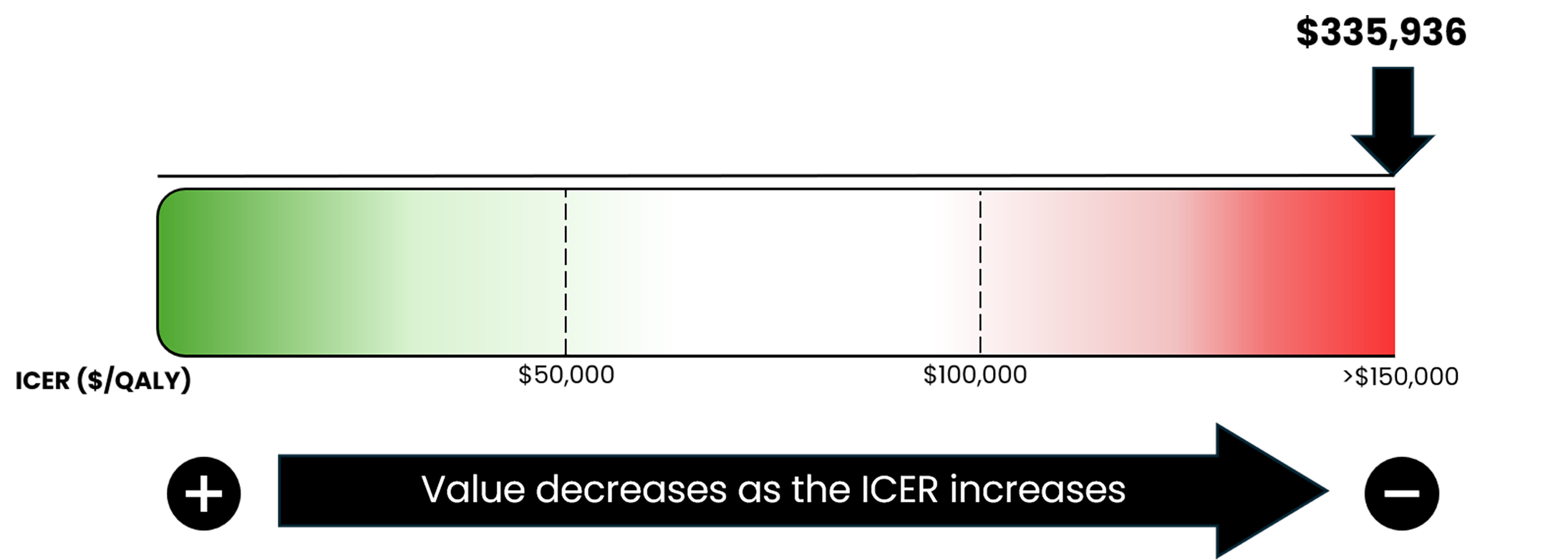
ICER = incremental cost-effectiveness ratio; pERC = pan-Canadian Oncology Drug Review Expert Review Committee; QALY = quality-adjusted life-year
Certainty of the evidence: The estimated ICER is highly sensitive to the magnitude of comparative efficacy and the long-term OS benefit of belzutifan.
Other considerations: Given limitations with the estimation of productivity costs, an analysis using a societal perspective was presented as a scenario analysis. In this analysis, the ICER decreased to $335,874 per QALY gained.
Impacts on Health Systems
Anticipated budget impact: CDA-AMC estimated that by year 3 of reimbursement, 137 patients would be eligible for belzutifan; of these, 85 patients are expected to receive belzutifan. The estimated incremental budget impact of reimbursing belzutifan is predicted to be approximately $24 million over the first 3 years, with an expected expenditure of $25 million on belzutifan. There is uncertainty in the anticipated budget impact because of the size of the patient population, the expected duration of therapy in patients responding to treatment, and the market uptake of belzutifan. These uncertainties may result in an underestimate of the budget impact. The pERC committee also discussed that although this is a rare disease, given that patients can continue treatment until progression, the impact of implementation may extend beyond the time horizon of the analysis. The magnitude of uncertainty in the budget impact must be addressed to ensure the feasibility of adoption, given the difference between the sponsor’s estimate and the CDA-AMC estimate.
Sources of Information Used by the Committee
To make its recommendation, the committee considered the following information (links to the full documents for the review can be found on the project landing page):
the CDA-AMC review of the clinical and pharmacoeconomic evidence submitted by the sponsor, as well as relevant ethical issues related to belzutifan (refer to the main report and Supplemental Material document)
the sponsor’s comments on the draft report and the CDA-AMC responses
patients' perspectives gathered by 1 patient group, the Canadian Neuroendocrine Tumour Society (refer to the Patient and Clinician Group Input document)
input from a person with lived experience who delivered a brief presentation and answered questions from the committee (refer to the Person With Lived Experience section earlier in this document)
input from 1 clinician group, the Ontario Health (Cancer Care Ontario) Drug Advisory Committee — Provincial Drug Reimbursement Programs and the Systemic Treatment Program (refer to the Patient and Clinician Group Input document)
input from public drug programs that participate in the reimbursement review process (refer to the Supplemental Material document)
input from 3 clinical experts with expertise in the management of PPGL consulted by CDA-AMC.
Special thanks: CDA-AMC extends our special thanks to the individuals who presented directly to pERC and to the patient and caregiver organizations representing and supporting the community of those living with PPGL, including the Canadian Neuroendocrine Tumour Society, Jackie Herman, Miranda Stavrides, and Sara Spearey.
General note: CDA-AMC makes every attempt to engage with people with lived experience as closely to the indication under review as possible; however, at times, CDA-AMC is unable to do so and instead engages with individuals with similar treatment journeys to ensure lived experience perspectives are included and considered in Reimbursement Reviews. CDA-AMC is fortunate to be able to engage with individuals who are willing to share their treatment journeys with pERC.
pERC Information
Members of the Committee
Dr. Catherine Moltzan (Chair), Dr. Kelvin Chan (Vice-Chair), Paul Agbulu, Dr. Phillip Blanchette, Dr. Matthew Cheung, Annette Cyr, Dr. Jennifer Fishman, Dr. Prafull Ghatage, Dr. Jason Hart, Terry Hawrysh, Dr. Yoo‑Joung Ko, Dr. Aly‑Khan Lalani, Amy Peasgood, Dr. Anca Prica, Dr. Michael Raphael, Dr. Adam Raymakers, Dr. Patricia Tang, Dr. Pierre Villeneuve, and Danica Wasney.
Meeting date: September 9, 2026
Regrets: Two expert committee members did not attend.
Conflicts of interest: One expert committee member did not participate due to considerations of conflict of interest.
ISSN: 2563-6596
Canada’s Drug Agency (CDA-AMC) is a pan-Canadian health organization. Created and funded by Canada’s federal, provincial, and territorial governments, we’re responsible for driving better coordination, alignment, and public value within Canada’s drug and health technology landscape. We provide Canada’s health system leaders with independent evidence and advice so they can make informed drug, health technology, and health system decisions, and we collaborate with national and international partners to enhance our collective impact.
Disclaimer: CDA-AMC has taken care to ensure that the information in this document was accurate, complete, and up to date when it was published, but does not make any guarantee to that effect. Your use of this information is subject to this disclaimer and the Terms of Use at cda-amc.ca.
The information in this document is made available for informational and educational purposes only and should not be used as a substitute for professional medical advice, the application of clinical judgment in respect of the care of a particular patient, or other professional judgments in any decision-making process. You assume full responsibility for the use of the information and rely on it at your own risk.
CDA-AMC does not endorse any information, drugs, therapies, treatments, products, processes, or services. The views and opinions of third parties published in this document do not necessarily reflect those of CDA-AMC. The copyright and other intellectual property rights in this document are owned by the Canadian Agency for Drugs and Technologies in Health (operating as CDA-AMC) and its licensors.
Questions or requests for information about this report can be directed to requests@cda-amc.ca.