Drugs, Health Technologies, Health Systems
Reimbursement Recommendation
Trastuzumab Deruxtecan (Enhertu)
Indication: For the treatment of adult patients with unresectable locally advanced or metastatic HER2-positive gastric or GEJ adenocarcinoma who have received a prior trastuzumab-based regimen
Sponsor: AstraZeneca Canada Inc.
Final recommendation: Reimburse with conditions
Summary
What Is the Reimbursement Recommendation for Enhertu?
Canada’s Drug Agency (CDA-AMC) recommends that Enhertu be reimbursed by public drug plans for second-line treatment of adult patients with unresectable locally advanced or metastatic HER2-positive gastric or gastroesophageal junction (GEJ) adenocarcinoma who have received a prior anti-HER2–based regimen, if certain conditions are met.
Why Did CDA-AMC Recommend Reimbursement?
CDA-AMC previously reviewed Enhertu for the second-line treatment of adult patients with unresectable locally advanced or metastatic HER2-positive gastric or GEJ adenocarcinoma who have received a prior anti-HER2–based regimen and issued a recommendation of time-limited reimbursement. This is a reassessment based on additional evidence to address the uncertainties in the original data. This recommendation supersedes the previous recommendation for this drug and indication dated April 23, 2025.
The pan-Canadian Oncology Drug Review Expert Review Committee (pERC) recommended that Enhertu continue to be reimbursed by the participating drug programs in accordance with the initiation, discontinuation, and prescribing criteria that were previously recommended. The sponsor has satisfied the reassessment requirements, and the time-limited condition has been removed from the recommendation.
Evidence from a clinical trial showed that Enhertu likely results in added clinical benefit in overall survival (OS) and may delay disease progression, compared with ramucirumab plus paclitaxel, in patients with locally advanced or metastatic HER2-positive gastric or GEJ adenocarcinoma who have received a prior anti-HER2–based regimen. Evidence from an indirect treatment comparison suggested that Enhertu may offer survival and disease control benefits compared to leucovorin (folinic acid), fluorouracil, and irinotecan (FOLFIRI), paclitaxel, irinotecan, and docetaxel. However, the clinical value was uncertain due to the methodological limitations of the indirect comparisons.
Enhertu meets some patient needs, given that it is an alternative treatment option that may offer benefits in disease control and life prolongation.
Which Patients Are Eligible for Coverage?
Enhertu should only be covered to treat adult patients with unresectable locally advanced or metastatic HER2-positive gastric or GEJ adenocarcinoma who have previously received anti-HER2–based treatment for locally advanced or metastatic disease, are in relatively good health, and do not have symptomatic spinal cord compression, clinically active central nervous system metastases, or current interstitial lung disease (ILD) or pneumonitis.
What Are the Conditions for Reimbursement?
Enhertu should only be reimbursed if it is prescribed by clinicians with experience and expertise in treating gastric or GEJ adenocarcinoma and if the cost of Enhertu is reduced.
Review Background
Disease background:
Gastric or GEJ cancer can arise in the stomach or at the connection between the stomach and the esophagus. Gastric or GEJ cancers are life-threatening and associated with significant symptoms associated with the gut, such as nausea, vomiting, pain, and difficulty eating.
The projected incident rate of gastric cancer in Canada was 8.3 per 100,000 adults in 2024, with an estimated 1,400 cases in females and 2,600 cases in males.
Indication and reimbursement request: Trastuzumab deruxtecan (Enhertu) has been approved by Health Canada for the treatment of adult patients with unresectable locally advanced or metastatic HER2-positive gastric or GEJ adenocarcinoma who have received a prior trastuzumab-based regimen. The sponsor is seeking reimbursement for the second-line treatment of adult patients with unresectable locally advanced or metastatic HER2-positive gastric or GEJ adenocarcinoma who have received a prior anti-HER2–based regimen.
Drug under review: Trastuzumab deruxtecan is a HER2-directed antibody-drug conjugate. It is available as powder for concentrate for solution for IV infusion (100 mg/vial), and the dosage recommended in the product monograph is 6.4 mg/kg administered as an IV infusion once every 3 weeks, until disease progression or unacceptable toxicity.
Treatment costs: At the submitted price of $2,440.00 per 100 mg vial, the per 28-day cost of trastuzumab deruxtecan is expected to be $16,267 per patient, based on the Health Canada–recommended dosage.
Submission history: Trastuzumab deruxtecan was previously reviewed by CDA-AMC and received a time-limited reimbursement recommendation from pERC in April 2025 for the treatment of adult patients with unresectable locally advanced or metastatic HER2-positive gastric or GEJ adenocarcinoma who received a prior trastuzumab-based regimen. The original review was informed by the phase II, single-arm DESTINY-Gastric02 trial, which suggested that treatment with trastuzumab deruxtecan may result in added clinical benefit in terms of objective response rate, with potential improvements in OS and progression-free survival (PFS). However, there was no direct comparative evidence against currently available treatments, and only limited comparative evidence with low certainty was available from the sponsor-submitted indirect treatment comparisons of trastuzumab deruxtecan to ramucirumab plus paclitaxel, paclitaxel, FOLFIRI (leucovorin [folinic acid], fluorouracil, and irinotecan), irinotecan, and docetaxel. The committee identified the following key limitations in the original evidence based on the DESTINY-Gastric02 trial: uncertainty inherent to phase II trial results, insufficient data to determine whether trastuzumab deruxtecan provided a clinically meaningful survival benefit relative to comparator treatments, and inadequate evidence to establish an acceptable safety profile relative to comparator treatments.
Time-limited reimbursement condition: The time-limited reimbursement recommendation was contingent on a future reassessment of additional evidence to address the uncertainties in the original data. pERC concluded that the identified gaps in evidence were expected to be addressed by the confirmatory phase III DESTINY-GASTRIC04 trial and that a reassessment based on the trial would be required to determine whether trastuzumab deruxtecan offers a clinically meaningful survival benefit and an acceptable safety profile relative to comparator treatments.
Basis of reassessment: In September 2025, the sponsor filed this reassessment, as required under the time-limited reimbursement category, to address the uncertainty in the original evidence. This reassessment is based on data from the phase III DESTINY-GASTRIC04 trial, and its patient population aligns with the sponsor’s reimbursement request.
Highlights of Input From Interested Parties
The patient group (My Gut Feeling — Stomach Cancer Foundation of Canada) noted the following regarding impacts of the disease, unmet needs, and important outcomes:
Patients and caregivers described a substantial multidomain burden, including physical challenges (e.g., eating problems, weight loss, pain, fatigue, nausea or vomiting), mental health impacts, financial hardship, and reduced quality of life (QoL). Patient input also indicated that current second-line options often provide limited disease control with considerable adverse events.
Patients and caregivers also described persistent access and equity challenges, particularly for individuals from rural or remote areas who must travel long distances to receive treatment. Delays in referral and treatment initiation, along with inconsistent access to supportive services, further strain patients and families.
Patients and caregivers prioritized treatment options that effectively control cancer and prolong survival, delay disease progression, relieve cancer-related symptoms, have minimal side effects, are easy to administer and access, improve QoL, and offer additional treatment choices.
The clinician groups (1 from the Canadian Gastrointestinal Oncology Evidence Network and My Gut Feeling Medical Advisory Board and 1 from the Ontario Health [Cancer Care Ontario] Gastrointestinal Cancer Drug Advisory Committee) and the clinical experts consulted by CDA-AMC noted the following regarding unmet needs arising from the disease and place in therapy for the drug under review:
There is a need for treatments that achieve higher response rates and extend PFS and OS while maintaining or improving QoL. Toxicity with existing options also limits tolerability and adherence.
Implementation challenges related to the treatment of gastric or GEJ adenocarcinoma include establishing routine, reliable monitoring, and clearly defined stopping rules (e.g., imaging approximately every 3 months; discontinuation for radiologic or clinical progression, unacceptable toxicity, or patient preference).
Trastuzumab deruxtecan would be used as second-line monotherapy for adults with HER2-positive gastric or GEJ adenocarcinoma whose disease progresses after first-line trastuzumab-based chemotherapy.
The participating public drug programs raised potential implementation issues related to relevant comparators; considerations for initiation, renewal, discontinuation, and prescribing of therapy; generalizability of trial populations to broader populations; care provision issues; and potential need for a provisional funding algorithm.
Recommendation
This recommendation supersedes the pERC time-limited reimbursement recommendation for this drug and indication dated April 23, 2025.
With a vote of 16 in favour to 0 against, the pERC recommends that trastuzumab deruxtecan be reimbursed for the second-line treatment of adult patients with unresectable locally advanced or metastatic HER2-positive gastric or GEJ adenocarcinoma who have received a prior anti-HER2-based regimen, only if the conditions listed in Table 1 are met.
Table 1: Reimbursement Conditions and Reasons
Reimbursement condition | Reason | Implementation guidance |
|---|---|---|
Initiation | ||
1. Trastuzumab deruxtecan should be initiated as second-line treatment for patients who have all of the following: 1.1. aged 18 years or older 1.2. unresectable locally advanced or metastatic HER2-positive gastric or GEJ adenocarcinoma 1.3. received a prior anti-HER2–based regimen in the first-line treatment setting 1.4. good performance status. | Evidence from the DESTINY-Gastric04 trial demonstrated that, when compared to ramucirumab plus paclitaxel, trastuzumab deruxtecan has a clinical benefit in patients (aged ≥ 18 years) who had unresectable or metastatic, centrally confirmed HER2-positive gastric or GEJ cancer who have experienced disease progression during or after first-line therapy with a trastuzumab-containing regimen. The DESTINY-Gastric04 trial included patients with an ECOG PS of 0 or 1. | Condition #1.2:
Condition #1.3:
Condition #1.4:
|
2. Patients must not have any of the following: 2.1. symptomatic spinal cord compression 2.2. clinically active CNS metastases 2.3. current ILD or pneumonitis. | The CDA-AMC review did not include any evidence to demonstrate the benefit of trastuzumab deruxtecan in patients with symptomatic spinal cord compression, active CNS metastases, or current ILD or pneumonitis because these patients were excluded from the DESTINY-Gastric04 trial. | — |
Discontinuation | ||
3. Treatment with trastuzumab deruxtecan should be discontinued upon the occurrence of any of the following: 3.1. objective disease progression 3.2. unacceptable toxicity. | In the DESTINY-Gastric04 trial, treatment with trastuzumab deruxtecan continued until disease progression (per RECIST 1.1), unacceptable toxicity, withdrawal of consent, physician decision, or death, whichever occurred first. | — |
Prescribing | ||
4. Trastuzumab deruxtecan should only be prescribed by clinicians with experience and expertise in treating gastric or GEJ adenocarcinoma. | This condition ensures that trastuzumab deruxtecan is prescribed only for appropriate patients and that adverse events are managed in an optimized and timely manner. | — |
5. Trastuzumab deruxtecan should not be reimbursed in combination with other anticancer drugs. | Trastuzumab deruxtecan was administered as monotherapy in the DESTINY-Gastric04 trial. No evidence on the safety and potential benefits of combining trastuzumab deruxtecan with any other treatments was included in this CDA-AMC review. | — |
Pricing | ||
6. A reduction in price. | Using the CDA-AMC analyses considered most appropriate by pERC in which the postprogression benefit was removed, the ICER for trastuzumab deruxtecan was $279,916 per QALY gained when compared with ramucirumab plus paclitaxel in the indicated population. A band 1a price reduction would be required to achieve cost-effectiveness at a $50,000-per-QALY threshold. A band 1a price reduction would be required to achieve cost-effectiveness at a $100,000 per QALY threshold. Price reductions for any given willingness-to-pay threshold are available in the CDA-AMC Main Report and Supplemental Material document. | The CDA-AMC analysis is based on public list prices for all treatments. Further price reductions may be required if there are price arrangements (discounts) currently in place for any treatment included in the economic analysis. Likewise, further price reductions may be required to address the economic feasibility of adoption. |
Feasibility of adoption | ||
7. The economic feasibility of adoption of trastuzumab deruxtecan must be addressed. | At the submitted price, the magnitude of uncertainty in the budget impact must be addressed to ensure the feasibility of adoption, given the difference between the sponsor’s estimate and the CDA-AMC estimates. | — |
CDA-AMC = Canada’s Drug Agency; CNS = central nervous system; ECOG PS = Eastern Cooperative Oncology Group Performance Status; GEJ = gastroesophageal junction; ICER = incremental cost-effectiveness ratio; IHC = immunohistochemistry; ILD = interstitial lung disease; ISH = in situ hybridization; pERC = pan-Canadian Oncology Drug Review Expert Review Committee; QALY = quality-adjusted life-year; RECIST 1.1 = Response Evaluation Criteria in Solid Tumours Version 1.1.
aFor the statement regarding the size of the price reduction required, band 1 = 1% to 24%, band 2 = 25% to 49%, band 3 = 50% to 74%, and band 4 = 75% or greater.
Rationale for the Recommendation
Clinical Value
Trastuzumab deruxtecan was previously reviewed by pERC, as monotherapy, for the treatment of adult patients with unresectable locally advanced or metastatic HER2-positive gastric or GEJ adenocarcinoma who have received a prior trastuzumab-based regimen. In April 2025, pERC recommended a time-limited reimbursement contingent on a future reassessment of additional evidence upon availability of the confirmatory phase III DESTINY-Gastric04 trial results to address uncertainties in the original evidence. pERC agreed that the phase III trial evidence submitted for the current reassessment meets the time-limited reimbursement recommendation requirements by providing evidence from a randomized comparative trial with clinically relevant survival outcomes and comparative safety data.
Based on the totality of the clinical evidence, trastuzumab deruxtecan demonstrates acceptable clinical value compared with appropriate comparators in the patient population under review. Given that trastuzumab deruxtecan is expected to be an alternative to ramucirumab plus paclitaxel, FOLFIRI, paclitaxel, irinotecan, or docetaxel, acceptable clinical value refers to added value versus these treatments.
Evidence from the DESTINY-Gastric04 trial (N = 494) demonstrated that treatment with trastuzumab deruxtecan likely results in added clinical benefit in OS, compared with ramucirumab plus paclitaxel, in adult patients with unresectable locally advanced or metastatic HER2-positive gastric or GEJ adenocarcinoma who have experienced disease progression during or after first-line therapy with a trastuzumab-containing regimen. After a median follow-up of 16.8 months in the trastuzumab deruxtecan group and 14.4 months in the ramucirumab plus paclitaxel group, the median OS was 14.7 months (95% confidence interval [CI], 12.1 to 16.6) with trastuzumab deruxtecan versus 11.4 months (95% CI, 9.9 to 15.5) with ramucirumab plus paclitaxel (stratified hazard ratio = 0.70; 95% CI, 0.55 to 0.90). Additionally, the DESTINY-Gastric04 trial showed that trastuzumab deruxtecan may result in PFS improvement, compared with ramucirumab plus paclitaxel. The median PFS was 6.7 months (95% CI, 5.6 to 7.1) in the trastuzumab deruxtecan group versus 5.6 months (95% CI, 4.9 to 5.8) in the ramucirumab plus paclitaxel group (hazard ratio = 0.74; 95% CI, 0.59 to 0.92). The trial results suggested, with moderate certainty, that treatment with trastuzumab deruxtecan likely results in a clinically important difference in the proportion of patients who experienced ILD, compared with ramucirumab plus paclitaxel. Acknowledging the need for proactive monitoring and early intervention to support the management of ILD and other toxicities in clinical practice, pERC agreed with the clinical experts that the adverse events associated with trastuzumab deruxtecan were manageable in the appropriate clinical setting.
pERC additionally considered a sponsor-submitted Bayesian network meta-analysis (NMA), which compared trastuzumab deruxtecan with ramucirumab plus paclitaxel, FOLFIRI, paclitaxel, irinotecan, and docetaxel. The committee noted that the point estimates of the treatment effect for OS and PFS favoured trastuzumab deruxtecan over all other comparators. However, the magnitude of benefit associated with trastuzumab deruxtecan relative to comparators was highly uncertain due to heterogeneity across studies included in the network, concerns regarding proportional hazards assumptions, and statistical imprecision in the results of random effect models for OS and PFS (with most of the 95% credible intervals including the null value).
Patients and clinicians identified a need for new therapies with acceptable toxicity profiles that can delay disease progression, prolong survival, and improve QoL for patients with advanced or metastatic HER2-positive gastric or GEJ adenocarcinoma. pERC concluded that, compared with ramucirumab plus paclitaxel, trastuzumab deruxtecan meets some of the identified needs by offering an additional treatment option that may delay disease progression, is likely to prolong survival, and has manageable adverse events. Although findings of the DESTINY-Gastric04 trial suggest that trastuzumab deruxtecan may result in little to no difference in patients’ health-related QoL (HRQoL) compared with ramucirumab plus paclitaxel, the committee could not draw definitive conclusions regarding its comparative impact on HRQoL due to the potential for measurement bias in an open-label design and the high proportions of missing data.
Overall, pERC agreed that the new phase III evidence adequately addresses the key uncertainties identified in the original review, and therefore the committee was satisfied that the reassessment requirements were met and that the condition for time-limited reimbursement could be removed. Further information on the committee’s discussion around clinical value is provided in the Summary of Deliberation section.
Developing the Recommendation
The determination of acceptable clinical value was sufficient for pERC to recommend reimbursement of trastuzumab deruxtecan. As part of the deliberation on whether to recommend reimbursement, the committee also considered unmet clinical need, unmet nonclinical need, and health inequity. Information on this discussion is provided in the Unmet Clinical Need and Distinct Social and Ethical Considerations domains in the Summary of Deliberation section.
Because pERC recommended that trastuzumab deruxtecan be reimbursed, the committee also deliberated on whether reimbursement conditions should be added to address important economic considerations, health system impacts, or social and ethical considerations, or to ensure clinical value is realized. The resulting reimbursement conditions, with accompanying reasons and implementation guidance, are stated in Table 1. In developing these conditions, the committee also considered whether the initiation, discontinuation, and prescribing requirements from the initial time-limited reimbursement recommendation remained appropriate.
Summary of Deliberation
pERC considered all domains of value of the deliberative framework before developing its recommendation: clinical value, unmet clinical need, distinct social and ethical considerations, economic considerations, and impacts on health systems. For further information on the domains of value, refer to Expert Committee Deliberation at Canada’s Drug Agency.
The committee considered the following key discussion points, organized by the 5 domains of value.
Clinical Value
Appropriate comparators: pERC agreed with the clinical experts that ramucirumab plus paclitaxel (i.e., the comparator regimen assessed in the pivotal DESTINY-Gastric04 trial) was the most relevant comparator for trastuzumab deruxtecan in clinical practice in Canada. However, less commonly used treatments, including FOLFIRI and single-agent chemotherapies such as paclitaxel or irinotecan, were also considered relevant comparators. The clinical experts noted that up to 40% of patients who have received a prior trastuzumab-based regimen may not be able to receive treatment with ramucirumab plus paclitaxel for unresectable locally advanced or metastatic HER2-positive gastric or GEJ adenocarcinoma.
Efficacy versus ramucirumab plus paclitaxel: pERC deliberated on the evidence from the DESTINY-Gastric04 trial and noted that treatment with trastuzumab deruxtecan likely results in clinically meaningful improvement in OS compared with ramucirumab plus paclitaxel, although the certainty of evidence may decrease with longer follow-up. The probabilities of OS were 83.5% (95% CI, 78.0 to 87.7) versus 74.4% (95% CI, 68.0 to 79.7) at 6 months (difference 9.1%, 95% CI, ███ ██ ████), and 39.7% (95% CI, 32.0 to 47.3) versus 34.1% (95% CI, 26.6 to 41.8) at 18 months (difference 5.6%, 95% CI, ████ ██ ████). It was also noted that treatment with trastuzumab deruxtecan may result in a clinically meaningful improvement in PFS compared with ramucirumab plus paclitaxel. The probabilities of PFS were 52.6% (95% CI, 45.7 to 59.1) versus 41.5% (95% CI, 34.3 to 48.7) at 6 months (difference 11.1%, 95% CI, ███ ██ ████), and 33.4% (95% CI, 26.7 to 40.1) versus 20.4% (95% CI, 14.3 to 27.2) at 9 months (difference 13.0%, 95% CI, ███ ██ ████). pERC also discussed that adjudicated ILD or pneumonitis occurred in a higher proportion of patients in the trastuzumab deruxtecan group compared with the ramucirumab plus paclitaxel group. The committee agreed that the adverse events associated with trastuzumab deruxtecan would be manageable with proactive monitoring and appropriate clinical management. Findings from the DESTINY-Gastric04 trial suggested that trastuzumab deruxtecan may result in little to no difference in HRQoL (as measured by the Functional Assessment of Cancer Therapy-Gastric [FACT-Ga] total score) compared with ramucirumab plus paclitaxel. However, no definitive conclusion could be drawn regarding a meaningful improvement in HRQoL due to potential bias and the substantial amount of missing data.
Efficacy versus other relevant comparators: Comparisons to FOLFIRI and single-agent chemotherapies were limited to indirect evidence that was assessed as evidence of low certainty. pERC reviewed evidence from a sponsor-submitted NMA that used data from the DESTINY-Gastric04 trial as the trastuzumab deruxtecan source trial and incorporated randomized controlled trials of the identified comparators, including ramucirumab plus paclitaxel, FOLFIRI, paclitaxel, irinotecan, and docetaxel. Although the point estimates of the treatment effect for OS and PFS favoured trastuzumab deruxtecan over all other comparators in both fixed-effects and random-effects models, the random-effects model (the model more suitable for the submitted NMA due to heterogeneity) had wider credible intervals (reflecting between-study heterogeneity), with most of them including 1 (for OS), while the fixed-effects model did not. Considering the limitations of the submitted NMA, pERC concluded that the indirect evidence was insufficient to draw definitive conclusions on the relative efficacy of trastuzumab deruxtecan compared to chemotherapy options, such as FOLFIRI, or single-agent chemotherapy (paclitaxel, irinotecan, or docetaxel).
Clinical importance of treatment effects: pERC considered outcomes identified as most relevant by patients and clinicians, which included improvements in OS, PFS and QoL, and reduced toxicity. In the absence of literature-based minimal important difference estimates, thresholds suggested by the clinical experts were used for the interpretation of study results for the following outcomes: OS (threshold: 5% to 10% at 6, 12, and 18 months), PFS (threshold: 10% at 6 and 9 months), and adjudicated ILD adverse events (threshold; 10% at latest time point reported). A literature-based minimal important difference estimate (15 points) was used as the threshold for HRQoL, as measured by the FACT-Ga total score.
Certainty of the evidence: pERC discussed the certainty of the evidence as assessed using the Grading of Recommendations Assessment, Development and Evaluation (GRADE) framework. Evidence from the DESTINY-Gastric04 trial indicated, with moderate certainty, that trastuzumab deruxtecan likely resulted in clinically important increases in the probabilities of being alive at 6 and 12 months. However, certainty in evidence for this outcome at 18 months was diminished due to very serious imprecision in the estimates. The trial results also showed that PFS may be improved with trastuzumab deruxtecan when compared with ramucirumab plus paclitaxel after 6 and 9 months of follow-up. However, there was less certainty in these findings due to the open-label design of the study. The impact of trastuzumab deruxtecan on HRQoL (as measured by the FACT-Ga total score) was very uncertain due to the risk of bias associated with lack of blinding and substantial amounts of missing data. Moderate certainty evidence suggested that compared with ramucirumab plus paclitaxel, treatment with trastuzumab deruxtecan likely resulted in a clinically important increase in the incidence of ILD.
Other eligibility considerations: pERC noted that the funding request in the current submission aligns with the DESTINY-Gastric04 trial eligibility criteria, namely adult patients with unresectable locally advanced or metastatic HER2-positive gastric or GEJ adenocarcinoma who have received a prior trastuzumab-based regimen. The clinical experts noted that a trastuzumab-based regimen is currently the only authorized anti-HER2–based regimen for the first-line treatment of gastric or GEJ adenocarcinoma in Canada. However, a small number of patients may have received other anti-HER2–based regimens through participation in clinical trials or special access programs. pERC agreed that these patients may be considered for trastuzumab deruxtecan as second-line therapy. The clinical experts additionally noted that there may be a relatively small number of patients who are currently on second or later lines of therapy with available treatments and have not previously received trastuzumab deruxtecan. pERC agreed that these patients may be eligible to receive trastuzumab deruxtecan in third or subsequent lines of therapy, on a time-limited basis, if they otherwise meet the eligibility criteria. Considering input from the clinical experts consulted for this review, pERC also agreed that patients with HER2-positive esophageal adenocarcinoma should also be eligible for trastuzumab deruxtecan. The clinical experts noted that the distinction between “esophageal” versus “GEJ” adenocarcinoma is somewhat arbitrary, with no preclinical or clinical rationale to suggest meaningful differences in HER2-positive disease biology or response to HER2-directed therapies based on tumour location (i.e., esophagus or GEJ).
Considerations for reassessment of HER2 status: Clinical experts noted that patients with HER2-positive gastric or GEJ adenocarcinoma may lose HER2 expression after anti-HER2 therapy, and that intratumoral heterogeneity is common in these cancers. pERC recognized that both HER2 expression loss after first-line anti-HER2 therapy and heterogeneity may be associated with reduced response to trastuzumab deruxtecan in the second line. The committee agreed that a repeat biopsy is strongly recommended before initiation of second-line therapy to reassess HER2 status and help determine the likelihood of response to trastuzumab deruxtecan. pERC further noted that the decision to repeat a biopsy should be shared between the oncologist and patient, taking into consideration the risks and discomfort associated with the procedure as well as the potential to avoid exposing patients to a significant risk of ILD when the drug is unlikely to provide benefit.
Clinical value: Based on all of the preceding considerations, pERC determined that treatment with trastuzumab deruxtecan demonstrates acceptable clinical value compared with ramucirumab plus paclitaxel among adult patients with unresectable locally advanced or metastatic HER2-positive gastric or GEJ adenocarcinoma who have received a prior anti-HER2–based regimen.
Unmet Clinical Need
Input on unmet clinical need: pERC acknowledged that patients and clinicians emphasized the need for treatments that improve survival and QoL, delay progression, relieve symptoms, and are better tolerated. According to patient group input, improvement in QoL was an especially important treatment goal. Disease control was also considered important by patients, but many expressed that this benefit often came at a significant cost to QoL. The committee also noted that patients described barriers to receiving equitable access to such treatments, which include institutional and health system limitations, restricted availability of certain treatments, and delays in initiating care.
Severity of the disease: The projected incident rate of gastric cancer in Canada was 8.3 per 100,000 adults in 2024. The 5-year OS for all patients with gastric cancer is estimated to be 29% compared with 7% among patients with distant metastasis. In Canada, an estimated 21% of all gastric cancers and GEJ cancers show an overexpression of HER2. Among patients with HER2-positive disease, the median OS following initiation of second-line therapy is approximately 9.4 months.
Availability of treatment options: pERC noted that there are no HER2-targeted treatment options available in the second-line setting. The committee acknowledged that chemotherapy regimens, such as ramucirumab plus paclitaxel or FOLFIRI, are available for all patients with gastric cancer and GEJ adenocarcinoma. However, the committee noted that these regimens demonstrate very limited efficacy among the patient population under review. pERC acknowledged that despite available treatment options, there remain several unmet needs, such as those related to the short OS following progression on first-line therapy, high patient-reported symptom burden, and limited tolerability and adherence to treatment.
Distinct Social and Ethical Considerations
Input on unmet nonclinical need: pERC considered patient group input and acknowledged the need for treatments that reduce the psychological burden of ongoing care and the uncertainty associated with living with gastric cancer and GEJ adenocarcinoma. Patients and caregivers also reported significant mental health challenges while managing their disease, such as anxiety and depression. In addition, patients emphasized the need for clearer information earlier in the care pathway, simpler logistics such as fewer or shorter visits when feasible, and more equitable and timely access to effective therapies. They further highlighted the need for a broader range of effective treatment options to support informed, value-aligned decision-making. Patient input and clinical experts consulted for this review noted that shared decision-making is essential to ensure treatment choices appropriately reflect each patient’s comorbidities, preferences, and values.
Equity considerations: pERC acknowledged that patients from rural or remote areas, those of low baseline socioeconomic status, and single parents may be particularly vulnerable to the financial burden associated with treatment of gastric or GEJ adenocarcinoma. pERC also noted that the incidence of gastric cancer is higher in racialized populations, particularly among people of Asian descent. It was also noted that patients who identified as African American or Black or as being of multiple races were underrepresented in the DESTINY-Gastric04 trial. In Canada, patients who identify as Black often face barriers to several aspects of cancer care, including screening, access to targeted therapies, and enrolment in clinical trials.
Economic Considerations
Key findings of the economic evaluation: Based on the submitted evidence using the sponsor’s cost-utility analysis, the CDA-AMC base-case analysis estimated that the incremental cost-effectiveness ratio (ICER) for trastuzumab deruxtecan in adults with HER2-positive locally advanced or metastatic gastric cancer or GEJ cancer who have progressed on or after receiving a trastuzumab-containing regimen was $130,777 per quality-adjusted life-year (QALY) gained when compared with ramucirumab plus paclitaxel. However, pERC noted that the output of the economic analysis predicted a postprogression benefit for trastuzumab deruxtecan. Clinical expert feedback received by CDA-AMC for both the previous submission and the current submission noted that there is no rationale to support this, given that there is no clear mechanism by which trastuzumab deruxtecan would provide a sustained survival benefit after progression versus other treatments. As a result, the committee considered a scenario analysis, removing the postprogression benefit associated with trastuzumab deruxtecan, to be more appropriate. In this analysis, trastuzumab deruxtecan resulted in 0.13 incremental QALYs and $37,599 incremental costs. The ICER was $279,196 per QALY gained (Figure 1).
Figure 1: Estimate of the ICER Used by pERC to Inform the Price Condition
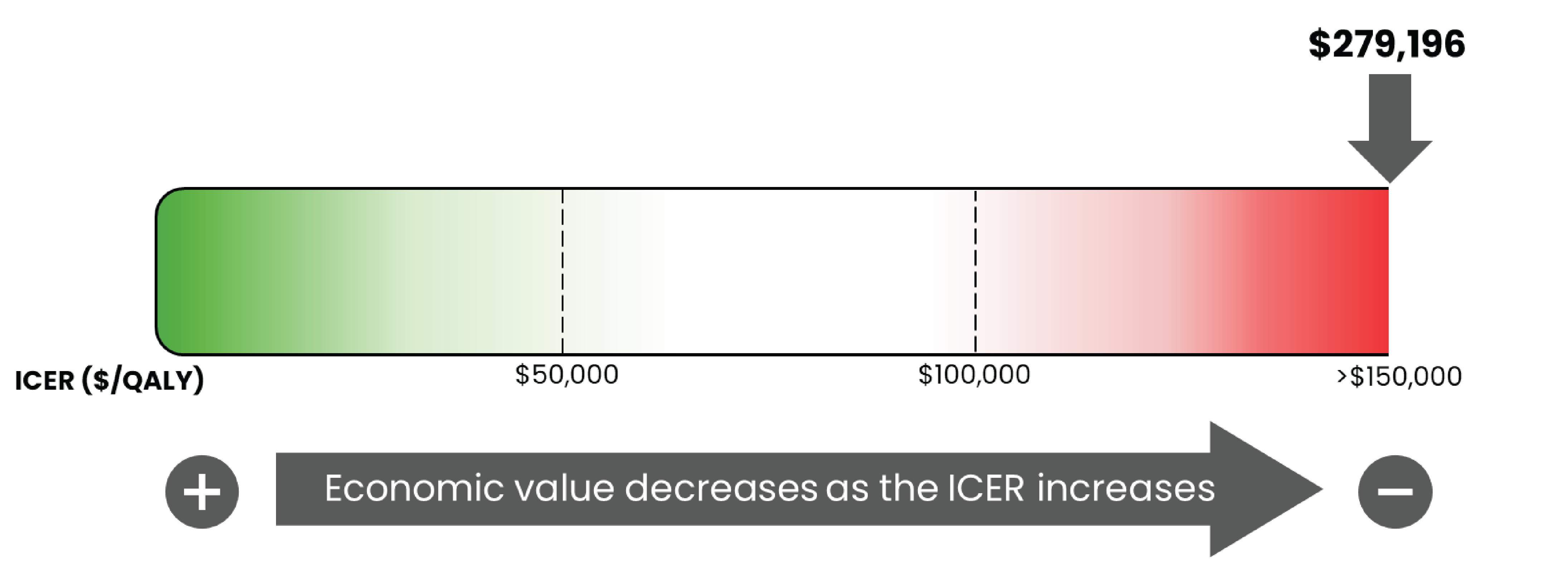
ICER = incremental cost-effectiveness ratio; QALY = quality-adjusted life-year.
Certainty of the evidence: pERC identified uncertainty in the cost-effectiveness of trastuzumab deruxtecan due to the limitations in long-term comparative efficacy data, time on treatment projections, and the structure of the submitted economic model. As a result, the economic analysis may not fully reflect the true impact of trastuzumab deruxtecan on patient outcomes and health care resources. Thus, the cost-effectiveness of trastuzumab deruxtecan remains uncertain, and higher price reductions may be required to achieve a given willingness-to-pay threshold.
Other considerations: The pharmacoeconomic report focused on the comparison of trastuzumab deruxtecan versus ramucirumab plus paclitaxel but noted that FOLFIRI may be relevant in a subgroup of patients. Additional information on the comparison of trastuzumab deruxtecan versus FOLFIRI can be found in the economic report. pERC also discussed concerns regarding the loss of HER2 positivity and strongly recommended rebiopsy before initiation with trastuzumab deruxtecan in the recommended population. The economic evaluation did not incorporate the option to consider rebiopsy for patients. If rebiopsy is required to access trastuzumab deruxtecan (and not other treatments), the incremental cost of treatment with trastuzumab deruxtecan is expected to increase, which would result in a higher ICER.
Impacts on Health Systems
Anticipated budget impact: CDA-AMC estimated that by year 3 of reimbursement, 648 patients would be eligible for trastuzumab deruxtecan; of these, 453 patients are expected to receive trastuzumab deruxtecan. The estimated expenditure on trastuzumab deruxtecan is $77,916,780. When considering a world without trastuzumab deruxtecan funding versus a world with trastuzumab deruxtecan funding, the 3-year budget impact is estimated to be $42,021,955. The actual budget impact of maintaining reimbursement of trastuzumab deruxtecan will depend on the current funding agreements for trastuzumab deruxtecan, the number of patients eligible for treatment and the market share of trastuzumab deruxtecan.
Organizational implications: Input from the public drug programs highlighted that the recommended dose of trastuzumab deruxtecan for the indication under review is 6.4 mg/kg every 3 weeks, which differs from its recommended starting dose for breast cancer (i.e., 5.4 mg/kg). This may have an impact on treatment toxicity. pERC agreed that caution is required in prescribing trastuzumab deruxtecan to ensure that the appropriate dose is used for patients with advanced or metastatic HER2-positive gastric or GEJ adenocarcinoma.
Equity considerations: pERC noted that patients from rural or remote areas disproportionately experience inequities in access due to the need for long-distance travel to receive specialized treatment in large centres and higher travel costs.
Sources of Information Used by the Committee
To make its recommendation, the committee considered the following information (links to the full documents for the review can be found on the project web page):
the CDA-AMC review of the clinical and pharmacoeconomic evidence submitted by the sponsor, as well as relevant ethical issues related to trastuzumab deruxtecan (refer to the Main Report and Supplemental Material document)
the sponsor’s comments on the draft report and the CDA-AMC responses
patients' perspectives gathered by 1 patient group, My Gut Feeling — Stomach Cancer Foundation of Canada (refer to the Patient and Clinician Group Input document)
input from 2 clinician groups; 1 from the Canadian Gastrointestinal Oncology Evidence Network and the My Gut Feeling Medical Advisory Board, and 1 from the Ontario Health (Cancer Care Ontario) Gastrointestinal Cancer Drug Advisory Committee (refer to the Patient and Clinician Group Input document)
input from public drug programs that participate in the reimbursement review process (refer to the Supplemental Material document)
input from 2 clinical experts with expertise in the management of gastric or GEJ adenocarcinoma, consulted by CDA-AMC.
All feedback received in response to the draft recommendation is available on the CDA-AMC project web page.
pERC Information
Members of the Committee
Dr. Catherine Moltzan (Chair), Dr. Kelvin Chan (Vice-Chair), Paul Agbulu, Dr. Phillip Blanchette, Dr. Matthew Cheung, Dr. Michael Crump, Annette Cyr, Dr. Jennifer Fishman, Dr. Jason Hart, Terry Hawrysh, Dr. Yoo-Joung Ko, Dr. Aly-Khan Lalani, Amy Peasgood, Dr. Anca Prica, Dr. Michael Raphael, Dr. Adam Raymakers, Dr. Patricia Tang, Dr. Pierre Villeneuve, and Danica Wasney.
Meeting date: February 11, 2026
Regrets: Two expert committee members did not attend.
Conflicts of interest: None
ISSN: 2563-6596
Canada’s Drug Agency (CDA-AMC) is a pan-Canadian health organization. Created and funded by Canada’s federal, provincial, and territorial governments, we’re responsible for driving better coordination, alignment, and public value within Canada’s drug and health technology landscape. We provide Canada’s health system leaders with independent evidence and advice so they can make informed drug, health technology, and health system decisions, and we collaborate with national and international partners to enhance our collective impact.
Disclaimer: CDA-AMC has taken care to ensure that the information in this document was accurate, complete, and up to date when it was published, but does not make any guarantee to that effect. Your use of this information is subject to this disclaimer and the Terms of Use at cda-amc.ca.
The information in this document is made available for informational and educational purposes only and should not be used as a substitute for professional medical advice, the application of clinical judgment in respect of the care of a particular patient, or other professional judgments in any decision-making process. You assume full responsibility for the use of the information and rely on it at your own risk.
CDA-AMC does not endorse any information, drugs, therapies, treatments, products, processes, or services. The views and opinions of third parties published in this document do not necessarily reflect those of CDA-AMC. The copyright and other intellectual property rights in this document are owned by the Canadian Agency for Drugs and Technologies in Health (operating as CDA-AMC) and its licensors.
Questions or requests for information about this report can be directed to Requests@cda-amc.ca.