Drugs, Health Technologies, Health Systems
Reimbursement Recommendation
Vorasidenib (Voranigo)
Indication: For the treatment of Grade 2 (World Health Organization [WHO] 2016, 2021 grading system) astrocytoma or oligodendroglioma with a susceptible isocitrate dehydrogenase-1 (IDH1) mutation or isocitrate dehydrogenase-2 (IDH2) mutation in adults and pediatric patients aged 12 years and older following surgical intervention.
Sponsor: Servier Canada Inc.
Final recommendation: Reimburse with conditions
Summary
What Is the Reimbursement Recommendation for Voranigo?
Canada’s Drug Agency (CDA-AMC) recommends that Voranigo be reimbursed by public drug plans for patients aged 12 years and older with grade 2 (WHO 2016, 2021 grading system) astrocytoma or oligodendroglioma with a susceptible IDH1 mutation or IDH2 mutation who are not in immediate need of radiotherapy and/or chemotherapy following surgical intervention if certain conditions are met.
Why Did CDA-AMC Recommend Reimbursement?
The pan-Canadian Oncology Drug Review Expert Review Committee (pERC) determined that Voranigo demonstrates acceptable clinical value compared with active surveillance in patients with grade 2 astrocytoma or oligodendroglioma with IDH1 or IDH2 mutations. This determination was sufficient for pERC to recommend that Voranigo be reimbursed. Given that Voranigo is expected to be an additive treatment to active surveillance, acceptable clinical value refers to added value versus active surveillance.
Evidence from a clinical trial (INDIGO; N = 331) demonstrated that, when compared to active surveillance, treatment with Voranigo likely resulted in added clinical benefit in progression-free survival (PFS) and time to next intervention (TTNI) in patients aged 12 years and older with grade 2 oligodendroglioma or astrocytoma with a susceptible IDH1 or IDH2 mutation who were not in immediate need of radiotherapy and/or chemotherapy.
Key limitations of the evidence were the short duration of follow-up, which prevented pERC from drawing conclusions on the impact of Voranigo on overall survival (OS), and the large amount of missing data for health-related quality of life (HRQoL) outcomes.
Which Patients Are Eligible for Coverage?
Voranigo should only be covered for patients aged 12 years and older with grade 2 (WHO 2016, 2021 grading system) astrocytoma or oligodendroglioma with a susceptible IDH1 mutation or IDH2 mutation who have had at least 1 prior surgery for glioma, have measurable and/or evaluable disease at the time of initiation of therapy, and are not in immediate need of radiotherapy or chemotherapy, in line with the sponsor’s reimbursement request. Patients should also have good performance status and must not have grade 3 tumours or tumours with high-risk features, prior anticancer therapy for glioma other than surgery, or current therapeutic steroid use for glioma.
What Are the Conditions for Reimbursement?
Voranigo should only be reimbursed if prescribed by clinicians with expertise in treating gliomas and if the cost of Voranigo is reduced. Voranigo should be discontinued upon the occurrence of radiographic and/or clinical progression or unacceptable toxicity. Important budget impact considerations must be addressed for health systems to be able to adopt Voranigo.
Review Background
Disease background: Glioma is the most common central nervous system (CNS) cancer. It grows from the brain’s glial cells, such as astrocytes and oligodendrocytes. Approximately 24% of all brain or CNS tumours and 81% of malignant brain tumours are gliomas. In 2017, age-standardized incidence rates for grade 2 glioma (according to 2016 WHO classification criteria) were 0.30 per 100,000 for diffuse astrocytoma and 0.24 per 100,000 for oligodendroglioma.
Indication and reimbursement request: Vorasidenib has been approved by Health Canada for the treatment of grade 2 astrocytoma or oligodendroglioma with a susceptible IDH1 or IDH2 mutation in adults and pediatric patients aged 12 years and older following surgical intervention. The sponsor is seeking reimbursement for treatment of grade 2 astrocytoma or oligodendroglioma with a susceptible IDH1 or IDH2 mutation in adults and pediatric patients aged 12 years and older who are not in immediate need of radiotherapy and/or chemotherapy following surgical intervention.
Drug under review: Vorasidenib is a small molecule inhibitor of IDH1 and IDH2 enzymes. It is available as an oral tablet. The dosage recommended in the product monograph is 40 mg orally once daily for patients weighing at least 40 kg, and 20 mg orally once daily for patients weighing less than 40 kg.
Treatment costs: At the submitted price of $399.17 per 10 mg tablet and $798.33 per 40 mg tablet, the 28-day cost of vorasidenib is expected to be $22,353 per patient based on the Health Canada–recommended dosage.
Highlights of Input From Interested Parties
The patient groups (Brain Cancer Canada and Heal Canada) noted the following regarding impacts of the disease, unmet needs, and important outcomes:
Patients who develop this disease can be asymptomatic or they can develop focal or generalized symptoms, including headaches, nausea, vomiting, seizures, visual disturbance, speech and language problems, and changes in cognitive and/or functional ability, depending on the location, size, and infiltration of the tumour.
After surgery, patients receive either active surveillance (MRIs every 3 or 6 months) or treatment with radiotherapy and/or chemotherapy. Active surveillance is considered the alternative option to vorasidenib. Side effects of radiotherapy and chemotherapy may include vomiting, fatigue, cognitive deficits, hair loss, and reduction in blood cell counts.
Treatment goals are to delay disease progression; improve quality of life, including mental health; and avoid radiotherapy and chemotherapy.
Patients undergoing active surveillance will eventually progress, and radiotherapy or chemotherapy are not curative treatments. Side effects of current treatments, coupled with access barriers (e.g., geographical, financial), result in important unmet therapeutic needs for patients.
The clinician groups, the Pediatric Oncology Group of Canada (POGO) and Ontario Health (Cancer Care Ontario) (OH [CCO])–CNS Drug Advisory Committee, and the clinical experts consulted by CDA-AMC noted the following regarding unmet needs arising from the disease and the place in therapy for the drug under review:
Clinician groups and clinical experts consulted for this review highlighted that current treatment options (i.e., radiotherapy and chemotherapy) are not curative and are associated with considerable side effects and impacts on quality of life. As such, the goals of treatment include prolonging survival, preserving neurological and cognitive function as well as quality of life, delaying tumour progression and/or transformation into high-grade glioma, and minimizing treatment-related toxicities.
Vorasidenib is anticipated to be used as monotherapy as a first-line treatment option for patients who do not require immediate treatment after surgery.
The participating public drug programs raised potential implementation issues related to considerations for initiation and prescribing of therapy, generalizability of trial populations to broader populations, and system and economic issues.

Disclaimer: The perspectives shared by people with lived experience who present to the committee reflect their individual experiences and are not necessarily representative of all people with the same condition or course of treatment. Their insights provide valuable context about what a patient, support person, or caregiver might go through with this condition or treatment, helping to inform the committee’s deliberations. These narratives complement other forms of evidence and input and should be considered as 1 element contributing to a broader understanding of the condition and treatment under review.
Recommendation
With a vote of 15 in favour to 1 against, pERC recommends that vorasidenib be reimbursed for the treatment of grade 2 (WHO 2016, 2021 grading system) astrocytoma or oligodendroglioma with a susceptible IDH1 mutation or IDH2 mutation in adults and pediatric patients aged 12 years and older who are not in immediate need of radiotherapy or chemotherapy following surgical intervention only if the conditions listed in Table 1 are met.
Table 1: Reimbursement Conditions and Reasons
Reimbursement condition | Reason | Implementation guidance |
|---|---|---|
Initiation | ||
1. Treatment with vorasidenib should be reimbursed when initiated in patients aged 12 years and older with the following: 1.1. grade 2 astrocytoma or oligodendroglioma with confirmed IDH1 or IDH2 mutations 1.2. at least 1 prior surgery for glioma (e.g., biopsy, subtotal resection, gross total resection) and have measurable and/or evaluable disease at the time of initiation of therapy 1.3. not in immediate need of radiotherapy or chemotherapy. | Evidence from the INDIGO trial suggested that treatment with vorasidenib resulted in a clinical benefit in patients with these characteristics. | IDH1 or IDH2 status must be determined before starting treatment with vorasidenib. pERC noted that there is no evidence to support using vorasidenib in patients younger than 12 years and limited to no evidence for patients aged between 12 and 18 years. pERC agreed with the clinical experts that vorasidenib could be used in the pediatric population aged 12 years and older. The clinical experts consulted by CDA-AMC also noted that patients younger than 12 years could be considered if they had the indicated IDH mutations. In the INDIGO trial, patients had to have had surgery within 1 to 5 years before enrolment. pERC noted that, in clinical practice, vorasidenib could be initiated once patients recovered from surgery if there is evidence of measurable or evaluable disease. pERC also considered it reasonable to initiate treatment with vorasidenib in patients who are more than 5 years post surgery on a time-limited basis if there is no clinical need for radiation or chemotherapy, despite the lack of direct evidence. |
2. Patients should have good performance status. | Patients in the INDIGO trial had to have a KPS score (for patients aged ≥ 16 years) or LPPS score (for patients aged < 16 years) of ≥ 80%. | The suitability of a patient for vorasidenib with respect to performance status should be left to the discretion of the treating clinician. |
3. Patients must not: 3.1. have grade 3 tumours or tumours with high-risk features 3.2. have received any prior anticancer therapy for glioma other than surgery 3.3. be receiving therapeutic doses of steroids for glioma. | There is no evidence to support the benefit of vorasidenib in patients with these characteristics because they were not included in the INDIGO trial. | It may be appropriate to offer vorasidenib to some patients with grade 3 tumours (e.g., IDH-mutated intermediate grade 2 to 3 tumours with predominantly nonenhancing disease in whom there is significant concern about adverse effects from radiation and chemotherapy) at the discretion of the treating clinician, although pERC noted that there is no evidence to support the use of vorasidenib in patients with grade 3 tumours. Patients who are receiving steroids for signs and symptoms of glioma may still be considered eligible for vorasidenib. Determining eligibility for vorasidenib for patients receiving steroids should be left to the clinician’s discretion. |
Discontinuation | ||
4. Treatment with vorasidenib should be discontinued upon the occurrence of any of the following: 4.1. radiographic and/or clinical disease progression 4.2. unacceptable toxicity. | Patients in the INDIGO trial discontinued treatment upon objective disease progression using modified RANO-LGG criteria or unacceptable toxicity consistent with clinical practice. | pERC noted that treatment with vorasidenib beyond progression was not permitted in the INDIGO trial and suggested that decisions about treatment discontinuation based on clinical progression in the absence of radiographic progression should be left to the treating clinician. In the event of a treatment pause, pERC noted that patients should be able to restart if they have not progressed or stopped treatment due to intolerable toxicity. |
Prescribing | ||
5. Vorasidenib should be prescribed by clinicians with expertise in treating gliomas. | This is meant to ensure that vorasidenib is prescribed for appropriate patients and that adverse effects are managed in an optimized and timely manner. | — |
Pricing | ||
6. A reduction in price. | Using the CDA-AMC base-case analysis, the ICER for vorasidenib was $571,629 per QALY gained when compared with active surveillance in the indicated population. A band 4 price reductiona would be required to achieve cost-effectiveness at a $50,000 per QALY gained threshold. A band 4 price reductiona would be required to achieve cost-effectiveness at a $100,000 per QALY gained threshold. Exact price reductions at any given willingness-to-pay threshold can be found in the CDA-AMC main report and Supplemental Material document. | The CDA-AMC analysis is based on public list prices for all treatments. Further price reductions may be required if there are price arrangements (discounts) currently in place for any treatment included in the economic analysis. Likewise, further price reductions may be required to address economic feasibility of adoption. |
Feasibility of adoption | ||
7. The economic feasibility of adoption of vorasidenib must be addressed. | At the submitted price, the incremental budget impact of vorasidenib is expected to be greater than $40 million in year 3. | — |
CDA-AMC = Canada’s Drug Agency; ICER = incremental cost-effectiveness ratio; KPS = Karnofsky Performance Status; LPPS = Lansky Play-Performance Scale; QALY = quality-adjusted life-year; RANO-LGG = Response Assessment in Neuro-Oncology for low-grade gliomas.
aFor the price reduction required, band 1 = 1% to 24%, band 2 = 25% to 49%, band 3 = 50% to 74%, and band 4 = 75% or greater.
Rationale for the Recommendation
Clinical Value
Based on the totality of the clinical evidence, pERC concluded that vorasidenib demonstrates acceptable clinical value compared with active surveillance in patients with grade 2 astrocytoma or oligodendroglioma with IDH1 or IDH2 mutations. Given that vorasidenib is expected to be an additive treatment to active surveillance, acceptable clinical value refers to added value versus active surveillance.
Evidence from 1 phase III randomized controlled trial (INDIGO; N = 331) demonstrated that treatment with vorasidenib likely resulted in added clinical benefit compared to active surveillance alone in PFS and TTNI for patients aged 12 years and older with grade 2 oligodendroglioma or astrocytoma with a susceptible IDH1 or IDH2 mutation who were not in immediate need of radiotherapy and/or chemotherapy. At the date of study unblinding (data cut-off March 7, 2023), there was a statistically significant improvement in PFS (hazard ratio [HR] = 0.35; 95% confidence interval [CI], 0.25 to 0.49) and TTNI (HR = 0.25; 95% CI, 0.16 to 0.40) in favour of vorasidenib. However, the median PFS and TTNI were not reached in the vorasidenib group compared to 11.4 months (95% CI, 11.1 to 13.9 months) for PFS, and 20.1 months (95% CI, 17.5 to 27.1 months) for TTNI in the placebo group. Additionally, landmark analyses of PFS and TTNI at 24 months (PFS: 58.8% versus 26.2%; TTNI: 80.3% versus 41.4%) were supportive of the benefit observed with vorasidenib over placebo. During the trial, only 1 patient died, precluding pERC from drawing definitive conclusions on the impact of vorasidenib on OS. Overall, pERC noted that the results for all time-to-event outcomes were immature and uncertain, but noted that, in the context of the disease, they were still clinically important.
Patients and clinicians identified the need for new treatments that prolong survival, delay disease progression and/or malignant transformation, delay the need for toxic radiotherapy and/or chemotherapy, and preserve quality of life. pERC concluded that vorasidenib likely meets the need for improved PFS, as well as the need to delay subsequent therapy. However, pERC noted that treatment with vorasidenib was associated with significant hepatic side effects, and the committee was unable to draw conclusions on HRQoL due to the high amount of missing data and imprecision.
Further information on the committee’s discussion around clinical value is provided in the Summary of Deliberation section.
Developing the Recommendation
The determination of acceptable clinical value was sufficient for pERC to recommend reimbursement of vorasidenib. As part of the deliberation on whether to recommend reimbursement, the committee also considered unmet clinical need, unmet nonclinical need, and health inequity. Information on this discussion is provided in the Unmet Clinical Need and Distinct Social and Ethical Considerations domains in the Summary of Deliberation section.
Because pERC recommended that vorasidenib be reimbursed, the committee also deliberated on whether reimbursement conditions should be added to address important economic considerations, health system impacts, or social and ethical considerations, or to ensure clinical value is realized. The resulting reimbursement conditions, with accompanying reasons and implementation guidance, are stated in Table 1.
Summary of Deliberation
pERC considered all domains of value of the deliberative framework before developing its recommendation: clinical value, unmet clinical need, distinct social and ethical considerations, economic considerations, and impacts on health systems. For further information on the domains of value, refer to Expert Committee Deliberation at Canada’s Drug Agency.
The committee considered the following key discussion points, organized by the 5 domains of value.
Clinical Value
Appropriate comparators: pERC noted that active surveillance is an appropriate comparator for vorasidenib in the target patient population.
Efficacy versus active surveillance: One phase III, randomized, placebo-controlled study (INDIGO) demonstrated that treatment with oral vorasidenib at a dose of 40 mg once daily was associated with statistically significant improvement in PFS and TTNI compared to placebo. After a median follow-up of 17.7 months (95% CI, █████ ████) in the vorasidenib group and 16.7 months (95% CI, █████ ████) in the placebo group, the median PFS had not been reached in the vorasidenib group and was 11.4 months (95% CI, 11.1 to 13.9 months) in the placebo group, corresponding to a HR of 0.35 (95% CI, 0.25 to 0.49; P = not reported). pERC noted that, at the most recent data cut-off (March 2023), there were not enough events to analyze OS data; therefore, the impact of vorasidenib on mortality could not be determined. Conclusions regarding HRQoL outcomes could not be drawn from the INDIGO trial due imprecision and higher dropout rates at later time points. Furthermore, pERC highlighted that clinically important outcomes related specifically to neurological deterioration were not evaluated in the INDIGO trial, and therefore the effect of vorasidenib on neurological deterioration relative to active surveillance alone are unknown.
Clinical importance of treatment effects: pERC, as well as all input received for this review, highlighted that both radiotherapy and chemotherapy are associated with debilitating side effects, such as fatigue and nausea, risk of secondary malignancy, infertility, and bone marrow suppression, as well as longer-term neurocognitive effects. Discussion with the clinical experts highlighted that delaying the time to the next intervention is a clinically meaningful end point in this treatment setting. pERC noted that the results for PFS and TTNI were clinically meaningful, emphasizing the difference between treatment groups in the proportion of patients who had not had a PFS event or subsequent treatment at 24 months. pERC and the clinical experts noted that all low-grade gliomas eventually progress to higher-grade tumours or result in malignant transformation; however, given the overall low number of malignant transformation events in the INDIGO trial (| | | ███ ███████████ ███ | | | ███ ███████), the impact of vorasidenib on malignant transformation remains unknown.
Certainty of the evidence: Results for the proportion of patients who were progression-free (PFS), the proportion of patients without subsequent interventions (TTNI), and the proportion of patients alive (OS) at 24 months were associated with a moderate level of certainty per the CDA-AMC Grading of Recommendations, Assessment, Development and Evaluation (GRADE) assessment. For these outcomes, this was primarily due to serious study limitations, in which there was a high degree of censoring and a low number of events (likely driven by the early termination of the INDIGO trial due to early demonstration of efficacy, as the study met its primary and key secondary end points at the second interim analysis). As noted, pERC highlighted that longer follow-up for OS is likely to be confounded by subsequent treatments, and the small number of events for the OS end point precluded the committee from drawing conclusions on the effect of vorasidenib on OS. For HRQoL, pERC noted that, despite the very low certainty rating, there did not appear to be a detriment to HRQoL, although there was a substantial amount of missing data due to patient attrition.
Harms results: pERC discussed the toxicity profile observed in the INDIGO trial, acknowledging the need identified by patients for treatments with fewer side effects. pERC noted that vorasidenib is more harmful than placebo, which is driven primarily by asymptomatic elevations in liver enzymes (alanine aminotransferase [ALT] and aspartate aminotransferase [AST]) and diarrhea. However, pERC considered the overall side effect profile of vorasidenib manageable because of the low rates of discontinuation due to adverse events in the INDIGO trial.
Generalizability: Patients in the INDIGO trial were required to have had surgery for glioma 1 to 5 years before enrolment in the trial. pERC discussed the eligibility for treatment within 1 year post surgery and beyond 5 years post surgery. pERC noted that there is uncertain benefit of vorasidenib for patients on either end of the surgical spectrum specified in the INDIGO trial. For patients who are less than 1 year post surgery, pERC considered it reasonable to initiate therapy with vorasidenib once they recover from surgery for glioma if there is evidence of measurable disease. For patients who are more than 5 years beyond surgery, pERC discussed a potential time-limited opportunity for treatment with vorasidenib but noted that there was no evidence for either of these patient populations.
Clinical value: Based on the preceding considerations, pERC determined there was added clinical value versus active surveillance.
Unmet Clinical Need
Input on unmet clinical need: Patients and clinicians identified a need for new treatments that delay disease progression and transformation to higher-grade glioma, extending the time to next treatment (i.e., chemotherapy and/or radiotherapy) and thereby preserving neurological and cognitive function as well as quality of life. Patients also desire convenient, more accessible treatment options that require fewer appointments and reduce travel time, which have a significant impact on work, school, and other obligations, as well as reduce the overall financial burden on patients, caregivers, and families.
Severity of the disease: pERC noted that astrocytoma and oligodendroglioma are indolent cancers, often leading to aggressive transformation to higher-grade glioma. Patient groups also highlighted the significant effects on neurological function, including changes in personality, mobility, or cognition and sensation, depending on tumour location and infiltration. pERC acknowledged the significant impact of the disease on patients’ quality of life.
Availability of treatment options: For patients who have undergone surgery and are considered to have glioma of low risk of progression, active surveillance is the most appropriate treatment course. For patients with glioma considered high risk of progression, or for those with glioma that progressed during active surveillance, chemotherapy or radiotherapy are the only active treatments currently available in Canada. Both are associated with significant side effects. As such, pERC acknowledged the unmet therapeutic need for novel treatments.
Significant unmet clinical need: pERC discussed the rarity of astrocytoma and oligodendroglioma, as well as the younger average age of this patient population. Due to the rarity of astrocytoma and oligodendroglioma and the severity of the disease, pERC considered there to be significant unmet need as described in the recommendation framework in the Procedures for Reimbursement Reviews.
Distinct Social and Ethical Considerations
Input on unmet nonclinical need: pERC discussed nonclinical needs including care and geographic settings, treatment burden on patients and caregivers, and mode of administration. pERC recognized that vorasidenib is an oral medication, which may provide ease of administration and convenience for patients who reside far from centralized treatment centres, which is also a health equity consideration. However, pERC noted that vorasidenib would still need to be prescribed and monitored by neuro-oncology specialists; thus, the requirements for travel and appointments remain. Additionally, pERC highlighted that low-grade gliomas often affect younger patients who are usually employed and may have families, resulting in productivity losses and financial stress, among other impacts, on overall quality of life.
Economic Considerations
The following guidance has been provided to align with the deliberative framework domains and considerations:
Health impacts of vorasidenib versus active surveillance: Vorasidenib is predicted to be associated with a gain of 2.97 life-years compared to active surveillance and may result in a gain of 2.08 quality-adjusted life-years (QALYs) compared to active surveillance.
Cost of vorasidenib versus active surveillance: Vorasidenib is predicted to be associated with higher costs to the health care system than active surveillance (incremental costs = $1,190,165), primarily driven by increased costs associated with drug acquisition.
Key findings of the economic evaluation: Based on the submitted evidence using the sponsor’s cost-utility analysis, the CDA-AMC base-case analysis estimated that the incremental cost-effectiveness ratio (ICER) for vorasidenib in the treatment of grade 2 astrocytoma or oligodendroglioma with a susceptible IDH1 or IDH2 mutation in adults and pediatric patients aged 12 years and older following surgical intervention who are not in immediate need of radiotherapy or chemotherapy was $571,629 per QALY gained when compared with active surveillance (refer to Figure 1).
Figure 1: Estimate of the Incremental Cost-Effectiveness Ratio Used by pERC to Inform the Price Condition
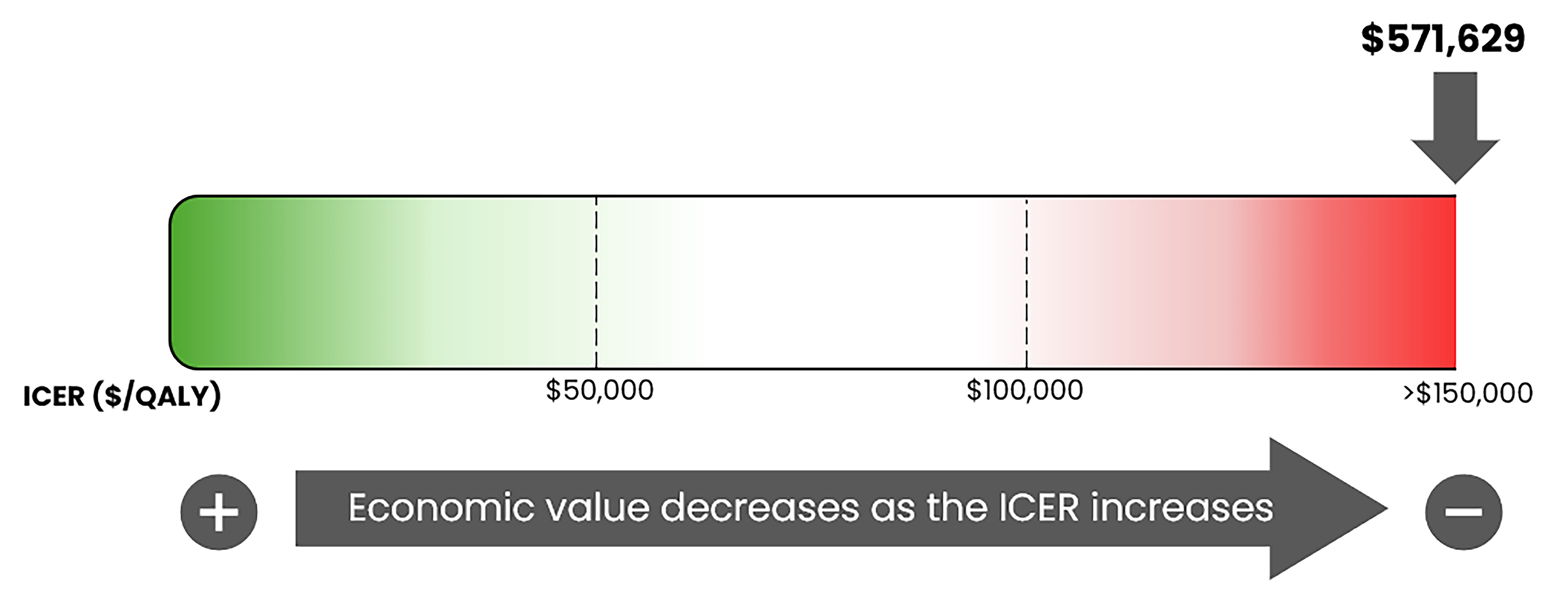
ICER = incremental cost-effectiveness ratio; pERC = pan-Canadian Oncology Drug Review Expert Review Committee; QALY = quality-adjusted life-year.
Certainty of the evidence: pERC identified substantial uncertainty in the cost-effectiveness of vorasidenib due to the immaturity of the survival data and reliance on modelling assumptions. The INDIGO trial had a median follow-up of 20 months, during which only 1 death was observed, which provided limited information on OS and raised uncertainty about the validity of extrapolating long-term outcomes. In the CDA-AMC base case, vorasidenib was projected to extend time in the postsurgical resection state by 3.31 years and OS by 2.97 years relative to active surveillance. These projected gains occur because the model assumes that delaying progression lowers mortality risk. As a result, the near entirety of the modelled QALY benefit (99.2%) is accrued beyond the trial’s observation period. The impact of vorasidenib on long-term survival therefore remains uncertain, and the modelled benefit may be either overestimated or underestimated.
Other considerations: The sponsor submitted an additional cost-effectiveness analysis adopting a societal perspective. In this analysis, the sponsor’s approach to productivity losses was considered uncertain because it assumed full baseline employment and that absent workers would not be replaced over their lifetime. These assumptions likely overestimate the magnitude of productivity losses compared with what would be expected in practice because, typically, employment rates are lower and replacement of workers may occur. CDA-AMC explored societal perspective scenarios to test the impact of alternative assumptions but was unable to fully address these limitations due to inflexibility in the model structure.
Impacts on Health Systems
Anticipated budget impact: CDA-AMC estimated that 277 patients would be eligible for treatment with vorasidenib over a 3-year period (year 1 = 109; year 2 = 89; year 3 = 79), of whom 208 would be expected to receive vorasidenib (year 1 = 77; year 2 = 67; year 3 = 64). The estimated incremental budget impact of reimbursing vorasidenib is predicted to be approximately $90 million over the first 3 years. The actual budget impact will depend on the number of people eligible for treatment and its uptake. pERC noted that the economic feasibility of adoption must be addressed.
Testing procedure considerations: pERC acknowledged that evaluating IDH1 or IDH2 mutation status before initiation of vorasidenib would be required. pERC noted that IDH1 or IDH2 mutation testing using immunohistochemistry staining (or next-generation sequencing, as applicable) is currently performed as standard of care to identify patients with grade 2 astrocytoma or oligodendroglioma in Canada. Therefore, it is not anticipated to be an implementation or access barrier.
Sources of Information Used by the Committee
To make its recommendation, the committee and subcommittee considered the following information (links to the full documents for the review can be found on the project webpage):
the CDA-AMC review of the clinical and pharmacoeconomic evidence submitted by the sponsor as well as relevant ethical issues related to vorasidenib (refer to the main report and Supplemental Material document)
the sponsor’s comments on the draft report and the CDA-AMC responses
patients' perspectives gathered by 2 patient groups, Brain Cancer Canada and Heal Canada
input from a person with lived experience who delivered a brief presentation and answered questions from the committee
input from 2 clinician groups, POGO and OH (CCO)–CNS Drug Advisory Committee
input from public drug programs that participate in the reimbursement review process (refer to the Supplemental Material document)
input from 3 clinical experts with expertise in the management of astrocytoma or oligodendroglioma with susceptible IDH1 or IDH2 mutations consulted by CDA-AMC.
Special thanks: CDA-AMC extends our special thanks to the individual who presented directly to pERC and to the patient organizations representing the community of those living with astrocytoma or oligodendroglioma, including Brain Cancer Canada and its members Stuart Selby (Engagement Ambassador) and Anita Angelini (Vice-Chair).
General note: CDA-AMC makes every attempt to engage with people with lived experience as closely to the indication under review as possible. However, at times, CDA-AMC is unable to do so and instead engages with individuals with similar treatment journeys to ensure lived experience perspectives are included and considered in Reimbursement Reviews. CDA-AMC is fortunate to be able to engage with individuals who are willing to share their treatment journeys with pERC.
pERC Information
Members of the Committee
Dr. Catherine Moltzan (Chair), Dr. Kelvin Chan (Vice-Chair), Paul Agbulu, Dr. Phillip Blanchette, Dr. Matthew Cheung, Dr. Michael Crump, Annette Cyr, Dr. Jennifer Fishman, Dr. Jason Hart, Terry Hawrysh, Dr. Yoo-Joung Ko, Dr. Aly-Khan Lalani, Amy Peasgood, Dr. Anca Prica, Dr. Michael Raphael, Dr. Adam Raymakers, Dr. Patricia Tang, Dr. Pierre Villeneuve, and Danica Wasney.
Meeting date: October 8, 2025
Regrets: Two expert committee members did not attend.
Conflicts of interest: None.
ISSN: 2563-6596
Canada’s Drug Agency (CDA-AMC) is a pan-Canadian health organization. Created and funded by Canada’s federal, provincial, and territorial governments, we’re responsible for driving better coordination, alignment, and public value within Canada’s drug and health technology landscape. We provide Canada’s health system leaders with independent evidence and advice so they can make informed drug, health technology, and health system decisions, and we collaborate with national and international partners to enhance our collective impact.
Disclaimer: CDA-AMC has taken care to ensure that the information in this document was accurate, complete, and up to date when it was published, but does not make any guarantee to that effect. Your use of this information is subject to this disclaimer and the Terms of Use at cda-amc.ca.
The information in this document is made available for informational and educational purposes only and should not be used as a substitute for professional medical advice, the application of clinical judgment in respect of the care of a particular patient, or other professional judgments in any decision-making process. You assume full responsibility for the use of the information and rely on it at your own risk.
CDA-AMC does not endorse any information, drugs, therapies, treatments, products, processes, or services. The views and opinions of third parties published in this document do not necessarily reflect those of CDA-AMC. The copyright and other intellectual property rights in this document are owned by the Canadian Agency for Drugs and Technologies in Health (operating as CDA-AMC) and its licensors.
Questions or requests for information about this report can be directed to Requests@CDA-AMC.ca.