Drugs, Health Technologies, Health Systems
Health Technology Review
Portable Devices for Diagnosis of Sleep-Disordered Breathing
Key Messages
What Is the Issue?
Sleep-disordered breathing (SDB) includes a range of conditions that make it difficult to breathe while sleeping and can lead to heart failure, neurodegenerative diseases, cognitive impairment, and poor quality of life. Many people in Canada have obstructive sleep apnea (OSA), a type of SDB, but they often remain undiagnosed.
The gold standard for diagnosing SDB is polysomnography (PSG), which is referred to as a level 1 test. PSG is conducted in a sleep laboratory and attended by a sleep technician. Because access to this test can vary, is often limited geographically, and can have long wait times, portable devices for diagnosing SDB have emerged for use at home and may help speed up diagnosis and access to treatment.
Provincial decision-makers requested this report to assess the evidence available on using portable devices for diagnosing SDB. The findings will inform whether results from these devices can be used with confidence as an alternative to PSG.
What Did We Do?
We conducted a rapid review to identify and summarize evidence that compared the diagnostic accuracy and clinical utility of these devices as well as evidence-based guidelines published in the past 5 years. Two clinical experts reviewed the report, and 1 expert identified devices to supplement the literature available. We conducted a horizon scan to identify any new devices emerging in the field.
What Did We Find?
A total of 92 portable sleep devices were identified. Ten systematic reviews were identified that examined the diagnostic accuracy or clinical utility of more than 60 portable diagnostic sleep tests compared to those of PSG. Five guidelines with recommendations for adults or people who are pregnant were identified, of which 1 guideline reported on 6 specific portable diagnostic sleep devices. An expert identified an additional 26 devices to consider. A Canadian guideline on the diagnosis of OSA in children was published in 2026 while this report was being written, and relevant information from that guideline has been included in this report.
Sleep diagnostic devices have traditionally been categorized using levels. Unlike PSG studies, tests using devices categorized as level 2, 3, or 4 are unattended by a technician. Level 3 devices usually have at least 3 channels that measure airflow, respiratory effort, and oximetry. Airflow-based measurement is considered necessary to inform diagnosis. Level 4 devices usually have 1 channel measuring blood oxygen saturation and are not generally used for diagnostic purposes. Some emerging or novel devices fall outside these levels.
Of the 92 devices identified in this report, 25 were identified as having active licensing from Health Canada and are currently being manufactured. Current evidence was identified for 6 of these devices.
For adults suspected of having OSA, level 3 devices and some wearables (e.g., WatchPAT devices) were generally reported in systematic review evidence as having adequate sensitivity, while level 4 devices tended to have varying sensitivity and specificity. There was less evidence for other devices (e.g., noncontact systems, smartphone-based tools); generally, the evidence reported adequate sensitivity, but specificity varied by factors such as OSA severity and device type.
For adults, guidelines recommend level 3 sleep tests for adults with a high pretest probability for moderate to severe OSA and who do not have complicated comorbidities such as chronic obstructive pulmonary disease; heart failure; neuromuscular conditions; and physical, sensory, and cognitive impairment. The AcuPebble SA100, Sunrise, WatchPAT 300, and WatchPAT ONE are 4 specific devices recommended for assessing people aged older than 16 years; the WatchPAT 300 device is licensed for sale in Canada.
There are several evidence gaps regarding the use of portable devices for the diagnosis of SDB in specific populations. Yet, for people who are pregnant, guidelines state that home sleep apnea testing, but not overnight pulse oximetry, can be considered, and for children aged between 6 and 17 years without significant comorbidities, a Canadian guideline published in 2026 recommends PSG to diagnose OSA. It also recommends that overnight oximetry (level 4 testing) should not be used.
What Does This Mean?
Some portable sleep devices can be considered for the diagnosis of adults suspected of having moderate to severe OSA who do not have comorbidities.
Portable sleep devices are generally not recommended for those who have complicated comorbidities. It is also unclear whether these devices work for people of all genders and/or sexes or for people with darker skin tones given that pulse oximetry cannot accurately measure oxygen saturation in melanated skin.
Careful consideration should be given to the following points regarding the use of portable sleep devices to diagnose SDB: the patient’s potential SDB severity and the presence of comorbidities; the number of channels the device measures; whether the device uses airflow or indirect measurements potentially generated by artificial intelligence; the accessibility and cost of the device; the security of the patient sleep data collected; whether devices and software are regularly updated or out of use; and the training or education required to support patients administering tests at home and to interpret sleep test results.
Abbreviations
ACE
Agency for Care Effectiveness
AE
adverse event
AHI
apnea-hypopnea index
AI
artificial intelligence
CDA-AMC
Canada’s Drug Agency
COPD
chronic obstructive pulmonary disease
CPAP
continuous positive airway pressure
CPC
cardiopulmonary coupling
HSAT
home sleep apnea test
NICE
National Institute for Health and Care Excellence
OSA
obstructive sleep apnea
PAT
peripheral arterial tonometry
PROGRESS
place of residence, race/ethnicity/culture/language, occupation, gender/sex, religion, education, socioeconomic status, social capital
PSG
polysomnography
QoL
quality of life
REM
rapid eye movement
SASM
Society of Anesthesia and Sleep Medicine
SDB
sleep-disordered breathing
SOAP
Society for Obstetric Anesthesia and Perinatology
SR
systematic review
Key Terminology
Apnea-hypopnea index (AHI): A scale defined as the average number of apneas (breathing completely stops or drops to less than 10% of normal airflow for at least 10 seconds) and hypopneas (partial blockages [i.e., shallow breathing] defined as a reduction in airflow of 30% or more for at least 10 seconds) a patient experiences per hour during sleep.1 This scale is used to diagnose and determine the severity of obstructive sleep apnea (OSA).
Equity-deserving groups: Groups of people who have historically experienced disadvantages and underrepresentation are described as equity deserving. In Canada these groups include but are not limited to Indigenous Peoples, racialized groups, women, people with disabilities, and members of 2SLGTBQ+ communities with diverse gender identities and sexual orientations.2
Gender: “Gender can refer to the individual and/or social experience of being a man, a woman, or neither. Social norms, expectations, and roles related to gender vary across time, space, culture, and individuals.”3 In cases in which the authors of included studies conducted research involving a specific sex or gender group, or in cases in which the authors reported the sex or gender of the population, findings are reported using the terms the study authors originally used.
Home sleep apnea test (HSAT): A portable device that is used to diagnose OSA and can be used outside sleep laboratory settings, such as in a patient’s home or hospital room.4
Obstructive sleep apnea: A sleep disorder characterized by repeated complete (apnea) or partial (hypopnea) collapses of the upper airway. This causes pauses in breathing while asleep, leading to fragmented sleep.5,6
Person who is pregnant or people who are pregnant: These terms refer to anyone who is pregnant and are inclusive of people of all sexes and genders who may experience pregnancy.
Polysomnography (PSG): A test used to diagnose OSA that monitors breathing activity, snoring, airflow, oxygen levels, heart rate, brain activity, and muscle activity while a patient sleeps.7 Level 1 PSG, which is conducted in a sleep laboratory and is observed by a technologist, is considered the gold standard for diagnosing OSA. Level 2 PSG monitors the same physiologic measures as level 1 PSG but is not observed by a technologist.
PROGRESS-Plus: An acronym used to identify characteristics that stratify health opportunities and outcomes. “PROGRESS refers to place of residence, race/ethnicity/culture/language, occupation, gender/sex, religion, education, socioeconomic status, social capital.” Plus refers to 3 additional factors: “personal characteristics that attract discrimination (e.g., age, disability), features of relationships (e.g., smoking parents, excluded from school), and time-dependent relationships (e.g., leaving the hospital, respite care, other instances when a person may be temporarily at a disadvantage).”8
Sensitivity: As part of diagnostic accuracy, sensitivity is the ability of a diagnostic test to be positive for those who have the condition.9
Sex: The classification of people as either female, intersex, or male. Sex is typically assigned at birth based on a person’s biological traits such as reproductive systems, hormones, chromosomes, and other physical characteristics. Sex is distinct from gender identity.3,10
Specificity: As part of diagnostic accuracy, specificity is the ability of a diagnostic test to be negative for those who do not have the condition.9
Research Questions
What is the diagnostic accuracy of portable devices for disordered breathing during sleep compared to laboratory-based PSG for people of any age?
What is the clinical utility of portable devices for diagnosing disordered breathing during sleep compared to PSG for people of any age?
What are the evidence-based guidelines regarding the use of portable devices for diagnosing disordered breathing for people of any age?
Context and Policy Issues
What Is Sleep-Disordered Breathing?
Sleep-disordered breathing (SDB) includes a spectrum of chronic conditions that can result in fragmented sleep, daytime sleepiness, reduced cognitive function, changes in respiratory airflow, apneas (i.e., breathing interruptions), heavy snoring, hypoxemia (i.e., low blood oxygen levels), brain and sympathetic nervous system activation, and fluctuations in intrathoracic pressure, blood pressure, and heart rhythms.11-15 The International Classification of Sleep Disorders describes 4 types of SDB: central sleep apnea syndromes, OSA, sleep-related hypoventilation disorders, and sleep-related hypoxemia disorder.16
Globally, the prevalence of SDB has been estimated at 24.0% to 83.8% for men and 9.0% to 76.6% for women; for moderate to severe SDB, the estimated prevalence ranges from 7.2% to 67.2% for men and 4.0% to 50.9% for women. OSA is the most common type of SDB; it is estimated that 936 million adults aged 30 to 69 years have mild to severe OSA and 425 million have moderate to severe OSA.17-19 Once diagnosed, patients with SDB may be treated with weight loss strategies, bariatric surgery, continuous positive airway pressure (CPAP), oral appliances, heart failure management, upper airway surgery, oxygen therapy, or phrenic nerve stimulation, among other therapeutic options.20
In Canada, it is estimated that more than 900,000 people have moderate to severe OSA, more than 1 in 4 adults have a high risk for having or developing OSA, and nearly 1 in 5 adults aged older than 45 years is at risk for OSA.17-19 Many individuals in Canada who have OSA are undiagnosed.21 A 2022 study of adults in Canada aged 45 years or older reported the prevalence of OSA was 17.5%, with a higher risk associated with older age, cardiovascular disease, asthma, diabetes mellitus, anxio-depressive symptoms, and arthritis.19
How Does SDB Affect People?
People with SDB or OSA may be more likely to die or to experience heart failure, stroke, neurodegenerative diseases, arrythmias, cognitive impairment, or dementia.11,22-25 They may also be more likely to experience challenges with psychologic functioning, well-being, and social relationships.26 Children may also develop OSA; however, their sleep patterns and symptoms may differ from those of adults (e.g., hyperactivity, irritability, difficulty controlling urination) and may impair their cognition, hinder emotional regulation, and lead to poor school performance.27,28
SBD (and specifically OSA) is not a single uniform disorder but a collection of distinct clinical phenotypes (i.e., there are subgroups of patients who share common clinical presentations), physiologic endotypes (i.e., the anatomic traits that can result in OSA), and polysomnographic patterns (i.e., when during sleep OSA events occur most frequently). These subtypes help explain why patients with OSA may present differently.29 These differences in the presentation of SDB, including OSA, may lead to inequities in access to treatment, especially for equity-deserving groups. There are disparities in sleep health based on gender and/or sex, culture, religion, socioeconomic status, racism, discrimination, neighbourhood segregation, and geographic regions that affect people with different work schedules, economic stresses, and challenges in accessing health care.30-32 OSA is more prevalent in males,19,33,34 among people in rural areas,35 and among some racialized groups (e.g., Asian Americans, South Asian people).36,37 SDB and OSA are also more prevalent in people who are in the postmenopausal stage.19,38 A study of adults in rural Saskatchewan who did not have sleep disorder diagnoses reported individuals with the greatest distances to travel for specialist care were more likely to report OSA symptoms, suggesting decreased health care use among people who live in rural areas.39 Disparities have also been reported in the prevalence of, diagnosis of, and access to treatment for OSA.36,37,40-45 An example of a gender-based disparity is that women tend to have a greater degree of rapid eye movement (REM) related to SDB than men.46
How Is SDB Diagnosed?
SDB is difficult to diagnose given the various symptoms that overlap with other health conditions. Sleep studies to diagnose SDB involve measuring multiple physiologic channels or signals such as breathing, snoring, brain activity, and cardiovascular measures.47 Sleep studies have traditionally been categorized into 4 levels:48,49
level 1 — full PSG monitoring with at least 7 channels (i.e., electroencephalogram, electrooculogram, chin electromyography, electrocardiogram, airflow, respiratory effort, oxygen saturation), performed in a sleep laboratory with a sleep technician present who attaches sensors to a person’s body
level 2 — a PSG with at least 7 channels that is portable and unattended (i.e., there is no overnight sleep technician present)
level 3 — an unattended test that monitors at least 3 signals (sometimes referred to as an HSAT or portable sleep apnea testing);50 in this report, terminology is used as reported by study authors because it is unclear whether all HSATs, level 3 devices, and devices referred to as home sleep tests are all considered the same
level 4 — an unattended test with 1 channel, sometimes referred to simply as oximetry.
Level 1 tests are conducted in sleep laboratories.51 Level 2, level 3, and level 4 tests are unattended and can be done at home or in other nonlaboratory settings (e.g., long-term care homes, community living settings).49,52,53 If a home sleep test has more channels, its complexity increases. This means that the data can be more difficult to capture in an unmonitored setting, and they can take longer to score and interpret by an expert.50 Some jurisdictions, such as Alberta and British Columbia, have HSAT-accredited clinics that offer level 3 tests that are interpreted by a licensed and accredited sleep physician.49,52,53 Level 4 tests have 1 channel and are not generally used for diagnostic purposes.54,55
Portable HSAT devices have traditionally relied on a subset of signals used in level 1 PSG. The core measurements include photoplethysmography to derive heart rate, airflow, and respiratory effort.54 More recently, next-generation sleep tests and devices have been developed that differ from levels 1 to 4 categorization. A framework called the Sleep, Cardiovascular, Oximetry, Position, Effort, and Respiratory (SCOPER) system was issued in 2011 by the American Academy of Sleep Medicine to measure sleep, cardiovascular, oximetry, body position, effort, and respiratory parameters.48,49
Examples of groupings of newer clinical technologies outside the levels 1 to 4 system include:
peripheral arterial tonometry (PAT) (i.e., those that detect changes in PAT and demonstrate sympathetic nervous system activation in REM and non-REM sleep)49
cardiopulmonary coupling (CPC) (i.e., analysis that monitors heart rate variability and from that derives autonomic nervous system changes that can be related to obstruction in airflow);56 this is usually coupled with other signals including oximetry, accelerometry, and gyroscopic signals.
There is also a wide variety of primarily consumer-based technologies available for potential diagnostic use, but they are not approved by scientific and clinical organizations.57,58 These include the following categories (which are not mutually exclusive) and can be features that are part of previously mentioned devices:
wearables (i.e., body-, finger-, or wrist-worn sensors)49
nearables (i.e., bed-adjacent or bed-embedded sensors)49
airables (i.e., video or audio recording systems)49
ingestibles (i.e., pills that are ingested and can monitor vital signs)49,59,60
morphic clothing sensors (i.e., sensors in clothing to measure airflow displacement or chest movements).49,59,60
Another way to categorize different sleep tests considers those that are airflow-based and those that are not. Airflow-based measurement is considered essential because it measures nasal or oral airflow directly, while non–airflow-based tests use indirect signals such as PAT and blood oxygen saturation, which cannot accurately identify apnea events or differentiate between sleep apneas and hypopneas.61 Indirect methods are also known to be difficult to interpret in patients with comorbidities such as peripheral arterial disease or cardiac arrhythmias.61
In Canada, primary care physicians, nurse practitioners, specialist physicians, or dentists who suspect a patient has SDB will typically refer them to a sleep specialist for diagnosis at a sleep clinic based on specific patient criteria, although this process differs by jurisdiction.7,39 For example, in Alberta, a primary care physician may refer a patient directly to a specialist or ask the patient to undergo testing at a community-based private clinic; most patients access home testing privately and pay out-of-pocket costs.62
Why Is It Important to Do This Review?
Despite the high prevalence of SDB, and particularly of OSA, in Canada, many people experience symptoms and remain undiagnosed.21 While laboratory-based PSG (level 1) is considered the gold standard for diagnosing sleep apnea, there are often long wait times of several months to more than a year due to a limited number of facilities and sleep testing staff.7,62 Home testing may also be an alternative for those suspected of having uncomplicated OSA (i.e., the absence of related comorbidities).63 Many commercial devices have been developed to test sleep health that individuals can pay for privately. Due to the high number of devices in the market and the varying results these devices produce, there is a need to understand how these portable devices compare to PSG and for which populations they are most suitable.49
The Canadian Thoracic Society published guidelines on the diagnosis and treatment of SDB in 2011, and the British Columbia Ministry of Health published guidance in 2021. While this Canada’s Drug Agency (CDA-AMC) report was being prepared, the Canadian Thoracic Society and the Canadian Sleep Society published a guideline on the diagnosis of OSA in children.64 Previous work by CDA-AMC includes 2 recent reports: 1 published in April 2025 that describes the federal, provincial, and territorial coverage of diagnostic sleep studies (including information on public plans, funding mechanisms, costs, wait times, and patient prioritization)7 and 1 published in August 2023 comparing the diagnostic accuracy, clinical utility, and cost-effectiveness of at-home (level 2) versus in-clinic (level 1) PSG.65 As previous work has been published comparing level 2 PSGs to level 1 PSGs,65,66 we did not include these comparisons in this review.
Objectives
The objectives of this report are to identify portable sleep devices currently being used to diagnose SDB, including OSA, in Canada and to identify evidence on the diagnostic accuracy and clinical utility of these devices. The objective was not to compare portable devices, and this report does not provide formal recommendations.
We conducted a rapid review of systematic reviews (SRs) and guidelines regarding the diagnostic accuracy and clinical utility of available portable devices for diagnosing SDB, including those approved by Health Canada. To support decision-making, the evidence in this report is supplemented with information provided from 2 clinical experts. We also conducted a horizon scan to supplement the rapid review and identify emerging portable devices for diagnosing SDB.
Methods
An information specialist conducted several customized literature searches, balancing comprehensiveness with relevancy, of multiple sources and grey literature. The search for the rapid review was completed on June 3, 2025; the search for the horizon scan was completed on June 6, 2025. Supplementary searches for the horizon scan were completed on July 3 and July 8, 2025.
For the rapid review, 2 reviewers screened citations and selected studies based on the inclusion criteria presented in Table 1. They critically appraised included publications using A MeaSurement Tool to Assess systematic Reviews 2 (AMSTAR 2)67 for SRs and the Appraisal of Guidelines for Research and Evaluation II (AGREE II) instrument68 for guidelines. Because the study designs included in the rapid review were limited to SRs and guidelines, primary studies not included in the SRs may have been missed. For the horizon scan, 1 reviewer screened and selected relevant citations; these were not assessed for quality but were used to identify relevant information. Appendix 1 presents a detailed description of methods and selection criteria for included studies.
Table 1: Selection Criteria for the Rapid Review
Criteria | Description |
|---|---|
Population | People of any age suspected of having SDB by their primary care practitioner |
Intervention | Portable devices to diagnose SDBa |
Comparator | PSG (e.g., level 1, level 2, unspecified PSG) |
Outcomes | Q1: Diagnostic test accuracy (e.g., sensitivity, specificity, positive predictive value, negative predictive value) Q2: Clinical utility (patient-reported outcomes following diagnostic testing; e.g., QoL, all-cause mortality, CPAP usage) Q3: Recommendations regarding best practices for portable devices (e.g., appropriate indication, longevity of use) |
Study designs | SRs, evidence-based guidelines |
Publication date | Since January 1, 2020 |
CPAP = continuous positive airway pressure; PSG = polysomnography; QoL = quality of life; SCOPER = Sleep, Cardiovascular, Oximetry, Position, Effort, and Respiratory; SDB = sleep-disordered breathing; SR = systematic review.
aAny portable device for diagnosing SDB, including those that are classified with the level 1 to 4 system, with the SCOPER framework, as wearables, and other categories.
Findings
As of February 2026, a total of 92 portable sleep devices had been identified. Ten SRs that examined the diagnostic accuracy or clinical utility of 60 portable diagnostic sleep tests compared to PSG were identified. Five guidelines with recommendations for adults or people who are pregnant were identified, as well as 1 guideline that reported on 6 specific portable diagnostic sleep devices. An expert identified an additional 26 devices to consider.
Devices were categorized according to their method of measurement, such as the sensors they include and the physiologic signals they measure. These categories include devices based on airflow measurement, CPC, PAT, and photoplethysmography. Devices that do not fall into these categories were also included.
Table 2 presents the devices considered most relevant to decision-makers in Canada, based on the careful consideration of 1 content expert. Similar information for devices identified in the literature by rapid review is presented in Table 3, Table 4, and Table 5. The devices in this table are presented in alphabetical order, grouped by device type. For each device, we included information on whether the device includes airflow measurement, includes respiratory effort measurements using an effort belt, what its Health Canada medical device licence status is, and whether the manufacturer is active and continues to produce the device.
Table 2: Summary of Portable Sleep Diagnostic Devices
Device name | Airflow measurement | Effort belt measurement | Health Canada medical device licence statusa | Manufacturer activeb | Manufacturer producing devicec |
|---|---|---|---|---|---|
Flow-based legacyd devices | |||||
Alice PDx | Yes | Yes | Active | Yes | Discontinued |
ApneaLink | Yes | Yes | Active | Yes | Discontinuede |
ApneaLink Air | Yes | Yes | Active | Yes | Yes |
ApneaLink Plus | Yes | Yes | Active | Yes | Discontinuede |
ARES Unicorder | Yes | Yes | Active | Yes | Yes |
Embletta Gold | Yes | Yes | Inactive | No | Nof |
MediByte | Yes | Yes | Active | Yes | Yes |
MediByte Jr | Yes | Yes | Active | Yes | Yes |
NightOne | Yes | Yes | Active | Yes | No |
SnoreSat | Yes | Yes | Active | Yes | Yes |
StarDust II | Yes | Yes | Active | Yes | Nog |
Flow-based modern devices | |||||
ApneaTrak | Yes | Yes | Active | Yes | Yes |
BWMini HST Compass | Yes | Yes | Active | Yes | Yes |
DormoVision | Yes | Yes | No match found | Yes | Yes |
Embletta MPR Sleep System | Yes | Yes | Active | Yes | Yes |
Nomad Air | Yes | Yes | No match found | Yes | Yes |
Nox T3s | Yes | Yes | Activeh | Yes | Yes |
Onera STS | Yes | Yes | No match found | Yes | Yes |
Sleep Apnea Monitor (SAM) | Yes | Yes | No match found | Yes | Yes |
Sleep Profiler PSG2 | Yes | Yes | Active | Yes | Yes |
SleepView Monitor | Yes | Yes | Inactive | Yes | Yes |
SOMNOtouch RESP | Yes | Yes | Inactive | Yes | Yes |
ZMachine Synergy | Yes | Yes | No match found | Yes | Yes |
CPC-based next-generation devices | |||||
SleepImage Fingertip | No | No | No match found | Yes | Yes |
SleepImage Ring | No | No | No match found | Yes | Yes |
PAT-based next-generation devices | |||||
Somfit | No | No | Active | Yes | Yes |
Somfit-D | No information found | No information found | Active | No information found | No information found |
WatchPAT 100 | No | No | No match found | Yes | Noi |
WatchPAT 300 | No | No | Active | Yes | Yes |
PPG-based next-generation devices | |||||
apZme Dx | No | No | No match found | Yes | Yes |
Belun Ring BLR-100X | No | No | No match found | Yes | Yes |
EnsoHST | No | No | Active | Yes | Yes |
HomeSleepTest REM+ and OtwoFellow | No | No | No match found | Yes | Yes |
NightOwl | No | No | No match found | Yes | Yes |
Sleepifi Dream | No | No | No match found | Yes | Yes |
TipTraQ | No | No | No match found | Yes | Yes |
Wesper | No | No | No match found | Yes | Yes |
Other devices | |||||
Actiwatch 2 | No | No | Active | Yes | Discontinued |
AcuPebble SA100 | No | No | No match found | Yes | Yes |
Masimo Radical Oximeter | No | No | Active | Yes | Yesj |
Sansa | No | No | No match found | Yes | Yes |
SmartSkin (by X-trodes) | No | No | No match found | Yes | Yes |
Sunrise | No | No | No match found | Yes | Yes |
CPC = cardiopulmonary coupling; MDALL = Medical Devices Active Licence Listing; NA = not applicable; PAT = peripheral arterial tonometry; PPG = photoplethysmography.
Notes: Active indicates the device is listed in the MDALL active listing.
Discontinued indicates the device is listed as discontinued or has been replaced by a newer model on the manufacturer’s website.
Inactive indicates the device is listed in the MDALL archive listing but not in the active listing; it is no longer authorized for sale in Canada.
No match found indicates the device name was not found in MDALL.
aWhether the device is licensed for sale in Canada as a class II medical device according to Health Canada’s MDALL.
bWhether the manufacturer is still active.
cWhether the manufacturer is still producing the device.
dLegacy devices are those that are the standard of care in diagnosing SDB.
eA more current version of the model is the ApneaLink Air.
fThe manufacturer has 2 other devices called the Natus Embla SDx PSG Amplifier and the Embletta MPR Sleep System.
gNot available for sale on the manufacturer’s website but available on third-party sites; a more current version of the model is the Respironics NightOne.
hThere is an active listing for the Nox T3s System with WristOx2. Nox devices have both FDA and Health Canada clearance.69,70
iThe manufacturer lists WatchPat One and WatchPat 300 on its website. Watch PAT300 is the most current version of the device.
jThere is a similarly named device on the manufacturer’s website called the Radius PPG Tetherless Pulse Oximetry.
Quantity of Research Available
This report includes 15 publications that met the inclusion criteria, including 10 SRs and 5 guidelines. Nine SRs71-79 addressed question 1, while 1 SR80 addressed question 2 and 5 evidence-based guidelines81-85 addressed question 3. Six SRs had broader inclusion criteria than this report, including other comparators,71 other interventions (e.g., level 2 PSG)75,79 or a broader population (e.g., people not at risk of or suspected of having sleep apnea).77-79 Where possible, we reported on the characteristics and results from the subset of studies relevant to this report. When summarizing study characteristics, we present the totality of the evidence found and include all devices included in the SRs, such as those that are licensed for sale in Canada and still being manufactured, those licensed for sale in Canada but no longer manufactured, and those not licensed for sale in Canada and no longer manufactured.
Figure 1 in Appendix 2 presents the Preferred Reporting Items for Systematic reviews and Meta-Analyses (PRISMA)86,87 flow chart of the study selection.
Summary of Study Characteristics
Summaries of study characteristics are organized by research question.
Included Studies for Question 1: Diagnostic Accuracy of Portable Devices for the Diagnosis of SDB
We identified 9 SRs71-79 that reviewed the diagnostic accuracy of 58 different portable devices (including 11 licensed for sale by Health Canada) for the diagnosis of SDB, and 7 SRs71-74,76,77,79 had meta-analyses. The SRs had overlap among their included primary studies; a citation matrix describing the degree of overlap between primary studies is presented in Table 25 of Appendix 6. The number of included studies within each SR ranged from 6 to 190; the included studies came from 28 countries, were published between 1986 and 2023, and included between 4 and 2,252 participants. Seven SRs71,74-79 included participants from Canada.
Seven SRs71-77 focused on adults (aged 18 years or older) while 2 SRs78,79 focused on children (aged younger than 18 years). Across SRs, most of the included populations had OSA or were suspected of having OSA; fewer included populations had other types of SDB. One SR74 had information about patients with chronic obstructive pulmonary disease (COPD) undergoing OSA evaluation.
Eight SRs71,72,74-79 reported patient characteristic data from the studies they included, including age and proportions of female and male participants. Three SRs74,76,78 reported male sex, 1 SR reported female sex,74 and 4 SRs71,72,75,79 did not indicate whether they were reporting sex or gender. None of these SRs indicated how data for female or male sex were collected. None of the included SRs reported on other PROGRESS-Plus8 characteristics, such as place of residence, race, ethnicity, culture, language, occupation, religion, education, socioeconomic status, or social capital.
Some SRs included a wide range of types of portable devices75,78,79 while others focused on specific types of devices only, such as digital clinical tools (e.g., smartphones, wearables),71 facial photographs analyzed with artificial intelligence (AI),72 devices with PAT to measure vascular health,76,77 noncontact devices (e.g., devices that use sound, biomotion sensors, or computer vision),74 and wearables that analyzed data using AI.71 We identified evidence for level 3 devices,75,78,79 level 4 devices,75,78,79 and wearables, nearables, and airables.71-77,79
Table 3 shows included devices for question 1 in alphabetical order and by device type (flow or nonflow), licence status, and manufacturing status; 5 devices are licensed for sale in Canada and are still currently being manufactured.
Table 3: Summary of Devices Related to Question 1
Device | Airflow measurement | Licence statusa | Manufacturer activeb | Manufacturer producing devicec |
|---|---|---|---|---|
Licensed for sale in Canada, currently being manufactured | ||||
2500A VET | No | Active | Yes | Yes |
Alice 5 PSG | Yes | Active | Yesd | Yes |
MediByte | Yes | Active | Yes | Yes |
Nox T3 | Yes | Activee | Yes | Yes |
Polysmith | NA | Active | Yes | Yes |
Licensed for sale in Canada, no longer manufactured | ||||
Actiwatch 2 | No | Active | Yes | Discontinued |
Alice PDx | Yes | Active | Yes | Discontinued |
ApneaLink | Yes | Active | Yes | Discontinuedf |
ApneaLink Plus | Yes | Active | Yes | Discontinuedf |
Masimo Radical Oximeter | No | Active | Yes | Nog |
Stardust II | Yes | Active | Yes | Noh |
Previously licensed for sale in Canada, no longer manufactured | ||||
Eden Trace II | No information found | Inactive | Nod | No information found |
LifeShirt | No | Inactive | No | No |
Morpheus Ox | No | Inactive | Yes | Uncleari |
POLY-MESAM | Yes | Inactive | No information found | No information found |
SEER Light series | No | Inactive | Yes | Unclearj |
Not licensed for sale in Canada, currently being manufactured | ||||
ApneaStrip | Yes | No information found | Yes | Yes |
Belun Ring | No | No information found | Yes | Yes |
Model 8008J Infant Flex Sensor with Model 8008JFW Infant FlexiWrap | No | Uncleark | Yes | Yes |
Sleep&Go | Yes | No information found | Yes | Yes |
SleepWise | No | No information found | Yes | Yes |
Somnolter | Yes | No information found | Yes | Yes |
WristOx2 3150 BLE | No | No information foundl | Yes | Yes |
Not licensed for sale in Canada, no longer manufactured | ||||
ApneaGraph | Yes | No information found | No | No |
ApneaGraph Spiro | Yes | No information found | No | No |
Apnoeascreen I | No information found | No information found | No information found | No information found |
ApnoMonitor 5 | Yes | No information found | Yes | Discontinuedm |
ApnoMonitor mini | Yes | No information found | No information found | No information found |
APV2 | No information found | No information found | No information found | No information found |
E4 wristband | No | No information found | Yes | Discontinuedn |
Eden Trace | Yes | No information found | Nod | No information found |
EGP800 | No information found | No information found | No information found | No information found |
Embletta 2601-1 PDS X10Xact Trace | Yes | No information found | Yes | No information foundo |
Embletta Gold | Yes | No information found | Yes | No information foundo |
Embletta X100 | Yes | No information found | Yes | No information foundo |
eXim | No information found | No information found | No information found | No information found |
Merlin | Yes | No information found | Nod | No |
MESAM IV | No | No information foundp | No | No |
Micro Digitrapper-S | Yes | Unclearq | Yesd | No |
Morpheus | No | No information found | Yes | No |
MATRx plus | Yes | No information found | No | No |
Nellcor N-200 Pulse Oximeter | No | No information found | Nod | No |
Nemuri SCAN | No | No information found | Yes | Yes |
NightOwl | No | No information found | Yes | Yes |
NightWatch system | Yes | No information found | No | No |
NovaSom QSG | Yes | No information found | Yes | No |
PT-2 system | No information found | No information found | No information found | No information found |
Respitrace Plus | No information found | No information found | No information found | No information found |
Sleep I/T 8 channels | No information found | No information found | No information found | No information found |
SleepMinder | No | No information found | Nod | No |
SleepStrip | No information found | No information found | No information found | No information found |
SOMNOcheck Micro | Yes | No information found | Yes | Nor |
The Patch | No | No information found | No information found | No information found |
T-REX TR100A | No information found | No information found | No information found | No information found |
WatchPAT 100 | No | No information found | Yes | Nos |
WatchPAT 200 | No | No information found | Yes | Nos |
WatchPAT 200U | No | No information found | Yes | Nos |
WristOx 3100 | No | No information foundl | Yes | No |
MDALL = Medical Devices Active Licence Listing.
Notes: Active indicates the device is listed in the MDALL active listing.
Discontinued indicates the device is listed as discontinued or has been replaced by a newer model on the manufacturer’s site.
Inactive indicates the device is listed in the MDALL archive listing but not in the active listing.
No information found indicates the device name was not found in MDALL.
aLicensed for sale in Canada as a class II medical device according to Health Canada’s MDALL.
bWhether the manufacturer is still active.
cWhether the manufacturer is still producing the device.
dManufacturer is now under a new name, was bought out by another company, or no longer exists.
eThere is an active listing for the Nox T3s System with Wristox2. Nox devices have both FDA and Health Canada approval.69,70
fA more current version of the model is the ApneaLink Air.
gThere are similarly named devices on the manufacturer’s website called the Radius PPG Tetherless Pulse Oximetry and Masimo Rad-G Hand-held Pulse Oximeter.
hNot available for sale on the manufacturer’s website but available on third-party sites; a more current version of the model is the Respironics NightOne.
iThe manufacturer’s website has a page mentioning these devices; however, it is unclear whether they are still available for purchase and/or still being manufactured.
jThe device SEER 1000 is listed on the manufacturer’s website.
kThere is an active licence for the Adult Flexiwrap Sensor Disp.
lMDALL has an active licence for Wristox2 Pulse Oximeter.
mThe manufacturer’s Japanese language site has the Apnomonitor 8 as the most current version of the device. The English version of the website does not list sleep apnea diagnosis devices.
nThere is a newer device, EmbracePlus, that replaced the E4.
oThe manufacturer has 2 other devices called Natus Embla SDx PSG Amplifier and the Embletta MPR Sleep System. The Embletta is no longer in use.
pA similarly named Poly-Mesam System device was previously licensed.
qThere is an active licence for the Digitrapper PH-Z Recorder.
rNot available for sale on the manufacturer’s website but available on third-party sites.
sThe manufacturer lists WatchPat One and WatchPat 300 on its website. Watch PAT300 is the most current version of the device.
The SRs reported the following diagnostic outcomes for sleep tests:
sensitivity71-79 (ability of the test to be positive for those with the condition)11
specificity71-79 (ability of the test to be negative for those without the condition)11
negative predictive value75,78 (determines true negatives)11
positive predictive value75,78 (determines true positives)11
area under the curve73-75,78,79 (determines how well the test can distinguish between those with and without the condition)88
accuracy71,75 (the percentage of patients correctly diagnosed with the condition when using the test)
diagnostic odds ratio72,77 (the odds ratio of the test being positive in patients with the disease relative to the odds in patients without the disease)89
positive likelihood ratio72,77 (how much more likely a positive test is found in patients with the disease compared to those without)11,89
negative likelihood ratio72,77 (how much less likely a negative test is found in patients with the disease compared to those without)11,89
Bland-Altman analysis and Cohen’s kappa coefficient75,77 (agreement between 2 measures; in this context, referring to agreement between results from a portable device and from PSG).90,91
Included Studies for Question 2: Clinical Utility of Portable Devices for the Diagnosis of SDB
We identified 1 SR80 with a meta-analysis that addressed the clinical utility of 2 portable devices (each holds an active licence from Health Canada and is currently being manufactured) for the diagnosis of SDB, which identified 3 randomized controlled trials; none had participants from Canada. The SR80 focused on adults suspected of having OSA and provided information on participants’ ages and the proportions of male patients (it was not reported how male was defined). Participant information was not reported for other PROGRESS-Plus criteria8 (i.e., place of residence, race, ethnicity, culture, language, occupation, religion, education, socioeconomic status, and social capital). Different types of portable sleep monitors were used (e.g., ApneaLink Air, Embla/Embletta) as well as data from level 1 PSG; limited data were provided for analysis. Follow-up time ranged from 4 months to 6 months. Clinical outcomes of interest that the SR searched for included:
all-cause mortality
cardiovascular events and correlating risk factors
CPAP usage
quality of life (QoL)
serious adverse events (AEs)
sleepiness (Epworth Sleepiness Scale scores).
Table 4 shows included devices for question 2 in alphabetical order and by licence and manufacturing status; all devices are licensed for sale in Canada and are currently being manufactured.
Table 4: Summary of Devices Related to Question 2
Device | Airflow measurement | Licence statusa | Manufacturer activeb | Manufacturer producing devicec |
|---|---|---|---|---|
Licensed for sale in Canada, currently being manufactured | ||||
ApneaLink Air | Yes | Active | Yes | Yes |
Embla SDx PSG Amplifier/Embletta MPR Sleep Systemd | Yes | Active | Yes | Yes |
MDALL = Medical Devices Active Licence Listing.
Note: Active indicates the device is listed in the MDALL active listing.
aLicensed for sale in Canada as a class II medical device according to Health Canada’s MDALL.
bWhether the manufacturer is still active.
cWhether the manufacturer is still producing the device.
dThe SR80 that provided the information for this row referred to 1 device as Embla-Embletta and we retain that reporting in this table. We are aware that there are 2 separate devices, 1 called Embla and 1 called Embletta, according to the manufacturer’s website.
Included Studies for Question 3: Guidelines for the Use of Portable Devices for the Diagnosis of SDB
We identified 5 evidence-based guidelines regarding the use of 6 portable devices for the diagnosis of SDB.81-85 Two of these devices have active Health Canada licences and are currently being manufactured. The guideline development groups were from Singapore,81 the UK,83 or the US82 or were international.84,85 The 2 guidelines from international groups included authors from Canada.84,85 All identified guidelines81-85 assessed the quality of the evidence found using various tools; details are provided in Appendix 4.
A guideline from the National Institute for Health and Care Excellence (NICE)83 in the UK included guidance for adults and children; the remaining guidelines focused on guidance for adults.81,82,84,85 The Society of Anesthesia and Sleep Medicine (SASM) and Society for Obstetric Anesthesia and Perinatology (SOAP) guideline85 was specific to people who are pregnant. Three guidelines81,82,84 included recommendations for people with comorbidities such as COPD, heart failure, opioid use, hypoventilation, or history of stroke.
The SASM and SOAP guideline85 provided recommendations for people who are pregnant, recognizing that not all people who are pregnant may identify as women, while also noting limited research involving people who are pregnant who do not identify as cisgender. The NICE guideline83 also considered how using these devices may affect some equity-deserving groups, including people with darker skin tones, people who have facial hair that they do not want to shave off (e.g., for religious or cultural reasons), and people who may have limited access to a smartphone or internet connection.
Table 5 shows included devices for question 3 in alphabetical order and by licence and manufacturing status; 2 devices are licensed for sale in Canada and are currently being manufactured.
Table 5: Summary of Devices Related to Question 3
Device | Airflow measurement | Licence statusa | Manufacturer activeb | Manufacturer producing devicec |
|---|---|---|---|---|
Licensed for sale in Canada, currently being manufactured | ||||
WatchPAT 300 | No | Active | Yes | Yes |
WatchPAT ONE | No | Active | Yes | Yes |
Not licensed for sale in Canada, currently being manufactured | ||||
AcuPebble SA100 | No | No information found | Yes | Yes |
Brizzy | No | No information found | Yes | Yes |
NightOwl | No | No information found | Yes | Yes |
Sunrise | No | No information found | Yes | Yes |
MDALL = Medical Devices Active Licence Listing.
Notes: Active indicates the device is listed in the MDALL active listing.
No information found indicates the device name was not found in MDALL.
aLicensed for sale in Canada as a class II medical device according to Health Canada’s MDALL.
bWhether the manufacturer is still active.
cWhether the manufacturer is still producing the device.
Summary of Critical Appraisal
Appendix 4 provides additional details about the strengths and limitations of the included publications.
Included Studies for Question 1: Diagnostic Accuracy of Portable Devices for the Diagnosis of SDB
All 9 SRs71-79 clearly stated the populations, interventions, comparators, and outcomes of interest in sufficient detail, and the authors of 6 of these SRs71-76 registered protocols before conducting their reviews. All SRs71-79 included searches of at least 2 databases to find relevant studies; 2 SRs72,77 did not include searches of additional sources (e.g., handsearches of reference lists, trial registries), so it is unclear whether their evidence had missing information. Study selection was performed in duplicate for all SRs;71-79 however, 2 SRs77,78 did not have data extraction conducted in duplicate and did not describe how data extraction was conducted, so it is unclear whether there may have been human error in the results reported in these SRs.
All SRs71-79 reported the AHI thresholds the portable devices used, which indicated if devices were being used to assess mild to severe OSA, moderate to severe OSA, or severe OSA. Four SRs74,76-78 stated data had been collected on patient sex, but none described how sex or gender had been reported. The SRs presented little information about health equity variables such as settings (e.g., urban or rural) or participants’ dimensions of diversity based on PROGRESS-Plus8 criteria. This made it challenging to assess how comparable the included studies were, the internal validity of the meta-analysis results, and the applicability of these results to diverse populations.
All SRs71-79 assessed the risk of bias of individual studies with appropriate tools. One SR73 used the Joanna Briggs Institute critical appraisal tool to assess diagnostic test accuracy in the studies and the other 8 SRs71,72,74-79 used the Quality Assessment of Diagnostic Accuracy Studies (QUADAS-2) tool. One SR74 presented the sources of funding for included primary studies, but the other 8 SRs71-73,75-79 did not; this inhibited the ability to assess the risk of sponsorship bias across the evidence.
The 7 SRs that included meta-analyses71-74,76,77,79 used appropriate methods to conduct and combine studies using random-effects models. However, these 7 SRs did not include sufficient investigations of the meta-analysis results, and the SRs had issues such as lack of clarity on whether heterogeneity existed or was explored further; lack of clarity on whether study quality affected results; and lack of discussion on the potential impact of heterogeneity or study quality on their findings.71-74,76,77,79 In addition, 6 SRs71,74-78 discussed high heterogeneity of their evidence base, which may have been attributed to differences in study participants (e.g., age), how sleep apnea was defined and scored (i.e., cut-offs), and different devices used across studies. This made it challenging to determine whether the pooled effect estimates could be applicable to all populations or were precise enough given the variability of studies included in the meta-analyses. Most SRs71-74,78,79 mentioned the lack of generalizability of their results to other populations or to real-world scenarios, and others72-74,76-78 indicated there were not enough data to conduct all planned statistical analyses (e.g., sensitivity analyses, subgroup analyses).
Of the 7 SRs that included meta-analyses,71-74,76,77,79 4 checked for publication bias,72,74,77,79 of which 2 SRs72,79 determined that the assessment indicated no effect on meta-analysis results. For the 5 SRs71,73,74,76,77 that showed publication bias or did not report any results for publication bias, it was unclear whether the authors missed evidence on sleep testing devices that exists but has not been published or available, and whether this affected their results.
All SR groups71-79 reported they had no conflicts of interest; however, the authors of 3 SRs71,74,77 did not report the funding they received to conduct their review, making it difficult to assess any potential biases. One SR74 did not clearly report the citations and/or sources of the studies included in its review, which limited the transparency of this SR and our assessment of overlap of primary studies across all the included SRs in this report.
Included Studies for Question 2: Clinical Utility of Portable Devices for the Diagnosis of SDB
One SR80 clearly presented its research questions and inclusion criteria and described included studies in adequate detail. A protocol was published in advance, and the review authors reported and justified their changes. The search strategy was comprehensive, and risk of bias was assessed and discussed in the results. Sources of funding of the included studies and for the review were presented so that potential biases could be assessed. While meta-analysis methods were appropriate, the pooled analyses included all studies regardless of quality, and sensitivity analyses could not be conducted because there were not enough results; it is unclear whether the pooled effect estimates presented are accurate. Data extraction was not done in duplicate, so it is unclear if there was any human error when recording quantitative information from the individual studies. Publication bias was not assessed, so it is difficult to know whether there were potentially relevant studies that could have been included in the pooled estimates but were not found in the literature search. Heterogeneity in findings was not adequately discussed, which limited a proper assessment of the final results. The SR80 presented little information about health equity variables such as settings (e.g., urban or rural) or participants’ dimensions of diversity based on PROGRESS-Plus8 criteria. This made it challenging to assess how comparable the included studies were, the internal validity of the meta-analysis results, and the applicability of these results to diverse populations.
Included Studies for Question 3: Guidelines for the Use of Portable Devices for the Diagnosis of SDB
Four guideline groups82-85 reported their objectives, health questions, and target populations and involved individuals from a range of relevant professional groups in guideline development. Two groups reported they sought views and preferences from the target population (people with suspected sleep apnea);82,83 it was unclear if the other 2 guideline groups did this.84,85 Three guidelines clearly defined the target users of the devices (i.e., people with suspected sleep apnea; 1 was also specific to people who are pregnant).82,84,85
Four guideline groups82-85 used systematic methods to search for evidence; clearly described the strengths and limitations of the evidence; considered benefits, side effects, and risks; and presented a link between the recommendations and evidence. Three guidelines presented the criteria for selecting the evidence82,83,84 and 3 underwent external review.82-84 One guideline82 provided a procedure for updating the guidance.
All 5 guidelines81-85 clearly presented their recommendations, and 4 considered potential resource implications of using portable devices for the diagnosis of OSA.82-85 The NICE guideline83 presented facilitators and barriers to applications for implementing the use of portable devices for diagnosing OSA, and the authors stated they intended to develop tools to help implement the guidance.
Authors of the Agency for Care Effectiveness (ACE) guideline81 did not report details about their methods for creating the guideline; we referred to ACE’s methods and processes manual,92 which provides its core methodology for developing guidelines. We assumed these methods, which include methods for conducting a systematic search for guidelines and SRs, were followed for the development of its OSA home testing guideline. However, specific details related to how the ACE guideline was developed were unclear, including its objectives, health questions used, the involvement of external groups, the rigour of development, and applicability. This makes it difficult to determine what evidence the authors used to formulate their recommendations, how evidence is linked to their recommendations, if perspectives from all relevant professional groups and from patients were incorporated, and to whom their recommendations are applicable.
None of the guidelines reported funding sources. Two reported competing interests and how they were addressed,82,83 1 reported competing interests but did not report how they were addressed,85 and 2 did not report competing interests.81,84 Without reporting of funding sources and how competing interests were addressed, it is difficult to determine if there were sources of bias in guideline development.
The NICE committee discussed a range of considerations relevant to equity-deserving groups and provided some guidance for clinicians to consider when deciding whether to use a portable device; however, their specific recommendation statements did not refer to equity-deserving groups.83 The guideline by Chang et al.84 noted differences in the prevalence of OSA by sex as well as the impact of menopause on OSA risk, but it did not provide relevant recommendations. The SASM and SOAP guideline85 also noted the lack of studies involving people who are pregnant and are not cisgender. Thus, although their recommendations were for people who are pregnant, most of the research used to inform their guidance focused on people who are pregnant who were referred to as women.
Summary of Findings
Appendix 5 presents additional details regarding the main study findings.
Question 1: Diagnostic Accuracy of Portable Devices for the Diagnosis of SDB
Seven71-77 of the identified SRs focused on adults (aged 18 years or older), and 2 SRs78,79 reported on the diagnostic accuracy of portable devices for diagnosing SDB in children. We found diagnostic accuracy results for 58 devices. The diagnostic accuracy findings are summarized in Table 6. There was some overlap in the primary studies included in the SRs; the pooled estimates from separate reviews thus contain some of the same data. A citation matrix describing the degree of overlap between primary studies is presented in Table 25 of Appendix 6.
Table 6: Diagnostic Accuracy by Device Type for Adults and Children
Type of device | Diagnostic accuracy in adults | Diagnostic accuracy in children |
|---|---|---|
Level 3 devices | For adults in general:
For adults with COPD:a
| At AHI cut-offs of at least 5 or 10 events per hour:78
|
Level 4 devices | For adults in general:
For adults with COPD:a
| While several studies reported high sensitivity or specificity, few reported having high sensitivity and specificity, especially at lower AHI cut-offs.78 At an AHI cut-off of ≥ 10 events per hour:78
|
Wearables | In general, these devices tended to have high sensitivities (≥ 84.6%) with varying specificities, and they tended to perform better at higher AHI thresholds (i.e., if trying to detect OSA that is at least moderate or severe).77
| WatchPAT (approved by Health Canada95,96) and WristOX2 3150-BLE (approved by Health Canada69) tended to report moderate to high sensitivities and moderate to high specificities.78,79 |
Noncontact systems | Devices that assess sound and movement and other device categories (e.g., smartphone-based tools, other digital tools, and AI models based on craniofacial photographs) generally reported high sensitivity with varying specificity.72‑75 | For mattress systems, 1 study reported high specificity and moderate to high sensitivity.79 |
AHI = apnea-hypopnea index; AI = artificial intelligence; APMLA = automated processing and machine learning analysis; COPD = chronic obstructive pulmonary disease; OSA = obstructive sleep apnea; PSG = polysomnography.
aWe did not identify evidence for other comorbidities.
In the SRs for adults, most did not report if there were any differences between patient groups; only 1 relevant primary study included in 1 SR73 reported on differences between female and male patients, though they did not state how sex and/or gender were defined. No other information was identified regarding whether the diagnostic accuracy of portable devices for adults may differ by any other PROGRESS-Plus8 criteria (i.e., place of residence, race, ethnicity, culture, language, occupation, religion, education, socioeconomic status, or social capital).
For the findings specific to adults with COPD as well as the SRs focused on children, no information was identified regarding whether the diagnostic accuracy of portable devices may differ by any PROGRESS-Plus8 criteria (i.e., sex or gender, place of residence, race, ethnicity, culture, language, occupation, religion, education, socioeconomic status, or social capital).
Question 2: Clinical Utility of Portable Devices for the Diagnosis of SDB
One SR with meta-analysis80 was identified that assessed the clinical utility of portable sleep diagnostic devices compared to level 1 PSG in adults. For patients who were assessed using level 3 and level 4 devices, at a follow-up of 4 to 6 months, no statistically significant differences were identified in assessed outcomes, including sleepiness (as measured using the Epworth Sleepiness Scale), QoL, use of CPAP, or AEs (i.e., serious AEs, including cardiovascular events and correlating risk factors).
None of the included primary studies reported all-cause mortality. In addition, no information was identified regarding the clinical utility of these portable devices for the assessment of children or whether the clinical utility of these portable devices may differ by any PROGRESS-Plus8 criteria.
Question 3: Guidelines Regarding the Use of Portable Devices for the Diagnosis of SDB
Adults
Three guidelines81,82,84 recommend that home testing can be used for patients who have a high pretest probability of sleep apnea. These guidelines also recommend against the use of a level 3 test or recommend a level 1 PSG over a level 3 test for patients who do not have a high pretest probability of sleep apnea. Unattended portable testing is not recommended,82 and a specialist trained in sleep medicine and appropriately accredited to interpret PSG data should assess the patient and review and interpret HSAT data.81 For people aged 16 years or older, the specific devices recommended to diagnose OSA hypopnea syndrome are AcuPebble SA100, Sunrise, WatchPAT 300, and WatchPAT ONE.83
No guidelines had recommendations for specific equity-deserving groups. However, the NICE guideline83 recommends that when deciding whether to use portable devices for diagnosing OSA hypopnea syndrome, clinicians should consider some factors that may affect the accuracy and/or usage of the device. The guideline also provides summaries of discussions about care decisions for equity-deserving groups:
It is important to note that the diagnostic accuracy of devices that use light-based technologies such as PAT may vary with skin tone, but it is unknown if this can disadvantage or harm the health of people with darker skin tones. Clinical experts who helped develop the NICE guideline83 stated that they believed these devices were unlikely to affect clinicians’ abilities to accurately diagnose sleep apnea. Overall, the guideline committee indicated that portable devices that use light-based technologies are appropriate for people with darker skin tones; however, they also highlighted it would be beneficial to have data regarding the accuracy of these devices for people with darker skin tones to determine whether any devices should be recommended over others, given that the studies reviewed for the guideline provided no evidence based on skin tone.
Some devices attach to the neck or chin, requiring any hair in these areas to be removed for the device to attach properly. This may present an obstacle for people who have facial hair or beards who do not want to shave for a sleep study (e.g., for religious or cultural reasons). For such individuals, appropriate alternatives should be offered (e.g., a device that attaches to the finger).
Some people have limited access to the internet, may not have smartphones that are a compatible with specific testing devices, or may not be comfortable using smartphones. These factors should be considered when deciding if home testing with a portable device is appropriate.
People With Comorbidities or Complicated Conditions
Three guidelines81,82,84 provided recommendations related to people with comorbidities or complicated conditions. Overall, the recommendations were based on weak or low-quality evidence (e.g., observational evidence or expert opinion).
Indications for which a level 3 test was not recommended and/or a level 1 PSG was recommended instead of a level 3 test included:
severe pulmonary, cardiovascular, or neuromuscular comorbidities,81,82 such as:
severe sleep disruptions,82 such as:
physical, sensory, and cognitive impairment.82
Other criteria for situations in which using a level 3 test was not recommended or was considered potentially inappropriate include:
patients using long-term home oxygen therapy81
patients with chronic opiate medication use81
environmental or personal factors precluding adequate data acquisition and interpretation from HSAT devices81
patients who will not pursue therapy (e.g., those at or near the end of life)82
patients with chain of custody concerns.82
One guideline84 also explicitly recommended against using oximetry for people who:
have heart failure with reduced ejection fraction (based on a few observational studies)
have documented atrial fibrillation (based on case reports or expert opinion or reasoning)
have had a stroke (based on case reports or expert opinion or reasoning).
No recommendations were provided specifically for female patients.
People Who Are Pregnant
Based on 1 guideline:85
HSAT devices may be used for people who are pregnant
overnight pulse oximetry to diagnose OSA in people who are pregnant is not recommended
repeat diagnostic testing in the postpartum period for people diagnosed with OSA during pregnancy can be considered, though the recommended timing is unknown.
Children
We did not identify guidelines that explicitly recommended or discouraged the use of portable devices for the diagnosis of SDB in children in our literature searches; however, a Canadian guideline64 was published on this topic in 2026 while this report was being prepared. That guideline recommends that level 3 devices may be considered for the diagnosis of children aged between 6 and 17 years without significant comorbidities only if PSG is unavailable; it also recommends that overnight oximetry should not be used.64 The 2024 NICE guideline,83 which is intended for adults and children, states that more research is required involving people aged younger than 16 years.
Emerging Evidence
A horizon scan search was conducted to capture newer evidence on portable devices that were not identified via the rapid review.
Newer Devices
The articles identified in the horizon scan included information on device categories that were already covered in the rapid review, such as those that used AI, were wearables, were noncontact (i.e., nearables), used audio or video recordings, or incorporated smartphone applications or smartphone monitoring capabilities.49 Although some specific devices identified in the horizon scan search were not the exact models identified in the SRs, they still fit into the existing categories for sleep tests and differed on technical details such as the number and type of parameters or channels measured, where the devices are placed on the body or in the sleep environment, or how they process data. For example, 1 is a fingertip-worn device that uses accelerometer and photoplethysmography sensors and linkage to an AI system to detect sleep apnea.97 Other devices also come in different formats, such as reusable or disposable devices; disposable devices may be considered more accessible to some because they can eliminate the need to save and ship the device after use, or because they avoid hygienic contamination issues (e.g., a concern that was present during the height of the COVID-19 pandemic).98,99
Newer categories of portable sleep devices found in the horizon scan search were sleep-omics to personalize sleep testing,100 ingestible sensors, and clothing-embedded sensors.
Sleep-omics, Big Data, and Personalized Sleep Medicine
One category of sleep testing devices not found in the rapid review but identified in the horizon scan search is sleep-omics and personalized sleep medicine. Sleep medicine has relied on the AHI to determine OSA severity, but researchers and clinicians understand that sleep has complex pathways at the molecular and neuronal levels with several phenotypes; there are other symptoms outside the AHI that are important and not captured in current sleep diagnostic methods (e.g., fatigue, hormones, immunologic functions, and comorbidities).31,100-10 People with similar AHI scores can have different physiologic symptoms and prognoses.101
Omics approaches simultaneously measure thousands of molecular targets at the individual level to provide personalized understandings and management of disorders rather than one-size-fits-all approaches.31,101 More recently, omics for other clinical areas, such as food-omics for nutrition and spiro-omics for lung biology, have emerged; the overall goal is to capture information on a range of factors such genes, environment, physiology, and behaviours.104 In omics approaches, big data, (i.e., large datasets) can be used to analyze several types of sleep information to provide insights on sleep neurophysiologic mechanisms, sleep disorder surveillance, sleep phenotyping, and risk prediction so that interventions can be targeted to individuals based on underlying conditions.31 Some studies have shown that AI data–driven models can provide more information about sleep that may not be captured in traditional diagnostic criteria such as arousal thresholds and upper airway collapsibility.100 With the popularization of wearable devices that can collect large amounts of data, personalized sleep medicine may be able to help with diagnostic testing for SDB in the context of individual genetic factors, demographic characteristics, lifestyle data, and psychological information.100
Ingestible Sensors
A pill that monitors patients’ vital signs has been developed to evaluate apnea events;49 a person ingests this pill that measures real-time data from the gastrointestinal tract and wirelessly transmits heart rate and respiratory rate to create a sleep study report.59 The pill can remain in the body for several days and is thought to overcome challenges with current diagnostic methods such as complicated physical electrodes connected to the body, costs, accuracy, and difficulty of use in unsupervised settings.59 One trial in humans with 10 participants reported that heart rate and respiratory rate results were similar between the pill and PSG, indicating the potential of this pill to be used in sleep studies following further pill development and human trials.59
Clothing-Embedded Sensors
Wearable morphic sensors can be embedded in clothing to measure sleep parameters such as heart rate and respiratory rate without skin contact or complicated device set-up.49,60 These morphic sensors use the resistance of the special clothing material to gauge how the ribcage moves during respiration, and in some cases these garments are washable and reusable.60,105 One trial with 32 participants reported that sleep measures such as respiratory rate and interbreath interval obtained from morphic sensors were accurate compared to those obtained with PSG sensors, showing that wearable morphic sensors can be a future alternative to traditional sleep tests.60
Limitations
Generalizability
Across the 9 included SRs71-79 that examined diagnostic accuracy, 7 had primary studies with participants in Canada;71,74-79 because of the range of evidence from across the globe (28 countries), it is unclear how the overall findings are generalizable to people in Canada or to specific settings in Canada. The clinical utility results we found80 were from studies of adults and did not have participants from Canada, so the generalizability to Canada is unknown, and the assessment of clinical utility in children is also unknown. This report mostly focused on populations of people with suspected OSA, so the findings may not be generalizable to populations of people who have different types of SDB. Most of the clinical evidence did not report on whether sex or gender had been documented or on the proportions of the population that were of different sexes or genders. No clinical evidence for diagnostic accuracy or clinical utility reported on other PROGRESS-Plus8 criteria, such as place of residence, race, ethnicity, culture, language, occupation, religion, education, socioeconomic status, or social capital; it is unclear whether the evidence found in this report is applicable to specific populations based on race, culture, or socioeconomic conditions or what the diagnostic capabilities of portable devices are in the context of various health inequities. Although 1 guideline83 noted considerations for people with darker skin tones, facial hair, or lower degrees of comfort with using technologies, the specific recommendation statements were not directly related to populations with these considerations.
Some of the primary studies included in the SRs were conducted in hospital settings, and 2 SRs71,80 noted that many included studies were conducted in hospital. It is unclear if the evidence would be different if the devices in these studies were used at home.
The target populations for the guideline recommendations included any adults,81 adults with chronic insomnia disorder or OSA,82,84 adults with suspected OSA,83 or people who are pregnant and have suspected OSA.85 None of the guidelines we found in our literature searches were about other types of SDB or were specific to children, so the generalizability of findings of this report to younger populations is unknown. While this report was being written, a Canadian guideline64 with recommendations for diagnosing OSA specifically in children was published; further work is needed to review and appraise this guideline.
Heterogeneity
Due to the large amount of published evidence on portable sleep diagnostic devices, there were several differences between the included SRs and the primary studies they included, which made it difficult to interpret the evidence overall. One source of heterogeneity we noted was there are more than 40 different devices reported across this evidence based on brand or device type. The SRs and guidelines also categorized the devices differently. For example, the Khor et al. (2023) study75 grouped the ApneaLink series under level 4, while the Landry et al. (2024) study78 categorized the ApneaLink Plus as a device that does not fit the level 3 or level 4 definitions. For this report, we presented results based on the categories the SR authors used, as they often presented pooled estimates or ranges for each category; where possible, we also tried to present findings from the same devices together.
This differential reporting and categorizing of devices present challenges when interpreting results and making meaningful inferences about whether certain devices, or certain groups of devices, have diagnostic accuracy or clinical utility. For example, devices in 1 category may differ in their accuracy due to a range of factors, such as what they are measuring, what sensors they are using, where the sensors are located, and how the data are analyzed. Our report was designed to present results by device group (i.e., level 3, level 4), and analyzing results by each device brand was beyond the scope of this report. Studies also varied in the AHI cut-offs their devices used; this may indicate that different devices are more accurate at detecting specific severities of OSA (e.g., at detecting severe OSA only, or at least moderate OSA).
The differences in device brands and types that we observed in the evidence is also corroborated by the high statistical heterogeneity across the evidence that SR authors noted: 6 SRs71,74-78 found high heterogeneity and 4 SRs72,73,79 did not assess heterogeneity or explore it further. The authors of 1 SR75 did not conduct a meta-analysis because they noted the results were too different to combine into a pooled effect estimate. There was also heterogeneity among the evidence-based guidelines identified for this report. Guidelines varied in how they assessed the evidence and developed recommendations. They also varied in how they reported the strength of recommendations and the quality of evidence, which limits the ability to determine if or when a recommendation should be implemented in practice.
Evidence Gaps
We identified several evidence gaps regarding portable devices for the diagnosis of SDB for which updated summarized research may be needed, including:
diagnostic accuracy and clinical utility:
for populations with forms of SDB other than OSA
for people with different comorbidities; several guidelines81,82,84 recommend using portable devices for patients without specific comorbidities, often due to limited and/or low-quality studies available involving patients with comorbidities
in real-world settings, considering contextual factors; more research may be needed to understand how devices work in nonlaboratory settings with variables such as air quality, temperature, bedroom design, and bed materials106,107
for equity-deserving groups and populations with different characteristics such as sex, gender, or other PROGRESS-PLUS8 criteria; it is unclear from the evidence in this report whether portable sleep testing devices have been tested in equity-deserving groups or whether they work in these populations
for people with darker skin tones, devices with sleep test parameters that use light-based technologies (e.g., pulse oximetry) have a known inability to accurately detect blood oxygen saturation in these populations; 1 guideline83 in our report indicated that more research is needed in this area
clinical utility:
for all-cause mortality
for children
evidence-based guidelines for children aged younger than 2 years.
Conclusions and Implications for Decision- or Policy-Making
This report summarizes a rapid review of SRs on the diagnostic accuracy and clinical utility of portable devices for the diagnosis of SDB compared to PSG for people who have or are suspected of having SDB. We also searched for guidelines on the use of portable devices in this population. To supplement this work, we engaged 2 content experts and conducted a horizon scan to identify emerging devices. We did not compare portable devices to one another.
Summary of Evidence
As of February 2026, a total of 92 portable sleep devices for diagnosing SDB were identified. Ten SRs that examined the diagnostic accuracy or clinical utility of 60 portable diagnostic sleep tests compared to PSG were identified. Five guidelines with recommendations for adults or people who are pregnant were identified, as well as 1 guideline that reported on 6 specific portable diagnostic sleep devices. An expert identified an additional 26 devices to consider.
This report included 9 SRs71-79 that addressed diagnostic accuracy in adults and children, 1 SR80 that addressed clinical utility in adults, and 5 evidence-based guidelines81-85 with recommendations for adults, people who are pregnant, and people with comorbidities such as COPD, heart failure, opioid use, hypoventilation, or history of stroke. The results from our horizon scan identified devices that were similar to those identified in the rapid review as well as emerging themes in this area (e.g., sleep-omics and personalized medicine, ingestible devices, and clothing-embedded sensors).
Based on the rapid review, there is a wide range of portable sleep devices with different diagnostic capabilities. Overall, those with a higher number of sleep measures tended to be more accurate than those with fewer parameters when compared to PSG, though this varied between studies and devices. However, most of the devices found in our rapid review of the literature from the past 5 years are not licensed in Canada and/or are no longer manufactured.
Diagnostic accuracy
Overall, for adults, level 3 devices and some wearables generally have adequate sensitivity, with varying specificity depending on factors such as OSA severity and device type. Among wearable devices, WatchPAT tended to report high sensitivity, while other devices had more variable results.71,75,77-79 Level 4 devices tended to vary more widely in their sensitivity and/or specificity.75 Noncontact systems and other device categories (e.g., smartphone-based tools) also tended to report high sensitivity and varying specificity, but there were typically few studies for each device.72-75,79
For adults with COPD, level 3 devices had moderate to high sensitivity and specificity, while level 4 devices tended to have lower sensitivities and specificities compared to results for the general population.75 We did not identify evidence for other comorbidities.
Clinical utility
One SR80 found little to no differences between adults suspected of having OSA who were assessed using level 3 or level 4 devices and those assessed using level 1 PSG in terms of sleepiness, QoL, CPAP usage, or selected AEs. This SR did not identify any studies that assessed all-cause mortality or studies that included children.
Guideline recommendations
Guidelines recommend that portable devices can be used for adults who have a high pretest probability of sleep apnea and do not have complicated conditions such as COPD, heart failure, or neuromuscular conditions.81,82,84 HSAT devices can be used for people who are pregnant, but using pulse oximetry in this population is not recommended. One guideline83 recommended 4 specific devices for people aged 16 years or older: AcuPebble SA100, Sunrise, WatchPAT 300, and WatchPAT ONE.
Based on information from a Canadian guideline64 published in 2026, level 3 devices can be considered for children aged between 6 and 17 years only if PSG is unavailable; overnight oximetry should not be used.
Considerations for Future Research
Further clinical research may be needed in the following areas:
populations with SDB conditions other than OSA (e.g., central sleep apnea syndrome)
clinical utility of sleep diagnostic tests in adults (as only 2 device types were found for this report)
clinical utility of sleep diagnostic tests in children (as no evidence on clinical utility was found for this population)
clinical utility of sleep diagnostic tests on all-cause mortality outcomes for people of any age
high-quality evidence on whether sleep diagnostic tests work in people with darker skin tones
better-quality pooled statistical analyses given the high heterogeneity in device types.
Given the large number of different devices (each with different measurements) and the different ways to categorize devices (using levels 1 to 4, SCOPER, or airflow categories not found in this report), standardization is needed to help compare devices. Given that commercial devices are being widely used by the public, there is a need for coordination between academic researchers, patients, health professionals, and the private sector to ensure devices are valid, accurate, and can be integrated into health care. Previous studies have shown that level 3 and level 4 tests may underestimate AHI scores, which have traditionally been used to indicate the severity of sleep apnea, and they may be poor at detecting arousal, body position, seizures, REM sleep, and the difference between central and obstructive events.4,108 Standardization may involve creating frameworks to determine which sleep variables should be recorded and how sleep data are recorded; having certification for sleep software that meets certain standards; and implementing a transparent information technology infrastructure for data.109
Additional research should also consider better reporting of population information such as sex, gender, age, AHI scores, comorbidities, and PROGRSS-Plus criteria to include equity-deserving populations in research studies — and to understand whether and how sleep tests can accurately detect SDB in these populations. In this report, 1 of the 5 guidelines discussed how device accuracy may vary with skin tone,110 yet none of the SRs mentioned including populations with different skin tones, even though it is known that pulse oximetry is inaccurate in people with darker skin tones.40,111 Although there are differences in OSA prevalence by sex,84 the identified SRs did not report if they assessed differences in accuracy based on participants’ sex and/or gender. It is unclear if the devices have the same diagnostic accuracy or clinical utility for all sexes or genders. Several guidelines that we found recommend against using portable devices and/or recommended a level 1 PSG over portable devices or testing at home due to limited evidence for their use by people with comorbidities and/or complex conditions.81,82 Conducting more research involving people with different health conditions is important because people with comorbidities can also experience sleep issues.112
The use of AI with sleep testing devices is an important consideration as more sleep testing devices are being designed to include AI functionalities. We included 2 SRs that indicated devices that use AI have at least moderate sensitivity and/or adequate accuracy for adults.72 Our screening identified 1 SR with a meta-analysis113 that included studies that used machine learning models to detect OSA using breathing sound recordings; however, we excluded it from this report because its included studies compared these results to HSAT results instead of to PSG. The results from this SR113 showed high sensitivities and specificities in populations with high OSA prevalence (i.e., at risk of OSA) with smartphone recordings, which did not differ by sex. However, another SR included in our review that focused on children78 reported few studies had AI models with both high sensitivity and high specificity in this population. Taken together, this research indicates that devices that use AI may be important for diagnosis, but current models may be more accurate for adults and less accurate for children. AI models used together with sleep testing devices may improve over time, though clarity is needed regarding which models and devices are accurate and capture data securely. Further developments, including new measures and methods of analysis, may help improve the performance of newer devices. Developers and manufacturers should work to ensure the datasets used to develop and test these AI models include data from diverse populations to ensure certain groups are not underrepresented. CDA-AMC has done work in this area to highlight challenges and ethical considerations to weigh when using AI in health care.114,115
Considerations for Policy Decision-Making
Decision-makers and health professionals may choose to use the evidence from this report to inform decisions about whether portable sleep devices can be used for people with OSA or who are suspected of having OSA. The evidence in this report from SRs indicates that portable devices are often less accurate compared to PSG, though some portable sleep devices (e.g., WatchPAT devices) appear to have adequate sensitivity for adults; accuracy may improve if devices were to measure additional sleep parameters. Guidelines recommend that portable devices can be used for adults who have a high pretest probability of having sleep apnea and do not have complex health conditions.81-83 Level 3 devices can be considered for children aged between 6 and 17 years without significant comorbidities only if PSG is unavailable; overnight oximetry should not be used.64
There are several considerations that decision-makers may choose to take into account, such as what sleep parameters the device is measuring (airflow or indirect methods), whether the device is still being manufactured, whether the device’s software is still updated regularly to ensure accuracy and compliance with security standards, and population characteristics (e.g., people suspected of having at least moderate OSA, those with darker skin tones, people with comorbidities). Health professionals should also consider the list of comorbid conditions that would make the use of HSAT devices inappropriate, such as COPD; heart failure; neuromuscular conditions; and physical, sensory, and cognitive impairments. The information in this rapid review can also be contextualized to Canada by using the 2025 CDA-AMC Environmental Scan of federal, provincial, and territorial coverage of sleep studies.7
In cases in which level 1 or level 2 PSGs are available, these testing options offer better accuracy than level 3 or level 4 sleep tests or other portable sleep testing devices because they allow for the monitoring of more physiologic measures, can help provide a more complete picture of a person’s sleep, are set up by trained technicians, and have been recommended for people with comorbidities. Attended and unattended PSGs may take up more health system resources such as clinics and equipment, staff to schedule and conduct testing, experts to analyze the results, and any additional coordination between primary care and specialists.
Funding for and access to sleep tests also vary across Canada by province or territory and by sleep test level.7 In cases in which PSGs are not easily available and health professionals need to use portable sleep testing device results, they should ensure they consider the risks and challenges, such as how to set up devices correctly and interpret their results, battery requirements and equipment maintenance, and privacy of sleep data.116 Some devices may also need to be used over multiple nights due to night-to-night variability, especially for people with mild or moderate sleep apnea; research has shown that performing at least 3 tests is ideal for diagnostic accuracy.117
Further considerations need to be made for devices that incorporate AI algorithms to analyze sleep data for OSA diagnoses. Many systems lack transparency about how the underlying algorithms make decisions, which makes it difficult for clinicians and patients to understand and trust their outputs.118 These algorithms can also perpetuate biases in multiple ways, such as if they are trained using unrepresentative data.119 For example, AI algorithms based on population data that exclude certain demographic groups can result in inaccurate diagnoses and misunderstanding or misrepresentation of the diversity in experiences of a health condition.119 This can lead to biased medical decisions, raising important concerns about equity in diagnosis.119 Finally, the privacy and security of patient data must be carefully considered and protected when AI platforms are used to analyze patient information.120
Decision-makers can consider the following potential advantages portable testing devices may have over PSG:
Portable devices may provide an option for some patients who cannot undergo a level 1 PSG (e.g., patients with physical or mental disabilities,121 children aged 6 to 17 years without significant comorbidities who do not have access to PSG).64
They may provide improved access to testing and convenience, which could help address long wait times in Canada.
Portable devices may provide a more accurate real-world representation of how a patient regularly sleeps given contextual factors such as culture, familial and personal routines, at-home environment, and equipment (e.g., air quality, temperature, bed firmness), rather than in an unfamiliar laboratory setting.83
It may also be helpful for health professionals to consider the needs of population groups, including equity-deserving groups, when making clinical decisions related to sleep testing.
Sex and/or gender: OSA is more prevalent in male patients and in people in the postmenopausal stage.19,33,34 Studies have also reported associations between hormone levels and sexual function and the severity of AHI scores that are used to assess sleep apnea.122 Hormonal levels of estrogen, progesterone, and testosterone can also be associated with sleep disorders, such as effects on respiratory control during the menstrual cycle,122 and people with OSA can be at risk of metabolic and endocrinal disorders.123 These are important considerations for members of 2SLGBTQ+ communities and/or for those who may be taking hormones for hormone therapy or gender-affirming care.124
People living in rural or remote areas or those with accessibility challenges: People in Canada who live in rural or remote communities often face longer wait times for OSA diagnosis compared to people living in urban centres.125 These people and those with accessibility challenges must consider the time, effort, and costs of travel (e.g., overnight accommodations).62 This may make it difficult for them to access diagnostic services and can lead to delays in treatment and worsened health.
Differences affecting racial and/or ethnic groups:
In the US, Black people with OSA tend to experience more severe apnea, have higher subjective sleepiness, use CPAP treatments less, and may not be diagnosed or treated until their disease severity is greater. This may in part be due to less screening of and fewer referrals for these individuals in primary care settings, overlap of their symptoms with other conditions, cultural factors (e.g., distrust in the medical system), and diagnostic testing devices being designed for people with lighter skin.40,41 These devices are inaccurate in people with darker skin; for example, light-based technologies such as pulse oximetry, produce inaccurate results for people with darker skin, which can lead to the underdiagnosis of OSA and missed treatment opportunities.40,111 Photoplethysmography, which pulse oximetry is based on, emits infrared light into a person’s skin, and the absorption of light is supposed to indicate oxygen saturation; however, in people with more melanin, the light is transmitted differently and affects oxygen saturation readings.126
Research has also indicated a high prevalence of OSA and poorer sleep quality among Asian adults.36,42 Studies have reported that compared to white adults, Chinese and Hispanic adults experience a higher prevalence of SDB,43 and South Asian adults may experience higher prevalence and worse severity of OSA.37 This may be because of difficulties with how sleep is reported44 or how physicians ask certain populations about sleep issues;45 this may contribute to underdiagnosis in this population.
Acknowledgements
We would like to thank the content experts who externally reviewed this document and granted permission to be acknowledged.
Alan GD Hoffman, MD, PhD, FRC PC, FCCP
Assistant Clinical Professor, Department of Medicine
University of British Columbia, Vancouver Island
Dr. Hoffman disclosed no conflicts of interest.
Mandeep Singh, MBBS MD MSc FRCPC
Associate Professor
Department of Anesthesiology and Pain Management, University of Toronto
Dr. Singh disclosed no conflicts of interest.
References
1.Summer JV. Apnea-Hypopnea Index (AHI). Sleep Foundation. 2025. Accessed October 27, 2025. https://www.sleepfoundation.org/sleep-apnea/ahi
2.Canadian Centre for Diversity and Inclusion. Glossary of IDEA terms. 2023. Accessed July 6, 2025. https://ccdi.ca/media/4005/20230509-glossary-of-idea-terms-en.pdf
3.The 519. The 519 Glossary of Terms. 2020. Accessed July 6, 2025. https://www.the519.org/education-training/glossary/
4.Collop N, Harding S. Home sleep apnea testing for obstructive sleep apnea in adults. Waltham, MA: UpToDate, post TW (Ed) edn UpToDate. 2017;
5.Slowik J, Sankari A, Collen J. Obstructive Sleep Apnea. StatPearls Publishing. Updated Mar 4, 2025. Accessed July 22, 2025. https://www.ncbi.nlm.nih.gov/books/NBK459252/
6.Canadian Lung Association. What is sleep apnea? Accessed October 27, 2025. https://www.lung.ca/lung-health/lung-diseases/sleep-apnea
7.CDA-AMC. Federal, Provincial, and Territorial Coverage of Diagnostic Sleep Studies. 2025. Accessed July 5, 2025. https://www.cda-amc.ca/sites/default/files/es/ES0382-Diagnostic_Sleep_Studies.pdf
8.O'Neill J, Tabish H, Welch V, et al. Applying an equity lens to interventions: using PROGRESS ensures consideration of socially stratifying factors to illuminate inequities in health. J Clin Epidemiol. 2014;67(1):56-64. doi:10.1016/j.jclinepi.2013.08.005 PubMed
9.Shreffler J, Huecker MR. Diagnostic Testing Accuracy: Sensitivity, Specificity, Predictive Values and Likelihood Ratios. StatPearls Publishing. Updated March 6, 2023. Accessed July 16, 2025. https://www.ncbi.nlm.nih.gov/books/NBK557491/
10.Rainbow Health Ontario. Glossary. Accessed July 6, 2025. https://www.rainbowhealthontario.ca/news-publications/glossary/
11.Cowie MR, Linz D, Redline S, Somers VK, Simonds AK. Sleep Disordered Breathing and Cardiovascular Disease: JACC State-of-the-Art Review. J Am Coll Cardiol. 2021;78(6):608-624. doi:10.1016/j.jacc.2021.05.048 PubMed
12.Public Health Agency of Canada. Sleep Apnea. 2013. Accessed July 5, 2025. https://www.canada.ca/en/public-health/services/chronic-diseases/sleep-apnea.html
13.Bhutta BS, Alghoula F, Berim I. Hypoxia. 2024. Accessed July 5, 2025. https://www.ncbi.nlm.nih.gov/books/NBK482316/
14.American Thoracic Society. Sleep Disordered Breathing. 2007. Accessed July 5, 2025. https://qol.thoracic.org/sections/specific-diseases/sleep-disordered-breathing.html
15.Peppard PE, Young T, Barnet JH, Palta M, Hagen EW, Hla KM. Increased Prevalence of Sleep-Disordered Breathing in Adults. Am J Epidemiol. 2013;177(9):1006-1014. doi:10.1093/aje/kws342 PubMed
16.Sateia MJ. International Classification of Sleep Disorders-Third Edition. Chest. 2014;146(5):1387-1394. doi:10.1378/chest.14-0970 PubMed
17.The Canadian Lung Association and The Lung Association – Saskatchewan. Breathe: the lung association. A Sleep Apnea Handbook. 2020. Accessed July 5, 2025. https://www.lung.ca/sites/default/files/LungAssociation_SleepApneaHandbook_ENDec10.pdf
18.The Centre for Lung Health. Sleep Disordered Breathing. 2025. Accessed July 5, 2025. https://centreforlunghealth.ca/sleep-disordered-breathing/
19.Thompson C, Legault J, Moullec G, et al. A portrait of obstructive sleep apnea risk factors in 27,210 middle-aged and older adults in the Canadian Longitudinal Study on Aging. Sci Rep. 2022;12(1):5127. doi:10.1038/s41598-022-08164-6 PubMed
20.American Lung Association. How Sleep Apnea Is Treated. Accessed February 25, 2026. https://www.lung.org/lung-health-diseases/lung-disease-lookup/sleep-apnea/treating-and-managing
21.CBC News. Millions of people in Canada have sleep apnea. The problem is not all of them realize it. 2024. Accessed July 5, 2025. https://www.cbc.ca/radio/whitecoat/sleep-apnea-canada-challenges-diagnosis-cpap-machine-1.7108832
22.Korkalainen H, Kainulainen S, Islind AS, et al. Review and perspective on sleep-disordered breathing research and translation to clinics. Sleep Med Rev. 2024;73:101874. doi:10.1016/j.smrv.2023.101874 PubMed
23.Tian Q, Sun J, Li X, et al. Association between sleep apnoea and risk of cognitive impairment and Alzheimer's disease: a meta-analysis of cohort-based studies. Sleep Breath. 2024;28(2):585-595. doi:10.1007/s11325-023-02934-w PubMed
24.Wang S, Zheng X, Huang J, Liu J, Li C, Shang H. Sleep characteristics and risk of Alzheimer's disease: a systematic review and meta-analysis of longitudinal studies. J Neurol. 2024;271(7):3782-3793. doi:10.1007/s00415-024-12380-7 PubMed
25.Dharmakulaseelan L, Boulos MI. Sleep Apnea and Stroke: A Narrative Review. Chest. 2024;166(4):857-866. doi:10.1016/j.chest.2024.04.028 PubMed
26.Chua AP, Soh ZY, Rahman SA, Luo N, Shorey S. Lived experience of patients with sleep apnea: a systematic synthesis of qualitative evidence. Qual Life Res. 2023;32(5):1447-1467. doi:10.1007/s11136-022-03332-7 PubMed
27.Witmans M, Tablizo MA. Current Concepts in Pediatric Obstructive Sleep Apnea. Children. 2023;10(3):480. PubMed
28.Bhatt A, St-Laurent A, Graham ME. Pediatric obstructive sleep apnea. CMAJ. 2024;196(7):E241-E241. doi:10.1503/cmaj.230897 PubMed
29.Rosales W, Vanka SC, Singh H, et al. Clinical Phenotypes of Obstructive Sleep Apnea: A Decade of Evidence Toward Personalized Management. Pathophysiology. 2025;33(1):2. doi:10.3390/pathophysiology33010002 PubMed
30.Billings ME, Cohen RT, Baldwin CM, et al. Disparities in Sleep Health and Potential Intervention Models: A Focused Review. Chest. 2021;159(3):1232-1240. doi:10.1016/j.chest.2020.09.249 PubMed
31.Bragazzi NL, Guglielmi O, Garbarino S. SleepOMICS: How Big Data Can Revolutionize Sleep Science. Int J Environ Res Public Health. 2019;16(2) doi:10.3390/ijerph16020291 PubMed
32.DelRosso LM. Global Perspectives on Sleep Health: Definitions, Disparities, and Implications for Public Health. Brain Sciences. 2025;15(3):304. PubMed
33.Zaman IB, Janzen B, Karunanayake C, Dosman JA, Pahwa P. Sex-specific prevalence and correlates of possible undiagnosed obstructive sleep apnea in rural Canada. Sleep Science and Practice. 2024;8(1):5. doi:10.1186/s41606-024-00097-5
34.Braimah JA, Kyeremeh E, Antabe R, Stoner BP, Kwon E. Social determinants of sleep apnea in Canada: A cross-sectional study exploring the intersection between immigrants’ length of residence and visible minority status. Sleep Epidemiology. 2024;4:100089. doi:10.1016/j.sleepe.2024.100089
35.Leete J, Graves J. 0253 Sleep Disturbances and Short Sleep Duration Among Rural and Non-Rural Populations. Sleep. 2024;47(Supplement_1):A109-A109. doi:10.1093/sleep/zsae067.0253
36.Nandagiri V, Vannemreddy S, Spector A. Sleep disparities in Asian Americans: a comprehensive review. J Clin Sleep Med. 2023;19(2):393-402. doi:10.5664/jcsm.10330 PubMed
37.Leong WB, Arora T, Jenkinson D, et al. The prevalence and severity of obstructive sleep apnea in severe obesity: the impact of ethnicity. J Clin Sleep Med. 2013;9(9):853-8. doi:10.5664/jcsm.2978 PubMed
38.Matsumoto T, Chin K. Prevalence of sleep disturbances: Sleep disordered breathing, short sleep duration, and non-restorative sleep. Respir Investig. 2019;57(3):227-237. doi:10.1016/j.resinv.2019.01.008 PubMed
39.Spagnuolo CM, McIsaac M, Dosman J, Karunanayake C, Pahwa P, Pickett W. Distance to Specialist Medical Care and Diagnosis of Obstructive Sleep Apnea in Rural Saskatchewan. Can Respir J. 2019;2019:1683124. doi:10.1155/2019/1683124 PubMed
40.Acevedo-Fontanez AI, Patel SR. Racial disparities in obstructive sleep apnea care in the United States. Sleep. 2025;48(6):zsaf078. doi:10.1093/sleep/zsaf078 PubMed
41.Stanchina ML. Health Inequities and Racial Disparity in Obstructive Sleep Apnea Diagnosis: A Call for Action. Ann Am Thorac Soc. 2022;19(2):169-170. doi:10.1513/AnnalsATS.202108-984ED PubMed
42.Zasadzińska-Stempniak K, Zajączkiewicz H, Kukwa A. Prevalence of Obstructive Sleep Apnea in the Young Adult Population: A Systematic Review. Journal of Clinical Medicine. 2024;13(5):1386. PubMed
43.Chen X, Wang R, Zee P, et al. Racial/Ethnic Differences in Sleep Disturbances: The Multi-Ethnic Study of Atherosclerosis (MESA). Sleep. 2015;38(6):877-888. doi:10.5665/sleep.4732 PubMed
44.Orbell SL, Scott PW, Baniak LM, et al. Patient-level factors associated with the self-report of trouble sleeping to healthcare providers in adults at high risk for obstructive sleep apnea. Sleep Health. 2023;9(6):984-990. doi:10.1016/j.sleh.2023.08.007 PubMed
45.National Sleep Foundation. 2010 Sleep in America Poll: Summary of Findings. 2010. Accessed August 11, 2025. https://www.thensf.org/wp-content/uploads/2021/03/2010-Sleep-in-America-Poll-Summary-of-Findings.pdf
46.O'Connor C, Thornley KS, Hanly PJ. Gender differences in the polysomnographic features of obstructive sleep apnea. Am J Respir Crit Care Med. 2000;161(5):1465-1472. doi:10.1164/ajrccm.161.5.9904121 PubMed
47.Abu K, Khraiche ML, Amatoury J. Obstructive sleep apnea diagnosis and beyond using portable monitors. Sleep Med. 2024;113:260-274. doi:10.1016/j.sleep.2023.11.034 PubMed
48.Hussein O, Alkhader A, Gohar A, Bhat A. Home Sleep Apnea Testing for Obstructive Sleep Apnea. Mo Med. 2024;121(1):60-65. PubMed
49.Pinilla L, Chai-Coetzer CL, Eckert DJ. Diagnostic Modalities in Sleep Disordered Breathing: Current and Emerging Technology and Its Potential to Transform Diagnostics. Respirology. 2025;30(4):286-302. doi:10.1111/resp.70012 PubMed
50.Hoffman A, Hoffman B. Portable sleep apnea testing: an update. Can J Respir Ther. 2012;48(2):7-14.
51.Pires GN, Arnardóttir ES, Islind AS, Leppänen T, McNicholas WT. Consumer sleep technology for the screening of obstructive sleep apnea and snoring: current status and a protocol for a systematic review and meta-analysis of diagnostic test accuracy. J Sleep Res. 2023;32(4):e13819. doi:10.1111/jsr.13819 PubMed
52.Primary Care Alberta PPU. Provincial Adult Obstructive Sleep Apnea Primary Care Clinical Pathway. 2025. Accessed July 5, 2025. https://www.albertahealthservices.ca/assets/info/aph/if-aph-prov-osa-primary-care-pathway.pdf
53.Government of British Columbia. Home Sleep Apnea Testing. 2024. Accessed July 5, 2025. https://www2.gov.bc.ca/gov/content/health/practitioner-professional-resources/diagnostic-services/polysomnography/home-sleep-apnea-testing
54.Hussein O, Alkhader, A., Gohar, A., & Bhat, A. . Home Sleep Apnea Testing for Obstructive Sleep Apnea. Mo Med. 2024;121(1):60-65. PubMed
55.Government of British Columbia. Obstructive Sleep Apnea: Assessment and Management in Adults: Appendix E. 2023. Accessed February 25, 2026. https://www2.gov.bc.ca/gov/content/health/practitioner-professional-resources/bc-guidelines/sleep-apnea
56.Al Ashry HS NY, Thomas RJ. Cardiopulmonary Sleep Spectrograms Open a Novel Window Into Sleep Biology-Implications for Health and Disease. Front Neurosci 2021;15 doi:10.3389/fnins.2021.755464
57.American Academy of Sleep Medicine. Health Advisory: Sleep Apps and Devices that Self-Assess Risk of Obstructive Sleep Apnea. 2025. Accessed February 25, 2026. https://aasm.org/advocacy/position-statements/sleep-apps-and-devices-that-self-assess-risk-of-obstructive-sleep-apnea
58.Schutte-Rodin S, Holfinger S, Chiang AA, Bandyopadhyay A. Consumer sleep technologies that self-screen or self-assess risk for OSA: is subclinical OSA (SCOSA) coming to our clinics? J Clin Sleep Med. 2025;21(7):1325-1326. doi:10.5664/jcsm.11738 PubMed
59.Traverso G, Finomore V, Mahoney J, et al. First-in-human trial of an ingestible vitals-monitoring pill. Device. 2023;1(5):100125. doi:10.1016/j.device.2023.100125
60.Naik GR, Breen PP, Jayarathna T, Tong BK, Eckert DJ, Gargiulo GD. Morphic Sensors for Respiratory Parameters Estimation: Validation against Overnight Polysomnography. Biosensors (Basel). 2023;13(7)doi:10.3390/bios13070703 PubMed
61.Diagnostics S. Home Sleep Testing: Recent Study Confirms the Importance of Direct Airflow Measurement. 2022. Accessed December 16, 2025. https://snapdiagnostics.com/2022/11/08/new-study-consequences-of-sleep-apnea-testing-without-direct-airflow-measurement/
62.Pendharkar SR, Povitz M, Bansback N, George CFP, Morrison D, Ayas NT. Testing and treatment for obstructive sleep apnea in Canada: funding models must change. CMAJ. 2017;189(49):E1524. doi:10.1503/cmaj.170393 PubMed
63.Kline LR, Collop N, Finlay G. Clinical presentation and diagnosis of obstructive sleep apnea in adults. Uptodate com [Internet]. 2017;
64.MacLean JE, Adeleye A, Van Dam A, et al. The Canadian Thoracic Society/Canadian Sleep Society Guideline on the Diagnosis of Obstructive Sleep Apnea in Children. Chest. 2026;170(2):565-582. doi:10.1016/j.chest.2025.12.017 PubMed
65.Canadian Agency for Drugs and Technologies in Health. At-Home Polysomnography Versus In-Clinic Polysomnography for Sleep Disorders. 2023. Accessed July 6, 2025. https://www.ncbi.nlm.nih.gov/books/NBK596752/
66.Ontario Health. Level 2 polysomnography for the diagnosis of sleep disorders: a health technology assessment. 2024. Accessed August 19, 2025. https://www.hqontario.ca/Evidence-to-Improve-Care/Health-Technology-Assessment/Reviews-And-Recommendations/Level-2-Polysomnography-for-the-Diagnosis-of-Sleep-Disorders
67.Shea BJ, Reeves BC, Wells G, et al. AMSTAR 2: a critical appraisal tool for systematic reviews that include randomised or non-randomised studies of healthcare interventions, or both. BMJ. 2017;358:j4008. doi:10.1136/bmj.j4008 PubMed
68.Agree Next Steps C. The AGREE II Instrument. AGREE Enterprise; 2017. Accessed September 12, 2025. https://www.agreetrust.org/wp-content/uploads/2017/12/AGREE-II-Users-Manual-and-23-item-Instrument-2009-Update-2017.pdf
69.Active device name search results - NOX A1S SYSTEM WITH WRISTOX2. Health Canada. 2025. Accessed July 23, 2025. https://health-products.canada.ca/mdall-limh/information?deviceId=1034786&deviceName=NOX%20A1S%20SYSTEM%20WITH%20WRISTOX2&licenceId=95411&type=active&lang=eng
70.US Food and Drug Administration. *nox medical. - accessdata.fda.gov. 2008. Accessed December 16, 2025. https://www.accessdata.fda.gov/cdrh_docs/pdf8/K082113.pdf
71.Abd-Alrazaq A, Aslam H, AlSaad R, et al. Detection of Sleep Apnea Using Wearable AI: Systematic Review and Meta-Analysis. J Med Internet Res. 2024;26:e58187. doi:10.2196/58187 PubMed
72.Gao EY, Tan BKJ, Tan NKW, et al. Artificial intelligence facial recognition of obstructive sleep apnea: a Bayesian meta-analysis. Sleep Breath. 2024;29(1):36. doi:10.1007/s11325-024-03173-3 PubMed
73.Duarte M, Pereira-Rodrigues P, Ferreira-Santos D. The Role of Novel Digital Clinical Tools in the Screening or Diagnosis of Obstructive Sleep Apnea: Systematic Review. J Med Internet Res. 2023;25:e47735. doi:10.2196/47735 PubMed
74.Khalil C, Zarabi S, Kirkham K, et al. Validity of non-contact methods for diagnosis of Obstructive Sleep Apnea: a systematic review and meta-analysis. J Clin Anesth. 2023;87:111087. doi:10.1016/j.jclinane.2023.111087 PubMed
75.Khor YH, Khung SW, Ruehland WR, et al. Portable evaluation of obstructive sleep apnea in adults: A systematic review. Sleep Med Rev. 2023;68:101743. doi:10.1016/j.smrv.2022.101743 PubMed
76.Ichikawa M, Akiyama T, Tsujimoto Y, Anan K, Yamakawa T, Terauchi Y. Diagnostic accuracy of home sleep apnea testing using peripheral arterial tonometry for sleep apnea: A systematic review and meta-analysis. J Sleep Res. 2022;31(6):e13682. doi:10.1111/jsr.13682 PubMed
77.Iftikhar IH, Finch CE, Shah AS, Augunstein CA, Ioachimescu OC. A meta-analysis of diagnostic test performance of peripheral arterial tonometry studies. J Clin Sleep Med. 2022;18(4):1093-1102. doi:10.5664/jcsm.9808 PubMed
78.Landry V, Semsar-Kazerooni K, Chen T, Gurberg J, Nguyen LHP, Constantin E. Diagnostic accuracy of portable sleep monitors in pediatric sleep apnea: A systematic review. Sleep Med Rev. 2024;78:101991. doi:10.1016/j.smrv.2024.101991 PubMed
79.Tuohuti A, Lin Z, Cai J, Chen X. Can portable sleep monitors replace polysomnography for diagnosis of pediatric OSA: a systematic review and meta-analysis. Eur Arch Otorhinolaryngol. 2023;280(10):4351-4359. doi:10.1007/s00405-023-08095-6 PubMed
80.van Doorn S, Idema DL, Heus P, et al. Clinical utility of limited channel sleep studies versus polysomnography for obstructive sleep apnoea. Cochrane Database Syst Rev. 2025;5(5):CD013810. doi:10.1002/14651858.CD013810.pub2 PubMed
81.Agency for Care Effectiveness. Home Sleep Test for diagnosing obstructive sleep apnoea. Agency for Care Effectiveness. 2025. Accessed 2025 Jul 7. https://www.ace-hta.gov.sg/healthcare-professionals/ace-technology-guidances/medical-technology-guidance/home-sleep-test-for-diagnosing-obstructive-sleep-apnoea
82.Department of Veteran Affairs, Department of Defense. VA/DOD Clinical Practice Guideline for the Management of Chronic Insomnia Disorder and Obstructive Sleep Apnea. 2025. Accessed 2025 Jul 7. https://www.healthquality.va.gov/HEALTHQUALITY/guidelines/CD/insomnia/I-OSA-CPG_2025-Guideline_final_20250915.pdf
83.National Institute for Health and Care Excellence. Home-testing devices for diagnosing obstructive sleep apnoea hypopnoea syndrome (NICE Diagnostics guidance DG62). 2024. Accessed 2025 Jul 7. https://www.nice.org.uk/guidance/dg62
84.Chang JL, Goldberg AN, Alt JA, et al. International Consensus Statement on Obstructive Sleep Apnea. Int Forum Allergy Rhinol. 2023;13(7):1061-1482. doi:10.1002/alr.23079 PubMed
85.Dominguez JE, Cantrell S, Habib AS, et al. Society of Anesthesia and Sleep Medicine and the Society for Obstetric Anesthesia and Perinatology Consensus Guideline on the Screening, Diagnosis, and Treatment of Obstructive Sleep Apnea in Pregnancy. Obstet Gynecol. 2023;142(2):403-423. doi:10.1097/aog.0000000000005261 PubMed
86.Liberati A, Altman DG, Tetzlaff J, et al. The PRISMA statement for reporting systematic reviews and meta-analyses of studies that evaluate health care interventions: explanation and elaboration. J Clin Epidemiol. 2009;62(10):e1-e34. doi:10.1016/j.jclinepi.2009.06.006 PubMed
87.Page MJ, Moher D, Bossuyt PM, et al. PRISMA 2020 explanation and elaboration: updated guidance and exemplars for reporting systematic reviews. BMJ. 2021;372:n160. doi:10.1136/bmj.n160 PubMed
88.Çorbacıoğlu Ş K, Aksel G. Receiver operating characteristic curve analysis in diagnostic accuracy studies: A guide to interpreting the area under the curve value. Turk J Emerg Med. 2023;23(4):195-198. doi:10.4103/tjem.tjem_182_23 PubMed
89.Šimundić AM. Measures of Diagnostic Accuracy: Basic Definitions. Ejifcc. 2009;19(4):203-11. PubMed
90.Giavarina D. Understanding Bland Altman analysis. Biochem Med (Zagreb). 2015;25(2):141-51. doi:10.11613/bm.2015.015 PubMed
91.McHugh ML. Interrater reliability: the kappa statistic. Biochem Med (Zagreb). 2012;22(3):276-82. PubMed
92.Agency for Care Effectiveness. ACE Clinical Guidances Methods and Processes Manual. 2025. Accessed 2025 Jul 7. https://isomer-user-content.by.gov.sg/68/7985253c-dc1a-4d8f-a25b-778b8c431049/ACE%20ACG%20Methods%20and%20Processes%20Manual%20May2025%20v1.pdf
93.Active device name search results - APNEALINK. Health Canada. 2025. Accessed July 23, 2025. https://health-products.canada.ca/mdall-limh/information?deviceId=217394&deviceName=APNEALINK&licenceId=69040&type=active&lang=eng
94.Active device name search results - APNEALINK PLUS. Health Canada. 2025. Accessed July 23, 2025. https://health-products.canada.ca/mdall-limh/information?deviceId=531437&deviceName=APNEALINK%20PLUS&licenceId=79322&type=active&lang=eng
95.Active device name search results - WATCHPAT ONE. Health Canada. 2025. Accessed July 23, 2025. https://health-products.canada.ca/mdall-limh/information?deviceId=1039553&deviceName=WATCHPAT%20ONE&licenceId=107444&type=active&lang=eng
96.Active device name search results - WATCHPAT 300. Health Canada. 2025. Accessed July 23, 2025. https://health-products.canada.ca/mdall-limh/information?deviceId=1049663&deviceName=WATCHPAT300%20KIT&licenceId=108843&type=active&lang=eng
97.Chen K-W, Tseng C-H, Lee H-C, Liu W-T, Chou K-T, Wu H-T. Validation of a fingertip home sleep apnea testing system using deep learning AI and a temporal event localization analysis. Sleep. 2025;48(5)doi:10.1093/sleep/zsae317 PubMed
98.Lyne CJ, Hamilton GS, Turton ARE, Stupar D, Mansfield DR. Validation of a single-use and reusable home sleep apnea test based on peripheral arterial tonometry compared to laboratory polysomnography for the diagnosis of obstructive sleep apnea. J Clin Sleep Med. 2023;19(8):1429-1435. doi:10.5664/jcsm.10568 PubMed
99.Resmed. NightOwl. Accessed July 28, 2025. https://www.resmed.com/en-us/health-professionals/products/home-sleep-testing/nightowl/
100.Vennard H, Buchan E, Davies P, Gibson N, Lowe D, Langley R. Paediatric sleep diagnostics in the 21st century: the era of “sleep-omics”? Eur Respir Rev. 2024;33(172)doi:10.1183/16000617.0041-2024 PubMed
101.O’Callaghan EK, Green EW, Franken P, Mongrain V. Omics Approaches in Sleep-Wake Regulation. In: Landolt H-P, Dijk D-J, eds. Sleep-Wake Neurobiology and Pharmacology. Springer International Publishing; 2019:59-81.
102.Ma E-Y, Kim J-W, Lee Y, Cho S-W, Kim H, Kim JK. Combined unsupervised-supervised machine learning for phenotyping complex diseases with its application to obstructive sleep apnea. Sci Rep. 2021;11(1):4457. doi:10.1038/s41598-021-84003-4 PubMed
103.Edwards BA, Redline S, Sands SA, Owens RL. More Than the Sum of the Respiratory Events: Personalized Medicine Approaches for Obstructive Sleep Apnea. Am J Respir Crit Care Med. 2019;200(6):691-703. doi:10.1164/rccm.201901-0014TR PubMed
104.Redline S, Purcell SM. Sleep and Big Data: harnessing data, technology, and analytics for monitoring sleep and improving diagnostics, prediction, and interventions-an era for Sleep-Omics? Sleep. 2021;44(6)doi:10.1093/sleep/zsab107 PubMed
105.Tang C, Yi W, Xu M, et al. A deep learning-enabled smart garment for accurate and versatile monitoring of sleep conditions in daily life. Proc Natl Acad Sci U S A. 2025;122(7):e2420498122. doi:10.1073/pnas.2420498122 PubMed
106.Li X, Halaki M, Chow CM. How do sleepwear and bedding fibre types affect sleep quality: A systematic review. J Sleep Res. 2024;33(6):e14217. doi:https://doi.org/10.1111/jsr.14217 PubMed
107.Li X, Shen L, Califano R. The comparative study of thermal comfort and sleep quality for innovative designed mattress in hot weather. Science and Technology for the Built Environment. 2020;26(5):643-657. doi:10.1080/23744731.2020.1720445
108.Asghari A, Mohammadi F. Is Apnea-Hypopnea Index a proper measure for Obstructive Sleep Apnea severity? Med J Islam Repub Iran. 2013;27(3):161-2. PubMed
109.Baumert M, Cowie MR, Redline S, et al. Sleep characterization with smart wearable devices: a call for standardization and consensus recommendations. Sleep. 2022;45(12):12. doi:10.1093/sleep/zsac183 PubMed
110.Department of Health and Social Care. Equity in Medical Devices: Independent Review. 2024. Accessed July 24, 2025. https://assets.publishing.service.gov.uk/media/65e89e9e62ff48001a87b2d8/equity-in-medical-devices-independent-review-report-web-accessible.pdf
111.Al-Halawani R, Charlton PH, Qassem M, Kyriacou PA. A review of the effect of skin pigmentation on pulse oximeter accuracy. Physiol Meas. 2023;44(5)doi:10.1088/1361-6579/acd51a PubMed
112.Bonsignore MR, Baiamonte P, Mazzuca E, Castrogiovanni A, Marrone O. Obstructive sleep apnea and comorbidities: a dangerous liaison. Multidisciplinary Respiratory Medicine. 2019;14(1):8. doi:10.1186/s40248-019-0172-9 PubMed
113.Jyn Tan BK, Gao EY, Wen Tan NK, et al. Machine Listening for OSA Diagnosis: A Bayesian Meta-Analysis. Chest. 2025;10doi:10.1016/j.chest.2025.04.006
114.CDA-AMC. RapidAI for Stroke Detection: Main Report. 2024. Accessed July 28, 2025. https://www.cda-amc.ca/sites/default/files/hta-he/OP0556-Combined_Report.pdf
115.CDA-AMC. Watch List: Artificial Intelligence in Health Care. 2025. Accessed July 30, 2025. https://www.cda-amc.ca/2025-watch-list
116.Ahmadzadeh S, Luo J, Wiffen R. Review on Biomedical Sensors, Technologies and Algorithms for Diagnosis of Sleep Disordered Breathing: Comprehensive Survey. IEEE Rev Biomed Eng. 2022;15:4-22. doi:10.1109/RBME.2020.3033930 PubMed
117.Rohrscheib C. Longitudinal Testing with a Home Sleep Apnea Test Shows Large Variability in Nightly Sleep Apnea Severity. Sleep. 2024;47(Supplement 1):A222-A223. doi:10.1093/sleep/zsae067.0518
118.Haghighat S, Muhammed J, Issa J, et al. Diagnostic accuracy of artificial intelligence for obstructive sleep apnea detection: a systematic review. BMC Med Inform Decis Mak. 2025;25(1)doi:10.1186/s12911-025-03129-x PubMed
119.Hanna MG, Pantanowitz L, Jackson B, et al. Ethical and Bias Considerations in Artificial Intelligence/Machine Learning. Mod Pathol. 2025;38(3)doi:10.1016/j.modpat.2024.100686 PubMed
120.Murdoch B JA, Caulfield T. Privacy concerns with commercial artificial intelligence for healthcare. 2021;
121.Stranks L, Abdulsalam M, O'Regan D, Steier J, Hare A. Feasibility of an acoustic diagnostic device for the diagnosis of obstructive sleep apnoea in patients with intellectual disabilities. Eur Respir J. 2024;64(Supplement 68):PA2709. doi:10.1183/13993003.congress-2024.PA2709
122.Cojocaru C, Cojocaru E, Pohaci-Antonesei L-S, Pohaci-Antonesei C-A, Dumitrache-Rujinski S. Sleep apnea syndrome associated with gonadal hormone imbalance (Review). Biomed Rep. 2023;19(6):101. doi:10.3892/br.2023.1683 PubMed
123.Ruchała M, Bromińska B, Cyrańska-Chyrek E, Kuźnar-Kamińska B, Kostrzewska M, Batura-Gabryel H. Obstructive sleep apnea and hormones - a novel insight. Arch Med Sci. 2017;13(4):875-884. doi:10.5114/aoms.2016.61499 PubMed
124.Earl DC, Brown LK. On Not Knowing What We Don't Know to Knowing What We Don't Know: Obstructive Sleep Apnea in the Transgender Community. J Clin Sleep Med. 2019;15(10):1393-1395. doi:10.5664/jcsm.8010 PubMed
125.Fatima D, Tsai WH, Corrigan J, et al. Exploring patient-borne costs and wait times for obstructive sleep apnea (OSA) care among rural and urban adults. Canadian Journal of Respiratory, Critical Care, and Sleep Medicine. 2023;7(1):21-27. doi:10.1080/24745332.2022.2156936
126.Johns Hopkins Bloomberg School of Public Health. The Problem with Pulse Oximeters: A Long History of Racial Bias. 2024. Accessed July 28, 2025. https://publichealth.jhu.edu/2024/pulse-oximeters-racial-bias
127.CADTH. CADTH style guide, 7th edition. Updated January 18, 2023. Accessed September 12, 2025. https://www.cda-amc.ca/sites/default/files/pdf/cadth_style_guide_7th_edition_v1.3.pdf
128.Deeks JJ, Altman DG. Diagnostic tests 4: likelihood ratios. BMJ. 2004;329(7458):168-9. doi:10.1136/bmj.329.7458.168 PubMed
Appendix 1: Detailed Methods and Selection of Included Studies for Rapid Review
Please note that this appendix has not been copy-edited.
What Is a Rapid Review?
Rapid reviews are based on accelerated and abbreviated SR methods, balancing timeliness with rigour, to allow for timely decision-making. Due to these abbreviated methods, rapid reviews have some limitations. For example, we included studies published from 2020, excluding older studies. We attempted to mitigate this by searching for and including relevant SRs published in the past 5 years that included older studies. Focusing on more recently published articles may also be more reflective of current practices.
Literature Search Methods
An information specialist conducted a literature search on key resources including MEDLINE, Embase, the Cochrane Database of Systematic Reviews, the International HTA Database, the websites of health technology assessment agencies in Canada and major international health technology assessment agencies, as well as a focused internet search. The search approach was customized to retrieve a limited set of results, balancing comprehensiveness with relevance. The search strategy comprised both controlled vocabulary, such as the National Library of Medicine’s MeSH (Medical Subject Headings), and keywords. Search concepts were developed based on the elements of the research questions and selection criteria. The main search concepts were home-based or portable diagnostic devices and sleep-disordered breathing. Search filters were applied to limit retrieval to health technology assessments, SRs, meta-analyses, or indirect treatment comparisons, guidelines, any types of clinical trials or observational studies, conference reviews, and conference abstracts. Supplementary searches were conducted for nonsystematic reviews and regulatory information and advisories related to specific devices.
The initial searches were completed on June 3 and June 6, 2025, for English-language documents published since January 1, 2020. The supplementary searches were completed on July 3 and July 8, 2025. The search strategies are available on request.
Selection Criteria and Methods
Two reviewers screened citations and selected studies using Covidence software (www.covidence.org). In the first level of screening, they independently screened titles and abstracts of all retrieved citations for relevance whereby a single reviewer was required to include or exclude a study. Full texts of titles and abstracts that were judged to be potentially relevant by 1 reviewer were retrieved and independently assessed by 2 reviewers for inclusion based on the inclusion criteria presented in Table 1. Discrepancies between reviewers at the full-text level were discussed until consensus was reached. Figure 1 in Appendix 2 presents the PRISMA flow chart of the study selection.
Exclusion Criteria
Articles were excluded if they:
did not meet the selection criteria outlined in Table 1
were duplicate publications
were SRs in which all relevant studies were captured in other more recent or more comprehensive systematic reviews
were guidelines with unclear methodology
were comparing level 2 to level 1 sleep tests
had results only for a mixed population including “healthy” individuals
had results for a population already represented in an included SR.
Critical Appraisal of Individual Studies
The included publications were critically appraised by 1 reviewer using the following tools as a guide: AMSTAR 267 for SRs and the AGREE II instrument68 for guidelines. Summary scores were not calculated for the included studies; rather, the strengths and limitations of each included publication were described narratively.
Data Extraction
One reviewer extracted data directly into standardized tables created in Microsoft Word, which were modified as necessary. The extracted information included study characteristics, methodology (e.g., study design), population, intervention, comparator, and results for outcomes of interest that were compared to Level 1 PSG.
One reviewer extracted information from the included studies using the PROGRESS-Plus8 tool to describe different population groups. Each included study was checked to determine if PROGRESS-Plus8 criteria were reported by study authors to describe the participants; detailed characteristics, if available, were then extracted and reported in tables in Appendix 3. The main PROGRESS-Plus8 criteria include place of residence, race/ethnicity/culture/language, occupation, gender/sex, religion, education, socioeconomic status, and social capital. As part of report writing, we discuss these characteristics across the evidence, where available, when presenting results within the text.
When reporting on sex, gender, race, or ethnicity we planned to retain the language used by the original study authors, and, whenever possible, we referred to these groups based on guidance from the CDA-AMC Style Guide127 at the time this report was conducted, with an understanding that language is constantly evolving.
External Review
This report was externally reviewed by 2 content experts. One expert reviewed devices found in the literature and provided additional information on the following features: airflow, CPC, PAT, photoplethysmography, and whether the devices have been used in Canada for years or are newer devices. The expert also provided additional information on HSAT devices that were not captured in our literature search. These were incorporated into this report.
Appendix 2: Selection of Included Studies for the Rapid Review
Please note that this appendix has not been copy-edited.
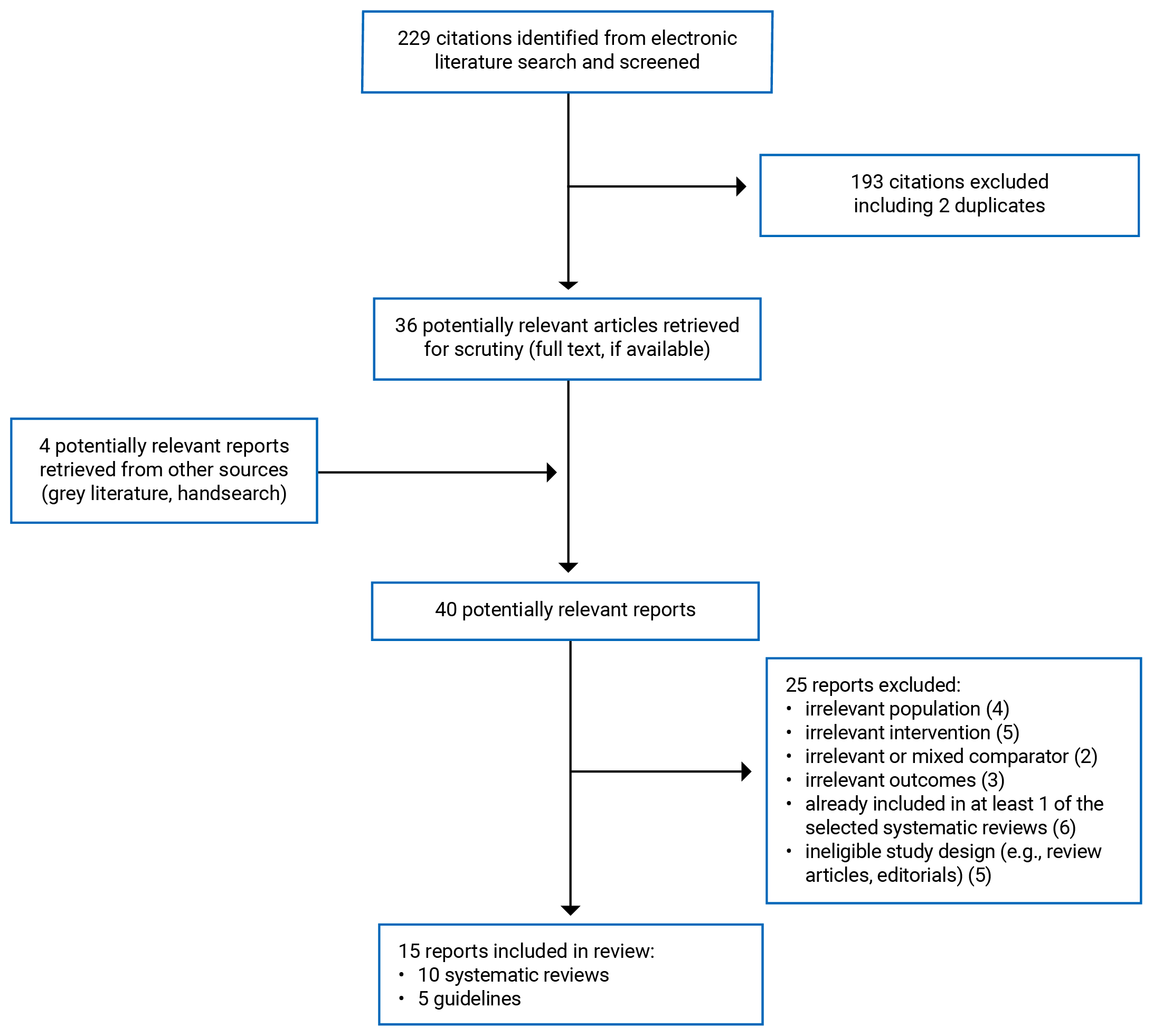
Appendix 3: Characteristics of Included Publications
Please note that this appendix has not been copy-edited.
Table 7: Characteristics of Included Systematic Reviews — Diagnostic Accuracy
Study citation, countries or regions of eligible studies, funding source | Study designs and numbers of primary studies included | Population characteristics | Intervention and comparator(s) | Outcomes |
|---|---|---|---|---|
Adults | ||||
Abd-Alrazaq et al. (2024)71 SR with meta-analysis Countries of included studies eligible for the current review: Canada, China, South Korea, Taiwan, US, and others Funding source: NR | Study designs included: NR Number of primary studies included: 38 Number of primary studies relevant to this report: 26 | Eligibility: Adults (at least 18 years) suspected of or diagnosed with any type of sleep apnea
| Index test: Wearables that use AI to detect sleep apnea; included devices worn on the chest, wrist, abdomen, finger, neck, nose, and face; included Belun Ring, Patch, T-REX TR100A, others, and NR Reference standard: Level 1 PSG |
|
Gao et al. (2024)72 SR with meta-analysis Countries of included studies eligible for the current review: Australia, China Funding source: Authors indicated that they did not receive funding for this review | Study designs included: Observational studies (e.g., cohort, cross-sectional) Number of primary studies included: 6 | Eligibility: Adults (at least 18 years) with an OSA prevalence of 55.2% to 66.3%
| Index test: Photographs (taken with consumer digital cameras or mobile devices), with or without clinical data, analyzed using AI Reference standard: Level 1 PSG |
|
Duarte et al. (2023)73 SR with meta-analysis Countries of included studies eligible for the current review: NR Funding source: National Funds through Fundação para a Ciência e a Tecnologia, I.P., within the CINTESIS, R&D Unit | Study designs included: NR Number of primary studies included: 41 | Eligibility: Adults with suspected OSA or OSA diagnosis
| Index test: Digital clinical tools for screening or diagnosis of OSA; includes smartphone-based tools, smart pillows, smart watches, rings, respiration belts, radar, neck device, nasal air flow (e.g., SleepStrip), microphones, mattress sensors, garments, bone-conducted vibration, and adhesive patch Reference standard: Level 1 PSG |
|
Khalil et al. (2023)74 SR with meta-analysis Countries of included studies eligible for the current review: Australia, Canada, China, England, Germany, Ireland, Israel, Japan, South Korea, Spain, US Funding source: NR | Study designs included: Observational cohort studies and RCTs Number of primary studies included: 28 | Eligibility: Adults undergoing OSA diagnosis
| Index test: Noncontact tests for diagnosing OSA; includes technologies that use sound (microphones, smartphones), biomotion sensors (included sensors attached to bed legs, SleepMinder, NEMURI SCAN, Piezo-electric sensor placed under mattress, radars), or computer vision (Sleepwise, infrared video), facial recognition technology Reference standard: Level 1 PSG |
|
Khor et al. (2023)75 SR Countries of included studies eligible for the current review: Argentina, Australia, Belgium, Brazil, Canada, China, Egypt, Finland, France, Germany, Hong Kong, Ireland, Israel, Italy, Japan, Norway, Portugal, Singapore, Slovakia, South Korea, Spain, Switzerland, Taiwan, Thailand, Türkiye, UK, US Funding source: 1 author reported receiving fellowship support from the National Health and Medical Research Council Investigator Grant | Study designs included: NR Number of primary studies included: 190 Number of primary studies relevant to this report: 173 | Eligibility: Adults (18 years or older) undergoing OSA evaluation
| Index tests:
Reference standard: Level 1 PSG |
|
Ichikawa et al. (2022)76 SR with meta-analysis Countries of included studies eligible for the current review: Canada, China, Germany, Italy, Israel, Japan, South Korea, Türkiye, US Funding source: Yokohama City University | Study designs included: Prospective or retrospective observational (cohort or cross-sectional) studies, RCTs, diagnostic case-control studies Number of included studies: 13 | Eligibility: Adults with suspected sleep apnea syndrome (including OSA and central sleep apnea) based on medical and sleep history and physical examination
| Index test: Devices using PAT; includes WatchPATb (200, 200U, 100) Reference standard: Level 1 PSG |
|
Iftikhar et al. (2022)77 SR with meta-analysis Countries of included studies eligible for the current review: Canada, China, Germany, Israel, Italy, Japan, Norway, Singapore, Sweden, Türkiye, US Funding source: NR | Study designs included: NR Number of included studies: 17 Number of primary studies relevant to this report: 15 (2 studies included patients not suspected of or at low risk of having sleep apnea) | Eligibility: Adult patients who underwent simultaneous diagnostic PSGs and PAT tests for AHI
| Index test: WatchPATb Reference standard: Level 1 PSG |
|
Children | ||||
Landry et al. (2024)78 SR Countries of included studies eligible for the current review: Argentina, Australia, Belgium, Canada, China, Germany, Israel, Italy, Ireland, Malaysia, Taiwan, Thailand, Türkiye, South Korea, US Funding source: Authors indicated that they did not receive funding for this review. | Study designs included: NR Number of included studies: 62 | Eligibility: Children younger than 18 years including those suspected of SDB and related conditions
| Index tests:
Reference standard: Level 1 PSG |
|
Tuohuti et al. (2023)79 SR with meta-analysis Countries of included studies eligible for the current review: Australia, Belgium, Canada, China, South Korea, Spain, Türkiye, US Funding source: National Science Foundation of China | Study designs included: Cross-sectional or prospective studies Number of included studies: 12 Number of primary studies relevant to this report: 11 (1 primary study assessed level 2 compared to level 1 PSG) | Eligibility: Children younger than 18 years described an a pediatric OSA population
| Index tests relevant to this review: Portable sleep monitors including
Reference standard: Level 1 PSG |
|
AHI = apnea-hypopnea index; AUC = area under the curve; CPAP = continuous positive airway pressure usage; HSAT = home sleep apnea test; NA = not applicable; NPV = negative predictive value; NR = not reported; PAT = peripheral arterial tonometry; PPV = positive predictive value; PSG = polysomnography; RCT = randomized controlled trial; SD = standard deviation; SR = systematic review.
a“Sex/gender” indicates that that study did not indicate if they were reporting sex or gender, while “sex” indicates the review authors stated they were reporting on sex. None of the studies indicated how sex or gender data were collected.
bDevice is licensed for sale by Health Canada.
Table 8: Characteristics of Included Systematic Review — Clinical Utility
Study citation, countries or regions of eligible studies, funding source | Study designs and numbers of primary studies included | Population characteristics | Intervention and comparator(s) | Clinical outcomes, length of follow-up |
|---|---|---|---|---|
van Doorn et al. (2025)80 Countries of included studies eligible for the current review: Australia, Spain Funding source: Authors declared no funding received for this review | Study designs included: RCTs Number of included studies: 3 | Eligibility: Adults 18 to 80 years, patients suspected of OSA
| Index: Limited channel sleep study; included
Reference standard: Level 1 PSG |
Follow-up: 4 months or 6 months |
AE = adverse event; AHI = apnea-hypopnea index; CPAP = continuous positive airway pressure usage; NR = not reported; PSG = polysomnography; QoL = quality of life; RCT = randomized controlled trial.
aDevice is licensed for sale by Health Canada.
Table 9: Characteristics of Included Guidelines
Intended users, target population | Diagnostic test(s) considered | Major outcomes considered | Evidence collection, selection, and synthesis | Evidence quality assessment | Recommendations development and evaluation | Guideline validation |
|---|---|---|---|---|---|---|
ACEa (2025)81 | ||||||
Intended users: NR Target population: Adults 18 years or older | Level 3 sleep study | NR | Rely on existing guidelines, and recent SRs to complement the guidelines. | Included guidelines are assessed using AGREE II, and the GRADE approach is used for the evidence-to-recommendation framework; this may indicate GRADE is used for assessing quality of evidence. | Follow an evidence-to-recommendation framework based on GRADE, considering balance of health benefits and risks, certainty/quality of evidence, values and preferences of involved parties, and resource impact and feasibility considerations. These are circulated to the expert group who then individually rate the appropriateness of the draft recommendations, using the RAND/UCLA Appropriateness Method (a modified Delphi process). | Draft recommendations undergo external review, and changes made where appropriate. |
US Department of VA and DoD (2025)82 | ||||||
Intended users: VA, DOD, community practitioners, health care team that evaluates/ manages adults with OSA/chronic insomnia disorder Target population: Adults with OSA/chronic insomnia disorder who get care at the VA or DOD, or VA/DOD adult beneficiaries who get care from community-based practitioners |
| AHI, REI, potential harms to patients | A SR to address research questions, included RCTs and SRs of RCTs published between May 15, 2018, and March 31, 2024, in MEDLINE or Embase. Studies were restricted to English. NRSs and SRs of NRSs were included if RCTs or SRs of RCTs were not available. | Evidence quality was assessed using the USPSTF method, with each study assigned a rating of Good, Fair, or Poor based on criteria (dependent on study design). The quality of the overall body of research was assessed using GRADE. | GRADE approach to develop recommendations and determine strength ratings. Recommendations were developed during a 3.5-day in-person meeting from July 16 to July 19, 2024, with the SR distributed 2 weeks beforehand. The Work Group interpreted the SR’s findings and developed recommendations, considering quality of evidence, balance of desirable and undesirable outcomes, patient values and preferences, resource use, equity, acceptability, feasibility, and subgroup considerations. | Guideline went through 2 periods of internal feedback, followed by 1 period for external peer review; all feedback was reviewed and appropriate revisions made. Following external review, a final draft was presented to the EBP Work Group; feedback received from the EBP Work Group was used to revise to create the final guideline. The EBP Work Group approved the final guideline. |
NICE (2024)83 | ||||||
Intended users: Unclear; assumed to be health care practitioner referring patient for a sleep test Target population: Patients with suspected OSA or hypopnea syndrome | Novel sleep devices used at home:
| Diagnostic accuracy, intermediate outcomes (e.g., time to interpret device outputs, agreement/ concordance, clinical decision-making impact, time to diagnosis or to treatment start, number of repeat sleep studies, use of health care resources, test failure rate), clinical outcomes (e.g., morbidity, mortality), patient-reported outcomes (e.g., HRQoL, ease of use and acceptability, patient/carer experience), costs | An SR of clinical effectiveness was conducted and searched in May 2023 and updated on September 25, 2023, with no date limits. Title-abstract screening was completed by 2 reviewers independently; disagreements resolved through discussion or with a third reviewer. A single reviewer extracted data that were checked by the second reviewer. A similar strategy was used for an SR of cost-effectiveness. | Included studies were critically appraised using the QUADAS-2 instrument or the Cochrane Risk of Bias tool. | The diagnostics advisory committee considered evidence from several sources as well as views from clinical and patient experts. They formulated draft recommendations which were then available for comment; the comments received were then reviewed to create final recommendations. | Final guidance was open for resolution; commenters from consultation could request corrections. If resolution requests were received, publishing was suspended to investigate the requests; if there were no resolution requests, the final guidance was published. |
Chang et al. (2023)84 | ||||||
Intended users: Clinicians Target population: Adults with OSA |
| AHI, cost-effectiveness, test accuracy, clinical utility, treatment usage | For each topic, an SR was performed, first searching for RCTs, MAs, SRs, and published guidelines; if unavailable, observational studies were used. | Quality was graded using the Oxford LOE, before an aggregate grade (A to D) was determined based on guidelines from AAP SCQIM. | Recommendations were based on aggregate LOE along with assessments of benefit, harms, and costs for each topic. | A two-stage iterative review process was conducted, with at least 2 independent reviewers. |
SASM and SOAP (2023)85 | ||||||
Intended users: Physicians Target population: People who are pregnant and suspected of having OSA |
| Outcomes noted for recommendations relevant to this review:
| An SR of the literature, searching MEDLINE, Embase, CINAHL, and Scopus, with no restrictions by date or language. Two reviewers screened titles/ abstracts. Full-text review by 2 reviewers in duplicate; a third reviewer resolved disagreements at both phases of screening. Data extraction by committee members; meta-analysis conducted if 3+ studies, but no meta-analysis was conducted for questions related to this review. | Evidence quality was graded using the ACC/ AHA Clinical Practice Guideline recommendation classification system. | Unclear how recommendations were developed or evaluated. Guideline noted the process considered quality of evidence, balance between benefits and harms, patients’ values and preferences, and resource use. | Unclear if guideline was validated. |
AAP SCQIM = American Academy of Pediatrics Steering Committee on Quality Improvement and Management; ACC = American College of Cardiology; ACE = Agency for Care Effectiveness; AGREE II = Appraisal of Guidelines for Research and Evaluation II; AHA = American Heart Association; AHI = apnea-hypopnea index; DoD = Department of Defense; EBP = evidence-based practice; GRADE = Grading of Recommendations Assessment, Development and Evaluation; HRQoL = health-related quality of life; LOE = level of evidence; NICE = National Institute for Health and Care Excellence; NR = not reported; NRS = nonrandomized studies; OSA = obstructive sleep apnea; QUADAS-2 = Quality Assessment of Diagnostic Accuracy Studies; RDI = respiratory disturbance index; SASM = Society of Anesthesia and Sleep Medicine; SOAP = Society of Anesthesia and Sleep Medicine and the Society for Obstetric Anesthesia and Perinatology; SR = systematic review; USPSTF = US Preventive Services Task Force; VA = Veterans Affairs.
aDetailed methods for this specific guideline were not provided; information about the methods were based on a separate general methods and process document,90 which was assumed to apply to all guidelines produced by this agency.
Appendix 4: Critical Appraisal of Included Publications
Please note that this appendix has not been copy-edited.
Table 10: Diagnostic Accuracy of Portable Devices for Diagnosis of Sleep-Disordered Breathing — Strengths and Limitations of Systematic Reviews Using AMSTAR 267
Strengths | Limitations |
|---|---|
Adults | |
Abd-Alrazaq et al. (2024)71 | |
Authors clearly stated the population, intervention, comparators, and outcomes of interest. A protocol outlining detailed methods was established beforehand and the review was registered. Authors provided explanations for the types of studies to include and exclude. Authors used a comprehensive search strategy. They searched at least 2 databases, provided keywords for the search strategy, justified study and language restrictions, and screened reference lists of included studies. Authors performed study selection and data extraction in duplicate. Authors described the populations, interventions, comparators, and outcomes of included studies in sufficient detail. Authors used a satisfactory technique for assessing the risk of bias of included studies (QUADAS-2). Authors used appropriate statistical methods. Authors discussed the impact of bias when interpreting/discussing the results. Authors discussed the heterogeneity of the included studies. Authors declared no conflicts of interest. | Authors did not describe the study design for each included study. Authors did not provide a list of excluded studies with justifications. Authors did not indicate whether they were reporting sex or gender, or how this was measured. Authors did not provide PROGRESS-Plus8 criteria such as place of residence, race, ethnicity, culture, language, occupation, religion, education, socioeconomic status, or social capital. It is unclear whether the potential impact of risk of bias of individual studies on the results of the meta-analysis was assessed. It is unclear whether the high heterogeneity seen in the results was explored further to determine possible causes. It is unclear if publication bias was assessed. Sources of funding for each included study were NR. SR authors mentioned limitations of the included studies such as generalizability only to wearable AI devices, to 16 countries, and to hospital studies; the SR may not be applicable to health care centre populations. SR authors also indicated their meta-analyses may be overestimated or underestimated given that studies published in languages other than English and those without enough details reported were not included in their estimates. They also indicated there was high statistical heterogeneity in their results. Funding for the review was NR. |
Gao et al. (2024)72 | |
Authors clearly stated the population, intervention, comparators, and outcomes of interest. A protocol outlining detailed methods was established beforehand and the review was registered. Authors searched at least 2 databases and provided keywords for the search strategy. Authors performed study selection and data extraction in duplicate. Authors described the populations, interventions, comparators, study designs, and outcomes of included studies in sufficient detail. Authors used a satisfactory technique for assessing the risk of bias of included studies (QUADAS-2). Authors used appropriate statistical methods. Authors indicated that included studies had a low risk of bias. Authors investigated publication bias and indicated it was unlikely to have affected the results. Authors declared no conflicts of interest. | Authors did not provide justifications for publication restrictions (e.g., restricting to English-only) and study design restrictions (e.g., observational studies only). They did not perform additional searches such as handsearching reference lists. Authors did not provide a list of excluded studies with justifications. Authors did not indicate whether they were reporting sex or gender, or how this was measured. Authors did not provide PROGRESS-Plus8 criteria such as place of residence, race, ethnicity, culture, language, occupation, religion, education, socioeconomic status, or social capital. Sources of funding for each included study were NR. It is unclear whether the heterogeneity in the results was explored. SR authors mentioned limitations of the included studies such as a small number of included studies, lack of information about diverse populations, and only including cross-sectional studies with high OSA prevalence, meaning generalizability could have been low. |
Duarte et al. (2023)73 | |
Authors clearly stated the population, intervention, comparators, and outcomes of interest. A protocol outlining detailed methods was established beforehand and the review was registered. Authors searched at least 2 databases, provided keywords for the search strategy, and manually searched references of included studies. Authors performed study selection and data extraction in duplicate. Authors described the interventions, comparators, and outcomes of included studies in sufficient detail. Authors used a satisfactory technique for assessing the risk of bias of included studies (Joanna Briggs Institute critical appraisal tool for diagnostic test accuracy studies). Authors discussed the impact of bias when interpreting/discussing the results. Authors declared no conflicts of interest. | It is unclear whether there were exclusion criteria based on study design or publication restrictions (e.g., language). Authors did not provide a list of excluded studies with justifications. Authors did not describe the study design or population ages for each included study. They indicated that there were gaps in study design. Authors did not indicate whether they were reporting sex or gender, or how this was measured. Authors did not provide PROGRESS-Plus8 criteria such as place of residence, race, ethnicity, culture, language, occupation, religion, education, socioeconomic status, or social capital. Sources of funding for each included study were NR. It is unclear whether the heterogeneity in the results was explored. It is unclear if publication bias was assessed. SR authors mentioned limitations of the included studies such as lack of enough participants in the test and validation groups, lack of information for each study on OSA prevalence, not enough reporting on diagnostic measures such as specificity, sensitivity, and AUC, and lack of external real-world validation. |
Khalil et al. (2023)74 | |
Authors clearly stated the population, intervention, comparators, and outcomes of interest. A protocol outlining detailed methods was established beforehand and the review was registered. Authors used a comprehensive search strategy. They searched at least 2 databases, provided keywords for the search strategy, searched unpublished evidence, clinical trial registries, and screened reference lists of included studies. Authors performed study selection and data extraction in duplicate. Authors described the populations, interventions, comparators, study designs, and outcomes of included studies in sufficient detail. They also indicated industry sponsor for each study. Authors used a satisfactory technique for assessing the risk of bias of included studies (QUADAS-2). Authors used appropriate statistical methods. Authors indicated that most included studies had a low risk of bias. Authors assessed publication bias and discussed its impact on the evidence. Authors declared no competing interests. | Authors did not provide citations for all included studies limiting the ability to understand which primary studies were included and how these may have overlapped with primary studies in other included SRs in this report. Authors did not provide justifications for study design and language restrictions. Authors did not provide a list of excluded studies with justifications. Authors did not indicate whether they were reporting sex or gender, or how this was measured. Authors did not provide PROGRESS-Plus8 criteria such as place of residence, race, ethnicity, culture, language, occupation, religion, education, socioeconomic status, or social capital. It is unclear whether the heterogeneity in the results was explored. SR authors mentioned limitations of the included studies such as a small number of studies found for certain devices (e.g., computer vision technology) and studies with populations from outpatient settings with high OSA prevalence which may not be generalizable to other settings. They also indicated that there was high heterogeneity. Funding for the review was NR. |
Khor et al. (2023)75 | |
Authors clearly stated the population, intervention, comparators, and outcomes of interest. A protocol outlining detailed methods was established beforehand and the review was registered. Authors provided an explanation for the types of studies to include and exclude. Authors searched at least 2 databases, provided keywords for the search strategy, and manually searched references of included studies. Authors performed study selection in duplicate. One author performed data extraction and another verified. Authors described the populations, interventions, comparators, study designs, and outcomes of included studies in sufficient detail. Authors used a satisfactory technique for assessing the risk of bias of included studies (QUADAS-2). Authors discussed the heterogeneity of the included studies. Authors declared no competing interests. | Authors did not provide justifications for language restrictions. Authors did not provide a list of excluded studies with justifications. Authors did not indicate whether they were reporting sex or gender, or how this was measured. Authors did not provide PROGRESS-Plus8 criteria such as place of residence, race, ethnicity, culture, language, occupation, religion, education, socioeconomic status, or social capital. Sources of funding for each included study were NR. It is unclear whether study quality was considered when interpreting the results of the review. SR authors noted the high heterogeneity in the studies which meant a meta-analysis could not be conducted; this was due to different eligibility for study participants, study scoring, portable tests with unique technical aspects, and different cut-off values for OSA diagnosis. |
Ichikawa et al. (2022)76 | |
Authors clearly stated the population, intervention, comparators, and outcomes of interest. A protocol outlining detailed methods was established beforehand and the review was registered. Authors discussed deviations from the protocol. Authors provided an explanation for the types of studies to include and exclude. Authors used a comprehensive search strategy. They searched at least 2 databases, provided keywords for the search strategy, searched unpublished evidence, clinical trial registries, and screened reference lists of included studies. Authors performed study selection and data extraction in duplicate. Authors provided a list of excluded studies with justifications. Authors described the populations, interventions, comparators, study designs, and outcomes of included studies in sufficient detail. Authors used a satisfactory technique for assessing the risk of bias of included studies (QUADAS-2). Authors used appropriate statistical methods. Authors discussed the impact of bias when interpreting/discussing the results. Authors discussed the heterogeneity of the included studies. Authors declared no competing interests. | Authors did not indicate whether they were reporting sex or gender, or how this was measured. Authors did not provide PROGRESS-Plus8 criteria such as place of residence, race, ethnicity, culture, language, occupation, religion, education, socioeconomic status, or social capital. Sources of funding for each included study were NR. It is unclear whether study quality was considered when interpreting the statistical results of the review because, overall, the studies had a low to moderate risk of bias and some studies in the summary had high risk of bias for flow and timing. It is unclear if publication bias was assessed. SR authors indicated that sensitivity and subgroup analyses could not be conducted because there was not enough data to do so. |
Iftikhar et al. (2022)77 | |
Authors clearly stated the population, intervention, comparators, and outcomes of interest. Authors searched at least 2 databases. Authors performed study selection independently among all authors. Authors provided a list of excluded studies with justifications. Authors described the populations, interventions, comparators, and outcomes of included studies in sufficient detail. Authors used a satisfactory technique for assessing the risk of bias of included studies (QUADAS-2). Authors used appropriate statistical methods. Authors investigated and discussed heterogeneity. Authors investigated publication bias. Authors reported no conflicts of interest. | It is unclear whether a protocol was written or registered. It is unclear whether there were exclusion criteria based on study design or publication restrictions (e.g., language). Authors did not provide keywords for the search strategy or describe additional searching for studies (e.g., reference lists, trial registries) Data extraction was conducted by 1 author. Authors did not describe the study design for each included study. Authors did not indicate how sex was measured. Authors did not provide PROGRESS-Plus8 criteria such as place of residence, race, ethnicity, culture, language, occupation, religion, education, socioeconomic status, or social capital. Sources of funding for each included study were NR. It is unclear whether the potential impact of risk of bias of individual studies based on the QUADAS-2 tool was considered in the pooled meta-analysis results and interpretation of findings. Funding for the review was NR. SR authors indicated that there were limitations in the amount of data to conduct certain statistical analyses, unextractable information from some studies and high heterogeneity. |
Children | |
Landry et al. (2024)78 | |
Authors clearly stated the population, intervention, comparators, and outcomes of interest. Authors provided a justification for limiting to English and French studies only. Authors used a comprehensive search strategy. They searched at least 2 databases, provided keywords for the search strategy, hand searched journal articles, consulted experts, and screened reference lists of included studies. Authors performed study selection in duplicate. Authors described the populations, interventions, comparators, and outcomes of included studies in sufficient detail. Authors used a satisfactory technique for assessing the risk of bias of included studies (QUADAS-2). Authors discussed the impact of bias when interpreting/discussing the results. Authors investigated and discussed heterogeneity. Authors reported no conflicts of interest. | It is unclear whether a protocol was written or registered. It is unclear whether there were study design restrictions. It is unclear whether data extraction was conducted in duplicate. Authors did not provide a list of excluded studies with justifications. Authors did not indicate how sex was measured. Authors did not provide PROGRESS-Plus8 criteria such as place of residence, race, ethnicity, culture, language, occupation, religion, education, socioeconomic status, or social capital. Sources of funding for each included study were NR. SR authors noted limitations such as high heterogeneity in the included studies (i.e., device types, methods, definitions for sleep apnea, age ranges), small sample sizes, low quality of studies overall, low generalizability (i.e., in laboratory settings instead of real-world settings), lack of information about subgroups of patients who could benefit from certain tests, and potential for selection bias because participants were from populations with high prevalence of sleep apnea. |
Tuohuti et al. (2023)79 | |
Authors clearly stated the population, intervention, comparators, and outcomes of interest. Authors used a comprehensive search strategy. They searched at least 2 databases, provided keywords for the search strategy, and screened reference lists of included studies. Authors performed study selection and data extraction in duplicate. Authors described the populations, interventions, comparators, study designs, and outcomes of included studies in sufficient detail. Authors used a satisfactory technique for assessing the risk of bias of included studies (QUADAS-2). Authors used appropriate statistical methods. Authors discussed the impact of bias when interpreting/discussing the results. Authors investigated publication bias; there was no significant bias in the included studies. Authors declared they had no conflicts of interest to disclose. | It is unclear whether a protocol was written or registered. It is unclear whether there were study design restrictions. Authors did not provide a list of excluded studies with justifications. Authors did not indicate how sex was measured. Authors did not provide PROGRESS-Plus8 criteria such as place of residence, race, ethnicity, culture, language, occupation, religion, education, socioeconomic status, or social capital. Sources of funding for each included study were NR. It is unclear whether the potential impact of risk of bias of individual studies based on the QUADAS-2 tool was considered in the pooled meta-analysis results and interpretation of findings. It is unclear whether statistical heterogeneity in the results was explored. SR authors noted limitations such as generalizability of the evidence which was exclusive to laboratory settings. |
AI = artificial intelligence; AMSTAR 2 = A MeaSurement Tool to Assess systematic Reviews 2; AUC = area under the curve; NR = not reported; OSA = obstructive sleep apnea; QUADAS-2 = Quality Assessment of Diagnostic Accuracy Studies; SR = systematic review.
Note: Information about how SRs were funded was based on what was reported in included articles; we did not consult systematic review authors to request funding details.
Table 11: Clinical Utility of Portable Devices for Diagnosis of Sleep-Disordered Breathing — Strengths and Limitations of Systematic Reviews Using AMSTAR 267
Strengths | Limitations |
|---|---|
Van Doorn et al. (2025)80 | |
Research questions and inclusion criteria included the population, intervention, control group, and outcome. A protocol was published in advance of the review. Differences between the protocol and review were reported with justifications for the changes. Authors explained their selection of study designs that were eligible for inclusion in the review. Two bibliographic databases were searched, with search dates and full search strategies reported. Reference lists of included studies were also checked, and experts in the field were also consulted to identify any missing potentially relevant articles. No restrictions were placed on language or type of publication. Four authors performed study selection in duplicate. Disagreements were resolved through discussion or after consultation with a third reviewer. Included studies were described in adequate detail. RoB was assessed in the included studies using the Cochrane RoB 2 tool and discussed in the summary of results. Data extraction was done by 1 author and checked by another. Sources of funding and competing interests for the included studies were described. Methods for meta-analyses were appropriate. Authors reported they did not receive funding for the SR and reported their internal sources of support. Conflicts of interest were also reported and none were related to the work. | A partial list of excluded studies was provided with justifications. It is unclear why a complete list was not provided. Authors did not indicate how sex was measured. Authors did not provide PROGRESS-Plus8 criteria such as place of residence, race, ethnicity, culture, language, occupation, religion, education, socioeconomic status, or social capital. The primary meta-analysis included all studies, regardless of quality, which may have biased the results, particularly when RoB was high or a concern. Heterogeneity was not discussed in the results, which may have been due to the small number of studies. Publication bias was not assessed, due to the small number of studies. Due to the large number of references identified from the literature search, the review authors used an RCT classifier for the MEDLINE results, as well as a ‘Screen4Me’ service from Cochrane. The authors noted this may have caused them to miss potentially relevant RCTs. One included RCT did not use a portable device as their index test, but rather used data from specific channels from a Level 1 PSG; it is unclear if this is comparable to testing with a level 3 or 4 device. All studies were performed in academic hospitals, so it is unclear if the results are generalizable to devices used in people’s homes. |
AMSTAR 2 = A MeaSurement Tool to Assess systematic Reviews 2; NR = not reported; PSG = polysomnography; RoB = risk of bias; RCT = randomized controlled trial; SR = systematic review.
Note: Information about how SRs were funded was based on what was reported in included articles; we did not consult systematic review authors to request funding details.
Table 12: Evidence-Based Guidelines for Portable Devices for Diagnosis of Sleep-Disordered Breathing — Strengths and Limitations of Guidelines Using AGREE II68
Item | ACE (2025)81 | US Department of VA and DoD (2025)82 | NICE (2024)83 | Chang et al. (2023)84 | SASM and SOAP (2023)85 |
|---|---|---|---|---|---|
Domain 1: scope and purpose | |||||
1. The overall objective(s) of the guideline is (are) specifically described. | No | Yes | Yes | Yes | Yes |
2. The health question(s) covered by the guideline is (are) specifically described. | No | Yes | Yes | Yes | Yes |
3. The population (patients, public, etc.) to whom the guideline is meant to apply is specifically described. | Yes | Yes | Yes | Yes | Yes |
Domain 2: stakeholder involvementa | |||||
4. The guideline development group includes individuals from all relevant professional groups. | NR | Yes | Yes | Yes | Yes |
5. The views and preferences of the target population (patients, public, etc.) have been sought. | NR | Yes | Yes | NR | Unclear |
6. The target users of the guideline are clearly defined. | NR | Yes | No | Yes | Yes |
Domain 3: rigour of development | |||||
7. Systematic methods were used to search for evidence. | Yesb | Yes | Yes | Yes | Yes |
8. The criteria for selecting the evidence are clearly described. | No | Yes | Yes | No | Yes |
9. The strengths and limitations of the body of evidence are clearly described. | No | Yes | Yes | Yes | Yes |
10. The methods for formulating the recommendations are clearly described. | No | Yes | Yes | Yes | No |
11. The health benefits, side effects, and risks have been considered in formulating the recommendations. | No | Yes | Yes | Yes | Yes |
12. There is an explicit link between the recommendations and the supporting evidence. | No | Yes | Yes | Yes | Yes |
13. The guideline has been externally reviewed by experts prior to its publication. | No | Yes | Yes | Yes | NR |
14. A procedure for updating the guideline is provided. | No | Yes | No | No | No |
Domain 4: clarity of presentation | |||||
15. The recommendations are specific and unambiguous. | Yes | Yes | Yes | Yes | Yes |
16. The different options for management of the condition or health issue are clearly presented. | NA | NA | NA | NA | NA |
17. Key recommendations are easily identifiable. | Yes | Yes | Yes | Yes | Yes |
Domain 5: applicability | |||||
18. The guideline describes facilitators and barriers to its application. | No | No | Yes | No | No |
19. The guideline provides advice and/or tools on how the recommendations can be put into practice. | No | No | Unclearc | No | No |
20. The potential resource implications of applying the recommendations have been considered. | No | Yes | Yes | Yes | Yes |
21. The guideline presents monitoring and/or auditing criteria. | No | Uncleard | No | No | Uncleard |
Domain 6: editorial independence | |||||
22. The views of the funding body have not influenced the content of the guideline. | Uncleare | Uncleare | Uncleare | Uncleare | Uncleare |
23. Competing interests of guideline development group members have been recorded and addressed. | NR | Yes | Yes | NR | Unclearf |
ACE = Agency for Care Effectiveness; AGREE II = Appraisal of Guidelines for Research and Evaluation II; DoD = Department of Defense; NA = not applicable; NICE = National Institute for Care Excellence; NR = not reported; SASM = Society of Anesthesia and Sleep Medicine; SOAP = Society for Obstetric Anesthesia and Perinatology; VA = Veterans Affairs.
Note: Information about how systematic reviews were funded was based on what was reported in included articles; we did not consult systematic review authors to request funding details.
aWe retained the domain names that are included in the original AGREE II checklist, which includes the term stakeholder (i.e., in Domain 2), to be clear that we assessed the strengths and limitations of guidelines using AGREE II. However, the CDA-AMC understands that language is constantly evolving and the word stakeholder has association with colonialism; whenever possible, CDA-AMC does not use this word in our reports.
bBased on general methods and processes manual.92
cGuideline authors state in the document’s implementation section, “NICE intends to develop tools, in association with relevant stakeholders, to help organisations put this guidance into practice.”83 It is unclear if these tools are in development or have been developed.
dRecommendations provided related to re-testing.
eFunding was not reported.
fCompeting interests reported; unclear how they were addressed.
Appendix 5: Main Study Findings
Please note that this appendix has not been copy-edited.
Table 13: Summary of Findings by Outcome in Adults — Sensitivity, Specificity, and AUC
First author (year) | Device name or device type | Comparator | Number of studies | AHI cut-offa | Sensitivity | Specificity | AUC | Notes |
|---|---|---|---|---|---|---|---|---|
Level 3 devices | ||||||||
Khor et al. (2023)75 | — | PSG level 1 | 44 | Range: 5 to 15 | Range: 33% to 100% | Range: 9% to 100% | Range: 0.6 to 1 | For COPD patients: Sensitivity = 74% to 98%; Specificity = 78% to 98% Author stated that the literature indicated adequate sensitivity for patients at risk of OSA, with varying specificity depending on OSA severity. |
Level 4 devices | ||||||||
Khor et al. (2023)75 | ApneaLink | PSG level 1 | 18 | Range: 5 to 15 | Range: 64.5 to 100% | Range: 9.5% to 100% | Range: 0.7 to 1 | Automatic scoring using the default setting tended to have lower specificity than automatic scoring using alternative settings or manual analyses. |
Pulse oximetry | PSG level 1 | 21 | Range: 5 to 15 | Range: 48 to 97% | Range: 63 to 100% | Range: 0.7 to 1 | ODI using desaturation thresholds of 4% had better specificity but lower sensitivity, compared to ODI using desaturation thresholds of 2% or 3%. Sensitivity and specificity of pulse oximetry were comparable in the general population and specific disease groups; patients with COPD were at the lower end of the range (sensitivity 60% and specificity 63% for PSG AHI > 15 events/hour, using a 4% desaturation and 10s duration threshold). | |
4-channel tests | PSG level 1 | 4 | Range: 5 to 40 | Range: 27% to 97% | Range: 64.7% to 100% | Range: 0.9 to 1 | “In general, both sensitivity and specificity improved with increased number of parameters measured, although they varied across different devices.” | |
3-channel tests | PSG level 1 | 5 | Range: 5 to 30 | Range: 81.8 to 100% | Range: 68.4% to 100% | NR | — | |
2-channel tests | PSG level 1 | 10 | Range: 5 to 30 | Range: 66.6% to 100% | Range: 40% to 100% | Range: 0.9 to 1 | — | |
1-channel tests | PSG level 1 | 17 | Range: 5 to 30 | Range: 7% to 100% | Range: 15% to 100% | Range: 0.8 to 1 | — | |
Wearables — multiple types | ||||||||
Abd-Alrazaq et al. (2024)71 | Wearables detecting respiratory events | PSG (unspecified) | 11 | NR | Range: 25% to 94% Pooled mean (95% CI): 72.6% (53% to 85%) Heterogeneity: Tau2 = 0.2373, Q (P value) = 7131.5 (< 0.001), I2 = 100% | Range: 70% to 100% Pooled mean (95% CI): 94.8% (86% to 98%) Heterogeneity: Tau2 = 0.5619, Q (P value) = 202,709.3 (< 0.001), I2 = 100% | NR | — |
Wearables detecting sleep apnea | PSG (unspecified) | 11 | NR | Range: 77% to 100% Pooled mean (95% CI): 94.1% (89% to 97%) Heterogeneity: Tau2 = 0.0126, Q (P value) = 52.6 (< 0.01), I2 = 81% | Range: 29% to 100% Pooled mean (95% CI): 75.6 (62% to 88%) Heterogeneity: Tau2 = 0.0444, Q (P value) = 52.8 (< 0.01), I2 = 81% | NR | — | |
Khor et al. (2023)75 | — | PSG level 1 | 13 | Range: 5 to 30 | “70% for detecting mild-to-moderate OSA” | Range: 29% to 100% | Range: 0.6 to 1 | Intervention: wearable devices excluding ApneaLink and SleepStrip. Included devices: ApneaStrip, Belun Ring, E4 wristband, LifeShirt, Morpheus Ox, Magnetometer-derive Mandibular movements, NightOwl, Overnight Digital Monitoring, Patch [microphone and accelerometer], smartphone system for snoring, Somnocheck Micro |
SleepStrip | ||||||||
Khor et al. (2023)75 | — | PSG level 1 | 6 | Range: 5 to 15 | Range: 43.8 to 100% | Range: 29.4 to 76.5% | Range: 0.8 to 1 | — |
WatchPAT series | ||||||||
Khor et al. (2023)75 | — | PSG level 1 | 15 | Range: 5 to 15 | Range: 84.6% to 100% | Range: 42.9% to 100% | Range: 0.7 to 1 | — |
Iftikhar et al. (2022)77 | — | PSG (unspecified) | 6 | 5 | Pooled sensitivity (SE) = 94.11% (2.6%) | Pooled specificity (SE) = 43.47% (12.9%) | NR | — |
15 | Pooled sensitivity (SE) = 92.21% (2.4%) | Pooled specificity (SE) = 72.39% (7.8%) | NR | — | ||||
30 | Pooled sensitivity (SE) = 74.11% (5.6%) | Pooled specificity (SE) = 87.10 (3.4%) | NR | — | ||||
WatchPAT 200 | ||||||||
Ichikawa et al. (2022)76 | — | PSG (unspecified) | 11 | 5 | Pooled sensitivity (95% CI): 96% (93% to 97%) | Pooled specificity (95% CI): 44% (32% to 56%) | NR | — |
11 | 15 | Pooled sensitivity (95% CI): 88% (85% to 91%) | Pooled specificity (95% CI): 74% (63% to 83%) | NR | — | |||
9 | 30 | Pooled sensitivity (95% CI): 80% (66% to 89%) | Pooled specificity (95% CI): 90% (83% to 95%) | NR | — | |||
Other wearable devices | ||||||||
Duarte et al. (2023)73 | Neck devices | PSG (unspecified) | 1 | 5 | 78% | 92% | NR | Sensitivity was highest at higher AHI cut-offs (15 events/hour); specificity was highest at lowest cut-off (5 events/hour). |
10 | 81% | 87% | NR | — | ||||
15 | 87% | 88% | NR | — | ||||
Smartwatches | PSG (unspecified) | 1 | NR | 96% | NR | NR | — | |
Noncontact systems — multiple types | ||||||||
Khalil et al. (2023)74 | — | PSG (unspecified) | 15 | 5 | Pooled sensitivity (95% CI): 89% (84% to 93%) | Pooled specificity (95% CI): 74% (61% to 84%) | 0.903 | I2 = 31% |
— | PSG (unspecified) | 26 | 15 | Pooled sensitivity (95% CI): 87% (84% to 90%) | Pooled specificity (95% CI): 80% (72% to 86%) | 0.902 | I2 = 0 | |
— | PSG (unspecified) | 15 | 30 | Pooled sensitivity (95% CI): 85% (80% to 89%) | Pooled specificity (95% CI): 86% (79% to 92%) | 0.918 | I2 = 16% | |
Noncontact methods — sound technology | ||||||||
Khalil et al. (2023)74 | — | PSG (unspecified) | 6 | 5 | Pooled sensitivity (95% CI): 91% (86% to 94%) | Pooled specificity (95% CI): 72% (39% to 91%) | 0.916 | I2 = 11% |
— | PSG (unspecified) | 1 | 15 | Pooled sensitivity (95% CI): 89% (86% to 91%) | Pooled specificity (95% CI): 80% (68% to 88%) | 0.916 | I2 = 11% | |
— | PSG (unspecified) | 6 | 30 | Pooled sensitivity (95% CI): 86% (73% to 93%) | Pooled specificity (95% CI): 85% (77% to 90%) | 0.916 | I2 = 11% | |
Duarte et al. (2023)73 | — | PSG (unspecified) | 1 | Range: 5 to 30 | Range: 89 to 96% | Range: 83% to 96% | Range: 0.94 to 0.99 | Intervention described as “audio recorder.” Best-achieved cut-off: AHI ≥ 30 |
Khor et al. (2023)75 | — | PSG level 1 | 4 | Range: 5 to 15 | Range: 88 to 96.7% | Range: 63% to 98.3% | Range: 0.9 to 1 | Intervention: Acoustic recording systems; includes smartphone recording, noncontact microphones, apps, and snoring sound recordings. |
— | PSG level 2 | 1 | Range: 5 to 15 | Range: 79 to 96% | Range: 65 to 95% | — | Tracheal sound recording | |
Noncontact methods — biomotion technology | ||||||||
Khalil et al. (2023)74 | — | PSG (unspecified) | 7 | 5 | Pooled sensitivity (95% CI%): 90% (86% to 93%) | Pooled specificity (95% CI%): 67% (45% to 83%) | Range: 0.896 | I2 = 9% |
— | PSG (unspecified) | 13 | 15 | Pooled sensitivity (95% CI%): 85% (80% to 90%) | Pooled specificity (95% CI%): 83% (71% to 91%) | Range: 0.896 | I2 = 9% | |
— | PSG (unspecified) | 7 | 30 | Pooled sensitivity (95% CI%): 88% (82% to 92%) | Pooled specificity (95% CI%): 87% (69% to 95%) | Range: 0.896 | I2 = 9% | |
Khor et al. (2023)75 | — | PSG level 1 | 8 | Range: 5 to 30 | 73.9% to 100% | 41.7% to 100% | Range: 0.8 to 1 | Intervention: radar systems; includes SleepMinder, radars, and sensors under the mattress. |
Noncontact methods — biomotion technology – under-the-mattress sensors or sheet systems | ||||||||
Duarte et al. (2023)73 | — | PSG (unspecified) | 12 | Range: 5 to 30 or NR | Range: 57% to 100% | Range: 45% to 96% | Range: 0.94 to 1.00 | Specific to under-the-mattress sensors. 2 studies reported best-achieved cut-off of AHI ≥ 15; 1 study reported best-achieved cut-off of AHI > = 30. |
Duarte et al. (2023)73 | — | PSG (unspecified) | 4 | 5 | Range: 77% to 100% | Range: 75% to 81% | Range: 0.94 to 0.98 | — |
— | PSG (unspecified) | 3 | 15 | Range: 88% to 100% | Range: 91% to 92% | Range: 0.97 to 0.99 | — | |
— | PSG (unspecified) | 2 | 20 | Range: 90% to 92% | Range: 90% to 92% | 0.98 | — | |
— | PSG (unspecified) | 2 | 30 | Range: 94% to 100% | Range: 82% to 96% | Range: 0.98 to 1.00 | — | |
— | PSG (unspecified) | 1 | NR | 57% | 45% | NR | — | |
Khor et al. (2023)75 | — | PSG level 1 | 6 | Range: 5 to 15 | Range: 84.2% to 100% | Range: 76.9% to 100% | Range: 0.9 to 1 | Sheet-type systems; includes SD-101, SD-102, Withings Sleep, Micromovement sensitive mattress, and sheet-shaped body vibrometer. |
— | PSG level 2 (unspecified cardiorespiratory polygraphy) | 1 | Range: 5 to 15 | Range: 50% to 94.3% | Range: 23.5% to 97.9% | 0.9 | Intervention: SleepMinder system. Sensitivity was highest at lower AHI cut-offs (5 events/hour); specificity was highest at highest cut-off (15 events/hour). | |
Noncontact methods — cameras or computer vision technology | ||||||||
Khor et al. (2023)75 | — | PSG level 1 | 1 | 5 | 90% | 71.4% | 0.9 | Intervention: Kinect 3D camera. |
Khalil et al. (2023)74 | — | PSG (unspecified) | 1 | 5 | Pooled sensitivity (95% CI): 99% (85% to 100%) | Pooled specificity (95% CI): 79% (38% to 96%) | 0.891 | Analyzes videos of sleep (e.g., movements). I2 = 0 |
— | PSG (unspecified) | 2 | 15 | Range: 88% to 93%b | Range: 68% to 79%b | 0.891 | I2 = 0 | |
— | PSG (unspecified) | 1 | 30 | Pooled sensitivity (95% CI): 81% (67% to 90%) | Pooled specificity (95% CI): 93% (42% to 100%) | 0.891 | I2 = 0 | |
Smartphone-based tools | ||||||||
Duarte et al. (2023)73 | — | PSG (unspecified) | 7 | 15 or NR | Range: 56% to 100% | Range: 63% to 97% | Range: 0.61 to 0.95 | Includes some primary studies that overlap with other SRs which were grouped in different categories. This range is presented to give a general sense of accuracy for smartphone-based tools. Results from the primary studies that were not included in other SRs are presented in data that follow. |
Audio | PSG (unspecified) | 1 | NR | 72% | 89% | 0.88 | — | |
Audio and accelerometer | PSG (unspecified) | 1 | NR | 100% | 86% | — | — | |
App and sonar | PSG (unspecified) | 1 | 15 | 94% | 97% | 0.95 | — | |
App (unspecified) | PSG (unspecified) | 1 | NR | Female: 56% Male: 86% | NR | Female: 0.62 Male: 0.61 | — | |
Other digital tools | ||||||||
Duarte et al. (2023)73 | Face frame with attached microphone | PSG (unspecified) | 1 | Range: 10 to 15 | Range: 89% to 100% | Range: 85% to 96% | NR | Best-achieved cut-off: AHI ≥ 15 |
Bone-conducted transducer | PSG (unspecified) | 1 | Range: 5 to 30 | Range: 91% to 100% | 100% | Range: 0.91 to 1.00 | Best-achieved cut-off: AHI ≥ 15 | |
Artificial intelligence models trained on craniofacial photographs | ||||||||
Gao et al. (2024)72 | — | PSG (unspecified)or PSG (unspecified) and HSAT | 6 | Range: 5 to 15 | Pooled sensitivity (95% CrI): 84.9% (77.1% to 90.7%) | Pooled specificity (95% CrI): 71.2% (60.7% to 81.4%) | NR | Deep learning (convolutional neural networks) was identified by Bayesian meta-regression as the AI algorithm with highest accuracy (91.1% sensitivity and 79.2% specificity). |
AHI = apnea-hypopnea index; AI = artificial intelligence; AUC = area under the curve; CI = confidence interval; CrI = credible interval; HSAT = home sleep apnea test; PSG = polysomnography; NR = not reported.
aAHI or REI cut-offs are used to define and categorize the severity of sleep apnea. In general, an AHI or REI of at least 5 indicates for obstructive sleep apnea, with higher cut-offs indicating moderate or severe sleep apnea.5 If a range is reported, that indicates multiple cut-offs were tested (e.g., “Range: 5 to 15” indicates cut-offs of 5 and 15 were both assessed, within 1 study and/or within multiple studies).
bPooled estimates not provided for this category.
Table 14: Summary of Findings by Outcome in Children — Sensitivity, Specificity, and AUC
First author (year), comparator | AHI cut-offa | Number of studies | Sensitivity | Specificity | Number of studies with high (≥ 80%) sensitivities and specificities | AUC |
|---|---|---|---|---|---|---|
Multiple types of devices | ||||||
Tuohuti et al. (2023)79 Comparator: PSG (unspecified) | 1 to 5 | 12 | Pooled (95% CI): 91% (86% to 94%) | Pooled (95% CI): 76% (58% to 88%) | 6 | Pooled (95% CI): 0.93 (0.90 to 0.95)b |
Level 3 devices | ||||||
Landry et al. (2024)78 Comparator: PSG level 1 | 1 | 8 |
|
| Varied by patient age | Range: 0.77 to 0.96 |
5 | 9 |
| All had high specificities (80.8% to 100%) | 5 | Range: 0.81 to 0.95 | |
10 | 3 |
| All had high specificities (90 to 100%) | 2 | Range: 0.88 to 1.00 | |
Level 4 devices — oximetry-based – conventional analysis | ||||||
Landry et al. (2024)78 Comparator: PSG level 1 | 1 | 5 |
|
| 1 | Range: 0.61 to 0.92 |
5 | 9 |
|
| 2 | Range: 0.73 to 0.96 | |
10 | 4 |
|
| 2 | Range: 0.68 to 0.94 | |
Level 4 devices — oximetry-based – APMLA | ||||||
Landry et al. (2024)78 Comparator: PSG level 1 Note: Included oximetry data alone, with 5 studies additionally examining airflow, 2 studies also evaluating heart rate data, and 1 study analyzing body movement | 1 | 9 | All studies found high sensitivity (≥ 80%) in at least 1 tested model | Heterogeneous across and within studies, as some studies tested multiple types of models; 5 studies reported at least 1 model with high specificity, with the remining 4 reporting either moderate (71.5%) or poor (< 60%). | None. While some studies reported a model with high specificity, these models were often associated with moderate or poor sensitivity. | Range: 0.62 to 0.97 |
5 | 12 |
|
| 4 | Range: 0.65 to 0.97 | |
10 | 8 |
| High in all studies (87% to 100%) | Authors stated that 5 studies had a balanced set of high sensitivities and specificities | Range: 0.76 to 0.96 | |
Level 4 – analysis type not reported | ||||||
Tuohuti et al. (2023)79 Comparator: PSG (unspecified) | 5 | 1 (device: oximeter) | 0.80 (95% CI, 0.61 to 0.92) | 0.92 (95% CI, 0.79 to 0.98) | — | — |
Non-oximetry – conventional analysis | ||||||
Landry et al. (2024)78 Comparator: PSG level 1 Note: Included single bioparameters, most commonly ECG data other than heart rate (n = 2), and video media (n = 2) | 1 | 4 (devices: the Sunrise system, the Sonomat, anterior rhinomanometers, pulse oximeters) |
|
| 1 | Range: 0.59 to 0.84 |
5 | 5 (devices: Sunrise system, the Sonomat system, various smartphones [for video recording], audio recorders, Holter monitors) |
|
| 2 | Range: 0.63 to 0.95 | |
10 | 2 |
|
| 1 | Range: 0.96 to 0.98 | |
Non-oximetry – APMLA | ||||||
Landry et al. (2024)78 Comparator: PSG level 1 | 1 | 4 (based on ECG data other than heart rate (n = 3) or airflow (n = 1)) |
|
| 1 | Range: 0.56 to 0.60 |
5 | 4 - based on 3 different types of bioparameters: airflow, pulse rate variability, and heart rate variability |
|
| 0 | Range: 0.69 to 0.78 | |
10 | 3 to 1 study evaluated airflow-based LR models, while the other 2 studies addressed heart rate variability |
|
| 0 | Range: 0.69 to 0.84 | |
Wearable devices | ||||||
Landry et al. (2024)78 Comparator: PSG level 1 | 1 | 2 - WatchPAT 200, WristOx2 3150-BLE | High in both studies (95 to 100%) |
| 1 | Range: 0.56 to 0.90 |
5 | 3 - WatchPAT 200, WristOx2 3150-BLE, ApneaLink Plus | High in all studies |
| 2 | Range: 0.59 to 0.95 | |
10 | 3 - WatchPAT 200 or WristOx2 3150-BLE |
| High in all 3 studies (91% to 100%) | 2 | Range: 0.80 to 0.98 | |
Tuohuti et al. (2023)79 Comparator: PSG (unspecified) | 1.5 | 1 (device: ApneaLink) | 82% (95% CI, 57% to 96%) | 100% (95% CI, 29% to 100%) | — | — |
5 | 1 (WatchPAT) | 96% (80% to 100%) | 84% (64% to 95%) | — | — | |
Noncontact devices — mattress systems | ||||||
Tuohuti et al. (2023)79 Comparator: PSG (unspecified) | 5 | 1 – mattress system; measured respiratory movement,c oxygen saturation, body position | 83% (95% CI, 66% to 93%) | 96% (95% CI, 80% to 100%) | — | — |
AHI = apnea-hypopnea index; APMLA = automated processing and machine learning analysis; AUC = area under the curve; CI = confidence interval; ECG = electrocardiogram; LR = logistic regression; PSG = polysomnography; REI = respiratory event index.
Note: Tuohuti et al. (2023)79 did not report AUC for individual studies; thus, pooled estimates were reported, which include some overlap with the primary studies included in Landry et al. (2024).78 The 4 reported individual primary studies from Tuohuti et al. (2023)79 are the 4 unique studies, extracted to supplement findings from Landry et al. (2024)78 and provide additional information for specific device types.
aAHI or REI cut-offs are used to define and categorize the severity of sleep apnea. In general, an AHI or REI of at least 5 indicates for obstructive sleep apnea, with higher cut-offs indicating moderate or severe sleep apnea.5 If a range is reported, that indicates multiple cut-offs were tested (e.g., “Range: 5 to 15” indicates cut-offs of 5 and 15 were both assessed, within 1 study and/or within multiple studies).
bThis includes 1 primary study that technically does not meet eligibility criteria for this review, as it compares level 2 PSG to Level 1 PSG. It has been included here because individual AUC results weren’t available
cThe original review used abbreviations to indicate parameters measured; these were indicated as RM, though RM was not defined. We have assumed that RM stands for respiratory movement.
Table 15: Summary of Findings by Outcome — Positive Predictive Value and Negative Predictive Value
Study citation | Comparison | Number of studies | AHI or RDI cut-off (events per hour) | PPV (%), range | NPV (%), range |
|---|---|---|---|---|---|
Adults | |||||
Khor et al. (2023)75 | Level 3 vs. level 1 PSG | 34 | 5 to 30 | 33 to 100 | 0 to 100 |
Level 4 – ApneaLink vs. level 1 PSG | 11 | 5 to 30 | 50 to 100 | 16.7 to 100 | |
Level 4 – pulse oximetry vs. Level 1 PSG | 12 | 5 to 40 | 31 to 100 | 40 to 100 | |
Level 4 – 4-channel test vs. level 1 PSG | 3 | 5 to 30 | 78 to 100 | 32 to 96 | |
Level 4 – 3-channel test vs. level 1 PSG | 4 | 5 to 30 | 94.7 to 100 | 65.5 to 100 | |
Level 4 – 2-channel test vs. level 1 PSG | 10 | 5 to 30 | 57 to 100 | 50 to 100 | |
Level 4 – 1-channel test vs. level 1 PSG | 7 | 5 to 42 | 42 to 100 | 25 to 100 | |
Wearables – WatchPAT vs. level 1 PSG | 6 | 5 to 35 | 69.2 to 95 | 50 to 100 | |
Wearables – WatchPAT vs. level 2 PSG | 2 | 5 to 15 | 33.2 to 70 | 95 to 100 | |
Wearables – SleepStrip vs. level 1 PSG | 5 | 5 to 40 | 59.1 to 100 | 41.2 to 100 | |
Wearables – other vs. level 1 PSG | 8 | 5 to 30 | 48.8 to 100 | 13.4 to 100 | |
Noncontact systems – acoustic recording systems vs. level 1 PSG | 2 | 5 to 30 | 75 to 81.5 | 86.3 to 89.5 | |
Noncontact systems – radar systems vs. level 1 PSG | 8 | 5 to 30 | 72.8 to 100 | 46.2 to 100 | |
Noncontact systems – sheet-type systems vs. level 1 PSG | 4 | 5 to 30 | 58.5 to 100 | 42.9 to 010 | |
Noncontact systems – sheet-type systems vs. level 2 PSG – unspecified cardiorespiratory polygraphy | 1 | 5 to 30 | 54 to 71.7 | 66.7 to 96.7 | |
Noncontact systems – sheet-type systems vs. level 2 PSG – unspecified cardiorespiratory polygraphy | 1 | 5 to 30 | 54 to 71.7 | 66.7 to 96.7 | |
Children | |||||
Landry et al. (2024)78 | Level 3 vs. PSG (unspecified) | 8 | 1 to 10 | 58.8 to 100.0 | 0.0 to 100.0 |
Level 4 – oximetry-based, conventional analysis vs. PSG (unspecified) | 12 | 1 to 5 | 29 to 100 | 16.0 to 100 | |
Level 4 – oximetry-based, AMPLA vs. PSG (unspecified) | 11 | 1 to 10 | 45.8 to 100 | 18.5 to 97 | |
Level 4 – non–oximetry-based, conventional analysis vs. PSG (unspecified) | 6 | 1 to 10 | 53 to 95.0 | 41 to 100 | |
Level 4 – non–oximetry-based, AMPLA vs. PSG (unspecified) | 1 | 1 | 85.7 | 81.8 | |
Other devices vs. PSG (unspecified) | 3 | 1 to 10 | 15 to 96.6 | 0 to 100 | |
AHI = apnea-hypopnea index; AMPLA = automated processing and machine learning analysis; NPV = negative predictive value; PPV = positive predictive value; PSG = polysomnography; RDI = respiratory disturbance index; vs. = versus.
Table 16: Summary of Findings by Outcome in Adults — Diagnostic Odds Ratio, Positive Likelihood Ratio, and Negative Likelihood Ratio
Study citation, number of studies | Comparator | AHI threshold (events per hour) | Diagnostic OR | Positive likelihood ratio | Negative likelihood ratio |
|---|---|---|---|---|---|
WatchPAT (general) | |||||
Iftikhar et al. (2022)77 6 studies | PSG (unspecified) | 5 | 12.30 (SE = 3.62) | 1.66 (SE = 0.34) | 0.13 (SE = 0.03) |
15 | 31.08 (SE = 17.97) | 3.34 (SE = 0.97) | 0.10 (SE = 0.03) | ||
30 | 19.33 (SE = 6.46) | 5.74 (SE = 1.41) | 0.29 (SE = 0.06) | ||
Artificial intelligence models trained on craniofacial photographs | |||||
Gao et al. (2024)72 6 studies | PSG (unspecified)or PSG (unspecified) with HSAT | NR | 14.18 (95% CrI: 7.46 to 28.47) | 2.95 (95% CrI: 2.17 to 4.53) | 0.21 (95% CrI: 0.13 to 0.32). |
AHI = apnea-hypopnea index; CrI = credible interval; HSAT = home sleep apnea test; NR = not reported; OR = odds ratio; PSG = polysomnography; SE = standard error.
Notes: The diagnostic OR is the ratio of the odds of the test being positive if the patient has a disease, relative to the odds of the test being positive if the patient does not have the disease (definition extracted from Iftikhar et al.77). A higher value indicates better discriminatory test performance.
The positive likelihood ratio is the true positivity rate divided by the false positivity rate, and provides the “probability that a positive test would be expected in a patient divided by the probability that a positive test would be expected in a patient without a disease.” The negative likelihood ratio is the probability of a patient who has the disease but tests negative, divided by the probability of a patient who does not have the disease and tests negative.9 In general, a likelihood ratio > 1 indicates the test result is associated with the disease being present, while a likelihood ratio of < 1 indicates the test result is associated with the disease being absent. Likelihood ratios of > 10 or < 0.1 are generally considered to be strong evidence to rule in or rule out diagnoses, respectively.128
Table 17: Summary of Findings by Outcome in Adults — Accuracy
First author (year) | Number of included studies | Device name or device type | Comparator | Outcome | Result | Heterogeneity | ||
|---|---|---|---|---|---|---|---|---|
Tau2 | Q (P value) | I2 (%) | ||||||
Level 3 sleep tests | ||||||||
Khor et al. (2023)75 | 26 | — | PSG level 1 | Accuracy at detecting sleep apnea | Range: 67.2% to 100% | — | — | — |
Level 4 sleep tests | ||||||||
Khor et al. (2023)75 | 7 | ApneaLink | PSG level 1 | Accuracy at detecting sleep apnea | Range: 70 to 88.6% | — | — | — |
9 | Pulse oximetry | PSG level 1 | Accuracy at detecting sleep apnea | Range: 65% to 93.6% | — | — | — | |
2 | 4-channel test | PSG level 1 | Accuracy at detecting sleep apnea | Range: 68.2% to 98% | — | — | — | |
3 | 3-channel test | PSG level 1 | Accuracy at detecting sleep apnea | Range: 84.2% to 89.3% | — | — | — | |
3 | 2-channel test | PSG level 1 | Accuracy at detecting sleep apnea | Range: 80% to 93.7% | — | — | — | |
3 | 1-channel test | PSG level 1 | Accuracy at detecting sleep apnea | Range: 54.5% to 91.3% | — | — | — | |
Wearables | ||||||||
Abd-Alrazaq et al. (2024)71 | 17 | — | PSG (unspecified) | Accuracy in detecting respiratory events | Pooled mean (95% CI): 0.877 (0.81 to 0.92) Range: 0.69 to 0.97 | 0.1433 | 185,452.6 (< 0.001) | 100 |
4 | — | PSG (unspecified) | Accuracy in detecting type of respiratory events | Pooled mean (95% CI): 0.762 (0.49 to 0.95) Range: 0.40 to 0.97 | 0.0822 | 12,665.3 (< 0.001) | 100 | |
11 | — | PSG (unspecified) | Accuracy in detecting sleep apnea | Pooled mean (95% CI): 0.878 (0.82 to 0.93)Range: 0.71 to 1.00 | 0.0164 | 71.1 (< 0.01) | 86 | |
9 | — | Unclear; may include HSAT (review did not report separate results for PSG only comparator) | Accuracy in detecting severity of sleep apnea | Pooled mean (95% CI): 0.651 (0.54 to 0.75) Range: 0.36 to 0.89 | 0.0243 | 106.1 (< 0.001) | 93 | |
Khor et al. (2023)75 | 6 | WatchPAT | PSG level 1 | Accuracy at detecting sleep apnea | Range: 69.4% to 96% | — | — | — |
5 | SleepStrip | PSG level 1 | Accuracy at detecting sleep apnea | Range: 61.3% to 93.8% | — | — | — | |
9 | Other wearables | PSG level 1 | Accuracy at detecting sleep apnea | Range: 57.1% to 100% | — | — | — | |
Other noncontact systems | ||||||||
Khor et al. (2023)75 | 1 | Acoustic recording systems | PSG level 1 | Accuracy at detecting sleep apnea | 84.2% | — | — | — |
6 | Radar | PSG level 1 | Accuracy at detecting sleep apnea | Range: 77.6% to 100% | — | — | — | |
2 | Radar | Portable PSG or unspecified cardiorespiratory polygraphy | Accuracy at detecting sleep apnea | Range: 54.8% to 94.2% | — | — | — | |
3 | Sheet-type systems | PSG level 1 | Accuracy at detecting sleep apnea | Range: 61.2% to 97.6% | — | — | — | |
CI = confidence interval; HSAT = home sleep apnea test; PSG = polysomnography.
Table 18: Summary of Findings by Outcome in Adults — Bland-Altman Analysis for Agreement
Study citation, number of studies | Comparator | AHI or RDI bias (events per hour) | I2 | Percentage error | Review authors’ notes |
|---|---|---|---|---|---|
Level 3 sleep test | |||||
Khor et al. (2023)75 25 studies | PSG level 1 | Mean differences: −15.2 to 24 | — | — | 19 of 25 studies reported underestimated of AHI using level 3 tests; COPD patients had similar range of estimated mean of differences. |
Level 4 sleep test — ApneaLink without pulse oximetry | |||||
Khor et al. (2023)75 7 studies | PSG level 1 | Mean differences (LL, UL): −6.3 to 7 (−27.8, 19.6) | — | — | — |
Level 4 sleep test — pulse oximetry | |||||
Khor et al. (2023)75 5 studies | PSG level 1 | Mean differences (LL, UL): −13.7 to 4.8 (−37, 27.3) | — | — | — |
Wearable device — tracheal sound recording | |||||
Khor et al. (2023)75 1 study | PSG level 2 | Mean differences: −8.4 to −2.9 | — | — | — |
WatchPAT (general) | |||||
Iftikhar et al. (2022)77 17 studies | PSG (unspecified) | Pooled mean bias (SE): 0.30 (0.74) LL, UL: −1.14, 1.75 | 78% | 230% | — |
Subgroup analysis – scoring criteria | |||||
A – 3% desaturation for hypopneas with 30% airflow reduction (4 studies) | PSG (unspecified) | Pooled mean bias (SE): 0.15 (1.92) LL, UL: −3.61, 4.92 | 92% | 360% | — |
B – 4% desaturation for hypopneas with 30% airflow reduction (5 studies) | PSG (unspecified) | Pooled mean bias (SE): −1.10 (1.18) LL, UL: −3.41, 1.21 | 63.73% | 162% | — |
C – 3% desaturation for hypopneas with 50% airflow reduction (6 studies) | PSG (unspecified) | Pooled mean bias (SE): 0.15 (0.82) LL, UL: −1.46, 1.76 | 35.15% | 121% | — |
D – other (50% airflow reduction with either 4% desaturation for hypopneas or did not specify desaturation rule) (2 studies) | PSG (unspecified) | Pooled mean bias (SE): 4.13 (2.95) LL, UL: −1.66, 9.91 | 82.4% | 293% | — |
WatchPAT 100 | |||||
Khor et al. (2023)75 2 studies | PSG level 1 | Mean differences (LL, UL): 1.6 to 2.5 (−60.4, 57.6) | — | — | — |
Iftikhar et al. (2022)77 4 studies | PSG (unspecified) | Pooled mean bias (SE): 2.28 (1.26) LL, UL: −0.19, 4.75 | 66.2% | 151% | — |
WatchPAT 200 | |||||
Khor et al. (2023)75 9 studies | PSG level 1 | Mean differences (LL, UL): 4.7 to 5.1 (−46.5, 46.5) | — | — | — |
Iftikhar et al. (2022)77 13 studies | PSG (unspecified) | Pooled mean bias (SE): −0.35 (0.89) LL, UL: −2.09, 1.40 | 81.01% | 250% | — |
AHI = apnea-hypopnea index; COPD = chronic obstructive pulmonary disease; LL = lower limit; PSG = polysomnography; RDI = respiratory disturbance index; SE = standard error; UL = upper limit.
Note: Bland-Altman plots are a method of quantifying agreement between 2 quantitative measurements, studying the mean difference between the 2 measurements.90 These differences are affected by the mean AHI reported by studies; thus, percentage error can be calculated to present this difference in terms of a percentage.77
Table 19: Summary of Findings by Outcome in Adults — Cohen’s Kappa Coefficient for Sleep Apnea Severity Classification
Author (Year), number of included studies | Severity of sleep apnea | Pooled mean (SE) | I2 |
|---|---|---|---|
WatchPAT (general) | |||
Iftikhar et al. (2022)77 6 studies Comparator: PSG (unspecified) | No sleep apnea (AHI < 5 events per hour) | 0.45 (0.06) | 0 |
Mild (AHI = 5 to 14.9 events per hour) | 0.29 (0.05) | 0 | |
Moderate (AHI = 15 to 29.9 events per hour) | 0.25 (0.07) | 17.97% | |
Severe (AHI ≥ 30 events per hour) | 0.64 (0.05) | 21.16% | |
AHI = apnea-hypopnea index; PSG = polysomnography; SE = standard error.
Notes: Cohen’s kappa is a measure of interrater reliability; in this case, representing agreement between PAT and PSG results.
A kappa = 0 indicates agreement expected from random chance, while kappa = 1 represents perfect agreement.91
One suggested interpretation of kappa values is: 0 to 0.20 = no agreement; 0.21 to 0.39 = minimal agreement; 0.40 to 0.59 = weak agreement; 0.60 to 0.79 = moderate agreement, 0.80 to 0.90 = strong agreement; 0.90+ = almost perfect agreement.91
Table 20: Summary of Findings by Outcome — Sleepiness, Assessed With the ESS
Author (year) and study design | Index test – level of limited channel sleep study | Comparator | Number of participants (number of RCTs) | Follow-up, range (months) | ESS score | |
|---|---|---|---|---|---|---|
Mean score with level 1 PSG | MD with index test (95% CI) | |||||
Van Doorn et al. (2025)80 SR with meta-analysis | Level 3 (“Embla-Embletta,” limited data from Level 1 PSG) | Level 1 PSG | 701 (2) | 4 to 6 | −4.66 | 0.47 (−0.23 to 1.18) |
Level 4 (ApneaLink Air, limited data from Level 1 PSG) | Level 1 PSG | 573 (2) | 4 to 6 | −5.44 | 0.66 (−0.41 to 1.72) | |
CI = confidence interval; ESS = Epworth Sleepiness Scale; MD = mean difference; PSG = polysomnography; RCT = randomized controlled trial; SR = systematic review.
Note: “The ESS score ranges from 0 to 24, with a higher ESS score indicating more daytime sleepiness (i.e., lower is better). Minimum clinically important difference is 2–3.” (p.4)80
Table 21: Summary of Findings by Outcome — Quality of Life, Assessed With Functional Outcomes of Sleep Questionnaire
Author (year) and study design | Index test – level of limited channel sleep study | Number of participants (number of RCTs) | Follow-up, range (months) | Mean FOSQ score with level 1 PSG | Difference with index test, SMD (95% CI) |
|---|---|---|---|---|---|
Van Doorn et al. (2025)80 SR with meta-analysis Comparator: Level 1 PSG | Level 3 (“Embla-Embletta,” limited data from Level 1 PSG) | 701 (2) | 4 to 6 | NR | 0.01 SDs (−0.14 to 0.16) |
Level 4 (ApneaLink Air, limited data from Level 1 PSG) | 573 (2) | 4 to 6 | NR | −0.06 SDs (−0.22 to 0.11) |
CI = confidence interval; FOSQ = Functional Outcomes of Sleep Questionnaire; MD = mean difference; PSG = polysomnography; RCT = randomized controlled trial; SD = standard deviation; SR = systematic review.
Note: The difference is in the number of SDs; e.g., 0.01 SDs higher compared to PSG.
Table 22: Summary of Findings by Outcome — Use of Continuous Positive Airway Pressure
Author (year) and study design | Index test – level of limited channel sleep study | Number of participants (number of RCTs) | Follow-up, range (months) | Use of CPAP | |
|---|---|---|---|---|---|
Level 1 PSG group, mean (hours) | Limited channel sleep studies group, MD (95% CI) | ||||
Van Doorn et al. (2025)80 SR with meta-analysis Comparator: Level 1 PSG | Level 3 (“Embla-Embletta,” limited data from Level 1 PSG) | 360 (2) | 4 to 6 | 5.30 | −0.18 (−0.56 to 0.2) |
Level 4 (ApneaLink Air, limited data from Level 1 PSG) | 328 (2) | 4 to 6 | 4.75 | −0.36 (−1.14 to 0.42) | |
CI = confidence interval; CPAP = continuous positive airway pressure; FOSQ = Functional Outcomes of Sleep Questionnaire; MD = mean difference; PSG = polysomnography; RCT = randomized controlled trial; SR = systematic review.
Table 23: Summary of Findings by Outcome — Adverse Events
Author (year) and study design | Index test – level of limited channel sleep study | Outcome | Number of participants (number of RCTs) | Follow-up, range (months) | Result |
|---|---|---|---|---|---|
Van Doorn et al. (2025)80 SR with meta-analysis Comparator: Level 1 PSG | Level 3 (“Embla-Embletta,” limited data From level 1 PSG) | All-cause mortality | NR | NR | NR |
Serious adverse events | 701 (2) | 4 to 6 | “There was no evidence of a difference in serious adverse events, work and traffic accidents, hospital admissions, length of hospital stay and emergency visits during follow-up between groups.” | ||
Cardiovascular events and correlating risk factors | 430 (1) | 6 | “There was no evidence of a difference between groups in cardiovascular event incident rates or in change of body mass index and 24-hour blood pressure (total, systolic and diastolic) during follow-up.” | ||
Level 4 (ApneaLink Air, limited data from level 1 PSG) | All-cause mortality | NR | NR | NR | |
Serious adverse events | 573 (2) | 4 to 6 | “There was no evidence of a difference in serious adverse events, work and traffic accidents, hospital admissions, hospital days and emergency visits during follow-up between groups.” | ||
Cardiovascular events and correlating risk factors | 303 (1) | 4 to 6 | “There was no evidence of a difference between groups in cardiovascular event incident rates or in change of body mass index and blood pressure (systolic and diastolic) during follow-up.” |
NR = not reported; PSG = polysomnography; RCT = randomized controlled trial; SR = systematic review.
Table 24: Summary of Recommendations in Included Guidelines
Recommendations and supporting evidence | Strength of recommendations and quality of evidence |
|---|---|
Agency for Care Effectiveness (2025)81 | |
Recommendation: Ambulatory sleep study or HSAT with a level 3 device can be used to diagnose OSA in adults (aged 18 years or older) who meet the following criteria:
In addition: A specialist trained in sleep medicine and with the correct credentials (to interpret PSG) should assess the patient, review and interpret the HSAT data. Supporting evidence: NR | Strength of recommendation: NR Quality of evidence: NR |
Department of Veterans Affairs and Department of Defense (2025)82 | |
Recommendation: “For diagnosis of clinically suspected obstructive sleep apnea, we recommend diagnosis with polysomnography or home sleep apnea testing” (p.39) Related recommendations include:
Supporting evidence: 1 SR with meta-analysis and 6 primary studies; authors note the benefits outweigh the harms of undiagnosed and untreated OSA, as well as the burden of testing with HSAT compared to PSG, and subgroups of patients who may not do well in a sleep laboratory environment. | Strength of recommendation: strong for Quality of evidence: low |
Recommendation: “For diagnosis of obstructive sleep apnea in appropriate patients, we suggest home sleep apnea testing as an alternative to in-laboratory PSG” (p.42)
Supporting evidence: 4 primary studies, with limitations including small sample sizes and large confidence intervals. The authors noted benefits of HSATs (e.g., earlier diagnosis, testing more reflective of home sleep experience, reduced burden on patients) and noted some patients prefer to test at home. | Strength of recommendation: weak for Quality of evidence: very low |
Recommendation: For patients with a nondiagnostic HSAT, “we recommend further sleep testing for obstructive sleep apnea with in-lab polysomnography or HSAT” (p.42) as these may be associated with other sleep-disordered breathing (e.g., hypoventilation, central sleep apnea) (p.40) Supporting evidence: 4 primary studies. Considering harms of undiagnosed OSA in patients at high risk for this disease, the authors concluded that the benefits of repeat testing with a high pretest probability for OSA and a nondiagnostic HSAT outweigh potential harm or patient inconvenience, both of which were considered negligible or minor. | Strength of recommendation: strong for Quality of evidence: very low |
NICE (2024)83 | |
For people aged 16 years and older, the following home-testing devices can be used to diagnose and assess severity of obstructive sleep apnea hypopnea syndrome:
Supporting evidence: 6 studies assessing diagnostic accuracy, 2 of which were performed at home and 4 were performed in a clinic, covering the AcuPebble, Sunrise, Brizzy, and NightOwl. No studies were identified for the WatchPAT devices, so evidence for previous versions of the device were used. Economic model reports that the AcuPebble SA100, NightOwl, Sunrise, WatchPAT 300, and WatchPAT ONE are cost-effective compared to home oximetry and home RP. | Strength of recommendation: NR Quality of evidence: NR |
Recommendation: Factors to consider when using a home-testing device in place of home respiratory polygraphy or home oximetry:
Supporting evidence: report cites an independent review covering equity in medical devices, which covers some issues stated earlier; some factors were also noted in feedback from interested parties. | Strength of recommendation: NR Quality of evidence: NR |
Recommendation: More research is needed for the Brizzy home-testing device for people aged 16 years and older. Supporting evidence: As estimates of diagnostic accuracy for Brizzy are uncertain, the cost-effectiveness estimates are also unclear as the available studies may have overestimated diagnostic accuracy. | Strength of recommendation: NR Quality of evidence: NR |
Recommendation: More research is needed for people under the age of 16 for the following devices:
Supporting evidence: There is limited evidence for all devices for people under the age of 16 years, and the evidence from adults is not generalizable to patients under the age of 16 years. | Strength of recommendation: NR Quality of evidence: NR |
Chang et al. (2023)84 | |
Recommendation: HSAT “may be used for the evaluation of patients with a high pre-test probability for obstructive sleep apnea. Inadequate or inconclusive results on HSAT may require PSG testing” (p.1125) Supporting evidence: 2 “SRs and meta-analyses of well-designed RCTs demonstrate that treatment outcomes and adherence are not statistically different between subjects diagnosed with HSAT or PSG” (p.1124) | Class of Recommendation: Recommendation Quality of evidence: Aa |
Recommendation: Indications for in-lab PSG (rather than HSAT) include hFrEF, COPD, post-stroke or those with inadequate HSAT results; “Patients with a high pretest probability and negative HSAT results should be offered repeat testing with in-lab PSG.” (p.1131-1132) Supporting evidence:
| Class of Recommendation: Recommend (for hFrEF, COPD, inadequate, or normal HSAT); Option (for post-stroke) Quality of evidence: C (for hFrEF, COPD, technically inadequate or normal initial HSAT); D (for post-stroke)a |
Recommendation: “Oximetry is not recommended for the diagnosis of OSA in patients with heart failure, atrial fibrillation, COPD, or stroke. Oximetry may be an option for the general population without comorbidities, but more evidence is required.” (p.1135) Supporting evidence:
| Class of Recommendation: Recommend against (for hFrEF, atrial fibrillation, COPD, stroke); Option (for general population without comorbidities) Quality of evidence: C (for general population, hFrEF, COPD); D (for post-AF, or post-stroke)a |
Society of Anesthesia and Sleep Medicine and the Society for Obstetric Anesthesia and Perinatology (2023)85 | |
Recommendation: “We suggest that out-of-center (home) sleep apnea testing may be a reasonable diagnostic tool for OSA in pregnant people” (p.413) Supporting evidence: Three studies that describe associations between sleep-disordered breathing and adverse pregnancy outcomes based on portable monitoring. Authors note some caveats in the research, including that portable monitoring has primarily been validated among people with obesity in late pregnancy, with less research in people without obesity in early pregnancy, it may be reasonable to recommend portable testing without obesity if there is clinical suspicion for severe disease. Although portable monitoring is generally less sensitive than polysomnography, authors note portable devices are convenient and practical for people who are pregnant, which may help identify OSA in pregnancy. | Class of Recommendation: IIb (weak) Level of Evidence: B‑NR (moderate quality evidence from 1+ nonrandomized studies or meta-analysis of such studies) |
Recommendation: “we do not recommend that overnight pulse oximetry be used as a diagnostic tool for OSA in pregnant people” (p.413) Supporting evidence: No relevant studies in people who are pregnant; authors also note variance in prevalence, and poor correlation between symptoms and clinical outcomes. | Class of Recommendation: III (no benefit) Level of Evidence: C‑EO (consensus of expert opinion based on clinical experience) |
Recommendation: “repeat diagnostic testing in the postpartum period for people diagnosed with OSA during pregnancy may be considered” (p.414) Supporting evidence: 3 small studies reported OSA may improve in the postpartum period for some people, though it is unknown why. | Class of Recommendation: IIb (weak) Level of Evidence: C‑LD (limited data; randomized or nonrandomized observational studies with limitations from design or execution, or meta-analyses of such studies) |
Recommendation: “recommended timing of postpartum OSA testing for people diagnosed with OSA during pregnancy is unknown” (p.414) Supporting evidence: 4 studies cited; guideline notes there is limited data to guide timing of repeat sleep testing, and so timing of repeat postpartum testing can only be recommended on an individual or case-by-case basis (e.g., once postpartum weight loss plateaus and infant care responsibilities at night have decreased) | Class of Recommendation: IIb (weak) Level of Evidence: C‑EO (consensus of expert opinion based on clinical experience) |
AHI = apnea-hypopnea index; COPD = chronic obstructive pulmonary disease; hFrEF = heart failure with reduced ejection fraction; HSAT = home sleep apnea test; NP = nurse practitioner; NR = not reported; ODI = oxygen desaturation index; OSA = obstructive sleep apnea; PA = physician assistant; PSG = polysomnography; SDB = sleep-disordered breathing.
aThe guideline states: “The Work Group identified the following patient subgroups who may not be appropriate for HSAT such as patients with moderate-severe physical, sensory, or cognitive/behavioral ability” (p.42). We assumed this to be a typo, as they also state on a separate page that in-laboratory PSG is preferred over HSAT in patients with “Physical, sensory and cognitive impairment” (p.31).
bEvidence quality grades are defined as: A = well-designed RCTs; B = RCTs with minor limitations or overwhelming consistent evidence from observational studies; C = observational studies; D = expert opinion, case reports, or reasoning from first principles.84
Appendix 6: Overlap Between Included Systematic Reviews
Please note that this appendix has not been copy-edited.
Table 25: Overlap in Relevant Primary Studies Between Included Systematic Reviews
Primary study citation | Abd-Alrazaq et al. (2024)71 | Landry et al. (2024)78 | Duarte et al. (2023)73 | Khalil et al. (2023)74 | Khor et al. (2023)75 | Tuohuti et al. (2023)79 | Ichikawa et al. (2022)76 | Iftikhar et al. (2022)77 |
|---|---|---|---|---|---|---|---|---|
Abad J et al. Sleep. 2016 Aug 1;39(8):1507-15. | — | — | — | Yes | — | — | — | — |
Abeyratne UR et al. Sleep and Biological Rhythms. 2013; 11:21. | — | — | — | Yes | — | — | — | — |
Abeyratne UR et al. Physiol Meas. 2005; 26(5):779-798. | — | — | — | Yes | — | — | — | — |
Agatsuma T et al. Respirology. 2009 Nov;14(8):1143-50. | — | — | Yes | — | Yes | — | — | — |
Akbarian S et al. J Med Internet Res. (2021) 23:e26524. | — | — | — | Yes | — | — | — | — |
Al-Mardini M et al. J Biomed Inform. 2014 Dec;52:251-9. | — | — | Yes | — | — | — | — | — |
Alonso-Álvarez ML et al. Chest. 2015;147(4):1020-1028. | — | Yes | — | — | — | — | — | — |
Alshaer et al. J Clin Monit Comput. 2013 Jun;27(3):303-11. | — | — | Yes | — | — | — | — | — |
Álvarez D et al. J Clin Sleep Med. 2017;13(5):693-702. | — | Yes | — | — | — | Yes | — | — |
Álvarez D et al. Physiol Meas. 2018; 39(10), 104002. | — | Yes | — | — | — | — | — | — |
Álvarez MLA et al. Archivos de Bronconeumología (English Edition). 2008;44(6):318-323. | — | Yes | — | — | — | — | — | — |
Ancoli-Israel S et al. J Med Eng Technol. 1997;21:10-4. | — | — | — | — | Yes | — | — | — |
Araujo I et al. Sleep Breath. 2018;22:749-55. | — | — | — | — | Yes | — | — | — |
Assefa SZ et al. Sleep Breath. 2016;20:537-41. | — | — | — | — | Yes | — | — | — |
Ayappa I et al. J Clin Sleep Med. 2008;4:26-37. | — | — | — | — | Yes | — | — | — |
Ayappa I et al. Sleep. 2004;27:1171-9. | — | — | — | — | Yes | — | — | — |
Ayas NT et al. Sleep Med. 2003;4:435-42. | — | — | — | — | Yes | — | Yes | Yes |
Ballester E et al. Eur Respir J. 2000;16:123-7. | — | — | — | — | Yes | — | — | — |
Baltzan MA et al. Sleep. 2000;23:61-9. | — | — | — | — | Yes | — | — | — |
Bar A et al. Chest. 2003;123:695-703. | — | — | — | — | Yes | — | — | — |
Barroso-García V et al. Comput Biol Med. 2021;129:104167. | — | Yes | — | — | — | — | — | — |
Barroso-García V et al. Comput Methods Programs Biomed. 2020;183:105083. | — | Yes | — | — | — | — | — | — |
Barroso-García V et al. Entropy. 2017;19(9):447. | — | Yes | — | — | — | — | — | — |
Barroso-García V et al. Sensors. 2021;21(4). doi:10.3390/s21041491. | — | Yes | — | — | — | — | — | — |
Beattie ZT et al. J Sleep Res. 2013;22(3):356-62. | — | — | — | Yes | — | — | — | — |
Ben-Israel N (2013)a | — | — | — | Yes | — | — | — | — |
Ben-Israel N et al. In: 2010 annual international conference of the IEEE engineering in medicine and biology. IEEE; 2010 Jan 1. p. 6146-9. | — | — | — | Yes | — | — | — | — |
Bertoni D et al. Pediatr Res. 2020;88(3):404-411. | — | Yes | — | — | — | — | — | — |
Bhattacharjee R et al. J Clin Sleep Med. 2021; 17(7):1379-1387. | — | — | — | — | — | Yes | — | — |
Bilgin C et al. Pakistan J Med Sci. 2016;32:471e5. | — | — | — | — | Yes | — | — | — |
Brietzke SE et al. Arch Otolaryngol Head Neck Surg. 2007;133(10):980-984. | — | Yes | — | — | — | — | — | — |
Brouillette RT et al. Pediatrics. 2000;105(2):405-412. | — | Yes | — | — | — | — | — | — |
Calleja JM et al. Eur Respir J. 2002;20:1505e10. | — | — | — | — | Yes | — | — | — |
Carter GS et al. Sleep Hypn. 2004;6:85e92. | — | — | — | — | Yes | — | — | — |
Castillo-Escario Y et al. Annu Int Conf IEEE Eng Med Biol Soc. 2022 Jul;2022:666-9. | — | — | Yes | — | — | — | — | — |
Ceylan T et al. Iran Red Crescent Med J. 2012;14:4. | — | — | — | — | Yes | — | — | — |
Chang et al. Sensors (Basel). 2020; 20(21):6067. | Yes | — | — | — | — | — | — | — |
Chang L et al. Int J Pediatr Otorhinolaryngol. 2013;77(3):365-371. | — | Yes | — | — | — | — | — | — |
Chang Y et al. J Clin Sleep Med. 2019;15:587e96. | — | — | — | — | Yes | — | — | — |
Chao C et al. Zhonghua Er Bi Yan Hou Tou Jing Wai Ke Za Zhi. 2015 50(3):215-220. | — | — | — | — | — | Yes | — | — |
Cheliout-Heraut F et al. Neurophysiol Clin. 2011;41:191e8. | — | — | — | — | Yes | — | — | — |
Chen et al. Nat Sci Sleep. 2021 Sep 16;13:1533-44. doi: 10.2147/NSS.S323286. | — | — | Yes | — | — | — | — | — |
Chen et al. Proc ACM Interact Mob Wearable Ubiquitous Technol. 2021 Jun 24;5(2):1-22. | Yes | — | Yes | — | — | — | — | — |
Chen H et al. Sleep Breath. 2009;13:213e9. | — | — | — | — | Yes | — | — | — |
Chen M et al. Biosensors (Basel). Nov 28, 2022;12(12):1089. | Yes | — | — | — | — | — | — | — |
Chernyshev OY et al. Nat Sci Sleep. 2015;7:127e38. | — | — | — | — | Yes | — | — | — |
Chiner E et al. Thorax. 1999;54:968e71. | — | — | — | — | Yes | — | — | — |
Cho JH, Kim HJ. Sleep Breath. 2017;21:799e807. | — | — | — | — | Yes | — | — | — |
Choi JH et al. Acta Otolaryngol. 2010;130:838e43. | — | — | — | — | Yes | — | Yes | — |
Choi JH et al. J Clin Sleep Med. 2018; 14(10):1741-1747. | — | Yes | — | — | — | Yes | — | — |
Chung F et al. Sleep Breath. 2011;15:367e75. | — | — | — | — | Yes | — | — | — |
Crespo A et al. Entropy. 2017;19(6):284. | — | Yes | — | — | — | — | — | — |
Crespo A et al. Sleep Breath. 2018;22(4):1063-1073. | — | Yes | — | — | — | — | — | — |
Crinion SJ et al. J Sleep Res. 2020;29:e12889. | — | — | Yes | Yes | Yes | — | — | — |
Crowley KE et al. J Clin Sleep Med. 2013;9:109e16. | — | — | — | — | Yes | — | — | — |
Davidovich et al. Comput Cardiol. 2016;46:849-52. | — | — | Yes | Yes | — | — | — | — |
de Almeida FR et al. Sleep Breath. 2006;10:62e9. | — | — | — | — | Yes | — | — | — |
De Oliveira ACT et al. Chest. 2009;135:330e6. | — | — | — | — | Yes | — | — | — |
de Silva S et al. In: 2012 Annual International Conference of the IEEE Engineering in Medicine and Biology Society 2012 Aug 28 (pp. 6353-6356). | — | — | — | Yes | — | — | — | — |
Dehkordi P et al. Physiol Meas. 2016;37(2):187-202. | — | Yes | — | — | — | — | — | — |
Dillier R et al. World J Cardiol. 2012;4:121e7. | — | — | — | — | Yes | — | — | — |
Dinç AE et al. Eur Arch Otorhinolaryngol. 2014 Oct;271(10):2813-8. | — | — | Yes | — | Yes | — | — | — |
Driver HS et al. Cancer Res J. 2011;18:137e43. | — | — | — | — | Yes | — | — | — |
Edouard P et al. J Clin Sleep Med. 2021;17:1217e27. | — | — | — | — | Yes | — | — | — |
Ehsan Z et al. Pediatr Pulmonol. 2020;55(8):2082-2088. | — | Yes | — | — | — | — | — | — |
Emsellem HA et al. South Med J. 1990;83:748e52. | — | — | — | — | Yes | — | — | — |
Epstein LJ, Dorlac GR. Chest. 1998;113:97e103. | — | — | — | — | Yes | — | — | — |
Erman MK et al. J Clin Sleep Med. 2007;3:387e92. | — | — | — | — | Yes | — | — | — |
Esnaola S et al. Eur Respir J. 1996;9:2597e605. | — | — | — | — | Yes | — | — | — |
Facco FL et al. Sleep Disord. 2019;2019:3827579. | — | — | — | — | Yes | — | — | — |
Farney RJ et al. Chest. 1986;89:533e9. | — | — | — | — | Yes | — | — | — |
Fedorin I et al. In: Proceedings of the 2020 ACM International Joint Conference on Pervasive and Ubiquitous Computing and Proceedings of the 2020 ACM International Symposium on Wearable Computers. 2020. Presented at: UbiComp/ISWC ’20; September 12 to 17, 2020:25-28. | Yes | — | — | — | — | — | — | — |
Festic N et al. J Clin Sleep Med. 2019;15:195e200. | — | — | — | — | Yes | — | — | — |
Ficker JH et al. Respiration 2001;68:307e12. | — | — | — | — | Yes | — | — | — |
Fishman H et al. J Clin Sleep Med. 2018;14(12):2013-2020. | — | Yes | — | — | — | — | — | — |
Gan YJ et al. Eur Arch Otorhinolaryngol. 2017;274(3):1741-1745. | — | — | — | — | Yes | — | — | Yes |
Ganglberger et al. Sleep Breath. 2022 Sep;26(3):1033-44. | Yes | — | Yes | — | — | — | — | — |
Garcia-Diaz E et al. Chest. 2007;131:725e32. | — | — | — | — | Yes | — | — | — |
Garde A et al. Annu Int Conf IEEE Eng Med Biol Soc. 2013:2531-2534. | — | — | — | — | — | Yes | — | — |
Garde A et al. PLoS One. 2014;9(11):e112959. | — | Yes | — | — | — | Yes | — | — |
Garde A et al. Sleep Med. 2019;60:45-52. | — | Yes | — | — | — | — | — | — |
Garg N et al. J Clin Sleep Med. 2014;10(8):879-885. | — | — | — | — | Yes | — | Yes | Yes |
Gergely V et al. Sleep Biol Rhythm. 2009;7:43e51. | — | — | — | — | Yes | — | — | — |
Gil E et al. IEEE Trans Biomed Eng. 2010;57(5):1079-1088. | — | Yes | — | — | — | — | — | — |
Gil E et al. IEEE Transactions on Biomedical Engineering. 2009;56(4):1005-1014. | — | Yes | — | — | — | — | — | — |
Gjevre JA et al. Cancer Res J. 2011;18:271e4. | — | — | — | — | Yes | — | — | — |
Golpe R et al. Chest. 2002;122:1156e61. | — | — | — | — | Yes | — | — | — |
Golpe R et al. Sleep. 1999;22:932e7. | — | — | — | — | Yes | — | — | — |
Goodrich S, Orr WC. Sleep Med. 2009;10:118e22. | — | — | — | — | Yes | — | — | — |
Gros P et al. Parkinsons Dis. 2015;2015:258418. | — | — | — | — | Yes | — | — | — |
Grover SS, Pittman SD. Sleep Breath. 2008;12:339e45. | — | — | — | — | Yes | — | — | — |
Gu W et al. J Clin Sleep Med. Sep 15, 2020;16(9):1611-1617. | Yes | — | — | — | Yes | — | — | — |
Guerrero A et al. Sleep. 2014;37:1363e73. | — | — | — | — | Yes | — | — | — |
Gugger M et al. Thorax. 1995;50:1199e201. | — | — | — | — | Yes | — | — | — |
Gugger M. Eur Respir J. 1997;10:587e91. | — | — | — | — | Yes | — | — | — |
Gutiérrez-Tobal G et al. Biomedical Signal Processing and Control. 2015;18:401-407. | — | Yes | — | — | — | — | — | — |
Gyulay S et al. Am Rev Respir Dis. 1993;147:50e3. | — | — | — | — | Yes | — | — | — |
Haberfeld C et al. Proceedings of the 11th IEEE Annual Ubiquitous Computing, Electronics and Mobile Communication Conference; UEMCON '20; October 28 to 31, 2020; New York, NY, US. 2020. pp. 522-9. | — | — | Yes | — | — | — | — | — |
Hafezi M et al. IEEE Access. 2020;8:22641-22649. | Yes | — | — | — | — | — | — | — |
Hafezi M et al. In: Proceedings of the 41st Annual International Conference of the IEEE Engineering in Medicine and Biology Society. 2019. Presented at: EMBC '19; July 23 to 27, 2019:1601-1604; Berlin, Germany. | Yes | — | — | — | — | — | — | — |
Hashizaki M et al. Sleep Biol Rhythms. 2014;12:106-15. | — | — | — | Yes | — | — | — | — |
Hayano et al. PLoS One. 2020 Nov 09;15(11):e0237279. | — | — | Yes | — | Yes | — | — | — |
Herer B et al. Chest. 1999;116:1537e44. | — | — | — | — | Yes | — | — | — |
Herer B et al. Sleep Med. 2002;3:417e22. | — | — | — | — | Yes | — | — | — |
Hida W et al. Respiration. 1993;60:332e7. | — | — | — | — | Yes | — | — | — |
Hilmisson H et al. Sleep Breath. 2020;24(4):1739-1749. | — | Yes | — | — | — | — | — | — |
Holmedahl NH et al. Sci Rep. 2019;9(1):19392. | — | — | — | — | — | — | — | Yes |
Hornero R et al. Am J Respir Crit Care Med. 2017;196(12):1591-1598. | — | Yes | — | — | — | — | — | — |
Hsieh HS et al. Diagnostics (Basel). 2021;11(7). | — | Yes | — | — | — | — | — | — |
Hwang et al. IEEE Trans Biomed Eng. 2014 Jul;61(7):2125-34. | — | — | Yes | — | — | — | — | — |
Ikizoglu NB et al. Pediatr Pulmonol. 2019; 54(10):1541-1546. | — | Yes | — | — | — | Yes | — | — |
Ioachimescu OC et al. J Clin Sleep Med. 2020;16(10):1663-1674. | — | — | — | — | Yes | — | Yes | Yes |
Issa FG et al. Am Rev Respir Dis. 1993;148:1023e9. | — | — | — | — | Yes | — | — | — |
Ito K, Ikeda T. Biomedicine Hub. 2018;3:1e10. | — | — | — | — | Yes | — | — | — |
Jacob SV et al. Pediatr Pulmonol. 1995;20(4):241-252. | — | Yes | — | — | — | — | — | — |
Jen R et al. COPD. 2020;17(1):34-39. | — | — | — | — | Yes | — | Yes | Yes |
Jiang P et al. Sleep Breath. 2018;22:123e9. | — | — | — | — | Yes | — | — | — |
Jiménez-García J et al. Entropy (Basel). 2020;22(6). | — | Yes | — | — | — | — | — | — |
Kagawa M et al. Med Biol Eng Comput. 2016;54:789e98. | — | — | — | Yes | Yes | — | — | — |
Kalkbrenner C et al. J Clin Sleep Med. 2017;13:1123e30. | — | — | — | — | Yes | — | — | — |
Kang S et al. Sci Rep. 2020;10:5261. | — | — | — | — | Yes | — | — | — |
Karaloglu F et al. Eur Arch Oto-Rhino-Laryngol. 2017;274:189e95. | — | — | — | — | Yes | — | — | — |
Kasai T et al. Circ Rep. 2020;2(11):674-681. | — | — | — | — | — | — | — | Yes |
Kiely JL et al. Eur Respir J. 1996;9:2360e4. | — | — | — | — | Yes | — | — | — |
Kim JW et al. Clin Exp Otorhinolaryngol. Feb 2019;12(1):72-78. | — | — | — | Yes | — | — | — | — |
Kinoshita T et al. J Clin Sleep Med. 2018; 14(3): 319-325. | — | — | — | — | — | — | Yes | — |
Kirk VG et al. Chest. 2003;124(5):1702-1708. | — | Yes | — | — | — | — | — | — |
Kobayashi M et al. Sleep Breath. 2013;17:589e95. | — | — | — | — | Yes | — | — | — |
Kogure T et al. Drug Discov Ther. 2017;11:126e32. | — | — | — | — | Yes | — | — | — |
Kogure T et al. J Physiol Anthropol. 2011;30(3):103-9. | — | — | — | Yes | — | — | — | — |
Körkuyu E et al. Eur Arch Otorhinolaryngol. 2015;272(1):111-116. | — | — | — | — | — | — | Yes | Yes |
Kraikriangsri C et al. Sleep Med. 2019;54:159-163. | — | Yes | — | — | — | — | — | — |
Kwon S et al. Sci Adv. May 24, 2023;9(21):eadg9671. | Yes | — | — | — | — | — | — | — |
Lamm C et al. Pediatr Pulmonol. 1999;27(4):267-272. | — | Yes | — | — | — | — | — | — |
Lázaro J et al. IEEE J Biomed Health Inform. 2014;18(1):240-246. | — | Yes | — | — | — | — | — | — |
Lesser DJ et al. J Clin Sleep Med. 2012; 8(3):271-277. | — | Yes | — | — | — | Yes | — | — |
Levendowski DJ et al. J Clin Monit Comput. 2015 Feb;29(1):53-64. | — | — | Yes | — | — | — | — | — |
Li Y et al. Medicine. 2017;96:e6755. | — | — | — | — | Yes | — | — | — |
Liesching TN et al. Chest. 2004;125:886e91. | — | — | — | — | Yes | — | — | — |
Lin HC et al. J Med Biol Eng 2020;40:62e70. | — | — | — | — | Yes | — | — | — |
Lloberes P et al. Thorax. 1996;51:1043e7. | — | — | — | — | Yes | — | — | — |
Lyon et al. Annu Int Conf IEEE Eng Med Biol Soc. 2019 Jul;2019:7193-6. | — | — | Yes | — | — | — | — | — |
Ma JR et al. Acta Otolaryngol. 2018;138(2):175-179. | — | Yes | — | — | — | — | — | — |
Martín-Montero A et al. Apnea. Entropy. 2021;23(8):1016. | — | Yes | — | — | — | — | — | — |
Martín-Montero A et al. Pediatric Research. 2021;89(7):1771-1779. | — | Yes | — | — | — | — | — | — |
Martinot JB et al. Pediatr Pulmonol. 2021. | — | Yes | — | — | — | — | — | — |
Martinot JB et al. Respirology. 2017;22:567e74. | — | — | — | — | Yes | — | — | — |
Masa JF et al. Sleep. 2014;37:1953e61. | — | — | — | — | Yes | — | — | — |
Masa JF et al. Thorax. 2011;66:567e73. | — | — | — | — | Yes | — | — | — |
Masoud AI et al. J Clin Sleep Med. 2019; 15(5):733-742. | — | Yes | — | — | — | Yes | — | — |
Massicotte C et al. Can Respir J. 2014; 21(1):31-35. | — | Yes | — | — | — | Yes | — | — |
Massie F et al. J Clin Sleep Med. 2018;14:1791e6. | — | — | — | — | Yes | — | — | — |
Mayer P et al. Eur Respir J. 1998;12:770e5. | — | — | — | — | Yes | — | — | — |
Meissner WG et al. Sleep Med. 2014;15:476e9. | — | — | — | — | Yes | — | — | — |
Meng et al. Exp Ther Med. 2016 Nov;12(5):2937-41. | — | — | Yes | — | Yes | — | — | — |
Michaelson PG et al. Ann Otol Rhinol Laryngol. 2006;115:802e9. | — | — | — | — | Yes | — | — | — |
Miller JN et al. Sleep Med. 2018;51:15e21. | — | — | — | — | Yes | — | — | — |
Miyata S et al. Sleep Breath. 2020;24:783e90. | — | — | — | — | Yes | — | — | — |
Morales CR et al. Sleep. 2012;35:1491e501. | — | — | — | — | Yes | — | — | — |
Mosquera-Lopez et al. Biosensors (Basel). 2019 Jul 22;9(3):90. | — | — | Yes | — | — | — | — | — |
Nagubadi S et al. PLoS One. 2016;11:e0168073. | — | — | — | — | Yes | — | — | — |
Nakano H et al. J Clin Sleep Med. 2014; 10:73-78. | — | — | — | — | Yes | — | — | — |
Nakano H et al. Eur Respir J. 2008;32:1060e7. | — | — | — | — | Yes | — | — | — |
Narayan S et al. Sleep Breath. 2019 Mar;23(1):269-79. | — | — | Yes | Yes | Yes | — | — | — |
Ng AK et al. Sleep Med. 2008;9:894e8. | — | — | — | — | Yes | — | — | — |
Ng SSS et al. Respirology. 2010;15:336e42. | — | — | — | — | Yes | — | — | — |
Nigro CA et al. Medicina. 2010;70:53e9. | — | — | — | — | Yes | — | — | — |
Nigro CA et al. Sleep Breath. 2009;13:127e36. | — | — | — | — | Yes | — | — | — |
Nigro CA et al. Sleep Breath. 2011;15:679e86. | — | — | — | — | Yes | — | — | — |
Nigro CA et al. Sleep Breath. 2013;17:259e66. | — | — | — | — | Yes | — | — | — |
Nigro CA et al. Sleep disord. 2011;2011:427028. | — | — | — | — | Yes | — | — | — |
Nilius G et al. Nat Sci Sleep. 2017;9:171e80. | — | — | — | — | Yes | — | — | — |
Nilius G et al. Nat Sci Sleep. 2017;9:171e80. | — | — | — | — | Yes | — | — | — |
Norman MB et al. Sleep. 2014 Sep 01;37(9):1477-87. | — | — | Yes | — | — | — | — | — |
Norman MB et al. Sleep. 2017;40(3). | — | Yes | — | — | — | — | — | — |
O’Brien LM et al. J Clin Sleep Med. 2012;8(3):287-294. | — | — | — | — | Yes | — | — | Yes |
Oeverland B et al. Sleep Med. 2002;3:133e8. | — | — | — | — | Yes | — | — | — |
Oktay B et al. J Clin Sleep Med. 2011;7:384e90. | — | — | — | — | Yes | — | — | — |
Olafsson TA et al. Sleep Breath. 2022;26:575e84. | — | — | — | — | Yes | — | — | — |
Oliveira MG et al. Obes Surg. 2015;25:845e51. | — | — | — | — | Yes | — | — | — |
Oliveira MG et al. Sleep Med. 2012;13: 1033e8. | — | — | — | — | Yes | — | — | — |
Onder NS et al. Laryngoscope. 2012;122(6):1409-1414. | — | — | — | — | Yes | — | — | Yes |
Orr WC et al. Chest. 1994;105:160e2. | — | — | — | — | Yes | — | — | — |
Ounhasuttiyanon A et al. J Med Assoc Thai. 2021;104:300e3. | — | — | — | — | Yes | — | — | — |
Overland B et al. Respiration. 2005;72:600e5. | — | — | — | — | Yes | — | — | — |
Ozmen OA et al. Kulak Burun Bogaz Ihtis Derg. 2011 Jan;21(1):15-9. | — | — | Yes | — | Yes | — | — | — |
Pallin M et al. J Sleep Res. 2014 Aug;23(4):475-84. | — | — | — | Yes | — | — | — | — |
Pandian TNG et al. Sleep Breath. 2020;25(1):271-80. | — | — | — | Yes | — | — | — | — |
Pang KP et al. Otolaryngol Head Neck Surg. 2007;137:665e8. | — | — | — | — | Yes | — | — | — |
Papini GB et al. Sci Rep. Aug 11, 2020;10(1):13512. | Yes | — | — | — | — | — | — | — |
Parra O et al. Eur Respir J. 1997;10:1720e4. | — | — | — | — | Yes | — | — | — |
Pataka A et al. Ann Transl Med. 2016;4:443. | — | — | — | — | Yes | — | — | — |
Penzel et al. Physiol Meas. 2004;25(4):1025-1036. | — | — | — | — | — | — | — | Yes |
Pereira EJ et al. J Clin Sleep Med. 2013;9:1259e66. | — | — | — | — | Yes | — | — | — |
Pillar G et al. Sleep Breath. 2020;24(1):387-398. | — | — | — | — | — | — | Yes | Yes |
Pinheiro GDL et al. Clinics (Sao Paulo). 2020; 75:e2414. | — | — | — | — | Yes | — | — | — |
Pinto JA et al. Braz J Otorhinolaryngol. 2015;81:473e8. | — | — | — | — | Yes | — | — | — |
Pittman SD et al. Sleep. 2004;27(5):923-933. | — | — | — | — | Yes | — | — | Yes |
Polese JF et al. Sleep Breath. 2013;17:679e86. | — | — | — | — | Yes | — | — | — |
Rady M et al. Egypt J Chest Dis Tuberc. 2020;69:572e8. | — | — | — | — | Yes | — | — | — |
Ragette R et al. Sleep Breath. 2010;14:109e14. | — | — | — | — | Yes | — | — | — |
Reichert JA et al. Sleep Med. 2003;4:213e8. | — | — | — | — | Yes | — | — | — |
Revana A et al. J Clin Sleep Med. 2021. | — | Yes | — | — | — | — | — | — |
Rizzi M et al. International Journal of Pediatric Otorhinolaryngology. 2002;65(1):7-13. | — | Yes | — | — | — | — | — | — |
Rofail LM et al. J Clin Sleep Med. 2010;6:349e56. | — | — | — | — | Yes | — | — | — |
Rofail LM et al. Sleep. 2010;33:1097e105. | — | — | — | — | Yes | — | — | — |
Rofail LM et al. Sleep. 2010;33:1106e14. | — | — | — | — | Yes | — | — | — |
Romem A et al. J Clin Sleep Med. 2014;10:285e90. | — | — | — | — | Yes | — | — | — |
Rong Y et al. In: A34. Screening, diagnosis, and treatment in sleep disorders. American Thoracic Society; 2019 May. A1383. | — | — | — | Yes | — | — | — | — |
Rosen CL et al. The Journal of Pediatrics. 2003;142(4):383-389. | — | Yes | — | — | — | — | — | — |
Ryan CM et al. Sleep Breath. 2017;21:453e60. | — | — | — | — | Yes | — | — | — |
Ryser F et al. Biomed Signal Process Control. Sep 2022;78:104014. | Yes | — | — | — | — | — | — | — |
Sadek et al. J Med Internet Res. 2020 Sep 18;22(9):e18297. | — | — | Yes | — | — | — | — | — |
Saha S et al. Sleep Med. 2020;69:51e7. | — | — | — | — | Yes | — | — | — |
Sahadan DZ et al. Sleep Breath. 2015;19(4):1409-1414. | — | Yes | — | — | — | — | — | — |
Santos-Silva R et al. Sleep. 2009;32:629e36. | — | — | — | — | Yes | — | — | — |
Savage HO et al. ESC Heart Fail. 2016 Sep;3(3):212-9. | — | — | — | Yes | — | — | — | — |
Scalzitti N et al. Int J Pediatr Otorhinolaryngol. 2017;100:44-51. | — | Yes | — | — | — | — | — | — |
Schafer H et al. Respiration 1997;64:194e9. | — | — | — | — | Yes | — | — | — |
Scott AS et al. Cancer Res J. 2014;21:171e5. | — | — | — | — | Yes | — | — | — |
Selvaraj N, Narasimhan R. Annu Int Conf IEEE Eng Med Biol Soc. 2014;2014:1897-900. | Yes | — | Yes | — | — | — | — | — |
Sharkey KM et al. J Clin Sleep Med. 2014;10:497e502. | — | — | — | — | Yes | — | — | — |
Shen Q et al. IEEE Internet Things J. Dec 15, 2022;9(24):25207-25222. | Yes | — | — | — | — | — | — | — |
Shochat T et al. Eur Respir J. 2002 Jan;19(1):121-6. | — | — | Yes | — | Yes | — | — | — |
Shouldice RB et al. Sleep. 2004;27(4):784-792. | — | Yes | — | — | — | — | — | — |
Siarnik P et al. Sleep Med. 2020;73:208e12. | — | — | — | — | Yes | — | — | — |
Sivan Y et al. Eur Respir J. 1996;9(10):2127-2131. | — | Yes | — | — | — | — | — | — |
Smith D et al. Intern Med J. 2020;50:1109e14. | — | — | — | — | Yes | — | — | — |
Smith LA et al. J Sleep Res. 2007;16:428e35. | — | — | — | — | Yes | — | — | — |
Stehling F et al. Sleep Med. 2017;37:13-18. | — | Yes | — | — | — | — | — | — |
Stoohs R, Guilleminault C. Chest. 1992;101:1221e7. | — | — | — | — | Yes | — | — | — |
Stoohs R, Guilleminault C. Eur Respir J. 1990:823e9. | — | — | — | — | Yes | — | — | — |
Strumpf Z et al. Sleep Health. Aug 2023;9(4):430-440. | Yes | — | — | — | — | — | — | — |
Su M et al. Zhonghua er ke za zhi Chin J Pediatr. 2015; 53(11):845-849. | — | — | — | — | — | Yes | — | — |
Su S et al. Otolaryngol Head Neck Surg. 2004;131:844e50. | — | — | — | — | Yes | — | — | — |
Takama N, Kurabayashi M. J Cardiol. 2010;56:73e8. | — | — | — | — | Yes | — | — | — |
Takeda T et al. Am J Med Sci. 2006;331:304e8. | — | — | — | — | Yes | — | — | — |
Tan HL et al. Sleep. 2014;37(2):255-260. | — | Yes | — | — | — | — | — | — |
Tanphaichitr A et al. Otolaryngol Head Neck Surg. 2018;159(1):166-172. | — | Yes | — | — | — | — | — | — |
Tauman R et al. Nat Sci Sleep. 2020;12:1115-1121. | — | — | — | — | — | — | Yes | Yes |
Tenhunen et al. Respir Physiol Neurobiol. 2013 Jun 15;187(2):183-9. | — | — | Yes | — | — | — | — | — |
Teramoto S et al. Sleep Med. 2002;3:67e71. | — | — | — | — | Yes | — | — | — |
Thavagnanam S et al. International Journal of Pediatric Otorhinolaryngology. 2021;151:110930. | — | Yes | — | — | — | — | — | — |
Thomas RJ et al. Arch Dis Child. 2021. | — | Yes | — | — | — | — | — | — |
Tiihonen P et al. Telemed e-Health. 2009;15:283e9. | — | — | — | — | Yes | — | — | — |
Ting H et al. Sensors. 2014;14:8126e49. | — | — | — | — | Yes | — | — | — |
Tiron R et al. J Thorac Dis. 2020 Aug;12(8):4476-95. | — | — | Yes | Yes | Yes | — | — | — |
To KW et al. Clin Res J. 2021;15:1104e12. | — | — | — | — | Yes | — | — | — |
To KW et al. Respirology. 2009;14:270e5. | — | — | — | — | Yes | — | — | — |
Tondo P et al. J Sleep Res 2021;30:e13352. | — | — | — | — | Yes | — | Yes | Yes |
Topor ZL et al. J Clin Sleep Med. 2020;16:695e703. | — | — | — | — | Yes | — | — | — |
Tsai CM et al. Int J Pediatr Otorhinolaryngol. 2013;77(8):1286-1290. | — | Yes | — | — | — | — | — | — |
Tsouti V et al. Microelectron Eng. Jul 2020;231:111376. | Yes | — | — | — | — | — | — | — |
Tsukahara et al. Intern Med. 2014;53(12):1307-13. | — | — | Yes | — | — | — | — | — |
Van Eyck A et al. Sleep Med. 2015;16(11):1409-1412. | — | Yes | — | — | — | — | — | — |
van Steenkiste T et al. IEEE J Biomed Health Inform. Sep 2020;24(9):2589-2598. | Yes | — | — | — | — | — | — | — |
Van Surell C et al. Eur Respir J. 1995;8:795e800. | — | — | — | — | Yes | — | — | — |
VanBrung 1997 - no reference | — | — | — | Yes | — | — | — | — |
Vaquerizo-Villar F et al. PLoS One. 2018;13(12):e0208502. | — | Yes | — | — | — | — | — | — |
Veauthier C et al. Sci Rep. 2019;9:16812. | — | — | — | — | Yes | — | — | — |
Velasco Suárez CT et al. Arch Argent Pediatr. 2013;111(3):196-201. | — | Yes | — | — | — | — | — | — |
Ventura C et al. Rev Port Pneumol. 2007;13:525e51. | — | — | — | — | Yes | — | — | — |
Verse T et al. Chest. 2000;117:1613e8. | — | — | — | — | Yes | — | — | — |
Villa MP et al. JAMA Otolaryngol Head Neck Surg. 2015;141(11):990-996. | — | Yes | — | — | — | — | — | — |
Wang et al. Nat Sci Sleep. 2022 Nov 08;14:2033-45. | — | — | Yes | — | — | — | — | — |
Wang S et al. Biosensors (Basel). Apr 17, 2023;13(4):483. | Yes | — | — | — | — | — | — | — |
Wang Z et al. Internet Things. Nov 2022;20:100613. | Yes | — | — | — | — | — | — | — |
Warapongmanupong S et al. Int J Pediatr Otorhinolaryngol. 2019;119:27-31. | — | Yes | — | — | — | — | — | — |
Ward KL et al. J Clin Sleep Med 2015;11:433e44. | — | — | — | — | Yes | — | — | — |
Waseem R et al. Anesth Analg. 2021;133:500e6. | — | — | — | — | Yes | — | — | — |
Watkins MR et al. J Occup Environ Med. 2009;51:1145e50. | — | — | — | — | Yes | — | — | — |
Wei Z et al. Sleep Breath. 2022 Jun;26(2):689-96. | — | — | Yes | — | Yes | — | — | — |
Weimin L et al. Eur Arch Otorhinolaryngol. 2013;270(12):3099-3105. | — | — | — | — | Yes | — | Yes | Yes |
Weinreich G et al. Eur Respir J. 2011;38(55):49-64. | — | — | — | Yes | — | — | — | — |
Weinreich G et al. Sleep Breath. 2018;22:131e8. | — | — | — | Yes | Yes | — | — | — |
Westbrook PR et al. Chest. 2005;128:2166e75. | — | — | — | — | Yes | — | — | — |
White DP et al. Sleep. 1995;18:115e26. | — | — | — | — | Yes | — | — | — |
Whittle AT et al. Thorax. 1997;52:1068e73. | — | — | — | — | Yes | — | — | — |
Withers A et al. J Clin Sleep Med. 2022;18(2):393-402. | — | — | — | — | — | Yes | — | — |
Wong KK et al. Behav Res Methods. 2008 Feb;40(1):360-6. | — | — | Yes | — | Yes | — | — | — |
Wu HT et al. Front Physiol. Jul 2, 2018;9:723. | Yes | — | — | — | — | — | — | — |
Wu S et al. Comput Methods Programs Biomed. Nov 2021;211:106442. | Yes | — | — | — | — | — | — | — |
Wu Y et al. Biological Rhythm Research. 2015;46(2):161-171. | — | Yes | — | — | — | — | — | — |
Xin et al. IEEE Sens J. 2021 Mar 15;21(6):8411-20. | — | — | Yes | — | — | — | — | — |
Xu et al. Sleep Breath. 2023 Mar;27(1):205-12. | Yes | — | Yes | — | — | — | — | — |
Xu H et al. Sleep Breath. 2015;19:599e605. | — | — | — | Yes | Yes | — | — | — |
Xu L et al. J Clin Sleep Med. 2017;13:675e83. | — | — | — | — | Yes | — | — | — |
Xu Z et al. Eur Respir J. 2019;53(2). | — | Yes | — | — | — | — | — | — |
Yagi H et al. Auris Nasus Larynx. 2009;36:176e80. | — | — | — | — | Yes | — | — | — |
Yamada Y et al. Ann Palliat Med. 2020;9:2895e902. | — | — | — | — | Yes | — | — | — |
Yamaguchi Y and Taketa Y. Sleep Biol Rhythm. 2007;5:215e7. | — | — | — | — | Yes | — | — | — |
Yeh et al. PLoS One. 2021 Oct 11;16(10):e0258040. | Yes | — | Yes | — | — | — | — | — |
Yeo M et al. IEEE J Biomed Health Inform. Feb 2022;26(2):550-560. | Yes | — | — | — | — | — | — | — |
Yeo M et al. IEEE J Biomed Health Inform. Nov 2022;26(11):5428-5438. | Yes | — | — | — | — | — | — | — |
Yin M et al. Otolaryngol Head Neck Surg 2006;134:204e9. | — | — | — | — | Yes | — | — | — |
Zaffaroni A et al. In Proceedings of the 31st Annual International Conference of the IEEE EMBS, Minneapolis, MN, US, 2 to 6 September 2009; pp. 7091-7094. | — | — | — | Yes | — | — | — | — |
Zaffaroni et al. J Sleep Res. 2013 Apr;22(2):231-6. | — | — | Yes | Yes | Yes | — | — | — |
Zhang H et al. IEEE Trans Instrum Meas. 2023;72:1-9. | Yes | — | — | — | — | — | — | — |
Zhang J et al. Zhonghua Er Bi Yan Hou Tou Jing Wai Ke Za Zhi 2012;47(2): 112e6. | — | — | — | — | — | — | Yes | — |
Zhang Z et al. J Clin Sleep Med. 2020;16(4),563-573. | — | — | — | — | Yes | — | Yes | — |
Zhao R et al. J Clin Sleep Med. 2021 May 01;17(5):1075-82. | — | — | Yes | — | Yes | — | — | — |
Zhou G et al. Annu Int Conf IEEE Eng Med Biol Soc. Jul 2023;2023:1-4. | Yes | — | — | — | — | — | — | — |
Zhou Y et al. J Thorac Dis. 2020;12:1286e95. | — | — | — | Yes | Yes | — | — | — |
Zou D et al. Sleep. 2006;29:367-74. | — | — | — | — | — | — | — | Yes |
Zou J et al. Respir Care 2015;60:356e62. | — | — | — | — | Yes | — | — | — |
Zucconi M et al. Chest. 2003;124(2):602-607. | — | Yes | — | — | — | — | — | — |
Zucconi M et al. Eur Respir J. 1996;9:1251e6. | — | — | — | — | Yes | — | — | — |
Note: Only systematic reviews with at least 1 overlapping study with another systematic review are presented in this table; Gao et al. (2024)72 and van Doorn et al. (2025)80 did not have any overlapping studies.
aPresented in tables, but citation was not provided; the primary study citation could not be identified.
ISSN: 2563-6596
Canada’s Drug Agency (CDA-AMC) is a pan-Canadian health organization. Created and funded by Canada’s federal, provincial, and territorial governments, we’re responsible for driving better coordination, alignment, and public value within Canada’s drug and health technology landscape. We provide Canada’s health system leaders with independent evidence and advice so they can make informed drug, health technology, and health system decisions, and we collaborate with national and international partners to enhance our collective impact.
Disclaimer: CDA-AMC has taken care to ensure that the information in this document was accurate, complete, and up to date when it was published, but does not make any guarantee to that effect. Your use of this information is subject to this disclaimer and the Terms of Use at cda-amc.ca.
The information in this document is made available for informational and educational purposes only and should not be used as a substitute for professional medical advice, the application of clinical judgment in respect of the care of a particular patient, or other professional judgments in any decision-making process. You assume full responsibility for the use of the information and rely on it at your own risk.
CDA-AMC does not endorse any information, drugs, therapies, treatments, products, processes, or services. The views and opinions of third parties published in this document do not necessarily reflect those of CDA-AMC. The copyright and other intellectual property rights in this document are owned by the Canadian Agency for Drugs and Technologies in Health (operating as CDA-AMC) and its licensors.
Questions or requests for information about this report can be directed to Requests@CDA-AMC.ca.